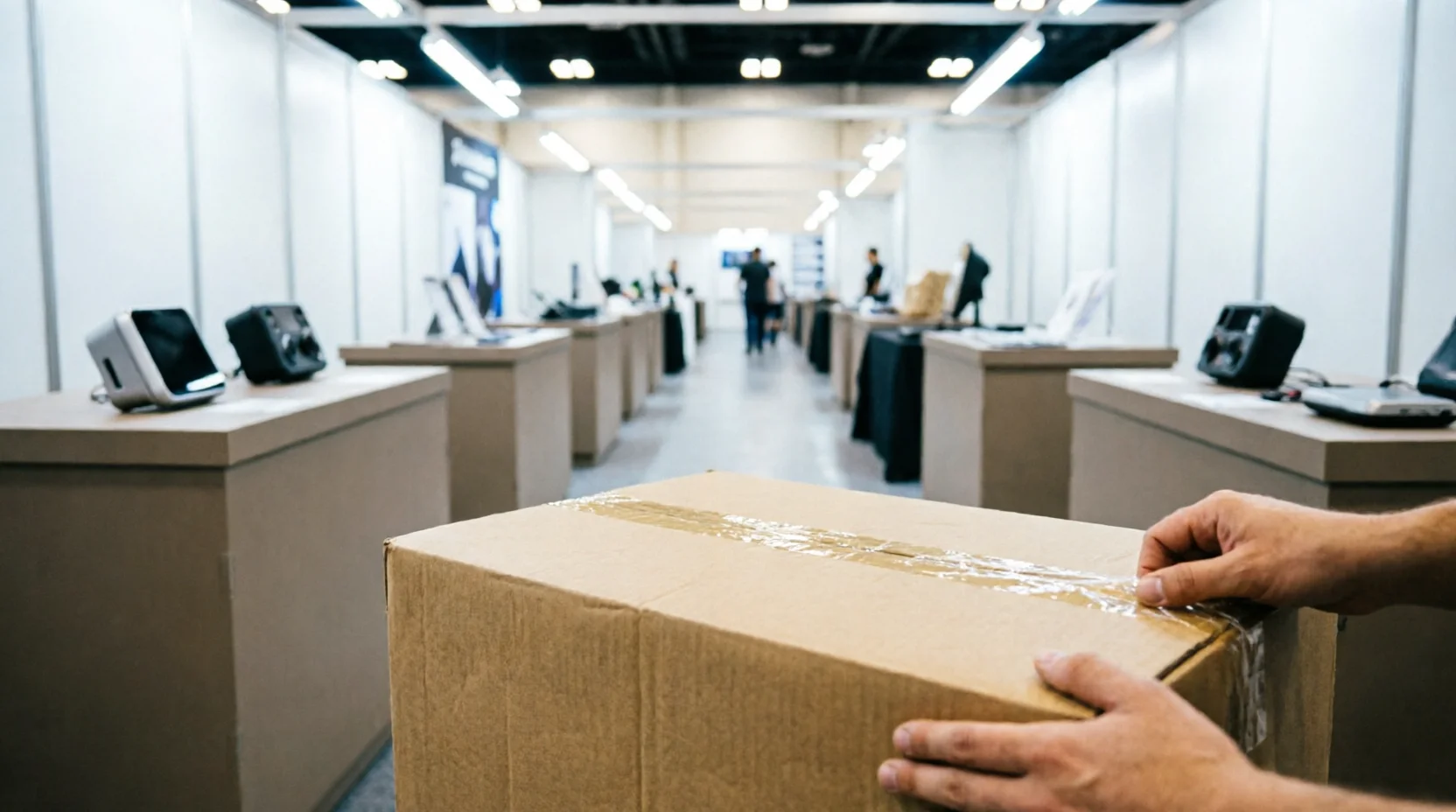
Walk into the Hong Kong Convention and Exhibition Centre during fair week and the first thing you notice is what’s missing. No excavator parts, no pallets of ceramic tile samples, no hall of garden furniture stretching to a vanishing point. The escalator opens onto screens, sensors, wearables, smart-home hubs, drones, charging gear, and a wall of gadgets you haven’t seen a category name for yet. Hong Kong doesn’t try to be everything. It tries to be electronics, and commits harder to that bet than any other fair in the region.
That focus is the whole point of this guide. Australian buyers who’ve worked the Canton Fair arrive expecting a smaller, tidier version of the same thing, and get caught out by three differences that actually matter: what’s on the floor, who’s standing behind the booth, and what a hotel room costs. Get those wrong and a useful trip turns into an expensive week in a very nice city. Get them right and you leave with something Canton’s scale makes harder to find: a short list of finished-product suppliers whose samples are already in your hand.
Not Canton With Better Views: What Makes Hong Kong Different
The Canton Fair is organised by phase and covers almost the entire span of Chinese manufacturing in sequence: machinery in Phase 1, homewares in Phase 2, textiles in Phase 3. It is the whole economy, walked in three instalments. The Hong Kong Electronics Fair does not attempt that breadth. It is built around one proposition: if your product plugs in, connects, charges, senses, or streams, this is your show. The floor covers consumer electronics, IoT devices, smart-home and wearable tech, audio and imaging equipment, gaming peripherals, and innovation zones showcasing what’s about to become a category rather than what already is one. Where Canton’s Phase 1 electronics section sits alongside vehicle parts and building materials in one enormous hall system, Hong Kong’s entire footprint is electronics, end to end.
The practical upshot is density of relevance: you spend less time walking past booths that have nothing to do with your product. That density cuts both ways, though: the show also skews further toward finished, market-ready consumer goods and further away from raw industrial components. If you’re sourcing sub-assemblies rather than a boxed product with a brand-ready housing, Canton’s Phase 1 halls, or a dedicated component sourcing trip to Shenzhen, may be closer to what you need. Our guide to sourcing electronics in Shenzhen covers that component-level end of the market.
The second difference sits in who’s behind the booths. Canton’s exhibitor base is overwhelmingly mainland Chinese manufacturers, direct from the factory floor. Hong Kong’s floor is a genuinely different mix: plenty of mainland factories, often the same Pearl River Delta manufacturers exhibiting at both shows, but alongside them are real Hong Kong-based trading houses with decades of export relationships. There’s also a noticeably heavier presence of Taiwanese and Korean exhibitors than you’ll see in Guangzhou, some manufacturing entirely outside mainland China. It’s a more internationally blended floor, and that blend is a genuine strength if you’re trying to diversify sourcing geography, or want to see three or four manufacturing traditions in one afternoon.
It also means “where is this actually made” matters more here than at Canton, where the answer is almost always simply “here, or nearby.” At Hong Kong, the honest answer might be a Shenzhen factory, a Taipei plant, a Korean assembly line, or some blend across all three. That question carries real financial consequences once you’re clearing goods through Australian customs, not just curiosity value on the show floor.
Before You Go: Badges, the Venue, and the Price of a Bed
Registration works the way most major Asian trade fairs work now: register your buyer badge online ahead of time, upload basic business details and a passport-style photo, and collect the physical badge at the venue or a partner hotel counter on arrival. Do this before you fly. On-site registration exists as a fallback, but opening-morning queues at a major HKCEC show aren’t where you want to spend the first ninety minutes of a three-day trip.
The venue itself, the Hong Kong Convention and Exhibition Centre, sits on the harbourfront in Wan Chai: a fraction of the Canton Fair Complex’s footprint, and genuinely walkable end to end within a single day if your category is well defined. That compactness is part of what makes a three-day trip realistic here in a way a three-day Canton trip usually isn’t. Halls are organised by category and the fair publishes a floor plan ahead of each edition; the same discipline that serves you at Canton (mark your halls before you land, build a target exhibitor list, don’t just wander) pays off here too, over a shorter walk.
Now the number that actually changes your budget: accommodation. Hong Kong is one of the most expensive hotel markets in Asia even outside fair weeks, and during a major HKCEC show, rates near Wan Chai routinely run two to three times what an equivalent Guangzhou hotel charges during Canton. A mid-range room that might run AUD 250–350 a night in Guangzhou can sit at AUD 500–750 a night in Hong Kong during fair week, and well-located properties book out weeks ahead. This is the single biggest line-item difference between the two trips, and the reason a shorter Hong Kong trip can still cost as much as a longer Canton one. Book the moment dates are confirmed, and if the harbourfront hotels are gone, look at Causeway Bay or North Point on the MTR line: a ten-minute ride for a meaningfully lower rate.
Transport is straightforward by comparison. The MTR is fast, reliable, and air-conditioned against a humid show season, and gets you between most hotel clusters and the HKCEC in well under thirty minutes. Skip taxis during peak arrival and departure times; harbourfront traffic during a major fair is its own small ordeal.
The Sourcing Conversation: Factory, Trading House, or Somewhere In Between
Here is the adjustment that matters most once you’re standing at a booth. At Canton, ask “are you the factory or a trading company” and you’ll get a fair number of direct-factory answers, because a large share of Canton’s exhibitors genuinely are factories with their own production floor nearby. At the Hong Kong Electronics Fair, expect the balance to tip further toward agents and trading houses representing multiple manufacturers rather than showing their own single factory’s output. That’s not a flaw (Hong Kong has built its modern economy on exactly this trading and re-export function), but it changes how you should run the conversation.
Ask directly, early, and specifically: “Are you the manufacturer, or are you representing factories on their behalf?” Don’t accept a vague answer. A genuine factory rep typically names a city and district without hesitation and can pull up production photos or a video tour on request. An agent or trading house will usually be candid about it if you ask plainly: Hong Kong’s trading sector doesn’t treat the agent role as something to hide, because it’s a legitimate, long-established business model here, not a workaround. What you’re establishing isn’t whether the agent is legitimate (many are excellent and worth the relationship); it’s which one you’re dealing with, because the two paths diverge from that point on.
Talk to a factory directly and pricing reflects production cost plus the factory’s own margin, MOQs track actual production-run economics, and quality accountability sits with the entity you’re negotiating with. Talk to an agent and expect a margin layered on top of the underlying factory price (commonly 5–15%, similar to trading-company margins on the mainland) in exchange for their ability to compare multiple factories, communicate fluently, and pool smaller orders into MOQs a lone buyer couldn’t negotiate. Neither structure is wrong; a good agent earns that margin. The mistake is not knowing which one you’re in, and pricing your expectations as if you’re paying factory-direct when a margin is quietly built in.
With any agent conversation going well, push further: which specific factory makes this, can you be introduced directly for quality matters, and will they disclose if the underlying factory changes between orders. That last point is a real risk, since the photos stay identical while the production line quietly doesn’t. A confident answer to all three is a strong signal; evasion is worth weighing against other candidates.
Getting Samples Home: Hong Kong’s Real Logistics Advantage
Whatever your sourcing conversations produce, you’ll likely leave with a stack of samples, and this is where Hong Kong quietly outperforms most other fair cities in the region. The general principles of moving samples (courier for small parcels, air freight once you cross into bulkier weights, riding an existing sea consolidation when timelines allow) are the same wherever you buy, and our guide to shipping samples from China covers those mechanics and the customs treatment. What’s specific to Hong Kong is the infrastructure underneath those options.
Hong Kong International Airport is one of the busiest cargo airports on earth, with air freight capacity and courier density most mainland cities don’t match. Collecting samples from a dozen booths across three days and consolidating them into one outbound shipment is genuinely simple: a forwarder can pick up from your hotel, put multiple boxes on one manifest, and get the lot moving within a day of the fair closing, rather than juggling separate courier accounts per supplier. The port side tells the same story: container terminals sit minutes from the central business district, with constant sailings to Australia and the scheduling depth to add a sample consolidation onto an existing shipment if your timeline allows the extra weeks.
The practical takeaway: samples from six or eight exhibitors (mainland factories, Hong Kong trading houses, maybe a Taiwanese or Korean demo unit) don’t need six or eight separate shipping arrangements. One forwarder can consolidate the lot, declare true values across the consignment, and move everything as a single shipment: turning a potential last-afternoon logistics headache into a fifteen-minute conversation with a pickup desk.
The Origin Question: Where Was It Actually Made?
This is where the sourcing conversation and the customs conversation collide, and it’s worth being precise, because getting it wrong doesn’t just cost money: it can trigger a compliance problem that outlasts the shipment. Here’s the scenario, and it happens constantly at this fair specifically: you meet an exhibitor at a Hong Kong booth, negotiate a deal, arrange shipping, and the goods that land in Australia were manufactured in a factory in Dongguan or Shenzhen (mainland China) the whole time. The transaction happened in Hong Kong. The manufacturing did not. For Australian customs purposes, what matters is the second fact, not the first.
Country of origin for duty purposes is determined by where a product is substantially manufactured: not where you met the seller, not where the invoice was issued, not where payment was processed. Goods genuinely made in mainland China remain Chinese-origin goods regardless of how many Hong Kong intermediaries the deal passed through, and the preferential rate you’re entitled to (commonly zero duty under ChAFTA on eligible categories with correct documentation) depends entirely on accurately certifying that manufacturing origin. Hong Kong is not a party to ChAFTA. Declaring goods as Hong Kong origin because that’s where you struck the deal doesn’t grant a comparable preferential rate; it can instead cost you the ChAFTA rate you were actually entitled to, or draw a customs query you didn’t need to invite.
The same logic runs the other way for the fair’s genuinely international exhibitors. A Taiwanese or Korean exhibitor whose product is truly made there carries a different origin again, with its own separate trade arrangements potentially in play. And an exhibitor representing a factory that’s relocated production to Vietnam or another ASEAN base (increasingly common as companies diversify beyond China) may put AANZFTA in play instead of ChAFTA. None of these arrangements care where the deal was made. They care, specifically and only, about where the goods were produced.
The fix is simple to state and easy to skip under fair-week pressure: ask directly, and get it in writing on the commercial invoice and any certificate of origin. “Where exactly is this manufactured: factory, city, country?” is a question every legitimate seller should answer without hesitation. If the answer shifts between the booth conversation and the paperwork that eventually arrives, treat that inconsistency as seriously as any other red flag on this floor. Origin documentation is the difference between the duty rate you budgeted for and a higher one discovered at the worst moment, with the container already sitting at an Australian port.
Verify Before You Order: The Same Discipline, a Different Floor
Nothing about meeting a supplier at a well-run trade fair changes the verification work that has to happen before real money moves. A confident booth and a friendly English-speaking sales manager tell you a company can afford a good booth. They tell you nothing about production consistency, financial stability, or whether the person you’re shaking hands with has authority to bind the company they claim to represent.
Our full guide to vetting Chinese suppliers covers the complete stack: registration checks, certification verification, live video factory tours, credit reports, and payment structures that protect you if something goes wrong. None of it becomes optional because the conversation started in a convention centre instead of over email. If anything, meeting someone in person manufactures a feeling of trust that two hours at a booth hasn’t earned. Run the same checks you’d run on a stranger found online, because until verified, that’s precisely what a fair contact is.
This applies with particular force to agents. Verifying one means confirming two things: that the agent itself is a legitimate, registered business, and that the underlying factory they represent is real and capable. A good agent clears both checks without friction. One who resists introducing you to the actual production source, or grows evasive about factory verification beyond their own say-so, has told you something worth acting on.
The Follow-Up Funnel, Hong Kong Style
The funnel discipline that makes any trade fair worth attending translates directly here, adjusted for scale. At Canton, with 25,000 exhibitors across three phases, the working ratio is roughly 200 cards down to two verified suppliers. Hong Kong’s electronics-only floor is a fraction of that size, so top-of-funnel numbers are naturally smaller, but the discipline at each stage matters exactly as much.
Over two to three days, expect 40 to 80 booths to pass an initial three-minute filter: factory or agent, MOQ, export markets, certifications on the spot. From that pool, a sit-down conversation with your strongest 10 to 15, sample terms negotiated where the fit looks right, and a formal RFQ sent within a week of flying home. Five or six solid responses, samples ordered from your top three or four, and (if the funnel runs properly) one or two verified suppliers at the end. That’s a genuinely successful outcome from a compact fair. The ratio compresses because the floor is smaller and more relevant per booth, not because the diligence gets lighter.
The trap is treating a smaller, more focused fair as licence to skip the funnel’s discipline. A shorter trip can create a false sense that the fair floor already did the filtering for you. It didn’t. The booths still need triage, the candidates still need follow-up, and the survivors still need verification exactly as rigorous as anything Canton would demand.
Worked Example: Three Days, Real Numbers
Meet a composite buyer: a Brisbane importer of smart-home accessories, two years in, sourcing through a single Shenzhen factory and looking to diversify. She books three days at the fair’s autumn edition, flying in the day before doors open.
The budget. Return economy flights Brisbane–Hong Kong, booked eight weeks out: about AUD 950. Four nights in a mid-range Causeway Bay hotel, a short MTR ride from the HKCEC, runs about AUD 2,400 at fair-week pricing (roughly AUD 600 a night), against AUD 250–300 for the same room class in Guangzhou during Canton. Meals, MTR fares, badge, data, sample fees and a contingency: AUD 900. Total: AUD 4,250 for three fair days against Canton’s typical four: a clear illustration that per fair-day, this trip runs meaningfully more expensive, almost entirely on the back of accommodation.
Day 1. Doors at 10am. She’s built a target list of 22 exhibitors across the IoT and smart-home zones, walks the whole floor by early afternoon given the venue’s compact footprint, and runs the three-minute protocol on 52 more booths that catch her eye. 31 pass and get the photo-and-note treatment.
Day 2. Sit-down conversations with her top 13. Six turn out to be Hong Kong trading houses representing multiple Shenzhen and Dongguan factories rather than manufacturers themselves (a higher share than she’s used to from Canton), and she asks each one directly whether she’s talking to the factory or an agent, adjusting price expectations once the answer comes back. Two conversations go especially well: a genuine factory rep offers a video tour the following week, and a trading house is candid about its agent role and offers a direct introduction to its Shenzhen supplier.
Day 3. Final visits, sample terms confirmed at seven booths, and a single local forwarder arranged to consolidate all seven suppliers’ samples into one outbound shipment: the Hong Kong logistics advantage paying off immediately. Flight home that evening; follow-up emails drafted on the plane.
The funnel, six weeks on. 83 approached → 31 captured → 13 deep conversations → 7 formal RFQs → 4 quality responses → 4 samples tested, arriving as one consolidated shipment → verification on all four → 2 suppliers approved, one direct factory relationship and one trading-house relationship she’s comfortable with, having verified the underlying factory independently.
The maths. Trip cost AUD 4,250 against three fair days: noticeably pricier per day than a comparable Canton trip. But the two new suppliers cover a category she previously sourced from a single point of failure, and the trading-house relationship gives her access to production capacity she’d have taken months to find cold online. Whether the extra cost is worth it comes down to what you’re looking for: finished consumer electronics and an international exhibitor mix, Hong Kong’s focus pays for its premium; components or raw industrial goods, that premium buys you less.
Common Mistakes
Treating every booth as the factory. The single most common error at this fair specifically. Hong Kong’s higher share of agents and trading houses means assuming factory-direct pricing and accountability at every booth leaves you disappointed by the margin baked into quotes, or unclear who’s responsible when quality slips. Ask the manufacturer-or-agent question every time, without exception.
Not verifying true manufacturing origin for duty purposes. A costly and avoidable mistake. Goods bought at a Hong Kong booth but made in a mainland Chinese factory are Chinese-origin goods for Australian customs purposes, full stop, and only accurate origin documentation unlocks the preferential ChAFTA rate they’re entitled to. Confirm and document the true country of manufacture before placing a real order, not after a customs query forces the question. Our Hong Kong customs and duty guide covers the documentation Australian customs expects at the border.
Underbudgeting Hong Kong accommodation relative to mainland fairs. Buyers who’ve worked Canton and apply the same hotel budget here are routinely caught out. The two-to-three-times accommodation premium is the largest single line-item difference between the two trips, and needs planning for from the first flight search, not discovery at check-in.
Hong Kong’s electronics fair rewards the same qualities Canton does (preparation, direct questions, systematic follow-up, verification before trust) layered onto a floor that’s smaller, sharper, and genuinely more international. Know which supplier type you’re talking to, document where the goods actually come from, and budget the accommodation honestly, and three focused days here can outperform a much longer trip spent walking the wrong aisles.
Related Reading
- The Canton Fair Guide for Importers
- Shipping Samples from China: Small Parcel, Air Freight or Consolidation?
- How to Vet Chinese Suppliers Before You Order
- Sourcing Electronics in Shenzhen
- Hong Kong to Australia Air Freight
Frequently Asked Questions
How is the Hong Kong Electronics Fair different from the Canton Fair?
The Hong Kong Electronics Fair is narrower and more finished-goods focused than the Canton Fair. Where Canton spans everything from machinery to garments across three phases and roughly 25,000 exhibitors, the Hong Kong show concentrates on consumer electronics, IoT devices, gadgets and innovation categories. The exhibitor mix is also more international, drawing genuine Hong Kong trading houses and Taiwanese and Korean exhibitors alongside mainland factories, compared with Canton’s overwhelmingly mainland-factory floor.
Is Hong Kong more expensive than Guangzhou for a sourcing trip?
Yes, substantially. Hotel rates in Hong Kong during fair week typically run two to three times what a comparable Guangzhou hotel costs during Canton Fair. A modest three or four night stay near the Hong Kong Convention and Exhibition Centre can easily cost as much as five nights in Guangzhou. Budget for the gap rather than being surprised by it at check-in.
Are Hong Kong Electronics Fair exhibitors factories or agents?
A meaningfully higher share of Hong Kong exhibitors are trading companies and agents representing multiple mainland factories, compared with Canton where more direct-factory booths exist. Neither is automatically better, but you need to know which one you are negotiating with, because it changes pricing expectations, minimum order quantities and who is actually accountable for quality. Ask directly whether you are speaking to the manufacturer or an agent.
If I buy at the Hong Kong fair but the goods are made in mainland China, what origin do I declare for Australian customs?
Declare the true country of manufacture, not the city where you happened to meet the seller. Goods made in a mainland Chinese factory and sourced through a Hong Kong trading company are still Chinese-origin goods, and only correct Chinese origin documentation unlocks preferential ChAFTA duty rates. Labelling them as Hong Kong origin because that is where the deal was struck is a documentation error, not a shortcut, and it can cost you the preferential rate or trigger a customs query.
How easy is it to consolidate and ship samples home from Hong Kong?
Genuinely easy, and it is one of the fair’s real advantages. Hong Kong’s air and sea connectivity is exceptional, with dense courier networks, frequent air freight capacity and short trucking distances to a major container port, so consolidating samples picked up from multiple booths into a single shipment home is more straightforward than doing the same from many mainland cities.
Should I place an order directly at a Hong Kong Electronics Fair booth?
Not on a first meeting. Use the fair to shortlist suppliers, clarify whether you are talking to a factory or an agent, and collect samples, then verify each candidate afterwards with the same diligence you would apply to any supplier found online: registration checks, certificate confirmation and, for larger orders, a factory audit. A well-run booth and a confident sales pitch tell you nothing about production quality on their own.