Author: SwiftCargo Team

  • Is Portugal a Tax Haven? Wealth Tax and NHR Blacklist Explained

    Is Portugal a Tax Haven? Wealth Tax and NHR Blacklist Explained

    A couple reading a book together at a stone table overlooking Lisbon's rooftops, representing understanding Portugal's tax rules and NHR status as expats

    Ask two different people whether Portugal is a tax haven and you can get two confident, opposite answers, and both of them will point at something real. One has read that Portugal has no wealth tax and treats that as the whole story. The other has read about a “tax haven blacklist” connected to Portugal and assumes the opposite. Neither is lying. They are just each holding one true fact and mistaking it for the complete picture.

    A Portugal tax haven search almost always tangles up three separate questions: whether Portugal itself counts as a tax haven, what Portugal’s own tax haven blacklist actually is and does, and why some articles mention an “NHR blacklist” that has nothing to do with Portugal’s list at all. None of it is tax, financial or immigration advice, and by the end you should at least know which question you are actually asking.

    Is Portugal Actually a Tax Haven?

    Start with the definition, because “tax haven” is not just a vibe. It is a specific status that international bodies formally assign. The clearest version of that status is the European Union’s own list of non-cooperative jurisdictions for tax purposes, the closest thing to an official EU tax haven blacklist. Portugal is an EU member state, and it is not on that list. It never has been.

    Portugal does have a genuine reputation for favourable tax treatment in specific, narrow situations: no general tax on net wealth, no traditional inheritance tax, and a history of incentive regimes, first the Non-Habitual Resident scheme, now its narrower successor, aimed at attracting certain residents. Favourable in specific situations is not the same thing as being a tax haven in the technical sense international bodies use. A country can offer real, legal tax incentives to particular groups of people without meeting the definition of a jurisdiction built around secrecy and near-zero taxation for shell entities, which is what “tax haven” formally describes.

    So the honest short answer is no, not in the sense the term is normally used. Portugal is genuinely more tax-friendly than most of Western Europe for specific residency situations, though. That gap between “not a tax haven” and “not especially tax-friendly either” is exactly where the confusion in these searches usually comes from.

    Does Portugal Have a Wealth Tax?

    No. Portugal does not levy a general tax on an individual’s net worth, the kind of annual charge some countries apply to the combined value of your savings, investments and property above a threshold, regardless of income. According to Tax Foundation Europe’s 2026 review of wealth taxation, only three European countries currently levy that kind of tax: Norway, Spain and Switzerland. Portugal is not one of them, and never has introduced one.

    That is a real, checkable fact, not marketing copy. It is also incomplete on its own, because Portugal taxes specific kinds of high-value property in ways that get informally described, inaccurately, as a wealth tax. Most people who search for Portugal’s wealth tax are actually looking for the AIMI, the property tax covered next, not a genuine charge on total net worth, and that mix-up is the single most common source of confusion in this exact search.

    The AIMI: Portugal’s Property Tax That Gets Called a “Wealth Tax”

    The AIMI, short for Adicional ao IMI, is a real annual tax, introduced in 2017, and it genuinely does target high-value property ownership. That is close enough to the shape of a wealth tax that plenty of articles simply call it one. It is not one, and the difference matters if you are trying to work out what it would actually cost you.

    AIMI applies only to the combined taxable value, the VPT, of residential property you own in Portugal. It does not touch cash, investment portfolios, business interests, or anything held outside Portugal. For an individual, the first 600,000 euros of combined VPT is exempt. Above that, the commonly reported bands are 0.7 percent on the portion between 600,000 and 1 million euros, 1 percent between 1 million and 2 million euros, and 1.5 percent on anything above 2 million euros. A couple who elects joint taxation is exempt on a combined 1.2 million euros before any AIMI applies. Companies pay a flat 0.4 percent on the full taxable value of residential property they hold, with no exemption threshold. Rural and most non-residential property sits outside AIMI entirely.

    Put plainly, and confirmed against PwC Portugal’s 2026 property tax guide: AIMI is a property tax with a high entry bar, not a charge on your total wealth. Someone with several million euros in savings and investments and no expensive Portuguese residential property owes no AIMI at all. Someone who owns one apartment worth 650,000 euros owes a modest amount on the 50,000 euros above the threshold. Confirm the exact bands and any exemptions in force before relying on this for a purchase decision. Portugal periodically revises property tax rules, most recently with a proposed exemption for certain rented properties that was still being finalised at the time of this article’s publication.

    Inheritance and Gifts: Stamp Duty, Not Inheritance Tax

    This is the other place “wealth tax” gets used loosely. Portugal abolished its traditional inheritance and gift tax back in 2004 and folded the gratuitous transfer of assets into Stamp Duty instead. That covers what you receive from someone who has died or from a lifetime gift. Per PwC Portugal’s own Stamp Tax guide, the standard rate for a non-exempt individual beneficiary is 10 percent of the taxable value. Where the asset being transferred is Portuguese real estate, an additional 0.8 percent applies specifically to the property transfer. That brings the effective rate to 10.8 percent for a non-exempt beneficiary inheriting or receiving Portuguese property.

    The part that actually matters for most families: spouses, civil partners under Portuguese law, descendants such as children and grandchildren, and ascendants such as parents and grandparents are fully exempt from this Stamp Duty, on both inheritances and lifetime gifts. In practice, the people most likely to inherit from you generally pay nothing: your spouse and your children. The 10 percent rate lands on transfers to siblings, nieces and nephews, unmarried partners without recognised civil-partner status, friends, or unrelated beneficiaries.

    None of this is tax, financial or estate-planning advice, and Swift Cargo is not a licensed advisor in any of those areas. Exemption categories, valuation rules and the exact rate structure change, and how a specific asset gets classified genuinely affects the outcome. Get advice from a Portuguese-qualified accountant or estate lawyer before you plan around any of these figures. UK nationals should also note that the UK’s own 2025 domicile reform can leave a UK-connected estate exposed on both sides at once, a scenario this overview does not attempt to cover.

    Portugal’s Own Tax Haven Blacklist

    The actual, official “Portugal tax haven blacklist” lives here, and it is not a list of countries considering Portugal a tax haven. It runs the other way. Portugal maintains its own domestic list of foreign jurisdictions it treats as having “clearly more favourable tax regimes.” The list is commonly called the Portuguese tax haven blacklist, established under Ministerial Order (Portaria) 150/2004 of 13 February and amended several times since.

    The point of the list is to discourage routing money through jurisdictions Portugal considers tax havens by making transactions with them expensive. Interest and dividend income sourced from a blacklisted jurisdiction faces a 35 percent withholding tax, well above Portugal’s standard rates, and property held through an entity based in a blacklisted jurisdiction faces an aggravated municipal property tax. The list itself has moved over time. Most recently, Ordinance 292/2025/1 of 5 September 2025 removed Hong Kong, Liechtenstein and Uruguay, effective for income and transactions from 1 January 2026, because none of the three currently appears on the European Union’s own list of non-cooperative jurisdictions. Roughly 80 jurisdictions remain on Portugal’s list as of this article’s publication; confirm the current version before assuming any specific country’s status, since it is revised periodically and this article does not reproduce the full list.

    For most people researching a move to Portugal, this list is simply not relevant. It affects specific cross-border financial structures involving one of the roughly 80 named jurisdictions, not the ordinary business of holding a pension, a bank account or a home in a country that is not on the list. It becomes relevant if you or your financial structure genuinely connects to one of the listed jurisdictions, which is a question for an accountant who can see your actual situation, not a shipping company’s blog post.

    Swift Cargo helps once you’re ready to actually move to Portugal.

    We ship households, not tax opinions, so we will not weigh in on AIMI or blacklists. When the paperwork side is settled, get a real quote for moving your belongings.

    Get a Portugal moving quote

    The Real “NHR Blacklist” Story: When Other Countries Pushed Back

    This is the third question, and it is genuinely distinct from Portugal’s own blacklist above, even though search results routinely blur the two together. Nobody keeps an official “NHR blacklist.” Specific countries took real, documented action against Portugal’s old Non-Habitual Resident regime, because that regime let their own citizens draw a private pension in Portugal tax-free, and that annoyed the countries losing the tax revenue.

    Finland is the clearest case. Under its 1970 tax treaty with Portugal, Finland could not tax private pensions its own former residents received while living in Portugal, and under Portugal’s NHR regime, Portugal was not taxing that income either. The two countries negotiated a protocol in 2016 meant to fix this, but Portugal never ratified it. Finland responded by terminating the entire tax treaty, effective 1 January 2019, specifically over this issue, confirmed directly by Finland’s own government. Sweden followed a similar path a few months later without going as far: in May 2019 it signed a protocol amending its treaty’s pension article so that a pension becomes taxable in Sweden whenever Portugal does not tax it. That closed the same gap without abandoning the treaty outright.

    Both of those episodes date to 2019, and both were reactions to the old NHR regime’s specific treatment of foreign pensions, a full exemption that no longer exists in that form. Under pressure that included these two cases, Portugal itself changed course in January 2020. It replaced NHR’s blanket foreign pension exemption with a flat 10 percent tax instead of zero.

    This part is worth being precise about, because it is easy to let a five-year-old episode about a closed programme quietly become an assumption about today’s rules. NHR itself closed to new applicants on 1 January 2025. Its replacement, IFICI, never offered a pension exemption in the first place. IFICI excludes foreign pension income from its benefits from day one and taxes that income at ordinary progressive rates instead. The specific mechanism that triggered Finland’s treaty termination and Sweden’s treaty amendment simply does not exist in the current regime. Treating the 2019 Finland and Sweden episodes as evidence about IFICI today would be judging today’s rules by yesterday’s design, not by what actually applies now.

    What IFICI Actually Covers, and What It Does Not

    Since IFICI keeps coming up in the same searches as NHR and “tax haven,” it is worth being specific about what it does. Per the International Bar Association’s overview of the regime, IFICI is Portugal’s current special tax regime for qualifying new residents, mainly people taking up roles in scientific research, higher education, or certified start-up and innovation activity. The acronym stands for the Tax Incentive for Scientific Research and Innovation. It requires no Portuguese tax residence in the previous five years and generally excludes anyone who already used NHR. Applicants must apply by 15 January of the year following their first year of Portuguese residency. It runs for up to ten consecutive tax years.

    Qualifying Portuguese-source income is taxed at a flat 20 percent, and most foreign-source income and capital gains are close to fully exempt from Portuguese tax. That exemption carries two specific carve-outs. Pension income is excluded entirely and taxed at ordinary progressive rates, which run up to roughly 53 percent once the solidarity surcharge is included. That exemption disappears for income paid by or routed through an entity based in one of the roughly 80 jurisdictions on Portugal’s own blacklist, the same list described above. That income is instead taxed at a flat 35 percent. IFICI is a narrow, activity-gated regime built for a specific professional profile, not a general tool for sheltering retirement income or unrelated foreign wealth from Portuguese tax. It was never built around the pension exemption that made the old NHR regime a target for Finland and Sweden. Our dedicated NHR and IFICI guide covers eligibility, the application steps and the full closed-regime timeline in more depth than fits here.

    What This Actually Means If You’re Weighing a Move

    Pull the three threads back together. Is Portugal a tax haven in the formal sense? No, it is not on the EU’s list, and it never has been. Does it have a wealth tax? No, and the property tax that gets called one, AIMI, only touches high-value residential property, not your total net worth. Does Portugal have a tax haven blacklist? Yes, but it is Portugal’s own outbound list of roughly 80 other jurisdictions, built to discourage routing money through them, and it has nothing to do with whether other countries consider Portugal itself a tax haven. The genuine historical friction over Portugal’s tax treatment, Finland’s 2019 treaty termination and Sweden’s treaty amendment, was a reaction to a pension exemption that closed regime rules have since removed.

    None of that adds up to “Portugal is tax-free,” and none of it adds up to “Portugal is a tax haven” either. It adds up to a country with a handful of real, specific, legally documented tax advantages sitting alongside real, specific taxes on property and gratuitous transfers, the kind of mixed picture that gets flattened into a single headline far too easily. If your own situation involves meaningful assets, cross-border pension income, or a connection to any jurisdiction on Portugal’s blacklist, that is a conversation for a Portuguese-qualified tax advisor working from your actual numbers, not a search result. This article does not attempt to be that conversation, and nothing in it should be treated as tax, financial or immigration advice.

    Notice what the “tax haven” label is actually doing in a conversation like this. It is a category claim, and category claims travel further than the rules they summarise. Portugal appears on no credible blacklist, operates its own, and taxes residents on worldwide income at rates that would surprise anyone using the label literally. What people usually mean by it is narrower: that a specific regime, for a specific kind of income, for a bounded number of years, produces a lower bill than the country they are leaving. That is a real thing, and it is worth planning around. It is also a claim with conditions attached, and the conditions are where the money actually is. Anyone selling you the category rather than the conditions has skipped the part that decides your outcome.

    A comparison makes the pattern clearer. Italy runs a regime aimed at the same people: a flat annual charge on foreign-source income for new residents, which it doubled from 100,000 to 200,000 euros in 2024. Portugal’s NHR offered a ten-year exemption instead, and when the political cost arrived, Portugal closed the scheme to new entrants and replaced it with the narrower IFICI. Both countries started from similar conditions: a wide treaty network, a low cost of living and a wave of mobile retirees and remote workers. They diverged on one unglamorous design choice. A regime that charges a visible fee can be repriced when the mood turns. A regime built as an exemption can only be defended or abolished. That single difference, repeated through every budget cycle, is why one of these programmes still exists in its original shape and the other does not.

    Related Reading

    Frequently Asked Questions

    Is Portugal a tax haven?

    Not in the formal sense. Portugal is not on the European Union’s list of non-cooperative jurisdictions, the closest thing to an official tax haven blacklist, and never has been. It does offer specific, legal tax advantages in certain situations, which is different from meeting the technical definition of a tax haven.

    Does Portugal have a wealth tax?

    No. Portugal does not levy a general tax on net worth. According to Tax Foundation Europe’s 2026 data, only Norway, Spain and Switzerland currently apply that kind of tax in Europe. Portugal taxes specific things, like high-value residential property and gratuitous transfers, but not your total wealth.

    What is the AIMI, and is it a wealth tax?

    AIMI is an annual tax on high-value residential property in Portugal, introduced in 2017. Individuals are exempt on the first 600,000 euros per person, or 1.2 million euros combined for a couple filing jointly, then pay 0.7 to 1.5 percent on the value above that. It only applies to residential property value, not cash, investments or foreign assets, so it is a property tax, not a true wealth tax, even though it is often informally called one.

    Does Portugal tax inheritances and gifts?

    Portugal has no traditional inheritance tax. Instead, a 10 percent Stamp Duty applies to gifts and inheritances received by most beneficiaries, rising to 10.8 percent when Portuguese real estate is involved. Spouses, descendants and ascendants are fully exempt. This is not tax advice; confirm your own situation with a Portuguese-qualified advisor.

    What is Portugal’s tax haven blacklist, and does it affect me?

    Portugal maintains its own list of roughly 80 foreign jurisdictions it treats as tax havens, under Portaria 150/2004 as amended. Income and property connected to a listed jurisdiction face higher taxes, including 35 percent withholding on interest and dividends. It only affects people or structures with a genuine financial connection to one of those specific jurisdictions, not ordinary residents or retirees.

    Why do some articles mention an “NHR blacklist”?

    No official NHR blacklist exists. The phrase usually refers to Finland terminating its tax treaty with Portugal in 2019, and Sweden amending its own treaty the same year, both in response to Portugal’s old NHR regime letting foreign pensions go untaxed. Portugal changed that rule in 2020, and NHR’s replacement, IFICI, never offered a pension exemption in the first place.
  • What Happens When Pets Fly Cargo: From Terminal to Aircraft Hold

    What Happens When Pets Fly Cargo: From Terminal to Aircraft Hold

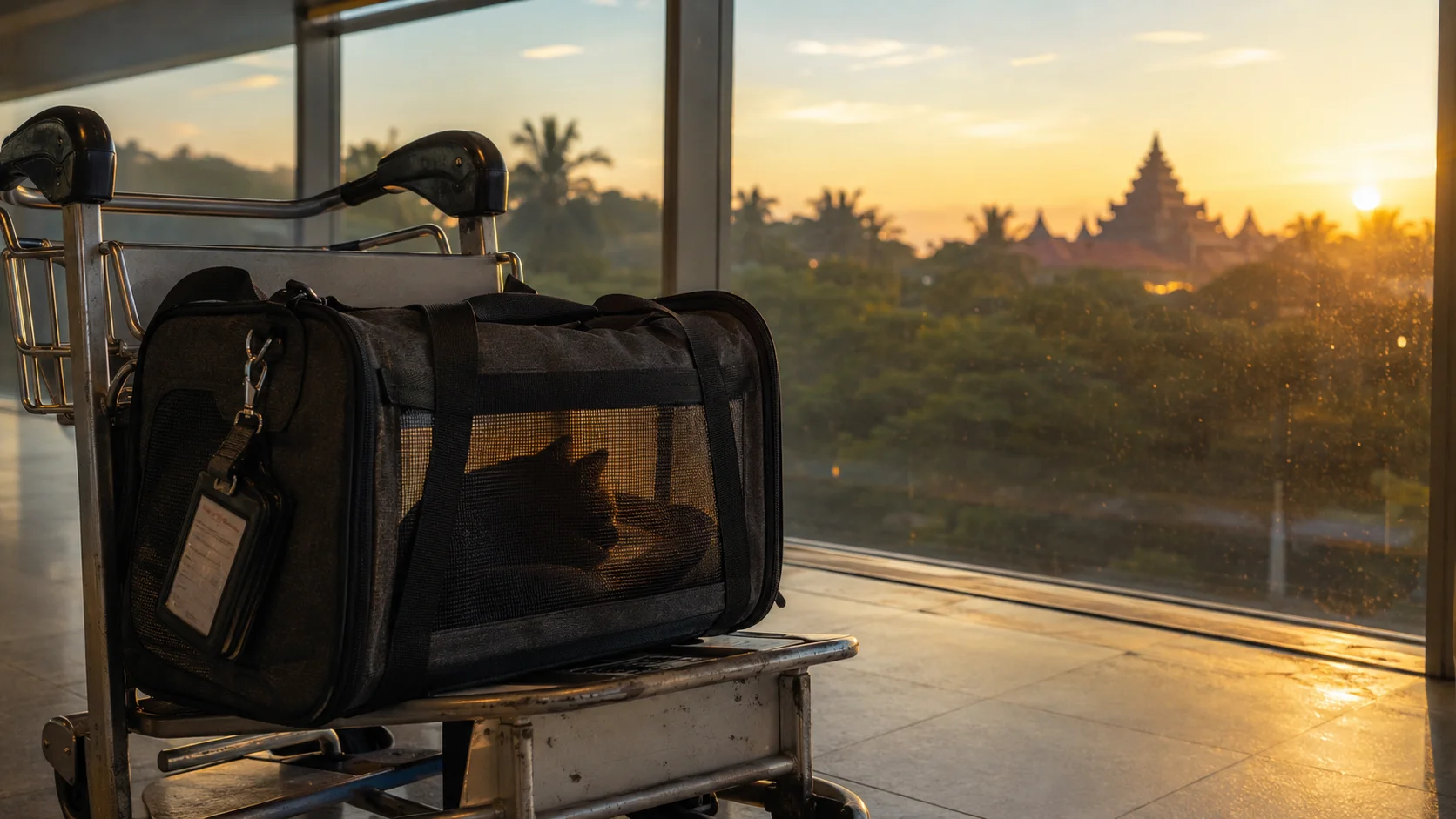
    Pet travel crate being checked by ground handling staff at an airport freight terminal before loading into an aircraft cargo hold

    Somewhere above the Bay of Bengal, or the Timor Sea, or wherever the flight path happens to cross that day, a dog in the forward hold of a Boeing or an Airbus is breathing pressurized, temperature-controlled air that is, mechanically, the same air the passengers three metres above its head are breathing. That part of pet air cargo is not the dangerous part, and it arguably never was. The part that decides whether the trip goes well happened hours earlier, on the ground, in a sequence almost nobody outside freight operations ever sees explained: a document check, a crate check, a holding room, and, depending on the route, possibly a second aircraft entirely.

    This is the departure side of that journey: what actually happens between drop-off at the freight terminal and the moment a crate is loaded into the hold. If you are looking for what happens after landing in Bangkok (immigration, the Animal Quarantine desk, Carousel 8), that is a later, separate stage of the trip, covered in full in SwiftCargo’s Suvarnabhumi arrival guide. This piece picks up earlier and stops at the aircraft door. It also assumes manifest cargo transport is already the confirmed method for your pet. Your booking agent settles that separate question, cabin versus checked baggage versus manifest cargo, well before travel day, not on travel day itself.

    The Drop-Off Window: Why Pets Arrive Hours Before Anyone Else

    Passengers on the same flight can turn up ninety minutes before departure and still make it. A pet flying as manifest cargo cannot, and the reason is not caution for its own sake. It is that a live animal shipment has to clear a documented acceptance process before ground staff will agree to load it. That process takes real time to work through. Freight terminals typically ask for pets to be presented several hours ahead of scheduled departure, enough time to verify documents, inspect the crate, and move a live animal shipment into the loading sequence before the aircraft is ready for cargo.

    The airline and ground handling agent are working through what is, in effect, a checklist: IATA’s Live Animal Acceptance Checklist runs to 23 yes-or-no questions covering booking arrangements, air waybill accuracy, container specification, labelling, and feeding and watering instructions. A single “no” answer is a documented reason to refuse the shipment, not a note to fix later. That is the actual purpose of the drop-off window: buffer time for a problem to surface while there is still time to fix it, not at the aircraft door when there is not.

    On the Australian export side, most of that buffer time is already spent long before travel day itself. A Notice of Intention to Export goes to the relevant Department of Agriculture, Fisheries and Forestry (DAFF) regional office at least 10 working days ahead of departure, and a registered vet completes the health checks, vaccinations, and blood work behind the Veterinary Health Certificate presented at the terminal. Owners who complete that timeline arrive at drop-off with a document set that matches cleanly, which is what turns the terminal stop into a formality rather than the anxious moment first-time exporters expect. SwiftCargo’s guide to pre-export testing requirements for dogs covers that timeline in full.

    The Document Check: What Has to Match Before Anyone Touches the Crate

    Before a DAFF-registered exporter or biosecurity officer signs off on a live export, they are checking that a set of independently created documents describe the same animal without contradiction. The Veterinary Health Certificate has to match the microchip number on the export permit. The permit has to match the destination country’s import conditions. And under IATA’s regulations, the airline requires a completed Shipper’s Certification for Live Animals, filled out in English, in two original copies: one retained by the carrier that accepts the shipment, the other travelling with the animal all the way to its final destination.

    None of this is decided at the terminal counter. It is assembled over the preceding weeks, and the terminal check is simply where all of it gets tested against the actual animal standing in front of an official for the first time. A microchip that scans to a different number than the one printed on the certificate, a vaccination date that falls just outside a validity window, or a permit issued for a slightly different destination airport are the kinds of small mismatches that stop a shipment cold, not because officials are being pedantic, but because the paperwork is the only thing establishing, legally, which animal this is and what has already been verified about it.

    The Crate Check: IATA’s Container Requirement, and Why a Bad Crate Gets an Animal Bumped

    Alongside the documents, ground staff physically inspect the travel container against IATA’s Container Requirement 1 (CR1), the live animal transport standard covering ordinary pet dogs and cats. This is not the moment to rebuild an entire crate-sizing guide; the practical version is that inspectors are checking a short list of pass/fail points. The container has to be rigid: fiberglass, metal, rigid plastic, or solid wood or plywood, not a soft-sided carrier. It needs ventilation openings on at least three sides for a domestic sector and four sides for an international one, with individual opening sizes capped at roughly 2.5cm for dogs and smaller again for cats, so airflow is real but an animal cannot get a paw or muzzle through the mesh. And the animal has to be able to stand at full height, turn around completely, and lie down in a natural position inside it. Snub-nosed breeds are required to have a container at least 10% larger again, given their comparatively higher heat and respiratory risk.

    A crate that fails any one of those points is not a paperwork technicality. It is a shipment ground staff are not permitted to load. No exception process exists at the terminal counter for “close enough,” because the person signing off on acceptance is putting their own compliance record against the container, not just the paperwork. This is also why legitimate operators check crate compliance well before travel day rather than discovering a problem at drop-off, when there is no longer time to source a compliant replacement before the flight closes out.

    The Live Animal Holding Area: Not General Cargo, and Not a Kennel

    Once accepted, a pet does not sit among pallets and boxes in the general freight shed. IATA’s live animal handling standards require dedicated space: an area monitored for temperature and ventilation, staffed only by personnel trained specifically in live animal handling, and disinfected on a fixed 24-hour cycle regardless of how many shipments have passed through it that day. It is a deliberately narrower environment than general cargo handling: fewer people are authorised to enter it, and the animals inside it are checked on a schedule general freight never is.

    It is also not a kennel in the boarding-facility sense. The space offers no walking, no play, and typically only the minimal handling needed to confirm the animal is stable and its container is secure. The holding area exists to safely bridge the gap between acceptance and loading, not to provide enrichment. For a short domestic connection that gap might be under an hour. For an international routing with a scheduled ground stop, it can run considerably longer, which is precisely the detail that makes the distinction covered further down (transit versus transhipment) a practical one rather than a technicality.

    Loading the Aircraft: Inside the Forward Hold

    Many people assume a pet flying cargo rides in an unpressurized, unheated section of the aircraft. That assumption is simply wrong for the compartment live animals are actually required to travel in. Live animal shipments on the aircraft types flying this corridor travel in the forward hold. That section is pressurized to the same standard as the passenger cabin above it and draws from the same environmental control system. That means temperature and airflow are actively regulated for the duration of the flight, not left to fluctuate with altitude. This is a mechanical fact about how the aircraft is built, not a courtesy extended to live cargo.

    Loading itself is a ground handling procedure. Trained staff move the container from the holding area to the aircraft and position it in the section of the hold designated for live animals, deliberately separated from heavier freight that could shift against it. They then secure it for the flight. This is also the last point at which the crate and the animal are visually confirmed to match the paperwork before the aircraft door closes. That is why the document and crate checks earlier in the sequence matter more than a first-time exporter usually expects: everything downstream of the terminal assumes those checks were done correctly, because there is no second checkpoint once the aircraft is loaded.

    Transit vs Transhipment: The Distinction That Actually Decides How the Layover Goes

    Most explanations of pet air travel skip straight from “the flight departs” to “the flight arrives,” as though a routing with a stop in between is a minor detail. It is not, and the reason comes down to a distinction the freight industry treats as basic but almost nobody explains to the person actually booking a pet’s flight: the difference between transit and transhipment.

    Transit means the animal remains aboard the same aircraft through an intermediate stop. The plane lands, does its ground turnaround, and continues on the same airframe with the same flight. The animal, still in the hold, is not required to be unloaded or rehandled. Some airports still carry out a hold check or a brief physical check on the animal even during a technically-transiting stop, but the animal is not moved through a separate facility or handed to a different set of ground staff.

    Transhipment means the animal is transferred to a different aircraft at the intermediate airport, a genuinely different flight, sometimes a different airline. The container has to be unloaded, moved through (or via) a live animal handling facility at the connecting airport, and reloaded onto the next aircraft. IATA’s own guidance on this is explicit that it cannot be improvised: “if a trans-shipment is needed, the container must be received in advance and located appropriately with any necessary equipment readily available.” In other words, transhipment has to be planned into the booking, not discovered at the connecting airport.

    The practical consequence is what actually matters to an owner booking a route. Transhipment means more ground exposure, a second facility with its own standards and disinfection schedule, an additional handling handoff, and more points at which a delay on the first leg can cascade into a missed second aircraft. Singapore’s Animal & Veterinary Service makes the practical cost concrete. Singapore is a genuinely well-run example, and a relevant one, since it is the staging country most often used on this exact corridor: a pet transhipping through Singapore for a connection longer than six hours is moved to the ground handling agent’s holding area, kept in an air-conditioned space with water provided, but with no feeding and no walking, because handling staff are not trained or resourced to provide either during a transfer. If the connecting flight is later in the day, the animal may be moved again to the Changi Animal & Plant Quarantine facility for a longer accommodated stay, at an additional fee. None of that is a failure of the system. It is what a well-run transhipment looks like when it works exactly as designed. It is simply a longer, more exposed process than staying aboard one aircraft.

     Transit (same aircraft)Transhipment (different aircraft)
    What happens at the stopAircraft lands, completes ground turnaround, continues with the same airframe and flightAnimal is unloaded, moved to a connecting flight, sometimes a different airline
    Who handles the animalTypically nobody; animal remains in the holdA second ground handling team and, often, a live animal facility at the connecting airport
    Ground exposureLimited to the scheduled turnaround timeExtends for the full connection window; can run to several hours
    Feeding / walkingNot applicable; animal is not removed from the holdNot guaranteed; many facilities provide water only, by policy, not oversight failure
    Failure pointsFew; mainly delay on the single aircraftMore: missed connection, facility handling quality varies by airport, extra document handling
    Booking implicationGenerally the lower-exposure option when available on a routingSometimes unavoidable; worth knowing in advance rather than discovering at the gate

    This is exactly where the distinction stops being trivia and starts being a real decision on the Thailand-to-Australia corridor specifically. Thailand is not on Australia’s list of approved countries, for reasons covered fully in why pets cannot fly directly from Thailand to Australia and the 180-day approved-country rule, which is why pets on this route travel through an approved staging country, commonly Singapore, rather than flying direct. SwiftCargo’s guide to choosing a staging country covers how that decision gets made. What matters here is narrower and more operational: once Singapore (or another staging country) is fixed as the routing, whether that leg is booked as a transit or a transhipment is a real, askable question. The answer changes how many hours your pet spends being handled by a second team in a second facility rather than simply staying in the hold.

    What Ground Handlers and Airlines Are Actually Responsible For During a Layover

    Within a live animal facility, responsibilities are narrower than most owners assume. Ground handling staff monitor the animal’s condition and maintain the holding space’s temperature and ventilation. They also keep the facility on its disinfection schedule and move the container safely to the next aircraft on schedule. Airlines’ cargo support teams track the shipment and notify the booking agent, not typically the owner directly, if a disruption occurs.

    What they are generally not resourced to do is feed or walk an animal mid-connection, as Singapore’s example above shows: that sits outside the trained scope of ground handling, whose job is safe monitoring, not boarding-kennel care. More than anything else, that boundary is why a transit-based routing is usually the lower-friction choice when one is genuinely available on the booking.

    What Can Go Wrong on Travel Day, and How Legitimate Operators Mitigate It

    The realistic risks on travel day cluster around a small number of causes. Extreme heat or cold at the origin, transit, or destination airport can trigger an operator’s embargo on live animal transport for that sector: airlines and ground handlers weigh temperature, ventilation, hydration, journey duration, and container suitability together as welfare factors, and a booking can be held or rescheduled rather than flown into conditions outside safe range. Flight delays and cancellations (weather, mechanical issues, air traffic control) are never about the animal, but they can still turn a comfortable transit connection into a longer, unplanned ground stay. On transhipment-heavy routings specifically, a late-running first leg can turn a scheduled two-hour connection into a missed one. The animal then waits for a later flight, through no fault in how the trip was booked.

    Operators who handle this corridor routinely mitigate these risks the way any experienced freight planner mitigates operational risk: building in connection time that survives a realistic delay rather than the legal minimum, checking seasonal temperature patterns across the full routing before confirming a booking date, resolving crate compliance days ahead of drop-off rather than at the terminal, and choosing a transit-based routing over a transhipment-heavy one wherever both are genuinely available. None of that removes risk entirely, but it is the difference between a delay being an inconvenience and a delay becoming a genuine welfare problem.

    Who Actually Coordinates This Sequence

    A pet transport operator normally coordinates every stage above (document assembly, terminal drop-off, crate compliance, and the transit-or-transhipment routing decision) rather than leaving it to the owner to manage piece by piece. SwiftCargo’s guide to comparing pet transport quotes covers what that coordination is actually worth when weighing operators against each other. Once the aircraft lands and the pet clears the destination country’s own arrival process (for Australia, ultimately Melbourne’s Mickleham quarantine facility), travel day is over, and a different set of government checkpoints takes over. SwiftCargo’s pet transport team books and coordinates this exact sequence as one managed schedule rather than a set of separate risks for an owner to track individually.

    Related reading: Moving Pets from Canada to Thailand: CFIA, Flights and Timing

    Frequently Asked Questions

    What actually happens to a pet between drop-off and boarding the aircraft?

    After arriving at the freight terminal, the animal goes through a document check (matching the export permit, health certificate, and microchip), a physical crate inspection against IATA’s container standard, and a period in a temperature-controlled live animal holding area before ground staff load the container into the aircraft’s forward hold, a pressurized and temperature-controlled section of the plane.

    How many hours before a flight do pets need to be at the cargo terminal?

    Freight terminals typically require pets several hours ahead of scheduled departure, since document verification and a physical crate inspection both take real time and any failed check needs to be resolved before the flight closes for cargo. The exact window is set by the airline and ground handler at each airport, so it is confirmed as part of the booking rather than assumed.

    What is the difference between transit and transhipment for a pet flying cargo?

    Transit means the animal stays aboard the same aircraft through an intermediate stop and is generally not unloaded or rehandled. Transhipment means the animal is transferred to a different aircraft at the connecting airport, which requires ground handling through a live animal facility, more time on the ground, and an additional handling handoff, all of which add exposure and potential failure points that a same-aircraft transit avoids.

    Is the aircraft cargo hold really pressurized and temperature-controlled?

    Yes, for the forward hold section live animals are required to travel in. It is pressurized to the same standard as the passenger cabin and draws on the same environmental control system, so temperature and airflow are actively regulated throughout the flight rather than left to fluctuate with altitude.

    What happens if a pet’s travel crate doesn’t meet IATA’s container requirements?

    Ground staff are not permitted to load a non-compliant container, and no exception process exists at the terminal counter. This is why crate compliance against IATA’s Container Requirement 1 standard needs to be confirmed well before travel day, when there is still time to source a compliant replacement if needed.

    Can extreme weather delay or cancel a pet’s scheduled flight?

    Yes. Airlines and ground handlers weigh temperature, ventilation, hydration, and journey duration as welfare factors, and can hold or reschedule a live animal booking if conditions at the origin, transit, or destination airport fall outside safe range on the scheduled day. Experienced operators check seasonal temperature patterns across the full routing before confirming a travel date, specifically to reduce the chance of this happening.

  • Cost of Moving from Ireland to Thailand: EUR Costs by Move Size

    Cost of Moving from Ireland to Thailand: EUR Costs by Move Size

    Five things determine the cost of moving from Ireland to Thailand: your shipment’s volume in CBM, which routing your freight forwarder actually uses, whether you qualify for Thai personal effects duty relief, how far your Thai delivery address sits from Bangkok, and how far in advance you book against Q3 peak season and the winter weather that slows the Irish Sea feeder leg. Get those five inputs right and the number becomes predictable months in advance. Ignore them and the total arrives as a series of separate invoices, each one a surprise.

    A couple in winter coats standing at the end of a stone pier, looking out over grey open water under low cloud.

    Zero Direct Sailings: The Feeder Reality

    Here is the gap between what “Dublin to Bangkok” sounds like and what it actually is. It sounds like one journey. It is three: a feeder leg from Dublin or Cork to a European hub port, a main-line leg from that hub to Asia, and a final transhipment into Laem Chabang. No deep-sea container service sails directly from Ireland to Asia, so every Irish shipment makes this hop whether the quote mentions it or not. Dublin’s feeders run primarily to Rotterdam and Antwerp, with Cork-Ringaskiddy offering similar continental links that suit anyone in Munster better than trucking a container the length of the country.

    Choosing the route is a real decision with a real cost of being wrong, not a box to tick after the freight number arrives. Before Brexit, a lot of Irish cargo used the “landbridge,” trucking across Great Britain to reach Felixstowe or Southampton, because it was fast and frictionless. Since Brexit, cargo transiting Great Britain requires Common Transit Convention formalities opened and discharged at each end, genuinely more paperwork even when a broker handles it invisibly. Direct Ireland-to-continent feeder and ro-ro capacity has expanded enough since 2021 that a direct Rotterdam or Antwerp feeder is now the sensible default for most household shipments, keeping goods inside EU customs territory the whole way to the deep-sea vessel. A UK-hub routing can still win when its sailing schedule saves ten days of waiting, so the question worth asking your forwarder is not “which port,” but “which routing does this quote assume, and who owns the transit paperwork if it changes.”

    Volume and the LCL/FCL Decision

    Most Irish movers ship LCL (less than container load) up to roughly 10 CBM, sharing container space and paying by volume. Above that range, a dedicated 20ft FCL (full container load) usually becomes the more sensible option and removes the CFS deconsolidation fee entirely, since a sealed FCL container is opened only at Thai customs. If you are unsure how your packed boxes and furniture translate into a CBM figure, the CBM size guide for international moves gives item-by-item volume estimates.

    The Six Cost Layers

    Layer 1: Irish Origin Costs

    Packing, collection, Dublin or Cork port charges, and the AES export declaration (covered in full below) make up this layer. Budget approximately EUR 90-140 per CBM for LCL shipments, or a flat EUR 1,700-2,000 for a 20ft FCL collection and load.

    Layer 2: The Feeder Leg and Main-Line Freight

    This is the layer where Ireland’s geography shows up directly. The feeder hop to Rotterdam, Antwerp, or a UK hub runs 5-10 days including port dwell time, and the connection is a scheduled handoff: a missed one, more common in winter weather on the Irish Sea, costs the wait for the next sailing. Since main-line Europe-Asia services now route around the Cape of Good Hope rather than through the Red Sea and Suez Canal, the main-line leg itself runs 30-38 days to Singapore, plus a final 5-8 day transhipment into Laem Chabang. This two-hop structure, not forwarder margin, is the honest reason Irish freight quotes run roughly EUR 300-600 above an equivalent continental European origin.

    Layer 3: Marine Cargo Insurance

    With three separate vessel transfers on this route, all-risks marine cargo insurance is worth buying even though it is optional, since ocean carrier liability under the Hague-Visby Rules is capped at a fraction of what household goods are actually worth. Budget 2-3% of the declared replacement value of your goods. On a EUR 30,000 household goods valuation, that is EUR 600-900.

    Layer 4: Thai Destination Port Charges

    Terminal handling charges (THC) and CFS deconsolidation fees at Laem Chabang apply per CBM for LCL shipments: budget THB 900-1,600 per CBM. FCL shipments pay a flat THC instead, typically THB 8,000-12,000 for a 20ft container.

    Layer 5: Thai Customs Costs

    A licensed Thai customs broker fee runs THB 3,000-6,000 per personal effects entry, assuming duty relief applies. If it does not, duty of 10-30% of assessed CIF value plus 7% VAT is added on top, which for most household goods shipments dwarfs every other layer combined.

    Layer 6: Last-Mile Delivery in Thailand and Thai Condo Access

    Delivery from Laem Chabang to a Bangkok address typically runs THB 4,000-8,000. Delivery to Chiang Mai, Phuket, or another provincial city runs THB 9,000-19,000 depending on distance. Many Bangkok condo buildings require booked lift access for move-ins and sometimes charge a fee for it. A delivery crew turned away at the lobby because nobody booked the lift is a paid re-delivery, an easy cost to avoid with one phone call the week before.

    These six layers are typical ranges for an Ireland move, and the only way to know where your own shipment lands is pricing your actual volume against them.

    Three Full Cost Scenarios

    The following scenarios illustrate the all-in cost of moving from Ireland to Thailand for three representative households. All costs are in EUR at approximate current exchange rates (EUR 1 = USD 1.16; verify current rates before budgeting). Ocean freight figures reflect current market benchmarks for the Dublin-Rotterdam-Laem Chabang routing via the Cape of Good Hope.

    Scenario 1: Studio Move (4 CBM, LCL, Bangkok delivery, personal effects qualify)

    From ~EUR 4,120, door to door. Bangkok delivery, duty relief granted. This package price includes Irish origin pickup, loading, packing, short-term storage, the feeder leg plus Cape-routed ocean freight to Laem Chabang, Thai customs clearance, destination port charges, last-mile delivery, removal of packaging, and marine insurance.

    Scenario 2: One-Bedroom Apartment (8 CBM, LCL, Bangkok delivery, personal effects qualify)

    From ~EUR 5,470, door to door. Bangkok delivery, duty relief granted. This package price includes the same inclusions as above, scaled for a larger load.

    Scenario 3: Two-Bedroom House (20ft FCL, Chiang Mai delivery, personal effects qualify)

    From ~EUR 8,450, door to door. Chiang Mai delivery via Bangkok transshipment, duty relief granted. This package price includes Irish origin pickup, loading, full packing, short-term storage, the feeder leg plus Cape-routed ocean freight, Thai customs clearance, destination port charges, last-mile delivery, removal of packaging, and marine insurance.

    All scenarios assume personal effects duty relief is granted. Without it, add 10-30% of assessed CIF value plus 7% VAT, which typically exceeds every other layer combined. Treat every figure here as a budget to plan around, not a fixed quote. Nobody in this industry can responsibly price a move without knowing the details. Real costs move with things a blog post can’t account for: building access (a third-floor walk-up costs more to load than a ground-floor pickup), the time of year, and events like storms or global shipping disruptions that move freight rates with little warning. Fragile, oversized, or high-value items that need custom crating or special handling can add substantially to the total as well. The scenarios above assume a straightforward household load. Declared value also isn’t tied to room size or CBM: some people value ordinary furniture and electronics very low, while a small load of antiques or collectibles can be worth far more than a full container of everyday items. Our team works with you on your specific job and situation to give accurate, current pricing when it’s actually time to move.

    Thai Customs Duty Relief: The Conditions That Determine Whether You Pay

    The conditions are: a valid Thai long-term residency permit must be in place at the time goods arrive at Thai customs; goods must be used personal effects; they must arrive within six months of establishing Thai residence; and relief applies once per change of residence. Non-Immigrant B (work permit) and Thailand’s Long-Term Resident (LTR) visa are both standard qualifying routes: the LTR’s decade-long stay and clear documentation requirements make the duty-free case unambiguous, and LTR holders also get streamlined immigration handling. Non-Immigrant O, whether on the retirement basis (age 50+, with financial requirements) or the marriage basis, falls outside the standard qualifying list and does not qualify by default. The DTV (Destination Thailand Visa) sits awkwardly with the household-goods concession given its 180-day-per-stay structure, so take advice before relying on it for a full container. See how Thai customs decides what’s used vs new for the separate test that applies to any recently purchased items in your shipment.

    The sequencing rule that follows matters more than any single figure in this guide: secure your visa before you dispatch the container. The shipment must clear Thai customs while your qualifying status is provable, and it must land inside the six-month window after your arrival (see the full six-month rule explainer). Visa first, flights second, freight third.

    Filing Your Export Declaration: The AES System

    Thailand sits outside the European Union, which puts an Ireland-to-Thailand household shipment in a different customs category from a move to, say, Portugal or France. Under EU customs law, goods leaving the EU for a third country need a formal export declaration, and Ireland processes these through the Automated Export System (AES), which replaced the older AEP and eManifest systems in March 2023 and is now the only legally valid route for Irish export declarations. In practice, a professionally accredited international mover or a licensed customs agent files this on your behalf as part of the shipment, the same way they handle the destination-side paperwork at Laem Chabang. Ask directly whether AES filing is included in your quote, since it is standard practice but worth confirming in writing rather than assuming.

    Five Ways to Reduce the Total Cost

    1. Ask which routing your quote actually assumes

    A direct Rotterdam or Antwerp feeder and a UK-landbridge routing are not interchangeable, in cost, paperwork, or transit time. Get the answer in writing before comparing two quotes as if they were the same product.

    2. Reduce volume before the survey, not after the quote

    Every CBM removed before your removals company surveys the property saves cost across four of the six layers at once: origin handling, feeder and ocean freight, Thai destination charges, and marine insurance are all volume- or value-linked.

    3. Secure your Thai visa before goods depart Dublin or Cork

    Duty relief requires a valid long-term residency permit in place when goods reach Thai customs, not when they leave Ireland. The LTR and Non-B routes give the clearest paper trail; retirement and marriage entrants need to plan the documentation further ahead.

    4. Buy the insurance

    Three separate vessel transfers between Dublin and Laem Chabang is more handling than a direct lane sees, and the carrier’s own liability cap covers a fraction of what a household is worth. This is not the layer to skip to save a few hundred euro.

    5. Plan around Irish Sea winter weather and Thai Songkran arrivals

    Winter weather on the Irish Sea is the most common cause of a missed feeder connection, which costs the wait for the next sailing at the hub port. Separately, shipments arriving in Thailand around Songkran (mid-April) face reduced customs processing capacity. Booking departure to clear both windows is free.

    🇮🇪 Ireland → 🇹🇭 Thailand

    We price an Ireland to Thailand move on your real volume.

    The form takes about 60 seconds. Our team checks it against what we have shipped on this lane, then sends back a free estimate.

    Start your Thailand estimate

    Compare this against our broader cost guide for moving from Europe to Thailand and the gap is visible immediately: Ireland’s feeder premium of roughly EUR 300-600 over a continental origin is the price of living on an island, not a forwarder inventing margin. It shows up honestly in two places, the freight line and the calendar, and nowhere else. Everything else in this guide, from the visa sequencing to the AES filing to the insurance decision, is exactly the same discipline that makes any of this cluster’s corridors cost what they should and not a cent more.

    Estimated Moving Costs: Ireland to Thailand

    Home size Estimated cost (EUR)
    2 bedroom EUR 3,760–7,760
    3 bedroom EUR 4,260–8,790
    4 bedroom EUR 6,090–11,260
    5 bedroom EUR 7,300–13,430

    These are door to door estimations, not port to port. They include standard packing and customs clearance on both ends, and assume an origin and destination reasonably near the port on both sides; a move to or from a more remote location may cost more. Treat these as budgets, not final pricing. The final cost depends on the quantity and nature of what you are shipping, service availability, and sea freight rates at the time of your move. These figures are based on average home sizes from past moves and may not reflect your own home. Timing and availability can also materially affect the price, and in some cases whether we are able to complete the job on your preferred timeline. For an accurate quote, contact our team or start our online self service quote, a short survey about your move that takes about four minutes and lets our team provide a real quote based on your specific details.

    Frequently Asked Questions

    How much does it cost to move from Ireland to Thailand?

    The all-in cost of an Ireland-to-Thailand removal depends primarily on volume and whether Thai personal effects duty relief applies. A studio move of around 4 CBM shipped LCL typically runs from about EUR 4,120, door to door. A one-bedroom move of around 8 CBM starts closer to EUR 5,470, and a two-bedroom move in a 20ft FCL container closer to EUR 8,450. These figures include Dublin or Cork origin charges, the feeder leg to a European hub, ocean freight, Thai destination port fees, customs broker, and last-mile delivery.

    How long does shipping from Ireland to Thailand take?

    Door to door, a realistic promise is 9-11 weeks. Port to port, the journey runs roughly 45-55 days: a feeder leg from Dublin or Cork to a European hub (5-10 days including dwell time), the main-line leg to Asia via the Cape of Good Hope (30-38 days), and a final transhipment and feeder into Laem Chabang (5-8 days). No deep-sea container service sails direct from Ireland, so every shipment makes at least two hops before reaching Asia.

    Do I need to pay Thai import duty on my household goods from Ireland?

    Not if you qualify for personal effects duty relief. The conditions: a valid Thai long-term residency permit must be in place when goods reach Thai customs, goods must be used personal effects, they must arrive within six months of establishing Thai residence, and relief applies once per change of residence. A Non-Immigrant B work permit or Thailand’s Long-Term Resident (LTR) visa are standard qualifying routes. The Non-Immigrant O retirement and marriage routes fall outside the standard qualifying list, and the DTV (Destination Thailand Visa) sits ambiguously with the concession, so take advice before relying on it for a full container. Without relief, import duty of 10-30% on CIF value plus 7% VAT applies to most household goods categories.

    Do I need to file a customs export declaration to ship my belongings out of Ireland?

    Yes. Thailand is outside the European Union, so a household shipment leaving Ireland for Thailand is an export to a third country under EU customs law, and must be declared through Ireland’s Automated Export System (AES) before departure. AES replaced the older AEP and eManifest systems in March 2023 and is now the only valid route for Irish export declarations. In practice, a professionally accredited international mover or a licensed customs agent normally files this on your behalf as part of the shipment.

    Should my shipment route through the UK or stay inside the EU?

    For most household shipments today, a direct feeder from Dublin or Cork to Rotterdam or Antwerp is the default, since it keeps goods inside EU customs territory right up until they board the deep-sea vessel and avoids the post-Brexit transit paperwork a UK landbridge route requires. Routing via Southampton or Felixstowe can still make sense when the connecting sailing schedule lines up better. Ask your forwarder which routing your quote assumes and who handles any UK transit formalities if it goes that way.

  • Cost of Moving from Canada to Thailand: CAD Costs by Move Size

    Cost of Moving from Canada to Thailand: CAD Costs by Move Size

    Five things determine the cost of moving from Canada to Thailand: your shipment’s volume in CBM, which coast you ship from, whether you qualify for Thai personal effects duty relief, how far your Thai delivery address sits from Bangkok, and how far in advance you book against Q3 peak season and Songkran. Get those five inputs right and the number becomes predictable months in advance. Ignore them and the total arrives as a series of separate invoices, each one a surprise.

    A woman working at a laptop at a wooden dining table, flat-packed cartons and wrapped picture frames stacked behind her.

    The Two-Coast Decision Comes Before Everything Else

    Every other origin country in this cost-guide series ships from one coast. Canada does not. A household in Toronto or Ottawa can realistically choose between a domestic truck haul to Vancouver or a shorter haul to Halifax or Montreal, and that choice changes both the freight bill and the calendar. Vancouver-departed shipments to Laem Chabang currently run cheaper and faster: roughly 8-11 weeks door-to-door for LCL and 8-10 weeks for FCL, against 11-15 weeks (LCL) and 11-14 weeks (FCL) via Halifax or Montreal. The Atlantic route pays for a longer sailing distance and, currently, added Halifax terminal congestion. Get quotes for both before assuming the closer domestic port automatically wins, especially if you live roughly equidistant from a Pacific and an Atlantic departure point.

    Volume and the LCL/FCL Decision

    Most Canadian movers ship LCL (less than container load) below roughly 14-16 CBM, sharing container space and paying by volume. Above that range, a dedicated 20ft FCL (full container load) typically becomes cheaper in total and removes the CFS deconsolidation fee entirely, since a sealed FCL container is opened only at Thai customs. A one-bedroom apartment sits close enough to this crossover that comparing both options against a real quote is worth the ten minutes it takes. If you are unsure how your packed boxes and furniture translate into a CBM figure, the CBM size guide for international moves gives item-by-item volume estimates.

    The Six Cost Layers

    Layer 1: Canadian Origin Costs

    Packing, origin terminal handling, and the export-reporting process CBSA requires (covered in full below) make up this layer. Budget approximately CAD 55-75 per CBM for LCL shipments via Vancouver, slightly higher via Halifax or Montreal, or a flat CAD 950-1,300 for a 20ft FCL collection and load.

    Layer 2: Ocean Freight and the Coast Premium

    This is the layer where the two-coast decision shows up directly. LCL shipments of 5-8 CBM run CAD 2,800-4,200 all-in via Vancouver against CAD 3,200-4,800 via Halifax or Montreal. A 20ft FCL runs CAD 5,800-7,600 via Vancouver against CAD 6,400-8,400 via the Atlantic ports, and a 40ft FCL runs CAD 7,900-10,200 against CAD 8,600-11,300. These figures already bundle ocean freight with export handling and Thai destination charges, which is why the per-layer figures in the scenarios below are derived splits of a real published total rather than independently invented numbers.

    Layer 3: Marine Cargo Insurance

    Ocean carrier liability under the Hague-Visby Rules is capped at a fraction of what household goods are actually worth, so all-risks marine cargo insurance is worth buying even though it is optional. Budget 2-3.5% of the declared replacement value of your goods. On a CAD 30,000 household goods valuation, that is CAD 600-1,050.

    Layer 4: Thai Destination Port Charges

    Terminal handling charges (THC) and CFS deconsolidation fees at Laem Chabang apply per CBM for LCL shipments: budget THB 900-1,600 per CBM. FCL shipments pay a flat THC instead, typically THB 8,000-12,000 for a 20ft container.

    Layer 5: Thai Customs Costs

    A licensed Thai customs broker fee runs THB 3,000-6,000 per personal effects entry, assuming duty relief applies. If it does not, duty of 10-30% of assessed CIF value plus 7% VAT is added on top, which for most household goods shipments dwarfs every other layer combined. The conditions that determine whether relief applies are covered in full below.

    Layer 6: Last-Mile Delivery in Thailand

    Delivery from Laem Chabang to a Bangkok address typically runs THB 4,000-8,000. Delivery to Chiang Mai, Phuket, or another provincial city runs THB 9,000-19,000 depending on distance. Bangkok high-rise buildings often require advance elevator booking and may apply a restricted-access surcharge that a ground-floor house delivery does not face.

    These six layers are typical ranges, and the only way to know where your own shipment lands, from either coast, is pricing your actual volume.

    Three Full Cost Scenarios

    The following scenarios illustrate the all-in cost of moving from Canada to Thailand for three representative households, shipped via Vancouver. All costs are in CAD at approximate current exchange rates (CAD 1 = USD 0.72-0.73; verify current rates before budgeting). A Halifax or Montreal departure adds roughly 10-15% to the ocean freight layer in every scenario below.

    Scenario 1: Studio Move (5 CBM, LCL, Bangkok delivery, personal effects qualify)

    Cost layer Item Estimated CAD
    Canadian origin Packing, origin THC, CBSA export reporting (5 CBM) CAD 320
    Ocean freight LCL, Vancouver-Laem Chabang CAD 2,350
    Marine insurance 2.5% of CAD 14,000 declared value CAD 350
    Thai destination THC + CFS (5 x CAD 12 equivalent) CAD 60
    Thai customs broker Personal effects entry (duty relief applies) CAD 160
    Bangkok delivery Laem Chabang to Bangkok address CAD 220
    Total CAD 3,460

    Scenario 2: One-Bedroom Apartment (12 CBM, LCL, Bangkok delivery, personal effects qualify)

    Cost layer Item Estimated CAD
    Canadian origin Packing, origin THC, CBSA export reporting (12 CBM) CAD 780
    Ocean freight LCL, Vancouver-Laem Chabang, near the FCL crossover CAD 4,650
    Marine insurance 2.5% of CAD 24,000 declared value CAD 600
    Thai destination THC + CFS (12 CBM) CAD 145
    Thai customs broker Personal effects entry (duty relief applies) CAD 175
    Bangkok delivery Laem Chabang to Bangkok address CAD 260
    Total CAD 6,610

    Scenario 3: Two-Bedroom Apartment (20 CBM, 20ft FCL, Chiang Mai delivery, personal effects qualify)

    Cost layer Item Estimated CAD
    Canadian origin Packing and 20ft FCL collection/load CAD 1,150
    Ocean freight 20ft FCL, Vancouver-Laem Chabang CAD 6,700
    Marine insurance 2.5% of CAD 38,000 declared value CAD 950
    Thai destination FCL terminal handling charge CAD 380
    Thai customs broker Personal effects entry (duty relief applies) CAD 210
    Chiang Mai delivery Laem Chabang to Chiang Mai address CAD 640
    Total CAD 10,030

    All three scenarios assume personal effects duty relief is granted and a Vancouver departure. Shipping via Halifax or Montreal instead adds roughly 10-15% to the ocean freight line in each case. Without duty relief, add 10-30% of assessed CIF value plus 7% VAT, which typically exceeds every other layer in this table combined.

    Thai Customs Duty Relief: Which Canadian Visa Routes Actually Qualify

    The underlying conditions are the same regardless of nationality: a valid Thai long-term residency permit in place when goods reach Thai customs, used personal effects only, arrival within six months of establishing Thai residence, and relief applies once per change of residence. Where Canadians specifically need to pay attention is which of Thailand’s several long-stay visa routes actually satisfies that residency test. A Non-Immigrant B work permit is a standard qualifying route, and so is Thailand’s Long-Term Resident (LTR) visa. The Non-Immigrant O-A and O-X retirement routes, both commonly used by Canadian retirees, do not carry the exemption by default and are excluded from the standard qualifying list. The newer DTV (Destination Thailand Visa) popular with remote workers does not automatically qualify either, despite covering long stays. Confirm your specific visa category against the exemption rules with a Thai customs broker before your shipment departs Canada, not after it clears Laem Chabang. For the full visa-by-visa breakdown, see the site’s dedicated Canada-to-Thailand relocation guide, which also covers CRA departure tax and provincial health coverage, questions this cost guide does not attempt to answer.

    The CBSA Rule Most Canadian Movers Never Hear About Until It Costs Them Time

    Most shipping guides mention, correctly, that personal and household effects leaving Canada are generally exempt from formal export reporting. What most of them leave out is the one word that cancels that exemption for you specifically: emigrant. CBSA Memorandum D20-1-1 defines an emigrant as someone leaving the country permanently to settle elsewhere, and it excludes exactly that person’s personal and household effects from the general exemption other travellers and gift-senders rely on. A Canadian shipping golf clubs to a vacation condo files nothing. A Canadian shipping a household to Thailand for good needs the shipment reported as an export, normally through the Canadian Export Reporting System (CERS), the electronic platform CBSA built primarily for commercial exporters. In practice, a properly accredited international mover or a licensed customs service provider handles this reporting as part of the shipment. Ask directly whether your mover does, and get the answer in writing before you book, not after your container is already at the dock.

    🇨🇦 Canada → 🇹🇭 Thailand

    We price a Canada to Thailand move on your real volume.

    The form takes about 60 seconds. Our team checks it against what we have shipped on this lane, then sends back a free estimate.

    Start your Thailand estimate

    Five ways to reduce the total: get quotes for both Vancouver and Halifax or Montreal departure if you are not clearly closer to one; reduce volume before your pre-move survey rather than after the quote, since every CBM removed saves cost across four of the six layers at once; confirm your Thai visa category against the duty-relief rules before goods depart Canada, not after; avoid Canadian winter-holiday sailings and Thai Songkran-week arrivals, both of which compress available capacity or customs processing capacity; and ask whether your freight quote is rate-locked at booking, since the ocean freight layer is the largest line in every scenario above and the one most exposed to a floating quote.

    Between the two-coast decision and the CBSA emigrant rule, a Canada-to-Thailand move carries two structural quirks neither Australia, the UK, nor most of Europe’s own corridors share. Neither is disqualifying. Both are the kind of detail that separates a quote built on your real shipment from a generic number pulled from a template.

    Frequently Asked Questions

    How much does it cost to move from Canada to Thailand?

    The all-in cost of a Canada-to-Thailand removal depends on volume, departure port, and whether Thai personal effects duty relief applies. A studio move of 5-8 CBM shipped LCL via Vancouver typically costs CAD 2,800-4,200 all-in. A one-bedroom move of around 12 CBM runs CAD 5,600-6,800. A two-bedroom move in a 20ft FCL container is typically CAD 5,800-7,600 via Vancouver, or CAD 6,400-8,400 via Halifax or Montreal. These figures include origin export handling, ocean freight, Thai destination port fees, customs broker, and last-mile delivery.

    How long does shipping from Canada to Thailand take?

    Door-to-door transit runs 8-11 weeks shipping via Vancouver, against 11-15 weeks via Halifax or Montreal, since the Pacific route is both a shorter sailing distance and currently faces less terminal congestion than the Atlantic route. That gap narrows for households already close to Vancouver and widens the farther east a shipment starts. Add Thai customs clearance and final delivery on top of the ocean transit figure.

    Do I need to pay Thai import duty on my household goods from Canada?

    Not if you qualify for personal effects duty relief. The conditions: a valid Thai long-term residency permit must be in place when goods reach Thai customs, goods must be used personal effects, they must arrive within six months of establishing Thai residence, and relief applies once per change of residence. A Non-Immigrant B work permit or Thailand’s Long-Term Resident (LTR) visa are standard qualifying routes. The Non-Immigrant O-A and O-X retirement visas do not carry the exemption by default, and the DTV (Destination Thailand Visa) does not automatically qualify either. Without relief, import duty of 10-30% on CIF value plus 7% VAT applies to most household goods categories.

    Do I need to report my personal effects to CBSA when leaving Canada permanently?

    Yes, and this catches many Canadians by surprise. CBSA’s standard exemption for personal and household effects export reporting specifically excludes an emigrant, defined as someone leaving the country permanently to settle elsewhere. Non-emigrants moving personal items abroad are generally exempt from formal export declarations, but that exemption does not apply to your own household goods shipment. In practice, this reporting is normally handled through the Canadian Export Reporting System (CERS) by your removals company or a licensed customs service provider as part of the shipment, rather than something you file yourself.

    Should I ship from Vancouver or from Halifax or Montreal?

    Vancouver is cheaper and faster for almost every Canadian household moving to Thailand, because it avoids both the longer Atlantic sailing distance and current Halifax terminal congestion. The gap narrows for households already close to a Pacific departure point and widens for households in Atlantic Canada, who are weighing a long domestic truck haul to Vancouver against a much longer ocean leg either way. Get quotes for both before assuming the closer port wins.

  • Cost of Moving from New Zealand to Thailand: NZD Costs by Move Size

    Cost of Moving from New Zealand to Thailand: NZD Costs by Move Size

    Five things determine the cost of moving from New Zealand to Thailand: your shipment’s volume in CBM, whether you qualify for Thai personal effects duty relief, which port you load from, how far your Thai delivery address sits from Bangkok, and how far in advance you book against the Q3 peak season. Get those five inputs right and the number becomes predictable months in advance. Ignore them and the total arrives as a series of separate invoices, each one a surprise.

    A couple at a balcony rail looking out over palm canopy and rooftops toward the sea at sunset.

    The New Zealand-to-Thailand Route

    No shipping line runs a direct New Zealand-to-Thailand service. Every container leaving Auckland or Tauranga for Laem Chabang transships through Singapore or Port Klang, adding a connection leg that Australia’s more direct Asia-Pacific lane does not carry. Scheduled services from Auckland to Laem Chabang, operated by carriers including OOCL, COSCO, MSC and Maersk, currently run 31-34 days port to port, against 15-20 days for the equivalent Sydney or Melbourne departure.

    That gap matters for two reasons beyond the obvious planning one. First, a longer transit means more time for a missed connection at the transshipment port to cascade into a 5-10 day delay, so a shipment booked against a hard move-in date needs more buffer than an Australian equivalent, whose shorter direct lane runs a very different cost and timing profile. Second, without a direct service competing on the route, New Zealand-origin freight rates run structurally higher per CBM than Australia’s, not just proportionally to distance. For the mechanics of what “31-34 days” actually includes and excludes, see the full shipping-time breakdown by origin country.

    Volume and the LCL/FCL Decision

    Most New Zealand movers ship LCL (less than container load), sharing container space with other consignments and paying by the CBM. Above roughly 14-16 CBM, a dedicated 20ft FCL (full container load) usually becomes cheaper in total and removes the CFS deconsolidation fee entirely, since a sealed FCL container is opened only at Thai customs. A one-bedroom apartment (10-13 CBM) sits close to this crossover, which is why getting a real quote for both options before committing is worth the ten minutes it takes. If you are unsure how your packed boxes and furniture translate into a CBM figure, the CBM size guide for international moves gives item-by-item volume estimates.

    The Six Cost Layers

    Layer 1: New Zealand Origin Costs

    Packing, origin terminal handling at Auckland or Tauranga, the bill of lading fee, and the New Zealand Customs export declaration. Most professional removals companies quote this as a single origin charge: approximately NZD 45-65 per CBM for LCL shipments, or a flat NZD 900-1,300 for a 20ft FCL collection and load.

    Layer 2: Ocean Freight and Surcharges

    This is the layer where the New Zealand-to-Thailand lane differs most from Australia’s. A 20ft FCL container from Auckland to Laem Chabang currently runs approximately NZD 9,000-9,400 (around USD 5,400, at current exchange rates), and a 40ft FCL approximately NZD 16,000-16,700 (around USD 9,600). No dedicated LCL rate is publicly quoted for this specific corridor, since New Zealand-to-Thailand LCL volume is thin enough that most forwarders price it on request; derived from the FCL benchmark and the added consolidation handling at both ends, a realistic LCL ocean-freight component runs NZD 420-480 per CBM, well above the AUD/GBP equivalents on the Australia and UK lanes. Bunker adjustment factor (BAF) and any low-sulphur surcharge are typically already folded into forwarders’ all-in LCL quotes on this route, but confirm this before comparing two quotes side by side.

    Layer 3: Marine Cargo Insurance

    Ocean carrier liability under the Hague-Visby Rules is capped at a fraction of what household goods are actually worth, so all-risks marine cargo insurance is worth buying even though it is optional. Budget 2-3.5% of the declared replacement value of your goods. On a NZD 25,000 household goods valuation, that is NZD 500-875.

    Layer 4: Thai Destination Port Charges

    Terminal handling charges (THC) and CFS deconsolidation fees at Laem Chabang apply per CBM for LCL shipments: budget THB 900-1,600 per CBM (roughly NZD 45-80 at current rates). FCL shipments pay a flat THC instead of a per-CBM CFS fee, typically THB 8,000-12,000 (NZD 400-610) for a 20ft container.

    Layer 5: Thai Customs Costs

    A licensed Thai customs broker fee runs THB 3,000-6,000 (NZD 150-300) per personal effects entry, assuming personal effects duty relief applies. If it does not apply, duty of 10-30% of assessed CIF value plus 7% VAT is added on top, which for most household goods shipments dwarfs every other layer combined. The duty relief conditions are covered in full below.

    Layer 6: Last-Mile Delivery in Thailand

    Delivery from Laem Chabang to a Bangkok address typically runs THB 4,000-8,000 (NZD 200-400). Delivery to Chiang Mai, Phuket, or another provincial city runs THB 9,000-19,000 (NZD 450-960) depending on distance. Bangkok high-rise buildings often require advance elevator booking and may apply a restricted-access surcharge that a ground-floor house delivery does not face.

    These six layers are typical ranges for a New Zealand move, and the only way to know where your own shipment lands is pricing your actual volume against them.

    Three Full Cost Scenarios

    The following scenarios illustrate the all-in cost of moving from New Zealand to Thailand for three representative households. All costs are in NZD at approximate current exchange rates (NZD 1 = USD 0.59, THB 19-20 per NZD 1; verify current rates before budgeting). Ocean freight figures reflect current market benchmarks for the Auckland-Laem Chabang lane via Singapore transshipment.

    Scenario 1: Studio Move (5 CBM, LCL, Bangkok delivery, personal effects qualify)

    Cost layer Item Estimated NZD
    New Zealand origin Packing, origin THC, export declaration (5 CBM) NZD 300
    Ocean freight LCL base (5 x NZD 450) NZD 2,250
    Marine insurance 2.5% of NZD 12,000 declared value NZD 300
    Thai destination THC + CFS (5 x NZD 60) NZD 300
    Thai customs broker Personal effects entry (duty relief applies) NZD 220
    Bangkok delivery Laem Chabang to Bangkok address NZD 300
    Total NZD 3,670

    Scenario 2: One-Bedroom Apartment (12 CBM, LCL, Bangkok delivery, personal effects qualify)

    Cost layer Item Estimated NZD
    New Zealand origin Packing, origin THC, export declaration (12 CBM) NZD 720
    Ocean freight LCL base (12 x NZD 450) NZD 5,400
    Marine insurance 2.5% of NZD 22,000 declared value NZD 550
    Thai destination THC + CFS (12 x NZD 60) NZD 720
    Thai customs broker Personal effects entry (duty relief applies) NZD 220
    Bangkok delivery Laem Chabang to Bangkok address NZD 350
    Total NZD 7,960

    Scenario 3: Two-Bedroom Apartment (20 CBM, 20ft FCL, Chiang Mai delivery, personal effects qualify)

    Cost layer Item Estimated NZD
    New Zealand origin Packing and 20ft FCL collection/load NZD 1,150
    Ocean freight 20ft FCL, Auckland-Laem Chabang NZD 9,200
    Marine insurance 2.5% of NZD 35,000 declared value NZD 875
    Thai destination FCL terminal handling charge NZD 500
    Thai customs broker Personal effects entry (duty relief applies) NZD 280
    Chiang Mai delivery Laem Chabang to Chiang Mai address NZD 850
    Total NZD 12,855

    All three scenarios assume personal effects duty relief is granted. Without it, add 10-30% of assessed CIF value plus 7% VAT, which typically exceeds every other layer in this table combined.

    Thai Customs Duty Relief: The Conditions That Determine Whether You Pay

    The conditions are: a valid Thai long-term residency permit must be in place at the time goods arrive at Thai customs; goods must be used personal effects; they must arrive within six months of establishing Thai residence; and relief applies once per change of residence. Miss the six-month window and relief is lost entirely, even on goods that qualify on every other condition (see the full six-month rule explainer). Non-Immigrant B (work visa) is a standard qualifying route, but Non-Immigrant O holders, whether on the retirement or marriage basis, are excluded from that standard list and do not qualify (Thailand.go.th). Thai customs also draws its own line on what counts as a qualifying used item: see how Thai customs decides what’s used vs new if any part of your shipment is recently purchased.

    Retirement and marriage visas need extra evidence to qualify.

    If you are moving to Thailand on a retirement basis (commonly the Non-Immigrant O-A route) or to join a Thai spouse, do not assume duty relief applies automatically the way it does for a Non-Immigrant B work permit. Confirm your specific qualifying status with a Thai customs broker before your shipment departs New Zealand, not after it arrives at Laem Chabang. The six-month arrival window is measured from the date your residence status was established, and goods that miss it lose duty relief entirely regardless of how genuinely they qualify on every other condition.

    New Zealand Customs Export Requirements

    New Zealand Customs requires an export clearance for household and personal effects sent out of the country by courier, air, or sea, the same as for any non-commercial cargo. A formal Customs export entry becomes mandatory once the shipment’s declared value exceeds NZD 1,000, a threshold almost every household relocation shipment clears immediately. Your removals company or customs broker normally lodges this export entry on your behalf as part of the standard shipping process, alongside the detailed packing inventory that Thai customs will also want to see on arrival. Keep a copy of both: New Zealand’s export paperwork and the inventory your Thai broker files are two different documents serving two different customs authorities, and only the second one determines whether duty relief is granted at the Thailand end.

    FX Exposure: Two Currencies in One Bill

    A New Zealand-to-Thailand move typically bills in two currencies rather than three: New Zealand origin charges usually quote in NZD, while ocean freight is frequently quoted or referenced in USD even when the invoice settles in NZD, since global container freight indices price in USD. Thai destination charges settle in THB. A weakening NZD between the day you accept a quote and the day you pay the final invoice can move the freight line by several hundred dollars on a 20ft FCL shipment, since that line is the largest single cost layer in every scenario above. Ask your forwarder whether the freight component is rate-locked at booking or floats until departure, and get the answer in writing.

    Five Ways to Reduce the Total Cost

    1. Get quotes for both LCL and FCL if you are within a few CBM of 15

    The LCL/FCL crossover on this lane sits close to where a genuine one-bedroom move naturally lands. A pre-move survey that comes in at 14 CBM instead of an assumed 12 can flip which option is actually cheaper.

    2. Reduce volume before the survey, not after the quote

    Every CBM removed before your removals company surveys the property saves cost across four of the six layers at once: origin handling, ocean freight, Thai destination charges, and marine insurance are all volume- or value-linked. Old mattresses and large furniture bought secondhand in New Zealand are usually cheaper to replace in Thailand than to ship.

    3. Confirm your Thai residency status before goods depart Auckland

    Duty relief requires a valid long-term residency permit in place when goods reach Thai customs, not when they leave New Zealand. Shipping before your visa status is confirmed risks a shipment arriving before you have the paperwork duty relief requires.

    4. Avoid the New Zealand summer peak and Thai Songkran arrivals

    December-January sailings from Auckland compete with New Zealand’s own peak export season for space and rates. Separately, shipments arriving in Thailand in the weeks around Songkran (mid-April) face reduced customs processing capacity and higher storage charges for any delay. Planning departure to avoid both windows is free.

    5. Ask whether the freight quote is rate-locked

    Given how much of the total sits in the ocean freight layer on this route, a floating rate between booking and departure is a real risk, not a formality. A locked rate at booking removes it entirely.

    🇳🇿 New Zealand → 🇹🇭 Thailand

    We price a New Zealand to Thailand move on your real volume.

    The form takes about 60 seconds. Our team checks it against what we have shipped on this lane, then sends back a free estimate.

    Start your Thailand estimate

    The freight line is the one part of this move you cannot negotiate away, only plan around. New Zealand’s distance from Southeast Asia and the lack of a direct shipping line mean the honest number for this corridor runs higher than Australia’s for a comparable move, and no amount of volume trimming changes that structural fact. What you can control is everything else in this guide: getting your residency status sorted before goods depart, comparing LCL against FCL at the real crossover point, and locking your freight rate before it has a chance to move against you.

    It is tempting to read a New Zealand quote next to an Australian one and assume something has gone wrong. Nothing has: the two lanes are not the same product. One has a direct sailing competing on price; the other transships through a third port and prices accordingly. The number that should worry you is not “why is mine higher than my Australian friend’s” but “does this specific quote account for my real volume, my actual visa timeline, and a rate that is locked rather than floating.” A New Zealand move priced correctly against those three questions is not an expensive version of an Australian move. It is a different move, correctly priced.

    Estimated Moving Costs: New Zealand to Thailand

    Home size Estimated cost (NZD)
    2 bedroom NZD 3,510–7,580
    3 bedroom NZD 4,500–9,450
    4 bedroom NZD 7,200–13,660
    5 bedroom NZD 8,100–15,060

    These are door to door estimations, not port to port. They include standard packing and customs clearance on both ends, and assume an origin and destination reasonably near the port on both sides; a move to or from a more remote location may cost more. Treat these as budgets, not final pricing. The final cost depends on the quantity and nature of what you are shipping, service availability, and sea freight rates at the time of your move. These figures are based on average home sizes from past moves and may not reflect your own home. Timing and availability can also materially affect the price, and in some cases whether we are able to complete the job on your preferred timeline. For an accurate quote, contact our team or start our online self service quote, a short survey about your move that takes about four minutes and lets our team provide a real quote based on your specific details.

    Frequently Asked Questions

    How much does it cost to move from New Zealand to Thailand?

    The all-in cost of a New Zealand-to-Thailand removal depends primarily on volume and whether Thai personal effects duty relief applies. A studio move of 5 CBM with duty relief typically costs NZD 3,400-4,600 all-in. A one-bedroom move of 12 CBM runs NZD 5,800-7,600. A two-bedroom move of 20 CBM in a 20ft FCL container is typically NZD 10,500-13,500. These figures include Auckland origin charges, ocean freight, marine insurance, Thai destination port fees, customs broker, and last-mile delivery to Bangkok or Chiang Mai.

    How long does shipping from New Zealand to Thailand take?

    Ocean transit from Auckland to Laem Chabang is currently around 31-34 days port to port, longer than the Australia-to-Thailand lane because no carrier runs a direct New Zealand-to-Thailand service. Every shipment transships through Singapore or Port Klang. Add packing and origin handling of 3-7 days, 7-15 days for Thai customs clearance after vessel arrival, and final delivery. Total door-to-door typically runs 50-70 days.

    Do I need to pay Thai import duty on my household goods from New Zealand?

    Not if you qualify for personal effects duty relief. The conditions: you must hold a valid Thai long-term residency permit, not a tourist visa or visa-exempt entry, at the time goods arrive at Thai customs. Non-Immigrant O entrants on the retirement or marriage basis fall outside the standard qualifying list and do not automatically qualify, while Non-Immigrant B work visa holders are a standard qualifying route. Goods must be used personal effects, must arrive within six months of establishing Thai residence, and relief applies once per change of residence. Without relief, import duty of 10-30% on CIF value plus 7% VAT applies to most household goods categories.

    Do I need a customs export clearance to ship my household goods out of New Zealand?

    Yes. New Zealand Customs requires an export clearance for any non-commercial cargo, including personal and household effects, sent by freight, courier, air, or sea. A formal Customs export entry is required once the consignment’s value exceeds NZD 1,000, which covers almost every household relocation shipment. Your removals company or customs broker normally lodges this on your behalf as part of the export process.

    Is a 20ft container enough for a two-bedroom move from New Zealand to Thailand?

    For most two-bedroom apartment moves, yes. A 20ft container has approximately 25-28 CBM of usable load space, which comfortably holds 18-22 CBM of packed household goods from a typical two-bedroom home. A pre-move survey confirms your actual volume before booking. If your packed volume comes in above roughly 22 CBM, a 40ft container is the safer choice to avoid a second shipment.

  • Dog Import Tests for Australia: The DAFF Blood and Parasite Panel, Explained

    Dog Import Tests for Australia: The DAFF Blood and Parasite Panel, Explained

    Veterinarian preparing a blood sample from a dog for the disease tests required before export to Australia

    Until 1 November 2022, DAFF required a negative Ehrlichia canis blood test before any dog could board a flight to Australia. Then the requirement disappeared, not because the bacteria became harmless, but because it was already circulating on Australian soil, and testing arriving dogs for a disease already established here had stopped serving any biosecurity purpose. Some pet-relocation checklists still list Ehrlichia canis as a requirement. DAFF’s own policy has not required it in more than three years.

    That one removed test says something true about the whole panel: DAFF’s disease and parasite requirements for pet import are not a fixed, permanent list handed down once and never revisited. They are a live biosecurity risk assessment, updated when the underlying risk changes. A checklist copied from an old forum post or an agency’s boilerplate PDF can be wrong without any carelessness on the writer’s part. That gap shows up most clearly not in the rabies test or the 180-day residency clock, which run on their own separate tracks, but in the disease-specific blood tests and parasite treatments that make up Australia’s real dog import test panel. That panel is the paperwork DAFF actually checks against the pet standing in front of a biosecurity officer, not the paperwork a checklist assumed would be enough.

    Dog Import Tests: The Blood Panel DAFF Requires

    Three pathogens make up the disease-testing panel for dogs entering Australia, and all three sit inside the same 45-day pre-export window, part of why owners get the sequencing wrong. One of the three, Brucella canis, applies only to dogs that are not desexed. All three need a specific test method, not just a negative result from whichever test the vet’s clinic runs by default.

    Getting any one of the three wrong does not usually mean the dog is unhealthy. It means the paperwork does not match what DAFF’s import conditions specify, and a mismatch found during permit review or at the border does not get waved through as a technicality. It gets sent back for correction, which at minimum costs time and at worst means re-testing inside a window that has already mostly closed. The fix is cheap when it happens early: know the exact test name before the blood is drawn, not after the lab report comes back.

    Brucella canis: required for intact dogs only

    Brucella canis testing applies only to dogs that have not been desexed. A desexed dog skips this requirement. For an intact dog, DAFF’s step-by-step import guide for dogs requires a blood sample collected within 45 days of export, tested by one of three accepted methods: the rapid slide agglutination test (RSAT), the tube agglutination test (TAT), or the indirect fluorescent antibody test (IFAT). The result has to come back negative.

    The accepted-methods list matters more than it looks like it should. DAFF does not accept the AGID test, or the 2ME-modified variants of RSAT and TAT, for Brucella canis. Some export laboratories, and even some veterinary clinics, get this distinction wrong, because those tests are legitimate diagnostic tools in general veterinary practice, just not ones DAFF’s import policy recognises. Confirm the exact test name the lab will run before the sample is even drawn, then look for that name on the report, not just “Brucella canis: negative.”

    Leishmania infantum: where “rapid” tests get rejected

    Leishmania infantum testing is required for dogs within the same 45-day window, and here the accepted-method list is narrower still: only the standard quantitative IFAT or the standard quantitative ELISA. Rapid or SNAP versions of either test, the faster, cheaper, in-clinic options many veterinary practices default to, are explicitly not accepted. A dog can fail this step not because it has the disease, but because the test itself was the wrong one.

    This is the step most likely to blindside an owner who assumes “the vet ran a Leishmania test” is a complete sentence. It isn’t. The lab needs to run the specific quantitative version DAFF recognises, and that has to be requested by name, not left to whatever the clinic’s default in-house kit happens to be.

    Leptospira interrogans serovar Canicola: the one almost no guide mentions

    The third requirement barely appears outside DAFF’s own documentation: every dog, desexed or not, also needs to clear Leptospira interrogans serovar Canicola, within the same 45-day window. The test is a microscopic agglutination test (MAT), and it needs to come back negative: specifically, less than 50% agglutination at a 1:100 serum dilution.

    Full vaccination against L. Canicola, instead of testing, is a second way to satisfy this requirement. It sounds like the easier option, and for a dog prepared well in advance it can be. But DAFF’s own guidance flags a practical trap for dogs already living in Australia and travelling out and back: L. Canicola vaccines are not available in Australia, so a dog that has spent its life here is unlikely to already carry that vaccination history. For most outbound-then-returning Australian pets, testing ends up the only realistic route; for pets moving to Australia for the first time from a country where the vaccine is available, either path can work.

    The Test DAFF Removed: Ehrlichia canis

    Until late 2022, Ehrlichia canis sat alongside Brucella canis and Leishmania infantum as a mandatory pre-export blood test for every dog, desexed or not. On 1 November 2022, DAFF removed it, for all dogs, including assistance dogs and working defence and police dogs.

    The reason is not that Ehrlichia canis stopped being a real disease. It is that the disease has since been detected and become established within Australia itself. Testing an incoming dog for an already-established domestic pathogen no longer reduces any biosecurity risk; the department’s own ehrlichiosis guidance now focuses on management within Australia, not exclusion at the border.

    One narrow exception survived the change: dogs moving from mainland Australia to Norfolk Island, Christmas Island, or Cocos Island still need Ehrlichia canis testing, and so do Australian-origin dogs exported from New Zealand to Norfolk Island, because those island territories have not had the same established-disease outcome as the mainland. For the overwhelming majority of pet owners moving a dog into mainland Australia, this test is not part of the current panel, whatever an older checklist still says.

    If an agency, a vet clinic’s boilerplate paperwork list, or a forum post still tells you to book an Ehrlichia canis test for a standard mainland import, that is outdated information carried over from before November 2022, not a current DAFF requirement. That distinction is not pedantic. An owner who books and pays for a no-longer-required test has spent a veterinary appointment, inside an already tight 45-day window, on something that does nothing for the permit application. That time would have been better spent on the tests that still count.

    Requirement lists like this one are not carved in stone. They are living registers, recalibrated whenever new surveillance data changes the underlying risk picture. Ehrlichia canis is not the first pathogen to disappear from an import checklist, and it will not be the last: biosecurity agencies worldwide periodically retire tests once a disease is established domestically or a better diagnostic method arrives, and they add new ones the same way, when incoming data flags a fresh gap. The lesson is not just historical curiosity. It means the panel described here is a snapshot of DAFF’s current risk model, not a fixed catalogue an owner memorises once and reuses for every future move. Anyone importing a second or third dog years from now should expect this list to look at least a little different, and should check it fresh rather than trust the version that worked last time.

    External Parasite Treatment: Contact-Kill Only

    Every dog and cat entering Australia needs an external parasite treatment effective against ticks and fleas. A government-approved veterinarian must administer it, treatment must start at least 30 days before export, and it has to remain effective through the actual export date. The requirement sounds simple until you check DAFF’s accepted-product guidance, which rules out several of the most commonly used flea and tick preventatives on the market.

    The dividing line is mechanism, not brand. DAFF requires a product that kills ticks and fleas on contact. Oral and topical isoxazoline-class products (Bravecto, NexGard, Simparica, and Credelio are the common names) do not qualify, and neither does topical selamectin, sold as Revolution, because all of them work by requiring the parasite to bite the animal first. That bite is exactly the event a pre-export treatment is meant to prevent, since the bite itself is what can transmit disease onward. A product that only acts after that point defeats the purpose DAFF is checking for. Tick collars are excluded too, for a more practical reason: they can be removed, and their effectiveness drops off in some weather conditions, so DAFF cannot treat them as a reliable guarantee.

    For an owner whose dog or cat has been on one of these products for years, this is often the most disruptive line item on the entire pre-export checklist. Not because it is complicated, but because it means switching the animal’s regular parasite prevention to a contact-kill product for the export window, on a government-approved vet’s recommendation, rather than assuming the existing prescription already qualifies.

    Internal Parasite Treatment: Two Doses, Not One

    Internal parasite treatment follows a stricter shape than most owners expect: two separate treatments, at least 14 days apart, both administered by a government-approved vet, with the second dose given within 5 days of the export date. A single treatment, even a recent one, does not satisfy the requirement, regardless of species.

    The product also has to cover both nematodes and cestodes, the tapeworms. A wormer that only handles one parasite group fails the requirement even if the timing is perfect, which makes the product choice as important as the schedule. This applies identically to dogs and cats, one of the few requirements on this page that does not split by species.

    The first dose falls somewhere inside the same general pre-export window as the blood tests, and the second dose carries its own tight five-day deadline right before departure. This is usually the step that forces the whole preparation schedule to work backward from the flight date, rather than forward from whenever the paperwork happened to start.

    Cats vs Dogs: What Actually Changes

    Strip the requirements down to a table and the pattern is clear: almost every disease-specific blood test on this page is a dog-only requirement. Brucella canis, Leishmania infantum, and Leptospira interrogans serovar Canicola are not part of DAFF’s cat import guides at all. A cat does not need any of them, regardless of whether it is desexed. What a cat does share with a dog is the parasite treatment protocol, both external and internal, applied on identical terms. From Group 3 countries, both species also need their own separate rabies antibody test, which has its own dedicated process covered in full in SwiftCargo’s RNATT guide.

    Test / TreatmentApplies ToTiming Before ExportMethod / Product RequirementDogs vs Cats
    Brucella canisDogs only (intact/non-desexed)Within 45 daysBlood test: RSAT, TAT, or IFAT, negative result. AGID and 2ME-modified variants not accepted.Not required for cats at all; desexed dogs are exempt too
    Leishmania infantumDogs onlyWithin 45 daysStandard quantitative IFAT or ELISA only. Rapid/SNAP versions rejected.Not part of DAFF’s cat import requirements
    Leptospira interrogans serovar CanicolaAll dogs (desexed or not)Within 45 daysMAT blood test (negative below 1:100 dilution) or full L. Canicola vaccination as an alternativeNot part of DAFF’s cat import requirements
    Ehrlichia canisNeither, for mainland import (removed 1 Nov 2022)Not applicableNo longer tested; still required only for movement to Norfolk, Christmas, or Cocos IslandsHistorically a dog-only test before removal; never a cat requirement
    External parasite treatmentBoth dogs and catsStart at least 30 days before export; effective through the export dateContact-kill product only. Oral/topical isoxazoline products and tick collars not accepted.Identical rule for both species
    Internal parasite treatmentBoth dogs and catsTwo doses 14+ days apart; second dose within 5 days of exportMust cover nematodes and cestodes; administered by a government-approved vetIdentical rule for both species

    In practical terms, a cat’s disease-testing burden is genuinely lighter than a dog’s, with three fewer blood tests to schedule and budget for. But the parasite treatment workload is exactly the same for both, and it is the parasite protocol, not the blood panel, that trips up the most owners regardless of species, because of the five-day pre-departure deadline sitting on the second dose.

    That difference also means a cat’s veterinary preparation bill is typically lower than a dog’s, simply because it requires fewer laboratory tests and fewer government-approved vet appointments. It does not make a cat’s import “easier” in any absolute sense. The rabies antibody test and the two parasite treatments still have to land inside their own windows correctly. But owners moving a mixed household, a dog and a cat together, should plan for two different preparation checklists running on two different budgets, not one shared list with the same line items doubled.

    Who Counts as a “Government-Approved Veterinarian”

    Every test and treatment above has to come from a specific category of vet, and DAFF’s terminology here is worth getting right before booking anything. A government-approved veterinarian is not simply any registered vet the family already uses. It is a formally recognised status. An official government veterinarian is a different role, typically employed directly by the exporting country’s competent authority rather than working in a private clinic.

    The exact process for becoming, or confirming, a government-approved veterinarian varies by exporting country, because the competent authority in that country, not DAFF directly, approves them. Do not assume a trusted family vet already holds this status. Confirm it with the export country’s competent authority early, well before the 45-day testing windows open. A test run by a vet who does not qualify has to be redone by one who does, and that can consume the very window the test was supposed to fit inside.

    In practice, this is one of the first calls worth making once a move to Australia is even loosely on the calendar, well before choosing flight dates or booking a travel crate. A clinic that is not currently on the approved list can sometimes become approved, but that process has its own lead time. Discovering the gap on day thirty of a forty-five-day testing window is a considerably worse position than discovering it on day one.

    Where This Fits in the Full Import Process

    These blood tests and parasite treatments are one stage of a longer sequence, not the whole process. A dog or cat from a Group 3 country also needs the rabies neutralising antibody titre test, has to satisfy Australia’s 180-day approved-country residency rule, and still faces a stay at Mickleham quarantine on arrival if it comes from a non-approved country or via a staging route. None of those stages overlap with the disease and parasite panel covered here; they run on their own timelines with their own documentation. SwiftCargo’s guide to Australia’s biosecurity import conditions covers the broader biosecurity system that governs Australia’s border risk categories generally, including for commercial goods rather than live pets.

    Scheduling the 45-Day Window Without Missing a Deadline

    The hardest part of this stage is rarely any individual test. It is that three blood tests share a 45-day window and the internal parasite treatment’s second dose has its own 5-day window. All of it has to land before an export date that is also constrained by RNATT timing and quarantine booking elsewhere in the process. Draw the Brucella and Leishmania blood early in the 45-day window, and you still have room to redo a failed or wrongly ordered test. Draw it on day 40 and a single lab error means missing the flight.

    Once the blood panel and both parasite treatments clear, the pet is done with veterinary preparation and moves into the export and travel stage. What actually happens to a pet between the vet clinic and the cargo hold is a different set of logistics again, covered separately. Owners juggling all of this alongside a household relocation and a day job are usually the ones who benefit most from having a single provider coordinate the testing schedule, the permit application, and the flight booking as one sequence rather than three separate projects. SwiftCargo’s pet transport team does exactly that, and it is worth comparing what a coordinated service costs against managing the 45-day window alone before deciding either way. The comparison is easier with actual numbers in front of you, which is the point of SwiftCargo’s guide to comparing pet transport quotes.

    Frequently Asked Questions

    What blood tests does DAFF require to import a dog to Australia?

    Three, all within 45 days of export: Brucella canis (intact dogs only, tested by RSAT, TAT, or IFAT), Leishmania infantum (standard quantitative IFAT or ELISA only), and Leptospira interrogans serovar Canicola (all dogs, MAT test or full vaccination). Ehrlichia canis was removed from the requirements on 1 November 2022 and is not currently tested for standard mainland import.

    Does DAFF still require an Ehrlichia canis test for dogs?

    No, not for import to mainland Australia. DAFF removed the requirement on 1 November 2022 because Ehrlichia canis is now an established disease within Australia, so testing incoming dogs no longer reduces any biosecurity risk. The one exception is movement to Norfolk Island, Christmas Island, or Cocos Island, where testing is still required.

    Do cats need the same blood tests as dogs to enter Australia?

    No. Brucella canis, Leishmania infantum, and Leptospira interrogans serovar Canicola are dog-specific requirements and are not part of DAFF’s cat import guides. Cats from Group 3 countries still need the rabies neutralising antibody titre test and the same internal and external parasite treatment as dogs, but skip the disease-specific blood panel entirely.

    Why are NexGard and Bravecto not accepted for pet import to Australia?

    Because they are oral or topical isoxazoline-class products that only work after a tick or flea bites the animal. DAFF’s external parasite requirement calls for a product that kills on contact, since the bite itself is the event a pre-export treatment is meant to prevent. Topical selamectin, sold as Revolution, and tick collars are excluded for related reasons.

    How many internal parasite treatments does my pet need before flying to Australia?

    Two, spaced at least 14 days apart, both covering nematodes and cestodes and administered by a government-approved veterinarian. The second treatment has to fall within 5 days of the export date. This applies identically to dogs and cats.

    Is Brucella canis testing required for a desexed dog?

    No. Brucella canis testing applies only to intact, non-desexed dogs. A desexed dog is exempt from this requirement. The Leptospira interrogans serovar Canicola requirement has no such exemption: every dog needs either the MAT test or full vaccination.

  • Moving a Pet from Bangkok Airport to Pattaya, Hua Hin, Phuket or Chiang Mai

    Moving a Pet from Bangkok Airport to Pattaya, Hua Hin, Phuket or Chiang Mai

    Road distance map from Suvarnabhumi Airport to Pattaya, Hua Hin, Phuket and Chiang Mai with distance and time labelled per route

    Clearing customs at Suvarnabhumi is not the end of your pet’s journey to Phuket. It’s the end of the part everyone plans for. The next stretch is the part almost no guide covers in any real detail: a boot, a back seat or a van floor, anywhere from two to twelve hours depending on where you’re actually going. It’s where a surprising number of otherwise well-organised moves come unstuck.

    An ordinary Bangkok taxi will take your bags to a hotel without incident. It was never built to take a stressed, crated animal on a multi-hour highway run. Treating the two jobs as interchangeable is the single most common planning mistake on this leg of the trip. One piece of good news first: once your pet has cleared the Department of Livestock Development’s Animal Quarantine Station at the airport, no further government paperwork or checkpoint applies to the onward road or domestic-air leg. Everything from here is logistics, not regulation.

    Why Ordinary Taxi Assumptions Fail

    A metered taxi or ride-share car is optimised for a human passenger’s comfort in the cabin: air-conditioning zoned toward the front seats, a boot designed for suitcases, a driver with zero training in animal handling and no protocol if something goes wrong. None of that is a criticism of taxi drivers; it’s simply not the job the vehicle or the driver signed up for. On a 30-degree Bangkok afternoon, a crate wedged at an angle in a sedan boot with no airflow is a genuinely different risk profile from the same crate in a purpose-fitted van with independent rear climate control and a driver who knows what a distressed animal sounds like before it becomes an emergency.

    The gap shows up most on the longer routes, where Phuket and Chiang Mai mean hours, not minutes, of continuous road time, but it exists even on the short Pattaya run. A dog that just spent nine hours in an aircraft hold is now stressed, dehydrated and disoriented. It deserves a calmer next two hours than a stranger’s daily taxi shift can reliably provide.

    Crate and Vehicle Fit

    The crate needs to sit flat and fully supported, not wedged at an angle or stacked against loose luggage that can shift into it under braking. For anything larger than a small breed, that generally rules out a standard sedan boot entirely. A van or SUV with a folded second or third row gives a large dog’s crate a stable, flat floor with genuine airflow around all sides, which a boot compartment usually cannot match regardless of the dog’s size.

    Securing the crate against the vehicle’s own tie-down points matters more on Thailand’s provincial highways than it might on a short city transfer. Trusting friction and the crate’s own weight alone isn’t enough. Sudden braking for motorbikes cutting into traffic is a routine event on the Bangkok-Pattaya and Bangkok-Hua Hin roads specifically, not a rare hazard.

    Air-Conditioning: The Detail That Actually Matters Most

    Independent, adjustable airflow reaching the crate itself, not just the human cabin up front, is the single highest-leverage feature of a proper pet transport vehicle in Thailand’s climate. A car that feels comfortably cool for the driver and passengers can still leave a crate in the back sitting in warmer, poorly circulated air, especially on a stationary stretch in traffic. This is the ground-transport equivalent of the tarmac heat embargoes airlines apply before a flight: the risk doesn’t disappear once your pet is off the aircraft. It just changes shape.

    Delivery Within Bangkok

    If your pet’s actual destination is Bangkok itself, this is the simplest version of the journey: typically under an hour from Suvarnabhumi to most central Bangkok addresses outside of the worst rush-hour windows, in a vehicle that never needs a rest stop or overnight plan. The main variable worth planning around is timing the transfer to avoid Bangkok’s genuinely severe peak-hour congestion, which can stretch a 45-minute trip well past two hours on a bad afternoon, a meaningful difference for an animal that has already been travelling for a full day.

    Between roughly May and October, add the weather to that calculation. Bangkok’s rainy-season storms tend to break in the late afternoon and evening, and a heavy downpour can flood low-lying roads and underpasses within the hour, turning the usual peak-hour crawl into a standstill. That is also when many flights from Australia land. The costs on each side are lopsided: waiting costs a night near the airport or a morning start, while a crate stuck in a stationary van on a flooded road has no cheap fix once it happens. For a late wet-season arrival, treat the overnight option described below as the default and a same-evening run as the exception.

    Pattaya: The Short, Straightforward Run

    At roughly 150 kilometres and commonly 1.5 to 3.5 hours depending on traffic, Bangkok to Pattaya is the most manageable of the four onward routes and rarely needs anything beyond a single water-and-toilet stop for a healthy adult pet. Timing matters more than distance here: departing outside Bangkok’s peak congestion windows can cut meaningful time off a trip that’s otherwise straightforward door to door.

    Hua Hin: Slightly Longer, Same Logic

    Hua Hin runs about 200 kilometres and roughly two and a half to three hours from the airport, close enough to Pattaya in character that the same single-stop, same-day approach applies. The coastal route sees heavier weekend and holiday traffic from Bangkok residents making the same trip for leisure, so a Friday afternoon or public holiday departure is worth avoiding if your schedule allows it.

    Phuket: Where Flying Beats Driving for Most Pets

    Phuket is roughly 820 kilometres and 10 to 12 hours by road, a genuinely different proposition from Pattaya or Hua Hin. Most pet transport operators recommend a domestic flight instead: about 90 minutes in the air on a route Bangkok Airways and other domestic carriers operate regularly. For a healthy pet already cleared through Suvarnabhumi’s Animal Quarantine Station, a same-day or next-day domestic connection is very often the lower-stress option purely on time-in-transit grounds.

    Road transport to Phuket is still the right call in specific situations: a pet with a medical condition that makes a second flight inadvisable so soon after the international leg, or one whose anxiety is genuinely worse in aircraft than in a moving vehicle. If you do choose the road, treat it as a two-day journey with a proper overnight stop, never a single continuous push. The destination doesn’t change, but the animal’s welfare over a 10-hour drive is a different question from a 90-minute flight.

    Chiang Mai: The Northern Equivalent of the Phuket Decision

    Chiang Mai presents almost the identical trade-off as Phuket, just to the north instead of the south: about 750 kilometres and 8 to 10 hours by road, against roughly 75 minutes on a direct domestic flight. The same decision framework applies: fly for most healthy pets, drive with a planned overnight stop for pets where a second flight isn’t the right call.

    Koh Samui and the Ferry Question

    Of the two main operators running the roughly three-hour Surat Thani crossing, Seatran does not permit pets on any service. Lomprayah’s own published terms do allow pets, for a 200 baht fee, but on a leash and muzzle, not necessarily inside a closed crate. The same clause excludes the bus, so the road leg to the pier has to be arranged separately. That distinction matters more than the headline “pets allowed” suggests: a leashed, muzzled animal on an open passenger deck for three hours is a materially different risk from a crated one, particularly for a cat, where the entire safety plan in this guide depends on the crate never opening.

    Confirm the operator, the exact on-board arrangement and current terms directly before booking around a Samui ferry crossing, rather than assuming “pets allowed” means the same thing it would on a plane. For most dogs and virtually all cats, the dependable route to Samui is still a domestic flight with a carrier confirmed in advance to accept pet cargo, treated as the default plan rather than the fallback.

    Rest Stops: What a Good One Actually Looks Like

    A rest stop on the Phuket or Chiang Mai route needs to do three things well: shade for the vehicle, not just a parking space in direct sun; a controlled water offer without opening the crate fully in an unfenced area; and a genuine pause in engine vibration and road noise, which matters more to a stressed animal than owners tend to expect. Roughly every two to three hours is a reasonable rhythm for a healthy adult dog on the longer routes, more frequently for a puppy, a senior pet, or any animal already flagged as anxious or medically sensitive before departure.

    Overnight Near the Airport: Sometimes the Better First Move

    For a pet landing late in the day and facing a long onward road leg, an overnight stop near Suvarnabhumi before starting the drive is very often better than pushing straight through. A calm night in a quiet, pet-appropriate space resets an animal that has already been through immigration, quarantine processing and hours of crate time. Starting the Phuket or Chiang Mai drive fresh the next morning is a meaningfully different experience for the pet than beginning it exhausted at 9pm.

    Cat Escape Control

    Cats present a specific risk that dogs mostly don’t: a cat that seems perfectly calm in its crate can bolt the instant that crate is opened somewhere unfamiliar, and an escaped cat at a highway service station or an unfamiliar driveway is genuinely difficult to recover. Thailand’s roadside environments offer a frightened cat endless places to disappear into. Experienced handlers keep the crate closed for the entire vehicle transfer, door to door, reassuring the animal through the crate rather than opening it for a comforting hold at a rest stop. That’s the same standard IATA sets for secure crate handling in the air. It feels colder than the alternative in the moment. It is the difference between a stressful drive and a lost cat.

    When Road Transport Is Better Than a Domestic Flight

    Despite the time cost, road transport is the better choice in a specific, identifiable set of situations rather than a generally inferior option: a pet with a cardiac, respiratory or other condition where a second pressurised-cabin flight so soon after the international leg carries real risk (the kind of profile covered in our guide to flying an older or medically complex pet internationally), a pet whose anxiety is measurably worse in aircraft than in a moving vehicle, or an owner who specifically wants to avoid adding another handling transfer on top of an already long journey. None of these are the majority case, but each is a legitimate reason to choose the longer, transfer-free road option over the faster flight. The same logic that decides your departure airport in Australia applies again here on the Thailand side: total time and handling transfers matter more than the fastest option on paper, as our comparison of Australian gateway cities for a pet flight to Thailand covers in more detail.

    Vehicle and Handler Checklist

    Confirm every item below with your driver or pet transport operator before the vehicle leaves the airport, not after you’re already on the highway:

    • Independent, adjustable air-conditioning reaching the crate position, not just the front cabin
    • Crate secured flat against the vehicle’s tie-down points, not resting loose against luggage
    • Non-slip flooring or bedding under the crate to stop sliding under braking
    • A collapsible water bowl and fresh water accessible without fully opening the crate
    • A clear rest-stop plan: shaded parking, no full crate opening in an unfenced area
    • Driver briefed on this specific pet’s temperament, any medical needs, and what a problem looks like for this animal
    • A confirmed overnight plan for any route exceeding roughly six hours of road time
    • Your phone number and the driver’s, exchanged before departure, not assumed via an app
    • For cats specifically: a zero-open-crate rule, agreed with the driver in advance

    Sample Journey Plans

    RouteDistanceRoad timeRecommended approach
    Suvarnabhumi to Bangkok (city)Under 30km30–90 min (traffic-dependent)Direct transfer, avoid peak-hour departure
    Suvarnabhumi to Pattaya~150km1.5–3.5 hoursSame-day direct, one rest stop
    Suvarnabhumi to Hua Hin~200km2.5–3 hoursSame-day direct, avoid weekend/holiday traffic
    Suvarnabhumi to Phuket~820km10–12 hours by road / ~90 min by airDomestic flight for most pets; road with overnight stop for medically complex pets
    Suvarnabhumi to Chiang Mai~750km8–10 hours by road / ~75 min by airDomestic flight for most pets; road with overnight stop where a second flight isn’t appropriate
    Suvarnabhumi to Koh SamuiRoad to Surat Thani, then ferry (Lomprayah only, leash and muzzle)~1.5 hours by airDomestic flight for most pets; ferry only after confirming on-board terms

    Frequently Asked Questions

    Can a regular taxi take my pet from Bangkok airport to Pattaya or Hua Hin?

    Technically often yes for a calm, well-crated small pet, but an ordinary metered taxi or ride-share car is not built for the job. The air-conditioning is zoned for human comfort in the cabin, not a crate in the boot or back seat. Drivers are not trained to handle a distressed animal, and there is no fallback plan if your pet has an accident, escapes a poorly secured carrier, or needs a stop. A dedicated pet transport vehicle costs more than a taxi fare for good reasons that matter most on the longer or hotter routes.

    How long does it take to drive from Bangkok airport to Phuket with a pet?

    Around 10 to 12 hours by road, covering roughly 820 kilometres, which is long enough that most pet transport operators recommend flying the final leg domestically instead: about 90 minutes in the air versus most of a day on the road. Road transport to Phuket is still the right call for a pet that cannot fly a second time on medical or anxiety grounds, but it needs an overnight stop built into the plan, not attempted as a single push.

    Can I take my pet to Koh Samui by ferry from the mainland?

    It depends which operator, and the details matter. Seatran does not permit pets on any service. Lomprayah’s own published terms do allow pets for a small fee, but on a leash and muzzle rather than necessarily inside a closed crate, which is a meaningfully different, higher-risk arrangement than air travel for a nervous animal or a cat. Confirm the exact on-board arrangement directly before booking, and for most cats especially, treat a domestic flight with a pet-cargo-accepting carrier as the dependable default rather than the ferry.

    What size vehicle do I need to transport a large dog from Bangkok airport?

    A vehicle where the crate sits flat, fully supported, with the dog able to stand and turn around inside it, which usually rules out a standard sedan boot for anything larger than a small breed. A van or SUV with the second or third row folded, and a secured, non-sliding crate position, is the standard setup for medium and large dogs on any of these routes.

    How do you stop a cat escaping during ground transport in Thailand?

    The crate stays closed and secured for the entire vehicle transfer, with no exceptions for a quick reassurance cuddle at a rest stop. Cats that seem calm can bolt the instant a door or crate opens in an unfamiliar place, and an escaped cat at a highway service station is extremely difficult to recover. Handlers experienced with cats build in zero open-crate handling between the airport and the final destination, reassuring the animal through the crate rather than by opening it.

    Is it better to drive or fly domestically from Bangkok to Chiang Mai with a pet?

    For most pets, flying domestically wins on this specific route: roughly 75 minutes in the air against 8 to 10 hours on the road for a similar distance. Road transport is still the better choice for a pet that is medically unsuited to a second flight so soon after the international leg, or for an owner who specifically wants to avoid another airport handling transfer, but plan it as a genuine multi-stop journey with an overnight break, not a same-day marathon.

    Road conditions, ferry policies and domestic flight schedules in Thailand change without much notice, so confirm current routing directly with your driver, airline or pet transport handler before you travel. For onward transport built around your pet’s specific route and needs, get a pet transport quote from SwiftCargo.

  • Sydney, Melbourne, Brisbane or Perth: Best Airport for a Pet Flight to Thailand

    Sydney, Melbourne, Brisbane or Perth: Best Airport for a Pet Flight to Thailand

    Airport departure gate representing the choice between Sydney, Melbourne, Brisbane and Perth for a pet flight to Thailand

    A dog in Brisbane and a dog in Perth can both be booked on a flight to Bangkok this week. Only one of them is actually going. Brisbane’s own nonstop service to Bangkok flies on an aircraft that cannot carry a live animal in its hold at all. Not won’t, can’t, because the hold isn’t pressurised. Perth’s direct service to the same city, by contrast, has genuine cargo capacity and a seven-hour flight time to match. Same country, same destination, completely different answer, and the airport’s flight schedule alone won’t tell you which is which.

    Choosing a departure airport for a pet is a different exercise from choosing one for yourself. A route that works perfectly for a passenger ticket can be entirely unusable for cargo, and the reverse is also true.

    Why the Nearest Airport Is Not Always the Best One

    Three separate things have to line up before an airport works for pet transport to Thailand: a flight that actually operates to Bangkok, home to the country’s main Animal Quarantine Station, an aircraft type with pressurised, temperature-controlled cargo capacity, and an airline willing to accept live animal bookings on that specific route. A city can satisfy the first condition and fail the second or third, which is exactly what happens in Brisbane. Proximity solves none of these three problems, which is why “the airport nearest me” is the wrong first question. The right first question is which departure city actually has a working pet-cargo pathway to Thailand this year, and the honest answer changes depending on which Australian city you start in. One thing departure city does not change: Australia’s own export requirements for companion animals. These apply nationally through the same Notice of Intention to Export process, no matter which airport your pet ultimately flies from. A city with weaker flight options doesn’t get an easier regulatory path in exchange.

    Sydney: The Deepest Bench

    Sydney offers the most direct capacity of any Australian city on this route, with both Thai Airways and Qantas operating nonstop service to Bangkok on wide-body aircraft suited to cargo. Flight time runs close to ten hours, and the frequency of service gives owners and pet transport agents more scheduling flexibility than any other Australian gateway, useful when a heat embargo or a documentation delay pushes a booking back a day or two and you need a same-week alternative rather than a week’s wait for the next available slot.

    Sydney’s practical advantage isn’t just the direct flight itself. As the busiest international gateway in the country, Sydney also has the deepest bench of experienced pet transport agents and cargo handlers who move animals through this specific route routinely. That depth matters more than owners tend to assume when something needs resolving quickly on the day.

    Melbourne: A Genuine Second Option, Not a Compromise

    Melbourne’s direct service to Bangkok, operated by Thai Airways, runs a little over nine hours and is a fully legitimate first choice, not a fallback for owners who can’t get a Sydney slot. Victoria and South Australia-based owners are frequently better served flying their pet out of Melbourne than adding an extra domestic leg to reach Sydney, since an additional connection adds handling transfers and total transit time, exactly the variables that matter most for animal welfare on a long journey.

    Melbourne is also the departure point most Adelaide-based pet transport agents already use for road-connected bookings, since the Melbourne-Adelaide corridor is a well-established interstate pet transport route in its own right, run in air-conditioned vehicles rather than as an ad hoc drive.

    Brisbane: A Direct Flight That Doesn’t Solve the Problem

    Brisbane gained a nonstop passenger service to Bangkok, flown on a low-cost long-haul carrier’s widebody aircraft. It’s a genuinely useful development for Queensland travellers, and close to irrelevant for pet transport. The carrier’s own pet policy confirms it does not accept live animals in cargo or cabin on international sectors at all, a restriction tied directly to its aircraft not having pressurised cargo holds. Jetstar itself points pet-owning customers toward Qantas Freight instead, which for a Bangkok-bound animal usually means routing through Sydney or Melbourne rather than using Brisbane’s own direct service.

    This is the clearest example in this whole comparison of why a direct flight and a viable pet-transport route are not the same claim. A Brisbane owner should plan around Sydney or Melbourne as the actual departure point, either driving the pet down with an interstate transport service or booking a short domestic connection timed against the international departure, rather than assuming the city’s own new nonstop route solves anything for a dog or cat.

    Perth: The Fastest Route to Bangkok, By a Wide Margin

    Perth’s geography does something no other Australian capital can match on this route: it cuts nearly three hours off the flight time to Bangkok compared with Sydney, with Thai Airways operating the direct, cargo-capable service in under seven hours. For a Western Australian owner, this isn’t a marginal advantage. It’s the single largest total-transit-time reduction available anywhere in this comparison. Total time in the crate is one of the most consistent welfare variables across every stage of a pet’s journey.

    Perth’s relative isolation from the eastern capitals is a genuine inconvenience for almost every other kind of freight. Here, it becomes an outright advantage. A WA-based pet doesn’t need to be routed anywhere else first; the fastest option and the local option are the same option.

    Adelaide and Regional Origins: Planning Around a Missing Direct Route

    Adelaide has no direct international service to Bangkok, for passengers or cargo, which puts every South Australian owner into the same category as regional and remote origins across the country. The real decision isn’t which airport; it’s how to reach one of the three that work. Two paths handle this. The first is road transport to Melbourne, a well-travelled interstate corridor with established air-conditioned pet transport operators running it regularly, timed to arrive with enough buffer before the international check-in cutoff. The second is a same-day domestic flight timed to connect with the international departure. This compresses total transit time, but it adds a handling transfer and depends on a domestic carrier that will actually accept the connection booking.

    Owners further from any capital, including regional Queensland, regional WA and Tasmania, face the same structural problem at greater distance, and the same two solutions apply, just with a longer first leg. The planning question is identical regardless of how far the first leg runs: get to Sydney, Melbourne or Perth with enough time buffer that a delay on the connecting leg doesn’t jeopardise the international booking.

    Road Positioning Versus a Domestic Pet Flight

    For owners who don’t live in a direct-service city, road transport and a domestic flight solve the same problem in different ways, and neither is automatically correct. Road transport in a dedicated, air-conditioned pet vehicle avoids an extra aircraft handling transfer entirely, a genuine welfare advantage for an anxious or medically sensitive animal. The cost is a longer total journey time, measured in hours rather than minutes. A domestic flight compresses the timeline substantially but adds exactly the kind of handling transfer that a connecting international itinerary already multiplies: off one aircraft, through a terminal, onto another.

    The right choice depends on the individual animal more than on the route. A calm, healthy pet with a straightforward temperament often does better on the faster domestic-flight connection. A pet with anxiety, mobility limitations or a medical condition often does better absorbing a longer but transfer-free road leg instead. This is the kind of profile covered in our companion guide on flying an older or medically complex pet internationally. Whichever airport you land on, our breakdown of Australia to Thailand pet transport costs is worth reading before you book, since departure city changes the cost stack as much as it changes the flight time.

    Inline image for the heat-embargo section

    Heat: The Variable That Changes by Season, Not by City

    Every airline that accepts live animal cargo enforces some version of a tarmac heat embargo. It refuses to load or unload animals when ground temperature at either end exceeds a set threshold, commonly cited around 29 to 30 degrees Celsius for standard breeds and tighter still for brachycephalic animals. This isn’t a reason to prefer one Australian city over another outright; it’s a reason to book the earliest viable departure slot in whichever hot-season city you’re using, since a mid-morning Perth or Adelaide departure in summer is measurably more exposed to a heat hold than the same route booked for a 6am slot. Bangkok’s own year-round heat adds a second embargo risk at the arrival end that departure-city choice can’t offset at all. It’s a Thailand-side planning factor regardless of where in Australia the flight originates.

    Aircraft Type and Crate Limits

    Not every aircraft flying a given route can carry every crate size. Wide-body aircraft accommodate large dog crates in dedicated cargo holds without the size restrictions that smaller narrow-body aircraft impose. This includes the 777s, 787s and A330s that Thai Airways and Qantas fly on the direct Bangkok services. This matters most on the domestic connecting legs discussed above: a regional or interstate domestic sector may fly a smaller aircraft with genuinely tighter maximum crate dimensions than the international leg that follows it. Confirm this with your handler before booking a large-breed dog on a multi-leg itinerary, not after the crate has already been built to IATA’s general crate sizing standard.

    When the Owner and the Pet Fly From Different Airports

    Nothing requires an owner’s ticket and a pet’s cargo booking to originate from the same airport, or even depart the same day. A pet transport handler can check a dog or cat in as manifested air cargo from whichever city genuinely has the strongest route (Sydney, Melbourne or Perth) on its own optimal schedule, while the owner flies separately from a more convenient airport for their own itinerary. The only real constraint is coordination at the Thailand end. Someone needs to be positioned at Suvarnabhumi to receive the pet, following the same arrival-day process covered in our Suvarnabhumi guide, whether or not that person landed on the same flight. Onward transport also needs arranging for whichever destination comes next, whether that’s Pattaya, Hua Hin, Phuket or Chiang Mai.

    Comparing the Five Cities

    CityDirect to Bangkok?Pet cargo capable?Approx. flight timeBest suited to
    SydneyYes, Thai Airways & QantasYes~9h50mLargest capacity and scheduling flexibility; strongest agent network
    MelbourneYes, Thai AirwaysYes~9h10mVIC/SA owners; already the hub for Adelaide road connections
    PerthYes, Thai AirwaysYes~6h55mWA owners; shortest total transit time nationally
    BrisbaneYes, passenger-only carrierNo; route to Thailand via SYD/MEL insteadN/A for petsPassengers only; pets still connect through Sydney or Melbourne
    AdelaideNo direct serviceVia Melbourne or SydneyRoad or domestic connection requiredRoad transport to Melbourne, or a timed domestic connection

    Related reading: Pet Transport from Perth to Thailand: Airline, Arrival and WA Rules

    Frequently Asked Questions

    What is the best Australian airport for flying a pet to Thailand?

    Sydney, Melbourne and Perth all offer direct, cargo-capable service to Bangkok and are the three strongest options nationally. Which one is genuinely best for your pet depends on where you’re actually starting from: a Perth-based owner should almost always fly direct from Perth, while a Brisbane or Adelaide-based owner needs to weigh a domestic connection against travelling to the nearest capital by road.

    Can I fly my pet direct from Brisbane to Bangkok?

    Not as of 2026. Brisbane has a nonstop passenger service to Bangkok, but the airline operating it does not carry live animals in cargo on international routes at all, since its aircraft use unpressurised cargo holds. A Brisbane-based pet still needs to travel to Sydney or Melbourne, by road or on a separate domestic connection, to reach a carrier that accepts pet cargo to Thailand.

    Is there a direct flight for pets from Adelaide to Thailand?

    No. Adelaide has no direct international service to Bangkok at all, for passengers or pet cargo. Adelaide-based owners route their pet through Melbourne, Sydney or Perth, either by road transport in an air-conditioned vehicle or on a same-day domestic flight timed to connect with the international departure.

    Does heat affect which airport I should use for pet transport?

    Yes. Airlines that carry live animals apply tarmac heat embargoes, refusing cargo when ground temperatures exceed a set threshold, commonly around 29 to 30 degrees Celsius. This affects departure-city scheduling more than which city you choose: a Perth or Adelaide summer afternoon is more likely to trigger a heat hold than a Melbourne morning, so booking an early departure slot matters more in the hotter capitals.

    Should I choose the airport closest to me or the one with the best flight?

    The best flight, in almost every case. A direct, cargo-capable service from an airport two hours away by road is nearly always a better outcome for the animal than a nearby airport whose only Bangkok service doesn’t carry pets, or that requires a connection with an extra handling transfer. Total time in the transport system and the number of handovers matter more to the pet than the distance you personally have to drive to the check-in counter.

    What if the pet owner and the pet need to depart from different airports?

    This is common and manageable. A pet transport handler can check your pet in as manifested cargo from the best-positioned airport for the animal, on its own schedule, while you fly separately from wherever suits you. The two journeys don’t need to be on the same flight or even the same day, provided arrival timing at the Thailand end is coordinated so someone is ready to receive your pet.

    Airline routes, aircraft assignments and cargo policies change with the seasons and with fleet decisions, so confirm current live-animal acceptance directly with the airline or your pet transport handler before booking. To plan a route around your specific city and pet, get a pet transport quote from SwiftCargo.

  • Retiring to Portugal from Australia: Visa, Pension and Tax Guide

    Retiring to Portugal from Australia: Visa, Pension and Tax Guide

    Ask most Australians why they are looking at Portugal for retirement and the answer is not really about Portugal. It is about arithmetic they have already run in their head more than once: a superannuation balance that buys a certain kind of life in Sydney or Perth, and a noticeably wider one in the Algarve or the Alentejo.

    Retiring in Portugal is three decisions stacked on top of each other: which visa actually lets an Australian passport stay past 90 days, what Portugal’s tax system does to a pension that was never built to be taxed anywhere but Australia, and whether the paperwork trail between Centrelink, the ATO and Portugal’s immigration agency behaves the way a “simple retirement visa” headline suggests. Sometimes it takes longer than anyone quoted you. This guide says which parts are solid ground and which are estimates.

    This is a companion to our broader guide to moving to Portugal from Australia, which covers the whole relocation.

    Australian retirees on a quiet Algarve terrace at golden hour, Portugal

    The Portugal Retirement Visa Australians Actually Apply For

    Portugal’s Ministry of Foreign Affairs does not use the term “D7 visa” on its national visa portal. It lists a residency visa for retirement purposes, religious purposes or for people living from passive income under its Fixed Residency category. “D7” is a nickname the relocation industry settled on because it is shorter to say.

    This Portugal retirement visa is built for exactly the financial profile most Australian retirees actually have: income that arrives from outside Portugal without active local employment. A superannuation pension drawdown qualifies. So does an account-based pension, share dividends, rental income from a property back home, or the Australian Age Pension itself. What it asks for in return is proof that income is stable, regular, and above a minimum threshold tied to Portugal’s own minimum wage, which is reviewed every year.

    For 2026, that threshold is commonly cited at around 920 euros a month for a single applicant, roughly 11,040 euros a year. A second adult on the application, a spouse or partner, typically adds about 50 percent of that base figure, close to 460 euros a month. Each dependent child adds roughly 30 percent, around 276 euros a month. Treat these as planning numbers: they move with Portugal’s annual minimum wage adjustment, and the figure at your application date is the one that counts.

    Alongside the income proof, applicants typically need: evidence of accommodation in Portugal for at least a year, a clean criminal record certificate from Australia and from any country lived in for more than a year, valid travel insurance or proof of Portugal’s health cover, and a Portuguese tax number, the NIF, which most applicants arrange before the visa appointment rather than after. We cover the NIF and the bank account it unlocks in more detail in our guide to opening a bank account in Portugal.

    Portugal also runs a separate purpose category, informally called the D8, for remote workers and freelancers. Its income bar sits meaningfully higher, commonly cited around four times the minimum wage, because it assumes an active earner rather than someone living on savings and a pension. If you are still working remotely and only easing toward retirement, the D8 may be the visa that actually fits, not the D7.

    Applying From Sydney or Canberra: What the Timeline Actually Looks Like

    Most Australians submit the application through the Consulate General of Portugal in Sydney. Residents of the ACT go through the consular section of the Embassy of Portugal in Canberra instead. Depending on the intake process running at the time, documents and biometrics may be collected directly by the consulate or through VFS Global, which forwards the completed file to Portuguese consular staff for the actual decision. An in-person interview is generally required, though some applicants are exempted case by case.

    The consulate stage is widely reported to take somewhere between 30 and 60 days once a complete file is lodged. No consulate publishes that as a guarantee, and processing time depends on caseload, so treat it as a planning range, not a promise. Once approved, the D7 visa itself is valid for four months and permits two entries into Portugal, which is the window to travel and begin the residency process, not a visa to live under long term.

    After arrival, the next step is an appointment with AIMA, Portugal’s immigration and residence agency, for biometrics and the physical residence permit. That appointment is usually scheduled around the time the visa is issued and generally needs to happen within about four months of landing in Portugal. Add the consulate stage, the travel window, and the AIMA appointment together, and recent applicants widely report a total timeline of roughly six to nine months from first application to a physical residence card in hand. No Portuguese authority commits to that figure in writing, so build slack in rather than planning a lease or a shipment around it to the week.

    Swift Cargo ships retirees’ households from Australia to Portugal.

    Once your visa and moving date are close to confirmed, get a real quote for the sea freight leg, not a headline rate, so your shipment lines up with your residence permit timeline.

    Get an Australia to Portugal quote

    What Actually Happens to Your Pension

    Two different Australia-Portugal agreements exist, and they are easy to mix up.

    The first is a social security agreement, and it has been in force since 1 October 2002, under the Agreement between Australia and the Republic of Portugal on Social Security. It lets you combine periods of Australian residence with periods of Portuguese social security coverage to help meet the minimum residence rules for the Australian Age Pension, and Centrelink can lodge a claim with Portugal on your behalf if you qualify there too. This agreement is about pension eligibility and portability. It says nothing about how either country taxes your income.

    The second is a tax treaty. Australia and Portugal signed their first-ever bilateral tax treaty on 30 November 2023, confirmed by Australia’s own Treasury. As of this article’s publication, that treaty had not yet entered into force. It still requires both countries to formally exchange instruments of ratification before it takes legal effect. Until that happens, there is no treaty relief specifically covering how a pension or superannuation payment moving between Australia and Portugal gets taxed. Check the treaty’s current status before you rely on it.

    Without the treaty, two tax systems work independently. On the Australian side, superannuation is usually the simpler half: for most Australians aged 60 or over, the taxed component of a super pension or lump sum is generally tax-free under Australia’s own domestic rules, regardless of where you are living. The real question is what happens once you land in Portugal.

    You typically become a Portuguese tax resident by spending more than 183 days a year there or by making it your habitual home. Once that happens, Portugal generally taxes your worldwide income, including foreign pension and superannuation income, unless a specific regime says otherwise. Most people searching for this topic are actually thinking of NHR, the old Non-Habitual Resident scheme. It closed to new applicants on 1 January 2025. Its replacement, IFICI, is a narrower programme aimed mainly at scientific research, higher education and qualifying innovation roles, and it generally does not extend to someone living on a pension or investment income. If your plan for Portugal is retirement rather than continued specialised work, IFICI is very likely not your tax situation, whatever the search results promising “Portugal tax-free retirement” suggest.

    Without NHR or IFICI, foreign pension income falls under Portugal’s ordinary personal income tax, the IRS, which runs across nine progressive brackets for 2026, from 12.5 percent at the bottom up to 48 percent on taxable income above approximately 86,600 euros. A solidarity surcharge of 2.5 to 5 percent also applies on income above 80,000 euros. Treat the exact bracket thresholds as figures to confirm at filing time rather than fixed facts, since Portugal adjusts them most years. A given superannuation payment can be classified as a pension, a lump sum, or investment income, and the specific classification genuinely depends on how your particular fund structures the payout. That classification changes the tax outcome.

    None of this is tax, financial or immigration advice, and Swift Cargo is not a licensed advisor in any of those areas. Before you commit to a retirement date, a lease, or a super drawdown strategy built around how Portugal will tax it, get a written opinion from an accountant or advisor who works across both the Australian and Portuguese systems.

    The Residency Path After the Visa Lands

    Once you arrive and complete the AIMA appointment, you hold a temporary residence permit, commonly issued for an initial two years and then renewed for a further three, provided you continue to meet the same income and residence conditions. Permanent residency becomes available after five years of legal residence for most applicants.

    Citizenship sits further out, and the timeline changed in 2026. Portugal’s nationality law was reformed under Lei Orgânica n.º 1/2026, in force from 19 May 2026, which replaced the previous flat five-year residency requirement with a split rule: seven years for EU and CPLP nationals, ten years for everyone else. An Australian retiring on a D7 visa falls into the ten-year track. Our guide to Portuguese citizenship, passports and residence permits covers the full renewal and naturalisation pathway if that is part of your own long-term plan.

    What Else Has to Be Sorted Before You Land

    Three practical pieces sit underneath the visa decision, and none of them are optional. The NIF, Portugal’s tax identification number, gates almost everything else: the bank account, the lease you need to prove accommodation, and eventually the residence permit application itself. Some applicants arrange it through a Portuguese tax representative before they ever board a flight, specifically to avoid a first-week bottleneck; our guide to opening a bank account in Portugal walks through that process.

    Healthcare access follows the residence permit, not the visa. Once your permit is issued, you can register with Portugal’s public health service, the SNS, at your local health centre and receive a número de utente, the number you will use for every appointment afterward. Many retirees carry private health insurance in parallel during the first year, while SNS registration and the inevitable settling-in period are still working themselves out.

    Medicare does not bridge that gap. Australia has reciprocal health care agreements with eleven countries, including the United Kingdom, Ireland and Italy, and Portugal is not one of them. Until the Portuguese residence permit is issued and SNS registration goes through, private cover is the only cover. That turns the first-year insurance many retirees treat as optional into the one policy you should have in force on the day you land.

    Where you actually settle changes the retirement math meaningfully. Portugal’s cost of living varies by region far more than a single national average suggests, something we go through city by city in our cost of living in Portugal guide. The coastal hubs with the largest existing English-speaking retiree communities are not interchangeable: Lisbon, Cascais, Porto and the Algarve all differ, a distinction covered in our region-by-region guide to the best places to live in Portugal.

    Related Reading

    Frequently Asked Questions

    What is Portugal’s D7 visa, and is it really called a retirement visa?

    Not officially. Portugal’s own visa portal lists it as the residency visa for retirement purposes, religious purposes or people living from passive income. D7 is industry shorthand, not a government label, but it is the visa most Australian retirees use, since a pension or superannuation drawdown counts as passive income.

    How much income do I need to qualify for Portugal’s D7 visa as an Australian retiree?

    The commonly cited 2026 threshold is around 920 euros a month for a single applicant, roughly 11,040 euros a year, tied to Portugal’s minimum wage and adjusted annually. Add about 50 percent for a spouse or partner and about 30 percent for each dependent child. Confirm the exact figure at application time, since it changes every year.

    Will my Australian pension or superannuation be taxed in Portugal?

    Likely yes, once you become a Portuguese tax resident, and there is currently no tax treaty softening that. Australia and Portugal signed a tax treaty in November 2023, but it had not entered into force as of this article’s publication, so no treaty relief currently applies. Without Portugal’s old NHR scheme, foreign pension income is generally taxed under ordinary progressive rates. This is not tax advice; get a professional opinion on your specific situation before you move.

    Does Portugal’s NHR tax scheme still apply to retirees?

    No. NHR closed to new applicants on 1 January 2025. Its replacement, IFICI, is considerably narrower and targets scientific research, higher education and qualifying innovation roles. It generally does not extend to people retiring on pension or investment income, which is the profile of most Australians researching this move.

    How long does the D7 visa application take from Australia?

    Commonly reported figures put the consulate stage at 30 to 60 days, followed by a residence permit appointment with AIMA after arrival, generally within about four months of landing. Total timelines of roughly six to nine months are widely reported, though no consulate guarantees a fixed processing time.

    Does moving to Portugal affect my Australian Age Pension?

    Australia and Portugal have had a separate social security agreement in force since October 2002, distinct from the tax treaty. It lets you combine periods of Australian residence with Portuguese social security coverage to help meet Age Pension qualifying-residence rules, and Centrelink can lodge a Portuguese-side claim on your behalf. It governs pension eligibility, not taxation.

  • Can an Older or Medically Complex Pet Fly Internationally?

    Can an Older or Medically Complex Pet Fly Internationally?

    Senior dog resting calmly during a veterinary check before an international flight, representing a fitness-to-fly assessment for an older or medically complex pet

    The question most owners actually lie awake with is not “can my dog fly overseas.” It’s “will my dog still be entirely himself when he lands.” Nobody asks a vet that second version out loud, so they ask the first one instead, get a technically correct answer, and never quite address the fear underneath it.

    Here is the honest version. Age alone disqualifies almost nothing. Airlines and IATA’s own Live Animals Regulations set a minimum age for flying (eight weeks, fully weaned) but neither sets a blanket maximum. A settled 14-year-old terrier with unremarkable bloodwork is not automatically a higher-risk passenger than a 6-year-old with a new, unstable heart murmur. What actually gates fitness to fly is the animal’s clinical picture this month, confirmed by a vet who has examined it recently, not the birthdate on the microchip record.

    Age Versus Fitness: Two Different Questions

    Treat “how old is my pet” and “is my pet fit to fly” as separate questions with separate answers, because conflating them causes mistakes in both directions. Some owners assume a healthy 12-year-old cat is automatically too fragile to travel and cancel a move that would have been fine. Others assume a young pet is automatically low-risk and miss a genuinely dangerous condition because nobody framed the question as a fitness assessment rather than a birthday check.

    A proper fitness assessment looks at four things together: whether any diagnosed condition is currently stable, whether current medication doses have settled or are still being adjusted, whether recent bloodwork or imaging supports the vet’s impression rather than relying on how the animal seems in the exam room that day, and how the specific journey interacts with that condition, including crate time, altitude, time-zone shift and handling stops. Two pets with the same diagnosis can get two different, equally correct answers depending on how well-controlled each one currently is.

    Respiratory and Cardiac Disease

    Most commercial aircraft cabins and cargo holds are pressurised to the equivalent of roughly 6,000 to 8,000 feet of altitude, not sea level. A healthy heart and healthy lungs absorb that difference without the animal noticing. The actual mechanism that makes this risky for a compromised heart is not that altitude directly damages it. It’s that a heart or lung system already running with a reduced reserve has less spare capacity left to compensate for hypobaric stress layered on top of crate confinement, cooler cargo-hold air, and hours of restricted movement. The reserve, not the altitude alone, is what runs out.

    This is why a vet needs to assess cardiac and respiratory disease specifically before clearing a pet to fly, rather than issuing a general health certificate from memory of a checkup months earlier. Pets with significant heart or lung disease are generally better suited to cabin travel than cargo, where a person can observe them directly. In more serious cases, a vet may recommend oxygen support planning or advise against flying to altitude at all. Pugs, French bulldogs, Persian cats and other flat-faced (brachycephalic) breeds carry elevated baseline respiratory risk regardless of age, which is why most cargo carriers restrict or decline them outright. That’s a real factor for owners of these breeds to weigh, though it’s a large enough topic to deserve its own dedicated guide rather than a few paragraphs here.

    Kidney Disease and Dehydration

    Dehydration is the specific mechanism that makes kidney disease and air travel a bad combination. According to the Merck Veterinary Manual’s clinical reference on renal dysfunction in dogs and cats, kidneys already operating with reduced function are compensating for lost capacity by working harder on whatever fluid and filtration reserve remains. Travel is exactly the kind of stress that reduces water intake, at the exact moment the kidneys can least afford it.

    Practical management starts before departure, not at the airport. Offer water right up until crating rather than restricting it out of a mistaken worry about accidents in transit, and ask your vet whether a pre-travel subcutaneous fluid session makes sense as a buffer before a long journey. It’s a routine, well-tolerated procedure for pets with reduced kidney function. A bowl typically sloshes empty in the first hour of movement. A slow-melt ice cube in the crate’s water dish is a small detail that keeps water genuinely available for longer than most owners assume.

    Diabetes and Insulin Timing

    The problem with flying a diabetic pet is rarely the flight itself. It’s the clock. A dose that has been perfectly timed against breakfast and dinner for years suddenly has to survive a journey that crosses time zones, disrupts feeding, and puts hours between the pet and the person managing its care. Get a written plan from your vet, not a verbal one. It should specify exact dosing times keyed to your home time zone for the outbound leg, with a clear point at which you switch to destination-time dosing once settled.

    Insulin belongs in temperature-controlled carry-on luggage, never in checked baggage or unattended cargo, where hold temperatures are not guaranteed to stay within the narrow range insulin needs. The single most dangerous combination for a diabetic pet in transit is a missed or delayed meal paired with an on-schedule insulin dose. Plan feeding around realistic handling windows, not the timetable you’d prefer, and build in a buffer of extra food and glucose-monitoring supplies in case a connection runs long.

    Epilepsy and Medication

    Well-controlled epilepsy on a stable regimen is usually compatible with flying. Phenobarbital, levetiracetam and potassium bromide are the medications with the strongest evidence behind them in veterinary neurology, according to guidance published in Today’s Veterinary Practice. The two things that are not negotiable are medication timing and dietary consistency: doses should stay on schedule through the journey, and if your pet is on a specific diet as part of seizure management, that diet needs to travel with it rather than being substituted at the last minute for whatever is convenient.

    Travel anxiety itself can lower the seizure threshold in some epileptic dogs, which is a separate risk from the medication logistics and worth a specific conversation with your vet about anxiety management that avoids sedation. Pack noticeably more medication than the trip requires, and brief whoever is handling your pet, whether that’s a driver, kennel staff or a cargo agent, on what a seizure looks like for this specific animal and what they should do if one starts before you’re reunited.

    Inline image for the mobility/arthritis section

    Mobility, Arthritis, and Crate Fit

    IATA’s minimum crate sizing is calculated for a healthy animal to stand, turn around and lie down. It is not calculated with an arthritic pet’s reduced range of motion in mind. A senior dog with hip or spinal arthritis often needs a crate genuinely larger than the size chart’s bare minimum to turn comfortably without jarring a stiff joint. Non-slip bedding matters too: a slick crate floor turns ordinary in-flight movement into a pet sliding and bracing against a joint that can’t absorb the strain well. Ask your vet about a short course of joint support or pain management timed around travel day specifically, not just the everyday maintenance dose.

    One question comes up more than owners expect: can two senior pets from the same household share a single crate to keep each other calm? Airlines generally allow shared kenneling only for compatible animals of similar size where both can still turn and lie down without restricting the other. The rule is built around young, same-litter animals, not two arthritic seniors who each need their own turning space. Confirm this directly with your airline or handler rather than assuming it applies. For most medically complex senior pairs, two right-sized crates travelling together is the safer plan.

    Appetite and Anxiety

    An anxious pet that stops eating the day before travel is common enough that it shouldn’t be treated as an emergency on its own, but it is a reason to loop your vet in rather than push forward and hope. The Australian Veterinary Association’s own policy on medicating animals for air transport is unambiguous on one point: dogs and cats should not be sedated for air transport, because sedation blunts cardiovascular and respiratory function, impairs balance, and increases aspiration risk if a stressed animal drinks water while still groggy. That is the opposite of what a nervous flyer needs. Non-sedating anxiolytic medication is the appropriate tool, trialled at home under vet supervision well before the actual travel day so you know how your specific pet responds. Pheromone products in the crate can help at the margins, but they are a supplement to a real anxiety plan, not a substitute for one.

    Long Flights Versus Multi-Stage Moves

    A direct flight and a connecting itinerary are not the same trip with a different price tag when the passenger is medically complex. Every additional leg adds a handling transfer, a wait on the tarmac, and another window where nobody with direct knowledge of your pet’s condition is the one making decisions. For Australia-to-Thailand routes specifically, that argues for weighing departure city against total transit time and touchpoints, not just fare. A direct service from a capital with genuine cargo capacity to Bangkok is often the lower-risk option for a medically complex pet even when it isn’t the cheapest one on the board. Total time in the system, from the first crate door closing to the last one opening, is the number that matters for a fragile traveller, not the number of hours spent airborne alone. See our comparison of which Australian airport actually offers the best pet flight to Thailand for that trade-off worked out city by city, and our breakdown of Australia to Thailand pet transport costs for why the cheapest routing and the lowest-risk routing are not always the same booking.

    Boarding and Quarantine Implications

    If your pet’s journey includes an Australian import and a stay at the country’s post-entry quarantine facility, declare medical complexity formally in the import permit application’s special-needs section. Don’t mention it for the first time on arrival day. Some medication and monitoring arrangements have to be coordinated with an Australian veterinarian in advance and cannot be organised on short notice once your pet is already in the system.

    Australia’s own biosecurity guidance on quarantine confirms that pets with serious or chronic medical conditions can be transferred from the quarantine facility to the University of Melbourne’s veterinary hospital in Werribee for treatment while remaining under biosecurity control, but that treatment is invoiced separately from the standard quarantine fee, not bundled into it. Owners of medically complex pets moving through Australia’s system should read our full walkthrough of what happens inside Mickleham quarantine day by day. Knowing the process in advance makes it much easier to plan around a pet’s specific medical needs rather than react to them once the clock has already started. Our broader guide to Australia’s biosecurity import requirements is worth reading if this move is a fixed-term posting rather than a one-way trip, since re-entry rules add a second layer of planning for a pet with an ongoing medical need.

    Questions for the Veterinarian: A Decision Worksheet

    Bring this list to the pre-travel vet appointment and leave with written answers, not a verbal impression you’re recalling three weeks later at the airport. A vet who is asked these questions directly, in this order, tends to answer far more usefully than one asked the general “is my pet OK to fly.”

    Question to askWhy it matters for this trip
    Has this condition changed in the last four weeks, in either direction?Recent instability is the single strongest reason to delay, regardless of diagnosis
    Does recent bloodwork, an ECG or imaging support flying, or are we relying on how they seem today?A physical impression can miss what a test would catch
    Exactly what time should each dose be given, keyed to departure time zone, for the outbound leg?Verbal dosing plans get forgotten or misremembered mid-journey
    Does the crate need to be larger than the standard size chart for this animal’s mobility?Standard sizing assumes full range of motion
    Is sedation appropriate here, or only a non-sedating anxiolytic?The two are not interchangeable and carry different risks
    What does an emergency look like for this specific pet, and what should a handler do if it happens in transit?Generic advice is less useful than a plan written for your actual animal
    How close to travel date can the health certificate be signed, and does that window fit the itinerary?Certificates typically expire within days, not weeks, of the flight
    In your professional opinion, should this specific animal fly on this specific timeline?Ask directly. A hedge is an answer too.

    The worst moment to decide whether an older animal should fly is the week of the flight, once the relocation fee is paid and the lease at the other end has already started. A borderline result then competes with money already spent, and sunk cost quietly argues for going. Settle the stop conditions at the first vet appointment instead, while nothing is committed. Agree in writing which specific findings would postpone the trip, such as a new medication started within a set number of weeks of departure, or a kidney or heart marker past a level the vet names. Then ask your transport provider exactly what a postponement costs under their rebooking terms. A delay with a known price is far easier to choose on the day than one whose cost you would be guessing at.

    When Delaying or Declining Travel Is Responsible

    Nobody wants to hear that the trip they’ve planned around a job, a lease or a visa needs to move. But a two-to-four-week delay is a genuinely small cost, whether it’s spent restabilising a diabetic pet’s insulin dose or reassessing a heart condition after a medication change. A crisis in a cargo hold or in an unfamiliar airport with no vet nearby is not small, and it is not something the destination end of the journey can fix after the fact.

    The clearest signal to delay is a vet who hedges instead of clearly endorsing travel. If the honest answer is “I’d feel better if we waited a few weeks,” that is not an obstacle to solve by asking a different vet until one signs the certificate. It’s the answer. The pets who travel best internationally are the ones whose owners treated a vet’s caution as useful information rather than as paperwork standing between them and a booked flight.

    Frequently Asked Questions

    Can an old dog fly internationally?

    Age by itself does not disqualify a dog from flying. Airlines and IATA’s Live Animals Regulations set a minimum travel age of eight weeks but no blanket maximum age. What actually decides fitness to fly is the animal’s current clinical stability, confirmed by a veterinarian close to departure, not the number of birthdays on file. A well-managed 13-year-old with stable bloodwork can be a lower-risk traveller than an unstable 4-year-old with a new diagnosis.

    Should I sedate my pet for a long international flight?

    No. The Australian Veterinary Association’s own policy on medicating animals for air transport states that dogs and cats should not be sedated for air transport, because sedation can blunt cardiovascular and respiratory function at exactly the altitude where an animal has the least reserve to spare, impair balance and body-temperature control, and raise aspiration risk. Non-sedating anxiolytic medications are the appropriate alternative for an anxious flyer, trialled with your vet well before travel day.

    Can a diabetic dog or cat fly on a long-haul flight?

    Often yes, but only with a written insulin and feeding plan from your vet that accounts for the time-zone shift, not just the home-timezone dosing schedule. Insulin needs to travel in a temperature-controlled carry-on, never in checked cargo. Feeding needs to stay as close to on-schedule as the journey allows, since a missed meal paired with a normal insulin dose is the specific combination that causes a dangerous low.

    Is it safe to fly a dog with epilepsy?

    Usually yes if the epilepsy is well-controlled on a stable medication regimen. But the seizure medication and feeding schedule must not be interrupted by the journey, and travel stress itself can lower the seizure threshold in some dogs. Carry more medication than the trip requires, keep dosing times fixed against your home time zone until your vet advises otherwise, and brief your pet transport handler on what a seizure looks like for your specific dog and what to do if one happens in transit.

    What questions should I ask my vet before flying an older or medically complex pet?

    Ask whether the condition has been stable for at least four weeks, whether recent bloodwork or an ECG supports flying rather than a general impression, exactly how to time medication across the journey’s time zones, and whether the crate needs to be larger than the standard IATA minimum for comfortable turning given any mobility limitation. Then ask directly: in your professional opinion, should this specific animal fly on this specific timeline? This guide includes a vet decision worksheet covering these questions in full.

    When should I delay or cancel a flight for an older or sick pet?

    Delay or decline when a condition has changed in the last two to four weeks, when medication doses are still being adjusted rather than stable, when your vet hedges rather than clearly endorses travel, or when the only way to get a signed health certificate is to keep asking until someone says yes. A two-to-four-week delay to restabilise a pet is a minor cost. A medical crisis in a cargo hold or an unfamiliar airport is not.

    Veterinary and airline guidance on medically complex pet travel is updated regularly, so confirm current crate standards, medication rules and certificate timing with your own vet and airline before you book. For a plan built around your pet’s specific medical needs, get a pet transport quote from SwiftCargo.