

The day your dog boards a flight to Bangkok, a clock starts that almost no one tells you about. It has nothing to do with visas, leases or school terms. It is Australia’s own biosecurity system quietly reclassifying your pet, and by the time most families notice it is running, they are eighteen months into a posting and trying to book a return flight that does not exist.
Losing Australian Health Status
Your pet does not carry a permanent “Australian” passport that survives any trip, anywhere, indefinitely. The Department of Agriculture, Fisheries and Forestry’s rules for cats and dogs returning to Australia are built around a simple, unforgiving logic. What matters is which countries your pet has actually lived in, and for how long, immediately before it tries to come home. It does not matter where it was born, how long it lived in Australia before it left, or what passport its owner holds. A dog that spent eight years in Melbourne and then two years in Bangkok is evaluated, on return, almost identically to a dog that has never set foot in Australia.
Approved Versus Non-Approved Destinations
DAFF sorts countries into risk-based approved groups for cat and dog imports. Countries in Group 1 and Group 2 carry a comparatively straightforward pathway back to Australia; Group 3 and non-approved countries carry a considerably longer and stricter one, built around the Group 3 step-by-step import requirements. Singapore sits in Group 2. That matters because it is the staging point most Thailand-based Australians eventually use for the return leg described in our guide on why pets can’t fly directly from Thailand to Australia. Thailand itself does not appear on any of DAFF’s approved lists at all.
Group 1 origins carry minimal additional testing burden because the underlying rabies risk is treated as negligible. Group 2 origins sit in the middle: no RNATT and, if the pet returns directly from the Group 2 country it left Australia for, no identity check or 180-day residency, but a Mickleham quarantine stay still applies. Group 3 origins carry the full pathway: microchip, vaccination, RNATT, the 180-day wait, an import permit, and mandatory quarantine on arrival at Mickleham. Non-approved origins, Thailand included, must first stage through an approved country and then follow that country’s group rules: through Singapore (Group 2), that means an official identity check and 180 days’ residence, with no RNATT.
Why Thailand and Malaysia Create a Return Problem
Thailand and Malaysia are both extremely common postings for Australian expats and both sit outside every DAFF-approved group. It is a blanket country classification that applies the same way to every animal that has spent time there.
The Australian Export Certificate
Before your pet leaves Australia at all, a registered vet prepares the paperwork and DAFF issues the export permit and health certificate. DAFF’s own guidance on exporting companion animals sets out the backbone of this stage: a Notice of Intention to Export and a compliant veterinary health certificate. Get this file properly assembled and kept, not just submitted and forgotten, because it becomes the baseline record you or your pet transport agent will refer back to when the return conversation starts, potentially years later.
Three details in that file decide how smoothly the return goes. DAFF asks you to present the export health certificate, or its certificate number, when you apply for the import permit, and if you no longer have it, the regional export office that issued it may be able to supply a copy, so photograph the certificate before you leave. The certificate carries your pet’s microchip number, and DAFF says the chip must be scanned and recorded for every test, treatment and examination the return requires; if the microchip stops working, your pet can no longer be imported as a returning Australian animal, so ask the vet to scan it at each visit and note the result. And if you expect to be back within six months of leaving, DAFF recommends applying for and holding a valid import permit before you go.
Choosing a Vet Who Documents This Correctly
Not every vet clinic handles export paperwork often enough to get the sequencing right on the first attempt. Before you book the appointment that matters, ask directly: how many DAFF export applications has this clinic prepared in the past year, and are they comfortable coordinating the microchip-then-vaccination-then-blood-draw sequence without you having to manage it yourself. A clinic that does this occasionally, rather than routinely, is more likely to make the exact sequencing error described below.
Pre-Departure Rabies Vaccination: the Sequencing Mistake That Costs Owners Months
Your pet needs an ISO-compatible microchip implanted before any rabies vaccination counts toward the eventual import pathway. Vaccinate first and chip second, and the vaccination is not considered valid for Australian import purposes. It has to be redone, on the correct side of the microchip, before the process can restart. Confirm the microchip is in and scanning correctly before a single vaccine goes in the syringe.
That order is not yours to manage alone: one coordinator handles the sequence from the first vet appointment to the flight.
ACDP and the RNATT
The Rabies Neutralising Antibody Titre Test (RNATT) is the blood test that proves your pet’s rabies vaccination actually produced effective immunity, not just that a vaccine was administered. DAFF’s RNATT guidance sets the bar at an antibody level of 0.5 IU/mL or above, tested at an approved laboratory. For Australian-linked testing, that laboratory is the Australian Centre for Disease Preparedness (ACDP), formerly the Australian Animal Health Laboratory. It is a high-security CSIRO facility in Geelong, Victoria. For a return through a Group 3 country, the 180-day wait that everyone mentions is measured from the date the blood sample physically arrives at the laboratory, not the date it was drawn at your vet’s clinic.
Maintaining Booster Continuity
An RNATT result is only meaningful alongside continuous, current vaccination cover. If your pet’s rabies booster lapses partway through a two-year posting, DAFF treats even a one-day lapse as disqualifying: revaccination, a new RNATT and a fresh 180-day residency in an approved country, at the least convenient possible moment. Set booster reminders before you leave Australia, not after you’ve settled overseas and the Australian systems that used to nag you about it are no longer in your inbox.
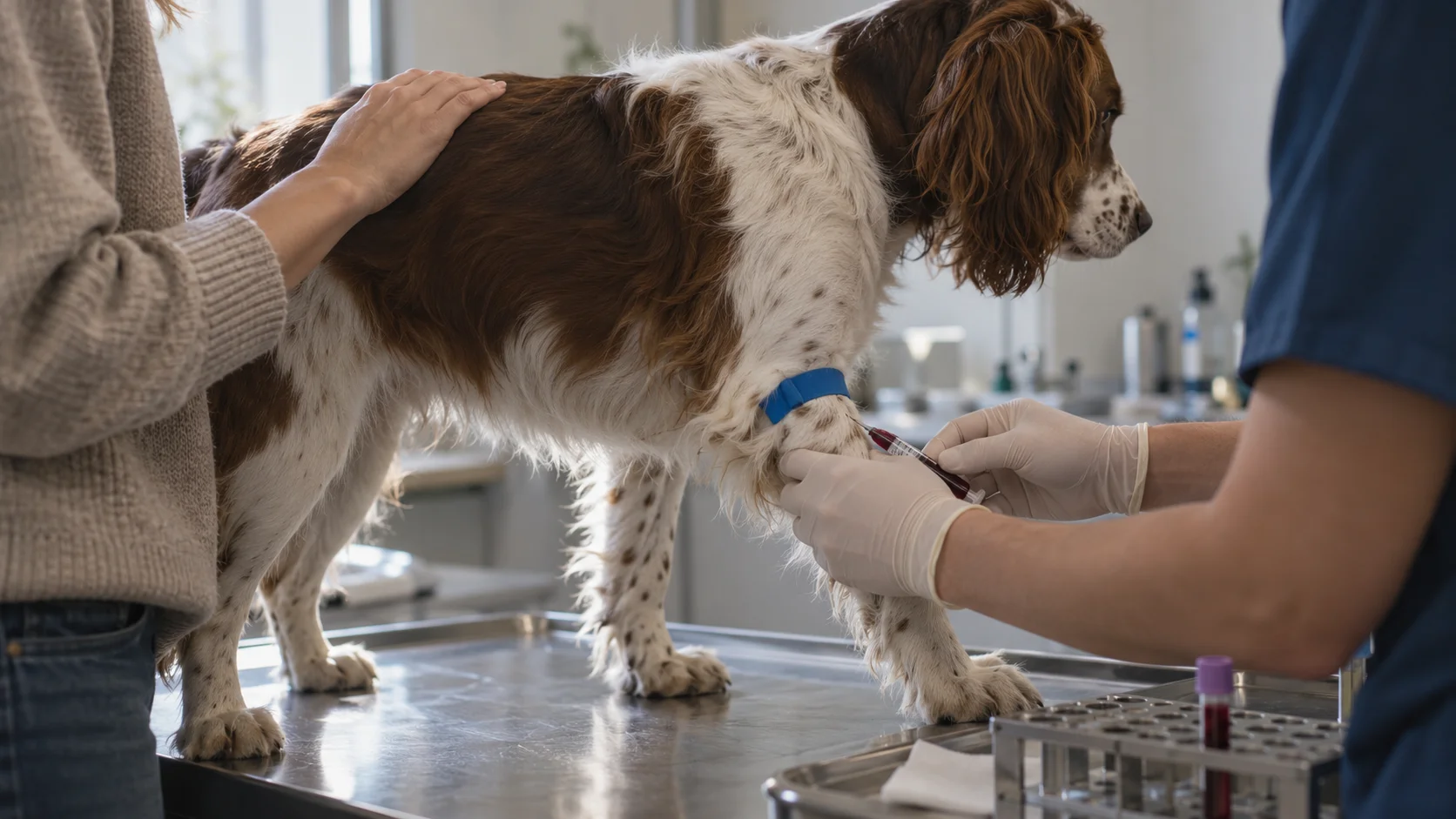
Maintaining RNATT Validity
An RNATT result is valid for 12 months from the date the blood sample was taken. If your overseas posting runs longer than that, as most do, you need a plan for what happens when the original test ages out: a repeat blood draw before the current result expires, taken in an approved country if your pet lives in Thailand, so the 180-day wait does not restart.
Short Overseas Trips
It’s tempting to assume a short holiday to a non-approved country doesn’t really count, on the reasoning that DAFF’s rules are aimed at people who relocate for years, not a two-week trip. Don’t assume that. The framework is built around where your pet has physically been, not how long the trip felt to you. If any part of your plans includes even a brief stay in a non-approved country with your pet, get that specific scenario checked against current requirements before you travel.
Your Record-Keeping Calendar
The single most useful thing you can build before departure is a calendar, not a folder. Track these dates from day one:
- Microchip implant date: must predate every vaccination that follows
- Rabies vaccination date(s): including every booster for the full length of your posting
- RNATT blood draw date: the date drawn, separately from the date it reaches the laboratory
- RNATT laboratory receipt date: this is the date the 180-day countdown actually starts in a Group 3 staging country (in Singapore and other Group 2 countries, the official identity check date starts it)
- 180-day eligibility date: laboratory receipt date plus 180 days
- RNATT 12-month expiry date: blood draw date plus 12 months; the test needs renewing before this if your posting runs longer
- Each booster’s next-due date: set a reminder at least two weeks ahead of every one, not on the day itself
- Australian export certificate date: your baseline compliance record, kept alongside everything above
A simple spreadsheet with these eight dates, shared with whoever is managing your pet’s care overseas, does more to prevent a return-trip crisis than any single piece of paperwork.
Worked Example: A Two-Year Move to Thailand
A Sydney-based family accepts a two-year posting to Bangkok, with a dog that has lived in Australia its whole life. Preparing properly, their timeline looks roughly like this: in the two months before departure, the dog is confirmed microchipped (already compliant), given a rabies booster, and blood-drawn for RNATT four weeks after the vaccination, with the sample sent to ACDP. The export certificate and Notice of Intention to Export are completed in the same window, and the dog departs for Bangkok once everything is confirmed. Through the two years in Thailand, the family calendars every booster due date and travels with the dog to an approved country once a year for the booster and a new RNATT, as DAFF requires for pets living in a non-approved country. They keep receipts and vet records organised as they go.
Around six months before the planned return, not six weeks, the family starts arranging the required approved-country stay, most commonly a relocation to Singapore for the mandatory consecutive period immediately before export to Australia, alongside a DAFF import permit application and a Mickleham quarantine booking through the department’s approved quarantine facility.
Where this family’s plan nearly went wrong: at around the fourteen-month mark, a booster appointment was pushed back during a busy stretch, and the record-keeping calendar flagged that the new date fell three weeks after the booster’s due date. They rebooked it ahead of the due date. Had it gone ahead late, even by a day, DAFF would have required revaccination, a new RNATT and a fresh 180-day wait.
We put every leg of a staged route on one plan.
Tell us where your pet is travelling, and we map the stages for you.
If You’re Moving More Than One Pet
Every date on the record-keeping calendar above needs tracking per animal, not per household. Two dogs on different vaccination schedules can end up with different RNATT eligibility and expiry dates, and it’s easy to lose track of which timeline belongs to which pet once you’re managing two or three sets of dates instead of one. Keep separate rows, not a merged summary, and double-check before any booking that you’re working from the right animal’s dates.
What Pre-Departure Preparation Cannot Do
Preparation is not a workaround, and it has limits. It cannot eliminate the requirement to spend the mandated period in an approved country immediately before your pet’s actual return. Thailand residency doesn’t count toward that, no matter how early you did your Australian paperwork. It cannot eliminate Mickleham’s minimum quarantine stay on arrival back in Australia. It cannot guarantee that DAFF’s specific requirements won’t change somewhat over a two-year posting. Biosecurity rules are reviewed and updated, and a plan built in year one should be re-checked against current requirements as the return date approaches, not assumed to be frozen.
An Approved-Destination Decision Tree
Work through this in order for your specific posting country:
- Start: is your destination in DAFF’s Group 1? If yes, minimal additional testing burden; confirm current specifics but the pathway is comparatively fast. If no, continue.
- Is your destination in Group 2? If yes, more documentation than Group 1 but no mandatory extended pre-export residency; still confirm current requirements before booking. If no, continue.
- Is your destination in Group 3? If yes, the full pathway applies: microchip, vaccination, RNATT, 180-day wait, import permit, Mickleham quarantine on return. If no (i.e. your destination is non-approved and not in any group, which is Thailand’s actual status), continue.
- Non-approved country (Thailand, Malaysia and others): your pet cannot return directly at all. The realistic path home is a staged move through an approved country for the required consecutive period immediately before export: through Singapore (Group 2), an official identity check and 180 days’ residence with no RNATT; through a Group 3 country, the full RNATT pathway. Start planning that stage at least six months out, not six weeks.
If you’re not certain which bucket your destination falls into, don’t guess. Confirm it against DAFF’s current published lists before you build a timeline around an assumption.
A Simple Decision Check Before You Book Anything
Ask these four questions in order.
- Is your destination country DAFF-approved (Group 1 or 2), Group 3, or entirely non-approved? Thailand and Malaysia are non-approved, so assume the longer pathway applies from day one.
- Is your pet microchipped with an ISO-compatible chip, confirmed before any rabies vaccination? If vaccination happened first, that shot needs redoing before anything else proceeds.
- If your return will stage through a Group 3 country, has an RNATT been drawn and sent to an approved laboratory, and do you know its 180-day and 12-month dates? If not, this is the next action item, not something to defer until closer to any return trip.
- Do you have a calendar tracking every booster, expiry and eligibility date for the length of your posting? If not, build one this week.
Australia’s biosecurity import requirements and the BICON system explainer are useful next reading if this is your first time working through DAFF’s framework.
If departure is still ahead of you, our guide to what the move to Thailand actually costs and our walkthrough of what happens when your pet lands at Suvarnabhumi cover the outbound journey in full; this page is the one to bookmark for the leg home. For help planning the move itself, get a pet transport quote from SwiftCargo before you lock in departure dates.
Frequently Asked Questions
What happens to my Australian pet’s health status when I move overseas?
Your pet doesn’t carry a permanent “Australian” status that follows it everywhere. DAFF’s import rules for cats and dogs are based on which countries the animal has actually lived in and for how long, immediately before it tries to come back. Moving to a non-approved country like Thailand, even after a lifetime in Australia, puts your pet on the same pathway as an animal that has never set foot in Australia at all.
Can my dog return to Australia directly from Thailand?
No. Thailand does not appear on any of DAFF’s approved country lists, so there is no direct import pathway. Our companion guide on why pets can’t fly directly from Thailand to Australia explains the mechanism in full; this article is about preparing for that reality before you leave, not after.
When should I do the RNATT test, before I leave Australia or after I arrive overseas?
Doing it before you leave, while your pet is microchipped, vaccinated and blood-drawn under an Australian vet you can easily verify with, removes a major source of friction later and starts your own planning clock immediately. It does not, on its own, let you skip the requirement to spend time in an approved country immediately before your eventual return. Confirm the exact sequencing for your timeline with DAFF or a pet export agent before you lock in dates.
What if my rabies vaccination lapses while I’m living overseas?
Treat a lapsed booster as a real problem, not paperwork. DAFF treats a lapse of even one day as disqualifying: your pet would need revaccination, a new RNATT and a fresh 180-day residency in an approved country. Calendar every booster due date before you leave Australia, and build in a buffer rather than renewing on the exact expiry day.
Does a short holiday to a non-approved country affect my pet’s return eligibility?
Treat any time at all in a non-approved country as consequential rather than assuming a short trip is safe. DAFF’s framework is built around where your pet has actually been, not how long the trip felt. If a short visit to Thailand or a similar destination is part of your plans, confirm the specific impact on your pet’s eligibility with DAFF or an approved pet export agent before travelling, rather than assuming a brief stay doesn’t count.
What’s the biggest mistake Australians make when planning to bring their pet home?
Treating the return leg as a problem for future-them. Families research the outbound move in detail and then discover the return requirements for the first time when they’re already trying to book flights, months or years later. The approved-country residency period, the quarantine booking, and the paperwork all take lead time that a two-year posting actually has, provided you start the clock on day one instead of at the eighteen-month mark.