
The wrong way to choose an Australian port is to ask which one is “best” in the abstract. The right question is which one is best for the cargo, the timeline, and the final destination you are actually trying to serve.
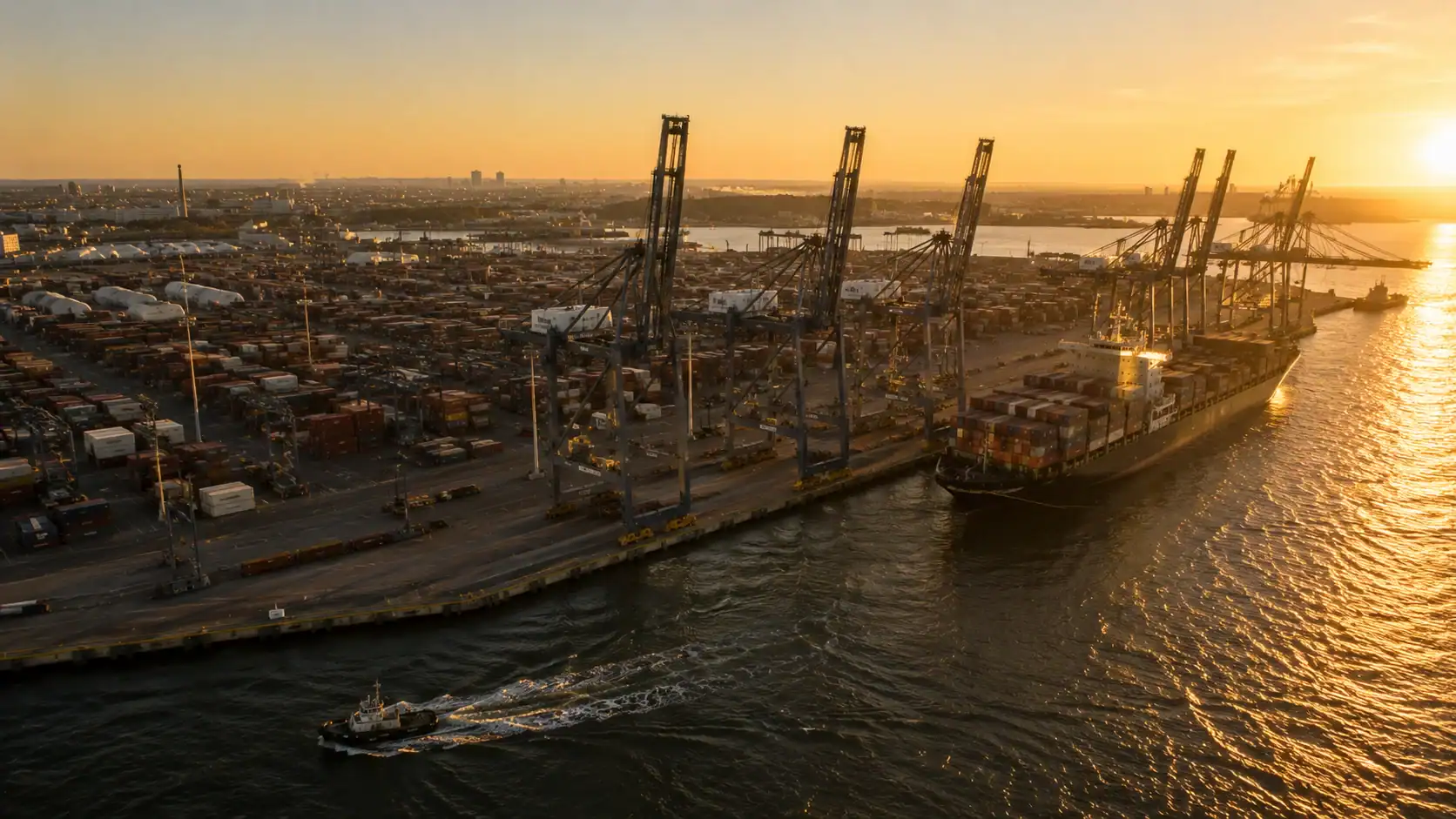
Sydney, Melbourne, and Brisbane are all major gateways, but they do not solve the same inland delivery problem. One may look attractive on the ocean leg while creating more friction once the container has to move inland. Another may seem more expensive up front but reduce domestic transport complexity afterward.
That is why no single Australian port is best for inbound cargo. Only better and worse gateway choices exist for a specific shipment profile.
This matters because port decisions influence far more than discharge. They affect drayage, inland freight timing, destination-state exposure, and how much optionality you retain once the goods are on the ground.
Why There Is No Single Best Port
Australian importers often talk about ports as if one gateway wins on reputation alone. That is too simplistic. A port is only good if it fits the distribution problem behind the shipment.
If the cargo is ending up in New South Wales, Sydney may be operationally obvious. If the consignee footprint is in Victoria, Melbourne can reduce the amount of inland movement you need to buy after discharge. If the shipment needs to serve Queensland efficiently, Brisbane may be the cleaner answer.
That is why serious port selection starts with destination logic, not port mythology. The same structure applies wherever a country offers more than one plausible gateway. It is the same decision logic that separates Laem Chabang from Bangkok port for shipments into Thailand.
When Sydney Makes Sense
Sydney works best when the cargo is actually solving a Sydney or broader New South Wales delivery problem. That sounds obvious, but importers still ignore it when they chase a slightly better ocean rate somewhere else and then pay for it domestically.
If the goods need to reach Sydney customers quickly, or the receiving business footprint is concentrated in that corridor, Sydney can be the most rational option simply because it reduces handoffs after the port leg ends.
The practical advantage is not that Sydney is magically easier. It is that the cargo is already closer to where it needs to be.
When Melbourne Makes Sense
Melbourne becomes attractive when the shipment is tied to Victoria or when southern distribution is the real centre of gravity. For many businesses, the best port is the one that shortens inland movement to the consignee base, not the one that looks best on a map of ocean routes.
This is especially true when inland cost and timing are a bigger concern than the headline ocean price. A gateway that reduces domestic repositioning often creates a cleaner total result, even if it did not look cheapest at first glance.
When Brisbane Makes Sense
Brisbane matters when Queensland is the commercial destination rather than an afterthought. If the cargo ultimately needs to move north, forcing it through a southern gateway can mean buying unnecessary domestic complexity after arrival.
That does not mean Brisbane is always best. It means Brisbane is often best when the importer is honest about where the freight really needs to land and how much secondary movement they are willing to absorb.

Why Inland Delivery Changes Everything
The biggest port-selection mistake is treating port arrival as the finish line. It is not. For most importers, discharge is only the midpoint between ocean transport and final delivery.
That is why inland routes matter so much. The port choice affects drayage, domestic trucking, warehousing flexibility, and the ability to recover from delays if the vessel leg slips. Once you think door-to-door, the “best port” question becomes more disciplined and much more practical.
The correct port is usually the one that solves the inland problem with the least friction, not the one that simply looks cheapest on the bill of lading.
How to Choose the Right Gateway
- Start with the final destination, not the port list.
- Compare the full landed movement, not just the vessel leg.
- Ask which gateway leaves the fewest domestic miles, handoffs, and timing dependencies.
- Consider whether state-level biosecurity sensitivity and the wider customs rule stack change the risk picture for the destination.
- Choose the port that makes the whole move simpler, not the quote that only looks simpler.
Gateway choice compounds over years. Importers who re-test the gateway question every twelve to eighteen months find at least one decision lever each cycle that competitors leave on the table. The re-test weighs the current cargo profile, current inland network, current congestion picture, and current contract pricing. The port itself is not the moat. The discipline of choosing it well, repeatedly, is. Over a decade of inbound shipments, that gap shows up in landed cost, lead-time variance, and how often demurrage events become routine.
Spend a week walking around the three ports and they reveal themselves as different organisms. Port Botany in Sydney sits in a tight basin between two airports and a national park, hemmed in on every side by competing land uses. The Port of Melbourne sprawls along the Yarra mouth with freight networks that feel layered, almost geological. Brisbane’s port is younger, less constrained, with room to expand in ways Sydney and Melbourne never had. None of this shows up in throughput statistics. But it shapes everything downstream. The carrier who chooses a port based purely on tonnage numbers misses the part of the port that determines whether a container will move predictably through inland delivery.
For the full picture on how inbound shipping to Australia works (costs, process, and customs), see Swift Cargo’s Australia shipping guide.
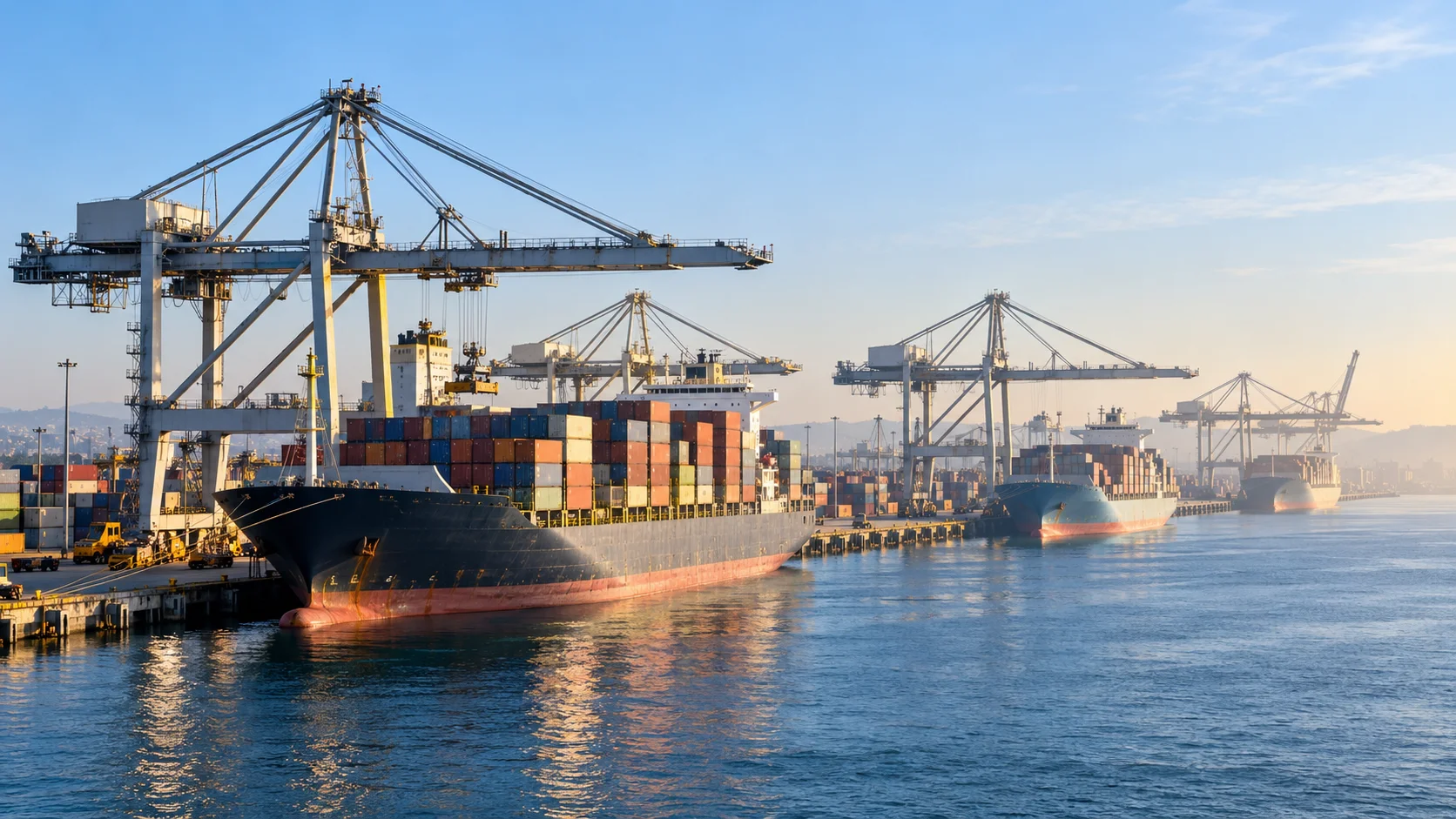
A Worked Gateway Decision: One Shipment, Three Discharge Options
Consider a single 40ft container of general merchandise bound for a distribution centre in Brisbane. The ocean leg from Asia lands at roughly the same cost into any of the three east-coast gateways. The spread between Port Botany, Melbourne, and Brisbane on the water is usually a few hundred dollars, not a few thousand. The real money is decided after the box is discharged.
Discharge in Brisbane and the container drays a short distance to the DC: an in-metro drayage of roughly AUD 400–650, done inside a day. Discharge that same box in Sydney and it now has to travel north: a road linehaul of around 900 km that adds something like AUD 1,800–3,000 and two to three days before it reaches the same door, depending on lane and season. Discharge in Melbourne to chase a marginally cheaper ocean rate, and the interstate move stretches toward AUD 3,000–4,500 over roughly 1,700 km. The “cheaper” gateway quietly became the most expensive way to get the goods to Queensland.
Rail can soften that penalty on the north-south corridor. A container moved by rail rather than road is often cheaper per TEU on the long legs, but it trades some of the saving back for extra transit days and an added handoff at each rail terminal. That trade is exactly the kind of thing you want to price before you commit to a gateway, not discover after the first invoice.
These are indicative ranges, not a rate card: lanes, container size, fuel levies, and rail-versus-road all move them. But the shape of the answer rarely changes: a wrong-gateway penalty of a few thousand dollars per container, repeated across a year of shipments, dwarfs the ocean-rate saving that tempted the decision. If you want to see how each terminal is laid out and connected to the road and rail network behind it, our guide to how Australia’s container ports are structured maps the inland links that make one gateway cheaper to clear than another.
Annualise that Melbourne-versus-Brisbane penalty and the number stops looking like rounding error. A weekly 40ft container running the wrong gateway at, say, AUD 3,500 in extra interstate linehaul over 52 weeks is roughly AUD 182,000 a year: spent to save a few hundred dollars per container on the ocean leg. Most importers would never sign off on a AUD 182,000 line item if it appeared as a single number on one invoice; it only survives because it arrives as fifty-two separate charges, from a different vendor, on a different schedule than the ocean quote it was actually caused by.
Transit predictability matters as much as the dollar figure. A gateway that adds an interstate linehaul also adds a second leg where things can slip: a missed rail slot, a driver shortage, a demurrage clock that starts before the truck arrives. How long delivery to your door takes depends heavily on these post-discharge steps, not the vessel schedule everyone watches on the tracking page.

Treating Gateway Choice Like a Design Decision
Early in our time around freight programs, we treated the port as a procurement line item: pick the cheapest quote, move on. It took a few painful interstate-linehaul invoices to see that the gateway is really a design decision, and design decisions reward you for thinking one layer deeper than the obvious number. Read generously, the importer who keeps choosing the wrong port isn’t careless. Nobody handed them the right question to ask.
So it helps to keep the decision to a short set of questions, asked in order. Where does this cargo actually need to be on the ground? Which gateway leaves the fewest interstate miles between discharge and that address? What does the whole move cost (ocean, drayage, linehaul, and demurrage risk), not just the leg printed on the bill of lading? And how often does this lane repeat, because a small per-container gap compounds fast when it runs weekly? None of these questions require a logistics degree. They require the discipline to ask them before the rate tempts you, not after the invoice arrives.
Answer those four honestly and the gateway usually chooses itself. The importers who do this well are not smarter about ports; they are just more willing to trust the destination logic over the headline price, and that habit, more than any single clever routing, is what keeps their landed costs quietly lower than their competitors’ year after year.
Importers keep sending Sydney-bound cargo through a cheaper-looking gateway that ends up costing more to deliver, and the reason is not ignorance. It is arithmetic on the wrong number. The ocean quote sits in a spreadsheet next to two other ocean quotes, in the same currency, easy to rank in ten seconds. The interstate linehaul invoice arrives two weeks later, from a different vendor, coded to a different cost centre, and rarely gets compared back against the port decision that caused it. Nobody is being irrational exactly. They are optimising the number that is visible and comparable at the moment of booking, and the port fee is more visible than the total delivered cost will ever be. The fix is not smarter importers. It is putting the inland number on the same page as the ocean number before you book, not after the invoice arrives.
Related reading: Moving from Melbourne to Thailand: A Victorian Household’s Guide
Frequently Asked Questions
Which Australian port is best for inbound cargo?
There is no universal answer. The best port depends on the cargo’s final destination, inland delivery needs, and the overall door-to-door routing problem.
Is the cheapest ocean rate always the best routing choice?
No. A cheaper ocean leg can create a more expensive inland move if the goods discharge far from where they actually need to end up.
When does Sydney make the most sense?
Usually when the shipment is solving a Sydney or broader New South Wales delivery problem and domestic repositioning can be minimized.
When does Melbourne or Brisbane make more sense?
When the cargo’s commercial destination is concentrated in Victoria or Queensland and using those gateways reduces inland complexity.
How much does discharging at the wrong port actually cost?
As a rule of thumb, sending a container through a gateway that then needs an interstate road linehaul adds roughly AUD 1,800–4,500 per box and two to four days, depending on the lane and container size. Repeated across a year of shipments, that penalty usually outweighs any ocean-rate saving that prompted the gateway choice in the first place.
Should I split inbound cargo across multiple ports?
Often yes, if your consignee base is genuinely spread across states. Matching each shipment to the gateway closest to its final destination reduces total interstate movement. The trade-off is more customs, drayage, and transport relationships to manage, so it tends to pay off once volumes justify the added coordination.