The hidden military lineage of Southeast Asia’s most resilient supply chain.
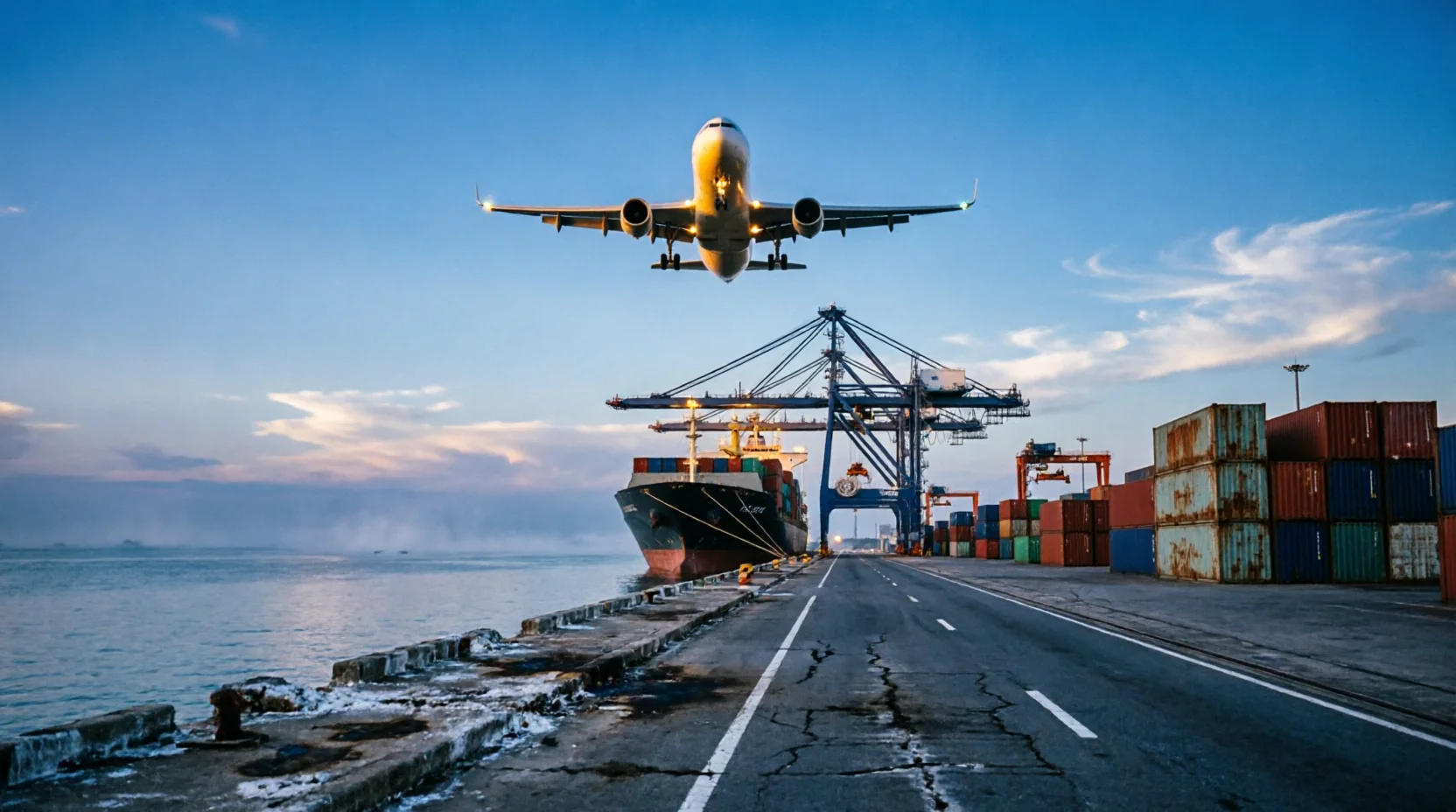
At 3,505 meters long, U-Tapao’s runway was built to launch fully loaded military aircraft into a regional war zone. Today, that same strip of concrete handles civilian jets, charter flights, and cargo operations: clear evidence that Thailand quietly repurposed wartime infrastructure into a commercial backbone.
Most people explain Thailand’s post‑Vietnam boom with culture: food, beaches, affordability. However, the infrastructure story is less famous and more decisive. Beneath the neon sat a logistics network built for war: runways, aprons, fuel farms, navigation aids, and the legal steps that later turned them into civilian gateways for tourists and freight.
At a glance
Claim: Thailand’s postwar tourism scale is partly an infrastructure reuse story, not just a cultural one.
Evidence: seven U.S.-era bases, documented conversion steps (especially U-Tapao), and Eastern Seaboard port build-out (Laem Chabang).
Why it matters: this lineage helps explain why Thailand can absorb tourism surges while keeping freight moving.
During the Vietnam War era, the United States operated from multiple Royal Thai air bases. A Library of Congress analysis of U.S. installations points to key USAF operating bases including Takhli, Korat, Ubon, U-Tapao, Don Muang, and Udorn. Library of Congress: U.S. bases in Thailand during the Vietnam War
The seventh node, Nakhon Phanom, played a significant role in irregular warfare and operations along the Ho Chi Minh Trail, as described in U.S. Navy historical material (U.S. Navy History: Nakhon Phanom).
The wartime requirement was to move aircraft, people, parts, and fuel reliably. Nowhere is that clearer than U-Tapao.
None of this was planned as a tourism bet. A runway built to handle wartime sorties costs almost nothing extra to leave standing once the war ends: it is already poured, already surveyed, already load-rated for aircraft nobody budgets for in peacetime. But it carries enormous option value if a new use ever shows up. That asymmetry, cheap to hold, disproportionately large if called on, is the actual explanation for why this infrastructure survived a fifty-year gap between its original purpose and its current one. Nobody in 1969 forecast a beach-and-buffet economy running off a Cold War airstrip. What existed was a runway that could not lose much by sitting there, and stood to gain enormously the moment the world needed it for something else. Eventually, it did.
1960s: Runways built for wartime tempo would later anchor Thailand’s civilian aviation and tourism expansion.
U-Tapao’s conversion is documented, not mythical
U-Tapao International Airport sits roughly 30 kilometers south of Pattaya and around 35 kilometers west of Rayong city, according to an Environmental and Health Impact Assessment (EHIA) chapter hosted by the Asian Infrastructure Investment Bank (AIIB). AIIB: EHIA Chapter 1 (U-Tapao location and context)
The same EHIA chapter lays out a direct lineage that most logistics content never mentions. U-Tapao was first built as a naval air base with a 1,200-meter asphalt runway, later expanded after a 1965 Thai Cabinet resolution tied to regional conflict dynamics.
After U.S. withdrawal, Thailand decided in 1976 to convert U-Tapao into a secondary international commercial airport complementing Don Muang. It then issued Ministerial Regulation No. 68 (1976) under the Customs Act, designating U-Tapao a customs airport to handle international commercial flights and serve as an import-export hub. AIIB: EHIA Chapter 1 (1976 conversion and customs-airport designation)
Operationally, the Thai Cabinet later approved joint operation with the Department of Commercial Aviation (1989), with responsibilities split between Royal Thai Navy functions and civil aviation functions.
Thailand’s own government tourism and investment channel describes the U-Tapao development plan as including cargo-linked components such as a Cargo Village, Free Trade Zone, and a Cargo Complex. Thailand.go.th: U-Tapao development plan (cargo components)
“Military-grade” is measurable: runway length, apron scale, design criteria
If you want evidence that the infrastructure was built to move heavy metal and still can, the specs do the talking. The AIIB EHIA chapter states U-Tapao’s current runway is an ICAO code 4E runway and measures 3,505 meters by 60 meters, with Instrument Landing System (ILS) Precision CAT I described for runway operations. AIIB: EHIA Chapter 1 (runway class, dimensions, ILS)
U-Tapao’s published airport data lists the same runway length and width and adds an operational detail freight operators care about: apron area and stand counts. It lists an apron size of 432,300 square meters and multiple aircraft stands across apron zones. U-Tapao Airport: runway and apron data
The Vietnam-era air bridge helped seed the tourism product
Tourism didn’t grow out of nowhere. It grew out of demand that was, at first, institutional. During the Vietnam War, Bangkok was a common destination for R&R leave for personnel serving in Vietnam, according to New Zealand’s official Vietnam War history site. Vietnam War (NZ Govt): R&R context
Economists and historians have tracked how that war-linked demand accelerated Bangkok’s service economy. A widely cited academic paper on Bangkok’s development argues that U.S. military involvement influenced the city’s growth through base construction and related infrastructure, through spending by servicemen on leave, and alongside the first major upswing in tourism. TAT Tourism Library: Bangkok development paper (full text)
Pattaya, now a global brand, was a fishing village until the 1960s, according to standard historical summaries. Tourism began there during the Vietnam War as American servicemen arrived on R&R. Wikipedia: Pattaya overview
1970s: War-linked air traffic created demand that accelerated Thailand’s early tourism and service sectors.
Laem Chabang and the Eastern Seaboard turned the war coastline into a container corridor
If U-Tapao is the aviation keystone, Laem Chabang is the maritime sequel. Thailand’s Port Authority history states that the Sattahip port, formerly a Navy port, was developed for commercial use under PAT management in 1979; that construction of Laem Chabang Port started in 1987; and that the port officially opened on 21 January 1991. Port Authority of Thailand: history
The Japan Society of Civil Engineers’ Laem Chabang project page describes a construction project started in 1987, based on a JICA master plan presented in 1985, and emphasizes that roads and railroads were developed in parallel with port development. JSCE: Laem Chabang project archive
JICA’s evaluation summary frames the Eastern Seaboard Development Plan as a major infrastructure program centered on Laem Chabang and Map Ta Phut, explicitly including related infrastructure such as ports, roads, rail, and the development of industrial estates. JICA: Eastern Seaboard Development Plan evaluation summary
A JICA ex-post evaluation summary compares container handling productivity per crane: 28 pieces/hour at Laem Chabang vs 20 pieces/hour at Bangkok Port. JICA: productivity comparison (ex-post evaluation)
Look at a chart of the Gulf and the reason for the shift is in the water itself. Bangkok Port sits some thirty kilometres up the Chao Phraya, behind a river bar that silts faster than it can be dredged, and the Port Authority still caps ships there at roughly 172 metres in length and 8.2 metres of draught, about 12,000 deadweight tonnes. A modern container vessel is more than twice that length. Laem Chabang, by contrast, faces open water up the coast from Sattahip, with berths dredged to 14 metres and room to go deeper. The navy chose this coastline in the 1960s for the same reason the container lines did in the 1990s: deep water close to shore. The runway and the quay wall are answers to one geographic question.
1980s–1990s: Military airfields and coastal bases were folded into the Eastern Seaboard corridor and tourism growth strategy.
The hidden infrastructure lineage behind modern shipping outcomes
At SwiftCargo, our internal household-goods shipment data shows 94% clear Thai customs within 48 hours (internal SwiftCargo measurement; methodology available on request). This infrastructure lineage helps explain why that speed is achievable here, while many civilian-built ports struggle to replicate it at scale.
For the practical takeaways on shipping into Thailand, see our Thailand port expertise section, including which entry points are typically fastest for different household-goods profiles.
Today: The same runway network once designed for military operations now supports Thailand’s $60B tourism economy and regional freight flows.
In 1962, the United States and Thailand signed the Thanat-Rusk communique, which formalized American military access to Thai bases for what would become the Vietnam conflict. By 1965, U-Tapao, Korat, Udon, Ubon, Takhli, Nakhon Phanom, and Don Muang were active. By 1969, about 48,000 US military personnel were stationed in Thailand. Each base needed support: housing, food, transport, laundry, entertainment, infrastructure to serve the rest-and-recreation rotation. The dollars flowed into local Thai economies along observable, measurable lines: payroll for Thai civilian staff at the bases, contracts for construction firms in Bangkok, lease payments to Thai landowners around each installation, and the cash economy that grew up around the bars, hotels, and tour operators serving R&R leave. By mid-1976, the US withdrew. The bases closed. The infrastructure remained. The tourism workforce trained in the late 1960s for one purpose found itself by the early 1980s serving a different clientele: European package tourists, then Australian retirees, then the broader Asian middle class. The 1997 financial crisis tested this economic model.
How many U.S. military bases operated in Thailand during the Vietnam War?
Seven major U.S.-operated air bases functioned in Thailand during the Vietnam War era.
Historical documentation from the Library of Congress and U.S. military archives identifies U-Tapao, Takhli, Korat, Ubon, Udorn, Don Muang, and Nakhon Phanom as key operational nodes. These were not temporary landing strips; they were fully developed airfields with fuel farms, navigation systems, and heavy-aircraft capability, and those foundations were later reused for civilian aviation.
Was U-Tapao originally built as a civilian airport?
No. U-Tapao was built as a naval air base in the 1960s.
According to the AIIB-hosted EHIA documentation, U-Tapao began as a 1,200-meter naval runway and was later expanded during the Vietnam War. In 1976, Thailand formally converted it into a commercial airport under Ministerial Regulation No. 68, designating it as a customs airport. That was an explicit legal pivot from military to trade infrastructure.
How did Vietnam War infrastructure contribute to Thailand’s tourism boom?
Military runway capacity and R&R traffic seeded Thailand’s early tourism ecosystem.
R&R programs brought servicemen into Bangkok and Pattaya, accelerating hotel, restaurant, and entertainment growth. Academic research in the TAT Tourism Library notes how U.S. military spending influenced Bangkok’s service sector expansion, while runway infrastructure later enabled mass civilian aviation.
What makes U-Tapao strategically important today?
Its 3,505-meter ICAO 4E runway supports both heavy passenger jets and cargo aircraft.
Official airport data confirms runway dimensions of 3,505 x 60 meters and significant apron capacity (432,300 sqm). This scale allows U-Tapao to absorb overflow traffic from Bangkok and operate as a cargo-capable customs gateway.
What is the Eastern Seaboard Development Plan?
A large-scale infrastructure program that transformed Thailand’s Gulf coastline into a logistics corridor.
JICA and Port Authority documentation show Laem Chabang Port, Map Ta Phut, industrial estates, and transport links were deliberately developed beginning in the 1980s. This integrated corridor tied former strategic coastline to container throughput and export-driven growth.
Why did Laem Chabang replace Bangkok Port as Thailand’s primary container hub?
Capacity and productivity.
JICA ex-post evaluations report crane productivity of 28 moves per hour at Laem Chabang versus 20 at Bangkok Port. Deep-sea capability also removed river-draft constraints that limited expansion.
Did Thailand intentionally reuse military infrastructure for economic growth?
Yes, through documented cabinet resolutions and regulatory conversion.
Thai Cabinet decisions in 1976 and 1989 formalized U-Tapao’s commercial role. Rather than abandon assets, Thailand layered civilian aviation, customs designation, and later aerotropolis planning onto existing military-grade foundations.
How does this infrastructure lineage affect modern freight and customs speed?
Airports and ports designed for wartime tempo were built for surge resilience. This makes it structurally easier to maintain clearance speed, particularly at nodes like U-Tapao and Laem Chabang compared to ports originally built for lighter civilian throughput.
Was Pattaya always a tourism hub?
No. It was a fishing village prior to the 1960s.
Historical summaries attribute Pattaya’s early tourism growth to Vietnam-era R&R demand. Its proximity to U-Tapao accelerated hospitality investment and later beachfront development.
Is Thailand’s $60B tourism industry purely cultural?
Culture matters, but infrastructure scale enabled mass tourism.
Tourism revenue reached approximately 1.93 trillion baht in 2019. While cultural appeal drives demand, the physical ability to process millions of arrivals annually depends on runway length, customs designation, port throughput, and coordinated corridor planning.
For many shipments to Australia, the most important calendar is Brown Marmorated Stink Bug season, not cyclone season, Christmas congestion, or end-of-financial-year volume.
The Brown Marmorated Stink Bug (BMSB) is an invasive pest risk that has driven seasonal controls on a wide range of goods moving into Australia. When those controls apply, shipment timing, treatment planning, and routing decisions can all change.
Treat BMSB as an operational season, not a technical note buried in compliance guidance. If you ship affected goods between September and April, the bug becomes part of your logistics planning.
What BMSB Is and Why Australia Cares
BMSB is an invasive pest risk because it can hitchhike in cargo and establish itself in environments where it does not belong. Australia already runs a high-protection biosecurity system, and it takes that kind of pathway seriously.
The concern is operational, not theoretical. A pest does not need to be obvious on the outside of a shipment to create risk. If it can shelter in goods, vehicles, machinery, or packaging during transit, border controls become much stricter.
This is one of the clearest examples of how Australian biosecurity works in practice: seasonal risk becomes a shipping rule. For the wider framework, see Australia Biosecurity Rules Explained.
Why the Season Window Matters
DAFF’s seasonal BMSB measures run between 1 September and 30 April (DAFF: BMSB seasonal measures). That date window matters because it changes how the same goods may be treated depending on when they ship and when they arrive.
Many import rules stay stable across the year. BMSB rules behave more like a recurring risk season. That creates periods where treatment, documentation, or shipment eligibility can become more complex.
Seasonal BMSB controls turn a date window into a real inspection-point shipping rule.
Which Countries Trigger the Highest Risk
DAFF publishes an annual list of target high-risk countries: the origins where BMSB populations are established and from which the pest is most likely to hitchhike on cargo. The list changes each season, so check it against the DAFF BMSB measures page before each shipment during the season window.
DAFF actually maintains two country lists, and treating them as one is the most expensive mistake on this topic. Roughly 41 target risk countries carry the full measures: Italy, France, Germany, Switzerland, the United States and most of Europe and North America, plus selected CIS states. Goods from these origins that fall on the target high risk goods list need mandatory treatment before shipment. A second and much shorter emerging risk country list covers China, Japan, the Republic of Korea and the United Kingdom. These origins are not subject to mandatory treatment. They draw random onshore inspection instead, specifically for chapters 39, 94 and 95. If you ship furniture from China or machinery from Japan, the obligation you are planning against is an inspection probability, not a treatment certificate (DAFF BMSB measures: target high-risk country list).
The mechanism matters here. DAFF does not require that the pest be detected in a shipment. The origin country status alone, combined with the goods classification, can trigger the requirement. This is what makes BMSB different from most biosecurity rules: compliance is pre-emptive, not response-based.
What Treatment Is Required and Who Arranges It
When a shipment triggers BMSB measures, the accepted treatments include methyl bromide fumigation and heat treatment (56°C for a minimum of 30 minutes at the core of the wood or goods). The specific treatment required depends on the goods type, the packing material, and DAFF’s current treatment schedule. Not all treatments are available at every origin port, which is one reason pre-departure planning with a freight forwarder matters.
Treatment must be conducted by a DAFF-approved treatment provider and documented with a valid treatment certificate. A shipment that arrives without the correct pre-departure treatment documentation may face re-treatment in Australia at the importer’s cost, or refusal of entry. Both outcomes are expensive and avoidable with early compliance planning.
What the Treatment Certificate Must Actually Show
The detail that decides most disputed BMSB cases is small: the paperwork either reconstructs what happened to the container, or it does not. A valid treatment certificate identifies the DAFF-approved provider, states the treatment method and its parameters, and records a treatment date that sits before the goods were loaded. Those parameters mean the fumigant rate and exposure period, or the core temperature and duration for heat treatment. It also has to tie to the shipment itself: the container number on the certificate must match the container number on the bill of lading.
Officers reviewing seasonal cargo start from those cross-checks. The pattern in refused shipments is consistent: a certificate dated after vessel departure, a container number that matches nothing in the file, a provider that does not appear on the approved list. Each looks like a clerical slip. Each reads, from the border’s side of the desk, as a treatment that may never have happened. The importers who clear quickly during BMSB season are the ones whose file tells one continuous story from treatment shed to wharf.
Which Shipments Are Most Affected
BMSB measures tend to matter most for goods that can shelter or transport the pest. Machinery, vehicles, equipment, certain manufactured goods, and goods shipped from or through higher-risk origins are the main problem categories. DAFF updates the full list of target high-risk goods annually and publishes it on the BMSB measures page.
For mixed shipments, one affected item can change the compliance picture for the whole move.
Why Timing and Routing Matter So Much
BMSB season changes the value of timing discipline. A shipment booked casually inside the seasonal window may face a different treatment burden than one planned with the measures in mind.
Routing also matters because vessel exposure, transshipment history, and treatment arrangements can affect how risk is assessed. BMSB belongs in the planning stage alongside route, departure date, and expected arrival period. It should not surface as a last-minute paperwork check.
Most delays come from discovering too late that the shipment falls into a seasonal control structure that was never priced into the move, not from the treatment itself.
Late discovery is expensive because seasonal controls must be absorbed by real inspection workflows.
Why Late Discovery Is the System Default
BMSB compliance failures are a design problem more than an information problem. The rules are public, the DAFF seasonal measures page is freely accessible, and the target high-risk country list is published at the start of each season. The information is available. The problem is that the logistics system is not designed to surface it at the moment when it would change a decision.
When an importer places a purchase order with a European or North American supplier, they are thinking about product specifications, price, lead time, and payment terms. The BMSB compliance question is several steps removed from that conversation. It surfaces at the freight booking stage, when the goods are already committed and the departure window is fixed. By that point, the cost of accommodating treatment, rerouting, or delaying has already been absorbed into the supply chain whether the importer recognises it or not.
The design solution is to move the BMSB question earlier in the procurement workflow: to the supplier qualification and purchase order stage, not the freight booking stage. A single question in the purchase order process is enough to trigger the right compliance conversation at the right moment: does this shipment depart between September and April from a target high-risk country, and does it fall into a target high-risk goods category? The question does not require specialist expertise. It requires deliberate placement in a workflow where it can produce a decision before commitments are made.
Most BMSB compliance failures come from systems that make the wrong action the path of least resistance, not from importers ignoring clear instructions. In this case, the path of least resistance is to book freight, confirm the shipment, and discover the treatment requirement after the goods have already left the origin port. Reversing that sequence requires a deliberate change in how the purchase and shipping process is structured. The BMSB check has to happen before booking rather than after. Awareness alone does not change the default. The checklist needs to be in the purchase order template, not in a compliance briefing that arrives during the loading window. For shipments that span the September–April season window, a structured pre-booking checklist is the only reliable defence against the expensive surprise.
How Importers Should Plan Around BMSB Season
The most practical approach is to treat BMSB season as a known planning variable.
Check whether the goods and origin profile fall within current BMSB measures before booking, alongside the goods’ standard BICON import conditions.
Verify the current target high-risk country list for the season on the DAFF BMSB measures page.
Assess whether seasonal timing can be adjusted if the move is flexible.
Do not assume manufactured cargo is automatically outside biosecurity risk.
Build extra time into the shipment plan if treatment or seasonal review may be required.
Make sure the compliance conversation happens before departure, not after loading.
BMSB is a good example of why Australia rewards disciplined import planning. The country’s border system checks not only what the goods are but also what season they are moving through. For shipments from origin countries covered by seasonal measures, an understanding of Australia’s peak compliance windows can change the cost and timing of the move.
What Happens When a Shipment Arrives Without Compliant Treatment
The treatment section above covers the two outcomes most guides stop at: re-treatment at the importer’s cost, or refusal of entry. In practice, four distinct pathways open once a shipment is flagged non-compliant, and which one applies is not the importer’s choice. The department can direct offshore treatment (goods held and treated at an approved facility before re-presentation), on-arrival treatment where a suitable facility has capacity, mandatory re-export at the importer’s cost and arrangement, or destruction. None of these run on a timeline the importer controls. Container storage and demurrage charges accrue at the terminal for every day the shipment sits in one of these four queues.
The importers who get caught by this are rarely the ones shipping from a listed high-risk country every season. They already budget for treatment as a routine line item. It is more often the first-time shipper from a newly listed origin, or the returning shipper who assumes this season’s paperwork will work because last season’s did. Neither assumption holds: the target risk country list is reviewed and can change between seasons, and a shipment that cleared cleanly twelve months ago carries no guarantee about this year’s requirements. A clean history is not evidence the risk has gone away. It is only evidence that this particular shipment has not yet been tested against a changed list. The only reliable check is confirming current-season requirements against the DAFF BMSB measures page for the specific origin country before every shipment, not from memory of how the last one went.
BMSB Season Is a Logistics Calendar, Not a Footnote
The simplest decision rule during BMSB season is to ask one question before shipment: “Is any part of this cargo a target high-risk good arriving by sea between September and April?” If yes, a treatment-or-divert decision needs to happen before booking, not after the container reaches Australian waters. The expensive surprise is rarely the rule itself but the discovery that it applied to you after the risk window had already opened.
Frequently Asked Questions
What is BMSB season in Australia?
It is the seasonal period when Australia applies Brown Marmorated Stink Bug risk measures, generally between 1 September and 30 April.
Why does BMSB season matter for shipping?
Because it can change treatment, timing, routing, and compliance requirements for affected goods moving into Australia.
Does BMSB only affect agricultural cargo?
No. It can affect manufactured and industrial goods as well, because the risk is about pest shelter and transport pathways, not just food or plant products.
What countries trigger BMSB treatment requirements?
DAFF publishes two lists. Around 41 target risk countries, covering most of Europe and North America plus selected CIS states, carry mandatory treatment on target high risk goods. China, Japan, the Republic of Korea and the United Kingdom sit on a separate emerging risk country list and draw random onshore inspection instead, with no mandatory treatment. Verify the current lists against the DAFF BMSB measures page before each shipment during the season window.
What is the main planning mistake importers make?
They discover too late that the shipment falls inside a seasonal control window and needs more compliance planning than they allowed for.
Every year, millions of professionals face a deceptively simple decision: whether to move for work. It often arrives quietly. A recruiter calls about a role in another office, a promotion appears in a different country, or an industry hub offers opportunities that do not exist where someone currently lives.
In workforce surveys, more professionals than ever report they would relocate for the right opportunity. Companies often read that willingness as ambition. Mobility signals adaptability, commitment, and a readiness to pursue growth wherever it appears. For employees, the attraction is obvious: larger projects, higher compensation, and proximity to industries shaping global markets.
Yet relocation decisions rarely unfold on a spreadsheet. Accepting a role in another country alters far more than a career trajectory. Friendships become long‑distance relationships. A partner’s professional momentum may stall or need to be rebuilt. Children must reconstruct their social world inside unfamiliar schools. Even the quiet routines that make daily life feel stable disappear the moment a plane ticket is booked: grocery stores, doctors, and neighbors who recognize you.
Some people discover that the move becomes the most rewarding decision they ever make. They remain abroad for decades, build new communities, and realize that distance from home expanded their lives in ways they never expected. Others experience the opposite outcome. Culture shock, loneliness, or logistical friction accumulate faster than anticipated, and the return flight arrives within a year. Countless professionals fall between those two extremes: they move abroad, achieve the career acceleration they were seeking, and eventually return home with lives that are unmistakably different from the ones they left.
The difference between those outcomes rarely comes down to luck. Relocation exposes the same pressures: career opportunity, financial trade‑offs, family dynamics, social disruption, cultural adaptation, and the personal readiness to rebuild daily life somewhere unfamiliar. Some people navigate those forces thoughtfully, while others underestimate them entirely.
Key Factors to Consider Before Moving Abroad for Work
Geography Still Shapes Career Opportunity
The most immediate advantage of relocating for work is also the one people talk about the least carefully: geography determines opportunity. Entire industries still cluster in a handful of cities, and professionals who limit themselves to a single country inevitably limit their exposure to those ecosystems.
A software engineer in a smaller regional market may be extraordinarily talented, yet the most ambitious companies in their field might be concentrated thousands of miles away. Finance professionals often encounter the same gravitational pull toward cities like New York, London, or Singapore. Media careers orbit a different set of hubs. Energy, shipping, consulting, and venture capital each revolve around their own geographic networks. At a certain level of seniority, proximity to those environments still matters.
Over the past two decades this pattern has repeated itself across the technology industry. Engineers who began their careers in smaller national markets often discovered that the most ambitious product teams were clustered in places like Silicon Valley or Seattle. Many eventually faced the same calculation: remain close to home and work on the periphery of the industry, or relocate to the center where venture capital, senior talent, and leadership networks intersected every day. For those who moved, the change was rarely just geographic. It altered the speed and scale of their careers.
When someone becomes willing to move, they widen the market in which their career competes. Recruiters suddenly view them differently. Roles that once felt inaccessible become plausible. Exposure to new teams, new mentors, and larger projects often follows quickly after.
Relocation therefore appears frequently in career success stories. Being physically present in an industry’s center of gravity creates a density of opportunity that is difficult to replicate remotely. Careers still evolve through informal conversations, leadership visibility, and the subtle signals of trust that develop during in‑person collaboration.
Workforce mobility research reinforces how common this calculation has become. Roughly 70% of professionals say they would consider relocating internationally for the right opportunity, according to LinkedIn workforce surveys. At the same time, OECD migration reports estimate that tens of millions of people cross borders each year for work or education. That volume reflects how strongly modern careers remain tied to geographic opportunity.
The same dynamic that creates opportunity also introduces a different form of pressure. Moving into a global hub means entering a labor market filled with equally ambitious professionals who have made the same calculation. The competition becomes sharper, the pace faster, and the expectation of constant performance higher.
Relocation, in that sense, does not simply expand a career. It moves the individual into an environment where the stakes of that career are often far greater than before.
The Financial Upside of Relocating for a Job
For many professionals, the financial argument for relocation appears straightforward. Move to a larger economy, join a company operating on a global pay scale, and the numbers often improve quickly. Salaries in global business hubs can be dramatically higher than those in smaller regional markets, particularly in sectors like finance, consulting, technology, and energy.
In part for that reason, international assignments remain attractive to both employees and companies. Employers frequently package relocation offers with incentives designed to reduce friction: housing stipends, relocation bonuses, schooling support, or tax equalization agreements that protect employees from unfavorable tax differences between countries.
In some cases the financial effect is even more pronounced. Professionals relocating into cities such as Singapore, Dubai, or London may suddenly work inside a different compensation structure than the one that existed at home. Global pay bands, international allowances, and exposure to multinational organizations can shift a career’s financial trajectory in ways that would have been difficult to replicate domestically. One consultant who relocated from a mid-sized European market to Singapore described the experience as entering a different professional universe. Within two years she was managing regional projects across three countries and earning compensation that would have taken far longer to reach in her home market. The move did not simply increase her salary. It exposed her to a scale of business that had never existed in her previous environment.
Why Higher Salaries Abroad Don’t Always Mean Higher Wealth
But the financial story rarely ends with the salary. Global cities that offer the highest compensation also tend to carry some of the world’s highest living costs. Housing, childcare, healthcare, and transportation can reshape the economic equation quickly. A salary that looks extraordinary when converted into a familiar currency can begin to feel far more ordinary once rent, international school fees, and daily expenses are calculated.
This is where relocation narratives often oversimplify the story. Articles celebrating international career moves frequently focus on the income increase without examining the complete financial ecosystem surrounding the move. Yet expatriates regularly discover that the true outcome depends not only on what they earn, but also on how their cost structure changes once they arrive.
Large expatriate surveys reinforce this mixed picture. Many professionals do report higher earnings after relocating internationally, a finding HSBC’s Expat Explorer research has returned repeatedly. Yet cost‑of‑living comparisons compiled by organizations such as Mercer consistently rank cities like Singapore, London, and New York among the most expensive places in the world to live. The same move that expands income can therefore reshape spending just as dramatically.
In the end, relocation can transform someone’s financial position. For some professionals, the move becomes the moment their career begins operating on a different economic scale. But money rarely operates in isolation from the rest of life. A higher salary can make relocation possible. It cannot determine whether the move ultimately feels worthwhile.
When One Career Move Affects Two Careers
For professionals in relationships, relocation decisions rarely belong to one person alone. A job offer may arrive addressed to a single employee, but the consequences of accepting it ripple across an entire household. Modern careers are increasingly built inside dual‑income partnerships. One person’s promotion can quietly require the other to dismantle years of professional momentum.
This dynamic has been studied for decades in international mobility research and is often described as the “trailing spouse” problem. The term itself is slightly misleading. It suggests passive accompaniment, when in reality the second partner often absorbs the most complicated adjustments. Credentials that carried weight at home may not transfer easily abroad. Professional networks disappear overnight. Licensing rules, visa restrictions, or language barriers can delay rebuilding a career for months or even years.
For couples who navigate this transition successfully, the move can become a shared reinvention. Some partners discover new professional paths once they are exposed to a different market. Others use the disruption to pivot careers, pursue further education, or step temporarily into roles that would have been difficult to consider in their previous environment. In those circumstances, relocation becomes something the relationship experiences together rather than something one person sacrifices for the other.
A senior finance executive who relocated from Paris to New York described the experience as a negotiation rather than a decision. His promotion placed him inside the headquarters of a global bank, but his partner had spent a decade building a legal career in France. The couple ultimately agreed to move on the condition that the relocation be treated as a three‑year experiment rather than a permanent shift. That framing reduced the pressure on both careers and made the transition feel like a joint project rather than a sacrifice. But the balance is fragile.
A relocation framed as an exciting opportunity can quietly evolve into a structural imbalance if one partner’s career accelerates while the other’s stalls. Over time, this asymmetry can subtly strain the relationship. The partner who moved for work may feel pressure to justify the decision. The partner who relocated in support may struggle with a sense that their own ambitions were temporarily placed on hold.
Global mobility research consistently highlights this dynamic. Studies of international assignments frequently report that partner dissatisfaction ranks among the most common reasons overseas postings end earlier than planned. Companies may design generous relocation packages around salary, housing, and tax equalization, but the long‑term success of the move often depends on whether both careers can regain momentum in the new environment.
In practice, couples who handle relocation well tend to treat it less like a single career decision and more like a joint life project. They discuss what each partner needs professionally, what compromises might be temporary, and how both careers can eventually regain momentum.
Here’s a pattern that rarely makes it into the relocation brochure: across international assignments, partner dissatisfaction is one of the most common reasons an overseas posting ends earlier than planned, more common than the employee’s own performance, more common than cultural fatigue. Companies spend enormous effort designing the piece of the move that predicts success least reliably: the salary, the housing stipend, the tax equalization. Meanwhile the real failure point is quietly sitting with whichever partner didn’t get the job offer. That’s not a footnote. It’s the mechanism behind a large share of relocations that looked perfect on paper and ended eighteen months early. The relocation package answers the wrong question. The right one is whether both careers can regain momentum in the new country and not just the one that got the offer. Almost nobody asks it before signing.
A relocation that advances only one life rarely feels like a success for very long.
The Hidden Social Cost of Moving Abroad
Leaving a country means losing the social architecture that quietly holds everyday life together. Most adult friendships are not formed through dramatic moments. They emerge through repetition: the colleague who becomes a confidant after years of working together, the friends who appear at the same bar every Friday, the neighbors whose small conversations slowly accumulate into familiarity. None of them feels significant on its own, but together they create the sense that life is anchored somewhere.
When someone relocates internationally, that infrastructure disappears almost immediately. The routines that once made social life effortless vanish overnight. A dinner invitation now requires a plane ticket. Casual coffee becomes a scheduled video call. Even the friends who care deeply about staying connected eventually drift into different rhythms simply because daily proximity no longer exists.
Surveys of expatriate life consistently identify the first year abroad as the most socially difficult phase of relocation. Careers may progress quickly during this period, but friendships develop more slowly. Professional networks form through work almost immediately, while deeper personal relationships require time, trust, and repeated encounters. For many professionals the contrast is surprising: their careers expand while their social world temporarily contracts.
Over time, most people rebuild a sense of community. New friendships form, often with other expatriates navigating similar transitions. Local networks gradually expand. But the process takes longer than relocation narratives suggest.
Career advice columns tend to frame mobility as a purely professional calculation. In reality, relocation also requires rebuilding the human connections that make life feel stable. That work happens slowly, one relationship at a time, long after the excitement of the move has faded.
Culture Shock Is Usually Quieter Than People Expect
Even when a destination country appears outwardly similar to home, everyday life often operates according to entirely different assumptions. These differences rarely appear in the dramatic cultural stereotypes people imagine before moving abroad. Instead, they emerge through the quiet mechanics of daily life.
Opening a bank account might require paperwork that feels unfamiliar. Renting an apartment may involve legal structures that do not exist in someone’s home country. Healthcare systems, tax reporting, and even customer service expectations can follow rules that feel unintuitive at first. None of these tasks are especially difficult on their own, but together they form a steady stream of small adjustments that define the early months of living abroad.
Language differences intensify this experience. Even professionals who relocate into countries where English is widely spoken quickly discover that informal conversations, humor, and bureaucratic language often operate at a level that textbooks never fully prepare people for. Misunderstandings are rarely catastrophic, but they are frequent enough to remind newcomers that they are operating slightly outside the rhythm of the society around them.
Some people thrive in this environment. For them, cultural friction becomes a form of intellectual curiosity. Each unfamiliar interaction reveals something about how another society organizes trust, authority, and everyday cooperation. Over time, navigating those differences can deepen empathy and broaden perspective in ways that rarely happen without leaving home.
Others experience the same process as a form of quiet exhaustion. When every small administrative task requires extra attention, the cumulative effect can be surprisingly draining. Researchers studying expatriate adjustment often note that cultural adaptation unfolds in phases rather than all at once. Cross‑cultural adaptation research consistently puts full adjustment to a new social environment at somewhere between six months and two years, with the earliest part of that span the most intense.
The romantic version of moving abroad often highlights travel, discovery, and new cultural experiences. The lived version is usually more mundane: learning, one system at a time, how another society actually functions. Those who approach that process with patience and curiosity often adapt well. Those who expect life to operate exactly as it did at home can find the transition far more difficult than they anticipated.
Why Identity Often Changes After Relocation
Relocating to another country does more than change someone’s address. It reshapes the way they understand who they are, because so much of identity is reinforced by context. At home, people rarely notice how often they are being mirrored back to themselves. Abroad, that mirror is missing, and the absence can feel strange before it feels freeing.
In a familiar environment, identity is reinforced constantly in small, ordinary ways. Your professional reputation travels ahead of you into meetings, so you do not have to reintroduce your competence from scratch every week. Cultural references land easily in conversation because you share the same background assumptions with the people around you. Friends and colleagues already understand your history, your humor, and the unspoken signals that communicate credibility. Over time, that accumulated recognition becomes almost invisible, but it underpins how most adults move through their daily lives without friction.
International relocation removes much of that scaffolding at once, and people feel it in places they did not expect. A respected job title may not carry the same weight in another labor market, especially if the company, industry, or credentials are unfamiliar locally. Educational qualifications might require explanation, translation, or formal recognition. Cultural shorthand stops working, which can make even casual conversation feel slightly effortful. And the unwritten rules of social interaction shift too: how direct you are, how you disagree, how you build trust. The smallest moments can then leave someone wondering whether they are being read correctly.
For some people, that anonymity is exhilarating. Freed from the expectations attached to their previous environment, they experiment with new professional directions, new communities, and even new versions of themselves. The distance from old assumptions creates room to choose what to keep and what to discard. This is often part of the appeal, particularly for women who have carried years of social roles that were never fully negotiated but always expected.
Professionals often notice this shift most clearly in moments that once felt effortless. A manager who led large teams at home may suddenly be re-explaining their experience in every meeting. An entrepreneur whose reputation carried weight in one market may need to rebuild credibility from the beginning in another. None of this reflects a loss of ability. Identity travels more slowly than people do.
A marketing director who relocated from Toronto to Berlin once described the adjustment bluntly: “Back home I walked into meetings and people already knew what I had built. In Germany I spent the first year explaining my entire career to every new client.” The experience was not humiliating, but it was humbling. Reputation, she realized, had a geography.
Over time, belonging usually returns, but it rarely arrives on the same timeline as career progress. People find their places, learn the cultural cues, and rebuild social confidence one relationship at a time. Yet the deeper sense of “I fit here” tends to lag behind the practical milestones of visas, apartments, and promotions. Career success abroad can arrive relatively quickly. The deeper experience of belonging almost always takes longer.
It helps to remember how new this kind of move actually is. For almost the whole of human history, the average person died within a few miles of where they were born, and belonging was not a choice you made but a fact you inherited. A modern career relocation quietly asks you to manufacture, in a year or two, the sense of home that older societies spent generations building into a place. That is a remarkable freedom and a real cost wearing the same coat. The question worth sitting with before you accept the offer is not whether you can afford to go, but which version of belonging you are willing to trade for the one waiting at the other end.
What Moving Abroad Means for Children
For families with children, relocation raises questions that extend far beyond career opportunity. Adults may evaluate a move through the lens of salary, professional visibility, or long‑term ambition. Children experience the same decision through a different framework: stability, friendships, school environments, and the routines that make their world feel predictable.
Changing countries often means changing educational systems at the same time. A child who was comfortably integrated into one curriculum may suddenly have to navigate a different structure, different expectations, and sometimes an entirely new language. International schools are designed to soften this transition, yet even within those environments the adjustment can take time. New classmates must become friends, teachers must learn personalities and strengths, and a sense of belonging has to be rebuilt gradually.
Developmental psychology research suggests that major relocations can temporarily disrupt children’s academic and social stability. New educational systems, unfamiliar peer groups, and different cultural expectations all arrive at once, which can challenge the continuity many children rely on while forming friendships and confidence at school. When moves happen repeatedly or without careful preparation, children may begin to experience their social world as temporary, as though friendships and routines could disappear just as soon as they become comfortable. Most children do eventually adapt. For parents, the decision therefore becomes less about whether children can adapt and more about whether the timing of the move respects the stability children need while growing up.
In part because of this tension, relocation decisions involving families tend to unfold more slowly than those involving single professionals. Parents often weigh not only whether the move benefits their career, but whether the timing aligns with their child’s developmental stage. A relocation that feels manageable for a young child may become far more disruptive during adolescence, when social identity and peer relationships carry greater emotional weight.
These realities do not suggest that families should avoid moving abroad. Many children ultimately describe international childhoods as formative and enriching. But they do mean that the decision cannot be evaluated purely through professional ambition. When families relocate, the career opportunity belongs to the parent. The adjustment, however, belongs to the entire household.
The Practical Logistics of Relocating Internationally
Once someone decides to relocate abroad, the conversation stops being theoretical and becomes practical very quickly. Career opportunity, cultural curiosity, and financial projections suddenly collide with a far simpler question: what exactly are you going to do with everything you own?
People often underestimate how much of their lives they have accumulated until they begin preparing to move. It all appears in the inventory at once: furniture collected over years, books that once seemed insignificant, kitchen equipment, documents, photographs, childhood items, and gifts from friends and family. Each object forces a small decision. Does it travel with you, remain in storage, get sold, or quietly disappear into a donation box before departure?
The scale of that decision changes dramatically depending on the stage of life someone happens to be in. A young professional moving out of a studio apartment may discover their entire household fits into a handful of boxes and a small shipment. In those cases, relocation can feel almost liberating. The financial cost is manageable, the logistics are simple, and the emotional attachment to physical belongings is relatively light.
For families further along in life, the equation becomes far more complicated. Years of accumulated furniture, children’s belongings, personal archives, and sometimes pets transform relocation into a significant logistical operation. Decisions multiply quickly: what should be shipped overseas, what should remain in storage, and what might be cheaper to replace once the family arrives. Even the timeline of the move becomes a strategic choice, especially if housing has not yet been secured in the destination country.
At this stage, many professionals begin working with international relocation specialists who coordinate packing, shipping inventories, and customs documentation. The process usually starts with cataloguing an entire household into a detailed inventory before belongings are packed into containers for sea or air transport. Depending on the distance involved and customs clearance timelines, international household shipments commonly take several weeks to multiple months before arriving in the destination country.
The mechanics are rarely mysterious, but they do require planning. Professional relocation companies absorb most of that work, and none of it is fundamentally different from moving between cities within the same country. The scale and the timing differ, and those two things introduce layers of coordination a domestic move never demands.
For many professionals, this is the moment when relocation stops feeling abstract. Career opportunity may have initiated the move, but logistics make the decision real. A life that once existed comfortably in one place is gradually packed into crates, containers, and paperwork, preparing to reappear somewhere else.
It is also the stage where expectations tend to recalibrate. Moving abroad is rarely as impossible as people fear, yet it is rarely as simple as relocation brochures suggest. Transferring an entire household across borders reminds people that career mobility is not just a professional decision. It is the physical relocation of a life that has been built piece by piece over many years.
Most people who move abroad for work set a two-year window before they leave. A surprising number stay seven. The ones who return on schedule often describe the move as a genuine success: they got what they came for and came home with something new in their careers. The ones who extend rarely regret the extension either, but the decision to stay happened so gradually they didn’t quite notice it forming. The interesting part is not the outcome, since both groups tend to end up fine. It is that both groups set the same initial timeline, and the timeline was equally wrong for both of them. A two-year window is less a plan than a way of making a large decision feel manageable. It gets renegotiated. The more useful framing might be: what would have to be true for the move to be worth a longer commitment? People who answer that question before they leave tend to handle that renegotiation with more clarity when it comes, and it almost always comes.
Why Defining a Timeline Matters When You Move Abroad
One of the most common mistakes professionals make when relocating abroad is failing to define how long they expect the move to last. Recruiters often frame international assignments as exciting opportunities, but the timeline behind those opportunities is frequently left ambiguous. Without some sense of duration, people can drift into life decisions that were never consciously planned.
Many relocations begin with a simple premise: stay for two or three years, gain international experience, and then decide what comes next. On paper that framework seems straightforward. In practice, careers, relationships, and opportunities evolve quickly once someone becomes embedded in a new environment. Promotions appear, networks expand, and the idea of leaving can become harder than originally expected.
Corporate mobility data shows that this assumption is common. International assignments are frequently structured around two‑to‑three‑year time horizons, yet a significant number of professionals ultimately remain abroad far longer once new opportunities emerge inside the destination market. What begins as a temporary move often evolves into a much longer chapter of someone’s life.
For many expatriates, a move that was initially described as temporary quietly becomes permanent. A professional might arrive for what was meant to be a two‑year assignment, only to find themselves still abroad a decade later. The career momentum created by proximity to global markets can be difficult to abandon once it begins accelerating.
Yet the opposite outcome also occurs frequently. Some relocations reveal unexpected friction: cultural fatigue, family challenges, or simply the realization that the place never quite feels like home. Without a clear framework for reassessing the decision, individuals may remain longer than they should simply because reversing the move feels complicated.
Establishing a time horizon does not require absolute certainty. Few people can predict exactly how a relocation will unfold. But periodic checkpoints let people revisit the decision deliberately rather than drift through it: two years, five years, or a specific professional milestone.
The question is therefore not only whether the move creates opportunity today. It is also whether the future version of yourself will still feel that the trade‑offs were worth making. A relocation that begins with curiosity and ambition should ideally remain a choice, not become a circumstance that feels difficult to unwind.
What we actually know about moving abroad for work arrives in three layers of confidence. Some claims are well-supported by data: the wage premium for working abroad in the same role is genuinely substantial in certain industries, and the cost-of-living arbitrage is real in specific country pairs. Others are only partially supported: career-progression outcomes after an international move are heterogeneous and depend heavily on industry, level, and host country. A third group is essentially folk wisdom. The clearest example is the idea that “working abroad makes you more employable when you return,” which is empirically much weaker than people assume. Most career advice on this topic flattens those three layers into a single confident narrative. A more honest reading would separate them: high confidence on the immediate financial picture, moderate confidence on the medium-term career arc, low confidence on the long-term return-home premium. The decision to move abroad for work is better made against the calibrated picture than the confident one. Confidence asymmetry is where most career mistakes live.
In the end the choice is rarely as complicated as it feels in the moment. Strip away the variables and one binding constraint usually remains: the partner’s career, the children’s schooling, or the financial runway. That constraint determines whether the move is viable before any of the other analysis matters. Get clear on the actual bottleneck first, and the rest of the decision tends to resolve itself.
The Most Important Factor in a Successful Relocation: Timing
If there is one factor that quietly determines whether a relocation succeeds or fails, it is rarely the destination city or even the job itself. The deeper variable is the stage of life the person moving happens to be in when the opportunity appears. A relocation amplifies whatever is already present and carries it into a new environment, whether that is ambition, curiosity, exhaustion or uncertainty.
Some people reach a point where the idea of rebuilding life somewhere else excites them. They are curious about unfamiliar cultures, open to new friendships, and comfortable with the idea that routines will temporarily disappear. For those individuals, relocation often feels less like disruption and more like expansion. The unfamiliar becomes energizing rather than destabilizing.
Others confront the same decision while already carrying a different emotional landscape. Careers may already feel overwhelming, relationships may be under strain, or the simple fatigue of modern professional life may have accumulated in the background. In that context, moving abroad does not remove pressure. It multiplies it. The very changes that make relocation attractive on paper can intensify stress rather than relieve it: new systems, new networks, new expectations.
This is why two professionals can accept nearly identical relocation offers and experience radically different outcomes. One person may describe the move as the most transformative chapter of their life. The other may spend the same year counting the months until they can return home. The external circumstances appear similar, yet the internal readiness for change is never the same.
Psychologists who study major life transitions often note that adaptability and openness to new experiences strongly influence how individuals adjust to disruption. Relocation is exactly that: a controlled disruption of nearly every daily pattern a person has built over years. When someone approaches that disruption with curiosity and resilience, the transition can unlock growth that would have been difficult to achieve otherwise.
But relocation is no escape from an already unstable situation. Moving countries does not resolve burnout, uncertainty, or unresolved personal pressures. More often, it exposes them. Distance from familiar support systems can make those pressures feel sharper.
For this reason, the most important question behind relocation is rarely about geography. It is about timing. Opportunity may open the door to moving abroad, but personal readiness determines whether walking through that door leads to reinvention or regret.
Understanding that difference requires a level of honesty that career decisions rarely demand. It means asking not only whether the opportunity is impressive, but whether the person accepting it is genuinely prepared to rebuild their life around it.
HSBC Expat Explorer Survey – General resources and survey findings for expatriates (HSBC has discontinued the standalone financial-comparison report this citation originally pointed to).
https://www.expat.hsbc.com/expat-explorer/
When clients ask how long shipping to Australia takes, they are asking one question and need the answer to another. They ask for a transit number. The real answer is a workflow.
The vessel leg matters, but it is only one part of the timeline. Australian clearance, biosecurity inspection risk, seasonal controls, port handling, and inland delivery can all stretch the move or hold it steady, depending on how well the shipment was planned.
Ocean Transit Times by Origin Region
The figures below are typical vessel transit times for sea freight to major Australian ports. These figures cover port-to-port; the full door-to-door timeline is longer once customs, inspection, and inland delivery are included.
Southeast Asia (Singapore, Thailand, Vietnam): 10–18 days to Sydney or Melbourne
Northeast Asia (China, Hong Kong, Japan): 14–22 days
South Asia (India, Sri Lanka): 18–25 days
Middle East (UAE, Oman): 20–28 days
Europe (UK, Germany, Netherlands): 28–40 days (via Suez) or 35–45 days (Cape route)
North America (USA West Coast): 14–22 days
Air freight is 2–5 days airport to airport from Asian origins and US West Coast gateways, and 5–7 days from the US East Coast or Europe, with customs clearance adding 1–3 working days after arrival. The spread is departure frequency rather than flying time: a daily consolidation adds a day, a weekly one can add six before the cargo leaves. These are vessel-only figures; they do not include the time from door to port of loading, or from port of discharge to final delivery address.
The Real Stages in an Australia Shipping Timeline
A realistic door-to-door timeline usually includes at least these stages:
booking and cargo preparation (1–5 working days depending on readiness)
inland transport from origin address to port of loading (1–3 days)
port cut-off and vessel departure (typically 3–7 days after cargo arrives at origin port)
ocean transit (see figures above)
arrival at Australian port and document review (1–2 days)
biosecurity and customs assessment (1–5 days, depending on risk flag)
inspection or treatment if required (add 3–10 days if triggered)
release and inland delivery to final address (1–5 days depending on destination)
A reasonably clean shipment from Bangkok to Melbourne, for example, might look like this: 5 days cargo prep, 2 days inland to Laem Chabang, 4 days to vessel departure, 12 days ocean transit, 2 days arrival processing, 2 days customs clearance, 1 day truck to warehouse, for a total of 28 days. Add a biosecurity inspection and that adds 5–7 days. That is a realistic outcome range, not a worst case.
The European equivalent stacks differently, and the 8 to 14 week door-to-door range for Europe comes from this arithmetic rather than from the ocean leg alone. Rotterdam to Melbourne on the Cape routing runs roughly 5 days cargo prep, 2 days inland to the port, 4 days to vessel departure, 40 days ocean transit, 2 days arrival processing, 3 days customs and biosecurity assessment, and 2 days inland delivery, for about 58 days, or a little over 8 weeks. That is the clean end. A biosecurity inspection adds 5 to 7 days, a treatment order on top of it can add another week, and a Perth or Brisbane delivery off a Melbourne discharge adds several more. Stack all three and the same shipment reaches the 13 to 14 week end of the published range without anything going wrong at sea. The width of that range is not uncertainty about the vessel. It is the number of conditional stages the cargo has to clear after it lands.
How Clearance and Inspection Shape Timing
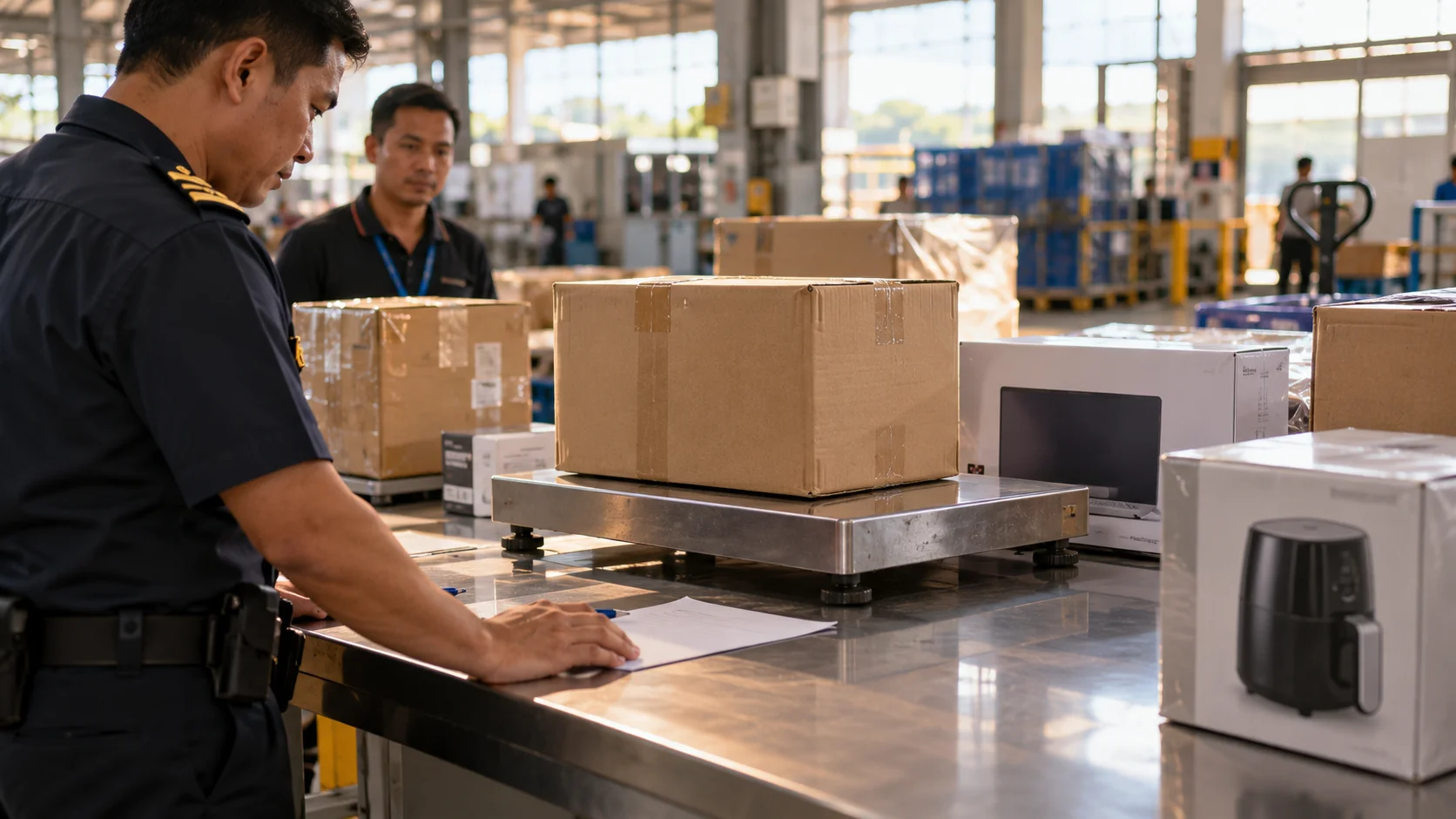
Australia’s clearance process is one of the biggest variables in the timeline. The Australian Border Force import overview sets out the documentary requirements: commercial invoice, bill of lading or airway bill, packing list, and where applicable an import permit or import declaration. If the documents are clean, the cargo profile is low-risk, and the shipment fits the declared conditions, the process usually moves smoothly. If risk flags remain, timing starts to widen.
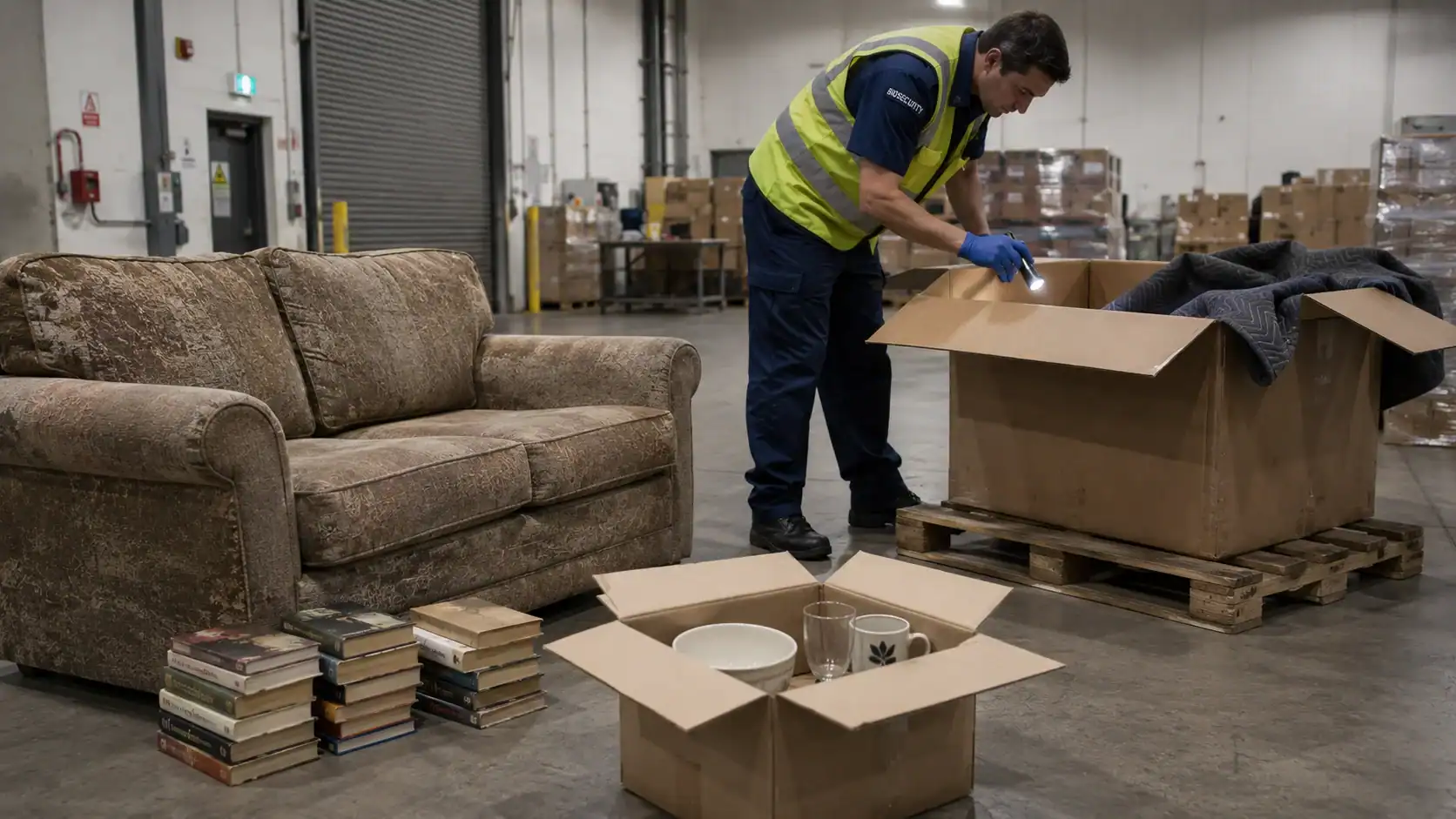
Biosecurity is usually the most misunderstood part of the answer. Personal effects, used household goods, machinery, wood products, and contamination-prone goods can all attract review or inspection. For more on that exposure, see Why Used Household Goods Get Inspected in Australia.
That means the real timeline is often won or lost before arrival, when the shipment is being prepared. The DAFF clearance and inspection overview details the conditions that trigger examination and the categories of goods most likely to be selected for treatment.
Documentation That Protects the Timeline
Missing or incorrect documents are one of the most common avoidable causes of clearance delay. The standard set required for a commercial import into Australia includes:
Commercial invoice: must state the value, description, country of origin, and terms of trade accurately. Discrepancies between the invoice and the goods trigger scrutiny.
Bill of lading or airway bill: the transport document issued by the carrier. Must match the invoice description.
Packing list: itemised contents, weights, and dimensions per carton or pallet.
Import declaration: lodged electronically with ABF via a licensed customs broker before goods arrive. For household effects, a separate form covering the nature and origin of goods.
Import permits (where required): for certain goods including food, biological products, weapons, and chemicals. Check the BICON database for biosecurity import conditions before shipment.
For personal effects being imported by a returning resident or new migrant, the key additional requirement is evidence of overseas residence, typically a passport showing the period abroad and proof of employment or residence overseas, which supports the duty-free entry claim under the traveller’s exemption.
How Seasonality Can Create Extra Delay
Australia’s shipping timeline is not only about weather. It is also about compliance seasons.
BMSB is the clearest example. During the seasonal measures window, certain goods can move into a more controlled compliance path even if the physical route is unchanged. The measures window typically runs September through May, covering the Southern Hemisphere warm season when BMSB is most active.
Even after release, the shipment is still not finished. Australia is large, so domestic delivery can add meaningful time depending on the gateway and the destination. Freight released at Sydney but destined for Brisbane adds road transport time. Freight released at Melbourne for Perth adds much more, sometimes a week or longer by road, depending on mode and carrier scheduling.
That is why the port choice matters so much. A route that looks efficient to the coast can still create a slower overall move once the goods have to travel domestically. For a gateway-by-gateway comparison, see Sydney vs Melbourne vs Brisbane: Which Port Is Best for Inbound Cargo?.
The inland leg drives more of the variance in actual delivery dates than the ocean leg does. Two containers that left Shanghai on the same vessel can reach a Sydney warehouse three days apart because of how each one moved through Port Botany, road haulage, and final-mile delivery. An importer negotiating faster ocean services is probably optimising the wrong variable. The leverage is in the inland network, and most importers do not see it because the freight industry sells the ocean leg as the product and treats the inland leg as an afterthought.
Who Owns the Timeline?
Here is the uncomfortable part of shipping to Australia: by the time a container is on the water, most of the timeline has already been decided. The documents were either prepared to Australian standards or they were not. The goods were either cleaned, declared, and classified correctly or they were not. Nobody at the destination port can recover time that was given away at origin.
That is why the importers with the most reliable timelines treat pre-departure preparation as their own responsibility rather than something the supplier or the forwarder will handle by default. They confirm the packing declaration before the container is sealed. They check seasonal measures against the actual sailing date, not the booking date. They ask the broker to review the commercial invoice while there is still time to fix it.
If you take one action from this article, take this one: two weeks before your cargo ships, sit down with the document set and read it the way an Australian border officer will. Every inconsistency you find at that table is a delay you will not experience at the wharf.
How to Reduce Avoidable Delay
Prepare goods for Australian biosecurity standards, not just for packing.
Check whether any product-specific conditions or seasonal controls apply before departure.
Use declarations that match the goods actually in the container.
Choose the gateway with the final delivery route in mind.
Build some buffer into the plan if the goods are high-risk or seasonally affected.
Every shipping line and terminal gives a container a fixed number of free days to be collected after it clears, usually somewhere between five and ten calendar days. The carrier and the terminal set that number, not the importer. That number is the real deadline behind the headline transit time, and it is the one almost nobody mentions until the invoice for detention and storage arrives.
The transit-time estimate quoted at booking answers “when does the ship arrive.” It does not answer “how many days do I have to actually collect the container once it does.” Those are two different clocks running on two different rules. A shipment that clears customs and biosecurity in three days after a five-week ocean voyage has used most of its free time before the importer has even confirmed delivery arrangements at the destination end. The ocean leg does not pause the free-time clock, and neither does a slow customs broker or a delayed transport booking. Confirm the free-time allowance and book destination transport before the vessel arrives, not after clearance completes. That is the difference between a shipment that lands on budget and one that quietly accrues a few hundred dollars a day in charges nobody planned for.
Run the numbers on a typical case and the exposure stops being abstract. Say the terminal allows seven free days and clearance and biosecurity inspection together take three. That leaves four real days to get destination transport booked and the container collected, not seven. If transport falls through and the container sits an extra five days past the free-time window, detention and storage charges commonly run somewhere in the AUD 150–300 per day range depending on the terminal and container size. Call it AUD 750–1,500 on a shipment where nothing in the shipping contract itself went wrong. The clearance was clean, the vessel was on schedule, and the importer still paid a four-figure penalty because destination transport wasn’t confirmed until after the ship had already docked.
That penalty is entirely avoidable, and avoiding it costs nothing but a phone call made a week earlier than habit suggests. Ask your forwarder for the exact free-time allowance in writing at booking, not at arrival, and treat destination transport as something to lock in the moment the vessel departs origin, not the moment it reaches the wharf.
Sea freight from Asia takes 10–22 days vessel-to-vessel; from Europe, 28–45 days. Add clearance, inspection risk, and inland delivery, and the door-to-door timeline is typically 5–10 weeks from Asia and 8–14 weeks from Europe.
What causes the biggest delays?
Biosecurity inspection risk, poor preparation, missing or inaccurate documents, seasonal measures, and inland delivery complexity are common causes.
Is the ocean schedule the most important part?
No. It matters, but many Australia delays happen around the border and after discharge, not just during transit. The inland leg typically drives more delivery date variance than the ocean leg does.
How can I make the timeline more reliable?
Prepare high-risk goods properly, check conditions early, choose the right gateway, and build the plan around the whole chain instead of just the transit leg.
Does the BMSB season affect transit time?
It can. Goods covered by the seasonal measures, typically metalwork, machinery, and certain vehicles from BMSB-risk countries, must comply with treatment or inspection requirements that add time. The measures window runs approximately September through May each year.
The wrong way to choose an Australian port is to ask which one is “best” in the abstract. The right question is which one is best for the cargo, the timeline, and the final destination you are actually trying to serve.
Sydney, Melbourne, and Brisbane are all major gateways, but they do not solve the same inland delivery problem. One may look attractive on the ocean leg while creating more friction once the container has to move inland. Another may seem more expensive up front but reduce domestic transport complexity afterward.
That is why no single Australian port is best for inbound cargo. Only better and worse gateway choices exist for a specific shipment profile.
This matters because port decisions influence far more than discharge. They affect drayage, inland freight timing, destination-state exposure, and how much optionality you retain once the goods are on the ground.
Why There Is No Single Best Port
Australian importers often talk about ports as if one gateway wins on reputation alone. That is too simplistic. A port is only good if it fits the distribution problem behind the shipment.
If the cargo is ending up in New South Wales, Sydney may be operationally obvious. If the consignee footprint is in Victoria, Melbourne can reduce the amount of inland movement you need to buy after discharge. If the shipment needs to serve Queensland efficiently, Brisbane may be the cleaner answer.
That is why serious port selection starts with destination logic, not port mythology. The same structure applies wherever a country offers more than one plausible gateway. It is the same decision logic that separates Laem Chabang from Bangkok port for shipments into Thailand.
When Sydney Makes Sense
Sydney works best when the cargo is actually solving a Sydney or broader New South Wales delivery problem. That sounds obvious, but importers still ignore it when they chase a slightly better ocean rate somewhere else and then pay for it domestically.
If the goods need to reach Sydney customers quickly, or the receiving business footprint is concentrated in that corridor, Sydney can be the most rational option simply because it reduces handoffs after the port leg ends.
The practical advantage is not that Sydney is magically easier. It is that the cargo is already closer to where it needs to be.
When Melbourne Makes Sense
Melbourne becomes attractive when the shipment is tied to Victoria or when southern distribution is the real centre of gravity. For many businesses, the best port is the one that shortens inland movement to the consignee base, not the one that looks best on a map of ocean routes.
This is especially true when inland cost and timing are a bigger concern than the headline ocean price. A gateway that reduces domestic repositioning often creates a cleaner total result, even if it did not look cheapest at first glance.
When Brisbane Makes Sense
Brisbane matters when Queensland is the commercial destination rather than an afterthought. If the cargo ultimately needs to move north, forcing it through a southern gateway can mean buying unnecessary domestic complexity after arrival.
That does not mean Brisbane is always best. It means Brisbane is often best when the importer is honest about where the freight really needs to land and how much secondary movement they are willing to absorb.
Why Inland Delivery Changes Everything
The biggest port-selection mistake is treating port arrival as the finish line. It is not. For most importers, discharge is only the midpoint between ocean transport and final delivery.
That is why inland routes matter so much. The port choice affects drayage, domestic trucking, warehousing flexibility, and the ability to recover from delays if the vessel leg slips. Once you think door-to-door, the “best port” question becomes more disciplined and much more practical.
The correct port is usually the one that solves the inland problem with the least friction, not the one that simply looks cheapest on the bill of lading.
How to Choose the Right Gateway
Start with the final destination, not the port list.
Compare the full landed movement, not just the vessel leg.
Ask which gateway leaves the fewest domestic miles, handoffs, and timing dependencies.
Choose the port that makes the whole move simpler, not the quote that only looks simpler.
Gateway choice compounds over years. Importers who re-test the gateway question every twelve to eighteen months find at least one decision lever each cycle that competitors leave on the table. The re-test weighs the current cargo profile, current inland network, current congestion picture, and current contract pricing. The port itself is not the moat. The discipline of choosing it well, repeatedly, is. Over a decade of inbound shipments, that gap shows up in landed cost, lead-time variance, and how often demurrage events become routine.
Spend a week walking around the three ports and they reveal themselves as different organisms. Port Botany in Sydney sits in a tight basin between two airports and a national park, hemmed in on every side by competing land uses. The Port of Melbourne sprawls along the Yarra mouth with freight networks that feel layered, almost geological. Brisbane’s port is younger, less constrained, with room to expand in ways Sydney and Melbourne never had. None of this shows up in throughput statistics. But it shapes everything downstream. The carrier who chooses a port based purely on tonnage numbers misses the part of the port that determines whether a container will move predictably through inland delivery.
A Worked Gateway Decision: One Shipment, Three Discharge Options
Consider a single 40ft container of general merchandise bound for a distribution centre in Brisbane. The ocean leg from Asia lands at roughly the same cost into any of the three east-coast gateways. The spread between Port Botany, Melbourne, and Brisbane on the water is usually a few hundred dollars, not a few thousand. The real money is decided after the box is discharged.
Discharge in Brisbane and the container drays a short distance to the DC: an in-metro drayage of roughly AUD 400–650, done inside a day. Discharge that same box in Sydney and it now has to travel north: a road linehaul of around 900 km that adds something like AUD 1,800–3,000 and two to three days before it reaches the same door, depending on lane and season. Discharge in Melbourne to chase a marginally cheaper ocean rate, and the interstate move stretches toward AUD 3,000–4,500 over roughly 1,700 km. The “cheaper” gateway quietly became the most expensive way to get the goods to Queensland.
Rail can soften that penalty on the north-south corridor. A container moved by rail rather than road is often cheaper per TEU on the long legs, but it trades some of the saving back for extra transit days and an added handoff at each rail terminal. That trade is exactly the kind of thing you want to price before you commit to a gateway, not discover after the first invoice.
These are indicative ranges, not a rate card: lanes, container size, fuel levies, and rail-versus-road all move them. But the shape of the answer rarely changes: a wrong-gateway penalty of a few thousand dollars per container, repeated across a year of shipments, dwarfs the ocean-rate saving that tempted the decision. If you want to see how each terminal is laid out and connected to the road and rail network behind it, our guide to how Australia’s container ports are structured maps the inland links that make one gateway cheaper to clear than another.
Annualise that Melbourne-versus-Brisbane penalty and the number stops looking like rounding error. A weekly 40ft container running the wrong gateway at, say, AUD 3,500 in extra interstate linehaul over 52 weeks is roughly AUD 182,000 a year: spent to save a few hundred dollars per container on the ocean leg. Most importers would never sign off on a AUD 182,000 line item if it appeared as a single number on one invoice; it only survives because it arrives as fifty-two separate charges, from a different vendor, on a different schedule than the ocean quote it was actually caused by.
Transit predictability matters as much as the dollar figure. A gateway that adds an interstate linehaul also adds a second leg where things can slip: a missed rail slot, a driver shortage, a demurrage clock that starts before the truck arrives. How long delivery to your door takes depends heavily on these post-discharge steps, not the vessel schedule everyone watches on the tracking page.
Treating Gateway Choice Like a Design Decision
Early in our time around freight programs, we treated the port as a procurement line item: pick the cheapest quote, move on. It took a few painful interstate-linehaul invoices to see that the gateway is really a design decision, and design decisions reward you for thinking one layer deeper than the obvious number. Read generously, the importer who keeps choosing the wrong port isn’t careless. Nobody handed them the right question to ask.
So it helps to keep the decision to a short set of questions, asked in order. Where does this cargo actually need to be on the ground? Which gateway leaves the fewest interstate miles between discharge and that address? What does the whole move cost (ocean, drayage, linehaul, and demurrage risk), not just the leg printed on the bill of lading? And how often does this lane repeat, because a small per-container gap compounds fast when it runs weekly? None of these questions require a logistics degree. They require the discipline to ask them before the rate tempts you, not after the invoice arrives.
Answer those four honestly and the gateway usually chooses itself. The importers who do this well are not smarter about ports; they are just more willing to trust the destination logic over the headline price, and that habit, more than any single clever routing, is what keeps their landed costs quietly lower than their competitors’ year after year.
Importers keep sending Sydney-bound cargo through a cheaper-looking gateway that ends up costing more to deliver, and the reason is not ignorance. It is arithmetic on the wrong number. The ocean quote sits in a spreadsheet next to two other ocean quotes, in the same currency, easy to rank in ten seconds. The interstate linehaul invoice arrives two weeks later, from a different vendor, coded to a different cost centre, and rarely gets compared back against the port decision that caused it. Nobody is being irrational exactly. They are optimising the number that is visible and comparable at the moment of booking, and the port fee is more visible than the total delivered cost will ever be. The fix is not smarter importers. It is putting the inland number on the same page as the ocean number before you book, not after the invoice arrives.
There is no universal answer. The best port depends on the cargo’s final destination, inland delivery needs, and the overall door-to-door routing problem.
Is the cheapest ocean rate always the best routing choice?
No. A cheaper ocean leg can create a more expensive inland move if the goods discharge far from where they actually need to end up.
When does Sydney make the most sense?
Usually when the shipment is solving a Sydney or broader New South Wales delivery problem and domestic repositioning can be minimized.
When does Melbourne or Brisbane make more sense?
When the cargo’s commercial destination is concentrated in Victoria or Queensland and using those gateways reduces inland complexity.
How much does discharging at the wrong port actually cost?
As a rule of thumb, sending a container through a gateway that then needs an interstate road linehaul adds roughly AUD 1,800–4,500 per box and two to four days, depending on the lane and container size. Repeated across a year of shipments, that penalty usually outweighs any ocean-rate saving that prompted the gateway choice in the first place.
Should I split inbound cargo across multiple ports?
Often yes, if your consignee base is genuinely spread across states. Matching each shipment to the gateway closest to its final destination reduces total interstate movement. The trade-off is more customs, drayage, and transport relationships to manage, so it tends to pay off once volumes justify the added coordination.
Thai Customs applies a simple standard to duty-free personal effects. The friction begins when your shipment makes that standard hard to verify.
Inspection decisions are often triggered by packaging and paperwork signals, not by what you intended.
Most duty disputes aren’t about contraband. They’re about classification. Thailand customs used items are assessed on how the shipment reads: like a household relocation, or like a retail import wearing a household label.
Thailand’s published exemption rests on three words: owned, possessed, used. If those words aren’t easy to verify, clearance becomes interpretive. Interpretation is where delays and cost exposure begin.
Case vignette (composite): The paperwork says “used household effects.” The container mostly supports it. Then one premium appliance appears in pristine retail packaging: foam inserts, manuals, plastic wrap. The officer doesn’t need to prove it is new. They only need to doubt it is used. The file pauses. Clarifications begin. Storage charges accumulate while proof is requested.
Composite based on recurring patterns described in public guidance and expat clearance anecdotes. Not a single verified individual case.
Visa status and eligibility: who actually qualifies?
The household effects exemption is tied to a change-of-residence framework. In practice, Customs expects documentation that supports lawful residence and the conditions under which personal effects are being imported.
Eligibility is not based on intent. It is based on documentation. Different visa categories and residency circumstances can affect how a shipment is treated at clearance.
Work-authorized entrants: Typically must show valid visa status and supporting authorization documentation consistent with a relocation.
Returning Thai nationals: Must demonstrate overseas residence consistent with Customs’ published conditions.
Long-stay categories (retirement, education, other non-work classes): May face different treatment depending on whether the shipment clearly meets change-of-residence conditions.
Relocation to Thailand is not just a shipping event. It is a residency event. Customs treatment aligns with your documented move status. When your visa pathway, entry timing, and shipment narrative match, clearance tends to follow process rather than debate.
Different long-stay categories carry different practical expectations at clearance, as our retirement visa shipping guide sets out. Customs reviews retirement pathways, work-authorized entry, and categories such as the DTV visa shipping pathway in the context of relocation intent, not just by visa label.
The 1-month / 6-month rule for household goods is not flexible in spirit, even when it appears flexible in conversation. Customs evaluates shipment arrival against your documented entry date. Small paperwork inconsistencies create larger eligibility questions.
Red Line vs Green Line: what it really means
Thailand uses a selectivity system that routes import declarations into inspection channels. Green Line typically clears with minimal review. Red Line can trigger document checks and physical inspection. Thai Customs (official): selectivity / inspection channels overview
Selection does not mean wrongdoing. It means Customs is looking at your file more closely. At that point, presentation matters.
The “Used vs New” decision logic officers apply
Officers are not debating philosophy. They are drawing inferences.
Presentation first: If an item looks retail, it will often be treated like retail until you supply context.
Quantity second: Multiples of high-value items can resemble resale, even when they belong to a real household.
Documentation third: Vague inventories force interpretation. Specific inventories force classification.
Timeline last: Clear ownership history and a clean arrival window usually stop the questions quickly.
No formal burden-of-proof language exists. In practice, prior use must be obvious.
The signals that make items look “new”
Original packaging: sealed plastic, inserts, brand-new cartons.
Uniform identical units: several monitors, identical appliances.
Unopened accessories: cables and manuals still factory sealed.
High resale categories: premium electronics, specialty tools, coffee equipment.
None of these automatically create duty. They invite questions.
Every item on that list is a status signal before it’s a customs signal. Sealed packaging, matched sets and factory-fresh accessories are the exact cues a marketer uses to say “this is new, this is desirable, this hasn’t been touched.” An officer at Laem Chabang reads the same cues for a different purpose: not “would I buy this,” but “does this match the used-household-effects story on your paperwork.” If your shipment sends a new-goods signal, the burden shifts to you to explain the mismatch. The fix is not hiding the signal. It is making sure your documented story and your shipment’s signals tell the same tale before the container ever leaves.
High-risk items that commonly trigger questions
Espresso machines and premium kitchen appliances
Large-screen televisions and OLED monitors
Professional camera gear
High-end audio systems
Multiple power tools
Designer furniture in factory wrapping
These categories hold resale value. That alone can increase scrutiny when they appear unused. A few related categories may not be importable at all: knives, drones, certain electronics and luxury items. The distinction between restricted and prohibited is worth checking before the container is sealed.
What actually happens during inspection
Inspections usually start with a few high-signal cartons and expand only if inconsistencies appear.
When a shipment is selected for inspection, the sequence is usually routine. The stress comes from uncertainty, not from the steps.
Document review (visa status, timing, inventory).
Clarification questions on high-value items.
Physical opening of selected cartons.
Condition review and quantity cross-check.
Determination or request for additional proof.
Delays usually come from incomplete answers, not from the existence of inspection itself.
Port selection does not eliminate inspection risk, but operational flow differs by location, as our comparison of Laem Chabang vs Bangkok Port sets out. Understanding how documentation is reviewed at your arrival port reduces avoidable procedural delays.
How to prove Thailand customs used items qualify for exemption
Dated photos before packing: show items in a lived-in environment.
Serial number documentation: connects the physical item to prior use.
Ownership records: older invoices can help establish timeline.
Condition notes in inventory: small scratches or wear details.
Remove retail cues: avoid shipping used goods as showroom units.
Customs does not evaluate documents in isolation. Visa status, packing list specificity, shipment timing, and item condition are read together. When those signals align, clearance accelerates. When they conflict, scrutiny expands.
Packing list: what clears vs what stalls
A shipment can read like a household move, or like retail inventory, depending on how it is packed and documented.
Weak: “Electronics – assorted”
Stronger: “Used 55-inch television (1 unit)”
Stronger: “Used espresso machine (1 unit, household use)”
The more specific the line, the less there is to interpret.
Pre-shipment evidence checklist
Photograph high-value items before movers pack them.
Confirm shipment timing aligns with arrival window.
Remove unnecessary factory packaging.
Prepare a clean, itemized inventory.
Keep visa and arrival documentation accessible.
Myths vs reality
Myth: If it is older than six months it is automatically duty-free. Reality: Age helps. Presentation still matters.
Myth: Sea freight is always easier than air. Reality: Both are subject to selectivity.
Myth: Receipts always help. Reality: Recent receipts can create questions.
Myth: If you label everything “used personal effects,” it will be treated as used. Reality: Labels help. Signals and evidence carry more weight.
Myth: A packing list can be generic as long as Customs can open boxes. Reality: Generic lists increase inspection scope and slow resolution.
Myth: One questionable item won’t affect the rest of the shipment. Reality: One questionable item often expands the questions. It can still be resolved item-by-item if you respond fast.
Edge-case scenarios that cause surprise duty
Exemptions are usually lost on the margins, on Thailand customs used items that don’t match the story the paperwork tells. When documentation and presentation diverge, scrutiny escalates quickly. The scenarios below are the common failure modes, each with its practical correction.
1) The item is used, but it ships like it’s new
This is the most common trigger: a genuinely used appliance or electronics unit packed in pristine retail packaging.
How it gets interpreted: Retail import disguised as personal effects.
What reduces doubt: Pre-shipment photos in use, serial-number proof, and an inventory line that reads like household use, not resale.
2) You bought replacements right before moving
Many relocations involve last-minute purchases: a new monitor after an old one breaks, a new kitchen appliance because it was cheaper to replace than repair.
How it gets interpreted: New goods imported under the household-effects umbrella.
What reduces doubt: Separate the new items, declare them clearly, and avoid mixing them into the “used household” narrative.
3) Gifts and unopened items
Unopened goods are hard to defend as “used.” Gifts create the same problem: ownership may be clear, prior use usually isn’t.
How it gets interpreted: Newly acquired goods entering Thailand as consumer imports.
What reduces doubt: If it’s unopened, assume scrutiny. Decide whether to ship it separately and be prepared for assessment.
4) Multiples of identical high-value items
Two laptops can be a couple. Four identical monitors in perfect condition can look like inventory.
How it gets interpreted: Quantity inconsistent with “reasonable household” use.
What reduces doubt: Explain household composition (family members, home office), itemize each unit, and document prior use for the most resale-friendly items.
5) “Home office” shipments that resemble business equipment
How it gets interpreted: Commercial equipment entering under personal effects.
What reduces doubt: Describe the items as household/home-office use, avoid bulk quantities, and keep the packing list specific.
6) Mixed shipments: used goods plus clearly new goods
The fastest way to widen inspection is to mix a relocation shipment with a small retail import.
How it gets interpreted: The shipment contains dutiable goods; Customs may examine more of it to separate categories.
What reduces doubt: Segregate: pack new items together, label them clearly, and do not force officers to hunt box-by-box.
7) Timing that is technically close, but messy in the paperwork
Even when you are within the 1-month / 6-month window, multiple entries and unclear “arrival” evidence can slow clearance.
How it gets interpreted: Unclear eligibility timeline.
What reduces doubt: Keep clear arrival evidence and align the file to the entry date your broker will present.
If items become dutiable: duty/VAT (conceptual)
If Customs classifies items as dutiable, how it assesses them depends on HS classification and valuation methodology. VAT then applies under the relevant framework.
How Thailand determines customs value (conceptual overview)
When items are treated as dutiable, assessment is not arbitrary. Customs valuation follows internationally recognized principles, typically anchored to transaction value and adjusted under defined methodologies when necessary.
Officers may rely on alternative valuation methods permitted under customs law frameworks when no invoice exists, or when the invoice does not reflect the value Customs considers appropriate. That is why documentation consistency matters even for personal effects.
Classification (HS code) determines the applicable duty structure. Valuation determines the base on which any duty and VAT are calculated. The two are separate analytical steps. In sequence, Customs classifies the item, determines value under valuation rules, applies duty where relevant, and then calculates VAT on the assessed base.
What happens if only one item is disputed?
Disputes are often item-specific, not shipment-wide. If one appliance or electronics unit is treated as dutiable, Customs may assess duty on that item while allowing the remainder of the shipment to clear under the household effects framework.
The key variable is documentation response time. Delays usually stem from clarification requests rather than from Customs rejecting the whole container.
Delay risk: storage and timing exposure
When clearance pauses for clarification or reassessment, storage and handling timelines continue. Ports and bonded facilities operate on procedural schedules independent of relocation stress.
Most costly scenarios arise from slow documentation turnaround rather than from enforcement intensity. Preparing the file in advance shortens time under review, and less time under review means less cost exposure.
A simpler decision rule before you start packing
The whole “used vs new” framework comes down to one practical filter: can a customs officer hold an item up and instantly recognize it as a thing you have already lived with? If yes, it almost always passes. If no, it almost always invites a question. Original packaging, retail tags, factory wrapping and mint condition are what put an item in that second group. That single test will not catch every edge case, but it correctly classifies the vast majority of household items in under a second per item.
The discipline most relocators skip is applying that test before the packers arrive, not after the inventory is sealed. Spend an hour walking your possessions with this filter, set aside anything that fails, and decide for each: ship in original condition and accept the duty exposure, sell or donate locally, or ship after deliberately removing the original packaging and using the item for thirty days first. The decision is cheap to make in your origin country and expensive to make at the Thai border.
Watch what actually happens at the inspection bench, step by step, and the decision looks less like a rule and more like a sequence. The officer opens the container manifest, then the packing list, then a box. The question is evidentiary. Does the wear on this item match the story the paperwork tells? A sofa with visible use, a receipt two years old, and an address history that lines up will move. The same sofa wrapped in factory plastic, with no provenance, invites a second look. The ruling follows the evidence in front of the officer, in the order it is presented. That is why the packing decisions made weeks earlier, at home, tend to settle the outcome before anyone reaches the border.
How do I prove items are used for Thailand customs?
Short answer: Show clear proof the items were owned and used before shipping.
Thai Customs applies the standard “owned, possessed, and used.” The strongest proof includes dated pre-shipment photos, serial-number documentation, and a clear itemized packing list. The goal is to make prior use obvious without forcing officers to interpret vague descriptions.
What does “owned, possessed, and used” mean under Thailand Customs rules?
Short answer: The goods must clearly have been owned and used abroad.
The exemption is designed for relocation, not retail import. Customs expects the goods to have been in your possession and actually used in your previous country of residence. Packaging, quantity, and documentation must support that narrative.
What is the 1-month / 6-month rule for personal effects in Thailand?
Short answer: It must arrive within the official 1-month before / 6-month after window.
Customs guidance generally ties eligibility to goods arriving no earlier than one month before and no later than six months after your arrival in Thailand. Clear arrival documentation is essential to avoid timeline disputes.
What is considered “reasonable quantity” for Thailand customs household goods?
Short answer: Only quantities consistent with a normal household qualify.
Customs does not publish fixed limits. Instead, officers evaluate whether the shipment resembles a genuine household relocation rather than commercial inventory. Multiples of identical high-value goods can increase scrutiny.
Can I import brand-new items duty free when moving to Thailand?
Short answer: No. Brand-new items are usually dutiable.
The household effects exemption applies to used goods. Brand-new, unopened, or recently purchased items may fall outside the exemption and be assessed under standard import rules.
Does visa type affect Thailand customs duty exemption?
Short answer: Yes. Eligibility depends on your documented residence status.
Customs reviews visa and residency documentation as part of the eligibility check. Work-authorized entrants and returning Thai nationals must demonstrate compliance with change-of-residence conditions.
What happens during a Red Line inspection in Thailand?
Short answer: It undergoes detailed document and physical inspection.
Red Line selection does not imply wrongdoing. It means Customs will review documentation in more detail and may open selected cartons to verify condition, quantity, and consistency with your declared inventory.
Can one disputed item cause duty on the entire shipment?
Short answer: No. Duty is typically assessed item-by-item.
Customs commonly assesses duty only on the questioned item. However, a single high-risk item can expand inspection scope if documentation is unclear, which may slow overall clearance.
How does Thailand Customs calculate duty and VAT on household goods?
Short answer: Based on HS classification and customs valuation rules.
If goods are treated as dutiable, assessment depends on HS classification and valuation methodology. VAT is applied according to the relevant framework. Duty rates vary by product category.
Do receipts help prove items are used?
Short answer: Sometimes. Older receipts help more than recent ones.
Older receipts can support ownership history. Recent purchase invoices may create questions if they suggest the item was acquired specifically for import.
Are gifts treated differently under Thailand customs rules?
Short answer: Yes. Gifts can still be dutiable.
Unopened or newly acquired gifts may not qualify as “used household effects.” Ownership alone is not enough; prior use is typically the key factor.
Does shipping by sea reduce inspection risk compared to air?
Short answer: No. Both air and sea shipments face selectivity.
Thailand’s selectivity system applies across transport modes. Sea freight may feel less urgent, but both air and sea shipments can be routed to detailed inspection channels.
What packing list format reduces Thailand customs delays?
Short answer: Use specific, itemized, descriptive entries.
Avoid generic labels like “electronics” or “kitchen items.” Instead, describe each significant item individually, noting it is used and specifying quantity. A clear inventory gives officers less to interpret.
What are the most common reasons Thailand customs personal effects shipments are delayed?
Short answer: Vague paperwork and retail-style presentation.
Delays usually stem from unclear packing lists, retail-style packaging, timeline confusion, or slow responses to clarification requests. Inspection itself is rarely the cause.
Can I appeal a Thailand customs decision on personal effects?
Short answer: Yes. Formal review procedures exist.
Appeal or review mechanisms exist under customs frameworks, typically handled through licensed brokers or formal submission processes. Fast, structured documentation improves outcomes.
One of the most confusing things about shipping into Australia is that clearance can still feel destination-specific. Clients hear “Australia” and assume there is one border logic. In practice, the experience can feel tougher in places like Western Australia, Tasmania, and the Northern Territory.
That is not just perception. Australia’s Biosecurity Act 2015 provides the national framework, but it also contemplates concurrent operation with state and territory laws. The national system is not designed to erase local protections automatically. The Department of Agriculture, Fisheries and Forestry notes explicitly that biosecurity is a shared responsibility between Commonwealth and state and territory governments. This matters most for household goods, machinery, outdoor-use items, plant-related materials, and cargo heading into regions with strong local biosecurity priorities.
Why There Is an Extra Layer Beyond Federal Clearance
The starting point is legal structure. The Biosecurity Act provides federal powers but does not displace state and territory biosecurity legislation. States and territories retain the authority to impose additional controls on the movement of goods, including goods that have already passed federal inspection at an Australian port of entry.
Local conditions differ across Australian jurisdictions in ways that justify this split. Some regions are more exposed to particular plant pests, more dependent on horticulture or grain production, or more protective of isolated ecosystems. A state or territory can therefore have strong reasons to maintain tighter controls around movement, declaration, or local biosecurity expectations, independent of what the federal layer has already decided.
For importers and people moving household goods, the practical lesson is that national clearance answers one important question, but destination risk can still shape what happens next.
Why Western Australia Feels Strict
Western Australia has long had a reputation for being especially sensitive to incoming agricultural and contamination risk. That reputation is grounded in economics as much as geography. WA is one of Australia’s most important grain-growing states and a significant producer of stone fruit, citrus, and other horticultural crops. The cost of introducing a pest is not abstract: if fruit fly established itself in WA, it would cause significant commercial damage to an industry that currently operates in a fruit fly-free zone.
The WA Department of Primary Industries and Regional Development maintains state biosecurity controls that operate alongside federal biosecurity measures. These cover a range of goods: live plants and plant material; soil and growing media; fresh produce; honey; used machinery and equipment; and certain timber and wood products. Some of these categories require additional documentation or treatment on entry into WA regardless of their federal clearance status.
For household and relocation clients, the practical effect is that “already cleared elsewhere” should never be treated as a universal argument. The closer the goods are to local contamination pathways (soil on machinery, seeds in packed boxes, untreated timber furniture, used outdoor equipment), the weaker that assumption becomes.
Why Tasmania Feels Strict
Tasmania often feels even more distinct because its isolation is part of the value it is protecting. The island setting is commercially useful for agriculture and environmentally useful for conservation, but it also heightens sensitivity to imported pests and disease pathways. Tasmania is one of Australia’s few fruit fly-free zones and has a significant agricultural sector including apples, cherries, and cool-climate produce. Biosecurity Tasmania maintains controls that extend beyond federal entry requirements for certain goods categories.
Goods categories that attract specific Tasmanian biosecurity attention include live bees and bee products (Tasmania has a protected disease-free status for some bee conditions); fresh plant material; used earth-moving and agricultural machinery; beehives and apiary equipment; and any goods that have been in contact with soil or organic material that was not cleaned off before shipping.
A shipment that seems ordinary from a mainland perspective can still raise local risk questions when the destination has a more protected ecological profile. The margin for sloppy preparation is smaller, and the benefit of clean documentation and honest packing descriptions is higher.
Why the Northern Territory Matters
The Northern Territory matters for a different reason. Its climate, trade exposure, and proximity to northern biosecurity pathways make vigilance strategically important. The NT is a first point of entry for some northern trade routes and has a warm-season climate that can support establishment of tropical pests. The risk profile is not identical to Tasmania’s or Western Australia’s, but it is serious.
The NT government maintains separate biosecurity management frameworks for plant and animal health, particularly for northern agricultural zones. Some categories can attract NT-specific requirements beyond the federal clearance process: live plants, plant propagation material, high-risk agricultural equipment, and some animal products.
Cargo moving into the NT should not be planned on the assumption that a generic east-coast import workflow tells the full story. The local context shapes how risk is viewed, particularly for goods with agricultural, outdoor, or contamination-prone characteristics.
The Goods Categories That Create the Most State-Level Friction
Across all three jurisdictions, certain goods categories are consistently more likely to trigger additional state or territory requirements:
Used outdoor and garden equipment: soil contamination risk is the primary concern. Equipment that has been used in gardens, farms, or outdoor environments should be cleaned and documented before shipping.
Timber and wooden goods: untreated timber, cane, bamboo, and wood products can carry bark beetle, termite, or fungal contamination. Heat treatment or fumigation documentation may be required.
Natural fibre items: cane furniture, wicker, bamboo mats, dried plant arrangements, and similar items can carry hitchhiker insects or plant disease.
Fresh produce and plant material: generally not permitted in household goods shipments without specific permits; the federal position on this is reinforced at state level.
Used agricultural and earth-moving machinery: all three jurisdictions treat this as a high-risk category requiring inspection and cleaning evidence.
Beehives and apiary equipment: Tasmania in particular has strict controls; WA also maintains controls related to its disease-free status in parts of the state.
What is in a shipment mostly determines its risk profile, not where it came from. A container of flat-pack furniture from a European factory is a lower risk profile than a container of mixed household goods that includes gardening tools, potted plant cuttings, and outdoor furniture.
If your household shipment also qualifies for a customs concession, that concession covers duty and GST, not the biosecurity screening above. How the two pathways interact is covered in our guide to the Unaccompanied Personal Effects concession.
The Pre-Departure Routine That Prevents State-Border Problems
The fix is discipline before departure, not negotiation after arrival. Own the condition of the cargo before it is packed. High-pressure wash anything that has touched soil: garden tools, mower decks, boot soles, tent pegs, bike tyres. Let it dry fully before it goes in a box. Photograph the cleaned items. Those photographs cost nothing at origin and answer questions at destination that would otherwise cost days.
Paperwork gets the same treatment. Keep fumigation or heat-treatment certificates for timber and cane items in the same file as the waybill, not buried in an inbox. List wooden furniture, wicker, and outdoor equipment as separate line items on the packing declaration instead of folding them into “household goods”. A vague description is a decision you are handing to an inspector.
For Perth, Hobart, or Darwin deliveries, confirm requirements with Quarantine WA, Biosecurity Tasmania, or the NT biosecurity authority while the shipment is still at origin. That call takes minutes. Discovering the same answer at a state checkpoint takes weeks. Run the routine every time, and the second layer of rules stops being a surprise and becomes a checklist item you have already cleared.
What This Means for Shipment Planning
State biosecurity in WA, TAS, and NT functions less like a single stricter border and more like a routing network. Each jurisdiction operates as its own decision node, and the network’s apparent strictness is the cost of moving cargo across multiple nodes that do not share decision authority. Importers who think of biosecurity as one wall keep getting surprised at state borders. Importers who treat it as a multi-node routing problem plan around it: cargo bound for Perth gets WA-specific clean-down attention before it leaves origin; cargo for Hobart gets treatment certificates pre-staged; cargo for Darwin gets NT-specific declarations attached at packing.
The operational approach for WA, TAS, and NT shipments:
Assume federal biosecurity is the foundation, not the end point.
Identify high-risk goods categories early and document cleaning, treatment, or proof of manufacture.
Build a time buffer if the destination is especially sensitive or the shipment profile is high-risk.
Use accurate, specific packing descriptions, because vague descriptions increase the chance of escalated inspection.
Confirm state requirements directly with the relevant state or territory biosecurity authority before shipping, not after arrival.
Strong document accuracy and pre-shipment condition checks matter more here than for a standard east-coast delivery. The tighter the destination’s risk sensitivity, the less room there is for optimistic packing descriptions.
The time buffer this section recommends should be built around real clearance timelines, not guesswork. Our customs clearance time in Australia guide shows how long each stage typically takes.
Why Three States Guard a Border the Federal Government Already Cleared
Look at a map of Australia’s biosecurity history and the three states-within-the-state make a strange kind of sense once you notice what separates each of them from everywhere else. Western Australia sits behind roughly 2,000 kilometres of the Nullarbor Plain, a genuine biological barrier that has kept a number of pests and diseases out of the west simply because nothing has found an easy way to cross it on its own. Tasmania is the one part of the conversation that is not, technically, the mainland at all. It is an island, with the kind of clean pest and disease status an island can defend that a state sharing a land border never quite can. The Northern Territory sits closer to South-East Asia than anywhere else in the country, which means it absorbs the first wave of tropical pest pressure the rest of Australia rarely has to think about.
Federal clearance through the national import-conditions database that governs entry everywhere else establishes that a shipment is safe to enter Australia. It does not, and was never designed to, establish that the same shipment is safe to enter a specific state that has spent decades defending a geographic advantage the rest of the country does not share. That is the layer this article is actually about: not a second bureaucracy stacked on the first for its own sake, but three governments that each inherited something worth protecting and built their own import conditions around protecting it.
The practical result is the same for an importer or a returning household regardless of the history behind it: the rules that clear a shipment for commercial entry nationally are not the last word. A second, state-specific check can still hold, inspect, or condition the same goods before they travel the last few hundred kilometres to a WA, Tasmanian, or NT address. Knowing why the second layer exists does not remove it. It does explain why a quarantine officer in Fremantle is not being difficult when a shipment that sailed through Melbourne without incident gets stopped at the WA border. They are doing exactly what a government behind a very good natural barrier has always done, which is guard it.
Deciding whether to declare a borderline item at a WA, Tasmanian, or Northern Territory checkpoint is a bet, whether the shipper thinks of it that way or not. Declaring costs a short delay while an inspector checks; not declaring risks a seizure and a much longer one if the item turns out to be restricted. Shippers tend to judge that decision by how the one shipment turned out, which is the wrong test. An importer who declares consistently and gets waved through nine times out of ten made nine good decisions and one merely lucky one, not ten correct guesses about what would get flagged. The importer who skips declaring and gets away with it nine times has not proven the shortcut works. They have proven only that the tenth shipment has not arrived yet.
Frequently Asked Questions
Can state rules still matter after federal biosecurity clearance?
Yes. Australia’s federal framework operates alongside state and territory laws, so local risk controls can still matter depending on the goods and destination. Federal clearance does not automatically satisfy state entry requirements.
Why is Western Australia seen as strict?
WA’s agricultural sector, particularly its fruit fly-free zones for stone fruit and citrus, makes pest introduction very costly. The WA Department of Primary Industries and Regional Development maintains state biosecurity controls on a range of goods categories including live plants, soil, used machinery, and certain timber products.
Why does Tasmania feel different for imports?
Tasmania’s island setting and disease-free agricultural status, including bee health status, make local biosecurity sensitivity especially high. Biosecurity Tasmania maintains controls beyond federal entry requirements for certain goods.
Which goods categories are most likely to cause state-level friction?
Used outdoor equipment with soil, untreated timber and cane goods, natural fibre items, fresh plant material, used agricultural machinery, and apiary equipment are the most commonly flagged categories across WA, TAS, and NT.
Does this affect household goods too?
Yes. Household goods can contain high-risk items including wooden furniture, gardening equipment, cane or wicker items, dried plant arrangements, or tools that have been used outdoors. These categories attract biosecurity attention regardless of the broader shipment type.
What is the safest planning assumption?
Assume national clearance is essential, but not always the whole compliance story. Destination-specific sensitivity in WA, TAS, and NT can still shape timing and scrutiny. Plan around it, not after it.
A practical guide for expats and small businesses: how long air and sea shipping really take door-to-door, what costs people miss, and when “faster” is actually cheaper.
In freight, your delivery date is the part that gets negotiated by paperwork, ports, and seasonality, not by distance alone.
Less is hidden. End-to-end handling is part of the timeline
The calendar you can actually coordinate with visas, leases, and work
Most comparisons of air vs. sea freight stop at a cliché: air is fast and expensive, sea is slow and cheap. In industrial supply chains, that’s often close enough.
For an expat move, or an SME restocking in Thailand, that binary can be a trap. Cost is a number; time is a bill. What matters is the total: freight, clearance risk, storage exposure, and the cost of waiting.
SwiftCargo’s Thailand guide uses planning benchmarks most relocations can actually live with: air freight ~2–3 weeks door-to-door and sea freight ~3–6 weeks door-to-door. In practice, the difference isn’t just comfort. It’s coordination: visas, lease start dates, and the day your shipment is cleared and scheduled for delivery.
A forwarder can quote a sailing schedule or flight time. That’s port-to-port. Most people need door-to-door, especially in USA to Thailand household goods shipping, where clearance timing and delivery coordination matter as much as the sailing itself.
Door-to-door includes the parts that quietly consume time:
Export handling: packing, pickup, consolidation, and export clearance.
Thailand clearance: risk screening, document checks, and inspection if selected.
Last-mile reality: delivery windows, building rules, and scheduling.
Thailand clearance is also risk-managed: shipments can be screened into different paths. Timing also matters for duty relief, especially under Thailand’s 6-month rule for household goods, though the timing only matters once the importer’s status qualifies: a retirement visa does not, and no arrival date changes that. Government guidance describes a Green Line (no inspection) and a Red Line (inspection) release model in Customs risk management.
That matters because an inspection doesn’t just add time. It also adds exposure: port storage clock, warehouse handling, and “please clarify” loops on valuation and item descriptions.
Air freight to Thailand: where the time goes
Air freight is the fastest mode, but it’s not instant for relocations. Most household shipments still spend time in packing, export handling, consolidation, and clearance.
Planning window (door-to-door) runs ~2–3 weeks for typical air freight moves.
That window is less about flight time and more about the steps around it: packing and pickup, export processing, consolidation, and then Thailand-side clearance and delivery scheduling. If your timeline is tight, the goal is simple: reduce rework by getting the inventory and documents clean before anything is booked.
Air freight pricing is sensitive to weight and space. Aviation economics also shift with fuel and capacity conditions. That’s one reason air rates can move quickly month to month.
When air usually wins:
Your deadline is inside three weeks.
You’re shipping essentials you’d rather not replace locally: work gear, clothing, or critical household items.
Your shipment is small-to-medium (roughly under ~5 CBM or under ~500 kg), where sea freight’s terminal handling and local charges can erase the headline savings.
Sea freight to Thailand: where the weeks go
Sea freight is cost-efficient for volume, but the calendar stretches because the work happens in batches: booking windows, consolidation, sailing schedules, terminal processing, and delivery sequencing.
Sea freight tends to be more stable than air, but ports can become the bottleneck. Choosing between Laem Chabang and Bangkok Port for your shipment can influence clearance speed, delivery scheduling, and inland transit costs. Port congestion and unreliable schedules can amplify delays during high-demand periods, as UNCTAD has documented.
When sea usually wins:
You’re shipping a full household (high CBM), where air becomes punitive.
Your living timeline is flexible (you can tolerate a 4–8 week window).
You can plan around seasonality and avoid “deadline shipping.”
Whether air, sea or a hybrid split wins for your move depends on your actual CBM and deadline, and pricing all three against real numbers is the only way to know.
Hidden costs that change the “cheap vs expensive” story
The most expensive shipments are often the ones that arrive “on schedule” but clear late. The surprise costs usually show up in two places:
Seasonality: certain periods (Songkran and late-year peaks) can slow processing and trigger surcharges. The result is stretched door-to-door timelines.
Demurrage and detention exposure: these charges exist to discourage containers sitting too long at terminals or in the chain. Academic and port-industry explainers describe demurrage (terminal dwell) vs detention (equipment out of terminal).
Songkran is the clearest example: government offices and many customs brokers slow down for the week surrounding the mid-April holiday, and freight timed to clear during that window routinely takes longer than the same shipment would in an ordinary month. The same pattern shows up around the December–January peak, when import volumes spike ahead of the same holidays that slow processing on the outbound side. Building a two-week buffer around both windows costs nothing and avoids paying storage while waiting for offices to reopen.
Demurrage and detention follow the same shape at most Thai terminals: a free-time window after discharge before charges start, then a per-day rate that climbs the longer a container sits. Freightos defines demurrage as the fee for keeping a container inside the terminal past its free days, and detention as the fee for keeping the carrier’s container outside the terminal past its own free-time allowance. Free time is typically measured in single-digit days, not weeks. Any one of several small snags can turn a shipment that looked cheap on the original quote into one that costs more than the faster mode would have: a routine delay in clearance, a missing document, a valuation query, a holiday closure. Carriers publish their own free-time and rate schedules by route, so it’s worth confirming the actual numbers with your forwarder before booking rather than assuming a generic figure applies.
For expats, the hidden cost can be simple: a delay forces storage or replacement purchases. Either can erase sea freight’s advantage on small shipments.
Notice that neither scenario below asks “which mode is better” in the abstract. That question has no stable answer. They ask what job this specific shipment needs done: get me the things I cannot function without, on a date I can plan around, or move the bulk of a household at the lowest reasonable cost with no hard deadline attached. Air and sea are not competing products; they are different tools hired for different jobs, and the same move often needs both at once. The scenario that matches your actual constraint should decide the booking, not the mode with the better headline reputation.
Port congestion; inspections; storage/demurrage exposure
Scenario A: Expat essentials (small shipment)
Volume: under ~5 CBM
Constraint: you need “survival” items fast
Recommendation: Air freight, or hybrid (air essentials + sea bulk)
Scenario B: 1–2 bedroom apartment move
Volume: roughly ~5–15 CBM
Constraint: you want cost-efficiency without risking months of waiting
Recommendation: Sea freight (LCL) if your timeline is flexible; otherwise hybrid
Scenario C: Full household / family home
Volume: 15+ CBM
Constraint: budget matters more than speed
Recommendation: Sea freight (FCL) planning around seasonality
Scenario D: Urgent parts / critical equipment
Constraint: downtime costs more than freight
Recommendation: Air freight
Get a Thailand quote (and a plan)
A quote is the price. A plan is how you avoid delays, storage surprises, and last-minute rework. If you want help choosing air, sea, or a hybrid split, and timing it around retirement visa shipping rules and seasonality, our team can map the trade-offs before you commit.
Let’s be honest about what the “cheap vs expensive” framing above is actually hiding: nobody puts detention fees, a missed customs deadline, or a warehousing bill on the homepage rate card, because those numbers make air freight look a lot more competitive than the base quote suggests. Sea freight wins the headline price comparison almost every time. It loses a meaningful share of those wins the moment a shipment sits at port past its free time, or a document error adds two weeks nobody budgeted for, and both of those are common enough that “cheap” and “actually cheap once it lands” are two different numbers. The forwarders selling you the base rate aren’t lying. They’re just not volunteering the part of the math that makes their own quote look worse, and that’s on you to ask about before you book, not after.
FAQ
Is air freight to Thailand always faster?
In transit, yes. In real moves, the calendar includes packing, export handling, and clearance. That’s why many relocations still plan around ~2–3 weeks door-to-door for air.
Why does sea freight to Thailand vary so much?
Sea schedules are only one piece. Consolidation windows, port congestion, and inspection selection can extend door-to-door time. Congestion can amplify schedule unreliability in high-demand periods, as UNCTAD notes.
What triggers customs delays?
Vague inventories, mismatched values, controlled categories, and missing documents increase the chance of additional checks. Visa status can also change what paperwork you’ll be asked to show at clearance, including for DTV visa holders shipping belongings to Thailand. Thailand’s public guidance describes a Green/Red release model under risk management.
What’s the simplest rule to choose air vs sea?
If your deadline is inside three weeks, air (or hybrid) usually wins. If your shipment is a full household and you have time buffer, sea usually wins.
When the right answer is a split shipment
Most relocators frame the air-vs-sea question as a binary. The decision-quality move is to ask whether the shipment can be split. For Thailand-bound household moves, the split is almost always the same shape: a small air-freight tranche for the things you cannot live without, and a larger sea-freight tranche for the things that can wait six to ten weeks.
The air tranche typically holds: laptops and chargers, prescription medication, professional documents, two weeks of clothing, anything sentimental that would derail the move emotionally if it sat in customs limbo, and any items you genuinely use daily. Total air weight for a typical expat move is 30 to 80 kilograms.
The sea tranche absorbs everything else: furniture, kitchen equipment, books, low-frequency electronics, seasonal clothing, sports gear, and anything heavy or bulky. Sea freight is roughly five to ten times cheaper per kilogram for these categories, and the time-cost is low because you do not need them in week one.
The decision rule that makes this work is unsentimental: for each item, ask “if this arrives ten weeks after I do, does it cost me real money or just inconvenience?” Real money goes by air: your laptop, because you cannot work without it; prescription medication, because you cannot replace it locally; professional certification, because you need it for a visa step. Inconvenience goes by sea: your favourite mug, the comforter you like, the spice rack. Most people get this wrong in one direction: they air-freight things they could replace at IKEA Bangkok for half the air-freight cost. Walk through the inventory once with that lens before booking.
The split also reduces clearance risk. A sea container with a clean inventory and clear customs documentation generally clears faster than a mixed-priority shipment where some items are time-critical. Your required documents for shipping to Thailand are easier to prepare cleanly when the air-freight tranche is treated as accompanied baggage logic and the sea tranche as standard household goods. The two clearance pathways do not compete with each other.
The split also interacts with duty-free eligibility, and how it interacts depends on your status rather than on the split itself. A first-arrival air shipment of personal essentials usually clears under accompanied-baggage rules whoever is shipping it. The sea container is the tranche that turns on status: where the importer holds a qualifying status (a one-year Thai work permit, a non-immigrant visa with a confirmed one-year working period, Thai permanent residence, or a full one-year Smart Visa) and the container is timed inside the six-month window, it can clear under the household-goods concession. A retirement visa is not a qualifying status, so a retiree’s sea container attracts import duty and 7% VAT however it is timed. See what retirement visa holders can and cannot ship duty-free. Either way, treating the two tranches as one shipment complicates both; treating them as two streams, each with its own paperwork, keeps the pathways clean.
The hybrid approach is not always cheaper than pure sea freight. It is, however, almost always cheaper than pure air freight for a full household, and almost always less stressful than pure sea freight for the first month in-country. The premium you pay for the air tranche is essentially insurance against being functionally stuck while waiting for your laptop to clear Laem Chabang.
We mis-price this decision in a very human way. Sea freight looks cheap because its cost is a single number on a quote. We spend a fortnight sleeping on a borrowed mattress, eating off paper plates, and wondering where our things are. None of that ever appears on any invoice, so we act as if it were free. It isn’t. Paying to fly the first box of essentials does not just move cargo faster. It removes a stretch of low-grade daily friction that quietly taxes your first month in Thailand. Changing how the wait feels can be worth as much as changing how long it lasts.
We price air, sea and hybrid splits against your real deadline.
Tell us your volume and timeline. The form takes about 60 seconds, and our team comes back with a free estimate across every mode that fits.
Shipments don’t fail because of bad luck. They fail because one controlled item triggers inspection.
Customs seizures rarely look dramatic. They look like a courier tracking page that stops moving, or a container that can’t clear because one item triggered inspection.
Thailand Customs groups problematic goods into two buckets that matter for movers: prohibited (illegal to import) and restricted (legal only with the right permits from agencies like the FDA, NBTC, Excise, or the Fine Arts Department). Thai Customs: prohibited vs restricted goods
The most expensive myth we see is the “used loophole”: that personal, second-hand items are automatically exempt. They aren’t. If the category is controlled, it stays controlled, whether it’s brand-new in a box or scratched up in a toiletry bag.
Remove the items that trigger seizure. Treat restricted items as a paperwork job, not “personal effects.” If you’re planning a move, the broader checklist is in our Thailand relocation guide.
Case vignette (composite): A mover slips one controlled item into an otherwise normal household shipment. It is something small, easy to overlook, and easy to spot on X-ray. The outcome is rarely cinematic. It’s procedural: the file gets flagged, inspection expands, and the packing list becomes a cross-examination. Storage fees don’t care that the mistake was accidental.
This composite is based on recurring patterns described in expat communities and public-facing clearance guidance, not a single verified individual case.
Customs does not need to believe you’re a smuggler to stop your shipment. They only need a category match: a prohibited item, a restricted item without the right paperwork, or something the carrier network treats as hazardous. That’s why “I’m not selling it” and “it’s used” rarely change the outcome.
In practice, the trigger is documentation. If your packing list is vague (“electronics,” “supplements,” “tools”), an officer has no fast way to clear it, and the safest move is to hold it until you can prove what it is. That’s the moment a single item becomes a container problem.
Decision rule: If you can’t describe an item precisely in one line, don’t ship it until you can.
Decision rule: If an item is controlled by another agency (FDA, Excise, NBTC, Fine Arts), assume delay unless paperwork is ready.
The 11 items you cannot ship to Thailand (even used)
1) E-cigarettes and vaping devices (including used)
What to do instead: Remove devices, parts, and liquids from the shipment entirely. Don’t pack “just the empty device.”
What to do instead: If you’re quitting, dispose of hardware before travel; don’t rely on mailing it later.
2) Narcotics and controlled drugs
Thai Customs lists narcotics as prohibited goods. If a medicine is classified as a narcotic/psychotropic under Thai rules, shipping it as ordinary freight can create serious legal exposure. Thai Customs: prohibited goods examples
For traveler-focused medication rules, controlled categories, and documentation, consult Thai FDA’s official guidance. Thai FDA: Guidance for Travelers (PDF)
What to do instead: Check whether your medication is controlled in Thailand before you pack or ship it.
What to do instead: If it’s permitted for travelers, carry only documented personal quantities. Don’t ship it as freight.
3) Pornographic/obscene materials
Thai government guidance lists obscene objects/materials as prohibited, and Thai Customs also includes pornographic materials among prohibited examples. Thailand.go.th: prohibited items overview
What to do instead: Remove explicit magazines, DVDs, and similar media from household goods shipments.
What to do instead: If in doubt, don’t include it. Border decisions can be subjective.
4) Counterfeit goods and pirated media (including “replicas”)
Thai Customs flags counterfeit trademark goods and intellectual-property-infringing goods as prohibited examples. Thai Customs: IPR/counterfeit examples
What to do instead: Leave replica/counterfeit branded goods behind, even if they’re personal and used.
What to do instead: If it’s genuine, keep proof of purchase for high-value branded items.
5) Fake currency, fake coins, or forged official seals
What to do instead: Avoid shipping refurbished clinical devices as personal effects.
What to do instead: If you need equipment in Thailand, source locally or use a medical-import specialist pathway.
9) Household refrigerators using CFCs
U.S. trade guidance flags household refrigerators using chlorofluorocarbons (CFCs) as prohibited imports. Trade.gov: prohibited imports list
What to do instead: Don’t ship older refrigerators. Consider local purchase for appliances.
What to do instead: If you must ship an appliance, confirm specifications and compliance before packing.
10) Dangerous goods commonly refused in air/mail networks
Even when not “illegal,” many products are blocked under transport safety rules (aerosols, gases, corrosives, oxidizers, certain chemicals). Thailand Post outlines categories typically refused in international mail. Thailand Post: prohibited/dangerous goods overview
What to do instead: Remove aerosols, pressurized cans, and unknown chemicals from shipments.
What to do instead: Declare batteries and liquids accurately. Carriers may refuse undeclared hazardous goods.
11) Ivory and endangered wildlife products (including antiques containing ivory)
CITES controls trade in endangered species products and derivatives; violations can be criminal. CITES: official site
What to do instead: Don’t ship items containing ivory or protected-species materials, even in antiques.
What to do instead: If you suspect a material is controlled, get it verified before shipping (and be prepared to remove it).
Quick sanity check: If you’re not sure whether something falls into prohibited vs restricted, don’t gamble on the border. Send us your draft packing list and we’ll flag the landmines before you ship.
Restricted but commonly delayed (permits + paperwork)
Drones and many radio/telecommunications devices
Thailand’s government guidance explains that drone operation requires registration with the NBTC and CAAT. Thailand.go.th: drone rules
CAAT also publishes official RPA (drone) registration information. CAAT: RPA registration
Alcohol and tobacco
Thai Customs lists alcoholic beverages and tobacco products among restricted goods tied to the Excise Department. Thai Customs: Excise-controlled goods
Food, supplements, cosmetics, and some medicines
Thai Customs lists food, medicine, cosmetics, and related products as restricted goods tied to Thailand FDA oversight. Thai Customs: FDA-controlled goods
A Thai government SME resource also summarizes restricted goods and responsible agencies, including Buddha images and Fine Arts. SME Thailand: restricted goods and agencies
And as of 1 January 2026, import duty and Thailand’s 7% VAT can apply to imported goods valued from 1 baht. That replaces the older low-value exemption logic many expats still rely on. DHL Thailand: import duty/VAT update (2026)
That change matters because it removes the psychological safety net. People used to treat small parcels as “too minor to bother.” In 2026, the safer assumption is the opposite: you may be assessed, and if your paperwork is messy, you may also be delayed.
Reframe it as a forecasting problem instead of a legal one. Before 2026, the de minimis floor let you treat a small parcel as a near-certain pass. The outcome barely needed a second thought. Removing that floor doesn’t make every parcel get stopped; it moves the base rate. Every shipment now sits on a probability distribution across three outcomes: cleared without a second look, assessed and billed, or held for paperwork. Your packing list, your declared category, and your documentation quality are the levers that shift the odds toward the first outcome. They don’t guarantee it, but sloppy inputs fatten the tail risk of the third.
What gets expensive fast: a hold that blocks delivery scheduling, then storage while you chase documents.
What gets expensive quietly: rework (repacking, relabeling, reissuing documents) after the shipment is already in the system.
Want to know the number before it becomes a bill? We can map your shipment to likely friction points before you commit: controlled categories, paperwork gaps, and the places customs usually slows things down.
How to ship safely (packing list rules)
Write a real packing list. Vague descriptions like “miscellaneous electronics” increase inspection risk.
Separate controlled categories. If you must ship restricted goods, don’t mix them into a general household box.
Prepare permits early. Restricted goods are where delays get expensive.
Assume “used” is irrelevant. Customs cares about category and compliance, not how old the item is.
Use plain-language descriptions. Replace “electronics” with “laptop computer,” “Wi-Fi router,” “camera body,” or “Bluetooth speaker.” Ambiguity triggers manual review.
Quarantine the usual suspects. Keep food/supplements, alcohol/tobacco, radio devices, and anything medical out of general cartons unless you’ve checked requirements.
At SwiftCargo, we audit packing lists against Thailand customs rules before the container is sealed, and flag controlled categories early so clients can decide: remove, replace locally, or prepare documentation.
Door-to-door to Thailand (so customs doesn’t write the ending)
The easiest way to lose weeks is to learn the rules at the port. SwiftCargo runs door-to-door shipping to Thailand, including professional packing and a pre-shipment compliance check, so your container isn’t held hostage by one avoidable item.
Packing + inventory that clears faster: We help turn “miscellaneous” into descriptions customs can process.
What you can bring (and what you shouldn’t): We flag prohibited and permit-controlled categories early, before the shipment is in motion.
On-the-ground Thailand support: With operations in Thailand and a global partner network, we coordinate clearance and delivery end-to-end.
Most “what can I ship to Thailand” mistakes are not made at the border; they are made in the packing room when someone slides a borderline item into a carton “just to see.” A simple decision rule eliminates most of that risk: if you have to ask whether an item is restricted, treat it as restricted. Get the paperwork or leave it behind. Leaving a $40 item behind costs $40. Declaring a household shipment that contains an item Thai customs treats as restricted costs hours of holding-area time, possible reclassification of the entire consignment as commercial, and in the worst cases seizure of the questioned item plus inspection of everything around it. The asymmetry is not close. Apply the same rule one layer up: if you are uncertain whether the recipient’s visa status qualifies your shipment for duty-free treatment, treat it as dutiable until proven otherwise.
The items that actually get seized are rarely the obvious ones. Most relocators already know not to ship narcotics, firearms, or pornography. The real losses happen in the grey zone the official list calls “restricted” but does not explain well: electronics with built-in radio modules, medications legal at origin but controlled in Thailand, food products containing ingredients the Thai FDA has flagged. The list says these items “may require special permits.” Ship them without the permits and you lose them. “Prohibited” is the obvious half of the list. “Restricted” is the half where the actual losses happen, and the guidance does not say that loudly enough.
Vaping devices, parts, and e-liquids are commonly seized. Treat them as prohibited and keep them out of household shipments.
Thailand customs seized my package: what happens next?
Seizures often turn into delay: customs may request documents and expand inspection, and storage fees can add up while the case is resolved. If an item is prohibited, recovery may not be possible.
Can I ship medication to Thailand?
Do not assume medication is allowed. Some medicines are controlled. Check Thai FDA guidance first, and avoid shipping controlled medicines as freight without required approvals.
Can I ship a drone to Thailand?
Drones and radio/telecom devices can be held for classification and paperwork. You may also need NBTC/CAAT registration before legal operation, so build time for compliance.
Can I ship batteries, power banks, or electronics with lithium batteries?
This is often a carrier issue as much as a customs issue. Undeclared batteries can trigger refusal, repacking, or a hold. Declare batteries clearly and do not hide them in vague packing list categories.
Can I ship alcohol in my household goods?
Alcohol is typically treated as restricted and may be flagged if shipped casually. If you ship it at all, plan for permits and assessment and decide whether it is worth the added friction.
What should my packing list actually say?
Write the packing list as if it will be questioned. List item type, quantities, and brand/model when relevant. Avoid vague labels like “personal effects,” which can trigger manual review.
Are used electronics exempt from Thailand customs rules?
Used items are not automatically exempt. Customs focuses on category and compliance. If an item is controlled, it remains controlled whether it is new or used.
From a client’s point of view, the shipment may contain ordinary things: bicycles, garden tools, camping gear, sports equipment, furniture, prams, and household boxes. From Australia’s biosecurity point of view, those same items can carry soil, seeds, plant residue, insects, mould, or organic contamination hidden in seams, wheels, joints, and fabric.
That is why used household goods get inspected so often. The question is whether they present a biological pathway Australia does not want crossing the border, not whether they look neat in a domestic sense.
Inspection risk drives cost, delay, treatment orders, and sometimes disposal or re-export decisions. Once you understand what the system is actually trying to stop, the process feels much less arbitrary.
Key Takeaways
Used household goods are subject to biosecurity control because personal effects can carry contamination pathways even when they are not commercial goods.
Outdoor-use items such as bicycles, boots, tools, camping gear, and outdoor furniture are more likely to attract scrutiny.
The difference that matters is visibly clean versus biosecurity clean, not tidy versus untidy.
The best way to reduce delays is to clean contamination-prone goods thoroughly, declare them accurately, and check relevant conditions before shipping. Australia Biosecurity Rules Explained
Why Personal Effects Are Not Automatically Low-Risk
Australia’s biosecurity system does not start by asking whether goods are commercial or personal. It starts by asking what risk pathway they create.
Personal effects and household goods can be subject to biosecurity control, DAFF’s own import guidance confirms. That is because household items often arrive after being used outdoors, stored in garages, moved through gardens, or packed with residue still trapped in corners and surfaces. DAFF: Clearance and inspection of goods
This is the core misunderstanding many relocation clients have. They assume personal ownership reduces inspection intensity. In practice, personal ownership changes the category of shipment, but it does not eliminate the contamination problem.
What Biosecurity Officers Actually Look For
The most common triggers are simple and physical. Officers are looking for soil, plant fragments, seeds, insect presence, mould, animal residue, and general organic material that could introduce pests or disease pathways.
DAFF’s guidance on recreational and outdoor items is useful because it shows the principle clearly. Boots, fishing gear, camping equipment, and similar items are treated seriously because small traces of soil, plant matter, or water are enough to create risk. DAFF: Recreational, camping, hiking and fishing goods
That same logic extends into household shipments. A used lawn mower is obvious. A child’s scooter with dried mud in wheel housings is less obvious, but the risk logic is the same. So are bicycles, golf clubs, hiking poles, garden furniture, sports bags, and anything that has spent time on soil, grass, or in damp storage.
Why Cleaned Goods Still Fail Inspection
A common cause of surprise is false confidence. Items were “cleaned,” but they were cleaned to a household standard, not to a border-risk standard.
Contamination often hides in places normal cleaning ignores: under screws, inside wheel treads, in rubber seals, beneath fabric edging, inside toolbox corners, or behind detachable panels. An item can look clean on the surface and still fail once inspected closely.
That is also why some shipments feel inconsistent. One container may pass with little interference while another gets opened and parts of it are treated. The difference is often whether unresolved risk remains visible once the shipment is assessed, not luck.
Which Household Items Attract the Most Scrutiny
Not every personal item carries the same inspection risk. In household shipments, scrutiny is usually higher for items with an outdoor, agricultural, or contamination-prone history.
bicycles and scooters
camping and hiking gear
garden tools and outdoor furniture
sports equipment used on grass or soil
prams, wheelchairs, and wheeled items used outdoors
wooden goods, baskets, and natural-fibre items
garage equipment and stored machinery parts
These categories do not guarantee a problem. They simply have more ways to carry hidden residue. That is why they tend to attract more attention than clothes, books, kitchenware, or boxed indoor goods.
How to Prepare Used Household Goods Properly
The practical goal is to reduce the chance that inspection reveals something preventable. That means cleaning goods with the inspection standard in mind, not merely preparing them for packing.
For contamination-prone items, that usually means:
removing all visible soil, dust, plant matter, and residue
cleaning wheel housings, seams, undersides, hinges, and crevices
drying items fully so moisture and mould risk are reduced
separating high-risk outdoor items from low-risk household contents where possible
declaring the nature of the goods accurately on shipping documents
It is also worth checking whether specific commodities or materials have conditions in BICON before shipping. Household cargo may still contain goods that attract product-specific rules. DAFF: BICON
How Inspections Create Cost and Delay
Inspection is not automatically bad news, but it does put the shipment into a slower and more expensive path. DAFF can direct inspection, treatment, isolation, or other action depending on what it finds. If goods do not meet import requirements and cannot be treated, they may be exported or disposed of at the importer’s expense. DAFF: Clearance and inspection of goods
The real cost of poor preparation goes beyond the inspection fee to the chain reaction that follows: extra handling, missed delivery windows, storage exposure, treatment costs, and longer uncertainty at the exact moment clients want the move finished. These are the same holds that explain why shipments get held at the Australian border, and biosecurity is one of the most common reasons they start.
Australia does not charge you for owning used goods. It charges time and money when those goods arrive with unresolved risk.
Preparation sometimes falls short anyway, and the department’s response is rarely a flat refusal. It directs a remedy, and the remedy has a price list.
DAFF sets out four treatment routes for personal effects and household goods:
Steam cleaning or washing to remove soil contamination. Goods treated this way need a second inspection before release, so this route buys you two inspections rather than one.
Fumigation, a gas treatment used to kill live insect pests in timber goods and untreated timber.
Gamma irradiation, used where goods carry risk material that cannot physically be removed.
Heat treatment, used to devitalise plant material, including bark.
You do not choose your own contractor. Treatment has to be carried out by a department-approved treatment provider, or by the site facilitating the treatment, and that provider bills you directly. DAFF: Moving to Australia or importing personal effects
What makes this expensive is that the charges stack rather than substitute. The bill can include document assessment, the officer’s assessment and inspection time, the treatment provider’s fee, a second inspection where cleaning was the remedy, and depot or container storage running underneath all of it. Biosecurity charges are cost-recovered and indexed annually, and most legislated charges rose 3.8 per cent on 1 July 2026. Households without a departmental account pay a minimum fee up front for document assessment, with the final amount set by how long the assessment and inspection actually take. Officer time is the billing unit, so a shipment that resolves slowly costs more for that reason alone. All of it lands on the importer’s total landed cost, alongside the days a hold adds to the delivery timeline.
Set that against the alternative and the arithmetic gets uncomfortable. Scrubbing dried mud out of a mountain bike’s wheel housing before it goes into the container costs an hour and a hose. The same mud found at the wharf costs a treatment provider’s fee, a re-inspection, and every day of storage in between, on a container you cannot open and a delivery date you can no longer promise. That hour never gets priced honestly at packing time, which is exactly why it keeps getting skipped.
Why Declaring More Can Cost You Less
Here is an observation that seems backwards. The households that get through DAFF fastest are often the ones whose inventories look the most alarming on paper: “garden tools, used, soil removed by pressure washer”, “mountain bike, mud cleaned out of the wheel housings”. The households that get held tend to be the ones whose paperwork reads cleanly and says almost nothing: “household goods, 40 boxes”.
The conventional instinct is to describe a shipment in the blandest terms available, on the theory that detail invites questions. At the Australian border the opposite holds. An officer deciding whether to open a container is reading the inventory for one thing: can the risk be resolved from the documents, or does it have to be resolved by hand? A blank description cannot resolve anything, so the container gets opened. A specific one often can. DAFF’s own list of inspection triggers is built around exactly those gaps: undeclared outdoor goods, timber with no treatment history, anything the file leaves ambiguous.
Try the simple version. Two identical bicycles arrive on the same day. One is listed as “bicycle”. The other is listed as “bicycle, used, tyres and wheel housings washed and dried before packing”. Both are clean. Only one has told the officer so. Which would you open?
If the honest answer is “the first”, then the question worth asking before packing day is what an officer would need to read to leave this container shut.
The Border Is Testing for Risk, Not Tidiness
One decision rule prevents most household-goods inspection surprises: package goods so an inspector can read the cargo profile in one pass. In practice, that means used items grouped by room, with consistent descriptions, age-of-use noted where it helps, and any cleaning treatments mentioned upfront; new items separated, declared, and accompanied by their own paperwork; and anything ambiguous (partially-used, recently-cleaned, possibly-contaminated) flagged proactively rather than discovered. The inspection seeks resolution, not confrontation. If your inventory resolves the questions before they get asked, the inspection completes quickly.
We manage Australia shipments with DAFF compliance built in.
The form takes about 60 seconds. We handle the inventory detail that keeps inspections quick, with fixed pricing and no hidden costs.
Are personal effects exempt from biosecurity inspection in Australia?
No. Personal effects can still be inspected because household goods may carry contamination pathways such as soil, seeds, insects, mould, or plant residue.
Why are bicycles and outdoor items checked so often?
They are more likely to carry soil and organic residue in wheels, joints, seams, and surfaces exposed to outdoor use.
What does Australia mean by clean?
In practice it means biosecurity clean, not merely household clean. Goods should not contain visible soil, plant matter, moisture-related contamination, or residue that creates a biological risk pathway.
Can a cleaned item still fail inspection?
Yes. Items often fail because contamination is hidden in crevices, undersides, housings, fabric seams, or other places routine cleaning missed.
How do I reduce the chance of delay?
Clean high-risk goods thoroughly, declare them accurately, separate contamination-prone items where possible, and check BICON for any specific conditions before the shipment moves.
Who pays for treatment if household goods fail inspection?
The importer. Treatment must be carried out by a department-approved treatment provider, or by the site facilitating the treatment, and that provider charges you directly. Steam cleaning or washing to remove soil also requires a second inspection before the goods are released.