Author: Rachel Kim

  • USA to Australia Shipping Times: Port-by-Port Timeline Guide

    The Five Stages of a US-Australia Freight Timeline

    The shipping time from the USA to Australia is not a single number — it is the sum of five variable stages that each carry their own delay risk. An importer who knows only the vessel transit time is planning around approximately 60% of the actual factory-to-warehouse timeline. The other 40% — US domestic trucking, port dwell at origin, Australian customs clearance, and last-mile delivery — is where most of the variance occurs and where most of the avoidable delays happen.

    The five stages, each with typical ranges for sea freight, are: US factory to US port of loading (1–5 days, depending on inland distance and booking lead time); US port dwell before vessel departure (1–3 days, longer during peak periods); ocean transit (18–38 days depending on US origin port and Australian discharge port); Australian port discharge and customs clearance (1–10 days depending on clearance channel and biosecurity); and last-mile delivery from Australian port to warehouse (1–4 days depending on delivery location). The total end-to-end timeline for a West Coast US shipment to Sydney ranges from approximately 24 to 38 days under normal conditions. For an East Coast US shipment to Melbourne, the same model produces a range of 38 to 54 days.

    The difference between these ranges is not carrier performance variance — it is a function of how well the importer controls the stages they can control: booking lead time, documentation accuracy, pre-arrival lodgement, and delivery appointment scheduling at the warehouse end. An importer who treats freight as an event rather than a managed process will consistently experience the upper end of these ranges.

    Sea Freight Timelines by US Port of Origin

    The US port of loading determines both the vessel transit time to Australia and the available sailing frequency. Not all US export ports have direct services to Australian ports — some routes require transhipment at an Asian hub (Singapore, Port Klang, Hong Kong), which adds 3–7 days and introduces an additional transhipment risk.

    US West Coast: Los Angeles, Long Beach, and Seattle

    The US West Coast, and specifically the Los Angeles and Long Beach port complex (LALB), is the primary export gateway for US goods destined for Australia. Most major carriers — Maersk, MSC, CMA CGM, Hapag-Lloyd, Evergreen — operate services from LALB to Australian east coast ports either directly or via Singapore, with sailing frequencies of 1–2 departures per week depending on the carrier and service loop.

    Ocean transit from Los Angeles to Sydney (Port Botany) runs 18–22 days on direct services. The same origin to Melbourne is 20–24 days. Services that route via Singapore add 4–7 days to these figures depending on the transhipment window. Seattle-origin cargo typically moves via LALB for Australian services, adding 2–3 days of domestic transit before vessel loading. During Q4 peak shipping season (September–December), LALB congestion regularly adds 3–7 days to port dwell times — a factor that should be accounted for in any US supplier delivery schedule covering that window.

    US East Coast: New York, Savannah, and Charleston

    US East Coast exports to Australia are a longer and more variable route. From New York (Port Newark), the standard routing transits the Panama Canal and connects to Australian services at a west coast transhipment hub. Total transit from New York to Sydney runs 28–35 days; to Melbourne, 30–37 days. The Panama Canal transit itself — now handling Neopanamax vessels — is a bottleneck that historically causes seasonal delays, particularly during periods of low water levels when draft restrictions apply.

    Savannah (Georgia) and Charleston (South Carolina) — both significant US export hubs for manufactured goods and agricultural products — have similar routing profiles to New York, with transit times of 28–36 days to Australian east coast ports. For importers whose US suppliers are located in the Southeast or Mid-Atlantic, consolidation at Savannah or Charleston is more cost-effective than trucking inland cargo to LALB, despite the longer ocean transit. The freight rate differential between East Coast and West Coast services typically offsets the additional transit days in landed cost terms for lower-value or lower-time-sensitivity goods.

    US Gulf Coast: Houston and New Orleans

    The US Gulf Coast — primarily Houston (Port of Houston) and to a lesser extent New Orleans — handles significant volumes of petrochemical goods, machinery, and agricultural commodities bound for Australia. Gulf Coast routing to Australia goes via the Panama Canal, with transit times of 32–40 days to Australian east coast ports. Fewer direct or near-direct services operate on the Gulf-Australia corridor compared to the West Coast, meaning transhipment windows — and the associated delay risk — are a more common feature of this route. For importers shipping heavy machinery or breakbulk cargo from Texas or Louisiana, specialist freight forwarders with Gulf-Australia experience are important for navigating the limited carrier options on this lane.

    Australian Port of Discharge and Last-Mile Timelines

    The Australian port of discharge is driven by the delivery destination, not the US origin port. Choosing a discharge port that requires an additional coastal leg or long-haul road transport adds time and cost that is not visible in the vessel transit figure.

    Sydney (Port Botany)

    Port Botany is the primary container terminal for NSW and ACT deliveries. It operates through three terminals: DP World Australia, Patrick Terminals, and Hutchison Ports. Standard container availability after vessel discharge runs 1–2 working days for FCL and 2–4 working days for LCL (dependent on the consolidator’s deconsolidation schedule). Pre-arrival lodgement with ABF — submitting the import declaration before the vessel berths — reduces the time between container availability and release to 4–8 hours for green channel clearances. Without pre-arrival lodgement, the declaration queue can add 1–2 working days before the container is released.

    Last-mile delivery from Port Botany to warehouse in metropolitan Sydney is 1–2 days for a standard truck delivery. Regional NSW delivery (Newcastle, Wollongong, Central Coast) adds 1 day. Country NSW and regional delivery to ACT can add 2–4 additional days depending on freight network coverage.

    Melbourne (Webb Dock and Swanson Dock)

    Melbourne is the primary gateway for Victoria, South Australia, and Tasmania. Webb Dock (DP World) and Swanson Dock (Patrick) handle the majority of container traffic. Container availability timelines are broadly similar to Port Botany — 1–2 days for FCL, 3–5 days for LCL — with the same pre-arrival lodgement advantage on customs clearance speed. Melbourne’s terminal operations have historically experienced periodic industrial action that can add 1–5 days to port dwell; this risk is lower than it was in the early 2020s but is not zero and should be reflected in buffer planning.

    Last-mile delivery from Melbourne’s Docklands/Webb Dock area to metropolitan warehouse is 1–2 days. Adelaide delivery via Melbourne adds 2–3 days of road freight. Hobart (Tasmania) requires a Bass Strait coastal service, adding 2–4 days beyond Melbourne port release.

    Brisbane, Fremantle, and Adelaide

    Brisbane (Fisherman Islands terminal, operated by Patrick and DP World) serves Queensland and is a viable discharge option for northern NSW. Most US West Coast services connect to Brisbane via transhipment at Singapore or an intermediate Asian port rather than directly — the transhipment leg adds 3–7 days to the vessel transit figure and a transhipment window of 2–5 days. For importers in Queensland, it is worth evaluating whether discharging at Sydney or Melbourne and trucking north is faster and cheaper than waiting for a transhipment service to Brisbane, particularly for time-sensitive cargo.

    Fremantle (Western Australia) is the gateway for WA-destined goods. US West Coast services to Fremantle typically route via Singapore with a transit of 24–30 days from LALB plus the transhipment window. Adelaide (Outer Harbor) is served by feeder services from Melbourne with a coastal leg of 2–3 days after Melbourne discharge. For cargo destined for Adelaide, discharge at Melbourne and road transport is often faster than waiting for a direct Adelaide service.

    Air Freight Timelines: USA to Australia

    Air freight from the USA to Australia is not a niche option — it is the standard mode for high-value goods, time-sensitive replenishment, and samples. The transit time is consistent and predictable in a way that sea freight is not, which makes it a more reliable planning tool even at its significantly higher cost.

    Standard commercial airfreight from major US origin cities (Los Angeles, Dallas-Fort Worth, Chicago O’Hare, New York JFK) to Australian gateway airports (Sydney, Melbourne, Brisbane) runs 2–4 days. The variance reflects connection routing: direct services from Los Angeles to Sydney are approximately 15–17 flying hours; services from East Coast US cities typically connect at Los Angeles or Dallas, adding 4–8 hours of transit plus a connection window. Express courier services (DHL, FedEx, UPS) using their own aircraft networks deliver in 1–3 days from any US origin, with next-day delivery from the US West Coast to Sydney available on some services at premium rates.

    Australian customs clearance for air freight runs 1–4 hours for green channel releases with pre-lodged declarations. Documentary examination adds 1–2 days; physical examination adds 2–4 days. DAFF biosecurity inspection for air freight on regulated product categories adds 1–3 days, which is shorter than the sea freight equivalent because DAFF air freight inspection is prioritised at airports. Last-mile delivery from Sydney Kingsford Smith or Melbourne Tullamarine to metropolitan warehouse is typically same-day or next-morning.

    The cost differential between air and sea is real and significant: air freight from the US to Australia typically runs AUD 8–18 per kilogram for commercial airfreight, compared with sea freight at AUD 0.50–2.00 per kilogram equivalent for FCL volumes. For goods with a high value-to-weight ratio — electronics, medical devices, luxury goods, fashion — the air freight cost is a smaller percentage of the landed value and the transit time saving justifies the premium. For goods with a low value-to-weight ratio (heavy manufactured goods, raw materials, general merchandise), sea freight is the only economically viable option. The decision point is rarely about transit time preference alone — it is about the ratio of freight cost to goods value, and the inventory holding cost of the longer sea transit.

    AUSFTA and Customs Duty Treatment

    The Australia-United States Free Trade Agreement, in force since 2005 and fully phased in for most goods categories, has eliminated tariffs on the vast majority of manufactured goods traded between the two countries. For most product categories, the AUSFTA preferential rate is 0%, compared with the MFN (Most Favoured Nation) rate that would otherwise apply — typically 5% for manufactured goods in general categories.

    AUSFTA duty preference requires a Certificate of Origin confirming that the goods qualify as originating in the United States under AUSFTA Rules of Origin. Goods manufactured in a third country and merely shipped through the US, or goods with insufficient US transformation to meet the Rules of Origin test, do not qualify for the AUSFTA rate. For goods sourced from US manufacturers with straightforward US manufacturing profiles, this is not a practical concern — the CoO is a standard document. For goods with complex multinational supply chains, the Rules of Origin qualification should be confirmed before the first shipment. The implication for landed cost planning: see the total landed cost guide for how AUSFTA duty treatment flows through to the landed price model.

    GST at 10% applies to the customs value of all imported goods regardless of origin or FTA status, and is typically collected at the border for commercial shipments above the AUD 1,000 import threshold. The Goods and Services Tax on commercial imports is recoverable for GST-registered importers through the normal BAS cycle.

    Pre-Arrival Lodgement: The Biggest Single Timeline Lever

    Pre-arrival lodgement — submitting the import declaration to ABF before the vessel berths at the Australian port — is the single most impactful step an importer can take to reduce their customs clearance timeline. Under the Integrated Cargo System, an import declaration lodged before vessel arrival allows ABF to complete risk assessment while the vessel is still in transit. A green channel determination — the outcome for approximately 75–80% of commercial shipments — is issued within 1–4 hours of vessel berth, meaning the container can be collected on the day of discharge.

    Without pre-arrival lodgement, the import declaration is lodged after vessel arrival. The risk assessment queue, declaration processing, and any queries from ABF all occur after the container is already sitting at the terminal. For a green channel result, this adds 1–2 working days to the clearance timeline. For a yellow channel (documentary examination) or a DAFF biosecurity hold, the container sits at the terminal accumulating storage and demurrage charges — typically AUD 80–250 per day storage and AUD 100–200 per day demurrage — while the examination is completed. Pre-arrival lodgement does not guarantee a green channel result, but it ensures that any examination outcome is resolved before or concurrent with vessel discharge rather than after the container is already generating demurrage.

    Pre-arrival lodgement requires the full suite of shipping documents — commercial invoice, packing list, Bill of Lading or Air Waybill, Certificate of Origin — to be in the customs broker’s hands before vessel arrival at the Australian port. For sea freight from the US West Coast, this means documents must be received by the customs broker at least 3–5 days before the estimated arrival date. Document collection from US suppliers — particularly for shipments with complex documentation requirements such as AUSFTA CoO, DAFF permits, or multi-line packing lists — should be built into the purchase order timeline rather than treated as a post-shipment administrative task. For the full clearance timeline breakdown, see the guide to Australian customs clearance timelines.

    What Causes US-Australia Freight Delays

    The most common causes of delay in the US-Australia freight lane fall into three categories: documentation failures, port congestion and vessel schedule variance, and biosecurity examination at the Australian border.

    Documentation failures are the most controllable delay category and the most common. A commercial invoice that does not state the AUSFTA Certificate of Origin reference, a packing list with weight discrepancies against the Bill of Lading, or a Certificate of Origin that was not verified for Rules of Origin compliance before the goods shipped — each of these triggers a documentary examination at ABF that adds 1–3 working days to clearance. A Bill of Lading issued in the wrong name (a common issue when US suppliers ship via a freight forwarder who appears on the B/L as the shipper) can complicate the import declaration and require an amendment before clearance. These failures are correctable but costly in time and storage charges.

    Port congestion at LALB — the most common US export port for Australian cargo — is a seasonal and cyclical risk. Q4 peak shipping (September–December) regularly produces US port dwell times of 3–7 days above baseline. Vessel blank sailings — carrier-initiated cancellations of scheduled sailings — can delay departure by 7–14 days for cargo already booked on the cancelled vessel and rolled to the next available service. For importers with defined inventory cycles, building a 7–10 day buffer above the modal transit time specifically for the Q4 window is the most practical mitigation.

    DAFF biosecurity examination at the Australian border adds 3–7 days for sea freight and 1–3 days for air freight when triggered. Certain US product categories carry elevated biosecurity risk profiles that increase the probability of examination: timber and wood products, agricultural products and food items, textiles and clothing with natural fibres, and goods with soil or plant material contamination risk from US agricultural origin states. For these product categories, the DAFF examination probability is high enough that it should be included in the baseline transit time estimate rather than treated as an exceptional outcome.

    Full Timeline Model: Factory Gate to Warehouse Arrival

    The following model illustrates the complete end-to-end timeline for representative US-Australia freight scenarios. All figures are under normal operating conditions — not peak season, not DAFF-examined, with pre-arrival lodgement and documentation submitted on time.

    US West Coast (Los Angeles) to Sydney — Sea freight FCL: US factory to trucking origin 1–2 days; US port booking and dwell 2–3 days; ocean transit LALB to Port Botany 19–21 days; Australian port discharge and customs clearance (pre-lodged, green channel) 1–2 days; last-mile Sydney metropolitan 1–2 days. Total: 24–30 days. With DAFF examination: add 3–7 days. With documentation delays (no pre-arrival lodgement): add 2–4 days.

    US East Coast (New York) to Melbourne — Sea freight FCL: US factory to trucking origin 1–3 days; US port booking and dwell 2–4 days; ocean transit New York to Melbourne via Panama 30–36 days; Australian port discharge and clearance 1–3 days; last-mile Melbourne metropolitan 1–2 days. Total: 35–48 days. This timeline reflects the reality of East Coast US to Australia imports — a minimum 5-week cycle from factory to warehouse under optimal conditions, and 7 weeks with documentation issues or peak season congestion.

    US West Coast (Los Angeles) to Sydney — Air freight commercial: US factory to freight forwarder handoff 0–1 day; airside processing and loading at LAX 1–2 days; flight transit to SYD 1–2 days; Australian customs clearance (pre-lodged, green channel) 0–1 day; last-mile Sydney 0–1 day. Total: 2–7 days. The air freight model is the planning anchor for replenishment orders where stockout cost exceeds the freight premium.

    Inventory Buffer Planning for US Import Programs

    The inventory buffer for a US-Australia sea freight import program should be sized against the worst-case timeline at your supply frequency, not the best-case transit figure. An importer who orders monthly from a Los Angeles-area supplier and holds only the 20-day median transit as safety stock will experience stockouts in any month where a vessel blank sailing, US port congestion, or a DAFF examination pushes the timeline beyond 28 days — which occurs more often than the median implies.

    A practical buffer model for monthly order cycles from the US West Coast: 30-day supply on hand at time of order placement, covering the expected transit plus a 5–8 day contingency. For US East Coast origin, the equivalent buffer is 50 days. For importers who use air freight as a replenishment mode for fast-moving SKUs between sea freight shipments, the air freight safety stock is typically 7–10 days, sized to cover the airfreight cycle from order trigger to warehouse receipt.

    Q4 peak season — September through December — requires an additional layer of buffer planning. Pre-Christmas demand peaks and US pre-Thanksgiving shipping surges consistently produce LALB congestion and vessel blank sailings that extend transit by 7–14 days above baseline. Importers who need to land goods before December 15 should target vessel departure from US ports by November 1 for West Coast origin and October 20 for East Coast origin — accounting for peak transit extension, Australian port congestion approaching Christmas, and warehouse closure schedules. For detailed guidance on buffer stock as a tool for managing transit variance in import programs, see the guide to avoiding stockouts when importing to Australia.

    For importers evaluating the freight mode decision — whether to consolidate into an FCL, ship LCL, or use air freight for specific SKUs — the transit time differential is one input into the decision alongside freight cost per unit, inventory holding cost, and minimum order quantity economics. For the full LCL versus FCL evaluation framework, see the LCL vs FCL guide for Australian importers.

  • How to Import Sporting Goods from USA to Australia: Tariffs, Compliance and Freight Guide

    How to Import Sporting Goods from USA to Australia: Tariffs, Compliance and Freight Guide


    The USA is one of Australia’s most significant sources for sporting goods — performance footwear, protective equipment, fitness technology, and specialist outdoor gear all have US-origin supply chains that Australian retailers, distributors, and clubs rely on. But the import pathway from the United States carries specific compliance requirements that differ from China or Vietnamese sourcing, and getting those requirements wrong creates delays, duty shortfalls, or goods that cannot legally be sold on arrival.

    How Sporting Goods Are Classified for Import

    Australian customs classifies sporting goods under Schedule 3 of the Customs Tariff Act 1995, which implements the Harmonized System (HS). The principal chapters relevant to sporting goods imports are:

    • Chapter 95: Toys, games and sports requisites — HS headings 9506 (sports equipment including balls, rackets, gym equipment, water sports gear) and 9507 (fishing rods, hooks, and accessories)
    • Chapter 64: Footwear — sports shoes, cleats, and specialist footwear
    • Chapter 62/63: Apparel and textile accessories — sports jerseys, wetsuits, compression garments
    • Chapter 90: Optical, photographic, measuring instruments — GPS sports watches, fitness trackers, performance monitors
    • Chapter 39: Plastics — protective pads, guards, helmets with plastic components

    The correct HS code determines the base tariff rate and any applicable anti-dumping measures. Misclassification — the most common error on sporting goods imports — can move you from a 0% duty heading to a 5% or 10% heading, or bring your goods within the scope of a different compliance regime. Confirm the classification with your licensed customs broker before the first shipment.

    AUSFTA Tariff Rates: What You Actually Pay

    The Australia-United States Free Trade Agreement (AUSFTA), in force since January 2005, eliminated tariffs on most goods traded between the two countries. For sporting goods, the practical effect is:

    • HS Chapter 95 sporting equipment: 0% duty under AUSFTA for goods with US origin
    • Sports footwear (Chapter 64): 0% under AUSFTA (standard MFN rate for non-FTA footwear is 10%)
    • Sports apparel (Chapters 61–63): 0% under AUSFTA (standard MFN rate for many garments is 10%)
    • Electronic sports equipment (Chapter 90): 0% under AUSFTA

    To claim the AUSFTA preferential rate, your goods must qualify as originating in the USA under the agreement’s rules of origin. For most manufactured goods, this means the goods are wholly obtained or substantially transformed in the USA. Your US supplier must provide a written declaration of US origin on the commercial invoice or a separate certificate. This documentation must be available at the time of import — ABF can request it on any shipment.

    Goods manufactured in China or Vietnam and imported through a US distributor — a common supply chain structure for mass-market sporting goods — are not US-origin goods. They attract the standard MFN tariff rate and are not eligible for AUSFTA preferences regardless of where the shipment departs from.

    Product Safety Compliance: Where the Real Risk Sits

    For most product categories, Australian consumer safety law creates higher practical compliance risk than the tariff system. The Australian Competition and Consumer Commission (ACCC) enforces mandatory safety standards under the Australian Consumer Law (ACL). Sporting goods that are subject to mandatory standards cannot be sold in Australia unless they comply — and goods that arrive non-compliant cannot be rectified at the border. They are either destroyed, re-exported, or treated as prohibited imports.

    Protective equipment standards

    The following categories carry mandatory Australian Standards compliance requirements:

    • Bicycle helmets: AS/NZS 2063 is mandatory. US helmets meeting CPSC 1203 are not automatically compliant with the Australian standard — the testing methodology differs. Confirm with your supplier that the specific model has been tested to AS/NZS 2063 before importing for resale.
    • Motorcycle and motorsport helmets: AS 1698 is mandatory. US DOT-certified helmets do not meet this standard.
    • Eye protection: AS/NZS 1337.1 applies to protective eyewear for sports with projectile risk.
    • Personal flotation devices: AS 4758 (life jackets) applies to water sports PFDs sold in Australia.

    For categories without a mandatory standard, the general ACL safety provision applies — goods must not be unsafe. This is a performance standard, not a document standard, but it creates liability exposure if goods cause injury and are found not to meet reasonable safety expectations.

    RCM compliance for electronic sporting goods

    Fitness trackers, GPS running watches, wireless heart rate monitors, cycling computers, and any sporting equipment that transmits or receives a radio signal must carry the Regulatory Compliance Mark (RCM) before being supplied in Australia. The RCM combines electrical safety (via equipment energy efficiency regulations) and electromagnetic compatibility requirements under the ACMA technical framework.

    US sporting goods brands frequently sell devices that are FCC-certified (the US equivalent) but not RCM-certified. FCC certification does not satisfy ACMA requirements. The importer — not the US brand — bears responsibility for ensuring RCM compliance on goods sold in Australia. If the supplier cannot provide RCM documentation, contact the brand’s Australian distributor or consider whether the brand has an authorised Australian supply chain that you should be buying through rather than importing directly.

    Biosecurity: Product Categories by Risk Level

    The Department of Agriculture, Fisheries and Forestry (DAFF) assesses biosecurity risk on all commercial imports. For sporting goods, the risk level varies significantly by product category.

    Lower risk

    New, synthetic goods in original sealed packaging — rubber-soled footwear, synthetic balls, plastic equipment, aluminium frames — are the lowest risk category. They clear biosecurity without intervention in most cases. Declare them accurately and ensure the packing list describes the goods specifically rather than generically (“rubber composite footballs” rather than “sporting goods”).

    Moderate risk

    • Leather goods: Baseball gloves, leather sports balls, and leather-faced protective equipment require declaration of the leather type. Treated leather generally clears without intervention; untreated or partially treated hides carry higher risk. Your commercial invoice should specify “full-grain leather, chrome-tanned” or equivalent.
    • Foam padding: Equipment with foam components — padding in protective gear, yoga mats, gymnastic mats — may be questioned if the foam composition is ambiguous. Some foam types use animal-derived binders. Synthetic foam with a clear composition declaration clears without issue.
    • Wooden components: Baseball bats, cricket bat handles, gym equipment with wooden structural elements, and any timber packaging must comply with ISPM 15 phytosanitary treatment requirements for timber. The treatment mark must be visible on the wood or the packaging.

    Higher risk

    Second-hand or used sporting goods are the highest-risk category. DAFF treats used outdoor equipment — hiking boots, climbing gear, kayaks, bicycles — as a priority biosecurity risk because of soil, plant material, and biological residue. All used goods must be declared on import documentation. Expect mandatory inspection. Clean goods in declared condition with no visible contamination will clear; goods with soil, seeds, or animal material present will require treatment or destruction.

    Freight Options: USA to Australia

    The USA-Australia lane offers three practical freight modes for sporting goods imports.

    Air freight

    Air freight from US East or West Coast to Sydney, Melbourne, or Brisbane takes 5–8 business days. Rates are typically USD 8–18 per kilogram depending on the airline, season, and weight/volume ratio of the goods. Air freight suits high-value, low-weight goods — GPS devices, performance eyewear, specialist footwear for a new season’s range — where the cost of air is justified by inventory timing or product value.

    LCL sea freight

    Less than container load (LCL) is the standard mode for import volumes under approximately 15 cubic metres. Goods are consolidated at a US freight station with other importers’ cargo and deconsolidated at the Australian destination port. Transit time from the US West Coast to Sydney or Melbourne is approximately 28–35 days. The advantage is cost-efficiency at low volumes; the disadvantage is a longer and less predictable transit window compared to direct FCL services.

    FCL sea freight

    A full container load — either 20-foot or 40-foot — makes sense when your shipment volume exceeds 15–20 CBM or when you need the predictability and security of a dedicated container. Transit time from the US West Coast is 22–30 days on direct services, depending on the carrier and port of origin. FCL from the US East Coast (for brands with east coast distribution) adds 5–8 days. The economics of LCL versus FCL for Australian importers are covered in detail in How to Scale Your Import Business in Australia.

    For the Incoterm structure that governs your freight responsibility on USA imports — whether your supplier books freight to port or you control the full movement — see What Incoterms Mean for Australian Importers.

    Common Problems on the USA-Australia Sporting Goods Lane

    Non-US origin goods routed through US distributors

    Many sporting goods brands — footwear especially — manufacture in Vietnam, Cambodia, or Indonesia and distribute through US-based entities. An invoice from a US company does not make goods US-origin for AUSFTA purposes. If you claim AUSFTA preference on goods that are not genuinely US-origin, ABF can issue a post-clearance audit demand for the unpaid duty plus penalties. Verify origin at the product level, not the supplier level.

    RCM compliance missed on electronics

    The most consistent compliance failure on electronic sporting goods is assuming that FCC certification covers Australian requirements. It does not. Importers who receive a shipment of GPS watches or fitness monitors without RCM documentation face two options: hold the goods until RCM is obtained (which requires testing by an accredited laboratory and can take 4–12 weeks), or re-export. Budget for RCM certification costs when evaluating US-origin electronics imports — they are a genuine landed cost item on this lane.

    Bicycle helmet standard mismatch

    This is the single most common safety compliance error on US sporting goods imports. Australia’s AS/NZS 2063 helmet standard requires testing by an accredited body to Australian test protocols. Helmets certified to CPSC 1203 (the US standard) may meet some but not all AS/NZS 2063 requirements. Do not import US-standard helmets for resale in Australia without written confirmation from the brand that the specific model has been tested to AS/NZS 2063.

    Biosecurity declaration errors on leather goods

    Generic descriptions on commercial invoices — “sports gloves,” “leather accessories” — create biosecurity uncertainty. DAFF assessors work with the documentation provided. A shipment described as “baseball gloves, full-grain leather, chrome-tanned, new and unused, in original manufacturer packaging” clears faster than one described as “leather goods.” The investment in precise documentation on moderate-risk categories is negligible; the cost of a hold and inspection is not.

    Inventory timing on air-to-sea transitions

    Australian sporting goods importers often receive their first season’s sample order by air freight (fast, manageable cost at low volume) and then discover that the transit time on sea freight for bulk reorders is 35 days, not 8 days. A buyer whose sell-through on a first season is strong and who reorders on the same day the samples sell out is already four to five weeks behind on replenishment. Build USA-sea freight lead times into your buying cycle from the start. For a framework on managing inventory against longer transit windows, see How to Avoid Stockouts When Importing to Australia.

    Working with US Suppliers: What Australian Importers Need to Know

    Importing directly from a US brand or manufacturer — rather than through an Australian distributor — is more common in sporting goods than in most other categories because the USA has a deep, specialist supply base for performance equipment, outdoor gear, and fitness technology that does not have direct equivalents in Australian wholesale distribution.

    Before placing a first order, establish the following with your US supplier.

    Minimum order requirements

    US sporting goods brands that are accustomed to selling domestically often have minimum order quantities (MOQs) that were designed for the US wholesale market — in some cases, minimum values of USD 5,000 to USD 15,000 per purchase order. For a first import from the USA, a lower MOQ trial order is preferable even if the unit economics are worse. The first shipment will surface any compliance, documentation, or transit-time issues before you have committed to a large inventory position.

    Commercial invoice and packing list requirements

    Australian customs requires commercial invoices to include: the seller’s name and address, buyer’s name and address, date of invoice, description of goods (specific, not generic), quantity, unit price, total value in the transaction currency, country of origin, and Incoterm. A US supplier accustomed to domestic sales may not include all of these elements — particularly the country of origin declaration, which is essential for both tariff classification and AUSFTA preference claims.

    Provide your supplier with a commercial invoice template before the first shipment. Fixing a documentation error after goods have departed is expensive; fixing it before shipment is a 10-minute conversation.

    Origin documentation for AUSFTA

    For goods manufactured in the USA, the AUSFTA preference is self-declared — your supplier includes a statement of US origin on the commercial invoice or a separate declaration. The declaration must include the supplier’s name, the goods description, and a statement that the goods are of US origin within the meaning of the AUSFTA. There is no standard form; most US exporters with international experience will have a template.

    For goods where the brand is US-based but manufacturing is offshore, ask the supplier to confirm the country of manufacture for the specific products you are ordering — not the brand’s headquarters country. This matters for duty rate, compliance standards, and potentially for anti-dumping risk on certain product categories.

    Payment terms on the USA lane

    US sporting goods suppliers commonly offer net 30 or net 60 payment terms on open account for established domestic buyers. For a new Australian importer without a trading history with the supplier, expect either prepayment (wire transfer before shipment) or a credit card arrangement for the first one to three orders. Once a payment history is established, many US suppliers will extend open account terms — which materially improves your import working capital position. Letters of credit are uncommon on the USA-Australia lane; wire transfer on confirmed payment terms is the standard mechanism.

    The Customs Clearance Process for USA Sporting Goods

    Understanding what happens at Australian customs removes most of the anxiety around the import process. For standard new sporting goods from the USA, the clearance sequence is predictable.

    Pre-arrival lodgement

    Your customs broker will lodge an Import Declaration (previously known as an N10) through the Integrated Cargo System (ICS) before your goods arrive in Australia. For sea freight, lodgement typically occurs 2–5 days before vessel arrival. The import declaration includes your ABN, the tariff classification, the customs value, the duty rate, and any applicable FTA preference claims. ABF reviews the declaration and may either grant clearance electronically (green channel) or direct the goods to physical or documentary examination.

    DAFF biosecurity screening

    Simultaneously with customs processing, DAFF screens import documentation for biosecurity risk. For new synthetic sporting goods in sealed original packaging, the DAFF response is typically a routine clearance with no physical inspection required. For categories with moderate or higher biosecurity risk (leather, wood, used goods), DAFF may direct the goods to a biosecurity examination facility — a process that adds 2–5 business days and examination costs to your clearance timeline.

    For a complete reference on biosecurity import conditions by product category, the DAFF BICON database at agriculture.gov.au/bicon is the authoritative source. Search by commodity type to confirm the applicable import conditions before your first shipment.

    Duty and GST payment

    Once both ABF and DAFF clearances are issued, duty and GST are payable before the goods can be released from the port. Your customs broker will advise the duty and GST amounts and arrange payment on your behalf (deducting from your account or invoicing you for the amounts). If your goods are duty-free under AUSFTA and you are GST-registered, the only payment at this stage is GST — which you reclaim on your next BAS. For a first-time importer, ensure your bank account has sufficient cleared funds to cover the GST component before the goods arrive.

    Port release and delivery

    After clearance, your goods are released from the port or air freight facility. Your freight forwarder arranges drayage to your nominated warehouse address. For LCL sea freight, goods go to a port container freight station (CFS) for deconsolidation before delivery; this adds 1–3 business days after vessel arrival. For FCL, the container moves directly from the port to your warehouse on a wharf cartage truck, subject to your warehouse’s container unpack capability.

    For a full breakdown of the supplier-to-warehouse chain and how each handoff works for Australian importers, see How to Manage Supplier to Warehouse Logistics in Australia.

    Landed Cost Calculation for USA Sporting Goods

    The full landed cost of a sporting goods import from the USA includes components that many buyers miss when evaluating the economics against domestic wholesale supply.

    Working from a FOB New York or FOB Los Angeles price:

    • Ocean freight (LCL): AUD 150–250 per CBM, port-to-port
    • Origin charges: CFS handling, export documentation, USD 80–150 per shipment
    • Destination THC and port fees: AUD 200–350 per shipment (LCL) or AUD 400–700 per container (FCL)
    • Customs duty: 0% for AUSFTA-eligible goods, 5–10% otherwise
    • GST: 10% on the customs value plus duty plus transport plus insurance (the standard TAV calculation)
    • Customs brokerage: AUD 150–300 per import declaration
    • DAFF biosecurity levy: AUD 36.80 per import declaration as of current rates (check current rates at DAFF cost recovery)
    • Drayage (port to warehouse): AUD 200–500 depending on distance and volume

    GST is an importer cash flow cost, not a true cost if you are registered for GST — you claim it back on your next BAS. But the cash outlay at customs clearance is real and should be modelled in your working capital plan, particularly for high-value shipments where 10% GST on a AUD 100,000 customs value is a AUD 10,000 cash outflow that sits in your BAS cycle for up to 90 days.

    Swift Cargo ships commercial and personal cargo from the USA to Australia, including LCL and FCL sea freight, air freight, and full customs brokerage. Get a quote for USA-to-Australia freight.

    Building a Reliable USA Supply Chain

    The USA sporting goods market is highly brand-structured — most performance categories are dominated by brands with established global distribution. Before importing directly, confirm whether the brand has an authorised Australian distributor. Direct importation that bypasses an authorised distributor can create problems with warranty support, product recall communications, and future brand access.

    Where direct importation is legitimate — for brands without Australian distribution, private label sporting goods manufactured in the USA, or specialist categories where the Australian market is underserved — the supply chain structure should be built around confirmed origin documentation, compliance certificates in place before goods depart the USA, and freight timing that accounts for the full 35-day sea transit window, not the 8-day air transit that samples arrive on.

    For businesses scaling their USA import program beyond single-order volume, the forwarder relationship and rate structure on the US-Australia lane becomes material. A forwarder with direct US-Australia carrier contracts and an established origin presence will consistently outperform one booking spot rates through a consolidator. The criteria for evaluating forwarder lane expertise on this specific route are the same as for any lane transition — reference checks, carrier relationships, and a trial shipment before full commitment.

  • Importing Electronics USA to Australia: RCM, AUSFTA and DGR

    Importing Electronics USA to Australia: RCM, AUSFTA and DGR

    How to Import Electronics from the USA to Australia: Compliance and Freight Guide

    The USA is the origin of some of the most commercially attractive electronics in the world — and one of the more technically demanding countries to import from into Australia. The complexity is not customs paperwork. It is the gap between the US compliance system and the Australian one: a product that is fully certified and legally sold in the USA can be non-compliant in Australia, and the importer bears full responsibility for the difference.

    The Core Problem: US Certification ≠ Australian Compliance

    The USA and Australia operate parallel but non-equivalent compliance systems for electronics. They are not mutually recognised. A product that passed FCC testing, received UL certification, and is legally sold in Target or Best Buy is not, by virtue of those certifications, legal to supply in Australia.

    The compliance system works like a language: the US speaks FCC and UL; Australia speaks ACMA and RCM. Fluency in one does not transfer to the other. An importer who does not understand this pays for the lesson when stock is seized, a product recall is issued, or the ACCC issues a mandatory recall notice — all of which have occurred with imported electronics from the USA.

    The relevant Australian marks and authorities:

    Category US Certification Australian Requirement Equivalent?
    Radio/wireless devices (WiFi, Bluetooth, cellular) FCC Part 15 / Part 22 ACMA RCM mark (AS/NZS 4268 or relevant standard) No — separate testing required
    Electrical safety (mains-connected devices) UL certification RCM mark (AS/NZS 3820 or product-specific standard) No — separate testing required
    EMC (electromagnetic compatibility) FCC Part 15 Class A/B ACMA RCM mark (AS/ACIF S009 or relevant standard) No — separate testing required
    Medical devices / health electronics FDA 510(k) clearance TGA registration (ARTG listing) No — separate TGA process
    EU-origin goods sold through US distributors CE marking RCM mark No — CE has no recognition in Australia

    The RCM (Regulatory Compliance Mark) is the single Australian mark that covers both electrical safety and electromagnetic compatibility. It replaced the separate C-Tick (EMC) and A-Tick (telecommunications) marks in 2016. If a product requires mains connection or emits radio frequency, it requires RCM before it can be legally supplied in Australia. The testing must be conducted against Australian/New Zealand standards (AS/NZS), not against FCC, UL, or CE standards.

    ACCC Mandatory Standards

    Beyond RCM, the ACCC enforces product safety mandatory standards for specific electronics categories. These are supply prohibitions — not advisory. Supplying non-compliant products carries civil and criminal penalties.

    Mandatory standards relevant to electronics importers from the USA include power adaptors and chargers (AS/NZS 4268), extension leads, USB charging devices, and certain appliances. The ACCC Product Safety Australia website maintains the current list. Before importing any electronics category for the first time, check whether a mandatory standard exists for that category. A category with no mandatory standard still requires RCM if it involves radio or mains electrical connection — the mandatory standard question and the RCM question are separate.

    AUSFTA Duty Position: What It Actually Covers

    The Australia-United States Free Trade Agreement (AUSFTA) provides 0% import duty for most electronics goods originating in the United States. This is a genuine benefit — but “originating in the United States” has a precise meaning that catches many importers by surprise.

    AUSFTA origin rules require the product to be either manufactured in the USA or to meet a specified rule of origin (typically a change in tariff classification, a regional value content threshold, or a combination). For electronics, the most common issue is this: a product designed by an American company, marketed by an American company, sold through an American distributor — but manufactured in China, Taiwan, Vietnam, or Mexico — does not originate in the USA for AUSFTA purposes.

    Most consumer electronics sold in the USA are manufactured in Asia. iPhones assembled in China, laptops manufactured in Taiwan, earbuds made in Vietnam — none of these qualify for AUSFTA preferential rates, regardless of where they were purchased or which company’s name is on the box. They are assessed at standard MFN duty rates, which for most electronics HS codes in Chapters 84 and 85 is 0% under Australia’s general tariff schedule. The practical result: AUSFTA is less relevant for most consumer electronics than importers expect, because the MFN rate is already 0%.

    Where AUSFTA has genuine value: US-manufactured industrial electronics, specialised equipment, proprietary hardware with genuine US manufacturing content. For these categories, an AUSFTA Certificate of Origin (self-certified by the US exporter — no third-party body issues it, unlike ChAFTA) is worth obtaining. Without it, the importer uses the MFN rate regardless.

    HS Code Classification for Electronics

    Electronics import from the USA clusters in two HS chapters:

    • Chapter 84 — computers, data processing equipment, printers, storage devices
    • Chapter 85 — electrical machinery, phones, audio-visual equipment, semiconductors

    The MFN duty rate on most electronics in these chapters is 0%. However, classification errors carry consequences beyond the duty rate: the wrong HS code can affect anti-dumping exposure (active on some electronics categories from certain origins), DAFF biosecurity treatment, and GST calculation. A customs broker who works regularly with electronics shipments will classify correctly; an importer who self-declares without specialist advice frequently does not.

    One classification trap specific to electronics from the USA: products that serve multiple functions may be classifiable in different subheadings depending on their essential character. A smartwatch classifies differently from a fitness tracker; a portable speaker with a phone function classifies differently from a phone with a speaker function. The classification determines duty rate, and duty rate determines landed cost.

    Lithium Battery Constraints

    Most consumer electronics — phones, laptops, tablets, wireless earbuds, power banks, smart watches — contain lithium-ion or lithium-polymer batteries. This is the most operationally significant constraint on electronics freight from the USA, because lithium batteries are classified as dangerous goods under both IATA DGR (air freight) and IMDG Code (sea freight).

    For air freight, the key parameters are cell capacity and battery capacity. Lithium-ion cells above 20Wh or batteries above 100Wh are subject to Packing Instruction PI 965/966/967 under IATA DGR Class 9. Cells or batteries exceeding specified thresholds cannot be carried on passenger aircraft and have restrictions on cargo aircraft. Most consumer electronics fall within the acceptable limits — a standard laptop battery is typically 50–90Wh — but the shipment must be declared correctly and packed according to the relevant packing instruction. An undeclared lithium battery shipment that is discovered at the US origin airport will be held pending correct declaration; in Australia, it may be seized.

    For sea freight, the IMDG Code requirements for lithium battery shipments in containers are less restrictive than IATA but still require correct declaration on the bill of lading. Large commercial shipments of devices containing batteries — a pallet of laptops, a container of phones — require specific dangerous goods declarations and stowage instructions.

    Work with a freight forwarder who handles electronics regularly and understands the DGR requirements for the specific products being shipped. Not all forwarders have the DGR expertise that electronics shipments require, and the consequence of non-compliance is either shipment refusal or seizure.

    Voltage and Frequency Compatibility

    Australia operates on 230V/50Hz. The USA operates on 110–120V/60Hz. This is a product suitability issue that precedes the compliance question — before worrying about RCM testing, verify that the product will actually function on Australian mains.

    Most modern electronics (laptops, phone chargers, camera chargers, smart devices) are dual-voltage, accepting 100–240V and 50–60Hz. The power brick or charger will say “INPUT: 100–240V ~ 50/60Hz” on the label. These products will work on Australian mains with an adaptor (US Type A/B plug to Australian Type I plug) — no transformer required.

    Single-voltage US products (some power tools, certain kitchen appliances, older audio equipment rated 110V/60Hz only) will not operate correctly on Australian mains. Running a 110V device on 230V without a step-down transformer damages or destroys it. These products are not suitable for the Australian market without modification or transformer supply — and reselling them to Australian consumers without adequate disclosure creates ACCC product safety exposure.

    For commercial imports, check the voltage rating of every SKU before the order is placed. Discovering a single-voltage issue after a container arrives in Melbourne is expensive.

    Air vs Sea Freight for Electronics from the USA

    The mode decision for electronics from the USA follows broadly the same logic as other high-value product categories, with the lithium battery constraint added as a filter.

    Air freight makes sense for: high-value, low-weight products (phones, laptops, premium audio), time-sensitive restocking, sample or trial orders before committing to a sea shipment, and products where stockout cost exceeds the air-sea freight rate differential. USA to Australia air freight transit is typically 3–5 days from the US West Coast, 5–7 days from the East Coast. The DGR handling requirement for lithium batteries adds a day or two for properly packaged shipments and increases handling cost.

    Sea freight makes sense for: bulk consumer electronics (TVs, monitors, home theatre systems), established import programs with predictable replenishment cycles, and any electronics where the volume/value ratio makes air freight economics impractical. USA West Coast to Port Botany or Melbourne is approximately 18–22 days vessel transit; East Coast via Panama Canal, 28–35 days. Add 5–10 days for US origin handling and 3–7 days for Australian customs clearance.

    For electronics with lithium batteries in sea freight, ensure the bill of lading correctly declares the batteries and the shipment complies with IMDG stowage requirements. A consignment of 500 laptops in a container that arrives without proper DGR documentation will be held pending correct documentation and re-inspection.

    Pre-Shipment Compliance Strategy

    The most expensive compliance failure is discovering a problem after goods have arrived in Australia. A container of electronics that fails RCM requirements at the border cannot be cleared until the compliance issue is resolved — and resolution typically means either returning the goods, destroying them, or funding Australian testing and remediation. None of these outcomes is better than fixing the problem before the shipment left the USA.

    For importers sourcing products from US manufacturers or distributors, the pre-shipment compliance check has two stages:

    Stage 1: Verify whether RCM documentation already exists. Many US manufacturers of electronics intended for export have already conducted AS/NZS testing for the Australian market. Ask the supplier for RCM documentation before assuming testing is required. If RCM documentation exists and the product is unchanged, the testing has already been done.

    Stage 2: If RCM documentation does not exist, arrange testing before shipment. NATA-accredited Australian test laboratories (and some internationally accredited labs with mutual recognition arrangements) can test against AS/NZS standards. The supplier may need to provide a sample unit for testing. Testing timelines are typically 2–6 weeks; factor this into the order timeline. The cost of testing is recoverable across the volume of units imported — the per-unit cost of RCM compliance decreases as import volume increases.

    For private label or OEM electronics manufactured to a buyer’s specification, the importer is typically the responsible supplier under Australian law and carries the compliance obligation. There is no third party to pass this responsibility to. Budget for testing as part of the product development cost, not as an afterthought.

    Practical Import Checklist

    1. Confirm RCM status — request documentation from supplier; if absent, arrange AS/NZS testing before shipment
    2. Check ACCC mandatory standard — verify whether the product category has a mandatory safety standard in Australia
    3. Classify the HS code correctly — use a licensed customs broker for electronics; misclassification has downstream consequences beyond duty rate
    4. Assess AUSFTA origin — confirm whether the product genuinely originates in the USA; if yes, obtain supplier self-certification; if no, apply MFN rate (typically 0% for most electronics)
    5. Verify voltage compatibility — confirm dual-voltage rating before ordering; flag single-voltage products
    6. DGR assessment — determine whether the product contains lithium batteries; confirm air or sea DGR requirements; instruct freight forwarder accordingly
    7. Arrange freight and insurance — electronics warrant ICC (A) all-risks cover; high-value electronics should be insured at replacement value not book value
    8. Pre-arrival declaration — lodge import entry before vessel arrival to reduce port dwell and clearance time

    For the full cost picture of importing from the USA to Australia — duty, GST, freight, DAFF biosecurity, brokerage — see our complete guide to importing from the USA to Australia. For the air vs sea freight decision in depth, see our air vs sea freight guide for Australian importers. For the full landed cost framework, see our total landed cost breakdown.

    For detailed guidance on Australian customs procedures for imported goods, including ABF requirements and biosecurity assessment, the Australian Border Force publishes current import conditions by HS code. Electronics importers should verify DAFF biosecurity requirements for their specific product category before shipment.

    The compliance gap between US and Australian electronics certification is not just a customs problem — it is a structural market feature. Importers who built the RCM verification process early — Stage 1 document review at purchase order, Stage 2 NATA-accredited testing identified for non-compliant SKUs — operate with a supplier set that later entrants cannot match without repeating the 3–8 week test cycle per new product. The moat is not the RCM certificate itself, which any importer can obtain. The moat is the compliance infrastructure: the internal process, the NATA lab relationships, the supplier-facing RCM checklist that turns a potential border hold into a pre-shipment decision. Importers who built this in 2020–2022, when the C-Tick to RCM transition was recent and information was sparse, now source from a broader compliant supplier set than competitors who treat each import as a standalone compliance event.

    Frequently Asked Questions

    Do US electronics need to be retested for Australia?

    Yes, in most cases. FCC certification (USA) and UL certification (USA) are not recognised by ACMA or the ACCC in Australia. Electrical and electronic products that connect to mains power or emit radio frequency require RCM (Regulatory Compliance Mark) based on testing against AS/NZS standards. Ask your supplier whether RCM documentation already exists for the Australian market — many US exporters of electronics have previously obtained it. If not, AS/NZS testing must be arranged before the product is legally supplied in Australia.

    Is there import duty on electronics from the USA?

    Most electronics from the USA attract 0% import duty under Australia’s MFN (most favoured nation) tariff schedule — regardless of AUSFTA, because the MFN rate is already 0% for most HS Chapter 84 and 85 subheadings. AUSFTA provides 0% duty for products that genuinely originate in the USA, but most consumer electronics are manufactured in Asia and do not qualify for AUSFTA preferential rates. The practical outcome for most electronics importers is 0% duty under either pathway.

    Can I ship electronics containing lithium batteries from the USA by air?

    Yes, but with DGR requirements. Lithium batteries are Class 9 dangerous goods under IATA DGR. Most consumer electronics (phones, laptops, earbuds) fall within acceptable limits for air freight, but the shipment must be declared correctly and packed to the relevant IATA packing instruction (PI 965/966/967 depending on battery state and packaging). Work with a freight forwarder experienced in electronics DGR. Undeclared lithium battery shipments are refused or held at origin.

    Will US-voltage electronics (110V) work in Australia (230V)?

    Only if they are dual-voltage (labelled INPUT: 100–240V ~ 50/60Hz). Most modern electronics are dual-voltage and will work with a plug adaptor only. Single-voltage 110V products will be damaged by Australian 230V mains and are not suitable for the Australian market without a step-down transformer. Check the voltage rating before ordering, not after arrival.

    What is the AUSFTA self-certification process for US-origin electronics?

    Under AUSFTA, origin can be self-certified by the US exporter on the commercial invoice or a separate declaration — no third-party body issues AUSFTA certificates of origin. The declaration must include the exporter’s name, a description of the goods, an HS code, and a statement that the goods meet AUSFTA origin requirements. If the goods are manufactured in the USA or meet the AUSFTA rules of origin (change in tariff classification or regional value content), the self-certification is valid and the importer claims the preferential rate on the import declaration.

  • USA to Australia Imports: AUSFTA, Biosecurity and Standards

    USA to Australia Imports: AUSFTA, Biosecurity and Standards


    Australia and the United States have traded under AUSFTA since 2005, and the agreement has largely achieved its goal: most goods move between the two countries at 0% duty. For Australian importers, the US supply chain covers a specific set of product categories where American manufacturing, technology, or intellectual property creates a genuine supply advantage — industrial equipment, aerospace components, pharmaceutical ingredients, software-embedded products, specialised agricultural inputs, and premium consumer goods.

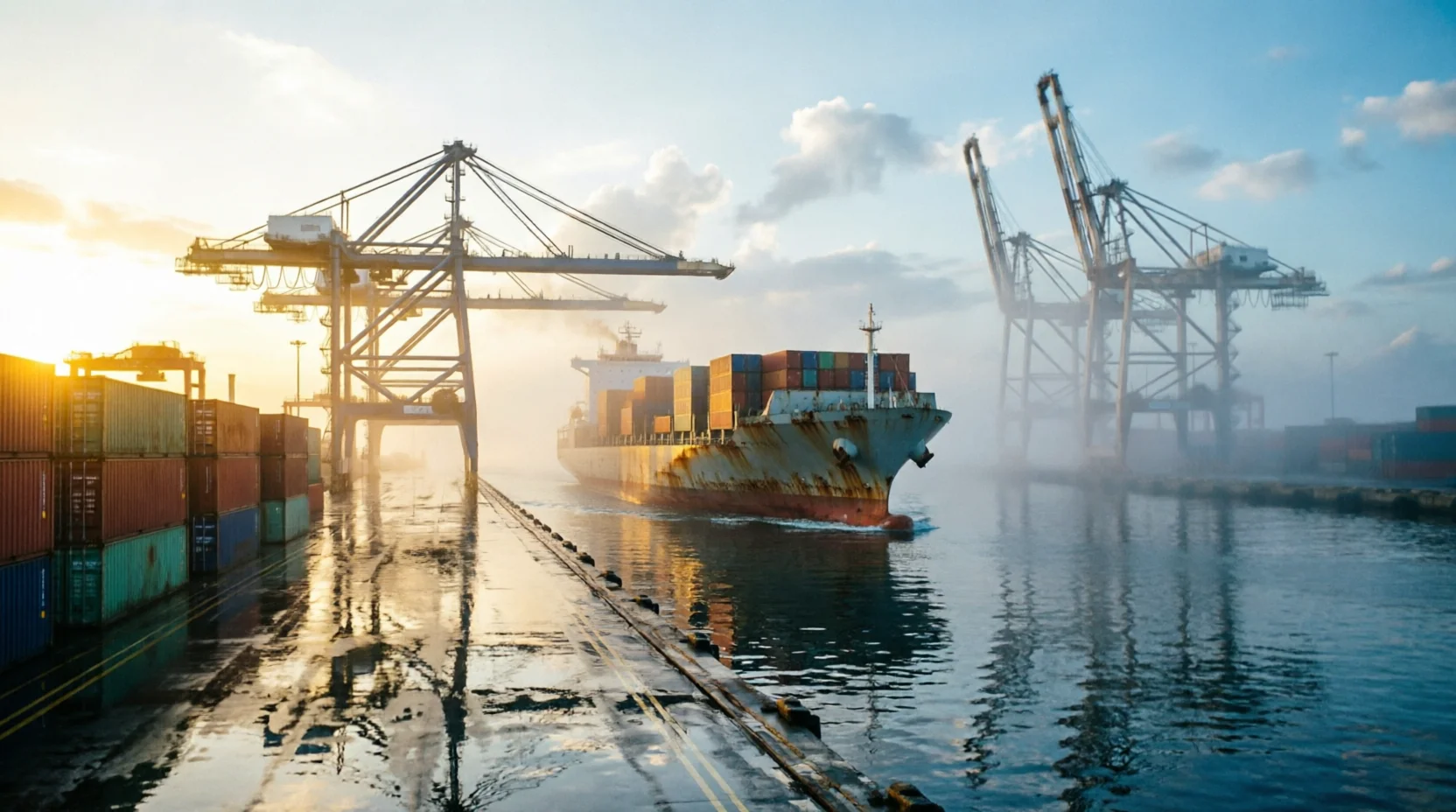
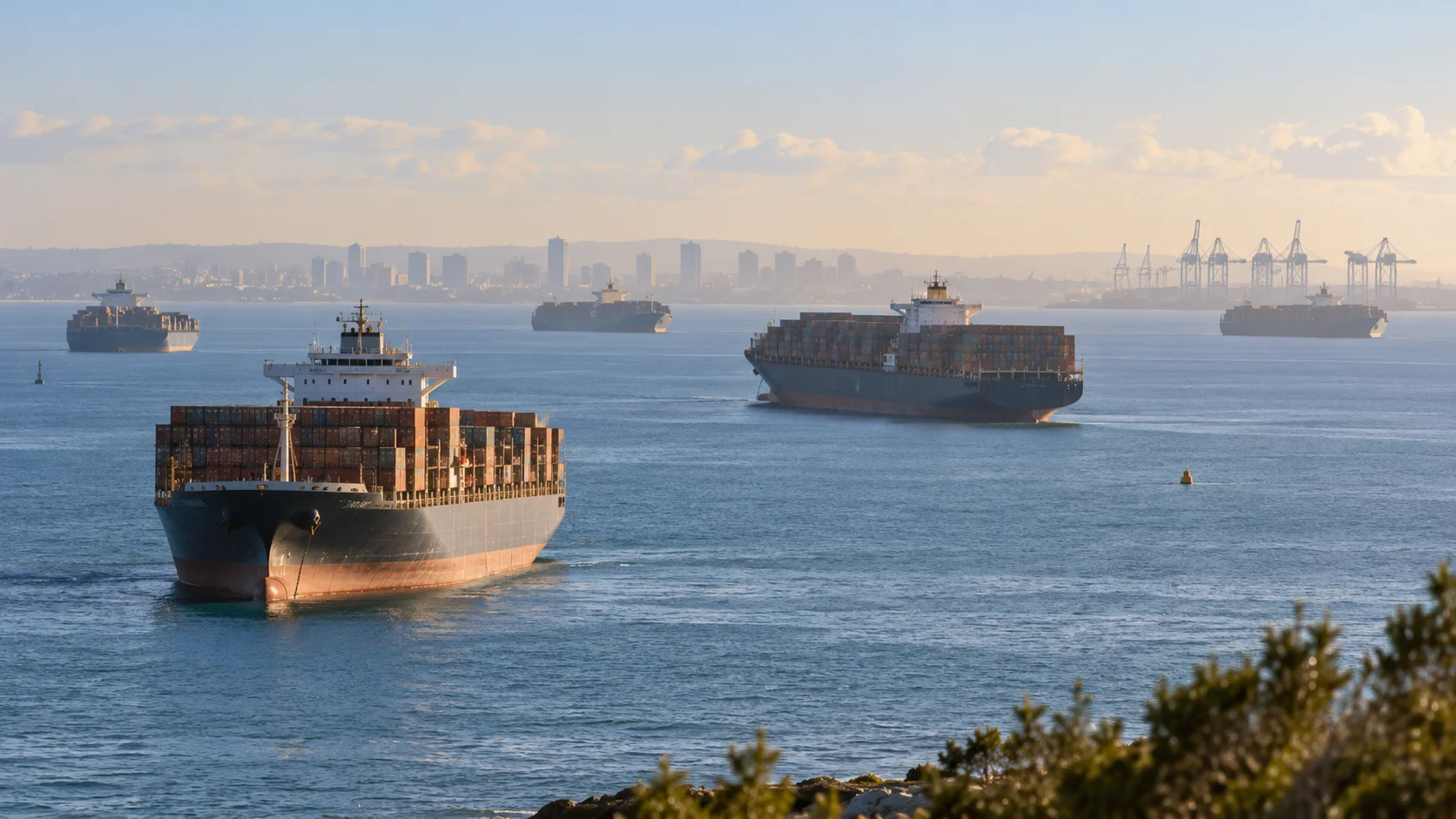
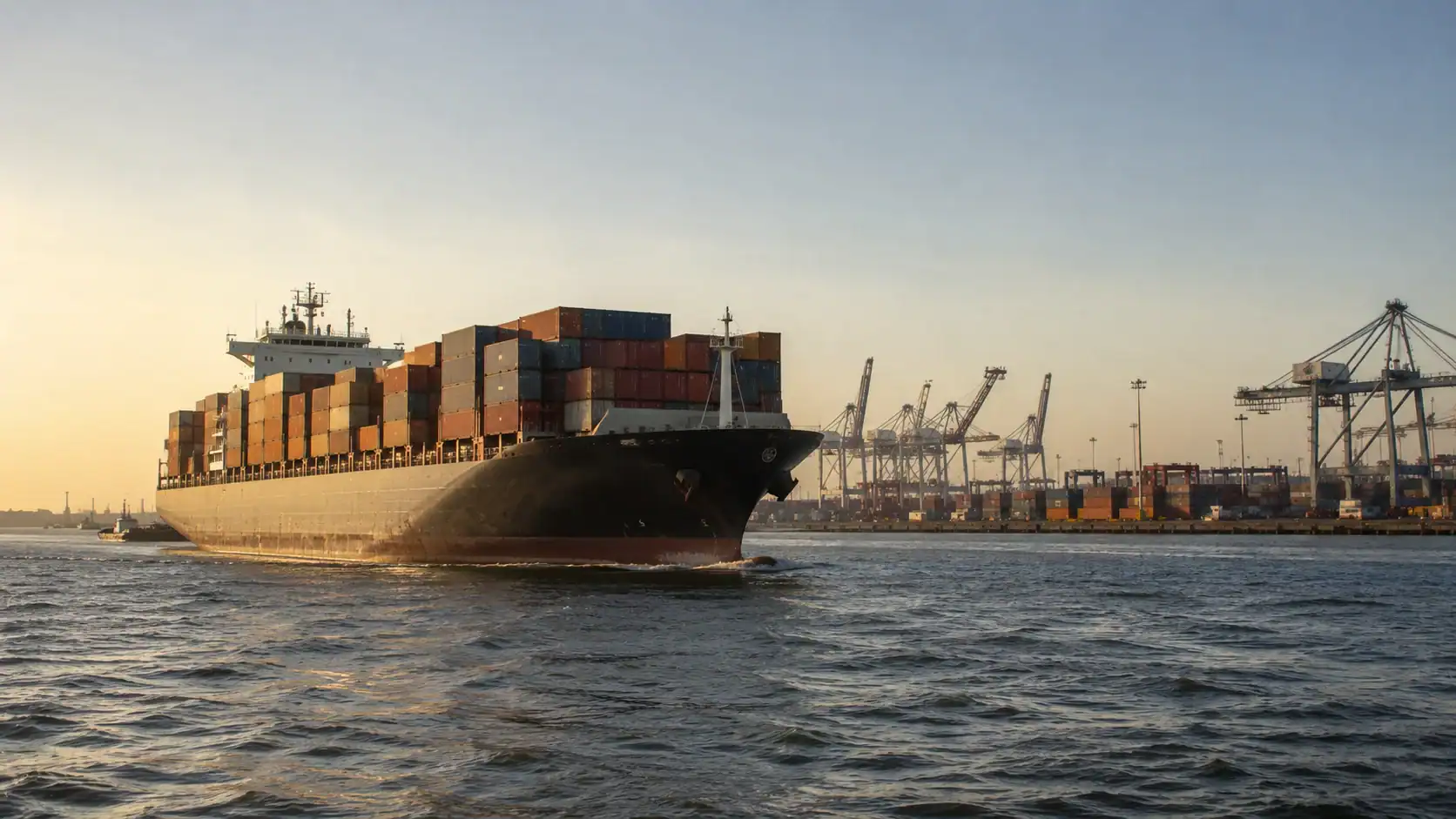
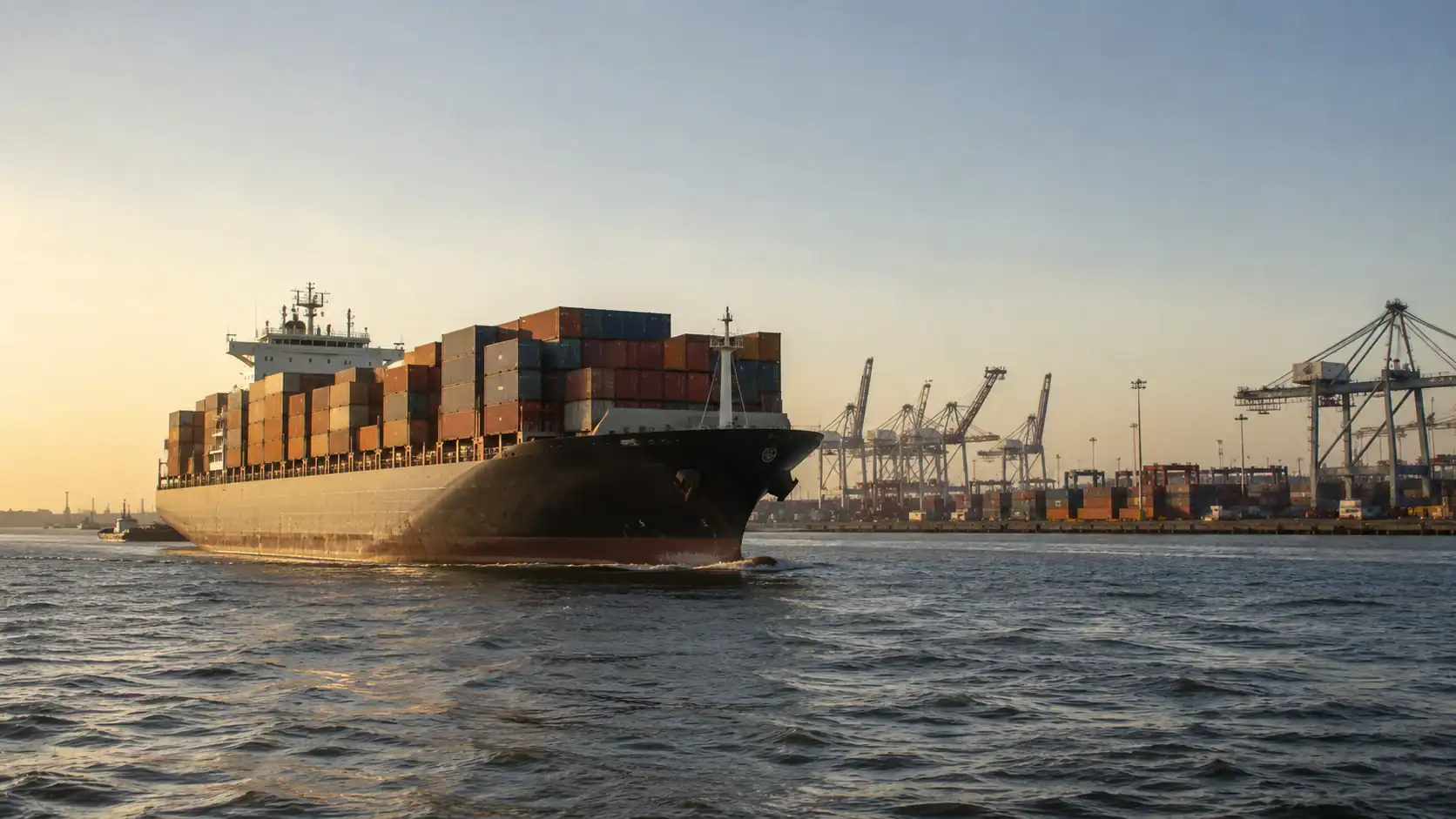
    Container ship loaded with cargo from the United States bound for an Australian port, representing USA-to-Australia sea freight imports

    The compliance picture for US-origin imports is materially different from China-origin in two ways: AUSFTA self-certification (simpler than ChAFTA’s CoO process), and the US product standards gap (US certifications — UL, FCC, FDA — do not transfer to Australian regulatory requirements). Both require active management. The first is an advantage. The second is a trap for importers who assume that US regulatory approval translates to Australian market clearance.

    AUSFTA: 0% Duty with Self-Certification

    The Australia-United States Free Trade Agreement (in force since January 2005) eliminates import duties on qualifying US-origin goods imported into Australia. As of 2026, virtually all goods covered by the agreement — which is the vast majority of US-origin commercial goods — attract 0% Australian import duty.

    The key operational difference between AUSFTA and other Australian FTAs:

    AUSFTA allows self-certification. Unlike ChAFTA (which requires a CCPIT or CIQ Certificate of Origin) and AANZFTA (which requires a Form AANZ), AUSFTA allows the importer or exporter to self-certify that goods meet the rules of origin. This certification is typically:

    • A statement on the commercial invoice (“I certify that the goods described in this document qualify as originating goods under the Australia-United States Free Trade Agreement”), or
    • A separate origin declaration signed by the exporter

    Self-certification does not mean no documentation. It means the documentation is simpler — but ABF can request verification at any time. Retain supporting records: supplier invoices, bills of material, manufacturing process documentation showing US origin. Rules of origin under AUSFTA generally require goods to be “wholly obtained” in the US or substantially transformed there — goods that are merely assembled in the US from third-country components may not qualify.

    Without AUSFTA self-certification, MFN rates apply: clothing 10%, footwear 10%, furniture 5%, most electronics 0–5%. For any significant import program, the effort of obtaining and retaining origin documentation is substantially less than the annual duty cost at MFN rates.

    HS Code Classification and GST

    Every imported product must be classified under an HS (Harmonised System) code before duty rate, FTA eligibility, and any special import conditions can be determined. US-to-Australia HS classification uses the same Australian Customs Tariff Schedule as other origins — the HS code determines the MFN duty rate and confirms whether AUSFTA 0% applies to that specific subheading.

    GST of 10% applies to all taxable imports — the Australian customs value (CIF: invoice value + international freight + insurance) plus any import duty payable. For AUSFTA 0% duty goods, GST is 10% of customs value alone. For GST-registered Australian businesses, import GST is recoverable as an input tax credit on their BAS.

    The CIF customs value is the most commonly misunderstood component. International freight and insurance are included in the base on which both duty and GST are calculated. An importer who uses only the FOB invoice value will underestimate their GST liability — and for US imports with significant ocean freight components (US East Coast to Australia is a long voyage), the freight component is meaningful. The full landed cost calculation method for Australian imports covers this in detail.

    DAFF Biosecurity: Same Rules, US-Specific Products

    Australia’s biosecurity requirements apply to all imports regardless of origin. For US-origin goods, the key biosecurity considerations:

    ISPM 15 wooden packaging: All wooden pallets, crates, and dunnage from the USA must be ISPM 15 heat-treated and stamped. The US is an ISPM 15 signatory — American exporters are familiar with the requirement, but compliance must be specified in every purchase order. Non-compliant pallets are detained for treatment at the importer’s cost.

    US-specific product categories with BICON conditions:

    • Livestock products (leather, wool, animal fats, gelatine) — import conditions in DAFF BICON
    • Timber and timber products — species and treatment conditions apply
    • Plant-derived ingredients (herbal supplements, botanical extracts) — conditions vary by genus and species
    • Food products — may require import permits or phytosanitary certificates depending on category
    • Soil, growing media, and organic material — typically prohibited or heavily conditioned

    Check DAFF’s BICON database for your specific product category and US origin before placing an order. Biosecurity holds at the Australian border for US goods are less common than for Asian origins — but they occur, and they are expensive.

    The US Product Standards Gap: What US Certifications Don’t Cover

    This is the most significant compliance risk specific to US-origin imports. American product certification schemes are well-developed and credible — but they do not satisfy Australian mandatory standards. Common misalignments:

    US Certification Australian Equivalent Is US Cert Accepted?
    UL (Underwriters Laboratories) — electrical safety AS/NZS 3820 + product-specific AS/NZS standards No — separate testing required
    FCC (Federal Communications Commission) — EMC/radio ACMA compliance (AS/NZS CISPR, radiocommunications rules) Partially — FCC data can support ACMA declaration but is not equivalent
    FDA approval — therapeutic goods/food TGA registration (ARTG) — therapeutic goods; FSANZ — food No — ARTG registration or TGA import permit required separately
    CPSC (Consumer Product Safety Commission) — consumer products ACCC mandatory safety standards (AS/NZS series) No — AS/NZS test report from accredited laboratory required
    NSF/ANSI — food contact materials FSANZ food contact standards No — separate Australian food safety compliance required

    The practical implication: for each US-sourced product in a regulated category, obtain the specific Australian standard test report or registration before the goods enter the Australian market. US-origin goods can be detained at the border or recalled from market if they don’t comply with mandatory Australian standards — and the liability falls on the Australian importer, not the US supplier.

    TGA for Therapeutic Goods from the USA

    Medicines, health supplements, medical devices, and cosmetics with therapeutic claims must be listed or registered on the Australian Register of Therapeutic Goods (ARTG) or covered by a valid TGA import permit before importation. This applies equally to US-origin goods despite the AUSFTA commercial relationship.

    US FDA approval does not substitute for Australian ARTG listing. A supplement approved by the FDA as GRAS (Generally Recognised As Safe) still needs ARTG listing or a valid import permit to enter Australia as a therapeutic good. The TGA compliance guide for importing supplements from the USA covers ARTG listing mechanics, the FSANZ vs TGA classification split, and AUSFTA duty treatment for health supplements.

    US Departure Ports and Transit Times to Australia

    The USA has two distinct coastlines with different transit times to Australia. Your supplier’s location determines the economically rational departure port:

    US Origin / Departure Port Australian Destination Vessel Transit (FCL) Door-to-Door
    Los Angeles / Long Beach (West Coast) Sydney / Melbourne 16–22 days 22–32 days
    Seattle / Tacoma (West Coast) Sydney / Melbourne 17–23 days 23–33 days
    New York / New Jersey (East Coast) Sydney / Melbourne 28–38 days 35–48 days
    Savannah / Charleston (East Coast) Sydney / Melbourne 29–40 days 36–50 days
    Houston (Gulf Coast) Sydney / Melbourne 28–36 days 34–46 days

    US West Coast to Australia is the most efficient sea freight lane — comparable transit times to China-origin shipments. US East Coast is significantly longer. For East Coast origin goods with urgent timelines, air freight may be commercially rational depending on the value-to-weight ratio.

    Add 2–5 business days ABF customs clearance after vessel arrival at Australian port. DAFF biosecurity inspection (if goods are selected) adds further time. Pre-lodging the import declaration with your customs broker before vessel arrival shortens the clearance window.

    Air Freight from the USA to Australia

    Air freight from the US to Australia is viable for high-value, low-weight goods — pharmaceuticals, electronic components, precision instruments, luxury goods, and urgent industrial parts. Door-to-door from most US cities to Sydney or Melbourne: 6–10 business days. From West Coast cities: 5–8 days.

    IATA Dangerous Goods Regulations apply to US-origin air cargo the same way they apply globally. Many goods that travel by sea without restriction — certain industrial chemicals, lithium battery shipments above IATA thresholds — cannot move by air. Verify IATA DGR classification for any potentially restricted product before booking air freight.

    The US-to-Australia Compliance Checklist

    Requirement Action When
    HS code confirmed Verify with customs broker; confirm AUSFTA rate applies Before first import of any new product
    AUSFTA self-certification Instruct US supplier to include origin statement on invoice; retain supporting documentation Each shipment
    ISPM 15 packaging confirmed Specify in PO; request packing photos confirming ISPM 15 stamp Each shipment
    BICON conditions checked Check DAFF BICON for product-specific import conditions Before ordering any new product category
    Australian mandatory standards confirmed Obtain AS/NZS test report for regulated products; do not rely on UL/CPSC/FCC alone Before placing first order of regulated goods
    TGA/ARTG checked Verify ARTG listing or import permit for therapeutic goods; FDA approval is not sufficient Before any therapeutic goods shipment
    ACMA registration (inverters/radio devices) Register electrical equipment with EESS/ACMA as applicable Before placing electrical equipment on market
    Anti-dumping register check Search ABF register for duties on steel, aluminium, or other industrial goods Before ordering industrial materials categories
    Import declaration pre-lodged Provide full document set to broker before vessel arrival 5–7 days before expected arrival
    Cargo insurance Marine all-risk policy for each shipment Each shipment

    Frequently Asked Questions

    What duty rate applies to goods from the USA to Australia?

    AUSFTA 0% for qualifying US-origin goods with self-certification of origin. Without AUSFTA qualification: MFN rates — clothing 10%, furniture 5%, most electronics 0–5%. GST 10% applies regardless of duty rate.

    How does AUSFTA self-certification work?

    The US exporter includes an origin statement on the commercial invoice or separate declaration. No third-party CoO is required. Retain supporting documentation (bills of material, supplier records) for ABF verification. Rules of origin require goods to be wholly obtained or substantially transformed in the USA.

    Do US product certifications satisfy Australian requirements?

    No. UL does not satisfy AS/NZS electrical standards. FCC does not replace ACMA compliance. FDA approval does not substitute for TGA/ARTG registration. Each Australian regulatory pathway has its own testing or registration requirement. Obtain specific Australian standard documentation before placing goods on the Australian market.

    How long does sea freight from the USA take?

    West Coast (LA/Long Beach): 22–32 days door-to-door. East Coast (New York, Savannah): 35–50 days door-to-door. Add 2–5 business days ABF customs clearance; common causes of Australian customs delays and how to avoid them.

    What are Australia’s biosecurity requirements for US imports?

    ISPM 15 wooden packaging on all shipments. Product-specific conditions from DAFF BICON for livestock products, timber, plant-derived ingredients, and food. Check BICON before ordering any new product category from the USA.

    Managing Your USA Import Program

    Swift Cargo handles sea and air freight from all major US coastal hubs to Australian ports, with AUSFTA documentation coordination, customs brokerage, ISPM 15 supplier briefing, and DAFF compliance management. For the Australian customs and biosecurity process from the importer’s perspective, see the ABF customs and DAFF biosecurity overview. For the end-to-end import sequence from supplier to warehouse, the Australia import process guide maps out all nine stages. For a full breakdown of what determines import cost — duties, GST, freight, biosecurity levies — the total landed cost guide for Australian imports covers each component. Whether you’re establishing a new US supplier relationship or managing ongoing import volumes, a freight and compliance assessment is the starting point.

    Get a USA-to-Australia freight and compliance quote →

  • Importing Supplements from the USA to Australia: TGA and Duty Requirements

    Importing Supplements from the USA to Australia: TGA and Duty Requirements


    The US supplements market is the largest in the world — and for Australian importers, it represents access to product formulations, brands, and manufacturing quality that don’t yet exist at scale domestically. But importing supplements from America into Australia is not the same as importing furniture or electronics. It involves two regulatory frameworks, each with independent requirements, and the consequences of getting either wrong range from seizure at the border to legal liability after sale.

    Supplement bottles and capsules arranged with TGA/ARTG documentation and a shipping invoice on a clean white surface

    The first framework is the TGA — the Therapeutic Goods Administration. The second is FSANZ — Food Standards Australia New Zealand. Understanding which one applies to your specific product, and why, is the starting point for everything else.

    TGA or FSANZ: Which Framework Applies?

    The most common misunderstanding in supplement imports is treating this as an ingredient question. It is not. Whether your product falls under TGA or FSANZ jurisdiction depends on form plus claims — not on what the product contains.

    The same formulation — identical ingredients, identical quantities — can be a food (FSANZ) or a therapeutic good (TGA) depending on how it is presented and what it says on the label.

    Product Presentation and Claims Regulatory Framework
    Protein powder Sold as food, no therapeutic claims FSANZ — Food Standards Code
    Same protein powder “Supports muscle recovery and lean mass” TGA — therapeutic good
    Vitamin C tablets In tablet/capsule form with any health indication TGA — listed medicine (AUST L)
    Magnesium powder Bulk powder, no health claim, food labelling FSANZ — food supplement
    Herbal capsules (echinacea) Any form with “supports immune function” TGA — listed medicine (AUST L)
    Fish oil softgels Any claim referencing omega-3 health benefits TGA — listed medicine (AUST L)

    The TGA’s guidance on food versus medicine classification sets out the boundary in detail. If your US supplier’s product sits in a grey area — bulk powders with subtle health claims on the packaging — seek a formal classification determination from the TGA before importing commercially.

    The ARTG: When Registration Is Required

    Every product classified as a therapeutic good must be listed or registered on the Australian Register of Therapeutic Goods (ARTG) before it can be legally imported for commercial supply.

    The importer must be an Australian-resident TGA sponsor — a legal entity registered with the TGA who takes responsibility for the product’s compliance with Australian requirements. Your US supplier cannot self-sponsor. An Australian entity must hold the ARTG entry, either as the importer themselves or through an appointed Australian sponsor.

    AUST L — Listed Medicine: Low-risk therapeutic goods using only ingredients from the TGA’s permitted ingredients database, with approved low-level indications. The sponsor self-certifies via the TGA’s eListing electronic system — the TGA does not individually evaluate listed medicines before they reach market. Most standard vitamins, minerals, fish oils, herbal supplements, and similar products qualify as listed medicines.

    AUST R — Registered Medicine: Higher-risk products or those making stronger therapeutic claims. Full pre-market TGA evaluation required. This process is lengthy (12+ months) and expensive. Very few standard supplements are registered medicines — this category is primarily pharmaceutical products. If your US product is already a listed medicine in a low-risk category, AUST L is the correct pathway.

    Importing a therapeutic good without an ARTG entry is an offence under the Therapeutic Goods Act — regardless of whether the product is legal in the US, regardless of whether it’s widely available there, and regardless of whether it’s clearly beneficial. The ARTG entry must exist before the goods are imported.

    AUSFTA Duty Rates: Effectively Zero from the USA

    Under AUSFTA — the Australia-United States Free Trade Agreement, in force since 2005 — the effective duty rate on supplements from the USA is 0% for most product categories.

    HS code classification determines the rate:

    HS Code Description General Rate AUSFTA Rate (US-origin)
    HS 3004 Medicaments — products qualifying as medicines 0% 0%
    HS 2936 Vitamins and derivatives 0% 0%
    HS 2106 Food preparations not elsewhere specified (general supplements as food) 4–5% 0% with AUSFTA Certificate of Origin

    GST of 10% applies regardless of duty outcome — calculated on customs value plus any duty plus international freight and insurance. The full GST calculation for Australian imports is worth understanding before you model landed costs.

    To access the 0% AUSFTA rate for HS 2106 goods, you need a Certificate of Origin confirming US origin. Your US supplier can provide this. Confirm the specific HS code with your customs broker before the first shipment — incorrect classification affects both the duty rate and whether an ARTG entry is required.

    Biosecurity: Plant and Animal Derivatives

    Many supplements contain ingredients derived from plants or animals — herbal powders, botanical extracts, fish-derived omega-3, collagen from bovine or marine sources, bee products like propolis or royal jelly. All of these trigger biosecurity assessment at the Australian border.

    BICON — DAFF’s biosecurity import conditions database — is the reference for what conditions apply to your specific ingredient and source country. Biosecurity conditions for supplements vary by:

    • The plant or animal species the ingredient derives from
    • The country of origin of the raw material (not just the country of manufacture)
    • The processing method (raw powder vs. heat-treated extract vs. encapsulated product)

    Common biosecurity situations for supplement imports:

    Herbal powders and botanical extracts — plant material; DAFF conditions typically require that goods are commercially prepared, free from soil and pests, and meet the relevant processing specifications. An import permit may be required. Standard import permits take up to 20 business days to process. Check BICON before ordering — the permit process must begin well before your freight is booked.

    Fish oil, collagen, gelatin — animal derivatives; conditions depend on species and source country. Products from approved countries with appropriate processing certification typically clear without issue. Products from non-approved source countries face stricter conditions.

    Bee products (propolis, royal jelly, bee pollen) — regulated under DAFF; specific conditions apply; import permit often required.

    Finished encapsulated products — commercially manufactured, heat-processed, encapsulated supplements from approved countries generally face fewer biosecurity conditions than raw ingredient imports. But this is not universal — confirm for your specific product and source.

    Labelling Requirements

    Australian labelling requirements for supplements depend on whether the product is a therapeutic good (TGA) or a food (FSANZ).

    TGA therapeutic goods labelling:

    • AUST L or AUST R number must be displayed prominently on the label
    • Only TGA-approved indications may be stated — no unapproved therapeutic claims
    • Ingredient listing per the ARTG entry
    • Required warning statements as specified by TGA guidelines
    • Australian sponsor name and address

    FSANZ food supplements labelling (Australia New Zealand Food Standards Code):

    • Country of origin: “Made in USA” or equivalent — must meet ACCC safe harbour test
    • Nutrition information panel (NIP) in standard Australian format
    • Allergen declarations (Top 14 allergens under Standard 1.2.3)
    • No health claims that would trigger TGA jurisdiction
    • Ingredient listing in descending order by weight

    US products sold in Australian labelling format are the cleaner solution. Relabelling in Australia is permitted but adds cost and logistics complexity. Confirm with your supplier whether they can produce Australia-compliant labels from the factory, and require label proofs for approval before production runs.

    Prohibited and High-Risk Ingredients

    Several ingredients widely available in US supplements are controlled, prescription-only, or prohibited in Australia. Importing products containing these — regardless of their legal status in the US — creates serious legal exposure.

    • DHEA and androstenedione: Scheduled substances in Australia — prescription only or prohibited. Common in US anti-aging and hormone-support supplements. A product containing DHEA that is freely available at a US health food store is illegal to import commercially into Australia.
    • Ephedra / ephedrine: Prohibited in consumer supplements. Banned from import.
    • Kava: Controlled substance in Australia with restricted import conditions. Specific import permits required; not freely importable as a supplement.
    • US pre-workout formulas with proprietary blends: Many contain undisclosed quantities of stimulants that may include substances scheduled under the Australian Poisons Standard (1,3-DMAA, DMHA, AMP citrate, and others). Check every ingredient against the current Poisons Standard before ordering.
    • Unapproved therapeutic claims: A product making therapeutic claims without an ARTG listing is illegal to import for commercial supply — even if the claims are substantiated by evidence, even if identical claims are legal in the US.

    Screen every product against the TGA’s permitted ingredients list for listed medicines and the current Poisons Standard before placing an order with a US supplier. Products that clear these screens, have ARTG listings, and meet biosecurity requirements are straightforward to import. Products that don’t are a problem that gets more expensive the further down the supply chain it surfaces.

    The Import Workflow: Step by Step

    1. Classify the product: TGA therapeutic good or FSANZ food? Confirm based on form and claims, not ingredients.
    2. Obtain ARTG listing: If a therapeutic good, establish or confirm the ARTG entry with a registered Australian sponsor before ordering stock.
    3. Check BICON: Confirm biosecurity conditions for your specific ingredients and source country. Obtain any required import permits — allow 20 business days minimum.
    4. Confirm HS code and AUSFTA rate: Classify correctly, request Certificate of Origin from US supplier for HS 2106 goods.
    5. Confirm labelling compliance: TGA or FSANZ compliant labels, Australian sponsor details, required warnings.
    6. Book freight: Air for urgent or small volumes (under ~150kg), sea LCL or FCL for larger programmes. USA-Australia sea freight runs approximately 20–35 days depending on port pair.
    7. Customs clearance: Lodged by your licensed customs broker. ABF cross-checks TGA status for declared therapeutic goods.

    Frequently Asked Questions

    Do I need TGA approval to import supplements from the USA to Australia?

    Yes, if your products are classified as therapeutic goods. Any supplement that makes therapeutic claims, is in tablet or capsule form, or contains ingredients on the TGA’s permitted list for listed medicines must be on the ARTG before import. US suppliers cannot self-sponsor — an Australian-resident TGA sponsor must hold the entry.

    What is the difference between AUST L and AUST R on a supplement?

    AUST L indicates a listed medicine — low-risk, self-certified by the sponsor via TGA’s eListing system. The TGA does not evaluate listed medicines before market. AUST R requires full pre-market TGA evaluation. Most standard vitamins, minerals, and herbal supplements qualify as listed medicines (AUST L).

    Is a protein powder a therapeutic good or a food in Australia?

    It depends on the claims and presentation. A plain powder sold as food with no therapeutic claims falls under FSANZ. The same powder with claims like “supports muscle recovery” or “promotes lean muscle mass” triggers TGA jurisdiction as a therapeutic good. The ingredient is not the deciding factor — the label claims are.

    What is the import duty rate on supplements from the USA?

    Under AUSFTA, effectively 0% for most supplement categories. HS 3004 and HS 2936 were already 0%. HS 2106 (food preparations) reaches 0% under AUSFTA with a Certificate of Origin. GST of 10% applies regardless.

    What US supplements are prohibited from import into Australia?

    DHEA, androstenedione, and prohormones (prescription-only or prohibited). Kava (controlled, restricted import). Ephedra and ephedrine (banned). Many US pre-workout proprietary blends containing stimulants scheduled under the Australian Poisons Standard. Always screen against the current Poisons Standard before ordering.

    Ready to Import Supplements from the USA?

    Swift Cargo handles commercial freight from the USA to Australia, including LCL and air freight, with customs brokerage coordination. If you’re setting up a US supplement import program and need freight and compliance clarity, start with a freight assessment.

    Contact Swift Cargo for a freight assessment →