Author: Carl Ansama

  • Exporting Animal Products from Australia: DAFF Certification and Market Access

    Exporting Animal Products from Australia: DAFF Certification and Market Access

    Animal-product exports are the kind of trade many people underestimate because the goods do not look exotic. Wool, leather, pet food, hides, skins, and related by-products can all seem commercially ordinary. But controlled export systems do not treat them casually. These goods often move through structured certification frameworks because destination markets care about sanitary status, origin, product category, and documentary confidence.

    That is why this category should not be treated as ordinary freight with a few extra papers attached. For many animal-product exports, the documentary pathway is part of the commercial product. If the product is defined incorrectly, if the wrong official route is assumed, or if destination-market expectations are not built into the job early enough, the shipment can become physically movable and still commercially weak.

    Exporting Animal Products from Australia: DAFF Certification and Market Access

    Why Animal-Product Exports Are Documentation-Heavy by Design

    These categories attract heavier documentation because the importing market is rarely assessing freight risk alone. It is also assessing sanitary confidence, product identity, origin, and whether the goods fit a recognized official pathway. That is why wool, leather, pet food, hides, and similar products can carry more control logic than a casual exporter expects.

    The documentary burden is not arbitrary. If a destination market is concerned about disease status, product classification, or commodity treatment, the official file becomes part of how that risk is managed. The shipment only moves cleanly when the documents support the category the importer thinks it is buying and the regulator thinks it is admitting.

    The freight leg may be straightforward, but the paperwork is not secondary. It is what keeps the freight leg commercially valid.

    Why the Category Is Broader Than Many Exporters Expect

    Exporters get caught here because “animal products” is a broader and more regulated category than it sounds. It can include raw and processed materials, by-products, treated goods, finished pet consumables, and products that sit close to veterinary, sanitary, or commodity-control logic.

    The exporter has to understand the category logic used by the control system, not just the commercial product description. If those two frames diverge, the file becomes unstable. A business may describe a product one way for marketing or invoicing while the export-control pathway treats it as something more sensitive, more specific, or more conditional.

    That is especially relevant in mixed or borderline categories such as processed animal-derived goods, value-added wool or leather products, and pet-food items that may appear straightforward commercially but still carry official requirements in practice.

    How Australian Certification Systems Matter

    Australia’s export systems create the official route by which controlled goods can be documented and accepted internationally. DAFF’s export documentation and controlled-goods frameworks are not optional polish layered on after the sale. They are part of the infrastructure that makes the trade commercially real. DAFF: Export Documentation, DAFF: Controlled Goods

    A destination market often wants more than a commercial invoice and packing list. It may want an official certificate, commodity-specific declarations, or evidence that the product sits inside the correct sanitary or export-control channel. If the exporter has not mapped that pathway, the shipment can reach the booking stage before anyone realises the official side is still incomplete.

    Exporters should treat documentation systems as operating systems rather than admin tasks. Once the document route is clear, the exporter can plan with confidence instead of rediscovering the pathway every time a buyer places an order.

    The document sequence on a controlled animal-product export is fixed: commodity definition, DAFF controlled-goods registration, export certificate request, inspection sequence, health certificate or sanitary declaration, and the market-access conditions document for the destination country. Each piece precedes the next. The goods travel after the file is complete, not while the file is being assembled.

    In an Australian wool-handling facility, a worker checks a compressed wool bale's binding straps before it's stacked with several others.

    Why Market Requirements Still Control the Outcome

    Australian systems are only half the story. The destination market still decides what it will accept, and that means importing-country requirements have to shape the export design. A certificate that looks valid in the abstract is not enough if it does not match the destination’s conditions for that product.

    Strong exporters start with destination acceptance logic and work backward through the Australian framework. They ask what the buyer’s market requires, what category the product will sit in, what official document path supports that category, and how the shipment needs to be prepared so the pathway remains credible from origin to destination.

    That is also where timing becomes important. If a market expects a certain declaration, treatment, or document sequence, the freight booking cannot lead the job. Exporters have to understand the official pathway early enough that the export plan does not trap the team in a weak position later.

    For Australian exporters shipping to destination markets with specific biosecurity conditions, the relevant processes are documented on the Swift Cargo Australia customs and export guide.

    What Good Exporters Do Differently

    Good exporters in these categories are disciplined in three ways. They define the commodity correctly, they confirm the documentary route before the goods move, and they treat controlled export work as a market-access process wearing a logistics uniform.

    A wool exporter who gets the certification pathway wrong does not find out at the port. They find out three weeks later, in an email from the importing country’s own inspector, after the goods have already been sitting in a bonded facility accumulating storage fees on a shipment that was never going to clear. That is the actual cost of treating certification as paperwork instead of as the product. The exporters who never receive that email are not luckier. They confirmed the documentary route before the goods moved, not after, and the ten extra minutes that took at the planning stage is the cheapest insurance in this entire guide.

    • They define the commodity before they define the shipment. If the product category is unclear, the logistics plan is premature.
    • They confirm the official pathway before committing to timing. A booking is not progress if the certificate route is still uncertain.
    • They build documents around the destination market, not around habit. Repeat templates are useful only if they still match the lane and commodity.
    • They treat repeatability as a capability. The goal is not just to get one shipment through. It is to build a process that can survive the next shipment too.
    • They communicate constraints early. Buyers and internal teams do better when the exporter surfaces the control logic before rushing the freight forward.

    That mindset reduces rework, rejection risk, and the kind of delay that turns a viable shipment into a weak commercial outcome. Buyers do not only want one successful consignment. They want confidence that the next one will move with the same discipline. Some exporters build process memory around commodity definition, document logic, and lane-specific controls. That creates a quieter but real advantage over competitors who are still improvising each file.

    Sanitary certification systems are among the oldest forms of market control in international trade. The frameworks that DAFF operates today continue that function in more transparent form. Understanding this matters for exporters not because it changes the current rules, but because it explains why the rules are structured as they are. They are not primarily about administrative efficiency. They are about conferring official standing on the product and the exporter. An uncertified animal product is not just undocumented: in the destination market’s logic, it may not exist as a tradeable category at all. Readers who need the detailed certificate framework should continue to Export Certification and Phytosanitary Requirements.

    On a clean stainless packing line inside a pet food processing facility.

    What the Requirements Actually Look Like: Wool, Leather, and Pet Food

    The abstract point becomes concrete the moment you look at three of the most common animal-product exports, because each one carries a different documentary shape.

    Wool. Greasy and scoured wool are not the same export problem. Buyers in many markets expect a National Wool Declaration covering mulesing status and, increasingly, dark-and-medullated-fibre risk, alongside standard commercial documents. The packaging matters too: timber dunnage and pallets have to meet ISPM 15 heat-treatment marking, or the consignment can be held at the destination for a wood-packaging breach that has nothing to do with the wool itself. This is the same phytosanitary logic that governs Australian fresh-produce exports, applied to a different commodity.

    Leather and hides. A raw salted hide, a wet-blue, and a finished leather good move under different rules. Raw and semi-processed hides are far more sanitary-sensitive and usually require a health certificate confirming the animals passed ante- and post-mortem inspection. Finished leather is often treated more like a manufactured good. Exotic skins such as crocodile add a CITES permit layer on top of the sanitary file. The entire pathway depends on which of these three the product actually is.

    Pet food. This is where exporters are most often caught. Pet food commonly requires the manufacturing establishment itself to be DAFF-registered for export, plus an importing-country health certificate that matches that market’s exact wording. China requires the facility to hold GACC registration before a single carton ships; the EU requires product from an approved establishment entering through a designated Border Control Post with TRACES-NT documentation. None of this is discoverable at the booking stage. It is a months-ahead facility-and-market question, not a freight question.
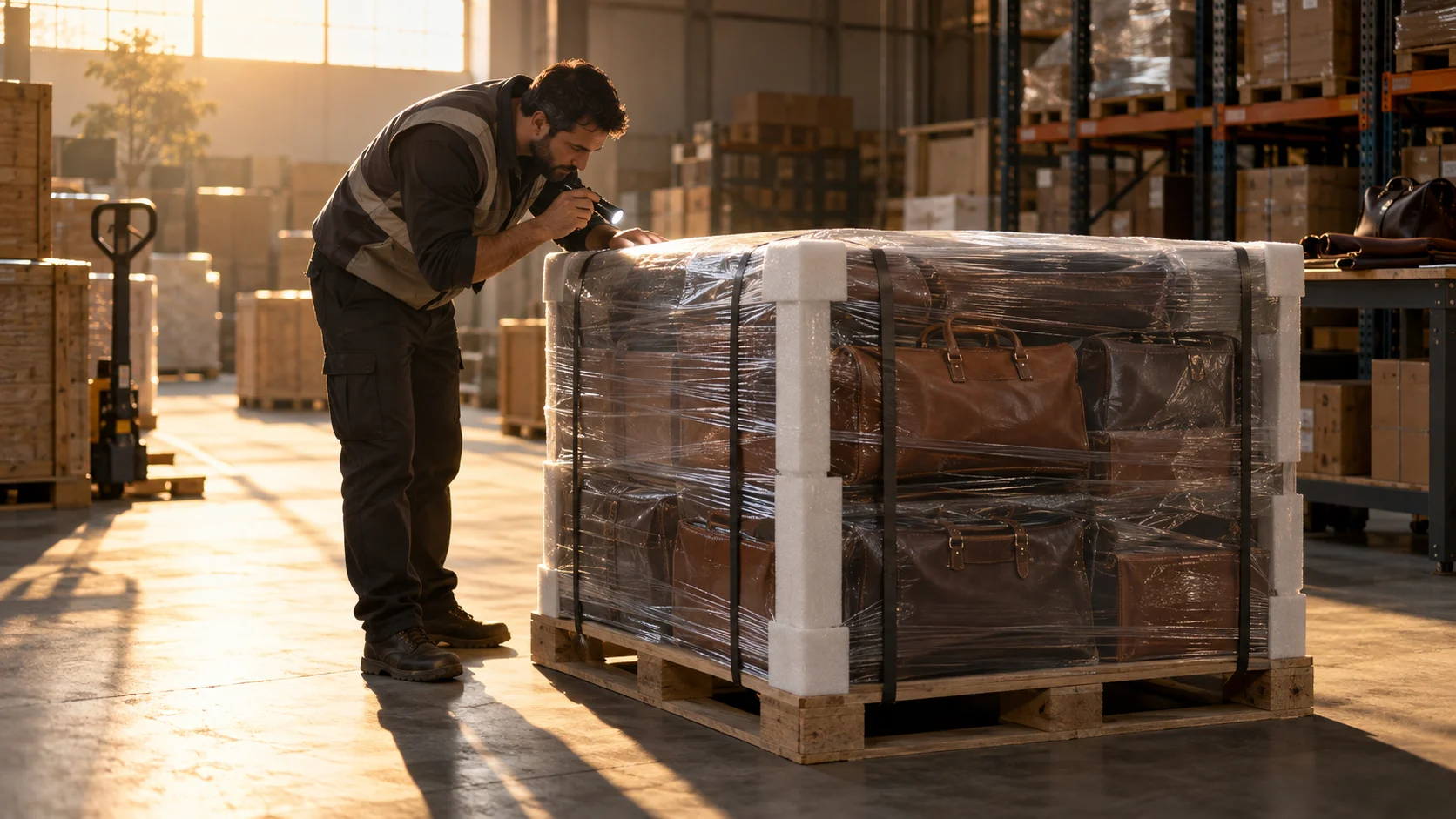
    A pallet of finished leather goods sits precisely wrapped at a warehouse's export staging point, corner protectors perfectly aligned at each edge.

    How the Best Exporters Run This vs How Most Do

    Most exporters in this category work forward from the product they already make: they have wool, or hides, or a pet-food line, and they go looking for a buyer. The certification then becomes paperwork to be sorted once the order lands. The best exporters work backward from the destination market’s admissibility rules, and they do the discovery before they promise a ship date. That single reversal is what separates a lane that runs cleanly from one that stalls at the certificate stage.

    The best teams also treat the first successful shipment as a prototype, not a finish line. They capture exactly which commodity definition worked, which certificate template the destination regulator accepted, and which inspection sequence the consignment passed. The second and tenth shipments are then reproductions, not fresh improvisations. It is the same discipline good product teams use: learn the requirement deeply once, then build a repeatable process around it rather than rediscovering it under deadline pressure every quarter.

    And they manage the commercial layer with the same care as the documentary one. Two things move the margin as much as a freight quote does: the day an export invoice is struck, and the rate at which it converts. That is why disciplined exporters watch why the day of export matters for exchange-rate exposure rather than leaving it to chance. Getting the certificate right keeps the shipment legal; getting the timing right keeps it profitable.

    A missing certificate is not bad luck. It is a planning failure that surfaced late, at the worst possible moment, in front of a customer waiting on a ship date. Nobody at the border cares whose job it was to confirm the destination market’s admissibility rules. The shipment is stopped either way. The exporters who never get caught out assign a single person to own the certification chain for each commodity line, end to end, before the first order is quoted. That person tracks which regulator, which template, which inspection window, and reports back the moment anything is uncertain, instead of assuming someone else already checked. Certification discipline is not a compliance department’s job to clean up afterward. It belongs to whoever is closest to the shipment, and it starts before the sale, not after the ship date is promised.

    Frequently Asked Questions

    Are wool, leather, and pet food exports treated as ordinary freight?

    Not usually. These goods often depend on certification, controlled-export pathways, or destination-market requirements that go beyond ordinary freight paperwork.

    Why do animal-product exports require so much documentation?

    Because destination markets often want sanitary, origin, or commodity-specific assurance before they accept the goods.

    Can exporters rely on generic commercial invoices alone?

    Often not. The official pathway depends on the product category, the destination market’s conditions, and whether the right export documentation has been prepared.

    What is the biggest mistake in this category?

    Underestimating how much the certification system and category definition shape whether the shipment can move cleanly.

    Does pet food require special registration to export from Australia?

    Commonly yes. Many markets require the manufacturing establishment itself to be DAFF-registered for export and the consignment to carry an importing-country health certificate. Some markets go further. China requires GACC facility registration, and the EU requires product from an approved establishment entering through a designated Border Control Post. It is a facility-and-market question to resolve months ahead, not at booking.

    How far ahead should I confirm animal-product export requirements?

    Before you promise a ship date. Commodity definition, establishment registration, and destination health-certificate wording can take weeks to months to put in place, and none of it is discoverable at the freight-booking stage. Working backward from the destination market’s admissibility rules early is what keeps the lane from stalling at the certificate stage.

  • Australia Export Certification: The Market-Access Logic

    Australia Export Certification: The Market-Access Logic

    Export certification sounds administrative until a shipment is delayed, rejected, or stripped of commercial value because the importing country’s conditions were not met. That is why exporters should think about certification as a market-access system rather than as a paperwork exercise.

    For Australian exporters, the core question is not just whether the goods exist and can be moved. The real question is whether the shipment can be accepted at destination under the importing country’s official requirements. If the certificate pathway, inspection logic, and freight plan do not line up, the cargo can be physically mobile and still commercially blocked.

    This matters most with plant goods and plant products, where phytosanitary controls sit directly inside market access. But the broader lesson applies to controlled exports more generally. Documentation is not a layer that sits on top of the shipment after the real work is done. It is part of the shipment design.

    Australia Export Certification: The Market-Access Logic

    Why Export Certification Is Really a Market-Access Problem

    Many exporters learn this lesson too late. They assume the commercial sale is the hard part and the certificate work is an administrative tail-end task. In reality, the certificate pathway often decides whether the sale can be completed.

    That is because official documentation is not generic. It has to match the importing country’s conditions. A certificate may be technically issued and still misaligned with destination requirements. That mismatch leaves the goods stuck, rejected, or delayed. The exporter can feel as if the shipment is “ready” when the market-access side is still unfinished.

    That is why the best framing is simple: export certification is part of market design. It tells you whether the lane is commercially viable, whether the cargo needs inspection or official treatment, and whether the documents will support entry at the other end. Treating it as paperwork leads to weak execution because the freight plan gets built before the access logic is stable.

    For Australia-based exporters, official certification interacts with DAFF systems, controlled-goods pathways, and the destination country’s own requirements. For consignments bound for ASEAN markets, the AANZFTA preference framework adds an origin-certification layer that must align with the phytosanitary pathway. That is a chain, not a checklist.

    Why Phytosanitary Requirements Matter So Much

    Phytosanitary requirements matter because plant and plant-product trade is governed by risk control, not by transport willingness. Cargo can be packed, booked, and moved. None of that says whether a destination country will allow it in.

    Importing countries want official assurance that relevant plant goods meet their plant-health conditions. That is where phytosanitary certificates matter. The certificate is not ceremonial. It is evidence inside a destination-country risk framework. DAFF: Plant Export Certification

    Many exporters underestimate how early they need to plan here. If the goods need inspection, treatment, sampling, specific declarations, or a precise description format, those details cannot always be repaired after packing and booking are already underway. The shipment design needs to reflect the certificate logic early enough for the pathway to remain credible.

    How Certification and Country Rules Interact

    The exporter has to understand two things at once. First, what Australia can certify. Second, what the destination country actually requires. Those are related questions, but they are not identical.

    This is where systems such as MICOR become strategically useful. MICOR records importing-country requirements and the conditions attached to different goods and markets. MICOR That matters because a certificate is only commercially useful if it matches the conditions controlling entry at destination.

    In practical terms, that means documentation, inspection, commodity preparation, and freight timing all need to be read together. If the destination expects a certain inspection sequence or official assurance and the exporter builds the freight plan first, the job becomes fragile. A shipment can move physically while the compliance side remains unresolved.

    Destination rules need to shape the plan upstream, not arrive late as a compliance surprise after the goods are already committed to a lane.

    That timing point is more important than it looks. If inspections, certificate issuance, supporting declarations, or authority checks need to happen in a certain order, then the freight booking cannot be treated as the master plan. In many export workflows, the certificate sequence is what makes the booking viable in the first place. When exporters reverse that logic, they create urgency where none was needed and lose control over the job.

    A packing shed for agricultural export goods, crates of produce checked by a quality officer's hands before sealing.

    What the Certificate Actually Certifies

    “Certification” in the abstract hides how specific the machinery is, so it is worth being concrete about the paperwork. A job-to-be-done framing helps here: the exporter is not really buying a document, but hiring a certificate to unlock one importing country’s border rule. The consignment may be entirely genuine. If the certificate does not match that specific rule, it has not done the job it was hired for.

    For most Australian agricultural exports the Department of Agriculture, Fisheries and Forestry issues the phytosanitary certificate under the Export Control Act 2020. The EXDOC system generates it once the goods meet the destination’s declared conditions. Those conditions are not guesswork: the department maintains the Manual of Importing Country Requirements (MICoR), which records what each market demands. The certificate has to align with that wording rather than a generic template. Wood packaging adds a second layer. ISPM 15 requires timber pallets and dunnage to be heat-treated or fumigated and stamped with the international mark. A missing or unreadable stamp can hold an otherwise-compliant consignment at the border. The most common failure is not fraud or contamination; it is a certificate that describes the shipment accurately but does not match the exact form of words the destination lodged with the IPPC.

    Why Documentation Quality Decides Smoothness

    Export failures are often blamed on regulation in the abstract, but the deeper cause is usually one of three things: requirement mismatch, weak documentation quality, or poor sequencing. None of those problems are glamorous. All of them are expensive.

    A weak file can damage a perfectly saleable shipment. Product details may be described too loosely. Certificate assumptions may not match the commodity or the destination. Supporting records may be incomplete. An inspection step may be mistimed. The problem is not that regulators love friction. The problem is that the file no longer gives the destination market the assurance it expects.

    This is why exporters have to treat documentation quality as a commercial discipline. Good exporters do not simply gather papers. They build a file that supports the real destination pathway.

    • They verify the market and commodity requirement set early.
    • They check whether the required official wording, declarations, or inspection steps are clear before the cargo is locked in.
    • They avoid treating certificate requests as generic admin requests detached from the lane.
    • They make sure freight timing does not undermine the inspection or document sequence.

    This is also where repeat exporters gain an advantage. Once the team has seen how a market behaves, they can start building repeatable documentation habits instead of reinventing the file each time. That reduces delay risk and makes it easier to spot when a new consignment is drifting away from the conditions that made the prior one work.

    An export coordinator reviewing a wall-mounted production schedule (content implied.

    What Strong Exporters Do Differently

    Strong exporters work backwards from destination acceptance. They identify the market’s import conditions, confirm the certificate pathway, prepare the goods to satisfy that pathway, and only then finalize the logistics plan. That sequence sounds basic, but it separates serious operators from hopeful ones.

    In practice, the better workflow usually looks like this.

    • Start with the destination rule set. The question is not “what documents do we usually ship with?” It is “what does this market require for this product?”
    • Confirm the official certification pathway. Make sure the certificate that can be issued actually supports the destination requirement.
    • Prepare the cargo around the certificate logic. Inspection, treatment, packing, and timing should not undermine the official pathway.
    • Build the freight plan after the compliance path is credible. Transport speed is useless if the market-access side is weak.
    • Protect repeatability. The strongest exporters do not just get one shipment through. They build a process that can survive the next shipment too.

    Buyers and partners see operator quality here too. An exporter who understands certification as part of market access is easier to trust than one who talks about paperwork only after a problem appears.

    Export certification is one of those areas where the gap between competent and confused exporters compounds quietly over time. Some exporters treat phytosanitary, MICOR pathway selection, and destination-country attestation as a permanent operating capability: staffed, documented, reviewed quarterly. They run cleaner consignments at lower cost than competitors who treat each shipment as a fresh research problem. The cost difference rarely shows up on a single invoice. It shows up in inspection-rejection rates, treatment-provider relationships, buyer trust, and the freight quotes that get sharper because the cargo is genuinely lower-risk. None of those compound dramatically. They compound consistently. The exporter who industrialises certification capability ends up with a structural cost edge that competitors cannot replicate by working harder on individual shipments. The certificates are public. The discipline is the moat.

    Consider the chronology of how a single export-certification failure unfolds at the Australian end. A South Australian grape consignment leaves Adelaide on a Tuesday morning. By Wednesday afternoon the importer in Shanghai notes a discrepancy on the phytosanitary certificate: the variety listed in box 9 does not match the variety listed on the commercial invoice. By Thursday, the consignment is held at the Chinese port. By Friday, the Australian exporter has been notified, has called the original phytosanitary inspector, and has been told the certificate cannot be reissued retroactively. By the following Monday, the consignment is being re-routed, downgraded, or destroyed. Each step in that chronology was preventable at the previous step. The certificate discrepancy was a typing error a week earlier. The variety mismatch existed on the documents three days before departure. The cost of catching it on Tuesday morning was zero. The cost of catching it on the following Monday was the entire margin on the consignment. The certificate is not the safeguard. The internal documentation review is. Exporters who run that review as a non-negotiable pre-departure step pay almost nothing for it. Exporters who skip it sometimes pay everything.

    The Recordkeeping Trail Regulators Actually Follow

    Every phytosanitary certificate DAFF issues sits on top of a documentation trail, and that trail is what regulators go looking for when a pattern of rejections starts to form. Under the Export Control Act 2020, established exporters do not necessarily submit fresh paperwork for every shipment. Many operate under what DAFF calls an Approved Arrangement. This standing accreditation lets a business self-certify defined export functions inside a documented quality system that DAFF audits periodically. Those functions include inspection, packing, and labelling. The arrangement replaces one-off government sign-off on every consignment.

    The distinction is bigger than it sounds. An exporter without an Approved Arrangement is, in effect, asking a DAFF officer to verify every shipment from first principles. An exporter who has earned one is trusted to run the process itself. DAFF then checks the paperwork behind the system rather than the produce in front of it.

    That trust is not free. Earning it requires a demonstrated quality system, trained staff, and records that hold up months after the ship has sailed. That last requirement is the one exporters underestimate until an audit finds it. The certificate that leaves the country with the cargo is a summary. The file that stays behind is the evidence, and it is the file DAFF actually pulls when a pattern of rejections, not a single mistake, triggers a review. Exporters who treat that standing file as an afterthought are the ones who eventually lose the arrangement. Exporters who make one honest error on a variety code rarely do. DAFF’s own audit logic is built to catch systems breaking down, not shipments that had one bad day.

    Exporters looking at commodity-specific certification should continue to Exporting Fresh Produce from Australia or Exporting Animal Products from Australia. For lane design and regional market logic, Australia–ASEAN Logistics Strategy covers the broader routing framework. For Australian customs requirements on inbound shipments, Swift Cargo’s Australian customs guide covers what goods face on arrival.

    Phytosanitary certification changes the bargaining position between an Australian exporter and an overseas buyer in a way that is easy to overlook. A buyer who has already built a relationship with an exporter whose certificates consistently clear inspection has very little reason to switch to a cheaper, unproven supplier, because the buyer absorbs real cost if a shipment gets rejected at their own border. That makes certification reliability a source of buyer loyalty that has nothing to do with price. An exporter who treats each certificate as a one-off box to tick is leaving that advantage on the table. An exporter who treats a clean certification record as the actual product being sold, not just paperwork attached to it, is building the one thing a cheaper competitor cannot immediately copy: a buyer who has stopped comparison shopping because switching now carries their own risk.

    Frequently Asked Questions

    What is a phytosanitary certificate?

    It is an official certificate used to show that plant or plant-product goods meet the relevant plant-health requirements of the destination market.

    Why does export certification matter so much?

    Because many markets will not accept goods unless the official documentation and certificate pathway match their import conditions.

    Can exporters treat certification as a final admin step?

    That is risky. Certification logic should shape the export plan before the shipment is booked, not after the logistics side is already committed.

    What is the biggest export mistake here?

    Moving the cargo plan ahead of the destination-country compliance pathway and assuming the documentation can always be repaired later.

  • Shipment Timing Changes Customs Costs in Australia

    Shipment Timing Changes Customs Costs in Australia

    Importers often talk about shipment timing as if it were only a lead-time question. They ask when the goods will leave, when they will arrive, and whether stock will land before the deadline. In Australia, that is only part of the story. Shipment timing can also become a valuation issue because customs conversion rules can attach cost consequences to specific dates.

    That is why the logistics calendar is not just an operational calendar. For some imports, it is part of landed-cost design. A team that watches only the arrival date can miss the date that actually matters for customs valuation. A finance team can feel comfortable with the treasury-side rate while the customs-side outcome still moves against them. The result is not usually a legal mystery. It is a coordination failure.

    Shipment Timing Changes Customs Costs in Australia

    Why Shipment Timing Is a Cost Variable, Not Just a Logistics Variable

    Most logistics discussions focus on service performance. Will the goods arrive in time? Can the supplier release on schedule? Does the warehouse have enough buffer? Those are real questions, but they do not exhaust the timing issue.

    In Australia, border valuation requires foreign-currency values to be converted into AUD under official rules. ABF: Exchange Rates That requirement is what turns shipment timing into a cost variable. Once that is understood, timing stops being just a service-level concern and becomes part of import-cost planning.

    This matters most when teams assume all important dates are commercially intuitive. They usually are not. Finance may care about invoice date or payment date. Logistics may focus on sail date or ETA. Procurement may anchor on supplier readiness. Customs valuation can hinge on a different date altogether. If those assumptions drift apart, the importer can feel sure they understand cost exposure while still watching the wrong clock.

    That is why the phrase “shipment timing” needs to be handled more carefully. It is not only about speed. It is about which moment in the chain ends up carrying the monetary consequence.

    How Customs Timing Enters the Import File

    The easiest way to think about this is to separate commercial dates from customs dates. Commercial teams build plans around the dates that help them run the job. Customs uses the dates that matter inside the legal valuation framework. Those are not always the same thing.

    Australia’s border rules on customs value and exchange-rate conversion spell out the basic mechanism. Imported goods valued in foreign currency need to be converted into AUD using the customs framework, not whatever internal reference point the business happens to prefer. ABF: Customs Value Customs Act 1901

    That is where shipment timing enters the file. If the shipment moves on one date rather than another, the customs outcome can change even when the supplier price never changed. The logistics calendar therefore becomes a border-cost variable rather than a neutral transport detail.

    This is especially important for importers dealing with tight margins, frequent shipments, or volatile currency conditions. A small conversion change may be tolerable on one consignment and commercially material across a larger purchasing cycle. Importers working through this can find current customs requirements at Swift Cargo: Australian customs procedures.

    Why Timing Mistakes Happen So Easily

    These mistakes happen because the work is fragmented. The freight team is trying to keep cargo moving. Finance wants cost visibility. Procurement wants supplier execution. Customs wants a legally sound valuation basis. Each group is rational inside its own lane, but the importer still loses if nobody reconciles the lanes.

    That is why landed-cost surprises often feel avoidable in hindsight. They are usually not caused by exotic legal traps. They come from ordinary coordination gaps.

    • The finance team watches one exchange-rate assumption while customs uses another timing basis.
    • The logistics team changes movement timing without realizing it may change the cost outcome.
    • The procurement team locks in a purchase decision without checking whether shipment flexibility still exists.
    • No one clarifies which date will actually matter if the FX environment moves before export.

    This is one reason importers should be wary of oversimplified advice. The topic is not hard because the rule is conceptually impossible. It is hard because several teams can be technically competent and still misalign around the one date that matters.

    Why Strong Operators Treat Timing as Integrated

    The strongest importers treat timing as an integrated planning issue rather than as a late-stage customs clean-up task. They model the likely customs effect while the goods are still being planned, not after the freight is committed and the commercial flexibility has mostly disappeared.

    That changes behavior in useful ways. A team that understands the customs timing rule is less likely to confuse a favorable commercial FX rate with a favorable border outcome. It is more likely to ask whether the shipment schedule still has room to move. It is also more likely to communicate landed-cost uncertainty before someone downstream treats an early estimate as a fixed truth.

    This does not mean every shipment needs elaborate modeling. It means the importer should know when timing matters enough to warrant attention. High-value consignments, margin-sensitive products, volatile FX periods, and frequent import programs all increase the coordination benefit.

    Strong operators also understand that timing interacts with other cost layers. Duty, GST, freight timing, and customs conversion do not sit in separate universes. If the business wants a realistic landed-cost view, it needs to read those layers together rather than one at a time.

    The Exchange Rate You Can Actually Choose

    Most importers hold two beliefs about currency at the same time. The first is that exchange rates matter enormously to their landed cost. The second is that there is nothing to be done about them short of becoming a hedging desk. Both feel true, and together they produce a kind of learned passivity: the rate is treated like weather.

    The customs conversion mechanism quietly contradicts this. The valuation rate is anchored to a specific, rule-defined date. An importer who controls the export date therefore partly controls which rate applies, without a forward contract, without an options desk, without any financial product at all. The lever is operational, not financial. It sits in the shipping schedule, which the importer already manages for other reasons.

    That inverts the usual assumption about where currency decisions live. The finance team watches the rate it cannot control, while the operations team controls a rate it never watches. The importers who benefit from the mechanism are simply the ones who noticed that the lever was on the other desk.

    Four staff working at desks in a warehouse office, backlit by a window overlooking a truck being loaded at the dock

    How to Use This Without Overcomplicating the Job

    The practical fix is simpler than the topic sounds. Importers do not need to build a grand FX doctrine. They need a better pre-shipment checklist.

    • Identify the governing customs timing issue early. Do not wait until the file is in motion to ask which date affects the conversion outcome.
    • Align finance, procurement, logistics, and customs assumptions. If each team is watching a different date, the budget is already at risk.
    • Decide whether timing flexibility is commercially worth preserving. Some shipments justify speed over precision. Others do not.
    • Translate the timing issue into landed-cost impact. The team should know whether the customs difference is trivial, tolerable, or worth planning around.
    • Communicate the uncertainty honestly. Do not present a tentative cost assumption as a locked result if timing can still change it.

    That last point matters more than many teams expect. A budget can be directionally correct and still be operationally misleading if the timing assumption underneath it has not been settled. This is why good operators prefer conditional language early in the shipment cycle rather than false precision. They would rather explain that the customs-side outcome still depends on the governing timing point than reassure stakeholders with a number that may not survive the actual export sequence.

    Thinking in terms of materiality also helps. Not every customs timing difference will justify changing the shipment plan. Some will be too small to matter. Others will be large enough that preserving timing flexibility becomes commercially sensible. The job is not to chase perfection. It is to know when the timing rule deserves real attention.

    A quiet perceptual trick sits underneath all of this. An arrival date feels concrete: the day the goods appear, the day the customer is satisfied, the day the story ends. The mind therefore files it as the date that matters. The export date feels like a formality already behind you. Yet the formality is what fixes the valuation rate, and the vivid date fixes nothing. People reliably overweight the moment they can picture and underweight the moment that actually prices the shipment. Noticing that inversion is most of the discipline.

    This page works best as a bridge between freight planning and the more specific customs-valuation pages. Readers who need the exact exchange-rate logic should move next to Customs Exchange Rates: Why the Day of Export Matters. Readers trying to connect timing to actual border charges should continue to Import Duty and GST Explained for Australia. Readers who still think in service-level timing only should also read Shipping Timeline to Australia.

    That reading path matters because the real question is rarely “what is the rule?” It is usually “what should we now do differently with the shipment, the budget, or the explanation to stakeholders?” The cluster is stronger when this page makes that next step obvious.

    Who Actually Owns the Export-Date Number in Your Business

    Most importers who get caught out by this rule are not confused about how it works. They have simply never assigned anyone to watch it. Three functions touch a shipment before it clears customs, and none of them treats the export date as their number to track. For each one individually, it genuinely is not.

    The buyer negotiates price and locks a quote. Their job ends at the purchase order. The freight forwarder books the vessel and confirms the actual sailing date. Their job ends at the bill of lading. The customs broker lodges the entry using whatever exchange rate applies on the day the goods are exported. But the broker’s job only starts once the shipment is already at the border, and they had no part in choosing that rate. Everyone owns a piece of the shipment. Nobody owns the number that decides what it costs.

    The fix is not a new system. It is a named owner. Pick one person: the buyer, a finance team member, or whoever already builds the landed-cost estimate. Give them a single job in the two weeks before departure: check the AUD exchange rate on the date the booking confirms sailing, not the date the original quote was locked. If the rate has moved by more than a point or two against the assumption the quote was built on, that person flags it before the entry is lodged with the broker, not after the duty invoice lands on someone’s desk. On a shipment where duty and GST together run to several thousand dollars, a two-cent move in the AUD rate is often the difference between a landed-cost estimate that holds and one that quietly misses by a few hundred dollars nobody budgeted for.

    The best-run import operations do not treat customs FX exposure as something that happens to them between departments. They treat it as a discovery problem with an obvious owner, checked at the one moment it can still be acted on: before the booking confirms, not after the invoice arrives and the number is already fixed.

    Frequently Asked Questions

    Why does shipment timing affect customs costs in Australia?

    Because imported goods valued in foreign currency are converted into AUD under official customs rules, and the timing basis behind that conversion can change the cost result.

    Is arrival date always the most important date for customs valuation?

    No. Importers often over-focus on arrival date when the customs framework may be concerned with another date inside the valuation process.

    What usually causes mistakes on this issue?

    Misalignment between finance, procurement, logistics, and customs assumptions. Different teams watch different dates and assume they are all talking about the same cost basis.

    What is the practical fix?

    Model the customs timing issue before the shipment is locked in, align the internal teams on the relevant date, and decide whether timing flexibility is commercially worth preserving.

  • Commodity Prices and the AUD: Why Import Budgets Move

    Commodity Prices and the AUD: Why Import Budgets Move

    Importers often treat exchange rates as a treasury issue that sits somewhere off to the side of freight, customs, and procurement. That is too narrow for Australia. The Australian dollar does not float in a vacuum. It is influenced by an economy whose export base is still heavily shaped by commodities, terms of trade, and the external demand that comes with them.

    That does not mean every movement in the AUD can be reduced to iron ore, coal, or LNG. Currency markets are messier than that. Interest-rate expectations, global risk appetite, China demand, and broader macro sentiment all matter too. But the commodity link is real enough that serious importers should understand it. When commodity conditions change, the AUD often reacts in ways that feed directly into import budgets and landed-cost planning.

    Commodity Prices and the AUD: Why Import Budgets Move

    Why the Australian Dollar Behaves Like a Commodity-Linked Currency

    The label “commodity currency” can sound glib if it is used lazily, but for Australia it points to a real structural relationship. Exchange rates are shaped by the broader economy, and Australia’s terms of trade have historically mattered because export prices influence national income, demand conditions, and the attractiveness of AUD-denominated assets. The Reserve Bank has made both points repeatedly. RBA: Exchange Rates and the Australian Economy RBA: Terms of Trade and the Australian Economy

    That matters because Australia’s export basket is not abstract. When resource prices strengthen, export earnings and terms of trade can strengthen with them. When external demand weakens or commodity conditions deteriorate, the opposite pressure can appear. The AUD is not determined by one variable, but it does live inside that broader national structure.

    Currency exposure may be moved by forces that originate in Australia’s export economy rather than in the importer’s own category, supplier base, or customer demand. That is one reason exchange-rate conversations often feel disconnected from the actual goods being imported. The driver can sit outside the product and still hit the budget hard.

    Teams often hear “the AUD is a commodity currency” and either overreact or dismiss it as macro jargon. The stronger reading is simpler: commodity conditions help shape the operating environment for the currency, and that should influence how importers think about budgets, buffers, and timing.

    Why Importers Should Care About Export Economics

    Many importers assume this is someone else’s topic: commodity analysis is for miners, economists, or financial-market people. But if commodity conditions help move the AUD, then importers are already exposed whether they follow the topic closely or not.

    The exposure shows up in familiar places. Supplier invoices denominated in foreign currency become more or less expensive in AUD terms. Internal landed-cost models drift away from the assumptions used to approve a shipment. Product margins compress or expand without any operational change in the freight itself. A procurement team may believe the shipment became expensive because logistics worsened. Part of the answer is often that the currency environment changed underneath it.

    Importers do not need to become amateur FX traders. They need to understand that their budget sits inside a national macro structure. If Australia’s export economy helps shape the currency regime, then inbound cargo planning already depends partly on conditions that have nothing to do with the shipment and everything to do with the country receiving it.

    The link also changes how teams talk to management. Budget stress feels arbitrary when teams cannot explain it. The movement becomes easier to discuss once it is framed as part of a broader export-and-terms-of-trade environment rather than as random bad luck.

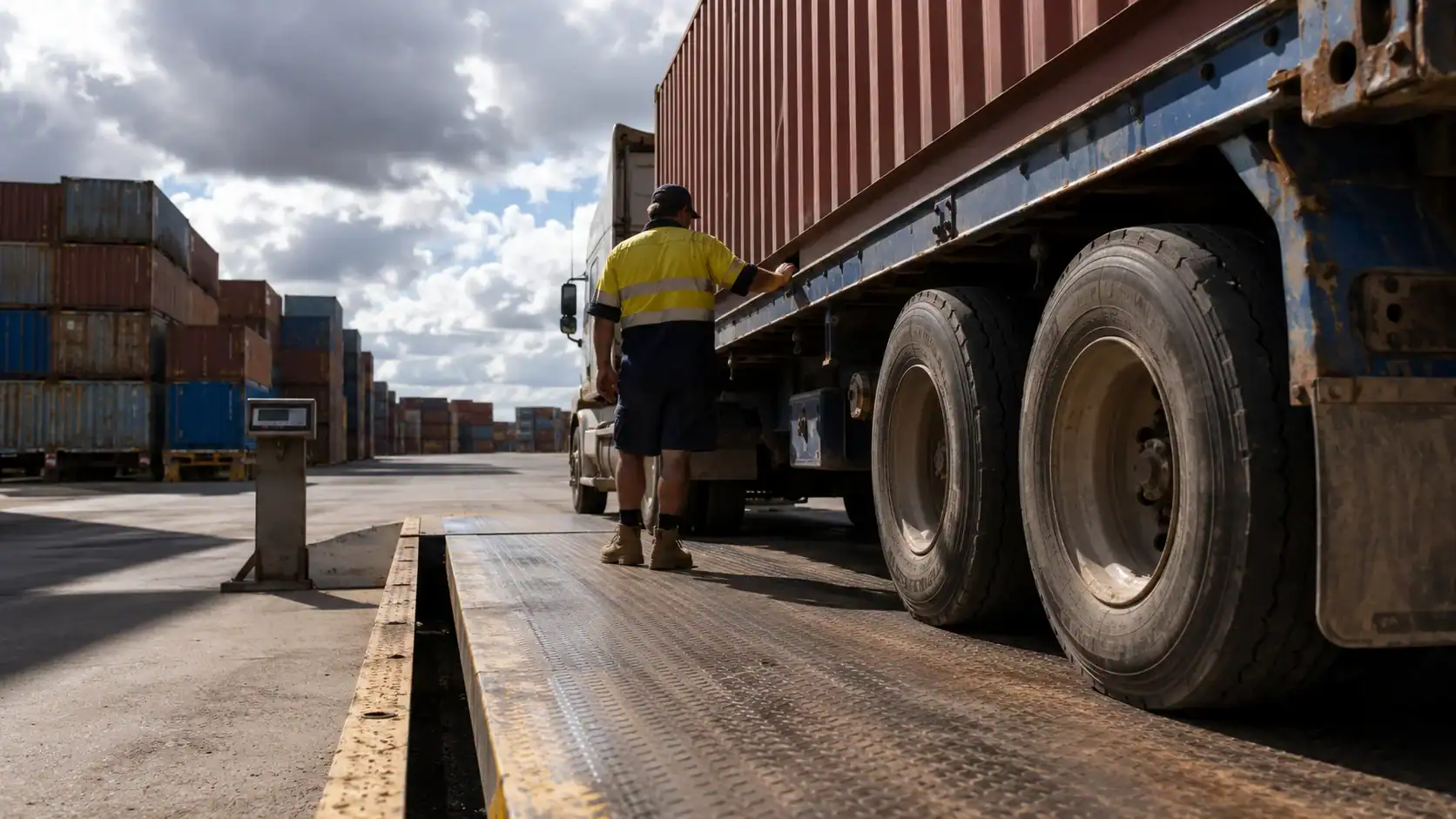
    Hi-vis worker checking a loaded shipping container on a semi-trailer at a port weighbridge, with stacked containers under a cloudy sky in the background, representing the freight side of landed-cost planning

    How This Changes Landed-Cost Planning

    First, landed-cost planning should stop treating exchange rates as background noise. If the AUD is moving inside a commodity-linked environment, the importer should at least ask whether a new rate level reflects a temporary shock, a broader regime change, or a move that may affect multiple shipments rather than just one quote.

    Second, customs mechanics make the issue concrete. Australia’s border rules require imported goods to be valued under formal customs methods, and foreign-currency values must be converted into AUD in accordance with those rules. ABF: Customs Value That means the FX environment does not merely influence spreadsheet assumptions. It can become a specific border-cost outcome once the shipment enters the customs process. Importers shipping household goods or personal effects to Australia can see the full customs and cost picture at Swift Cargo: Australia shipping costs and customs overview.

    A procurement team may feel comfortable with a supplier price in USD, EUR, or CNY. The problem appears when the AUD side of the equation moves before the shipment is exported or before customs conversion rules lock in the result. At that point, macro context and border timing stop being separate discussions.

    Strong landed-cost planning asks a broader set of questions.

    • Has the currency moved enough to justify revisiting the budget rather than absorbing the difference as noise?
    • Will customs timing convert a broad FX move into a specific import-cost hit?
    • Is there enough shipment flexibility to change timing, split orders, or change purchasing cadence?
    • Does the margin on the goods justify more active attention to exchange-rate risk?

    Those questions separate importers who discover cost pressure late from importers who detect it early enough to make a useful adjustment.

    Why Interpretation Matters More Than Prediction

    The weak version of this topic invites prediction theater: acting as if one article about commodity prices should tell you exactly where the AUD will trade next month. That is not a serious standard, and it is not the best commercial use of the material.

    The stronger use is interpretation. If the AUD strengthens during a commodity upswing or weakens when commodity conditions roll over, the importer gets a clearer explanation for why the landed-cost environment changed. That does not give perfect foresight, but it does improve judgment. Teams can separate structural change from random fluctuation. They can explain cost pressure to management without sounding confused. They are also less tempted to write off every rate move as a one-day anomaly.

    Some operators know what regime they are in, what that regime can do to costs, and where a small adjustment in timing or pricing discipline might protect the business. They are working from a firmer foundation than the ones who react emotionally to exchange-rate headlines.

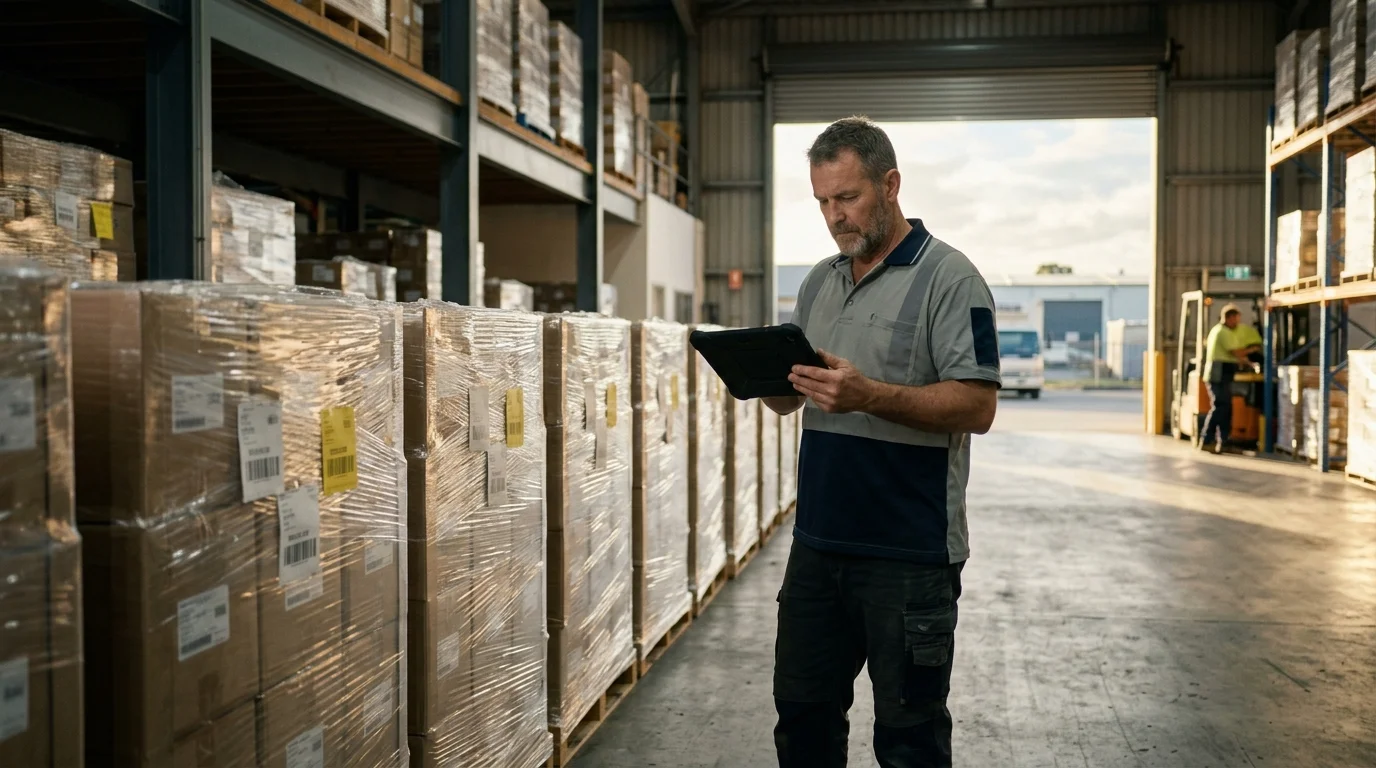
    An Australian warehouse manager reviewing a shipment ledger on a tablet while standing beside a neatly organized run of received pallets, morning light through the roller door, the screen and papers angled away from camera.

    What Disciplined Importers Do Differently

    Disciplined importers connect three layers that are often handled separately: macro context, customs timing, and operational freight decisions. They do not assume the exchange rate is a simple finance-side issue that can be ignored until the invoice lands. They treat it as one more planning variable that can interact with shipment timing and import cost.

    Consider the asymmetry in how most import businesses spend their worry. They will pay for marine insurance against cargo loss, an event with a probability well under one percent. Meanwhile their entire cost base sits exposed to a currency that has moved ten percent in a quarter more than once this decade, usually on the back of an iron ore price swing they never looked at. That is not risk management; that is insuring the visible risk and ignoring the expensive one. The AUD’s commodity linkage is publicly observable, free to monitor, and it moves landed cost more than almost any operational decision an importer makes. Ignoring it because “we’re not currency traders” is a choice, and it has a price.

    In practice, that usually means a more deliberate workflow.

    • They monitor the currency environment in context. Not to predict every turn, but to understand whether the AUD is moving within a broader commodity and terms-of-trade shift.
    • They translate macro movement into shipment impact. They ask which orders, supplier invoices, or planned imports are now more exposed than they looked a few weeks ago.
    • They respect customs timing. They understand that the day a shipment is exported and valued can determine how a currency move shows up at the border.
    • They communicate early. If margin or landed cost is changing, they surface that before someone downstream treats the old budget as fixed reality.
    • They keep planning proportional. Not every shipment warrants an elaborate FX response. The stronger habit is knowing which ones do.

    Be clear about the job an importer is actually hiring currency awareness to do. Nobody genuinely wants a forecast of the Australian dollar; a forecast is unownable and mostly wrong. The job is narrower than that: protect a committed margin from a variable the business has already agreed to carry. Framed that way, the apparent paradox above dissolves. A firm that “isn’t a currency trader” was never being asked to trade. It was asked to notice when a publicly visible number had quietly repriced an order it had already promised to fill.

    Three Numbers Worth Checking Before You Assume the AUD Will Hold

    Importers do not need a forecasting model to stay ahead of AUD moves. They need three numbers checked on a standing schedule, not just when a quote lands badly. The iron ore spot price is the single most direct proxy for Australia’s terms of trade. The AUD/CNY cross rate matters as much as AUD/USD for anyone sourcing from China, because a China-driven commodity demand shift often shows up there first. The RBA’s own cash rate decision calendar runs to eight scheduled dates a year, and those windows are where a rate surprise, not a commodity move, is the more likely driver of a short-term AUD swing.

    None of this produces a prediction, and treating it as one is the mistake worth naming directly. An importer who checks these three numbers and still gets an unfavourable rate on the day of export has not made a bad decision. They have made a reasonable bet that lost, which is a different thing from a bad process. The importer who never checks them and happens to get a favourable rate has not made a good decision either. They got a good outcome from no process at all, and the next shipment will not know the difference. Budgeting a realistic AUD range around the export date, rather than a single point estimate carried over from the last quote, is what turns three numbers into a usable discipline instead of a forecasting hobby.

    This page works best as the macro bridge inside the currency cluster. Readers who want the historical cycle view should move next to The 2013 AUD Peak to 2020 Volatility. Readers who want to understand how a currency move becomes a customs-cost issue should go to Customs Exchange Rates: Why the Day of Export Matters. Readers who need the tax and landed-cost layer should continue to Import Duty and GST Explained for Australia.

    The real importer question is rarely just “why is the AUD moving?” It is usually “what does this movement now do to my costs, timing, and decisions?” The cluster is stronger when each page answers one layer clearly and hands the reader to the next operational layer without friction.

    The AUD-commodity linkage is a structural condition Australian importers can either understand and price around, or be repeatedly surprised by. Teams who treat the AUD as a number to check weekly tend to absorb the volatility as P&L noise. Teams who build a simple internal model out of the three numbers above gain enough advance signal to hedge meaningfully, accelerate or delay non-urgent landings, and renegotiate supplier terms when the curve is moving in their favour.

    Most importers who worry about the Australian dollar are quietly trying to predict it, even when they say they are only monitoring it. That is worth noticing, because predicting a commodity-linked currency accurately and consistently is a different skill than most freight and procurement teams actually have, and betting the timing of a large order on a currency call is a bet most of them are not equipped to make well. The importers who do better are not the ones with a sharper AUD forecast. They are the ones who stopped trying to predict the number and built a process that survives being wrong about it instead, staggering purchase timing, holding a buffer in landed-cost estimates, and treating every forecast as a guess with a wide error bar rather than a plan.

    Frequently Asked Questions

    Why is the Australian dollar often called a commodity currency?

    Because Australia’s export structure and terms of trade have a meaningful influence on the currency, especially when commodity conditions materially change national income and external demand.

    Why should importers care about commodity prices if their goods are unrelated to mining?

    Because the link runs through the AUD itself. Commodity conditions can influence the currency environment that importers use to budget, price, and assess landed cost.

    Does this topic help with prediction or planning?

    Mainly planning. The strongest use is understanding the kind of FX environment you are in so budgets, timing, and customs expectations can be handled more intelligently.

    How does this connect to customs costs in Australia?

    Foreign-currency values are converted into AUD under formal customs rules, so exchange-rate moves can become specific border-cost outcomes rather than just abstract budget noise.

  • ASEAN Imports to Australia: Agreements, Biosecurity and Gateways

    ASEAN Imports to Australia: Agreements, Biosecurity and Gateways

    ASEAN Imports to Australia: Agreements, Biosecurity and Gateways

    Why ASEAN matters more than legacy trade maps suggest

    Australia’s trade geography has shifted over time, and serious import planning has to keep up with that shift. Older business instincts still imagine Australian trade through a North Atlantic lens, but the commercial reality is more Indo-Pacific.

    ASEAN matters not because it sounds strategically fashionable, but because regional trade density, manufacturing networks, and supply-chain proximity are increasingly decisive in how goods move into Australia. DFAT’s trade through time data and ABS international trade statistics make the long arc clear: Australia’s trade orientation has become more deeply tied to Asia, and that means logistics strategy should reflect regional reality rather than inherited assumptions.

    For importers, the practical consequence is straightforward. Sourcing, routing, trade-agreement use, and freight resilience all start to look different when ASEAN is treated as a core operating region rather than a peripheral set of origin countries.

    Why logistics strategy is not just about sea lanes

    A real Australia–ASEAN logistics strategy is not only about which vessels connect to which ports. It is also about customs preference structures, port choice inside Australia, inland freight after discharge, the volatility of regional production hubs, and the difference between theoretical route access and reliable route performance.

    A container from ASEAN into Australia still has to survive customs, biosecurity, terminal handling, and domestic delivery. That means regional strategy and domestic execution have to be designed together. Australian import customs requirements are the point where regional sourcing strategy meets operational reality.

    Every ASEAN origin decision eventually resolves into an Australian border event. Without confirming ABF commodity entry requirements, biosecurity conditions, and applicable duty treatment before the goods ship, the importer is managing the regional strategy badly even if the sourcing decision was correct.

    Biosecurity conditions for ASEAN-origin goods

    Biosecurity is the friction layer that most Australia–ASEAN logistics strategies underweight. DAFF applies import conditions to a wide range of goods originating from ASEAN countries. Timber products, rattan, bamboo, used machinery, food, and plant-derived packaging materials all carry specific treatment or documentation requirements. These conditions are set by DAFF and managed through the BICON database, which is the authoritative source for commodity-specific conditions to consult before a shipment is prepared.

    The practical implication is straightforward: before committing to an ASEAN supplier for a new product category, verify the BICON conditions for that commodity. Some goods require heat treatment, fumigation, or cleaning to a specific standard at origin, which affects which suppliers can comply and what packaging is permitted. Discover this after the goods are packed and ready to ship, and you risk delay and potential re-export at the Australian border.

    ASEAN origins do not carry uniform biosecurity risk. Vietnam and Thailand have different commodity-specific conditions from Malaysia and Indonesia. A logistics strategy that treats ASEAN as a single biosecurity zone will be surprised at the border. The stronger approach is to map biosecurity requirements by commodity and origin country before the sourcing decision is locked.

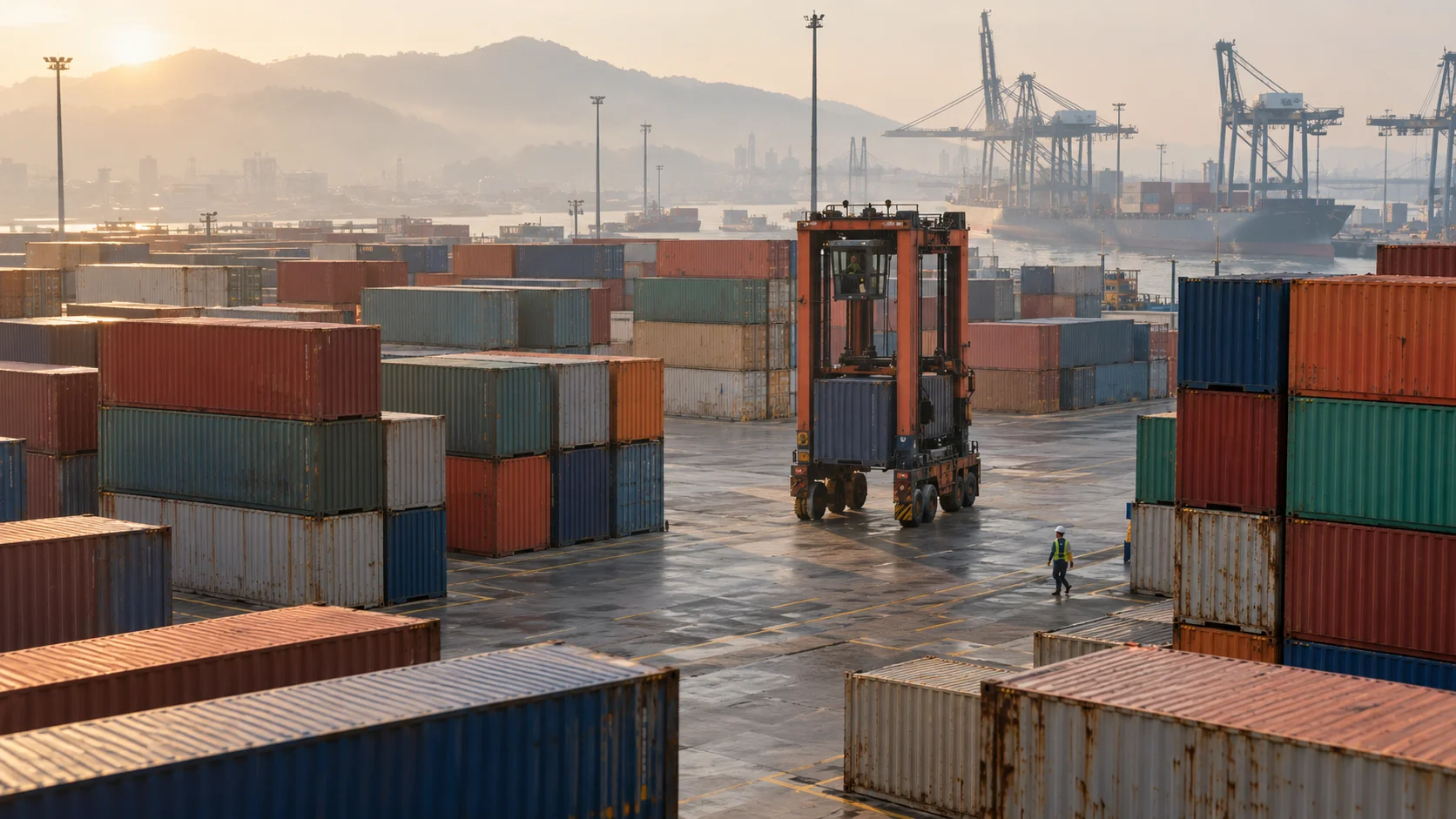
    Container yard at a Southeast Asian regional port on a humid afternoon

    How trade agreements and regional density interact

    One reason ASEAN matters is that it sits inside an agreement-rich trade environment. AANZFTA and RCEP are not identical, and neither turns the region into a frictionless free-trade zone. Both, however, influence how importers should think about preferential treatment, origin analysis, and commercial sourcing logic.

    The operational test is whether the goods genuinely qualify. Under AANZFTA, the standard rule requires goods to have undergone a tariff classification change at the chapter or heading level, or to meet a regional value content threshold, typically 40 percent under the build-down method. Importers sourcing from ASEAN manufacturers need to confirm that the production process creates sufficient transformation in the ASEAN country to support the preference claim, especially when those manufacturers use Chinese or Korean inputs. A supplier’s assurance is not the same as a verified rule-of-origin analysis.

    The strategic value is that importers who understand the agreement environment can price opportunities more accurately and avoid treating all regional sourcing decisions as if they carry the same customs outcome. Regional density and agreement structure reinforce one another: geography makes the freight relationship important, and agreements improve the economics of that relationship when the claim discipline is strong enough.

    What a better Australia–ASEAN logistics strategy looks like

    A better regional strategy usually has four traits. First, it recognizes ASEAN as a serious operational region rather than a vague growth story. Second, it integrates trade-agreement analysis into landed-cost planning rather than keeping it as a legal afterthought. Third, it connects origin-region decisions to Australian gateway and inland-distribution logic. Fourth, it understands that resilience matters as much as nominal cost.

    The cheapest regional route is not always the strongest one if it creates customs fragility, poor schedule reliability, or weak destination fit once the goods are inside Australia. A practical test is simple: run the total landed cost for two or three gateway options on the same ASEAN origin, including biosecurity inspection risk, THC variation between ports, and domestic freight to the final distribution point. The gap between the cheapest nominal route and the most cost-stable route is where a serious regional strategy earns its keep.

    How importers should use this strategically

    The disciplined importer should start by mapping which ASEAN origins genuinely matter to the business, then pair those origins with likely gateway choices, agreement eligibility, customs requirements, and domestic-distribution realities.

    Once that is done, the importer can ask better questions. Which lanes deserve relationship depth? Which origins support preference claims cleanly? Which Australian port creates the least waste after discharge? Which supply lines need redundancy because resilience matters more than a minor saving on the invoice? These are the kinds of questions that turn a regional trade thesis into a useful logistics strategy. The “commit to a lane” discipline below is where that plays out in practice.

    ASEAN Imports to Australia: Agreements, Biosecurity and Gateways: A Worked Rule-of-Origin Check

    A Worked Rule-of-Origin Check: When the AANZFTA Claim Actually Holds

    The preference claim is where regional strategy stops being a slogan and turns into arithmetic. Under AANZFTA, one common way for a good to qualify is the regional value content test: the value added inside the ASEAN country has to reach a threshold, usually 40 percent under the build-down method. The formula is plainer than it sounds: RVC equals free-on-board value minus the value of non-originating materials, divided by the free-on-board value, expressed as a percentage.

    Take a piece of furniture assembled in Vietnam and sold FOB at AUD 100. If the non-originating materials (say Chinese hardware, imported board, and coatings) are worth AUD 55, then RVC is (100 − 55) ÷ 100, or 45 percent. That clears the 40 percent bar, so the AANZFTA claim holds and the good can enter Australia at the preferential rate. Now nudge the same product: if those imported inputs are worth AUD 65 instead, RVC drops to 35 percent, and the claim fails. The supplier, the factory, and the shipping lane stay the same. Only the duty outcome swings, entirely on the input mix. The mechanics of that origin analysis and the paperwork behind it are covered in our explainer on how AANZFTA origin rules work for importers.

    This is why a supplier’s cheerful “yes, it qualifies” is not evidence. Many ASEAN manufacturers assemble goods from inputs sourced across the region, and a factory drawing heavily on Chinese components may sit right on the wrong side of the threshold without anyone checking the sums. The importer who runs the RVC calculation before the season starts is the one who actually captures the duty saving; the one who takes the assurance on faith is the one who gets the amended assessment months later.

    When an AANZFTA claim falls short, RCEP is sometimes the escape hatch. Its regional cumulation rules let inputs from any RCEP member (including China, Japan, and Korea) count toward origin, so a Vietnamese good that fails the AANZFTA test on Chinese content can occasionally qualify under RCEP instead. The two agreements are not interchangeable, and the paperwork differs, but a strategy that only ever checks one of them leaves duty savings on the table. Run both tests, then claim under whichever the goods actually satisfy.

    Regional Cumulation Is the Threshold Most Bilateral-Origin Advice Misses

    The AANZFTA rule-of-origin example above is a bilateral test: value added inside one ASEAN country, checked against one threshold. RCEP’s regional cumulation rules change the mechanism, not just the number. Under regional cumulation, inputs sourced from any RCEP member (not just the country of final assembly) can count toward the origin threshold. A product assembled in Vietnam using components from Thailand and Malaysia can qualify for preferential treatment under RCEP even where the same product would fail a strictly bilateral AANZFTA test.

    This is not a marginal technical difference: it is a threshold crossing that changes which sourcing networks are worth building. Take a business that sources components from three or four ASEAN and RCEP-member countries and assembles in a fifth. Historically, it has had to treat each bilateral agreement as a separate qualification hurdle, often failing all of them individually despite the finished product being substantially regional in content. Regional cumulation removes that specific failure mode for RCEP-eligible trade, which is why a sourcing network built for RCEP looks structurally different from one built to satisfy AANZFTA alone: it rewards regional supply-chain depth across multiple countries rather than concentration in one. Importers still relying on country-by-country bilateral checks are applying the older, narrower test to trade that may now qualify under the newer, wider one.

    Two people walking together along a factory production line

    Commit to a Lane, Don’t Hedge the Region

    Here is a pattern worth naming: region-hedging. It feels prudent: spread orders across Vietnam, Thailand, Malaysia, and Indonesia so no single origin can hurt you. It looks like risk management. Mostly it is just shallow everywhere. You end up with four supplier relationships you half understand instead of one you understand cold.

    The importers who quietly win do the opposite. They pick one or two ASEAN lanes and go deep, deep enough to know the factory’s production calendar, the export peak that clogs the port before Tet, the vessel string that actually keeps schedule, and the certification pathway before a shipment is under time pressure. Depth is what turns regional density from a menu of options into a set of problems that stop recurring.

    So the question is not “how many origins should I spread across?” It is “which lane do I understand well enough that it rarely surprises me?” Answer that honestly, commit to it, and let the shallow options go. Regional strategy is not about having more places to buy from. It is about needing fewer places to worry about.

    The importers who end up with the strongest ASEAN position rarely set out to build one. It usually starts with one nervous shipment, a single Vietnam supplier picked because a China lead time had just blown out on a deadline that mattered. Nobody planned a regional strategy on a whiteboard that day; they just needed the order to land on time. They didn’t know it then, but that one forced substitution was the beginning of a habit: re-testing the sourcing map instead of defending it. Eighteen months later, the habit is the strategy, and it only makes sense looking backward. The same pattern holds for any importer still treating ASEAN as a single fallback option instead of a lane worth actually learning. The map only pays off for the people willing to keep redrawing it.

    Choosing an ASEAN lane answers only half of the strategy cascade. The lane is where to play. How to win still has to name the specific capability that makes an importer harder to beat on that lane once the destination is chosen, and for AANZFTA and regional cumulation, that capability is usually an in-house rules-of-origin documentation process rather than a freight rate. Two importers can commit to the same Vietnam-to-Australia lane and end up with completely different outcomes: one treats origin paperwork as a formality filled in at the last minute, the other builds a standing checklist that gets applied to every shipment before it is booked. The second importer’s advantage is not cheaper freight. It is that customs rarely questions their claims, while the first importer’s claims get scrutinized every time.

    Frequently Asked Questions

    Why does ASEAN matter so much to Australian logistics now?

    Because Australia’s trade and sourcing reality is increasingly Indo-Pacific, and ASEAN sits inside a dense regional manufacturing and shipping environment that directly affects import planning.

    Is Australia–ASEAN logistics strategy just about choosing cheaper shipping routes?

    No. It is also about agreement use, customs outcomes, route resilience, Australian gateway choice, and domestic delivery design.

    Do trade agreements automatically solve regional logistics friction?

    No. They can improve the customs outcome for qualifying goods, but they do not remove documentation, origin, biosecurity, or route-design issues.

    What is the biggest mistake companies make here?

    Companies most often treat ASEAN as a sourcing region without turning that regional decision into a full logistics and landed-cost strategy.

    How do I know if my ASEAN goods qualify for AANZFTA duty preference?

    Run the rule-of-origin test that applies to the product, often a regional value content of at least 40 percent under the build-down method, calculated as free-on-board value minus non-originating materials, divided by FOB value. A supplier’s assurance is not proof; the calculation, backed by a valid Certificate of Origin, is what supports the claim at the Australian border.

    Is it better to spread sourcing across many ASEAN countries or concentrate on one?

    For most importers, going deep on one or two lanes beats hedging thinly across the whole region. Concentration lets you learn a factory’s production calendar, seasonal export peaks, reliable vessel schedules, and the certification pathway before a shipment is under time pressure, which removes more risk than nominal diversification adds.

  • Australia Commercial Imports: ABF, DAFF and What Controls Release

    Australia Commercial Imports: ABF, DAFF and What Controls Release

    Many importers talk about “Australian customs rules” as if customs were the whole system. They are not. Commercial cargo into Australia moves through a stack of rule layers, and the mistakes that cause real delays usually happen in the gaps between those layers.

    One layer is border clearance through the Australian Border Force. Another is biosecurity control through the Department of Agriculture, Fisheries and Forestry. Depending on the goods, therapeutic-goods controls, food rules, permit conditions, phytosanitary requirements, or trade-agreement documentation issues may also apply. The cargo may be commercially ordinary and still become operationally messy because one part of the compliance path was treated as someone else’s problem.

    That is why the useful question is not “what are Australia’s import rules?” The useful question is “which regulators, documents, valuations, and conditions apply to this shipment before it arrives, when it lands, and before it is released?”

    Importers who treat the Australian border as a single customs checkpoint tend to discover the other checkpoints at the worst possible time, after the goods have arrived and storage is already running.

    Australia Commercial Imports: ABF, DAFF and What Controls Release

    Why Commercial Imports Are a Multi-Regulator Problem

    Australia’s commercial import environment makes more sense once you stop treating it as a single legal event. A shipment can be customs-cleared in one sense, biosecurity-controlled in another sense, and commodity-restricted in a third sense. Those layers are connected operationally, but they are not identical.

    ABF is the border agency most importers think about first because it is where customs value, tariff treatment, GST, and import processing questions show up. That matters. But ABF is not the sole owner of import risk. DAFF administers the biosecurity layer, and biosecurity can still control release where contamination risk, permit conditions, inspection, or treatment requirements apply. ABF: Cost of importing goods DAFF: Clearance and inspection of goods

    That is the first thing many inexperienced importers miss. The shipment is not “fine” simply because the invoice is in order or because the tariff side looks manageable. If the goods sit in a category where biosecurity conditions apply, or if the documents do not support a clean risk assessment, the commercial reality becomes slower and more expensive.

    BICON is the best symbol of that system logic. It is more than a government database to check casually after the goods are packed: it is the public-facing rulebook that translates legislation into shipment-specific import conditions. Some goods are prohibited. Some are permitted only if conditions are met. Some require permits, treatment, declarations, or other preparatory steps before the vessel arrives. DAFF: BICON

    For a commercial importer, that means Australia is less like a simple destination market and more like a coordinated compliance environment. The winner is usually the company that understands which rulebook becomes decisive for the commodity it is moving, not the company with the cheapest freight rate.

    How Customs and Biosecurity Interact

    Customs and biosecurity are separate enough to cause confusion and connected enough to create operational bottlenecks.

    The customs side is where valuation, tariff classification, duties, GST, and processing charges typically sit. ABF explains the cost layers importers may face and clarifies that different charge rules can apply depending on the goods and their declared value. For many importers, this is the visible part of the border event because it has immediate budget consequences. ABF: Cost of importing goods ABF: GST and other taxes

    The biosecurity side is different. DAFF is not primarily asking whether the duty calculation is elegant. It is asking whether the goods create a contamination pathway, whether import conditions have been satisfied, and whether inspection, treatment, isolation, or additional controls are necessary. That can apply to machinery, packaging, timber, food-related goods, agricultural products, chemicals, and categories of general cargo that look harmless to a commercial team but not to a regulator focused on pests and disease risk. DAFF: Clearance and inspection of goods

    Commercial cargo can be delayed even when the importer believes the customs side is complete. Release is an operational chain, not one stamp. If the cargo still needs a DAFF decision, treatment outcome, inspection result, or permit verification, your timeline does not belong to customs alone.

    The mechanics of the customs side are also more specific than importers assume. GST is charged at 10% of the customs value plus duty, freight, and insurance combined, not 10% of the goods price alone. Some importers price a shipment off the invoice total alone, without adding freight and insurance into that base. Doing so misquotes their own landed cost before the container reaches the wharf. ABF: GST and other taxes

    This is also why “clean paperwork” does not mean one thing. Customs wants valuation, invoice, and declaration quality. Biosecurity wants clarity around the goods, origin, contamination exposure, and condition-specific obligations. A document set can satisfy one regulator and still be weak for another. Australia’s Biosecurity Import Conditions (BICON) Explained

    Planning for that interaction before departure keeps it manageable. Discovering it after the goods arrive (when storage is running and the broker is chasing missing documents) is a different situation entirely.

    A warehouse receiving area with two distinct product zones in one frame — sealed pharmaceutical-style cartons on one side under cooler, brighter light.

    Where Specialist Regulators Enter the Picture

    The next mistake many importers make is assuming only two serious actors exist: customs and agriculture. In reality, some commodities pull in specialist regulators or narrower legal frameworks that matter just as much as the freight booking itself.

    Therapeutic goods are a clear example. The Therapeutic Goods Administration sets legal requirements for many imported medicines and medical devices, including pathways where approvals, registrations, permits, or special conditions matter. A logistics provider can help the cargo move, but that does not eliminate the regulatory architecture around the product. TGA: Importing therapeutic goods

    Food and plant products create similar issues on the biosecurity side. Some goods are commercially ordinary in one country and compliance-heavy in Australia because of pest, disease, or treatment risk. Timber packaging, agricultural equipment, organic residues, and phytosanitary concerns can all bring the shipment into a more controlled pathway than the importer expected. DAFF: BICON

    Trade agreements can also matter, but not in the lazy way many summaries suggest. Preferential treatment under an agreement is not a magic discount that appears because the origin country sounds eligible. It depends on documentation, origin rules, and correct declaration practice. That is why a trade agreement is as much a paperwork discipline topic as it is a strategy topic. ABF: AANZFTA guidance

    The disciplined importer therefore asks a better question before shipping: “Is this cargo only a customs-and-biosecurity shipment, or does the product itself trigger another regulatory path?” That question is much cheaper before departure than after arrival.

    The pattern worth tracing is not a fixed list of regulators but a question: what does this product touch, and who has legal authority over each of those touchpoints? A therapeutic good touches human health, which pulls in the TGA. A timber-packed shipment touches biosecurity risk, which pulls in DAFF regardless of what the product inside actually is. A branded item touches intellectual property, which pulls in a different framework again. Importers who get caught out are rarely careless about the regulator they know exists; they simply never asked the question broadly enough to discover the one they didn’t know to look for.

    Why Valuation and Documentation Quality Matter More Than Importers Expect

    Commercial import problems are often blamed on regulation when the real issue is documentation quality. Australia’s system is strict, but it is also legible. Many disruptions come from weak descriptions, loose valuation logic, missing permit assumptions, or documents that were built to satisfy the shipper instead of the border process.

    ABF’s customs guidance clarifies that import costs are built from structured legal concepts such as customs value, duties, GST, and charges. That means the valuation side is not merely an accounting formality. If the invoice, valuation basis, or import declaration logic is weak, the charge outcome and border confidence both become less reliable. ABF: Customs value guidance

    The same is true on the biosecurity side. BICON and DAFF guidance are useful precisely because they let importers identify conditions before cargo arrives. If those conditions are not reflected in the documents, declarations, packing assumptions, or treatment plan, the shipment becomes fragile. Even when the goods are allowed, bad paperwork can make them look riskier than they should.

    Commercial teams also underestimate the cost of vague goods descriptions. “General cargo,” “samples,” or “equipment parts” are not strategically clever phrases if they obscure the conditions that actually govern release. They make it harder for the border process to trust the file, and they increase the chance that the shipment will be treated as something that needs more intervention rather than less.

    This is one reason experienced import operators spend time on the file before the movement. They know that a cleaner document set often removes more friction than a heroic effort after the container is already in Australia.

    A logistics planner at a desk with a wall-mounted route map softly out of focus behind them, no readable place names.

    How to Plan a Cleaner Commercial Import

    The cleanest commercial imports into Australia are usually the result of earlier thinking, not faster firefighting. The cargo may still be inspected. Charges may still apply. But the process becomes more predictable when the shipment is planned as a compliance event rather than only as a freight movement.

    • Identify the commodity pathway first, not last. Check BICON and any specialist regulator obligations before booking, instead of assuming the goods are routine.
    • Separate customs work from biosecurity work while planning for both. They are linked, but they do not ask the same questions.
    • Use precise commercial descriptions and defensible valuation logic. Ambiguity creates friction.
    • Where trade-agreement treatment is relevant, confirm documentation and origin support rather than assuming preference can be claimed casually.
    • Build timeline margin for inspection, treatment, or release sequencing when the goods are contamination-prone or regulator-sensitive.

    For importers ready to work with a freight partner that understands this compliance stack, Swift Cargo’s Australia import guide covers the ABF and DAFF clearance process from the operator’s side.

    That is the deeper lesson behind Australia’s commercial import rules. The system is not hostile. It is layered. Importers who map those layers early usually get a controlled outcome. Importers who collapse them into one vague “customs step” often pay for that simplification later in delay, storage, or unnecessary rework.

    If your shipment needs to be both compliant and commercially predictable, the most valuable work often happens before the goods leave origin. Import Duty and GST Explained for Australia Customs Exchange Rates: Why the Day of Export Matters

    Australia Rewards Importers Who Think in Systems

    Most expensive surprises in commercial import are not exotic edge cases. They are known rules applied to a self-inflicted timeline, a shipment booked before the importer asked which commodity pathway it would clear under.

    Experienced Australian importers encounter compliance gaps in a predictable pattern. Companies with large, professional procurement operations (teams that have managed suppliers across multiple categories for years) are not less likely to encounter a DAFF biosecurity hold or a TGA clearance issue. They are sometimes more likely to, because their organisations have separated procurement from compliance so cleanly that neither function knows what the other has already flagged. The sourcing manager knows the product. The compliance team knows the rule. In the space between them, nobody asks the question that connects the two. The lesson is not about regulatory complexity. Australia’s import rule stack is documented, publicly available, and largely stable. The lesson is organisational: compliance knowledge needs to enter the procurement sequence earlier, before the business commits to a supplier, not as a late-stage audit after the goods are already on the water.

    We check ABF and DAFF against your product, not a generic checklist.

    Most SMEs get a detailed, all-inclusive quote within 24 hours, compliance stack included.

    Price your commercial import

    The gap the passage above identifies (between what the sourcing team knows and what the compliance team knows) isn’t a communication problem that better meetings would fix. It’s structural: two functions with different information, different incentives, and no shared point where a DAFF biosecurity flag and a purchase order are required to meet before money moves. Larger, more professional procurement operations don’t escape this by being more capable. They often make it worse, because scale is exactly what lets a company separate the two functions cleanly enough that neither one is positioned to catch what the other missed. Moving the point where the two functions are forced to interact earlier in the sequence, before committing to a supplier and not later when the only options left are expensive, is the fix, not a smarter compliance team or a better-trained buyer.

    Frequently Asked Questions

    What are Australia’s main commercial import rule layers?

    The main layers are customs, biosecurity, and any specialist commodity rules that apply to the goods. ABF handles customs entry, duties, taxes, and border-processing issues, while DAFF manages biosecurity conditions and release risk for many goods.

    Is customs the only agency that matters for a commercial import?

    No. Many shipments also need to satisfy DAFF biosecurity conditions, and some goods pull in additional regulators such as the TGA. Treating the shipment as a customs-only event is a common planning mistake.

    Why can a shipment clear customs but still face biosecurity issues?

    Because customs and biosecurity are different control layers. Even when valuation and tariff treatment are acceptable, DAFF can still require inspection, treatment, permit compliance, or other actions before release.

    When do specialist regulators become relevant?

    They become relevant when the product category itself carries extra legal conditions, such as medicines, medical devices, food-related goods, plant products, or other controlled commodities. That is why commodity review should happen before shipment, not after arrival. For a stage-by-stage walkthrough of the full import sequence from order placement to warehouse delivery, see the Australia import process guide.

  • Customs Exchange Rates: Why the Day of Export Matters in Australia

    Customs Exchange Rates: Why the Day of Export Matters in Australia

    Many importers track freight rates obsessively and exchange rates emotionally, but still miss the specific timing rule that actually affects customs valuation in Australia. The critical date is often not the day the goods arrive. It is the day of export.

    That distinction sounds technical until money is attached to it. Once customs value must be expressed in Australian dollars, the exchange-rate rule becomes part of the landed-cost calculation, not a background administrative detail. A shipment exported under one rate environment can create a different customs-value picture than an otherwise identical shipment exported days later.

    The useful question is not simply “where is the currency today?” It is “which exchange-rate timing rule will Australia apply to the customs value for this shipment?”

    Customs Exchange Rates: Why the Day of Export Matters in Australia

    Why the Exchange-Rate Rule Surprises Importers

    The rule surprises importers because their mental model is usually built around a different set of dates. They think about when they paid the supplier, when the vessel sailed, when the cargo arrived, or when the invoice hit their finance team. Customs valuation is asking a narrower and more specific question: on what basis should the foreign-currency customs value be converted into Australian dollars for border purposes?

    That is a different question from treasury management or bank conversion timing. Your bank spread, your forward cover, and your supplier-payment date may all matter commercially, but they are not automatically the same thing as the exchange-rate mechanism customs applies to calculate value in AUD.

    ABF’s guidance is explicit that customs value must be expressed in Australian currency and that exchange-rate treatment follows statutory rules rather than the importer’s casual accounting preferences. Landed-cost surprises happen because the importer thinks in commercial cash terms while customs thinks in legal valuation terms. ABF: Customs value guidance

    The mistake is understandable. Most non-specialists assume the rate that matters is the one closest to arrival or payment. Australia’s customs logic cuts across that assumption, which is why the rule catches even experienced importers off guard the first time it costs them money.

    What the Day-of-Export Rule Actually Means

    At the practical level, the day-of-export rule means the customs conversion point is tied to export timing rather than to the emotional moments importers usually watch. If the goods are priced in foreign currency, that value still has to be translated into AUD for the customs framework. ABF explains that this translation uses the exchange rate prevailing on the day of export. ABF: Exchange rates for customs purposes

    That does not mean importers can always “choose” a perfect date with surgical precision. Real logistics still apply. Booking windows, supplier readiness, port cut-offs, and production schedules all limit flexibility. But it does mean the export date becomes more financially significant than many teams expect.

    It is also why two shipments with the same goods and supplier can produce different customs-value outcomes if they leave origin under different exchange-rate conditions. The cargo has not changed. The legal conversion environment has.

    For finance teams, that matters because the export date now sits upstream of a number they will have to defend. For logistics teams, it matters because the shipment calendar is no longer only about transit time and availability. It can also influence the valuation base that feeds duties and taxes.

    Why It Matters for Landed Cost

    This rule deserves attention not because it is obscure, but because it moves real money. Customs value sits inside the broader charge structure importers care about, including duties, GST, and other border charges depending on the goods and the import path. ABF’s importing guidance sets out that broader charge framework, which is why exchange-rate timing should never be treated as a side issue when a team models landed cost seriously. ABF: Cost of importing goods ABF: GST and other taxes Import Duty and GST Explained for Australia

    The legal backbone matters too. Australia’s customs valuation system is not improvisational admin practice; it sits inside statute and delegated customs processes, including the mechanism by which exchange rates are determined for customs purposes. That is why disciplined importers should treat the rule as part of the formal valuation architecture rather than as a negotiable accounting preference. Customs Act 1901 ABF: Import processing charge

    The rule bites hardest when the shipment value is material, when margins are tight, or when the goods are moving in a volatile currency environment. A small FX difference across a high-value commercial import can be more significant than a small change in freight cost, yet many teams spend far less time modelling it.

    It also changes how importers should think about “favourable” exchange-rate news. A headline saying the AUD improved this week does not automatically mean your customs-value outcome improved. If the export date that governs the shipment sits outside that improvement, the customs calculation may not reflect the number you were watching.

    This is one reason landed-cost budgeting often feels worse after arrival than it did during procurement. Teams may have tracked the wrong rate, the wrong date, or the wrong operational trigger.

    Container ship departing port at dusk with tugboats alongside, gantry cranes and a city skyline in the background

    How It Changes Commercial Planning

    Once an importer understands the day-of-export rule, the planning model becomes more realistic. Treasury, procurement, and logistics start to look less like separate conversations and more like linked parts of one decision chain. The conversation also gets sharper when teams understand how the Australian dollar moves with commodity prices, because customs conversion is downstream of those macro forces, not insulated from them.

    For example, if a shipment is commercially significant and dispatch timing is flexible, the export date deserves deliberate attention. That is not because importers can perfectly time every market move, but because they should at least know which date will control the customs conversion outcome.

    This also changes how teams think about urgency. Sometimes the fastest export date is still the right commercial choice because inventory pressure or contractual deadlines dominate the decision. But then it should be chosen knowingly. If the team is accepting a weaker exchange-rate environment to preserve supply continuity, that is a strategic trade-off. If the team is surprised by the result later, that is a planning failure. The lessons from the 2013 AUD peak through the 2020 volatility window are useful here: importers who priced their landed-cost models against a single recent exchange rate were the ones who got hurt worst when the cycle turned.

    The rule is also a reminder that “landed cost” is not just freight plus duty. It is an integrated timing problem. Booking, export, customs conversion, duties, GST, processing, biosecurity, and storage all interact. Strong operators model these together rather than discovering them one charge line at a time. Australia’s Commercial Import Rules Explained

    Importers planning a commercial shipment to Australia can request a door-to-door cost breakdown, including customs and GST, at Swift Cargo’s Australia customs guidance.

    How to Avoid Common Customs Timing Mistakes

    The most common customs FX mistakes are not sophisticated. They are basic coordination failures.

    • Do not assume the bank-payment rate is the customs-conversion rate.
    • Do not model landed cost on the arrival-day rate if the export-day rule is what actually governs valuation.
    • Do not let logistics and finance work on different date assumptions for the same shipment.
    • Do not treat the export date as a purely operational timestamp if the shipment value is large enough for FX timing to matter.
    • Do not wait until post-arrival to understand how customs value will be expressed in AUD.

    Importers do not need to become foreign-exchange strategists to improve this. They just need to respect that customs uses its own timing logic, and that this logic belongs inside commercial planning before the cargo moves.

    The cleanest habit is to review the likely customs-value treatment while the shipment is still in planning. If the goods are high-value, currency-sensitive, or margin-sensitive, the export-date rule should be visible in the landed-cost model from the start. That one change is the difference between a landed-cost model that reconciles and one that does not.

    The teams who keep getting caught by this rule are not the ones who lack the information. The information is public and the calculation is simple. They are the ones who never built the rule into a habit: checking the customs rate after the shipment instead of before, treating valuation as the broker’s problem rather than their own, and assuming the next year will look like the last one. Currency cycles are not generous to importers who plan around the recent past.

    Who Bears the Risk When the Rate Moves

    Nothing about this rule is hidden. The Australian Border Force publishes its exchange rates in advance, and the day-of-export requirement sits in public legislation. Yet when the conversion produces a higher AUD customs value than the importer modelled, the difference lands on the importer, not the broker, not the bank, and certainly not the regulator. Ask who absorbs the cost of a misread rule, and the case for checking it before booking rather than after clearance answers itself.

    One worked example puts numbers on the exposure. An invoice for EUR 100,000 converts to roughly AUD 166,700 if the export-day rate is 0.60, and to roughly AUD 172,400 if the rate has slipped to 0.58 by the day the vessel actually departs. That is a customs-value difference of about AUD 5,700. At a 5% duty rate the duty moves by close to AUD 290, and the GST base moves with the full value shift. At 10% that is nearly AUD 600 more GST. On one shipment that is tolerable. Across a year of monthly consignments, an importer who never checks which export date applied is carrying a five-figure blind spot that nobody was obliged to point out to them.

    Let’s be honest about what is actually happening here. The rate rule is published, the exposure is knowable, and the fix costs nothing beyond five minutes of checking a public number before you book. And importers still get blindsided by it, year after year, on shipments worth real money. That is not a regulatory failure. It is a discipline failure, and it happens because nobody’s job description explicitly includes checking exchange-rate exposure before booking. We build entire compliance functions to catch a missing certificate of origin and leave a five-minute currency check to chance. The data on who actually gets caught by this is not subtle: it is disproportionately the importers who treat FX exposure as the bank’s problem instead of a line item they own.

    The Date You Don’t Know Matters Until It Already Has

    Most importers only learn which date actually sets their customs value after it has already cost them something. They budget off the order date, because that is the number in their own system. They watch the arrival date, because that is the number the freight tracking page shows them. Neither one is the number Australian customs actually uses. That number comes off the export date: the day the goods physically left the origin port. For most importers that date sits quietly in the background of a shipment, unremarkable, right up until a landed-cost reconciliation does not match the budget and someone has to work out why.

    Look back and the pattern is always the same: the rate moved between the date that felt like it should matter and the date that actually did, and nobody was watching the second one because nobody knew it was the one that counted. It is hard to see which date the rule cares about until you have already been caught by it once. That is not a criticism of anyone’s process. It is simply how a quiet rule works: it does not announce itself until the reconciliation forces the question.

    Once you know it, the fix is almost embarrassingly simple: stop tracking the order date as if it were the financial date, and start tracking the export date instead. That is the one point on the whole shipment timeline that a customs officer will actually use to convert the invoice into Australian dollars. It will not feel like the important date until the day it turns out to have been the only one that was.

    Frequently Asked Questions

    What does day of export mean for customs value in Australia?

    It means foreign-currency value is generally converted into AUD using the exchange rate that applies on the export date for customs purposes, rather than simply using the rate on arrival or the importer’s bank-payment date.

    Does the arrival-day exchange rate matter instead?

    Not as the main customs conversion rule. Arrival timing can still matter operationally, but ABF’s customs-value treatment is generally tied to the day of export when foreign currency has to be converted into AUD.

    Why does this rule affect landed cost?

    Because customs value feeds into the broader border-charge structure. If the AUD conversion changes the customs-value base, the total landed-cost picture can change as well.

    Should household movers care about this too?

    It matters most for commercial imports, but any shipment where valuation and border treatment are important should at least understand the rule. The exact practical impact depends on the shipment type and customs pathway involved.

  • Airport Cargo Capacity Delays Urgent Shipments into Australia

    Airport Cargo Capacity Delays Urgent Shipments into Australia

    Urgent shipments attract a particular kind of simplification. People talk as if speed in air freight is mainly about finding a flight. In reality, airport cargo is an infrastructure and handling problem as much as a flying problem. The aircraft is the part of that system an importer chooses; almost nothing else is.

    Shrink-wrapped freight pallets being loaded into the nose hold of a cargo aircraft at dusk, three more pallets waiting on dollies on the apron

    That system includes cargo terminal capacity, customs handling, screening, truck access, warehousing coordination, and airline space pressure. What ties them together is whether the airport ecosystem can absorb volume without turning urgency into queueing. For Australia-bound urgent cargo, the question is therefore not only “can this fly?” It is “can this move cleanly through the airport cargo system at both ends?”

    Hidden friction penalises urgent shipments hardest. A regular sea-freight job can absorb some softness in the chain. A medical component, project spare, premium replenishment, or business-critical replacement often cannot. Capacity is not just a volume concept. It is a reliability concept.

    Why Airport Cargo Capacity Matters More Than Airline Schedules Alone

    When people imagine airfreight speed, they usually imagine the airborne part. That is natural, but incomplete. An urgent shipment is only fast if the cargo terminal can receive, process, clear, and release the freight quickly enough for the air leg to remain commercially meaningful.

    Airport cargo systems are therefore bottleneck systems. If screening, handling, documentation, customs sequencing, or landside transfer becomes constrained, the shipment can lose hours or days that were supposedly purchased through airfreight pricing. This is one reason urgent shipments disappoint even when the flight itself looked ideal on paper.

    Australia’s main gateways matter because they sit inside larger cargo ecosystems. They are not only airports. They are airport-plus-terminal-plus-trucking-plus-warehousing systems. Urgency should be designed against that whole chain rather than against the departure board.

    Reliability is also spread unevenly across gateways. A gateway can be large and still be commercially awkward for a specific urgent job if the terminal, release pattern, or delivery handoff creates the wrong kind of friction.

    How Australian Airport Gateways Differ

    Sydney, Melbourne, and Brisbane dominate attention because they serve the largest cargo and business corridors. That usually makes them the default answers for urgent imports. But the default is only correct when it matches the destination logic. BITRE: Australian Aviation Statistics

    If the shipment is genuinely Sydney-facing, Sydney’s scale and connectivity may make sense. If the cargo needs to land inside Victoria’s commercial base, Melbourne may be cleaner. If the urgency is Queensland-specific, Brisbane may avoid the false speed of flying into the wrong state and rebuilding the route on the ground.

    How much cargo an airport can touch matters less than how useful that touchpoint is for the specific shipment. The fastest plane into the wrong city is often a slower commercial answer than a slightly less glamorous route with a cleaner release and delivery chain.

    Good urgent-airfreight planning starts with the delivery outcome, not with the airport brand name. The best gateway is the one that preserves speed through the full chain rather than through the air leg alone. Importers who default to the largest airport out of habit pay for that habit: scale is helpful, but it does not erase the cost of landing in the wrong geography and rebuilding the route by truck.

    Where Urgent Shipments Actually Lose Time

    The main time losses in urgent airfreight are often unromantic: documentation errors, clearance sequencing, screening queues, truck-booking delays, warehouse handoff confusion, and arrival outside workable delivery windows. These do not sound dramatic, but they are exactly the losses that convert premium freight into mediocre performance.

    Australia also adds the usual border complexities. Customs, biosecurity, and commodity-specific controls do not vanish because the goods are urgent. In some cases, urgent cargo is even more sensitive to weak paperwork because the chain leaves less slack for rework. A high-functioning cargo gateway is one where the urgency bought in the air can still survive the ground environment. A weak gateway or weak ground plan can destroy value after the aircraft has already done its job.

    Importers should watch the handoff points closely. Airfreight loses its advantage most often at the interfaces: terminal to broker, broker to truck, truck to final consignee, or documentation to release. For urgent jobs, importers should design those interfaces rather than hope they hold. Who is receiving the freight at terminal level? When can the truck actually collect? What release conditions still need to be met? Can the consignee take delivery inside the real working window? These questions sound operational because they are operational. They are also where urgency is won or lost.

    Australia’s commercial import rules apply regardless of shipment urgency, and the ABF publishes current clearance requirements at abf.gov.au.

    Ground crew worker securing cargo netting on an airport ramp at night, with freight pallets queued beside a wide-body cargo aircraft, illustrating the ground-handling stage where urgent shipments lose hours

    Tracing Where the Hours Actually Go

    Pull the timestamps on almost any “next flight out” shipment and the story the invoice tells starts to come apart. The flight is the part everyone watches, and it is usually the part that behaves. A wide-body from Asia is wheels-down in Sydney nine or ten hours after departure, on schedule. Then the shipment stops being an aviation event and becomes a ground event. The ground is where the hours quietly disappear.

    Follow one box. The aircraft lands at 6am. The unit-load devices come off, but the freight is not “available” the moment the wheels touch. The cargo terminal operator has to break down the ULDs, and during a busy morning bank that deconsolidation can run three to six hours before a single carton is ready to be picked. Now the border. If the import declaration was pre-lodged and clean, clearance can be near-immediate; if biosecurity flags the commodity for inspection, the shipment joins an inspection queue that can add most of a day, urgent or not. Then release: the broker issues the delivery order, a transport slot is booked at the terminal, and slots are finite. Miss the window and the next one may be tomorrow. Finally the consignee. Its receiving dock may only accept deliveries by appointment between 7am and 3pm. Land your “urgent” freight at 4pm and it waits until morning to be received.

    Add those segments up and a nine-hour flight routinely sits inside a wheels-down-to-dock time of eighteen to thirty-six hours. None of it is dramatic. No single step looks like a failure. That is exactly the point: the delay is systemic, distributed across half a dozen handoffs that each seem reasonable in isolation, and it does not show up anywhere on the airway bill. The importer paid for the plane and inherited the terminal, the queue, the slot, and the dock.

    That is also the honest test of whether a shipment should fly at all. When the ground chain is going to eat a day and a half regardless, the premium over sea freight sometimes buys less real time than it appears to. Run that calculation deliberately against the air-versus-sea decision framework rather than reaching for air reflexively because a deadline feels close.

    Which Shipments Should Care Most About Airport Capacity

    Not every airfreight move is equally sensitive to airport-capacity quality. The jobs that should care most are spare parts for a stalled operation, project-critical goods, medical or regulated cargo, premium retail replenishment, and shipment chains with hard delivery commitments.

    These are the jobs where time lost in a terminal is not just inconvenient. It changes the economics of the shipment. A delayed production restart, missed installation slot, or service outage can make the cargo cost far more than the freight invoice suggests.

    For those importers, choosing an airport is not just a route decision. It is a risk decision. The importer is choosing which ground system to trust with the urgency after landing.

    Some cargo is not physically sensitive at all, but the business consequence of delay is still severe. Airport capacity and gateway quality stay commercially material even when the goods themselves are durable.

    A freight coordinator's hand placing a small.

    How to Plan Urgent Airfreight More Intelligently

    The best urgent-shipment planning into Australia usually follows a few rules that are easy to state and harder to enforce.

    • Choose the airport for the delivery chain, not for the glamour of the flight map. A major gateway is useful only if it serves the consignee’s actual location and release path.
    • Treat customs, screening, and terminal documents as part of the urgent job. They are not admin afterthoughts.
    • Stress-test the landside handoff. This is where much purchased speed disappears.
    • Use the gateway that best matches the destination state and final-mile urgency. National hub logic is weaker than route-fit logic.
    • Accept that some apparently faster options are commercially slower once ground friction is included. Time bought badly is still wasted time.

    Urgent airfreight works best when the importer stops treating the airport as a magical speed portal and starts treating it as a constrained operating system. Most urgent-shipment failures look like infrastructure problems: a congested terminal, a missed slot. In retrospect they are planning failures. The importers who consistently land urgent freight on time are disciplined: they run pre-flight checks the same way every time, confirm gateway capacity, verify the handler, track the booking, and fix anything that looks weak before the cargo moves.

    To get a quote for urgent air freight into Australia, Swift Cargo handles time-sensitive import shipments through Sydney, Melbourne, and Brisbane.

    What the Gateway-by-Gateway Record Actually Shows

    The scheduling record behind Australia’s major cargo airports is not identical, and the differences matter more for freighter capacity than for passenger flights. Sydney operates under a legislated curfew restricting most aircraft movements between 11pm and 6am. The rule was built for noise management around a runway system close to residential areas, not for freight planning, but it directly limits when a dedicated freighter can land or depart there. Melbourne has no equivalent curfew, which is one reason freighter operators have historically favoured it for overnight operations feeding next-morning delivery windows. Brisbane sits in between: fewer curfew restrictions than Sydney, but a thinner schedule of dedicated freighter services than either Sydney or Melbourne, which shows up as fewer daily uplift opportunities rather than a hard time-of-day restriction.

    None of this shows up in a carrier’s advertised transit time, because the quoted transit time assumes a slot is available on the day the cargo is ready. An urgent shipment quoted against Sydney’s schedule can lose a full day to the curfew window alone if the cargo misses the last pre-curfew slot. That delay has nothing to do with customs, biosecurity, or the ground handler, and everything to do with which airport was booked. Check the destination gateway’s operating hours against the cargo’s actual ready time before the flight is booked, not after it is missed. That five-minute check is one the schedule itself will never surface unprompted.

    Urgent shipments belong inside the wider timing-and-risk side of the Australia cluster. Readers who need the general timing model should continue to Shipping Timeline to Australia. Readers thinking about disruption exposure should move to Climate and Seasonal Shipping Risks. Readers dealing with regulated or more complex imports should also read Australia’s Commercial Import Rules Explained, because urgency does not remove the border system.

    Frequently Asked Questions

    Is urgent airfreight mainly about getting a flight booking?

    No. Flight space matters, but terminal handling, customs sequencing, and delivery coordination often determine whether the urgency actually survives.

    Are Sydney and Melbourne always best for urgent shipments?

    Not always. They are major gateways, but the best answer still depends on the real destination and the full delivery chain after landing.

    What is the biggest hidden delay in urgent air cargo?

    Ground-system friction such as documentation errors, screening queues, terminal handling, or delayed landside transfer.

    Who should care most about airport cargo capacity?

    Importers moving business-critical, time-sensitive, or high-consequence cargo where even a short delay has meaningful commercial cost.

    How long does urgent air cargo take to clear the terminal after landing?

    Longer than most importers expect. After the aircraft lands, the cargo terminal operator still has to break down the ULDs, which takes three to six hours during a busy bank. Only then is the freight available, and clearance, terminal release, a transport slot, and the consignee’s receiving window all still follow. A nine-hour flight commonly sits inside a wheels-down-to-dock time of eighteen to thirty-six hours.

    Does urgent cargo skip biosecurity inspection?

    No. Urgency does not change how biosecurity selects consignments for inspection. If the commodity is flagged, the shipment joins the inspection queue like any other, which can add most of a day. That is one reason clean, pre-lodged documentation matters more on urgent jobs, not less.

  • Inland Rail and Australia’s Freight Timelines: The Inland Leg Decides Delivery

    Inland Rail and Australia’s Freight Timelines: The Inland Leg Decides Delivery

    Importers spend a lot of time discussing ocean transit and not enough time discussing what happens after the container lands. That is backwards for Australia. A large share of the real timeline is decided inland, not at sea.

    Double-stacked container freight train crossing red-soil inland Australia beside an unsealed access road

    That is why Inland Rail matters even before every section is fully operational. The project changes how serious operators think about domestic freight movement between major eastern-seaboard corridors. It encourages a better mental model: port arrival is only the beginning of the delivery chain, and long inland distances are not a footnote. They are part of the job.

    For Australia-bound freight, the “shipping timeline” is often misdescribed as a vessel timeline. Inland Rail is a reminder that national logistics is a network question, not just a maritime one.

    Why Inland Freight Matters as Much as the Port

    The easiest logistics mistake in Australia is thinking the route ends at the wharf. It does not. Once goods are discharged, they still move across a continent-sized freight system where inland distance, road congestion, rail options, warehousing access, and destination geography all shape delivery certainty. A gateway that looks attractive on the ocean side can become the weaker choice once the container has hundreds of kilometres of domestic network left to cross. That risk is sharpest along the eastern seaboard, where major markets are large but spread across long corridors.

    Too many businesses still choose a port first and ask inland questions later. A stronger approach starts with the inland job and checks which gateway serves that job best. Inland Rail formalizes that same insight at infrastructure scale, and the approach is worth adopting before any specific section of the project is finished.

    What Inland Rail Is Actually Delivering, and What It Is Not

    Inland Rail was conceived as a single freight rail program connecting Melbourne and Brisbane via inland routes. The resulting rail spine would make national distribution across those markets faster, more resilient, and less road-dependent over time. Inland Rail Overview Queensland TMR: Inland Rail

    That single-corridor vision changed in May 2026. An independent cost assessment put the full Melbourne–Brisbane build at more than AUD 45 billion, over three times the government’s committed funding. Canberra then shelved the section north of Parkes, NSW, indefinitely. Only the Beveridge (Victoria)-to-Parkes segment remains funded, targeting completion in 2027. The remaining roughly 1,000km to Brisbane is not expected before 2036 at the earliest, and current work there is limited to preserving the corridor rather than building it. Railway Gazette: Inland Rail scaled back

    For import planning, that splits Inland Rail into two separate questions. The Melbourne-to-Parkes upgrade is funded and close enough to plan around now. A rail-based Parkes-to-Brisbane leg is not. For at least the next decade, that stretch still depends on the existing network and the road corridor discussed below.

    What Parkes Actually Changes: The East–West Junction Most Import Plans Ignore

    The funded segment is usually reported as a shortened Melbourne–Brisbane project, which undersells what it actually does. Parkes is not simply the point where the money stopped. It is where the north–south alignment meets the existing east–west transcontinental line already running to Perth and Adelaide, and the Beveridge-to-Parkes upgrade is being built to double-stack clearance. What the funded leg delivers, then, is a double-stack-capable spine from Melbourne into a junction that faces west, not a half-finished road to Brisbane.

    That distinction decides who actually benefits, and the answer is narrower than the headlines suggest. An importer landing containers in Melbourne to serve Queensland demand gains very little before the 2030s. An importer landing in Melbourne and replenishing Western Australian or South Australian stock is looking at a funded corridor pointed straight down their lane, and should be re-testing now whether direct Fremantle or Adelaide calls still beat a Melbourne discharge plus rail.

    Structurally, though, this is not an advantage the infrastructure hands anybody. Double-stack capacity on a public corridor is available to every importer on identical terms, and a competitor can book the same slot next quarter. What is hard to copy is position: where your distribution centre sits relative to the terminal, whether your volumes justify a contracted slot rather than spot capacity, and whether the lane runs often enough to absorb a fixed schedule. The corridor changes the structure of the inland freight market. It does not decide where any individual importer stands inside that structure: that part is still a routing decision each operator has to make, and defend, on its own numbers.

    How It Affects Real Freight Timelines

    Inland Rail affects timelines in two main ways. First, it can let freight move more cleanly between major economic zones. Second, it encourages importers to stop pretending that all time sensitivity sits offshore. The maritime leg gets the attention, but the inland leg often determines whether the shipment arrives when it becomes commercially useful.

    This is why an importer routing goods into Melbourne or Brisbane should not only ask about vessel schedules. They should ask how the cargo will move after discharge, how intermodal options compare with road-only logic, and whether the final destination is best served by the gateway originally assumed.

    The real commercial upside is not just shaving abstract transit hours. It is reducing uncertainty in a domestic freight chain that can otherwise absorb time in unglamorous ways: truck constraints, road congestion, long-haul inefficiency, and rehandling between states.

    Inland infrastructure matters strategically because it changes the part of the timeline that many importers only notice when a consignee asks why a shipment that “already arrived” is still not there.

    Better inland options also change how a business writes its route promises internally. A business that models the corridor properly is less likely to confuse port ETA with customer delivery confidence.

    Which Importers Should Care Most

    Importers serving eastern Australian distribution networks should care most, especially where goods move between major seaboard markets rather than staying near the discharge port. Repetitive stock flows, multi-state replenishment, and customers who care more about door delivery than port arrival all raise the stakes. Inland Rail also matters to anyone rethinking their gateway assumptions: if inland freight becomes cleaner on the funded Melbourne-to-Parkes leg, the “obvious” port answer may not stay obvious there.

    Businesses with multi-site replenishment patterns have an especially strong reason to care: a better corridor affects more than one consignment. It can shift stock placement, transfer logic between states, and the safety stock a business carries against domestic unpredictability. That inventory effect is easy to miss, but it reduces the pressure to over-buffer every route.

    How to Plan with Inland Rail in Mind Now

    Start designing routes with inland logic now rather than waiting for the infrastructure to finish and thinking about freight strategy afterwards.

    • Review whether you chose your current gateway out of habit or for the actual domestic distribution job.
    • Map the inland path explicitly instead of treating it as a post-port administrative detail.
    • Look at stock destinations, not just import entry points.
    • Decide port and inland routing together when you model timelines and landed cost.
    • Watch corridor improvements because network shifts can quietly change which route is commercially best.

    Importers who think this way usually do better even before a specific rail benefit is available. They are planning the whole chain rather than only the dramatic part of it.

    The same discipline shows up in what the business promises its customers. The business that has done that work stops quoting a delivery date off a sea-leg ETA that was never the real answer. For a detailed quote on Australia-bound freight that accounts for the full door-to-door timeline, see how Swift Cargo structures the shipping process to Australia.

    For most of Australian transport history, the eastern corridor between Melbourne and Brisbane has effectively been a sea route. Colonial trade ran along the coast because the inland terrain made anything else impractical at scale, and the truck era did not change the underlying geography so much as pave over it. Inland Rail is the first serious attempt in over a century to redraw that line on a continental scale. The freight industry is uncertain whether the new corridor will reshape sourcing decisions or merely move existing flow onto rails. Both outcomes are possible. Infrastructure of this scale rarely produces the effects its planners predict. It produces the effects its users discover. Which outcome lands here will not be settled until importers start routing real freight against the corridor.

    Corridor quality compounds into an advantage for the importers who plan against it deliberately. Inland Rail does not benefit every importer equally. It benefits the ones who structure their inland network to use the new corridor: port choice, distribution-centre location, contracted carrier mix, lead-time models. Importers who simply continue trucking everything from Port Botany to Sydney warehouses will see Inland Rail as a headline they read; importers who rebuild their inland routing around the corridor will see it as a structural cost edge. The infrastructure is public. The advantage is not, because it lives in a routing question each operator has to re-ask for itself.

    Semi-trailer truck on a rural highway running parallel to a long freight train at sunset

    Planning the Inland Leg Like an Operation

    Treat the inland leg the way you would treat any part of the job you actually own: model it before you commit, not after the consignee calls asking where the freight is. Between Melbourne and Brisbane the choice today usually comes down to road versus the existing (pre-upgrade) network, since the funded rail upgrade currently stops at Parkes. The options behave differently enough that guessing is expensive.

    Road is roughly 1,700 kilometres door to door for the full Melbourne-Brisbane run. It is fast and flexible, often one to two days truck transit. It is priced accordingly, though, and it leans on driver availability and fatigue rules that tighten under peak demand. On the funded Melbourne-to-Parkes leg specifically, rail generally wins on cost per container over that line-haul distance, and it is less exposed to driver shortages. The trade is a drayage move and a terminal handoff at each end, plus a scheduled slot to fit into rather than a truck you can dispatch on demand. Miss the slot and the box sits at the terminal on someone else’s clock, which is where container detention and demurrage charges begin. Beyond Parkes toward Brisbane, that rail case does not yet exist and is not expected to for at least a decade, so the road-versus-existing-network trade still governs that stretch. Weighing the mode deliberately leg by leg is the same discipline you would apply to the air-versus-sea decision on the international leg: pick the mode the job needs, not the one out of habit.

    So run the check before the container ships, every time. Where does the stock actually need to be, and by when? Does that lane run often enough that a rail slot is worth building the schedule around, or is it a one-off where road flexibility earns its premium? What does the whole inland move cost once you add line-haul, drayage and terminal handling together, rather than just the headline per-kilometre figure? And what happens to the plan if the slot slips or the driver market tightens? None of these are hard questions. They are just questions most importers skip because the inland leg feels like someone else’s problem. It is not. It is yours, and the delivery promise you make to your customer stands or falls on it.

    A loaded freight truck at a rural rail-terminal drayage yard, containers stacked nearby, an operator checking a clipboard against a container number,

    The Number the Inland Rail Brochures Leave Out: You Still Need Two Trucks

    One fact gets lost every time someone describes Inland Rail as replacing road freight: not one shipment moves door-to-door by rail. A container leaving a Melbourne warehouse for a Brisbane distribution centre needs a truck to the rail terminal, a train to the terminal at the other end, and a truck again to the final address. Rail replaces the middle, longest leg of the journey. It does not replace the two shortest, most expensive-per-kilometre legs on either end.

    That matters for anyone doing the maths on whether the corridor is worth planning around once the funded Melbourne-to-Parkes section opens. The saving Inland Rail offers is real, but it is a saving on the long-haul middle distance, not on total door-to-door cost. Drayage at both ends stays what it already costs on a normal road job, because it is exactly the same job, just shorter. So when you weigh trucking the whole way against rail for the middle distance, measure it against the actual total, drayage included, not against the headline long-haul rate on its own.

    Two numbers are worth writing on a whiteboard before you make this decision: how far is the actual origin from the nearest rail terminal, and how far is the actual destination from the terminal at the other end? If both legs are short (a few kilometres, an industrial precinct built near the line), the corridor’s saving mostly survives contact with reality. If either leg runs fifty or a hundred kilometres in the wrong direction, a fair share of the saving gets driven straight back out of the number before the container ever reaches a customer’s dock.

    Frequently Asked Questions

    Why does Inland Rail matter to importers?

    Because many Australia-bound shipments only become commercially useful after a long inland movement, and Inland Rail is designed to strengthen that domestic freight spine.

    Does Inland Rail replace port choice decisions?

    No. It makes port choice more strategic because the inland path after discharge becomes easier to think about as part of one integrated route.

    Who benefits most from Inland Rail logic?

    Importers serving multi-state eastern Australian markets or moving goods between major east-coast corridors.

    What is the biggest planning mistake Inland Rail helps expose?

    Treating shipping timelines as if they end at the port rather than extending through the inland delivery system.

  • Choosing an Australian Container Port: The Inland Freight Logic

    Choosing an Australian Container Port: The Inland Freight Logic

    Importers often choose an Australian port the way tourists choose an airport: by looking at the city name they recognise first. That is understandable, but it is not how serious cargo planning works.

    Australia’s main container ports are not interchangeable. Each gateway sits inside a different operational environment, with different throughput realities, inland connections, customer catchments, and congestion implications. The vessel may arrive successfully in all cases, but what happens after discharge can vary materially depending on where the cargo enters the country.

    That is why importers have to ask the “best port” question more precisely. Best for which destination, with which delivery deadline, via which inland route? An importer shipping perishables to Brisbane faces different gateway logic than one moving heavy machinery to a Perth construction site.

    For many importers, port choice is really a delivery-system choice in disguise.

    Choosing an Australian Container Port: The Inland Freight Logic

    Why Port Choice Matters More Than Many Importers Expect

    Importers new to Australia often over-focus on the sea leg, because ocean transit feels like the dramatic part of the move. But in practice, a large share of the friction sits after the ship arrives: terminal handling, slot availability, trucking, warehousing, rail, and the distance between the port and the real destination of the goods.

    So a gateway can look efficient in headline terms and still be wrong for the shipment. If the cargo lands in the biggest port but then has to travel inefficiently across the country, the importer may win the ocean map and lose the actual delivery plan.

    Australia makes this more important than some other markets because it is both large and concentrated. Population, warehousing, and business activity cluster heavily around a few states and metropolitan corridors, while the inland distances between those corridors remain commercially meaningful. A gateway decision is therefore not only a maritime decision. It is a national distribution decision.

    BITRE’s Waterline reporting exists precisely because port performance, container throughput, and landside efficiency matter at a system level. Raw container counts matter less than how that throughput translates into performance and cost for the importers using those gateways.

    How Australia’s Main Container Gateways Differ

    Melbourne is the obvious place to start because it is the country’s largest container port. Port of Melbourne publishes container statistics showing how central it remains to national trade. That scale matters because it creates route density and broad shipping relevance, especially for south-eastern demand. But “largest” is not the same as “best for everyone.” Choosing Melbourne out of habit rather than logic can still make a Queensland or Western Australia delivery less efficient.

    Sydney / Port Botany is another core gateway because it serves the country’s largest metropolitan economy and a major warehousing and consumption corridor. Beyond city size, Port Botany plugs directly into a large eastern-seaboard commercial base. For cargo bound for Sydney and its surrounding logistics network, it can be the natural answer. But if the goods are not meant for that catchment, Port Botany can become a convenient-sounding detour rather than an efficient gateway.

    Brisbane deserves more attention than many importers give it. For Queensland-bound cargo, the “default to Sydney or Melbourne” instinct often reflects familiarity rather than good freight design. Brisbane can reduce unnecessary inland movement for importers serving the state directly, especially where delivery certainty matters more than the prestige of entering through a larger port. That does not mean Brisbane is automatically better. It means the importer should stop treating eastern Australia as one undifferentiated delivery zone.

    Adelaide can be strategically useful when the cargo is genuinely South Australia-facing or when the importer values a gateway that reduces east-coast backtracking. It is smaller than Melbourne or Sydney, but smaller ports are not inherently inferior. For some supply chains they are simply more honest about where the goods need to go.

    Fremantle plays a different role in Australian freight logic because it is the main container gateway for Western Australia. Fremantle Ports describes itself as handling the overwhelming majority of the state’s container trade. That alone shows why a WA-bound shipment should not default lazily to the eastern seaboard. Once the destination is Perth or the broader WA market, the inland-distance argument changes sharply.

    So the basic map is clear. Melbourne and Sydney dominate national attention. Brisbane is often the logical choice for Queensland, Adelaide matters when South Australia is the real market, and Fremantle is decisive for Western Australia. Importers go wrong when they reduce this to a popularity contest between ports instead of matching the gateway to the freight job.

    An elevated view over a large Australian container terminal showing dense, orderly stacks of containers extending toward working gantry cranes at the berth.

    What the Throughput Numbers Actually Tell You

    The rough numbers behind the hierarchy explain why the habit of defaulting to the biggest gateway is so durable. Melbourne handled 3.39 million TEU in the 2024–25 financial year, up 3.7% on the year before. That makes it Australia’s busiest container port by a clear margin: Port Botany moved roughly 2.5 million TEU, Brisbane 1.4 million, Fremantle 0.8 million, and Adelaide 0.4 million. The ranking is real, and it does buy something concrete: more services, more sailings, and more competitive line-haul rates on the ocean leg.

    But throughput measures ocean-side density, not your landed cost. A Perth importer might route through Melbourne simply because it is the larger port. That choice buys route density they will never use, plus roughly 3,400 kilometres of eastern-seaboard-to-WA backhaul that Fremantle would have removed entirely. The useful question is never which port moves the most boxes. It is how much the extra sailings on a larger gateway are actually worth once the inland leg is priced in. For a genuinely WA- or Queensland-facing shipment, that premium is usually smaller than the backtracking it creates. Pricing that trade-off honestly is the core of any serious total landed cost calculation.

    Why the Best Gateway Depends on the Inland Job, Not Just the Ocean Leg

    The ocean leg usually gets the storytelling. The inland leg usually decides whether the plan was intelligent.

    If the goods are heading to Melbourne warehouses, Melbourne’s scale and directness can be compelling. If the goods are for greater Sydney distribution, Port Botany may be the cleaner answer. If the goods are going deep into Queensland, Brisbane can save an importer from paying for a hidden second strategy after discharge. And if the cargo is for Western Australia, routing through Fremantle is often not a refinement. It is the core logic.

    This matters for delivery timelines as much as for cost. A port is not just a point of arrival. It is the beginning of the next chain: deconsolidation, clearance coordination, trucking, rail, warehouse appointment slots, and final delivery sequencing. A gateway that adds unnecessary inland complexity often feels acceptable while the shipment is still at sea and much less acceptable once the post-port costs begin to accumulate.

    The same landed-cost logic applies to the freight quote itself, and pricing your actual gateway beats a generic estimate.

    That is one reason Inland Rail matters conceptually even for importers who are not routing cargo on that corridor today. Australia’s freight network is not static. Port choice is partly a bet on how efficiently the national inland system can move the goods after discharge.

    Before selecting a port, the smartest importers ask a blunt question: “If this port is not the closest honest answer to the destination market, what exactly are we gaining by using it?” If the answer is vague, the gateway decision probably is too.

    A single truck queued behind two others at a container terminal's gate, engines idling, morning light with soft engine-heat shimmer above the hoods.

    How Congestion, Productivity, and Cost Change the Picture

    Port choice is also about how stress shows up in the system. Throughput, stevedore performance, truck turn times, landside pressure, and handling costs all shape the commercial reality of using a gateway. BITRE Waterline and ACCC container-stevedoring reporting both matter because they move the discussion beyond anecdotes and into observable system performance.

    The practical lesson is not that one port is always “congested” and another is always “smooth.” It is that importers should not choose a port on city prestige and ignore the landside reality. An importer may save money on one line-item and lose far more through slower retrieval, inefficient inland transfer, or weak alignment with the final distribution footprint.

    Infrastructure Australia has also highlighted the strategic importance of major freight gateways and the broader question of port efficiency in national supply chains. That reinforces the same core point: a port is part of a system, and weak system fit eventually shows up in commercial results.

    Importers rarely price one operational detail in advance: the Vehicle Booking System (VBS) each terminal runs to schedule truck collection slots. A container that clears customs cleanly can still sit in the yard for days if the receiver’s transport operator cannot secure a VBS slot during a congested week. Slot availability tightens fastest at the terminals carrying the most volume. That is a second, quieter argument against defaulting to the biggest port: the gateway with the most ship calls is often also the gateway where the actual bottleneck is the trucking slot, not the vessel berth.

    Revisit the gateway choice whenever the cargo profile changes. A port can be rational for a broad east-coast replenishment job and still be a poor fit for a WA-focused project. A gateway can make sense while the importer is buying flexibility, then stop making sense once priorities shift toward faster regional delivery or lower inland handling complexity. Timing matters in the same way: a port that handles a January shipment cleanly may struggle with the same cargo arriving inside the peak shipping window, when berth pressure and inland congestion compound.

    “Truck turn times” sound abstract until they show up as a number on an invoice. Trucks routinely wait an extra 60–90 minutes per pickup at some container yards. That is not just an inconvenience for the transport operator. The time gets priced into detention charges, driver labour, and the knock-on delay to whatever delivery slot was booked at the other end. Multiply a modest 30-minute average delay across a business receiving even a handful of containers a month, and the yearly cost of landside inefficiency can exceed what most importers ever save by chasing the marginally cheaper ocean freight quote. BITRE and the ACCC publish stevedore performance data because this gap between the freight invoice and the total landed cost is real and measurable. It is also easy for an importer to miss if they only compare the number on the shipping line’s quote.

    We price Australian imports around the gateway that fits your cargo.

    Most SMEs receive a detailed, all-inclusive quote within 24 hours, no hidden fees, built around your real port and destination.

    Price your Australia import

    How to Choose a Smarter Australian Port

    The right port choice usually comes from asking a better set of questions:

    • Where do the goods actually need to end up, not just where the biggest famous port is?
    • How much inland transport does each gateway option create or avoid?
    • Is the shipment sensitive to delivery timing, warehousing slots, or regional distribution speed?
    • Would a smaller but better-aligned port produce a cleaner total outcome than a larger default gateway?
    • What does the chosen gateway do to total landed cost once transport after discharge is included?

    If the answer is still “Sydney” or “Melbourne,” that may be correct. But then it is correct for a reason, not because those names dominate the national map. Freight decisions made from habit tend to be expensive. Freight decisions made from distribution logic tend to age better.

    Choose a gateway with the inland job in mind, and the payoff is simpler delivery plans, fewer downstream surprises, and better alignment between the ocean booking and the real commercial job. Swift Cargo’s Australia shipping process outlines how port selection fits into the broader import workflow.

    Shipping Timeline to Australia   Sydney vs Melbourne vs Brisbane: Which Port Is Best for Inbound Cargo

    Frequently Asked Questions

    What is the biggest container port in Australia?

    Port of Melbourne is generally the largest container port in Australia by throughput. That makes it a central national gateway, but not automatically the best choice for every destination.

    Is Sydney always the best port for imports into Australia?

    No. Port Botany is a major gateway, but the best port depends on where the goods need to go after discharge. For Queensland-, South Australia-, or Western Australia-bound cargo, other gateways may produce a cleaner total delivery plan.

    Why does port choice affect inland freight?

    The port is only the start of the domestic delivery chain. Trucking distance, rail options, warehousing logic, and final destination all change depending on where the container enters Australia.

    Should importers choose the biggest port or the closest port?

    Neither by default. The right choice is the port that best balances vessel access, post-port handling, inland transport, and final delivery efficiency for the actual shipment.