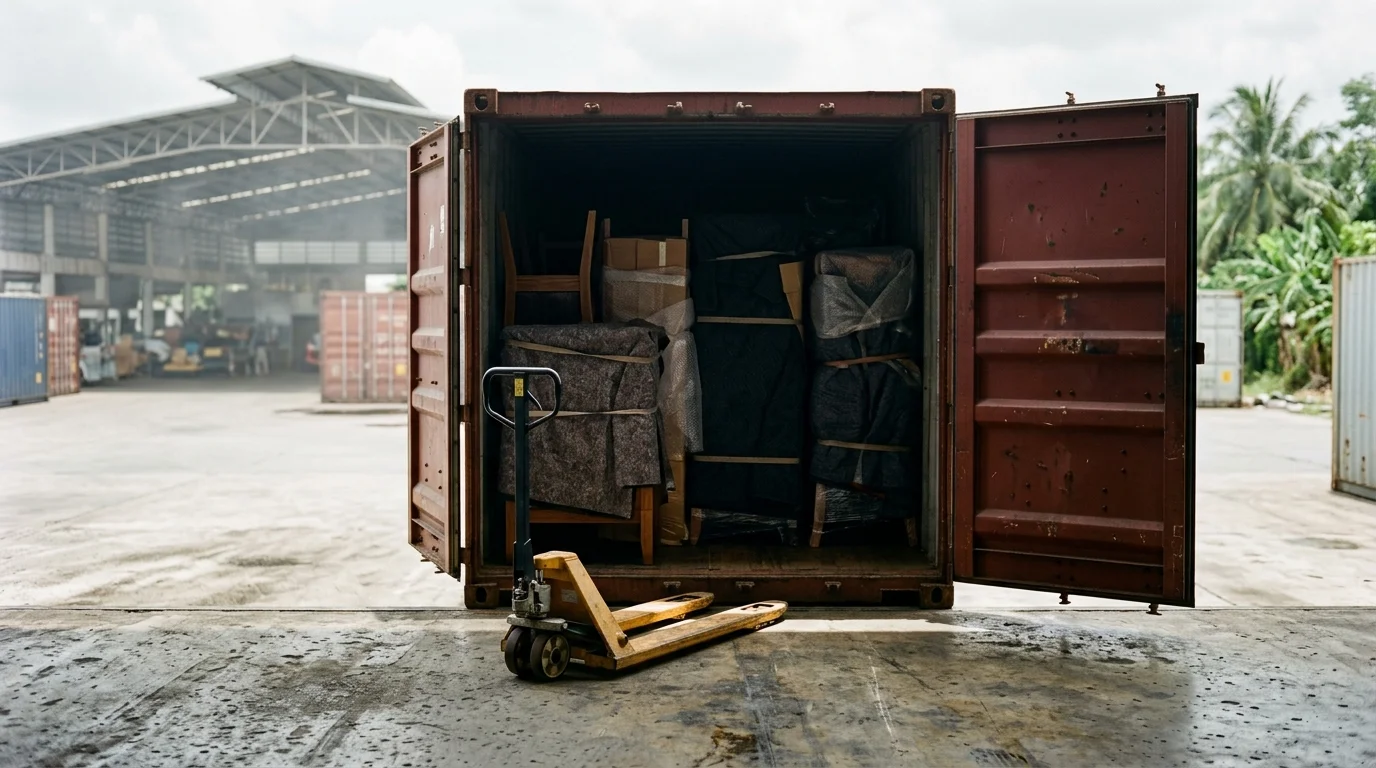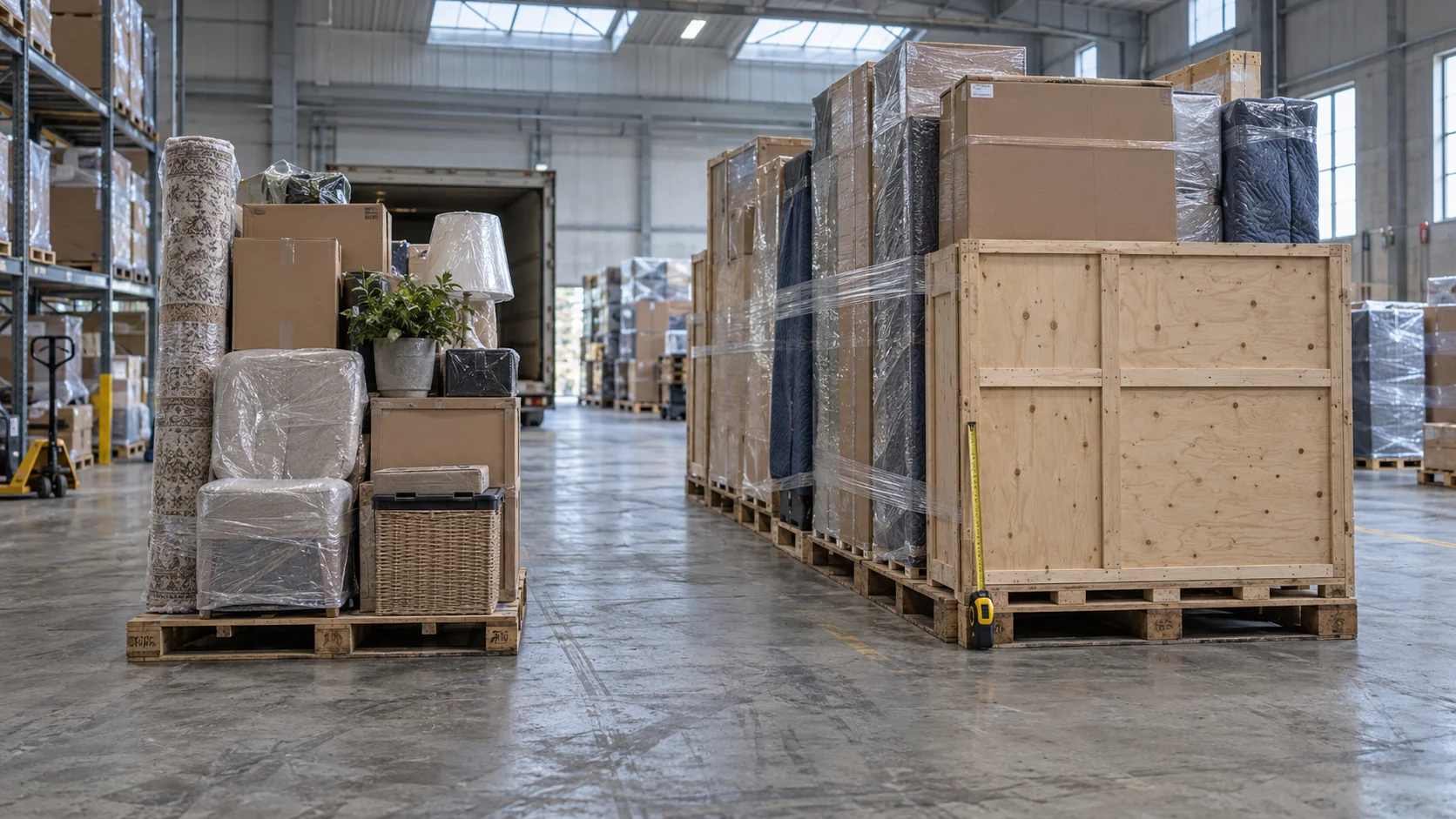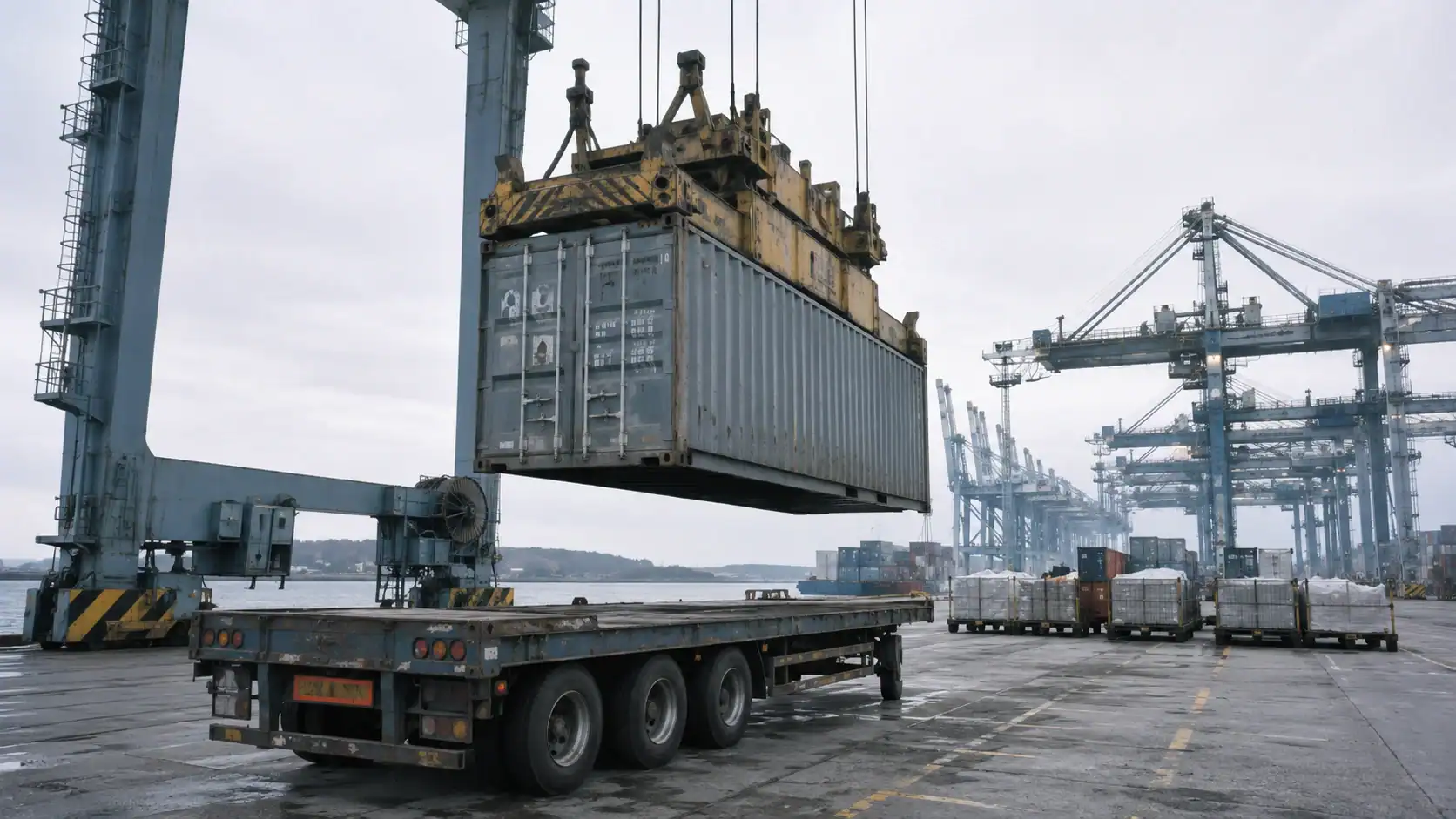
Leaving Italy for Thailand involves a particular kind of packing problem. Italy is not a country where people travel light — decades of accumulated furniture, kitchen equipment, art, ceramics, books, clothing built for a climate you’re about to leave behind. The move to Thailand, whether for work or retirement or simply for the life, requires decisions about what comes with you, what gets sold, and what gets stored.
The freight side of those decisions is more structured than it might feel. There are specific answers to the questions that matter most: whether your visa qualifies you for the duty-free import exemption, how long the journey actually takes from Genoa or La Spezia to Laem Chabang, what your shipment volume implies about container type, and what Thai customs will examine when it arrives. For the broader relocation context — visas, timelines, and what to ship — the Thailand relocation guide 2026 covers the full picture.
Visa Type Determines Your Customs Position
Before booking a cubic metre of space in a container, confirm which Thai visa you’re arriving on. Thai customs’ duty-free personal effects exemption is visa-based — not nationality-based, not value-based, and not based on how long you intend to stay.
Visa / Status
Duty-Free Eligible?
Notes
Non-Immigrant B (work permit)
Yes
One-year work permit required; 6-month shipment arrival window applies
Retirement (O-A / O-X)
Not standard
Excluded from the standard criteria — can still qualify via a substantiated relocation claim
Thai Elite / Privilege Card
No
Lifestyle visa with no work permit — no exemption
Long-Term Resident (LTR)
Seek ruling
Conditions vary by LTR sub-category
Education (ED)
No
No exemption
Tourist / visa-exempt
No
No qualifying status
Returning Thai national
Yes
Must demonstrate 12+ consecutive months abroad
Italian nationals moving to Thailand on the retirement visa — a common choice, given Thailand’s appeal to European retirees — do not qualify for duty-free import of household goods. Import duties of 10–30% and 7% VAT will apply to the declared CIF value of the entire shipment. This significantly changes the economics of what is worth shipping. A €15,000 shipment CIF value at 20% duty plus 7% VAT generates approximately THB 120,000–150,000 in Thai import costs. Factor that into the decision before packing the dining table.
For those arriving on a Non-Immigrant B visa with a valid one-year work permit, the exemption conditions are:
Work permit must be issued and valid before your shipment arrives at Laem Chabang
You must have resided in Italy (or your origin country) for at least 12 consecutive months
Shipment must arrive no earlier than one month before your initial Thailand entry, no later than 6 months after your work permit issue date
One sea and one air shipment qualify; not multiple sea consignments
All goods must be demonstrably used and personally owned; one of each appliance type
Italian Departure Ports and the Route to Laem Chabang
Italy’s main container ports for international household goods departures:
Genova (Genoa) — Italy’s busiest container port and the primary departure point for most international removal shipments originating in northern and central Italy. Multiple weekly services to Asian ports via Mediterranean carriers.
La Spezia — a significant container port 100 km southeast of Genoa, well-connected to Asian shipping routes. Often used for groupage/LCL consolidation for Emilia-Romagna and Liguria-origin shipments.
Livorno (Leghorn) — serves Tuscany, Umbria, and central Italy. LCL consolidation services with feeder connections to main Asia routes.
From Italian ports, the routing to Laem Chabang:
Via Suez Canal: Eastern Mediterranean, Suez Canal, Red Sea, Indian Ocean, transshipment at Singapore or Port Klang (Malaysia), onward to Laem Chabang. Ocean leg approximately 34–42 days from Italian ports — shorter than from northern European ports due to the Mediterranean head start.
Via Cape of Good Hope (the default routing for most carriers since 2024, and now written into 2026 network planning rather than treated as a temporary detour, per 2026 Suez Canal routing analysis): around southern Africa, across the Indian Ocean, transshipment, Laem Chabang. Ocean leg approximately 44–56 days — adding 10–14 days versus Suez. Confirm current routing with your freight forwarder before setting a timeline.

Realistic door-to-door from Italy:
Collection and packing in Italy: 1–3 days
Italian port handling and vessel loading: 5–10 days
Ocean transit (Suez routing): 34–42 days
Ocean transit (Cape routing): 44–56 days
Thai customs clearance at Laem Chabang: 5–10 working days
Last-mile delivery in Thailand: 1–3 days
Total: 7–9 weeks (Suez) or 9–11 weeks (Cape). Italy is geographically better placed than northern European ports — the Mediterranean entry point shaves several days off the vessel leg compared to Hamburg or Felixstowe. But door-to-door from Italy to Thailand is still measured in weeks, not days.
LCL or FCL: Sizing an Italian Household Move
Italian homes tend to be well-furnished. The decision about what to ship depends on both the volume and the visa-driven duty calculation.
Property Type / Volume
Estimated CBM
Recommended Mode
Approximate Cost (EUR)
Monolocale / studio (personal items)
5–12 CBM
LCL groupage
€600–€1,800
Bilocale / 2-room (selective)
12–28 CBM
LCL or 20ft FCL
€1,800–€4,200
Trilocale or larger / family home
28–55 CBM
20ft or 40ft FCL
€2,800–€7,000+
Freight costs shown are approximate and exclude Thai import duty, VAT, and local delivery. LCL (grupaggio) is cost-effective for smaller moves but adds consolidation handling at origin and deconsolidation at the Laem Chabang CFS. FCL gives better physical protection — your goods are in a sealed container with no co-loading — and often faster customs clearance at destination.
What Is Worth Shipping from Italy
Good candidates for the container:
Quality Italian furniture — solid timber dining tables, leather sofas, handcrafted pieces. These are often difficult or prohibitively expensive to replicate in Thailand. Worth shipping when the replacement cost significantly exceeds the shipping cost (including any import duty).
Clothing — particularly winter and business attire, and Italian-made items that are expensive or unavailable in Thailand
Books, artwork, ceramics, and objects with sentimental or monetary value
Professional and specialist equipment — camera gear, musical instruments, tools
Children’s belongings and comfort items for families relocating with children
Generally not worth shipping:
Standard IKEA-equivalent furniture — available in Thailand at comparable prices
Large white goods — washing machines, large fridges, dishwashers. Thai apartments are typically smaller and local replacements are affordable
Wine in any significant quantity — see the FAQ section below for the duty treatment
Bulky items (heavy sectional sofas, large wardrobes) where the shipping cost approaches replacement value
Items with only sentimental value that could be photographed and stored or given to family
A Simple Rule for the Ship-or-Sell Decision
The lists above tell you what tends to be worth shipping in general, but the actual decision on any single item comes down to one comparison: what would it cost to buy an equivalent replacement in Thailand, versus what it costs to ship the one you already own. As a working threshold, if replacement cost in Thailand is less than roughly 1.5 to 2 times your per-item shipping share (rough total freight cost divided by CBM used), sell or leave it behind. If replacement cost is 3 times or more, ship it. The 2 to 3 times range is genuinely borderline, and that’s where sentimental or practical value (a piece that fits your specific space, an item you know the quality of) should be the deciding factor, not the arithmetic alone.
Run this calculation before packing day, not during it. Italian movers consistently report that the hardest packing decisions happen under time pressure with the truck already booked, when everything starts to feel worth shipping because the alternative is deciding fast. Doing the ship-or-sell math for your major items two to three weeks ahead, while you can still research Thai replacement prices and get a real freight quote, turns a rushed emotional call into a five-minute spreadsheet exercise.
Prohibited and Restricted Items
Remove these before packing — Thai customs Red Line inspection will find them:
Prohibited (will be seized):
Lithium batteries of any type — power banks, e-bike batteries, laptop batteries, tool batteries, even those installed in devices. Prohibited from sea freight containers under IMDG regulations. Remove all batteries before packing; carry them in your cabin luggage.
Flammable substances, aerosols, gas canisters, paint, solvents
Narcotics and controlled substances
Weapons and firearms (without Thai police permit)
Pornographic material
Counterfeit goods
CITES-protected wildlife and derivatives (ivory, certain leathers)
Restricted (documentation or customs assessment required):
Wine and spirits — subject to Thai excise duty; small personal quantities may be accepted but are not covered by the personal effects exemption in full
Buddha images and religious antiques — Fine Arts Department permit required
Plants and plant material — phytosanitary certificate from Italian NPPO (National Plant Protection Organisation) required; easier to leave behind
Prescription medication in quantities beyond personal use — carry documentation
Italian Export: What You Don’t Need to Worry About
Italy remains part of the EU customs union, so personal household effects departing Italy to a non-EU country like Thailand are technically an export under EU customs procedures. In practice, household goods and personal effects being permanently exported as part of a relocation by an individual are handled under simplified export procedures by your Italian removal company (spedizioniere). A formal Dichiarazione Doganale di Esportazione (export customs declaration) under the standard commercial goods process is generally not required for personal effects within normal thresholds.
Your spedizioniere or international removal company will manage the Italian export documentation. What matters for Thai customs is the detailed packing inventory (lista colli / inventario) in English — a complete itemised list of every item in the shipment, with descriptions and estimated values. Thai customs compares your physical goods against this list during the Red Line inspection at Laem Chabang.
Required Documents for Thai Customs
Passport copy — all pages including current valid Thai visa
Work permit copy — valid one-year Thai work permit (if claiming duty-free exemption)
Detailed packing inventory in English — item description, quantity, estimated value for every packed item
Bill of Lading — issued by the shipping line
Proof of Italian residence for 12+ months — utility bills, certificato di residenza, rental contract or property ownership documents covering the relevant period
All household goods at Laem Chabang enter the Red Line — physical inspection against the declared inventory. With complete, accurate documents, clearance takes 5–10 working days. Incomplete or inconsistent documents mean bonded storage and daily fees. Documentation gaps are the primary cause of clearance delays at Laem Chabang.
Frequently Asked Questions
Can Italian nationals import household goods duty-free when moving to Thailand?
Yes — if arriving on a qualifying visa. A Non-Immigrant B visa with a one-year work permit qualifies. Retirement visa (O-A, O-X) holders are excluded from the standard criteria and don’t automatically qualify, though the exemption can still be secured with a substantiated relocation claim — full duties and 7% VAT apply if you can’t. The rule is visa-based, not nationality-based.
How long does sea freight take from Italy to Thailand?
Door-to-door: approximately 7–9 weeks via Suez Canal, or 9–11 weeks via Cape of Good Hope (current routing for many carriers since 2024). Ocean leg from Genoa or La Spezia: 34–42 days (Suez) or 44–56 days (Cape). Add Italian port handling and Thai customs clearance at each end.
Which Italian ports do household goods to Thailand depart from?
Genoa and La Spezia are the primary departure points. Livorno serves central Italy. Your removal company will advise the most suitable port based on your location and the available carrier services.
Is Italian furniture worth shipping to Thailand?
High-quality Italian pieces — solid timber, leather, designer furniture — are often worth shipping when replacement cost in Thailand significantly exceeds total shipping cost including any import duty. Standard or mid-market furniture is generally not worth shipping. The retirement visa duty calculation (10–30% duty + 7% VAT on CIF value) changes the economics materially for non-qualifying visa holders.
Can I ship wine from Italy to Thailand?
Wine is not covered by the personal effects duty-free exemption in the same way as household goods. Thai excise duty and import taxes apply. Small personal quantities (a case or two of valued bottles) may be accepted, but high-value cellar collections are economically impractical to ship given the duty burden. Consult your removal company and Thai customs broker before including wine in your shipment.
Planning Your Italy-to-Thailand Freight
The step-by-step guide to shipping household goods to Thailand covers eligibility confirmation, volume planning, document preparation, and Laem Chabang clearance in full. Swift Cargo manages European-origin household goods shipments to Thailand, including Italian-origin removal coordination, customs brokerage, and delivery to your Thai address.
Since January 2021, UK nationals have been navigating a different relationship with international borders. Freedom of movement within the EU is gone. For the logistics of a physical relocation — shipping the contents of a Hackney flat or a Surrey semi-detached to Bangkok or Chiang Mai — post-Brexit status affects the UK departure side in specific ways. What it does not change is how Thai customs treats your household goods when they arrive. Thailand never applied EU rules at Laem Chabang; it applies Thai customs rules, uniformly, to everyone.
The more consequential knowledge is the Thai side — specifically, which visa you’re arriving on and whether it qualifies your goods for duty-free import. That question catches a significant proportion of UK nationals moving to Thailand, because the most accessible route — the retirement visa — doesn’t automatically qualify under the standard criteria, though it can still secure the exemption with the right documentation.
The Visa Decision: Thai Customs Rules Haven’t Changed
Thai customs’ duty-free personal effects exemption has never been nationality-dependent. It is visa-dependent. The rules are the same for a UK national as for any other nationality:
Visa / Status
Duty-Free Eligible?
Notes
Non-Immigrant B (work permit)
Yes
One-year work permit required; 6-month shipment window applies
Retirement (O-A / O-X)
Not standard
Excluded from the standard criteria — can still qualify via a substantiated relocation claim
Thai Elite / Privilege Card
No
Lifestyle visa — no work permit, no exemption
Long-Term Resident (LTR)
Seek ruling
Conditions vary by LTR sub-category
Education (ED)
No
No exemption
Tourist / visa-exempt
No
No qualifying status
Returning Thai national
Yes
Must prove 12+ consecutive months abroad
The retirement visa case is the one that matters most for UK movers. A large proportion of British nationals relocating to Thailand do so on the O-A retirement visa — available from age 50, well-understood, and renewable. It does not qualify for the duty-free household goods exemption. Import duties of 10–30% and 7% VAT will apply to the declared CIF value of everything in your shipment. This changes the cost calculation for what is worth shipping from the UK — materially, if your household contents are valuable.
For those moving on a Non-Immigrant B visa with a valid work permit, the qualifying conditions are:
A valid one-year Thai work permit, issued before your shipment arrives at Laem Chabang
Proof of 12+ consecutive months of residence in the UK (or country of origin) before the move
Shipment arriving no earlier than one month before your initial Thailand entry and no later than 6 months after your work permit issue date
One sea shipment and one air shipment — not multiple sea consignments
All goods demonstrably used and personally owned; one unit of each appliance type
What Brexit Changed on the UK Departure Side
Before January 2021, personal effects departing the UK to a non-EU destination like Thailand were already subject to standard international removal procedures. Brexit changed the UK’s relationship with the EU but had little practical effect on UK-to-Thailand removal shipments, which were always international rather than intra-EU.
The specific changes to be aware of:
No more TOR (Transfer of Residence) relief via EU mechanisms: UK nationals who had lived in an EU country before moving to Thailand previously had access to EU Transfer of Residence relief when passing goods through EU member states. Post-Brexit, if your removal involves transit through an EU port (say, Antwerp or Rotterdam for consolidation), additional documentary steps may apply. A UK-accredited removal company with post-Brexit experience will manage this.
UK export documentation for household goods: The UK is now a third country for EU customs purposes. However, household goods and personal effects being permanently exported as part of a relocation are generally handled under simplified procedures by licensed removal companies. HMRC governs UK export customs requirements — see gov.uk’s export goods guidance. For personal effects below commercial thresholds, your removal company will manage the UK-side documentation using established HMRC procedures.
The British Association of Removers (BAR): For UK origin removals, using a BAR-accredited company (the UK equivalent of Germany’s BAVC) provides assurance that the company has the export procedures and insurance required for international household goods shipments.
UK Departure Ports and the Route to Laem Chabang
Felixstowe (Port of Felixstowe, Suffolk) is the UK’s largest and busiest container port. The majority of UK containerised exports, including household goods and groupage shipments, depart from here. Well-served by major carriers operating Asia routes.
Southampton (Port of Southampton, Hampshire) handles significant household goods and removal volumes, particularly from the South and South-West of England. For movers in that region, Southampton may offer faster inland transit to port.
Tilbury (London Gateway, Thames Estuary) is an alternative for movers based in London and the Home Counties, with direct feeder services to Felixstowe and deep-sea routes.
From any of these departure ports, the routing to Laem Chabang follows one of two paths:
Via Suez Canal: Through the English Channel, Mediterranean, Suez Canal, Red Sea, Indian Ocean, transshipment at Singapore or Port Klang (Malaysia), then Laem Chabang. Ocean leg approximately 38–45 days.
Via Cape of Good Hope (in use for most carriers since early 2024 due to Houthi disruptions in the Red Sea): Around southern Africa, across the Indian Ocean, transshipment, then Laem Chabang. Ocean leg approximately 48–58 days — adding 10–14 days versus the Suez route.
Door-to-door timeline from the UK:
Collection and packing in the UK: 1–3 days
UK port handling and vessel loading: 5–10 days
Ocean transit (Suez routing): 38–45 days
Ocean transit (Cape routing): 48–58 days
Thai customs clearance at Laem Chabang: 5–10 working days
Delivery to Thai address: 1–3 days
Total: 8–10 weeks (Suez) or 10–12 weeks (Cape). As with all Europe-to-Thailand routes, any quote giving a 30-day figure is vessel transit only. Plan to the door-to-door number. Given the 6-month qualifying window for the duty-free exemption, book freight promptly after your work permit is issued.
LCL or FCL: Sizing Your Shipment from a UK Property
UK properties range from London studio flats to large detached houses. Most UK-to-Thailand relocators ship a curated selection rather than the entire household — furniture is generally cheaper to buy in Thailand than to ship from the UK, and the cost of shipping large items over 10–12 weeks is rarely justified unless the piece has significant monetary or sentimental value.
LCL (groupage): Your goods consolidated with others in a shared container. Charged per CBM. Practical for studio to 2-bed flat volumes. Adds handling steps at origin and destination CFS — marginally higher inspection risk and slightly longer clearance time at Laem Chabang.
FCL: Your container, your goods only. Better handling security. Right for 2–3 bed house volumes once CBM exceeds 15. Faster port clearance. UK-based removal companies with Asia operations typically handle both — choose based on volume.
What to Ship and What to Leave
This is the part that keeps people up at night, and it is rarely about logistics. Standing in a Surrey hallway deciding whether the bookshelf your father built comes with you is not a shipping question; it is a question about what you are willing to let go of. Here is the honest answer: ship the things you would grieve, and be ruthless about the rest. A UK three-piece suite that cost £400 is not worth its share of a container when the same money buys new in Bangkok — but the battered kitchen table your children did their homework at is, because you cannot buy that back at any price. Decide on that basis first. The cubic metres will sort themselves out afterwards.
Worth shipping from the UK:
Clothing — particularly cold-weather and business attire
Books and professional libraries
Artworks, heirlooms, and items of monetary or sentimental value
Specialist equipment (musical instruments, photography gear, professional tools)
Children’s belongings and comfort items
Custom-built or high-quality furniture not easily replaced
Typically not worth shipping:
Standard flatpack or mid-market furniture — available throughout Thailand at competitive prices
Large white goods (fridge, washing machine, dishwasher) — Thai apartments typically have these or the local equivalent; UK plugs and voltages differ
Bulky sofas and dining sets
Electronics running on UK-only frequencies or power profiles
Prohibited and Restricted Items
Prohibited (remove before packing — will be seized at Laem Chabang):
Lithium batteries of all types — installed in devices or standalone (power banks, e-bike batteries, tool batteries). Prohibited from sea freight containers under IMDG dangerous goods regulations. Carry them in your cabin luggage.
Flammable substances, aerosols, gas canisters, paint
Narcotics and controlled substances
Pornographic material
Counterfeit goods
Weapons and firearms (without Thai police permit)
CITES-protected wildlife and derivatives
Restricted (documentation or permit required):
Alcohol — limited personal quantities accepted; excise duty may apply even under the personal effects exemption
Buddha images and religious antiques — Fine Arts Department permit required
Plants and plant material — phytosanitary certificate required; easier to leave behind
Prescription medication in excess of personal use quantities — carry documentation
Required Documents for Thai Customs
Your removal company coordinates most documentation, but you must supply:
Passport copy — all pages including current valid visa stamps
Work permit copy — valid one-year Thai work permit (if claiming duty-free exemption)
Detailed packing inventory — every item listed in English with description, quantity, and estimated value. Thai customs compares against this during physical inspection.
Bill of Lading — issued by the shipping line
Proof of UK residence for 12+ months — utility bills, bank statements, or council tax documents covering the relevant period
All household goods enter the Red Line at Laem Chabang — physical inspection against the declared inventory. With complete, accurate documents, clearance takes 5–10 working days. Missing or inconsistent documents mean bonded storage and daily fees. Documentation gaps are the primary cause of clearance delays.
Frequently Asked Questions
Can UK nationals import household goods duty-free when moving to Thailand?
Yes — if arriving on a qualifying visa. A Non-Immigrant B visa with a one-year work permit qualifies. Retirement visa (O-A, O-X) holders are excluded from the standard criteria and don’t automatically qualify, though the exemption can still be secured with a substantiated relocation claim — full duties and 7% VAT apply if you can’t. Thai customs rules are visa-based, not nationality-based; Brexit had no effect on these Thai regulations.
How long does sea freight take from the UK to Thailand?
Door-to-door: 8–10 weeks via Suez, 10–12 weeks via Cape of Good Hope (current 2024–2026 routing for many carriers due to Red Sea disruptions). Don’t plan around the vessel-transit-only figure of 38–45 days — that excludes UK collection, port handling, Thai customs, and last-mile delivery.
Do I need a UK export declaration for my household goods?
For personal household effects exported as part of a permanent relocation, formal HMRC export declarations are generally handled by your removal company using established procedures. Thai customs requires a detailed packing inventory in English, not a UK export declaration.
Which UK port do household goods to Thailand depart from?
Felixstowe is the primary departure point for most UK-to-Thailand container shipments. Southampton and Tilbury/London Gateway are alternatives depending on your location in the UK. Your removal company will advise which port their consolidation and carrier arrangements favour.
What is the 6-month rule for importing household goods into Thailand?
Your shipment must arrive at Laem Chabang no earlier than one month before your initial Thailand entry and no later than 6 months after your work permit was first issued. With UK-to-Thailand transit of 8–12 weeks, book immediately after your work permit is issued — the window can fill without much slack.
The step-by-step guide to shipping household goods to Thailand covers eligibility verification, volume assessment, document preparation, and Laem Chabang clearance in full. Swift Cargo manages UK-origin household goods shipments to Thailand, including customs broker coordination and delivery to your Thai address.
Moving from Germany to Thailand is a straightforward decision to make and a complex one to execute. The clarity comes in the lifestyle — the weather, the cost of living, the food, the pace. The complexity comes in the details: which visa you’re arriving on determines whether your belongings clear customs duty-free or attract duties of up to 30%. The routing your container takes determines whether your goods arrive in seven weeks or eleven. And the documents your removal company prepares in Hamburg determine whether Thai customs releases your shipment within a week of arrival or holds it in bonded storage at daily cost. For a full overview of what the move to Thailand actually involves, the Thailand relocation guide 2026 covers visas, customs and what to ship.
Visa Type Determines Everything at Thai Customs
Before you book a removal company or pack a box, confirm your visa status. Thai customs grants a duty-free personal effects exemption based on visa type — not on how long you’ve lived in Thailand, not on the value of your goods, and not on your intention to reside permanently.
Visa / Status
Duty-Free Eligible?
Notes
Non-Immigrant B (work permit)
Yes
One-year work permit required; 6-month shipment window applies
Retirement (O-A / O-X)
Not standard
Excluded from the standard criteria — can still qualify via a substantiated relocation claim
Thai Elite / Privilege Card
No
Lifestyle visa — no work permit, no exemption
Long-Term Resident (LTR)
Seek ruling
Conditions vary by LTR sub-category
Education (ED)
No
Student visa — no exemption
Tourist / visa-exempt
No
No qualifying status
Returning Thai national
Yes
Must prove 12+ consecutive months abroad
The retirement visa case is the one that catches German expats most often. A significant number of Germans relocating to Thailand do so on the O-A retirement visa — it is accessible, renewable, and requires no employer sponsorship. But it does not qualify for the duty-free household goods exemption. Duties of 10–30% plus 7% VAT will apply to the declared CIF value of everything you ship. This materially changes the economics of what is worth bringing.
For those moving on a work-related Non-Immigrant B visa with a valid one-year work permit, the exact conditions for the exemption are:
The work permit must be issued and valid before your shipment arrives at port
You must have resided in Germany (or your origin country) for at least 12 consecutive months before the move
Your shipment must arrive no earlier than one month before your Thailand entry and no later than six months after your work permit issue date
One sea shipment and one air shipment qualify — not multiple sea consignments
All goods must be demonstrably used and personally owned — items in original packaging risk reclassification
One unit of each appliance type qualifies; duplicate units are dutiable
The Route: Hamburg or Bremerhaven to Laem Chabang
Germany’s two main container ports for household goods departures are Hamburg — the country’s largest deep-sea port — and Bremerhaven, which handles significant volumes of consolidated household goods (groupage/LCL) shipments. Your removal company will advise which is operationally better for your specific move and volume.
From either port, the route to Thailand runs through one of two paths:
Via Suez Canal (standard routing): Through the Mediterranean, Suez Canal, Red Sea, Indian Ocean, with transshipment at Singapore or Port Klang (Malaysia), then onward to Laem Chabang. Ocean leg: approximately 32–38 days.
Via Cape of Good Hope (in effect since early 2024 due to Houthi disruptions in the Red Sea): Around southern Africa, across the Indian Ocean, transshipment at Singapore or Port Klang, then Laem Chabang. Ocean leg: approximately 45–52 days — adding 10–14 days versus the Suez route.
As of mid-2026, many carriers continue to use Cape routing depending on security conditions. Your freight forwarder or removal company should confirm the current routing before you book, and any transit-time estimate should reflect it honestly.
Realistic door-to-door timeline:
Collection and packing in Germany: 1–3 days
Port handling and vessel loading at Hamburg/Bremerhaven: 5–10 days
Ocean transit (Suez routing): 32–38 days
Ocean transit (Cape routing): 45–52 days
Thai customs clearance at Laem Chabang: 5–10 working days
Delivery to your Thai address: 1–3 days
Total: 7–10 weeks (Suez) or 9–11 weeks (Cape). Any quote promising 30-day delivery is referring to vessel-only transit time, not door-to-door. Plan accordingly — particularly given the 6-month exemption window. Book freight immediately after your work permit is issued, not weeks later.
There is a particular week in this process that almost no one plans for, and it is easy to miss because nothing about it looks like logistics. It is the week the work permit is finally stamped. A relocator in Stuttgart, say, has spent months on the visa, found an apartment in Chiang Mai, and given notice on the flat — and then the permit issues, and a quiet six-month clock starts that has nothing to do with how ready anyone feels. The container that leaves Hamburg in March will spend five or six weeks at sea before it reaches Laem Chabang, where an officer opens it and reads the inventory line by line against what is actually inside. Run the arithmetic backward from that inspection and the booking date is not “soon.” It is now.
LCL or FCL: Matching Your Volume to the Right Option
German apartments are typically well-furnished. But shipping an entire German apartment to Thailand rarely makes financial sense. Most experienced Germany-Thailand relocators ship a curated selection — personal effects, clothing, books, specific furniture with sentimental value, and specialist equipment — and source the rest locally in Thailand.
Typical Move Volume
Estimated CBM
Best Option
Approximate Cost
Studio / 1-room (personal items)
5–15 CBM
LCL groupage
€600–€2,100
2–3 room apartment (selective)
15–35 CBM
LCL or 20ft FCL
€1,800–€4,500
Full apartment / family move
35–60 CBM
20ft or 40ft FCL
€2,500–€6,000+
LCL (Sammelcontainer / groupage): Your goods share container space with other exporters. You pay per CBM. Cost-effective for smaller moves. Consolidation and deconsolidation at origin and destination adds handling time and marginally increases inspection risk at Thai customs.
FCL 20ft (approximately 25–28 CBM usable): Your container, your goods only. Faster clearance at Laem Chabang. Better for fragile or high-value items — no co-loading. Right for most 2–3 room apartment moves once volume exceeds 15 CBM.
FCL 40ft HC (approximately 55–60 CBM usable): Full family home. Rarely necessary for Thailand-specific relocations given most expats ship selectively.
Clothing — particularly winter items if you plan to travel back to Europe
Books and professional libraries
Artworks and objects of sentimental or monetary value
Specialist tools or professional equipment
Custom-made or high-quality furniture not easily replaced
Children’s toys and comfort items
Typically not worth shipping:
Standard IKEA-equivalent furniture — available in Thailand at comparable prices
Large white goods (washing machine, dishwasher, large fridge) — Thai apartments are smaller, plumbing differs, and local replacements are affordable
Bulky sectional sofas and large dining tables
Bicycles and outdoor sports equipment unless specifically used and valuable
Flammable substances, aerosols, paint — these are prohibited by shipping regulations anyway
Prohibited Items
Remove these before packing. They will be found during the Red Line inspection at Laem Chabang.
Prohibited (will be seized or destroyed):
Lithium batteries of any kind — laptops, power banks, e-bike batteries, tool batteries, portable speakers. These are classified as dangerous goods under IMDG regulations and may not travel as sea freight cargo. Remove all batteries before packing; carry them in your checked or cabin luggage.
Flammable substances, gas canisters, aerosols, paint
Narcotics and controlled substances
Pornographic material
Counterfeit goods
Weapons, firearms (without Thai police permit)
CITES-protected wildlife and derivatives
Restricted (permit or documentation required):
Alcohol — subject to Thai excise duty even under the personal effects exemption; limited personal quantities accepted
Buddha images and religious antiques — Fine Arts Department permit required
Plants and plant material — phytosanitary certificate from German NPPO required; easier to leave behind
Prescription medication in quantities beyond personal use — carry documentation
Required Documents for Thai Customs
Your removal company will coordinate most of the documentation, but you need to supply:
Passport copy — including all visa-stamp pages showing your current valid visa
Work permit copy — your valid one-year Thai work permit (if claiming duty-free exemption)
Detailed packing inventory (Packliste) — every item listed in English with description, quantity, and estimated value. Thai customs compares your physical goods against this list during inspection.
Bill of Lading — issued by the shipping line
Proof of residence in Germany for 12+ months — utility bills, Meldebescheinigung, or rental contracts covering the relevant period
All household goods shipments enter the Red Line — physical inspection. A Thai customs officer reviews the goods against the declared inventory. With complete, accurate documents, clearance typically takes 5–10 working days after vessel arrival. Incomplete documents mean bonded storage, and bonded storage accrues daily fees. Document issues are the primary cause of clearance delays at Laem Chabang.
For the German departure side: a formal Ausfuhrzollanmeldung (EU export customs declaration) is generally not required for personal household effects below commercial thresholds. Your BAVC-accredited removal company will handle departure documentation. The inventory prepared for German departure also serves as the foundation for your Thai customs declaration.
One honest thing before the FAQs: the hardest part of a Germany-to-Thailand move is rarely the freight. Once the container is booked it more or less takes care of itself. What trips people up is the small print they meet in a new language — a Frachtbrief here, a customs form there — at exactly the moment they are also trying to find a flat and a working SIM card. So do the boring thing early. Get your documents translated and your visa dates pinned down before the packers arrive, and the shipping half of the move becomes the part you worry about least.
Frequently Asked Questions
Can I import my household goods duty-free when moving from Germany to Thailand?
Only if you hold a qualifying visa. A valid one-year Non-Immigrant B visa with a one-year work permit makes you eligible. Retirement visa (O-A, O-X) holders are excluded from the standard relocation-exemption criteria and don’t automatically qualify, though the exemption can still be secured with a substantiated relocation claim. Thai Elite members, education visa holders, and tourist arrivals are not eligible at all. Without eligibility, import duties of 10–30% plus 7% VAT apply to the CIF value of your goods, per the Thai Customs Department personal effects conditions.
How long does sea freight take from Germany to Thailand?
Door-to-door, plan for 7–11 weeks. The ocean leg from Hamburg or Bremerhaven to Laem Chabang takes 32–38 days via Suez, or 45–52 days via the Cape of Good Hope (in use since 2024 Red Sea disruptions). Add collection, port handling, and 5–10 days Thai customs clearance.
Do I need a German customs export declaration before shipping?
For personal household effects below commercial thresholds, a formal Ausfuhrzollanmeldung is generally not required. Your BAVC-accredited removal company handles export documentation. The detailed packing inventory (Packliste) is what Thai customs requires.
Can I ship lithium batteries in my household goods to Thailand?
No. Lithium batteries of any kind — including those installed in devices — are prohibited from sea freight containers under IMDG dangerous goods regulations. Remove all batteries before packing and carry them in your luggage.
What is the 6-month window for importing household goods into Thailand?
Your shipment must arrive in Thailand no earlier than one month before your initial entry and no later than six months after your work permit was first issued. Given realistic transit times of 7–11 weeks, book freight immediately after your work permit is issued — the window can fill quickly.
Planning Your Move from Germany with Swift Cargo
The step-by-step process for shipping household goods to Thailand covers eligibility confirmation, volume calculation, document preparation, and customs clearance in full. Swift Cargo manages European-origin household goods shipments to Thailand including customs broker coordination and Laem Chabang clearance.
Moving from France to Thailand is not a small decision. It is a full reconstruction — a new city, a new language, a new pace. And somewhere in the middle of it all sits a practical question that most people leave too late: what do I do with my belongings?
Shipping household goods internationally is manageable when you know the rules. In Thailand, those rules have a particular feature that surprises many French expats: whether your belongings are imported duty-free depends almost entirely on what type of visa you hold — not how long you have lived in Thailand, not how much you are bringing, not whether the items are genuinely used and personal. Your visa status is the determining factor.
The Visa Question First
Before you book a moving company or pack a box, clarify your visa situation. Thai customs draws a sharp line between visa categories when it comes to household goods.
Visa Type
Duty-Free Eligibility
Notes
Non-Immigrant B (work permit)
Yes — with conditions
Must have 1-year work permit; shipment arrives within 6-month window
Retirement (O-A, O-X)
No
Does not qualify — duties of 10–30% + 7% VAT apply
Thai Elite
No
Lifestyle visa, not a work permit — no exemption
Long-Term Resident (LTR)
Partial
Seek specific customs ruling before shipping
Education (ED)
No
Student visa does not qualify
Tourist visa / visa-exempt
No
No qualifying status for personal effects exemption
Returning Thai national
Yes — with conditions
Must prove 12+ months residence abroad
This distinction matters enormously. If you are moving to Thailand on a retirement visa — which describes a large proportion of French expats — your household goods will be subject to standard import duties. That changes the economics of what is worth shipping. A sofa that costs €800 to ship and attracts 20% duty on its declared value is a different calculation than one cleared duty-free.
If you are moving for work and hold a valid one-year Non-Immigrant B visa with a work permit, you may qualify for the full duty-free exemption — but with specific conditions attached.
The Duty-Free Exemption: Exact Conditions
For those who qualify, the Thai Customs Department duty-free exemption for household goods applies under these conditions:
Visa: Valid one-year Non-Immigrant B visa at time of shipment arrival
Work permit: Valid one-year Thai work permit, issued before the shipment arrives at port
Residency: You must have resided in France (or your origin country) for a continuous period of at least 12 months before your move
Window: Your shipment must arrive no earlier than one month before your first Thailand entry and no later than six months after the date your work permit was first issued
One shipment: One sea freight shipment and one air freight shipment may qualify — not multiple sea shipments
Used goods only: Items must be genuinely used and personally owned — typically defined as being in your possession for at least six months
Appliances: One unit of each appliance type qualifies; duplicate units (two TVs, two washing machines) are dutiable
The timing condition is the one that most often causes problems. If your shipment arrives outside the six-month window — because you delayed booking freight, or there was a vessel schedule change — you lose the exemption entirely. Plan your shipment booking to arrive well within the window, not at the edge of it.
Sea Freight from France to Thailand: The Route
The vast majority of household moves from France to Thailand go by sea. Air freight is practical only for urgent or very light items — the cost per kilogram makes it prohibitive for anything above roughly 100kg.
Departure ports from France:
Le Havre — France’s largest container port, in Normandy. The primary departure point for most France-Thailand shipments. Direct weekly services to major Asian hubs.
Marseille — The main southern France container port. Better positioned for importers in the south (Provence, Côte d’Azur, Languedoc). Often a slightly faster transit to Asia due to the Mediterranean head start.
Arrival port in Thailand: Laem Chabang Port, Chonburi province — Thailand’s primary deep-sea container terminal, approximately 130km southeast of Bangkok city centre and 80km from Pattaya. Virtually all sea freight household moves into Thailand arrive here.
Transit time: 30–46 days from Le Havre or Marseille to Laem Chabang. Routing is typically via Singapore or Port Klang (Malaysia). Add 5–10 working days for Thai customs clearance after vessel arrival.
Total door-to-door timeline: Plan for 6–8 weeks from packing day to delivery at your Bangkok or Chiang Mai apartment.
LCL or FCL: What Most Expats Actually Need
For a typical French expat moving to Thailand — say, a furnished apartment in Paris — the realistic volume of what is worth shipping is often 5–15 cubic metres. That puts you squarely in LCL territory.
LCL (groupage / shared container): Your goods share a container with other importers’ shipments. You pay per cubic metre. Cost: approximately €150–€300 per CBM France-Thailand, depending on volume and current rates. A 10 CBM move: roughly €1,500–€3,000 all-in. Transit may be slightly longer than FCL due to consolidation handling.
FCL 20ft: Your own container, holding approximately 25–28 CBM. Suitable for a 2–3 bedroom household. Total cost: approximately €2,500–€4,500. Faster clearance at destination — fewer hands on your goods.
FCL 40ft: Full house move, approximately 55–60 CBM. Cost: €3,500–€6,500. Rarely necessary unless you are shipping a large family home’s worth of belongings — which most experienced expats advise against for Thailand.
What to Bring — and What to Leave Behind
This is the advice that honest moving companies will give you but that online quote tools never surface: most household furniture is not worth shipping to Thailand.
Good candidates for shipping:
Clothing and personal wardrobe
Books, artworks, and objects with sentimental value
Specific electronics (high-end audio, camera equipment, specialist tools)
Custom-made or irreplaceable furniture pieces
Children’s items — toys, books, comfort objects
Professional equipment
Commonly not worth shipping:
Standard flat-pack furniture (IKEA-equivalent pieces are available in Thailand at similar or lower prices)
Large white goods — washing machines, fridges, tumble dryers (voltage compatibility issues; Thai apartments often include appliances)
Large sofas and dining tables (Thai apartments are typically smaller; Thai-made furniture is excellent quality)
Bulky storage systems and shelving
The honest calculation: if the shipping cost plus any applicable duty exceeds 60–70% of the item’s replacement cost in Thailand, leave it. Thai furniture markets — particularly in Bangkok and Chiang Mai — offer good quality at prices that make most European furniture economically indefensible to ship.
There is a perception effect hiding in that calculation, and it works in your favour. Paying duty on your own sofa feels like an insult in a way that paying for a new one never does — the same 20,000 baht reads as a penalty in the first case and as a pleasure in the second. Behavioural economists call it a framing effect; furniture dealers in Bangkok simply benefit from it. If you are on a retirement visa and can’t substantiate the exemption claim, use the bias deliberately: let the dutiable sofa go and put the money toward its Thai-made replacement. The arithmetic barely changes, but the move stops feeling like a tax and starts feeling like furnishing a new life — which, for most people, is worth more than the sofa was.
Prohibited and Restricted Items
Thai customs maintains a strict list of prohibited and restricted goods. Some items are prohibited outright; others require special permits obtained before the shipment arrives.
Prohibited (will not clear, will be seized or destroyed):
Narcotics and controlled substances
Pornographic material
Counterfeit goods
Counterfeit currency
Endangered wildlife and CITES-restricted products
Restricted (permit required before shipment):
Religious objects including Buddha images: Antique or sacred Buddhist objects require a Fine Arts Department permit. This surprises many Western expats who purchase Thai artefacts before leaving France — if you have purchased Thai Buddha images, research the export and re-import requirements carefully.
Alcohol: Subject to excise duty even under the duty-free personal effects scheme. Beer and wine may be brought in limited quantities; spirits require specific approval. Do not pack a cellar.
Plants and seeds: Require phytosanitary certification from the French NPPO (ANSES). Most expats simply do not ship plants.
Firearms: Royal Thai Police permit required. Process is lengthy and complex.
Pharmaceuticals: Personal medication in reasonable quantities is generally tolerated; controlled substances require advance documentation.
Required Documents for Thai Customs Clearance
Your freight forwarder or moving company will coordinate the paperwork, but you need to supply:
Passport copy (with current valid visa)
Work permit copy (if claiming duty-free exemption)
Detailed packing inventory (inventaire détaillé) — every item listed with description and estimated value
Bill of Lading (issued by the shipping line)
Proof of residence in France for 12+ months (for work permit exemption claimants)
For household goods clearance, your customs broker submits the import declaration through the Thai National Single Window (NSW) digital system. A licensed Thai customs broker must handle this submission — it cannot be done by the importer directly.
What Happens at Thai Customs
Household goods shipments go through the Red Line — meaning physical inspection. This is standard; it is not a sign that something has gone wrong. A customs officer reviews the shipment against your declared inventory.
If the goods match the documents and your visa/work permit eligibility is established, clearance typically takes 5–10 working days after the vessel arrives at Laem Chabang. If there are document issues or if your goods include restricted items without the required permits, clearance is suspended and your goods begin accruing bonded storage costs.
Bonded storage in Thailand accrues quickly. After 45 days without an import entry submission, Thai customs may auction unclaimed goods. This is not a hypothetical risk — documentation gaps are the primary cause of prolonged customs holds. Have everything in order before your vessel departs France.
Why the Outcome Is Decided Before You Leave France
What surprises people, when they trace it back, is how early the outcome is actually decided. The story most movers tell themselves is that customs happens at the end, on arrival — a formality to be handled when the container lands. The record says otherwise. The duty-free claim stands or falls on documents assembled in France: the valued inventory, the dated work permit, the proof of twelve months’ residence, all in order long before the vessel clears Le Havre. By the time an officer at Laem Chabang is comparing a packing list against the contents of a container, there is nothing left to assemble — there is only what was prepared, and what was not. The space between “I’ll deal with it when I get there” and what Thai customs actually requires is exactly where shipments end up in bonded storage, accruing daily costs nobody budgeted for.
Here is the practical version of that, for the week you are already overwhelmed with everything else. You do not need to have the whole move figured out in France. You need three specific documents in a folder before you fly: the valued inventory, the dated work permit or visa approval, and whatever proves your twelve months of residence. Everything else on this page can wait until you land. Getting those three things right, while you still have easy access to French bureaucracy and can fix a mistake in an afternoon rather than by international courier, is the one piece of homework that actually protects the rest of the move.
Frequently Asked Questions
Can I import my belongings duty-free when moving from France to Thailand?
Only if you hold a qualifying visa. Non-Immigrant B visa holders with a valid one-year work permit are eligible. Retirement visa (O-A, O-X) holders are excluded from the standard relocation-exemption criteria and don’t automatically qualify, though the exemption can still be secured with a substantiated relocation claim. Tourist visa holders, Thai Elite members, and education visa holders are not eligible at all. Without it, import duties of 10–30% plus 7% VAT apply to the declared value of your goods.
How long does sea freight take from France to Thailand?
Typically 30–46 days from Le Havre or Marseille to Laem Chabang port, depending on the transshipment routing — usually via Singapore or Port Klang, Malaysia. Add 5–10 working days for Thai customs clearance after arrival.
What is the 6-month rule for importing household goods into Thailand?
Your shipment must arrive no earlier than one month before your initial Thailand entry and no later than six months after the date your work permit was first issued. Shipments arriving outside this window lose eligibility for the duty-free exemption, even if your visa and work permit are valid.
Is it worth shipping furniture from France to Thailand?
Rarely. Large furniture is expensive to ship, may not fit Thai-style apartments, and Thai-made equivalents are good quality and significantly cheaper. Most experienced expats ship personal items, clothing, books, sentimental objects, and specific electronics — and furnish locally.
Do I need to declare my belongings to French customs before leaving?
For standard household goods, France does not require an export customs declaration below standard thresholds. However, you will need a detailed inventory — a comprehensive list of your goods with estimated values — for Thai customs clearance. Your moving company or freight forwarder will help prepare this.
Planning Your Move with Swift Cargo
Swift Cargo handles household goods and personal effects shipments from France to Thailand, including customs broker coordination, eligibility assessment, and end-to-end clearance at Laem Chabang. If you are planning a move from France and want to confirm your visa eligibility, timing, and document requirements before you book freight, request a freight quote here.
Every year, millions of professionals face a deceptively simple decision: whether to move for work. It often arrives quietly. A recruiter calls about a role in another office, a promotion appears in a different country, or an industry hub offers opportunities that simply do not exist where someone currently lives.
In workforce surveys, more professionals than ever report they would relocate for the right opportunity. Companies often read that willingness as ambition. Mobility signals adaptability, commitment, and a readiness to pursue growth wherever it appears. For employees, the attraction is obvious: larger projects, higher compensation, and proximity to industries shaping global markets.
Yet relocation decisions rarely unfold on a spreadsheet. Accepting a role in another country alters far more than a career trajectory. Friendships become long‑distance relationships. A partner’s professional momentum may stall or need to be rebuilt. Children must reconstruct their social world inside unfamiliar schools. Even the quiet routines that make daily life feel stable, grocery stores, doctors, and neighbors who recognize you, disappear the moment a plane ticket is booked.
Some people discover that the move becomes the most rewarding decision they ever make. They remain abroad for decades, build new communities, and realize that distance from home expanded their lives in ways they never expected. Others experience the opposite outcome. Culture shock, loneliness, or logistical friction accumulate faster than anticipated, and the return flight arrives within a year. Between those two extremes are countless professionals who move abroad, achieve the career acceleration they were seeking, and eventually return home with lives that are unmistakably different from the ones they left.
The difference between those outcomes rarely comes down to luck. Relocation consistently exposes the same pressures: career opportunity, financial trade‑offs, family dynamics, social disruption, cultural adaptation, and the personal readiness to rebuild daily life somewhere unfamiliar. Some people navigate those forces thoughtfully, while others underestimate them entirely.
Key Factors to Consider Before Moving Abroad for Work
Geography Still Shapes Career Opportunity
The most immediate advantage of relocating for work is also the one people talk about the least carefully: geography determines opportunity. Entire industries still cluster in a handful of cities, and professionals who limit themselves to a single country inevitably limit their exposure to those ecosystems.
A software engineer in a smaller regional market may be extraordinarily talented, yet the most ambitious companies in their field might be concentrated thousands of miles away. Finance professionals often encounter the same gravitational pull toward cities like New York, London, or Singapore. Media careers orbit a different set of hubs. Energy, shipping, consulting, and venture capital each revolve around their own geographic networks. At a certain level of seniority, proximity to those environments still matters.
Over the past two decades this pattern has repeated itself across the technology industry. Engineers who began their careers in smaller national markets often discovered that the most ambitious product teams were clustered in places like Silicon Valley or Seattle. Many eventually faced the same calculation: remain close to home and work on the periphery of the industry, or relocate to the center where venture capital, senior talent, and leadership networks intersected every day. For those who moved, the change was rarely just geographic. It altered the speed and scale of their careers.
When someone becomes willing to move, they effectively widen the market in which their career competes. Recruiters suddenly view them differently. Roles that once felt inaccessible become plausible. Exposure to new teams, new mentors, and larger projects often follows quickly after.
Relocation therefore appears frequently in career success stories. Being physically present in an industry’s center of gravity creates a density of opportunity that is difficult to replicate remotely. Informal conversations, leadership visibility, and the subtle signals of trust that develop through in‑person collaboration still shape how careers evolve.
Workforce mobility research reinforces how common this calculation has become. LinkedIn workforce surveys have reported that roughly 70% of professionals say they would consider relocating internationally for the right opportunity. At the same time, OECD migration reports estimate that tens of millions of people cross borders each year for work or education, reflecting how strongly modern careers remain tied to geographic opportunity.
The same dynamic that creates opportunity also introduces a different form of pressure. Moving into a global hub means entering a labor market filled with equally ambitious professionals who have made the same calculation. The competition becomes sharper, the pace faster, and the expectation of constant performance higher.
Relocation, in that sense, does not simply expand a career. It relocates the individual into an environment where the stakes of that career are often far greater than before.
The Financial Upside of Relocating for a Job
For many professionals, the financial argument for relocation appears straightforward. Move to a larger economy, join a company operating on a global pay scale, and the numbers often improve quickly. Salaries in global business hubs can be dramatically higher than those in smaller regional markets, particularly in sectors like finance, consulting, technology, and energy.
This is one reason international assignments remain attractive to both employees and companies. Employers frequently package relocation offers with incentives designed to reduce friction — housing stipends, relocation bonuses, schooling support, or tax equalization agreements that protect employees from unfavorable tax differences between countries.
In some cases the financial effect is even more pronounced. Professionals relocating into cities such as Singapore, Dubai, or London may suddenly find themselves operating inside a completely different compensation structure than the one that existed at home. Global pay bands, international allowances, and exposure to multinational organizations can shift a career’s financial trajectory in ways that would have been difficult to replicate domestically. One consultant who relocated from a mid-sized European market to Singapore described the experience as entering a different professional universe. Within two years she was managing regional projects across three countries and earning compensation that would have taken far longer to reach in her home market. The move did not simply increase her salary. It exposed her to a scale of business that had never existed in her previous environment.
Why Higher Salaries Abroad Don’t Always Mean Higher Wealth
But the financial story rarely ends with the salary. Global cities that offer the highest compensation also tend to carry some of the world’s highest living costs. Housing, childcare, healthcare, and transportation can reshape the economic equation quickly. A salary that looks extraordinary when converted into a familiar currency can begin to feel far more ordinary once rent, international school fees, and daily expenses are calculated.
This is where relocation narratives often oversimplify the story. Articles celebrating international career moves frequently focus on the income increase without examining the complete financial ecosystem surrounding the move. Yet expatriates regularly discover that the true outcome depends not only on what they earn, but also on how their cost structure changes once they arrive.
Large expatriate surveys reinforce this mixed picture. HSBC’s Expat Explorer research has repeatedly found that many professionals report higher earnings after relocating internationally. Yet cost‑of‑living comparisons compiled by organizations such as Mercer consistently rank cities like Singapore, London, and New York among the most expensive places in the world to live. The same move that expands income can therefore reshape spending just as dramatically.
In the end, relocation can absolutely transform someone’s financial position. For some professionals, the move becomes the moment their career begins operating on a different economic scale. But money rarely operates in isolation from the rest of life. A higher salary can make relocation possible. It cannot determine whether the move ultimately feels worthwhile.
When One Career Move Affects Two Careers
For professionals in relationships, relocation decisions rarely belong to one person alone. A job offer may arrive addressed to a single employee, but the consequences of accepting it ripple across an entire household. Modern careers are increasingly built inside dual‑income partnerships, which means that one person’s promotion can quietly require the other to dismantle years of professional momentum.
This dynamic has been studied for decades in international mobility research and is often described as the “trailing spouse” problem. The term itself is slightly misleading. It suggests passive accompaniment, when in reality the second partner often absorbs the most complicated adjustments. Credentials that carried weight at home may not transfer easily abroad. Professional networks disappear overnight. Licensing rules, visa restrictions, or language barriers can delay the process of rebuilding a career for months or even years.
For couples who navigate this transition successfully, the move can become a shared reinvention. Some partners discover entirely new professional paths once they are exposed to a different market. Others take advantage of the disruption to pivot careers, pursue further education, or step temporarily into roles that would have been difficult to consider in their previous environment. In those circumstances, relocation becomes something the relationship experiences together rather than something one person sacrifices for the other.
A senior finance executive who relocated from Paris to New York described the experience as a negotiation rather than a decision. His promotion placed him inside the headquarters of a global bank, but his partner had spent a decade building a legal career in France. The couple ultimately agreed to move on the condition that the relocation be treated as a three‑year experiment rather than a permanent shift. That framing reduced the pressure on both careers and made the transition feel like a joint project rather than a sacrifice. But the balance is fragile.
A relocation framed as an exciting opportunity can quietly evolve into a structural imbalance if one partner’s career accelerates while the other’s stalls. Over time, this asymmetry can produce a subtle tension inside the relationship. The partner who moved for work may feel pressure to justify the decision. The partner who relocated in support may struggle with a sense that their own ambitions were temporarily placed on hold.
Global mobility research consistently highlights this dynamic. Studies of international assignments frequently report that partner dissatisfaction ranks among the most common reasons overseas postings end earlier than planned. Companies may design generous relocation packages around salary, housing, and tax equalization, but the long‑term success of the move often depends on whether both careers can regain momentum in the new environment.
In practice, couples who handle relocation well tend to treat it less like a single career decision and more like a joint life project. They discuss what each partner needs professionally, what compromises might be temporary, and how both careers can eventually regain momentum.
Because in the long run, a relocation that advances only one life rarely feels like a success for very long.
The Hidden Social Cost of Moving Abroad
Leaving a country means losing the social architecture that quietly holds everyday life together. Most adult friendships are not formed through dramatic moments. They emerge through repetition: the colleague who becomes a confidant after years of working together, the friends who appear at the same bar every Friday, the neighbors whose small conversations slowly accumulate into familiarity. These relationships are rarely dramatic, but they create the sense that life is anchored somewhere.
When someone relocates internationally, that infrastructure disappears almost immediately. The routines that once made social life effortless vanish overnight. A dinner invitation now requires a plane ticket. Casual coffee becomes a scheduled video call. Even the friends who care deeply about staying connected eventually drift into different rhythms simply because daily proximity no longer exists.
Surveys of expatriate life consistently identify the first year abroad as the most socially difficult phase of relocation. Careers may progress quickly during this period, but friendships rarely develop at the same pace. Professional networks form through work almost immediately, while deeper personal relationships require time, trust, and repeated encounters. For many professionals the contrast is surprising: their careers expand while their social world temporarily contracts.
Over time, most people rebuild a sense of community. New friendships form, often with other expatriates navigating similar transitions. Local networks gradually expand. But the process rarely happens as quickly as relocation narratives suggest.
Career advice columns tend to frame mobility as a purely professional calculation. In reality, relocation also requires rebuilding the human connections that make life feel stable. That work happens slowly, one relationship at a time, long after the excitement of the move has faded.
Culture Shock Is Usually Quieter Than People Expect
Even when a destination country appears outwardly similar to home, everyday life often operates according to entirely different assumptions. These differences rarely appear in the dramatic cultural stereotypes people imagine before moving abroad. Instead, they emerge through the quiet mechanics of daily life.
Opening a bank account might require paperwork that feels unfamiliar. Renting an apartment may involve legal structures that do not exist in someone’s home country. Healthcare systems, tax reporting, and even customer service expectations can follow rules that feel unintuitive at first. None of these tasks are especially difficult on their own, but together they form a steady stream of small adjustments that define the early months of living abroad.
Language differences intensify this experience. Even professionals who relocate into countries where English is widely spoken quickly discover that informal conversations, humor, and bureaucratic language often operate at a level that textbooks never fully prepare people for. Misunderstandings are rarely catastrophic, but they are frequent enough to remind newcomers that they are operating slightly outside the rhythm of the society around them.
Some people thrive in this environment. For them, cultural friction becomes a form of intellectual curiosity. Each unfamiliar interaction reveals something about how another society organizes trust, authority, and everyday cooperation. Over time, navigating those differences can deepen empathy and broaden perspective in ways that rarely happen without leaving home.
Others experience the same process as a form of quiet exhaustion. When every small administrative task requires extra attention, the cumulative effect can be surprisingly draining. Researchers studying expatriate adjustment often note that cultural adaptation tends to unfold in phases, with the first six months to two years representing the most intense period of psychological adjustment. Cross‑cultural adaptation research consistently estimates that full adjustment to a new social environment often takes between six months and two years.
The romantic version of moving abroad often highlights travel, discovery, and new cultural experiences. The lived version usually involves something more mundane: learning, one system at a time, how another society actually functions. Those who approach that process with patience and curiosity often adapt well. Those who expect life to operate exactly as it did at home can find the transition far more difficult than they anticipated.
Why Identity Often Changes After Relocation
Relocating to another country does more than change someone’s address. It quietly reshapes the way they understand who they are, because so much of identity is reinforced by context. At home, people rarely notice how often they are being mirrored back to themselves. Abroad, that mirror is missing, and the absence can feel strange before it feels freeing.
In a familiar environment, identity is reinforced constantly in small, ordinary ways. Your professional reputation travels ahead of you into meetings, so you do not have to reintroduce your competence from scratch every week. Cultural references land easily in conversation because you share the same background assumptions with the people around you. Friends and colleagues already understand your history, your humor, and the unspoken signals that communicate credibility. Over time, that accumulated recognition becomes almost invisible, but it is the foundation for how most adults move through their daily lives without friction.
International relocation removes much of that scaffolding at once, and people feel it in places they did not expect. A respected job title may not carry the same weight in another labor market, especially if the company, industry, or credentials are unfamiliar locally. Educational qualifications might require explanation, translation, or formal recognition. Cultural shorthand stops working, which can make even casual conversation feel slightly effortful. And when the unwritten rules of social interaction shift — how direct you are, how you disagree, how you build trust — the smallest moments can leave someone wondering whether they are being read correctly.
For some people, that anonymity is exhilarating. Freed from the expectations attached to their previous environment, they experiment with new professional directions, new communities, and even new versions of themselves. The distance from old assumptions creates room to choose what to keep and what to discard. This is often part of the appeal, particularly for women who have carried years of social roles that were never fully negotiated but always expected.
Professionals often notice this shift most clearly in moments that once felt effortless. A manager who led large teams at home may suddenly find themselves re-explaining their experience in every meeting. An entrepreneur whose reputation carried weight in one market may need to rebuild credibility from the beginning in another. None of this reflects a loss of ability. It reflects the reality that identity travels more slowly than people do.
A marketing director who relocated from Toronto to Berlin once described the adjustment bluntly: “Back home I walked into meetings and people already knew what I had built. In Germany I spent the first year explaining my entire career to every new client.” The experience was not humiliating, but it was humbling. Reputation, she realized, had a geography.
Over time, belonging usually returns, but it rarely arrives on the same timeline as career progress. People find their places, learn the cultural cues, and rebuild social confidence one relationship at a time. Yet the deeper sense of “I fit here” tends to lag behind the practical milestones of visas, apartments, and promotions. Career success abroad can arrive relatively quickly. The deeper experience of belonging almost always takes longer.
It helps to remember how new this kind of move actually is. For almost the whole of human history, the average person died within a few miles of where they were born, and belonging was not a choice you made but a fact you inherited. A modern career relocation quietly asks you to manufacture, in a year or two, the sense of home that older societies spent generations building into a place. That is a remarkable freedom and a real cost wearing the same coat. The question worth sitting with before you accept the offer is not whether you can afford to go, but which version of belonging you are willing to trade for the one waiting at the other end.
What Moving Abroad Means for Children
For families with children, relocation introduces a set of questions that extend far beyond career opportunity. Adults may evaluate a move through the lens of salary, professional visibility, or long‑term ambition. Children experience the same decision through an entirely different framework — stability, friendships, school environments, and the routines that quietly make their world feel predictable.
Changing countries often means changing educational systems at the same time. A child who was comfortably integrated into one curriculum may suddenly find themselves navigating a different structure, different expectations, and sometimes an entirely new language. International schools are designed to soften this transition, yet even within those environments the adjustment can take time. New classmates must become friends, teachers must learn personalities and strengths, and a sense of belonging has to be rebuilt gradually.
Developmental psychology research suggests that major relocations can temporarily disrupt children’s academic and social stability. New educational systems, unfamiliar peer groups, and different cultural expectations all arrive at once, which can challenge the continuity many children rely on while forming friendships and confidence at school. When moves happen repeatedly or without careful preparation, children may begin to experience their social world as temporary, as though friendships and routines could disappear just as soon as they become comfortable. For parents, the decision therefore becomes less about whether children can adapt, because most eventually do, and more about whether the timing of the move respects the stability children need while growing up.
This tension is one reason relocation decisions involving families tend to unfold more slowly than those involving single professionals. Parents often weigh not only whether the move benefits their career, but whether the timing aligns with their child’s developmental stage. A relocation that feels manageable for a young child may become far more disruptive during adolescence, when social identity and peer relationships carry greater emotional weight.
These realities do not suggest that families should avoid moving abroad. Many children ultimately describe international childhoods as formative and deeply enriching. But it does mean that the decision cannot be evaluated purely through professional ambition. When families relocate, the career opportunity belongs to the parent. The adjustment, however, belongs to the entire household.
The Practical Logistics of Relocating Internationally
Once someone actually decides to relocate abroad, the conversation stops being theoretical and becomes practical very quickly. Career opportunity, cultural curiosity, and financial projections suddenly collide with a far simpler question: what exactly are you going to do with everything you own?
People often underestimate how much of their lives they have accumulated until they begin preparing to move. Furniture collected over years, books that once seemed insignificant, kitchen equipment, documents, photographs, childhood items, and gifts from friends and family all appear in the inventory at once. Each object forces a small decision. Does it travel with you, remain in storage, get sold, or quietly disappear into a donation box before departure?
The scale of that decision changes dramatically depending on the stage of life someone happens to be in. A young professional moving out of a studio apartment may discover their entire household fits into a handful of boxes and a small shipment. In those cases, relocation can feel almost liberating. The financial cost is manageable, the logistics are simple, and the emotional attachment to physical belongings is relatively light.
For families further along in life, the equation becomes far more complicated. Years of accumulated furniture, children’s belongings, personal archives, and sometimes pets transform relocation into a significant logistical operation. Decisions multiply quickly: what should be shipped overseas, what should remain in storage, and what might be cheaper to replace once the family arrives. Even the timeline of the move becomes a strategic choice, especially if housing has not yet been secured in the destination country.
At this stage, many professionals begin working with international relocation specialists who coordinate packing, shipping inventories, and customs documentation. The process usually starts with cataloguing an entire household into a detailed inventory before belongings are packed into containers for sea or air transport. Depending on the distance involved and customs clearance timelines, international household shipments commonly take several weeks to multiple months before arriving in the destination country.
The mechanics of the move are rarely mysterious, but they do require planning. Professional relocation companies typically pack belongings, catalogue them into detailed inventories, and load them into containers that travel by sea or air. International shipments can take several weeks or even months depending on distance, customs procedures, and shipping schedules. The process is not fundamentally different from moving between cities within the same country, but the scale and timing introduce new layers of coordination.
For many professionals, this is the moment when relocation stops feeling abstract. Career opportunity may have initiated the move, but logistics make the decision real. A life that once existed comfortably in one place is gradually packed into crates, containers, and paperwork, preparing to reappear somewhere else.
It is also the stage where expectations tend to recalibrate. Moving abroad is rarely as impossible as people fear, yet it is rarely as simple as relocation brochures suggest. The practical act of transferring an entire household across borders reminds people that career mobility is not just a professional decision. It is the physical relocation of a life that has been built piece by piece over many years.
Most people who move abroad for work set a two-year window before they leave. A surprising number stay seven. The ones who return on schedule often describe the move as a genuine success — they got what they came for and came home with something new in their careers. The ones who extend rarely regret the extension either, but the decision to stay happened so gradually they didn’t quite notice it forming. What’s interesting isn’t the outcome — both groups tend to end up fine. It’s that both groups set the same initial timeline, and the timeline was equally wrong for both of them. A two-year window is less a plan than a way of making a large decision feel manageable. It gets renegotiated. The more useful framing might be: what would have to be true for the move to be worth a longer commitment? People who answer that question before they leave tend to handle the renegotiation — which almost always comes — with more clarity.

Why Defining a Timeline Matters When You Move Abroad
One of the most common mistakes professionals make when relocating abroad is failing to define how long they expect the move to last. Recruiters often frame international assignments as exciting opportunities, but the timeline behind those opportunities is frequently left ambiguous. Without some sense of duration, people can drift into life decisions that were never consciously planned.
Many relocations begin with a simple premise: stay for two or three years, gain international experience, and then decide what comes next. On paper that framework seems straightforward. In practice, careers, relationships, and opportunities evolve quickly once someone becomes embedded in a new environment. Promotions appear, networks expand, and the idea of leaving can become harder than originally expected.
Corporate mobility data shows that this assumption is common. International assignments are frequently structured around two‑to‑three‑year time horizons, yet a significant number of professionals ultimately remain abroad far longer once new opportunities emerge inside the destination market. What begins as a temporary move often evolves into a much longer chapter of someone’s life.
For many expatriates, a move that was initially described as temporary quietly becomes permanent. A professional might arrive for what was meant to be a two‑year assignment, only to find themselves still abroad a decade later. The career momentum created by proximity to global markets can be difficult to abandon once it begins accelerating.
Yet the opposite outcome also occurs frequently. Some relocations reveal unexpected friction — cultural fatigue, family challenges, or simply the realization that the place never quite feels like home. Without a clear framework for reassessing the decision, individuals may remain longer than they should simply because reversing the move feels complicated.
Establishing a time horizon does not require absolute certainty. Few people can predict exactly how a relocation will unfold. But setting periodic checkpoints — two years, five years, or after a specific professional milestone — allows people to revisit the decision deliberately rather than drifting through it.
The question is therefore not only whether the move creates opportunity today. It is also whether the future version of yourself will still feel that the trade‑offs were worth making. A relocation that begins with curiosity and ambition should ideally remain a choice, not become a circumstance that feels difficult to unwind.
Be calibrated about what we actually know when we talk about moving abroad for work. There are claims that are well-supported by data (the wage premium for working abroad in the same role is genuinely substantial in certain industries; the cost-of-living arbitrage is real in specific country pairs), there are claims that are partially supported (career-progression outcomes after an international move are heterogeneous and depend heavily on industry, level, and host country), and there are claims that are essentially folk wisdom (the idea that “working abroad makes you more employable when you return” is empirically much weaker than people assume). Most career advice on this topic flattens those three layers into a single confident narrative. A more honest reading would separate them — high confidence on the immediate financial picture, moderate confidence on the medium-term career arc, low confidence on the long-term return-home premium. The decision to move abroad for work is better made against the calibrated picture than the confident one. Confidence asymmetry is where most career mistakes live.
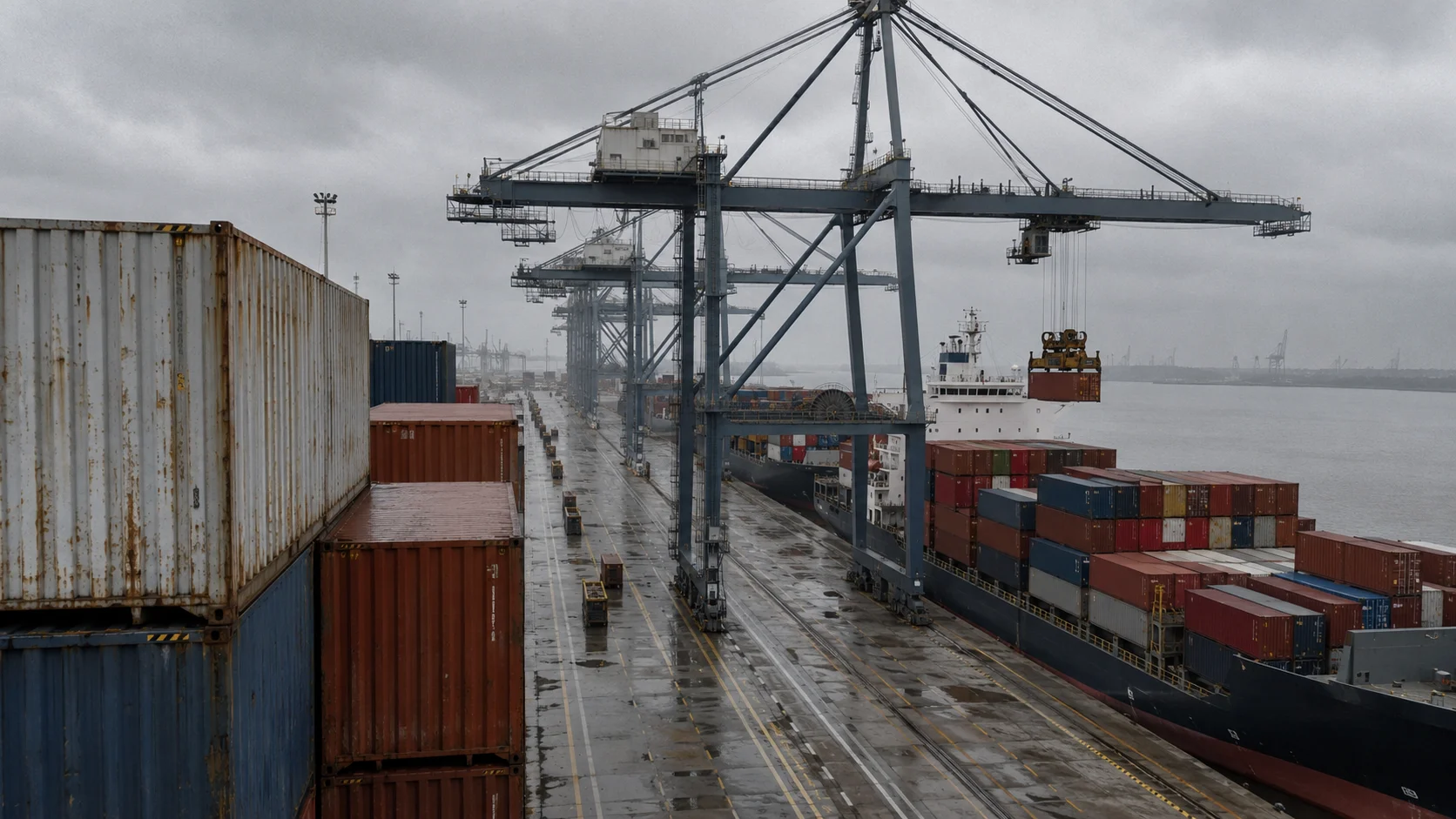

The decision to move abroad for work is rarely as complicated as it feels in the moment. Strip away the variables and there is usually one binding constraint — the partner’s career, the children’s schooling, the financial runway — and that constraint determines whether the move is viable before any of the other analysis matters. Get clear on the actual bottleneck first, and the rest of the decision tends to resolve itself.

The Most Important Factor in a Successful Relocation: Timing
If there is one factor that quietly determines whether a relocation succeeds or fails, it is rarely the destination city or even the job itself. The deeper variable is the stage of life the person moving happens to be in when the opportunity appears. A relocation amplifies whatever is already present — ambition, curiosity, exhaustion, uncertainty — and carries it into a completely new environment.
Some people reach a point where the idea of rebuilding life somewhere else genuinely excites them. They are curious about unfamiliar cultures, open to new friendships, and comfortable with the idea that routines will temporarily disappear. For those individuals, relocation often feels less like disruption and more like expansion. The unfamiliar becomes energizing rather than destabilizing.
Others confront the same decision while already carrying a different emotional landscape. Careers may already feel overwhelming, relationships may be under strain, or the simple fatigue of modern professional life may have accumulated quietly in the background. In that context, moving abroad does not remove pressure. It multiplies it. The very changes that make relocation attractive on paper — new systems, new networks, new expectations — can intensify stress rather than relieve it.
This is why two professionals can accept nearly identical relocation offers and experience radically different outcomes. One person may describe the move as the most transformative chapter of their life. The other may spend the same year counting the months until they can return home. The external circumstances appear similar, yet the internal readiness for change was never the same.
Psychologists who study major life transitions often note that adaptability and openness to new experiences strongly influence how individuals adjust to disruption. Relocation is exactly that: a controlled disruption of nearly every daily pattern a person has built over years. When someone approaches that disruption with curiosity and resilience, the transition can unlock growth that would have been difficult to achieve otherwise.
But relocation cannot function as an escape from an already unstable situation. Moving countries does not resolve burnout, uncertainty, or unresolved personal pressures. More often, it exposes them. Distance from familiar support systems can make those pressures feel sharper rather than smaller.
For this reason, the most important question behind relocation is rarely about geography. It is about timing. Opportunity may open the door to moving abroad, but personal readiness determines whether walking through that door leads to reinvention or regret.
Understanding that difference requires a level of honesty that career decisions rarely demand. It means asking not only whether the opportunity is impressive, but whether the person accepting it is genuinely prepared to rebuild their life around it.
Moving house represents one of life’s most significant transitions, ranking alongside marriage, divorce, and career changes in terms of psychological impact. Yet despite its profound effect on mental health, relationships, and financial stability, most people approach moving with inadequate preparation and unrealistic expectations. This guide covers the research, checklists, and timing decisions that separate smooth moves from costly ones.
The Hidden Complexity of Modern Moving
U.S. Census Bureau data has tracked a multi-decade decline in the share of Americans who move each year, down from roughly one in five during the 1960s to a series of record lows since. That decline isn’t only about satisfaction with current housing — it reflects growing economic constraints, housing affordability pressure, and the psychological barriers that make moving increasingly daunting.
The emotional weight of moving — anxiety, sadness, disrupted sleep — is real, not imagined weakness. The physiological and social effects run deeper than moving day itself, as the childhood-mobility research below shows.
Understanding the True Timeline: Why Most People Underestimate Moving
The most common mistake in moving is timeline underestimation. Moving-industry guidance typically calls for starting preparations about eight weeks out, extending to twelve for complex long-distance moves, yet most people allocate only 2-4 weeks. That compression creates cascading failures that compound stress and costs.
The Science of Moving Timelines
Professional moving companies report these average time requirements:
Studio apartment: 2-3 hours with professional movers
1-bedroom home: 2-4 hours with 2 movers
2-bedroom home: 3-6 hours with proper preparation
3-bedroom home: 5-8 hours, often requiring 4+ movers
4+ bedroom homes: 8-12 hours, frequently spanning multiple days
However, these figures represent only the physical moving day. The complete moving process extends far beyond loading and unloading trucks.
The 7-Week Minimum Preparation Window
This guide uses seven weeks as the minimum preparation window, accounting for:
The Psychology of Moving: Understanding Emotional Impact
Moving represents more than physical relocation—it fundamentally disrupts psychological stability. Research from socio-ecological psychology demonstrates that residential mobility affects self-concept, social relationships, and long-term well-being.
Introverted children who moved frequently showed substantially higher mortality risk by the 10-year follow-up
Extraverted children showed no negative health effects from frequent moves
Frequent movers (3 or more childhood moves) showed sharply higher rates of behavioral problems than children who never moved, per a separate 1994 study of over 10,000 school-age children
Educational impact: each school change is associated with a 0.02 GPA-point drop in the year of the change
These findings suggest that personality type significantly moderates moving impact, with introverted individuals requiring additional support during transitions.
Adult Moving Stress: The Physiological Reality
Moving triggers measurable physiological stress responses. Research shows:
Cortisol levels spike during moving transitions
Sleep disruption is common in the days immediately before and after a move
Immune function temporarily decreases, increasing illness susceptibility
Cognitive performance temporarily declines due to stress and sleep disruption
Financial Reality: The True Cost of Moving
Moving expenses consistently exceed expectations. Moving and storage generated $32.2 billion in direct U.S. economic activity in 2021 (rising to $92.2 billion once indirect and induced effects are counted), and average costs range dramatically based on distance and services.
Cost Breakdown by Move Type
Local moves (under 50 miles):
Professional movers: $301-$3,512 depending on home size
Hourly rates: $65-$251 per hour for professional crews
DIY moves: $150-$600 including truck rental and supplies
Long-distance moves (over 50 miles):
Professional services: $2,509-$11,641 based on weight and distance
Average household goods: 1,000-1,500 pounds per furnished room
Hidden Costs That Destroy Budgets
Research identifies these commonly overlooked expenses:
Utility connection fees: $50-$200 per service
Cleaning services: $150-$500 for move-out cleaning
Storage units: $60-$300 monthly for temporary storage
Eating out during transition: $200-$500 for 2-week period
Replacement items: $300-$1,000 for items damaged or discarded
Address change fees: $25-$75 for various services
Pet boarding: $25-$50 daily during moving chaos
Common Moving Mistakes: Data-Driven Analysis
Analysis of moving failures reveals consistent patterns that predict unsuccessful relocations:
1. Timeline Compression
The mistake: Allocating insufficient preparation time The cost: higher stress and higher expenses, driven by rush fees and last-minute decisions The solution: Begin planning minimum 7 weeks in advance
2. Decluttering Failure
The mistake: Moving unnecessary items The cost: higher moving expenses and continued clutter in the new home The solution: Implement systematic decluttering 6 weeks before moving
3. Documentation Neglect
The mistake: Inadequate record-keeping and inventory The cost: Insurance claim denials, lost items, disputes with movers The solution: Photograph and inventory all items before packing
4. Utility Coordination Errors
The mistake: Poor utility transfer timing The cost: Service gaps, reconnection fees, temporary housing costs The solution: Schedule utility transfers 4 weeks in advance
5. Emotional Underestimation
The mistake: Ignoring psychological preparation The cost: Family stress, relationship strain, mental health impact The solution: Acknowledge emotional aspects and plan support strategies
The Children’s Factor: Special Considerations for Families
Moving affects children disproportionately, with research showing that the impact varies significantly by age, frequency, and circumstances.
Developmental Impact by Age
Infants and toddlers (0-3 years): Minimal long-term impact but require routine maintenance Preschoolers (3-5 years): May show regression, clinginess, sleep disruption School-age children (6-12 years): Friendships loss anxiety, academic adjustment concerns Adolescents (13-18 years): Highest risk group for negative outcomes including academic decline, social anxiety, and behavioral issues
Risk Factors for Negative Outcomes
Research identifies these factors as increasing children’s moving difficulties:
Frequent moves (3+ within few years)
Mid-year school changes
Moves triggered by instability (divorce, job loss, eviction)
Drastically different environments (urban to rural, different cultures)
Moves during sensitive developmental phases (early adolescence particularly risky)
Protective Strategies
Successful family moves incorporate:
Early communication: Age-appropriate discussions about changes
Involvement in decisions: Allowing children choices in new home elements
Routine maintenance: Keeping familiar traditions and schedules
School coordination: Working with both old and new schools for smooth transitions
Social support: Facilitating both maintaining old friendships and creating new ones
The Complete Moving Timeline: A Research-Based Approach
Phase 1: Foundation (8-7 Weeks Before)
Week 8: Decision and initial planning
Confirm moving date and destination
Research moving companies and get quotes
Begin neighborhood research for new area
Create moving budget and tracking system
Notify landlord if renting (typically 30-60 days required)
Moving stress requires active management strategies backed by psychological research:
Pre-Move Stress Prevention
Mindfulness practices: a short daily meditation practice in the weeks before a move is a low-cost, well-established way to blunt the stress response
Physical preparation: Maintaining exercise routines during moving preparation reduces cortisol levels and improves sleep quality
Social support: Maintaining connections with friends and family throughout the moving process provides emotional buffering
During-Move Coping Strategies
Break scheduling: regular short breaks during physically demanding moving-day work reduce both injury risk and fatigue-driven stress
Hydration and nutrition: Proper physical care maintains energy levels and emotional stability during intensive moving periods
Task delegation: Accepting help from others reduces stress and creates positive social connections
Post-Move Adaptation
Routine establishment: Creating new routines within the first week accelerates adaptation and reduces relocation stress syndrome
Community engagement: joining local groups soon after a move is one of the more reliable ways to speed up long-term satisfaction with the new place
Professional support: Online therapy platforms provide continuity of care during transitions, with research showing effectiveness equal to in-person therapy
Special Populations: Customized Approaches
Senior Citizens: Relocation Stress Syndrome
Older adults face unique challenges including relocation stress syndrome, a recognized nursing diagnosis characterized by anxiety, confusion, and loneliness. Strategies include:
Routine maintenance: Maintaining established daily patterns
Healthcare continuity: Ensuring seamless medical care transitions
Social connection: Facilitating contact with existing support networks
Military Families: Frequent Relocation Adaptation
Military families relocate on a fundamentally different cadence than civilian households, typically every two to four years under permanent-change-of-station orders, developing expertise in rapid adaptation:
Systematic approaches: Standardized checklists and procedures
Community utilization: Immediate engagement with military support networks
Child resilience building: Age-appropriate involvement in moving process
Resource maximization: Full utilization of available military moving resources
Address change services: Automated notification systems
Service provider matching: Vetted local service recommendations
Community connection platforms: Neighborhood social networks
There is a moment, usually in the second week after an international move, that no checklist captures. The boxes are mostly unpacked, the utilities work, and you walk out to buy something ordinary — bread, a SIM card, laundry powder — and realise you do not know how this transaction works here. Watch experienced relocators in that moment and you notice they treat the confusion as material rather than failure: something the new place is teaching them, one small scene at a time. Every list in this guide reduces the number of those moments. None eliminates them, and after enough moves you stop wanting them eliminated — the small confusions are how a foreign address starts to become home.
Looking back at people who have moved abroad and built a life that worked, you can connect the dots. None of them planned the path that ended up being the right one. The job that mattered most was rarely the job they moved for. The friendships that lasted were rarely the ones they expected to form. The country they ended up loving was sometimes the third country they tried, not the first. Each dot, in the moment, looked like a step that might or might not be the right one. The pattern only became visible looking backward. The lesson, if there is one, is that planning a move with too much certainty about how it will unfold is the wrong posture. The relocators who land best are the ones who commit fully to the move while staying open to the discovery that the version they are building will look different from the version they sketched. You can connect the dots, but only looking backward. So make the move you can commit to, and then trust that the dots, in retrospect, will form a pattern you could not see from where you started.