
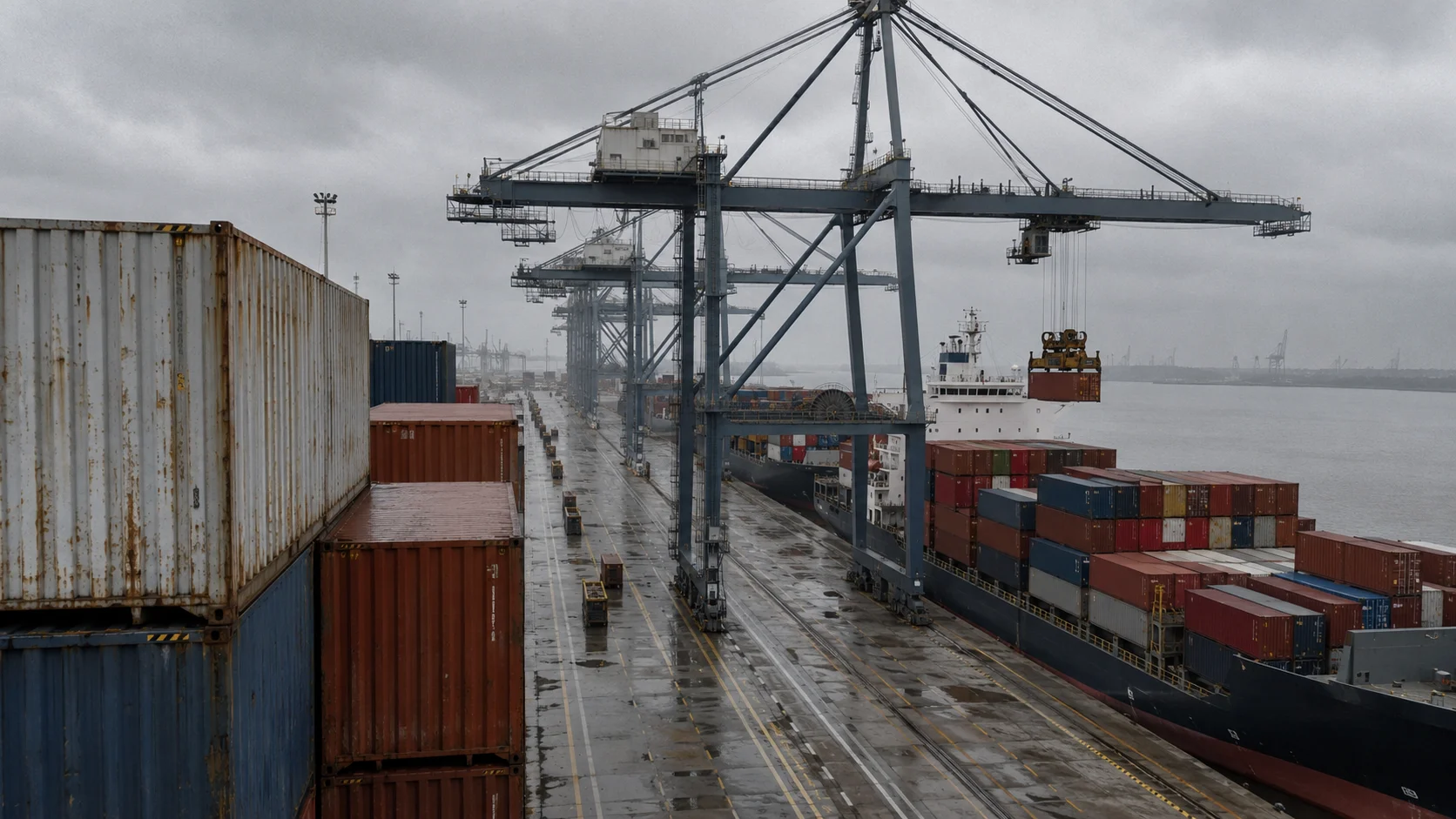
Dries lived in Berchem, eleven minutes by bike from the edge of the Port of Antwerp. On clear evenings he could see the gantry cranes from the window of his flat: the second-largest port complex in Europe, moving more than twelve million containers a year, with direct weekly sailings to Laem Chabang. When he and his Thai partner decided to move to Chiang Mai, shipping should have been the easy part. He was, quite literally, closer to a departing Asia-bound container than almost anyone else on the continent.
He still got it wrong. Not the freight: the sequence. Dries deregistered from his commune in March, full of momentum, before his Thai Non-Immigrant O visa had been approved. The visa took longer than expected. For six weeks he was a man with no official residence in Belgium, a bank that suddenly wanted a foreign address he didn’t have, and a mutuelle that had quietly stopped covering him. His boxes, meanwhile, sat packed in a friend’s garage in Wilrijk because he had booked the shipment to land in Bangkok before he could legally clear it duty free.

Why Antwerp Is a Genuine Advantage: If You Use It
Start with the good news, because it is substantial. The Port of Antwerp-Bruges is one of the two largest container ports in Europe, and it has direct deep-sea services to Laem Chabang, Thailand’s main container gateway about 130 km southeast of Bangkok. Bangkok Port (Khlong Toei) is not on those services: the Port Authority of Thailand limits ships using its river channel to 172 metres in length and 8.2 metres draught. “Direct” matters. A direct service means your container is loaded in Antwerp and discharged in Thailand without transshipment at an intermediate hub like Singapore or Tanjung Pelepas. Every transshipment adds handling, a few days of dwell time, and a small but real chance of a rolled connection.
The pre-carriage advantage is just as concrete. If you live in Antwerp, Ghent, Mechelen, Brussels or anywhere in Flanders, your goods travel between 10 and 60 km to reach the terminal. Compare that with a family in Munich or Vienna, whose container rides a truck or a barge for two or three days and several hundred euros before it even smells salt water. For a Belgian shipper, the trucking leg of an FCL move is often under EUR 300; for much of inland Europe it can be EUR 700–1,200. On an LCL shipment, Belgian addresses feed straight into consolidation warehouses in the port zone itself, so cut-off deadlines are more forgiving and origin handling is cheaper.
Wallonia is only slightly worse off. From Liège or Namur, Antwerp is still a same-day truck run, and some forwarders will quote Rotterdam as an alternative. The difference is usually marginal, and Antwerp’s Asia schedules are dense enough that there is rarely a reason to look north.
So use the advantage. But understand what it does not buy you: it does not shorten the ocean, and it does not fix your paperwork. Those are the next two sections.
Transit Times in 2026: The Cape of Good Hope Reality
Here is the number most people carry in their heads: Europe to Thailand, about 30 days. That number is out of date.
Since the Red Sea security crisis began in late 2023, the major container lines have kept most Asia–Europe services routing around the Cape of Good Hope rather than through the Suez Canal. The detour around southern Africa adds roughly 3,500 nautical miles and 10 to 14 days each way. In practical terms:
- Antwerp to Laem Chabang, port to port: plan on 40–50 days on most current schedules, versus roughly 28–33 days on the old Suez routing.
- Door to door: add 1–2 weeks on top for export formalities, Thai customs clearance and inland delivery. A realistic all-in figure is 8 to 10 weeks.
- Schedule reliability: longer rotations mean fewer buffer days in carrier schedules, so a missed berth window in Algeciras or Singapore ripples further than it used to.
Some services have trialled a return to Suez as conditions fluctuate, and if the situation normalises, transit times will compress again. But you cannot plan a house move on a geopolitical maybe. Book against the Cape routing, and treat any earlier arrival as a bonus. If your shipment turns up in week six instead of week nine, the worst outcome is that your things wait in your new home a little sooner than expected, provided your customs paperwork is ready. That readiness is what the next section is about: the single most important set of rules in this entire move.
For a deeper look at how rerouting affects planning, see our guide on shipping delays and Thailand relocations.
Thai Customs: The Duty-Free Rules That Decide Everything
Thailand does allow foreigners to import used household effects duty free, but the concession is narrow, conditional, and enforced. The rules, set out by the Thai Customs Department, come down to four tests:
- Your visa. You need a non-immigrant visa valid for at least one year: Non-Immigrant B (work) and the Long-Term Resident (LTR) visa qualify under Thai Customs’ standard criteria. A Non-Immigrant O based on marriage or on retirement is excluded from that standard list per Thailand’s official relocation criteria. Neither route qualifies for duty-free eligibility, so budget for duty and 7% VAT. Tourists and visa-exempt entries do not qualify at all. No qualifying visa, no concession, full stop.
- Ownership and use. Items must have been owned and used by you for at least one year before import. This is the “used household effects” test. A three-year-old washing machine passes. A television bought in the January sales for the move does not.
- The six-month window. Your shipment must arrive in Thailand no earlier than one month before and no later than six months after your first entry into the country on the qualifying visa. Miss the window and the duty-free treatment lapses.
- One shipment per family. The concession covers a single consignment. If you split your move into two sea shipments six months apart, only one clears duty free.
Read those four tests against the Cape of Good Hope transit times and the trap becomes visible. If you enter Thailand in January and only book your shipment in April, a 9–10 week door-to-door timeline puts arrival right at the edge of the six-month window. The safe pattern is to enter Thailand on your visa, and have the shipment sail within four to six weeks of that first entry. In turn, that means having your packing, survey and booking done before you fly.
Documentation-wise, Thai Customs will want your passport (showing the visa and the entry stamp), the visa itself, a detailed packing list in English, the bill of lading, and (for work visa holders) often the work permit or evidence it is in process. Your destination agent handles the submission, but the quality of your packing list is your job. “Box 14: miscellaneous” is an invitation to inspection. “Box 14: used kitchen utensils, used baking trays, used cookbooks (12)” is a cleared box.
Two more Thai-side realities worth knowing. First, even a technically perfect shipment can attract duty on individual items a customs officer judges to be new, excessive in quantity, or outside the household-effects definition: the concession is granted item by item, not shipment by shipment. Second, duty assessments in Thailand carry a degree of officer discretion that Belgians, used to rule-bound administration, sometimes find unsettling. A clean, honest, well-documented shipment sails through far more often than not. A shipment with six sealed boxes of “gifts” does not. For the full framework, see our detailed guide to duty-free imports into Thailand.
Here is a question worth settling before you book anything. Why can a container that reaches Laem Chabang two weeks before you land still clear duty free, when an identical one that arrives six weeks early cannot? The difference is the calendar. The customs window is measured from your first entry stamp on the qualifying visa, and it opens only one month before that date. Six weeks early falls outside the opening, and no amount of honest paperwork moves it back in. So on a 40 to 50 day Cape routing, plan backwards from the day you will actually enter Thailand: the sailing date is the variable you control, and the entry stamp is the date everything is measured against.
What Not to Ship from Belgium
Every country’s movers have a national blind spot. For Belgians moving to Thailand, there are three.
The beer collection
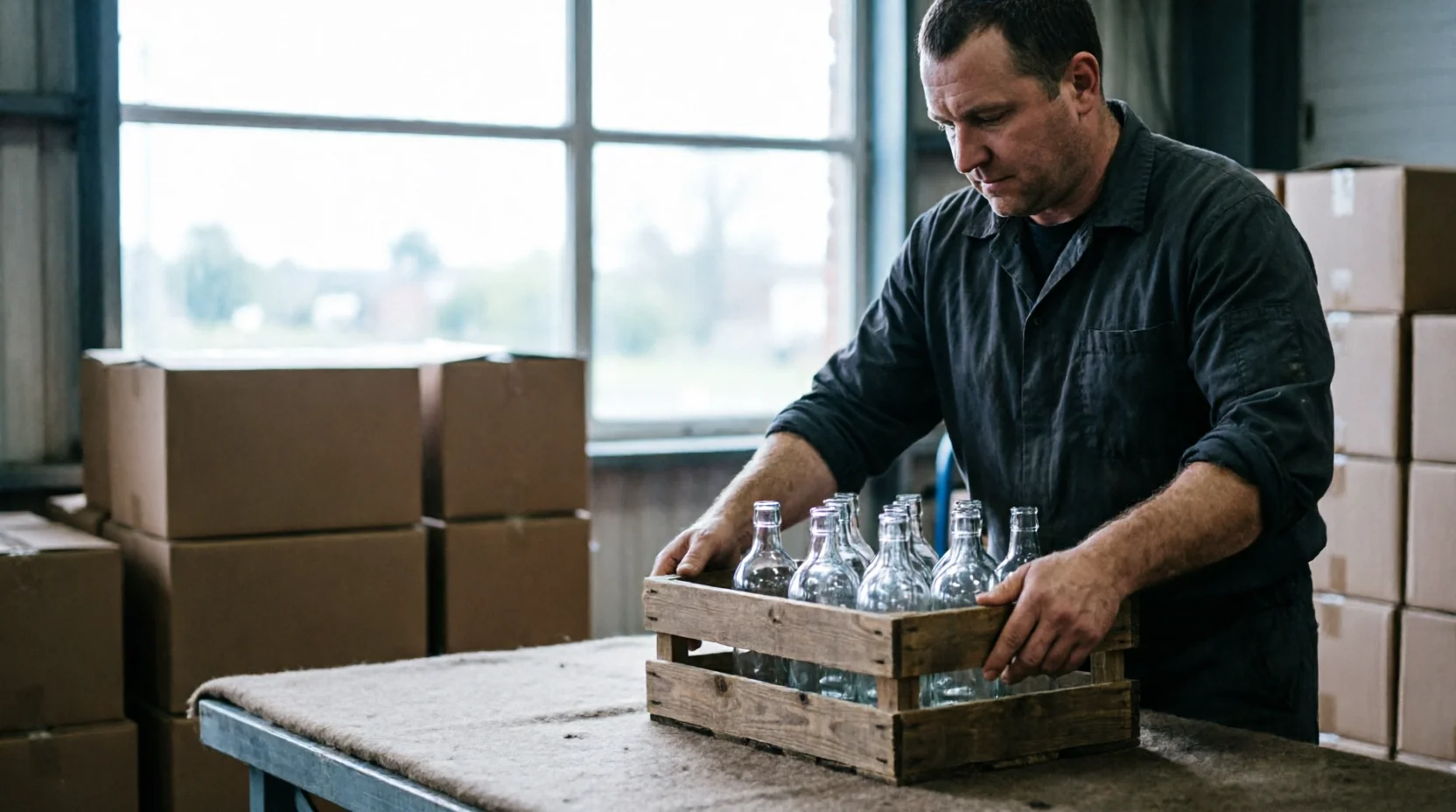
This one hurts, so let’s be direct. Thailand’s duty-free alcohol allowance is one litre per arriving adult, carried with you, not shipped. Alcohol inside a household-goods consignment is excluded from the duty-free effects concession entirely and attracts import duty plus Thai excise tax plus VAT, a stack that routinely multiplies the value of the goods several times over. A EUR 400 cellar of Westvleteren, Rochefort and vintage gueuze can generate a tax bill north of EUR 1,000, plus a licensing headache, plus a flagged shipment that now gets a slower, more suspicious inspection. And that is the good outcome; the bad outcome is seizure.
The maths never works. Host a farewell tasting, gift the rare bottles, sell the rest. Your one litre of carry-on allowance is enough for a single bottle of something special to open on your first night in Thailand. That is the whole beer plan.
Chocolate and perishables
A container spends six to seven weeks crossing the equator twice on the Cape routing. Internal container temperatures in tropical waters regularly exceed 50°C. Belgian chocolate does not survive this; it blooms, melts, resets into grey slabs, and (worse) melted chocolate migrates. It finds books, linen, the inside of your printer. The same logic applies to speculoos spread, cheeses, cured meats (which are also an agricultural import problem on the Thai side) and anything else edible. Thailand imports Belgian chocolate commercially in refrigerated containers; the good supermarkets in Bangkok and Chiang Mai stock it. Buy it there.
New goods in original packaging
The temptation is rational: electronics are cheaper in a Belgian sale than in a Thai mall, so why not buy the new laptop, air fryer and espresso machine before leaving and ship them? Because Thai Customs reads unopened OEM packaging as exactly what it is (new goods), and new goods fail the one-year ownership-and-use test. Best case, you pay duty and VAT on the invoice value. Worse case, a few obviously-new items colour the officer’s view of the entire consignment. If you must bring new purchases, unbox them, use them for a genuine period before packing, keep no pristine retail boxes, and accept that “used, six months” is still a judgement call you might lose. If the numbers matter, carry the laptop in hand luggage instead. Accompanied personal effects for personal use are a different, gentler conversation.
Beyond the Belgian trio, the standard prohibited list applies: no e-cigarettes or vaping equipment (banned in Thailand outright), no drones without prior NBTC permission, and no weapons. Think hard before shipping medicines beyond a personal supply, and carry the prescriptions for what you do bring.
Plugs, Voltage and Appliances: Type E Meets Thailand
The pleasant surprise of a Belgium–Thailand move is electrical compatibility. Belgium runs 230V at 50Hz on type E sockets (the ones with the protruding earth pin). Thailand runs 220V at 50Hz on a mix of type A and B (the flat-pin American style), type C (the ungrounded europlug) and the newer type O standard. The voltage is close enough to Belgium’s that every Belgian appliance works without a transformer.
What this means in practice:
- Ungrounded two-pin europlugs (type C), the kind on phone chargers, lamps and small appliances, push straight into most Thai sockets. No adapter needed.
- Earthed type E plugs, the kind on washing machines, dishwashers, kettles and anything with a chunky round plug, need an adapter or a replacement plug head. The Thai socket has no receptacle for the French-style earth pin.
- Buy adapters before you fly. A bag of ten universal adapters costs little in Belgium; hunting for E-to-Thai adapters in a provincial Thai town is a small unnecessary adventure.
Whether to ship large appliances at all is a volume question, not an electrical one, which is the next section. The short version: a washing machine is usually worth its cubic metre in an FCL move and rarely worth it in a small LCL shipment, given that decent machines in Thailand cost EUR 250–400 new and most rentals include one.
LCL or FCL: Volume Guide and Antwerp–Thailand Costs in EUR
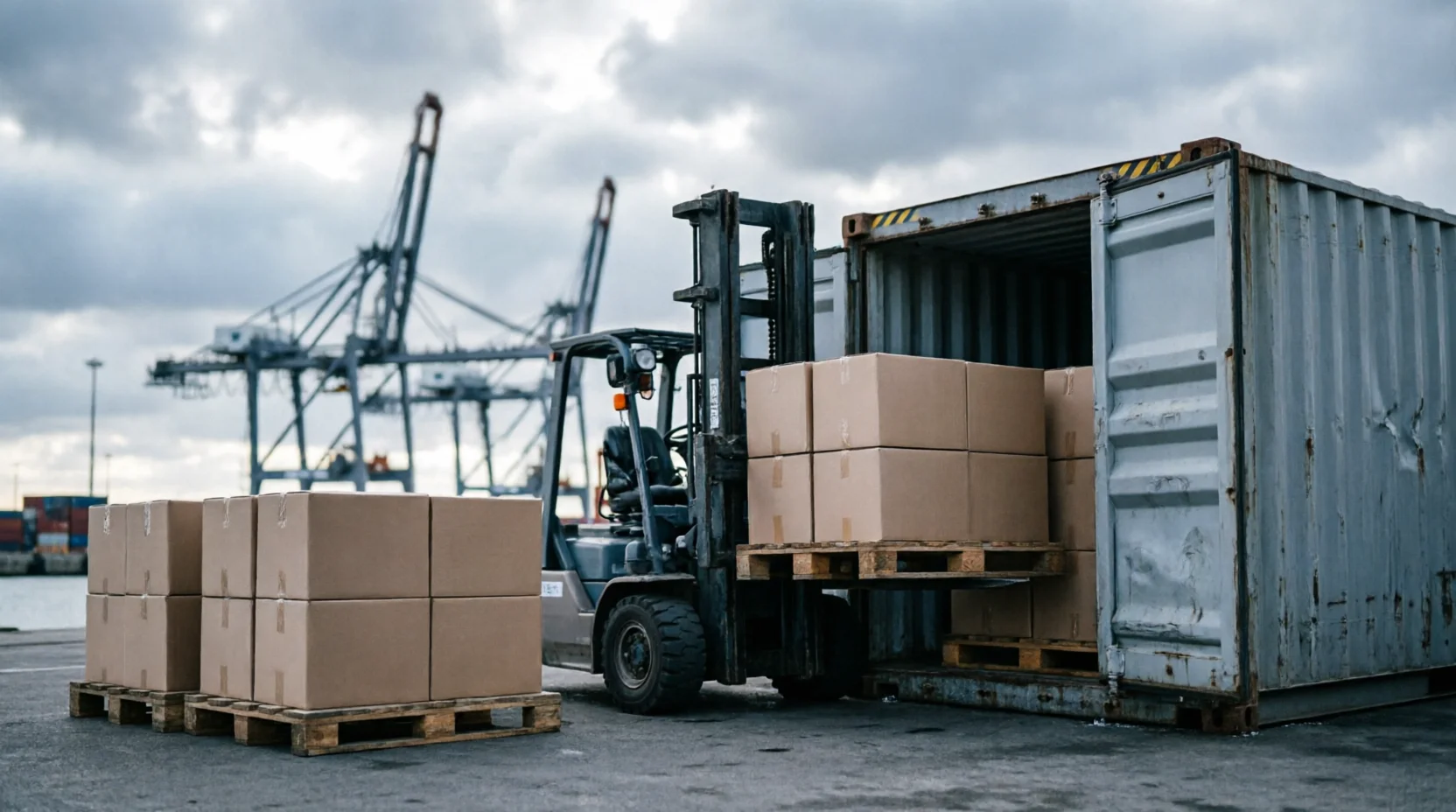
Sea freight from Belgium comes in two flavours. LCL (less-than-container-load) means your boxes share a container with other shippers’ cargo and you pay per cubic metre. FCL (full-container-load) means you take a whole 20ft or 40ft box at a flat rate. The crossover point, and typical 2026 pricing from Antwerp to Bangkok/Laem Chabang, looks like this:
| Shipment size | Typical contents | Best mode | Indicative door-to-door cost (EUR) |
|---|---|---|---|
| 1–3 m³ | Boxes only: books, clothes, kitchenware, keepsakes | LCL | €600 – €1,100 |
| 4–8 m³ | Boxes plus some furniture: bed, desk, bikes | LCL | €1,100 – €1,900 |
| 9–13 m³ | Small apartment, partial household | LCL (approaching crossover) | €1,800 – €2,800 |
| 14–28 m³ | Full 1–2 bedroom household | FCL 20ft | €3,200 – €4,500 |
| 29–55 m³ | Full family house, 3+ bedrooms | FCL 40ft | €4,800 – €6,800 |
Treat these as planning bands, not quotes. Rates move with carrier capacity, the Red Sea situation, and season. But the structure is stable, and three Belgian-specific notes apply.
First, the crossover sits around 12–13 m³. LCL pricing from Antwerp runs roughly €150–220 per cubic metre all-in once origin charges, ocean freight, Thai destination handling and delivery are counted. At 13 m³ you are paying 20ft FCL money for a shared box that gets handled more times, at higher damage risk, on a slower consolidation schedule. If your survey comes in at 11 m³ or more, price both options and lean FCL.
Second, Belgian origin charges are genuinely low. Because pre-carriage is so short, the Antwerp advantage shows up as €200–500 of savings versus an equivalent move from inland Europe, and as flexibility: a missed vessel costs you a week, not a re-booked cross-continental truck.
Third, watch the destination side of LCL quotes. Thai destination charges on LCL are where cheap headline rates go to die: CFS fees, documentation, delivery order fees. Insist on a genuinely all-in door-to-door quote naming every Thai-side charge. A worked example illustrates the point:
Worked example: couple, Ghent to Chiang Mai, 7 m³ LCL. Origin packing and pickup in Ghent plus haulage to the Antwerp CFS: €550. Origin handling, export customs and documentation: €280. Ocean freight, Antwerp–Laem Chabang: €490. Thai destination CFS and clearance: €430. Delivery Laem Chabang to Chiang Mai (a 700 km inland leg: this is what long-haul delivery inside Thailand costs): €480. Marine insurance at 2.5% of a €12,000 declared value: €300. Total: €2,530, or about €360 per cubic metre, with the Chiang Mai delivery leg pushing it above the Bangkok-delivery norm. Door-to-door time on current routings: about nine weeks. The same shipment delivered to Bangkok instead would land nearer €2,150.
For broader European benchmarks, our cost guide for moving from Europe to Thailand breaks down each line item in more detail.
The Ghent-to-Chiang-Mai numbers above are one household, worth running against your own volume and destination city.
Visas: Non-O, LTR and Why the Visa Comes First
This guide is about freight, not immigration law, but the visa sits so squarely on the critical path that it needs a section. The two routes most Belgian movers use:
Non-Immigrant O. The workhorse. Covers marriage to a Thai national, retirement (age 50+, with financial requirements of THB 800,000 in a Thai bank or THB 65,000 monthly income for the O-A retirement route), and dependants. Applied for at the Royal Thai Embassy in Brussels, typically issued as a 90-day entry that you convert and extend in-country to a one-year stay. The one-year extension pathway matters for customs purposes, but the marriage and retirement routes are excluded from Thai Customs’ standard qualifying list, as covered above, so neither qualifies for the duty exemption.
Long-Term Resident (LTR). Thailand’s ten-year visa for wealthy pensioners, remote workers employed by significant foreign companies, and highly-skilled professionals. Higher financial bar (typically USD 80,000 annual income, with variants), but it comes with real perks: ten-year validity, fast-track immigration, a flat 17% income tax rate for the skilled-professional category, and unambiguous qualification for duty-free household effects. If you meet the criteria, it is worth the extra paperwork.
Work visa holders (Non-Immigrant B) usually have an employer or their HR provider driving the process. The same customs logic applies: shipment timing keys off your first entry on the visa.
Whichever route you take, the sequencing rule is absolute: the visa is approved before you deregister from Belgium, and your first Thai entry on that visa starts the six-month customs clock. Everything else in your timeline hangs from those two events.
Leaving Belgium Properly: Commune, Model 8 and the Mutuelle
Belgium is unusual in Europe in how formal the exit is. You do not simply leave; you deregister, and the deregistration has consequences that reward getting the order right.
The commune deregistration (model 8)
Before departure, you report to your commune (gemeente) and declare your move abroad: the “model 8” declaration (aangifte van vertrek naar het buitenland / déclaration de départ pour l’étranger). The commune strikes you from the population register and issues the certificate of deregistration: the attestation de radiation in French, bewijs van schrapping in Dutch. You will want copies of this document for years: Belgian banks ask for it, the tax administration references it, and it is your proof of the date Belgian residence ended.
The timing rule bears repeating because it is the single most common Belgian-specific mistake: deregister only after your Thai visa is secured, in the last two to four weeks before departure. Deregistration ends your official Belgian address. Do it early (before the visa is approved), and a visa delay leaves you in administrative limbo: no registered address, complications with your bank and mutuelle, and awkward questions if you need to renew anything at a commune where you no longer exist. The commune will process a model 8 quickly; there is no benefit to doing it months in advance and considerable downside.
While at the commune, ask about consular registration: once in Thailand, you can register with the Belgian Embassy in Bangkok, which keeps you findable for elections, passport renewal and emergencies. Not mandatory, but sensible.
The mutuelle and social security
Your Belgian mutuelle (ziekenfonds) coverage is tied to your residence and social security status, and Belgium has no bilateral social security agreement with Thailand covering healthcare. In plain terms: once you deregister and your Belgian social security affiliation lapses, your mutuelle stops covering you, and Thai hospitals will neither know nor care what a mutuelle is.
The sequencing here mirrors the commune logic, in reverse: arrange your Thai-side health cover before your Belgian cover ends, not after. Options are private international health insurance (the usual choice, and mandatory at specified coverage levels for the O-A retirement visa). Employees of Thai companies can instead use the Thai social security system plus employer group cover. Notify your mutuelle of your departure date rather than ghosting it. Some funds offer transitional or voluntary continuation arrangements worth asking about, and a clean exit avoids clawback letters later. If you have been paying into a hospitalisation insurance through an employer, ask about individual continuation rights before your last working day; the window to exercise them is short.
Also on the Belgian federal checklist: notify the tax administration (you will file a final “special” return for the year of departure), tell your pension fund the country you are moving to (Belgian statutory pensions are payable in Thailand), and review whether your Belgian bank will keep serving a Thai-resident customer. Some will, some will quietly close accounts, and finding out from a letter forwarded three months late is not the way to learn.

The Five Mistakes Belgians Make, and the Sequence That Avoids Them
Across Belgian moves to Thailand, the same failures recur. Named, so you can check yourself against them:
- The premature deregistration. Dries’s mistake from the opening: model 8 filed before the visa exists. Consequence: administrative limbo, banking friction, lapsed mutuelle cover during the gap. Fix: visa first, commune last.
- The early shipment. Booking the container to arrive before (or more than six months after) your first entry on the qualifying visa. Consequence: loss of the duty-free concession, and duty assessed on the whole shipment. Fix: shipment sails after your visa is issued, timed to land inside the window, ideally in months two to four after first entry.
- The beer-and-chocolate box. Shipping excise goods and perishables. Consequence: taxes exceeding the goods’ value, flagged consignments, melted chocolate in the linen. Fix: consume, gift, sell; carry one special litre by hand.
- The pre-move shopping spree. New electronics in OEM boxes inside a “used household effects” shipment. Consequence: duty and VAT on invoice value, plus a suspicious officer. Fix: buy it in Thailand, or buy early, unbox and genuinely use it.
- The Suez-era timeline. Planning around a 30-day transit that no longer exists. Consequence: two months in an empty Thai apartment, or a blown customs window. Fix: plan on 40–50 days port to port, 8–10 weeks door to door, and build the rest of the sequence around it.
And the correct sequence, in one list:
- Secure the Thai visa (Non-O, LTR or B) via the Royal Thai Embassy in Brussels.
- Get your pre-move survey done and book the shipment, but do not ship yet.
- Arrange Thai-side health insurance to start on arrival.
- File the model 8 at your commune two to four weeks before departure; collect the attestation de radiation; notify mutuelle, tax administration, pension fund and bank.
- Fly to Thailand; your first entry starts the six-month customs clock.
- Shipment sails from Antwerp within four to six weeks of your entry.
- Clear customs with passport, visa, packing list and bill of lading; goods delivered 8–10 weeks after sailing.
Seven steps. None of them difficult. All of them order-dependent.
Getting a Quote That Means Something
When you approach forwarders, come armed with three things: an honest volume estimate (or better, a video survey), your visa status and expected first-entry date, and your destination city in Thailand. As the worked example showed, Bangkok delivery and Chiang Mai delivery are different prices. Ask every quoter to itemise Thai destination charges and to confirm the routing assumption (Cape or Suez) behind the quoted transit time. A forwarder who quotes “30–35 days” in 2026 without explaining how is telling you something about the rest of their quote too.
Belgians start this move with the best origin logistics in Europe. Pair that with the right sequence: visa, booking, insurance, model 8, entry, sailing, clearance, and the move from the Scheldt to the Chao Phraya is about as smooth as intercontinental relocation gets.
🇧🇪 Belgium → 🇹🇭 Thailand
We itemise Thai destination charges, the way this guide says to ask.
The form takes about 60 seconds. Fixed pricing, no hidden costs, routing assumption stated up front.
Related Reading
- Shipping from Europe to Thailand: The Complete Guide
- Moving from the Netherlands to Thailand, the neighbour’s version, with Rotterdam as origin
- Thailand Duty-Free Import Rules for Household Goods
- What It Costs to Move from Europe to Thailand
- Shipping Delays and Your Thailand Relocation
- Thailand Relocation Guide 2026
The Thai Customs Department publishes current duty-free personal effects rules.
Frequently Asked Questions
How long does sea freight take from Belgium to Thailand?
On current Cape of Good Hope routings, allow 40–50 days port to port from Antwerp to Bangkok or Laem Chabang, roughly 10–14 days longer than the old Suez schedules. Door to door, plan on 8–10 weeks including export formalities, Thai clearance and inland delivery.
Can I import my household goods into Thailand duty free?
Only on a qualifying visa: a Non-Immigrant B (work) or a Long-Term Resident (LTR) visa valid for at least a year. A Non-Immigrant O based on marriage or retirement does not qualify, so budget for duty and 7% VAT. On a qualifying visa, the conditions are items owned and used for at least a year, arrival within six months of your first entry on that visa, and one shipment per family. New goods in original packaging are assessed for duty individually.
When should I deregister from my Belgian commune?
After the Thai visa is approved, in the final two to four weeks before departure. The model 8 declaration ends your official Belgian residence and produces the attestation de radiation; filing it before the visa exists risks weeks of administrative limbo if the visa is delayed.
Is LCL or FCL cheaper for this route?
Below about 12–13 cubic metres, LCL from Antwerp (roughly €150–220 per m³ all-in) is cheaper. Above that, a 20ft container at €3,200–4,500 door-to-door usually wins on price, speed and handling risk.
Can I ship my Belgian beer collection to Thailand?
Realistically no. Alcohol is excluded from the duty-free effects concession, Thailand’s carry allowance is one litre per adult, and duty plus excise plus VAT can exceed the beer’s value several times over. Drink it, gift it or sell it before you go.
Do Belgian plugs work in Thailand?
Voltage is compatible (230V vs 220V, both 50Hz), so appliances work. Ungrounded europlugs fit most Thai sockets directly; earthed type E plugs need adapters. Bring a bag of adapters from Belgium.