
Importers spend a lot of time discussing ocean transit and not enough time discussing what happens after the container lands. That is backwards for Australia. A large share of the real timeline is decided inland, not at sea.
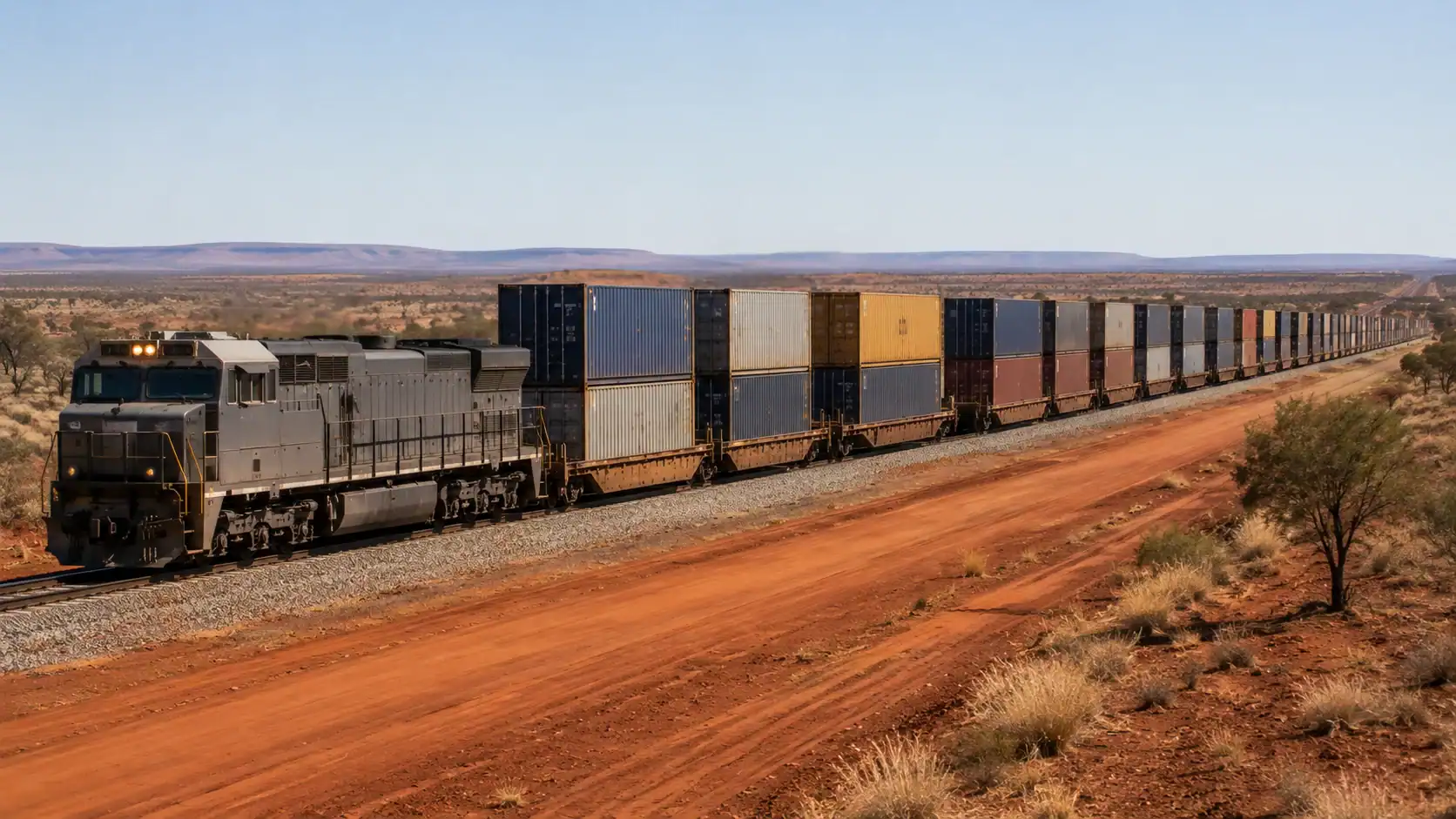
That is why Inland Rail matters even before every section is fully operational. The project changes how serious operators think about domestic freight movement between major eastern-seaboard corridors. It encourages a better mental model: port arrival is only the beginning of the delivery chain, and long inland distances are not a footnote. They are part of the job.
For Australia-bound freight, the “shipping timeline” is often misdescribed as a vessel timeline. Inland Rail is a reminder that national logistics is a network question, not just a maritime one.
Why Inland Freight Matters as Much as the Port
The easiest logistics mistake in Australia is thinking the route ends at the wharf. It does not. Once goods are discharged, they still move across a continent-sized freight system where inland distance, road congestion, rail options, warehousing access, and destination geography all shape delivery certainty. A gateway that looks attractive on the ocean side can become the weaker choice once the container has hundreds of kilometres of domestic network left to cross. That risk is sharpest along the eastern seaboard, where major markets are large but spread across long corridors.
Too many businesses still choose a port first and ask inland questions later. A stronger approach starts with the inland job and checks which gateway serves that job best. Inland Rail formalizes that same insight at infrastructure scale, and the approach is worth adopting before any specific section of the project is finished.
What Inland Rail Is Actually Delivering, and What It Is Not
Inland Rail was conceived as a single freight rail program connecting Melbourne and Brisbane via inland routes. The resulting rail spine would make national distribution across those markets faster, more resilient, and less road-dependent over time. Inland Rail Overview Queensland TMR: Inland Rail
That single-corridor vision changed in May 2026. An independent cost assessment put the full Melbourne–Brisbane build at more than AUD 45 billion, over three times the government’s committed funding. Canberra then shelved the section north of Parkes, NSW, indefinitely. Only the Beveridge (Victoria)-to-Parkes segment remains funded, targeting completion in 2027. The remaining roughly 1,000km to Brisbane is not expected before 2036 at the earliest, and current work there is limited to preserving the corridor rather than building it. Railway Gazette: Inland Rail scaled back
For import planning, that splits Inland Rail into two separate questions. The Melbourne-to-Parkes upgrade is funded and close enough to plan around now. A rail-based Parkes-to-Brisbane leg is not. For at least the next decade, that stretch still depends on the existing network and the road corridor discussed below.
What Parkes Actually Changes: The East–West Junction Most Import Plans Ignore
The funded segment is usually reported as a shortened Melbourne–Brisbane project, which undersells what it actually does. Parkes is not simply the point where the money stopped. It is where the north–south alignment meets the existing east–west transcontinental line already running to Perth and Adelaide, and the Beveridge-to-Parkes upgrade is being built to double-stack clearance. What the funded leg delivers, then, is a double-stack-capable spine from Melbourne into a junction that faces west — not a half-finished road to Brisbane.
That distinction decides who actually benefits, and the answer is narrower than the headlines suggest. An importer landing containers in Melbourne to serve Queensland demand gains very little before the 2030s. An importer landing in Melbourne and replenishing Western Australian or South Australian stock is looking at a funded corridor pointed straight down their lane, and should be re-testing now whether direct Fremantle or Adelaide calls still beat a Melbourne discharge plus rail.
Structurally, though, this is not an advantage the infrastructure hands anybody. Double-stack capacity on a public corridor is available to every importer on identical terms, and a competitor can book the same slot next quarter. What is hard to copy is position: where your distribution centre sits relative to the terminal, whether your volumes justify a contracted slot rather than spot capacity, and whether the lane runs often enough to absorb a fixed schedule. The corridor changes the structure of the inland freight market. It does not decide where any individual importer stands inside that structure — that part is still a routing decision each operator has to make, and defend, on its own numbers.
How It Affects Real Freight Timelines
Inland Rail affects timelines in two main ways. First, it can let freight move more cleanly between major economic zones. Second, it encourages importers to stop pretending that all time sensitivity sits offshore. The maritime leg gets the attention, but the inland leg often determines whether the shipment arrives when it becomes commercially useful.
This is why an importer routing goods into Melbourne or Brisbane should not only ask about vessel schedules. They should ask how the cargo will move after discharge, how intermodal options compare with road-only logic, and whether the final destination is best served by the gateway originally assumed.
The real commercial upside is not just shaving abstract transit hours. It is reducing uncertainty in a domestic freight chain that can otherwise absorb time in unglamorous ways: truck constraints, road congestion, long-haul inefficiency, and rehandling between states.
Inland infrastructure matters strategically because it changes the part of the timeline that many importers only notice when a consignee asks why a shipment that “already arrived” is still not there.
Better inland options also change how a business writes its route promises internally. A business that models the corridor properly is less likely to confuse port ETA with customer delivery confidence.
Which Importers Should Care Most
Importers serving eastern Australian distribution networks should care most, especially where goods move between major seaboard markets rather than staying near the discharge port. Repetitive stock flows, multi-state replenishment, and customers who care more about door delivery than port arrival all raise the stakes. Inland Rail also matters to anyone rethinking their gateway assumptions: if inland freight becomes cleaner on the funded Melbourne-to-Parkes leg, the “obvious” port answer may not stay obvious there.
Businesses with multi-site replenishment patterns have an especially strong reason to care: a better corridor affects more than one consignment. It can shift stock placement, transfer logic between states, and the safety stock a business carries against domestic unpredictability. That inventory effect is easy to miss, but it reduces the pressure to over-buffer every route.
How to Plan with Inland Rail in Mind Now
Start designing routes with inland logic now rather than waiting for the infrastructure to finish and thinking about freight strategy afterwards.
- Review whether you chose your current gateway out of habit or for the actual domestic distribution job.
- Map the inland path explicitly instead of treating it as a post-port administrative detail.
- Look at stock destinations, not just import entry points.
- Decide port and inland routing together when you model timelines and landed cost.
- Watch corridor improvements because network shifts can quietly change which route is commercially best.
Importers who think this way usually do better even before a specific rail benefit is available. They are planning the whole chain rather than only the dramatic part of it.
The same discipline shows up in what the business promises its customers. The business that has done that work stops quoting a delivery date off a sea-leg ETA that was never the real answer. For a detailed quote on Australia-bound freight that accounts for the full door-to-door timeline, see how Swift Cargo structures the shipping process to Australia.
For most of Australian transport history, the eastern corridor between Melbourne and Brisbane has effectively been a sea route. Colonial trade ran along the coast because the inland terrain made anything else impractical at scale, and the truck era did not change the underlying geography so much as pave over it. Inland Rail is the first serious attempt in over a century to redraw that line on a continental scale. The freight industry is uncertain whether the new corridor will reshape sourcing decisions or merely move existing flow onto rails. Both outcomes are possible. Infrastructure of this scale rarely produces the effects its planners predict. It produces the effects its users discover. Which outcome lands here will not be settled until importers start routing real freight against the corridor.
Corridor quality compounds into an advantage for the importers who plan against it deliberately. Inland Rail does not benefit every importer equally. It benefits the ones who structure their inland network to use the new corridor: port choice, distribution-centre location, contracted carrier mix, lead-time models. Importers who simply continue trucking everything from Port Botany to Sydney warehouses will see Inland Rail as a headline they read; importers who rebuild their inland routing around the corridor will see it as a structural cost edge. The infrastructure is public. The advantage is not, because it lives in a routing question each operator has to re-ask for itself.
Planning the Inland Leg Like an Operation
Treat the inland leg the way you would treat any part of the job you actually own: model it before you commit, not after the consignee calls asking where the freight is. Between Melbourne and Brisbane the choice today usually comes down to road versus the existing (pre-upgrade) network, since the funded rail upgrade currently stops at Parkes. The options behave differently enough that guessing is expensive.
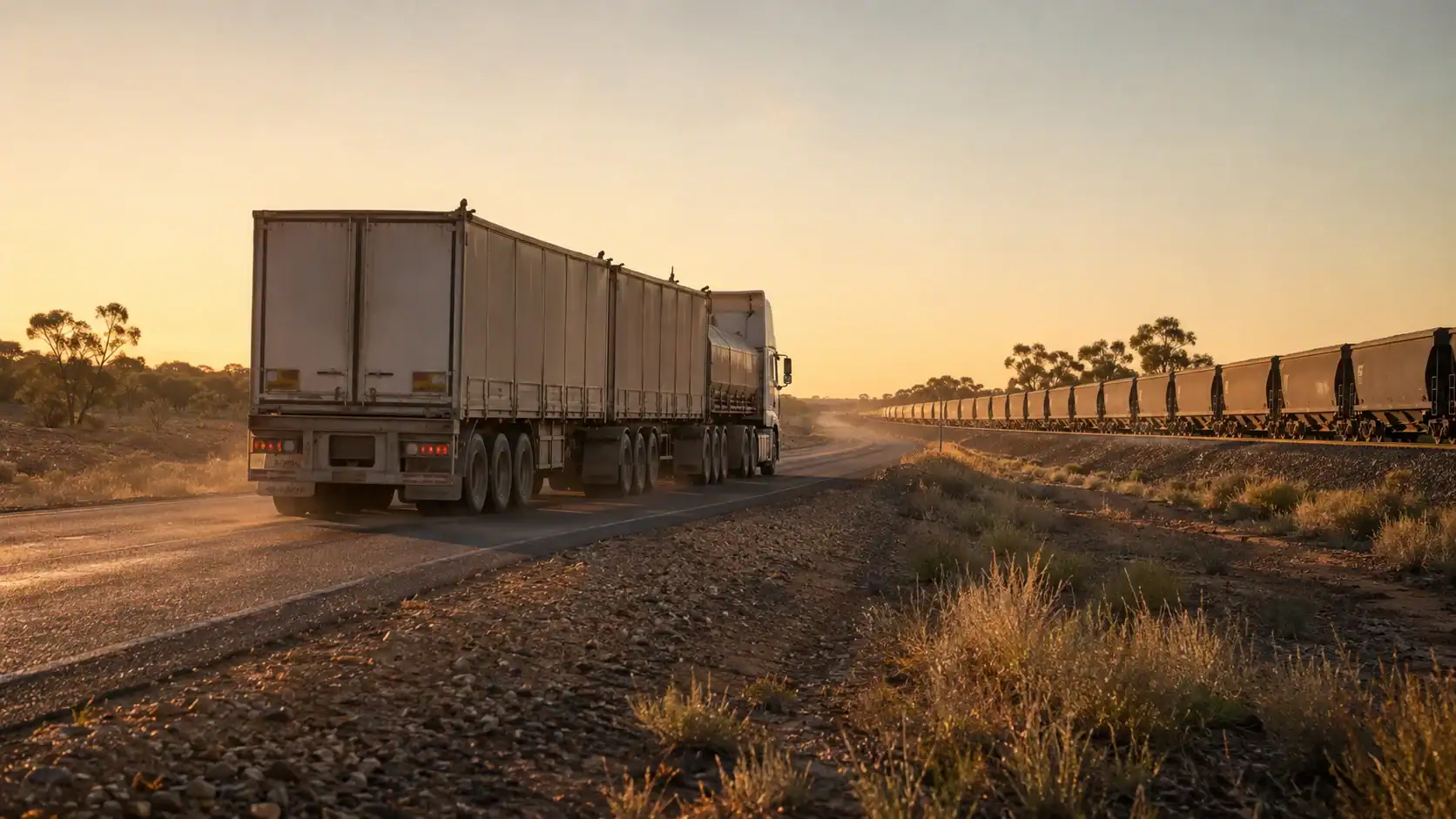
Road is roughly 1,700 kilometres door to door for the full Melbourne-Brisbane run. It is fast and flexible, often one to two days truck transit. It is priced accordingly, though, and it leans on driver availability and fatigue rules that tighten under peak demand. On the funded Melbourne-to-Parkes leg specifically, rail generally wins on cost per container over that line-haul distance, and it is less exposed to driver shortages. The trade is a drayage move and a terminal handoff at each end, plus a scheduled slot to fit into rather than a truck you can dispatch on demand. Miss the slot and the box sits at the terminal on someone else’s clock, which is where container detention and demurrage charges begin. Beyond Parkes toward Brisbane, that rail case does not yet exist and is not expected to for at least a decade, so the road-versus-existing-network trade still governs that stretch. Weighing the mode deliberately leg by leg is the same discipline you would apply to the air-versus-sea decision on the international leg: pick the mode the job needs, not the one out of habit.
So run the check before the container ships, every time. Where does the stock actually need to be, and by when? Does that lane run often enough that a rail slot is worth building the schedule around, or is it a one-off where road flexibility earns its premium? What does the whole inland move cost once you add line-haul, drayage and terminal handling together, rather than just the headline per-kilometre figure? And what happens to the plan if the slot slips or the driver market tightens? None of these are hard questions. They are just questions most importers skip because the inland leg feels like someone else’s problem. It is not. It is yours, and the delivery promise you make to your customer stands or falls on it.
The Number the Inland Rail Brochures Leave Out: You Still Need Two Trucks
One fact gets lost every time someone describes Inland Rail as replacing road freight: not one shipment moves door-to-door by rail. A container leaving a Melbourne warehouse for a Brisbane distribution centre needs a truck to the rail terminal, a train to the terminal at the other end, and a truck again to the final address. Rail replaces the middle, longest leg of the journey. It does not replace the two shortest, most expensive-per-kilometre legs on either end.
That matters for anyone doing the maths on whether the corridor is worth planning around once the funded Melbourne-to-Parkes section opens. The saving Inland Rail offers is real, but it is a saving on the long-haul middle distance, not on total door-to-door cost. Drayage at both ends stays what it already costs on a normal road job, because it is exactly the same job, just shorter. So when you weigh trucking the whole way against rail for the middle distance, measure it against the actual total, drayage included, not against the headline long-haul rate on its own.
Two numbers are worth writing on a whiteboard before you make this decision: how far is the actual origin from the nearest rail terminal, and how far is the actual destination from the terminal at the other end? If both legs are short (a few kilometres, an industrial precinct built near the line), the corridor’s saving mostly survives contact with reality. If either leg runs fifty or a hundred kilometres in the wrong direction, a fair share of the saving gets driven straight back out of the number before the container ever reaches a customer’s dock.
Frequently Asked Questions
Why does Inland Rail matter to importers?
Because many Australia-bound shipments only become commercially useful after a long inland movement, and Inland Rail is designed to strengthen that domestic freight spine.
Does Inland Rail replace port choice decisions?
No. It makes port choice more strategic because the inland path after discharge becomes easier to think about as part of one integrated route.
Who benefits most from Inland Rail logic?
Importers serving multi-state eastern Australian markets or moving goods between major east-coast corridors.
What is the biggest planning mistake Inland Rail helps expose?
Treating shipping timelines as if they end at the port rather than extending through the inland delivery system.