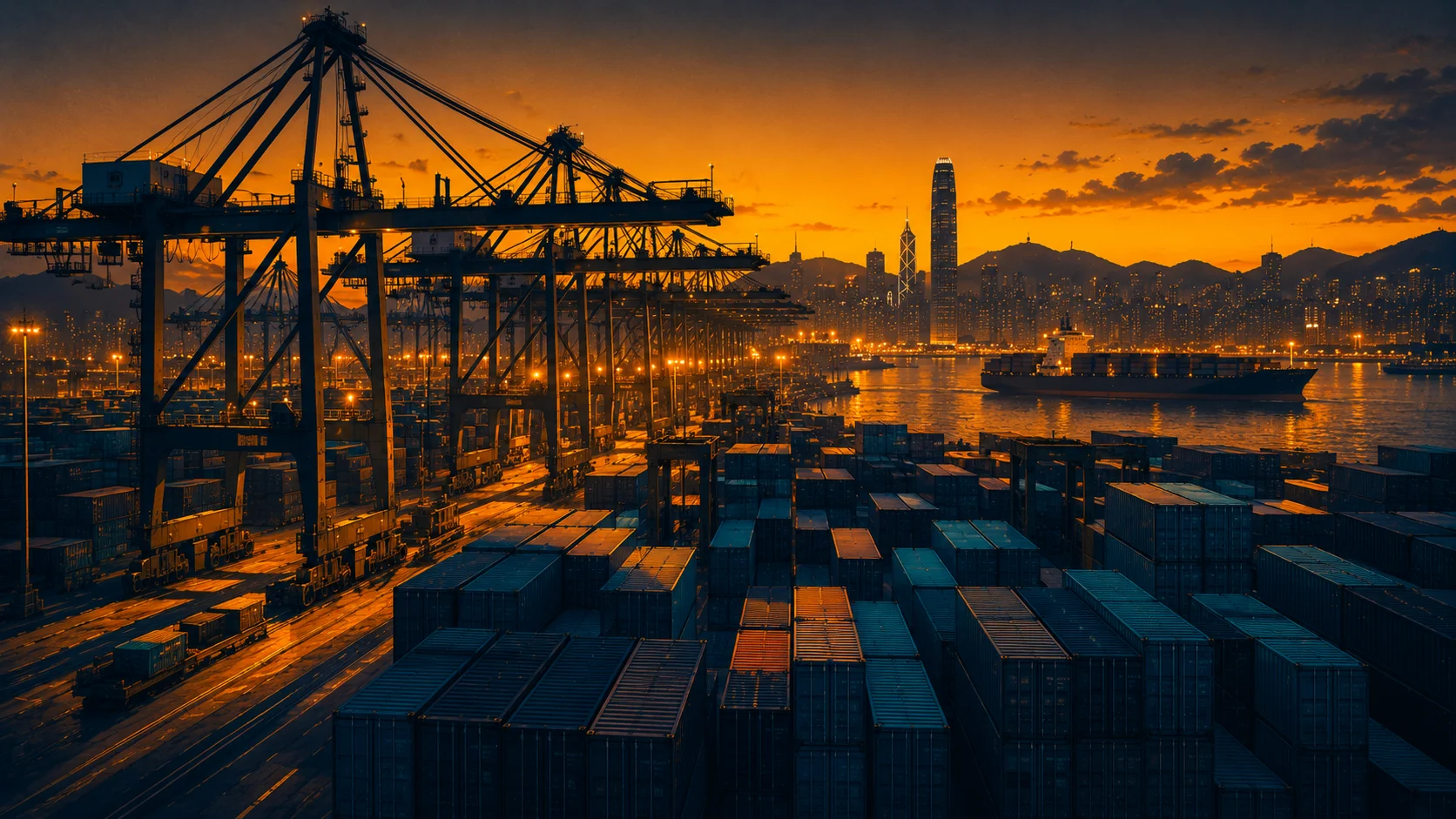
Hong Kong has a reasonable claim to being the most trade-friendly port in Asia. It is a free port, with no tariffs on goods entering or leaving. It has decades of accumulated logistics infrastructure, a legal system that Australian businesses understand, and supplier networks that bridge mainland Chinese manufacturing with international quality standards. For Australian importers, those things add up to a sourcing option that sits somewhere between dealing directly with mainland China and paying European prices.
Importing from Hong Kong to Australia runs on a set of rules that aren’t complicated but do need to be understood before you place your first order. The most important ones concern where your goods actually come from, what that means for Australian customs duty, and how to structure your documentation so that ABF can clear your shipment.
Hong Kong as a Free Port: What It Means for Importers
Hong Kong’s free port status means no import or export duties apply to goods moving through Hong Kong itself. This is not a special trade deal with Australia. It is Hong Kong’s baseline trade architecture, applied globally. That is one reason Hong Kong became a major re-export hub for mainland Chinese goods and goods destined for Asian markets.
For Australian importers, the practical implication is straightforward: the price you pay your Hong Kong supplier does not include Hong Kong import tariffs, because there are none. What determines your Australian customs duty is where the goods were originally manufactured.
Hong Kong’s Customs and Excise Department (C&ED) issues Certificates of Origin for goods that qualify as Hong Kong-origin under its substantial transformation rules. For goods manufactured in mainland China and re-exported through Hong Kong, C&ED issues a different document: the Certificate of Hong Kong Origin for Re-exports (Form HHKE). This is not a statement that the goods were made in Hong Kong. It is a declaration of the true origin of the re-exported goods.
Australian Border Force applies duty based on the declared country of origin of the goods. If your goods were manufactured in mainland China and re-exported through Hong Kong, they attract Australian duty rates applicable to China-origin goods. Hong Kong’s free port status does not change this. Any Australian business importing through Hong Kong needs to understand this distinction first.
Duty and GST: What You Actually Pay
Australia applies most-favoured-nation (MFN) tariff rates to goods from Hong Kong and mainland China unless a specific Free Trade Agreement rate applies. The relevant agreement for China-origin goods is ChAFTA (the China-Australia Free Trade Agreement), which has eliminated or reduced tariffs on most goods categories. Australia’s phase-in finished on 1 January 2019, when the last remaining tariffs on Chinese-origin goods fell to zero. Every Australian tariff line now attracts 0% duty on goods that qualify as Chinese origin under ChAFTA, so the constraint is no longer the rate. It is proving origin.
Hong Kong origin means substantially transformed in Hong Kong under C&ED’s rules. Goods that meet that test pay the general MFN rate unless you claim the Australia-Hong Kong Free Trade Agreement (A-HKFTA), in force since 17 January 2020, which gives preferential treatment to goods that satisfy its own rules of origin when you hold a Declaration of Origin at the time of import. For most manufactured goods, Australia’s MFN rate is 0% or 5%. For some product categories (garments, footwear, certain household goods), rates can be higher. The exact rate depends on the HS tariff classification of your goods.
GST applies to all goods imported into Australia where the customs value plus duty plus any other charges at the border exceeds the low-value threshold. Since 2018, that threshold has been AUD 0 for online retailers required to register. In practice, GST applies to all commercial imports regardless of value. For business-to-business imports, standard import GST is 10% on the taxable importation value (customs value + duty + transport + insurance). This is an input tax credit for registered businesses, so it affects cashflow but not your landed cost after reconciliation.
The landed cost of importing from Hong Kong has the same structure as it does from any other origin: supplier price, freight, insurance, duty, GST, port charges, customs brokerage, and delivery. See the article on total landed cost importing to Australia for the full breakdown of how to calculate what you are actually paying per unit.
Rules of Origin and the Re-Export Question
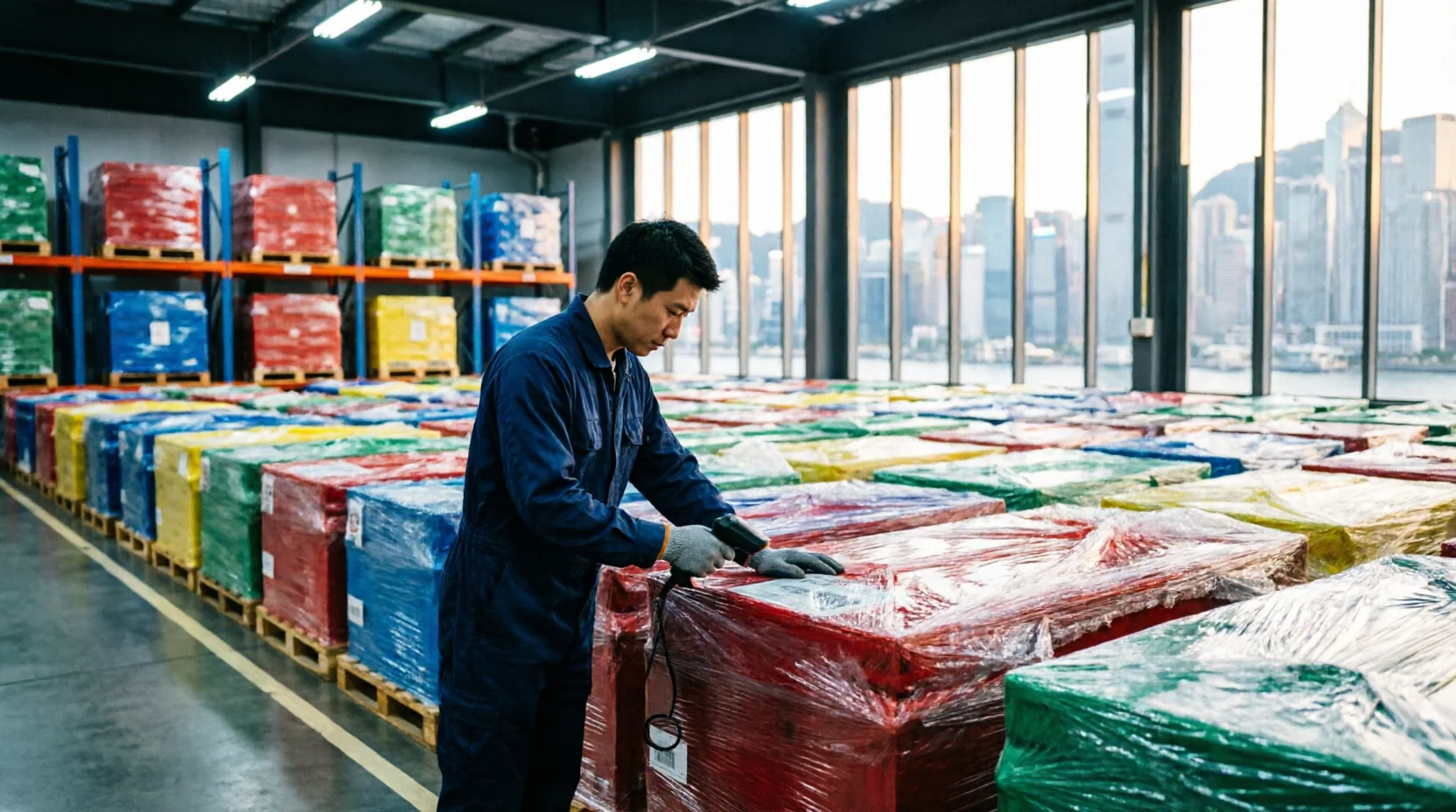
The rules of origin question sits at the centre of most Australian importers’ experience with Hong Kong suppliers. In practice, many goods sold by Hong Kong trading companies were manufactured in Guangdong, Fujian, or other mainland provinces. The Hong Kong intermediary holds inventory, manages quality control, or provides a more internationally accessible buying interface.
This is not unusual and it is not problematic. What matters is that your customs declaration accurately reflects where the goods were manufactured. If your Hong Kong supplier provides you with a commercial invoice showing “Hong Kong” as the country of origin on goods that were made in Shenzhen, that is a misdeclaration to ABF. Misdeclaration of origin is a customs compliance issue with meaningful penalties under the Customs Act 1901.
Consider how this plays out in sequence. The goods leave a factory in Foshan. A Hong Kong trading company holds them, invoices them, and writes “Hong Kong” in the origin field. The importer, who never saw the plant, lodges the entry as it reads. Months later a post-transaction audit works backward from the supplier’s own shipping records to the mainland factory, and ABF assesses the duty shortfall plus a penalty. The importer did not manufacture the goods and did not write the invoice. Under the Customs Act 1901 none of that moves the liability. The declarant answers for the declaration.
The correct approach is to ask your Hong Kong supplier where the goods are manufactured. If they were manufactured in mainland China, declare Chinese origin on your import entry and apply ChAFTA rates if eligible. If they were manufactured in Hong Kong, verify with C&ED documentation and declare Hong Kong origin. Your licensed customs broker will handle the declaration, but the documentary basis for that declaration comes from your supplier.
One case deserves attention: goods further processed in Hong Kong after manufacture in mainland China. Labelling, repackaging, and simple assembly do not normally constitute substantial transformation under C&ED’s rules. Substantial transformation requires a meaningful change in the character or use of the goods. If you are unsure whether goods your supplier claims are “Hong Kong-made” actually qualify, ask for the C&ED Certificate of Origin and check the manufacturing operations described against ABF’s country of origin guidance as well.
RCEP (the Regional Comprehensive Economic Partnership, effective January 2022) does not include Hong Kong, which is not a signatory. China-origin goods can claim RCEP preferences under specific rules of origin criteria, but Australian importers claim under ChAFTA, not RCEP.
Australian Compliance Requirements for Hong Kong Goods
A misdeclared origin is your liability, not your supplier’s.
If you want indicative guidance on your Hong Kong sourcing before committing to volume, our corporate team can talk it through.
The compliance burden depends on the product category, not the origin. Goods that require product registration, testing, labelling compliance, or regulatory approval in Australia need to meet those requirements whether they come from Hong Kong, Germany, or the United States.
The key regulatory authorities that apply to common Hong Kong import categories:
- DAFF / ABF biosecurity: Any goods with biosecurity risk require clearance under the Biosecurity Act 2015, including timber, packaging, certain natural materials, and food ingredients. The BICON database defines conditions for each category. Hong Kong’s free port status does not exempt goods from biosecurity requirements; what matters is the goods’ composition and whether they carry biosecurity risk. Review the biosecurity requirements for importing into Australia for the full framework.
- ACCC product safety: Consumer goods sold in Australia must comply with mandatory safety standards under the Australian Consumer Law. For electronics, electrical goods, and children’s products, this typically means complying with Australian standards (e.g., AS/NZS for electrical safety) and carrying RCM marking. Hong Kong suppliers familiar with export markets often hold IEC or CE certifications, but these are not automatic equivalents of Australian requirements. Verify compliance documentation against ACCC product safety standards before placing a volume order.
- TGA: Therapeutic goods (medicines, medical devices, supplements) require TGA registration or listing regardless of origin. If your product touches health claims or is classified as a therapeutic good, confirm the regulatory pathway before importing.
- ACMA: Telecommunications and radiocommunications equipment requires ACMA compliance marking (the Regulatory Compliance Mark, or RCM). Many Hong Kong electronics exporters supply FCC or CE-compliant goods, but these do not cover Australian frequency allocations or electromagnetic compatibility standards. Check before importing.
Document this compliance before you commit to a supplier. A Hong Kong trading company with Australian market experience will typically keep this documentation on hand. If a potential supplier cannot provide compliance certificates or testing reports on request, factor that into your supplier assessment.
Supplier Due Diligence in Hong Kong
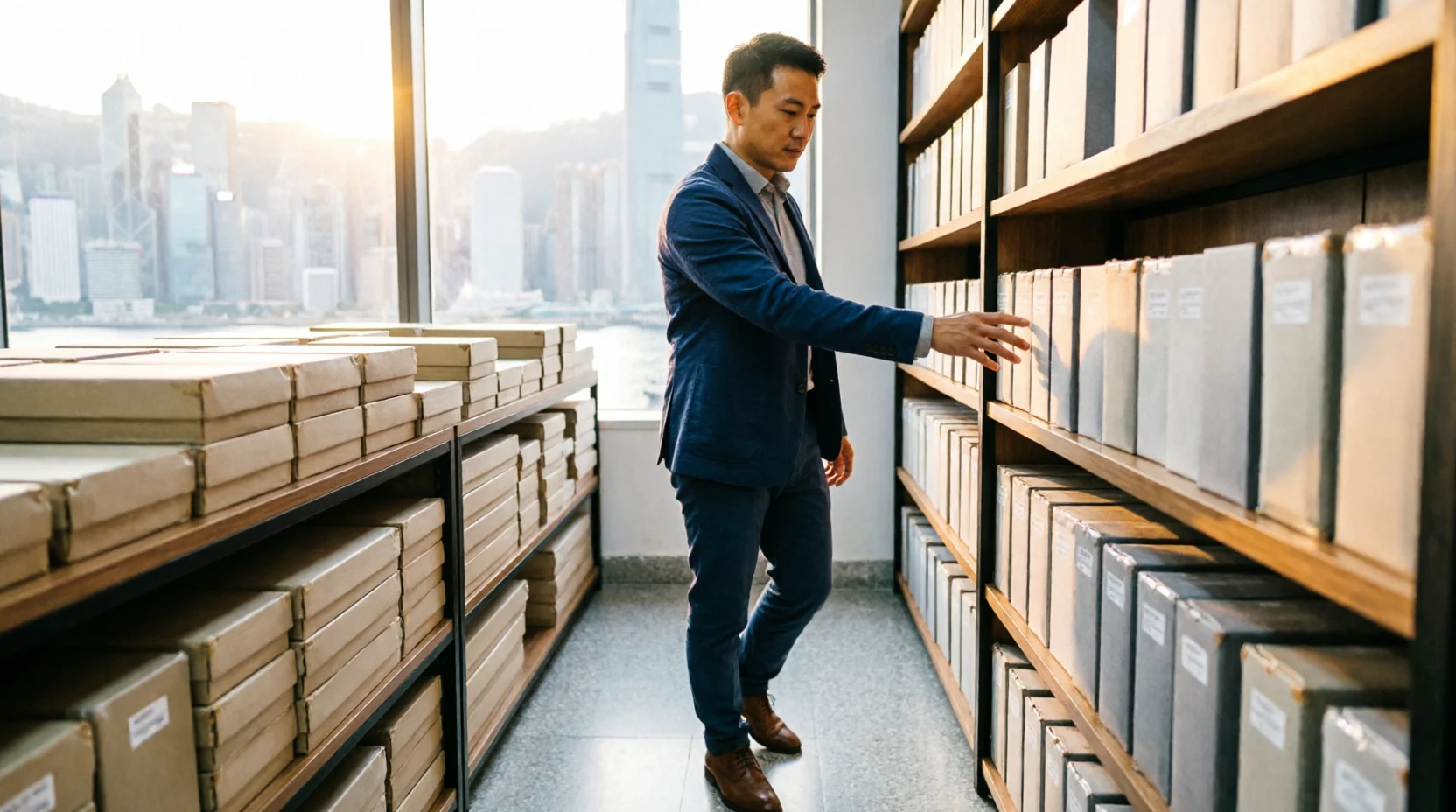
Hong Kong’s trading company structure is different from mainland Chinese manufacturing. You are more likely to encounter an intermediary than a direct manufacturer. The intermediary places orders with mainland factories, manages quality inspection, and handles export logistics. This is not inherently a problem. Many of the most reliable Australian import relationships run through Hong Kong trading companies that have operated for decades.
The due diligence process, however, needs to account for the intermediary layer. Four things matter.
Business registration. Verify your supplier is a registered company with Hong Kong’s Companies Registry. You can search the register at the Companies Registry. A legitimate trading company should have a verifiable registration number. If a company you found through a trade portal or Alibaba does not appear in the registry under any close variation of their name, investigate further before proceeding.
Factory verification. If your supplier is a trading company, ask for the name and location of the factory or factories where your goods are manufactured. A trading company that refuses to disclose its manufacturing sources is not necessarily unreliable, but the refusal does mean you cannot verify the factory directly. Consider whether that is acceptable for your order volume and risk profile. For larger orders, a third-party quality inspection at the factory before shipment is standard practice and inexpensive compared to the cost of a rejected container.
Sample orders. The oldest advice in international sourcing remains correct: order samples before placing a commercial order. Hong Kong trading companies generally supply samples readily. The sample should match the product specifications you have agreed in writing, including materials, dimensions, labelling, and compliance documentation. Discrepancies between the sample and the commercial shipment are a common source of disputes in first-time import relationships. The article on red flags when working with overseas suppliers covers the specific patterns that predict problems downstream.
Payment terms and escrow. Standard Hong Kong trading company payment terms are typically 30% deposit on order confirmation and 70% against shipping documents. Letter of credit terms are available for larger orders. Avoid 100% advance payment on first orders with a new supplier. If a supplier is insisting on 100% payment upfront for a significant order from a new buyer, treat that as a risk signal regardless of how professional their website looks.
The perception that Hong Kong suppliers carry lower risk than mainland Chinese suppliers is partly accurate. Hong Kong’s legal system and regulatory environment do create a different accountability framework. That framework is not a substitute for standard due diligence. Reputation, documentation, and sample verification apply regardless of where the company is registered.
It also helps to see where a Hong Kong trading company’s bargaining power comes from, because it shapes every negotiation you have with one. The trader usually does not own the factory. Its advantage is information: it knows which Guangdong plant makes your product and at what cost, and you do not. That position holds only for as long as the factory stays anonymous. Once you know the plant, a competing trader or a direct factory quote becomes a credible alternative, and the margin the intermediary can defend narrows. So ask for the factory name on the first order, when the trader wants your business most, rather than the fifth, when switching would mean re-qualifying a supplier from scratch. If the trader still wins your repeat orders after naming the plant, it is earning them on quality control and service, which is exactly what you want to be paying for.
Freight Options and Practical Timelines
Sea and air freight both run regularly between Hong Kong and Australia. The practical considerations for commercial shipments follow.
Sea freight (LCL and FCL): Transit times from Hong Kong to Sydney, Melbourne, or Brisbane typically run 14 to 20 days for regular services via Singapore. Direct services on some lanes can be faster; transhipment routings add days. The most common ports in Australia for Hong Kong commercial imports are Port Botany (Sydney), Appleton Dock / Webb Dock (Melbourne), and Fisherman Islands (Brisbane). For a full comparison of mode, timeline, and cost structure, the article on shipping from Hong Kong to Australia covers the route in detail.
Air freight: Hong Kong International Airport is one of the world’s highest-volume air cargo hubs. Transit to Sydney or Melbourne is typically 2 to 5 days, including customs clearance. Air freight is viable for high-value goods, time-sensitive shipments, or small initial orders where sea freight minimum charges are disproportionate.
Peak seasons: Hong Kong’s peak shipping periods mirror the broader East Asian export calendar. Demand surges before Golden Week (late September/early October) and again before Chinese New Year (January/February). If your goods need to arrive in Australia before the Australian summer retail peak, book freight out of Hong Kong by late September. Booking later risks tighter capacity and higher rates.
Incoterms: Most Hong Kong suppliers default to FOB (Free on Board at Hong Kong port) or EXW (Ex Works at factory). For an Australian importer managing the freight relationship directly, FOB is usually the cleaner arrangement. The supplier’s liability ends when the goods are loaded on the vessel, and your freight forwarder takes responsibility from that point. Understand your Incoterms obligations before signing a purchase order. See Incoterms for Australian importers for a plain-language breakdown.
Documentation for Australian Customs Clearance
ABF requires the following documents for commercial imports from Hong Kong:
- Commercial invoice: issued by your Hong Kong supplier. It must show the buyer name, seller name, description of goods, HS code (if the supplier knows it), quantity, unit price, total value in the currency of trade, and the declared country of origin. ABF uses the commercial invoice value as the basis for customs valuation.
- Packing list: itemises the contents of each carton, box, or pallet. It is required for multi-sku shipments and for any consignment going through DAFF biosecurity inspection.
- Bill of Lading (sea) or Air Waybill (air): the contract of carriage issued by the shipping line or airline. The consignee on the B/L should be you or your licensed customs broker. Verify this before the goods depart Hong Kong. Errors on the B/L can cause delays at destination.
- Certificate or Declaration of Origin: required when you claim a preferential rate, and you must hold it when the goods are imported. Under ChAFTA that means a ChAFTA Certificate of Origin issued by an authorised body, or a Declaration of Origin where an advance ruling covers the goods; under A-HKFTA it means a Declaration of Origin completed by the exporter, producer or importer. Neither is needed when the total customs value of the originating goods is AUD 1,000 or less, and goods entered at the general MFN rate need no preference document. Your broker will advise based on the specific goods and tariff line.
- Compliance documentation: whatever applies to your product category, such as product safety test reports, RCM compliance records, ACCC compliance statements, and TGA documentation. These are not submitted to ABF at import entry but must be available on request, and ABF does conduct post-clearance audits.
Your licensed customs broker lodges the import entry with ABF. Standard processing time for a compliant commercial consignment from Hong Kong is 1 to 4 business days. Consignments selected for biosecurity inspection add 1 to 3 days. See the article on customs clearance time in Australia for a realistic timeline breakdown by scenario.
Working with a Freight Partner for HK Imports
🇭🇰 Hong Kong → 🇦🇺 Australia
One partner keeps your Hong Kong paperwork in sync with Australia.
Most SMEs receive a detailed, all-inclusive quote within 24 hours, no hidden fees, covering freight, customs and compliance documentation.
For most Australian businesses importing from Hong Kong, one freight partner managing the whole chain produces fewer errors than managing each leg separately. That chain runs from origin coordination through ocean or air freight booking, destination customs brokerage, and final delivery.
The practical reason is that the documentation stays consistent. When the entity coordinating origin pickup in Hong Kong also knows your customs broker’s requirements in Sydney, the B/L and the import entry are less likely to disagree. Documentation errors between the Hong Kong and Australian legs are one of the more predictable sources of clearance delays.
Swift Cargo coordinates freight from Hong Kong to Australian ports and handles customs brokerage in house. Before you commit to a supplier relationship, work out the landed economics: whether the duty, freight, and compliance costs make the product commercially viable at your target retail price. That is a conversation worth having. Enquire at swiftcargo.solutions/hongkong.
Frequently Asked Questions
Do I pay lower duty on goods from Hong Kong than from mainland China?
Not automatically. Australian duty is charged based on where goods were manufactured, not where they were shipped from. Goods made in mainland China and re-exported through Hong Kong are assessed at China-origin duty rates. Under ChAFTA, most China-origin goods attract 0% duty. Your broker will confirm the applicable rate for your specific HS code.
Does my Hong Kong supplier need to provide a Certificate of Origin?
It depends on the goods and the rate you are claiming. For ChAFTA preferential rates on China-origin goods, you need a ChAFTA Certificate of Origin issued by an authorised body, or a Declaration of Origin where an advance ruling covers the goods. For Hong Kong-manufactured goods, a preferential rate under the Australia-Hong Kong Free Trade Agreement needs a Declaration of Origin from the exporter, producer or importer, held when the goods are imported; goods entered at the general MFN rate need none. No origin document is required when the total customs value of the originating goods is AUD 1,000 or less. Your customs broker will advise based on the specific tariff classification.
Can I import goods from mainland China through a Hong Kong trading company without declaring Chinese origin?
No. Misdeclaration of country of origin is a customs offence under the Customs Act 1901. The declared origin must reflect where goods were manufactured, regardless of your commercial sourcing arrangement. If a supplier suggests declaring a different origin to reduce duty, that is a compliance risk you should not accept.
What is the minimum order worth doing by sea freight from Hong Kong?
LCL is available for any size, but fixed charges make shipments below 1-2 CBM expensive per unit. Compare air freight for very small shipments. Above 5 CBM, sea LCL is almost always more economical. FCL becomes worth evaluating at 15 CBM or more.
How long does it take to import from Hong Kong to Australia by sea?
Port-to-port transit is typically 14-18 days to Sydney and 16-20 days to Melbourne. Add 2-5 business days for customs clearance and delivery. Total door-to-door runs 21 to 30 days for a well-managed shipment.
Do biosecurity rules apply differently to Hong Kong goods than to Chinese goods?
No. DAFF assesses biosecurity risk based on the goods themselves, not the port of shipment. What matters is the materials, the packaging, and the country of manufacture. A product manufactured in mainland China and shipped via Hong Kong carries the same biosecurity conditions as a product shipped directly from China.