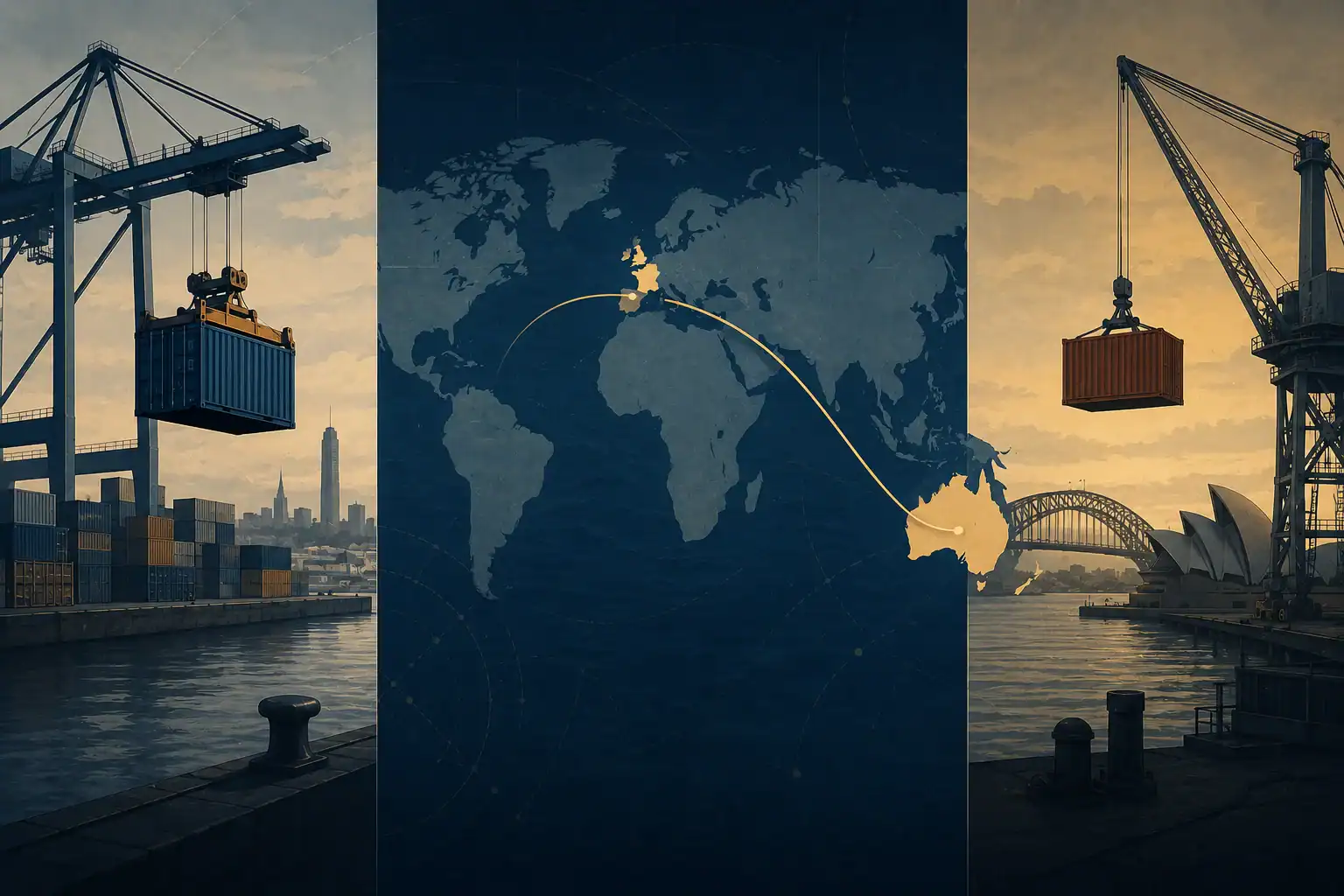
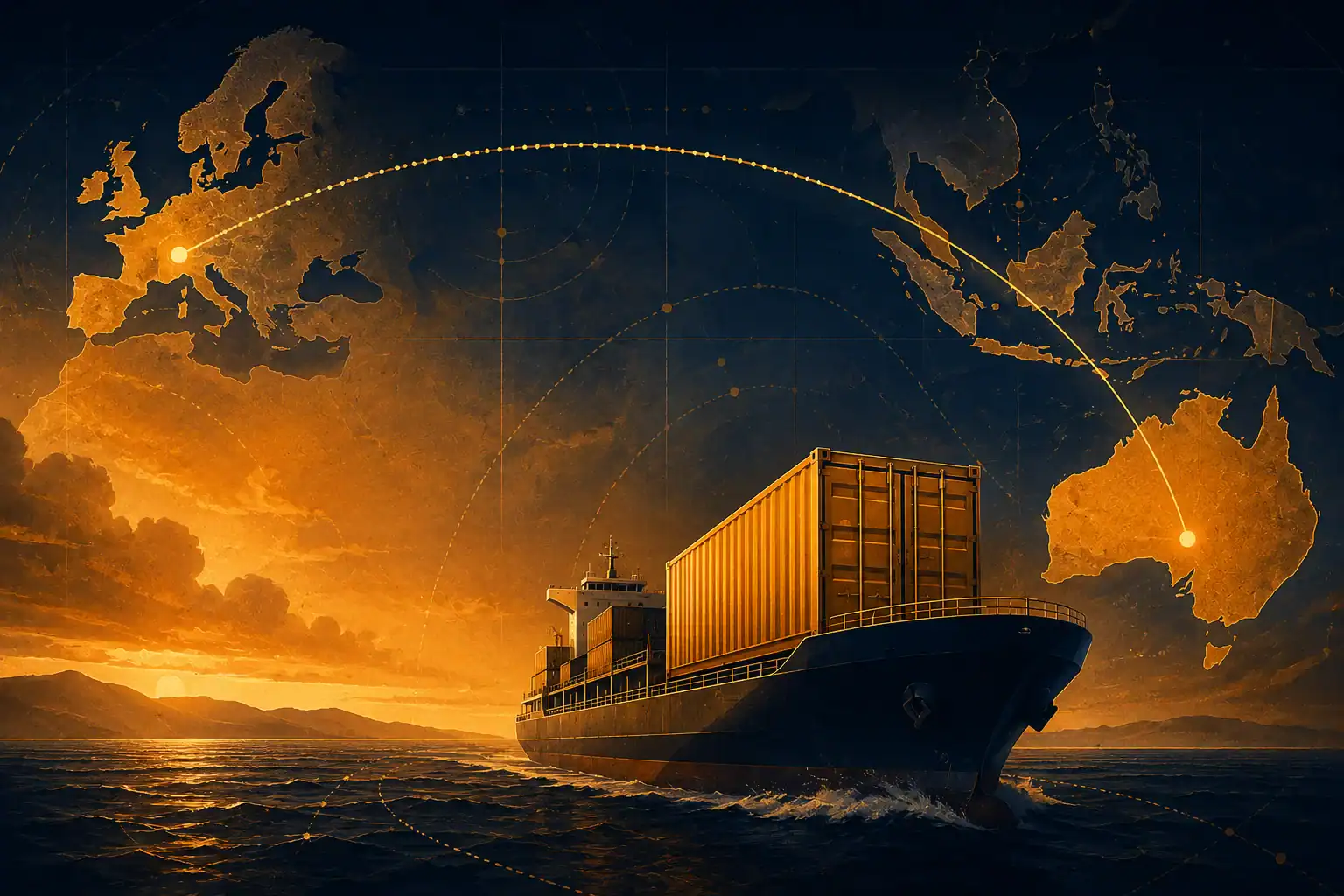
Moving from France to Australia means crossing roughly 17,000 kilometres of sea. The physical distance is one constraint. The other is time: a container of household goods takes five to seven weeks to arrive, which means your planning calendar, your lease start date, and your customs paperwork all need to work in alignment.
The Basic Decision: What to Ship, What to Sell, What to Leave
The first useful exercise before booking a container is sorting your belongings into three groups: what comes with you, what you sell or give away in France, and what you replace in Australia. This is not a sentimental exercise: it is a cost calculation.
Shipping costs for household goods from France to Australia are real money. For the sea freight component alone, a 20-foot container runs AUD 3,800 to AUD 6,500. Add origin charges, destination fees, customs broker fees, and delivery in Australia and a full door-to-door move is typically AUD 7,000 to AUD 12,000 for a container-sized household. For a detailed breakdown of freight costs on this route, see the companion guide on shipping from France to Australia: costs, time and customs.
The comparison that matters is cost to ship versus cost to replace. Flat-pack furniture, basic kitchen equipment, and inexpensive electronics are almost always cheaper to replace in Australia than to ship from France. High-quality furniture, family heirlooms, art, books, custom or made-to-order items, and anything with sentimental value are better candidates for the container.
Australian retail prices for major furniture, appliances, and electronics are broadly comparable to Europe, and the range of quality goods available in Australian cities is wide. The calculation changes for antique or artisan furniture, bespoke items, or goods that have specific personal value.
Sea Freight Options for Household Moves
Full Container Load (FCL)
A 20-foot container holds roughly 25 to 28 CBM of household goods when professionally packed: approximately the contents of a three-bedroom apartment. A 40-foot container holds 55 to 60 CBM, suitable for a large house.
FCL gives you exclusive use of the container: no waiting for others’ cargo, no consolidation delays. Once the container is sealed and on its way, it moves as a single unit from origin to destination. This is the faster and usually more cost-effective option if your volume fills most of a 20-foot box.
Less Than Container Load (LCL)
LCL places your belongings alongside other shippers’ cargo in a shared container. It is the right choice when your volume is 10 to 18 CBM: enough that air freight is prohibitively expensive, but not enough to justify a full container. LCL costs are quoted per cubic metre, typically AUD 280 to AUD 420 per CBM from France to Australia including basic handling.
The trade-off with LCL is time. Your cargo is consolidated with others at an origin depot before sailing, and de-consolidated at an Australian depot on arrival. This adds 7 to 14 days to door-to-door time compared with FCL on the same route. LCL also requires slightly more careful packing (goods are handled more times) and the biosecurity inspection burden falls on each shipper’s portion separately.
For guidance on how to calculate your shipment’s cubic volume accurately, the CBM guide for moving shipments explains the measurement process.
Air Freight
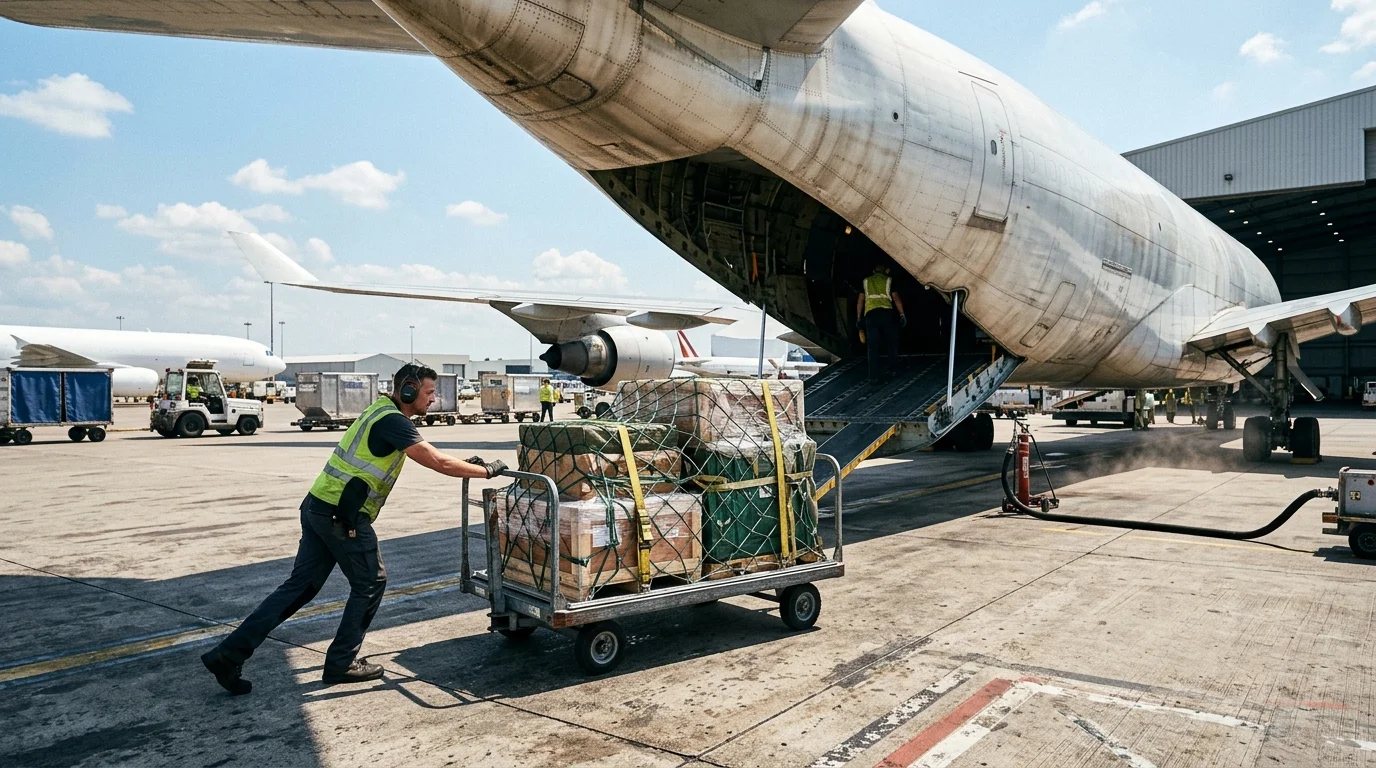
Air freight for household goods is rarely economical on a route this long. The rate is AUD 8 to AUD 18 per kilogram, which means a 500 kg shipment (not much for a household) costs AUD 4,000 to AUD 9,000 in freight alone, and that does not include the Australian destination charges and customs clearance.
Air freight makes sense for a small box of irreplaceable items you need immediately (documents, medicines, essential electronics) while the main container follows by sea. A mixed strategy (air freight for essentials, sea freight for the bulk of belongings) is common for families with a hard arrival date.
What the Moving Process Looks Like, Step by Step
Understanding the sequence takes most of the anxiety out of an international move. The process is well-established; it follows the same steps each time. What varies is how well each step is prepared.
Step 1: Volume Survey and Quote
Your freight forwarder arranges an in-home survey (either in person or, increasingly, via video call) to estimate the cubic volume of your goods. This determines whether you need FCL or LCL, gives the forwarder enough information to price the move accurately, and helps you understand what will and will not fit.
The volume survey answers a logistics question. It does not answer the harder question sitting underneath it, which is a strategic one: what specifically are you choosing to ship, and what are you choosing to leave behind or replace. Deciding to “ship everything that fits” is not a strategy; it is an absence of one, in the same way “be a leader in the market” is not a strategy for a business. A real choice here names what does not make the cut: the furniture that costs more to ship than to replace, the appliances that will not run on Australian voltage without a transformer, the boxes of things kept out of habit rather than use. Make that choice before the survey, not during it, and the survey becomes a pricing exercise instead of a decision made under time pressure with a surveyor standing in your kitchen.
Step 2: Packing
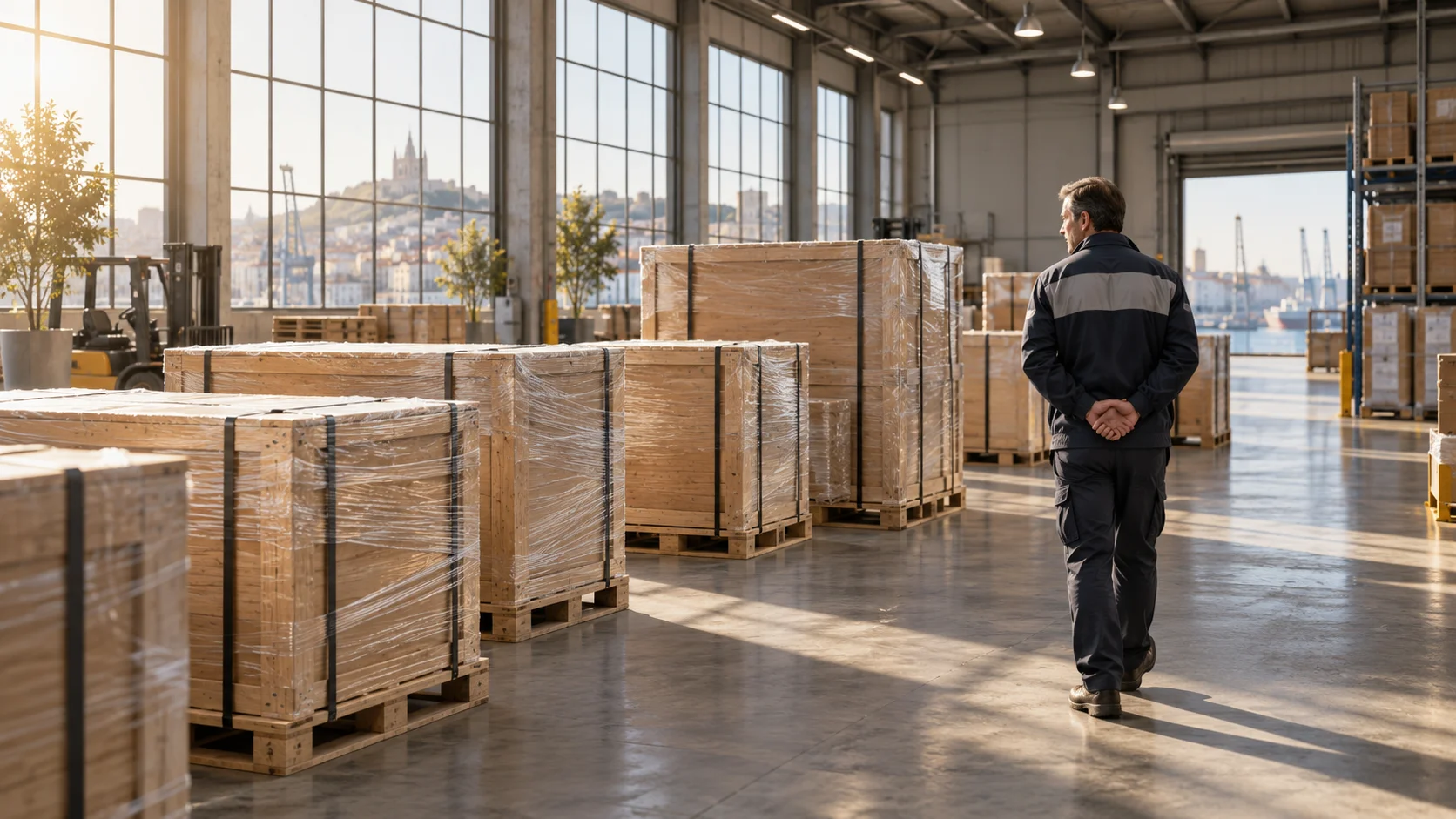
Professional packing by the removals team is strongly recommended for an international move. Goods packed by the shipper (also called “owner-packed”) are typically excluded from transit insurance claims and are flagged for more scrutiny at biosecurity inspection because the contents are not professionally inventoried. Professional packing also means a detailed packing list is produced at the time of packing: this list becomes an essential customs document.
All items must be clean and dry before packing. This is a biosecurity requirement. Used items with soil, organic material, or biological residue attached will be held by Australian biosecurity on arrival. The items most commonly flagged are garden tools and equipment, outdoor furniture, sporting goods (particularly camping gear and hiking boots), and musical instruments that have been played in outdoor settings.
Step 3: Export from France
Goods with a commercial value over EUR 1,000 leaving the EU require an export customs declaration to French customs (Douanes). Your freight forwarder handles this. For personal effects, the documentation requirement is lower. Your forwarder will advise based on the specific goods and the context of your move.
There is no export duty on personal belongings leaving France. The paperwork is administrative, not a financial burden. But it must be done correctly: errors in the export declaration can create complications at the Australian end when customs cross-references origin documentation.
Step 4: Sea Freight
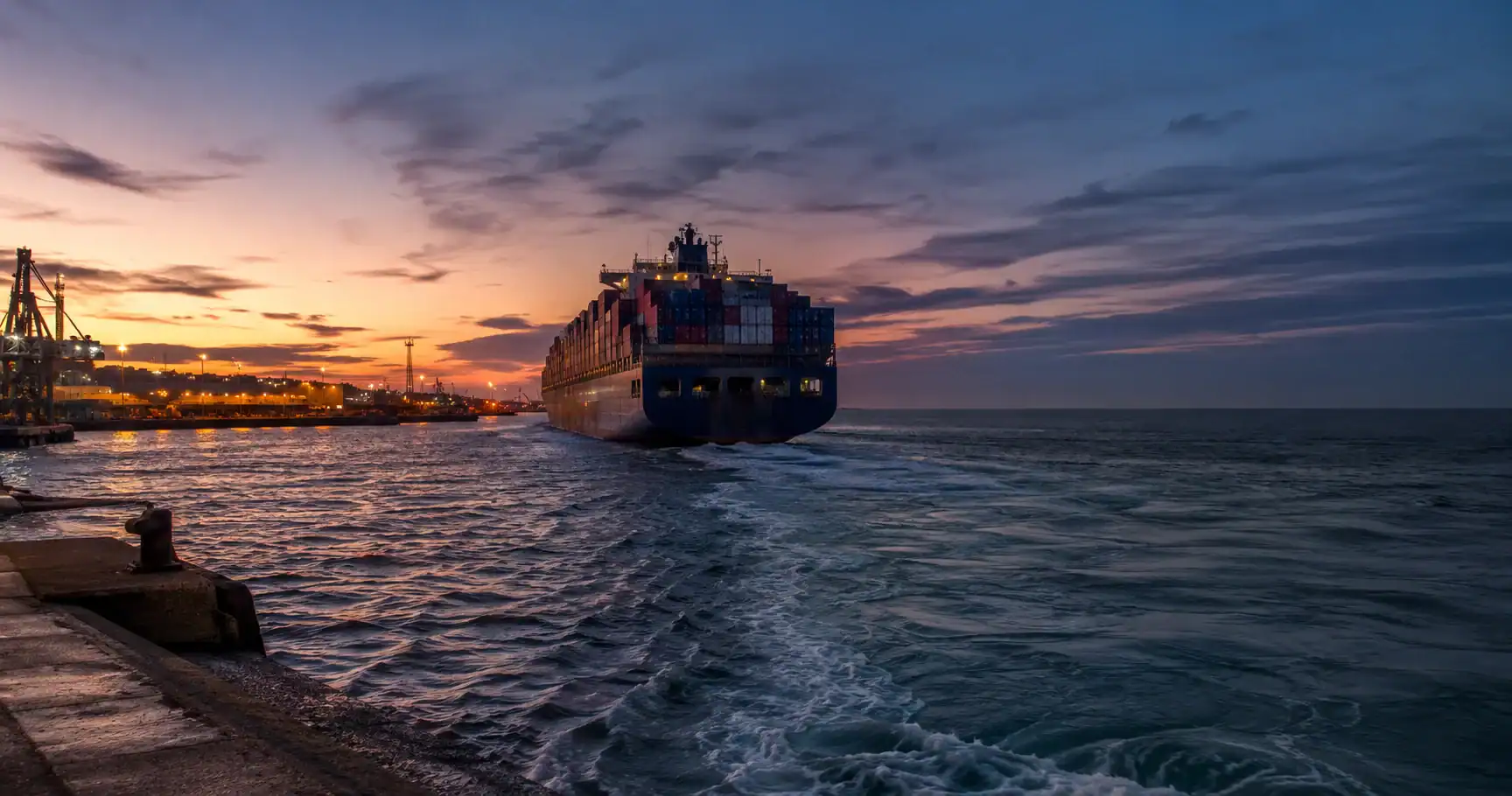
From the time your container is loaded at the French port to arrival at an Australian port, the sea transit is approximately 30 to 45 days. The main departure ports are Le Havre (northern France) and Marseille. Services run to Sydney (Port Botany), Melbourne (Swanson Dock), Brisbane (Fisherman Islands), and Fremantle.
Your forwarder will book a sailing and issue a bill of lading: the document that proves ownership of the goods during transit and serves as the key customs document at the Australian end. Keep a copy.
Step 5: Australian Customs and the UPE Concession
Before your container arrives in Australia, your customs broker (usually the same company as your freight forwarder, or a partner they engage) lodges an import declaration with the Australian Border Force (ABF).
For relocating individuals and families, the key customs benefit is the Unaccompanied Personal Effects (UPE) concession. Under this concession, Australian residents (or incoming permanent residents) can import used household goods and personal effects duty-free and GST-free if the goods:
- Have been owned and used abroad for at least 12 months before arrival in Australia
- Are not being imported for commercial purposes or resale
- Are accompanied by a statutory declaration from the owner
The concession does not apply to:
- Goods purchased new in France and shipped to Australia
- Alcohol (wine, spirits, beer): these attract import duty and excise-equivalent charges regardless
- Tobacco products
- Commercial or business goods
For most families moving from France with a container of used furniture, kitchenware, books, clothing, and personal items, the UPE concession applies to the bulk of their shipment. The savings on a AUD 50,000 to AUD 100,000 household contents shipment (duty at 5% plus 10% GST) are substantial. Claiming it correctly requires accurate documentation, which is why working with a licensed customs broker is essential. For a full explanation of eligibility, the 12-month ownership test, and what the statutory declaration must cover, the Unaccompanied Personal Effects concession guide for Australia covers all the requirements in detail.
Step 6: Biosecurity Clearance
Every shipment arriving in Australia goes through biosecurity assessment by the Department of Agriculture, Fisheries and Forestry (DAFF). For household goods, this typically involves documentary assessment and may include a physical inspection of the container.
Australia’s biosecurity system is one of the world’s strictest regimes, and it applies uniformly to goods from France as it does to goods from anywhere else. The reason is straightforward: Australia is an island continent with ecosystems that evolved in isolation. Pests and pathogens that are benign in Europe can be severely damaging in the Australian agricultural or natural environment. The system exists because earlier incidents (the introduction of species through cargo and passenger movements) caused damage that is still being managed decades later.
For a detailed understanding of what biosecurity inspectors look for and how the risk classification system works, the guide to Australia’s biosecurity rules covers both the history and the practical implications for incoming shipments.
For incoming household moves, the items that routinely attract biosecurity attention include:
- Garden equipment: spades, trowels, garden gloves, pots with soil residue: any soil must be removed before packing
- Outdoor furniture: timber furniture, garden chairs, pergola sections: check for insect activity and clean thoroughly
- Sporting goods: hiking boots, camping gear, kayaks, bicycles with mudguards: clean all surfaces; remove mud and organic material
- Wooden items: antique timber furniture, wooden artworks, decorative timber objects: declare in the packing list; may require ISPM 15 treatment depending on origin
- Food items: do not pack food in the shipping container unless it is commercially packaged, sealed, and declared in full on the packing list
If a biosecurity inspection finds a problem, the importer is responsible for treatment costs (fumigation, steam cleaning) or for the cost of re-exporting or destroying the affected items. These costs are real. A contaminated garden section of a household container can add AUD 500 to AUD 2,000 to the cost of a move. Prevention (thorough cleaning before packing) is the only reliable control.
For the full requirements applying to personal effects and household goods arriving in Australia, the biosecurity requirements guide for importing to Australia provides the complete breakdown.
Step 7: Delivery to Your Australian Address
Once customs and biosecurity clearance is complete, your container or LCL consignment moves from the port to your delivery address. For a 20-foot container to a major city address, delivery typically takes 1 to 3 days from port release. Regional addresses and addresses requiring specialised crane unloading or shuttle trucks add time and cost.
Documents You Will Need
The customs broker needs:
- Packing list: detailed itemised list of every item in the shipment, with descriptions, quantities, approximate values, and whether each item is new or used
- Bill of lading: issued by the carrier; your proof of the shipment
- Passport and visa documentation: proof of your entitlement to enter Australia as a resident or incoming permanent resident
- Statutory declaration: for the UPE concession, a signed declaration that the goods have been owned and used abroad for the required period
- Evidence of prior ownership: purchase receipts, insurance documents, or photos showing goods in your French home, particularly for high-value items
Missing or inaccurate documents are the most common cause of delays at the Australian border. A mismatch between the packing list and the actual container contents is the most common trigger for examination. Customs delays for Australian imports explains how holds work and the charges that accumulate while goods are held in a port terminal.
Special Categories: What Needs Extra Planning
Wine and Alcohol
Wine from France is one of the most common items people want to bring when moving to Australia. The practical reality is that importing wine personally is expensive. Import duty and excise-equivalent charges on wine are material: a bottle of wine valued at EUR 20 attracts approximately AUD 3 to AUD 5 in excise charges plus the import duty rate, and then 10% GST on the total. For a case of twelve bottles, the cost of compliance often exceeds the landed value of the wine.
Personal wine imports are permitted (there is no prohibition), but the paperwork, duty, and logistics cost make it economical only for significant collections or very high-value wines. Your customs broker can calculate the specific duty and excise costs for your wine before you decide whether to ship it or sell it in France.
Antiques and Art
Antiques more than 100 years old attract a zero or reduced duty rate in many categories under the Australian tariff. Original artworks by living or deceased artists are zero-rated for duty. However, the customs value must be declared accurately, and for high-value pieces, a professional valuation from a recognised appraiser is worth having before shipment. The documentation should include provenance records, certificates of authenticity for significant pieces, and condition photographs taken before packing.
Vehicles
Shipping a personal vehicle from France to Australia is possible but involves significant compliance. French cars are left-hand drive; Australia is a right-hand drive country. Vehicles imported for personal use can be used in Australia as left-hand drive under certain circumstances, but registration conditions vary by state. The vehicle must also pass biosecurity: it must be clean of soil, plant material, and biological residue, typically requiring professional steam cleaning before loading in France. Import duty and GST apply to the vehicle’s customs value. Many people find that the combined cost of shipping, compliance, and potential conversion makes it more economical to sell the vehicle in France and purchase in Australia.
Pets
Pets (dogs, cats, and some other species) can be imported to Australia from France, but the process is document-intensive and time-sensitive. Australia maintains a strict biosecurity protocol for live animals involving veterinary certificates, rabies vaccination documentation, microchipping, blood titre tests, and an approved residency period in an approved country (France qualifies). The DAFF cats and dogs import page is the definitive source. Processing takes months, not weeks. If you are bringing pets, start the process at least six months before your planned move date.
Medications and Supplements
Prescription medications for personal use can generally be imported in reasonable personal quantities with supporting documentation (prescription, doctor’s letter). Bring originals and copies. Some medications that are available in France require a permit in Australia (controlled substances, certain anxiolytics). Check the TGA’s (Therapeutic Goods Administration) import conditions for your specific medications before packing them.
Insurance for Your Move
Cargo insurance covers the goods during transit. Standard carrier liability under the bill of lading is limited: typically SDR 2 per kilogram under the Hague-Visby Rules, which is far below the replacement value of household furniture and electronics. A comprehensive marine cargo policy provides all-risk, replacement-value coverage for the duration of transit.
Insurance is also relevant for biosecurity treatment. If items are treated at the port (fumigation, steam cleaning), treatment can cause damage to sensitive materials: electronics, delicate fabrics, some types of furniture. Insurance that covers treatment damage is worth confirming before you sail.
How Long the Full Process Takes
Counting from the decision to move to goods delivered to your Australian address, the realistic timeline is:
- Forwarder survey, packing, and loading in France: 2 to 4 weeks (depending on packing preparation time)
- Sea freight, France to Australia: 30 to 45 days
- Australian customs clearance: 1 to 3 days (clean shipment); 5 to 14 days (if inspection or documentation issue)
- Delivery to Australian address: 1 to 5 days from port release
Total: 7 to 12 weeks from packing to delivery, assuming clean documentation and no biosecurity holds. Building in 12 weeks gives a realistic buffer. If you are moving to Australia at the end of the year (October to January), allow additional time: this is peak season on the Europe-to-Australia cargo lane and both space and timing become harder to confirm on short notice.
What to Do Now if You Are Planning a Move
A few specific actions that make the process cleaner:
Start early. A France-to-Australia move requires more lead time than a European removal. Eight to twelve weeks of planning before your target sailing date is realistic. For moves involving pets, twelve to eighteen months is not excessive given the biosecurity preparation requirements for animals.
Do a pre-move inventory. Walk through your home category by category and decide what travels, what sells, and what gets left. The decision made before you pack is easier than the decision made in a container depot after packing is done.
Document high-value items now. Photographs, serial numbers, purchase receipts, and insurance documentation for furniture, art, electronics, and jewellery. These matter for customs valuation, for insurance claims, and for UPE concession documentation.
Clean outdoor and garden items before packing. This is the single most effective biosecurity risk reduction step. Remove soil, wash surfaces, check for insect activity, dry thoroughly. A container that arrives in Australia clean clears biosecurity faster and cheaper than one that requires treatment.
Swift Cargo handles France-to-Australia relocations including sea freight (FCL and LCL), packing services, customs entry and UPE concession handling, and delivery to your Australian address. Request a quote and timeline for your move.
One angle worth examining before any move: the decision about what to ship is really a question about where value lives. A piece of furniture that cost EUR 800 in France is worth EUR 800 to buy again in Australia, but it costs AUD 350 to AUD 600 in freight, handling, and insurance to cross the ocean, plus the risk of treatment or damage. The economics only favour shipping when the item cannot be replaced at a comparable price, or when the cost of replacement plus the disruption of settling in without it exceeds the shipping cost. Working through this category by category before packing saves real money. French expats weighing other Asia-Pacific destinations alongside Australia (particularly those considering moving from France to Thailand) face the same calculation with different customs concession windows and duty structures.
Frequently Asked Questions
Can I ship my household goods from France to Australia duty-free?
Australian residents and incoming permanent residents can import used household goods duty-free and GST-free under the Unaccompanied Personal Effects (UPE) concession, provided the goods have been owned and used abroad for at least 12 months. Goods purchased new in France do not qualify. Alcohol, tobacco, and commercial goods are excluded from the concession regardless of how long they have been owned.
How long does it take to ship household goods from France to Australia?
Sea freight from France takes 30 to 45 days port to port. Door to door (including packing in France and delivery in Australia) typically runs 45 to 60 days for FCL and 55 to 70 days for LCL. Air freight takes 2 to 4 days but is rarely economical for household goods volumes.
What does Australian biosecurity check in household goods from France?
Biosecurity inspectors look for soil, seeds, plant material, food, insects, and biological residues on all used goods. High-risk items include garden equipment, outdoor furniture, sporting goods, and wooden items. Goods must be clean and dry before packing. Items found to carry biosecurity risk material may be treated at the owner’s expense, re-exported, or destroyed.
Can I ship my car from France to Australia?
Yes, but French cars are left-hand drive and Australia is a right-hand drive country. Import duty, GST, and potential compliance costs apply. The vehicle must be professionally cleaned before loading to pass biosecurity. Many relocators find it more practical to sell in France and buy in Australia.
What size container do I need to move from France to Australia?
A one-bedroom apartment fits in LCL (10 to 15 CBM). A two-bedroom apartment needs 15 to 25 CBM. A three-to-four bedroom house typically requires a 20-foot container (25 to 40 CBM). A large family home may need a 40-foot container. Your forwarder will estimate volume from a survey.
Do I need cargo insurance when moving from France to Australia?
Yes. Carrier liability under the bill of lading is far below replacement value for household goods. A comprehensive marine cargo policy covers all-risk loss or damage during transit and should include coverage for biosecurity treatment damage. The cost is small relative to the replacement value of a household container.
What items cannot be shipped to Australia from France?
Prohibited items include firearms (without permits), drugs, endangered species products, fresh produce without permits, and some chemicals. Restricted items (food, meat, dairy, plant material) may require biosecurity permits. Wine and commercially packaged food are permitted with correct documentation and payment of applicable duties.