
How Much Is a CBM? A Practical Size Guide for International Moves
When you ask a freight forwarder for a quote, the first question they ask is: how many CBM? And almost everyone gets it wrong.
Not because people are careless. Because volume is genuinely hard to visualise. You look around a home you have lived in for years and you think: it won’t be much. A few boxes. Some furniture. Maybe 8 CBM? Then the removal crew turns up, starts wrapping and stacking, and you discover (as many people do the day before departure) that you have more than you thought.
This guide gives you the reference points you need before that moment. Real examples. Room-by-room breakdowns. The cubic feet equivalents. And a clear picture of what 3, 8, 12, 18, and 25 CBM actually look like when you are standing in front of your belongings trying to decide what is worth shipping across the world.
First: What Is a CBM?
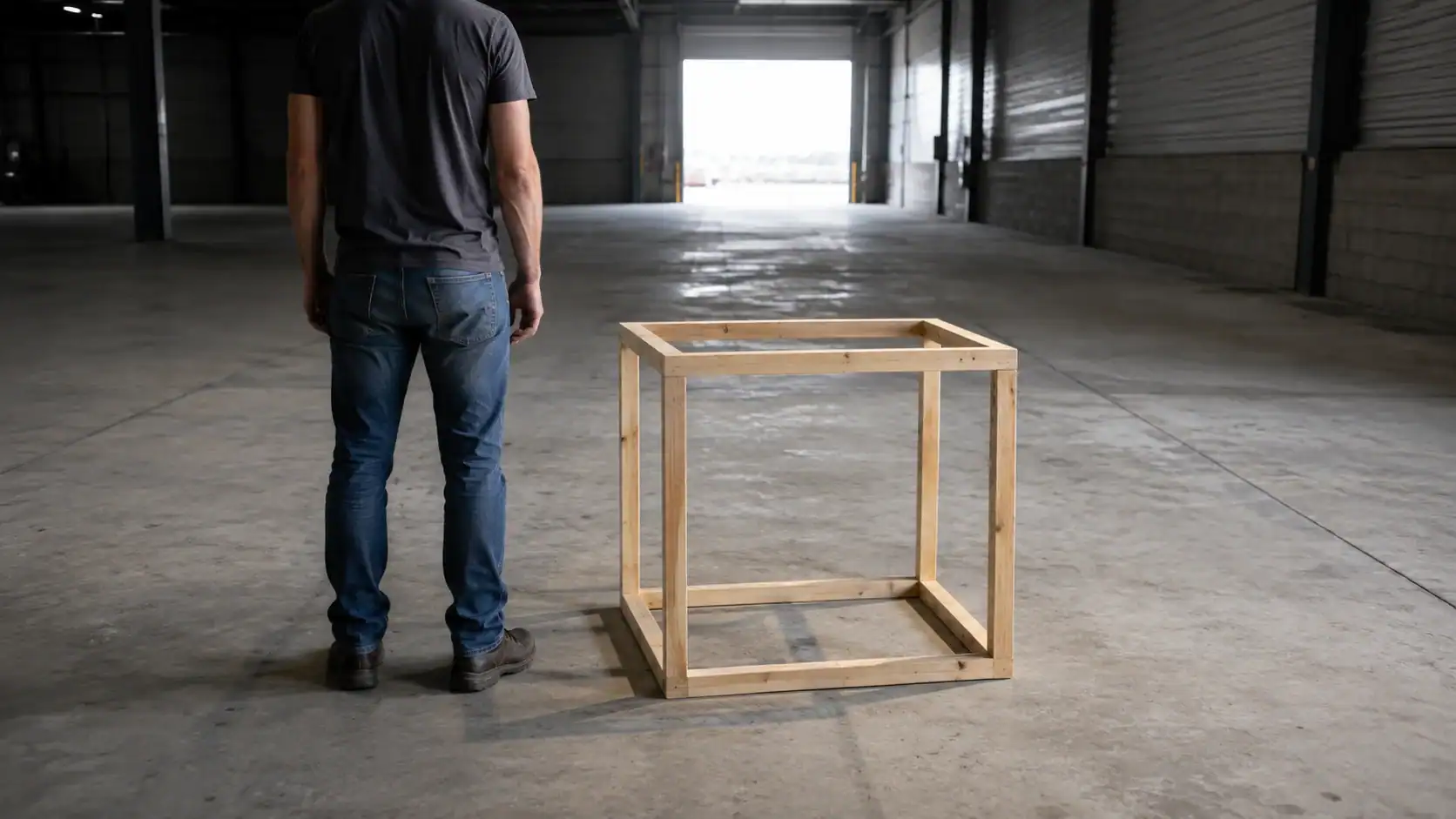
CBM stands for cubic metre. One CBM is a cube that measures one metre on each side: 1m × 1m × 1m. In practical freight terms, it is the standard unit used to calculate volume for sea freight shipments, particularly LCL (shared container) moves.
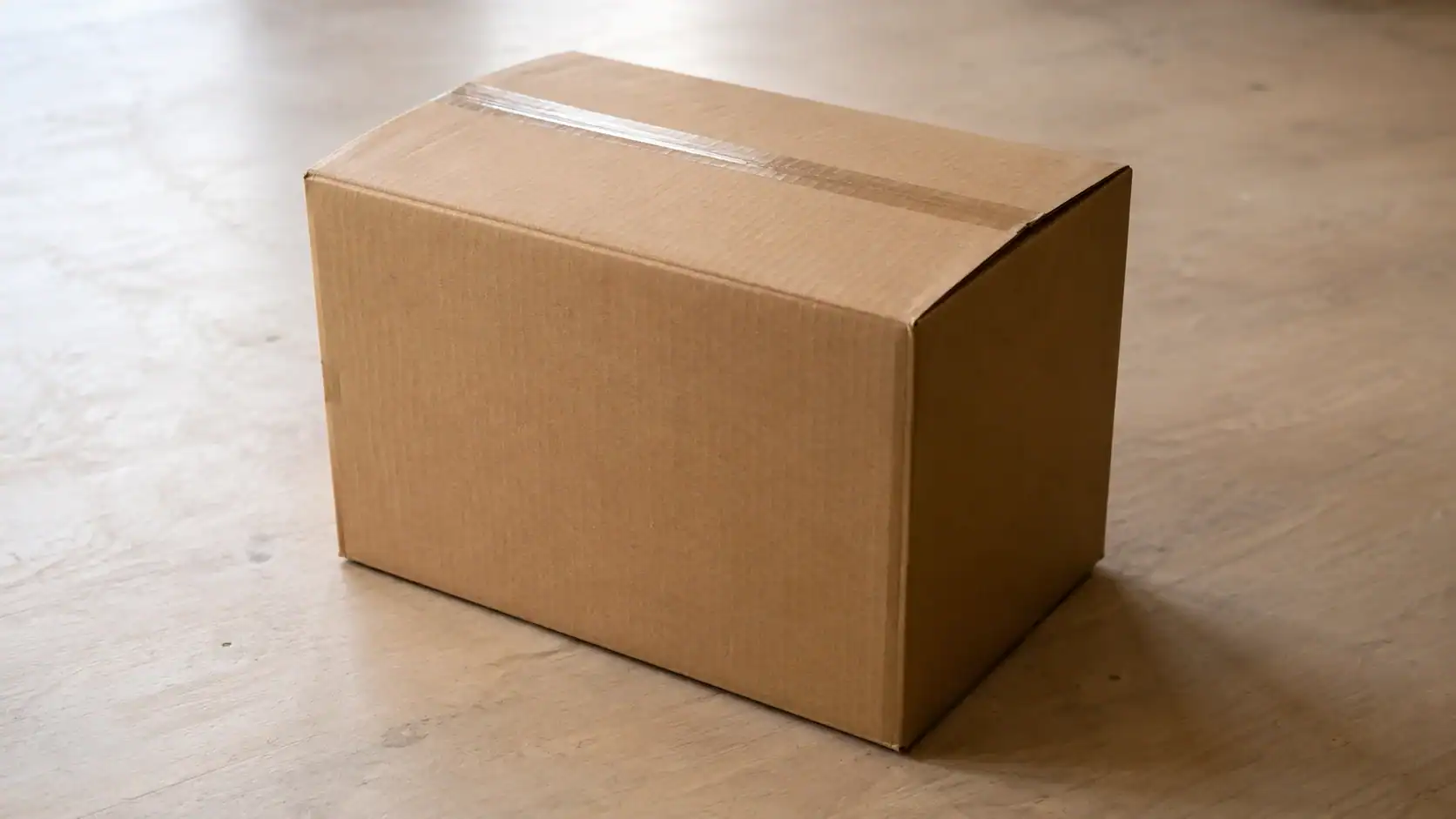
For those who think in imperial measurements, 1 CBM equals 35.3 cubic feet. A standard large moving box (the kind used by most international removal companies, typically around 65cm × 45cm × 45cm) has a volume of approximately 0.13 CBM. So one cubic metre holds roughly seven to eight large moving boxes, stacked neatly.
That is the practical anchor. Everything else follows from it.
CBM to Cubic Feet: Conversion Reference
| CBM | Cubic Feet (ft³) | Approx. Large Moving Boxes | Practical shorthand |
|---|---|---|---|
| 1 | 35 | 7–8 | A large wardrobe’s worth of clothes + boxes |
| 3 | 106 | 21–24 | Essentials only: no furniture |
| 5 | 177 | 35–40 | Studio apartment, selective |
| 8 | 283 | 56–64 | Studio or 1BR with a few key pieces of furniture |
| 10 | 353 | 70–80 | 1BR apartment, most contents, light furniture |
| 12 | 424 | 84–96 | 1BR apartment, most furniture + contents |
| 15 | 530 | 105–120 | Large 1BR or small 2BR, selective |
| 18 | 636 | 126–144 | 2BR apartment or house, most rooms |
| 20 | 706 | 140–160 | 2BR home with study, full contents |
| 25 | 883 | 175–200 | 3BR home, selective: approaching 20ft container territory |
Note: box counts assume standard international removal boxes (approx. 0.13 CBM each). Furniture items occupy space differently from boxes. A double mattress alone is approximately 1.0–1.2 CBM; a sofa is 1.5–2.5 CBM depending on size. The box equivalents above are a guide for contents only, not furniture.
The At-a-Glance CBM Table
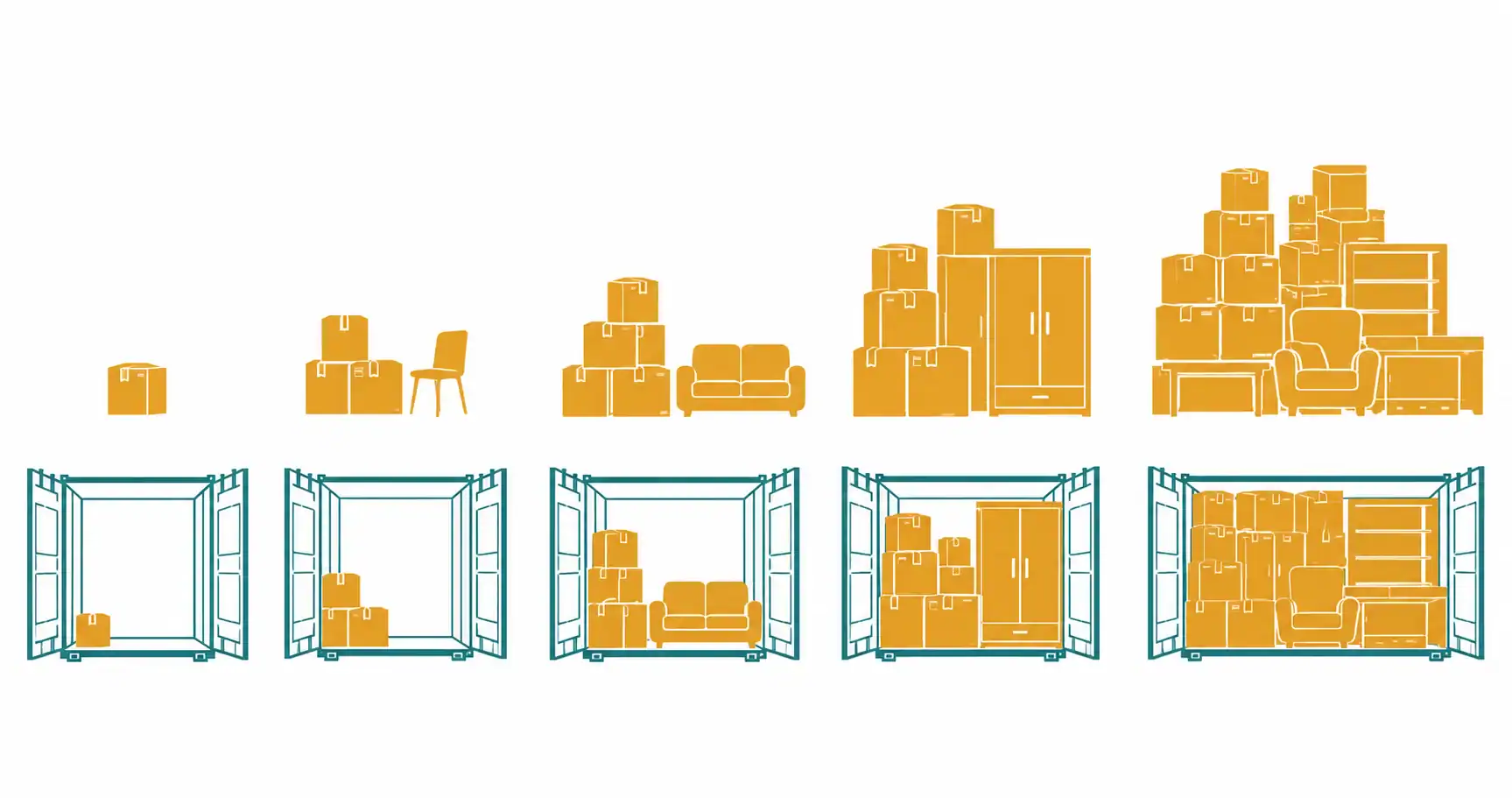
Every tier on this page, in one reference table. Bookmark this section if you are estimating on a call:
| Volume | ≈ Cubic feet | ≈ Large boxes | Typical move | Shipping mode |
|---|---|---|---|---|
| 1 CBM | 35.3 ft³ | 7–8 | A few boxes of personal effects | LCL |
| 3 CBM | 106 ft³ | 20–24 | Essentials-only move, no furniture | LCL |
| 8 CBM | 282 ft³ | 55–65 | Studio or selective 1-bedroom | LCL |
| 12 CBM | 424 ft³ | 85–95 | 1-bedroom apartment, most contents | LCL |
| 18 CBM | 636 ft³ | N/A | 2-bedroom home | LCL/FCL crossover zone |
| 25 CBM | 883 ft³ | N/A | 3-bedroom home, selective | FCL: 20ft container |
| ≈28 CBM | ≈989 ft³ | N/A | Maximum usable 20ft container | FCL: 20ft container |
| ≈67 CBM | ≈2,366 ft³ | N/A | Maximum usable 40ft high-cube | FCL: 40ft container |
Box counts assume standard large moving boxes of roughly 0.13 CBM each. Furniture-heavy moves are volume-driven by the furniture, not the box count, which is why the box column stops mattering above 12 CBM.
3 CBM: The Essentials-Only Move
Three CBM is 106 cubic feet, roughly 21 to 24 large moving boxes. This is the shipment of someone who has made a deliberate choice: I am taking only what I cannot replace, and I will start fresh with everything else.
Three CBM typically means: no furniture. Maybe a mattress topper. Definitely not a sofa or a dining table. At 3 CBM, every item earns its place twice over: once when you pack it, and again when you pay per CBM to ship it across the world.
What realistically fits in 3 CBM:
- 2 large suitcases or duffel bags packed with clothes (approximately 0.4–0.6 CBM total)
- 8–12 medium boxes of personal effects: books, keepsakes, kitchenware you cannot replace, framed photos
- Bedding: pillows, a duvet, and some linens in a vacuum-compression bag (0.3–0.4 CBM compressed)
- A small number of meaningful items: a lamp, a few artworks, a guitar, a bicycle helmet
- Documents, electronics (laptops, camera equipment), and valuables in a carry-on or personal bag (not included in CBM: these travel with you)
Who ships at 3 CBM: The person moving to furnished accommodation at their destination. The digital nomad who has already been living out of bags for a year. The person whose partner is already at the destination with a fully furnished home. The minimalist who has spent the last three months consciously reducing.
Three CBM is not a small shipment. It is a meaningful one, and for many people, it is the right size. The temptation to add more is real. Resist it unless the item genuinely cannot be found or replaced at your destination.
8 CBM: The Studio or Selective 1-Bedroom Move
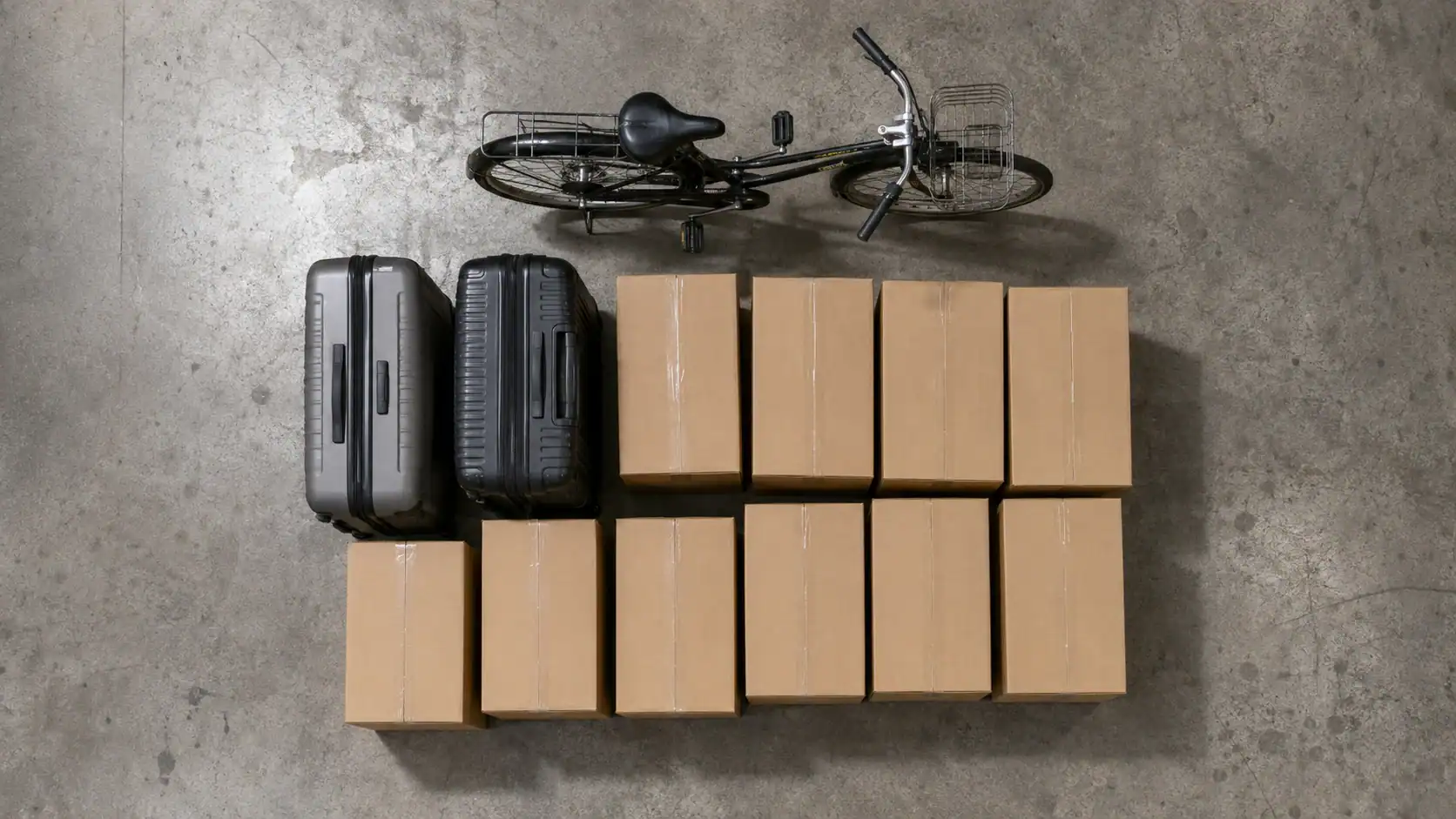
Eight CBM is 283 cubic feet, roughly 56 to 64 large moving boxes in volume, though by this point furniture is doing most of the work.
At 8 CBM, you are taking the pieces that defined your living space, not every piece in it. You are making choices. The sofa: yes. The second armchair: probably not. The bed: yes. The bulky divan base: maybe not, if the mattress alone saves volume.
What realistically fits in 8 CBM:
- Bedroom: Queen or double mattress (1.0–1.2 CBM), bed frame if flat-pack (0.4–0.6 CBM) or headboard only, bedside table × 1, clothes in 3–4 wardrobe boxes or suitcases
- Living room: 2-seater sofa (1.5–2.0 CBM) or armchair, small coffee table, TV up to 65″ (0.3–0.5 CBM in box)
- Kitchen: 4–6 boxes: pots, pans, glassware, coffee machine, small appliances you use daily
- Study/office: Laptop and accessories in carry-on; perhaps a monitor, desk lamp, external drive in a padded box
- Miscellaneous: 8–12 boxes of books, clothes, personal items, art, and things that don’t fit elsewhere
Who ships at 8 CBM: A single professional leaving a studio apartment and keeping the pieces that matter. A couple moving together where one partner’s furniture stays and the other’s comes along. Someone who has rented furnished accommodation for years but accumulated a layer of personal possessions on top.
Eight CBM is LCL territory. You are sharing a container with other shippers. That is entirely normal at this volume. The per-CBM cost at 8 CBM is very similar to the per-CBM cost at 5 or 12 CBM. You are not penalised for being in the middle.
12 CBM: The 1-Bedroom Apartment Move
Twelve CBM is 424 cubic feet. This is where most single-person and couple moves from a 1-bedroom apartment end up when they are taking the majority of their contents, furniture included.
At 12 CBM, the forwarder is no longer asking what you are taking. They are asking what you are leaving behind.
What realistically fits in 12 CBM:
- Bedroom: Queen mattress + base or bed frame (1.5–2.0 CBM total), headboard, 2 bedside tables, chest of drawers or small wardrobe (1.0–1.5 CBM), 5–6 wardrobe boxes or suitcases of clothes
- Living room: 3-seater sofa (2.0–2.5 CBM), armchair (0.8–1.0 CBM), coffee table, TV up to 75″ (0.4–0.6 CBM in box), TV unit or bookshelf (0.5–0.8 CBM)
- Dining area: Table for 4 (0.5–0.8 CBM folded or dismantled) + 4 chairs (0.8–1.0 CBM stacked)
- Kitchen: 6–8 boxes: full kitchen contents including stand mixer, coffee machine, cookware, pantry items you are keeping
- Miscellaneous: 12–16 boxes of books, clothing, personal effects, art, and plants (note: some plants are restricted by destination country biosecurity rules)
Who ships at 12 CBM: A person or couple leaving a 1-bedroom apartment after two or more years, enough time to accumulate a full set of furniture and a meaningful layer of possessions. People who are comfortable and settled, not minimalists.
Twelve CBM sits comfortably in LCL. A shared container at this volume is both economical and practical. The shipment will share space with other freight heading to the same destination, which is entirely standard and does not affect your goods’ handling or insurance coverage.
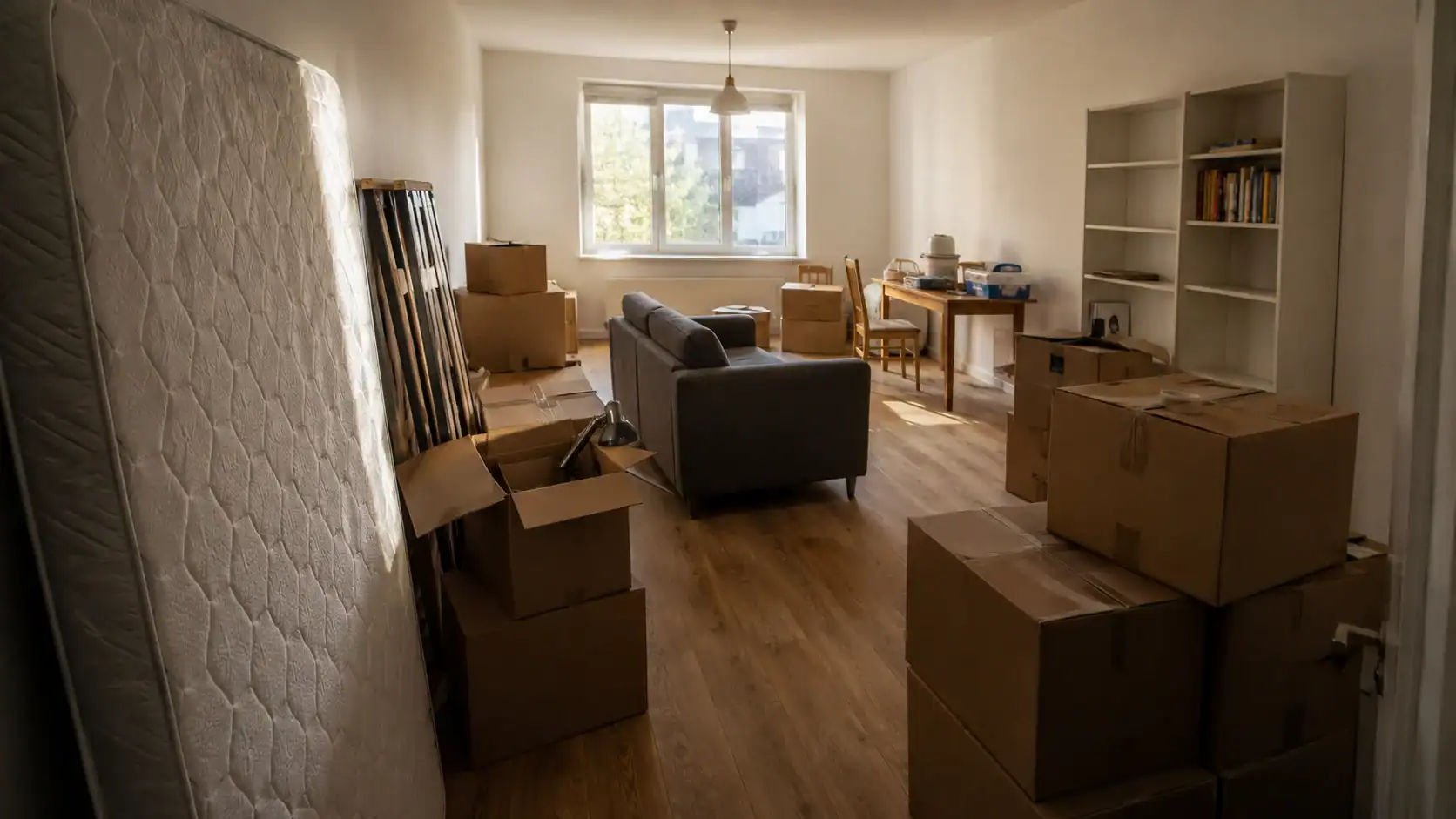
18 CBM: The 2-Bedroom Home
Eighteen CBM is 636 cubic feet, the volume of a 2-bedroom apartment or house being moved with most of its contents. At this point, the challenge is not whether everything fits in a shared container. It is deciding which of the many perfectly good items in your home are worth the per-CBM cost of shipping versus the cost of buying new at the destination.
An 18 CBM move almost always involves a genuine sorting conversation. The spare bedroom furniture: worth shipping? The dining table that seats six: will it fit the new place? The books: all of them, or just the irreplaceable ones?
What realistically fits in 18 CBM:
- Master bedroom: King or queen mattress + base (1.8–2.2 CBM), bed frame, 2 bedside tables, chest of drawers, wardrobe if flat-pack or panels (1.5–2.0 CBM), 6–8 boxes of clothes and personal items
- Second bedroom: Single or double mattress + base (0.8–1.2 CBM), bed frame, small wardrobe or chest, 4–5 boxes of contents
- Living room: 3-seater sofa + 2-seat sofa or armchairs (3.0–4.0 CBM total), coffee table, TV + unit, bookcase, floor lamp
- Dining room: Table for 6 (0.8–1.2 CBM) + 6 chairs (1.2–1.5 CBM stacked)
- Kitchen: 8–10 boxes: full kitchen contents
- Study/home office: Desk (0.4–0.6 CBM), office chair (0.3–0.5 CBM), monitor and equipment, files and books
- Miscellaneous: 10–15 boxes of personal effects, art, linen, seasonal items, children’s items
Who ships at 18 CBM: A couple or small family moving from a 2-bedroom home. People who have lived in the same place for several years and accumulated the furniture of a functioning household. Parents moving with a young child where the second bedroom is a nursery or child’s room.
25 CBM: The 3-Bedroom Home (Selective)
Twenty-five CBM is 883 cubic feet, roughly 175 large moving boxes in volume, though at this scale, large furniture items are doing much of the work. This is the volume of a 3-bedroom home where someone has decided carefully what to take: yes to the master suite, yes to the children’s rooms, yes to the living room furniture, but a harder eye on the third bedroom’s study furniture, the garage items, and the garden collection.
At 25 CBM, something important happens: you are approaching the volume where a full 20-foot container (typically 25–28 CBM usable packing volume) becomes cost-competitive with LCL. If your shipment is 22 CBM or above, it is worth getting a quote for both LCL and FCL. At this volume, FCL often costs the same as LCL per CBM, and adds chain-of-custody security, with no shared handling at origin or destination warehouses.
What realistically fits in 25 CBM:
- Master bedroom: King bed complete (2.0–2.5 CBM), bedside tables × 2, large wardrobe (2.0–2.5 CBM), chest of drawers, 8–10 boxes of clothes and personal items
- Bedroom 2: Double or queen bed + base (1.5–2.0 CBM), wardrobe, 4–6 boxes
- Bedroom 3 / children’s room: Single bed + base (0.8–1.2 CBM), bookcase, desk, 4–6 boxes of children’s books/toys/clothes
- Living room: Large sofa suite (4.0–5.0 CBM), TV + entertainment unit, bookshelves, floor lamps, art and décor
- Dining room: Table for 8 (1.0–1.5 CBM) + 8 chairs (1.5–2.0 CBM stacked)
- Kitchen: 10–12 boxes: full contents including appliances
- Study/office: Desk, chair, equipment, files: 5–8 boxes
- Miscellaneous: 12–18 boxes of linen, seasonal clothing, sporting goods, garden items, and art
Who ships at 25 CBM: A family of three or four making a full international relocation. People who have owned a home and accumulated the furniture and possessions that go with it. The move where the question is no longer “how much?” but “what stays behind?”
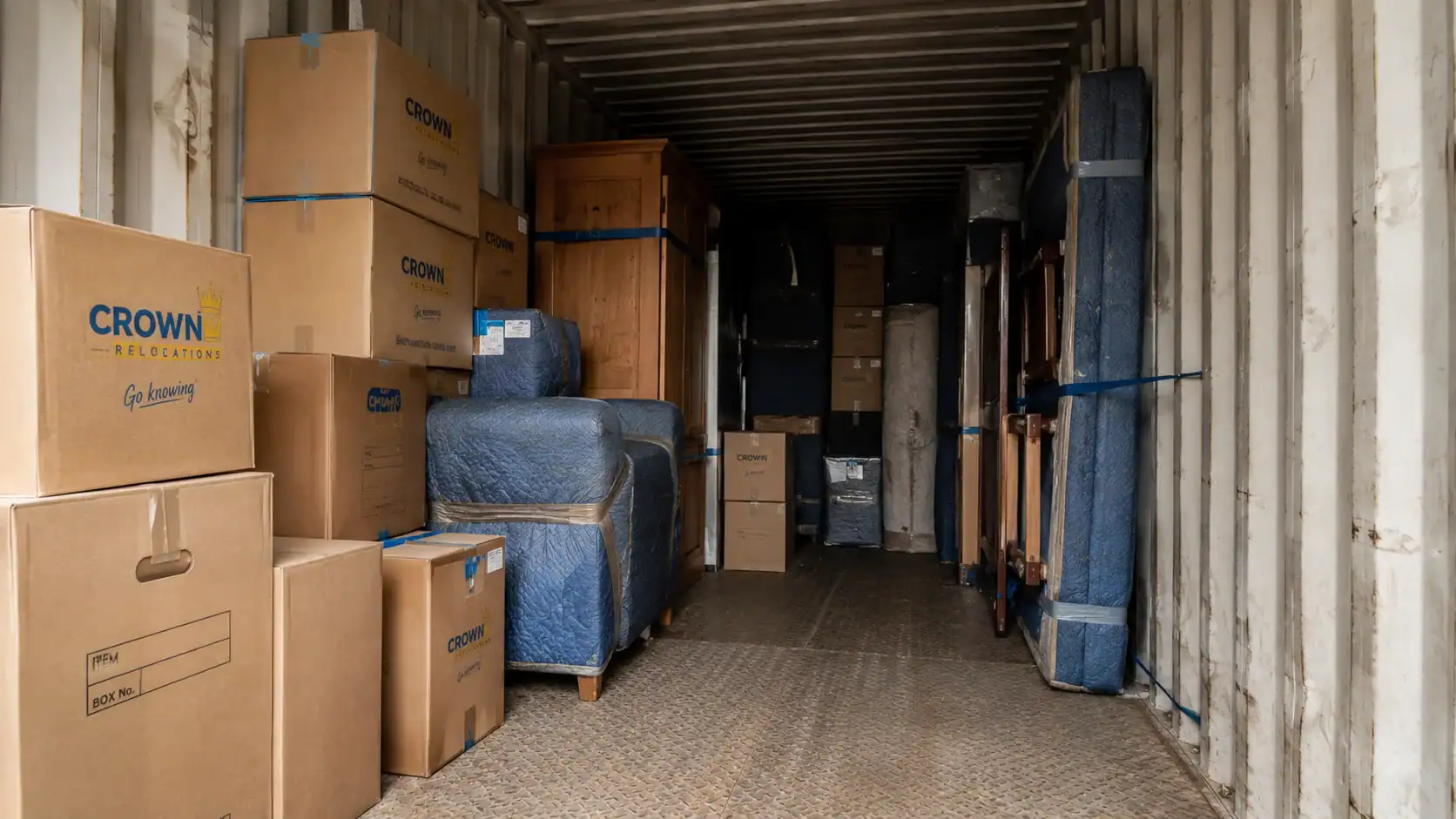
Things That Add CBM Without Adding Value
Before estimating your volume, identify the items that consume space disproportionately relative to what they would cost to buy new at your destination.
The items most people regret shipping internationally:
- Cheap flat-pack furniture. An IKEA Billy bookcase costs approximately AUD 80 to replace. To ship it from Europe costs more per CBM. Leave it.
- Large appliances. Washing machines, dryers, large refrigerators, and dishwashers are expensive to ship, and voltage/frequency compatibility must be verified. The cost of equivalent appliances at most destinations is usually lower than the combined cost of freight, insurance, and installation.
- Mattresses. A queen mattress is 1.0–1.2 CBM. A quality replacement mattress at most destinations costs less than the freight cost of shipping the old one. Exception: genuinely high-specification mattresses (orthopaedic, custom-size) where replacement cost is high.
- Garden equipment. Lawnmowers, outdoor furniture, and garden tools are subject to biosecurity restrictions in many countries (DAFF in Australia; Thai biosecurity for soil residue on equipment). The replacement cost is almost always lower than the combined freight, insurance, and potential biosecurity treatment cost.
- Alcohol and wine. They are subject to high import duty and excise in many destinations. Thai import duty on spirits exceeds 400% combined when all charges are included. Not worth shipping.
- Books: all of them. Books are heavy (heavy LCL shipments can exceed weight limits before volume limits), and weight can create additional freight charges on sea freight at high densities. Ship the irreplaceable ones. Donate the rest.
How CBM Affects What You Pay
For LCL (shared container) shipments, freight is priced per CBM, so the accuracy of your volume estimate directly affects the accuracy of your quote. An underestimate leads to a surprise invoice when the shipment is measured at origin. An overestimate means you budgeted for more than you needed.
Once your CBM estimate points toward a full container, the 20ft vs 40ft container guide for Thailand covers what actually fits in each size and the full cost breakdown.
The per-CBM rate varies by route, season, and market conditions. On a Europe-to-Thailand route as an example, LCL freight rates (ocean component only, before port charges, customs, and local handling) typically range from USD 80–180 per CBM depending on origin port, season, and consolidation availability. At 12 CBM, that is USD 960–2,160 in ocean freight alone, before the other charges that make up the full cost.
At approximately 15–18 CBM and above, it is always worth requesting an FCL quote alongside the LCL quote. A 20-foot container has approximately 25–28 CBM of usable packing volume. If your shipment is 18 CBM and the FCL rate is competitive, the additional 7–10 CBM of unused space may cost less than paying LCL per-CBM on the shipment you have.
A 20ft container has roughly 25-28 CBM of usable space, worth pricing an FCL quote against that before you commit to LCL.
For a full breakdown of what shipping costs (and how volume is just one of the components), see our guide to the real cost of shipping to Thailand. For the LCL vs FCL decision in depth, including the crossover volume calculation, see our LCL vs FCL guide. For the full household goods shipping process (documents, customs, and what to expect), see our step-by-step guide to shipping household goods to Thailand.
For current LCL and FCL rates on the Thailand route with full cost breakdown by shipment size, see Swift Cargo’s Thailand shipping overview.
When Your Estimate Is Wrong: What Happens on Moving Day
This is the part most volume guides skip, and it is the number-one source of friction between movers and their forwarder. Your quote is priced on your estimated CBM. The number you are actually charged on is the volume measured after packing, at the origin warehouse or Container Freight Station, by the people consolidating the container.
If the measured volume comes in higher than your estimate, the shipment does not stop, but the invoice changes. The additional CBM is charged, usually at the per-CBM rate on your quote, and a significant gap can push you past an LCL/FCL crossover point, which changes the pricing structure entirely. A 10–15% overrun on a 10 CBM estimate is an annoyance; discovering on packing day that your “12 CBM” is actually 19 CBM is a re-quote.
If it comes in lower, reputable forwarders charge the measured volume, not the estimate. Ask any forwarder you are comparing whether they invoice on actual measured CBM. It is a fair-dealing litmus test.
Three habits keep the estimate honest:
- Estimate packed volume, not furniture volume. Boxes never tessellate perfectly and packing materials add bulk. The 5–10% margin this guide recommends exists for this reason.
- Do not shave the estimate to get a nicer-looking quote. The measured volume wins in the end; an optimistic estimate only moves the surprise to moving day.
- Use a video survey. A 15-minute walkthrough with a surveyor produces a far tighter estimate than self-measuring, and it is standard practice for any serious forwarder, ours included.
The 5–10% margin is not a rounding habit. It is a calibrated buffer against a specific, predictable error. Self-measured estimates from furniture dimensions systematically undercount, because packed volume always exceeds furniture volume by a fairly consistent margin: boxes, wrapping, and the dead space around irregular shapes reliably add somewhere in that same 5–10% range. Padding the estimate further than that does not make it more accurate; it just inflates the quote you are comparing against other forwarders. The useful skill here is not being cautious in general. It is knowing the size and direction of the specific bias your estimate is prone to, and correcting for exactly that.
How to Estimate Your CBM Before You Quote
A rough estimate made at the start of the planning process is useful. A precise estimate made before the freight is booked is essential. Here is how to move from rough to precise:
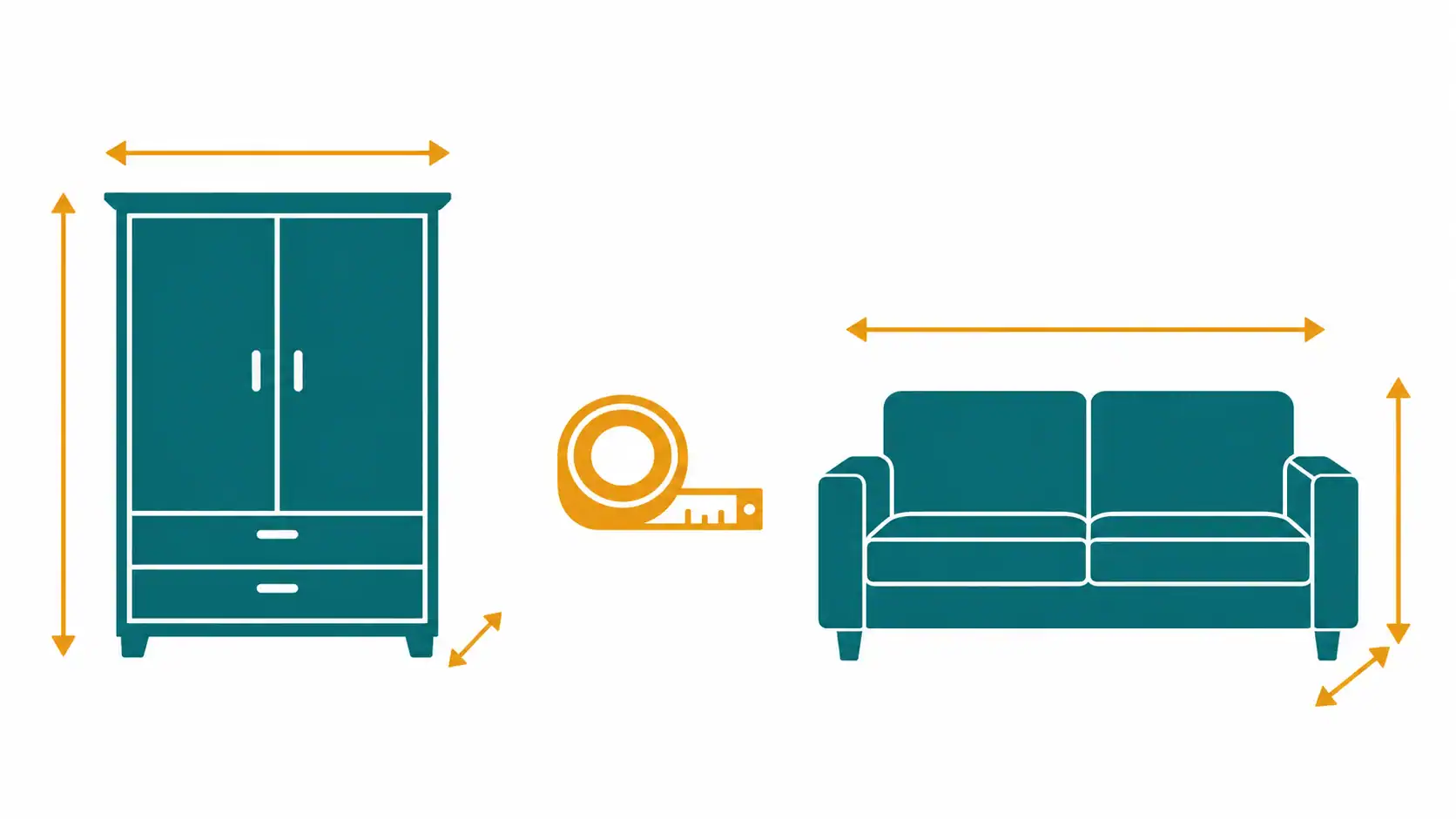
Step 1: List all furniture items with dimensions. Measure each large item (beds, sofas, wardrobes, tables) or look up the standard dimensions. Calculate length × width × height in metres = CBM per item. Add them up.
Step 2: Count your boxes and estimate their volume. If you have not packed yet, walk through each room and count how many boxes the contents would fill. Standard large removal box = 0.13 CBM. Medium box = 0.065 CBM. Wardrobe box (for hanging clothes) = approximately 0.25–0.35 CBM.
Step 3: Add 10–15% packing inefficiency. Items do not pack perfectly. Furniture has awkward shapes. Fragile items need extra protection. Multiply your calculated volume by 1.1–1.15 to account for packing inefficiency.
Step 4: Send a video walkthrough to your freight forwarder. A 5-minute phone video walking slowly through every room (opening wardrobes, showing the garage, panning across bookshelves) allows an experienced forwarder to estimate volume accurately from remote. This is the most reliable method short of an in-home survey, and most established freight forwarders will request it for any shipment above 8–10 CBM.
Step 5: Request a pre-move survey for large shipments. For shipments above approximately 15 CBM, ask your forwarder whether they can arrange a pre-move survey, either in person (if local) or via video call with a structured room-by-room assessment. A surveyed volume estimate is more accurate than a self-calculated one, and a more accurate estimate protects you from invoice surprises.
A predictable gap separates how a room feels from how much it holds. You live in your home as open space. You notice the air, the walkways, the light. A packed container is the inverse: dense, gap-free, measured by the cubic metres your belongings displace once they are boxed and stacked. So the estimate that comes back often feels too high, not because it is wrong, but because daily life in a room quietly hides how much volume the room actually contains. The fix is not a better guess; it is measuring the objects rather than trusting the impression of the space.
That displaced volume is also the single biggest driver of what you pay, which is why it sits at the centre of any realistic Thailand relocation cost breakdown.
Swift Cargo estimates your shipment volume from a video walkthrough, no obligation, no fee. Get a volume assessment and quote for your international move.
Frequently Asked Questions
How many cubic metres do I need for a 1-bedroom apartment?
A 1-bedroom apartment being moved with most of its contents, furniture included, typically falls in the 10–14 CBM range. At the lower end (10–11 CBM), you are taking the essentials and leaving behind anything bulky or easily replaced. At the higher end (13–14 CBM), you are taking most furniture and the majority of your possessions. The exact volume depends on the size of your furniture, how many boxes your contents fill, and how selective you are with what you include.
What is 1 CBM in cubic feet?
1 CBM (cubic metre) equals 35.315 cubic feet. A standard large international moving box (approximately 65cm × 45cm × 45cm) has a volume of about 0.13 CBM, so 1 CBM holds roughly 7 to 8 large boxes stacked neatly, or the equivalent volume in furniture and mixed items.
How many CBM for a 3-bedroom house?
A 3-bedroom house being moved selectively (taking the main furniture from all three bedrooms, the living room suite, and full kitchen contents) typically comes to 22–30 CBM. A full, unsorted 3-bedroom home where nothing is left behind can reach 35–45 CBM. At 25 CBM and above, it is worth comparing LCL (shared container) rates with FCL (full container) rates, as a 20-foot container becomes cost-competitive at volumes above approximately 15–18 CBM depending on the route.
What is the difference between LCL and FCL, and which one applies to me?
LCL (less than container load) means your goods share a container with other shippers. You pay only for the CBM you use. FCL (full container load) means your goods occupy a container exclusively. You pay a flat rate for the whole container regardless of how full it is. LCL makes sense for most moves up to approximately 15–18 CBM. Above that, the FCL rate for a 20-foot container often becomes cost-competitive. For very large moves (25+ CBM), a 20-foot container is often cheaper per CBM than LCL on the same route.
How do I calculate the CBM of a piece of furniture?
Measure the length, width, and height of the item in metres. Multiply the three figures together. Example: a sofa measuring 2.2m long × 0.9m wide × 0.85m high = 2.2 × 0.9 × 0.85 = 1.68 CBM. For items that are an irregular shape or that will be dismantled for shipping, use the dimensions of the largest assembled configuration or the dimensions of the packed crate/box.
What happens if my actual volume is higher than my quoted CBM?
Your shipment still moves, but you are invoiced on the volume measured after packing, not the estimate. The extra CBM is normally charged at your quoted per-CBM rate. A large gap can also push you across the LCL/FCL crossover, which changes the pricing structure. That is why a video survey before quoting is worth 15 minutes of your time.
Is CBM measured on my items or on the packed boxes?
The packed, loaded volume: boxes, wrapping, and protective packaging included. This is why a room that ‘looks like 8 CBM’ of furniture often ships as 9–10 CBM. Estimate from packed cartons and wrapped furniture, then add the 5–10% packaging margin.
How many CBM fit in a 20ft and 40ft container?
A 20ft container has roughly 25–28 CBM of usable capacity once real-world loading is accounted for; a 40ft high-cube holds roughly 60–67 CBM. If your estimate lands near 15 CBM or above, ask for both LCL and FCL pricing. The crossover is closer than most people expect.
Does disassembling furniture reduce my CBM?
Significantly, for the right items. A bed frame, dining table, or wardrobe shipped flat can occupy half the volume of its assembled form. Sofas and upholstered items barely compress at all. If your quote is near a pricing threshold, disassembling flat-packable furniture is the cheapest way to reduce CBM.
How accurate are online volume calculators?
Good ones get a typical household within 15–20%, useful for a ballpark, not for a booking. They systematically miss packing materials, awkward-shaped items, and the contents of cupboards people forget to count. Use a calculator to decide whether you are a ’10 CBM household’ or a ’25 CBM household’, then confirm with a video survey before you book.