
Jarkko Niemelä decided to leave Finland at 2:40 in the afternoon, in the dark. That detail matters. It was the second week of December in Oulu. The sun had technically risen at 10:34 and given up by 14:12, and Jarkko (an engineer with fifteen years at a telecoms firm and a remote contract that no longer cared where he sat) looked out at the kaamos gloom and made the most Finnish decision of his life in the least Finnish way possible: quietly, without telling anyone, and with a spreadsheet open.
Six months later he was standing in a condo in Bangkok’s On Nut district watching a mover carry in a vacuum-packed bag of wool base layers he would never wear again, and he told me the thing that this whole guide hangs on: “The shipping was easy. The order of the paperwork nearly broke me.”
That’s the Finnish version of this move in one sentence. Finns arrive at international relocation with sisu and a plan, and both serve them well, right up until they meet two systems that punish the wrong sequence: the Finnish deregistration machinery run through the Digital and Population Data Services Agency (DVV), and Thai Customs’ duty-free window for personal effects. Get the order right and this is one of the most orderly moves in Europe. Get it wrong and you can strand yourself between two bureaucracies, neither of which considers you fully theirs.
This guide covers the whole arc: the paperwork sequence (with the correct order spelled out), the physical logistics of getting a container out of Helsinki and around the Cape of Good Hope, what Thai Customs will and won’t wave through, the climate-inversion problem of packing for permanent summer, honest EUR costs, and the sauna question, which deserves, and gets, its own section.
The Sequence Comes First: Visa Before Deregistration
Here’s the single most important lesson in this article, so let’s not bury it.
Secure your Thai long-stay visa before you file your notification of permanent move abroad with the DVV.
Why the order matters: the DVV’s muuttoilmoitus for a permanent move abroad changes your status in the Finnish population register. Once you’re registered as permanently abroad, a cascade begins. Kela reassesses your entitlement to residence-based social security. As a rule, a permanent move ends coverage, with some transition nuances that are worth a conversation with Kela before you file anything. Your municipality of residence changes to “abroad.” Banks, insurers, and agencies that key off your registered address start treating you differently.
None of that is a problem after you hold a Thai visa. All of it is a potential problem before. Thai visa applications can ask for documents that are easiest to obtain while you’re still a fully registered Finnish resident: bank statements from a bank that isn’t flagging your account for review, police certificates, legalised documents moving through a system that still knows where you live. If your visa application hits a delay and you’ve already deregistered, you’re in an administrative no-man’s-land: Kela winding down, Thailand not yet committed to you.
Before (the painful version): File muuttoilmoitus in March because it feels like progress. Apply for the Non-Immigrant O visa in April. Embassy requests an additional bank document in May; the bank has questions about your now-foreign registered status. Visa lands in July. Your shipment, booked optimistically for May, has been sitting in storage, and your Kela coverage ended months before you had anywhere to be.
After (the correct version): Apply for the visa first. Visa granted. Book the shipment. File the DVV notification in the final weeks before departure. It can be done online and is designed to be filed close to the move. Notify Kela separately with your actual departure date. Fly out with every system agreeing on what you are: a Finn who has properly left.
One clean sequence, one messy one, same documents in both. The only difference is order.
Your Visa Options: Non-O and LTR
Two routes cover most Finnish movers.
Non-Immigrant O is the workhorse. Retirees over 50 use the O/O-A retirement track (with financial requirements of roughly 800,000 THB in a Thai bank or an equivalent monthly income, around €21,000 at recent rates). Spouses of Thai nationals use the marriage version at a lower threshold. It’s a one-year cycle with annual extensions, 90-day reporting, and a re-entry permit needed if you travel. Unglamorous, well-trodden, reliable.
LTR, the Long-Term Resident visa, is the one that fits the Jarkko demographic surprisingly well. It grants ten years of residency, digital work permission for remote employees of qualifying foreign companies, reduced reporting, and a flat 17% personal income tax rate for qualifying professionals. The bar is real (income thresholds around $80,000/year for the work-from-Thailand category, employer requirements), but a Finnish tech salary with a remote contract often clears it. If you qualify, the LTR removes most of the annual-renewal friction that defines expat life on a Non-O.
Whichever you choose, the visa date matters beyond immigration: it starts the clock on your duty-free import window, which is the hinge on which your whole shipping timeline turns. More on that shortly.
The Geography Problem: Shipping Out of Helsinki
Now the physical move, and a truth Finns need to absorb early: Finland is one of the longest European origins to Thailand. Not the most expensive by a wide margin, but the slowest, and the timeline drives everything else.
Your container’s journey has three legs:
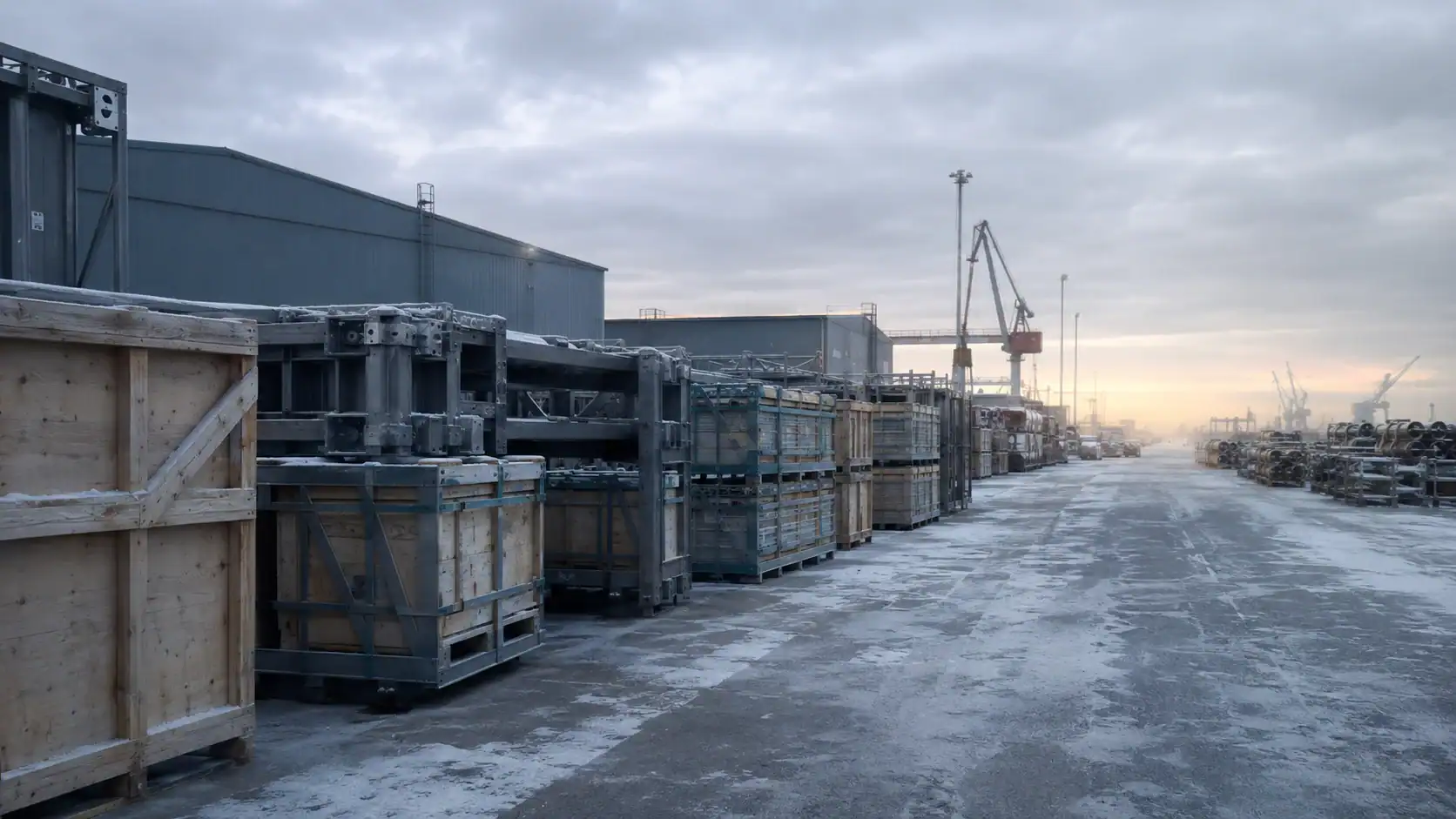
Leg one: the Baltic feeder. Almost all Finnish containerised exports move through Helsinki’s Vuosaari harbour (or HaminaKotka for some cargo). No deep-sea vessel bound for Asia calls at Vuosaari; instead, your box rides a feeder vessel down the Baltic, through the Danish straits, to a main-line hub: Rotterdam or Hamburg, occasionally Bremerhaven or Gdańsk. The feeder leg plus hub dwell time adds 5 to 8 days compared with a shipment that starts life in continental Europe. In winter, add margin: the northern Baltic ices over, and while Finnish ports stay open year-round with icebreaker support, January and February schedules carry more variability than June ones. If you’re moving in deep winter, treat published transit times as optimistic.
Leg two: the deep-sea main line. At Rotterdam or Hamburg your container is transshipped onto a vessel bound for Southeast Asia. Since the Red Sea disruption pushed carriers onto the Cape of Good Hope routing, this leg runs the length of the Atlantic, around southern Africa, and across the Indian Ocean. That routing adds 10 to 14 days versus the old Suez transit. Carriers have rebuilt their schedules around the Cape, so the times are predictable now; they’re just long.
Leg three: arrival. Most household shipments discharge at Laem Chabang, Thailand’s main container port, about 130 km southeast of Bangkok, then clear customs and truck to your door.
Add it up: 48 to 58 days port to port, Helsinki to Laem Chabang, with door-to-door realistically touching two months once you include origin packing, export formalities, hub dwell, Thai clearance, and delivery scheduling. A Rotterdam-origin shipment beats you by a week or more; you’re paying the Baltic tax in time. Plan around it rather than fighting it. The timeline is actually a gift for the customs sequencing below, because a two-month sail gives you a comfortable buffer to fly ahead, activate your visa, and be legally established in Thailand before your goods arrive.
This is not a scheduling quirk that a different carrier or a better booking window could route around. No Finnish port has ever handled direct intercontinental container service, because the volume calling at Vuosaari or HaminaKotka has never justified the deep-sea vessel sizes that make an Asia run economical. The Baltic is a feeder market by structure, not by accident. Rotterdam and Hamburg exist as hubs precisely because enough cargo converges there to fill a ship; Helsinki feeds that convergence rather than anchoring it. Understanding that distinction stops a Finnish shipper from hunting for a faster booking that does not exist.
LCL or FCL: How Much Are You Actually Shipping?
The climate-inversion section below will shrink your shipment more than any decluttering method, so read that before you book. But the structural choice is standard:
LCL (less than container load): your goods are professionally packed, crated, and consolidated with other shippers’ cargo in a shared container. You pay by volume. Right for 2 to 10 cubic metres: books, kitchenware, clothing that survives the climate cut, electronics, a few sentimental furniture pieces. Expect extra handling (goods are loaded and unloaded at consolidation warehouses at both ends) and a slightly longer, less predictable tail on the timeline.
FCL (full container load): a sealed 20ft (about 33 m³) or 40ft (about 67 m³) container is yours alone, packed at your Finnish address and opened at Thai customs. Right above roughly 12 to 15 m³, or whenever you’re shipping real furniture. Faster clearance, no co-loading damage risk, one seal from Espoo to Bangkok.
A useful volume compass: a studio’s shippable contents usually fit in 3 to 6 m³ (LCL). A two-bedroom flat with furniture is 15 to 25 m³ (20ft). A full detached house with solid-wood furniture pushes toward a 40ft, though very few Finland–Thailand movers should be anywhere near that, for reasons the next two sections make clear.
What It Costs: EUR Figures, Helsinki to Laem Chabang
Rates move with the season and the carrier market, so treat these as planning ranges rather than quotes, but they’re honest ranges for the Helsinki–Laem Chabang trade as of mid-2026:
| Shipment type | Typical volume | Indicative cost (EUR) | Best for |
|---|---|---|---|
| LCL: small | 3 m³ | €950 – €1,300 | Clothing, books, kitchen, electronics |
| LCL: medium | 5–8 m³ | €1,400 – €1,900 | Above plus select furniture pieces |
| FCL 20ft | up to ~33 m³ | €3,800 – €5,200 | Two-bedroom home with furniture |
| FCL 40ft | up to ~67 m³ | €5,200 – €7,000 | Full household (rarely justified on this route) |
Those figures cover origin packing, export formalities, the feeder leg, and ocean freight to Laem Chabang. Budget separately for Thai-side destination charges, customs clearance, and delivery, typically €600 to €1,200 depending on volume and delivery distance, plus any storage if you can’t take delivery immediately.
A worked example. Take Jarkko: one-bedroom in Oulu, ruthless climate cull, final shipment 6 m³ LCL. Freight and origin services: €1,650. Thai destination charges and delivery to On Nut: €780. Marine insurance at 2.2% of a €14,000 declared value: €308. Pre-move storage for three weeks while the visa finalised: €140. Total: €2,878, against roughly €9,000 to replace the same goods at Bangkok retail prices, and that’s before you price the things that can’t be replaced at all. The comparison isn’t always that lopsided, but for a shipment built around quality items you already own, shipping usually wins. For a shipment padded with IKEA bookcases and winter coats, it doesn’t, which is exactly why the packing decisions below matter more than the freight rate.
For a deeper cost breakdown across European origins, see our guide to the cost of moving from Europe to Thailand. Finland sits at the expensive-and-slow end of every table in it, but the structure is the same. Ready to see exact numbers for your own shipment? Get a quote for shipping to Thailand.
Thai Customs: The Duty-Free Window and How Finns Miss It
Thailand grants duty-free import of used household goods and personal effects to foreigners arriving on eligible long-stay visas. The concession is genuinely generous and genuinely conditional. Three conditions carry the weight:
1. Ownership and use. Goods must have been owned and used by you for at least one year. This is the used-personal-effects test: your five-year-old Artek chairs qualify; the new one you bought as a farewell gift to yourself does not.
2. The arrival window. Your shipment must arrive within approximately six months of your first entry into Thailand on the settlement visa. Note the trigger carefully: the clock starts when you first enter on that visa, not when the visa is issued, and not when you eventually feel ready. Enter Thailand in February on your Non-O, and a shipment arriving the following October is outside the window and exposed to duty at Thai Customs’ discretion.
3. Eligible visa status at clearance. You clear customs as the importer, matching the visa in your passport. Tourist entries don’t qualify. Your passport, visa, and shipping documents need to tell one consistent story.
The clean pattern for a Finn:
- Visa granted in Finland.
- Shipment packed and booked; file the DVV muuttoilmoitus and notify Kela in these final weeks.
- Fly to Thailand and enter on the settlement visa. The six-month window opens.
- Container sails; arrives seven to nine weeks later, comfortably inside the window, with you already resident and ready to clear it.
Two months of Cape-routed sailing, which felt like a penalty three sections ago, is now your buffer. The route’s slowness and the customs window fit together almost politely.
Our standalone guide to duty-free import into Thailand goes deeper than this section can, covering the full documentary detail: packing list format, what Thai Customs physically inspects, and restricted items.
What Not to Ship
Alcohol. Thailand allows one litre per person, and beyond that Thai excise rates are punitive, routinely exceeding the value of the bottle. That gin collection, the cellared wines, the Koskenkorva you were saving: drink them, gift them, sell them. Do not put them in the container hoping they’ll slide through inside a box marked “kitchen.” Alcohol found in a personal-effects shipment invites exactly the kind of full inspection you want to avoid.
New goods in OEM packaging. A sealed box reads as commercial import, full stop. If you genuinely need to bring something new, unbox it, use it, and let it look owned. Better yet, buy it in Thailand. Electronics pricing in Bangkok is competitive with Helsinki.
Anything on Thailand’s restricted lists. Drones, radio equipment, and e-cigarettes (banned outright in Thailand) all create problems disproportionate to their value. Check current Thai Customs guidance for anything with a transmitter or a battery bigger than a laptop’s.
Most of your winter, obviously. But that gets its own section.
The Sauna Question
We have to talk about it. Every Finnish client raises it, usually with a laugh that isn’t entirely a joke.
Here is the strange truth: technically, you could ship your sauna. A kiuas runs on 230V. Thailand’s grid is compatible. Sauna stoves are robust, well-packed, and survive ocean freight without complaint. The benches, the panels, even the aspen ladle: all shippable. Nothing in Thai customs law objects to a stove that’s a year old and clearly used.
And here is the equally strange truth: almost nobody should. The obstacles aren’t electrical. They’re everything else. A proper electric kiuas needs a dedicated high-amperage circuit that no Thai condo will provide and no condo juristic office will approve. It needs a heat-and-moisture-rated room that doesn’t exist in Thai residential construction. It needs a landlord willing to let you build one, in a country where your building’s pool deck is 30 degrees at midnight. The equipment is heavy (a stove, stones, and paneling can eat a cubic metre and 150 kilos of your shipment), and at the end of all that effort, you’re recreating a heat ritual in a place that supplies the heat for free.
Most Finns, standing in front of the disassembled sauna, quietly concede the point. The sauna is the thing Finland keeps.
But (and we say this with real warmth), some of you will ship it anyway, and we understand. A retired couple we moved to a house outside Hua Hin brought their kiuas, hired a Thai electrician who found the whole project delightful, built an insulated sauna room off the carport, and now host löyly evenings for baffled neighbours in the tropics. It made no logistical sense and complete human sense. If that’s you: put it in an FCL container, declare it plainly as used household equipment, budget for a dedicated circuit installation (€400–800 in Thai electrician fees), and confirm your house (not condo) can take it. We won’t talk you out of it twice.
The Climate Inversion: Packing for Permanent Summer
Leaving the kaamos for a country with twelve hours of daylight every day of the year does something odd to a packing list. You are not moving your life; you’re moving the half of it that works at 32 degrees.
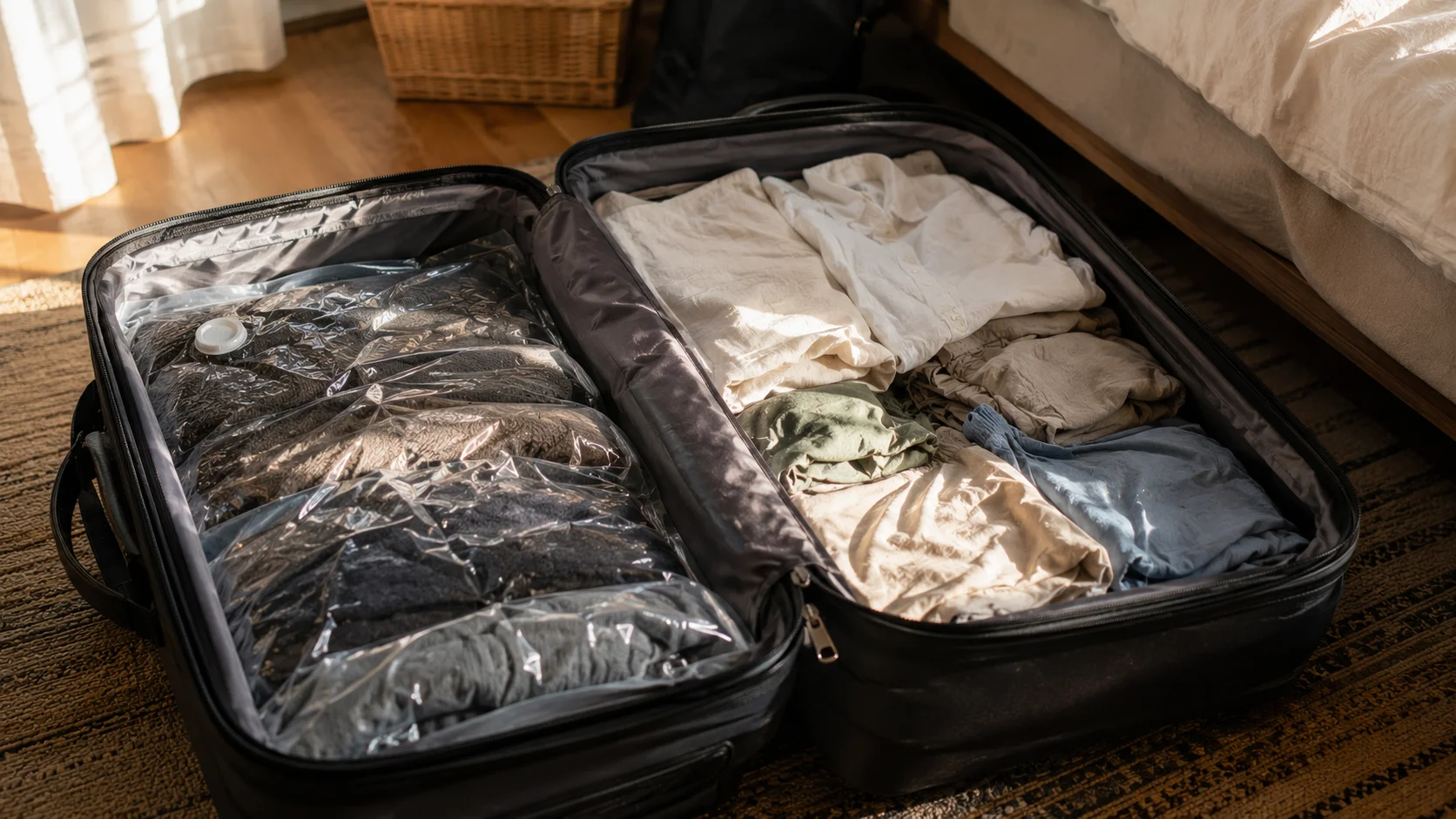
The winter wardrobe nearly all stays. Down parkas, wool coats, thermal layers, winter boots, ski gear: in Thailand these are dead weight occupying paid cubic metres. Sell or donate the bulk. Keep one warm capsule (a coat, a sweater, decent shoes) for trips home, because you will visit Finland and it will still be Finland. If you do ship wool or down (that one irreplaceable Icelandic sweater, the down duvet you can’t part with), vacuum-pack it with desiccant. Tropical humidity in a container is merciless to natural fibres, and a compressed, sealed bag is the difference between arriving fresh and arriving musty.
Leather and solid wood need an adjustment period. Your leather sofa and solid-wood furniture will survive the voyage but arrive into 70–80% humidity after a lifetime in Finland’s bone-dry heated interiors. Wood swells; joints shift; drawers stick for a season and then settle. Leather can bloom mould in a badly ventilated room. Neither is a reason not to ship quality pieces (Finnish design furniture is exactly the category worth shipping), but plan for air-conditioned rooms, leave wood a few weeks to acclimatise before judging it, and condition leather on arrival.
Electronics travel well. Finland’s type F plugs work in most modern Thai sockets, and the 230V/50Hz supply matches. Bring your good power strips from home (quality varies at the Thai hardware store), and everything from your espresso machine to your desktop PC plugs in and runs. The one carve-out, as covered, is anything hard-wired to a dedicated Finnish circuit.
The net effect: Finnish shipments to Thailand are often 30–40% smaller than the same household would send to, say, Canada. Price your LCL quote after the climate cull, not before.
Five Mistakes Finns Actually Make (and the Correct Sequence)
Mistake 1: Filing the muuttoilmoitus before the visa is granted. The flagship error, covered above. Deregistering feels like commitment; it’s actually exposure. Correct order: visa first, DVV and Kela notifications in the final pre-departure weeks.
Mistake 2: Shipping before first entry, or long after it. Some movers dispatch the container while still finishing their notice period in Finland, then arrive in Thailand months later to find the shipment landed before they could legally clear it, or they linger in Finland “wrapping things up” until the six-month window is nearly spent. Correct order: enter Thailand on the settlement visa around the time the container sails, so the goods arrive with you resident and the window wide open.
Mistake 3: Treating the transit time as continental-European. A Finn reads “35 days to Thailand” on a German mover’s site and plans housing, budgets, and an air-mattress period around it. That Finn will spend three extra weeks sleeping on that mattress. The feeder leg and Cape routing are not optional extras. Correct planning figure: 48–58 days port to port, two months door to door.
Mistake 4: Padding the container with things Thailand replaces for pennies, or that Thailand’s climate ruins. Winter clothes, cheap flat-pack furniture, sealed new purchases, the wine. Every cubic metre costs real euros and some of it costs customs attention too. Correct approach: cull for climate first, ship quality and sentiment, buy commodity items in Bangkok.
Mistake 5: Letting the Kela conversation happen by default. Social security entitlement doesn’t pause politely while you figure things out; a permanent move generally ends residence-based coverage, and health insurance in Thailand is your problem from day one. Correct approach: talk to Kela before you file anything, know your end date, and have Thai health cover active from your first entry. Many visa categories require proof of it anyway.
Notice that four of the five are sequencing errors. The move rewards exactly the thing Finns are supposed to be good at: doing things in the right order, without drama, in the dark if necessary.
A Realistic Timeline
Months 4–6 before departure: Choose the visa route (Non-O vs LTR) and start gathering financial documents. Get shipping quotes and decide LCL vs FCL. Begin the climate cull. It takes longer than you think, emotionally more than practically.
Months 2–3: Visa application in. Book the mover with a flexible packing date. Talk to Kela about your coverage end date. Sell the winter gear while Finland still has buyers for it.
Final month (visa in hand): Packing and export formalities. File the DVV muuttoilmoitus. Confirm Kela notification. Set up mail forwarding and a Finnish contact for stragglers.
Departure: Fly out around the time the container sails from Vuosaari. Enter Thailand on the settlement visa. The six-month customs window opens; your goods are seven to nine weeks behind you.
Weeks 7–9 in Thailand: Container arrives at Laem Chabang. Clearance with your passport, visa, and packing list. Delivery. Let the wood furniture sulk for a few weeks in the air conditioning. Unpack the one wool sweater, laugh at it, keep it anyway.
Related Reading
- Moving from Sweden to Thailand: Freight, Customs and Relocation Guide
- Moving from Norway to Thailand: Freight, Customs and Relocation Guide
- Shipping from Europe to Thailand: Routes, Costs and Transit Times
- Thailand Duty-Free Import Rules for Household Goods
- What It Really Costs to Move from Europe to Thailand
The sequencing mistakes above only look obvious in hindsight, which is exactly what makes them so easy to make in the moment. Filing the muuttoilmoitus feels like progress: a form submitted, a box ticked, forward motion on a move that otherwise feels stuck. Nobody files it thinking “this creates exposure.” They think “I’m getting things done.” It’s only later, visa still pending and residency status now in limbo, that the shape of the mistake becomes visible, and by then the correct order (visa first, deregistration in the final weeks) looks so obviously right that it’s hard to remember not knowing it. You can’t see the correct sequence from the middle of a move. You can only see it by looking back at someone else’s, which is the entire use of a mistakes list like this one: borrowed hindsight, applied before you need it instead of after.
Frequently Asked Questions
How long does shipping from Finland to Thailand take?
Plan on 48 to 58 days port to port. The Baltic feeder from Vuosaari to Rotterdam or Hamburg adds 5 to 8 days before the main-line vessel even departs, and Cape of Good Hope routing adds another 10 to 14 versus the old Suez transit. Door to door, two months is the honest planning figure, and in deep winter, when Baltic ice adds schedule variability, give it margin on top.
Should I file my DVV muuttoilmoitus before or after getting my Thai visa?
After, always after. Deregistering from the Finnish population register before your Thai visa is granted exposes you to a gap where Kela coverage winds down, banks treat you as non-resident, and document processes get harder, all while Thailand hasn’t yet said yes. File the DVV notification and notify Kela in the final weeks before departure, with the visa already in your passport.
Can I import my household goods to Thailand duty-free?
Yes, on an eligible long-stay visa such as a Non-Immigrant O or LTR, provided the goods are used personal effects you’ve owned for at least a year and the shipment arrives within roughly six months of your first entry on that visa. New items in original packaging are treated as commercial imports and attract duty. Keep your packing list honest and consistent with your documents.
Do Finnish plugs and appliances work in Thailand?
Yes, with rare exceptions. Both countries run 230V/50Hz, and Thailand’s common sockets accept Finland’s type F plugs in most modern buildings. Ship your electronics with confidence, bring good-quality Finnish power strips, and leave behind only appliances hard-wired for dedicated circuits, which in a Finnish home means, above all, one specific item.
Should I ship my sauna to Thailand?
The stove is voltage-compatible and customs won’t object to used equipment, but the practical case collapses for anyone in a condo: no dedicated circuit, no heat-rated room, no landlord approval, and a climate that provides the heat free of charge. Most Finns leave the sauna as the thing Finland keeps. If you have a house, a tolerant electrician, and the conviction, it has been done, and done happily. Budget the weight, ship FCL, and declare it plainly.
How much does it cost to ship household goods from Finland to Thailand?
In EUR planning ranges: small LCL shipments run €950–1,900 depending on volume; a 20ft container from Helsinki to Laem Chabang lands around €3,800–5,200; a 40ft around €5,200–7,000, plus €600–1,200 for Thai-side clearance and delivery, and marine insurance at roughly 2–2.5% of declared value. The Baltic feeder leg keeps Finnish rates modestly above continental European origins, but the climate cull usually shrinks Finnish shipments enough to offset it.