
There is a Norwegian word that does not translate, and everyone who has spent a winter above the 59th parallel knows it in their bones: koselig. It is the candle in the window at three in the afternoon because the sun has already given up. It is the wool blanket folded over the arm of the sofa, the triple-glazed windows, the heated bathroom floor, the whole architecture of a life engineered to hold warmth inside a box while the dark presses against the glass. A Norwegian home is a fortress against cold. Every object in it (the down duvets, the sheepskin on the chair, the birch stacked by the fireplace) exists to keep heat in.
Now consider what you are about to do. You are going to take that fortress apart, item by item, and ship it to a country built on the exact opposite principle. A Thai house is designed to let heat out: high ceilings, cross-breezes, tile floors that stay cool underfoot, verandas that blur the line between inside and outside. Your duvet has no job there. Your wool has no job there. Half your wardrobe becomes archaeology. Moving from Norway to Thailand is not just a change of address; it is an inversion of the entire logic your household was assembled around.
Which is precisely why this move rewards planning more than almost any other European relocation. The paperwork is different (Norway is not in the EU customs union, and that changes your export documents). The routing is different (Oslo is a feeder port, not a deep-sea hub, and that adds days). And the packing decisions are different, because a good chunk of what you own belongs in storage in Bærum, not in a container heading for the tropics.

Step One Is Not the Container: Folkeregisteret and the Sequencing Problem
Here is the plain-language version of the rule most Norwegians learn too late: secure the Thai visa first, then deregister, then ship.
If you are leaving Norway for more than six months, you are required to notify the National Population Register (Folkeregisteret) by filing a melding om flytting til utlandet (notification of moving abroad). You do this through Skatteetaten, which administers the register, and you can file it up to a few weeks before departure. It is a simple form. The complications are entirely in the timing.
Why visa first? Because your Thai duty-free import allowance (more on that below) hinges on holding a qualifying long-stay visa when your shipment clears customs. If you deregister, sell the flat, ship the container, and then discover your visa application needs another two months, you have a container arriving in Laem Chabang with no valid basis for duty-free clearance and a six-month arrival window already ticking. People do this. Do not be one of them.
The correct sequence, spelled out:
- Apply for and receive the Thai visa (Non-Immigrant O, LTR, or whichever category fits you; see the visa section).
- Book the freight once your travel date is fixed, timed so the shipment lands after you do but well inside the six-month window.
- File the melding om flytting til utlandet with Folkeregisteret in the final weeks before departure.
- Fly. Arrive in Thailand before your container does.
One more thing while we are on Skatteetaten, and it deserves its own paragraph because it surprises nearly everyone. Deregistering from Folkeregisteret does not end your Norwegian tax residency. These are two separate systems. Under Norwegian rules, if you have lived in Norway for ten years or more, you generally remain tax resident for up to three full income years after the year you leave (the so-called three-year rule) unless you can show you have no home available in Norway and your days in the country stay under strict limits. This guide is about freight, not tax, so we will leave it at this: talk to Skatteetaten or a tax adviser before you leave, budget for the possibility of filing Norwegian returns for a few more years, and do not assume the emigration form settles anything with the tax office. It does not.
Norway Is Not in the EU, and Your Paperwork Knows It
If you have read guides about moving from Germany or the Netherlands to Thailand, note one structural difference before you copy their checklist: Norway is in the EEA and Schengen, but it is outside the EU customs union. For your household shipment, that changes the export side of the paperwork.
Goods leaving an EU country for Thailand are exported once, under a single EU export declaration, at whichever EU port they sail from. Your goods leaving Norway are exported from Norwegian customs territory, meaning a Norwegian export declaration is filed with Tolletaten when the shipment leaves Norway. When the container or LCL consignment then moves through Rotterdam, Hamburg or Bremerhaven on its way to the deep-sea vessel, it moves through the EU under transit arrangements as goods passing through, not as an EU export.
In practice, your forwarder handles all of this, and used personal effects leaving Norway do not attract export duty. But it matters to you in three concrete ways:
- Extra documents. Expect to sign or supply data for a Norwegian export declaration in addition to the usual bill of lading, packing list and valued inventory. Build a few extra days into your document timeline.
- The packing list works harder. Because the shipment crosses a customs border before it even reaches the ocean vessel, a sloppy inventory can snag it twice: once in Norway or at the EU transit point, once in Thailand. Number every box, describe contents specifically (“wool sweaters x8, hiking boots x2” beats “clothes”), and keep values realistic.
- Returning goods, if you ever move back. Keep a copy of the export declaration. If the Thai chapter ends and your goods come home, proof that they left Norway as your used effects simplifies re-import enormously.
None of this makes a Norwegian move harder than a Swedish or Danish one in any way that should worry you. It just makes it different, and forwarders who mostly handle EU-origin moves occasionally treat Oslo like it is Hamburg. It is not. Ask your forwarder directly how they handle the Norwegian export declaration and the EU transit leg. A crisp answer is a good sign.
Getting Out of Oslo: Feeder Vessels, Trucks to Gothenburg, and Why the First Leg Matters
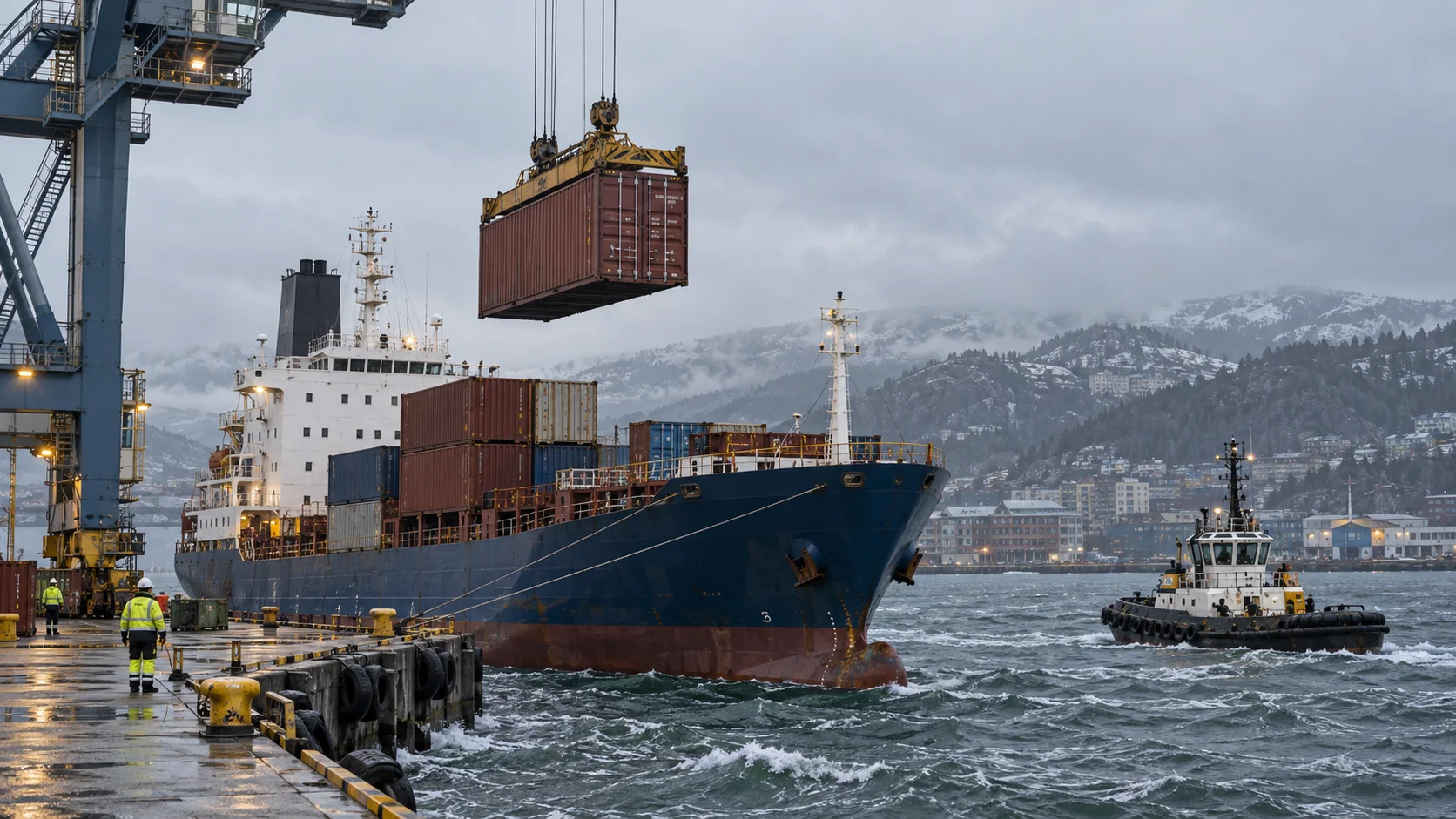
Oslo is a working container port, but it is not a deep-sea hub. No vessel sails from Oslofjord directly to Laem Chabang. Your shipment’s journey to Thailand actually begins with a short-sea hop, and you have two realistic origin routings:
Option one: feeder from Oslo. Your container (or consolidated LCL cargo) loads at the Port of Oslo onto a feeder vessel (a small container ship running a scheduled loop) down to one of the North Sea mega-hubs: Rotterdam, Hamburg or Bremerhaven. There it is discharged, staged, and reloaded onto the deep-sea vessel bound for Asia. The feeder leg itself is only a couple of days of sailing, but the realistic addition to your door-to-door time is 5 to 8 days once you include hub dwell time, the days your box sits in the stack at Rotterdam waiting for its connecting vessel.
Option two: truck to Gothenburg. Sweden’s biggest port is about 300 kilometres down the E6 from Oslo, and it hosts more direct deep-sea calls than Oslo does. Trucking your container overland to Gothenburg can shave hub-transfer time and occasionally beats the feeder on price, particularly for FCL when feeder space out of Oslo is tight. The trade-off is a customs wrinkle (the goods exit Norway by road at the Svinesund border rather than by sea) and road haulage costs that rise with fuel prices. For households in the Oslo region either routing works; for households in southern Norway (Kristiansand, Stavanger area), ask your forwarder to price both, because the answer flips depending on the month.
Either way, internalise this: your quoted “ocean transit time” almost never includes the feeder leg. When a forwarder says “35 to 40 days to Laem Chabang,” ask whether that clock starts in Oslo or in Rotterdam. The honest answer changes your planning by a week.
The Cape of Good Hope Problem: Why 45–55 Days Is the Real Number
There was a time when a container from Northern Europe to Thailand sailed through the Suez Canal and the whole ocean leg took around 30 to 35 days. That routing remains disrupted. Security conditions in the Red Sea have pushed the major carriers to route Europe–Asia services around the Cape of Good Hope, the long way around Africa, and that detour adds roughly 10 to 14 days to the deep-sea leg.
Stack the pieces of a Norwegian move and the arithmetic looks like this:
- Feeder Oslo → Rotterdam/Hamburg/Bremerhaven, including hub dwell: 5–8 days
- Deep-sea leg via the Cape to Laem Chabang: 38–45 days
- Total port-to-port: roughly 45 to 55 days
Add origin packing, export clearance, Thai import clearance and final delivery, and a sensible door-to-door planning figure is eight to ten weeks. Two consequences follow. First, book early: during the summer moving season, feeder and deep-sea space out of Northern Europe fills weeks ahead. Second, think hard about what goes in your suitcases versus the container, because you will live for two months or more on what you carry: documents, medications, laptops, a capsule wardrobe for the tropics, and anything you cannot cheerfully do without until October, in hand luggage and checked bags, not the box.
Thailand’s Duty-Free Door: Rules Worth Memorising
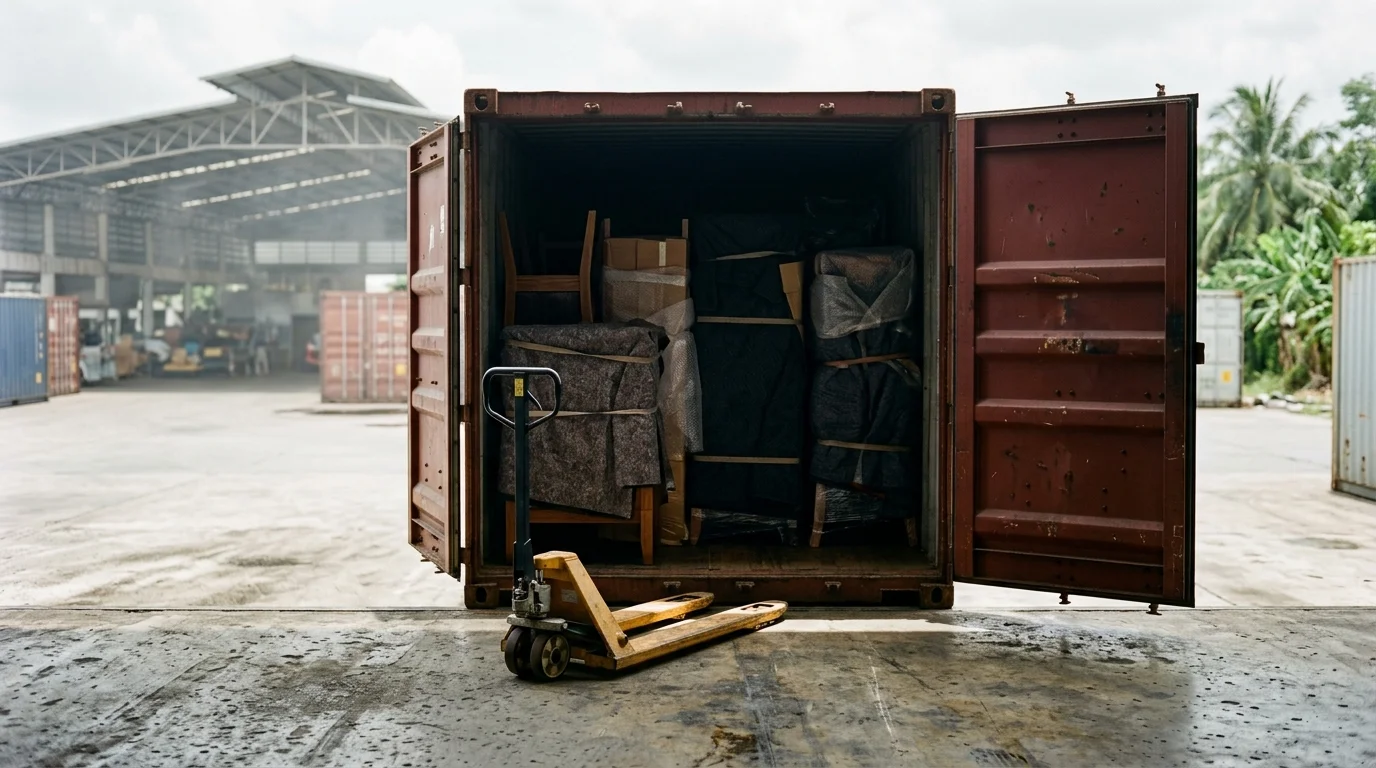
Thailand allows returning residents and qualifying foreigners to import used household effects free of duty, and for a move of this distance the allowance is worth real money. Thai Customs applies the rules narrowly, so learn them properly:
- Ownership and use. Goods must be used personal or household effects that you owned and used before the move. This is an ownership-and-use test. Your five-year-old Jøtul-adjacent furniture qualifies. The espresso machine you bought in the January sales, still boxed, does not.
- The six-month window. Your shipment must arrive in Thailand between one month before and six months after your own arrival. With 45–55 day transits, this is comfortable if you ship around the time you fly, and dangerously tight if you “settle in first and ship next spring.” The window runs from your entry date, not your visa issue date.
- Qualifying visa. Thai Customs looks for a full one-year Thai work permit (in practice with a Non-Immigrant B). Retirement and marriage-based Non-O visas, elite cards and tourist entries do not qualify.
- One sea shipment per family. The concession covers one consignment. Consolidate; do not plan a second container of the stuff you forgot.
- Reasonable quantities. One household’s worth of any item. Eight lamps reads as a household. Forty reads as a shop, and Thai Customs will price it accordingly.
Expect a physical or X-ray inspection at Laem Chabang or Bangkok as routine, not as a sign of trouble. A clean, detailed, honest packing list is what turns inspection into a formality.
What Not to Ship: Aquavit, Skis, and Boxes That Still Smell of Shrink-Wrap
The aquavit problem (and the wine cellar)
Thailand permits one litre of alcohol per adult, carried personally. That is the whole allowance. Alcohol packed into a freight shipment is not covered by the household-effects concession; it attracts import duty plus Thai excise tax that together can exceed the value of the bottle, and it can hold your entire consignment in clearance while the alcohol line items are assessed. Your linje-aquavit has already crossed the equator twice by tradition; do not send it a third time in a container. The realistic options: drink it at the farewell party, gift it, sell it, or leave it in a relative’s cellar. Same verdict for the wine. Carry one good bottle in your suitcase and make it count.
The ski decision
Here is a sentence to sit with: there is no snow in Thailand. Your cross-country skis, alpine setup, pulk, snowshoes and winter-mountain gear will do nothing in Chonburi except occupy cubic metres you are paying for and corrode gently in the humidity. Run the honest calculation. Shipping 1 m³ of ski equipment both ways (because you will ship it back or replace it) costs more than a season’s rental in Hemsedal when you visit at Christmas. Unless you are a serious skier who will fly to Japan every winter (in which case ship your boots only, since boots are the fit-critical item, and rent skis), the right answer is almost always storage in Norway. A family member’s loft is free. A small storage unit costs a few hundred kroner a month. Both beat freighting winter to the tropics.
New goods in original packaging
The duty-free concession covers used effects. Anything new, in OEM boxes with intact seals, invites Thai Customs to reclassify it as a commercial import: dutiable at full rates, with your receipts requested. If you genuinely want to bring something new (a laptop, a phone), unbox it, use it for months, and pack it as the used item it now is. Do not ship a pallet of sealed IKEA flat-packs and hope. Buy furniture in Thailand; it is well-made, tropical-appropriate and inexpensive.
Climate Shock: Preparing a Cold-Country Household for 90% Humidity
This is the part of the move that is uniquely Nordic, so let us treat it seriously. Your possessions were acquired for a climate that swings from -15°C and bone-dry indoor heating to mild damp summers. They are about to live at 30°C and 70–90% relative humidity, all year.
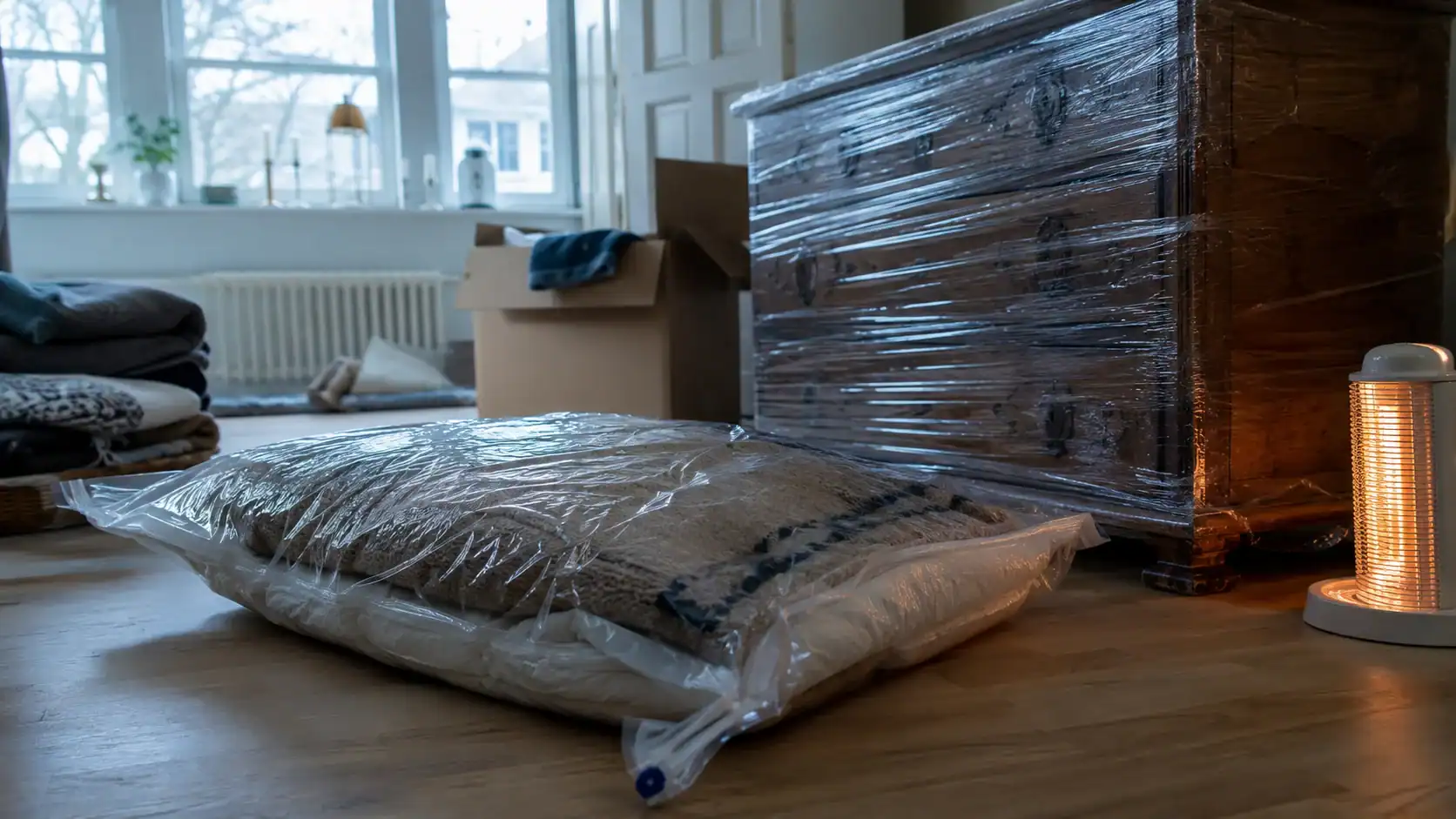
Wool and down. Be ruthless first: most of the heavy wool (the lusekofte collection, the winter base layers, the -20°C parkas) belongs in storage in Norway, not in the container. Keep a small cold-weather kit for trips home (one good jacket, one wool layer, gloves) and for northern-Thailand cool-season mornings, which can genuinely surprise you in Chiang Mai. Whatever wool and down you do ship, vacuum-pack it: clean and completely dry first (any residual moisture becomes mildew in a sealed bag on a six-week voyage), then compressed bags with a silica gel sachet inside each one. Vacuum-packing protects against humidity in transit, saves volume you are paying for by the cubic metre, and gives the contents a fighting chance in a Thai wardrobe, where, incidentally, you should plan on a dehumidifier or air-conditioned storage for anything wool or down long-term.
Leather. Leather sofas, jackets, boots and bags will drink the humidity. Expect leather goods to arrive slightly stiff or bloomed with a light surface mould if packed damp. Clean and condition everything before packing, wrap in breathable paper (never plastic film directly against leather), and condition again on arrival. In the house, leather lives longest in rooms that get regular air-conditioning.
Wood furniture. Norwegian solid-wood furniture (pine, birch, oak) has spent its life at low indoor humidity. In Thailand it will absorb moisture and swell: drawers stick, joints move, veneers can lift, and hairline cracks appear as the wood equilibrates. Most pieces survive fine, but give them the transition gently. Do not park a solid-wood dresser against an exterior wall in an un-air-conditioned room during its first rainy season. Let it acclimatise somewhere with moderated humidity, wax or oil the surfaces, and accept that a little movement is normal. Antiques or pieces with sentimental weight deserve a conversation with your forwarder about desiccant packs in the container and, for FCL, whether a ventilated stow position is available. And be honest about the aesthetic question too: heavy dark Nordic furniture in a bright Thai townhouse is a look you should choose deliberately, not inherit by default.
The good news: your plugs work
One genuine mercy in this move. Norway runs on 230V/50Hz with Type F (Schuko) plugs. Thailand runs on 220V/50Hz, comfortably inside tolerance for essentially all modern appliances, and Thai sockets, especially the universal-style outlets in newer condos and houses, accept Type F pins along with Types A, B and C. Your lamps, kitchen appliances, chargers and power tools will almost all work without transformers. Two caveats: older Thai buildings may have two-pin ungrounded sockets, so pack a handful of Schuko adapters and a couple of good-quality grounded power strips from Clas Ohlson before you leave; and check anything with a motor or heating element for a voltage plate reading “220–240V,” which nearly everything sold in Norway carries. Leave behind anything that only earns its keep in winter: the heated boot dryer is not coming.
LCL or FCL? Volume Guide and Costs in NOK and EUR
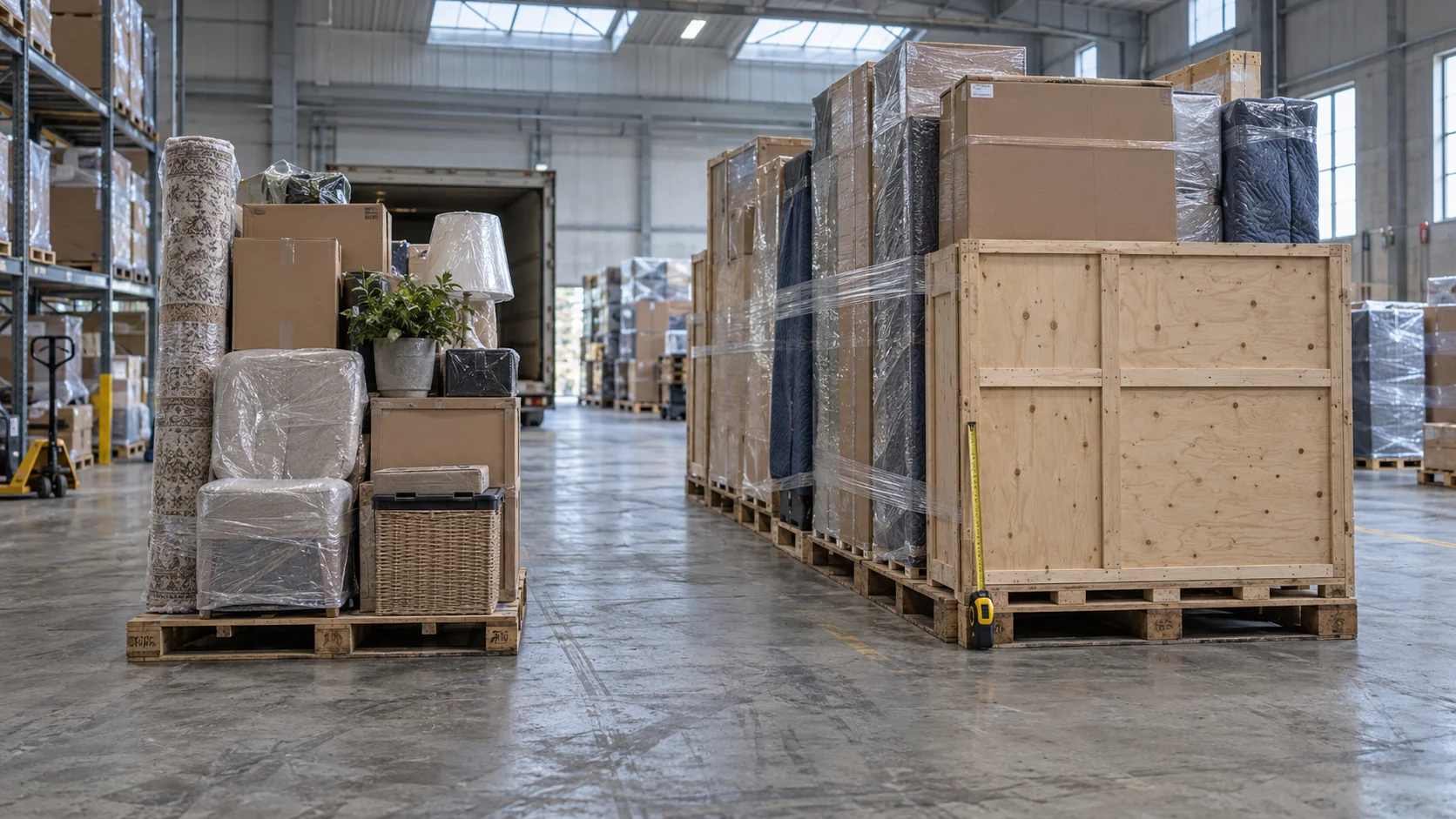
The structural choice in any sea move: share a container (LCL: less than container load, priced per cubic metre) or take a whole one (FCL: full container load, flat rate per box).
Rules of thumb by household:
- Under 5 m³ (a studio’s worth, or a heavily pruned one-bedroom): LCL, clearly.
- 5–12 m³ (one-to-two-bedroom flat after honest decluttering): LCL still wins on price for most.
- 12–14 m³: the crossover zone. Get both quotes; a 20ft container often costs about the same as LCL here and gives you a sealed box, no shared handling, and usually faster clearance.
- 14–28 m³ (full family house contents): 20ft FCL (about 28 m³ usable, ~33 m³ nominal).
- Above 28 m³: 40ft container, though ask yourself hard whether a Norwegian winter household really needs to move 40 feet of itself to the tropics. Most do not.
Indicative door-to-door costs, Oslo to Laem Chabang / Bangkok, including feeder or trucking leg, ocean freight, standard export and import clearance and normal delivery, but excluding Thai duties on non-qualifying items and insurance:
| Shipment | Typical volume | NOK (approx.) | EUR (approx.) |
|---|---|---|---|
| LCL (small) | 3 m³ | 18,000–28,000 | 1,550–2,400 |
| LCL (medium) | 8 m³ | 40,000–55,000 | 3,450–4,750 |
| LCL (large) | 12 m³ | 55,000–75,000 | 4,750–6,450 |
| FCL (20ft container) | up to ~28 m³ | 75,000–105,000 | 6,450–9,050 |
| FCL (40ft container) | up to ~58 m³ | 110,000–150,000 | 9,500–12,900 |
Treat these as planning bands, not quotes: rates move with fuel surcharges, Cape-routing capacity and season. Marine insurance typically adds 2.5–3.5% of your declared inventory value and is worth every øre on a two-ocean voyage.
A worked example: family of three, Nordstrand to Hua Hin
A couple with one child leave a three-bedroom rowhouse in Nordstrand, Oslo. After a proper cull (skis and winter kit to a parent’s loft in Lillehammer, aquavit distributed at the farewell dinner, the sofa sold on Finn.no because leather plus humidity plus a new life felt like the moment), they measure out at 16 m³: beds, the dining table that was a wedding gift, kitchenware, books, bikes, vacuum-packed clothing and the children’s-room universe.
At 16 m³ they are past the crossover, so they book a 20ft FCL:
- Origin packing and wrapping, Oslo: NOK 14,000
- Door-to-door 20ft, Oslo → feeder Rotterdam → Laem Chabang, incl. Norwegian export declaration and Thai clearance: NOK 88,000
- Marine insurance (declared value NOK 350,000 @ 3%): NOK 10,500
- Delivery and unpacking, Hua Hin: NOK 7,500
- Total: about NOK 120,000 (≈ EUR 10,300)
Timeline: packed 20 June, feeder sails 26 June, deep-sea vessel departs Rotterdam 3 July, arrives Laem Chabang 12 August via the Cape, cleared duty-free on the working parent’s one-year work permit 19 August, delivered 21 August. That is sixty-two days door to door, inside the eight-to-ten-week planning window, and comfortably inside the six-month customs window after their 1 July arrival in Bangkok.

Visas: The Freight Question Hiding Inside the Immigration Question
Your visa is not just permission to live in Thailand. It is the legal basis on which your container clears duty free.
Non-Immigrant O. This is the workhorse for Norwegians over 50 (retirement basis) or those with a Thai spouse or family grounds. Financial requirements for the retirement path (800,000 THB in a Thai bank or a qualifying monthly income) are straightforward for most Norwegian retirees, and NAV pensions paid abroad generally satisfy the income route (check your own tax and pension position with Skatteetaten and NAV before relying on this). Whether you qualify on the retirement basis or the spouse/family basis, this Non-O route is excluded from Thai Customs’ standard duty-free household concession criteria and does not qualify on either basis.
LTR: Long-Term Resident visa. This is a 10-year visa aimed at wealthy global citizens, wealthy pensioners, remote workers for large foreign companies, and high-skilled professionals. Here is the quietly relevant point for this audience: the LTR’s wealth and income thresholds (for instance the wealthy-pensioner category’s passive-income requirement of roughly USD 80,000 a year) are pitched at levels that a Norwegian with a full pension, some fund savings and the proceeds of a sold Oslo flat can plausibly meet, where they would be a stretch for many other nationalities. If your numbers fit, the LTR buys you a decade of stability and lighter reporting; duty-free clearance still turns on holding a one-year work permit. Worth investigating before you default to the Non-O.
What not to do: arrive visa-exempt as a tourist “to sort things out” while your container is on the water. A tourist entry does not support duty-free clearance. Converting status in-country while a shipment waits at Laem Chabang is an expensive way to learn about sequencing, and storage charges accrue by the day. Swift Cargo can talk through the sequencing for your specific visa and shipping timeline.
Five Common Mistakes, Named and Numbered
1. The Premature Deregistration. It means filing the melding om flytting til utlandet before the Thai visa is granted. If the visa slips, you are administratively half-departed with a shipment plan built on a date that no longer exists. Visa first. Always.
2. The Rotterdam Clock. It means believing the “35–40 day” transit quote without asking where the clock starts. From Oslo, the feeder leg and hub dwell add 5–8 days before the deep-sea voyage even begins, and Cape routing has already added 10–14 to that voyage. Plan on 45–55 days port to port and eight to ten weeks door to door, and be pleasantly surprised, not desperately improvising in an empty condo.
3. The Container of Winter. It means paying by the cubic metre to ship skis, parkas and duvets to a country whose cold season tops out around 22°C. Storage in Norway costs less than freight both ways, and everything wool that does travel should be vacuum-packed against the humidity it is about to meet.
4. The Farewell Case of Wine (in Box 47). It means tucking aquavit and wine into the household shipment “because customs never checks everything.” Thai Customs checks enough. Alcohol in freight means excise assessment, duty, potential licensing questions and a delayed consignment. One litre, carried, is the allowance. Respect it.
5. The Springtime Shipment. It means flying to Thailand in August, settling in, and shipping the household “once we have found the right house”, in March. The duty-free window closes six months after your arrival. Ship around the time you fly, use temporary furnished housing at the Thai end, and let the container’s eight-week transit be your house-hunting period.
Estimated Moving Costs: Norway to Thailand
| Home size | Estimated cost (NOK) |
|---|---|
| 2 bedroom | NOK 4,980–11,090 |
| 3 bedroom | NOK 4,500–9,500 |
| 4 bedroom | NOK 6,830–12,470 |
| 5 bedroom | NOK 9,130–16,630 |
These are door to door estimations, not port to port. They include standard packing and customs clearance on both ends, and assume an origin and destination reasonably near the port on both sides; a move to or from a more remote location may cost more. Treat these as budgets, not final pricing. The final cost depends on the quantity and nature of what you are shipping, service availability, and sea freight rates at the time of your move. These figures are based on average home sizes from past moves and may not reflect your own home. Timing and availability can also materially affect the price, and in some cases whether we are able to complete the job on your preferred timeline. For an accurate quote, contact our team or start our online self service quote, a short survey about your move that takes about four minutes and lets our team provide a real quote based on your specific details.
Related Reading
- Shipping from Europe to Thailand: Routes, Costs and Transit Times
- Moving from Sweden to Thailand: The Complete Guide
- Moving from Denmark to Thailand: Freight and Customs Guide
- Thailand Duty-Free Import Rules for Household Goods
- What It Costs to Move from Europe to Thailand
- Thailand Relocation Guide 2026

Frequently Asked Questions
How long does shipping from Norway to Thailand take?
Plan on 45 to 55 days port to port. Cargo from Oslo travels by feeder vessel to Rotterdam, Hamburg or Bremerhaven (adding 5 to 8 days including hub dwell), then joins a deep-sea service that currently routes around the Cape of Good Hope, adding 10 to 14 days versus the old Suez routing. Door to door, budget eight to ten weeks.
Do I need to deregister from Folkeregisteret before moving to Thailand?
Yes, if you are leaving for more than six months you must file a melding om flytting til utlandet with Folkeregisteret via Skatteetaten. Do it in the final weeks before departure, after your Thai visa is secured. Note that deregistration does not end Norwegian tax residency. Under the three-year rule, most long-term residents remain tax resident for up to three full income years after leaving.
Can I import my household goods into Thailand duty free?
Only with a qualifying status: a full one-year Thai work permit (in practice with a Non-Immigrant B). Retirement and marriage-based Non-Immigrant O visas do not qualify. The goods must be used household effects owned and used before the move, arriving between one month before and six months after your arrival. One duty-free sea shipment per family. New items in original packaging are dutiable.
Is LCL or FCL cheaper from Oslo to Laem Chabang?
Below roughly 12 to 14 cubic metres, LCL is usually cheaper, at around NOK 40,000–55,000 for a typical 8 m³ shipment door to door. Above that, a 20ft container (NOK 75,000–105,000) often matches LCL pricing while giving you a sealed box with no shared handling.
Will my Norwegian plugs and appliances work in Thailand?
Almost all of them. Norway’s 230V/50Hz Type F (Schuko) equipment is compatible with Thailand’s 220V/50Hz supply, and most modern Thai sockets accept Type F pins. Bring a few Schuko adapters for older two-pin sockets, and leave winter-only appliances behind.
Can I ship aquavit or wine in my household shipment?
No. Keep alcohol out of the container. Thailand’s personal allowance is one litre per adult, carried with you. Alcohol in freight attracts import duty and steep Thai excise tax and can delay clearance of the entire shipment.