
Australia imports more solar panels from China than from any other origin by a margin that makes comparison almost meaningless. What Australian importers routinely underestimate is the compliance complexity between placing the order and opening a distribution account with the first installer. The importer who checks the CEC Approved Products List and the anti-dumping register before issuing the purchase order doesn’t scramble at customs. The one who encounters either for the first time when goods are sitting at Port Botany pays for the lesson twice: once in clearance delays and again in the margin it costs to resolve them. To import solar panels from China to Australia without that second bill, run the HS classification, Form CI, ADC register, CEC listing and inverter EESS checks before the purchase order is issued.
Product Classification: Getting the HS Code Right Before You Order
The HS code controls your duty rate, your anti-dumping exposure, and your customs documentation requirements. For solar equipment imports from China, the primary classifications are:
- Solar panels / photovoltaic modules: HS 8541.43 (updated in the 2022 HS revision; previously classified under 8541.40). Monocrystalline, polycrystalline, PERC, TOPCon, and HJT cells assembled into complete modules.
- Solar inverters: HS 8504.40. Static converters for grid-connected and off-grid applications: string inverters, central inverters, and microinverters all classify here.
- Battery energy storage systems: HS 8507.60 (lithium-ion), depending on configuration and system integration; 8507.20 is lead-acid. The classification depends on whether the product is imported as cells, battery modules, or a complete system with integrated power conversion.
- Mounting structures and racking: HS 7308.90 (steel), HS 7610.90 (aluminium) or HS 8302 depending on material and configuration. Aluminium racking for rooftop installation typically classifies under 7610.90.
Classification errors create downstream problems: incorrect duty declarations, mismatched anti-dumping register queries, and examination flags at the Australian border. Your customs broker should assign classification with written confirmation based on the actual product specifications before you finalise the order, not assign it retrospectively when preparing the customs entry. The HS code on the commercial invoice, the packing list, and the customs entry must be consistent.
For importers sourcing panels, inverters, and mounting hardware in a single shipment, each product category requires its own line on the commercial invoice with its HS code, quantity, unit value, and total value stated separately. Bundling all three under a single invoice line is a documentation failure that creates clearance complications. The full documentation framework for importing from China to Australia covers the complete commercial invoice requirements across product categories.
ChAFTA Duty Treatment and the Certificate of Origin Requirement
The China-Australia Free Trade Agreement (ChAFTA) provides preferential tariff rates for goods of Chinese origin. For most solar equipment categories, ChAFTA reduces the applicable duty rate to 0%, but only when the importer holds a valid Form CI (Certificate of Origin) issued by an authorised body in China. For imports into Australia, DFAT lists two: the General Administration of Customs of China and the China Council for the Promotion of International Trade (CCPIT).
Without a Form CI, the most-favoured-nation (MFN) rate applies. The current MFN tariff rate for each HS code is available through the Australian Border Force Tariff Reference at abf.gov.au. Assembled panels (8541.43.00) carry a Free general rate even without it, so the Form CI matters on 5% lines such as lithium-ion batteries (8507.60): on a AUD 500,000 FOB shipment that is AUD 25,000.
ChAFTA rules of origin require goods to satisfy either a Regional Value Content (RVC) threshold or a Change in Tariff Classification (CTC) test. For solar panels manufactured in China using Chinese-origin cells, the origin test is typically met. For panels assembled in China from third-country cells (sourced from Taiwan, South Korea, Malaysia, or Vietnam), the supplier must confirm that the rules of origin test is still satisfied before issuing a Form CI. A Form CI issued without a documented origin determination is a customs compliance liability for the Australian importer, not just the Chinese exporter.
Anti-Dumping Exposure: What the ADC Register Means for Solar Importers
The Australian Trade Remedies Commission investigates and administers anti-dumping and countervailing duties on goods exported to Australia at below-normal value, or subsidised by the exporting government. It was the Anti-Dumping Commission (ADC) until 29 September 2026, and “ADC register” below means its Dumping Commodity Register. The 2014 investigation into Chinese PV modules (EPR 239) was terminated in 2016.
Anti-dumping duties are levied as a percentage of the customs value and apply in addition to the standard tariff rate. Where measures are active, the additional duty can range from 10% to more than 40% of the customs value depending on the specific exporter and product category. An importer who brings in goods subject to active anti-dumping measures without accounting for that duty faces a retrospective customs liability that can eliminate the entire margin on a shipment.
The failure mode is predictable: the supplier doesn’t volunteer the anti-dumping status, the customs broker doesn’t check at pre-order stage, and the measure is discovered at clearance when the options are limited to paying the duty or refusing the goods. Neither outcome is recoverable.
Before placing any solar equipment order from China, run the following check: search the Dumping Commodity Register for your specific HS code and country of origin. Review active measures, measures under review, and recent investigation outcomes. This takes 15 minutes and has a defined payoff: an ADC measure on your product category that you discover before ordering allows you to reprice, requalify a non-affected supplier, or adjust your margin model. Discovering it at clearance eliminates all three options.
When we checked the register on 16 October 2026, none of the three main product lines in this guide carried a measure: PV modules (8541.43), inverters (8504.40) and lithium-ion batteries (8507.60) were absent. The exposure sits in the mounting structure. The Aluminium Extrusions measures (China, Malaysia and Vietnam) list 7610.90.00, the heading used above for aluminium racking, and several steel measures list 7308.90.00, the steel racking heading. Whether a given profile is caught depends on each measure’s goods description and exclusions, so send your broker the drawing before ordering.
CEC Approved Products: The Commercial Gateway for STC Eligibility
The Clean Energy Council (CEC) maintains an Approved Products List of solar panels, inverters, and battery systems assessed against Australian technical requirements. For the residential and commercial rooftop solar market, CEC listing is the commercial gateway, not because it is legally required for all imports, but because it determines eligibility for Small-scale Technology Certificates (STCs) under Australia’s Small-scale Renewable Energy Scheme (SRES).
STCs are created for eligible solar system installations and are typically assigned to the installer or retailer, who passes them on to the buyer as a point-of-sale discount. The value varies by system size, postcode zone, and current STC market pricing. For a 6.6 kWp residential system installed in a Zone 3 postcode, the STC value runs approximately AUD 1,600–1,800 in 2026 (about 45 STCs). For a 99 kWp commercial rooftop, the STC value is roughly AUD 23,000–27,000. Products not on the CEC Approved Products List cannot generate STCs for any installation. That fact directly determines whether installers will stock and sell your product.
The CEC listing process requires the manufacturer to submit performance test reports from an ILAC-accredited laboratory, third-party safety certifications, and detailed product specifications. Each model variant requires its own listing. Processing time is typically 6–12 weeks. A Chinese supplier who tells you their products are “CEC approved” without providing a current listing URL should be treated as unverified: search the CEC database directly at cleanenergycouncil.org.au for the specific model and verify that the listing is current (not expired or under review).
For commercial and utility-scale projects not participating in the SRES (ground-mounted solar above the STC threshold, large-scale generation projects, or export-oriented systems), CEC listing is not legally mandatory. But government procurement specifications, project finance covenants, and EPC contractor requirements frequently mandate it. Review the project documentation before assuming an unlisted product is acceptable in a non-residential channel.
The STC threshold is no longer 100 kW for new installations. For mid-scale solar installed from 1 October 2026, the Clean Energy Regulator has extended the Small-scale Renewable Energy Scheme to 1 MW, with a fixed 5-year deeming period for systems of 100 kW to 1 MW. The panels, batteries or inverters must be on the CEC approved list, and STC applications are expected to open in mid to late November 2026. For an importer, CEC listing now matters on commercial rooftop orders up to 1 MW as well as residential ones.
EESS and AS/NZS 4777.2 Compliance for Grid-Connected Inverters
Australia’s Electrical Equipment Safety System (EESS) is a national framework administered by state and territory electrical safety regulators. It sorts household-type equipment into three risk levels. Level 2 and Level 3 items must be registered in the national EESS database, and Level 3 items need a Certificate of Conformity. Anyone importing in-scope equipment must be a registered responsible supplier and mark the equipment with the Regulatory Compliance Mark (RCM).
Grid-connected solar inverters are not a named equipment type on the current list (version 4.3, July 2024); the only photovoltaic entry is the household DC isolator, at Level 3. In December 2021 the Electrical Regulatory Authorities Council and the EESS Standing Committee of Officials stated that solar PV inverters incorporating DC isolators do not need certification to AS/NZS 4777.2:2020 to be sold or installed. The supplier must instead declare compliance, including that the DC isolators meet AS 60947.3:2018, and responsibility for that declaration stays with the supplier.
The commercial gate is separate: the Clean Energy Council lists compliant inverters for installation under the SRES, and an inverter missing from that list is hard to sell to any installer who claims STCs. The 2021 statement is almost five years old, so ask your state electrical safety regulator whether it still describes the position for your model, and whether the model counts as in-scope equipment. If it does, your business must be a registered responsible supplier on the EESS platform at eess.gov.au, which costs AUD 239.74 a year from 1 July 2026 and requires an Australian or New Zealand legal entity with an ABN. Nothing a previous Australian distributor held for the same product transfers to you automatically, so confirm in writing with them and the state regulator.
Importing Solar Battery Systems: A Different Compliance Pathway
Battery energy storage systems (BESS) from China require a different compliance approach from panels and inverters. The relevant Australian standard is AS/NZS 5139 (Safety of Battery Systems for Use with Power Conversion Equipment), which governs stationary battery installations in residential and commercial premises. BESS classification under EESS depends on the specific system configuration; confirm the regulatory pathway with a compliance advisor for your product before importing.
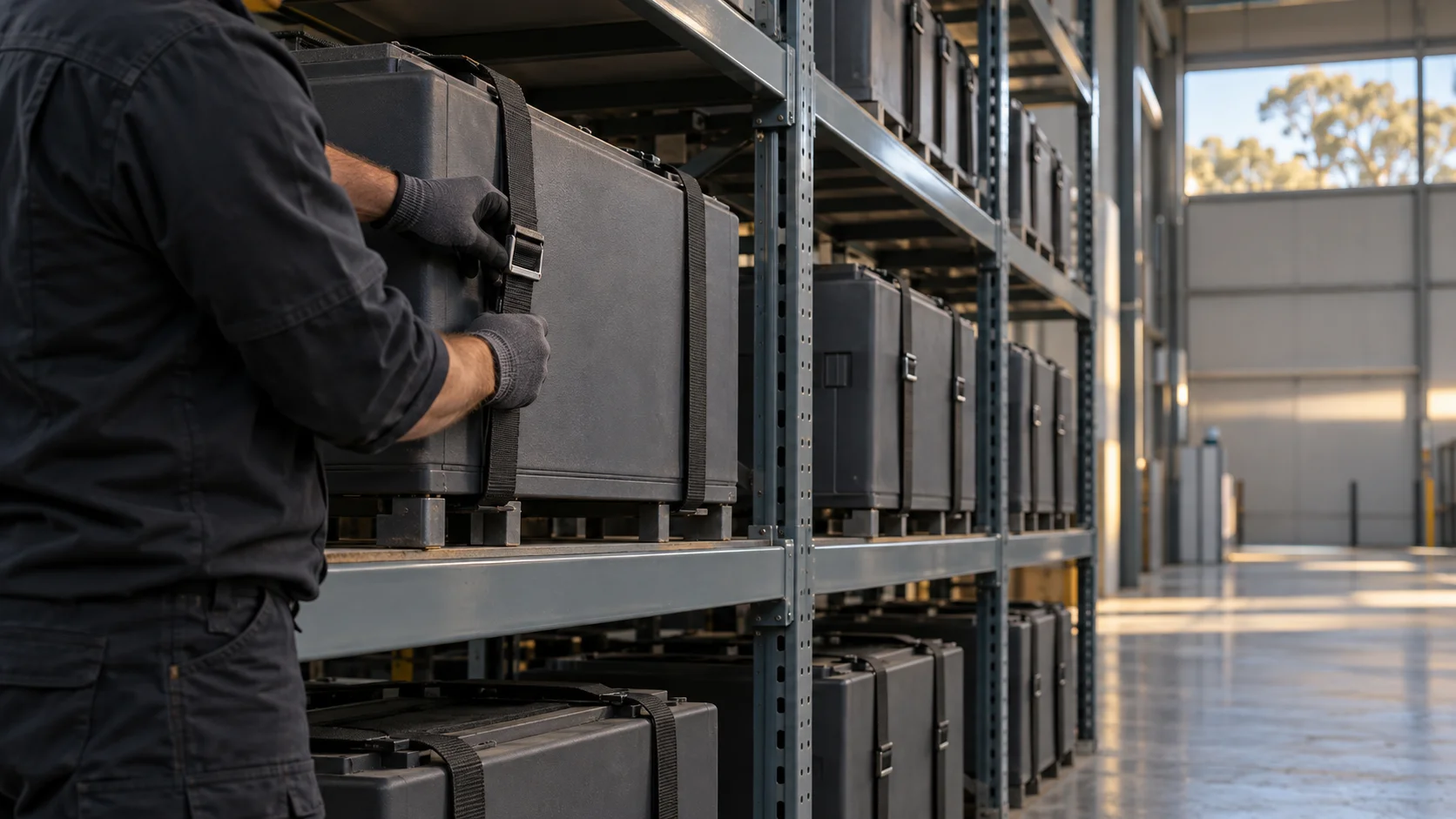
Transport adds a compliance layer that panel and inverter imports do not have. Lithium-ion battery shipments are classified as dangerous goods, Class 9, UN3480 (lithium-ion batteries) or UN3481 (lithium-ion batteries packed with or contained in equipment). Sea freight of lithium-ion batteries is governed by the IMDG Code; air freight by IATA DGR. Both impose packaging, labelling, documentation, and stowage requirements that your factory must meet and that your freight forwarder must confirm at booking.
State of charge (SoC) limits are written into the air rules. The IATA Battery Guidance Document for the 2026 regulations requires lithium-ion batteries shipped alone (UN3480) to be offered at no more than 30% SoC, and from 1 January 2026 applies the same limit to batteries packed with equipment (UN3481). Ask the forwarder for the carrier’s SoC condition at booking, and have the factory state the SoC at shipment in its pre-shipment documentation. A BESS shipment that arrives charged above the level the carrier accepts creates both delay and liability.
Customs classification for BESS is typically HS 8507.60 for lithium-ion battery systems, but the specific subheading depends on whether the product is imported as battery cells, modules, or integrated battery-plus-inverter systems. Integrated hybrid inverter-BESS units may classify under a different HS heading from standalone batteries. Your customs broker should obtain a binding tariff ruling from Australian Border Force before importing an integrated BESS product for the first time.
Pre-Shipment Documentation and Inspection Checklist
The documentation package for solar equipment clearance through Australian customs includes:
- Commercial invoice with HS code per line, unit and total values, CIF terms stated, Chinese exporter and Australian importer details
- Packing list with carton count, pallet count, gross and net weights, dimensions
- Bill of lading (or airway bill for air shipments)
- Form CI: ChAFTA Certificate of Origin issued by China Customs or CCPIT
- CEC product listing confirmation (model reference matching the invoice description exactly)
- Supplier declaration of compliance with AS/NZS 4777.2:2020 (for inverters)
- Test reports: IEC 61215 and IEC 61730 for panels; AS 4777.2 assessment for inverters
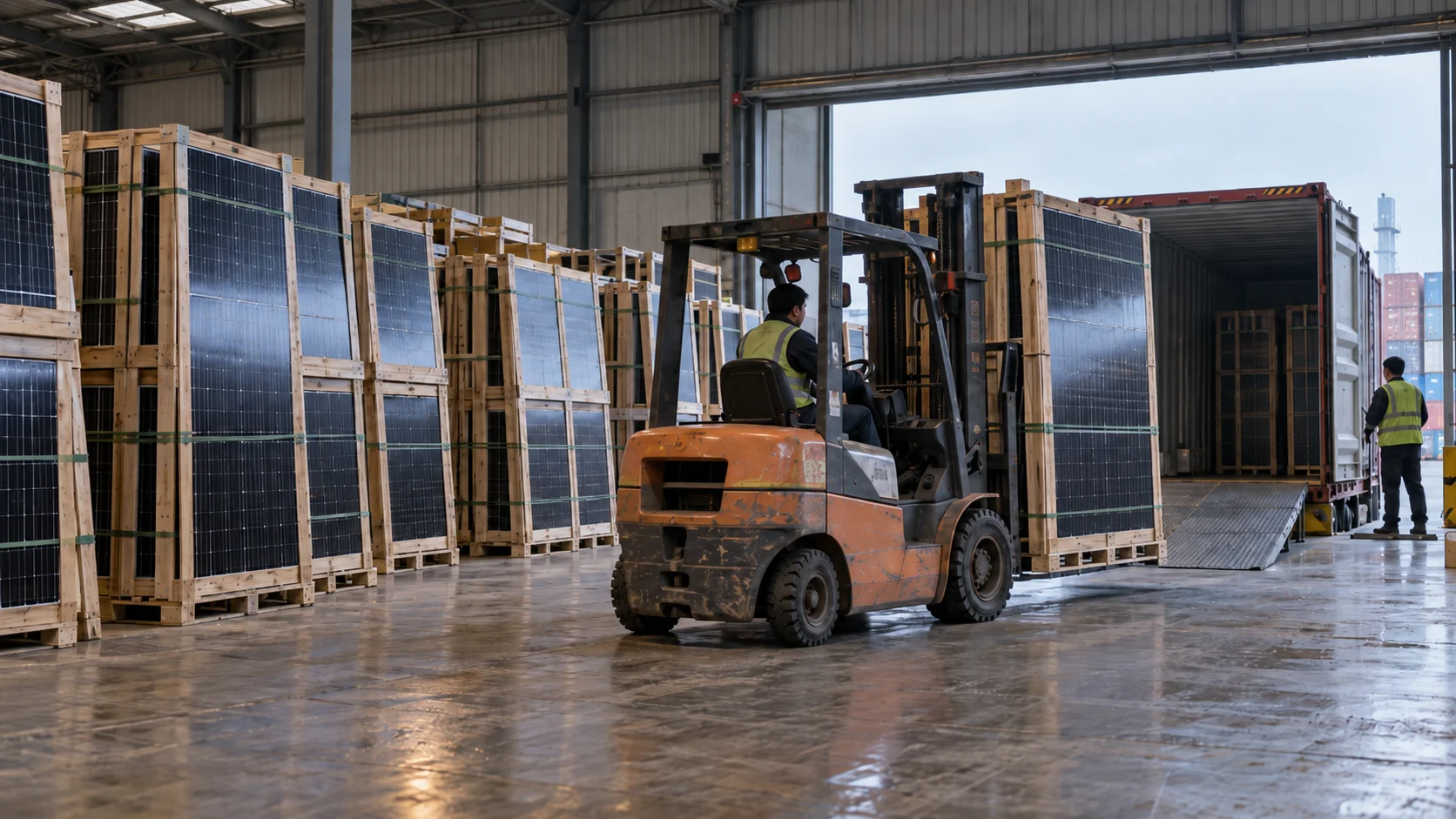
- ISPM 15 timber treatment certification for all wooden packing materials
Pre-shipment inspection (PSI) for solar panels should include visual AQL sampling for delamination, framing defects, and glass damage; serial number recording against the packing list; carton and pallet integrity check; and confirmation of ISPM 15 timber treatment markings. For higher-value shipments, electroluminescence testing during PSI is the only reliable method for detecting micro-cracks in panels, damage that passes visual inspection at loading but manifests as underperformance and warranty claims after installation.
For the full supplier verification framework (including how to validate that your Chinese manufacturer’s CEC and EESS certification is genuine rather than fabricated), see how to verify a supplier before shipping from China.
Container and Freight Planning for Solar Equipment
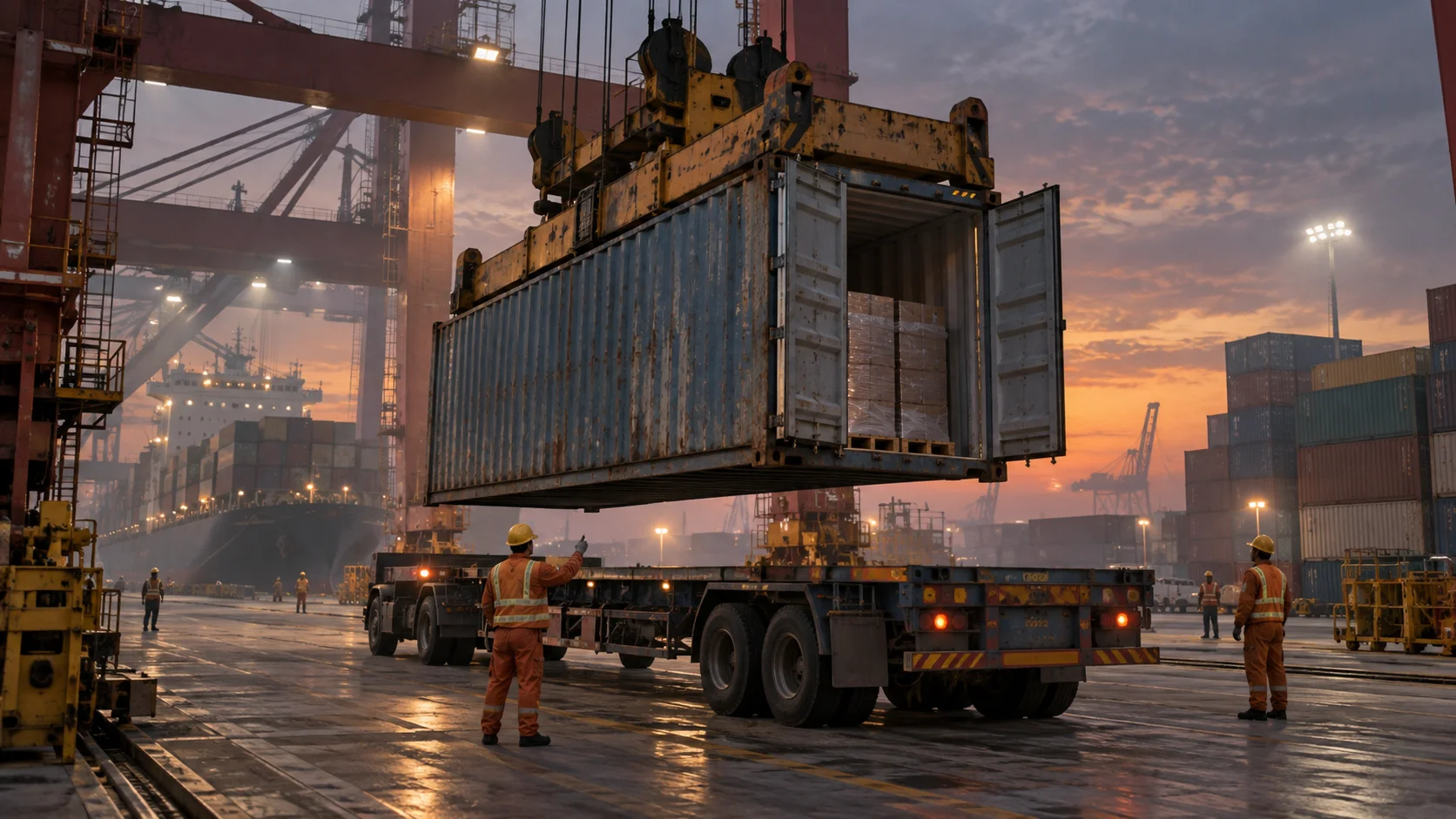
Solar panels are high-volume, moderate-weight cargo. The economic freight mode for any volume above approximately 4 CBM is sea freight FCL. Air freight for solar panels is only viable for urgent replacement stock or small quantities of high-value inverters: the AUD-per-watt air premium makes bulk panel imports uneconomic by any margin model.
Container loading specifications:
- 20ft standard container: 200–250 panels (380W–420W), approximately 4,200–5,500 kg gross weight, approximately 15–18 CBM volume.
- 40ft high-cube container: 450–550 panels, approximately 9,500–12,000 kg gross weight, approximately 32–36 CBM volume, the preferred format for bulk programs. Per-panel freight cost in a 40ft HC is approximately 35–40% lower than a 20ft on the same route.
Pallet configuration and stacking height must be agreed with the factory before container stuffing. Over-stacked pallets create weight distribution and damage risk. Under-utilised containers inflate the per-unit freight cost. Your freight forwarder should specify container loading instructions in the booking documentation.
Transit times from main Chinese solar manufacturing regions to Australian east coast ports: Shanghai/Yantian to Sydney or Melbourne, 18–22 days; Guangzhou Nansha to Sydney, 15–19 days. Add 2–5 days for port dwell and loading at origin, and 2–8 days for Australian customs clearance depending on pre-arrival lodgement and examination selection. Total factory-to-warehouse lead time under normal conditions: 22–35 days. For freight mode choice across different shipment volumes, the LCL vs FCL decision framework for Australian importers covers the volume thresholds and cost comparison in detail.
Customs Clearance and DAFF Biosecurity for Solar Imports
Solar panels and inverters are not high-risk biosecurity goods under DAFF’s import requirements. The biosecurity risk in solar imports comes from the packaging: timber pallets without valid ISPM 15 heat-treatment markings will be stopped at the Australian border. All timber packaging from China must carry the ISPM 15 mark, a burnt-in stamp showing the country code, producer identification, and treatment method (HT for heat treatment or MB for methyl bromide). Non-compliant timber packaging results in mandatory fumigation at the importer’s cost (AUD 2,000–5,000 per container) and a clearance delay of 3–7 days. Confirm ISPM 15 compliance at pre-shipment inspection.
Pre-arrival lodgement is the primary lever on clearance timeline. Filing the import declaration electronically through the ABF Integrated Cargo System before the vessel berths reduces clearance from a 1–2 day post-arrival processing queue to 4–8 hours for green channel cargo. Your customs broker should routinely lodge pre-arrival for all sea freight shipments. For the complete clearance timeline breakdown and how examination selection affects delivery windows, see how long customs clearance takes in Australia.
Total Landed Cost Framework for Solar Equipment from China
The total landed cost for solar equipment from China includes line items that don’t appear on the supplier quote or the freight booking:
Example: AUD 200,000 CIF shipment: 500 × 400W commercial panels, 40ft HC container, Sydney port
- CIF value: AUD 200,000
- Customs duty (8541.43.00, general rate Free): AUD 0
- Anti-dumping duty (if applicable; verify ADC register): AUD 0 to AUD 80,000+ depending on active measures
- GST (10% on CIF + duty): AUD 20,000
- Customs broker fee: AUD 400–900
- Port terminal handling charges (Sydney): AUD 900–1,500
- Container cartage (port to warehouse, within 20 km): AUD 500–1,200
- Pre-shipment inspection: AUD 750–1,350 (USD 500–900 converted at spot)
- EESS responsible supplier registration (AUD 239.74 a year from 1 July 2026, amortised over multiple shipments): AUD 100–400
- CEC Approved Products List application (amortised): AUD 50–200
- Fumigation provision for ISPM 15 non-compliance: AUD 0 (if confirmed at PSI) to AUD 5,000 (if not confirmed)
Total landed cost (excluding anti-dumping, excluding fumigation risk): AUD 222,700–225,550, or approximately AUD 445–451 per 400W panel delivered to a Sydney warehouse. Anti-dumping duty, if active, shifts the total by AUD 20,000–80,000 on a AUD 200,000 CIF shipment. It is the single largest variance in the landed cost model, and an ADC register check before the purchase order is issued prevents it entirely.
The full landed cost framework (including how ChAFTA duty treatment interacts with freight mode choice and how to structure the cash flow model across a multi-shipment import program) is covered in the total landed cost guide for importing to Australia.
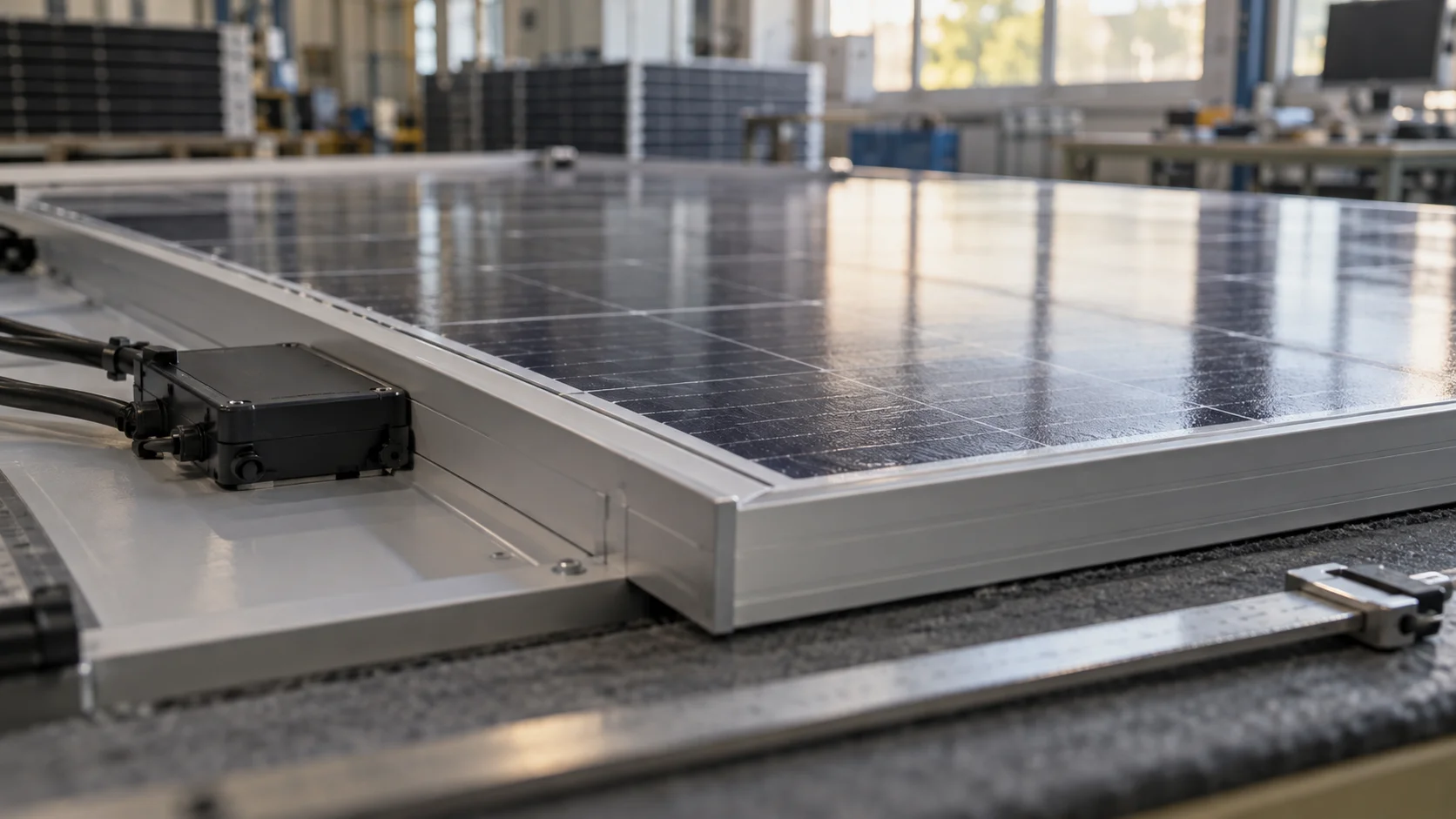
Solar Equipment Imports from China: The Pre-Order Checklist
Before issuing a purchase order for any solar equipment from China:
- Confirm the HS code for your product with your customs broker and verify no discrepancy between how the factory classifies it and how Australian customs will classify it.
- Check the Dumping Commodity Register (the former Anti-Dumping Commission register) for active measures on your HS code and country of origin.
- Verify CEC Approved Products List status for panels and inverters by searching the CEC database directly, not by relying on the supplier’s claim.
- Obtain the supplier’s declaration of compliance with AS/NZS 4777.2:2020 for the exact model, and, if the model counts as in-scope equipment, confirm your business is registered as the responsible supplier on the EESS platform at eess.gov.au.
- Obtain a current Form CI from the manufacturer (issued by China Customs or CCPIT) before the goods are shipped, not at loading.
- Specify ISPM 15 compliant timber packing materials in the purchase order and confirm at PSI.
- Check that any test reports held by the factory reference the current version of the applicable IEC or Australian standard, not a superseded version.
A freight forwarder with active solar equipment experience handles all of the logistics steps above correctly as a matter of routine. What they cannot do is fix a CEC listing gap, an anti-dumping exposure, or a Form CI that was never requested: those are pre-order decisions, not clearance problems.
The cost of running the pre-order checklist on a solar equipment import from China is a few hours of due diligence. For commercial importers ready to ship, Swift Cargo’s Australian import team can advise on freight options and customs broker coordination for solar equipment from China. The cost of discovering an active anti-dumping measure at customs clearance, or attempting to sell inverters into the residential market without a CEC listing, is measured in five and six figures.
How to Import Solar Panels from China to Australia Profitably
Two variables move the margin most: the Form CI, which separates 0% ChAFTA duty from the 5% MFN rate on batteries and racking, and anti-dumping duty, which can add AUD 20,000 to 80,000 to a AUD 200,000 CIF shipment. Both are settled before the purchase order, so check them first and make CEC listing and EESS compliance conditions of the order rather than paperwork for later.
Frequently Asked Questions
What import duty applies to solar panels from China to Australia?
Under ChAFTA, most solar equipment categories attract 0% duty with a valid Form CI Certificate of Origin. Without ChAFTA origin certification, the most-favoured-nation (MFN) rate applies: verify the current rate for your specific HS code via the ABF Tariff Reference at abf.gov.au. Always check the Dumping Commodity Register of the Australian Trade Remedies Commission (formerly the Anti-Dumping Commission) before importing to confirm whether anti-dumping or countervailing duties apply to your specific product category and country of origin.
Do solar panels from China need CEC approval to sell in Australia?
Solar panels used in installations claiming Small-scale Technology Certificates (STCs) under Australia’s Small-scale Renewable Energy Scheme must appear on the Clean Energy Council (CEC) Approved Products List. Panels not on the CEC list can still be imported, but installers cannot claim STCs for those installations, a direct commercial disadvantage in the residential and small commercial solar market. For utility-scale solar not relying on SRES incentives, CEC listing is not legally mandatory, but many project finance covenants and EPC contracts require it regardless.
Do solar inverters from China require EESS registration before being sold in Australia?
Not as a named EESS equipment type. Inverters do not appear on the current EESS equipment list, so the registration required for Level 2 and Level 3 equipment is not listed for them. The regulators’ published position is that solar PV inverters with DC isolators need a supplier declaration of compliance with AS/NZS 4777.2:2020 rather than certification. For installations claiming STCs, the inverter must also be on the Clean Energy Council approved list. Confirm the current position for your model with the state electrical safety regulator before importing.
How many solar panels fit in a 40-foot shipping container from China?
A standard 40-foot high-cube container typically holds 450–550 commercial solar panels (380W–420W monocrystalline, approximately 1,722 mm × 1,134 mm × 35 mm per panel, stacked on pallets). Weight is rarely the limiting factor: 550 panels at 21–22 kg each totals around 11,500–12,000 kg, well within the 26,480 kg payload capacity of a 40ft HC. Pallet configuration and stacking height are the binding variables, and the factory’s loading plan should be reviewed and confirmed before container stuffing.