
China is the dominant source for Australian construction imports across every major material category: steel products, ceramic tiles, glass, aluminium profiles, timber and engineered wood, bathroom fixtures, and PVC fittings. The supply chain is mature and well-established. But building materials from China carry a compliance layer that general merchandise doesn’t: anti-dumping duties on several steel categories, strict DAFF biosecurity conditions for timber, and NCC (National Construction Code) requirements that don’t apply at customs but decide what can actually be installed on a building site. To import building materials from China to Australia cleanly, run four checks before ordering: anti-dumping exposure, the ChAFTA Certificate of Origin, DAFF conditions and NCC compliance.
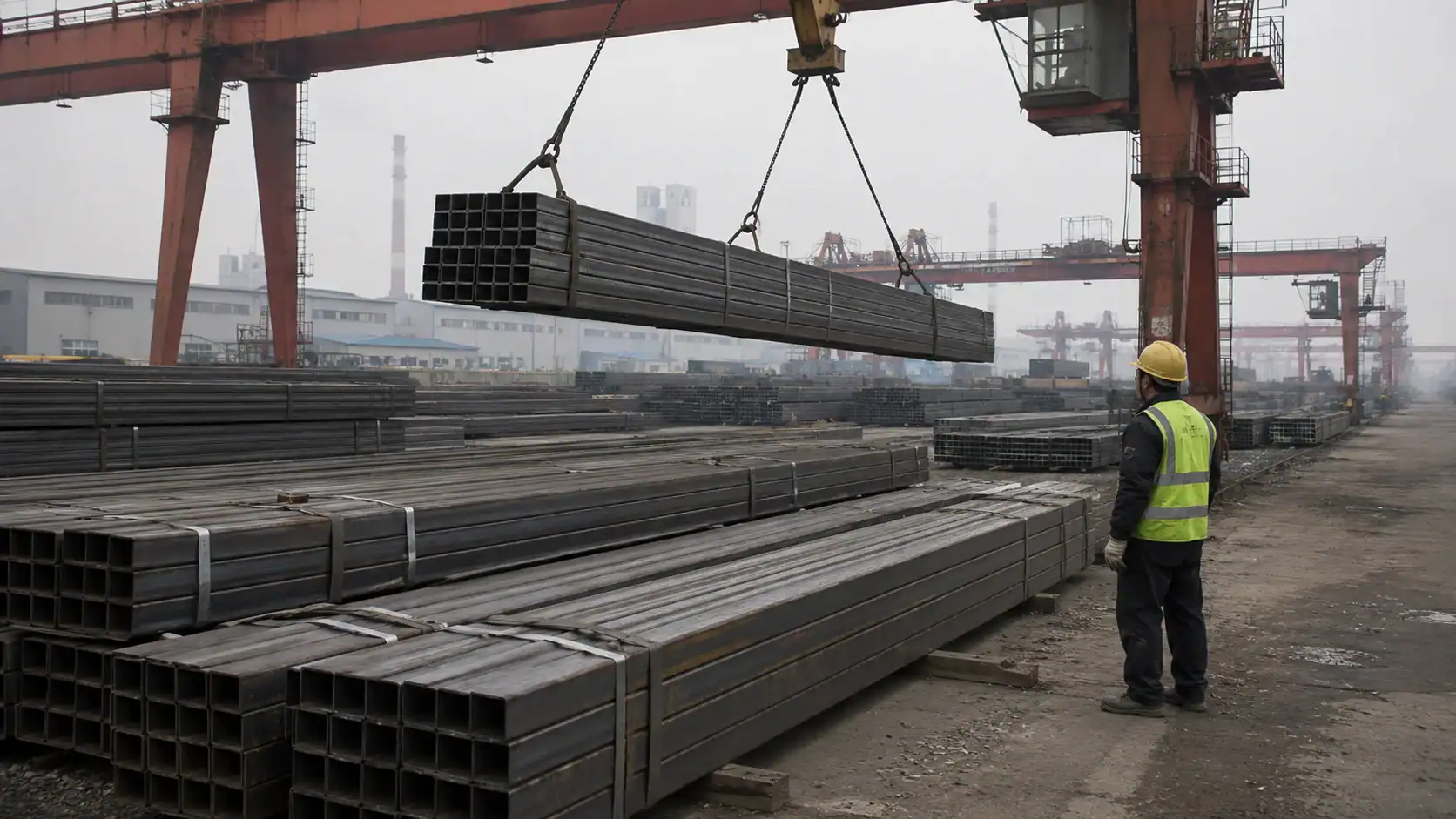
HS Codes by Building Material Category
Classification determines the standard duty rate, ChAFTA eligibility, and whether anti-dumping measures apply.
| Product Category | HS Code Range | MFN Duty | ChAFTA Rate | Anti-Dumping Risk |
|---|---|---|---|---|
| Flat-rolled steel (hot-rolled coil) | 7208–7212 | 0–5% | 0% | HIGH: check register |
| Hollow structural sections (RHS/SHS) | 7306.61–7306.69 | 0–5% | 0% | HIGH: check register |
| Reinforcing bar (rebar) | 7214 | 0–5% | 0% | HIGH: check register |
| Steel structural sections (beams, angles) | 7216 | 0–5% | 0% | Medium: check register |
| Aluminium profiles and sections | 7604–7610 | 5% | 0% | Medium: check register |
| Ceramic tiles (floor/wall) | 6907–6908 | 5% | 0% | Low |
| Float glass / safety glass | 7003–7008 | 5% | 0% | Low |
| Sawn timber / structural lumber | 4407 | 0% | 0% | Low |
| Plywood and engineered wood panels | 4412 | 0–5% | 0% | Low–Medium |
| PVC pipes and fittings | 3917 | 0% | 0% | Low |
| Ceramic sanitary ware (basins, toilets) | 6910 | 5% | 0% | Low |
| Stainless steel sinks / bathroom fittings | 7324 | 0–5% | 0% | Low |
Confirm HS codes with your customs broker before importing any new product. Misclassifying steel subheadings can produce incorrect anti-dumping duty treatment, particularly where structural steel and hollow sections are confused. Duty arrears, penalties, and potential seizure follow.
Anti-Dumping Duties: The Critical Check for Steel Products
Anti-dumping measures on Chinese steel products are the most significant compliance variable for Australian building material importers. Anti-dumping duty is separate from, and cumulative with, standard MFN or ChAFTA import duty: a ChAFTA 0% rate does not exempt goods from an applicable anti-dumping measure.
Australia has applied anti-dumping or countervailing duty measures to these Chinese product categories:
- Hot-rolled plate and coil (flat-rolled steel)
- Hollow structural sections (rectangular and square), known as RHS and SHS
- Reinforcing bar
- Certain pipe and tube products
- Aluminium extrusions (in some periods)
Anti-dumping duty rates vary by Chinese exporter (manufacturer-specific rates may apply) and by product subheading. Rates can range from a few percent to over 100% of customs value. The measures are reviewed periodically, so what applies today may change within 12 months.
Before contracting any Chinese steel order:
- Check the ABF anti-dumping register for your specific HS code and Chinese origin
- Confirm with your customs broker whether the specific Chinese exporter has a manufacturer-specific duty rate or faces the residual rate
- Factor the anti-dumping duty into your landed cost model before signing a purchase contract
ChAFTA and the Certificate of Origin
For building material categories not subject to anti-dumping duties, ChAFTA removes the duty entirely. Standard MFN rates for tiles (5%), aluminium (5%), glass (5%), and ceramic sanitary ware (5%) become 0% with a valid ChAFTA Certificate of Origin.
The CoO must be issued by CCPIT or CIQ in China before or at the time of shipment loading. A retrospective CoO is possible only in exceptional cases, within 12 months of shipment. Order values in this category are often substantial: a single container of tiles or bathroom fittings may have a customs value of AUD 50,000–200,000+. The duty saving from a ChAFTA CoO is therefore material per shipment. At 5% MFN duty on AUD 100,000 of tiles, the ChAFTA 0% saves AUD 5,000 in duty plus AUD 500 in GST on that duty, per consignment.
Request the CoO as part of every purchase order. The ChAFTA CoO process is the same mechanism used across all Chinese import categories. CCPIT and CIQ issue the certificate regardless of product type.
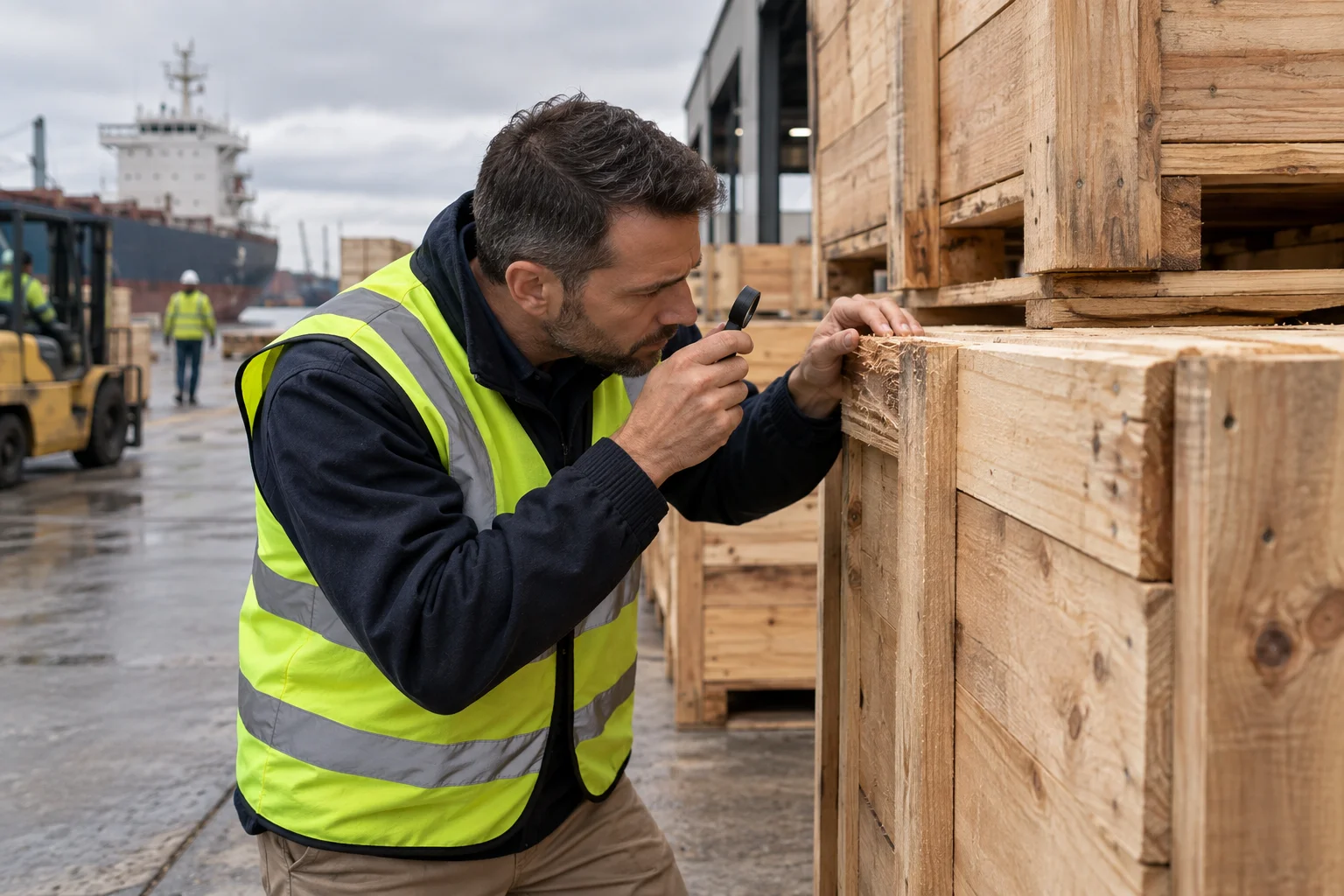
DAFF Biosecurity: Timber Is the High-Risk Category
Building materials that contain or are derived from plant or animal material face DAFF biosecurity conditions. Timber and wood products demand more compliance work than any other building material category.
Solid timber (sawn lumber, structural beams):
- Must be accompanied by a phytosanitary certificate issued by GACC (General Administration of Customs of China), the Chinese NPPO
- Must be heat-treated or fumigated to DAFF’s required standard, with the treatment method stated on the phytosanitary certificate
- Specific species may carry additional import conditions, so check DAFF BICON for your timber species before ordering
- All wooden packaging (pallets, dunnage) must separately comply with ISPM 15
Engineered wood products (plywood, MDF, particleboard, LVL, glulam):
- Import conditions vary by product type and manufacturing process: some engineered wood products are heat-treated during manufacturing, which satisfies biosecurity requirements, and others are not
- Check DAFF BICON specifically for each engineered wood product category you intend to import
- Formaldehyde emissions from Chinese MDF and particleboard may be subject to Australian standards (AS/NZS 4266) separate from DAFF biosecurity. That is a building-compliance issue, not a biosecurity condition
Other building materials with biosecurity conditions:
- Natural stone products (granite, marble) may carry soil or organic material and are subject to inspection
- Clay and ceramic products are generally low biosecurity risk, but confirm with BICON for specific forms
- Products containing animal-derived adhesives or fillers fall under BICON conditions
Check Australia’s biosecurity import conditions via DAFF BICON for every new product category. The specific conditions vary and are not reliably generalised across product types.
NCC Compliance: The Market Access Requirement
Australia’s National Construction Code (NCC), administered by the Australian Building Codes Board, sets performance requirements for building products installed in Australian buildings. NCC compliance is not an ABF customs clearance requirement, and goods are not detained at the border for NCC non-compliance. But products that don’t meet NCC requirements cannot legally be installed in buildings. The builder carries the liability for installing them, and potentially so does the importer who supplied them.
These Australian standards apply most often to Chinese-origin building materials:
- Safety glass (AS/NZS 2208): glazing in doors, shower screens, and certain windows must be toughened or laminated safety glass. Chinese float glass must carry certification against AS/NZS 2208 to be installed in safety-glazing applications.
- Structural steel (AS/NZS 3678 / AS/NZS 3679): structural steel used in Australian buildings must meet Australian standard specifications for grade, yield strength, and weld quality. Confirm grade certification with your Chinese steel supplier before ordering.
- Timber bushfire resistance (AS 3959): in designated bushfire attack level (BAL) areas, timber products must meet specific fire resistance ratings. Confirm applicable ratings for your intended use case.
- Formaldehyde emissions in MDF and particleboard (AS/NZS 4266): the standard limits emissions from wood-based panels used in construction. Chinese suppliers should provide E0 or E1 emissions certification.
For any building material in a regulated NCC category, obtain the specific Australian standard test report or compliance declaration from your Chinese supplier before placing an order. Do not rely on Chinese domestic standards (GB standards) as equivalents. They often are not. Whenever you import building materials from China to Australia for installation, the Australian standard test report is the document to hold.
NCC compliance is less a hurdle the supplier clears for you than a question of who ends up holding the evidence. When a certifier or a building surveyor questions a product on site in Australia, they ask the importer, not the factory in Foshan. So the useful question to settle before you place the order is simple: if someone asks me to prove this batch meets the Australian standard, what document do I hand them, and do I have it in my own files? If the answer is “the supplier says it complies,” you do not yet have a compliant import. You have a promise. Ask for the actual test report against the named AS/NZS standard, keep it with the shipment records, and you turn a downstream argument you would probably lose into one you can end in thirty seconds.
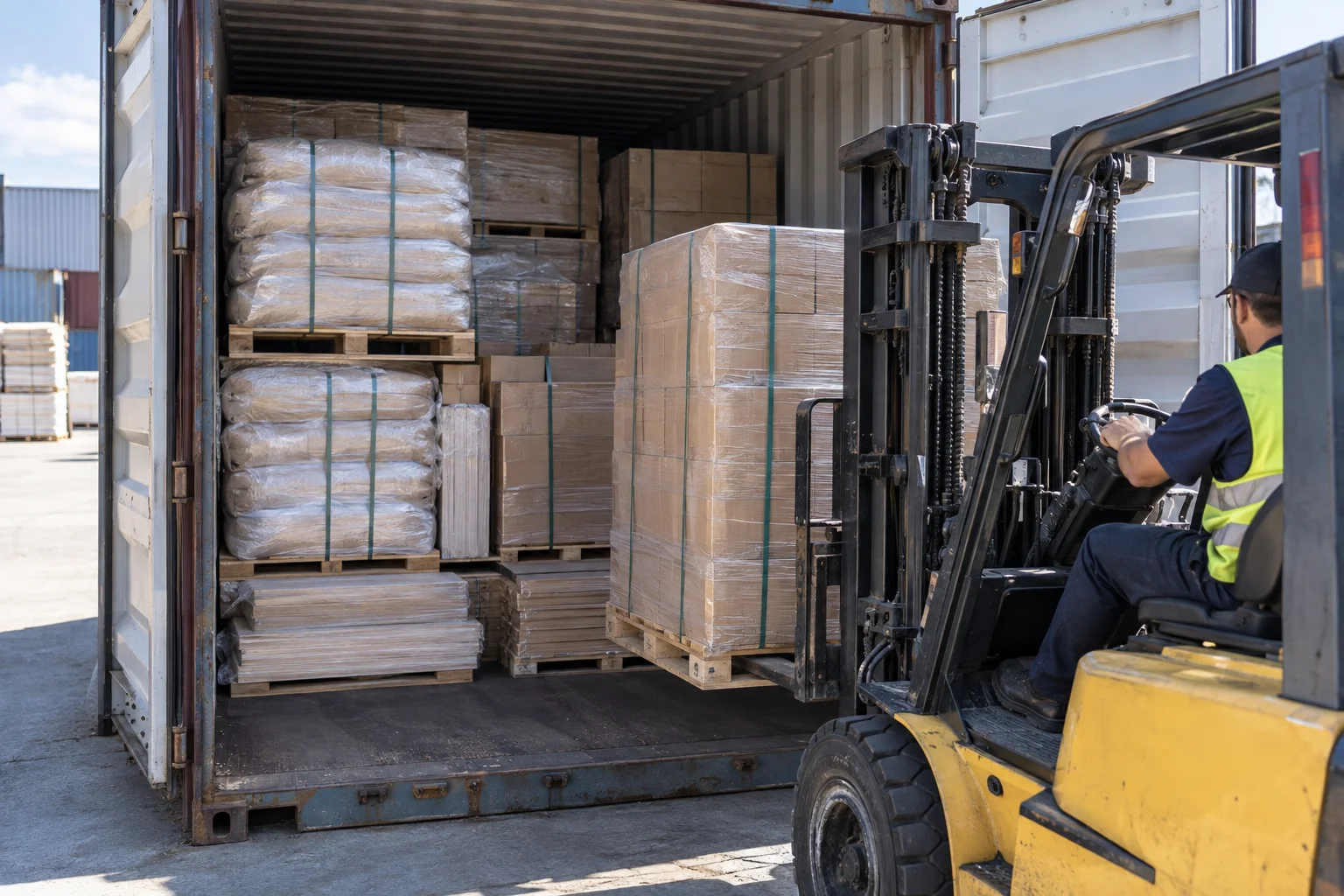
FCL for Building Materials: Volume, Weight, and Handling
Building materials are among the best candidates for FCL shipment from China. They are typically:
- Heavy and dense. A full 20ft container of ceramic tiles may weigh 20+ tonnes but use only 20–25 CBM. Weight freight (per tonne) economics favour FCL over LCL for dense goods.
- Fragile in transit. Tiles, glass, and ceramic fittings break under co-loading in LCL. FCL eliminates the additional handling at origin and destination CFS.
- High value per container. A container of bathroom fittings or architectural tiles often has a customs value of AUD 50,000–300,000. Cargo insurance is essential. Dedicated FCL also reduces handling risk.
LCL is appropriate only for sample orders or very small first shipments, typically below 5 CBM or below a tonne of actual cargo weight.
For guidance on managing that decision as import volumes grow, including structures like sharing a container with other buyers from the same origin, see our guide to freight consolidation strategies for Australian importers.
Container weight limits are a consideration for heavy building materials. A standard 20ft container has a maximum payload of approximately 21–28 tonnes (container-specific, so check with your carrier). Dense materials like steel, stone, and tile can reach maximum payload before reaching the container’s volumetric capacity. Your freight forwarder should confirm whether the planned shipment weight exceeds container payload limits before booking.
The exposure is concrete, and the numbers move over time. Australia’s Anti-Dumping Commission raised the measure on Chinese steel reinforcing bar from 19% to 23.7% after its April 2026 review, fixed for five years. Hot-rolled coil from China now carries a separate 3.4% countervailing duty, confirmed from May 2026, layered on top of any anti-dumping finding on the same product rather than a substitute for it. Both apply to the full customs value regardless of what the purchase contract assumed. On a AUD 200,000 rebar order, the jump from 19% to 23.7% alone adds AUD 9,400 in duty that a contract priced against the old rate would not have budgeted for. Measures like these are reviewed on a cycle, typically fixed for five years once a finding continues, with an interim review possible sooner if circumstances change materially. Aluminium extrusions have moved on and off the register within the lifetime of a single supply relationship, which is the argument for treating the check as recurring rather than a one-time box ticked at the start of an account. Trade publications tracking the Anti-Dumping Commission’s public record are one way to catch a revision before it shows up as an unbudgeted line on a customs clearance.
Before You Import Building Materials from China to Australia
Search the Anti-Dumping Commission register for every steel line, request the ChAFTA Certificate of Origin with the purchase order, and check BICON for timber and engineered wood. Then collect AS/NZS test reports for regulated products and plan FCL loads against the container’s payload limit.
Frequently Asked Questions
Are there anti-dumping duties on building materials from China in Australia?
Yes, particularly for steel products. Hot-rolled coil, hollow structural sections, reinforcing bar, and certain pipe and tube products have all attracted anti-dumping measures. Check the ABF anti-dumping register before contracting any Chinese steel order. ChAFTA 0% does not exempt goods from applicable anti-dumping duties. Both apply independently.
What are the biosecurity requirements for importing timber from China?
Solid timber requires a phytosanitary certificate from GACC (Chinese NPPO) confirming heat treatment or fumigation. All wooden packaging must comply with ISPM 15. Check DAFF BICON for your specific timber species and engineered wood product type. Conditions vary. Non-compliant timber is detained for treatment at the importer’s cost.
Does ChAFTA apply to building materials from China?
Yes, for most building material categories not subject to anti-dumping measures. Tiles, glass, aluminium, PVC, ceramic fittings: 0% with a valid CCPIT/CIQ Certificate of Origin. Anti-dumping duties on steel apply independently of and in addition to ChAFTA rates.
Do I need NCC compliance for building products from China?
Not for customs clearance, but for legal installation in Australian buildings. Safety glass must meet AS/NZS 2208. Structural steel must meet AS/NZS 3678/3679. MDF/particleboard must meet AS/NZS 4266 formaldehyde emissions limits. Obtain Australian standard test reports from your supplier before importing regulated building products.
Is FCL or LCL better for building materials from China?
FCL is strongly preferred. Building materials are heavy, often fragile, and fill containers efficiently by weight. Co-loading in LCL increases breakage risk and adds handling steps. For any commercial-volume order beyond 5 CBM or 1 tonne, FCL is safer and typically cheaper on a per-unit or per-tonne basis.
Import duty and GST for Australian importers covers landed cost modelling including the anti-dumping duty layer.
Get a quote for building materials freight from China to Australia →