

For nearly all of the two hundred thousand years Homo sapiens has existed, moving somewhere new was a catastrophe, not a choice. A well ran dry, a rival clan won a fight, ice reclaimed a valley, and a small group of people walked toward the unknown because staying had quietly become impossible. Migration was the last resort of a species with nowhere better to be. What is strange about the twenty-first century, and easy to miss precisely because it now feels ordinary, is that millions of people now choose to migrate the way earlier humans chose almost nothing else in their lives: deliberately, by comparing options, weighing a spreadsheet of visa categories and rents and school fees against a life they already had and were, on balance, not unhappy with.
Dubai is one of the purest expressions of that shift anywhere on the planet. According to the Dubai Statistics Center, the emirate’s population passed 3.95 million in mid-2025, and roughly 92 percent of those residents were not UAE nationals. That makes Dubai more than a diverse city in the usual sense of the word: foreign nationals outnumber citizens by roughly eleven to one. It was built almost entirely within the last two generations on the premise that enough individually rational people choosing to come would, in aggregate, add up to a functioning place. It worked. Whether it works for a specific family with a specific budget is a separate question, and what moving to Dubai actually costs that family, in money and in the specific decisions that follow, is a longer and considerably more useful question than the tourism footage answers.

Six Months Before: The Visa Question and the Real Budget
The pull itself is not complicated: no personal income tax, a genuinely international population that makes arriving as an outsider feel less unusual than it would almost anywhere else, and a level of everyday safety that repeatedly shows up in independent surveys rather than just marketing copy. What is complicated, and what most people underestimate six months out, is that none of that pull matters until a specific visa route is chosen, because the route decides almost everything that happens next: whether you can sponsor a spouse or a child, whether losing a job also means losing the right to stay, and how much of the moving budget goes toward the visa itself versus everything that comes after it.
The four real routes into Dubai residency
The Golden Visa is the one most people have heard of and the one most people misunderstand. It is a ten-year renewable residency (five years for some categories), self-sponsored, requiring no employer at all, and it lets the holder sponsor family members in turn. It is not one product but several, each qualifying through a different door: real estate investors putting at least AED 2,000,000 into property, capital investors, entrepreneurs, skilled professionals and specialists, scientists and researchers, outstanding students and graduates, creative talents, sports professionals, and humanitarian pioneers. The categories most first-time applicants overlook are the ones that don’t require existing wealth: the outstanding-student route exists for high-achieving graduates with no property or capital behind them at all, and the skilled-professional route is built around a recognized qualification and salary threshold in specific fields rather than a bank balance. That makes the Golden Visa a broader tent than the “AED 2 million buy-in” reputation it has among people who’ve only heard of the property route. Property-route applications run through the Dubai Land Department’s Cube Platform specifically; every other category runs through GDRFA Dubai instead. The scale is real: GDRFA reportedly granted over 66,000 Golden Visas in the first half of 2026 alone, according to news reporting attributed to the agency’s own figures, though we could not trace it to a GDRFA-published document ourselves. That volume makes the Golden Visa a mainstream route now, not the rare exception its reputation still suggests.
The employment visa is the more conventional path and, for most movers, the faster one. An employer sponsors it, and it is processed jointly: MOHRE issues the work permit, GDRFA issues the residency. Under the UAE’s Work Bundle initiative, MOHRE work-permit issuance now takes up to five working days, down from thirty, and the entry permit that follows gives sixty days to complete residency formalities inside the country. Offer letter to completed residency realistically runs two to four weeks. MOHRE recognizes thirteen distinct work-permit types depending on the nature of the job, which is more granularity than most guides mention and occasionally matters for niche roles.
The freelance and remote-work cluster is where most written guides get sloppy, collapsing three genuinely different products into one paragraph. They are not interchangeable. The Remote Work Visa, sometimes called the Virtual Working Programme, is a one-year permit for people employed by or earning from a company outside the UAE, requiring roughly USD 3,500 a month in verifiable income, and it explicitly does not allow invoicing UAE-based clients. The Green Visa is a five-year, self-sponsored route built for established freelancers, requiring a bachelor’s degree or specialized diploma plus verifiable independent income of at least AED 360,000 a year sustained across two consecutive years. The free-zone freelance permit is the lightest of the three: a trade license issued by a specific free zone, which then qualifies you to apply for a residence visa. Each serves a different kind of income situation, and picking the wrong one is a common, avoidable first mistake.
Family and dependent sponsorship is the fourth route, and it is the one that turns an individual visa decision into a household one. A sponsor generally needs to show a minimum monthly salary of AED 4,000, or AED 3,000 plus employer-provided housing, a figure confirmed directly on u.ae’s own page rather than resting on secondary corroboration alone.
Not every household gets a genuine six months of runway, and this timeline describes an ideal sequence, not a hard requirement. A job offer with six weeks’ notice compresses everything above into a much tighter window, and the visa decision and the housing decision often end up happening in parallel rather than in the tidy sequence a guide like this one lays out. The research itself doesn’t compress well, though: a household moving in six weeks still needs to make the same visa-route and budget decisions a household moving in six months makes, just with less time to second-guess them, which is exactly when a wrong first guess on visa category becomes expensive rather than merely inconvenient.
Put next to each other, the four routes suit noticeably different people. Picking the one that matches your actual situation, rather than the one you saw mentioned first, avoids months of wasted paperwork. Someone with a confirmed job offer almost always does better going through the employment-visa route than trying to qualify for a Golden Visa they don’t yet meet the bar for. Someone with substantial savings or an existing property portfolio, and no interest in being tied to a single employer, is the natural Golden Visa candidate. Someone earning a steady income from clients or an employer outside the UAE fits the remote-work or Green Visa routes far better than trying to force that income into an employment-sponsored structure it was never designed for, especially when the goal is simply to keep working exactly the way they already do. And anyone moving as a family, rather than an individual, needs to check the sponsor’s income against the family-visa threshold before assuming a single successful visa automatically covers a spouse and children.
Freelance-visa fee ranges vary across independent relocation guides. Confirm them directly with GDRFA, MOHRE, or a licensed agent before they anchor a budget.
Sketch a loose, order-of-magnitude first-year number here: almost nobody does it this early, and it changes how the next five months of decisions get made. This order-of-magnitude estimate covers four things: a visa route, an initial shipment, a rental deposit and agency fee, and the furnishing and utility deposits detailed later in this guide. A single mid-income household relocating to Dubai should expect a first-year setup cost in the low tens of thousands of dirhams above ongoing rent and living costs, not a few thousand. That is a deliberately loose figure, not a quote, and it exists to correct a specific bias: people planning six months out consistently anchor on the visa fee and the flight, and quietly under-plan for everything that happens in the first thirty days after landing.
Two facts are not in dispute and are worth having in view while you weigh the visa decision: the UAE levies no personal income tax on salaries, and VAT sits at a flat 5 percent on goods and services. Dubai’s tax position is also part of why it shows up regularly in roundups of tax-friendly jurisdictions for internationally mobile income, alongside a handful of other low-tax hubs competing for the same pool of remote workers and investors. None of that changes the practical calculus in this section, but it is useful context for why the freelance and remote-work routes above draw as much interest as they do.
Choosing among these four routes is, in the end, a career decision wearing an immigration form, and it deserves the same weight as any other major move: our broader look at the real tradeoffs of relocating abroad for work is worth reading before you commit to a specific employer-sponsored route over a self-sponsored one, since the two carry very different levels of control over the rest of the move.

Four to Five Months Before: Where You Will Actually Live
Humans have always sorted themselves geographically by status and kinship, but almost always slowly, over generations, along lines drawn by family, tribe or inherited land. Dubai’s neighborhoods were mostly built and populated within a single decade, sorted not by lineage but by lease length and price point, which makes the city an unusually clean case study in what happens when you strip that sorting process down to something closer to a spreadsheet. That is not a criticism, just something to notice before you pick a neighborhood as though it carries centuries of settled meaning behind it. It doesn’t. It carries a price list and a commute time.
Almost every relocation advisor gives the same first recommendation, and it holds up: rent for your first year before you buy anything. This is less about caution for its own sake and more about a specific kind of uncertainty that is easy to underweight from outside the country. You do not yet know which commute you will tolerate, which community actually suits your household, or, more bluntly, whether Dubai will still be the right call for your family in three years. Betting a down payment of a fifth of the price or more on a neighborhood you have visited twice is a worse bet than the confidence most people bring to it would suggest, and reversing a bad property purchase costs far more than reversing a bad twelve-month lease.
Six neighborhoods, honestly compared
Dubai Marina is the premium waterfront option: international, tourist-adjacent, and its own self-contained world of towers and marina walks, where the walk to a restaurant or a gym rarely takes more than a few minutes. Buying in here typically starts around AED 1,500,000 and climbs from there. It suits a single professional or a couple more comfortably than a family with young children, mostly because the density and the tourist footfall that make it lively on a Friday night make it less restful as a daily home base.
Downtown Dubai is the prestige core, built around the Burj Khalifa and Dubai Mall, where a studio rents for roughly AED 70,000 to 85,000 a year. If Marina is Dubai’s answer to a resort city, Downtown is closer to its answer to a financial-district postcode: people buy here expecting the address itself to hold value over time, more than expecting the best rental yield along the way. It is the address most visible in every skyline photo, which is exactly why it commands a premium disproportionate to its actual square footage.
Jumeirah Village Circle, usually just called JVC, is the value play, with purchase prices running AED 700,000 to 1,200,000, well under Marina’s floor. It was dismissed as an unfinished commuter suburb for years; multiple current sources now describe it as having matured into a genuinely livable community with its own schools, parks and grocery stores, which is a real answer to whether JVC is actually livable or just cheap. It rewards buyers prioritizing rental yield over prestige, and increasingly suits families who want space without a villa’s price tag.
Business Bay sits immediately next to Downtown, mixing residential towers with commercial space and waterfront promenades, and is frequently described as one of the fastest-growing expat communities in the city, central without carrying Downtown’s premium in full. It suits professionals who want walkable proximity to the business core without paying for the Burj Khalifa view itself.
Arabian Ranches is the established family villa community: golf courses, schools and community centers built in from the start rather than added later. A two-bedroom villa runs roughly AED 110,000 a year (around USD 29,970), a three-bedroom around AED 130,000 (about USD 35,410). It is the community most likely to be recommended by another expat family who has already raised children through a full school cycle here, which counts for something no listing description can replicate.
Dubai Hills Estate is the newer, explicitly family-designed alternative to Arabian Ranches, with three- and four-bedroom family villas running AED 150,000 to 250,000 a year. As a rough anchor across both family-oriented communities, premium one-bedroom apartments in Marina or Downtown start around AED 70,000 to 100,000 a year, while family villas in Ranches or Hills run AED 110,000 to 250,000. Hills trades some of Ranches’ settled maturity for newer infrastructure and a more centrally located golf course and mall, a genuine tradeoff rather than a strict upgrade.
These six are not the entire map. Palm Jumeirah and the wider Jumeirah beachfront communities are well known, ultra-premium options that command a real price beyond what most relocating households budget for, and are worth knowing exist even if they’re not where most first-time movers end up. This guide prices the six neighborhoods above deliberately, because they’re the ones with real, current, corroborated figures behind them; a specific price quoted without that backing would be worse than no price at all.
Renting first: the actual tradeoff, stated honestly
Treat the rent-versus-buy choice the way you would treat any decision made under real uncertainty rather than a settled fact: name what you actually don’t know yet, and don’t let a confident-sounding recommendation substitute for it. Buying now looks appealing mostly because Dubai property has produced strong returns for people who bought at the right point in the cycle, and that is a real, documented pattern, not a myth. But the confidence that pattern deserves for your specific decision is lower than it feels, because it depends on variables you cannot yet know: whether you’ll still want to live in that exact neighborhood in year three, whether your household size or your job will change, and whether the specific building or block you’re eyeing will perform like the citywide averages you’ve read about or diverge from them. A twelve-month lease is, in effect, the cheapest option you have for buying information about your own future preferences before committing real capital to a bet on them. Most movers who skip that step aren’t making a bad decision so much as skipping the step where they’d find out whether it was a good one.
One structural feature of the rental market does more damage to a relocation budget than any neighborhood choice, and it applies to every tenant equally. Dubai leases are not paid monthly. Rent for the year is settled by post-dated cheques, commonly one, two, four or six of them, and the headline rent moves with that number: a landlord will usually price a single-cheque year below a six-cheque one, because fewer cheques mean less collection risk carried on their side. Add a security deposit, conventionally 5 percent of annual rent unfurnished and 10 percent furnished, to the 5 percent agency fee due at signing. In practice, the cash required on day one is a large fraction of a year, not a month and a deposit, and the only lever you control is how few cheques you can afford to compress it into.
If you decide to buy: freehold, funding and the process
Foreign nationals of any nationality can buy full freehold property, both the unit and the land under it, in more than 60 designated freehold zones across Dubai. No UAE visa, no local sponsor, and no existing residency is required to purchase; the Golden Visa’s property route works in the other direction: owning enough property qualifies you for residency, not the reverse. Under the Central Bank of the UAE’s mortgage rules, an expat buying a first home can borrow up to 80 percent of a property worth less than AED 5 million, which sets the minimum down payment at 20 percent, and up to 70 percent above AED 5 million, which makes it 30 percent. A second or investment property is capped at 60 percent, and off-plan purchases at 50 percent for every buyer. The process itself runs: budgeting and financing, then choosing a freehold-zone property, then arranging a professional inspection alongside ownership verification through the Dubai Land Department’s own portal, then signing a Memorandum of Understanding with a 10 percent deposit, then completing a Sales and Purchase Agreement, then transferring title at DLD with a 4 percent transfer fee. Each stage has its own paper trail, and the DLD’s own portal is the mechanism for verifying that a seller actually owns what they’re selling before any money changes hands, which is worth using directly rather than relying solely on an agent’s assurance. A property purchase of AED 2,000,000 or more can also qualify the buyer for the ten-year Golden Visa described earlier, worth remembering if the visa and housing decisions are being made close together rather than in sequence, since a single purchase can resolve both at once for a household that was going to buy anyway.
The cash you need on day one is more than the down payment. Take a first home at AED 1,500,000, roughly where Dubai Marina purchases start. The 20 percent minimum down payment is AED 300,000 and the 4 percent DLD transfer fee is another AED 60,000, so AED 360,000, or 24 percent of the price, is in cash before agency and other costs. That is why about a quarter of the price is a realistic planning figure even though the lender’s floor is lower. The catch is off-plan, where the 50 percent cap means half the price comes from your own funds whichever lender you choose. Before you shortlist anything, ask a lender what it would actually advance against your income: the Central Bank also caps total debt repayments at 50 percent of gross income and an expat’s total financing at seven times annual income, and those limits can bind before the loan-to-value cap does.
Two mechanisms are worth knowing by name: the RERA Rental Index, run through the Dubai Land Department, sets the official benchmark for how much rent can increase at renewal, and is checkable through the DLD website or the Dubai REST app. Ejari is the mandatory rental-contract registration system, also through DLD, and a lease that isn’t registered through it isn’t fully enforceable if a dispute ever arises. Budget for a real estate agency fee of 5 percent of annual rent, paid upfront at signing, regardless of whether you rent or eventually buy.
Three Months Before: Schools, Healthcare and Money From Abroad
If children are moving with you, the school decision should happen before the housing decision, not after, because the strongest options cluster geographically and fill up. The Knowledge and Human Development Authority, KHDA, inspects and rates every private school in Dubai on a six-point scale from Outstanding down to Very Weak, and a school’s fee-increase rights are directly tied to its rating: an Outstanding school can raise fees faster than a Good one. Current figures vary slightly by source, but recent ratings put roughly 17 to 28 schools at Outstanding, around 28 at Very Good, and about 74 at Good, which gives a rough sense of how the distribution actually looks rather than a false sense that “international school” means one consistent tier of quality.
Fees scale with both grade and curriculum. By grade band, the fees break down like this: Foundation years run roughly AED 25,000 to 60,000 a year, Primary AED 35,000 to 75,000, Secondary or IGCSE years AED 45,000 to 90,000, and Sixth Form or IB years AED 55,000 to 105,000. By curriculum, the range is wider still: budget Indian-curriculum schools can run as low as AED 9,000 to 12,000 a year, while top-rated British or IB schools reach AED 110,000 to 115,000 or more. Two real, named data points make the spread concrete rather than abstract: Lycée Français International Georges Pompidou charges around AED 29,488 a year for preschool, while Dubai British School Jumeirah Park charges roughly AED 111,799 for its final year. That is nearly a fourfold gap within the same city, which is exactly why researching schools before signing a lease matters more here than in most relocation destinations.
Curriculum matters as much as fee band, so choose it deliberately rather than defaulting to whichever school has a place available. A British or IB curriculum transfers most cleanly if there is any real chance of another international move down the line, since both are recognized broadly outside the UAE. A curriculum matched to your own nationality can matter more for a family planning to eventually return home, since it keeps a child aligned with that system’s own grade structure and exams, whether that means French at the Lycée or one of the Indian curricula taught elsewhere in the city. Neither choice is objectively correct; it depends entirely on how likely another move is, which is worth an honest family conversation before a deposit is paid.
This is also where the school and neighborhood decisions from the section above stop being separable. The strongest school options concentrate geographically, disproportionately around Arabian Ranches, Dubai Hills Estate and the other established family communities. Choosing a home before checking its actual commute to those schools is a common, avoidable sequencing mistake. Families who choose the school first and then look for housing within a genuine commute of it consistently report an easier settling-in period than families who chose a house for its own merits and discovered the school situation afterward.
Health insurance is a legal requirement here, not a line item to shop for later. Under Dubai Law No. 11 of 2013, the Dubai Health Authority’s Insurance System for Advancing Healthcare in Dubai, ISAHD, requires every residence-visa holder and their dependents, Emirati and expat alike, to carry active coverage; no visa can be issued or renewed without proof of it. Minimum coverage sits at an aggregate limit of AED 150,000, with pre-existing conditions covered after a six-month waiting period, a 10 percent inpatient copay capped at AED 500 per visit or AED 1,000 a year, a 20 percent outpatient copay, medication coverage up to AED 1,500, and a 10 percent maternity copay. Skip it and the penalty is AED 500 a month per uninsured person, on top of the visa itself being refused or not renewed. For a sense of real costs behind that minimum coverage: a typical consultation runs somewhere between USD 41 and 136, and major surgery starts from around USD 8,170.
Fewer things can be arranged before you land than most checklists imply. Gathering the paperwork can happen from home: employer or income letters, proof-of-funds documents, prior insurance history. You generally can’t fully open a bank account or enroll in insurance until you’re physically in the country with an Emirates ID or its application receipt in hand, which is why those sit in the first-week section below rather than here.
Dubai relocation costs at a glance
| Item | Typical figure |
|---|---|
| Golden Visa, property route | AED 2,000,000+ investment |
| Family visa, minimum sponsor salary | around AED 4,000/month |
| 1-bedroom rent, Marina or Downtown | AED 70,000 to 100,000/year |
| Family villa rent, Arabian Ranches or Dubai Hills | AED 110,000 to 250,000/year |
| Real estate agency fee | 5% of annual rent, upfront |
| DLD property transfer fee (if buying) | 4% of purchase price |
| DEWA connection deposit | AED 2,000 to 4,000 |
| DEWA monthly bill, summer | AED 1,200 to 2,000 |
| School fees, by grade band | AED 25,000 to 105,000/year |
| Health insurance, minimum coverage | AED 150,000 aggregate limit |
The Shipping Phase: What Actually Crosses the Water With You
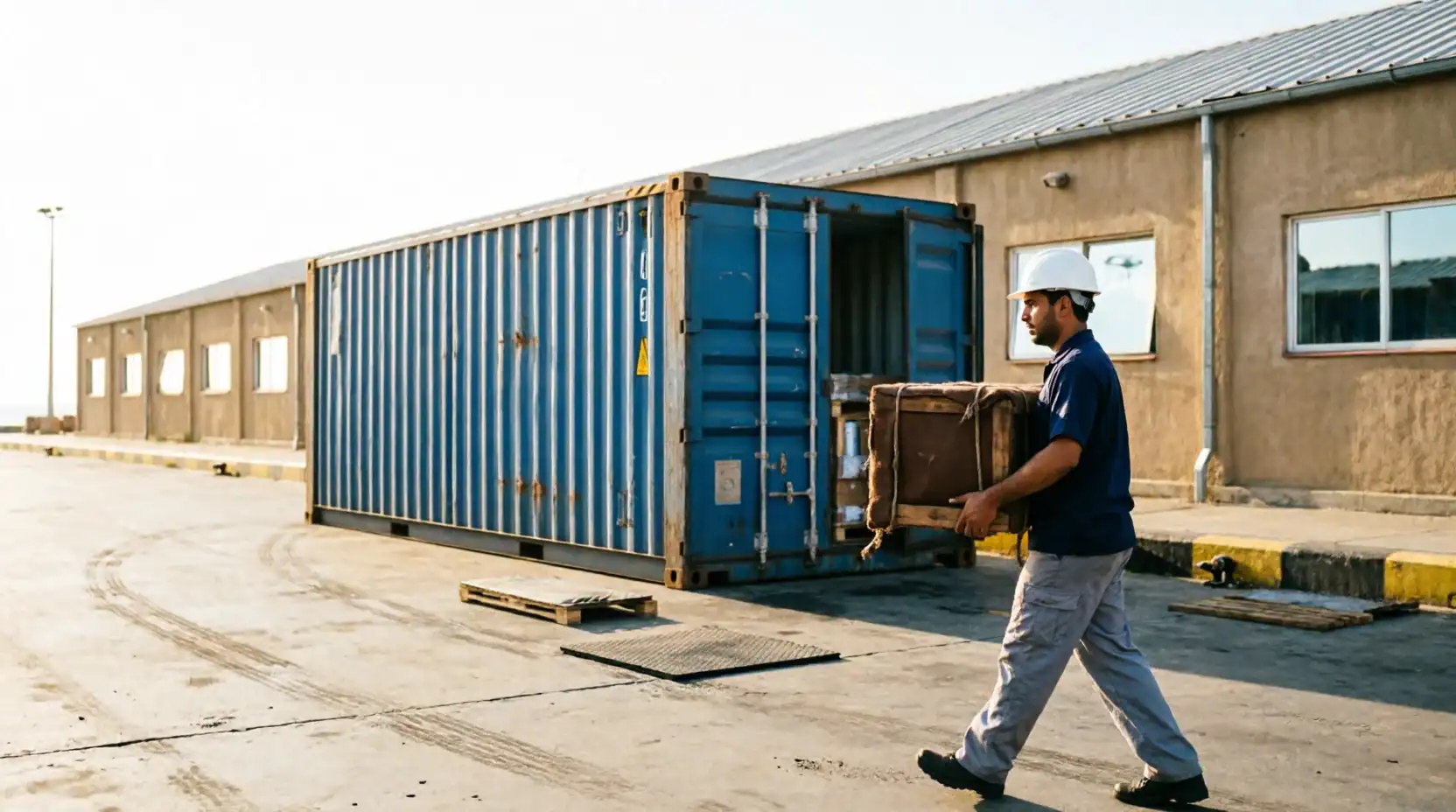
Every migration in history has ultimately come down to the same unglamorous question underneath the paperwork and the planning: what, physically, gets carried, and what gets left behind. A container ship is a more efficient version of the same decision a family made loading a wagon a thousand years ago, not a different kind of decision. For a Dubai move specifically, that decision has one added wrinkle worth naming early: air conditioning changes what’s sensible to bring. Furniture built for a temperate climate, and voltage-specific appliances, sometimes cost more to adapt than to replace locally, which is why an honest shipping conversation usually starts with what not to ship rather than what to. MoveConnector specialises in Dubai moves and notes failure to consider the climate to be one of the major mistakes expats make.
The same reversibility logic that applies to renting before buying applies here too. A full household shipment is a high-commitment, low-reversibility decision, expensive to undo if it turns out half of what traveled wasn’t worth the freight. A smaller, considered first shipment is often the lower-regret choice, even when it isn’t the cheapest one on paper, with the rest furnished locally once you actually know what the climate, the apartment size and daily life here demand. The households who ship everything they own in one pass are usually the ones who end up storing, selling or replacing a meaningful share of it within the first year.
Our dedicated Dubai shipping page covers the customs and cost mechanics of the actual shipment in real depth, including the specific documents customs will ask for, so this section stays deliberately brief rather than repeating that detail here: duty-free personal-effects rules, the documentation required, current transit times and pricing. The short version: personal effects generally qualify for duty relief when the timing and paperwork line up correctly with your visa status, LCL shipments currently start from AED 7,100, and transit typically runs eight to twelve days. Shipping volume is worth sizing properly before you request a quote; our practical CBM size guide walks through what a studio, a one-bedroom or a full household actually measures out to. Timing also matters more than most movers expect; the page above covers the specific months that tend to run slower for this corridor. For a shipment sized and quoted against your actual move date, you can get a Dubai quote here.
Pets complicate the shipping decision more than furniture does, because the stakes are different and the research burden is higher. This guide deliberately does not attempt to state UAE-specific pet-import rules, quarantine requirements or documentation here, since those are governed by the UAE’s Ministry of Climate Change and Environment and deserve dedicated, verified research of their own rather than a paragraph borrowed from a different country’s rules. The mechanics of pet air travel itself don’t change by destination, though, and that’s what we can speak to directly: how cabin, checked baggage and cargo travel actually differ for an animal, and how to measure and prepare a travel crate correctly before booking. If your household includes a pet, our international pet transport service is worth a direct conversation early, precisely because pet logistics tend to have longer lead times than household goods and are far harder to compress at the last minute. Vaccination and documentation windows in particular tend to be fixed and unforgiving in ways a shipping timeline isn’t; a missed window can mean starting a required sequence over rather than simply paying to expedite it. That is exactly the kind of deadline worth building the rest of the shipping phase around, rather than treating it as an afterthought once the furniture is sorted.

Arrival and the First Week: The Admin That Makes Everything Else Possible
Every society in history has needed some way to answer a simple question about a stranger: are you who you say you are, and do you belong here. For most of human history that answer lived in a face someone recognized, a seal, a mark, a letter of introduction carried across a border. The passport itself is barely a century old as a universal requirement. Dubai’s version of that ancient problem is the Emirates ID, and it has become the primary identity-verification method across essentially every UAE government and financial service, which means it isn’t one checklist item among many so much as the load-bearing piece the rest of the week depends on. Get the application moving on day one.
Day one to day three
A local SIM card is worth sorting immediately, both for practical connectivity and because several of the steps below expect a working local number. Temporary accommodation, if your lease doesn’t start the day you land, is worth booking with enough buffer that a delayed shipment or a slow Emirates ID appointment doesn’t leave you scrambling. This is also the point where the sequencing decided months earlier starts to matter in practice: a household that chose its neighborhood and school before landing spends these first days on admin, while a household still deciding between areas is trying to do that research and the paperwork at the same time, in an unfamiliar city, jet-lagged. The gap between those two experiences of the first week is almost entirely a function of decisions made back in the four-to-five-month window, not anything that happens differently once you’ve actually landed.
The bank account decision
Standard requirements across UAE banks are consistent: passport, UAE residence visa, Emirates ID or its application receipt, proof of address such as a utility bill or rental contract, and income evidence like a salary certificate. The useful detail most guides skip is the speed difference between account types. Digital-only banks, Wio and Mashreq Neo among them, can complete account setup in as little as 24 hours entirely online, using the Emirates ID application receipt rather than waiting for the physical card to arrive. That is a meaningfully faster path than a traditional branch account for anyone who needs local banking working in the first few days rather than the first few weeks.
DEWA, and the cost nobody mentions until the bill arrives
Connecting electricity and water through DEWA, the Dubai Electricity and Water Authority, requires a deposit of roughly AED 2,000 to 4,000 at first connection, a cost that catches almost every first-time mover off guard because it rarely appears in the headline budgets guides quote. The seasonal swing is the second surprise: summer bills, driven almost entirely by air conditioning, commonly run AED 1,200 to 2,000 a month, roughly double a typical winter bill. That connects directly to a climate fact every competitor mentions in passing and almost none turns into an actual dirham figure: summer temperatures commonly reported in the 40 to 54 degree Celsius range. Air conditioning in Dubai is not a comfort setting so much as a basic utility on par with water, run for months at a stretch rather than switched on for the occasional heatwave, and the DEWA bill is the most direct, measurable trace of that fact landing in a household’s actual budget.
No single figure covers the total first-month cost: a rent deposit, the 5 percent agency fee, the DEWA deposit, internet and cooling deposits, and basic furnishing stack up fast. The recurring, independently corroborated advice across multiple sources is to budget an extra 20 to 30 percent on top of whatever your first-year cost estimate says. Treat that range the way you’d treat any estimate made before all the facts are in: not as padding to trim, and not as a guaranteed number either, but as the best current confidence interval available, worth revisiting once your own deposits and bills start actually landing.
A practical first-week checklist
- Apply for your Emirates ID as early as your visa status allows, since nearly every other step on this list depends on either the card or its application receipt.
- Get a local SIM card active on day one, both for connectivity and because several of the steps below expect a working local number to complete.
- Open a bank account, using a digital-first bank if speed matters more than a branch relationship, since the fastest of these can complete entirely online in about 24 hours.
- Connect DEWA and budget for the deposit, not just the first bill, and plan your first summer bill on the higher end of the typical range rather than the winter figure.
- Confirm your health insurance is active, not just purchased, since a lapsed or unconfirmed policy can affect visa renewal later.
- If you have school-age children, confirm their enrollment paperwork rather than assuming a place reserved months earlier is still guaranteed.

Settling In: What the Videos Get Right That the Guides Don’t
A striking pattern shows up across independent creators covering Dubai on video, one that written competitor guides almost uniformly miss: an entire genre of “brutally honest” or “hype versus reality” content, made by people who have lived there two years, six years, seven years. It deliberately pushes back against the polished, promotional tone most written guides default to. The pattern recurs across so many unconnected channels that it points to real, widespread appetite for a guide willing to name the friction plainly rather than sand it down, so this section does that.
Some of the friction is cultural and worth stating without embarrassment on either side. Showing the sole of your foot or shoe toward someone is considered disrespectful, a small physical habit worth correcting early rather than after someone notices. Public displays of affection, even as cohabitation rules have loosened in recent years, are still frowned upon and can draw police attention in a way that genuinely surprises newcomers from more permissive cultures; the practical guidance most long-term residents give is simple restraint in public rather than anxiety, since the rule is well known and easy to follow once you know it exists.
The call to prayer is a genuinely ordinary part of public life, audible in malls and streets five times a day, which stops registering as notable within a few weeks for most residents; it is worth going in expecting it rather than being caught off guard by it on day one. During Ramadan, restaurants commonly adjust their hours, and eating or drinking in public during daylight fasting hours is restricted out of respect for those observing the fast, not as a blanket ban on non-Muslims; most newcomers find this easier to adapt to than they expected once they understand it as a matter of visible courtesy rather than a personal restriction. Many bathrooms use a handheld hose, a shataf, instead of relying solely on toilet paper, something a large number of expats reportedly come to prefer within a few months rather than merely tolerate, which is a small, almost comic example of how quickly an initial adjustment can flip into a genuine preference. Driving style varies enormously given how international the population is, and multiple video creators independently name it as a genuine early-adjustment friction point rather than an exaggeration. Defensive driving habits carried over from a calmer home market tend to serve newcomers well here.
The multi-year retrospective videos make one point better than almost any written guide does: the adjustment period is measured in years, not weeks. Cost impressions shift. Culture impressions shift. The neighborhood that felt exciting in month two can feel isolating by month eight, and the one that felt inconvenient at first can become the one you’d never leave. Presenting Dubai as a place “figured out” after a successful first week, which is roughly where this guide’s checklist ends, would be a quieter but real kind of dishonesty. The externally measured evidence backs the broader appeal even with that caveat intact. In InterNations’ 2026 Expat Insider survey, the UAE ranked fourth of 31 countries overall and third globally specifically on quality of life, a category covering travel, environment, healthcare and safety. InterNations describes the UAE as among the easiest destinations in the world for getting expat essentials sorted. The organization calls itself the world’s largest expat community, with more than 4.5 million members. It is a specific, dated ranking, measured against 30 other countries and produced by an organization whose entire membership base is the population being surveyed. That is about as close to a direct read on lived expat experience as a single external data point gets, rather than a vague impression repeated because it sounds plausible.
Related Reading
- Moving Abroad: A Research-Based Relocation Guide
- The Hidden Cost of Moving Abroad for Work Isn’t Money. It’s Your Life.
- How Much Is 1 CBM? A Size Guide for International Moves
- Cabin, Checked Baggage or Cargo: How International Pet Travel Actually Works
Frequently Asked Questions
How much does the Dubai Golden Visa actually cost?
It depends entirely on which category you qualify under, and this is one figure worth confirming directly with GDRFA Dubai or a licensed agent before you budget around it, since published costs vary by source. The property-investment route requires a minimum AED 2,000,000 real estate purchase, which is the investment itself rather than a fee. Other categories, including skilled professionals and entrepreneurs, carry separate qualifying criteria and processing costs set by GDRFA. Treat any specific dirham figure you read, including on this page, as a starting estimate rather than a locked-in number.
What is the minimum salary for a UAE family visa?
The minimum sponsor salary is AED 4,000 a month, or AED 3,000 a month plus employer-provided accommodation, confirmed directly on u.ae’s own residence-visa page rather than resting on secondary corroboration alone. It’s still worth a quick check with GDRFA or your employer’s HR team before a sponsorship decision, since government salary thresholds can be revised.
Can foreigners open a bank account in Dubai without residency yet?
In practice, no, not a full account. Nearly every UAE bank requires a residence visa and Emirates ID, or at minimum the Emirates ID application receipt, before it will open an account. From abroad, you can prepare the paperwork: passport copies, proof of address, an employment or salary letter, so opening the account itself takes as little as 24 hours once you land and have your Emirates ID application in hand, which is the realistic timeline digital-first banks like Wio and Mashreq Neo now offer.
What is the best area to live in Dubai for a family?
Arabian Ranches and Dubai Hills Estate are the two most consistently recommended for families, largely because both were built around villas, schools, parks and community centers rather than retrofitted for family life afterward. Expect roughly AED 110,000 to AED 250,000 a year depending on villa size and community. Jumeirah Village Circle is the more affordable family alternative, now mature enough to have its own schools and everyday amenities, at a noticeably lower price point than either.
Is Dubai actually expensive to live in?
Less than most newcomers assume on rent and daily costs, more than most newcomers budget for in the first ninety days. Comparative cost-of-living data puts Dubai roughly 28.8 percent cheaper than London and 37.3 percent cheaper than New York on typical daily expenses. The part that catches people is the concentrated first-month cash outlay: rent deposit, a 5 percent agency fee, a DEWA utility deposit of AED 2,000 to 4,000, and furnishing, which is why budgeting an extra 20 to 30 percent on top of your first-year estimate is standard advice worth taking seriously rather than treating as padding.
Do I need health insurance to live in Dubai?
Yes, and it is not optional in the way it might be elsewhere. Under Dubai Law No. 11 of 2013, every residence-visa holder and their dependents must carry active health insurance meeting a minimum coverage standard, and a visa cannot be issued or renewed without proof of it. Going without triggers a fine of AED 500 per month per uninsured person on top of the visa consequence, so this is one of the few items on this whole timeline with real legal teeth behind it.
Can foreigners buy property in Dubai?
Yes, foreign nationals of any nationality can buy full freehold property, both the unit and the land it sits on, in more than 60 designated freehold zones across Dubai. No UAE visa, local sponsor or existing residency is required to purchase. For a first home, the Central Bank of the UAE caps an expat’s mortgage at 80 percent of the price under AED 5 million and 70 percent above it, so the minimum down payment is 20 or 30 percent, and about a quarter of the price in cash is a realistic planning figure once the 4 percent transfer fee is added. The process runs through the Dubai Land Department, which charges that fee at the point title changes hands.
How long does it realistically take to feel settled in Dubai?
Longer than the first-week checklist implies, and that is worth saying plainly rather than glossing over. You can genuinely get the practical admin done inside two to three weeks: Emirates ID, bank account, DEWA, a school place. The adjustment itself is something a large number of long-term expats describe as a matter of years rather than weeks. That’s the point where the city stops feeling like an extended trip and starts feeling like where you live, with even cost and culture impressions commonly shifting between year one and year two.
Can I bring my dog or cat with me when I move to Dubai?
Generally yes, but the specific import rules, documentation and any quarantine conditions are set by the UAE’s Ministry of Climate Change and Environment and deserve dedicated research against that authority directly rather than a borrowed answer from another country’s pet-import process, since these rules are genuinely country-specific and change. What doesn’t change by destination is the mechanics of the journey itself: how cabin, checked-baggage and cargo travel differ, and how to correctly size and prepare a travel crate, both of which are worth understanding before you book anything.
What is the difference between the Golden Visa and a regular employment visa in Dubai?
The employment visa is employer-sponsored, processed jointly through MOHRE and GDRFA, and typically completes within two to four weeks from offer to residency, but it ties your right to stay to that specific job. The Golden Visa is self-sponsored, runs for ten years in most categories, requires no employer at all, and lets you sponsor family members in turn, but it requires qualifying through a specific category, real estate investment, entrepreneurship, a recognized skilled profession, rather than simply having a job offer. Most first-time movers with a confirmed job qualify faster and more simply through the employment route.
How much should I budget for DEWA and utilities in Dubai?
Expect a connection deposit of roughly AED 2,000 to 4,000 when you first set up DEWA, on top of the monthly bill itself. The bill swings heavily by season: summer months, driven almost entirely by air conditioning, commonly run AED 1,200 to 2,000, roughly double a typical winter bill. Budgeting for the higher summer figure year-round is the safer approach for a first-year estimate, rather than anchoring on whichever season you happen to move in.