
The first thing that hits you is the scale. You come up the escalator at the Canton Fair Complex in Pazhou and the hall in front of you (one hall, of dozens) stretches further than you can see, a grid of booths running to a vanishing point under white light. Roughly 25,000 exhibitors show here across a single edition. If you gave each booth two minutes, walking twelve hours a day, you would still run out of fair before you ran out of aisles.
Most first-time buyers respond to this the same way: they start walking. They walk for three days, collect four hundred business cards they will never be able to tell apart, eat badly, sleep worse, and fly home with sore feet and no suppliers. The fair beat them, and the fair didn’t even notice.
This guide is about not being that buyer. The Canton Fair, officially the China Import and Export Fair and held in Guangzhou twice a year, is the single densest concentration of Chinese manufacturers you will ever stand in front of. Worked properly, four days here can compress six months of online sourcing into one trip. Worked badly, it’s an expensive walk. The difference is entirely in the preparation, the booth protocol, and what you do in the six weeks after you fly home.
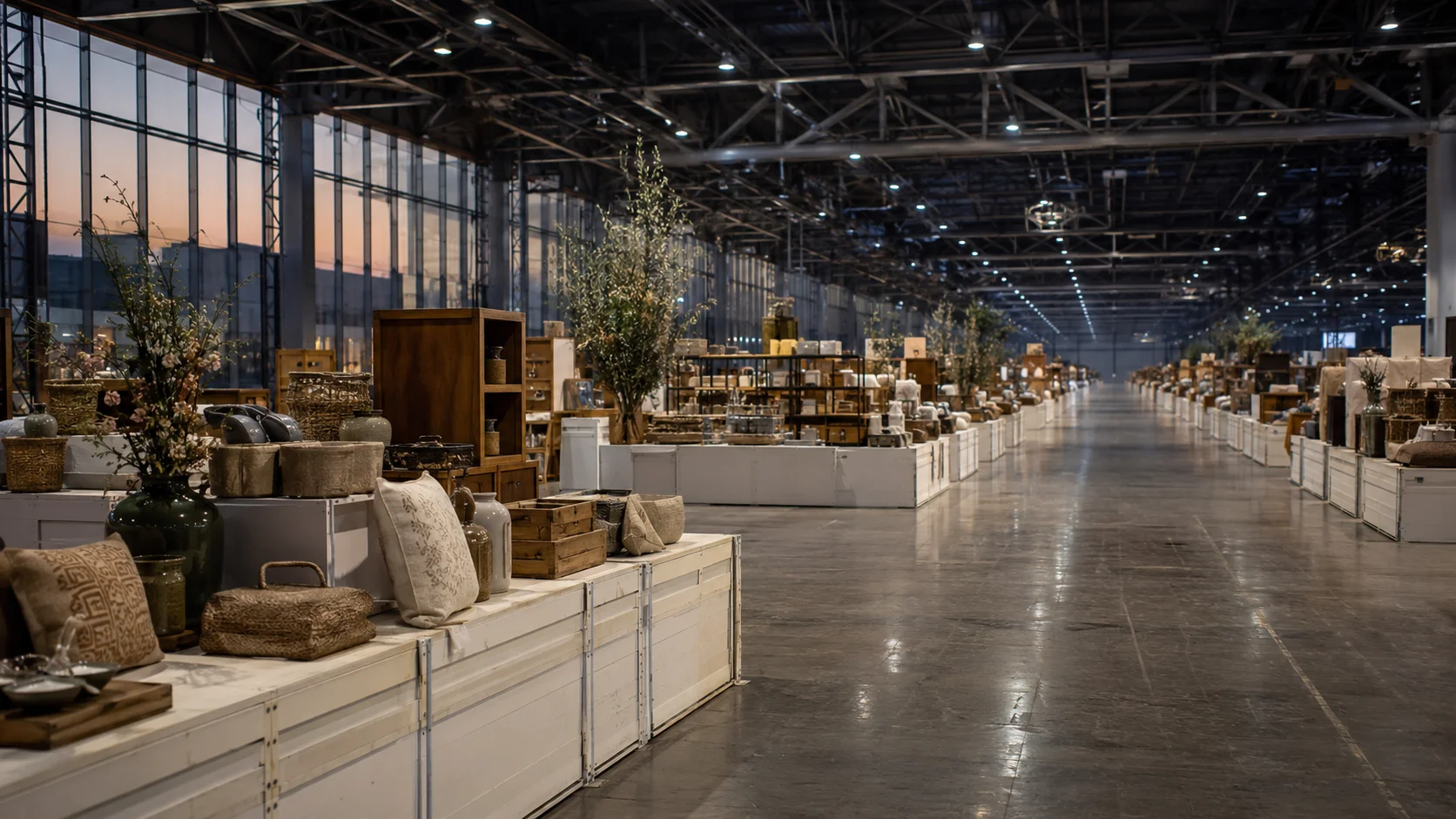
What the Canton Fair Actually Is
Two editions a year. Spring runs across April and May; autumn runs across October and November. Each edition is split into three phases of about five days each, with a short break between them while one set of exhibitors trucks out and the next trucks in. The phases are organised by product category, and this is the first fact that saves you from a wasted trip:
- Phase 1 covers electronics and household electrical appliances, machinery, hardware and tools, vehicles and spare parts, building materials, lighting, chemicals.
- Phase 2 covers consumer goods: kitchenware, ceramics, home décor, gifts and premiums, toys, clocks, gardening products.
- Phase 3 covers textiles and garments, shoes, cases and bags, office supplies, recreation products, medicines and health products, food.
If you import kitchen gadgets and you book flights for Phase 1, you will spend three days surrounded by excavator parts. It happens more often than you would think. Map your product category to its phase before you touch a flight search. If your range spans two phases (say, small appliances in Phase 1 and homewares in Phase 2), you either stay for the changeover or pick the phase where the larger share of your buying sits.
The venue itself, the Canton Fair Complex in the Pazhou district of Guangzhou, is one of the largest exhibition buildings on earth. Halls are lettered and zoned by product category within each phase. The fair publishes a hall plan for each edition. Download it. Print it. You will refer to it forty times a day.
Before You Go: The Unglamorous Part That Decides Everything
Buyer badge registration
Entry requires a buyer badge. Register online through the fair’s official buyer registration system before you travel. You upload a passport-style photo and basic business details, and you collect the physical badge at the venue or at designated hotel counters. Do this weeks ahead, not on the plane. On-site registration exists, but the queue on opening morning of a phase is its own small economy of lost time; I have watched buyers spend half a day of a four-day trip standing in it. One more thing: the badge is typically valid for several future editions. Keep it. Veterans walk straight past the registration hall with a five-year-old lanyard and a faint air of superiority.
Hotels and transport: book months ahead
Guangzhou is a city of many millions and during fair weeks it behaves like a city that has sold out. Hotel prices within reasonable reach of Pazhou routinely triple during phases, and the well-located properties go months in advance. Book as soon as your phase dates are confirmed. If you leave it late, you will pay peak-Sydney prices for a room an hour from the venue.
The good news is the metro. The complex sits on the Guangzhou metro network, and staying anywhere near a connecting line beats staying in a “fair hotel” at triple rate two changes away. Taxis and ride-hailing exist but the roads around Pazhou at 9am and 6pm during the fair are a car park with horns. Plan on the train.
Visas
Check your situation early, but the current position is straightforward for Australians: ordinary Australian passport holders can enter mainland China visa-free for stays up to 30 days for business, tourism or transit, under a policy the Chinese Embassy in Australia has confirmed runs through 31 December 2026. China’s visa policy has shifted more than once in recent years, so verify against the official notice for your own travel dates rather than trusting a blog post’s memory of the rules, and if the policy has lapsed or you need a visa for another reason, allow proper lead time. An invitation letter connected to your buyer registration can help with a business visa application.
Plan your halls or the fair plans you
You cannot walk the whole fair. Accept this before you arrive and the trip improves immediately. Take the hall plan for your phase and mark the halls that match your category, usually two to four of them. Those are your territory. Everything else is a distraction wearing a booth.
Then go one level deeper: many exhibitors are listed in advance. Spend an evening before you fly building a target list of twenty or thirty companies whose product ranges look right, note their booth numbers, and plot a rough walking order. You will discover plenty of suppliers you didn’t know existed (that serendipity is half the fair’s value), but the target list gives your days a spine.
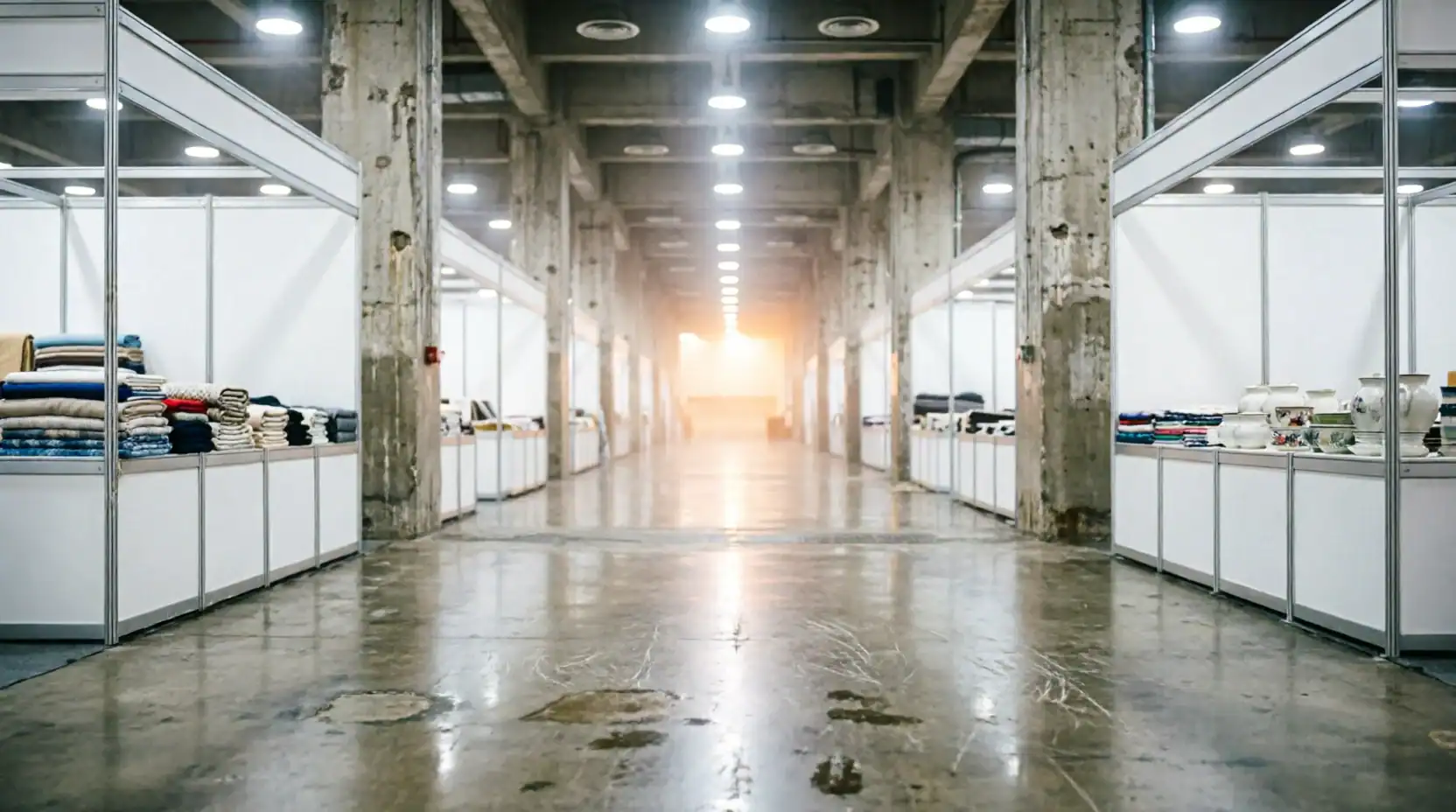
Working the Fair: The Booth Protocol
This is the rhythm of a fair day. You approach a booth. Someone, usually a young salesperson and occasionally the owner, makes eye contact and gestures at the product wall. You have perhaps three minutes before you both decide whether this conversation is worth continuing. Most buyers waste those minutes saying “just looking” or asking the price of the first thing they touch. There is a better script.
The first three minutes: four questions
- “Are you the factory or a trading company?” Ask it straight, early, and watch the answer more than you listen to it. Neither answer is disqualifying (good trading companies exist and earn their margin), but you need to know which one you’re talking to, because it changes everything downstream: pricing, quality control, accountability. Follow up: “Where is the factory?” A factory rep answers in half a second with a city and district. A trading company hesitates, or names somewhere improbably far from the product’s industrial cluster.
- “What’s your MOQ on this line?” The minimum order quantity tells you instantly whether this supplier and your business are the same size. If their MOQ is 5,000 units and your test order is 300, you’re not negotiating. You’re browsing. Better to know in minute two than email four.
- “Which export markets do you serve?” You want to hear markets whose standards resemble yours. A supplier already shipping to Australia, the EU or North America has met compliance regimes, packaging expectations, and buyers who sue. A supplier who has only ever sold to markets with looser requirements will be learning on your order.
- “What certifications do you hold, and can I see them?” Note the phrasing. Not “do you have certifications”, because everyone says yes. Ask to see them, now, at the booth. This one question does more filtering than the other three combined, and we’ll come back to it.
Four questions, three minutes, and you know whether this is a card-and-move-on booth or a sit-down-and-talk booth. At 25,000 exhibitors, that filter is the whole game.
Capturing suppliers at volume: one note per supplier
By day two, every buyer without a system has the same problem: a pocket full of near-identical business cards and no memory of which card belongs to the booth with the good hinges. The fix is mechanical. For every booth that passes your three-minute filter, create one note on your phone before you walk away, containing:
- a photo of the booth (with the booth number visible),
- a photo of the business card,
- photos of the two or three products that interested you,
- three lines of text: factory or trader, MOQ, indicative price, and your gut rating out of five.
Thirty seconds per supplier. It feels pedantic on day one and it is the only thing standing between you and chaos on day four. When you sit down in your hotel room to triage, every candidate is a self-contained record instead of a mystery card.
Samples at the fair
Suppliers expect sample requests; it is the fair’s currency of seriousness. Some hand over samples free at the booth, some charge, some prefer to courier after the fair once you have talked specifications. Negotiate sample terms on the spot while goodwill is high: free sample against a courier account, or sample cost credited against a first order, are both normal asks. If you collect physical samples during the trip, you will quickly face the pleasant logistics problem of getting a suitcase worth of product home; more on that below.
The price-quoted-at-fair caveat
Write this on your hand if necessary: a fair price is an opening position. The number a salesperson gives you at a booth is a fast FOB estimate produced without confirmed specifications, packaging, labelling, certification requirements, or real quantities. It is calibrated to keep you at the booth. It is not the price.
The real price emerges over the following month, in the follow-up exchange, once you have supplied exact specs and quantities, and once the supplier knows you are talking to two of their competitors from the same hall. Buyers who treat fair quotes as final either overpay (they anchored on a padded number) or get burned later (they anchored on a teaser number that quietly rose once specifications firmed up). Collect fair prices as data points for comparison, nothing more.
Reading a Booth: Quality Signals in Plain Sight
You cannot audit a factory from its booth. But a booth leaks information about the company behind it, if you know where to look.
Product depth versus breadth. A booth showing forty variations of one product family (every size, every material grade, cutaway sections showing internals) is telling you it manufactures that thing and thinks about it constantly. A booth showing one of everything, kettles beside power banks beside garden lights, is telling you it sources from a catalogue. Depth suggests factory; breadth suggests trader. Depth in your category is the single most encouraging thing a booth can display.
Who staffs the booth. Ask a technical question: tolerances, material specification, why they chose this component over the cheaper alternative. If the salesperson turns and beckons an engineer who answers precisely in workable English, that is a company with technical staff close enough to the customer to be at the fair. If every question, however technical, is answered by sales with “yes, no problem, we can do,” you have learned that the people who actually make the product are somewhere else, possibly in another company entirely.
Certifications on hand versus promised later. Serious exporters bring their paperwork. Test reports, quality management certificates, compliance documentation for their main markets, printed, in a folder, sometimes laminated on the booth wall. When you ask to see certificates and the answer is “we will email after the fair,” record that answer in your phone note. Sometimes the email arrives and everything is genuine. Often it arrives with documents that are expired, apply to a different product, or belong to a different company. A supplier who can hand you the folder at the booth just saved you two weeks of verification email tennis, and demonstrated they’ve been asked before, by buyers pickier than you.
Treat all three of these signals the way an investigative reporter treats a first source: promising, not confirmed. A deep, technically-staffed booth with certifications on the wall earns the company a place in your shortlist for follow-up, not a purchase order on the spot. The actual verification happens after the fair, on your own time, away from the pressure of a five-minute conversation with a queue behind you: checking the certificates are genuine, confirming the factory you were shown is the factory that will produce your order, running a company registry search. The booth tells you who is worth investigating. It does not do the investigating for you.
After the Fair: The Funnel Is the Point
This is the frame that separates buyers who get results from buyers who get souvenirs. The fair is not a place where you find suppliers. It is the top of a funnel, and the funnel looks like this:
200 cards → 20 conversations → 5 sample orders → 2 suppliers.
Two hundred booths pass your first glance across four days. Twenty survive triage and get a proper follow-up email with specifications and a request for a formal quotation. Five of those quote sensibly, communicate competently, and earn a paid sample order. Two samples pass your testing, and those two companies pass verification. Two new suppliers is a successful fair. Buyers who expect twenty are measuring the wrong thing; buyers who follow up with none paid AUD 5,000 for a walk, and studies of trade-show behaviour suggest a shocking share of collected leads are never contacted at all.
The funnel discipline matters because each stage is cheap to run and expensive to skip. Triaging costs an evening. Follow-up emails cost a day. Samples cost a few hundred dollars. The stage people skip is the next one, and it’s the one that ruins businesses:
Verify before you order. Always.
A booth at the Canton Fair proves that a company could afford a booth at the Canton Fair. That is all it proves. Before your first real order goes to any fair contact, run the same vetting you would on a supplier you found online: verify the business registration, confirm the certifications with the issuing bodies, check that the company selling to you is the company you’d have legal recourse against, and for meaningful order values, commission a factory audit. The full process, which we set out in our guide to vetting Chinese suppliers, does not become optional just because you shook someone’s hand in Pazhou. If anything, the handshake is the risk: it manufactures a feeling of relationship that two hours at a booth has not earned.
The geography bonus: visit factories while you’re there
This is an advantage of attending in person that buyers routinely leave on the table. Guangzhou sits at the top of the Pearl River Delta, the densest manufacturing region on the planet. Dongguan, Foshan, Shenzhen and Zhongshan, the cities where an enormous share of your candidate factories actually are, sit between thirty minutes and two hours away by train or car. If a booth conversation goes very well and the factory is in Foshan, ask to visit this week. A supplier who says “of course, come Thursday” has just told you more than any certificate. A supplier who finds reasons why a visit is impossible while you are forty minutes from their claimed factory has also told you something. Build one buffer day into your trip for exactly this.
Fair Versus the Alternatives: When Does It Earn the Airfare?
The Canton Fair is not the only way to find Chinese suppliers, and honesty requires the comparison.
Online sourcing platforms, the big B2B directories where most importers start, cost nothing, run year-round, and offer a functionally infinite catalogue. What they cannot give you: hands on the product, faces across a table, the ability to compare forty competing versions of one item in an afternoon, or the incidental education of watching how a company presents itself. Online sourcing is a fine tool, and for reordering or commodity items it may be all you need.
Yiwu, the vast permanent wholesale market city in Zhejiang, runs year-round and is unbeatable for small-quantity, low-value general merchandise across tens of thousands of tiny stalls. But it is overwhelmingly a trading environment, oriented to buying stock rather than developing manufactured products to your specification. We’ve compared the two sourcing worlds in detail in our Guangzhou versus Yiwu guide.
So when does the Canton Fair justify flights, hotels and a week of your life? Three situations, reliably:
- New category entry. You’re moving into a product area you don’t know. Four days at the fair delivers a compressed education (the price bands, the quality tiers, the feature sets, who the serious manufacturers are) that would take months to assemble through a screen.
- Supplier diversification. You depend on one or two suppliers and that concentration is keeping you up at night. The fair is the fastest way to build a bench of verified alternatives.
- Product discovery. You don’t know exactly what you’re looking for. Search boxes need queries; aisles don’t. The product you end up building a business on is often three booths down from the one you came to see.
If none of those apply, and you’re happy with your suppliers and reordering stable products, save the airfare. The fair rewards buyers with a mission.
The Freight Tie-In: Thinking Like a Shipper While You Shop
You are, after all, going to have to move whatever you buy. Three logistics threads to hold while you work the fair:
Getting samples home. By day four you may have a hotel room that looks like a small retail store. Options: pack what fits in your luggage (mind airline limits and prohibited-goods rules), have suppliers courier samples to Australia after the fair, or, if you’ve gathered a serious volume from multiple suppliers, consolidate everything into one shipment home rather than paying ten separate courier bills. See our guide to shipping samples from China for the full costs and customs treatment.
Timing first orders around Chinese New Year. This one bites autumn-fair buyers every single year, so read it twice. You attend the October–November fair, spend six weeks on follow-up and verification, and place your first production orders in late December or January. That timing runs production straight into the Chinese New Year shutdown, when factories close for weeks and freight rates spike in the pre-holiday scramble. Sequence deliberately: either compress your funnel and place orders by early-to-mid November for pre-CNY production, or accept that first deliveries land after the post-holiday restart and plan stock accordingly. The exact windows are mapped out in our CNY freight planning guide.
The port advantage. A quiet benefit of sourcing at the fair: your new suppliers cluster in the Pearl River Delta, which means their goods ship out of Guangzhou (Nansha) or Shenzhen (Yantian, Shekou), among the largest and most frequently served container ports in the world, with constant sailings to Australia. Short factory-to-port trucking, deep sailing schedules, competitive rates. Compared with a supplier deep inland, a Delta supplier’s location shaves days and dollars off every future shipment. It’s not a reason to choose a worse supplier, but between two comparable candidates, geography is allowed to vote. When you’re ready to move a first commercial order, our corporate freight service handles exactly this door-to-door SME import lane.
Timing Strategy for Australian Importers
The two editions map onto the Australian retail calendar in usefully different ways.
The autumn fair (Oct–Nov) is the Q1 play. Attend in October, run the funnel hard through November, place orders for pre-CNY production, and your goods land in Australia in the first quarter: new-year retail resets, back-to-school, autumn ranges. The catch is the compressed timeline described above: the gap between fair and CNY shutdown is tight, and first orders with new suppliers always take longer than promised. Move fast or plan for post-CNY delivery.
The spring fair (Apr–May) is the calm play. Orders placed off the back of a spring visit run through the middle of the year, comfortably clear of CNY, landing as mid-year stock, with time for a second, larger order to arrive before Christmas trading if the first performs. For a first-time attendee, spring is the gentler on-ramp: less schedule pressure, more room for the follow-up funnel to run at its natural pace. Our guide to importing from China to Australia works through the broader shipping context for the route.
Worked Example: A 4-Day Fair Plan on a Real Budget
Meet a composite: a Melbourne homewares importer, two years in, currently buying through one trading company, attending Phase 2 of the autumn fair to diversify. This is her trip, with numbers.
The budget. Return economy flights Melbourne–Guangzhou booked ten weeks out: about AUD 1,300. Five nights in a mid-range hotel one metro line from Pazhou at fair-week pricing: AUD 1,800. Meals, metro, occasional taxis, buyer badge, phone data, sample costs and a contingency: AUD 1,200. Call it AUD 4,300 all-in, comfortably inside the realistic AUD 4,000–6,000 band for a solo four-day trip, with the top of the band buying you a closer hotel and a factory-visit day-trip.
Day 0 (arrival, evening). Land, collect the badge at the hotel registration counter, and spend ninety minutes with the hall map and her pre-built target list of 28 exhibitors across three halls. Walking order plotted. Early night; the fair punishes jet lag.
Day 1: the sweep. Doors at 9:30. She walks her three halls end to end, fast, running the three-minute protocol. No long conversations, no sitting down. 61 booths get the four questions; 38 pass and get the photo-and-note treatment. Feet finished by 5pm. Evening: first triage over dinner turns the 38 into a ranked list.
Day 2: depth. Sit-down conversations of twenty to forty minutes with her top 12. Specifications discussed, catalogue prices probed, sample terms negotiated at nine booths, certification folders inspected, with two “we’ll email you” answers duly recorded and mentally demoted. One conversation goes so well the export manager offers a factory tour: their plant is in Foshan, 40 minutes away.
Day 3: Foshan. The factory visit. Real production lines, an actual QC bench with rejected units visibly tagged, an engineering office that answers hinge-tolerance questions without calling anyone. This is now candidate number one, and nothing about it was visible from the booth. Afternoon back at the fair: second visits to three booths for unresolved questions, plus two hours of unplanned aisle-wandering that surfaces a product category she hadn’t considered, possibly the most valuable two hours of the trip.
Day 4: close the loop. Final booth visits, sample logistics locked (four samples in luggage, five to be couriered, terms agreed in writing at the booth), and the flight home. On the plane she drafts the follow-up emails while every booth is still vivid.
The funnel, six weeks on. 61 approached → 38 captured → 12 deep conversations → 9 formal RFQs sent within five days of landing → 5 quality quote responses → 5 samples tested → 3 passed → verification (registration checks, certificate confirmation, one commissioned audit on the Foshan factory) → 2 suppliers approved. First orders placed November 12, produced pre-CNY, on the water in January, landed Melbourne in February.
The maths. Trip cost AUD 4,300. The two new suppliers price her core range 9% below her incumbent trading company on landed cost. On her AUD 320,000 of annual buying, that comes to roughly AUD 29,000 a year, before counting the risk value of no longer depending on a single source. The fair paid for itself before the first container cleared Melbourne customs. That is the realistic upside case: not a life-changing windfall, just a decisively positive trade, if the funnel gets run. Skip the follow-up and the same trip is a AUD 4,300 walking tour.
Common Mistakes: The Four Ways Buyers Beat Themselves
1. Walking aimlessly without a hall plan. The fair’s scale converts unplanned buyers into exhausted ones. No target list, no hall map, no walking order, just aisles until the feet give out. Cure: plan halls before you fly, sweep fast on day one, go deep on day two.
2. Treating fair prices as final. In both directions: anchoring on a padded teaser, or celebrating a “fair special” that quietly inflates when real specifications arrive. Fair quotes are conversation starters. The price is negotiated afterwards, in writing, against competing quotes.
3. Ordering from a booth without verification. The most expensive mistake on this list. The handshake, the friendly export manager, the impressive booth: none of it is due diligence. Every fair contact goes through the same vetting as a stranger from the internet, because until verified, that is what they are.
4. Missing the phase for your category. The unforced error that ends trips before they start. Three phases, three different fairs in effect. Confirm your category’s phase against the current edition’s official schedule (allocations do get adjusted) before booking anything with a cancellation fee.
Related Reading
- How to Vet Chinese Suppliers Before You Order
- Guangzhou vs Yiwu: Which Sourcing Hub Fits Your Business?
- Shipping Samples from China: Costs, Couriers and Customs
- Chinese New Year 2027 Freight Planning
- Importing from China to Australia: The Complete Guide
The friendly export manager, the impressive booth, the handshake that feels like it means something: none of that is verification, and treating it as such is exactly how buyers get burned at scale, not by strangers, but by people who felt trustworthy in the moment. The fair creates a specific kind of pressure that works against scrutiny: thousands of exhibitors, limited days, a booth that looks legitimate because it’s expensive to build a booth that doesn’t. But a supplier met at a trade fair carries exactly the risk profile of a supplier found on a cold outreach email until they’ve been checked the same way: references, samples, a paper trail that survives someone actually asking hard questions. The booth’s polish tells you what the exhibitor spent on the fair. It tells you nothing about what happens after the deposit clears.
Frequently Asked Questions
When is the Canton Fair held each year?
Twice a year in Guangzhou: a spring edition across April and May, and an autumn edition across October and November. Each edition runs in three phases of roughly five days, organised by product category, with short breaks between phases while exhibitors change over.
Which Canton Fair phase should I attend?
Phase 1 covers electronics, machinery, hardware, vehicles and building materials. Phase 2 covers consumer goods, gifts and home décor. Phase 3 covers textiles, garments, shoes, office supplies, food and health products. Match your category to its phase before booking travel. The wrong phase means the exhibitors you need are not in the building.
How do I register for a buyer badge?
Register through the fair’s official online buyer registration system before you travel, upload a passport photo and business details, then collect the physical badge at the venue or a designated hotel counter. The badge is typically valid for multiple future editions, so keep it. On-site registration exists, but opening-day queues can consume half a morning of a short trip.
Are prices quoted at the fair final?
No. Booth quotes are fast FOB estimates given without confirmed specifications, packaging or quantities, and they function as opening positions. The real price is negotiated in follow-up once exact specs are on the table and the supplier knows you hold competing quotes. Collect fair prices as comparison data, not commitments.
Should I place orders at the fair itself?
Almost never with a new supplier. Use the fair to shortlist, collect samples and set indicative pricing, then verify each candidate afterwards (registration checks, certificate confirmation and, for meaningful order values, a factory audit) before any money moves. A booth demonstrates marketing budget, not manufacturing quality.
Is the fair worth it for a small Australian importer?
A four-day solo trip realistically costs AUD 4,000–6,000 all-in. If you return with two verified suppliers who improve your landed cost or quality even modestly, the trip typically pays for itself within an order or two. It earns the airfare most clearly for new category entry, supplier diversification, or product discovery, less so if you are simply reordering from suppliers you already trust.