

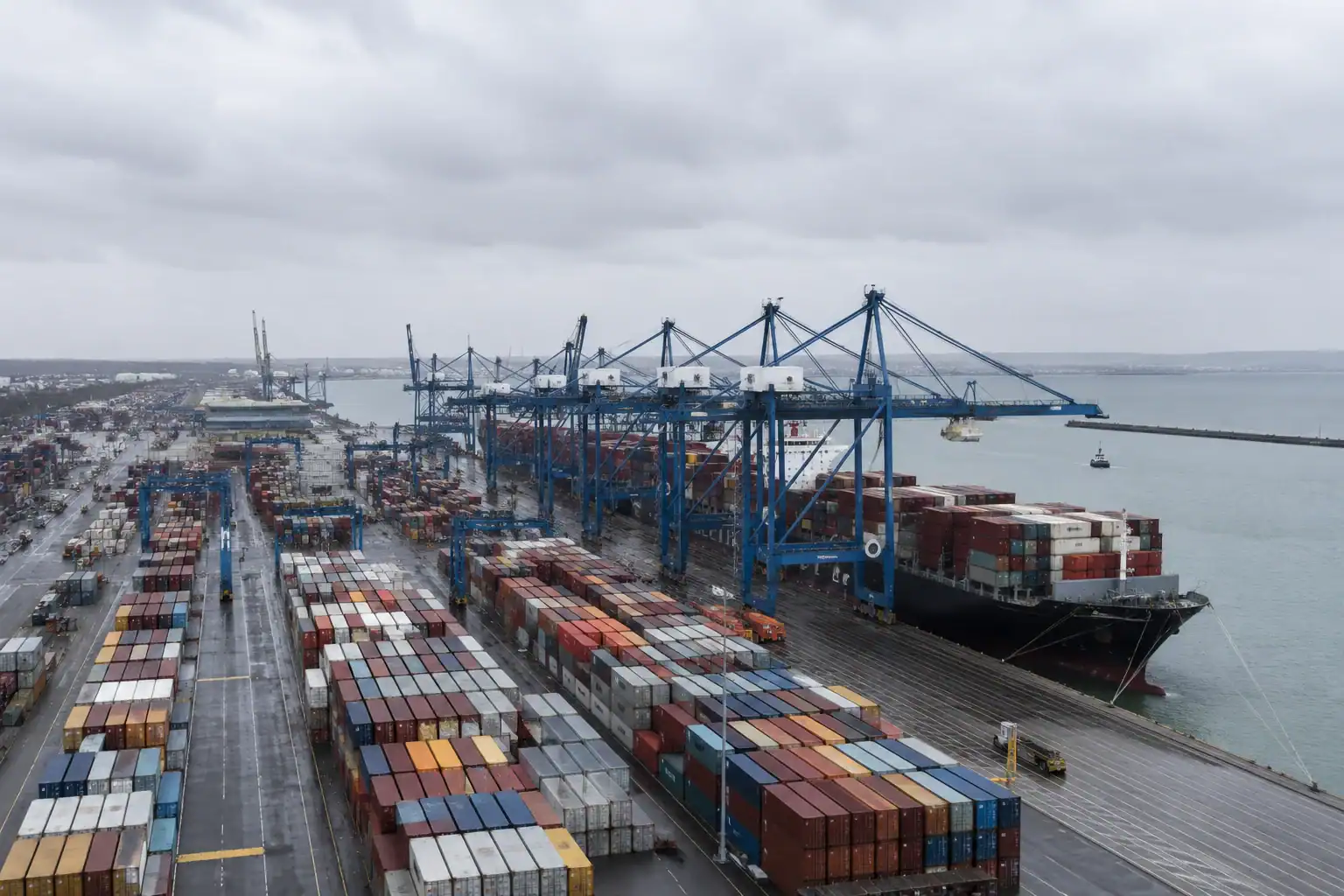
The cost question changes when a UK-to-Thailand move reaches the size where a full container makes sense, typically a two-bedroom apartment or larger. It is no longer “what is the LCL rate per CBM?” It is “what does a 20ft or 40ft container from Felixstowe to Laem Chabang actually cost, all-in, and what determines where in that range my move lands?”
The answer depends on five inputs: container size (20ft or 40ft), departure month (peak season surcharges July–September), whether your move qualifies for Thai personal effects duty relief (which depends on your visa status), your delivery destination within Thailand, and whether goods are professionally packed. Once these five are known, the cost range is narrow enough to plan against.
Here is the part the cost tables never mention. The night before a container leaves Felixstowe, most people are not lying awake over the War Risk Surcharge. They are wondering whether sending a whole life to a country on the other side of the world is the right thing to do at all. That fear is real and it does not have a line item. What does have a line item is everything below. The reassuring thing is that the cost of a UK-to-Thailand move is far more knowable than the decision behind it. Get the five inputs right and the money stops being the scary part.
The UK-to-Thailand Container Route
Most UK containers bound for Laem Chabang still route via the Cape of Good Hope rather than the Red Sea, the pattern set in late December 2023 after the Houthi campaign against Red Sea shipping. As of August 2026 that is no longer a single answer. Suez transits have climbed to their highest level since January 2024 but remain around 41% below pre-crisis volumes, and the return is service-by-service rather than network-wide: Maersk has moved four services back through Suez while nine stay on the Cape, and the Premier Alliance carriers that operate the direct Laem Chabang calls are still routing entirely via the Cape. Ask your forwarder which routing your specific sailing uses. A Suez-routed service runs roughly 10 to 14 days quicker than the Cape equivalent.
For container sizing and mechanics that apply regardless of origin, see the general 20ft vs 40ft container guide for Thailand.
BIMCO analysis documented a 10–14 day transit time increase compared to the historic Suez Canal route, along with a fuel cost uplift passed through as an increased Bunker Adjustment Factor (BAF) and a War Risk Surcharge (WRS). The Cape route is now the structural baseline for UK-to-Asia shipping, and its cost and time implications are the planning baseline.
Current port-to-port transit times from UK to Laem Chabang:
| UK departure port | Transit (port to port) | Transshipment |
|---|---|---|
| Southampton | 35–45 days | Direct mainline call at Laem Chabang on some services |
| Felixstowe / London Gateway | 38–50 days | Transship, usually Singapore or Tanjung Pelepas |
| Liverpool / Tilbury | 40–52 days | Feeder to a mainline hub, then transship |
Total door-to-door from UK packing day to Bangkok delivery is 65–90 days for a full container.
One number is worth checking against your own quote, because it moves the answer by two weeks. Where a UK port sits in a carrier’s European rotation matters more than which carrier you book. Yang Ming’s own published June 2026 schedule puts Southampton at 40 days to Laem Chabang on a single vessel with no transshipment, while the same carrier lists Rotterdam at 36 days on one service and 49 on another in the same week, purely because Rotterdam is the last European call on one rotation and the first on the other. Ask which service your box is booked on, not just which carrier.
The Six Cost Layers: UK to Thailand Container Move
Layer 1: UK Origin Costs
| Item | 20ft container | 40ft container |
|---|---|---|
| Professional packing (full service) | £600–1,000 | £900–1,600 |
| Container loading (crew + equipment) | Included in packing | Included in packing |
| Origin THC (Felixstowe) | £150–250 | £200–320 |
| Bill of lading fee | £35–65 | £35–65 |
| Export customs declaration (HMRC CDS) | £80–140 | £80–140 |
| Container transport to port (if not home-loaded) | £150–300 | £180–350 |
| Layer 1 total (approx) | £1,015–1,755 | £1,395–2,475 |
Post-Brexit, all household goods leaving the UK for Thailand require a formal export customs declaration under the HMRC Customs Declaration Service (CDS). Your removals company files this; confirm it is included in their quote. Goods departing without a valid export declaration face complications at the UK port of exit.
Layer 2: Ocean Freight and Surcharges
| Item | 20ft container | 40ft container |
|---|---|---|
| Base ocean freight (Felixstowe–Laem Chabang) | £900–1,800 | £1,400–2,800 |
| Bunker Adjustment Factor (BAF) | £250–450 | £380–650 |
| Low Sulphur Surcharge (LSS/IMO 2020) | £80–160 | £120–220 |
| War Risk Surcharge (Cape rerouting) | £150–350 | £220–500 |
| Peak Season Surcharge (Q3 only) | £100–350 | £150–500 |
| Layer 2 total (excl. PSS) | £1,380–2,760 | £2,120–4,170 |
The War Risk Surcharge reflects the Cape of Good Hope rerouting cost. It applies to virtually all UK-origin containers on Asia trades since late December 2023 and is not a temporary or optional surcharge. If your quote does not name this surcharge, it may be buried in the base rate, or it may appear as a separate line at invoice time.
Layer 3: Marine Cargo Insurance
An all-risks marine cargo insurance policy on a UK-to-Thailand household move typically costs 2–3.5% of the declared replacement value of goods. For household goods valued at £30,000 (typical for a 20ft container), the premium is £600–1,050. For £50,000 (40ft), the premium is £1,000–1,750. Household goods cover is a different product from commercial marine cargo and is priced far higher: it is written on new-for-old replacement value at destination for used goods, and it extends to mould, mechanical derangement and pairs-and-sets. Commercial containerised cargo runs a fraction of this. Owner-packed cartons are normally restricted to total-loss-only and are not covered at this rate.
Ocean carrier liability under the Hague-Visby Rules is capped at the lower of £1.70 per kg of gross weight or 534 SDR per package, far below the value of furniture, electronics, and clothing on a typical container move. Marine insurance is not optional for a move where goods replacement value is meaningful. It must be arranged before the container is loaded, not after a claim event.
Layer 4: Thai Destination Port Charges
| Item | 20ft container | 40ft container |
|---|---|---|
| Destination THC (Laem Chabang) | THB 3,500–5,500 (~£78–122) | THB 5,500–8,000 (~£122–178) |
| Port entry / customs processing fee | THB 200–400 (~£4–9) | THB 200–400 (~£4–9) |
| Container detention (if applicable) | THB 800–2,000/day after free period | THB 1,000–2,500/day after free period |
| Layer 4 total (excl. detention) | ~£82–131 | ~£126–187 |
FCL containers at Laem Chabang do not incur a CFS deconsolidation fee, a key advantage over LCL. The container is released from the port yard directly to the delivery truck after customs clearance. Compared to LCL, this saves THB 400–900 per CBM on a 20–25 CBM move.
Layer 5: Thai Customs
| Item | Qualifying personal effects | Non-qualifying goods |
|---|---|---|
| Import duty | Waived | 10–30% of CIF value (household goods) |
| VAT | Waived or minimal | 7% of (CIF + duty) |
| Customs broker fee | THB 4,000–8,000 (~£89–178) | THB 5,000–12,000 (~£111–267) |
| Physical examination (if selected) | THB 8,000–18,000 (~£178–400) | Same |
The duty relief conditions under Thai Customs are strict. UK movers must hold a valid Thai long-term residency permit (non-immigrant B, O, OA/OX, or LTR visa) at the time the container arrives at Thai customs. A tourist visa or visa-exempt entry does not qualify. The permit must be in place when customs clearance is filed, not applied for and not pending.
The door-to-door timeline runs 65–90 days from UK packing day to Thai customs clearance. If you apply for your Thai visa 60 days before departure, confirm that it will be issued and in your passport before the container reaches Laem Chabang. Apply early, and let your Thai customs broker confirm the timing before the container sails. For the full conditions, see our guide to duty-free import rules in Thailand.
Layer 6: Last-Mile Delivery Within Thailand
| Delivery destination | 20ft container truck | 40ft container truck |
|---|---|---|
| Laem Chabang to Bangkok (commercial/house access) | THB 5,000–8,000 (~£111–178) | THB 7,000–12,000 (~£156–267) |
| Laem Chabang to Bangkok (high-rise apartment) | THB 6,000–10,000 (~£133–222) | THB 8,000–14,000 (~£178–311) |
| Bangkok to Chiang Mai (transhipment required) | THB 12,000–20,000 (~£267–444) | THB 16,000–28,000 (~£356–622) |
| Bangkok to Phuket / Hua Hin | THB 10,000–18,000 (~£222–400) | THB 14,000–24,000 (~£311–533) |
Provincial delivery from Bangkok requires transshipping goods from the container to a smaller truck. A 40ft container cannot reach many provincial addresses on standard road networks. This adds a handling step and cost at the transshipment point. Confirm access conditions for your specific delivery address with your Thai agent before the vessel arrives.

Two Full Scenarios: All-In Cost Summary
Both scenarios assume the following: all costs in GBP, ocean freight at Felixstowe–Laem Chabang market rates, a non-Q3 departure, personal effects duty relief granted, and an exchange rate of THB 45/£ (verify the current rate at time of booking).
Scenario A: 3-Bedroom House (20ft Container, Bangkok Delivery)
Volume: 22 CBM packed. Goods value: £30,000. Departure: Felixstowe, May.
| Layer | Cost (GBP) |
|---|---|
| UK origin (packing, THC, B/L, export declaration) | £1,350 |
| Ocean freight + BAF + LSS + WRS | £1,900 |
| Marine insurance (2.5% x £30,000) | £750 |
| Destination THC (Laem Chabang, 20ft) | £100 |
| Thai customs broker (duty relief granted) | £133 |
| Last-mile, Bangkok apartment | £178 |
| Total all-in | £4,411 |
Scenario B: 4-Bedroom Family House (40ft Container, Bangkok House Delivery)
Volume: 48 CBM packed. Goods value: £55,000. Departure: Felixstowe, June.
| Layer | Cost (GBP) |
|---|---|
| UK origin (full packing service, THC, B/L, export declaration) | £2,200 |
| Ocean freight + BAF + LSS + WRS | £3,200 |
| Marine insurance (2.5% x £55,000) | £1,375 |
| Destination THC (Laem Chabang, 40ft) | £156 |
| Thai customs broker (duty relief granted) | £167 |
| Last-mile, Bangkok house with direct access | £200 |
| Total all-in | £7,298 |
Neither scenario includes Peak Season Surcharge (departure outside Q3) or physical examination costs. Add £250–600 for Q3 departures; add £180–400 if customs examination is required. Provincial Thailand delivery adds £200–500 depending on destination.
The Key Cost Drivers and How to Manage Them
Container size selection
Moving from a 20ft to a 40ft adds approximately £1,200–2,000 to the all-in cost. If your volume is close to the 20ft limit (22–25 CBM), a professional survey is essential before confirming the container size. An overpacked 20ft that damages goods costs more than the upgrade to 40ft.
Departure timing
Q3 (July–September) Peak Season Surcharges add £100–500 per container on UK-Asia trades. If the move timeline is flexible by 4–6 weeks, departing in June rather than July, or October rather than September, eliminates the PSS entirely.
Thai visa timing
The single highest-value cost management action for UK movers is to secure the Thai long-term residency permit before the container sails. With a 35–45 day ocean transit plus 7–15 days for Thai customs clearance, a container sailed in May will be at Thai customs in July. If the Thai visa is not in hand by August, duty (10–30% of CIF value) plus 7% VAT applies. On a £30,000 goods value, this is £4,000–10,000 in avoidable duty and tax.
Declared goods value
Marine insurance premium scales with declared value. Declaring at replacement value rather than depreciated value increases the premium, but it is the correct basis and provides the right coverage for a complete loss. Do not under-declare to save on insurance. The premium difference is small and the coverage gap in a total loss is large.
The headline number in a UK-to-Thailand container quote is almost never the number that appears on the final invoice. Origin THC, the Cape rerouting War Risk Surcharge, Laem Chabang destination charges, Thai customs duty, and last-mile delivery in Bangkok are each handled by a different operator under a different billing cycle. An all-in quote is not a base rate but an itemised total including every layer named in this article. Shippers who ask for one before committing consistently arrive at a smaller gap between expectation and final bill. The operators who provide itemised quotes know the full number. The shippers who accept headline rates discover it progressively, invoice by invoice.
For an accurate all-in quote on a UK-to-Thailand container move, or to request a freight quote with every surcharge line itemised, contact Swift Cargo directly.
The 20ft versus 40ft decision in this article reads as a cost question. It is actually a measurement accuracy question. If you know your packed volume to within 3 CBM, the cost table in this article tells you which container size is correct. If you are working from an estimate rather than a professional survey, you are choosing between two container sizes on imprecise inputs. The consequence of choosing wrong is not a slightly different quote. It is either a container that cannot close or wasted space billed at 40ft rates. The survey is not an optional step. It is the input that converts this article’s cost ranges from general guidance into planning numbers that apply to your specific move. The mental model that matters here is not “20ft or 40ft”. It is “how accurate is my volume figure, and what is the cost of being wrong?” Once that question is answered with a measured CBM number, the container decision largely resolves itself.
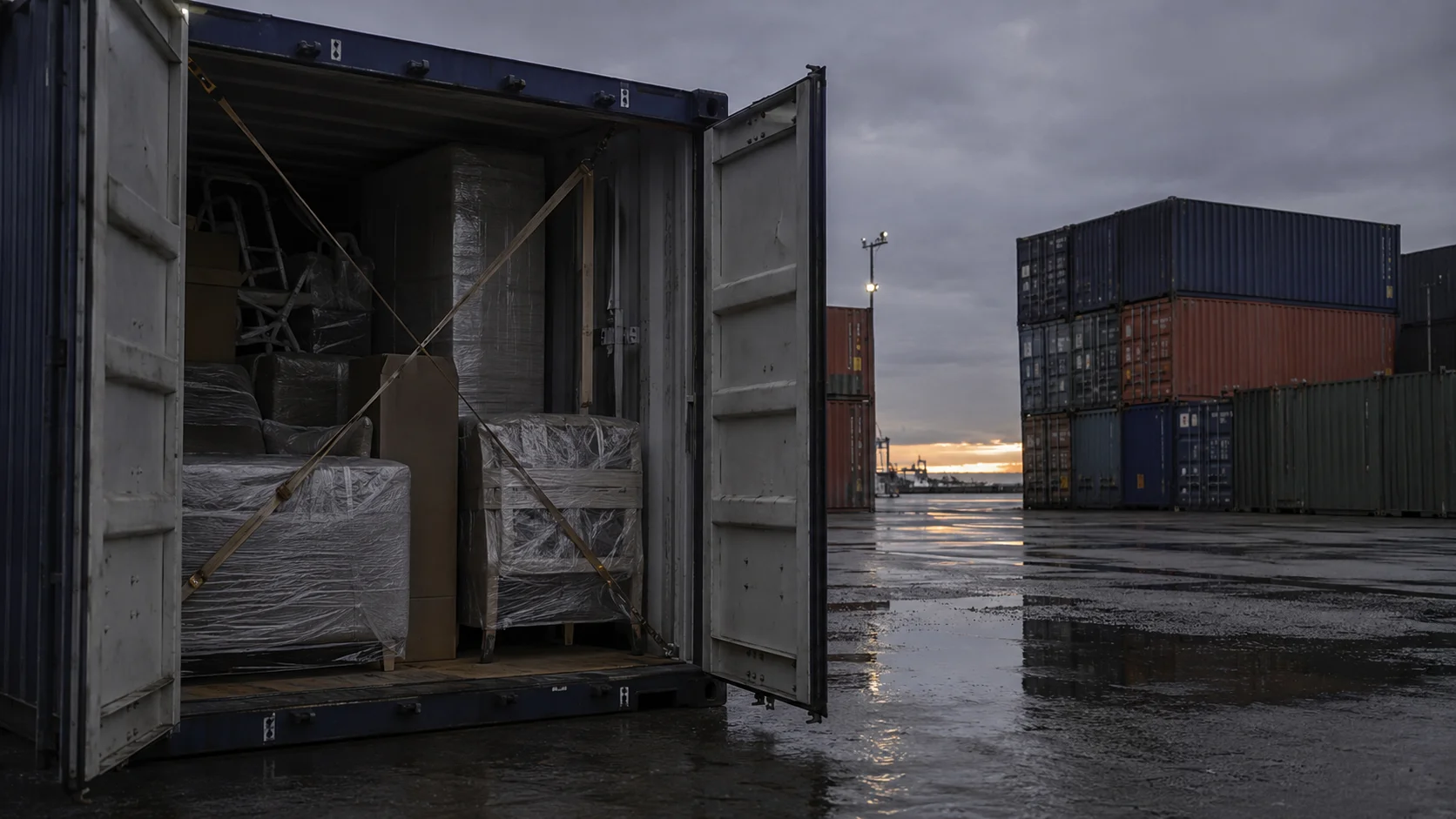
A 40ft container from the UK to Bangkok costs less than most people’s stamp duty on the house they’re leaving behind, and almost nobody planning the move makes that comparison before they panic at the freight quote. The number that actually matters isn’t the headline ocean-freight rate quoted first. It’s the all-in figure across all six cost layers: UK origin charges, ocean freight, insurance, Thai port charges, customs, and last-mile delivery, because that’s the number the shipment will actually cost, and no single layer in isolation tells you anything useful about the total. Ask a forwarder for that one number before comparing a single quote to another. A quote that only states the ocean-freight line isn’t cheaper than a quote that states the all-in figure. It’s just a smaller number with more still hidden behind it.
Related reading: Part Load Removals to Thailand: Sailing Dates, Duty and Crates
Frequently Asked Questions
How much does a 20ft shipping container cost from the UK to Thailand?
The all-in cost of a 20ft container from the UK to Bangkok (including UK packing, Felixstowe origin charges, Cape of Good Hope ocean freight and surcharges, marine insurance, Thai destination THC, customs broker fee, and Bangkok delivery) is approximately £3,500–5,500 for a non-Q3 departure with personal effects duty relief granted. A Q3 departure adds £250–500 in Peak Season Surcharge. A provincial Thailand delivery (Chiang Mai, Phuket) adds £200–400. If personal effects duty relief does not apply, import duty and VAT on household goods value add to the total. Calculate at 10–30% duty + 7% VAT on the CIF value of goods.
How much does a 40ft shipping container cost from the UK to Thailand?
A 40ft container from the UK to Bangkok runs approximately £5,500–9,000 all-in for a non-Q3 departure with personal effects duty relief granted. The significant cost drivers above the 20ft price are the higher packing service cost, higher ocean freight base rate and surcharges, higher destination THC, and higher last-mile truck cost. The per-CBM cost of a 40ft is lower than a 20ft once the 40ft is well-loaded. The freight premium over a 20ft does not scale linearly with volume.
Why is there a War Risk Surcharge on UK-to-Thailand containers?
Following the Houthi campaign against Red Sea commercial shipping that began in late 2023, most UK-to-Asia carriers rerouted via the Cape of Good Hope to avoid the Red Sea risk zone. The War Risk Surcharge (WRS) recovers the additional insurance and operational cost of this routing. BIMCO analysis documented the shift as structural. The Cape route is now the baseline, not a temporary deviation. The WRS of approximately £150–350 per 20ft container (£220–500 per 40ft) is now a standard component of UK-to-Asia freight costs and should be included in any quote comparison.
Is it cheaper to ship a container or use LCL from the UK to Thailand?
For volumes below 15 CBM, LCL is almost always cheaper. For volumes above 18–20 CBM, a 20ft FCL container becomes competitive and typically offers better handling. The crossover point is approximately 15–17 CBM for UK-to-Thailand shipments. At the crossover, the all-in cost difference between LCL and 20ft FCL is often £300–600, a meaningful but not prohibitive premium for the FCL handling advantages (no CFS deconsolidation, lower damage exposure, direct delivery from port). Request quotes for both at volumes in the 14–20 CBM range before deciding.
How long does a container take to get from the UK to Thailand?
Port-to-port from Southampton to Laem Chabang is 35–45 days via the Cape of Good Hope, and 38–50 days from Felixstowe or London Gateway, which transship. Total door-to-door from UK packing day to Bangkok delivery is typically 65–90 days, adding 5–15 working days for Thai customs clearance after vessel arrival and 1–3 days for last-mile delivery. Plan your move timeline against the 65–90 day figure.