Author: Ben Rogers

  • The Duty-Free Loophole: How Thai Customs Decides What’s “Used” vs. “New”

    The Duty-Free Loophole: How Thai Customs Decides What’s “Used” vs. “New”


    Last updated: February 2026


    Thai Customs applies a simple standard to duty-free personal effects. The friction begins when your shipment makes that standard hard to verify.
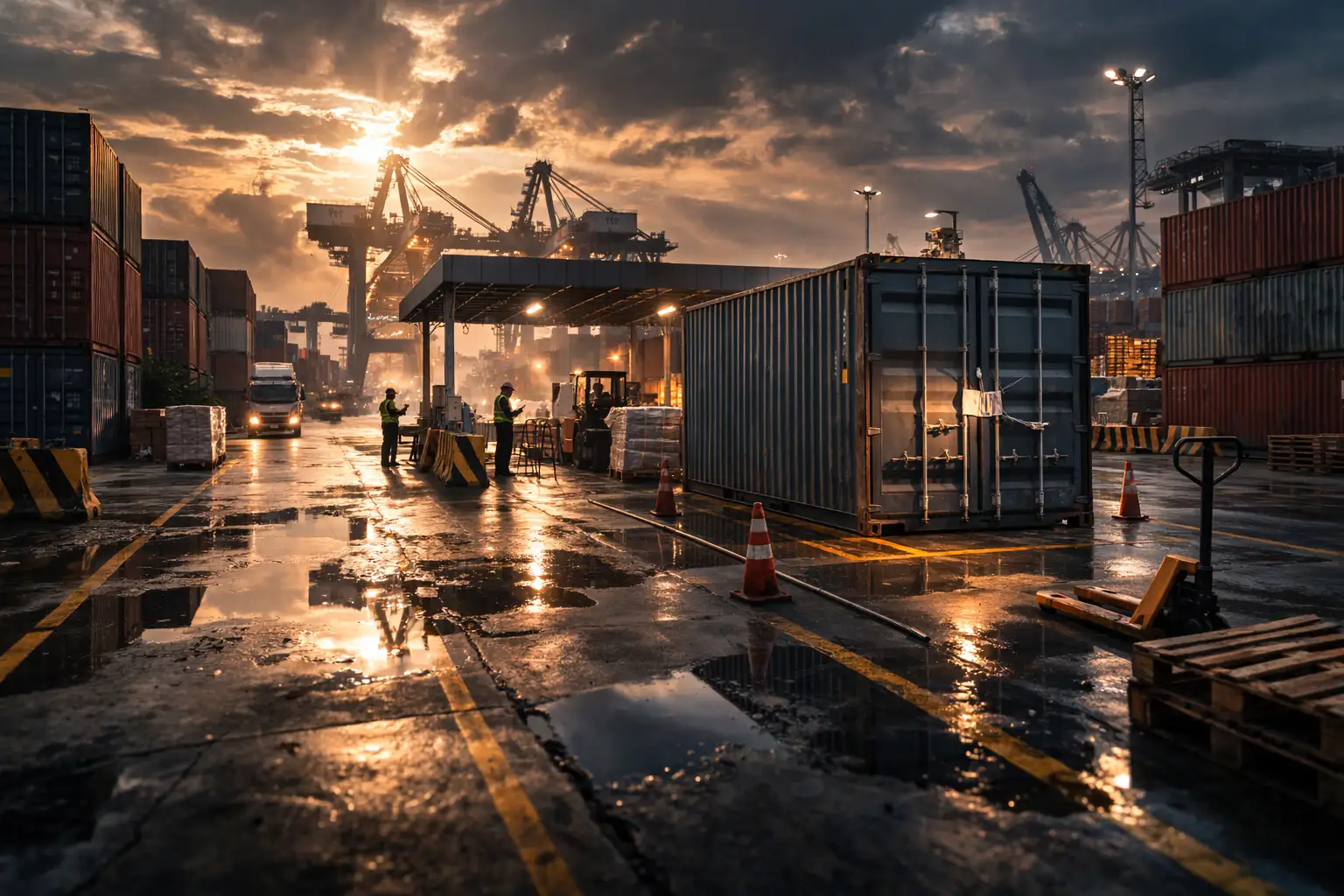

    Container inspection area at a port at dawn — where duty-free household effects can be questioned

    Inspection decisions are often triggered by packaging and paperwork signals, not by what you intended.


    Most duty disputes aren’t about contraband. They’re about classification. Thailand customs used items are assessed on how the shipment reads—like a household relocation or like a retail import wearing a household label.


    Thailand’s published exemption rests on three words: owned, possessed, used. If those words aren’t easy to verify, clearance becomes interpretive—and interpretation is where delays and cost exposure begin.


    This report maps the gap between written rules and real clearance: the official standard, the inspection mechanics (including Red/Green selectivity), and the evidence that prevents a “used” shipment from being treated like retail. The objective is simple—remove ambiguity before the file is reviewed. For a structured overview of timelines, visas, and shipment preparation, see our Thailand relocation guide for 2026.


    Case vignette (composite): The paperwork says “used household effects.” The container mostly supports it. Then one premium appliance appears in pristine retail packaging—foam inserts, manuals, plastic wrap. The officer doesn’t need to prove it is new. They only need to doubt it is used. The file pauses. Clarifications begin. Storage charges accumulate while proof is requested.

    Composite based on recurring patterns described in public guidance and expat clearance anecdotes. Not a single verified individual case.


    Jump to a section


    What rule does Thai Customs actually apply?


    Thai Customs states that duty/tax exemption can apply to used household effects that were owned, possessed, and used in the country where the importer lived before returning to Thailand. Thai Customs (official): personal effects / household effects rule + timing window


    Visa status and eligibility: who actually qualifies?


    The household effects exemption is tied to a change-of-residence framework. In practice, Customs will expect documentation that supports lawful residence and the conditions under which personal effects are being imported.


    Eligibility is not based on intent. It is based on documentation. Different visa categories and residency circumstances can affect how a shipment is treated at clearance.

    • Work-authorized entrants: Typically must show valid visa status and supporting authorization documentation consistent with a relocation.
    • Returning Thai nationals: Must demonstrate overseas residence consistent with Customs’ published conditions.
    • Long-stay categories (retirement, education, other non-work classes): May face different treatment depending on whether the shipment clearly meets change-of-residence conditions.


    Relocation to Thailand is not just a shipping event—it is a residency event. Customs treatment aligns with your documented move status. When your visa pathway, entry timing, and shipment narrative match, clearance tends to follow process rather than debate.

    Different long-stay categories—such as those outlined in our retirement visa shipping guide—carry different practical expectations at clearance. Retirement pathways, work-authorized entry, and categories such as the DTV visa shipping pathway are reviewed in context of relocation intent—not just visa labels.


    Timing: the 1-month / 6-month window


    Timing is a separate gate from used status. Customs guidance ties exemption to goods arriving no earlier than one month before, and no later than six months after, the importer’s arrival. Thai Customs (official): timing window tied to importer arrival


    The 1-month / 6-month rule for household goods is not flexible in spirit—even when it appears flexible in conversation. Customs evaluates shipment arrival against your documented entry date. Small paperwork inconsistencies create larger eligibility questions.


    Red Line vs Green Line: what it really means


    Thailand uses a selectivity system that routes import declarations into inspection channels. Green Line typically clears with minimal review. Red Line can trigger document checks and physical inspection. Thai Customs (official): selectivity / inspection channels overview


    Selection does not mean wrongdoing. It means your file is being looked at more closely. At that point, presentation matters.


    The “Used vs New” decision logic officers apply


    Officers are not debating philosophy. They are drawing inferences.


    Shipping documents and packing lists on a desk — paperwork that shapes classification outcomes

    Clear inventories reduce interpretation. Interpretation creates delays.


    • Presentation first: If an item looks retail, it will often be treated like retail until you supply context.
    • Quantity second: Multiples of high-value items can resemble resale, even when they belong to a real household.
    • Documentation third: Vague inventories force interpretation. Specific inventories force classification.
    • Timeline last: Clear ownership history and a clean arrival window usually stop the questions quickly.

    There is no formal burden-of-proof language. In practice, prior use must be obvious.


    The signals that make items look “new”


    • Original packaging: sealed plastic, inserts, brand-new cartons.
    • Uniform identical units: several monitors, identical appliances.
    • Unopened accessories: cables and manuals still factory sealed.
    • High resale categories: premium electronics, specialty tools, coffee equipment.

    None of these automatically create duty. They invite questions.


    High-risk items that commonly trigger questions


    • Espresso machines and premium kitchen appliances
    • Large-screen televisions and OLED monitors
    • Professional camera gear
    • High-end audio systems
    • Multiple power tools
    • Designer furniture in factory wrapping

    These categories hold resale value. That alone can increase scrutiny when they appear unused.


    What actually happens during inspection
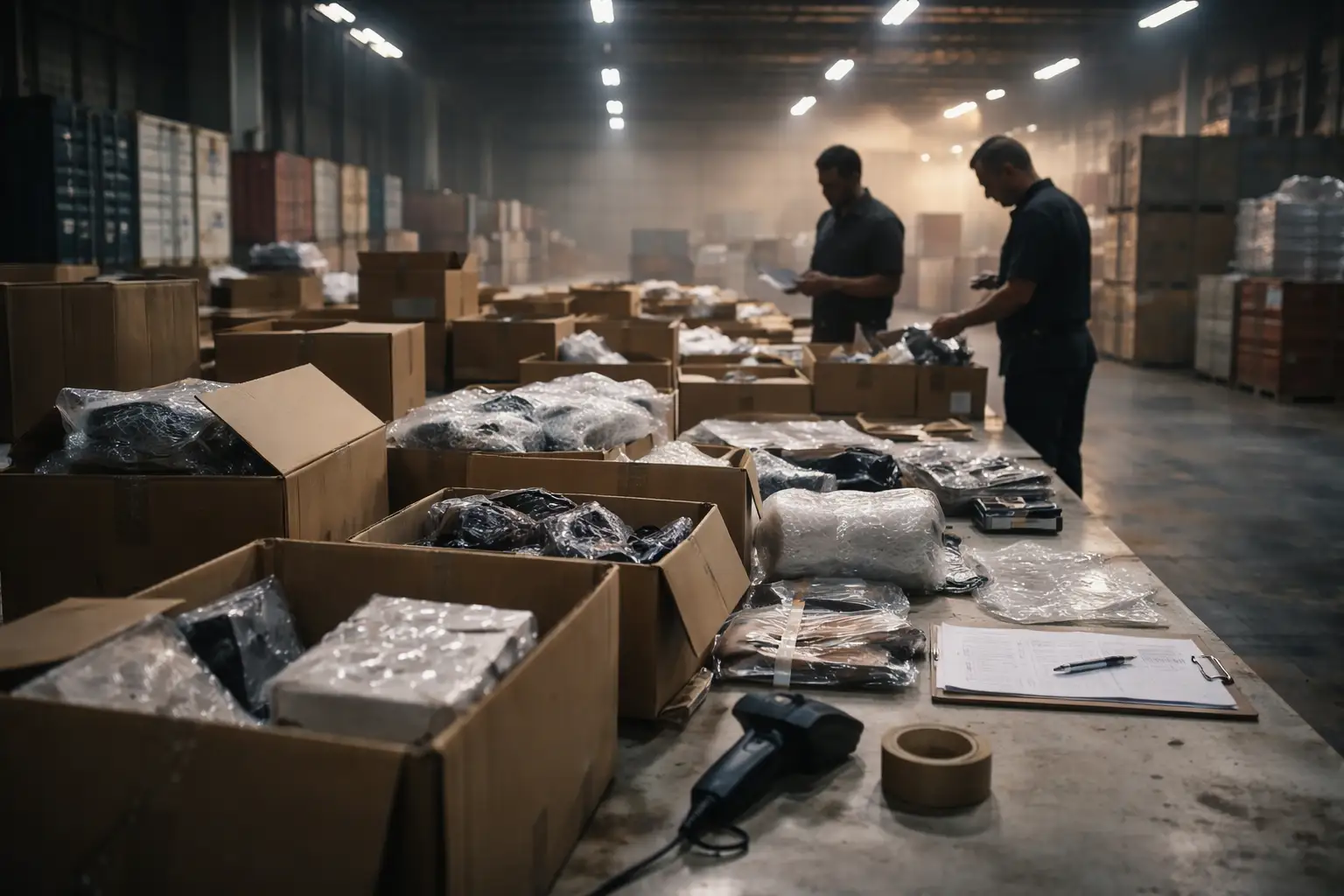

    Customs clearance inspection with opened cartons — officers verifying shipment contents against paperwork

    Inspections usually start with a few high-signal cartons and expand only if inconsistencies appear.


    When a shipment is selected for inspection, the sequence is usually routine. The stress comes from uncertainty, not from the steps.

    1. Document review (visa status, timing, inventory).
    2. Clarification questions on high-value items.
    3. Physical opening of selected cartons.
    4. Condition review and quantity cross-check.
    5. Determination or request for additional proof.

    Delays usually come from incomplete answers, not from the existence of inspection itself.


    As explained in our comparison of Laem Chabang vs Bangkok Port, port selection does not eliminate inspection risk, but operational flow differs by location. Understanding how documentation is reviewed at your arrival port reduces avoidable procedural delays.


    How to prove Thailand customs used items qualify for exemption


    • Dated photos before packing: show items in a lived-in environment.
    • Serial number documentation: connects the physical item to prior use.
    • Ownership records: older invoices can help establish timeline.
    • Condition notes in inventory: small scratches or wear details.
    • Remove retail cues: avoid shipping used goods as showroom units.

    Customs does not evaluate documents in isolation. Visa status, packing list specificity, shipment timing, and item condition are read together. When those signals align, clearance accelerates. When they conflict, scrutiny expands.


    Packing list: what clears vs what stalls

    Household goods shipping container staged for Thailand — contents must match the packing list

    A shipment can read like a household move—or like retail inventory—depending on how it is packed and documented.


    • Weak: “Electronics – assorted”
    • Stronger: “Used 55-inch television (1 unit)”
    • Stronger: “Used espresso machine (1 unit, household use)”

    Specificity reduces interpretation.


    Pre-shipment evidence checklist


    • Photograph high-value items before movers pack them.
    • Confirm shipment timing aligns with arrival window.
    • Remove unnecessary factory packaging.
    • Prepare a clean, itemized inventory.
    • Keep visa and arrival documentation accessible.

    Myths vs reality


    Myth: If it is older than six months it is automatically duty-free.
    Reality: Age helps. Presentation still matters.


    Myth: Sea freight is always easier than air.
    Reality: Both are subject to selectivity.


    Myth: Receipts always help.
    Reality: Recent receipts can create questions.


    Myth: If you label everything “used personal effects,” it will be treated as used.
    Reality: Labels help. Signals and evidence carry more weight.


    Myth: A packing list can be generic as long as Customs can open boxes.
    Reality: Generic lists increase inspection scope and slow resolution.


    Myth: One questionable item won’t affect the rest of the shipment.
    Reality: One questionable item often expands the questions. It can still be resolved item-by-item if you respond fast.


    Edge-case scenarios that cause surprise duty


    Exemptions are usually lost on the margins—Thailand customs used items that don’t match the story the paperwork tells. When documentation and presentation diverge, scrutiny escalates quickly. The scenarios that follow are common failure modes and the practical correction. These are not loopholes. They are predictable breakpoints.


    1) The item is used, but it ships like it’s new

    This is the most common trigger: a genuinely used appliance or electronics unit packed in pristine retail packaging.

    • How it gets interpreted: Retail import disguised as personal effects.
    • What reduces doubt: Pre-shipment photos in use, serial-number proof, and an inventory line that reads like household use—not resale.

    2) You bought replacements right before moving

    Many relocations involve last-minute purchases: a new monitor after an old one breaks, a new kitchen appliance because it was cheaper to replace than repair.

    • How it gets interpreted: New goods imported under the household-effects umbrella.
    • What reduces doubt: Separate the new items, declare them clearly, and avoid mixing them into the “used household” narrative.

    3) Gifts and unopened items

    Unopened goods are hard to defend as “used.” Gifts create the same problem: ownership may be clear, prior use usually isn’t.

    • How it gets interpreted: Newly acquired goods entering Thailand as consumer imports.
    • What reduces doubt: If it’s unopened, assume scrutiny. Decide whether to ship it separately and be prepared for assessment.

    4) Multiples of identical high-value items

    Two laptops can be a couple. Four identical monitors in perfect condition can look like inventory.

    • How it gets interpreted: Quantity inconsistent with “reasonable household” use.
    • What reduces doubt: Explain household composition (family members, home office), itemize each unit, and document prior use for the most resale-friendly items.

    5) “Home office” shipments that resemble business equipment

    Modern households blur lines: monitors, docking stations, network gear, specialty printers.

    • How it gets interpreted: Commercial equipment entering under personal effects.
    • What reduces doubt: Describe the items as household/home-office use, avoid bulk quantities, and keep the packing list specific.

    6) Mixed shipments: used goods plus clearly new goods

    The fastest way to widen inspection is to mix a relocation shipment with a small retail import.

    • How it gets interpreted: The shipment contains dutiable goods; Customs may examine more of it to separate categories.
    • What reduces doubt: Segregate: pack new items together, label them clearly, and do not force officers to hunt box-by-box.

    7) Timing that’s technically close—but messy in the paperwork

    Even when you are within the 1-month/6-month window, multiple entries and unclear “arrival” evidence can slow clearance.

    • How it gets interpreted: Unclear eligibility timeline.
    • What reduces doubt: Keep clear arrival evidence and align the file to the entry date your broker will present.

    Each scenario is solvable. The common thread is clarity: you’re either making it easy for Customs to classify the goods, or you’re asking them to interpret.

    If items become dutiable: duty/VAT (conceptual)


    If items are classified as dutiable, assessment depends on HS classification and valuation methodology. VAT is then applied according to the applicable framework.


    For an overview of Thailand’s customs regulatory environment and valuation framing, see: U.S. International Trade Administration (Trade.gov): Thailand customs regulations overview


    How Thailand determines customs value (conceptual overview)


    When items are treated as dutiable, assessment is not arbitrary. Customs valuation follows internationally recognized principles, typically anchored to transaction value and adjusted under defined methodologies when necessary.


    If no invoice exists—or if the invoice does not reflect the value Customs considers appropriate—officers may rely on alternative valuation methods permitted under customs law frameworks. That is why documentation consistency matters even for personal effects.


    Classification (HS code) determines the applicable duty structure. Valuation determines the base on which any duty and VAT are calculated. The two are separate analytical steps. In sequence, Customs classifies the item, determines value under valuation rules, applies duty where relevant, and then calculates VAT on the assessed base.


    What happens if only one item is disputed?


    Disputes are often item-specific, not shipment-wide. If one appliance or electronics unit is treated as dutiable, Customs may assess duty on that item while allowing the remainder of the shipment to clear under the household effects framework.


    The key variable is documentation response time. Delays usually stem from clarification requests, not from blanket rejection of the entire container.


    Delay risk: storage and timing exposure


    When clearance pauses for clarification or reassessment, storage and handling timelines continue. Ports and bonded facilities operate on procedural schedules independent of relocation stress.


    Most costly scenarios arise from slow documentation turnaround rather than from enforcement intensity. Preparation reduces time under review. Time under review reduces exposure.


    FAQ


    How do I prove items are used for Thailand customs?
    Short answer: Show clear proof the items were owned and used before shipping.
    Thai Customs applies the standard “owned, possessed, and used.” The strongest proof includes dated pre-shipment photos, serial-number documentation, and a clear itemized packing list. The goal is to make prior use obvious without forcing officers to interpret vague descriptions.


    What does “owned, possessed, and used” mean under Thailand Customs rules?
    Short answer: The goods must clearly have been owned and used abroad.
    The exemption is designed for relocation, not retail import. Customs expects the goods to have been in your possession and actually used in your previous country of residence. Packaging, quantity, and documentation must support that narrative.


    What is the 1-month / 6-month rule for personal effects in Thailand?
    Short answer: It must arrive within the official 1-month before / 6-month after window.
    Customs guidance generally ties eligibility to goods arriving no earlier than one month before and no later than six months after your arrival in Thailand. Clear arrival documentation is essential to avoid timeline disputes.


    What is considered “reasonable quantity” for Thailand customs household goods?
    Short answer: Only quantities consistent with a normal household qualify.
    Customs does not publish fixed limits. Instead, officers evaluate whether the shipment resembles a genuine household relocation rather than commercial inventory. Multiples of identical high-value goods can increase scrutiny.


    Can I import brand-new items duty free when moving to Thailand?
    Short answer: No—brand-new items are usually dutiable.
    The household effects exemption applies to used goods. Brand-new, unopened, or recently purchased items may fall outside the exemption and be assessed under standard import rules.


    Does visa type affect Thailand customs duty exemption?
    Short answer: Yes—eligibility depends on your documented residence status.
    Customs reviews visa and residency documentation as part of the eligibility check. Work-authorized entrants and returning Thai nationals must demonstrate compliance with change-of-residence conditions.


    What happens during a Red Line inspection in Thailand?
    Short answer: It undergoes detailed document and physical inspection.
    Red Line selection does not imply wrongdoing. It means Customs will review documentation in more detail and may open selected cartons to verify condition, quantity, and consistency with your declared inventory.


    Can one disputed item cause duty on the entire shipment?
    Short answer: No—duty is typically assessed item-by-item.
    Customs commonly assesses duty only on the questioned item. However, a single high-risk item can expand inspection scope if documentation is unclear, which may slow overall clearance.


    How does Thailand Customs calculate duty and VAT on household goods?
    Short answer: Based on HS classification and customs valuation rules.
    If goods are treated as dutiable, assessment depends on HS classification and valuation methodology. VAT is applied according to the relevant framework. Duty rates vary by product category.


    Do receipts help prove items are used?
    Short answer: Sometimes—older receipts help more than recent ones.
    Older receipts can support ownership history. Recent purchase invoices may create questions if they suggest the item was acquired specifically for import.


    Are gifts treated differently under Thailand customs rules?
    Short answer: Yes—gifts can still be dutiable.
    Unopened or newly acquired gifts may not qualify as “used household effects.” Ownership alone is not enough; prior use is typically the key factor.


    Does shipping by sea reduce inspection risk compared to air?
    Short answer: No—both air and sea shipments face selectivity.
    Thailand’s selectivity system applies across transport modes. Sea freight may feel less urgent, but both air and sea shipments can be routed to detailed inspection channels.


    What packing list format reduces Thailand customs delays?
    Short answer: Use specific, itemized, descriptive entries.
    Avoid generic labels like “electronics” or “kitchen items.” Instead, describe each significant item individually, noting it is used and specifying quantity. Clear inventories reduce interpretation.


    What are the most common reasons Thailand customs personal effects shipments are delayed?
    Short answer: Vague paperwork and retail-style presentation.
    Delays usually stem from unclear packing lists, retail-style packaging, timeline confusion, or slow responses to clarification requests—not from inspection itself.


    Can I appeal a Thailand customs decision on personal effects?
    Short answer: Yes—formal review procedures exist.
    Appeal or review mechanisms exist under customs frameworks, typically handled through licensed brokers or formal submission processes. Fast, structured documentation improves outcomes.


    Clearance is procedural. Interpretation is situational. Understanding the distinction is where experience matters.


    In practice, most Thailand customs used items clear without issue when documentation aligns with presentation. The preventable problems we see most often are retail-style packaging, vague inventories, and newly purchased goods mixed into used shipments.


    At Swift Cargo, the role is not to bypass rules. It is to anticipate what Customs is likely to focus on before a box is opened—and to structure inventories, timing, and documentation so the shipment reads as a legitimate household relocation.


    That means identifying high-risk items in advance, aligning shipment timing with eligibility windows, and ensuring declarations read like a legitimate household relocation rather than a commercial import.


    Inspection cannot be eliminated. Avoidable friction can be reduced.


    Expert preparation does not guarantee a specific outcome. It significantly improves the probability of a smooth one.


    Author: Swift Cargo Compliance Team
    Specialists in Thailand household goods and personal effects clearance.
    Reviewed against publicly available Thai Customs guidance as of February 2026.


    The Short Story


    “Used” vs “new” is not theoretical. It is evidentiary—and procedural.


    Thai Customs applies a published standard—owned, possessed, used—within a defined timing window and a reasonable-quantity framework. For Thailand customs used items, preparation determines whether a shipment reads like a household move or a retail import.


    If you want your Thailand customs used items reviewed before shipment, begin your Thailand move assessment with our team.
  • State Biosecurity Rules in WA, TAS and NT

    One of the most confusing things about shipping into Australia is that clearance can still feel destination-specific. Clients hear “Australia” and assume there is one border logic. In practice, the experience can feel tougher in places like Western Australia, Tasmania, and the Northern Territory.

    That is not just perception. Australia’s national biosecurity framework sits alongside state and territory systems that protect local agriculture, ecosystems, and regional vulnerabilities. The result is that federal clearance is often necessary, but it is not always the end of the practical compliance story.

    This matters most for household goods, machinery, outdoor-use items, plant-related materials, and cargo heading into regions with strong local biosecurity priorities.

    Understanding that extra layer helps importers plan better timelines and avoid the mistake of thinking one border clearance decision automatically resolves every local risk question.


    Key Takeaways


    • Australia’s federal biosecurity framework can operate alongside state and territory laws. Biosecurity Act 2015
    • Western Australia, Tasmania, and the Northern Territory often feel stricter because of their local agricultural exposure, ecological sensitivity, and geographic conditions.
    • Federal clearance does not always remove all destination-specific concerns for the final leg of a shipment.
    • State-level risk becomes more important when the shipment includes outdoor goods, plant-related materials, machinery, or other contamination-prone items.
    • The safest planning assumption is that “Australia clearance” and “local release” are related, but not always identical ideas. Australia Biosecurity Rules Explained


    Jump to a Section


    Why There Is an Extra Layer Beyond Federal Clearance


    The starting point is legal structure. Australia’s Biosecurity Act provides the federal framework, but it also contemplates concurrent operation with state and territory laws. That means the national system is not designed to erase local protections automatically. Biosecurity Act 2015

    That matters because local conditions differ. Some regions are more exposed to particular plant pests, more dependent on agriculture, or more protective of isolated ecosystems. A state or territory can therefore have strong reasons to maintain tighter controls around movement, declaration, or local biosecurity expectations.

    For importers, the practical lesson is simple: national clearance answers one important question, but destination risk can still shape what happens next.


    Why Western Australia Feels Strict


    Western Australia has long had a reputation for being especially sensitive to incoming agricultural and contamination risk. That reputation is grounded in economics as much as geography. WA is a major producer of grain and other agricultural commodities, and the cost of pest introduction is not abstract.

    That is why cargo moving to Western Australia often feels like it is being judged through a narrower risk lens. Outdoor goods, plant-related materials, food items, and contamination-prone shipments attract more caution because the local downside of biosecurity failure is high.

    For household and relocation clients, the practical effect is that “already cleared elsewhere” should never be treated as a universal argument. The closer the goods are to local contamination pathways, the weaker that assumption becomes.


    Why Tasmania Feels Strict


    Tasmania often feels even more distinct because its isolation is part of the value it is protecting. The island setting is commercially useful for agriculture and environmentally useful for conservation, but it also heightens sensitivity to imported pests and disease pathways.

    This is why Tasmania is often treated by movers and importers as a place where an extra layer of caution is rational. A shipment that seems ordinary from a mainland perspective can still raise local risk questions when the destination has a more protected ecological profile.

    That does not mean every shipment will hit extra friction. It means the margin for sloppy preparation is smaller.


    Why the Northern Territory Matters


    The Northern Territory matters for a slightly different reason. Its climate, trade exposure, and proximity to northern pathways make biosecurity vigilance strategically important. The risk profile is not identical to Tasmania’s or Western Australia’s, but it is still serious.

    That means cargo moving into the NT should not be planned on the assumption that a generic east-coast import workflow tells the full story. The local context can still shape how risk is viewed, especially for goods with agricultural, outdoor, or contamination-prone characteristics.


    What This Means for Shipment Planning


    The operational lesson is not to memorize every rule in every jurisdiction. It is to plan with layered compliance in mind.

    • Assume federal biosecurity is the foundation, not always the end point.
    • Treat WA, TAS, and NT as destinations where preparation quality matters even more.
    • Be more cautious with outdoor goods, plant-related materials, machinery, and wooden or natural-fibre items.
    • Build some time buffer if the destination is especially sensitive or the shipment profile is high-risk.

    This is also why strong document accuracy and pre-shipment condition checks matter. The tighter the destination’s risk sensitivity, the less room there is for vague packing descriptions and optimistic assumptions.


    Why State-Level Biosecurity Is Where “Australia” Stops Feeling Like One Rulebook


    One of the most useful things this page can do is make readers feel the practical truth behind state-level biosecurity: Australia may look unified on a map, but the experience of moving goods can still feel jurisdictionally layered. That does not mean the system is incoherent. It means the reader needs a better mental model. The national framework is real, but destinations such as WA, Tasmania, and the NT can still create additional sensitivity that makes the shipment feel stricter than the importer expected.

    That distinction matters because it stops the reader from making a common emotional mistake. They assume the border process is finished once Australia as a country has been entered. In some cases, the destination state still shapes the practical risk environment. Explaining that clearly is one of the strongest trust-building functions this article can perform.


    How It Supports the Biosecurity Spine


    This page should be tightly woven into the core biosecurity articles. Readers needing the broader legal and historical logic should move into Australia Biosecurity Rules Explained. Readers needing the operational database and condition layer should move into BICON Explained. And because state-level strictness often shows up as delay or extra friction, readers should also have a path into Shipping Timeline to Australia. That gives the page a clearer role in the authority spine.


    What Strong Operators Do With This Topic


    State Biosecurity Rules in WA, TAS and NT becomes more valuable once it is read as an operator page rather than as a reference note. That distinction matters because operators are not only collecting facts. They are trying to make cleaner decisions under constraint. The strongest way to use a page like this is to translate its central mechanism into a sequence of choices: what should change in planning, what should change in documentation, what should change in timing, and what should change in how the shipment is explained internally. That is where the article stops being informative in the shallow sense and becomes commercially useful in the Swift Cargo sense. A page that leaves the reader merely “aware” of the topic is weaker than a page that changes how the reader designs the job.

    That is also why the writing standard here should stay calm, precise, and unsentimental. Strong logistics prose is not loud. It is clarifying. William Zinsser-style sentence discipline helps because it strips away performance and leaves the mechanism visible. A light Ben Thompson-style systems framing helps because it reminds the reader that no article in this cluster is really isolated. Each one is describing a layer inside a larger Australia inbound system. Customs interacts with timing. Timing interacts with port choice. Port choice interacts with inland freight. Agreements interact with documentation. Biosecurity interacts with cargo preparation. The more clearly a page reinforces those relationships, the more authority it creates for the site.

    In practical terms, readers should use this article together with adjacent pages rather than treating it as the final answer. The most relevant next stops in the cluster are /australia-biosecurity-rules-explained, /australias-biosecurity-import-conditions-bicon-explained, and /shipping-timeline-to-australia. Those internal links are not decorative. They are part of the reading path that turns the cluster into a usable knowledge system. If a reader starts on one page and can only answer part of the freight or compliance problem, the article should route them forward. That is one of the cleanest ways to increase both usefulness and trust without bloating the prose with generic filler.

    The commercial edge comes from exactly that discipline. Generic relocation and logistics blogs usually explain one layer of the issue and stop. A stronger authority cluster shows the reader how the pieces connect and where the next operational question lives. That is why this article should be read as one spoke in a larger authority spine rather than as an isolated post. Once the reader sees the topic that way, the practical value of the page increases. It becomes easier to budget correctly, plan more honestly, and avoid the kind of small assumptions that create expensive friction later. That is the standard this cluster should keep pushing toward.


    One Country, More Than One Practical Border Experience


    Australia is a single country, but it does not always feel like a single biosecurity experience. Western Australia, Tasmania, and the Northern Territory often feel stricter because they are protecting local risk realities on top of the national framework.

    For shippers, that is not a reason to panic. It is a reason to stop treating Australian clearance as a one-step story. The more sensitive the destination, the more valuable disciplined preparation becomes.


    Frequently Asked Questions


    Can state rules still matter after federal biosecurity clearance?

    Yes. Australia’s federal framework can operate alongside state and territory laws, so local risk controls can still matter depending on the goods and destination.


    Why is Western Australia seen as strict?

    WA’s agricultural exposure and local pest-risk sensitivity make authorities more cautious about contamination pathways in incoming goods.


    Why does Tasmania feel different for imports?

    Tasmania’s island setting and protected agricultural and environmental profile make local biosecurity sensitivity especially high.


    Does this affect household goods too?

    Yes. Household goods can still matter if they include outdoor-use items, wooden goods, natural materials, tools, or anything carrying contamination risk.


    What is the safest planning assumption?

    Assume national clearance is essential, but not always the whole compliance story. Destination-specific sensitivity can still shape timing and scrutiny.


  • Australia BICON Rules Explained

    Australia BICON Rules Explained

    For many shipments into Australia, the most important compliance mistake happens before the cargo even moves: the importer never checked BICON properly.

    BICON is Australia’s Biosecurity Import Conditions system. In practice, it is the operational rulebook that tells importers whether a product is allowed, whether conditions apply, whether permits or supporting documents are required, and whether treatment or inspection may be necessary.

    That makes BICON far more than a reference site. It is one of the first places Australia expects importers to check if they want to understand what the border will require.

    If you are moving household goods, importing commercial stock, or planning a shipment that contains unusual materials, understanding BICON early is one of the easiest ways to reduce avoidable delay and cost.


    Key Takeaways


    • BICON is DAFF’s official system for checking whether goods can be imported into Australia and what conditions apply. DAFF: BICON
    • Some goods are prohibited. Others are allowed only if specific conditions are met.
    • BICON can indicate permit requirements, treatment requirements, document requirements, and inspection expectations.
    • Checking BICON after a shipment has already departed is often too late to avoid preventable border friction.
    • BICON should be treated as the first compliance check, not the last. Australia Biosecurity Rules Explained


    Jump to a Section


    What BICON Actually Is


    BICON is the public-facing system DAFF uses to present Australia’s biosecurity import conditions. It is where importers can check whether a product is permitted and what legal or operational conditions must be satisfied before the goods can enter. DAFF: BICON

    That may sound administrative, but it has real operational weight. BICON is how a broad legal framework becomes shipment-specific. The Biosecurity Act establishes the authority. BICON translates that into practical conditions importers can act on.

    This is why experienced import planning starts with the database, not with assumptions. The law is broad. BICON is where the actual commodity logic becomes visible.


    Why BICON Matters Before Shipping


    The common mistake is treating biosecurity as an arrival issue. In reality, Australia expects import conditions to be understood before shipment.

    If BICON shows that a permit is required, or that a treatment certificate must exist, or that a commodity is prohibited from certain origins, those are not details you want to discover after the container is already on the water.

    This is where delay becomes expensive. The shipment arrives, documents do not match what the border expects, and the cargo moves into inspection, treatment, hold, or in some cases a much more disruptive outcome. A large share of “unexpected” friction is really just late compliance discovery.


    What Kind of Information BICON Shows


    The exact output varies by commodity, but BICON commonly helps importers answer questions like these:

    • Is the product permitted into Australia?
    • Does the origin country matter?
    • Is a biosecurity import permit required?
    • Are there pre-shipment treatment conditions?
    • Are supporting declarations or certificates required?
    • Are there packaging, contamination, or inspection conditions?

    That is why BICON is so central. It does not just say yes or no. It maps the conditions that determine whether the shipment can move cleanly through the system.


    How BICON Matters for Household Goods


    Household-goods importers sometimes assume BICON is mainly for commercial products. That is too narrow. Household shipments often include categories of items that still trigger product-specific or contamination-related conditions.

    Wood products, natural-fibre items, outdoor equipment, garden tools, and other contamination-prone goods can all sit close to the kinds of questions BICON is designed to answer. Even where BICON is not being used commodity by commodity for every carton in a personal shipment, the database still reflects the wider logic Australia uses to assess what is acceptable and what is not.

    That is why it pairs naturally with practical preparation guidance. If you are sending used goods, BICON helps explain what the system cares about. Why Used Household Goods Get Inspected in Australia


    What BICON Does Not Do for You


    BICON is powerful, but it is not a substitute for careful shipment planning. It does not clean the goods, fix poor packing, or make an inaccurate declaration harmless.

    It also does not remove the need to read conditions carefully. Importers sometimes search a product name, see that an item appears permitted, and stop there. But the real meaning often sits in the conditions, notes, origin restrictions, or linked requirements.

    In other words, BICON is not magic. It is a rulebook. You still have to interpret it properly and build the shipment around what it says.


    How to Use BICON More Effectively


    The most useful way to treat BICON is as an early decision tool.

    • Check it before booking, not after loading.
    • Search by the actual commodity, not a vague household label.
    • Read the conditions fully instead of stopping at the first apparent answer.
    • Cross-check whether the goods, documents, and packaging match what the conditions require.
    • If the shipment is mixed, focus extra attention on higher-risk items and materials.

    That process does not guarantee a frictionless border outcome, but it sharply reduces the odds of discovering avoidable compliance problems at the expensive end of the move.


    Why BICON Matters More Than Many Importers Realise


    BICON is easy to underestimate because it looks like an online lookup tool. In practice, it is one of the clearest places where Australia’s biosecurity system becomes operational for an importer. That is why it deserves more respect than a quick pre-shipment search. The database is not just informational. It is where the legal and procedural reality becomes visible enough for the shipment to be designed correctly. This is especially important for importers who are not moving obvious agricultural goods. They are often the most likely to assume the system will be simple, only to discover that a commodity, packaging choice, or contamination pathway triggers a condition they did not anticipate.

    A more mature importer mindset treats BICON as a planning surface, not a late-stage confirmation step. If BICON reveals a permit requirement, treatment condition, or restriction, that discovery should influence the booking decision, the packing decision, and the document set. Used that way, BICON reduces uncertainty rather than merely describing it. That is why this page should push readers away from the dangerous habit of treating biosecurity as something that only happens after arrival. In Australia, the smarter move is to let BICON shape the shipment before the vessel moves.


    How BICON Connects to the Authority Spine


    This article sits near the core of the Australia biosecurity cluster. Readers who need the broader reason Australia behaves this way should move into From Quarantine Acts to DAFF: 100 Years of Australia’s Biosecurity Evolution. Readers focused on practical commercial implications should move into Australia’s Commercial Import Rules Explained. Readers moving household or contamination-prone goods should also be sent toward Why Used Household Goods Get Inspected in Australia and State Biosecurity Rules in WA TAS and NT. Those links matter because BICON is not an isolated topic. It is one of the operational hubs that makes the whole cluster work.


    What Strong Operators Do With This Topic


    Australia’s Biosecurity Import Conditions (BICON) Explained becomes more valuable once it is read as an operator page rather than as a reference note. That distinction matters because operators are not only collecting facts. They are trying to make cleaner decisions under constraint. The strongest way to use a page like this is to translate its central mechanism into a sequence of choices: what should change in planning, what should change in documentation, what should change in timing, and what should change in how the shipment is explained internally. That is where the article stops being informative in the shallow sense and becomes commercially useful in the Swift Cargo sense. A page that leaves the reader merely “aware” of the topic is weaker than a page that changes how the reader designs the job.

    That is also why the writing standard here should stay calm, precise, and unsentimental. Strong logistics prose is not loud. It is clarifying. William Zinsser-style sentence discipline helps because it strips away performance and leaves the mechanism visible. A light Ben Thompson-style systems framing helps because it reminds the reader that no article in this cluster is really isolated. Each one is describing a layer inside a larger Australia inbound system. Customs interacts with timing. Timing interacts with port choice. Port choice interacts with inland freight. Agreements interact with documentation. Biosecurity interacts with cargo preparation. The more clearly a page reinforces those relationships, the more authority it creates for the site.

    In practical terms, readers should use this article together with adjacent pages rather than treating it as the final answer. The most relevant next stops in the cluster are /australia-biosecurity-rules-explained, /used-household-goods-inspection-australia, and /australias-commercial-import-rules-explained. Those internal links are not decorative. They are part of the reading path that turns the cluster into a usable knowledge system. If a reader starts on one page and can only answer part of the freight or compliance problem, the article should route them forward. That is one of the cleanest ways to increase both usefulness and trust without bloating the prose with generic filler.

    The commercial edge comes from exactly that discipline. Generic relocation and logistics blogs usually explain one layer of the issue and stop. A stronger authority cluster shows the reader how the pieces connect and where the next operational question lives. That is why this article should be read as one spoke in a larger authority spine rather than as an isolated post. Once the reader sees the topic that way, the practical value of the page increases. It becomes easier to budget correctly, plan more honestly, and avoid the kind of small assumptions that create expensive friction later. That is the standard this cluster should keep pushing toward.


    BICON Is Where Australia’s Biosecurity Logic Becomes Practical


    BICON matters because it turns Australia’s biosecurity framework into operational instructions. For many imports, it is the difference between guessing what the border wants and knowing what the border expects.

    That is why serious import planning starts there. Not because BICON solves everything, but because it is one of the clearest ways to avoid shipping blind into one of the world’s more demanding import-control systems.


    Frequently Asked Questions


    What is BICON in Australia?

    BICON is DAFF’s Biosecurity Import Conditions system. It shows whether goods are permitted into Australia and what conditions, permits, documents, or treatments may apply.


    Do I need to check BICON before shipping?

    Yes. BICON is most useful before shipment because many conditions need to be understood and satisfied before cargo arrives in Australia.


    Does BICON only matter for commercial imports?

    No. Household shipments can still contain materials and goods that trigger biosecurity conditions or reflect the same contamination-risk logic.


    Does BICON guarantee customs or biosecurity clearance?

    No. It helps importers understand conditions, but clearance still depends on the goods, their preparation, the documents provided, and the actual state of the shipment when assessed.


    What happens if I ignore BICON?

    You increase the risk of avoidable delay, treatment requirements, permit problems, added cost, or border action against the shipment once it arrives.


  • Air Freight vs. Sea Freight to Thailand: When Speed Beats Cost

    Air Freight vs. Sea Freight to Thailand: When Speed Beats Cost


    A practical guide for expats and small businesses: how long air and sea shipping really take door-to-door, what costs people miss, and when “faster” is actually cheaper.


    Bangkok street during monsoon rain — real-world delays that can affect shipping timelines to Thailand

    In freight, your delivery date is the part that gets negotiated by paperwork, ports, and seasonality—not just by distance.


    What you’re being quoted What it usually excludes What you should plan around
    Port-to-port Packing, pickup, consolidation, customs clearance, delivery scheduling A ship docking is not your delivery date
    Door-to-door Less is hidden—end-to-end handling is part of the timeline The calendar you can actually coordinate with visas, leases, and work

    Most comparisons of air vs. sea freight stop at a cliché: air is fast and expensive, sea is slow and cheap. In industrial supply chains, that’s often close enough.


    For an expat move—or an SME restocking in Thailand—that binary can be a trap. Cost is a number; time is a bill. What matters is the total: freight, clearance risk, storage exposure, and the cost of waiting.


    SwiftCargo’s Thailand guide uses planning benchmarks most relocations can actually live with: air freight ~2–3 weeks door-to-door and sea freight ~3–6 weeks door-to-door. In practice, the difference isn’t just comfort—it’s coordination: visas, lease start dates, and the day your shipment is cleared and scheduled for delivery.


    Jump to a section


    Port-to-port is not your delivery date


    A forwarder can quote a sailing schedule or flight time. That’s port-to-port. Most people need door-to-door — especially in USA to Thailand household goods shipping, where clearance timing and delivery coordination matter as much as the sailing itself.


    Door-to-door includes the parts that quietly consume time:

    • Export handling: packing, pickup, consolidation, and export clearance.
    • Thailand clearance: risk screening, document checks, and inspection if selected.
    • Last-mile reality: delivery windows, building rules, and scheduling.

    Thailand clearance is also risk-managed: shipments can be screened into different paths. Timing also matters for eligibility and duty relief — especially under Thailand’s 6-month rule for household goods, which can affect whether items clear duty-free. Government guidance describes a Green Line (no inspection) and a Red Line (inspection) release model in Customs risk management.


    That matters because an inspection doesn’t just add time—it adds exposure: port storage clock, warehouse handling, and “please clarify” loops on valuation and item descriptions.


    Peaceful temple grounds in Thailand — why door-to-door timelines depend on more than sailing schedules


    Air freight to Thailand: where the time goes


    Air freight is the fastest mode, but it’s not instant for relocations. Most household shipments still spend time in packing, export handling, consolidation, and clearance.


    Planning window (door-to-door): ~2–3 weeks for typical air freight moves.


    That window is less about flight time and more about the steps around it: packing and pickup, export processing, consolidation, and then Thailand-side clearance and delivery scheduling. If your timeline is tight, the goal is simple: reduce rework by getting the inventory and documents clean before anything is booked.


    Air freight pricing is sensitive to weight and space. Aviation economics also shift with fuel and capacity conditions—one reason air rates can move quickly month to month.


    Neighborhood pharmacy in Thailand — why documentation and controlled items can affect clearance time

    When air usually wins:

    • Your deadline is inside three weeks.
    • You’re shipping essentials you’d rather not replace locally: work gear, clothing, or critical household items.
    • Your shipment is small-to-medium (roughly under ~5 CBM or under ~500 kg), where sea freight’s terminal handling and local charges can erase the headline savings.


    Sea freight to Thailand: where the weeks go


    Sea freight is cost-efficient for volume, but the calendar stretches because the work happens in batches: booking windows, consolidation, sailing schedules, terminal processing, and delivery sequencing.


    Planning window (door-to-door): ~3–6 weeks for typical sea freight household moves.


    Sea freight tends to be more stable than air, but ports can become the bottleneck. Choosing between Laem Chabang and Bangkok Port for your shipment can influence clearance speed, delivery scheduling, and inland transit costs. UNCTAD has documented how port congestion and unreliable schedules can amplify delays during high-demand periods.


    When sea usually wins:

    • You’re shipping a full household (high CBM), where air becomes punitive.
    • Your living timeline is flexible (you can tolerate a 4–8 week window).
    • You can plan around seasonality and avoid “deadline shipping.”


    Hidden costs that change the “cheap vs expensive” story


    The most expensive shipments are often the ones that arrive “on schedule” but clear late. The surprise costs usually show up in two places:


    Thai bank lobby — where small delays can turn into real fees and unexpected costs
    • Seasonality: certain periods (Songkran and late-year peaks) can slow processing and trigger surcharges, stretching door-to-door timelines.
    • Demurrage and detention exposure: these charges exist to discourage containers sitting too long at terminals or in the chain. Academic and port-industry explainers describe demurrage (terminal dwell) vs detention (equipment out of terminal).

    For expats, the hidden cost can be simple: a delay forces storage or replacement purchases—either can erase sea freight’s advantage on small shipments.


    Decision matrix + scenario playbook


    Decision factor Air freight Sea freight
    Door-to-door planning time ~2–3 weeks ~3–6 weeks
    Best for Essential items, smaller shipments, urgent timelines Full households, high volume, flexible timelines
    Delay risk profile Lower exposure (days matter) Higher exposure (weeks can matter)
    What breaks the plan Weight/volume surprises; paperwork delays Port congestion; inspections; storage/demurrage exposure

    Scenario A: Expat essentials (small shipment)

    • Volume: under ~5 CBM
    • Constraint: you need “survival” items fast
    • Recommendation: Air freight, or hybrid (air essentials + sea bulk)

    Scenario B: 1–2 bedroom apartment move

    • Volume: roughly ~5–15 CBM
    • Constraint: you want cost-efficiency without risking months of waiting
    • Recommendation: Sea freight (LCL) if your timeline is flexible; otherwise hybrid

    Scenario C: Full household / family home

    • Volume: 15+ CBM
    • Constraint: budget matters more than speed
    • Recommendation: Sea freight (FCL) planning around seasonality

    Scenario D: Urgent parts / critical equipment

    • Constraint: downtime costs more than freight
    • Recommendation: Air freight


    Get a Thailand quote (and a plan)


    A quote is the price. A plan is how you avoid delays, storage surprises, and last-minute rework. If you want help choosing air, sea, or a hybrid split—and timing it around retirement visa shipping rules and seasonality—our team can map the trade-offs before you commit.


    Get a Thailand shipping quote →


    Condominium pool area in Thailand at night — aligning shipping delivery with lease start dates and move-in timelines


    FAQ


    Is air freight to Thailand always faster?


    In transit, yes. In real moves, the calendar includes packing, export handling, and clearance. That’s why many relocations still plan around ~2–3 weeks door-to-door for air.


    Why does sea freight to Thailand vary so much?


    Sea schedules are only one piece. Consolidation windows, port congestion, and inspection selection can extend door-to-door time. UNCTAD notes how congestion can amplify schedule unreliability in high-demand periods.


    What triggers customs delays?


    Vague inventories, mismatched values, controlled categories, and missing documents increase the chance of additional checks. Visa status can also change what paperwork you’ll be asked to show at clearance — including for DTV visa holders shipping belongings to Thailand. Thailand’s public guidance describes a Green/Red release model under risk management.


    What’s the simplest rule to choose air vs sea?


    If your deadline is inside three weeks, air (or hybrid) usually wins. If your shipment is a full household and you have time buffer, sea usually wins.


    SwiftCargo’s Thailand freight experts can help translate your shipment details into the right mode and timeline—especially when seasonality or documents could turn a “cheap” option into a delay.


    Bottom line


    Air freight buys time. Sea freight buys savings.


    For Thailand, the decision is rarely just “how much” and “how long.” It’s also: what happens if clearance slips, if peak season hits, or if your inventory triggers inspection.


    If you want a recommendation tailored to your shipment size and deadline, a freight expert can sanity-check the plan before you commit—especially if you’re moving on an expat timeline where delays compound. Get a Thailand shipping quote →


    Sources (for verification)

  • The Forbidden Items List: 11 Things You CANNOT Ship to Thailand (Even Used)

    The Forbidden Items List: 11 Things You CANNOT Ship to Thailand (Even Used)


    A source-backed warning list for movers and expats: if you cannot ship to Thailand, it’s usually because it’s on the prohibited items Thailand customs list, it’s permit-controlled, or it’s refused under air/mail dangerous-goods rules.


    Moving to Thailand: unpacking household goods and avoiding prohibited items at customs

    Shipments don’t fail because of bad luck. They fail because one controlled item triggers inspection.


    Customs seizures rarely look dramatic. They look like a courier tracking page that stops moving—or a container that can’t clear because one item triggered inspection.


    Thailand Customs groups problematic goods into two buckets that matter for movers: prohibited (illegal to import) and restricted (legal only with the right permits from agencies like the FDA, NBTC, Excise, or the Fine Arts Department). Thai Customs: prohibited vs restricted goods


    The most expensive myth we see is the “used loophole”: that personal, second-hand items are automatically exempt. They aren’t. If the category is controlled, it stays controlled—whether it’s brand-new in a box or scratched up in a toiletry bag.


    This article follows the same categories customs uses—prohibited, restricted, and carrier-refused dangerous goods—then translates them into decisions you can use before you pack. Remove the items that trigger seizure. Treat restricted items as a paperwork job, not “personal effects.” If you’re planning a move, the broader checklist is in our Thailand relocation guide.


    Case vignette (composite): A mover slips one controlled item into an otherwise normal household shipment—something small, easy to overlook, and easy to spot on X-ray. The outcome is rarely cinematic. It’s procedural: the file gets flagged, inspection expands, and the packing list becomes a cross-examination. Storage fees don’t care that the mistake was accidental.

    This composite is based on recurring patterns described in expat communities and public-facing clearance guidance—not a single verified individual case.


    Jump to a section


    Prohibited vs restricted: the 10-second check


    Thai government office building — permits and restricted items guidance

    Before you pack, sort every “risky” item into one of three categories:


    How customs decides: category beats intent

    Customs does not need to believe you’re a smuggler to stop your shipment. They only need a category match: a prohibited item, a restricted item without the right paperwork, or something the carrier network treats as hazardous. That’s why “I’m not selling it” and “it’s used” rarely changes the outcome.

    In practice, the trigger is documentation. If your packing list is vague (“electronics,” “supplements,” “tools”), an officer has no fast way to clear it—and the safest move is to hold it until you can prove what it is. That’s the moment a single item becomes a container problem.

    • Decision rule: If you can’t describe an item precisely in one line, don’t ship it until you can.
    • Decision rule: If an item is controlled by another agency (FDA, Excise, NBTC, Fine Arts), assume delay unless paperwork is ready.


    The 11 items you cannot ship to Thailand (even used)


    Thailand customs inspection area — prohibited items that can trigger holds

    1) E-cigarettes and vaping devices (including used)

    Thailand treats e-cigarettes as prohibited to import in policy and enforcement practice, and the risk applies to devices, parts, and e-liquids—new or used. Tobacco Control Laws: Thailand e-cigarette policy instruments

    • What to do instead: Remove devices, parts, and liquids from the shipment entirely—don’t pack “just the empty device.”
    • What to do instead: If you’re quitting, dispose of hardware before travel; don’t rely on mailing it later.

    2) Narcotics and controlled drugs

    Thai Customs lists narcotics as prohibited goods. If a medicine is classified as a narcotic/psychotropic under Thai rules, shipping it as ordinary freight can create serious legal exposure. Thai Customs: prohibited goods examples

    For traveler-focused medication rules, controlled categories, and documentation, consult Thai FDA’s official guidance. Thai FDA: Guidance for Travelers (PDF)

    • What to do instead: Check whether your medication is controlled in Thailand before you pack or ship it.
    • What to do instead: If it’s permitted for travelers, carry only documented personal quantities—don’t ship it as freight.

    3) Pornographic/obscene materials

    Thai government guidance lists obscene objects/materials as prohibited, and Thai Customs also includes pornographic materials among prohibited examples. Thailand.go.th: prohibited items overview

    • What to do instead: Remove explicit magazines, DVDs, and similar media from household goods shipments.
    • What to do instead: If in doubt, don’t include it—border decisions can be subjective.

    4) Counterfeit goods and pirated media (including “replicas”)

    Thai Customs flags counterfeit trademark goods and intellectual-property-infringing goods as prohibited examples. Thai Customs: IPR/counterfeit examples

    • What to do instead: Leave replica/counterfeit branded goods behind—even if they’re personal and used.
    • What to do instead: If it’s genuine, keep proof of purchase for high-value branded items.

    5) Fake currency, fake coins, or forged official seals

    Government guidance lists fake money/coins and forged seals as prohibited. Thailand.go.th: prohibited items overview

    • What to do instead: Don’t ship prop money or novelty notes/coins that resemble real currency.
    • What to do instead: Keep collectibles clearly documented and separate—avoid anything that looks like a forged instrument.

    6) Used motorcycles and used motorcycle parts

    U.S. trade guidance lists used motorcycles and used motorcycle parts as prohibited imports. Trade.gov: prohibited imports list

    • What to do instead: Buy used parts locally in Thailand or ship new parts only with specialist advice.
    • What to do instead: Keep vehicle-related items off your household inventory unless your broker has confirmed compliance.

    7) Gaming machines

    U.S. trade guidance lists gaming machines as prohibited imports. Trade.gov: prohibited imports list

    • What to do instead: Don’t ship slot/arcade gambling machines or parts—remove them from the inventory.
    • What to do instead: If it’s a legal arcade device, get classification guidance before shipping to avoid a hold.

    8) Refurbished medical devices

    U.S. trade guidance lists refurbished medical devices as prohibited imports. Trade.gov: prohibited imports list

    • What to do instead: Avoid shipping refurbished clinical devices as personal effects.
    • What to do instead: If you need equipment in Thailand, source locally or use a medical-import specialist pathway.

    9) Household refrigerators using CFCs

    U.S. trade guidance flags household refrigerators using chlorofluorocarbons (CFCs) as prohibited imports. Trade.gov: prohibited imports list

    • What to do instead: Don’t ship older refrigerators—consider local purchase for appliances.
    • What to do instead: If you must ship an appliance, confirm specifications and compliance before packing.

    10) Dangerous goods commonly refused in air/mail networks

    Even when not “illegal,” many products are blocked under transport safety rules (aerosols, gases, corrosives, oxidizers, certain chemicals). Thailand Post outlines categories typically refused in international mail. Thailand Post: prohibited/dangerous goods overview

    • What to do instead: Remove aerosols, pressurized cans, and unknown chemicals from shipments.
    • What to do instead: Declare batteries and liquids accurately—carriers may refuse undeclared hazardous goods.

    11) Ivory and endangered wildlife products (including antiques containing ivory)

    CITES controls trade in endangered species products and derivatives; violations can be criminal. CITES: official site

    • What to do instead: Don’t ship items containing ivory or protected-species materials—even in antiques.
    • What to do instead: If you suspect a material is controlled, get it verified before shipping (and be prepared to remove it).

    Quick sanity check: If you’re not sure whether something falls into prohibited vs restricted, don’t gamble on the border. Send us your draft packing list and we’ll flag the landmines before you ship.


    Restricted but commonly delayed (permits + paperwork)


    Drones and many radio/telecommunications devices

    Thailand’s government guidance explains that drone operation requires registration with the NBTC and CAAT. Thailand.go.th: drone rules

    CAAT also publishes official RPA (drone) registration information. CAAT: RPA registration


    Alcohol and tobacco

    Thai Customs lists alcoholic beverages and tobacco products among restricted goods tied to the Excise Department. Thai Customs: Excise-controlled goods


    Food, supplements, cosmetics, and some medicines

    Thai Customs lists food, medicine, cosmetics, and related products as restricted goods tied to Thailand FDA oversight. Thai Customs: FDA-controlled goods


    Buddha images, antiques, and cultural items

    Thai Customs lists antiques and objects of art among restricted goods tied to the Fine Arts Department. Thai Customs: Fine Arts-controlled goods

    A Thai government SME resource also summarizes restricted goods and responsible agencies, including Buddha images and Fine Arts. SME Thailand: restricted goods and agencies


    The cost reality in 2026: 7% VAT + duties


    Even when an item is legal, paperwork mistakes and misclassification can trigger inspections, storage fees, and long delays.


    And as of 1 January 2026, import duty and Thailand’s 7% VAT can apply to imported goods valued from 1 baht, replacing older low-value exemption logic many expats still rely on. DHL Thailand: import duty/VAT update (2026)


    That change matters because it removes the psychological safety net. People used to treat small parcels as “too minor to bother.” In 2026, the safer assumption is the opposite: you may be assessed, and if your paperwork is messy, you may also be delayed.

    • What gets expensive fast: a hold that blocks delivery scheduling, then storage while you chase documents.
    • What gets expensive quietly: rework—repacking, relabeling, reissuing documents—after the shipment is already in the system.

    Want to know the number before it becomes a bill? We can map your shipment to likely friction points—controlled categories, paperwork gaps, and the places customs usually slows things down—before you commit.


    How to ship safely (packing list rules)


    • Write a real packing list. Vague descriptions like “miscellaneous electronics” increase inspection risk.
    • Separate controlled categories. If you must ship restricted goods, don’t mix them into a general household box.
    • Prepare permits early. Restricted goods are where delays get expensive.
    • Assume “used” is irrelevant. Customs cares about category and compliance, not how old the item is.
    • Use plain-language descriptions. Replace “electronics” with “laptop computer,” “Wi-Fi router,” “camera body,” or “Bluetooth speaker.” Ambiguity is what triggers manual review.
    • Quarantine the usual suspects. Keep food/supplements, alcohol/tobacco, radio devices, and anything medical out of general cartons unless you’ve checked requirements.

    At SwiftCargo, we audit packing lists against Thailand customs rules before the container is sealed—and flag controlled categories early so clients can decide: remove, replace locally, or prepare documentation.

    Thailand destination delivery — door-to-door shipping and coordinated clearance

    Door-to-door to Thailand (so customs doesn’t write the ending)

    The easiest way to lose weeks is to learn the rules at the port. SwiftCargo runs door-to-door shipping to Thailand—including professional packing and a pre-shipment compliance check—so your container isn’t held hostage by one avoidable item.

    • Packing + inventory that clears faster: We help turn “miscellaneous” into descriptions customs can process.
    • What you can bring (and what you shouldn’t): We flag prohibited and permit-controlled categories early, before the shipment is in motion.
    • On-the-ground Thailand support: With operations in Thailand and a global partner network, we coordinate clearance and delivery end-to-end.

    Planning a move? Start with a door-to-door Thailand quote.


    FAQ: the questions people actually ask


    Can I ship vapes or e-cigarettes to Thailand?

    In practice, this is one of the most common seizure triggers for expats. Treat vaping devices, parts, and e-liquids as prohibited and keep them out of household shipments.


    Thailand customs seized my package—what happens next?

    Most cases turn into delay: customs requests documents, expands inspection, and storage fees can start compounding while the file is resolved. If the item is prohibited, you may not be able to recover it.


    Can I ship medication to Thailand?

    Don’t assume. Some medications are controlled. Check Thai FDA traveler guidance first, and avoid shipping controlled medicines as freight unless you have the required approvals.


    Can I ship a drone to Thailand?

    Drones and radio/telecom devices are often held for classification and paperwork. You may also need NBTC/CAAT registration before legal operation. Build time for compliance.


    Can I ship batteries, power banks, or electronics with lithium batteries?

    This is a carrier problem as much as a customs problem. Undeclared batteries can trigger refusal, repacking, or a hold. Treat batteries as a special category: declare them clearly and don’t bury them inside “miscellaneous electronics.”


    Can I ship alcohol in my household goods?

    Alcohol sits in the “restricted” bucket. If you ship it casually, expect it to be flagged. If you ship it at all, build time for permits and assessment—then decide whether the value is worth the friction.


    What should my packing list actually say?

    Write it like you’re going to be questioned on it. List item type, brand/model when relevant, and quantities. “Personal effects” is not a description. It’s a red flag.


    Are used electronics exempt from Thailand customs rules?

    “Used” is not a loophole. Customs cares about category and compliance. If it’s controlled, it’s controlled—whether it’s new in a box or old in a drawer.


    Want the boring stuff (duty, VAT, paperwork) explained before it becomes expensive? Start with a Thailand shipping & customs review.


    Bottom line


    One controlled item can hold up an entire move. If you want your shipment to clear smoothly, remove the truly prohibited categories entirely, treat restricted goods as a paperwork project, and don’t bet your timeline on “used” being a loophole.


    Don’t let a vape, a battery, or “miscellaneous electronics” decide your move date. Get a door-to-door Thailand plan →

  • Used Goods Inspections Australia

    If you are shipping personal effects into Australia, the most expensive misunderstanding is assuming household goods are automatically low-risk. They are not.

    From a client’s point of view, the shipment may contain ordinary things: bicycles, garden tools, camping gear, sports equipment, furniture, prams, and household boxes. From Australia’s biosecurity point of view, those same items can carry soil, seeds, plant residue, insects, mould, or organic contamination hidden in seams, wheels, joints, and fabric.

    That is why used household goods get inspected so often. The issue is not whether the goods look neat in a domestic sense. The issue is whether they present a biological pathway Australia does not want crossing the border.

    This matters because inspection risk drives cost, delay, treatment orders, and sometimes disposal or re-export decisions. Once you understand what the system is actually trying to stop, the process feels much less arbitrary.


    Key Takeaways


    • Used household goods are subject to biosecurity control because personal effects can carry contamination pathways even when they are not commercial goods.
    • DAFF treats soil, plant matter, seeds, insects, mould, and organic residue as practical border risks. DAFF: Clearance and inspection of goods
    • Outdoor-use items such as bicycles, boots, tools, camping gear, and outdoor furniture are more likely to attract scrutiny.
    • The difference that matters is not tidy versus untidy. It is visibly clean versus biosecurity clean.
    • The best way to reduce delays is to clean contamination-prone goods thoroughly, declare them accurately, and check relevant conditions before shipping. Australia Biosecurity Rules Explained BICON Explained


    Jump to a Section


    Why Personal Effects Are Not Automatically Low-Risk


    Australia’s biosecurity system does not start by asking whether goods are commercial or personal. It starts by asking what risk pathway they create.

    DAFF’s own import guidance makes clear that personal effects and household goods can be subject to biosecurity control. That is because household items often arrive after being used outdoors, stored in garages, moved through gardens, or packed with residue still trapped in corners and surfaces. DAFF: Clearance and inspection of goods

    This is the core misunderstanding many relocation clients have. They assume personal ownership reduces inspection intensity. In practice, personal ownership changes the category of shipment, but it does not eliminate the contamination problem.


    What Biosecurity Officers Actually Look For


    The most common triggers are simple and physical. Officers are looking for soil, plant fragments, seeds, insect presence, mould, animal residue, and general organic material that could introduce pests or disease pathways.

    DAFF’s guidance on recreational and outdoor items is useful because it shows the principle clearly. Boots, fishing gear, camping equipment, and similar items are treated seriously because small traces of soil, plant matter, or water are enough to create risk. DAFF: Recreational, camping, hiking and fishing goods

    That same logic extends into household shipments. A used lawn mower is obvious. A child’s scooter with dried mud in wheel housings is less obvious, but the risk logic is the same. So are bicycles, golf clubs, hiking poles, garden furniture, sports bags, and anything that has spent time on soil, grass, or in damp storage.


    Why Cleaned Goods Still Fail Inspection


    A common cause of surprise is false confidence. Items were “cleaned,” but they were cleaned to a household standard, not to a border-risk standard.

    That gap matters because contamination often hides in places normal cleaning ignores: under screws, inside wheel treads, in rubber seals, beneath fabric edging, inside toolbox corners, or behind detachable panels. An item can look clean on the surface and still fail once inspected closely.

    That is also why some shipments feel inconsistent. One container may pass with little interference while another gets opened and parts of it are treated. The difference is often not luck. It is whether unresolved risk remains visible once the shipment is assessed.


    Which Household Items Attract the Most Scrutiny


    Not every personal item carries the same inspection risk. In household shipments, scrutiny is usually higher for items with an outdoor, agricultural, or contamination-prone history.

    • bicycles and scooters
    • camping and hiking gear
    • garden tools and outdoor furniture
    • sports equipment used on grass or soil
    • prams, wheelchairs, and wheeled items used outdoors
    • wooden goods, baskets, and natural-fibre items
    • garage equipment and stored machinery parts

    These categories do not guarantee a problem. They simply have more ways to carry hidden residue. That is why they tend to attract more attention than clothes, books, kitchenware, or boxed indoor goods.


    How to Prepare Used Household Goods Properly


    The practical goal is to reduce the chance that inspection reveals something preventable. That means cleaning goods with the inspection standard in mind, not merely preparing them for packing.

    For contamination-prone items, that usually means:

    • removing all visible soil, dust, plant matter, and residue
    • cleaning wheel housings, seams, undersides, hinges, and crevices
    • drying items fully so moisture and mould risk are reduced
    • separating high-risk outdoor items from low-risk household contents where possible
    • declaring the nature of the goods accurately on shipping documents

    It is also worth checking whether specific commodities or materials have conditions in BICON before shipping. Household cargo may still contain goods that attract product-specific rules. DAFF: BICON


    How Inspections Create Cost and Delay


    Inspection is not automatically bad news, but it does put the shipment into a slower and more expensive path. DAFF can direct inspection, treatment, isolation, or other action depending on what it finds. If goods do not meet import requirements and cannot be treated, they may be exported or disposed of at the importer’s expense. DAFF: Clearance and inspection of goods

    That means the real cost of poor preparation is not just the inspection fee itself. It is the chain reaction that follows: extra handling, missed delivery windows, storage exposure, treatment costs, and longer uncertainty at the exact moment clients want the move finished.

    The simplest way to think about it is this: Australia does not charge you for owning used goods. It charges time and money when those goods arrive with unresolved risk.


    Why This Topic Works Best When It Demystifies the Border


    Household-goods inspection content becomes much more valuable when it demystifies the border rather than merely warning the reader about inspections. Most people are not trying to become biosecurity experts. They are trying to stop the process from feeling arbitrary. That is why the article improves when it explains the logic beneath the inspections: contamination pathways, hidden residue, and the difference between what looks clean domestically and what counts as low risk at the border. Once readers understand that, they can prepare better and panic less.

    This is also where a cleaner, more human explanatory style helps. The issue is not to make the border seem friendlier than it is. The issue is to make its behavior feel more legible. That is one of the best trust-building functions Swift Cargo can perform in this cluster.


    How It Fits with the Core Biosecurity and Household Pages


    This page should naturally send readers into the broader biosecurity explanation at Australia Biosecurity Rules Explained and the operational conditions page at BICON Explained. Readers who are focused on the customs side of household moves should also be directed toward Unaccompanied Personal Effects Concession Explained. Those links turn the article into a practical bridge rather than a single-topic warning page.


    What Strong Operators Do With This Topic


    Why Used Household Goods Get Inspected in Australia becomes more valuable once it is read as an operator page rather than as a reference note. That distinction matters because operators are not only collecting facts. They are trying to make cleaner decisions under constraint. The strongest way to use a page like this is to translate its central mechanism into a sequence of choices: what should change in planning, what should change in documentation, what should change in timing, and what should change in how the shipment is explained internally. That is where the article stops being informative in the shallow sense and becomes commercially useful in the Swift Cargo sense. A page that leaves the reader merely “aware” of the topic is weaker than a page that changes how the reader designs the job.

    That is also why the writing standard here should stay calm, precise, and unsentimental. Strong logistics prose is not loud. It is clarifying. William Zinsser-style sentence discipline helps because it strips away performance and leaves the mechanism visible. A light Ben Thompson-style systems framing helps because it reminds the reader that no article in this cluster is really isolated. Each one is describing a layer inside a larger Australia inbound system. Customs interacts with timing. Timing interacts with port choice. Port choice interacts with inland freight. Agreements interact with documentation. Biosecurity interacts with cargo preparation. The more clearly a page reinforces those relationships, the more authority it creates for the site.

    In practical terms, readers should use this article together with adjacent pages rather than treating it as the final answer. The most relevant next stops in the cluster are /australia-biosecurity-rules-explained, /australias-biosecurity-import-conditions-bicon-explained, and /unaccompanied-personal-effects-concession-explained-australia. Those internal links are not decorative. They are part of the reading path that turns the cluster into a usable knowledge system. If a reader starts on one page and can only answer part of the freight or compliance problem, the article should route them forward. That is one of the cleanest ways to increase both usefulness and trust without bloating the prose with generic filler.

    The commercial edge comes from exactly that discipline. Generic relocation and logistics blogs usually explain one layer of the issue and stop. A stronger authority cluster shows the reader how the pieces connect and where the next operational question lives. That is why this article should be read as one spoke in a larger authority spine rather than as an isolated post. Once the reader sees the topic that way, the practical value of the page increases. It becomes easier to budget correctly, plan more honestly, and avoid the kind of small assumptions that create expensive friction later. That is the standard this cluster should keep pushing toward.


    The Border Is Testing for Risk, Not Tidiness


    Used household goods get inspected in Australia because they can carry contamination pathways even when they are personal belongings and even when they seem clean enough for ordinary life.

    Once that point is clear, the process becomes much easier to manage. The task is not to guess what a border officer might feel like checking. The task is to prepare the shipment so there is little reason to doubt it.

    That is why serious preparation matters more than optimistic packing. Australia’s system is strict, but it is not random. It is built to find preventable biosecurity risk before the goods are released.


    Frequently Asked Questions


    Are personal effects exempt from biosecurity inspection in Australia?

    No. Personal effects can still be inspected because household goods may carry contamination pathways such as soil, seeds, insects, mould, or plant residue.


    Why are bicycles and outdoor items checked so often?

    They are more likely to carry soil and organic residue in wheels, joints, seams, and surfaces exposed to outdoor use.


    What does Australia mean by clean?

    In practice it means biosecurity clean, not merely household clean. Goods should not contain visible soil, plant matter, moisture-related contamination, or residue that creates a biological risk pathway.


    Can a cleaned item still fail inspection?

    Yes. Items often fail because contamination is hidden in crevices, undersides, housings, fabric seams, or other places routine cleaning missed.


    How do I reduce the chance of delay?

    Clean high-risk goods thoroughly, declare them accurately, separate contamination-prone items where possible, and check BICON for any specific conditions before the shipment moves.


  • Australia Biosecurity Rules

    People shipping goods to Australia often run into the same reaction: the inspection process feels stricter than expected.

    Used bicycles may be examined for soil. Outdoor furniture may be checked for organic residue. Wooden items may be flagged for further assessment. Personal effects that look clean in a household sense may still be treated as biosecurity risks at the border.

    That strictness is not bureaucratic theater. It is the result of a long policy arc shaped by Australia’s geography, agricultural exposure, and environmental isolation. Over time, Australia built a biosecurity system designed to reduce import risk to a very low level, even when the goods involved are ordinary household or commercial items.

    Understanding that history is useful because it explains how the system works today. If you know why Australia treats contamination risk seriously, BICON conditions, inspections, treatment orders, and clearance delays stop looking random. They start to look predictable.


    Key Takeaways


    • Australia’s modern biosecurity system is the product of more than a century of quarantine and import-control policy.
    • The Quarantine Act 1908 governed the system for most of the twentieth century until it was repealed on 16 June 2016 and replaced by the Biosecurity Act 2015. Quarantine Act 1908 Biosecurity Act 2015
    • Australia defines its Appropriate Level of Protection as reducing biosecurity risk to a very low level, but not to zero. DAFF: Appropriate Level of Protection
    • BICON is the official system for checking whether goods are permitted, what conditions apply, and whether permits, treatments, or inspections are required. DAFF: BICON
    • For household goods and personal effects, the biggest practical issue is contamination risk, especially soil, seeds, plant matter, insects, and residue on outdoor-use items.


    Jump to a Section


    Why Australia Built One of the World’s Strictest Biosecurity Systems


    Australia’s biosecurity posture starts with geography. It is an island continent with ecosystems, plant life, and agricultural industries that evolved in relative isolation. That isolation creates value, but it also creates vulnerability. A pest, disease, or invasive organism introduced through trade can have outsized consequences because it is entering an environment that may not be resilient to it.

    That is why Australia treats imported contamination pathways seriously. The system is not only trying to protect farms. It is also trying to protect native ecosystems, food production, export markets, and the broader economy that depends on them.

    The policy logic is captured in Australia’s Appropriate Level of Protection, or ALOP. DAFF defines it as a high level of sanitary and phytosanitary protection aimed at reducing risk to a very low level, but not to zero. That single definition explains a lot about how the system behaves in practice. Goods do not have to look dirty to attract attention. They only have to present a non-trivial pathway for contamination risk. DAFF: Appropriate Level of Protection

    For importers and relocation clients, this is the core idea to understand: Australia’s system is designed to intervene before contamination enters the country, not after it causes damage.


    The Quarantine Era: Australia’s Early Biosecurity Laws


    For most of the twentieth century, Australia’s quarantine framework sat under the Quarantine Act 1908. The act was part of an early federal effort to control the entry of diseases, pests, and other threats through ports and border systems. Quarantine Act 1908

    The concerns driving that framework were practical. Australia depended heavily on agriculture and livestock, and policymakers understood that plant pests and animal diseases could damage both domestic production and export trade. That made quarantine a commercial issue as much as a public-policy one.

    Over time, the system expanded beyond classic port quarantine in the narrow historical sense. Imported goods, food products, equipment, containers, and a wider range of cargo pathways all became part of the risk picture. The underlying purpose stayed the same: stop harmful organisms and contaminants before they establish themselves inside Australia.

    That is why modern import inspections still carry some of the logic of the older quarantine era. The names and agencies have changed, but the strategic aim is continuous. Australia has spent more than a century treating import controls as a frontline protection tool.


    The Biosecurity Act Revolution


    The biggest legal shift came with the Biosecurity Act 2015. The act received Royal Assent in 2015, and its main operative provisions commenced on 16 June 2016. That same date is also the repeal point shown on the Quarantine Act register entry. Biosecurity Act 2015 commencement Quarantine Act 1908 repeal details

    The change mattered because the new act modernized the framework. Instead of relying on an older quarantine model, Australia moved to a broader biosecurity model built around risk analysis, updated powers, and clearer tools for managing contemporary trade pathways.

    It also better aligned the law with the way modern import systems actually work. International supply chains are more complex than they were in the early 1900s. Cargo moves faster. Commodities are more varied. Biosecurity risk now has to be managed across containerized trade, mail, personal effects, high-volume freight, and digitally administered import processes.

    For importers, the practical meaning of the Biosecurity Act is simple: the system is more formally risk-based than the older quarantine model, but it is not looser. If anything, it is clearer about what can trigger controls, assessments, directions, inspection, treatment, or refusal.


    BICON and the Modern Import Rulebook


    In day-to-day import practice, BICON matters more to most shippers than the legislative history. BICON is DAFF’s Biosecurity Import Conditions system. It tells users whether a product is permitted, whether import conditions apply, whether documents are required, whether treatment is needed, and whether a biosecurity import permit is necessary. DAFF: Biosecurity Import Conditions system (BICON)

    That makes BICON the operational rulebook for many import decisions. If you want to know whether a commodity can enter Australia, what preparation is required, or whether a permit has to be in place before arrival, BICON is the starting point.

    This is also where many importers underestimate the system. They treat biosecurity as something that happens after the goods land. In practice, Australia expects the conditions to be understood before shipment. DAFF states clearly that importers are responsible for complying with the applicable biosecurity import conditions. DAFF: BICON

    For household goods and relocation shipments, that same logic applies even if the cargo is not commercial stock. The system is still assessing risk pathways. Personal effects do not sit outside biosecurity rules just because they are familiar household items.


    Why Used Household Goods Are Treated as Biosecurity Risks


    This is the section that matters most for relocation clients. Many people assume that personal belongings are low-risk because they are not agricultural products. Australia’s system does not view them that way.

    Used household goods can carry soil, seeds, plant fragments, insects, mould, or organic residue in places ordinary cleaning misses. The risk is often not visible at first glance. A bicycle tire can trap soil. A camping chair can hold grass seed in seams. Gardening tools can carry residue in joints or blades. Outdoor furniture, sports gear, and children’s equipment can all function as contamination pathways.

    That is why the difference between visually clean and biosecurity clean matters. An item may look acceptable in a domestic context and still fail the practical test of border risk management.

    If you want the operational version of those rules, the next step is not more legal history. It is learning how BICON translates policy into shipment-level conditions, why used household goods get inspected so aggressively, how state biosecurity rules in WA, TAS and NT can add a second compliance layer after federal clearance, and why the brown marmorated stink bug season can reshape treatment and inspection expectations even when cargo was packed correctly.

    Australia’s own cargo and inspection guidance makes the operating principle clear: goods can be released based on declarations and documents, but if risk remains, the department can direct inspection, treatment, isolation, or other action. To reduce the chance that goods will be opened and inspected, importers are told to provide the required documents and comply with the import conditions that apply to the goods. DAFF: Clearance and inspection of goods

    For relocation shipments, the practical lesson is obvious. Outdoor-use items should be cleaned to a standard that anticipates quarantine scrutiny, not just household presentation. Accurate declarations matter. So does understanding which categories of goods are inherently more likely to attract attention.


    Why Some Australian States Feel Even Stricter


    Part of the confusion around Australian biosecurity is that the experience can feel inconsistent across the country. One reason is that the national framework is not the only layer that matters. Federal biosecurity controls sit alongside state and territory controls, and some jurisdictions are more sensitive than others because of local agriculture, environmental exposure, or geographic isolation.

    That is why places such as Western Australia and Tasmania are often perceived as especially strict. Even when a shipment clears one layer of national requirements, local controls can still matter depending on the goods and destination.

    For shippers, the key point is not memorizing every state rule in advance. It is understanding that “Australia clearance” is not always the end of the practical compliance story. In some cases, the destination state still shapes how risk is treated.


    How Biosecurity Inspections Work Today


    The modern inspection process is more structured than many clients expect. Cargo arriving in Australia can sometimes be cleared using declarations and accompanying information. When risk remains, DAFF can issue a direction for inspection, treatment, isolation, hold pending more information, or release from biosecurity control. DAFF: Clearance and inspection of goods

    That means the practical workflow often looks like this:

    • arrival of the shipment
    • document and declaration review
    • biosecurity risk assessment
    • inspection if required
    • treatment, isolation, release, or another direction depending on findings

    Inspection does not automatically mean something has gone wrong. It means the system still sees a pathway that needs to be checked. Problems usually become expensive when cargo was poorly prepared, inaccurately declared, or sent without understanding the relevant conditions in advance.

    DAFF also notes that fees generally apply to inspections, and that goods which do not meet import requirements and cannot be treated may be exported or disposed of at the importer’s expense. DAFF: Clearance and inspection of goods

    On the customs side, ABF applies import processing charges and collects certain biosecurity charges on behalf of DAFF when declarations are made for imported goods. That matters because the cost picture at the border is not only about duty or GST. Biosecurity administration and intervention can add cost and delay if the shipment is not well prepared. ABF: Import processing and biosecurity charges


    What This Means for Anyone Shipping to Australia


    The practical lesson is not that Australia is impossible to ship into. It is that Australia rewards preparation more aggressively than many other destinations do.

    If a shipment contains outdoor equipment, wooden goods, garden tools, sporting equipment, camping gear, or any item with obvious contamination pathways, it should be prepared with inspection in mind. If the goods fall under product-specific conditions, those conditions should be checked in BICON before shipment, not after arrival. If documents or permits are required, they should be in place early. DAFF: BICON

    This is where a lot of unnecessary delay comes from. Clients assume “personal effects” means low friction. Australia’s system assumes “personal effects” can still be biological pathways. That mismatch is what creates surprise inspections, treatment orders, and extra cost.

    The better approach is to plan around the system instead of reacting to it. Thorough cleaning, accurate declarations, realistic timelines, and early condition checks do not eliminate risk, but they reduce the chance that the shipment gets pulled into a more expensive part of the process.


    Australia’s Biosecurity System Is Complex, But Predictable


    Australia’s strict import inspections did not emerge overnight. They are the product of more than a century of policy development, from the Quarantine Act 1908 to the Biosecurity Act 2015 and the modern BICON-led import framework.

    The system can feel severe if you encounter it only at the point of inspection. It feels much more rational when you understand its purpose. Australia is trying to stop contamination pathways before they reach farms, ecosystems, and supply chains that are unusually exposed to imported biological risk.

    For people moving to Australia, returning home, or importing goods commercially, the lesson is straightforward. The fastest way through the system is not to hope your shipment avoids scrutiny. It is to prepare the shipment so scrutiny does not reveal preventable problems.


    Frequently Asked Questions


    Why is Australia so strict about imported goods?

    Australia’s ecosystems and agricultural industries are unusually vulnerable to introduced pests, diseases, and contaminants. Its biosecurity system is designed to reduce those risks to a very low level before they enter the country. DAFF: Appropriate Level of Protection


    What was the Quarantine Act 1908?

    The Quarantine Act 1908 was Australia’s long-running federal quarantine law. It governed the system for decades before being repealed on 16 June 2016 as part of the transition to the Biosecurity Act framework. Quarantine Act 1908


    What changed under the Biosecurity Act 2015?

    The Biosecurity Act 2015 modernized Australia’s import-risk framework and its main operative provisions commenced on 16 June 2016. It shifted the legal structure from the older quarantine model to a broader biosecurity model built around contemporary risk management. Biosecurity Act 2015


    What is BICON?

    BICON is the Biosecurity Import Conditions system maintained by DAFF. It tells importers whether goods are permitted and what conditions, documents, treatments, or permits may apply. DAFF: BICON


    Are used household goods inspected in Australia?

    They can be. Used household goods are often treated as potential biosecurity risks because they may carry soil, seeds, insects, plant matter, or other residue that is not obvious at first glance.


    Why are outdoor items inspected so often?

    Outdoor-use items such as bicycles, camping gear, gardening tools, sports equipment, and outdoor furniture are more likely to carry contamination pathways such as soil, organic residue, and plant material.


    What happens if contamination is found?

    DAFF may direct treatment, isolation, additional inspection, or other action depending on what is found. If goods do not meet import requirements and cannot be treated, they may be exported or disposed of at the importer’s expense. DAFF: Clearance and inspection of goods


    Does a shipment always get opened and inspected?

    No. DAFF states that cargo can often be cleared using declarations and accompanying information. The risk of intervention rises when the goods, documents, or shipment profile suggest unresolved biosecurity issues. DAFF: Clearance and inspection of goods


    What role does Australian Border Force play?

    ABF handles customs-side import processing, including import processing charges, and collects certain biosecurity charges on behalf of DAFF. DAFF remains the core authority for biosecurity import conditions and intervention on imported goods. ABF: Import processing charges


    How can I reduce the risk of delays when shipping to Australia?

    Check BICON before shipping, clean outdoor and contamination-prone items thoroughly, declare goods accurately, and build inspection time into the shipment plan. Most avoidable delays come from preparation failures, not from the existence of the system itself.


  • Laem Chabang vs. Bangkok Port: Which Should Your Shipment Use?

    Laem Chabang vs. Bangkok Port: Which Should Your Shipment Use?


    Executive summary: Thailand’s two main container ports—Bangkok Port (Khlong Toei) and Laem Chabang—are not interchangeable. One is a river port with vessel and channel constraints. The other is the country’s deep-sea gateway built for scale. Choosing the wrong one doesn’t just change geography—it changes schedule reliability, inland routing, and total landed cost. If you’re planning a relocation shipment (not just commercial cargo), the broader Thailand relocation guide (2026) maps the paperwork and timing that usually drive avoidable fees.

    Port Authority of Thailand (PAT) data presented publicly shows how lopsided container volume really is: Laem Chabang handled roughly 8.73 million TEU (2022) and 8.676 million TEU (2023), while Bangkok Port handled about 1.277 million TEU (2022) and 1.259 million TEU (2023). That imbalance explains why most containerized imports—even those destined for Bangkok—discharge at Laem Chabang and then move inland.

    This guide compares the ports the way a shipper should: vessel limits, throughput scale, transit-time variability, fee drivers, and hinterland connectivity. At the end, you’ll have a practical decision framework—not a brochure summary.


    Laem Chabang vs Bangkok Port — choosing the right Thailand container port for your shipment

    Quick rule: if your routing depends on larger vessels and predictable mainline schedules, you’re usually in Laem Chabang territory. If your shipment is regional, smaller-vessel, or tightly tied to central Bangkok delivery, Bangkok Port can still matter.


    Jump to a section


    The core difference in one paragraph

    Bangkok Port (Khlong Toei, commonly spelled “Klong Toey”) is a river port. Ocean-going vessels reach it through the Chao Phraya approach channel, which introduces physical and operational constraints that don’t exist at a deep-sea terminal. Port Authority of Thailand (PAT) documentation lists container-terminal limits around 8.2 meters maximum draught and a practical ceiling of smaller vessel calls—one reason Bangkok Port is typically associated with feeder, coastal, and regional patterns rather than the largest mainline services.

    Verification (PAT Bangkok Port brochure): Port Authority of Thailand: Bangkok Port container terminal specifications

    Laem Chabang is Thailand’s primary deep-sea gateway. PAT positions it as the country’s main deep-sea port, with multiple container terminals and direct highway and rail connectivity into Bangkok and the Eastern Seaboard industrial base. In practice, that combination—scale offshore, then inland execution—explains why most containerized imports discharge at Laem Chabang even when the consignee is in Bangkok.

    Verification (PAT Laem Chabang overview): Port Authority of Thailand: Laem Chabang Port information

    What it means for shippers: this is not a trivia question about which port is “closer.” It’s a supply-chain decision about vessel availability, schedule variability, inland haulage, and the total door-to-door cost stack.


    Side-by-side: specs that change real-world outcomes

    This comparison focuses on the variables that routinely change outcomes for importers: what ships can call, how dense the service ecosystem is, and how much inland execution you inherit once the container is discharged.

    Category Bangkok Port (Khlong Toei) Laem Chabang Why it matters to shippers
    Port type River port Deep-sea gateway port River access adds navigational constraints and time variability; deep-sea terminals are built for scale.
    Published container-terminal limits (PAT) Max draught 8.2 m; max vessel size 12,000 DWT (container terminals) PAT positions Laem Chabang as Thailand’s main deep-sea port with multiple terminals Limits influence which liner services can call (feeder vs. mainline density).
    Throughput signal (PAT) ~1.277M TEU (2022); ~1.259M TEU (2023) ~8.73M TEU (2022); ~8.676M TEU (2023) Throughput is a proxy for service frequency and the surrounding logistics ecosystem.
    Expansion runway Urban footprint; expansion is structurally constrained Phase 3 is publicly described as targeting capacity growth from 11M to 18M TEU/year Capacity growth affects congestion risk and long-run resilience.
    Inland options to Bangkok nodes Close to central Bangkok delivery points, when the ocean service calls Truck and rail corridors; PAT publishes train schedules to Lat Krabang ICD Inland options determine door-to-door predictability as much as the ocean leg does.

    Verification (PAT/PRD sources): Bangkok Port brochure PAT data in APEC deck (TEU throughput) PRD: Laem Chabang Phase 3 (capacity target) PAT train schedules (Laem Chabang ↔ Lat Krabang ICD)


    Thailand port routing for importers — Laem Chabang deep-sea gateway vs Bangkok Port (Khlong Toei)

    Shippers don’t experience ports as names on a bill of lading. They experience them as delivery windows, queue time, and the reliability of the inland leg into Bangkok.


    Transit times: why “closer” is not always faster

    It’s easy to assume Bangkok Port must be faster for Bangkok deliveries because it sits inside the city. The catch is that river ports add navigational variables. Port Authority of Thailand (PAT) describes Bangkok Port’s approach as an 18 km sandbar channel with published channel geometry and notes that ocean-going vessels transiting the Chao Phraya bar require pilotage. Those constraints don’t make the port “bad”—they simply create more moving parts that can widen the gap between an advertised ETA and a practical discharge window.

    Verification (PAT Bangkok Port general info): Bangkok Port channel facts + pilotage note

    Laem Chabang’s advantage is structural: it is designed for deep-sea volume, then pushes containers inland through dedicated corridors. PAT’s own rail schedule page is unusually explicit—listing train movements between Laem Chabang and Lat Krabang ICD, plus a posted per-train capacity figure (68 TEU) and a posted cost line (900 Baht per TEU). Rail doesn’t eliminate delays, but it can make inland movement more predictable than relying solely on peak-hour trucking into Bangkok.

    Verification (PAT train schedules): Laem Chabang ↔ Lat Krabang ICD train schedules (capacity + posted cost)

    Practical translation: if your shipment is time-sensitive, optimize for predictability before you optimize for distance. For many importers, a deep-sea discharge at Laem Chabang plus a planned inland move beats a “closer” river-port call that arrives with more schedule variance.

    The same dynamic shows up in personal effects and household shipments: if clearance slips, storage and handling costs can compound quickly. If that’s your context, see Thailand’s 6‑Month Rule for Household Goods: What Happens If You Miss the Deadline? for the timing mistakes that trigger avoidable charges.


    Fees: what actually changes when you pick a port

    Port choice changes cost in two ways: what the port charges and what the route forces you to pay for. If you’re comparing quotes, don’t ask “what’s the port fee?” Ask which charges are port tariffs, which are published surcharges, and which are downstream costs created by time variability and inland haulage.

    Port Authority of Thailand (PAT) publishes Bangkok Port tariff-rate information and updates—an official reminder that port charges are made up of categories rather than a single number, and that add-ons can exist depending on the service. That doesn’t mean Bangkok Port is automatically more expensive. It means you need to compare fee stacks, not fee headlines.

    If you’re quoting a port-to-port move, be especially careful: the “cheap” option can get expensive once destination handling, documentation corrections, and demurrage/storage start ticking. We break down the practical tradeoffs in International Household Shipping to Thailand From the USA (the fee logic applies to any origin).

    Verification (PAT Bangkok Port tariff page): Bangkok Port: tariff rates and notices


    Bangkok delivery planning after port discharge — comparing inland trucking and rail from Laem Chabang

    Laem Chabang’s “port cost” often shifts inland. If your discharge is Laem Chabang and your consignee is in Bangkok, you’re pricing trucking or rail plus the risk cost of dwell time. PAT’s train schedule page for Laem Chabang ↔ Lat Krabang ICD includes a posted per-train capacity (68 TEU) and a posted cost line (900 Baht per TEU), which is useful primary data when you’re comparing inland options.

    Verification (PAT rail schedule + posted cost): Laem Chabang train schedules (Lat Krabang ICD)

    How to budget without guesswork: build a comparison that keeps the ocean leg separate from the inland leg, then model variability. If a river-port call slips, what happens to storage, delivery windows, and downstream labor? If the deep-sea discharge is stable but inland trucking hits Bangkok congestion, what’s your fallback—rail, off-peak delivery, or buffer days?


    Hinterland connectivity: trucks, rail, and the Bangkok reality

    Laem Chabang’s official positioning is explicit: PAT describes it as Thailand’s main deep-sea port and emphasizes links to a network of highways and railways. In shipper terms, that’s the point—you are buying options. When trucking into Bangkok tightens, you want a rail-backed fallback that can still hit logistics nodes like Lat Krabang ICD.

    Verification (PAT Laem Chabang overview): Laem Chabang Port information

    Thailand is also investing for scale. A public PRD report on Laem Chabang Phase 3 describes the project as a public-private partnership under the Eastern Economic Corridor plan, with an intent to lift container capacity from roughly 11 million to 18 million TEU/year. Capacity isn’t just a headline: it typically correlates with more resilient yard operations and more supporting-mode investment over time.

    Verification (PRD on Phase 3): Laem Chabang Phase 3 capacity target (PRD)

    Bangkok Port’s advantage is the mirror image: it sits inside the city and can be useful for certain regional flows when the service pattern and vessel constraints fit. PAT’s published limits (for container terminals) keep Bangkok Port in a smaller-vessel lane, which affects service density—and often turns the “port choice” into a question of which sailings are actually available for your lane.


    Which port should you use? A decision matrix

    Choose Laem Chabang when:

    • Your lane depends on mainline container services and you want higher schedule density (the throughput scale is the tell).
    • Your consignee is not strictly tied to the central Bangkok river corridor, or you can plan an inland leg reliably.
    • You want more routing optionality (truck and rail corridors into Bangkok and the Eastern Seaboard).

    Choose Bangkok Port (Khlong Toei) when:

    • Your service genuinely calls Bangkok Port and the shipment fits smaller-vessel constraints.
    • Your delivery profile benefits from central Bangkok positioning enough to outweigh river-port variability.
    • You have buffer for the extra moving parts (channel transit, pilotage, and tighter operational constraints).

    Reality check: if your carrier’s service does not call Bangkok Port, the decision is effectively made—Laem Chabang becomes the default discharge, and the real variable shifts to inland execution.


    Decision matrix for Thailand shipping — when to use Laem Chabang vs Bangkok Port

    Shortcut: if your first question is “which is closer,” you’re likely missing the real variable. Start with service availability and predictability, then price the inland leg.


    Practical next steps

    • Start with constraints: if your carrier’s vessel profile exceeds Bangkok Port limits, the “choice” is made for you.
    • If this is a personal relocation shipment: use a proven checklist before you book. Start with Americans Moving to Thailand (2026), UK & EU Citizens Moving to Thailand (2026), or DTV Visa Shipping to Thailand (2026) depending on your status.
    • Price the route, not the port: compare port tariffs + any published surcharges + inland haulage + dwell/variability risk.
    • Pick a primary plan and a backup: if Bangkok Port service slips, consider a Laem Chabang discharge plus a planned inland move.
    • Write down assumptions: final delivery location, target delivery window, inland mode (truck/rail), and buffer days.

    If you want a quote that compares both routes properly (port + inland), visit our Thailand shipping services page.


    FAQ: Laem Chabang vs Bangkok Port

    Which Thai port handles most container volume: Laem Chabang or Bangkok Port?

    PAT throughput figures presented publicly show Laem Chabang handling several times Bangkok Port’s annual TEU. For many importers, that scale translates into denser service patterns and more routing options at Laem Chabang.

    Can large container ships call Bangkok Port (Khlong Toei)?

    Bangkok Port is a river port with published constraints. PAT’s Bangkok Port brochure lists container-terminal limits including maximum draught (8.2 m) and maximum vessel size (12,000 DWT), which generally keeps calls in a smaller-vessel lane.

    Is Bangkok Port faster for deliveries in Bangkok?

    Sometimes—but the tradeoff is variability. PAT notes river-channel navigation and pilotage requirements for ocean-going vessels transiting the Chao Phraya bar, which can widen the gap between ETA and practical discharge. Many Bangkok-bound containers discharge at Laem Chabang and move inland by planned truck or rail.

    How does rail from Laem Chabang to Lat Krabang ICD work?

    PAT publishes train schedules between Laem Chabang and Lat Krabang ICD, including per-train capacity (68 TEU) and a posted cost line (900 Baht per TEU). Rail can be a useful inland option when trucking capacity or Bangkok congestion tightens.

    Which port should I choose for FCL or LCL shipments into Thailand?

    Start with constraints (service availability and vessel limits), then optimize for predictability and total landed cost. For many lanes, Laem Chabang is the default discharge and the inland plan is the key decision variable.


    Bottom line

    Thailand’s port “choice” is usually a routing choice. Bangkok Port’s river constraints and published terminal limits keep it in a smaller-vessel lane. Laem Chabang’s deep-sea scale and inland connectivity make it the default discharge point for most containerized imports—including many shipments ultimately delivered in Bangkok.

    If you want a practical rule: optimize for service availability and predictability first, then price the inland move. In Thailand, the winning route is often the one that is simplest to execute consistently.


    Need help comparing routes to Thailand (port + inland)? Visit our Thailand shipping services page.


    Sources

  • Retirement Visa to Thailand: What You Can (and Can’t) Ship Duty‑Free

    Retirement Visa to Thailand: What You Can (and Can’t) Ship Duty‑Free

    Executive summary: People searching “retirement visa Thailand ship belongings” usually expect a simple perk: a Non‑O retirement stamp (and the broader retiring in Thailand checklist) should mean their used household goods are duty‑free. Thai Customs’ framework is real—but it’s procedural. Eligibility is assessed as a relocation claim (with timelines, “reasonable quantity” tests, and a document packet), not as an assumption.

    One detail is easy to miss in Thai government guidance: Thailand.go.th’s relocation criteria notes that foreigners who entered Thailand with a Non‑Immigrant O visa for retirement “do not fall under item 1” of the relocation criteria. That single line helps explain why Non‑O visa household goods shipments sometimes get assessed—even when the cargo is clearly used.

    This article sticks to what official sources say, then translates it into a retiree‑friendly playbook: the seven documents Customs tends to ask for, the categories that trigger duties (especially duplicate electronics), and the timing rule that quietly decides whether your shipment clears smoothly—or starts accruing storage fees.


    Packing household goods for Thailand — documents and inventory for Thai Customs clearance

    In Thailand, “duty‑free” is paperwork. If your file is thin, Customs fills the gaps—often with inspection, valuation, and delay.


    Case vignette (composite): A retiree arrives in Thailand, ships a container of used household goods, and assumes the retirement visa stamp is the key. Customs asks for additional relocation evidence, then tests the inventory for duplicates and categories that look commercial. The shipment isn’t confiscated—but it stalls. Storage fees begin. The retiree ends up paying duties on categories that look duplicated, high‑value, or insufficiently documented.

    This composite reflects recurring patterns described in public expat discussions and the official clearance framework—not a single verified individual incident.


    Jump to a section


    Retirement visa Thailand: can you ship household goods duty‑free?

    Thai Customs distinguishes between “personal effects” and “household effects.” Household effects are the things that equip a home—furniture, appliances, kitchenware—brought as part of changing residence. Thai Customs also states that to be eligible for duty exemption, household effects must be used, owned/possessed/used before returning to Thailand, and in reasonable quantity. In addition, timing matters: used household effects must be imported not earlier than one month before or not later than six months after the importer’s arrival (with possible extensions in exceptional circumstances).

    Verification (Thai Customs, Household Items Import Clearance): Thai Customs (official): household items import clearance

    The retiree catch (and why outcomes vary): Thailand.go.th’s relocation criteria notes that foreigners who entered Thailand with a Non‑Immigrant O visa for retirement “do not fall under item 1” of the relocation criteria list. In practice, that can change what officers consider a clean “change of residence” case—especially if your long‑stay proof and inventory don’t read like a relocation file.

    Verification (Thailand.go.th, relocation criteria): Thailand.go.th (government): relocation criteria

    How to use this guide: treat duty exemption as a claim you substantiate. Your visa is context; your document packet and packing list are the proof.


    The 7 Documents Thai Customs Requires for Retirement‑Visa Holders

    Official sources publish longer checklists, including work‑permit pathways that don’t fit many retirees. Below is the retiree‑oriented “minimum viable packet” for attempting a household‑effects duty exemption: the documents that typically anchor clearance when you ship personal effects to Thailand by sea freight or air cargo (a practical primer: how to ship household goods to Thailand).


    Bangkok condo delivery access — building rules that affect household goods shipping in Thailand

    Clearance is only half the story. Building access rules, delivery windows, and address readiness often decide whether cargo moves smoothly after Customs.


    How household-goods clearance actually moves (the 4-step workflow)

    Treat duty exemption as a gate inside the clearance workflow. If your file is clean, the process is routine. If it’s thin, the shipment becomes an inspection-and-valuation problem. If you want the full framework, start with the Ultimate Moving Guide.

    1. Apply for duty exemption and submit the packet (passport, long-stay proof, bill of lading/air waybill, packing list, etc.).
    2. Customs reviews eligibility (what qualifies as “used household effects” in reasonable quantity, versus what will be assessed).
    3. Prepare and submit the import declaration using the reviewed documents.
    4. Release and collection (or payment of duties/taxes for any non-eligible items).

    Verification (Thailand.go.th clearance steps): Thailand.go.th (government): clearance steps overview

    Important: some documents listed by Customs are work‑related and may not apply to retirees. This checklist focuses on what Customs and Thailand.go.th commonly require for household goods clearance—then explains what the retiree version of “proof of long stay” looks like in practice (without offering legal advice).


    1) Draft import declaration

    This is the administrative backbone of clearance. If the import declaration can’t be prepared cleanly, everything else becomes guesswork.

    Verification (document list): Thailand.go.th (government): household goods clearance documents

    2) Passport

    The passport isn’t just ID—Customs uses it to anchor timing and travel history, especially for the 6‑month window discussed below.

    Verification (document list): Thai Customs (official): document list and exemption conditions

    3) Proof supporting a long stay in Thailand (relocation evidence)

    Thai Customs lists specific relocation evidence categories for nonresidents (including an Immigration Department letter confirming an annual temporary stay is granted, and other pathways). Thailand.go.th also lists a “Letter from the Immigration Office certifying that they will be granted a temporary stay for a year” for foreigners who have relocated.

    Verification (Thai Customs + Thailand.go.th): Thai Customs (official): relocation evidence categories Thailand.go.th (government): relocation letter and document list

    4) Bill of lading (sea) or air waybill (air)

    This is the shipment identity document. Thailand clearance is paperwork-driven, so treat names and dates as hard constraints: the consignee name should match your passport, and your document set should make the 1-month / 6-month timing rule easy to verify.

    Verification (document list): Thai Customs (official): document list and exemption conditions

    5) Invoice (if any) or value support

    Even for used household goods, Customs may ask for value support—especially where declared values feel unrealistic or items look new. If you don’t have invoices, your packing list (below) must be specific enough to reduce valuation guesswork.

    Verification (document list): Thailand.go.th (government): household goods clearance documents

    6) Packing list (or purchase/sale documents if any)

    This is where retiree shipments often win or lose. A thin list (“miscellaneous personal effects”) invites inspection and pricing assumptions. A strong list is structured by box number, category, quantity, and “used” condition notes. Electronics should include serial numbers when feasible.

    Packing list template (inspection-ready)

    A credible list is specific enough that an officer doesn’t need to invent values or intent. Keep descriptions plain, consistent, and clearly “used.”

    Box # Room / category Item description Qty Condition Notes (model/serial where possible)
    12 Kitchen Used saucepan set 1 Used Approx. 3 years old
    19 Bedroom Used bed linen (sheets, pillowcases) 1 set Used
    31 Electronics Used laptop 1 Used Model: ____ / Serial: ____

    Verification (packing list requirement): Thai Customs (official): packing list as clearance document Thailand.go.th (government): packing list referenced in document list

    7) Application / form for duty exemption

    Thai Customs and Thailand.go.th both frame household goods clearance as starting with an application for duty exemption and supporting documents. Customs reviews eligibility first; anything not eligible is assessed like a normal import.

    Verification (clearance procedure): Thai Customs (official): duty exemption application and procedure Thailand.go.th (government): clearance steps


    Two common add‑ons (situational):

    • Permit for restricted goods (if you ship controlled/restricted items, permits must be presented during Customs formalities).
    • Power of attorney (if an agent clears on your behalf).

    Verification (restricted goods permits + official agency list): Thai Customs (official): restricted/prohibited goods and permit authorities

    Verification (Thailand.go.th note on POA / missing e-gate stamps): Thailand.go.th (government): POA and travel-record note


    What You Can (and Can’t) Ship Duty‑Free

    A practical rule: Customs is looking for a household in reasonable quantity, clearly used, tied to a relocation timeline. The closer your shipment looks like “a home,” the less it looks like retail import—and the lower the odds you get hit with discretionary valuation.

    Usually safer (lower‑risk) examples (assuming used condition, reasonable quantity, and a strong packing list): clothing, books, linens, kitchenware, and basic furniture—items that read like lived‑in household effects rather than new purchases.

    Common red flags that trigger duty assessment (even when items are used):

    • Duplicate appliances/electronics. Thai Customs states that for electrical appliances, only ONE unit each is eligible for duty‑free allowance (family relocation may allow TWO); extra units are assessed under normal duty/tax rules.
    • Commercial‑looking quantities or new‑in‑box goods. Thai Customs’ Pre‑Check guidance states goods imported for commercial purpose are not eligible as household effects.
    • Vague inventories. “Miscellaneous” invites inspection and valuation.

    Verification (ONE unit rule + commercial purpose language): Thai Customs (official): household effects conditions and limits Thai Customs (official): pre-check timing + non-commercial rule

    Before you ship anything “sensitive,” run a simple test: is it prohibited (don’t ship), or restricted (ship only with a permit)? Thai Customs distinguishes prohibited goods (e.g., narcotics, pornographic materials, counterfeit goods) from restricted goods that require permissions from named agencies. If a permit is required, Customs states it must be presented during formalities—missing permits are a repeat reason shipments stall.


    Thai Customs shipment inspection — household goods inventory, valuation checks, and restricted items

    When documentation is thin, the shipment becomes an inspection and valuation problem—often the point where fees begin to compound.


    Verification (Thai Customs restricted/prohibited items + issuing authorities): Thai Customs (official): restricted/prohibited items and permit authorities

    • Prohibited: do not ship (risk of seizure/penalties).
    • Restricted: ship only after confirming the issuing agency and obtaining the permit (common examples include certain religious/antique items, some food/medicine/cosmetics categories, and some telecom/radio devices).

    Examples of “restricted” categories Customs explicitly ties to permit authorities:

    • Buddha images, antiques, or objects of art: permits may be required via the Fine Arts Department.
    • Food, medicine, cosmetics, or chemicals: permits may be required via the Thai FDA (Food and Drug Administration).
    • Radio/telecom equipment: permits may be required via NBTC (National Broadcasting and Telecommunications Commission).


    Community complaints: the “surprise tax” pattern (redacted)

    Official rules are one thing. The retiree stress test is what happens when those rules meet inspection, valuation, and timelines.

    In a publicly accessible mirror of a Thai visa Facebook‑group discussion, a retiree described Customs “practically taxed everything” despite presenting a passport with a Non‑O stamp. Another commenter wrote that outcomes can depend on “the mood of the officer.” These posts aren’t proof of policy—but they are a reliable signal of failure points: name/timeline mismatches, thin inventories, duplicates that look commercial, and discretionary interpretation at inspection.

    Public mirror (redact names; do not share personal data): Public thread mirror: retiree Non‑O shipment duties discussion

    A second public thread framed the same question—whether Customs will charge tax for shipping personal items to Thailand under a retirement Non‑O visa—and the summary reflects mixed experiences: some report low or no charges, others warn about storage fees, valuation disputes, and unexpected taxation.

    Public mirror (second thread): Public thread mirror: will I be charged customs tax (Non‑O)

    What these complaints suggest: assume duty‑free is uncertain, then strip your shipment of avoidable triggers—duplicate appliances, new‑in‑box items, thin inventories—and make your paperwork consistent enough that an officer can approve clearance without guesswork.

    Key takeaways for retirees shipping to Thailand

    • Duty‑free is a relocation claim you prove with documents—not a benefit attached to the retirement stamp.
    • Your packing list is leverage: vague inventories invite inspection and valuation assumptions.
    • Duplicate electronics are a repeat trigger (the “one unit per appliance” rule is routinely enforced).
    • The deadline is operational: plan to clear well before month six to avoid storage costs.


    The 1‑month / 6‑month timing rule (and the planning mistake)

    Thai Customs sets a narrow window for used household effects: no earlier than one month before, and no later than six months after, the importer’s arrival (with extensions possible in exceptional cases). Thailand.go.th repeats the same “not later than 6 months” rule and notes the Director‑General can extend the deadline in special circumstances.

    Verification (Thai Customs + Thailand.go.th): Thai Customs (official): 1‑month / 6‑month timing window Thailand.go.th (government): timing window + extension note

    A claim you’ll see in industry customs guides (but not stated in the official pages cited above): some industry customs guides say household effects should be “at least 6 months old” (or that newer items may be assessed). The Thai Customs and Thailand.go.th pages we cite here use a different test—owned, possessed, and used—and do not specify a “6 months old” duration. Treat the 6‑month‑old rule as third‑party guidance and confirm with your broker or Thai Customs if it affects your shipment.

    Verification (industry customs guide example): FIDI Customs Guide (industry reference): Thailand household goods notes

    Verification (Thai Customs English explainer on ownership/possession/use): Thai Customs (official): owned/possessed/used test

    The planning mistake: people plan to arrive by month six. Clearance is what matters. Inspections, document corrections, and permit checks happen on Customs’ timeline—not yours—and that’s how “within the window” still turns into storage fees. For a broader planning view, use this Thailand relocation guide (2026).


    Thailand relocation timing — avoid storage fees by clearing household goods within the 6-month window

    The six-month window is generous on paper. Operationally, the last-mile work is paperwork, coordination, and buffer—so you’re not clearing at the edge of the deadline.


    Timeline decision table

    Shipment timing What it means in practice Risk level What to do
    Arrives 1 month before arrival → early after arrival Within the published window (but paperwork must match). Low–Medium Finalize the 7-document packet before departure; avoid duplicate appliances.
    Approaching 6 months after arrival Still within the window, but little buffer for inspections or missing docs. Medium Assume extra scrutiny; have permits ready if any item is restricted.
    After 6 months Exemption risk increases; you may need an exceptional-circumstances argument. Medium–High Gather written delay evidence early; budget for duties/taxes and storage.


    Practical next steps (and a printable checklist)

    Practical next steps checklist:

    • Read the relocation criteria first (especially the Non‑Immigrant O retirement note), then decide whether shipping is worth the risk.
    • Build the 7‑document packet before your cargo departs—late fixes are where delays and fees begin.
    • Write a packing list that can survive inspection: box numbers, categories, quantities, used-condition notes; serial numbers for electronics when feasible.
    • Remove red flags: duplicates of appliances; new-in-box items; restricted goods without permits.
    • Plan a timing buffer: aim to clear well before month six, not “just in time.”
    • Optional: if you’re settling in for the long term, keep a short phrase sheet—see 101 Thai phrases for expats moving to Thailand.

    When shipping isn’t worth it (the fixed-cost problem)

    Even when your goods are genuinely “personal,” clearance has fixed costs: documentation, handling, inspection risk, and the time it takes to resolve questions. For small shipments, those fixed costs can dominate.

    A practical rule: set a minimum shipment threshold so the clearance overhead doesn’t outweigh the value of what you’re moving. For example: minimum shipment: 6 boxes.

    Printable one‑page checklist: If you want a single-page “Thailand Retirement Shipping Checklist” (7 documents + packing list template + red flags + timing window) to share with family or a clearing agent, we can send a printable PDF.


    FAQ: retirement visa Thailand shipping (Non‑O household goods)

    Can I ship personal effects to Thailand duty‑free on a Non‑O retirement visa?

    Sometimes—but treat it as a household‑effects duty‑exemption claim you must prove with documents, timing, and a credible “used household” inventory. Government guidance notes Non‑O retirement entrants don’t fall under one relocation category, which helps explain inconsistent outcomes. For the visa side of the paperwork, see Thailand retirement visa FAQs.

    What documents does Thai Customs require for household goods clearance?

    At minimum, expect a draft import declaration, passport, long‑stay/relocation proof, bill of lading (or air waybill), invoice/value support if any, a detailed packing list, and the duty‑exemption application—plus permits for restricted goods and a power of attorney if an agent clears for you.

    What items get taxed most often in retiree shipments?

    Duplicates of electrical appliances and electronics, goods that look new or “commercial,” and shipments with vague inventories. Even used items can be assessed if quantities look resale‑oriented or values can’t be supported.

    What is the 1‑month / 6‑month rule for importing used household effects?

    Thai Customs states used household effects should be imported no earlier than one month before and no later than six months after the importer’s arrival (extensions may be possible in special circumstances). In practice, plan to clear earlier than the deadline.

    Should I ship restricted items like Buddha images, food, cosmetics, or telecom devices?

    Only if you’ve confirmed whether the item is restricted and obtained the correct permit from the relevant agency. Customs states permits must be presented during formalities; missing permits are a common reason shipments stall.


    Bottom line

    Thai Customs publishes a duty‑exemption pathway for used household effects, along with a document checklist and timing rules. Retirees get blindsided when they assume the retirement (Non‑O) visa stamp is the exemption. It isn’t. It’s one input into a relocation file Customs must be able to accept.

    If you’re shipping on a retirement (Non‑O) status, treat the process as document‑driven. The win condition isn’t “arguing” duty‑free. It’s presenting a clean relocation file—so Customs can say yes quickly, or tell you exactly what won’t qualify.


    If you want help planning a Thailand retirement shipment around the paperwork and the clock, visit our Thailand shipping services page.


    Sources

  • DTV Visa Shipping to Thailand 2026

    DTV Visa Shipping to Thailand 2026

    Most DTV guides explain eligibility. This one is the practical playbook for DTV visa shipping belongings to Thailand — so your shipment clears without expensive delays.


    Bangkok street during monsoon rain — everyday conditions that can complicate relocations and shipping timelines

    Moving timelines don’t happen in a vacuum. Housing, paperwork, and port schedules collide in real life.


    The hard truth: DTV makes long stays easier. It doesn’t make shipping cheaper. Customs treatment depends on what you import and whether your paperwork is coherent.

    Thailand’s Destination Thailand Visa (DTV) makes long stays easier. It doesn’t make moving easier. For many remote workers, friction starts with customs clearance for personal effects.

    If you’re planning a digital nomad Thailand relocation, focus on three decisions: what to ship, how to document it, and which quote structures prevent surprises. The goal is delivery without turning week one into a paperwork sprint.

    You book freight for a chair, a monitor, and a few cartons labeled “used personal effects,” expecting routine clearance. The shipment lands, Customs requests a tighter inventory, and your quote becomes a duty/VAT and destination-fees conversation. Most surprises live in that gap between the visa story and the import process.

    Call it the DTV shipping paradox: you can stay longer, but your shipment can still be assessed like a standard import. Budget for more than freight.


    Case vignette (composite): A DTV holder ships a chair, a monitor, and a few cartons labeled “used personal effects,” assuming it will clear like a routine relocation. The shipment arrives, Customs requests a tighter inventory and supporting documents, and the quote they budgeted for becomes a duty/VAT and destination-fees conversation.

    This composite reflects recurring patterns described in public-facing clearance guidance and expat communities—not a single verified individual case.


    The 2026 reality: The DTV visa process rewards clean documentation. If your plan includes shipping to Thailand without a work permit, treat your visa paperwork and your shipping paperwork as one file. Consular checklists emphasize completeness and consistency—especially for proof of funds and remote-work evidence.

    Jump to a section


    What the DTV visa allows — and why it matters for shipping

    The DTV is a multiple-entry visa valid for five years, with stays of up to 180 days per entry (and potential extensions, depending on rules and circumstances). Official guidance and consular checklists cite a 10,000 THB fee and documentation requirements such as proof of funds. (Thai MFA: DTV revised guidance (PDF)) (Thai Consulate LA: DTV checklist)

    This matters for movers because DTV is no longer niche. Thailand is pitching it as a tool to attract longer-stay remote workers. News coverage has described strong early demand, including reports of tens of thousands of applications in the first year. (IMI Daily: DTV demand reporting) (Travel And Tour World: DTV context + demand)

    From a logistics standpoint, Thai customs doesn’t evaluate your shipment in isolation. The documentation that supports your long-stay presence—passport biodata page, visa approval, entry stamps—helps explain why a container of “personal effects” is arriving.


    Why DTV status can change your customs expectations

    A common mistake is assuming Thailand will treat a DTV relocation like a classic “expat household move” with broad duty relief. Thai Customs distinguishes between personal effects for personal use and household effects imported as part of a return-to-residence move. Duty relief in household-effects guidance is often tied to specific conditions (such as ownership, prior use, and residency/work-permit status). If you don’t clearly qualify, assume normal duty/VAT assessment unless you’ve confirmed otherwise before shipment. (SIRVA: Thailand customs guide (foreign citizens)) (Siam Relocation: importing personal effects to Thailand) (Thai Customs: household/personal effects guidance) (Thai Customs: duties/VAT overview for individuals)

    The practical takeaway: treat your shipment like a personal-effects import. For DTV customs duty questions, your inventory and supporting documents do most of the talking. If duty relief matters, confirm eligibility before cargo departs.


    Why people think DTV is getting “harder”

    The DTV hasn’t “closed,” but it can feel stricter when consulates push for tighter documentation. If your bank statements, employment evidence, or supporting letters leave room for interpretation, you may be asked for clarifications—or told to re-submit. The fix is boring but effective: match the checklist exactly and keep every document internally consistent.

    2026 shipping update: Thailand has moved to remove the long-used low-value import exemption often discussed as “THB 1,500.” From 1 January 2026, small parcels that previously cleared with minimal charges may face VAT/duty assessment. If you planned to “split shipments into smaller boxes” to avoid fees, revisit that assumption before you ship. (DHL: import duty FAQ (Thailand)) (Lexology: analysis on ending low-value exemption)

    Important: Thailand’s DTV rules can be applied differently across consulates and over time. Always verify the latest checklist with the Thai e-Visa portal and the consulate handling your application.


    The DTV shipping profile: smaller loads, higher expectations

    Most DTV holders aren’t shipping an entire household. Typical moves are a few cartons, work gear, and one bulky item. The economics shift. The priority is rarely the lowest cost per cubic meter. It’s speed, predictability, and low friction.

    • Typical volumes: a few boxes to a small shared-load (LCL) shipment.
    • Typical contents: electronics and professional equipment, plus personal effects.
    • Typical priority: speed and certainty over maximizing container efficiency.

    The strategic edit: voltage, value, and sentiment

    Before you compare quotes, decide what deserves space in the shipment. Edited moves clear faster: fewer items, cleaner lists, fewer questions. Use the framework below to decide what to ship and what to replace locally.


    Decision filter Ship when… Buy locally when…
    Voltage (electronics) The device is dual-voltage (often labeled 100–240V), specialist, or central to your work. Keep chargers/labels and list it clearly on the packing list. It’s a high-draw 110V appliance (kitchen appliances, hair tools, vacuums) or anything that would need a bulky transformer. Replacement is usually simpler than importing.
    Value (replacement cost) Replacement in Thailand would be materially higher, or the item is hard to source (specialist gear, instruments, calibrated monitors, niche tools). The item is common and replaceable (flat-pack furniture, basic kitchenware, generic bedding). These are the items where taxes and destination fees often erase any shipping “savings.”
    Sentiment (irreplaceable) It’s genuinely irreplaceable (family items, personal archives) and can be packed safely with clear documentation. It’s sentimental but bulky/fragile and would drive up volume; consider storage at origin or carrying a smaller subset in luggage.
    Customs optics Items look like personal use: used condition, realistic quantities, and no original retail packaging. Items look commercial: multiple brand-new units, sealed retail boxes, or high quantities of the same SKU. These tend to invite questions.

    The shipping decision that shapes everything: air vs sea vs door-to-door

    Most DTV moves are small. That’s why the wrong shipping method gets expensive fast. Choose based on two constraints: how much you’re sending (volume/weight) and how quickly you need it.


    Typical timelines and price levers (what actually moves your quote)

    Costs vary by origin, volume, and clearance, but most quotes move on the same levers: chargeable weight/volume, destination handling, delivery constraints (condo rules, stairs, island transport), documentation quality, and speed.

    At-a-glance comparison (typical ranges):
    • Air freight: fastest (often days) and priced mainly by chargeable weight; best for small, time-sensitive cartons.
    • Sea freight (LCL/shared): slower (often weeks) and priced by cubic volume plus destination handling; best for bulkier household items.
    • Sea freight (FCL/container): best when you have enough volume to justify a dedicated container; fewer consolidation touchpoints.
    • Door-to-door: bundles pickup → export → main carriage → Thai clearance → delivery; reduces “surprise fees” by defining inclusions upfront.

    Note: duties/taxes—when applicable—are assessed by Thai Customs based on declared/assessed value and item category. VAT is generally 7% in Thailand. (Thai Customs: duties/VAT overview for individuals)


    Option 1: Air freight (fast, expensive, paperwork-light)

    • Best for: 2–10 cartons, essential equipment, urgent personal items
    • Typical experience: faster transit, simpler warehouse handling, but higher per-kg cost
    • Watch-outs: lithium batteries, high-value electronics, incomplete invoices/packing lists

    Option 2: Sea freight (economical per volume, slower, more moving parts)

    • Best for: household goods, furniture, bulk items, bikes, multiple cartons
    • Typical experience: lower cost per cubic meter, longer transit, more fees at origin and destination
    • Watch-outs: port storage windows, customs inspections, missing document originals

    Option 3: Door-to-door (premium convenience, fewer surprises)

    Door-to-door services bundle pickup, export handling, ocean/air movement, Thai import clearance, and local delivery. For DTV holders, the advantage isn’t just convenience — it’s accountability.

    Want a quote that won’t surprise you at the port? Start with a door-to-door quote that explicitly includes Thai destination fees. Then layer in duty/tax estimates from your itemized inventory. If you’re planning a home move—not just a few cartons—use our Thailand home relocation planning page to structure your quote request. See pricing details and what an itemized door-to-door quote should include: Thailand relocation pricing and inclusions.

    Three strategies DTV holders actually use

    Most DTV moves land in one of three patterns. The right choice depends on speed, duty exposure, and how much you want to ship at all.


    1) Minimalist import: fly with the essentials, ship only what you can’t replace

    This is the default. Carry high-value tech with you, then ship only what you can’t replace, can’t safely carry, or can’t easily source locally. Fewer line items means fewer questions.


    2) Sequence the move: settle first, then ship once your documentation is stable

    If you’re still choosing a base city or waiting on a long lease, delaying the shipment can prevent address mismatches and rushed inventories. Clearance is cleaner when the address, entry stamps, and paperwork line up.


    3) Replace locally: treat shipping as the exception, not the default

    Thailand’s retail market is deep. Once you price in handling, storage windows, and tax assessment, basics are often cheaper to replace than import. Ship only the items that justify the friction.


    Thailand customs: what gets shipments delayed

    Clearance is usually straightforward when the paperwork is consistent. Problems start when a shipment looks commercial, inconsistent, or under-declared.


    Container yard at a Thai port — inspections, storage windows, and paperwork quality drive delays

    Most surprises don’t come from freight. They come from the handoff between paperwork and release.


    One more reason to be conservative and precise: Thailand’s modern customs regime includes significant penalties for false declarations and smuggling-related offences. You don’t need bad intent to trigger trouble. Omissions, inconsistent inventories, or “new in box” goods presented as used can escalate a routine clearance. (Tilleke & Gibbins: Thai Customs Act penalty scheme)


    How the bill is typically calculated

    When charges apply, costs arrive as a stack: customs duty (by category) plus VAT. VAT is generally 7% and is commonly applied to a base that includes the goods value, freight/insurance, and any assessed duty. That means freight can raise the taxable base—another reason quotes should be explicit about what’s included.


    The documents you should assume you’ll need

    • Packing list (itemized; cartons numbered; major electronics listed separately)
    • Passport biodata page and supporting visa/entry documentation (DTV approval or visa page)
    • Transport document: Bill of Lading (sea) or Air Waybill (air)
    • Address in Thailand (proof of residence helps; at minimum, a stable delivery location)
    • Power of attorney (if you’re authorizing a broker/agent to clear on your behalf)

    Consular DTV document lists commonly specify passport biodata pages and the DTV visa approval as part of core identity documentation. (Thai Consulate LA: DTV checklist)


    Items that trigger questions

    • Brand-new goods in packaging (can look like resale/import)
    • High quantities of the same item (commercial signal)
    • High-value electronics without clear personal use context
    • Restricted goods (certain medications, firearms/weapons, counterfeit items)

    Restricted items to double-check before you pack

    Rules change and enforcement can vary. Treat this as a “check first” list, not legal advice. If you’re unsure, ask your shipper to flag items that may require permits or special handling.

    • Vapes / e-cigarettes: high-risk category in Thailand—don’t ship them.
    • Medications: especially controlled prescriptions; keep documentation and verify rules.
    • Weapons and ammunition: don’t ship; restrictions are severe.
    • Counterfeit goods: never ship; seizures are common worldwide.
    • Telecom / radio equipment: some devices can trigger questions depending on specifications.
    • Alcohol: avoid shipping; travelers should verify personal allowance rules separately.

    Don’t forget TDAC: the arrival step that can derail your timeline

    Since 1 May 2025, Thailand has required non‑Thai travelers entering by air, land, or sea to complete the Thailand Digital Arrival Card (TDAC) within 3 days prior to arrival. It doesn’t replace shipping documents, but it can affect your entry timeline. If clearance requires you in-country, treat TDAC as a dependency. (Thailand Immigration: TDAC official portal) (U.S. Embassy Bangkok: TDAC launch notice)


    International arrivals in Thailand — entry timelines can affect when you can handle customs clearance

    For DTV moves, entry timing is a dependency—especially if clearance requires you in-country.


    A relocation checklist built for DTV holders

    Treat shipping like a project with milestones and deadlines. Use the checklist below to keep your visa timeline and shipment timeline aligned.


    Before you book

    • Create an inventory: carton number, contents summary, estimated value, and weight/volume.
    • Decide what must arrive quickly (air) vs what can follow later (sea).
    • Photograph valuable items and keep receipts where available.
    • Plan your Thailand address and access (condo rules, delivery hours, elevator bookings).

    Before departure

    • Make digital backups of your passport and DTV documents.
    • Confirm your entry date and whether you intend to extend your stay.
    • Remove prohibited items and separate batteries/power banks where required.
    • Ask what destination fees apply (port/terminal handling, inspection, storage windows).

    During transit

    • Track milestones: export cleared → departed → arrived (port/airport) → customs → released → delivery.
    • Be reachable: customs questions often have short response windows.

    At arrival

    • Have your ID/visa documents ready for clearance support.
    • Expect inspections. They’re routine; delays aren’t automatically a red flag.
    • Check cartons on delivery and document damage immediately.

    The nomad strategy: ship what’s irreplaceable, buy the rest locally

    For DTV holders, shipping is most defensible when the item is hard to replace, essential for work, or genuinely sentimental. If you’re importing basics—flat-pack furniture, cheap kitchenware, generic bedding—the math often breaks once you add handling, storage windows, and taxes.

    Quick decision test (Ship vs Buy): If the Thailand replacement cost is lower than the expected landed cost (freight + destination fees + estimated duty/VAT), buy locally. If the item is specialized, sentimental, or hard to source—and replacement is meaningfully higher—ship it.
    • Ship: specialist work gear, a favorite chair, a calibrated monitor, musical instruments, sports equipment you can’t easily replace.
    • Buy in Thailand: everyday home goods, small appliances, furniture basics, pantry items—especially if you’re still testing your base city.
    • Hybrid: fly with the expensive tech, ship the bulky-but-worth-it items, and source the rest locally after you settle.

    Small Bangkok apartment interior — many DTV holders start with furnished rentals and buy basics locally

    Furnished rentals change the math: ship specialist gear, then buy everyday items once you’ve settled.


    Related planning resources for Thailand relocations: If you’re building a life in Thailand (not just shipping a box), these guides cover the practical extras that shape your timeline:

    The voltage check (why some items aren’t worth importing)

    Thailand uses 220V / 50Hz power. If you’re coming from a 110V market, many household appliances won’t run safely without step-down transformers—and even then, voltage fluctuations can be rough on sensitive gear.

    For many DTV movers, the clean play is to import only dual-voltage electronics and specialist equipment, then replace everyday appliances locally. It’s often cheaper than shipping items that need transformers—or won’t run safely.


    Tax residency timing: a DTV blind spot worth planning around

    Shipping decisions can collide with tax planning. Thailand generally treats you as a tax resident in a given calendar year if you are present in the country for 180 days or more. That can change your reporting obligations. If you plan to stay for long stretches, consider tax advice before you commit to large imports or long leases. (Expat Tax Thailand: 180-day tax residency rule)


    How costs usually show up for DTV shipments

    The most useful way to read pricing is as a stack. A low headline freight number can mask real landed costs. Duty/VAT outcomes vary by category and Customs assessment. Treat any estimate as planning guidance, not a guarantee.

    • Freight: the air or sea movement cost (priced by weight or volume).
    • Origin handling: pickup, export documentation, warehouse/consolidation fees.
    • Destination handling: terminal/port handling, documentation, and release fees.
    • Clearance support: broker/admin work, sometimes billed separately.
    • Duties & VAT: assessed by Thai Customs based on declared/assessed value and category.
    • Last-mile delivery: Bangkok vs islands, condo access rules, stairs/elevator bookings.

    Avoid surprises with an itemized quote that states what’s included at destination and what’s excluded as “government charges.”


    How to keep costs predictable

    Most losses aren’t on the ocean line item. They show up in the in-between: storage windows, last‑mile constraints, and paperwork mistakes. Predictability comes from a clean quote and clean documents.


    Bangkok condominium loading bay — last-mile delivery rules and access constraints can add fees

    Condo rules, elevator bookings, and delivery windows are real line items—get them into the scope early.


    What quotes often omit (and what to demand in writing)

    • Destination handling and release: terminal/port handling, documentation, and release fees can be material if they’re not included in the quote.
    • Brokerage scope: confirm whether customs clearance support is included, and whether you’ll need to sign a separate broker agreement or power of attorney.
    • Storage windows: ask how long you have before storage charges begin, and what happens if Customs selects your shipment for inspection.
    • Duty/tax assumptions: if the quote says “government charges excluded,” ask for an estimated range based on your inventory—then budget for variance.
    • Ask for an all-in structure: origin pickup → export → main carriage → Thai clearance → delivery.
    • Confirm what is included: port/terminal handling, documentation fees, and any customs broker work.
    • Don’t improvise your packing list: inconsistent lists are a fast path to re-checks.
    • Be honest about “new” items: unopened, high-value items can change the customs conversation.

    FAQ: DTV visa shipping belongings to Thailand


    1) Can DTV holders ship personal belongings to Thailand?

    Short answer: Yes—DTV holders can ship belongings, but the shipment still has to clear Thai Customs like any other import.

    The practical issue is classification and documentation. Customs will focus on your packing list, whether items appear for personal use, and whether the shipment looks commercial. Keep the inventory coherent, avoid retail packaging where possible, and be ready to supply supporting documents quickly if asked.


    2) Do DTV holders get duty-free import of household goods?

    Short answer: Don’t assume it—many duty-relief pathways depend on specific eligibility conditions.

    Classic “expat household move” advice often assumes a status or condition you may not have. If duty relief is a make-or-break factor, confirm eligibility before cargo departs. Otherwise, plan for duties/VAT as the baseline and budget around the landed cost.


    3) What documents do I need for DTV visa shipping belongings to Thailand?

    Short answer: Assume you’ll need a detailed packing list, identity/visa docs, and the transport document (B/L or AWB).

    For most personal-effects shipments, the minimum set is: an itemized packing list (cartons numbered), passport biodata page and visa/entry documentation, and the Bill of Lading (sea) or Air Waybill (air). If you use an agent or broker, you may also need a signed authorization/power of attorney.


    4) What’s the safest shipping method for a digital nomad Thailand relocation?

    Short answer: For small loads, air freight can reduce handling steps; for larger loads, sea freight can be economical but adds more moving parts.

    Many DTV moves are small—cartons, work gear, and one bulky item. In that profile, the “safest” method is the one with fewer handoffs and clearer inclusions. Door-to-door quotes are often easier to compare because they define pickup, export handling, Thai clearance support, and delivery in one scope.


    5) How do I avoid hidden charges when shipping to Thailand?

    Short answer: Demand an itemized quote that states what’s included at destination and what’s excluded as “government charges.”

    The headline freight number rarely equals landed cost. Ask for destination handling/release fees, clearance support scope, storage windows, and last‑mile delivery terms in writing. If the quote says “government charges excluded,” request an estimated range based on your inventory so you can budget for variance.


    6) What should a door-to-door quote include in Thailand?

    Short answer: Pickup, export handling, main carriage, Thai destination handling/release, clearance support, and last‑mile delivery.

    Door-to-door should read like a scope of work. You want explicit inclusions for destination handling/release, documentation, and delivery constraints (condo rules, elevator bookings, island transport). If you’re comparing providers, a clean door-to-door scope is the fastest way to compare like-for-like.


    7) Should I ship electronics to Thailand on a DTV visa?

    Short answer: Ship only what you need and what will run reliably on Thailand’s power standards.

    Focus on dual‑voltage devices (often labeled 100–240V) and specialist equipment you rely on for work. High-draw 110V appliances can be a bad trade once you factor transformers and risk. List major electronics clearly on the packing list and keep chargers/labels.


    8) Can I ship lithium batteries, power banks, or devices with batteries?

    Short answer: Treat batteries as a compliance risk—many carriers and lanes restrict them.

    Battery rules vary by carrier, mode, and the specific battery type. Some items can’t move by air; some require special packing or declarations. Flag any battery-containing items upfront so your shipper can advise what can move, how it must be packed, and what has to travel with you instead.


    9) Will Customs inspect my shipment?

    Short answer: It can happen—inspections are routine and don’t automatically mean something is wrong.

    Inspections are often triggered by inconsistencies (vague packing lists, new-in-box goods, high quantities of the same item) or restricted categories. The best defense is a clean inventory, realistic quantities, and quick responses if Customs requests clarifications.


    10) Do I need to be in Thailand to clear my shipment?

    Short answer: Not always—many people clear through an authorized agent, but requirements vary.

    Clearance often involves identity/visa documentation and signatures. If you’re not available, a broker or agent may clear on your behalf with proper authorization. Plan this early—especially if your travel dates are fluid—so you’re not trying to solve it when cargo is already waiting at destination.


    11) What address should I use if I’m moving between Bangkok, Chiang Mai, and Phuket?

    Short answer: Use the most stable delivery location you can, and keep it consistent across documents.

    Address mismatches create delay. If you’re still choosing a base, consider settling first and shipping second. If you must ship before you finalize housing, work with your shipper to use a documented, stable delivery solution and align it with your entry timeline.


    12) What’s the simplest way to decide what to ship vs buy locally?

    Short answer: Ship what’s irreplaceable or essential for work; buy basics locally.

    For DTV holders, shipping makes the most sense for specialist gear, calibrated equipment, or truly sentimental items. For everyday goods—flat‑pack furniture, basic kitchenware, generic bedding—the landed cost often beats any savings. Use the “Ship vs Buy” test in this guide and default to smaller, edited shipments.


    The practical takeaway

    In 2026, Thailand remains an attractive base for remote work. DTV is part of that story. But the operational bar is rising. Consulates judge applications on document quality. Customs judges shipments on document coherence.

    Ship what you need. Keep the paperwork clean. Treat the move as a timeline, not a leap.

    Ready to plan a home relocation to Thailand? Use our Thailand relocation planning page to request an itemized door-to-door quote structure and avoid destination-fee surprises.

    Sources (for manual verification)