
If you are shipping personal effects into Australia, the most expensive misunderstanding is assuming household goods are automatically low-risk. They are not.
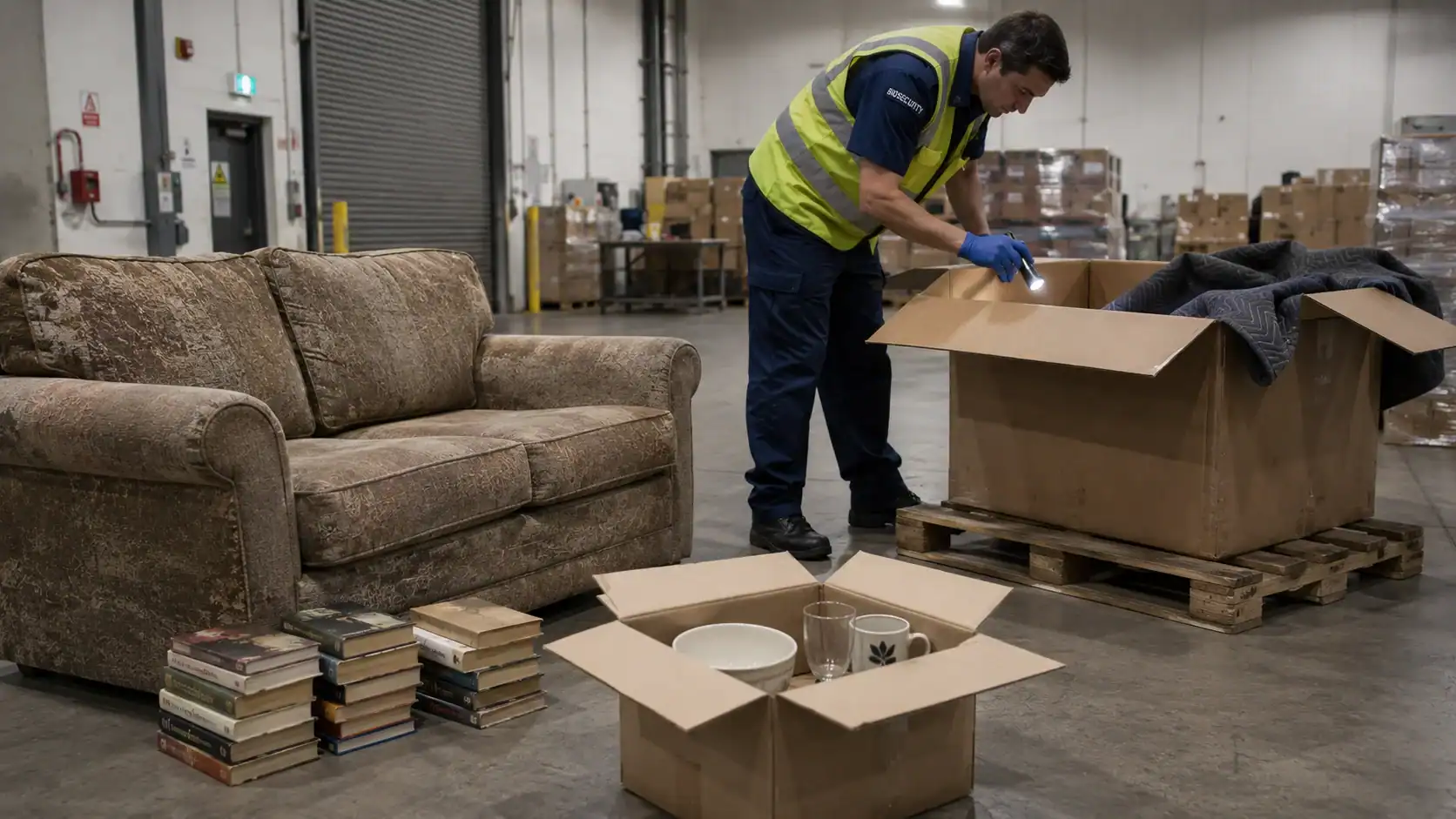
From a client’s point of view, the shipment may contain ordinary things: bicycles, garden tools, camping gear, sports equipment, furniture, prams, and household boxes. From Australia’s biosecurity point of view, those same items can carry soil, seeds, plant residue, insects, mould, or organic contamination hidden in seams, wheels, joints, and fabric.
That is why used household goods get inspected so often. The issue is not whether the goods look neat in a domestic sense. The issue is whether they present a biological pathway Australia does not want crossing the border.
This matters because inspection risk drives cost, delay, treatment orders, and sometimes disposal or re-export decisions. Once you understand what the system is actually trying to stop, the process feels much less arbitrary.
Key Takeaways
- Used household goods are subject to biosecurity control because personal effects can carry contamination pathways even when they are not commercial goods.
- DAFF treats soil, plant matter, seeds, insects, mould, and organic residue as practical border risks. DAFF: Clearance and inspection of goods
- Outdoor-use items such as bicycles, boots, tools, camping gear, and outdoor furniture are more likely to attract scrutiny.
- The difference that matters is not tidy versus untidy. It is visibly clean versus biosecurity clean.
- The best way to reduce delays is to clean contamination-prone goods thoroughly, declare them accurately, and check relevant conditions before shipping. Australia Biosecurity Rules Explained BICON Explained
Jump to a Section
- Why personal effects are not automatically low-risk
- What biosecurity officers actually look for
- Why cleaned goods still fail inspection
- Which household items attract the most scrutiny
- How to prepare used household goods properly
- How inspections create cost and delay
- Frequently Asked Questions
Why Personal Effects Are Not Automatically Low-Risk
Australia’s biosecurity system does not start by asking whether goods are commercial or personal. It starts by asking what risk pathway they create.
DAFF’s own import guidance makes clear that personal effects and household goods can be subject to biosecurity control. That is because household items often arrive after being used outdoors, stored in garages, moved through gardens, or packed with residue still trapped in corners and surfaces. DAFF: Clearance and inspection of goods
This is the core misunderstanding many relocation clients have. They assume personal ownership reduces inspection intensity. In practice, personal ownership changes the category of shipment, but it does not eliminate the contamination problem.
What Biosecurity Officers Actually Look For
The most common triggers are simple and physical. Officers are looking for soil, plant fragments, seeds, insect presence, mould, animal residue, and general organic material that could introduce pests or disease pathways.
DAFF’s guidance on recreational and outdoor items is useful because it shows the principle clearly. Boots, fishing gear, camping equipment, and similar items are treated seriously because small traces of soil, plant matter, or water are enough to create risk. DAFF: Recreational, camping, hiking and fishing goods
That same logic extends into household shipments. A used lawn mower is obvious. A child’s scooter with dried mud in wheel housings is less obvious, but the risk logic is the same. So are bicycles, golf clubs, hiking poles, garden furniture, sports bags, and anything that has spent time on soil, grass, or in damp storage.
Why Cleaned Goods Still Fail Inspection
A common cause of surprise is false confidence. Items were “cleaned,” but they were cleaned to a household standard, not to a border-risk standard.
That gap matters because contamination often hides in places normal cleaning ignores: under screws, inside wheel treads, in rubber seals, beneath fabric edging, inside toolbox corners, or behind detachable panels. An item can look clean on the surface and still fail once inspected closely.
That is also why some shipments feel inconsistent. One container may pass with little interference while another gets opened and parts of it are treated. The difference is often not luck. It is whether unresolved risk remains visible once the shipment is assessed.
Which Household Items Attract the Most Scrutiny
Not every personal item carries the same inspection risk. In household shipments, scrutiny is usually higher for items with an outdoor, agricultural, or contamination-prone history.
- bicycles and scooters
- camping and hiking gear
- garden tools and outdoor furniture
- sports equipment used on grass or soil
- prams, wheelchairs, and wheeled items used outdoors
- wooden goods, baskets, and natural-fibre items
- garage equipment and stored machinery parts
These categories do not guarantee a problem. They simply have more ways to carry hidden residue. That is why they tend to attract more attention than clothes, books, kitchenware, or boxed indoor goods.
How to Prepare Used Household Goods Properly
The practical goal is to reduce the chance that inspection reveals something preventable. That means cleaning goods with the inspection standard in mind, not merely preparing them for packing.
For contamination-prone items, that usually means:
- removing all visible soil, dust, plant matter, and residue
- cleaning wheel housings, seams, undersides, hinges, and crevices
- drying items fully so moisture and mould risk are reduced
- separating high-risk outdoor items from low-risk household contents where possible
- declaring the nature of the goods accurately on shipping documents
It is also worth checking whether specific commodities or materials have conditions in BICON before shipping. Household cargo may still contain goods that attract product-specific rules. DAFF: BICON
How Inspections Create Cost and Delay
Inspection is not automatically bad news, but it does put the shipment into a slower and more expensive path. DAFF can direct inspection, treatment, isolation, or other action depending on what it finds. If goods do not meet import requirements and cannot be treated, they may be exported or disposed of at the importer’s expense. DAFF: Clearance and inspection of goods
That means the real cost of poor preparation is not just the inspection fee itself. It is the chain reaction that follows: extra handling, missed delivery windows, storage exposure, treatment costs, and longer uncertainty at the exact moment clients want the move finished.
The simplest way to think about it is this: Australia does not charge you for owning used goods. It charges time and money when those goods arrive with unresolved risk.
Why This Topic Works Best When It Demystifies the Border
Household-goods inspection content becomes much more valuable when it demystifies the border rather than merely warning the reader about inspections. Most people are not trying to become biosecurity experts. They are trying to stop the process from feeling arbitrary. That is why the article improves when it explains the logic beneath the inspections: contamination pathways, hidden residue, and the difference between what looks clean domestically and what counts as low risk at the border. Once readers understand that, they can prepare better and panic less.
This is also where a cleaner, more human explanatory style helps. The issue is not to make the border seem friendlier than it is. The issue is to make its behavior feel more legible. That is one of the best trust-building functions Swift Cargo can perform in this cluster.
How It Fits with the Core Biosecurity and Household Pages
This page should naturally send readers into the broader biosecurity explanation at Australia Biosecurity Rules Explained and the operational conditions page at BICON Explained. Readers who are focused on the customs side of household moves should also be directed toward Unaccompanied Personal Effects Concession Explained. Those links turn the article into a practical bridge rather than a single-topic warning page.
What Strong Operators Do With This Topic
Why Used Household Goods Get Inspected in Australia becomes more valuable once it is read as an operator page rather than as a reference note. That distinction matters because operators are not only collecting facts. They are trying to make cleaner decisions under constraint. The strongest way to use a page like this is to translate its central mechanism into a sequence of choices: what should change in planning, what should change in documentation, what should change in timing, and what should change in how the shipment is explained internally. That is where the article stops being informative in the shallow sense and becomes commercially useful in the Swift Cargo sense. A page that leaves the reader merely “aware” of the topic is weaker than a page that changes how the reader designs the job.
That is also why the writing standard here should stay calm, precise, and unsentimental. Strong logistics prose is not loud. It is clarifying. William Zinsser-style sentence discipline helps because it strips away performance and leaves the mechanism visible. A light Ben Thompson-style systems framing helps because it reminds the reader that no article in this cluster is really isolated. Each one is describing a layer inside a larger Australia inbound system. Customs interacts with timing. Timing interacts with port choice. Port choice interacts with inland freight. Agreements interact with documentation. Biosecurity interacts with cargo preparation. The more clearly a page reinforces those relationships, the more authority it creates for the site.
In practical terms, readers should use this article together with adjacent pages rather than treating it as the final answer. The most relevant next stops in the cluster are /australia-biosecurity-rules-explained, /australias-biosecurity-import-conditions-bicon-explained, and /unaccompanied-personal-effects-concession-explained-australia. Those internal links are not decorative. They are part of the reading path that turns the cluster into a usable knowledge system. If a reader starts on one page and can only answer part of the freight or compliance problem, the article should route them forward. That is one of the cleanest ways to increase both usefulness and trust without bloating the prose with generic filler.
The commercial edge comes from exactly that discipline. Generic relocation and logistics blogs usually explain one layer of the issue and stop. A stronger authority cluster shows the reader how the pieces connect and where the next operational question lives. That is why this article should be read as one spoke in a larger authority spine rather than as an isolated post. Once the reader sees the topic that way, the practical value of the page increases. It becomes easier to budget correctly, plan more honestly, and avoid the kind of small assumptions that create expensive friction later — including delivery-time assumptions that miss inspection or treatment windows. That is the standard this cluster should keep pushing toward.
The Border Is Testing for Risk, Not Tidiness
It does not feel like it at the time, but the moment you decide how seriously to take the inspection paperwork is the moment that determines how the next two weeks of your move will go. Most people learn this in reverse — they pack carefully, ship without sweating the inventory, and only later, standing in a depot looking at a held container, realise that the work they did not do was the work that mattered most. The good news is that the rule is unusually consistent across years and across shipments: prepare the cargo so it can be read in one pass. That is the whole instruction. It looks like a small thing in advance. Looking back, it is usually the only thing that made the whole arrival quiet.
Used household goods get inspected in Australia because they can carry contamination pathways even when they are personal belongings and even when they seem clean enough for ordinary life.
Once that point is clear, the process becomes much easier to manage. The task is not to guess what a border officer might feel like checking. The task is to prepare the shipment so there is little reason to doubt it.
That is why serious preparation matters more than optimistic packing. Australia’s system is strict, but it is not random. It is built to find preventable biosecurity risk before the goods are released.
The single decision rule that prevents most household-goods inspection surprises is to package goods so an inspector can read the cargo profile in one pass. Used items grouped by room, with consistent descriptions, age-of-use noted where it helps, and any cleaning treatments mentioned upfront. New items separated, declared, and accompanied by their own paperwork. Anything ambiguous — partially-used, recently-cleaned, possibly-contaminated — flagged proactively rather than discovered. The inspection is not adversarial. It is a search for resolution. If your inventory resolves the questions before they get asked, the inspection completes quickly. If the inspector has to construct the answer from inconsistent descriptions, the inspection becomes a hold.
Frequently Asked Questions
Are personal effects exempt from biosecurity inspection in Australia?
No. Personal effects can still be inspected because household goods may carry contamination pathways such as soil, seeds, insects, mould, or plant residue.
Why are bicycles and outdoor items checked so often?
They are more likely to carry soil and organic residue in wheels, joints, seams, and surfaces exposed to outdoor use.
What does Australia mean by clean?
In practice it means biosecurity clean, not merely household clean. Goods should not contain visible soil, plant matter, moisture-related contamination, or residue that creates a biological risk pathway.
Can a cleaned item still fail inspection?
Yes. Items often fail because contamination is hidden in crevices, undersides, housings, fabric seams, or other places routine cleaning missed.
How do I reduce the chance of delay?
Clean high-risk goods thoroughly, declare them accurately, separate contamination-prone items where possible, and check BICON for any specific conditions before the shipment moves.

