
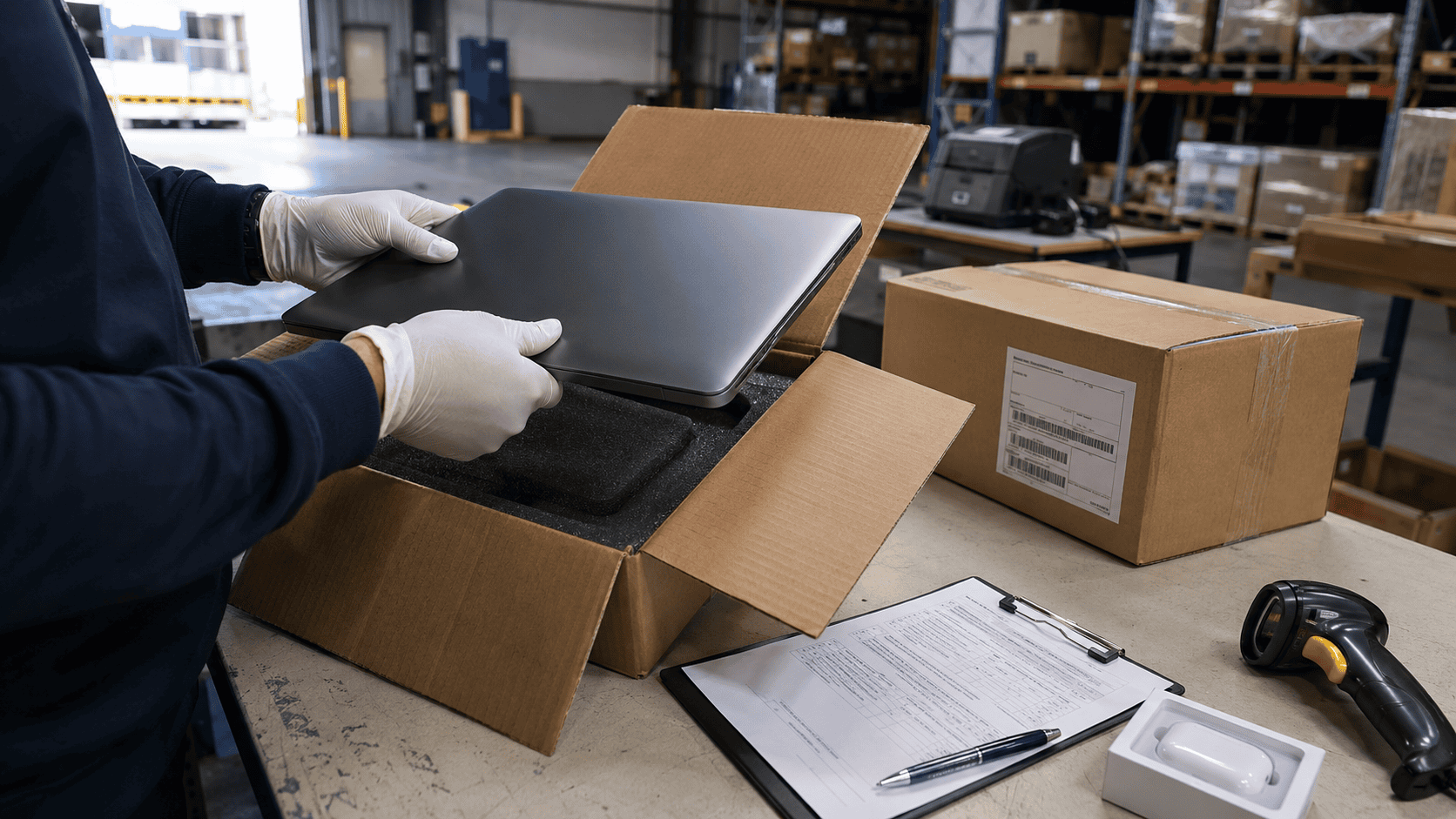
How to Import Electronics from the USA to Australia: Compliance and Freight Guide
The USA sells some of the most commercially attractive electronics in the world. It is also one of the more technically demanding countries for Australian importers to buy from. The complexity is not customs paperwork. It is the gap between the US compliance system and the Australian one: a product that is fully certified and legally sold in the USA can be non-compliant in Australia, and the importer bears full responsibility for the difference.
The Core Problem: US Certification ≠ Australian Compliance
The USA and Australia operate parallel but non-equivalent compliance systems for electronics. They are not mutually recognised. A product may pass FCC testing, receive UL certification, and be sold legally in Target or Best Buy. Those certifications do not make it legal to supply in Australia.
The compliance system works like a language: the US speaks FCC and UL; Australia speaks ACMA and RCM. Fluency in one does not transfer to the other. An importer who does not understand this pays for the lesson when stock is seized, a product recall is issued, or the ACCC issues a mandatory recall notice. All three have occurred with imported electronics from the USA.
The relevant Australian marks and authorities:
| Category | US Certification | Australian Requirement | Equivalent? |
|---|---|---|---|
| Radio/wireless devices (WiFi, Bluetooth, cellular) | FCC Part 15 / Part 22 | ACMA RCM mark (AS/NZS 4268 or relevant standard) | No. Separate testing required. |
| Electrical safety (mains-connected devices) | UL certification | RCM mark (AS/NZS 3820 or product-specific standard) | No. Separate testing required. |
| EMC (electromagnetic compatibility) | FCC Part 15 Class A/B | ACMA RCM mark (AS/ACIF S009 or relevant standard) | No. Separate testing required. |
| Medical devices / health electronics | FDA 510(k) clearance | TGA registration (ARTG listing) | No. Separate TGA process. |
| EU-origin goods sold through US distributors | CE marking | RCM mark | No. CE has no recognition in Australia. |
The RCM (Regulatory Compliance Mark) is the single Australian mark that covers both electrical safety and electromagnetic compatibility. It replaced the separate C-Tick (EMC) and A-Tick (telecommunications) marks in 2016. If a product connects to mains power or emits radio frequency, it requires RCM before it can be legally supplied in Australia. The product must be tested against Australian/New Zealand standards (AS/NZS), not against FCC, UL, or CE standards.
ACCC Mandatory Standards
Beyond RCM, the ACCC enforces product safety mandatory standards for specific electronics categories. These are supply prohibitions, not advisory. Supplying non-compliant products carries civil and criminal penalties.
Mandatory standards relevant to electronics importers from the USA cover power adaptors and chargers (AS/NZS 4268), extension leads, USB charging devices, and certain appliances. The ACCC Product Safety Australia website maintains the current list. Before importing any electronics category for the first time, check whether a mandatory standard exists for that category. Products in a category with no mandatory standard still require RCM if they emit radio frequency or connect to mains power. The mandatory standard question and the RCM question are separate.
AUSFTA Duty Position: What It Actually Covers
The Australia-United States Free Trade Agreement (AUSFTA) provides 0% import duty for most electronics goods originating in the United States. This is a genuine benefit, but “originating in the United States” has a precise meaning that catches many importers by surprise.
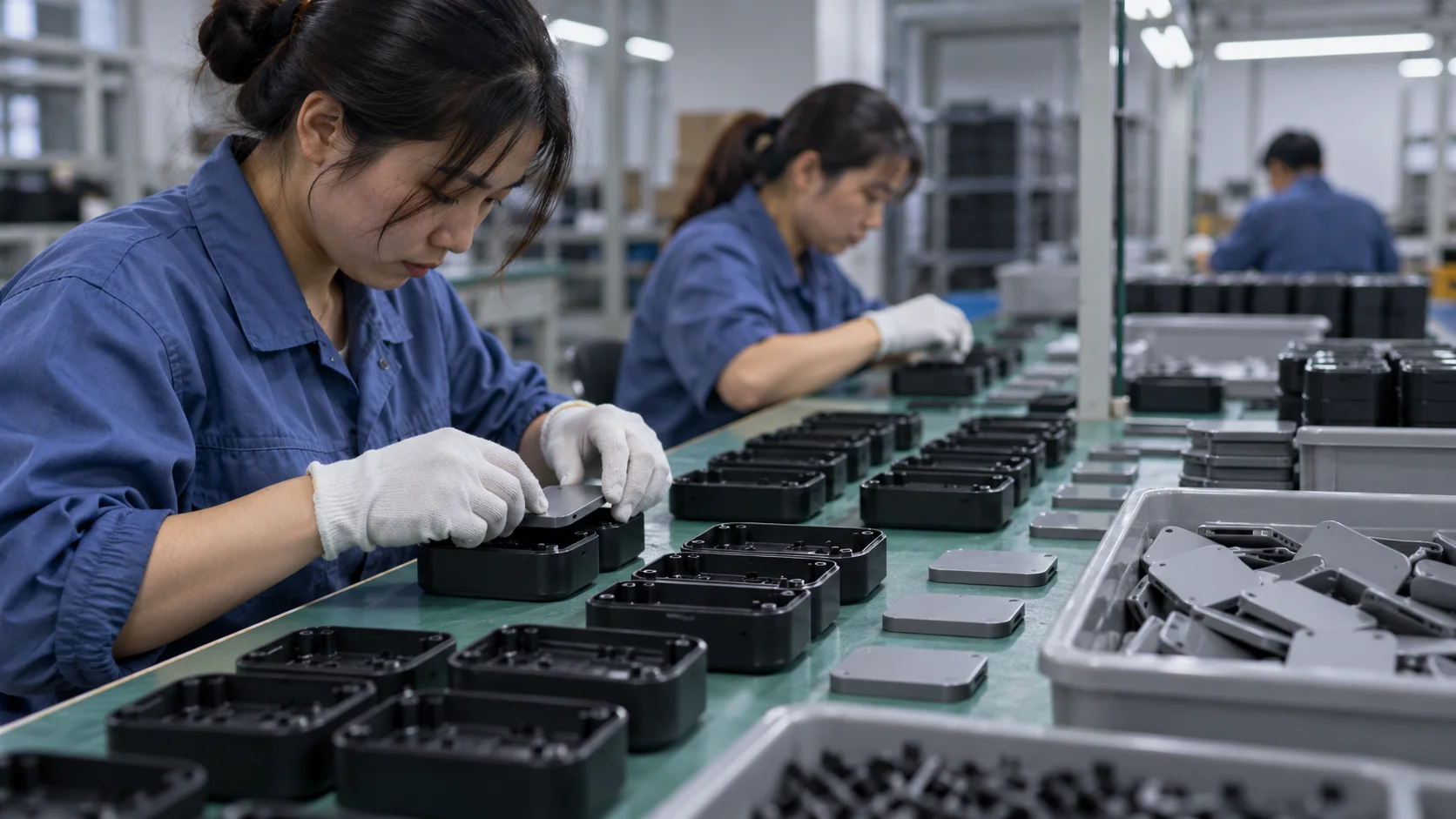
AUSFTA origin rules require the product to be either manufactured in the USA or to meet a specified rule of origin (typically a change in tariff classification, a regional value content threshold, or a combination). For electronics, the most common issue is this: a product can be designed by an American company, marketed by an American company, and sold through an American distributor, yet still be manufactured in China, Taiwan, Vietnam, or Mexico. That product does not originate in the USA for AUSFTA purposes.
Most consumer electronics sold in the USA are manufactured in Asia. iPhones assembled in China, laptops manufactured in Taiwan, and earbuds made in Vietnam do not qualify for AUSFTA preferential rates, regardless of where they were purchased or which company’s name is on the box. They are assessed at standard MFN duty rates. Under Australia’s general tariff schedule, that rate is 0% for most electronics HS codes in Chapters 84 and 85. The practical result is that AUSFTA is less relevant for most consumer electronics than importers expect.
AUSFTA has genuine value in three categories: US-manufactured industrial electronics, specialised equipment, and proprietary hardware with genuine US manufacturing content. For these categories, an AUSFTA Certificate of Origin is worth obtaining. The US exporter self-certifies it, and unlike ChAFTA, no third-party body issues it. Without the certificate, the importer uses the MFN rate regardless.
Two comfortable assumptions collide here. The first is that buying from a US supplier makes the goods American; the second is that a free trade agreement between the two countries makes them cheaper to import. Origin follows where a product is manufactured, not the address on the invoice, so a US-branded phone assembled in China is, for customs purposes, Chinese. And even where AUSFTA origin genuinely holds, the MFN duty on most consumer electronics is already 0%, which means the agreement you were counting on to save money often saves nothing. The tariff line does not decide whether your shipment clears. RCM compliance does.
HS Code Classification for Electronics
Electronics imported from the USA cluster in two HS chapters:
- Chapter 84: computers, data processing equipment, printers, storage devices
- Chapter 85: electrical machinery, phones, audio-visual equipment, semiconductors
The MFN duty rate on most electronics in these chapters is 0%. However, classification errors carry consequences beyond the duty rate: the wrong HS code can affect anti-dumping exposure (active on some electronics categories from certain origins), DAFF biosecurity treatment, and GST calculation. A customs broker who works regularly with electronics shipments will classify correctly; an importer who self-declares without specialist advice frequently does not.
Electronics from the USA carry one classification trap in particular: products that serve multiple functions may be classifiable in different subheadings depending on their essential character. A smartwatch classifies differently from a fitness tracker; a portable speaker with a phone function classifies differently from a phone with a speaker function. The classification determines duty rate, and duty rate determines landed cost.
Lithium Battery Constraints
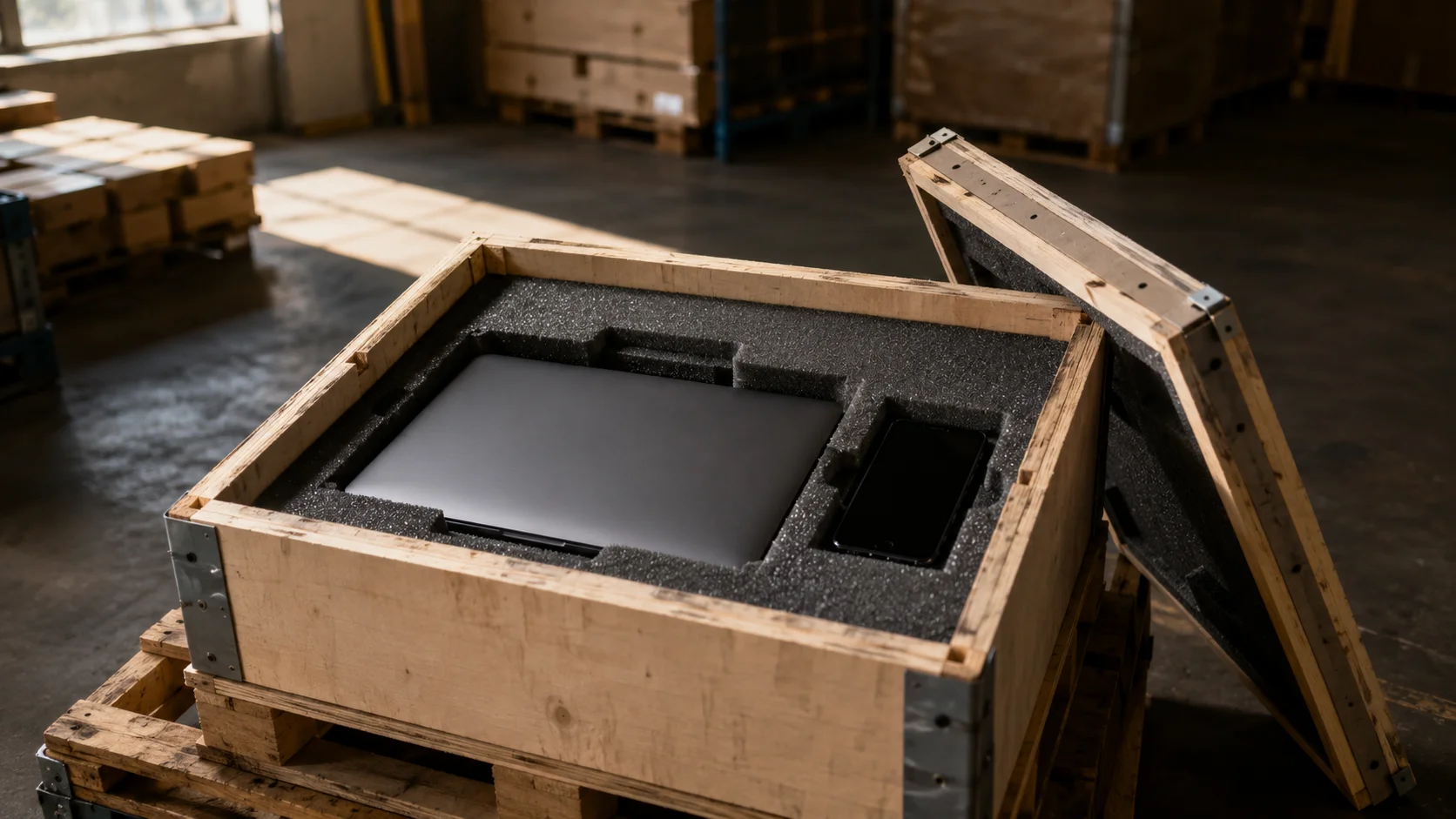
Phones, laptops, tablets, wireless earbuds, power banks, and smart watches all contain lithium-ion or lithium-polymer batteries. Lithium batteries are classified as dangerous goods under both IATA DGR (air freight) and IMDG Code (sea freight). That makes them the most operationally significant constraint on electronics freight from the USA.
For air freight, the key parameters are cell capacity and battery capacity. Lithium-ion cells above 20Wh or batteries above 100Wh are subject to Packing Instruction PI 965/966/967 under IATA DGR Class 9. Cells or batteries exceeding specified thresholds cannot be carried on passenger aircraft and face restrictions on cargo aircraft. Most consumer electronics fall within the acceptable limits, since a standard laptop battery is typically 50–90Wh. The shipment must still be declared correctly and packed according to the relevant packing instruction. If an undeclared lithium battery shipment is discovered at the US origin airport, it will be held pending correct declaration; in Australia, it may be seized.
For sea freight, the IMDG Code requirements for lithium battery shipments in containers are less restrictive than IATA but still require correct declaration on the bill of lading. A pallet of laptops or a container of phones requires specific dangerous goods declarations and stowage instructions, as does any large commercial shipment of devices containing batteries.
Work with a freight forwarder who handles electronics regularly and understands the DGR requirements for the specific products being shipped. Not all forwarders have the DGR expertise that electronics shipments require. The consequence of non-compliance is either shipment refusal or seizure.
Voltage and Frequency Compatibility
Australia operates on 230V/50Hz. The USA operates on 110–120V/60Hz. This is a product suitability issue that precedes the compliance question. Before worrying about RCM testing, verify that the product will function on Australian mains.
Most modern electronics (laptops, phone chargers, camera chargers, smart devices) are dual-voltage, accepting 100–240V and 50–60Hz. The power brick or charger will say “INPUT: 100–240V ~ 50/60Hz” on the label. These products will work on Australian mains with an adaptor (US Type A/B plug to Australian Type I plug) and no transformer.
Single-voltage US products will not operate correctly on Australian mains. These include some power tools, certain kitchen appliances, and older audio equipment rated 110V/60Hz only. Running a 110V device on 230V without a step-down transformer damages or destroys it. These products are not suitable for the Australian market without modification or transformer supply. Reselling them to Australian consumers without adequate disclosure creates ACCC product safety exposure.
For commercial imports, check the voltage rating of every SKU before placing the order. Discovering a single-voltage issue after a container arrives in Melbourne is expensive.
Air vs Sea Freight for Electronics from the USA
Choosing between air and sea for electronics from the USA follows broadly the same logic as other high-value product categories, with the lithium battery constraint added as a filter.
Air freight makes sense for high-value, low-weight products (phones, laptops, premium audio), time-sensitive restocking, sample or trial orders before committing to a sea shipment, and products where stockout cost exceeds the air-sea freight rate differential. USA to Australia air freight runs typically 3–5 days airport to airport from the US West Coast and 5–7 days from the East Coast, on standard consolidated service. Express service on a direct booking cuts that to 2–4 days ex-West Coast. Neither figure includes pickup, customs clearance or delivery: door to door, add roughly two to four days. The DGR handling requirement for lithium batteries adds a day or two for properly packaged shipments and increases handling cost.
Sea freight makes sense for bulk consumer electronics (TVs, monitors, home theatre systems), established import programs with predictable replenishment cycles, and any electronics where the volume/value ratio makes air freight economics impractical. USA West Coast to Port Botany or Melbourne is approximately 18–22 days vessel transit; East Coast via Panama Canal, 28–35 days. Add 5–10 days for US origin handling and 3–7 days for Australian customs clearance.
For electronics with lithium batteries in sea freight, ensure the bill of lading correctly declares the batteries and the shipment complies with IMDG stowage requirements. If a consignment of 500 laptops arrives in a container without proper DGR documentation, it will be held pending correct documentation and re-inspection.
Pre-Shipment Compliance Strategy
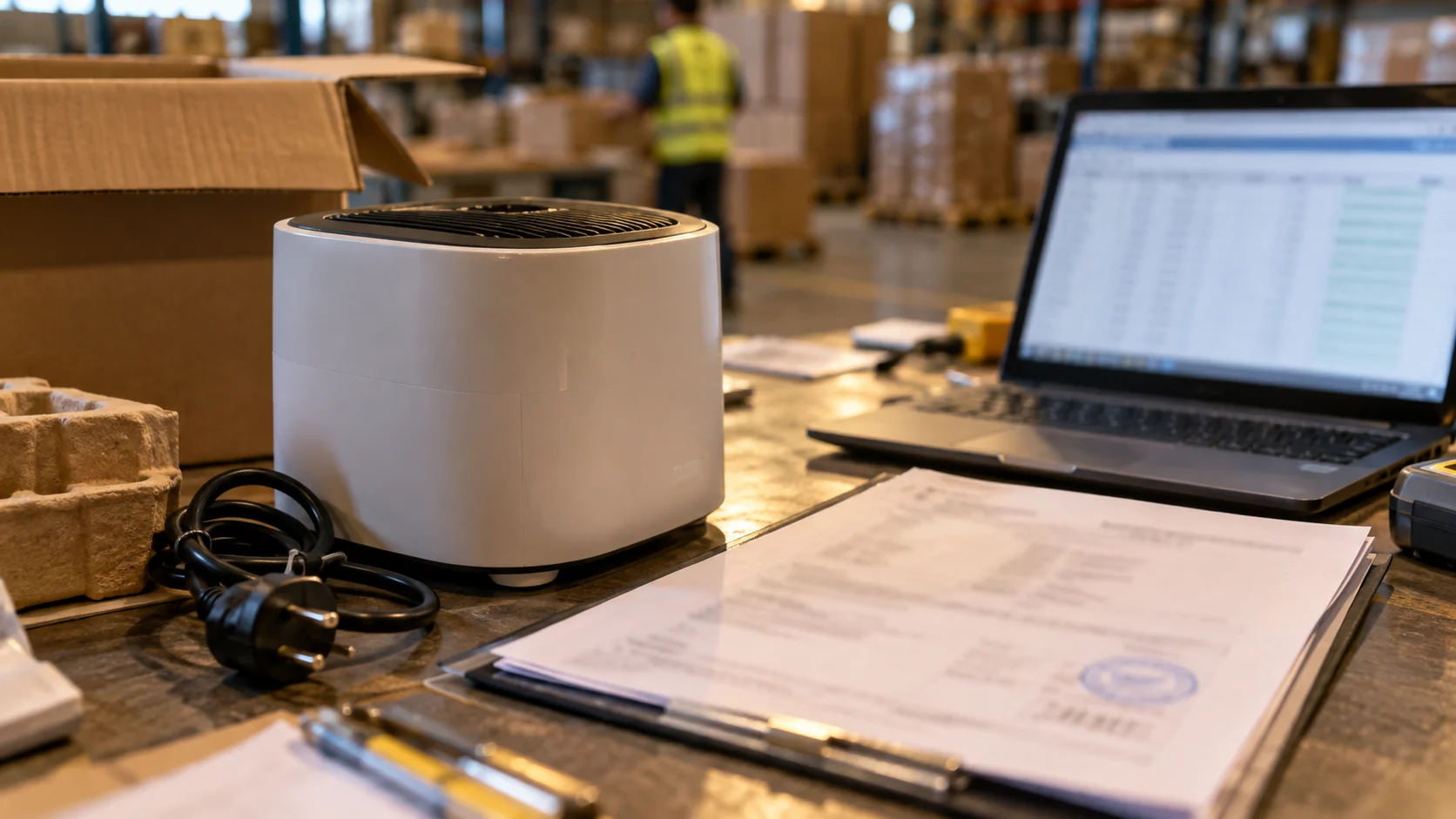
The most expensive compliance failure is discovering a problem after goods have arrived in Australia. If a container of electronics fails RCM requirements at the border, it cannot be cleared until the compliance issue is resolved. Resolving it typically means either returning the goods, destroying them, or funding Australian testing and remediation. None of these outcomes is better than fixing the problem before the shipment left the USA.
For importers sourcing products from US manufacturers or distributors, the pre-shipment compliance check has two stages:
Stage 1: Verify whether RCM documentation already exists. Many US manufacturers of electronics intended for export have already tested to AS/NZS standards for the Australian market. Ask the supplier for RCM documentation before assuming testing is required. If RCM documentation exists and the product is unchanged, the product has already been tested.
Stage 2: If RCM documentation does not exist, arrange testing before shipment. NATA-accredited Australian test laboratories can test against AS/NZS standards, as can some internationally accredited labs with mutual recognition arrangements. The supplier may need to provide a sample unit for testing. Testing timelines are typically 2–6 weeks; factor this into the order timeline. Testing cost is recoverable: the per-unit cost of RCM compliance decreases as import volume increases.
For private label or OEM electronics manufactured to a buyer’s specification, the importer is typically the responsible supplier under Australian law and carries the compliance obligation. There is no third party to pass this responsibility to. Budget for testing as part of the product development cost, not as an afterthought.
Practical Import Checklist
- Confirm RCM status: request documentation from supplier; if absent, arrange AS/NZS testing before shipment
- Check ACCC mandatory standard: verify whether the product category has a mandatory safety standard in Australia
- Classify the HS code correctly: use a licensed customs broker for electronics; misclassification has downstream consequences beyond duty rate
- Assess AUSFTA origin: confirm whether the product genuinely originates in the USA; if yes, obtain supplier self-certification; if no, apply MFN rate (typically 0% for most electronics)
- Verify voltage compatibility: confirm dual-voltage rating before ordering; flag single-voltage products
- DGR assessment: determine whether the product contains lithium batteries; confirm air or sea DGR requirements; instruct freight forwarder accordingly
- Arrange freight and insurance: specify ICC (A) all-risks cover for electronics; insure high-value items at replacement value, not book value
- Pre-arrival declaration: lodge import entry before vessel arrival to reduce port dwell and clearance time
For the full cost picture of importing from the USA to Australia (duty, GST, freight, DAFF biosecurity, brokerage), see our complete guide to importing from the USA to Australia. For the air vs sea freight decision in depth, see our air vs sea freight guide for Australian importers. For the full landed cost framework, see our total landed cost breakdown.
The Australian Border Force publishes current import conditions by HS code. Our guide to Australian customs procedures for imported goods covers ABF requirements and biosecurity assessment in more detail. Electronics importers should verify DAFF biosecurity requirements for their specific product category before shipment.
The compliance gap between US and Australian electronics certification is not just a customs problem. It is a structural market feature. Importers who built the RCM verification process early operate with a supplier set that later entrants cannot match without repeating the 3–8 week test cycle per new product. That early process meant two things: Stage 1 document review at purchase order, and Stage 2 NATA-accredited testing identified for non-compliant SKUs. The moat is not the RCM certificate itself, which any importer can obtain. The moat is the compliance infrastructure: the internal process, the NATA lab relationships, the supplier-facing RCM checklist that turns a potential border hold into a pre-shipment decision. The C-Tick to RCM transition was recent in 2013–2016, and information was sparse. Importers who built this then now source from a broader compliant supplier set than competitors who treat each import as a standalone compliance event.
The honest answer to why US electronics need re-certification before they’re legally sellable or usable in Australia isn’t that Australian standards are stricter for the sake of being strict. It’s that AUSFTA removes the tariff, not the compliance step, and those are two completely different questions that get bundled together because they arrive on the same shipment. Treating a signed trade agreement as proof that “it’s all sorted” is the same mistake as assuming a product that shipped is a product that’s finished. RCM certification, voltage compatibility, ACCC mandatory standards: none of those care whether duty was reduced to zero. The importers who plan well aren’t the ones who found a shortcut around the compliance step. They’re the ones who separated the tariff question from the compliance question early, instead of discovering three weeks in that solving one never touched the other.
Related reading: Electronics from China to Australia: Duties, EESS, Landed Cost
Frequently Asked Questions
Do US electronics need to be retested for Australia?
Yes, in most cases. FCC certification (USA) and UL certification (USA) are not recognised by ACMA or the ACCC in Australia. Electrical and electronic products that connect to mains power or emit radio frequency require RCM (Regulatory Compliance Mark) based on testing against AS/NZS standards. Ask your supplier whether RCM documentation already exists for the Australian market. Many US exporters of electronics have previously obtained it. If it does not exist, AS/NZS testing must be arranged before the product is legally supplied in Australia.
Is there import duty on electronics from the USA?
Most electronics from the USA attract 0% import duty under Australia’s MFN (most favoured nation) tariff schedule. This holds regardless of AUSFTA, because the MFN rate is already 0% for most HS Chapter 84 and 85 subheadings. AUSFTA provides 0% duty for products that genuinely originate in the USA, but most consumer electronics are manufactured in Asia and do not qualify for AUSFTA preferential rates. The practical outcome for most electronics importers is 0% duty under either pathway.
Can I ship electronics containing lithium batteries from the USA by air?
Yes, but with DGR requirements. Lithium batteries are Class 9 dangerous goods under IATA DGR. Most consumer electronics (phones, laptops, earbuds) fall within acceptable limits for air freight, but the shipment must be declared correctly and packed to the relevant IATA packing instruction (PI 965/966/967 depending on battery state and packaging). Work with a freight forwarder experienced in electronics DGR. Undeclared lithium battery shipments are refused or held at origin.
Will US-voltage electronics (110V) work in Australia (230V)?
Only if they are dual-voltage (labelled INPUT: 100–240V ~ 50/60Hz). Most modern electronics are dual-voltage and will work with a plug adaptor only. Single-voltage 110V products will be damaged by Australian 230V mains and are not suitable for the Australian market without a step-down transformer. Check the voltage rating before ordering, not after arrival.
What is the AUSFTA self-certification process for US-origin electronics?
Under AUSFTA, the US exporter can self-certify origin on the commercial invoice or a separate declaration. No third-party body issues AUSFTA certificates of origin. The declaration must include the exporter’s name, a description of the goods, an HS code, and a statement that the goods meet AUSFTA origin requirements. If the goods are manufactured in the USA or meet the AUSFTA rules of origin (change in tariff classification or regional value content), the self-certification is valid and the importer claims the preferential rate on the import declaration.