
Most guides to importing in Australia cover the parts (customs, freight, biosecurity) without showing how the parts connect. An importer who understands each component in isolation but not the sequence between them is still exposed to the most common and most expensive import failures: a wrong HS code discovered at customs clearance instead of at the purchase order stage; a missing certificate of origin that cannot be obtained retroactively; biosecurity documentation prepared for the wrong goods description because it was never cross-checked against the commercial invoice. The import process in Australia punishes that gap late, at customs clearance, for errors made early at the supplier and purchase order stages.
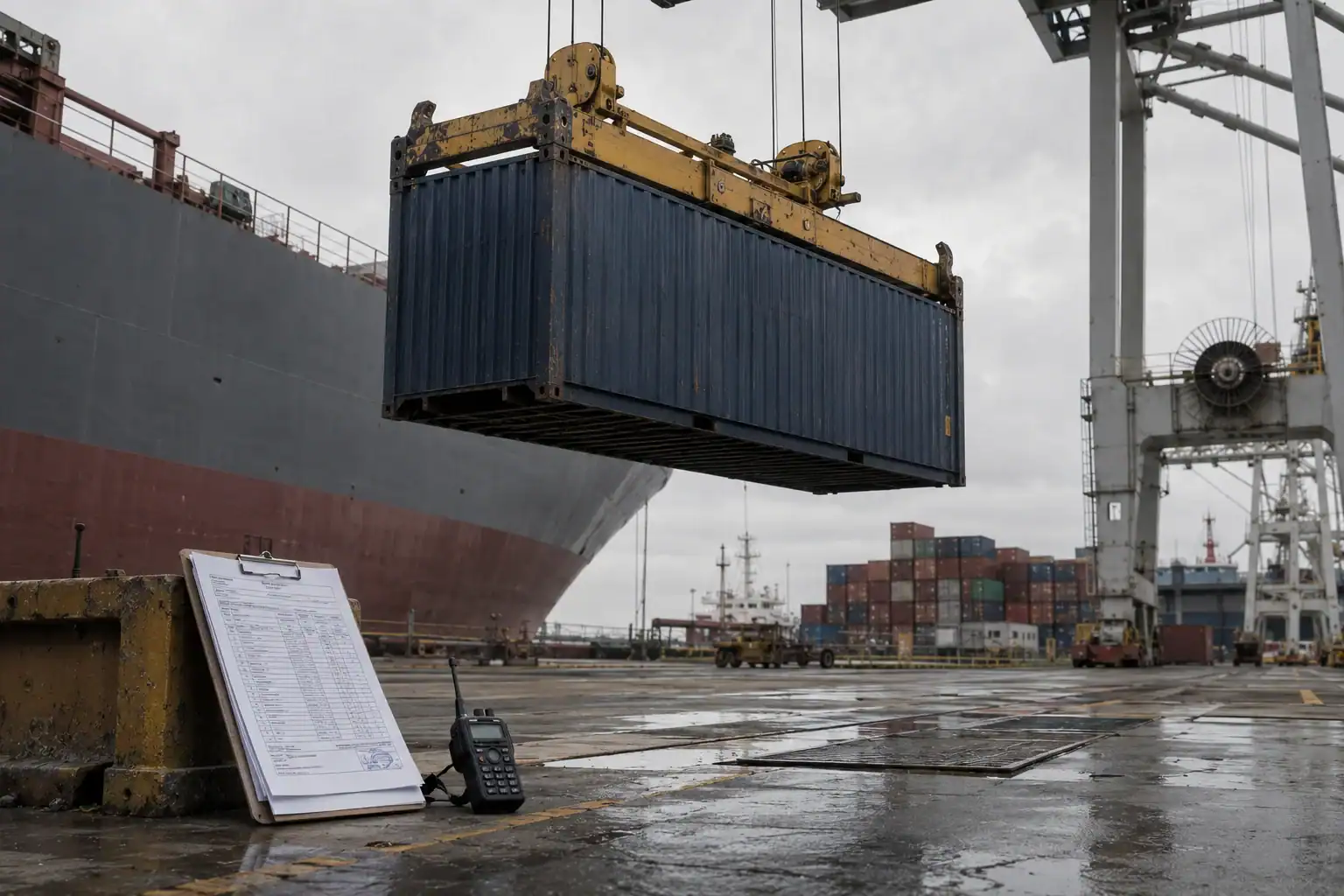
Stage 1: Supplier Selection and Pre-Order Due Diligence
The import process begins before any order is placed. What you decide at supplier selection determines what is possible at every subsequent stage, and what problems you inherit there.
For Australian importers, four due diligence questions matter most at this stage:
- Product compliance: Does the product meet the applicable Australian standard? AS/NZS standards for electrical goods, TGA registration for therapeutic goods, and ACCC mandatory safety standards for consumer products are all determined by what the product is, not where it is made or who supplies it. Know the answer before ordering, because a non-compliant product that arrives in Australia is either destroyed or re-exported at the importer’s cost, or it requires costly rework. Supplier claims of compliance are not the same as compliance documentation.
- Food and agricultural products: imported food is inspected under the Imported Food Control Act 1992 and the Biosecurity Act 2015, so confirm the product’s conditions in BICON before ordering. China’s own GACC registration applies to food entering China, so it is not a check on your supplier.
- HS code: What is the correct Australian HS code for this product? This is the most consequential classification decision in the import process (see Stage 3). It determines duty rate, FTA eligibility, anti-dumping exposure, and biosecurity treatment requirement. Identify the correct code before ordering. Do not rely on the supplier’s HS code; verify it independently using the ABF Working Tariff Schedule.
- Country of origin: Where is the product manufactured? This determines FTA eligibility (ChAFTA for China, AANZFTA for Vietnam and ASEAN, AUSFTA for USA) and anti-dumping exposure. For goods with substantial transformation across multiple countries, confirm country of origin against the applicable FTA rules of origin rather than assuming it from where the supplier is located.
Stage 2: Purchase Order and Incoterms Selection
The purchase order sets the terms of the transaction, and the Incoterms clause within it determines who controls and who pays for freight and insurance from origin to destination.
For Australian importers, the most common choices are:
- FOB (Free On Board): The supplier’s responsibility ends when goods are loaded onto the vessel at the origin port. The importer arranges and pays for ocean freight and insurance from that point. FOB gives the importer direct control over freight rate negotiation, carrier selection, and insurance terms. It also means the importer’s freight forwarder manages the booking.
- CIF (Cost, Insurance, Freight): The supplier arranges and pays for ocean freight and insurance to the destination port. The importer pays the supplier’s invoice, which includes these costs embedded in the price. The importer still pays all Australian port, customs, and last-mile costs. CIF is simpler to administer but removes the importer’s visibility into what they are paying for freight and insurance, and it often includes a supplier margin on those costs.
- EXW (Ex Works): The supplier’s responsibility ends at their factory gate. The importer arranges everything from that point: origin inland transport, export customs at origin, ocean freight, insurance, and all Australian costs. EXW gives the importer maximum control and demands maximum coordination.
The Incoterms choice also affects the customs value declared to Australian Border Force. Australian customs duty is calculated on the customs value. For most goods, that is the transaction value (broadly, the price paid or payable for the goods) adjusted to a FOB basis. If goods are purchased on CIF terms, the CIF invoice price needs to be converted to FOB value for duty purposes by subtracting freight and insurance costs. Getting this wrong means either overpaying or underpaying duty. Both create compliance exposure.

Stage 3: Pre-Shipment Compliance Checks
The problems that surface expensively at Stage 8 (Australian customs clearance) cost a fraction as much to identify and resolve at this stage. This is also the stage most commonly skipped or abbreviated, because the shipment has not left yet and the compliance problems do not feel real until they are.
Five checks make up the pre-shipment compliance list for Australian imports:
Commercial invoice accuracy. The commercial invoice is the master document of the entire import process. Every other document references it or must be consistent with it. The value on the commercial invoice drives the customs duty calculation. The product description drives the HS code classification and DAFF biosecurity assessment. The country of origin drives FTA eligibility. Under-declared value, a vague product description, or a wrong country of origin all make the invoice inaccurate. Those errors are discovered at customs clearance, where they are expensive to correct.
The product description must be sufficient for the Australian customs broker to classify the goods to the correct HS code. “Electronic parts” is not sufficient. “Lithium-ion battery packs for power tools, 18V, 5Ah” is sufficient. The description should match the physical goods and be consistent with the packing list.
Certificate of Origin for FTA concessions. If the goods qualify for a preferential duty rate under an FTA (ChAFTA, AANZFTA, AUSFTA), the certificate of origin must be obtained before the goods are loaded for shipment. For ChAFTA, this is a GACC-issued certificate of origin. For AANZFTA, it is a Form AANZ. For AUSFTA, it is a self-certification by the US exporter on the commercial invoice. Timing is the critical constraint: most FTA certificates of origin cannot be obtained retroactively after the goods have departed origin. If you miss the pre-shipment window, you lose the concession for that shipment and pay the MFN duty rate instead.
ISPM 15 phytosanitary compliance for wooden packaging. Australia requires all wooden packaging materials to be treated to ISPM 15 standard (heat treatment or methyl bromide fumigation) and marked with the official treatment mark. That covers pallets, crates, dunnage, and wooden frames. DAFF identifies non-compliant wooden packaging at Australian ports and either treats it at the importer’s cost or destroys it. Most reputable suppliers use ISPM 15-compliant materials as standard, but confirm this on the purchase order rather than assuming it.
Product testing and certification. For regulated product categories, obtain the compliance documentation before the shipment departs origin, not after it arrives in Australia. Those categories include electrical goods requiring EESS registration, children’s products with AS/NZS mandatory standards, and therapeutic goods requiring TGA registration. Testing laboratories require physical samples; if the goods are already in Australia, testing can only happen after clearance through a bonded warehouse arrangement, which adds cost and complexity.
Import permit check. Certain goods require an import permit from an Australian government agency before they can be cleared through customs. DAFF issues permits for live plants, certain timber species, and regulated biosecurity risk goods. ACMA issues them for some radiocommunications equipment, and the Therapeutic Goods Administration for medicines and medical devices. The permit must be in hand before the vessel arrives, not applied for on arrival.
Stage 4: Booking Freight
With the purchase order confirmed and pre-shipment compliance checks completed, freight is booked. Three decisions matter at this stage:
Mode selection. Sea freight (LCL or FCL) is appropriate for most commercial imports. Air freight is reserved for high-value, time-critical, or small-volume shipments where the air premium is justified by either the goods value or the cost of delay. For goods where sea transit time is acceptable, the mode decision makes itself. For goods where timing is tight, calculate the cost of delay explicitly rather than defaulting to sea.
LCL vs FCL. For shipments below approximately 12–15 CBM on China-Australia routes, LCL (shared container) is typically more cost-effective than FCL (full container). Above that volume, FCL becomes competitive. The LCL threshold shifts with peak-season rate movements. For fragile or high-value goods, FCL secures the chain of custody and reduces handling contact, which matters even at volumes below the cost crossover.
Cut-off dates. Every vessel sailing has a cargo cut-off date, the latest date by which goods must be at the origin port CFS or terminal. Missing the cut-off means waiting for the next sailing, typically 7–14 days. Confirm the cut-off date with the freight forwarder before giving the supplier a despatch date.
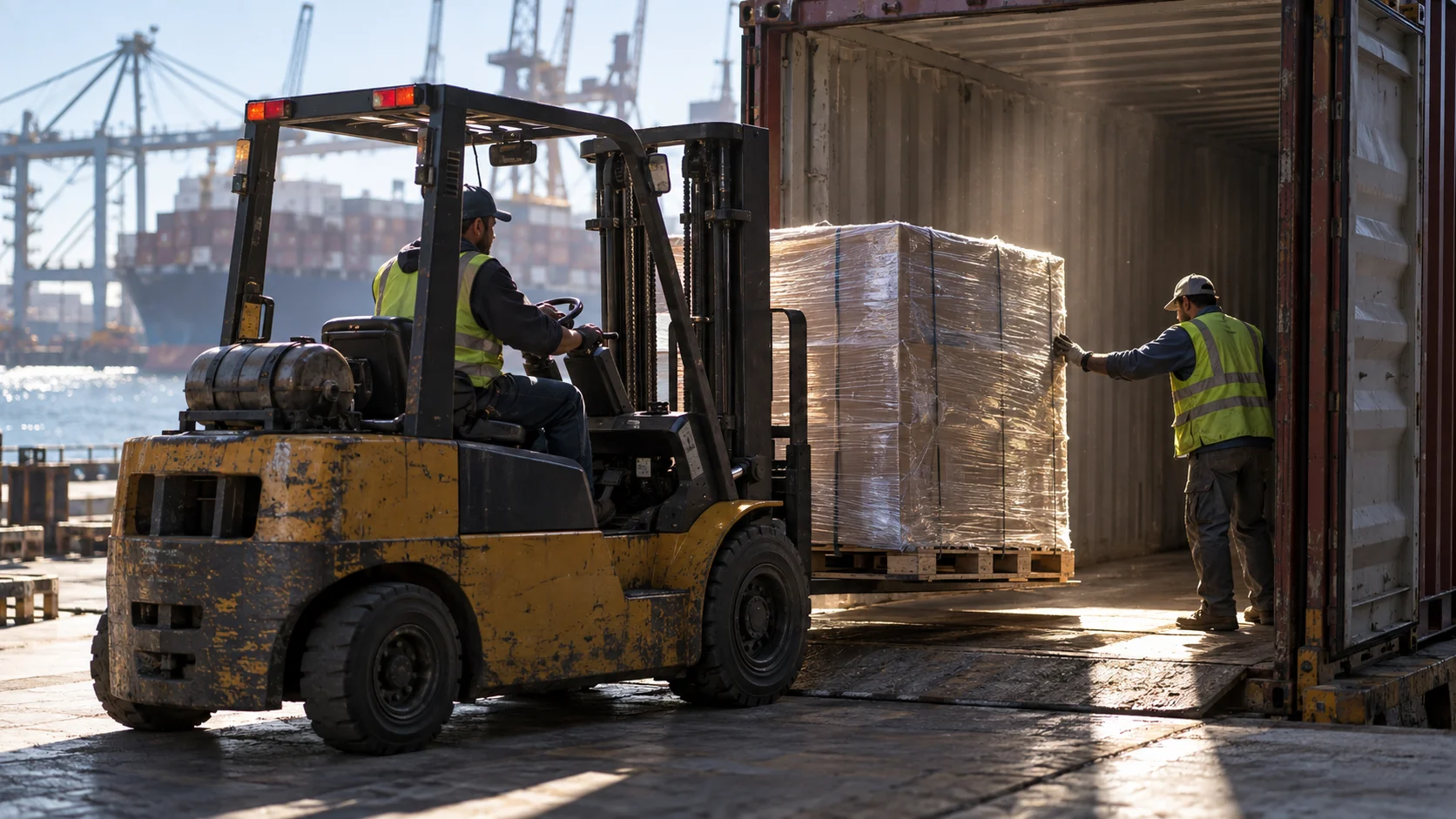
Stage 5: Cargo Collection, Packing, and Export Customs at Origin
The supplier packs the goods to ISPM 15 standard for wooden materials and to CTU Code packing standards for container loading (stow plan, weight distribution, and dunnage). The freight forwarder or origin agent collects the cargo and moves it to the CFS or terminal. Export customs documentation is prepared and lodged at origin. That is the exporter’s responsibility, but the documents produced (packing list, commercial invoice, bill of lading) flow through to the Australian import clearance.
The carrier issues the bill of lading (sea freight) or air waybill once it accepts the goods. This is the document of title for sea freight, so the original bill of lading is required to take delivery of the goods in Australia. For LCL shipments, the freight forwarder issues a house bill of lading; for FCL, the document is typically a master bill of lading from the carrier (or a house bill if a freight forwarder is acting as NVOCC).
Stage 6: Ocean or Air Transit
Transit is the stage the importer has the least control over. The vessel sails on a fixed schedule, transships at intermediate ports (Singapore, Port Klang, Colombo for most Asia-Australia routes), and arrives at the destination port based on the carrier’s timetable.
Two things matter for the importer during transit:
- ETA monitoring: vessel ETA changes during transit. The freight forwarder should be tracking the vessel and updating the importer when ETA shifts. An ETA that moves earlier than expected affects when free time at the Australian port starts; an ETA that moves later affects delivery scheduling.
- Pre-arrival documentation preparation: while the vessel is at sea, assemble and review all the Australian clearance documentation. Do not wait for vessel arrival. Start Stage 7 immediately after Stage 5 is complete.
Stage 7: Pre-Arrival in Australia
Pre-arrival preparation is where Australian importers with well-run programs pull ahead of those without. What you do while the vessel is still at sea determines whether clearance happens within free time or on detention charges.
Customs entry lodgement. The Australian customs entry (import declaration) can be lodged up to 30 days before the vessel arrives. Pre-lodgement means ABF processes the entry while the ship is still at sea. In many cases the entry is assessed and duty confirmed before the vessel berths. For a goods-to-go shipment (no examination required), clearance can be granted on or before vessel arrival, so the container can leave the port on the same day it is unloaded.
DAFF biosecurity assessment. The DAFF Import Conditions database (BICON) specifies the import conditions for your goods based on HS code and country of origin. If treatment, certification, or a permit is required, lodge the documentation before vessel arrival. If DAFF assesses the goods as requiring inspection on arrival, it schedules the inspection after vessel arrival. Pre-arrival lodgement lets DAFF triage and prioritise that inspection rather than queuing it behind shipments lodged after arrival.
Duty and tax calculation. Before the vessel arrives, the importer should know the total duty and GST liability. Customs duty is collected at clearance; GST (10% on taxable importations) is payable on the customs value plus duty plus insurance and freight (the “value of the taxable importation”). GST-registered businesses can apply for the deferred GST (DGST) scheme, under which the business reports and pays GST through the monthly BAS rather than upfront at the border. Confirm the total liability with the customs broker before clearance is granted. A payment delay holds up clearance, and a clearance delay starts the container detention clock.
Domestic delivery booking. Book the transport for port-to-warehouse delivery before the vessel arrives. During peak periods, truck availability at major Australian ports is constrained. A container that clears customs on a Friday with no truck booked waits in the port yard over the weekend, on detention. Pre-booking eliminates this exposure.
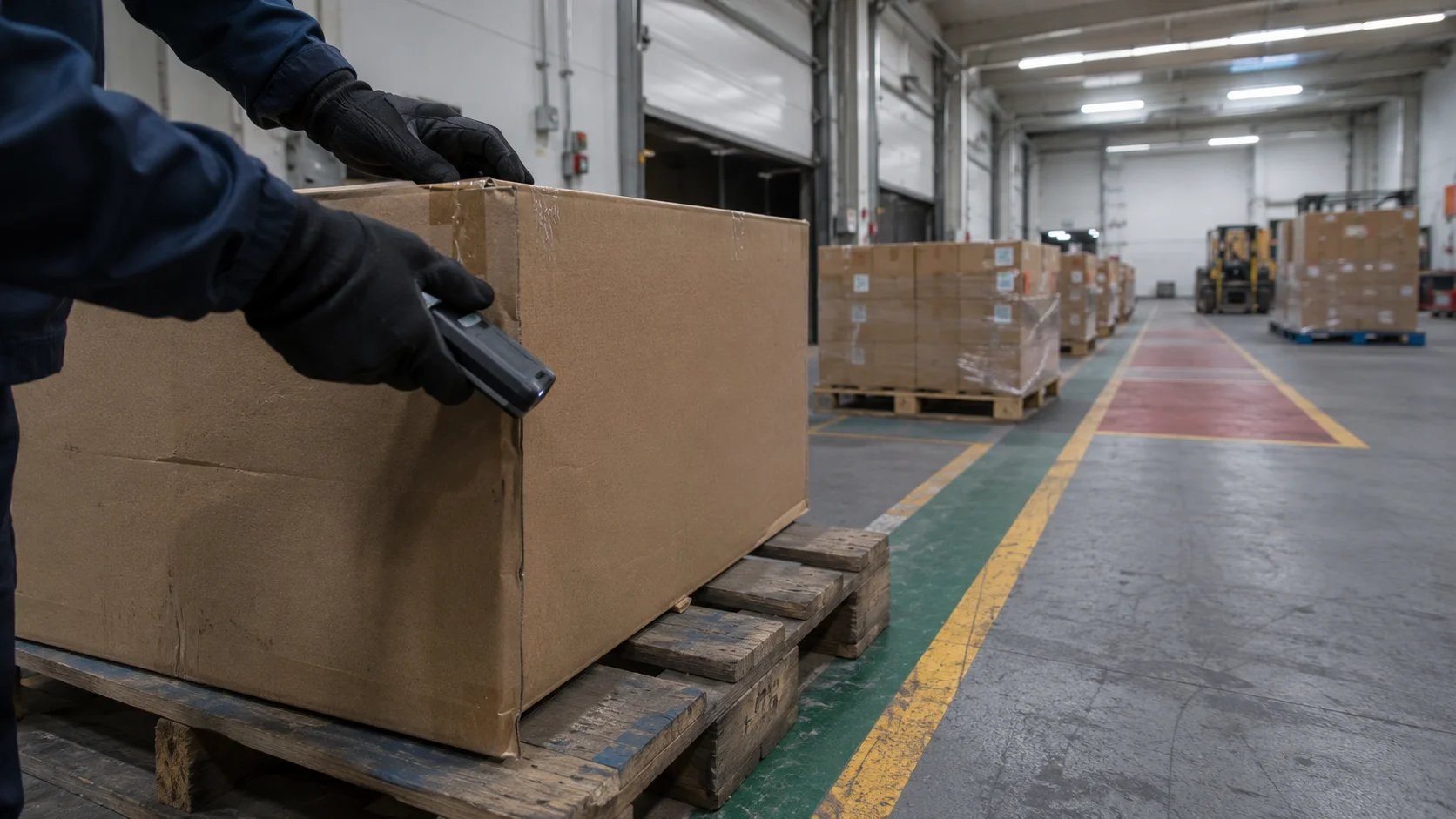
Stage 8: Australian Customs and Biosecurity Clearance
Two authorities manage clearance in parallel, each with different powers and different documentary requirements:
Australian Border Force (ABF) processes the customs entry under the Customs Act 1901. ABF assesses the goods declaration (HS code, customs value, country of origin), calculates duty and GST, and either grants clearance (goods-to-go) or requests examination. ABF examination is triggered by risk profiling, random selection, or inconsistency in the documentation. An ABF examination typically adds 3–7 days and may require the container to be de-stuffed at a container examination facility.
Department of Agriculture, Fisheries and Forestry (DAFF) processes the biosecurity assessment under the Biosecurity Act 2015. DAFF determines whether the goods pose a biosecurity risk based on their nature, origin, and packaging. DAFF can require inspection, treatment, or destruction, and ABF cannot release the goods until DAFF has cleared them. If ABF has cleared a shipment but DAFF holds it for a treatment requirement, the shipment is not available for delivery until the treatment is completed and DAFF grants clearance.
These are the most common Stage 8 delays, and every one of them is preventable at Stage 3:
- HS code dispute: the declared code attracts a different duty rate or FTA treatment than ABF applies, requiring amendment and potential under-declaration penalty
- Missing FTA certificate of origin: duty paid at MFN rate instead of FTA preferential rate because the CoO was not obtained pre-shipment
- Non-compliant wooden packaging: DAFF inspection required on all wooden packaging in the consignment; treatment cost and delay apply
- Missing import permit: goods held pending permit application that should have been lodged weeks earlier
- Valuation dispute: under-declared invoice value identified by ABF; duty reassessed at the higher value plus potential penalty
Stage 9: Port Release and Domestic Delivery to Warehouse
Once ABF and DAFF have both granted clearance, the goods are released from the port. The freight forwarder or customs broker obtains the delivery order from the shipping line (for sea freight) and the cargo can be collected from the port terminal or CFS.
The container detention clock governs this stage. Shipping lines allow free time, typically 3–7 days from vessel arrival or container availability, depending on the carrier and trade lane. Beyond free time, detention charges accrue daily per container. A container that sits in the port for 10 days beyond free time accumulates detention charges that flow entirely to the shipping line and cannot be recovered by the importer or forwarder.
For a strategic view of who owns each stage, common failure points, and when to use a 3PL instead of your own warehouse, see the responsibility-mapping guide to this same process. For the operational playbook on what happens once the container reaches your dock (transport booking, the receiving inspection protocol, putaway, and inventory system integration), see warehouse and delivery planning after import.
Three Worked Timelines
Coordinating nine stages across time zones is exactly the work a managed import programme absorbs, and pricing your own volume takes minutes.
LCL shipment, China to Melbourne: order placed Week 0 → goods ready Week 4 → LCL cut-off Week 5 → vessel departure Week 5 → ocean transit 14 days → Port Melbourne arrival Week 7 → LCL deconsolidation 3 days → customs entry pre-lodged, clearance granted Day 1 of availability → domestic delivery Week 8. Total supplier-to-warehouse: approximately 8 weeks.
FCL shipment, Vietnam to Sydney: order placed Week 0 → goods ready Week 5 → container stuffed and FCL cut-off Week 6 → vessel departure Week 6 → ocean transit 12 days → Port Botany arrival Week 8 → ABF clearance pre-lodged, DAFF clear on arrival → domestic delivery Week 8–9. Total: approximately 8–9 weeks.
Air freight, USA to Brisbane: order placed Day 0 → goods ready Day 7 → air cargo booked, flight departure Day 9 → flight transit 2 days → Brisbane Airport arrival Day 11 → air cargo customs clearance 2–3 days → domestic delivery Day 14. Total: approximately 2 weeks.

What the Importer Controls
The importer’s preparation determines the outcome at Stage 1 (supplier due diligence), Stage 2 (Incoterms selection), Stage 3 (pre-shipment compliance), Stage 7 (pre-arrival documentation), and Stage 9 (coordination and delivery booking). These are entirely within the importer’s control and require only time and attention, not luck or carrier cooperation.
The importer has limited control at Stage 6 (ocean transit) and Stage 8 (ABF and DAFF examination, if examination is triggered). These take as long as they take. The importer cannot speed up a vessel or a customs examination. The importer can make sure everything on their side is already done when the vessel arrives, so the controllable delays are zero and only the uncontrollable ones remain.
Most Australian importers hire a customs broker to handle paperwork. The broker will tell you they do more than that. The paperwork framing is the problem. A good customs broker and freight forwarder absorbs the coordination complexity of Stages 4 through 8. Those are the stages where goods are in motion, decisions are time-sensitive, and a missed exchange between a DAFF inspector and an ABF officer adds days of port storage and detention. An importer who treats the broker as a document processor will underpay, under-brief, and be genuinely surprised when the broker does not proactively catch the pre-shipment documentation error created at Stage 2. The correct frame is a capability contract: you are buying the broker’s real-time judgment on a route they know well, not their administrative capacity on documents you could technically complete yourself.
We run Stages 4 through 8 so your team owns 1, 2, 3 and 7.
Most SMEs receive a detailed, all-inclusive quote within 24 hours, no hidden fees, covering freight, customs and DAFF documentation.
For a detailed breakdown of the cost components at each stage, see our total landed cost guide for Australian importers. For the China-specific version of this process (with ChAFTA, GACC registration, and CCC compliance detail), see our complete guide to importing from China to Australia. For what happens when Stage 8 goes wrong and how to recover, see our guide to why shipments get held at Australian customs.
Need Help Running the Process?
Swift Cargo manages end-to-end import programs for Australian businesses as a single managed service: freight booking, customs brokerage coordination, DAFF documentation, and domestic delivery. Get a quote for your Australian import to review your current process and identify where the friction is.
Product-Specific Import Guides
The nine stages are the same for every commodity, but the compliance layer is not. These guides cover the compliance layer product by product:
- Apparel from China
- Apparel from Vietnam
- Building materials from Vietnam
- Electronics from the USA
- PPE from China
- Solar equipment from China
- Solar equipment from Vietnam
- Solar panels from China
- Sporting goods from the USA
- Toys
- Cosmetics
- Food
- Machinery
Frequently Asked Questions
How long does the end-to-end import process take in Australia?
For sea freight from China, the supplier-to-warehouse timeline is typically 8–13 weeks: 4–6 weeks for supplier production, 1–2 weeks for origin handling and transit, 2–3 weeks for ocean transit, and 1–2 weeks for Australian customs clearance and domestic delivery. Air freight from the USA takes approximately 2–3 weeks from order placement to warehouse. The biggest variable is customs clearance: 1–3 days when documentation is complete and correct, 2–6 weeks when it is not.
What is the most common cause of delays in the Australian import process?
The most common cause is a documentation error detected at Australian customs clearance: a wrong HS code, a missing certificate of origin, an insufficient product description on the commercial invoice, or non-compliant wooden packaging. All of these are identifiable at the pre-shipment stage (Stage 3) before the goods leave origin. Identifying them at Stage 8 (customs clearance) means the goods are in Australia and the fix requires amending the declaration, paying the higher duty rate, or treating non-compliant packaging. Each of those costs significantly more than preventing the error before shipment.
Do I need a customs broker to import into Australia?
No. An importer can lodge its own import declaration, but most use a licensed customs broker because declaration errors are costly. A customs broker lodges the import declaration with ABF, calculates duty and GST, manages DAFF documentation, and coordinates port release. For importers with regular programs, a customs broker relationship is significantly more efficient than a transactional engagement per shipment, and reduces error rates.
When do I pay duty and GST on an Australian import?
Customs duty and GST are payable at the time the customs entry is assessed by ABF, in practice at or before clearance is granted. For pre-lodged entries, duty is payable when ABF assesses the entry, which may be before the vessel arrives. Many customs brokers offer duty deferral arrangements, and GST-registered businesses can defer GST on imports through the deferred GST scheme (DGST). GST is then reported and paid through the monthly BAS rather than upfront at the border.
What is container detention and how do I avoid it?
Container detention is a daily charge imposed by the shipping line when an FCL container is not returned to the port within the free time allowance, typically 3–7 days from when the container is available for collection. To avoid detention: lodge the customs entry before the vessel arrives, have duty payment arranged in advance, book domestic delivery before the container is available, and coordinate with the customs broker so the delivery order is obtained from the shipping line immediately after clearance is granted.