
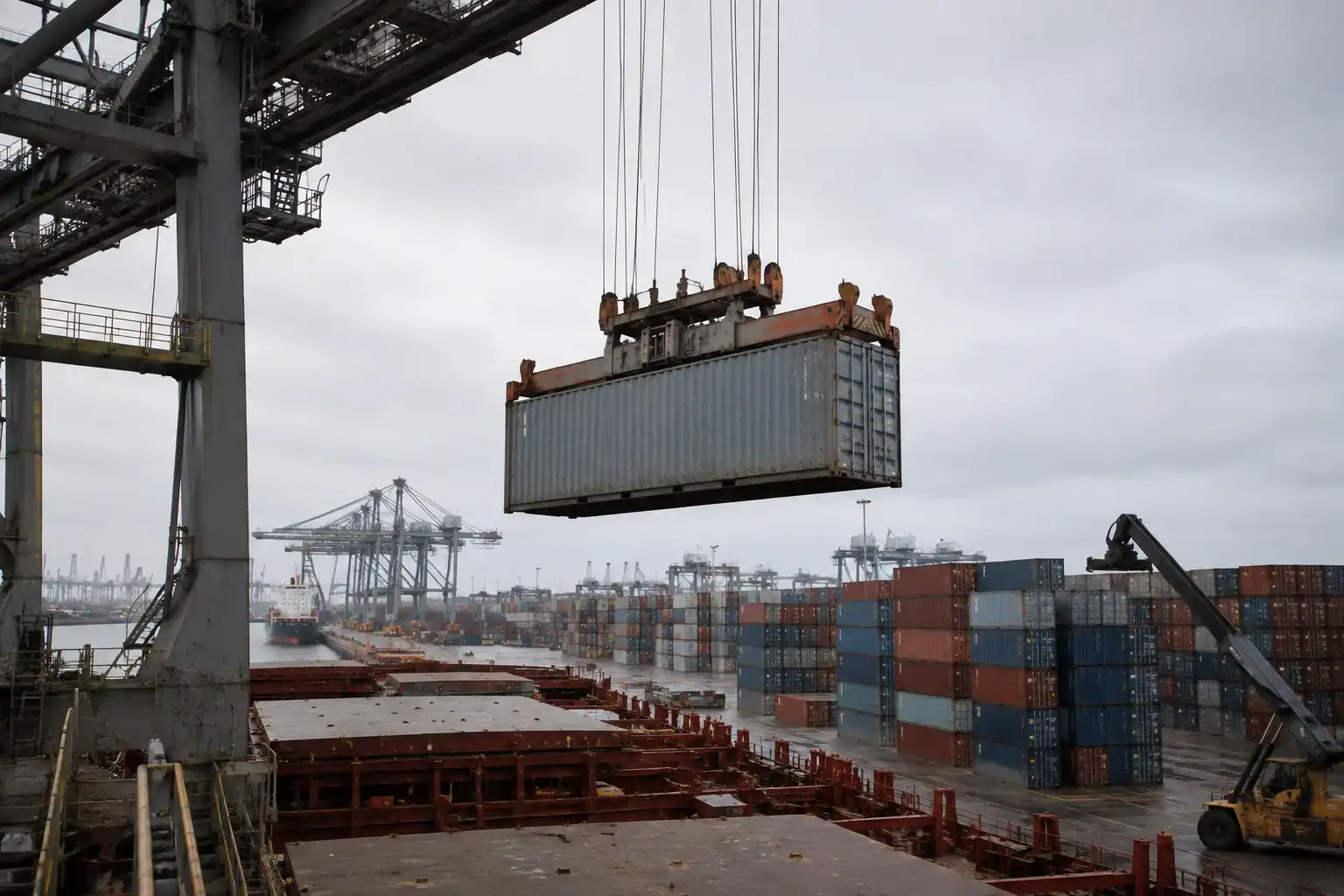
When a shipment arrives damaged, the first instinct is to blame the carrier. That instinct is usually wrong, and acting on it is usually expensive.
Ask a first-time importer what causes cargo damage and they will name the storm, the dropped container, the reckless forklift driver. Those make the news. They are not what actually empties the box, and they are not what determines whether a claim gets paid. What determines that is narrower and less dramatic: a signature on a delivery receipt, a notification sent inside a three-day window, a packing standard that either meets the industry benchmark or it doesn’t. Get those right and a legitimate claim gets paid. Get them wrong and the carrier or insurer has a documented reason to decline, regardless of how the damage actually happened.
For the full breakdown of cargo damage causes by mode (sea freight, air freight, and LCL handling, covered separately), see why shipments get damaged in transit. What follows here is the claims process: the two moments that decide whether you get paid, and the checklist that prevents you from needing it again.
The Claims Process: Two Moments That Determine Everything
When damage does occur, the outcome of any claim depends heavily on what happens in the first hours after delivery, not in the weeks of correspondence that follow.
Moment 1: The delivery receipt. When the carrier delivers and presents the consignee with a delivery receipt or proof of delivery, this is the moment to note any visible damage. Carriers and courts in most jurisdictions treat “clean” delivery (signing without noting damage) as confirmation that the cargo was delivered in good order. A carrier who has a clean signed receipt has a very strong legal position. Note damage specifically: not “possible damage” but “dented carton, top right corner, cargo not inspected,” and note it before you sign.
Moment 2: The 3-day notification window. For concealed damage (damage that was not visible at delivery but discovered when the carton was opened), most insurance policies and the Hague-Visby Rules require written notification to the carrier within 3 days of delivery. Late notification is one of the most common reasons damage claims fail. The clock starts at delivery, not at the moment you discover the damage.
Photograph everything. Photograph the container seal number. Photograph the container doors before opening. Photograph the cargo in position before unloading. Photograph the damage. This documentation is not for your files. It is evidence.
On the insurance side: liability under the Hague-Visby Rules (which governs most international sea freight) is capped at SDR 2 per kilogram or SDR 666.67 per package (approximately AUD 3.90 per kilogram or AUD 1,300 per package at current exchange rates), amounts that are typically far below the commercial value of the cargo. This is why marine cargo insurance is not optional for any business shipping goods of material value: coverage needs to reach the full commercial value of the shipment. For context on where insurance fits in the cost stack, see the Thailand shipping cost breakdown.
For shipments into Thailand specifically, what gets held at customs and what gets physically damaged in transit are two different risk categories. Our guide on why shipments get stuck at Thai customs covers the customs dimension. Here is what it looks like when the two moments above go wrong.

A Claim That Failed: The Cost of a Clean-Signed Receipt
In early 2025, a consolidated shipment of household goods from Rotterdam (seven cubic metres, insured under an All Risks policy) arrived at Laem Chabang with a damaged flatscreen television and two cracked ceramic pieces. The delivery was signed without noting the damage. A claim was filed ten days later. The insurer declined. The insufficient packing exclusion was the stated reason, but the proximate problem was the clean-signed delivery receipt: by accepting goods without notation, the consignee had no documented evidence of arrival condition, and the 3-day concealed damage notification window had passed. The television had been packed in its original manufacturer box. The ceramics had been double-wrapped in bubble wrap. Neither met the CTU Code requirement for blocking and bracing to prevent movement inside the container. The packing felt sufficient. It was not sufficient in the legal sense that an insurance policy requires. The gap between those two definitions (felt safety and contractual sufficiency) is where most cargo damage claims fail.
What Cargo Insurance Actually Covers (and What It Doesn’t)
Institute Cargo Clauses (A), the broadest standard form of cargo insurance, covers “all risks” of physical loss or damage from an external cause. The exclusion that ends the most claims is insufficient packing: if the packaging doesn’t meet the standard expected for the journey, the insurer has grounds to decline regardless of what actually caused the damage. The benchmark for “sufficient” is the CTU Code (Code of Practice for Packing of Cargo Transport Units), published jointly by the IMO, ILO, and UNECE. It isn’t legally mandatory, but when an insurer or carrier assesses whether packaging was adequate, the CTU Code is the reference point. That’s exactly what failed in the Rotterdam claim above: manufacturer boxes and bubble wrap felt sufficient, but neither met the CTU Code’s blocking-and-bracing requirement.
The other exclusions cargo owners encounter less often but should still know:
- Inherent vice. Damage caused by the natural properties of the cargo: fresh fruit ripening, metal corroding in the presence of moisture, wet hides decomposing. Not insurable under any standard policy, because the cause is internal to the cargo rather than an external event.
- Delay. ICC (A) does not cover losses caused by delay, even where an insured event caused the delay. The only exception is general average and salvage expenses payable under Clause 2.
- War and strikes. Covered by separate ICC (War) and ICC (Strikes) clauses, typically available as add-ons.
Packing- and handling-related losses account for a significant share of cargo claims globally, according to annual ocean cargo statistics from the International Union of Marine Insurance. Most of these losses are preventable.
The Causes of Cargo Damage: The Journey Your Cargo Actually Takes
The three types of cargo damage covered below (moisture, stowage failure, and vibration) all trace back to the same thing: a journey with far more handling steps than most shippers picture. Most shippers think of their cargo’s journey as: factory → ship → warehouse. The real journey looks more like this:
- Factory: packed and palleted
- Truck: road transport to freight forwarder or CFS
- CFS or container yard: loaded into container
- Port of origin: container craned onto vessel
- Vessel hold: 3–6 weeks at sea through changing temperatures and swells
- Port of transshipment (often 1–2 stops): container craned off, held in yard, craned back on
- Destination port: craned off vessel, moved through customs examination
- Truck: road transport to warehouse
- Warehouse: unloaded
Each step is a separate risk event. Each crane lift puts the container through a shock load; each transshipment adds another handling cycle to a box that was built, at best, for one. The transshipment point and the original packaging decision account for the majority of damage events industry-wide, according to TT Club loss prevention data, which is why a direct sailing, where one exists, is worth its extra cost on high-value or fragile cargo. Swift Cargo can advise on direct-versus-transshipment routing; see the Thailand shipping process for route options.
Container Sweat: The Hidden Moisture Mechanism
Moisture damage is commonly misunderstood. Shippers assume it means rain or a leaking roof, when in most cases the water never came from outside the container at all. Container sweat is condensation that forms on the container’s steel ceiling and walls when the warm, humid air sealed inside cools as the vessel moves through cooler water: warm air holds more moisture than cool air, and when the steel drops below the dew point, that moisture condenses on it and drips onto the cargo. (Why shipments get damaged in transit works through the full temperature-differential mechanics, including a worked Bangkok-to-Sydney example.)
- Wooden pallets and packaging materials. Timber absorbs and releases moisture. A container loaded with wet timber packing releases moisture into the closed environment continuously.
- Route temperature variation. A container loaded in subtropical Southeast Asia and transshipped through a temperate northern port experiences significant temperature cycling.
- High-moisture cargo. Agricultural products, green coffee, and natural fibre goods loaded at elevated moisture content are a known source of cargo sweat events.
The practical steps: load in a dry environment, use silica gel desiccant sized correctly for the container volume, wrap moisture-sensitive goods in polybags or VCI film before cartoning, and (for steel and metal goods) specify VCI (Vapour Corrosion Inhibitor) packaging explicitly in the purchase order.
Stowage Position Inside the Container
Where your cargo sits inside the container affects the damage it experiences. The CTU Code addresses stowage pattern and weight distribution in detail, but the practical principles are:
- Heaviest cargo on the floor, lightest on top. This sounds obvious, but mixed-product container loads frequently violate it when loading is done without a stow plan.
- Weight distributed across the floor, not concentrated on one side. An off-centre load creates a listing container during lifting, which puts lateral stress on internal stacking.
- Fragile cargo away from the doors. The doors are the most vulnerable point of a container to external impact. If the container is rear-ended during road transport, door-adjacent cargo takes the full force.
- Void filling. Unfilled voids allow cargo to shift. Airbags, dunnage bags, and kraft paper void fill are standard tools. An unfilled void is not just a damage risk. It signals insufficient packing to any insurer or carrier who inspects the container after an incident.
A stow plan (even a simple hand-drawn diagram created before loading) is evidence that the packing was deliberate. It matters in claims and it matters for the loading crew.
Vibration and Shock: The Journey Your Electronics Don’t Expect
Road transport generates a specific vibration frequency profile; sea transport generates a different one. The combination of road-sea-road, repeated at each transshipment, creates a vibration and shock history that standard factory testing often does not replicate.
Electronics are particularly vulnerable because printed circuit boards, solder joints, and connectors have resonance frequencies. If the packaging lets the product vibrate at its own resonance frequency, fatigue damage accumulates and shows up later as field failures rather than visible breakage on arrival. Glass carries a different risk: shock at transshipment, where crane lifts generate the highest instantaneous shock load of any stage in the journey.
High-value electronics and fragile goods need two kinds of mitigation: shock and vibration indicators on the outer packaging (inexpensive labels that change colour if the package has been dropped or over-vibrated), and packaging that isolates the product from the transport medium (foam-in-place, custom-moulded EPE foam, or suspension packaging) rather than simply surrounding it with soft fill.
Prevention Checklist Before You Seal the Container
Damage prevention is almost entirely a pre-loading activity. Once the container is sealed, the options narrow to route selection and insurance coverage. Before sealing:
- Verify carton weight ratings. Confirm that outer cartons are rated for the stack height you are using. Carton compression testing (BCT) should match the actual stacking load.
- Specify internal blocking and bracing. Include internal bracing requirements in purchase orders, not just outer carton specifications. Inspect before sealing if possible.
- Check pallet overhang. No cargo should extend beyond the pallet edge. If it does, use a larger pallet or redistribute.
- Install desiccant. Size to the container volume and the cargo type. Silica gel at 1–2 kg per 10 CBM is a common starting point for general cargo; increase for hygroscopic goods.
- Seal moisture-sensitive goods. Use polybags, VCI film for metals, or moisture barrier bags for electronics.
- Create a stow plan. Put heavy items on the floor, keep fragile items away from the doors, and fill voids.
- Photograph before sealing. Document the loaded container interior before the doors close. This is your baseline evidence.
- Note the container seal number. Photograph the seal. Note the number on your shipping records.
- Review your insurance coverage. Confirm that your policy covers the full commercial value of this shipment, and review the packing-related exclusions before the container leaves.
- Brief the consignee. The person signing the delivery receipt needs to know what to do: note visible damage before signing, notify within 3 days of discovering concealed damage, photograph everything.
For businesses shipping household goods or personal effects to Thailand (where the cargo mix is particularly varied and packing is often done under time pressure), the same principles apply. Our household goods shipping guide covers packing requirements in that context.
Cargo damage is largely preventable, but prevention happens before the container is sealed, not after it arrives. If you are shipping goods to Thailand or elsewhere in Southeast Asia and want a pre-shipment packing review, a transit route assessment, or help arranging cargo insurance, get a shipping quote from Swift Cargo. We can advise on packing standards, routing, and insurance coverage while there is still time to act on it.
Frequently Asked Questions
What’s the first thing I should do if my shipment arrives damaged?
Inspect the outer condition of the shipment before you sign anything. If cartons are wet, crushed, torn, or otherwise show damage, note it on the delivery receipt in specific terms (“dented carton, top right corner” rather than “possible damage”) and do this before you sign. A clean signature is treated by carriers and courts in most jurisdictions as confirmation that the cargo arrived in good order, and it is very difficult to contest afterward. Photograph the container seal, the container doors before opening, and the cargo in position before unloading.
What is container sweat and how do I prevent it?
Container sweat is condensation that forms on the container’s steel ceiling and walls, then drips onto cargo, when warm, humid air sealed inside a container cools as the vessel moves through cooler water. It is not caused by rain or a leaking container. The moisture comes from air and cargo that were already humid when the container was loaded. Prevention: load in a dry environment, use silica gel desiccant sized to the container volume, wrap moisture-sensitive goods in VCI film or polybags, and avoid loading high-moisture goods alongside dry goods.
Does cargo insurance cover damage from poor packaging?
Most standard cargo insurance policies, including Institute Cargo Clauses (A), exclude damage caused by “insufficiency or unsuitability of packing or preparation of the subject-matter insured.” If an insurer can show the packaging was inadequate for the journey, the claim is declined. This is why packing standards matter before a damage event, not after.
How do I file a cargo damage claim?
Two steps are critical. First, note the damage on the delivery receipt before signing it. Under the Hague-Visby Rules a clean signature is prima facie evidence that the goods arrived as described, and the carrier will rely on it. Second, notify your insurer and the carrier in writing within three days of delivery for concealed damage not visible at the time of delivery. Late notification is one of the most common reasons claims fail. Photograph the damage inside the container before unloading if possible.
What is the CTU Code and does it apply to my shipment?
The CTU Code (Code of Practice for Packing of Cargo Transport Units) is published jointly by the IMO, ILO, and UNECE. It sets out best-practice requirements for packing, securing, and labelling cargo in containers and other transport units. It isn’t legally mandatory in most jurisdictions, but it defines the industry standard for “sufficient packing,” and it’s the benchmark insurers and carriers use when they invoke the insufficient packing defence.