
The US supplements market is the largest in the world. For Australian importers, it opens access to product formulations, brands, and manufacturing quality that don’t yet exist at scale domestically. But importing supplements from America into Australia is not the same as importing furniture or electronics. Two regulatory frameworks apply, each with its own independent requirements. The consequences of getting either wrong range from seizure at the border to legal liability after sale.
The first framework is the TGA, the Therapeutic Goods Administration. The second is FSANZ, Food Standards Australia New Zealand. Everything else starts with knowing which one applies to your specific product, and why.
TGA or FSANZ: Which Framework Applies?
Importers most often go wrong by treating this as an ingredient question. It is not. Whether your product falls under TGA or FSANZ jurisdiction depends on form plus claims, not on what the product contains.
A single formulation can be a food (FSANZ) or a therapeutic good (TGA) depending on how it is presented and what it says on the label. The ingredients and the quantities can be identical in both cases.
| Product | Presentation and Claims | Regulatory Framework |
|---|---|---|
| Protein powder | Sold as food, no therapeutic claims | FSANZ (Food Standards Code) |
| Same protein powder | “Supports muscle recovery and lean mass” | TGA (therapeutic good) |
| Vitamin C tablets | In tablet/capsule form with any health indication | TGA (listed medicine, AUST L) |
| Magnesium powder | Bulk powder, no health claim, food labelling | FSANZ (food supplement) |
| Herbal capsules (echinacea) | Any form with “supports immune function” | TGA (listed medicine, AUST L) |
| Fish oil softgels | Any claim referencing omega-3 health benefits | TGA (listed medicine, AUST L) |
The TGA’s guidance on food versus medicine classification sets out the boundary in detail. Bulk powders that carry subtle health claims on the packaging sit in a grey area. Ask the TGA for a formal classification on those before you import commercially.
The ARTG: When Registration Is Required
Every product classified as a therapeutic good must be listed or registered on the Australian Register of Therapeutic Goods (ARTG) before it can be legally imported for commercial supply.
The importer must be an Australian-resident TGA sponsor: a legal entity registered with the TGA that answers for whether the product meets Australian requirements. Your US supplier cannot self-sponsor. An Australian entity must hold the ARTG entry, either as the importer themselves or through an appointed Australian sponsor.
AUST L (Listed Medicine): This category covers low-risk therapeutic goods that use only ingredients from the TGA’s permitted ingredients database and carry approved low-level indications. The sponsor self-certifies via the TGA’s eListing system. The TGA does not individually evaluate listed medicines before they reach market. Most standard vitamins, minerals, fish oils, herbal supplements, and similar products qualify as listed medicines.
AUST R (Registered Medicine): This category covers higher-risk products and those making stronger therapeutic claims. The TGA evaluates each one in full before market, and that process is lengthy (12+ months) and expensive. Very few standard supplements are registered medicines, because the category is primarily pharmaceutical. If your US product sits in a low-risk category, AUST L is the correct pathway.
Importing a therapeutic good without an ARTG entry is an offence under the Therapeutic Goods Act, regardless of whether the product is legal in the US, widely available there, or clearly beneficial. The ARTG entry must exist before the goods are imported.
AUSFTA Duty Rates: Effectively Zero from the USA
AUSFTA, the Australia-United States Free Trade Agreement, has been in force since 2005. Under it, the effective duty rate on supplements from the USA is 0% for most product categories.
HS code classification determines the rate:
| HS Code | Description | General Rate | AUSFTA Rate (US-origin) |
|---|---|---|---|
| HS 3004 | Medicaments (products qualifying as medicines) | 0% | 0% |
| HS 2936 | Vitamins and derivatives | 0% | 0% |
| HS 2106 | Food preparations not elsewhere specified (general supplements as food) | 4–5% | 0% with AUSFTA origin declaration |
GST of 10% applies regardless of duty outcome. Customs calculates it on customs value plus any duty plus international freight and insurance. The full GST calculation for Australian imports is worth understanding before you model landed costs.
To access the 0% AUSFTA rate for HS 2106 goods, you need a statement of US origin from your supplier. AUSFTA is self-certified, so no third-party body issues it: the declaration sits on the commercial invoice or a separate document, and you retain the supporting records. Confirm the specific HS code with your customs broker before the first shipment. Incorrect classification affects both the duty rate and whether an ARTG entry is required.
Biosecurity: Plant and Animal Derivatives
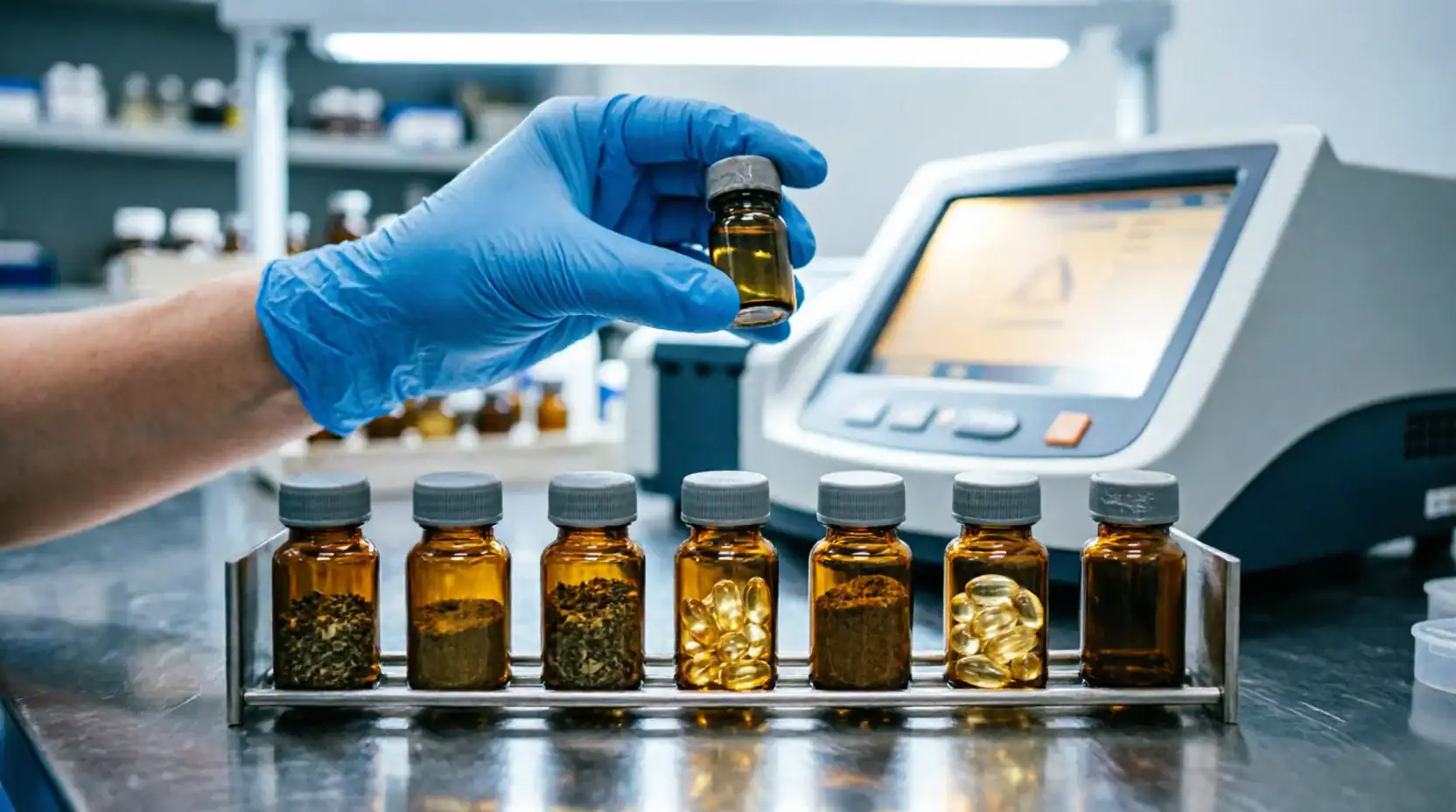
Many supplements contain ingredients derived from plants or animals: herbal powders, botanical extracts, fish-derived omega-3, collagen from bovine or marine sources, and bee products like propolis or royal jelly. All of these trigger biosecurity assessment at the Australian border.
DAFF publishes the biosecurity import conditions in BICON, its online conditions database. Check it for your specific ingredient and source country. Biosecurity conditions for supplements vary by:
- The plant or animal species the ingredient derives from
- The country of origin of the raw material (not just the country of manufacture)
- The processing method (raw powder vs. heat-treated extract vs. encapsulated product)
Common biosecurity situations for supplement imports:
Herbal powders and botanical extracts count as plant material. DAFF conditions typically require that goods are commercially prepared, free from soil and pests, and meet the relevant processing specifications. DAFF may also require an import permit, and standard permits take up to 20 business days to process. Check BICON before ordering, because the permit process must begin well before your freight is booked.
Fish oil, collagen and gelatin count as animal derivatives, so conditions depend on species and source country. Products from approved countries with appropriate processing certification typically clear without issue. Products from non-approved source countries face stricter conditions.
Bee products (propolis, royal jelly, bee pollen) fall under DAFF regulation, carry their own specific conditions, and often need an import permit.
Finished encapsulated products generally face fewer biosecurity conditions than raw ingredient imports, provided they are commercially manufactured, heat-processed, and sourced from an approved country. That is not universal, so confirm the position for your specific product and source.
Labelling Requirements
Australian labelling requirements for supplements depend on whether the product is a therapeutic good (TGA) or a food (FSANZ).
TGA therapeutic goods labelling:
- AUST L or AUST R number must be displayed prominently on the label
- Only TGA-approved indications may be stated, with no unapproved therapeutic claims
- Ingredient listing per the ARTG entry
- Required warning statements as specified by TGA guidelines
- Australian sponsor name and address
FSANZ food supplements labelling (Australia New Zealand Food Standards Code):
- Country of origin (“Made in USA” or equivalent), which must meet the ACCC safe harbour test
- Nutrition information panel (NIP) in standard Australian format
- Allergen declarations (Top 14 allergens under Standard 1.2.3)
- No health claims that would trigger TGA jurisdiction
- Ingredient listing in descending order by weight
US products that arrive already in Australian labelling format are the cleaner solution. Relabelling in Australia is permitted but adds cost and logistics complexity. Ask your supplier whether they can produce Australia-compliant labels from the factory, and approve label proofs before any production run.
Prohibited and High-Risk Ingredients
Several ingredients widely available in US supplements are controlled, prescription-only, or prohibited in Australia. Importing products that contain them creates serious legal exposure, whatever their legal status in the US.
- DHEA and androstenedione: Australia schedules both as prescription-only or prohibited substances. They are common in US anti-aging and hormone-support supplements. A DHEA product sold freely at a US health food store is still illegal to import commercially into Australia.
- Ephedra / ephedrine: Australia prohibits these in consumer supplements and bans them from import.
- Kava: Australia treats kava as a controlled substance with restricted import conditions. It requires specific import permits and is not freely importable as a supplement.
- US pre-workout formulas with proprietary blends: Many contain undisclosed quantities of stimulants that may include substances scheduled under the Australian Poisons Standard (1,3-DMAA, DMHA, AMP citrate, and others). Check every ingredient against the current Poisons Standard before ordering.
- Unapproved therapeutic claims: If a product makes therapeutic claims without an ARTG listing, importing it for commercial supply is illegal, even where evidence substantiates the claims and even where identical claims are legal in the US.
Screen every product against the TGA’s permitted ingredients list for listed medicines and the current Poisons Standard before placing an order with a US supplier. A product that clears these screens, holds an ARTG listing, and meets biosecurity requirements is straightforward to import. One that does not becomes a problem, and that problem gets more expensive the further down the supply chain it surfaces.
There is a quiet trap in this category, and it is a psychological one. A supplement that arrives from a well-known American brand feels compliant in a way a plain white-label tub does not: glossy label, an “FDA-registered facility” badge, thousands of five-star reviews. The polish reads as safety. But the TGA does not read a label the way a shopper does; it reads the ingredient list against a schedule, and it has never heard of the brand. The shipments most likely to be held are often the ones that looked most reassuring on the purchase order. Their very legitimacy is what stopped the importer from checking the one ingredient that is perfectly legal there and restricted here. The American halo is real. It just does not clear Australian customs.

The Import Workflow: Step by Step
- Classify the product: TGA therapeutic good or FSANZ food? Confirm based on form and claims, not ingredients.
- Obtain ARTG listing: If a therapeutic good, establish or confirm the ARTG entry with a registered Australian sponsor before ordering stock.
- Check BICON: Confirm biosecurity conditions for your specific ingredients and source country. Obtain any required import permits, and allow 20 business days minimum.
- Confirm HS code and AUSFTA rate: Classify correctly, and request an AUSFTA origin declaration from your US supplier for HS 2106 goods.
- Confirm labelling compliance: Check that labels meet TGA or FSANZ format, carry Australian sponsor details, and include the required warnings.
- Book freight: Use air for urgent or small volumes (under ~150kg), and sea LCL or FCL for larger programmes. USA-Australia sea freight runs approximately 20–35 days depending on port pair.
- Clear customs: Your licensed customs broker lodges the declaration. ABF cross-checks TGA status for declared therapeutic goods.
Two US supplement brands with comparable catalogues and comparable freight budgets can have completely different experiences moving into Australia, and the difference is rarely one dramatic decision. The brand that treats TGA classification as a one-off checklist item, run once when the first shipment goes out, tends to get caught out the moment it adds a new SKU with a slightly different claim on the label. The brand that builds classification into a repeatable step before every purchase order, checking the ARTG and the FSANZ split each time a formula changes, rarely has a shipment held. From the outside both look equally organized until the second brand’s tenth SKU clears without incident and the first brand’s third SKU sits in a bonded warehouse. The discipline was invisible until it compounded.
Related reading: Importing Electronics USA to Australia: RCM, AUSFTA and DGR
Frequently Asked Questions
Do I need TGA approval to import supplements from the USA to Australia?
Yes, if your products are classified as therapeutic goods. Any supplement that makes therapeutic claims, is in tablet or capsule form, or contains ingredients on the TGA’s permitted list for listed medicines must be on the ARTG before import. US suppliers cannot self-sponsor. An Australian-resident TGA sponsor must hold the entry.
What is the difference between AUST L and AUST R on a supplement?
AUST L indicates a listed medicine: low-risk, and self-certified by the sponsor via TGA’s eListing system. The TGA does not evaluate listed medicines before market. AUST R requires full pre-market TGA evaluation. Most standard vitamins, minerals, and herbal supplements qualify as listed medicines (AUST L).
Is a protein powder a therapeutic good or a food in Australia?
It depends on the claims and presentation. A plain powder sold as food with no therapeutic claims falls under FSANZ. The same powder with claims like “supports muscle recovery” or “promotes lean muscle mass” triggers TGA jurisdiction as a therapeutic good. The ingredient is not the deciding factor. The label claims are.
What is the import duty rate on supplements from the USA?
Under AUSFTA it is effectively 0% for most supplement categories. HS 3004 and HS 2936 were already 0%. HS 2106 (food preparations) reaches 0% under AUSFTA with a supplier origin declaration, self-certified rather than issued by a third-party body. GST of 10% applies regardless.
What US supplements are prohibited from import into Australia?
DHEA, androstenedione, and prohormones are prescription-only or prohibited. Kava is controlled, with restricted import conditions. Ephedra and ephedrine are banned. Many US pre-workout proprietary blends contain stimulants scheduled under the Australian Poisons Standard. Always screen against the current Poisons Standard before ordering.
The enforcement record on prohibited supplement ingredients in Australia is worth understanding before dismissing it as a compliance technicality. The TGA’s post-market monitoring program regularly identifies products in Australian retail channels that contain undisclosed scheduled substances. That happens not because the importers deliberately sourced prohibited goods, but because US pre-workout and sports supplement formulas frequently use proprietary blend labelling that does not disclose individual ingredient quantities. A product sold legally in a US health store, with a US-compliant label, can contain a scheduled substance in a quantity that makes it illegal to import commercially into Australia. The importer who discovers this discovers it when TGA contacts them, not when the goods cross the border. The consequences are not proportional to the importer’s knowledge of the violation: mandatory recall, civil penalty, potential product embargo. The TGA holds the Australian sponsor responsible regardless of what the US supplier disclosed. Only one measure reliably protects against this outcome, and it is screening every product’s ingredient list against the current Poisons Standard before placing an order. It is also the only part of the compliance workflow the importer directly controls from beginning to end.
Ready to Import Supplements from the USA?
Swift Cargo handles commercial freight from the USA to Australia, including LCL and air freight, and coordinates customs brokerage. If you’re setting up a US supplement import program and need freight and compliance clarity, start with a freight assessment.