
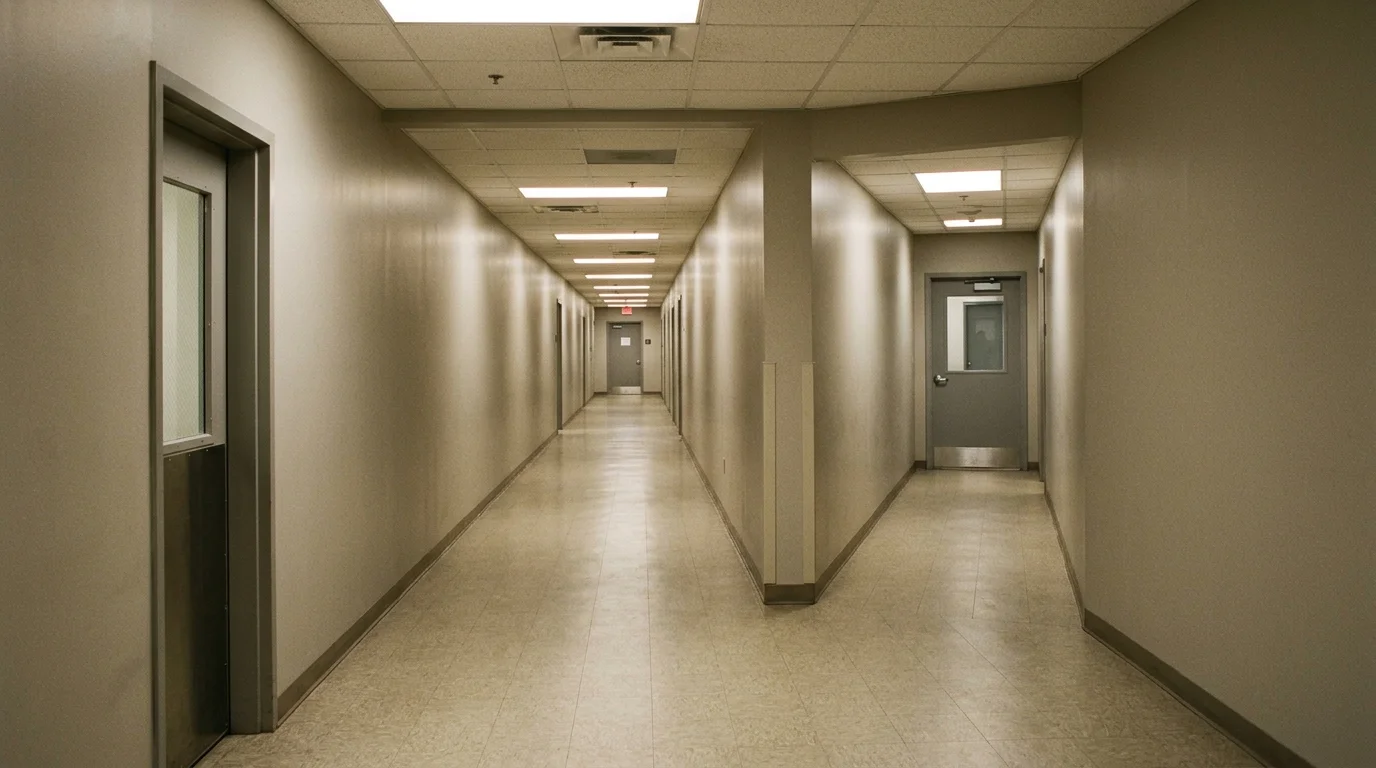
Somewhere between 10 and 30 days. That is how long a dog or cat spends at Mickleham, and the number is not decided at the gate. It is decided months earlier, by paperwork most owners never see completed.
Mickleham is Australia’s only Post Entry Quarantine (PEQ) facility for cats and dogs. Whether the family is settling in Melbourne, Sydney, Perth, or Cairns, every pet legally imported into Australia passes through this one government-run site outside Melbourne before it is released to its owner. There is no alternative port of entry and no way to route around it.
Where Mickleham Is, and Why There Is Only One
The facility sits at 135 Donnybrook Road, Mickleham, Victoria, roughly 30 kilometres north of Melbourne Airport, reached via Polaris Road. It is a purpose-built government animal biosecurity site, not a converted kennel or a contracted private facility, and it handles more than cats and dogs: horses, birds, hatching eggs, bees, and ruminants also pass through parts of the same complex under DAFF’s Post Entry Quarantine program.
Centralising every cat and dog import into one site is a deliberate biosecurity decision: DAFF applies one standard of monitoring, veterinary access, and disease control to every animal. The trade-off is geographic: a family relocating to Perth or Brisbane still routes their pet through Melbourne first, with a domestic leg to follow.
The Transfer From Melbourne Airport
Pets do not clear through a regular passenger terminal. Under DAFF’s quarantine arrival process, animals are collected directly from the aircraft’s cargo hold or the airline’s live-animal handling area at Melbourne International Airport and transported straight to the Mickleham facility by an approved transport provider. This is also why Melbourne is non-negotiable as the port of entry: domestic transfers from other Australian international airports are not permitted for cats and dogs, so the flight itself has to terminate in Melbourne, even when the family’s real destination is somewhere else entirely.
The transfer itself is short (under an hour on the road), but it is the first point where import paperwork gets tested against the actual animal in front of a biosecurity officer.
Admission and Document Review
On arrival at Mickleham, a biosecurity officer checks the animal against its import permit and supporting paperwork before it is assigned accommodation. Here the officer uses the identity verification and rabies neutralising antibody titre test (RNATT) records completed months earlier in the country of export. The officer confirms that the microchip number scanned at the door matches the number on the permit, the vaccination record, and the RNATT declaration, and does not re-decide the pet’s eligibility from scratch.
A clean match against consistent paperwork allows the shorter end of the quarantine range to apply. A mismatch, a missing identity-verification step, or a gap between what the permit says and what the microchip scanner reads is a documented reason for the longer pathway, which is covered in detail further down.
This step also sorts multi-animal shipments animal by animal rather than as a group. The officer reviews each animal’s documents on their own merits, so one pet in a household shipment can qualify for the shorter pathway while a sibling pet with a slightly different preparation history does not. A whole family of pets will not necessarily be released together.
We secure the import permit, book Mickleham quarantine and manage your pet’s arrival through to release and delivery.
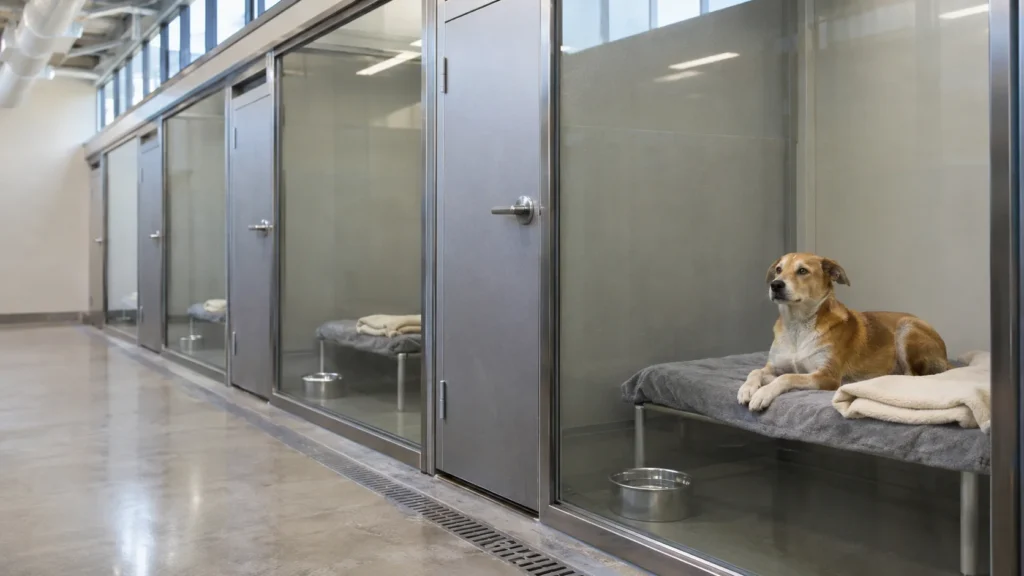
Accommodation: Individual, Climate-Controlled, Monitored
Every animal at Mickleham is housed individually, in climate-controlled accommodation rather than communal runs. Dogs and cats are kept apart from each other and from other species on site. Individual housing is the standard configuration, not a paid option, because it lets staff track what each animal eats and drinks.
Cats are housed in indoor suites for the duration of their stay. Dogs have kennel accommodation with access to the daily exercise routine described below. The facility is staffed within daylight hours, generally 0800 to 1600, when animals are fed, exercised, medicated, and checked by biosecurity and veterinary staff. Outside those hours, animals are settled in their individual accommodation rather than actively supervised in person.
Feeding: What Your Pet Actually Eats
Mickleham provides nutritionally balanced commercial food as standard. Because every animal is housed and fed individually, staff can see immediately if a normally enthusiastic eater goes off its food, often the earliest sign that something needs a veterinary look. Food sent with the animal is destroyed on arrival, though owners can supply Australian-sourced food if the facility’s food does not suit a special diet.
If your pet has a prescribed veterinary diet or a specific medical feeding requirement, flag it through the import documentation and the transport agent well before arrival, not at the admission desk.
Exercise: Daily Movement, Not a Static Holding Pen
Dogs are walked and exercised daily by facility staff. It is routine, not an occasional courtesy, and a dog with no outlet for ten to thirty days is a harder animal to manage safely.
Cats stay in their indoor suites and get their activity and enrichment within that space rather than through leash walks. The method differs, but the facility’s basic welfare standard applies to both species.
Medication: Getting It Into the Facility Correctly
Pets on ongoing medication (thyroid treatment, joint support, insulin, anticonvulsants) do not stop treatment because they are in quarantine. Facility staff administer prescribed medication under the treating veterinarian’s direction, but the medication must be labelled in English by that veterinarian and declared on an Animal medical declaration at booking.
This is one of the most common preparation gaps for older or medically managed pets: owners pack the medication but not a clear enough dosing schedule, or assume verbal instructions passed to the freight agent will reach quarantine staff. They should not assume that. Only a written schedule in English, attached to the animal’s paperwork, reliably keeps a specific dosing regime going through admission and the full length of the stay.
Veterinary Care During the Stay
Government veterinarians check animals for diseases of biosecurity concern, and staff actively monitor animals for signs of illness throughout their stay, including targeted testing for exotic diseases where relevant to the animal’s origin and risk profile. The quarantine period is an observation window long enough for specific diseases to become detectable if present.
If a health issue arises during the stay, owners are notified, and treatment is arranged through a private veterinarian at the owner’s expense. Anything beyond standard care is billed as an additional fee, so budget a contingency rather than assume the flat quarantine fee covers every possible outcome.
The identity-verification sequence also moves the bill, not just the calendar. DAFF’s fee schedule charges accommodation per animal at AUD 56 a day, so the 10-day minimum is AUD 560 and the 30-day minimum is AUD 1,680, and DAFF’s FAQ puts the estimated all-in cost of importing one cat or dog at about AUD 3,114 for the 10-day stay and AUD 4,234 for the 30-day stay. As an illustration only, a household with two dogs that both need the longer pathway would face roughly AUD 8,468 on that estimate against AUD 6,228 for the shorter one, a gap of AUD 2,240 created before the flight ever leaves. DAFF reviews these charges annually, so check the current schedule before budgeting; the whole-journey cost of importing a pet, flights and permits included, is set out separately.
Visiting Rules: Why You Cannot Just Drop By
In-person visits during the quarantine stay are not permitted, for any owner, for any reason.
Biosecurity is the primary driver: every person and item entering the facility is a potential contamination pathway. A welfare argument sits alongside it: a dog or cat that sees its owner walk in, and then walk back out again without them, does not process that as a nice visit. It processes it as abandonment, repeated. The kindest thing an owner can do during this stretch is stay away and let the animal settle into a predictable routine with the same handful of staff, rather than experience a confusing, unresolved reappearance partway through.
Communication With Owners
Absence of visits does not mean absence of information. Owners or their nominated transport agent are notified once the animal has arrived safely, typically within 24 hours of admission. Beyond that initial confirmation, the facility contacts owners directly if there is a welfare concern significant enough to warrant it: a health issue, a behavioural concern, anything that needs an owner decision or simply needs the owner to know.
Routine updates are not the standard model; no contact means the stay is uneventful. Owners who want more frequent reassurance should ask their transport or import agent what update cadence they can realistically expect, since agents managing the booking sometimes have a more direct line to facility staff than an individual owner does.
Same-Family Pets: Housed Together or Apart?
Even pets from the same household are housed individually, not in a shared enclosure. Individual housing is how staff track each animal’s food intake, water consumption, and condition without one animal’s behaviour masking a problem in another.
Two cats that have shared a bed every night of their lives, or two dogs from the same litter, will each get their own climate-controlled space, positioned near each other where the facility’s layout allows it, but not sharing one enclosure. Owners planning a multi-pet move should expect this at admission, and should expect each animal to appear as its own line item in the quarantine cost, since fees are calculated per animal, not per family.
Release Appointments: How Collection Actually Works
Release is not an open walk-in once the minimum stay is complete. Owners or their authorised agent collect the animal, along with its travel crate, at a scheduled release appointment on the eligible release date. For the general public, collection hours run between 10:00 and 12:00; registered pet transport companies acting as an authorised agent can sometimes collect outside that window.
Two details trip people up here. First, only two parties can collect the animal: the person named as the importer on the permit, or a specifically authorised agent whose details have been provided to facility staff in advance of the release date. A friend or family member turning up unannounced will not be handed the pet. Second, photo identification is required at the point of collection, every time, no exceptions for a familiar face. If a transport agent is doing the collection on your behalf, confirm that authorisation with the facility ahead of time; do not assume it.
Why Release Gets Delayed
The 10-day and 30-day figures are minimums, not guarantees. The biggest driver of an extended stay traces back to paperwork completed long before the flight: whether the exporting country’s competent authority verified the animal’s identity by scanning its microchip before the RNATT blood sample was drawn, at least 180 days ahead of export. Get that sequence right, and the animal qualifies for the shorter 10-day pathway. Skip it, complete it out of order, or arrive without clean documentation of it, and the 30-day minimum applies instead, since DAFF cannot verify identity retroactively once the animal has already travelled. The identity-verification and RNATT sequence itself, including exactly when the 180-day residency clock starts and how a single missed step affects it, is covered in full in SwiftCargo’s guide to the 180-day approved-country rule.
Beyond that structural difference, a stay can also extend past its expected endpoint because of a health issue detected during monitoring, an inconsistency between the permit and the animal presented at admission, or incomplete paperwork that needs to be resolved before release can be authorised. No transport agent can pay to speed up any of these, because they are compliance checkpoints. The fastest route through all of them is correct documentation the first time, which is why identity verification and RNATT timing deserve attention months before departure, not the week of it.
Onward Transport: Melbourne Is a Stop, Not Necessarily the Destination
Because Mickleham is the only PEQ facility in the country, release happens in Melbourne regardless of where the family actually lives. A household relocating to Sydney, Brisbane, Perth, or a regional centre needs a separately booked domestic onward leg, either a further flight or ground transport. Plan that leg around the release appointment window, and do not book it before the release date is confirmed, since the exact date depends on how cleanly the earlier paperwork resolves.
Some pet transport providers handle this onward leg as part of a single coordinated booking; others treat Melbourne collection as the end of their service. Confirm which model applies before the pet leaves its country of origin, and you avoid a scramble to arrange interstate transport for a disoriented animal on short notice.
Build recovery time into the plan: a pet coming off ten to thirty days in a quarantine kennel is not at its best for a same-day connecting flight or a long highway drive. Owners who can build in an overnight buffer near Melbourne before the final domestic leg, rather than scheduling collection and a connecting flight for the same afternoon, generally see an easier transition than those who treat the domestic leg as a formality bolted onto the release appointment.
We arrange both stages for a pet settling in another state.
The international leg into Melbourne plus quarantine comes first, then onward transport after release.
What to Prepare Before Your Pet Arrives
The stay itself runs more smoothly, and the shorter pathway becomes realistic, when a handful of things are locked down well before the flight:
- Confirm the identity-verification sequence happened correctly. Microchip scan and confirmation by the exporting country’s competent authority, completed before the RNATT blood draw. This single detail decides between a 10-day and 30-day stay.
- Provide a written medication schedule for any pet on ongoing treatment, attached to the import paperwork rather than communicated verbally to a freight agent.
- Register the authorised collector (yourself or a named transport agent) with the facility ahead of the expected release date, and bring photo identification to the appointment.
- Book onward transport flexibly rather than fixed to a specific date, since the exact release date depends on how the admission review goes.
- Budget beyond the base fee for the possibility of extended stay costs, additional veterinary care, or multi-pet per-animal charges, since the facility’s published fee schedule covers standard care, not every contingency.
- Prepare yourself, not just the paperwork. No visits are allowed during the stay, so settle that expectation in advance.
Mickleham is also the final stop for pets arriving from Thailand by way of an approved staging country, since Thailand itself is not on Australia’s approved-country list. Why no direct flight exists explains the legal reason behind that staged route in full. The 180-day approved-country rule guide covers the residency period that comes before Mickleham, and SwiftCargo’s staging-country comparison weighs up where to spend it. The same risk-tiering that drives pet import timing also shapes commercial cargo, covered in Australia’s biosecurity import conditions.
SwiftCargo’s pet transport team coordinates the identity-verification timing, the import permit, and the Mickleham booking as one schedule rather than three separate bookings owners have to manage themselves.
Frequently Asked Questions
What happens at Mickleham pet quarantine?
Mickleham is Australia’s only government Post Entry Quarantine facility for cats and dogs. On arrival, a biosecurity officer checks the animal against its import permit and identity records, then the pet is placed in individual climate-controlled accommodation for a minimum of 10 or 30 days, depending on whether identity verification was completed correctly before departure. During the stay, animals are fed, exercised, monitored for illness, and given any prescribed medication, before being released to the owner or an authorised agent at a scheduled appointment.
Can I visit my pet in quarantine at Mickleham?
No. In-person visits are not permitted for any owner during the quarantine stay, for biosecurity reasons and because an unresolved visit, where the owner leaves again without the pet, can add stress rather than reduce it. Owners are notified when their pet arrives safely and contacted directly if any welfare concern arises during the stay.
What does my pet eat during quarantine at Mickleham?
The facility provides nutritionally balanced commercial food as standard care, and because every animal is housed and fed individually, staff can quickly notice and respond to any change in appetite. Food sent with the animal is destroyed on arrival; for a special diet, owners can supply Australian-sourced food by arrangement with the facility.
Does my dog get exercise during quarantine at Mickleham?
Yes. Dogs are walked and exercised daily by facility staff as a standard part of care, regardless of breed or size. Cats are housed in indoor suites, where their activity and enrichment needs are met within that space rather than through leash walks.
Can my pet’s medication be administered during quarantine?
Yes. Facility staff administer prescribed medication under the treating veterinarian’s direction, but the medication must be labelled in English and declared on an Animal medical declaration at booking. Verbal instructions to a freight agent are not a reliable substitute.
How long does pet quarantine take in Melbourne?
Between 10 and 30 days, and the figure is set months before the flight, not decided at the facility. Pets whose identity was verified by the exporting country’s competent authority before the RNATT blood sample was taken qualify for the shorter 10-day minimum; pets without that verification completed in advance face the 30-day minimum instead.