
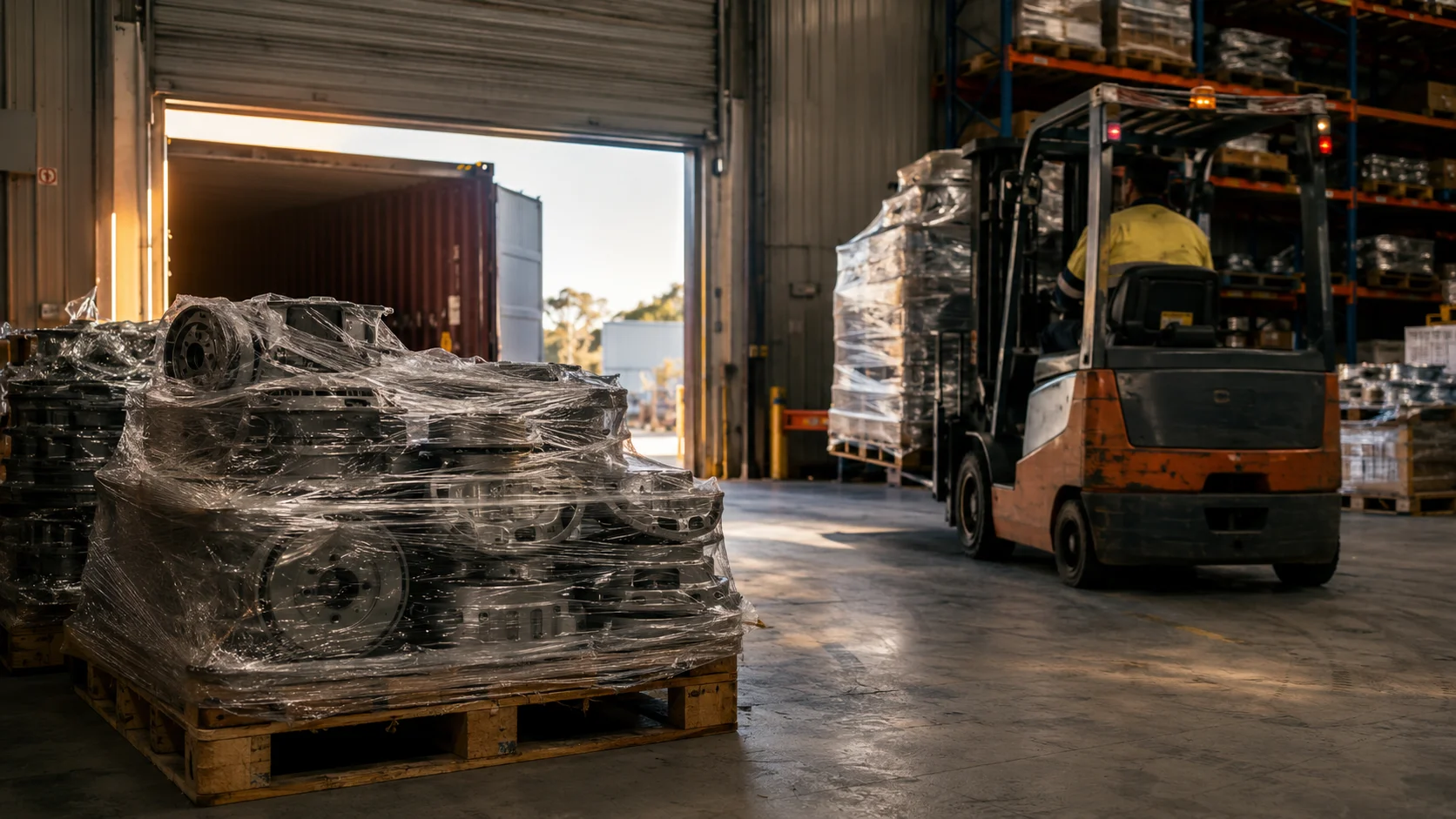
Australia stopped building mass-market cars in October 2017, when the last Holden Commodore rolled off the Elizabeth line in South Australia. The national appetite for parts did not stop. Around 21 million vehicles remain registered and on the road, their average age creeping past eleven years, and nearly every brake pad, filter, headlight and control arm that keeps them moving now arrives by ship or aircraft. If you sell, fit or distribute automotive components in Australia, you are in the import business whether you think of yourself that way or not.
That makes importing auto parts to Australia one of the more reliable freight categories going: steady demand, repeat orders, predictable seasonality. It is also a category with more regulatory trapdoors than most first-time importers expect. Safety standards apply to some parts and not others. Duty rates swing from 5% to zero depending on a single certificate. A used engine with a teaspoon of soil in the sump can hold a whole container at the wharf. And an undeclared airbag inflator in a mixed carton is not a paperwork problem; it is a dangerous goods offence.
The market: everything is imported now
Two channels dominate the parts trade. Original equipment (OEM) parts, sourced from the same factories that supply the assembly lines mostly in Japan, Thailand, Korea and China, flow through the vehicle manufacturers’ own distribution networks (Toyota parts through Toyota’s warehouse system, and so on). The aftermarket channel is everything else: independent brands, remanufacturers, performance suppliers and the vast catalogue of pattern parts made to fit popular models at a lower price point.
Independent importers almost always play in the aftermarket. The economics are attractive because the OEM channel prices for dealership servicing, leaving a wide margin corridor underneath it. But the aftermarket is also where compliance, counterfeit and quality risk concentrates, because there is no manufacturer’s distribution agreement standing between you and whatever a factory in Guangzhou or Rayong chooses to put in a box.
Thailand deserves particular attention. It is Southeast Asia’s automotive manufacturing hub, the production base for the utes that dominate Australian sales charts, including the Toyota HiLux and Ford Ranger, and its component ecosystem is deep, mature and export-oriented. For an Australian parts importer, Thai origin also carries a duty advantage we will quantify shortly. The broader lane is mapped out in importing from Thailand to Australia.
Compliance: which parts are regulated, and how
This is the distinction that trips people up. The Australian Design Rules (ADRs), administered by the Department of Infrastructure, are vehicle standards: they govern what a road vehicle must comply with to be supplied to the Australian market. Loose replacement parts crossing the border are not, in general, individually type-approved against ADRs the way a complete vehicle is. Customs does not test your brake pads against ADRs, but ABF can require asbestos sampling and testing, because goods containing asbestos are prohibited imports.
That does not mean safety-critical parts are unregulated. It means the regulation bites later, and in ways that matter more to your business:
- Brakes, lighting, glazing, seatbelts. These components have applicable standards (ADR-referenced or Australian Standards equivalents), and a vehicle fitted with non-compliant versions can fail inspection, be defected, or void insurance. A workshop that fits them, and the importer that supplied them, carry the liability chain. Lighting is a common failure point: cheap LED headlight assemblies with the wrong beam pattern or no compliant markings are widespread in the aftermarket and are not legal for road use.
- Child restraints. This is the hard exception. Child car seats and booster seats must comply with the mandatory standard based on AS/NZS 1754, enforced by the ACCC under Australian Consumer Law. Overseas restraints, including well-regarded American and European seats built to FMVSS 213 or ECE R44/R129, do not comply and cannot legally be sold in Australia. Importing a container of them is importing a container of unsellable stock.
- Everything else. Non-safety parts (trim, panels, filters, sensors, cooling components, most engine parts) face no product-specific standard at import. But the Australian Consumer Law’s guarantees still apply to everything you sell: goods must be of acceptable quality and fit for purpose. If your pattern radiators fail at 18 months, the ACL does not care that radiators are “unregulated.”
The practical read: the border is permissive, the market is not. Build your compliance thinking around what happens after the part is fitted, not around whether customs will stop it.
Counterfeits: the risk that can end the business
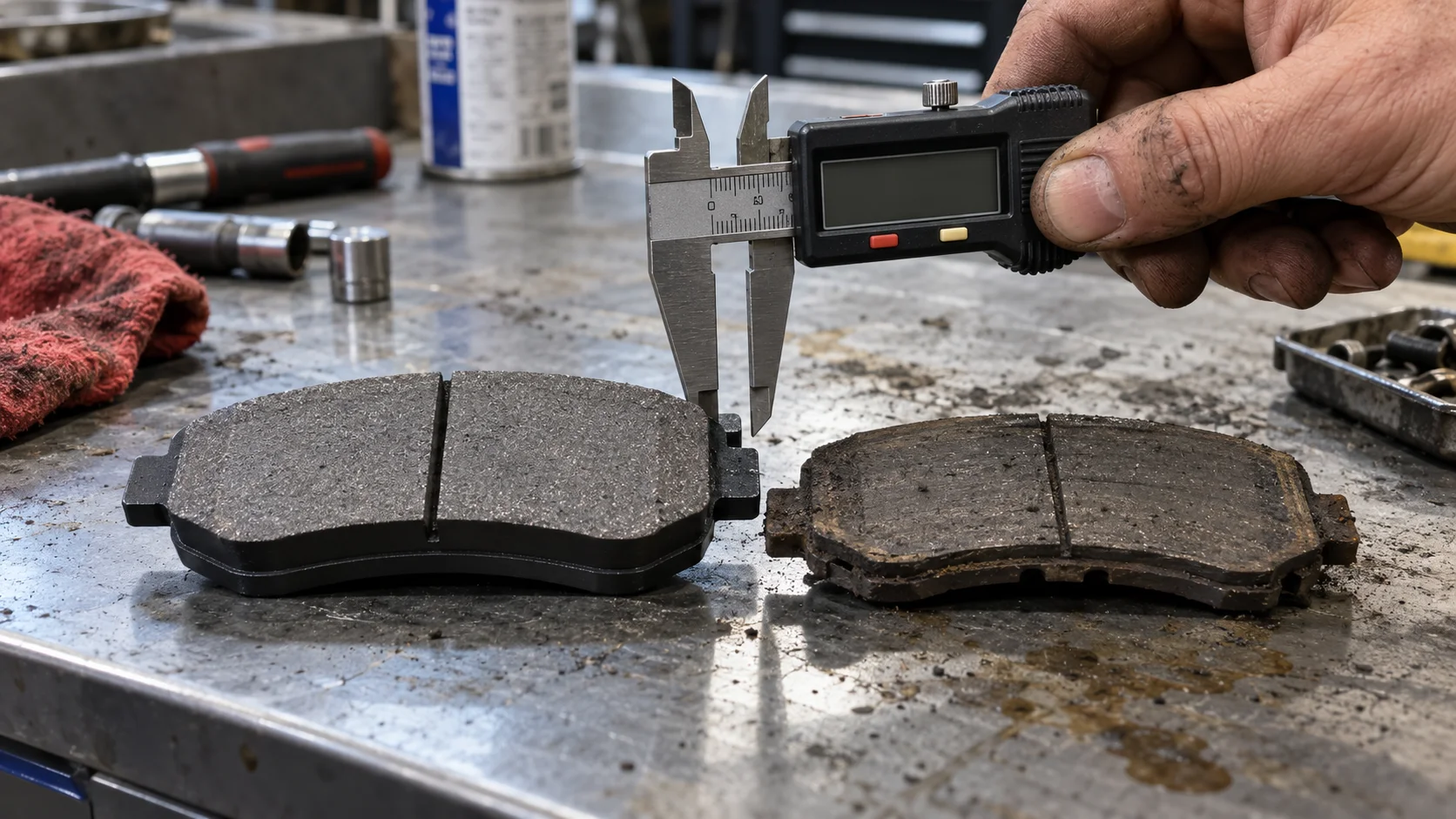
Counterfeit auto parts are not a fringe problem. Industry testing programs run by vehicle manufacturers have repeatedly bought counterfeit brake pads, oil filters, wheels and airbag components from online marketplaces and found them catastrophically below specification: brake pads containing compressed grass clippings and asbestos, filters with no filtration media, counterfeit airbag modules that fire shrapnel or do not fire at all. This is the investigative record, not marketing hyperbole.
For an importer the exposure is threefold:
- Safety and liability. If a counterfeit brake pad you imported contributes to a collision, you are the Australian entity in the liability chain. Your overseas marketplace seller is, for practical purposes, unreachable.
- Border seizure. Trademark and copyright owners lodge a Notice of Objection with the Australian Border Force. Once lodged, ABF can seize imported goods bearing infringing marks. The major automotive brands maintain active notices. Seized goods are forfeited or destroyed, you lose the stock and the freight cost, and you are now on a record.
- Commercial destruction. A counterfeit finding poisons relationships with workshop customers instantly, and rightly so.
The defence is boring and procedural, which is exactly why it works. Buy from manufacturers or authorised distributors, not from general marketplaces where the seller of record is a trading company you cannot audit. Verify the factory exists: business licence, export history, a video call on the production floor. Insist on traceable part numbering and packaging consistent with the brand’s genuine format. Test-order and physically inspect before committing volume: weight, materials, markings, packaging print quality. Counterfeiters cut corners you can feel. And treat pricing that is dramatically below the market as evidence, not opportunity: genuine friction material, filtration media and pyrotechnics have floor costs that a legitimate factory cannot conjure away.
Duty and FTA treatment: where the 5% goes to zero
Most automotive parts entering Australia carry a general customs duty rate of 5%, calculated on the customs value (broadly, the price paid, FOB). GST of 10% then applies to the value of taxable importation: customs value plus duty plus international transport and insurance. GST is recoverable for registered businesses through input tax credits, so duty is the number that actually changes your cost base.
And duty is highly negotiable, though not with the Australian Border Force, but through origin. Australia’s free trade agreements with the major parts-producing nations all deliver 0% on most automotive components:
- ChAFTA (China): tariffs on auto parts phased to zero; China is the volume origin for aftermarket parts.
- JAEPA (Japan): covers the OEM heartland for the Japanese brands that dominate the Australian carparc.
- KAFTA (Korea): covers the Hyundai/Kia parts ecosystem, plus a strong independent component sector.
- TAFTA (Thailand): in force since 2005, keeping essentially all parts duty-free with origin evidence; it is the natural fit for ute and pickup components.
The catch in every case is proof. Preferential rates require origin documentation (a Certificate of Origin or, under some agreements, an origin declaration) held at the time of entry and meeting that agreement’s rules of origin. The part must genuinely qualify: a component assembled in Thailand from mostly Chinese inputs must satisfy TAFTA’s regional value content or tariff-change rules to count as Thai. Your supplier’s word is not evidence; the certificate is. Missing paperwork means paying the 5% and pursuing a refund later, which is possible but slow and never guaranteed.
Used versus new parts: duty treatment is the same. The tariff classification does not care about age. What changes with used parts is valuation (customs value must still be defensible, which for used goods means a documented transaction price or a reasonable alternative basis) and, far more significantly, biosecurity.
One more caution while we are on duty: certain steel and aluminium products attract anti-dumping measures in Australia, and some parts categories brush against them: wheels have been a notable case. If your product is essentially a fabricated metal article, check the measures list before you price the deal; anti-dumping duties in Australia explains how those measures work and how to check exposure.
Used parts and biosecurity: where DAFF gets interested
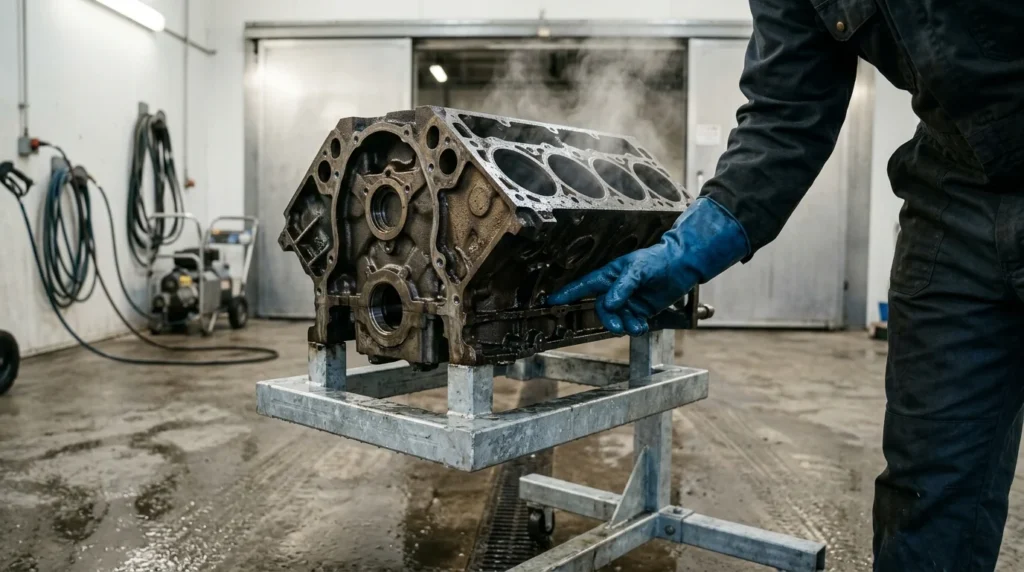
The Department of Agriculture, Fisheries and Forestry (DAFF) treats used machinery and used vehicle parts as biosecurity risk goods, and the logic is straightforward: an engine that has lived under a car for ten years has collected soil, seeds, plant matter, insects and animal residue in every recess. Australia’s biosecurity regime exists to keep exactly that material out.
The operating rules for used engines, gearboxes, diffs, suspension assemblies and body parts:
- Clean means clean. Free of soil, plant material, seeds and insect contamination, inside and out, including sump exteriors, mounting faces, and the undersides nobody photographs. Steam cleaning or pressure washing at origin, documented with photos, is standard practice for serious exporters.
- Drain the fluids. Oils, coolant and fuel residue should be drained. Beyond biosecurity presentation, residual fuel creates a dangerous goods question of its own.
- Expect inspection. Used machinery lines are routinely directed for inspection. If contamination is found, the options are treatment or cleaning at an approved facility, or re-export, all at the importer’s cost, all while the goods sit accruing storage.
Used tyres are their own category and the short version is: don’t. Tyres hold pockets of water, which makes them a breeding vector for exotic mosquitoes, and the import conditions reflect that: permits, mandatory treatment, and scrutiny that makes commercial-scale used tyre importing uneconomic for almost everyone. If your business model involves second-hand tyres, redesign the business model.
For the fuller picture on how the biosecurity system works (BICON, inspection triggers, packaging risks like bark-infested timber crates), see biosecurity requirements when importing to Australia. Note that the packaging rules apply to new parts too: a container of brand-new alternators packed on untreated timber pallets fails at the same barrier.
Dangerous goods hiding in the parts catalogue
Auto parts is one of the categories where importers most often ship dangerous goods without realising it. Three families to know:
- Airbag inflators and seatbelt pretensioners. These contain pyrotechnic charges: they are, literally, small explosive devices engineered to fire on command. They ship as Class 9 dangerous goods (typically UN 3268, “safety devices, electrically initiated”) with specific packaging, marking and declaration requirements. Shipping them undeclared in a mixed carton is one of the most common and most serious DG offences in the parts trade, and carriers screen for it. Air freight options are limited; sea freight with proper DG declaration is the standard route.
- Batteries. Wet lead-acid batteries are Class 8 corrosive dangerous goods. Lithium-ion batteries, increasingly relevant as EV and hybrid parts enter the aftermarket, are among the most heavily regulated cargo in existence, particularly by air, where standalone lithium batteries are banned from passenger aircraft entirely and tightly restricted on freighters. State of charge limits, UN38.3 test summaries, and packaging certification all apply.
- Gas struts and pressurised components. Bonnet and tailgate struts, some suspension components and air-conditioning parts contain compressed gas and may classify as Class 2.2. Refrigerant gases themselves add licensing questions on top of DG rules.
The rule of thumb: before you order anything that stores energy (chemical, pyrotechnic, pressure or electrical) ask your forwarder the DG question explicitly and get the answer in writing. Undeclared DG discovered at a terminal does not just delay your box; it exposes you to prosecution and to liability for whatever the carrier must do about it.
The EV transition: a younger, spikier supply chain
Australia’s EV fleet is growing faster than the parts infrastructure supporting it. The internal-combustion aftermarket had decades to mature; the EV parts channel is young, thinly stocked, and concentrated with manufacturers. That is an opportunity for importers, and a compliance minefield.
Battery modules and packs are the obvious example. They combine every hard problem in this guide at once: Class 9 lithium DG treatment, near-total exclusion from air freight at pack scale, thermal-event risk that makes carriers and insurers cautious, high unit values that magnify any customs valuation error, and warranty ecosystems in which vehicle manufacturers actively resist third-party battery parts channels. Damaged or defective lithium batteries face even stricter transport rules than healthy ones, relevant if your model involves salvage packs.
The realistic near-term plays for independents are the periphery: charging hardware, cooling components, brake parts (EVs still wear pads, if slowly), suspension components for heavier EV platforms, and diagnostic equipment. Whole-pack importing is a specialist DG logistics exercise, not a container-of-cartons trade.
Freight mechanics: dense cargo changes the maths
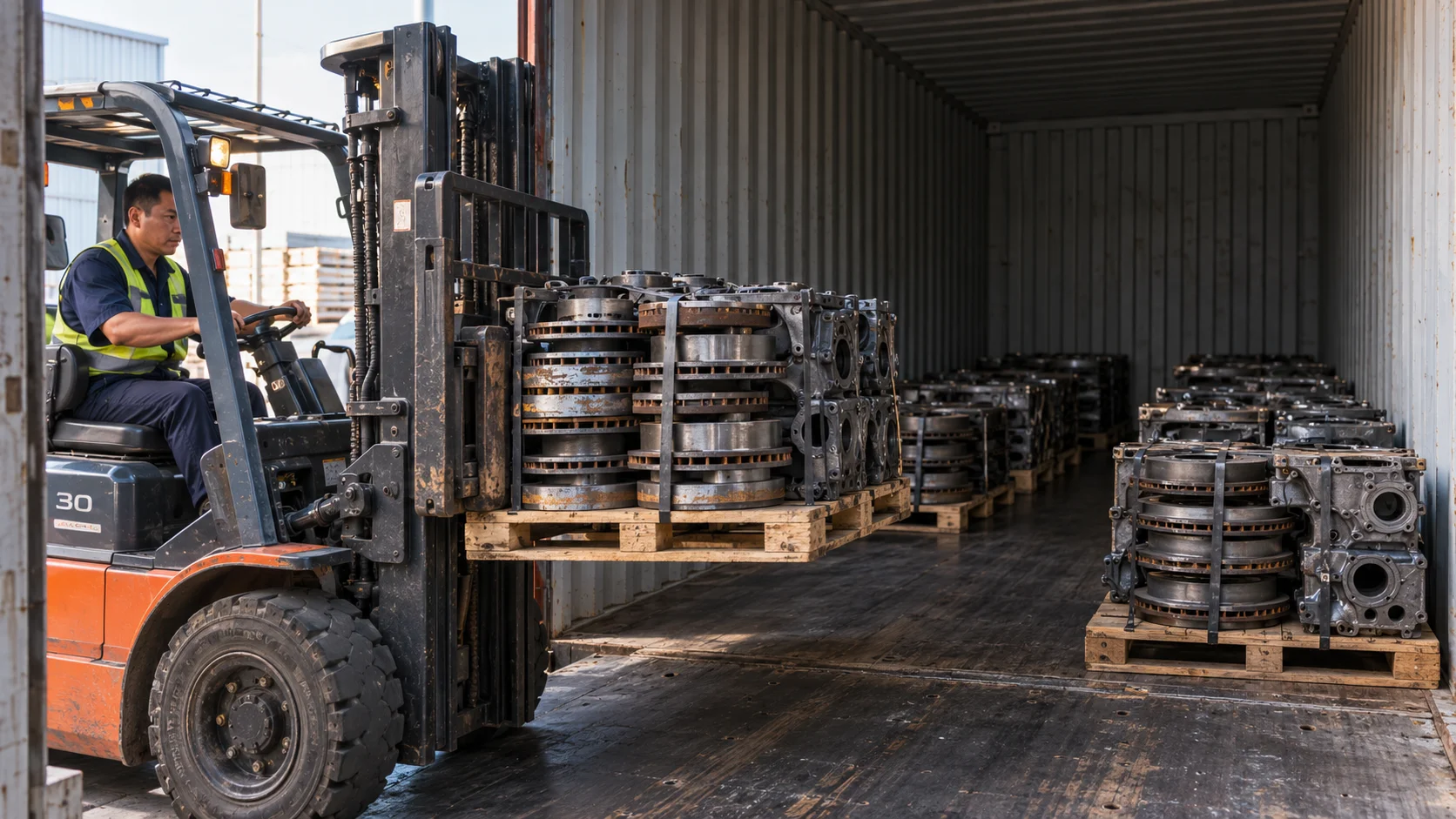
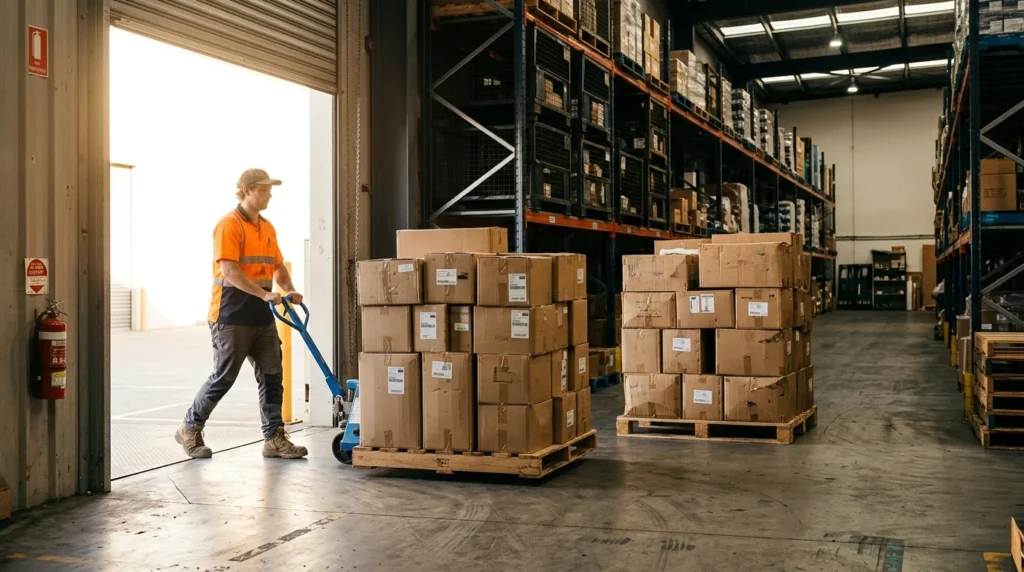
Auto parts are weight-dense. Brake discs, engine components, steel wheels and cast parts hit a container’s payload ceiling long before they fill its cubic space. A 20ft container offers roughly 28 tonnes of payload but only about 33 cubic metres; load it with brake discs and you will weigh out at perhaps half the volume used. That puts break-even at roughly 850 kilograms per cubic metre: a load that averages less fills the box first, and one that averages more weighs out first. Reaching the payload at half the volume puts the brake-disc load near 1,700 kilograms per cubic metre, twice the break-even. For a mixed order, total the dense and bulky lines separately and ask your forwarder where the sum falls against 28 tonnes and 33 cubic metres before booking. This flips the usual freight logic:
- FCL planning is weight-first. Plan container loads around road weight limits at destination too: a maxed-out 20ft box can exceed what a standard side-loader or truck configuration can legally carry to your warehouse. Your forwarder should flag this before booking, not after arrival.
- Mixed orders want disciplined palletisation. A typical aftermarket replenishment order mixes dense items (rotors, hubs) with light bulky ones (bumper covers, radiator supports). Load dense freight low and central, use the light bulky items to fill cube, and palletise consistently so devanning at destination is hours rather than days. ISPM 15-compliant pallets, always.
- Panels need racking. Body panels, doors and bonnets travel badly loose. Steel racking or purpose-built stillages prevent the scratch-and-dent losses that quietly destroy panel margins: a door that arrives creased is worth its scrap value.
- LCL suits the long tail. Slow-moving SKUs ordered in small quantities travel as LCL, but weight-dense LCL gets charged by weight ratio, and repeated small shipments erode margin through fixed per-shipment costs. Which leads to inventory strategy.
Inventory strategy: the long-tail SKU problem
Parts retailing is a long-tail business. A viable range might span 5,000 SKUs of which 300 turn weekly and the rest turn quarterly or slower, but customers judge you on availability across the whole tail. Air freighting slow movers on demand destroys margin; holding a year of everything destroys cash flow.
The pattern that works for most independent importers is a consolidation cycle: a fixed rhythm of consolidated shipments (monthly FCL or fortnightly LCL from each origin) into which every SKU’s replenishment is batched. Fast movers get safety stock sized to cover the cycle plus transit (allow five to six weeks door-to-door from Thailand or China by sea, longer around Lunar New Year and peak season); slow movers are ordered to the cycle in minimum quantities. The discipline is refusing off-cycle orders except for genuine emergencies, because every ad-hoc shipment carries the full fixed cost stack (documentation, customs entry, delivery) that the consolidation exists to amortise.
Multi-origin sellers can go further by consolidating suppliers at origin: three Thai component makers into one Laem Chabang container beats three separate LCL shipments on cost and on arrival predictability.
The importers who hold this rhythm differ from the ones who only mean to in something rarely dramatic. Set two parts importers side by side: comparable SKU counts, comparable Thai and Chinese supplier bases, comparable credit lines. One holds the consolidation cycle through every quarter, including the ones where a good regional customer is shouting for a caliper that is three weeks out. The other keeps the cycle in principle and breaks it twice a month for reasons that are individually defensible. Neither is making a decision that looks significant on the day. Four years on, the first is carrying a materially lower freight and entry cost per line item, and the difference reads as scale or luck from outside. It was the same unglamorous refusal, repeated until it compounded.
Worked example: brake components from Thailand vs China
Numbers make the origin decision concrete. Suppose you are importing a mixed brake components order (discs, pads and calipers for popular ute platforms) with an FOB value of AUD 40,000, travelling as a weight-limited 20ft FCL. Freight and insurance to an Australian east coast port: AUD 3,500 from Laem Chabang (Thailand), AUD 3,200 from Shanghai (China). Assume both suppliers can document origin, but compare the cost of the Thai supplier failing to provide the TAFTA Certificate of Origin.
| Cost line | Thailand (TAFTA, CoO held) | Thailand (no CoO) | China (ChAFTA, CoO held) |
|---|---|---|---|
| FOB value | AUD 40,000 | AUD 40,000 | AUD 40,000 |
| Freight + insurance | AUD 3,500 | AUD 3,500 | AUD 3,200 |
| Customs duty | 0% = AUD 0 | 5% = AUD 2,000 | 0% = AUD 0 |
| GST base (VoTI) | AUD 43,500 | AUD 45,500 | AUD 43,200 |
| GST 10% (recoverable) | AUD 4,350 | AUD 4,550 | AUD 4,320 |
| Customs brokerage + port + delivery (est.) | AUD 1,800 | AUD 1,800 | AUD 1,800 |
| Landed cost (ex-GST) | AUD 45,300 | AUD 47,300 | AUD 45,000 |
Three observations. First, with origin paperwork in order, Thailand and China land within AUD 300 of each other on this order: the decision then turns on product fit, quality control and supplier reliability, not duty. Second, the missing Thai Certificate of Origin costs AUD 2,000 on a single container, 5% of FOB, straight off the margin, for a document that costs the supplier almost nothing to arrange. Over a monthly container cycle that is AUD 24,000 a year of avoidable duty. Third, GST is cash-flow, not cost, but on the no-CoO line even the GST is higher, because duty inflates the GST base.
The lesson generalises: for auto parts, origin documentation is the single highest-leverage piece of paper in the file. Build it into your purchase order terms (“TAFTA/ChAFTA Certificate of Origin to be provided before shipment”) and make payment milestones enforce it. The full method behind these calculations lives in one place: total landed cost when importing to Australia.
Common mistakes (and what each one costs)
- The uncleaned used engine. A used JDM engine arrives with soil in the sump guard. DAFF orders treatment: cleaning at an approved facility, re-inspection, storage while it waits. Cost: hundreds to thousands of dollars and two to four weeks, often more than the engine’s margin. Prevention costs a steam clean and photos at origin.
- Undeclared airbags. A carton of airbag modules dropped into a mixed general-cargo shipment “because it’s just parts.” When discovered (and carriers do discover them) the consignment is stopped, the importer faces DG non-compliance action, and the freight relationship is damaged. Declare, pack and document as Class 9 from the outset.
- Counterfeit exposure from unvetted marketplace suppliers. The cheap brake pads from an unauditable marketplace seller are seized under a trademark Notice of Objection, or worse, they clear and fail in service. Either way the loss lands on you. Vet the factory, not the listing.
- The missing TAFTA CoO. As the worked example shows: AUD 2,000 per container, entirely avoidable. Chase the certificate before the vessel sails, not after the entry is lodged.
- Weighing out a container nobody can deliver. A brilliantly cost-efficient 27-tonne box of brake discs that no legal truck configuration can carry down your street. Confirm destination delivery limits during load planning.
- A container of unsellable child seats. Imported European child restraints that do not meet AS/NZS 1754 and cannot lawfully be sold. Total loss. Check the mandatory standards list before ordering anything a child touches.
Swift Cargo runs compliance-checked freight into Australia from Thailand, China, Japan and Korea. Get a quote for shipping auto parts to Australia and we’ll walk the FTA and biosecurity paperwork with you before it ships.
Sources
- Department of Infrastructure, Transport, Regional Development, Communications and the Arts, Australian Design Rules: infrastructure.gov.au
- Department of Foreign Affairs and Trade, Australia’s free trade agreements in force: dfat.gov.au
Related Reading
- Importing from Thailand to Australia: The Complete Guide
- Importing from China to Australia: The Complete Guide
- Biosecurity Requirements When Importing to Australia
- Anti-Dumping Duties in Australia: What Importers Need to Know
- Total Landed Cost When Importing to Australia
Frequently Asked Questions
What is the import duty on auto parts into Australia?
Most automotive parts attract a 5% general duty rate, plus 10% GST on the value of taxable importation. Parts originating in China, Japan, Korea or Thailand typically qualify for 0% under ChAFTA, JAEPA, KAFTA or TAFTA respectively, but only with valid origin documentation held at the time of customs entry.
Do imported auto parts need ADR approval?
Australian Design Rules apply to vehicles rather than to loose replacement parts at the border, but safety-critical components (brakes, lighting, glazing, seatbelts) must meet the relevant standards to be legally fitted to road vehicles and to withstand liability scrutiny. Child restraints are the hard exception: the mandatory AS/NZS 1754 standard applies and non-compliant seats cannot be sold in Australia.
Can I import used engines or used auto parts to Australia?
Yes, provided they are clean. Used engines and parts are biosecurity risk goods: they must be free of soil, plant material and insects, with fluids drained, and DAFF routinely inspects them. Contaminated goods face treatment, cleaning or re-export at the importer’s cost. Used tyres are effectively impractical for commercial import because of mosquito vector controls.
Are airbags and batteries dangerous goods when shipped?
Yes. Airbag inflators and pretensioners are Class 9 dangerous goods (UN 3268) containing pyrotechnic charges. Lithium batteries for EVs and hybrids are among the most heavily regulated cargo in air and sea freight, and wet lead-acid batteries are Class 8 corrosives. All must be declared, packed and documented as dangerous goods.
How do I avoid counterfeit auto parts from overseas suppliers?
Buy from manufacturers or authorised distributors rather than general marketplaces, verify the factory directly, insist on traceable part numbers and genuine-format packaging, and physically inspect a test order before committing volume. Brake pads, filters and airbags are the highest-risk categories, and ABF can seize infringing goods at the border under a trademark owner’s Notice of Objection.
Is sea or air freight better for auto parts?
Sea freight suits planned replenishment: parts are weight-dense, so containers often reach weight limits before volume limits, rewarding careful load planning. Air freight works for urgent, lightweight, high-value items, but airbag inflators and most lithium batteries are excluded or heavily restricted by air, so safety components generally travel by sea with proper DG declaration.