
Here is a pattern we have watched repeat for a decade. An Australian buyer finds a supplier online, exchanges friendly messages for two weeks, receives a sample that looks terrific, wires a deposit (sometimes the full amount), and then one of three things happens. The goods arrive and they are nothing like the sample. The goods never arrive at all. Or the goods arrive fine, the relationship warms up, and eighteen months later a single email with “updated bank details” quietly redirects a five-figure balance payment into a criminal’s account. Learning how to vet Chinese suppliers is how you avoid becoming the buyer in that story.
Every one of those failures was preventable, and not by instinct or luck. By documents. The supplier’s business licence, export record, credit file, factory floor and payment behaviour all leave a paper trail, and the trail is checkable, much of it free. The importers who get burned are almost never unlucky; they skipped steps that would have cost them an afternoon and a few hundred dollars.
For the end-to-end journey after supplier selection, see our guide to importing from China to Australia.

Start With How Importers Get Burned
- The supplier does not legally exist, or exists as something other than what they claim. The “factory” is a two-person trading outfit reselling someone else’s production, or the company on the invoice is not the company you have been talking to.
- The supplier exists but cannot perform. They are real, registered, even well-meaning, but they have never exported to a developed market, have no QC process, and your order is their learning experience.
- The supplier performs once, then degrades. The golden sample was hand-finished by the best worker on the floor. Production units come off a different line, with cheaper components, and you discover it when the container lands in Melbourne.
- The money is stolen in transit. Not by the supplier, but by a third party who has compromised the supplier’s email and inserted new bank details at exactly the right moment.
- The supplier is a pure fiction. Stolen photos, a cloned website, a deposit, then silence.
Each failure mode maps to a check. Registry verification kills the fiction and the identity mismatch. Export history and factory audits catch the supplier who cannot perform. Golden-sample discipline plus pre-shipment inspection catches the quality slide. Payment structure and out-of-band verification defeat the fraudsters. Nothing on that list requires you to fly to Guangdong.
Free Check One: Verify the Business Licence Through Official Registries
Every legitimate mainland Chinese company holds a business licence issued by the State Administration for Market Regulation, and every licence carries an 18-character unified social credit code, a mix of digits and letters that functions like an ABN. This is the single most important string of characters in your entire due diligence file, because it unlocks the official record.
The process:
- Ask the supplier for a copy of their business licence. Any legitimate exporter will send it within the hour; they get asked constantly. Hesitation here is itself a data point.
- Take the unified social credit code from the licence and look it up on the National Enterprise Credit Information Publicity System, the government registry at gsxt.gov.cn. The site is in Chinese, but browser translation handles it well enough, and the code itself needs no translation.
- Cross-check what comes back. You are looking for four things. The registered company name should match the name on the licence and, critically, the name on the pro forma invoice and bank account. The registration status should be active (存续), not revoked or deregistered. The registered capital and establishment date should be consistent with the story you have been told (“fifteen years of manufacturing experience” sits oddly with a 2023 registration). And the registered address should be in a plausible industrial area, not a residential tower.
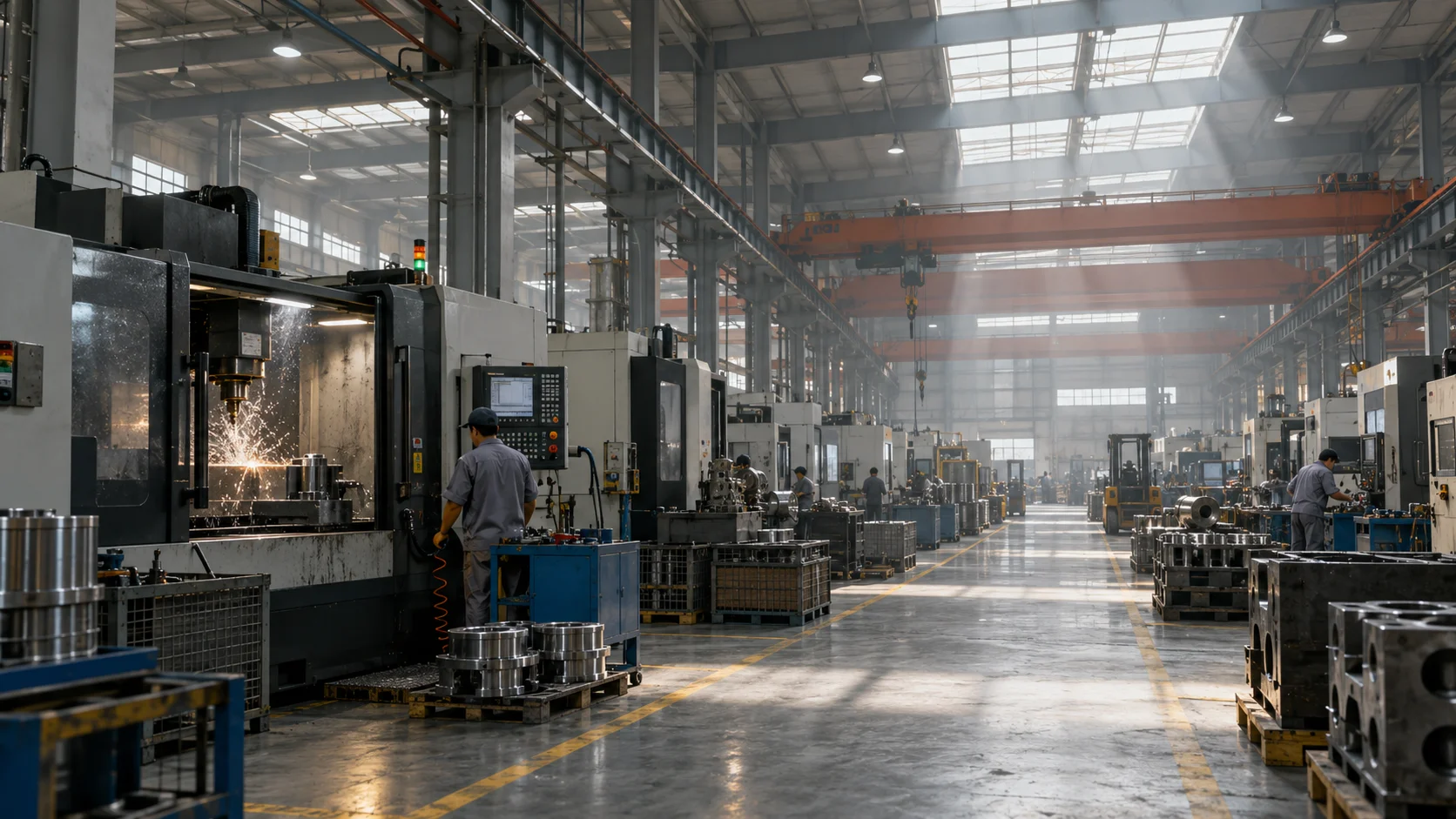
Then read the business scope line carefully, because it is doing more work than any other field on the record. Chinese companies must declare what activities they are licensed to conduct, and the scope tells you what kind of animal you are dealing with.
Free Check Two: Factory or Trading Company?
This distinction matters more than most first-time importers realise, and it matters in three concrete ways.
Pricing layers. A trading company buys from a factory and adds a margin, typically somewhere between 5% and 15%. On a one-off small order that margin can be money well spent, because a good trading company aggregates small orders and manages factories you could never access directly. On a repeating product at volume, it is a permanent tax on your landed cost.
QC control. When you buy from the factory, the entity you hold accountable is the entity making the product. When you buy through a trader, there is a firewall between you and the production floor. If quality slips, the trader may not know why, may not be able to fix it, and may quietly switch factories between your orders without telling you: same product photos, different production line, different results.
MOQ flexibility. Factories live on production-run economics and tend to hold firmer minimums. Traders can pool orders and often accept smaller quantities. Neither is inherently better; you just need to know which one you are negotiating with, because their constraints are different.
How to tell them apart:
- The business scope on the licence. A manufacturer’s scope includes production and manufacturing (生产, 制造) of specific goods. A trading company’s scope reads import and export, wholesale, sales. This is the most reliable single tell, and it is sitting in the public registry record you already pulled.
- Product range breadth. A factory makes a narrow family of products deeply: one catalogue, many variants. If the same “manufacturer” offers you Bluetooth speakers, silicone bakeware and camping chairs, you are talking to a trader. No factory tools up for that spread.
- A factory audit or video tour settles the question definitively. More on that shortly.
Discovering your supplier is a trading company is not a red flag. Discovering they lied about it is. A supplier who misrepresents something checkable in a public registry has told you exactly how they will behave when something goes wrong at sea.
Free Check Three: Export Licence and Export History
Manufacturing capability and export capability are different skills. A supplier who has only ever sold domestically has no experience with export packing, fumigation-compliant pallets, correct commercial documentation, or the paperwork your customs broker will need on the Australian side. You do not want to fund their education.
Verify two things. First, that the company is registered for import-export operations. Export registration in China is a formal status, and a supplier should be able to show their customs registration without drama. Second, and more usefully, that they have an actual track record of shipping to developed markets. Ask directly: “Which markets do you currently export to, and roughly what share goes to Australia, the US and Europe?” A factory whose exports go entirely to markets with lax standards is a different risk than one shipping regularly to buyers who inspect.
You can go further. Ask for trade references from buyers in your market: one or two existing Australian or comparable Western customers willing to take a five-minute call or email. Some suppliers will decline for confidentiality reasons, which is fair; but a supplier who claims a decade of Australian exports yet cannot produce a single reference is telling you something. Separately, commercial data services index shipping manifests and bill of lading records from customs authorities, so you can look up an exporter’s actual shipment history: destination countries, frequency, consignee patterns. A subscription or one-off report from this category of service turns “we ship to Australia all the time” into a verifiable claim. When the shipping data shows nothing, or shows a completely different product category, believe the data.
Paid Check: The Company Credit Report
For somewhere between AUD 100 and 300, third-party verification firms will pull a full credit and background report on a Chinese company. This is the best value-for-money step in the entire stack, and we are consistently surprised how many importers wiring $40,000 deposits have never spent $200 on one.
A proper report gives you verified registration details and shareholding structure (who actually owns this company), registered capital paid in versus merely declared, and litigation history: whether this supplier has been sued by other buyers, or has sued its own suppliers over unpaid bills. It also surfaces enforcement actions and dishonoured-debtor listings. China maintains a public list of judgment debtors, and appearing on it is disqualifying. The report adds operational status, employee counts and social insurance filings that hint at real headcount versus claimed headcount, and linked companies sharing directors, which sometimes reveals that your “manufacturer” and their “independent QC partner” are the same person.
Run a credit report on every supplier on your final shortlist, not just the leading candidate. The comparison is often more informative than any single report. And note the pattern this step is defending against: the supplier who is real, registered and friendly, but financially drowning. A factory under debt enforcement has every incentive to take your deposit and use it to plug yesterday’s hole.
The Video Factory Tour: What to Actually Ask to See
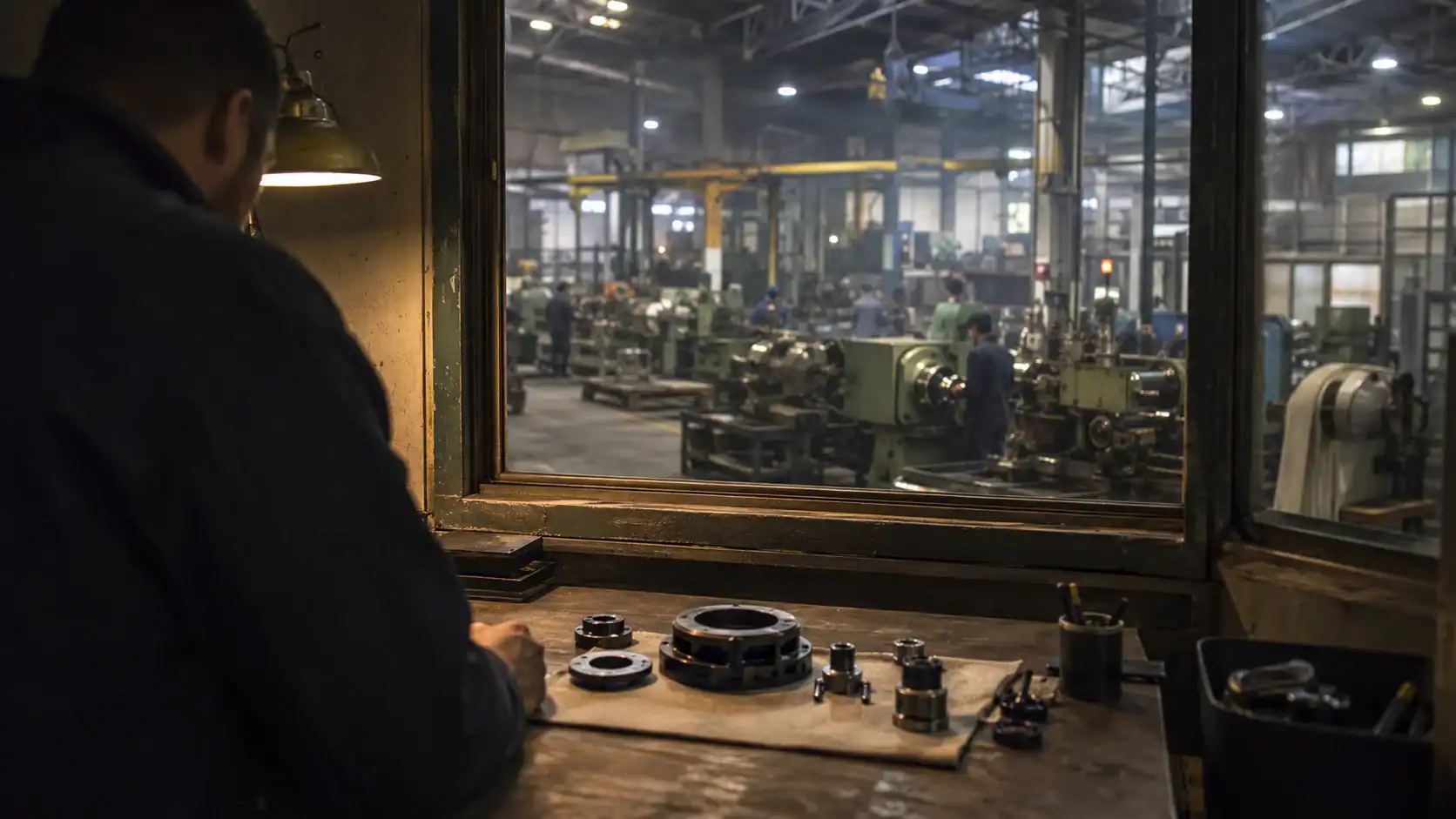
Pre-2020, verifying a factory meant flying there or paying an auditor. Video calls changed the economics: a live, unscripted video tour is free, and a supplier’s response to the request is a verification result all by itself. Reluctance to do a live video walk-through of a factory they supposedly own is close to disqualifying.
The key word is live. Pre-recorded videos prove nothing, and they may not even be that supplier’s factory. On a live call, you direct the camera. Ask to see:
- The production line running your product category, not just any line. If you are buying stainless drinkware and every line in view is assembling phone cases, you have learned what you needed to. Ask them to walk the length of the line so you can see the process stages, not a single flattering angle.
- The QC stations. Where does incoming material get inspected? Where do finished units get checked, and against what? A real QC station has test equipment, reference samples, and paperwork: checklists on clipboards, defect logs. A factory that “does QC” but cannot point a camera at where it happens does not do QC.
- The warehouse. Raw material stocks and packed finished goods tell you the factory is actually trading. Empty racks in the busy season are a question worth asking out loud.
- The business licence on the wall. Chinese companies typically display it at reception. Ask the camera to linger; match the unified social credit code against the copy they emailed you.
- Signage and small details. The company name on the building, worker uniforms, safety notices. Fraudsters borrowing a friend’s factory for a tour tend to fail on the details.
Keep it conversational, but keep control of the camera. “Could you show me the station where the units are tested before packing?” is a normal buyer question, and the thirty seconds of hesitation before an answer is data. For orders large enough to justify it, a paid on-site audit by an independent inspection firm does all of this with a trained eye and a written report. It typically costs a few hundred dollars and is worth every cent on orders above roughly AUD 20,000.
Samples as Verification: Golden Sample Discipline
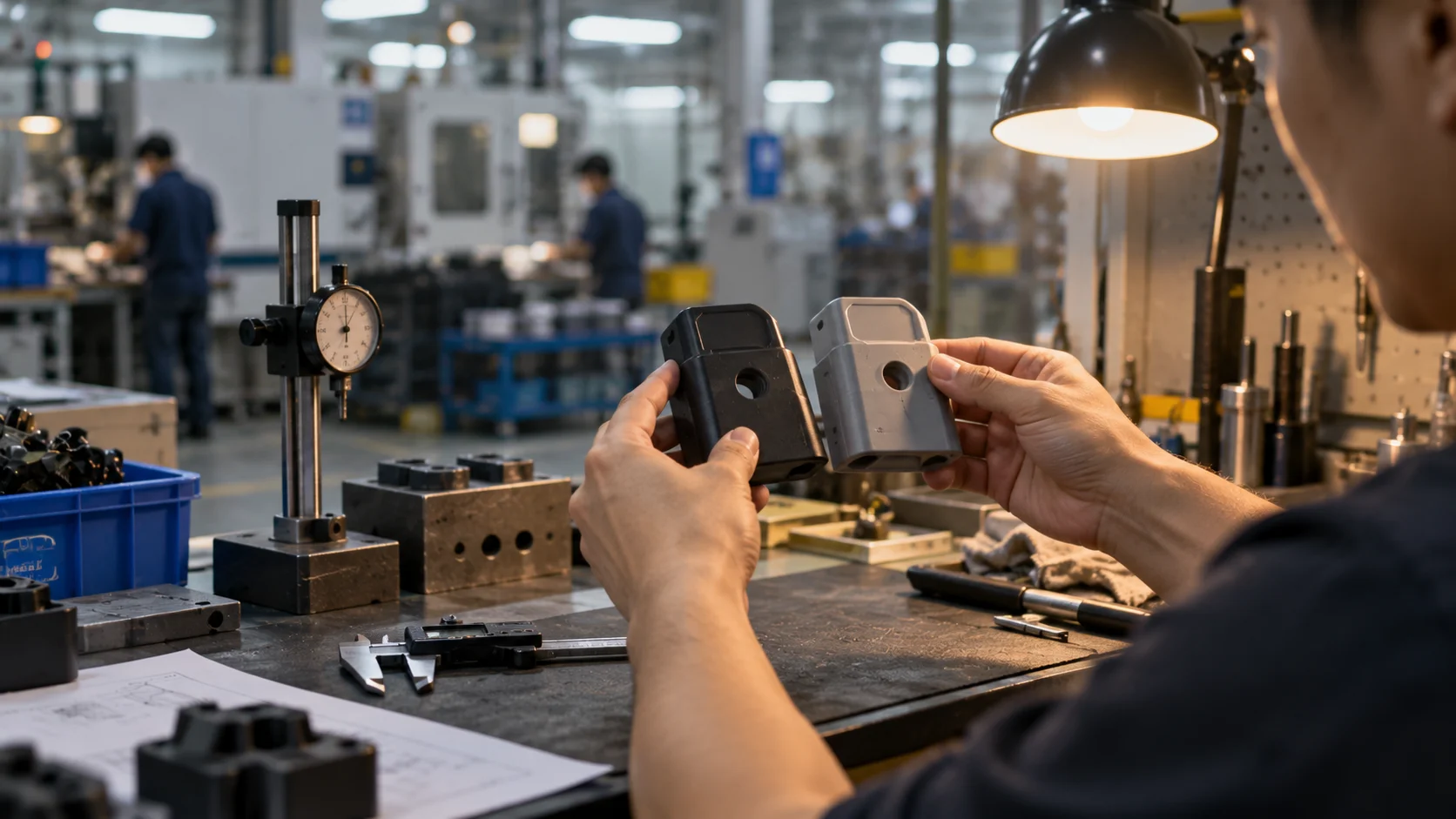
Most importers treat samples as a product decision. They are also a verification instrument, provided you impose discipline on the process.
The discipline is this: the approved sample becomes the golden sample, the contractual reference standard for mass production. You keep one sealed, signed and dated; the supplier keeps an identical one, also signed. Your purchase order and any inspection you commission reference the golden sample explicitly: “production units shall conform to the approved golden sample dated X.” Without that anchor, “the quality is different from the sample” is an argument. With it, it is a documented breach.
The sampling process itself tells you several things. How long did the sample take, and did they hit their own promised date? A supplier who is late on a sample will be late on a container. Did the sample come from their production line or was it hand-built? Ask directly. An honest “the sample is hand-finished; production units are assembled on line” is a good sign, because it is candid about the thing suppliers usually hide. Did they push back on any of your specs? A factory that accepts every requirement without a single question either was not listening or does not intend to comply. Real manufacturers negotiate specs, because they know their own constraints.
Sample and courier costs are modest, usually AUD 100–400 including express freight. The logistics of getting them here have their own quirks, and our guide on shipping samples from China covers the practical side. For vetting purposes, pay for samples happily, but pay for them as a verification expense, and extract every gram of information the process offers.
Payment Structure Is a Risk Control, Not an Afterthought
Everything above reduces the probability of dealing with a bad supplier. Payment structure caps the damage if you are wrong anyway. Follow the documents, then structure the money so that no single failure is fatal.
The 30/70 norm. Standard terms for a first order are a 30% deposit to commence production, with the 70% balance paid against a copy of the bill of lading, or better, after a passed pre-shipment inspection and before release of shipping documents. This structure gives both sides skin in the game. The supplier has built goods you have not fully paid for, and you have paid for goods you do not yet hold. Neither side can walk away clean, which is exactly the incentive alignment you want.
Never pay 100% upfront to an unverified supplier. This should not need saying, and yet full-prepayment losses remain the most common disaster story we hear. A demand for full payment before production, on a first order, from a supplier you have never transacted with, is either desperation or a scam. Both are reasons to walk.
Escrow and trade assurance. Several major sourcing platforms operate order-protection mechanisms in which your payment is held or guaranteed by the platform and released against shipment milestones. A dispute process applies if goods do not conform. These mechanisms have real limitations: claim windows, evidence requirements, caps. But for a small first order they meaningfully shift risk. Independent escrow services exist for off-platform deals. In both cases, read the actual protection terms before relying on them; the protection is only as good as the conditions you can satisfy.
Letters of credit for large orders. Above roughly AUD 50,000, a letter of credit becomes worth its bank fees. An LC pays the supplier only against presentation of conforming documents, which converts “trust” into “document compliance.” The documents mean a bill of lading, plus an inspection certificate if you require one. Suppliers with genuine export experience handle LCs routinely; a supplier who has never seen one is telling you about their export history again.
Pay the entity on the licence. The beneficiary account name should match the registered company name you verified in the registry. Payments to personal accounts, or to a different company “for tax reasons,” break the chain of accountability you spent all this effort building. Legitimate structures do exist, and a Hong Kong receiving entity related to the mainland factory is common. But the relationship should be documented and explained before your first dollar moves, not after.
The Red Flags Checklist
Any one of these warrants a pause. Two or more, and you should walk regardless of how good the price looks.
- Prices far below market. If three quotes cluster at $8.40–$9.10 a unit and a fourth comes in at $5.20, the fourth supplier is not a genius. They are quoting a different (worse) product, planning a bait-and-switch, or fishing for deposits. Below-market pricing is the single most reliable predictor of a failed first order, because it is the bait in nearly every scam pattern.
- Reluctance to video call. Camera “broken” twice, factory “too far from the office,” endless rescheduling. In 2026 there is no innocent explanation.
- Licence mismatch with claimed products. The business scope says textiles; they are quoting you lithium battery packs. Companies do operate outside stale scopes occasionally, but if the mismatch appears alongside any other flag, treat it as disqualifying.
- No export history to developed markets. It is not fatal alone, since everyone has a first Western customer, but it should change your payment structure and inspection intensity.
- Pressure to pay outside agreed channels. Moving you off platform to “avoid fees,” pushing for payment methods with no recourse, discounts for full prepayment. Every one of these transfers risk from them to you.
- Sudden bank account changes. This is the invoice fraud pattern, and it deserves its own section below, because it catches experienced importers, not just beginners.
We have written a broader companion piece on red flags when dealing with overseas suppliers that extends this list beyond China; the patterns travel.
Three Scam Patterns That Target Importers
The bank-account-switch email compromise. The most expensive scam in trade, and the cruellest, because it exploits a genuine relationship. A criminal compromises the supplier’s email account or registers a lookalike domain one character off, then watches the correspondence for months. Just before a balance payment falls due, “the supplier” emails: new bank account, plausible reason (audit, tax year, new banking partner). You pay. The real supplier, who sent no such email, still wants their money, and legally you still owe it. You will rarely recover the stolen funds. The defence is procedural and absolute: any change of bank details is verified by voice or video call, on a number you sourced independently. Source it from the original contract, the verified licence record, or a prior call, never from the email announcing the change. Write this rule into your purchase agreement so both sides expect the call. Australian businesses report payment-redirection losses in the tens of millions annually to the ACCC’s Scamwatch, and international supplier payments are a favourite target because a five-figure wire to China raises no eyebrows at anyone’s bank.
The disappearing supplier. Cloned website, stolen factory photos, responsive sales contact, attractive price, deposit, silence. This one dies at the registry check and the live video stage. That is precisely why the fake supplier’s price is set low enough to tempt you to skip them.
The quality bait-and-switch. The supplier is real and the golden sample is genuinely excellent. Production units use cheaper resin, thinner steel, a knock-off chipset. This is not always premeditated. Sometimes a factory hits a margin squeeze mid-production and “value-engineers” without telling you, but the result is identical. The defence stack has three layers: golden sample discipline, a purchase order that specifies materials and tolerances (not just “as per sample”), and balance payment held until after a pre-shipment inspection by an independent third party checking production units against the golden sample. An inspection costs roughly AUD 300–500. It is the last gate before your money and your goods separate from each other, and skipping it is among the classic import mistakes Australian businesses make.

Timeline and Budget: What Proper Diligence Actually Costs
The whole stack, run on a shortlist of two or three suppliers, takes two to four weeks and costs roughly AUD 500–1,500 all-in:
- Registry checks, licence review, factory/trader identification: free, but perhaps three hours of your time per supplier.
- Credit reports: AUD 100–300 each, so AUD 200–900 for a shortlist.
- Live video tours: free.
- Samples and courier: AUD 100–400.
- Bill of lading / export data lookup: roughly AUD 50–150 depending on the service.
- Optional on-site audit for the finalist: AUD 300–600.
Weigh that against the downside. A failed first order does not just cost the deposit. It costs the freight you may have prepaid, the customs and GST on goods you cannot sell, the three months of lead time you cannot recover, and, if you had customers waiting, the orders you now cannot fill. A modest AUD 30,000 first order that fails completely can easily turn into a AUD 50,000+ total loss. Spending 2 to 5% of order value to avoid a total-loss scenario is not caution; it is arithmetic.
A better test than a percentage of order value is the break-even chance. Against a AUD 50,000 total loss, AUD 500 to 1,500 of diligence pays for itself if it lowers the probability of that loss by 1 to 3 percentage points, and the AUD 830 in the worked example below breaks even at under 2. A shortlist that includes an unregistered name, a trader posing as a factory or a supplier who refuses a live tour clears that bar easily, because those are the cases the stack exists to catch. The limit is the size of the order: on a AUD 3,000 trial the same AUD 830 is not proportionate, and a registry check and a live video tour, both free, are the version worth running.
Sourcing Agents vs Going Direct
A good sourcing agent runs much of this stack for you, on the ground, in Mandarin, with existing factory relationships. The fee is typically 3–8% of order value, or a flat project fee for smaller engagements. When is it justified?
Use an agent when: the product is technical and specs are hard to communicate (electronics, anything with certifications); you need on-the-ground comparisons across multiple factories; order values are high enough that 5% is cheap insurance; or you are scaling into multiple products and lack the hours to run diligence on each supplier yourself, a scenario we cover in our piece on scaling your import business.
Go direct when: the product is simple and mature, the order is small, and you can genuinely run the checks above yourself. Direct relationships compound. The factory learns your standards, you learn their constraints, and there is no intermediary margin or information filter between you.
One caution: vet the agent with the same stack you would apply to a supplier. An agent taking undisclosed commissions from factories is worse than no agent, because they launder a bad supplier through your trust in them. Ask directly whether they accept factory-side commissions, and get the answer in writing.
Worked Example: Vetting a Shortlist of Three
Say you are importing insulated stainless drink bottles, first order around AUD 25,000, and you have narrowed twenty online candidates to three. Here is the pass, week by week.
Week 1: documents. All three send business licences same-day. Registry lookups: Supplier A‘s scope reads “production and sales of stainless steel vacuum vessels, daily-use metal products”, making it a manufacturer, registered 2011, registered capital ¥10M, status active. Supplier B‘s scope reads “import and export of goods; wholesale of daily necessities”, making it a trading company, though their website says “our factory.” Supplier C‘s licence name does not match the name on their quotation, and the registry shows the licensed entity in an administrative-penalty listing. C is out by Wednesday, at a cost of zero dollars.
Week 2: money and history. Credit reports on A and B (AUD 240 each). A: clean litigation record, 180 employees on social insurance filings, consistent with claims. B: real and solvent, 12 employees, clearly a trader but a functioning one. Export data lookup (AUD 90): A ships regularly to the US and Germany, with drinkware HS codes throughout. B’s shipment history is thinner and spread across many product categories. Asked about the discrepancy, B admits they source from partner factories. That is honest, but they misrepresented themselves at first contact, and their quote carries a margin over A’s for the identical spec. B is now a fallback, not a candidate.
Week 3: the floor and the sample. The live video tour with A shows two production lines running vacuum bottles, a QC station with leak-testing rigs and thermal retention logs on the wall, and the licence at reception matching the code on file. You order samples from both A and B (AUD 260 total with courier). A’s arrives in six days, matching every spec. They push back on one spec query, recommending a different lid gasket for Australian conditions. That pushback is worth more than any brochure.
Week 4: terms. A accepts 30/70 with balance after a third-party pre-shipment inspection against the signed golden sample, and the beneficiary account matches the licensed entity. The contract includes the written rule: bank detail changes are valid only when confirmed by video call. Total spend comes to about AUD 830 and perhaps twelve hours of work. It bought one supplier eliminated for cause, one repositioned to fallback with accurate expectations, and one verified across registry, credit, export record, factory floor, sample discipline and payment structure, all before a single dollar of deposit moved.
Once a supplier clears the stack, Swift Cargo can quote the freight side of getting the order to Australia.
Related Reading
- Red Flags When Dealing With Overseas Suppliers
- Shipping Samples From China: The Practical Guide
- Importing From China to Australia: The Complete Guide
- Packing Declaration Accuracy, Not Cargo, Triggers DAFF Biosecurity Inspections
- How to Scale Your Import Business in Australia
Frequently Asked Questions
How do I verify a Chinese supplier’s business licence?
Ask for a copy of the licence, then look up the 18-character unified social credit code on the National Enterprise Credit Information Publicity System (gsxt.gov.cn). Confirm the registered name matches your invoices and bank beneficiary, the status is active, the establishment date fits the supplier’s claims, and the business scope covers your product category.
How much does proper supplier vetting cost?
Roughly AUD 500–1,500 to vet a shortlist of two or three suppliers, over two to four weeks. Registry checks and video tours are free; credit reports run AUD 100–300 each; samples with courier freight typically AUD 100–400; an optional on-site audit adds AUD 300–600. One failed order costs many multiples of that.
How can I tell a factory from a trading company?
Read the business scope on the licence: manufacturers list production of specific goods, traders list import-export and wholesale. A narrow, deep product range points to a factory; a catalogue spanning unrelated categories points to a trader. A live video tour of the production line is the definitive check.
What payment terms are normal for a first order?
A 30% deposit with the 70% balance against the bill of lading is the standard, or ideally after a passed pre-shipment inspection. Never pay 100% upfront to an unverified supplier. Use platform trade-assurance or escrow mechanisms for small orders and consider a letter of credit above about AUD 50,000.
What is the bank account switch scam?
A criminal compromises or spoofs the supplier’s email and sends you new bank details just before the balance is due, diverting the payment. Defend against it by confirming any bank detail change by phone or video on a number sourced independently of the email. Write that verification rule into your contract.
Should I use a sourcing agent for my first order?
Only sometimes. Agents charging 3–8% earn their fee on technical products, multi-factory comparisons, or large orders where the fee is cheap insurance. For a simple product and a small order, running the verification stack yourself and buying direct is entirely workable, and the relationship you build compounds.