
Every importing failure we have been asked to untangle traces back to a decision made cheaply. And the cheapest-looking decision in the entire supplier development process is the one to skip samples. A sample round for four Chinese suppliers might cost you $600 to $900 all in: fees, courier charges, a fortnight of waiting. A container of product that does not match what you thought you ordered costs you $30,000, three months, and sometimes the customer relationship your whole business was built to serve. The ratio between those two numbers is the entire argument for this article.
Shipping samples from China is not glamorous logistics. The parcels are small, the invoices are modest, and the temptation is to treat the whole exercise as an errand. It is not an errand. It is the highest-leverage freight spend you will make all year, and it deserves the same deliberate thinking you would give a full container booking: which mode, what it costs, how customs treats it, and what you do with the sample once it lands.
Why Samples Matter: The Golden Sample Is Your Contract Made Physical
A purchase order describes a product in words and numbers. Words and numbers are ambiguous. “Matte black finish” means one thing to you and something slightly different to a factory in Dongguan, and that slight difference multiplied across 5,000 units is a dispute. The sample resolves the ambiguity by existing. It is the product, physically, in your hands, before you commit real money.
The industry term for the approved reference unit is the golden sample. Once you sign off on it, the golden sample becomes the standard against which everything downstream is measured: the supplier’s own line QC, your third-party pre-shipment inspection, and any claim you make when goods arrive out of spec. An inspector in a factory in Ningbo cannot check production against your intentions. They can check it against a golden sample.
Two rules follow from this, and neither has an exception worth entertaining:
- Never skip physical samples. Photos, videos, and video calls with the factory are useful supplements, not substitutes. Weight, texture, stitch density, plastic smell, hinge resistance, colour under Australian daylight: none of these survive a camera. If a supplier resists sending a physical sample, that reluctance is itself data, and it is telling you to walk away.
- The golden sample must be production-representative. A hand-built prototype made by the factory’s best engineer tells you what the factory can do, not what it will do at unit 3,000 on a Friday afternoon. Confirm the sample comes off production tooling with production materials, and ask directly. Suppliers will usually tell you the truth if you ask; they simply will not volunteer it.
Think of the sample round as buying information. Before samples, you are choosing a supplier based on Alibaba photos, a trade assurance badge, and an English-speaking sales rep’s assurances, a decision made with perhaps 20 per cent of the information you need. After a properly run sample round, you know how four factories actually build the product, how they communicate under mild pressure, how they pack, and how they handle a small payment. Purchased for a few hundred dollars, that is most of what distinguishes a good supplier from a disaster. Very few investments in business return information at that rate.
Your Three Shipping Options for Samples
Samples move by the same modes as everything else, but the economics at 2 kg are inverted from the economics at 2 tonnes. Here is how the three realistic options compare for an Australian importer.
Option 1: Express Courier (1–5 kg, 3–7 Days Door-to-Door)
For the standard sampling scenario (one to three units of a consumer product, a parcel of 1 to 5 kg), express courier services are the default for good reason. The supplier hands a box to a pickup driver in Shenzhen; it arrives at your door in Australia three to seven days later, with tracking the whole way and customs brokerage handled inside the service. You pay for that integration, typically AUD 30 to 90 for a small parcel depending on weight, service speed, and how the supplier’s account rates compare with retail rates.
A few practical points that save money and grief:
- Ask the supplier to ship on their courier account and bill you. Chinese factories ship thousands of parcels and have negotiated rates far below anything you can get retail. Most will happily add the courier cost to the sample invoice.
- Volumetric weight applies. A large, light sample (a pillow, a lampshade) is charged on dimensional weight, not actual weight. Ask for the box dimensions before agreeing to a shipping quote.
- Speed is worth paying for at this stage. Sampling sits on the critical path of your entire sourcing timeline. Saving $20 by choosing a slow economy postal service while your product launch waits ten extra days is a false economy of the classic kind.
Option 2: Air Freight (10 kg and Up, Bulkier Sample Sets)
Courier pricing turns against you as weight climbs. Somewhere between 10 and 20 kg (the exact crossover depends on rates in the month you ship), conventional air freight becomes cheaper than express parcels. This matters when your sample set is genuinely bulky: furniture components, a run of 20 units for market testing, machinery parts, or consolidated samples from several suppliers picked up by an agent in China and shipped as one lot.
The trade-offs: air freight moves airport-to-airport unless you pay for door service, so you (or your forwarder) handle customs clearance and local delivery at the Australian end. Transit stretches to 5–10 days including handling. And minimum charges mean air freight is uneconomic below roughly 10 kg. A 45 kg minimum chargeable weight is common, so a 3 kg parcel priced as air freight costs more than the same parcel by courier. Air freight for samples is a tool for the specific case of bulk, not a general upgrade.
Option 3: Riding an Existing Sea Consolidation (Near-Zero Marginal Cost, 4–6 Weeks)
Here is the option most importers forget they have. If you are already importing (if a consolidated sea shipment is leaving South China for Melbourne next week anyway), a 4 kg box of samples added to that consignment costs almost nothing at the margin. The container is sailing regardless. Your forwarder adds a carton to the packing list, the samples appear on the commercial documents at their proper value, and the incremental freight cost rounds to a few dollars.
The catch is obvious: 4 to 6 weeks door-to-door. That is fine for second-round samples confirming a revision you have already approved in principle, or for samples from a new supplier you are evaluating on a relaxed timeline. It is wrong for first-round samples on a live product launch, where every week of delay compounds. The decision rule is simple: if the samples are on your critical path, fly them; if they are not, float them. Established importers running continuous sea freight often default to consolidation for routine sampling and reserve courier spend for genuinely urgent evaluations, a discipline that quietly saves hundreds of dollars a year.
Customs Treatment: The “Sample: No Commercial Value” Myth
Now for the part that trips up more new importers than any freight decision: what happens at the Australian border. There is a persistent folk belief that samples enter Australia free of duty and GST if the box is marked “sample: no commercial value.” This belief is wrong, and acting on it creates risk out of all proportion to the dollars involved.
The myth survives because it is almost true. A genuine trade sample, mutilated or otherwise made valueless and never resold, clears differently, and that narrow exception is specific enough to make the broader claim sound plausible to someone who half-remembers hearing it from a supplier. Factories in China repeat the line because it makes ordering samples feel free, and nobody at the border corrects an eighty-dollar parcel; they just apply the SAC threshold and move on. The pattern generalises past samples: any customs rule with a real but narrow exception eventually gets misquoted as a blanket one, by people who have every incentive to believe the simpler version.
The actual position, per the Australian Border Force (ABF), is that commercial samples are goods. They are valued and entered like any other import. The narrow concessions that exist for genuine trade samples are tightly drawn (typically covering items mutilated or marked so they cannot be sold, or of negligible value), and a working product sample you intend to evaluate, photograph, and keep does not fit them. Plan on normal treatment and you will never be unpleasantly surprised.
Normal treatment, for the parcel sizes samples usually arrive in, looks like this:
- Under AUD 1,000: the parcel clears through self-assessed clearance (SAC). No formal import declaration, no declaration processing charge, and, per the ABF, no duty or GST collected at the border (alcohol and tobacco excepted). GST can still reach you at the point of sale: a platform or supplier registered for Australian GST charges it on low-value sales to consumers. A GST-registered business that gives the supplier its ABN and says so should not be charged it, and GST charged in error is claimable on your BAS with a valid tax invoice. Either way, the declared value decides which side of the AUD 1,000 line a parcel falls on, which is one more reason not to play games with it.
- Over AUD 1,000: a full import declaration applies, with duty (commonly 5 per cent for many consumer goods, often zero under ChAFTA with the right documentation), GST at 10 per cent on the value of the taxable importation, and the import processing charge. A big multi-supplier sample consolidation can cross this line, so watch the aggregate value when combining boxes.
Under-declaration deserves its own paragraph because suppliers offer it constantly and casually. A factory will mark your $180 sample as a $15 gift without being asked, believing they are doing you a favour. They are not. The declared value on that parcel is a statement you are legally responsible for as the importer. Penalties for false declarations exist and are applied; more practically, a pattern of suspiciously valued parcels attracts exactly the kind of ABF attention an importing business never wants, and an under-declared sample also gives you no basis for an insurance claim if the parcel disappears. Tell the supplier, explicitly and in writing, to declare the true transaction value. Any GST on a $180 sample is $18, and you will likely claim it back. That is the full cost of doing this properly.
Negotiating Sample Costs with Suppliers
Sample commercial terms follow a small number of conventions, and knowing them stops you either overpaying or reading a normal request as a red flag.
- Sample fee plus shipping is the standard arrangement for anything customised. Expect the fee to run 1.5 to 3 times the eventual unit price (a $6 unit might sample at $10 to $20) because the factory is making a handful of units outside a production run, sometimes with tooling setup. This is normal and fair.
- Free sample, buyer pays shipping is common for stock items and simple products. The supplier’s real cost is low; asking you to cover the courier is their filter against tyre-kickers. Paying $40 of freight for a free sample is a perfectly good deal.
- Refund against order is the convention worth negotiating hardest for: the sample fee is credited back against your first purchase order. Most suppliers agree readily because it costs them nothing if you order and compensates them if you do not. Get the refund term written on the proforma invoice. A verbal promise from a sales rep does not survive their job change.
One counterintuitive point: a sample fee is a mildly positive signal, not a negative one. Factories that charge for samples are filtering for serious buyers, which means their sales team spends time on real customers, including you. Be more cautious about a supplier who offers everything free, ships instantly, and asks no questions about your specifications; that pattern is more consistent with a trading company reshipping stock than a factory engaging with your product. On which note, the sampling stage is also your best early window for spotting problems. Our guide to red flags with overseas suppliers covers the warning signs in detail.
What you should not do is grind the sample fee itself. Negotiating $15 off a sample invoice signals that you are a small, price-obsessed buyer before the relationship has begun, and it poisons the far more important negotiations to come on unit price and payment terms. Spend your negotiating capital where the money is.
Once samples are approved, the freight decision that actually moves money is the trial order, worth pricing that first real container now.
Running a Multi-Supplier Sampling Round
Sampling one supplier tells you whether that supplier can make your product. It tells you nothing about whether they are the best of your realistic options, and it leaves you negotiating with no alternative, the weakest position in commerce. The professional approach is parallel sampling from three or four shortlisted suppliers, run as a single structured exercise.
Parallel matters for speed as much as leverage. Sequential sampling (order from supplier A, wait two weeks, evaluate, then try supplier B) turns a two-week process into a two-month one. Send identical specification packs to all four suppliers in the same week, and the samples arrive within days of each other, ready for side-by-side comparison under identical conditions.
Structure is what separates a sampling round from a pile of boxes. Three disciplines:
- Labelling. The moment each sample arrives, tag it: supplier code, date received, version number (S1-V1 for supplier one, version one). Photograph the parcel, the packaging, and the unit before you handle it. Four similar products from four factories become indistinguishable within a week, and a mixed-up sample round is worthless.
- Version control. First samples are rarely right. You will request revisions: different finish, corrected dimension, better switch. Every revised sample gets a new version number, and your comments to the supplier reference versions explicitly (“the hinge on S2-V2 resolved the issue in S2-V1”). Keep superseded versions; they document the supplier’s responsiveness, which is itself a selection criterion.
- A written evaluation checklist, scored identically for every supplier. Dimensions against spec (measure, don’t eyeball). Weight. Materials and finish quality. Function testing. Packaging quality. Consistency between units if you ordered multiples. Two units that differ from each other are a louder warning than one unit that differs from spec. And two criteria that are about the supplier rather than the product: communication quality during the round, and whether the sample shipped when they said it would. A factory that is late and vague on a two-unit sample will be late and vague on a 5,000-unit order, except then it will matter.
Score the round, pick a winner and a runner-up, and tell the runner-up they were close. A credible second source is insurance you will eventually be glad you kept warm, a lesson many importers learn the expensive way, as we covered in the most common import mistakes Australian businesses make.
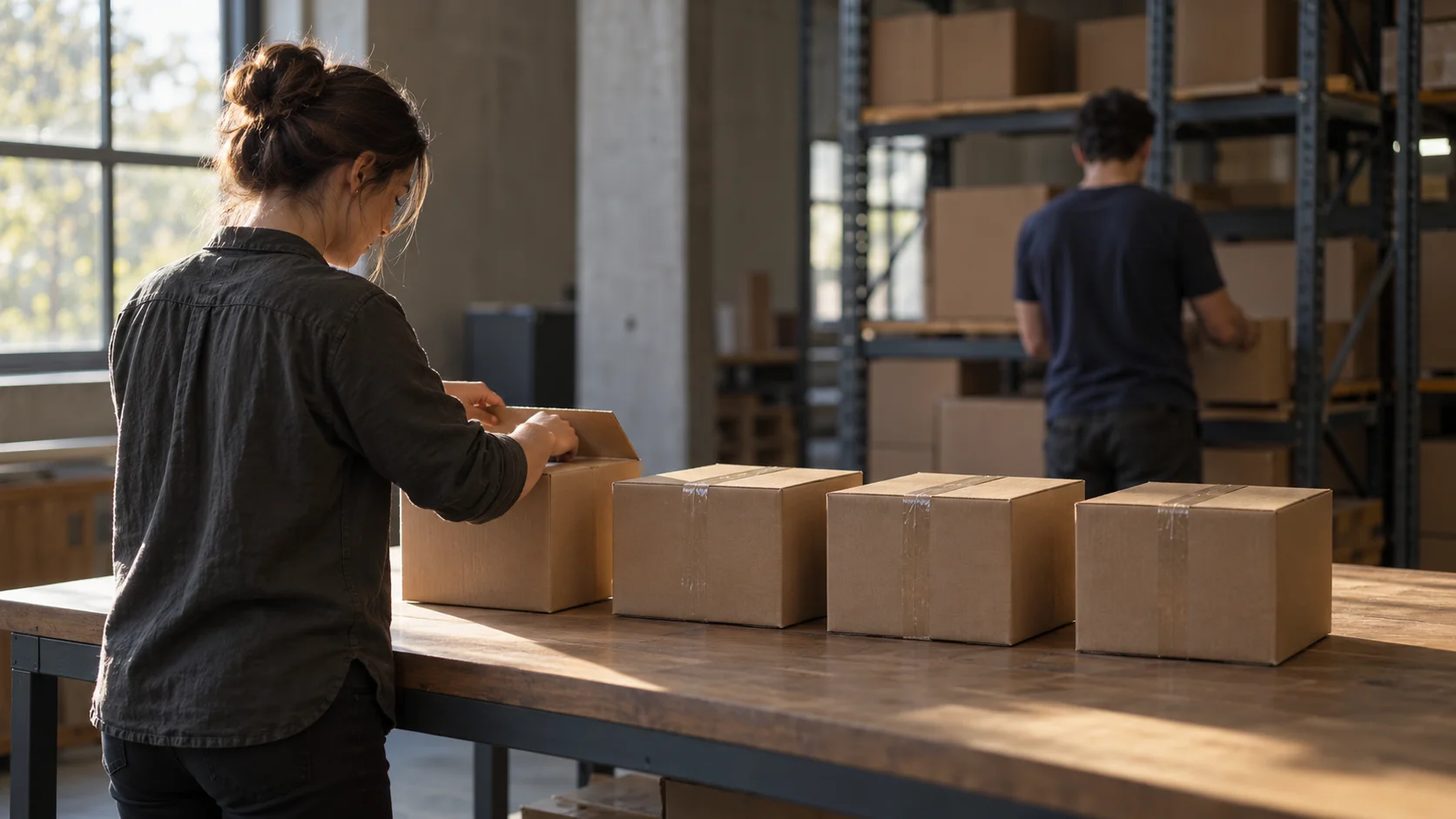
Worked Example: A 4-Supplier Sampling Round Budget
Numbers make this concrete. Say you are an Australian business developing a consumer houseware product (target landed cost around $8 a unit), and you have shortlisted four suppliers from initial enquiries. You order two sample units from each so you can check unit-to-unit consistency. Here is a realistic budget:
| Item | Supplier A | Supplier B | Supplier C | Supplier D |
|---|---|---|---|---|
| Sample fee (2 units) | $36 | $0 (free, stock-adjacent) | $44 | $30 |
| Courier to Australia (2–3 kg) | $52 | $58 | $49 | $55 |
| GST, if charged at checkout | $9 | $6 | $9 | $9 |
| Subtotal per supplier | $97 | $64 | $102 | $94 |
Round one total: $357 (or $324 if no GST is charged, which is the usual outcome for a GST-registered buyer who gives the supplier an ABN). Then add the second round, because there will be one. Two suppliers make the cut for revisions (say a revised sample from B and from D at roughly $90 each including freight), adding about $180. If your product touched a compliance category you would add lab-test units here too, but for ordinary housewares the sampling round lands at roughly $540 all-in over four to five weeks. Suppose the round’s findings steer you away from the supplier whose samples showed inconsistent finishing, the one who, on the photos alone, looked best. If that supplier would have delivered a 5,000-unit order with a 10 per cent defect rate, the sampling round just saved you 500 defective units, roughly $4,000 of product plus the far larger cost of remediation and reputation. Against $540 of spend, that is the trade. It is rarely close.
Two refund-against-order credits (say $30 from your chosen supplier, applied to the first PO) claw a little back, and any GST you were charged returns through your BAS. The true net cost of complete information about four factories: under $500.
When Samples Must Be Re-Tested: Compliance Categories
For most products, sample evaluation is your own judgement plus a tape measure. For regulated categories, the sample carries a second job: it is the test article. Electrical goods must meet Australian electrical safety requirements; children’s toys must meet mandatory standards enforced by the ACCC; and demonstrating compliance generally means accredited laboratory testing (in Australia, that means a NATA-accredited lab) performed on units that represent actual production.
That last phrase is where importers get caught. A lab report is only as good as the units tested. If the supplier sends hand-finished prototypes for testing and then produces with a cheaper power supply or a different plastic resin, your test report describes a product you are not actually importing, and the liability for the non-compliant goods on Australian shelves is yours, not the factory’s. So for compliance categories:
- Order extra sample units specifically for testing. Labs typically need multiple units, and destructive tests consume them.
- Confirm in writing that test samples come from production tooling and production-spec materials.
- Time the testing realistically: lab queues and report turnaround can add two to six weeks to your critical path, and you cannot place the production order until the report is clean.
- Re-test when anything material changes: a substituted component, a new factory, a revised design. The old report does not stretch to cover the new product.
Electrical products from China are their own discipline, with certification, labelling, and state-based requirements layered on top of the sampling logic here. Our dedicated guide to importing electronics from China to Australia walks through the full compliance pathway.
Documenting the Golden Sample for Your Purchase Order
The sample round ends with a decision; the decision is worthless until it is documented. When you approve a sample, do these things the same day, while the unit is in front of you:
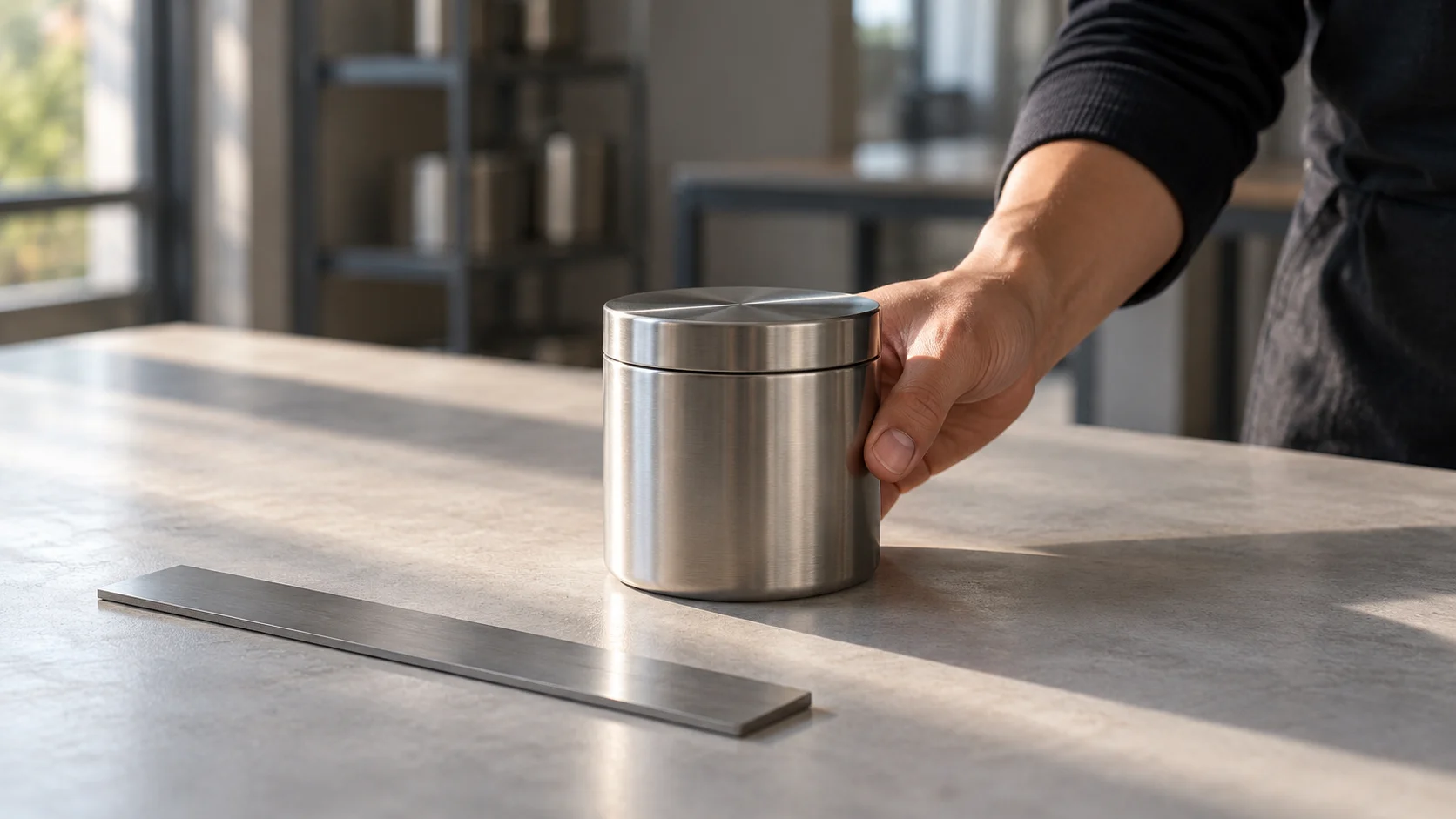
- Photograph it exhaustively. Every face, every seam, labels, internals if accessible, packaging inside and out. Include a ruler or scale reference in the shots. Shoot in good natural light. Colour disputes are the most common quality disputes, and your photos are evidence.
- Record the measurables. Weight to the gram, key dimensions to the millimetre, material descriptions, colour codes (Pantone references if colour matters at all).
- Reference the sample in the PO explicitly. A line such as: “Goods to conform to approved golden sample S2-V3, received 14 July 2026, photographs attached as Annex A. Approved sample retained by buyer; duplicate retained by supplier.” Have the supplier confirm they hold a matching sealed duplicate (the standard convention), so both sides are measuring against the same physical object.
- Give the golden sample to your inspector. When you book pre-shipment inspection before the goods leave China, the inspection brief should reference the golden sample and your photo annex. This is the payoff for all the documentation: an inspection standard that is objective rather than argumentative.
Store the sample properly: labelled, in its packaging, somewhere it will not fade, warp, or get borrowed by the sales team. It stays relevant for the life of the product.
From Sample to Trial Order to Full Order
Approving a golden sample does not mean jumping to a full production order. The professional escalation runs in three stages, and the freight mode shifts at each one:
- Sample stage (2–10 units). Courier or piggy-backed consolidation, as above. You are buying information about the product and the supplier.
- Trial order (100–500 units, product-dependent). This is the stage skippers skip and regret. A trial order tests what the sample cannot: the factory’s behaviour in actual production, consistency across hundreds of units, real packaging performance, real lead-time discipline, and how your product sells before you are holding a year of stock. Freight-wise, trial orders usually move as LCL sea freight (a few cubic metres, consolidated with other importers’ cargo) or air freight if the product is light and the market window is tight. This is also where you engage a freight forwarder properly, set up your import processes, and clear a full commercial entry, a dress rehearsal for the real cadence. If you are new to that machinery, our complete guide to importing from China to Australia covers the end-to-end process.
- Full order (1,000+ units). With a clean trial behind you, volumes justify FCL sea freight or large LCL consignments, unit freight costs drop sharply, and your negotiating position on unit price improves with the volume. The golden sample and the trial-order inspection reports now anchor every subsequent PO.
Notice what each stage does: it increases your financial exposure only as fast as your information improves. Sample proves the product; trial proves the process; full order exploits both. Compressing the stages compresses the learning, and the market charges tuition for unlearned lessons. When the model works and volumes climb, the freight strategy evolves again. See our guide on scaling your import business in Australia for what changes at that stage.
We price the trial order the same way we price the tenth container.
Most SMEs get a detailed, all-inclusive quote within 24 hours, whether it rides with a sea consolidation or ships alone.
Related Reading
- Importing from China to Australia: The Complete Guide
- Red Flags to Watch for with Overseas Suppliers
- Common Import Mistakes Australian Businesses Make
- Importing Electronics from China to Australia
- How to Scale Your Import Business in Australia
- Air vs Sea Freight for Australian Importers: A Decision Framework
- Start Vetting Chinese Suppliers With Three Free Checks
Frequently Asked Questions
Are product samples from China duty and GST free in Australia?
Only below AUD 1,000, and not because they are samples. Commercial samples are valued and entered like ordinary goods, and writing “sample: no commercial value” on the box does not change that. The AUD 1,000 threshold is what removes duty and GST at the border: parcels under it clear through self-assessed clearance with no duty, GST or processing charge collected, though a supplier registered for Australian GST may still charge GST at the point of sale unless a GST-registered business gives its ABN. Above AUD 1,000, duty, GST and the import processing charge apply. Deliberate under-declaration is an offence.
What is the cheapest way to ship samples from China?
If a sea consignment is already moving from the same region and you can wait 4–6 weeks, adding samples to that consolidation costs almost nothing at the margin. For standalone shipments of 1–5 kg, express courier is usually cheapest in practice, because air freight minimum charges make small standalone air shipments uneconomic.
How long does it take to get samples from China to Australia?
Express courier: 3–7 days door-to-door. Air freight for bulkier sample sets: typically 5–10 days including handling and clearance. Samples added to a sea consolidation: 4–6 weeks depending on sailings and destination port.
Should I pay a sample fee to a Chinese supplier?
Usually yes, and it is often a positive signal, since factories that charge for samples are filtering for serious buyers. Expect 1.5–3 times the eventual unit price. Negotiate a refund-against-order convention and get it in writing on the proforma invoice.
What is a golden sample and why does it matter?
The golden sample is the approved reference unit that defines exactly what the supplier must produce. It becomes the objective standard for pre-shipment inspection and production QC. Without a signed, photographed golden sample referenced in your PO, a quality dispute is your word against the factory’s.
Do samples of electrical products or toys need lab testing?
For regulated categories such as electrical goods and children’s toys, the sample often is the test article. Australian compliance testing generally requires production-representative units tested by a NATA-accredited laboratory, so order extra units, confirm they come from production tooling and materials, and re-test whenever a component, factory, or design changes.