
Switching freight forwarders is one of the most avoidable disruptions in an import program, and one of the most common causes of actual disruption. Importers who plan the transition carefully lose nothing. Those who switch reactively, in response to a bad experience with a shipment already in motion, can spend weeks untangling documentation and explaining delays to their customers.

When Switching Is the Right Call
Not every frustration with a freight forwarder warrants a switch. A single delayed shipment during a port congestion event is not a forwarder problem. A customs hold caused by a legitimate discrepancy in your supplier’s documentation is not a forwarder failure. Before deciding to switch, separate the forwarder’s performance from external factors beyond their control.
The situations that genuinely warrant a switch fall into four categories.
Repeated compliance errors
Incorrect tariff classifications, missing biosecurity declarations, and improper Incoterm documentation create customs holds, duty shortfalls, and post-clearance audit exposure. A single classification error on a genuinely ambiguous product can happen to anyone. A pattern of errors on the same goods (especially after the issue has been raised) signals a forwarder that is not investing in your account.
The Australian Border Force places the legal responsibility for accurate import declarations on the importer, not the customs broker. The forwarder’s errors become your compliance risk. That is a meaningful reason to switch.
Lane expertise gap
A forwarder that handles Australian imports from China well is not automatically equipped for USA-origin goods, Vietnamese garments with AANZFTA form requirements, or French wine with its own biosecurity and labelling conditions. If your sourcing has shifted to a new lane or product category and your forwarder’s performance has declined in proportion to that shift, the problem is likely expertise, not effort.
Ask your forwarder directly: how many TEUs do you move on this lane per quarter? Who is your preferred carrier? What is your average transit time variance? If the answers are vague, the lane expertise is shallow.
Rate stagnation without service improvement
Freight rates are not static, and a long-standing forwarder relationship should translate to carrier leverage, volume-based discounts, and access to priority bookings when capacity tightens. If you have been with the same forwarder for two or more years and have never received a rate review, a consolidation proposal, or a proactive update on carrier rate changes, that relationship is coasting on inertia.
This does not mean you should switch solely for a lower rate. Switching costs (administrative overhead, the learning curve on your product mix, the risk window of the first few shipments) are real. But if rates and service are both stagnant, the cost-benefit of switching becomes positive.
Structural change in your import program
Scaling from LCL to full container volume, adding a new supplier country, or moving from retail imports to wholesale volumes can create a genuine mismatch between your needs and your forwarder’s capacity. A small-volume specialist may not have the carrier contracts or the customs team depth to serve a program that has grown significantly.
When Not to Switch
Timing the switch correctly is as important as the decision itself. Three scenarios where you should hold the current relationship and plan the switch after the situation resolves:
- Active shipments in transit. Any shipment that has departed origin must clear Australian customs under the current forwarder. The bill of lading, the customs broker authorisation, and the import declaration are all linked. Do not attempt to transfer these mid-transit.
- Peak season. Activating a new forwarder during peak shipping season (October to December) or Chinese New Year is high-risk. Carrier availability is constrained, documentation errors cost more time, and your new forwarder has less capacity to absorb the learning curve on your account. Plan any switch for February to April or June to August.
- Unresolved disputes. If you have an outstanding invoice dispute, a damaged goods claim, or a customs issue that is not yet resolved with your current forwarder, do not close the relationship before those are settled. You will need their cooperation on documentation and correspondence.
How to Evaluate a New Freight Forwarder
The evaluation process should be structured, not casual. A presentation and a rate quote tells you very little about how a forwarder actually performs. Build your evaluation around four concrete tests. (For the fuller first-time-selection framework, which covers licensing, route specialisation, quote structure, and a 10-point checklist, see how to choose a freight forwarder in Australia.)

Lane-specific reference checks
Ask for two or three references from clients who import similar goods on the same lane: China to Australia, USA to Australia, Vietnam to Australia. General references are not useful. A forwarder that excels on the China lane may be mediocre on USA origin, because carrier relationships and port contacts are lane-specific.
Customs broker credentials
Confirm that the customs brokerage side of the business holds a current licence with the Australian Border Force. Licensed customs brokers are listed on the ABF broker register. In-house customs brokerage is preferable to outsourcing: a forwarder that owns its customs operation has direct control over declaration accuracy and turnaround time.
CBFCA membership
The Customs Brokers and Forwarders Council of Australia (CBFCA) is the peak industry body for licensed customs brokers and freight forwarders in Australia. Membership signals a commitment to professional standards and access to ongoing training and compliance updates. It is not a guarantee of performance, but its absence (particularly for a forwarder handling volume commercial imports) is a flag worth noting.
A trial shipment
Before fully committing, run one shipment through the new forwarder while your existing forwarder handles regular volume. Evaluate the trial on: accuracy of the pre-shipment booking confirmation, quality and timing of documentation (commercial invoice review, packing list check, draft bill of lading), clearance speed at Australian customs, and responsiveness to questions during transit. A forwarder who performs well on a trial shipment under evaluation is very likely to perform consistently when you are a full client.

The Transition Protocol
A clean handover requires a sequence of actions across four to six weeks. Below is the framework.
Week 1–2: Documentation recovery
Before you give formal notice, request the following from your current forwarder in writing:
- All import declarations lodged in the past five years, in a format that includes the declaration reference number, the tariff classification, and the duty rate applied
- Any customs rulings or binding classification decisions that apply to your goods
- Outstanding transport documents for any in-transit shipments
- All biosecurity import permits or DAFF clearance records relevant to your product categories
- Carrier rate agreements in place, including terms and notice periods
The ABF record-keeping obligations require importers to retain import records for five years. These records belong to you, not to the forwarder. If there is any resistance to providing them, escalate in writing and reference your obligations under the Customs Act 1901.
Week 2–3: New forwarder setup
The administrative setup for a new forwarder relationship typically takes two to three weeks. This covers:
- Credit application: The forwarder will require a credit account application, trade references, and typically financial statements for accounts above a threshold.
- Customs broker authorisation: You will need to sign a formal authorisation allowing the new customs broker to lodge declarations on your behalf. This is a legal document: read it carefully, particularly any indemnity clauses.
- Product classification review: Share your existing tariff classifications with the new forwarder and ask them to independently verify two or three of your highest-volume products. This either confirms the existing classifications or surfaces a discrepancy you need to resolve with ABF before it becomes a post-clearance audit issue.
- Carrier account setup: If you have existing carrier accounts (with CMA-CGM, Evergreen, or others), these can be transferred or maintained independently. Discuss this with the new forwarder: some prefer to book under their own house accounts for rate reasons.
Week 3–4: Formal notice to current forwarder
Give written notice. Thirty days is the standard. State the effective date clearly. Do not reference the reasons unless you have a specific dispute that requires acknowledgment. Keep the letter factual and professional: you may need this forwarder’s cooperation on a future shipment or documentation request.
If you have an active service agreement with your current forwarder, review the notice and termination clauses before issuing notice. Most forwarding agreements in Australia are month-to-month by default, but some volume-based agreements include minimum term clauses.
Week 4–6: First live shipments
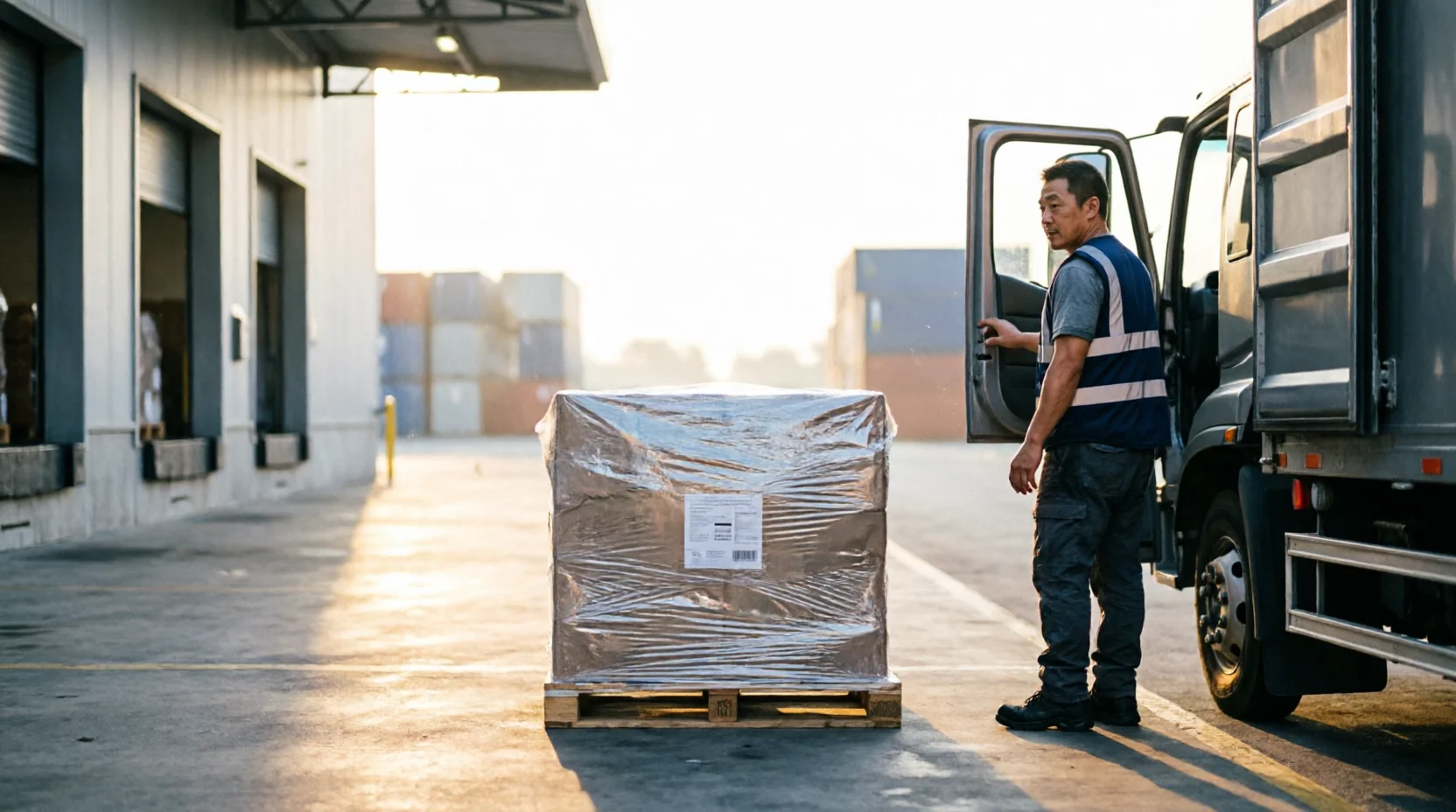
Run the first two or three shipments under active supervision: more attention than you would give a routine shipment. Confirm each stage in writing: booking confirmation, bill of lading draft, pre-arrival notification, customs clearance confirmation, delivery to warehouse. Any error or omission on these first shipments should be raised immediately and in writing so the new forwarder can correct their internal process before it becomes a pattern.
Three documentation errors in ninety days is a demonstrated capability, not bad luck, and waiting for a fourth before you act is avoidance wearing the costume of patience. Set the threshold before you need it: three material errors in any rolling ninety-day window triggers the evaluation process in this guide, no exceptions, no waiting to see if next quarter improves on its own. A forwarder relationship earns renewal by performance, the same as any other vendor contract you would review on schedule. Holding your forwarder to that standard protects the business you are actually responsible for.
Inventory Buffer During the Switch
The transition period carries a higher-than-normal risk of delay. Even a well-managed switch can produce a one- to two-week gap in your standard transit timeline if documentation setup or carrier booking is slower than expected.
Before initiating any switch, assess your current buffer stock on your highest-velocity SKUs. If you are already running lean (less than four weeks of cover), delay the switch until you have built the buffer. A stock-out during a forwarder transition compounds the disruption significantly.
For a detailed framework on buffer stock sizing for imported goods, see How to Avoid Stockouts When Importing to Australia. The methodology there applies directly to the forwarder transition window.
Incoterms and Supplier Instructions
When you switch freight forwarders, your supplier also needs to be updated. If you are buying on FOB or EXW terms, your supplier is booking freight on your behalf or delivering to a nominated agent at origin, and that agent needs to change.
Notify your supplier of the new forwarder’s origin office or agent contact at least two full shipment cycles in advance of the switch. The origin contact receives shipping instructions, issues the bill of lading, and coordinates container pickups at factory or CFS. A supplier who sends an existing shipment to the old forwarder’s origin agent after the switch has happened creates a logistical problem that takes days to untangle.
For a full breakdown of how Incoterms determine the freight booking responsibility in your supply chain, see What Incoterms Mean for Australian Importers. The specific point at which control transfers from your supplier to your forwarder depends on the term in your purchase order.
Renegotiating Rates as Part of the Switch
A forwarder transition is the highest-leverage moment to renegotiate freight rates and service terms. You have clarity on your volumes, your lanes, and your requirements, and the new forwarder is motivated to win the business. Use that leverage explicitly.
Come to the rate discussion with your annualised shipment data: total TEUs or CBM per year, peak months, average cargo weight, and the specific lanes (origin country to Australian port). A forwarder who can see a full year of volume will provide a more competitive rate than one working from a vague description.
Negotiate the following specifically:
- Ocean freight rate: Expressed per TEU (20-foot equivalent unit) or per CBM for LCL shipments. Confirm whether this is an all-in rate or whether BAF (Bunker Adjustment Factor) and PSS (Peak Season Surcharge) are additional.
- Local charges: THC (Terminal Handling Charge), documentation fees, and customs entry fees vary significantly between forwarders and should be itemised, not buried in an all-in quote.
- Rate validity: Spot rates are valid for 30 days. A volume agreement locks the rate for 90 to 180 days. If your volume justifies it, push for a rate agreement. See How to Scale Your Import Business in Australia for the volume thresholds at which a rate agreement becomes worthwhile.
- Priority booking: During peak season, confirmed space is worth more than the headline rate. A forwarder with carrier relationships can offer priority booking on tight sailing schedules. Ask explicitly whether this is available and under what conditions.
After the Switch: What Good Looks Like
By the end of the third month with a new forwarder, the relationship should be producing a consistent operating rhythm. Assess performance across four dimensions:
Documentation accuracy
Every import declaration should match your commercial invoice and packing list exactly: commodity description, quantity, value, origin country, and HS code. A single mismatch creates a customs query that costs time and may trigger a hold. Track declaration accuracy across your first 10 shipments. If errors are present, address them with the forwarder at the shipment level, not in a quarterly review.

Transit time consistency
A reliable forwarder should be able to forecast your transit time within a two- to three-day band on a given lane. Compare actual transit time against quoted transit time on each shipment. Consistent underperformance against the quoted transit indicates a carrier booking problem: either the forwarder is booking on a rolling basis without securing direct sailings, or their nominated carrier is transshipping when a direct service was promised.
Proactive communication
You should not be chasing your forwarder for shipment updates. A well-run freight account produces proactive notifications at: booking confirmation, bill of lading issuance, departure, estimated arrival update if there is any variance, customs clearance, and delivery. If you are regularly discovering shipment delays through your own tracking rather than a forwarder notification, that is a service gap that needs to be named directly.
Biosecurity and compliance performance
Clearance through DAFF biosecurity should be routine for standard commodity shipments. If you are experiencing biosecurity holds on goods that have cleared without issue previously, the likely cause is a documentation change: a new supplier, a modified product description, or an updated packing material. Resolve these at the documentation level rather than accepting holds as normal.
Supplier-to-Warehouse Chain After the Switch
The freight forwarder controls the ocean leg, but the full chain runs from supplier payment through to warehouse receipt. A forwarder switch can expose gaps in adjacent parts of the chain that were previously hidden by the existing relationship’s workarounds.
After the switch, review the end-to-end chain: purchase order to supplier confirmation, supplier to booking instruction, origin collection to port CFS, port departure to Australian arrival, customs clearance to port release, drayage from port to your warehouse. Each handoff is a potential failure point. The new forwarder manages most of these, but the visibility into what they are doing at each point is something you build over the first 60 to 90 days.
For a detailed breakdown of how to manage the supplier-to-warehouse chain after a forwarder change, see How to Manage Supplier to Warehouse Logistics in Australia.
The EXW Problem
If you are buying on EXW (Ex Works) terms, your forwarder manages the entire movement from your supplier’s factory gate. This makes the forwarder more central to the relationship, and a switch more operationally sensitive, because the new forwarder needs to establish an origin agent relationship, understand your supplier’s location and loading requirements, and manage export customs at origin on your behalf.
EXW switches require a minimum four-week lead time before the first shipment under the new forwarder. Allow six weeks if your supplier is in a secondary manufacturing hub that requires a two-leg movement to port (common in inland China, provincial Vietnam, and some European origins).
A switch is also a good trigger to reassess whether EXW is the right Incoterm for your program. In many cases, FOB is simpler to manage: your supplier handles export formalities and delivers to port, and your responsibility begins at the ship’s rail. See EXW vs FOB vs CIF for Australian Importers for a direct comparison of what each term costs you in operational overhead.
Managing the Compliance Gap
There is a knowledge gap between when your current forwarder stops managing your account and when your new forwarder has fully internalised your compliance profile. This gap is highest in the first three shipments and narrows with each subsequent booking. During that window, certain compliance risks are elevated.
Tariff classification continuity. If your current forwarder has been classifying a product under a specific HS code (potentially one that is borderline between two headings), the new forwarder may classify it differently. Both outcomes are possible: the new classification may be more accurate, or the existing one may be defensible under a ruling your previous forwarder obtained informally. Before the first shipment under the new forwarder, provide the HS codes you have been using and ask for a written classification opinion on your top five product lines.
Free Trade Agreement continuity. If you have been claiming tariff preferences under CHAFTA, AANZFTA, or AUSFTA, your new forwarder needs to understand which certificates of origin or supplier declarations apply to each product line. A missed FTA preference does not create a compliance problem, but it creates an unnecessary duty payment. On high-volume product lines at a 5% duty rate, that cost accumulates quickly. Confirm that the new forwarder has reviewed and documented your FTA eligibility before the first shipment under their management.
DAFF permit continuity. If any of your products require standing biosecurity import permits (certain processed foods, timber products, or goods containing organic materials), confirm that these permits are transferred to the new forwarder’s systems before their first shipment departs origin.
Swift Cargo provides freight forwarding, customs brokerage, and supply chain advisory services for Australian importers. Get a quote for your import program.

What a Well-Run Forwarder Relationship Produces Over Time
The decision to switch is often framed as a cost or a risk. The more useful framing is: what should an optimally managed freight forwarder relationship be producing, and is your current relationship producing it?
A forwarder that knows your product mix, your supplier network, your compliance profile, and your volume cadence is worth more than a forwarder offering a lower spot rate on a single shipment. That accumulated knowledge (your customs classification history, your seasonal peak patterns, your preferred carriers on each lane) takes six to twelve months to build. If you switch every two years, you are rebuilding that relationship capital on a perpetual cycle.
Switch when the relationship is genuinely broken or the mismatch is structural. Build for the long relationship when the forwarder is performing. And if you are not certain which category you are in: run the evaluation against the criteria above before deciding.
Frequently Asked Questions
How much notice should I give my current freight forwarder when switching?
A minimum of 30 days written notice is standard practice. If you have active shipments in transit, wait until those clear Australian customs before activating the new forwarder. Giving your current forwarder adequate notice also gives you time to recover outstanding documentation and customs records.
Can I switch freight forwarders mid-shipment?
No. A shipment that is already at origin, in transit, or awaiting customs clearance must complete with the current forwarder. Switching mid-shipment creates documentation gaps, breaks the customs broker chain, and can result in delays or penalties. Always switch between shipments.
What records do I need to recover from my old freight forwarder?
Request copies of all import declarations (N10 or SAC), bills of lading, commercial invoices, packing lists, and any customs rulings or tariff classification decisions that apply to your goods. ABF requires importers to retain records for five years, so you need these regardless of who holds them operationally.
Will switching freight forwarders affect my customs compliance history?
Your compliance history is tied to your ABN, not your forwarder. The new customs broker will be able to access your import history through the Integrated Cargo System (ICS). However, nuanced information (like informal understandings around product classification or past rulings) must be transferred manually as part of the handover.
How long does it take to get a new freight forwarder fully operational?
Allow four to six weeks from initial engagement to the first shipment departing under the new forwarder’s management. This covers credit application, customs broker authorisation, carrier account setup, and one trial booking. The administrative overhead is front-loaded: subsequent shipments run smoothly once the accounts are live.
Should I run two freight forwarders in parallel during a transition?
Only if your volume justifies it. Running a trial shipment with the new forwarder while the old one handles regular volume is a valid strategy. It lets you evaluate the new forwarder on a real shipment before full commitment. The downside is short-term administrative complexity: two sets of documentation, two contacts, two invoicing streams.