
Three Incoterms account for the vast majority of freight quotes Australian importers receive from suppliers in China, Vietnam, and the United States: EXW, FOB, and CIF. Understanding the practical difference between them (not the legal definition, but what each one means for your cost, your risk, and your control) is one of the highest-leverage decisions in a freight program. Choosing exw vs fob australia import terms correctly, before the purchase order is signed, is what determines who controls the shipment and who eats the cost when something goes wrong at origin.
This article covers EXW, FOB, and CIF with a worked cost scenario and a decision framework by situation. For the full Incoterms 2020 reference covering all 11 terms, see the complete Incoterms guide for Australian importers.

What Each Term Actually Means
Before the comparison, the core mechanics of each term need to be precise, because the common summaries (“FOB means the seller pays to port”) are loose enough to cause real problems.
EXW: Ex Works
The seller’s obligation ends at their factory premises. They make goods available for collection; everything else is the buyer’s problem. This includes:
- Loading the goods onto the collecting truck (the seller is not obliged to do this under strict EXW)
- Export customs clearance in the origin country
- Origin inland transport from factory to origin port
- All freight, insurance, and charges from that point forward
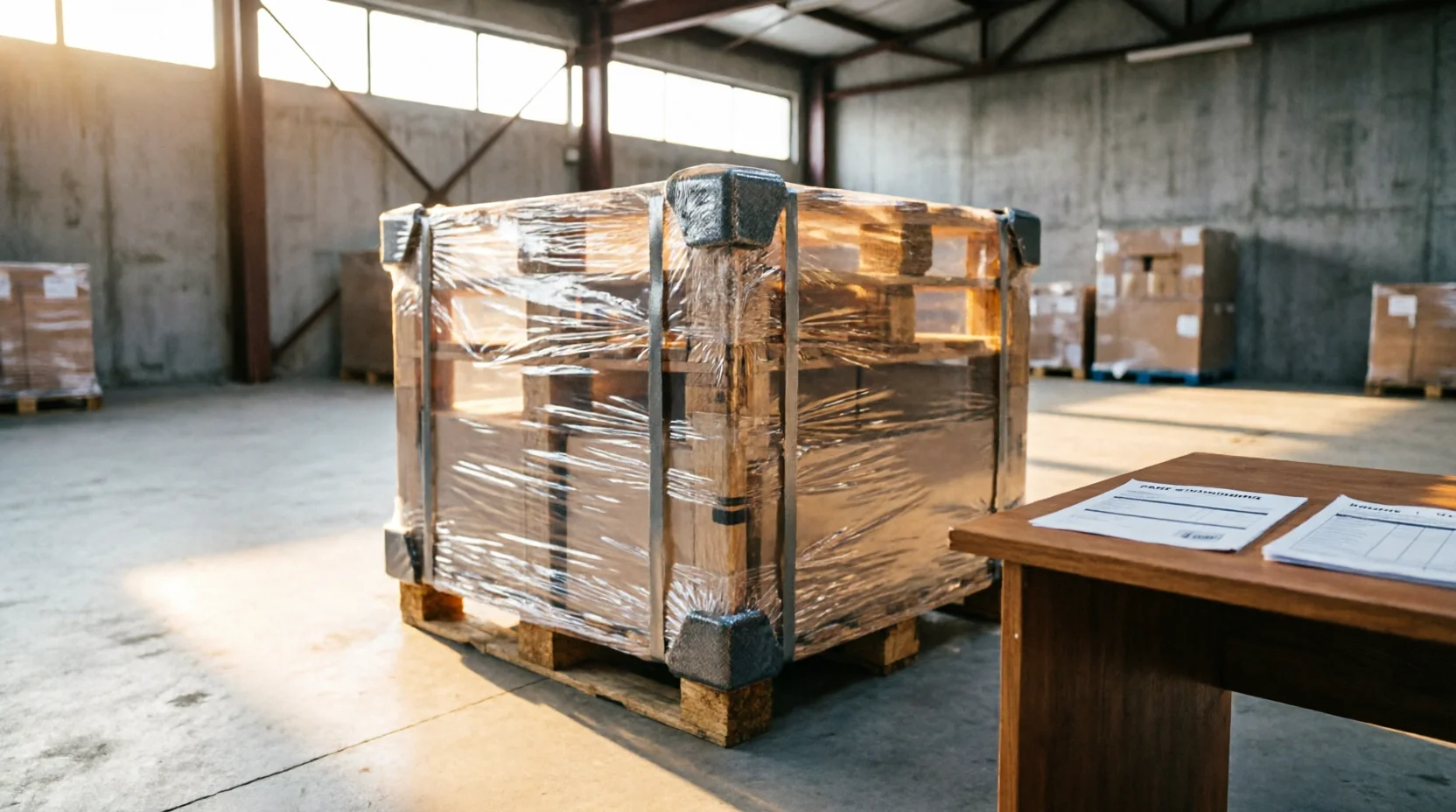
Risk transfers to the buyer the moment goods are available at the seller’s premises: before they are even loaded onto the collecting truck. Under strict EXW, if the goods are damaged during loading at the seller’s factory, that is the buyer’s problem from the moment they were available for collection.
FOB: Free On Board
The seller delivers goods on board the named vessel at the named origin port and handles export customs clearance. Risk transfers to the buyer when goods are on board the vessel. The seller pays:
- Export customs clearance at origin
- Origin inland transport to the port
- Origin port handling charges (loading/THC)
The buyer pays from that point: ocean freight, marine insurance, destination port charges, Australian customs clearance, and inland delivery.
The International Chamber of Commerce recommends FCA (Free Carrier) instead of FOB for containerised shipments, because under FOB, risk transfers at loading onto the vessel, but the container has often been sitting in the terminal (outside both parties’ control) for days before loading. FCA transfers risk at the point the carrier takes possession, which is cleaner. In Australian freight practice, FOB remains the working standard and forwarders handle it routinely.
CIF: Cost, Insurance and Freight
The seller pays ocean freight and arranges insurance to the named destination port. Risk still transfers to the buyer at the origin port when goods are loaded: the same point as FOB. The seller provides minimum Institute Cargo Clauses (C) insurance coverage.
The buyer pays from the destination port: terminal handling charges, Australian customs clearance (ABF import declaration), DAFF biosecurity, and inland delivery.
The critical point that most importers miss: under CIF, the risk transferred at origin is identical to FOB. The seller is paying for freight and insurance, but they are not bearing the risk of that freight. If your goods are lost at sea under CIF terms, you make a claim against the seller’s minimum insurance, which may or may not cover your actual loss, depending on what ICC(C) covers and at what declared value.
The Three Dimensions That Actually Matter
The right comparison of EXW, FOB, and CIF runs across three dimensions: cost control, risk management, and operational complexity.
Dimension 1: Cost Control
EXW: You control every cost, but you also bear every cost, including the origin-side costs where your leverage may be lowest. Export customs clearance in China or Vietnam requires a local licensed broker. Origin inland transport from factory to port in an unfamiliar market means you pay retail prices. Sellers who work with multiple forwarders at origin get consolidation pricing you will not have access to independently.
FOB: You control all costs from the origin port forward. Your freight forwarder shops the ocean freight market and arranges insurance at competitive rates. The origin-side costs are bundled into the seller’s FOB price, where they can negotiate with their own export clearance agent and local haulier. Both parties are paying costs in their domain of expertise.
CIF: The seller controls ocean freight and insurance. You have no visibility into what rate they obtained, and no ability to benchmark it. Sellers who offer CIF frequently embed a margin into the freight rate: the same ocean freight you could buy at USD 1,800 FOB might be priced at USD 2,200 CIF, netting the seller USD 400 on a notional USD 1,800 freight cost. You only discover this by requesting FOB and CIF quotes simultaneously and comparing.
Dimension 2: Risk Management
EXW: Maximum risk to the buyer from the earliest possible point. If goods are damaged during origin loading, during factory-to-port transit, or during port handling before vessel loading, the buyer bears that risk without having had meaningful control over the handling. EXW insurance must cover from the seller’s factory gate: a policy that can be arranged but requires specific attention to origin-side handling coverage.
FOB: Risk to the buyer from the origin port loading. The seller’s domain (factory to port, export clearance, port handling) is their risk. Your risk starts at the point your forwarder’s ocean carrier takes possession. Marine insurance arranged by your forwarder can be calibrated exactly to your cargo type: ICC(A) for All Risks coverage on sensitive goods, ICC(B) for intermediate, ICC(C) for robust containerised cargo at lowest premium.
CIF: Risk to the buyer from origin loading, same as FOB. But the insurance is the seller’s choice, subject to ICC(C) minimum. ICC(C) covers only named perils: fire, explosion, vessel stranding, sinking, collision, general average, jettison. It does not cover rough handling damage, water ingress, contamination, or theft at destination: four of the most common cargo loss causes. If your goods are sensitive to any of these, CIF’s minimum insurance is inadequate and you would need to arrange a top-up policy, which undermines CIF’s apparent simplicity.
Dimension 3: Operational Complexity
EXW: Highest complexity for the buyer. You must engage an origin-side agent for export clearance and local transport. Managing a freight chain that starts at a factory in Dongguan with no local presence requires either a forwarder with established origin-side operations or your own agent network.
FOB: Moderate complexity, well-matched to working with an Australian freight forwarder. The seller handles origin; your forwarder handles ocean freight, insurance, and Australian clearance. The two sides of the chain are clean, and each party manages what they know.
CIF: Lowest apparent complexity: the seller handles more. But this simplicity is partly illusory: you still handle Australian customs clearance (the seller cannot do this for you), DAFF biosecurity, and inland delivery. The part of the chain that feels most complex to Australian importers (customs clearance) is still their responsibility under CIF. What CIF removes is ocean freight management, which is actually the part your forwarder handles most efficiently.
Worked Scenario: USD 50,000 Shipment from Guangzhou to Sydney
Consider a real shipment: 8 CBM of commercial goods, USD 50,000 declared value, Guangzhou to Sydney, containerised LCL. Typical numbers for the three Incoterm options:
| Cost Component | EXW | FOB | CIF |
|---|---|---|---|
| Seller’s invoice price | USD 50,000 | USD 51,400 | USD 53,200 |
| Origin export clearance | USD 180 (buyer) | Included in FOB | Included in CIF |
| Origin inland transport (factory → port) | USD 320 (buyer) | Included in FOB | Included in CIF |
| Origin THC + port charges | USD 280 (buyer) | Included in FOB | Included in CIF |
| Ocean freight (LCL rate) | USD 1,600 (buyer) | USD 1,600 (buyer) | Included in CIF |
| Marine insurance (ICC-A) | USD 220 (buyer) | USD 220 (buyer) | USD 150* (seller, ICC-C only) |
| Destination port charges | USD 450 (buyer) | USD 450 (buyer) | USD 450 (buyer) |
| ABF import declaration | USD 180 (buyer) | USD 180 (buyer) | USD 180 (buyer) |
| Customs broker fee | USD 280 (buyer) | USD 280 (buyer) | USD 280 (buyer) |
| Inland delivery (Sydney) | USD 320 (buyer) | USD 320 (buyer) | USD 320 (buyer) |
| Total landed cost | USD 53,830 | USD 54,450 | USD 54,580 |
*Seller’s ICC(C) premium estimated; ICC(A) top-up would add USD 70–100 to CIF scenario if arranged by buyer
EXW is the cheapest headline price but the highest total cost. The origin-side costs (export clearance, inland transport, origin THC) come in at USD 780 for a buyer arranging them independently, and that assumes reasonable origin agent pricing. These same costs are typically USD 600–650 when the seller bundles them into their FOB price through their established relationships. EXW’s apparent unit-price advantage disappears at the total landed cost level.
FOB and CIF land very close in this scenario. The CIF price is USD 130 more than FOB total landed cost when comparable ICC(A) insurance is factored in. In a scenario where the seller’s CIF freight rate is competitive, CIF can match FOB. The problem is that you cannot verify the seller’s CIF freight competitiveness without a separate quote, which requires the same effort as managing FOB in the first place.
The insurance gap is real. The CIF scenario above uses ICC(C) coverage at USD 150 premium. If the buyer accepts this without arranging top-up coverage and goods arrive water-damaged, they may find ICC(C) does not cover their loss. The difference between ICC(C) and ICC(A) is approximately USD 70 on a USD 50,000 cargo: a trivial additional cost to buy comprehensive coverage rather than minimum coverage.
How Australian Customs Interacts With Your Incoterm Choice
The ABF customs valuation methodology uses the transaction value of goods as the primary basis for customs duty calculation. For an EXW shipment, this is the EXW price plus origin-side costs. For a FOB shipment, it is the FOB invoice price. For a CIF shipment, it includes the seller’s freight and insurance components embedded in the CIF price.
The practical effect on Australian GST: the ATO calculates GST on the taxable importation value, which includes the customs value plus applicable duty plus the cost of freight and insurance to Australia. Under all three Incoterms, freight and insurance to the Australian port are included in this calculation: the Incoterm does not reduce your GST base. It affects only how those freight and insurance charges are disclosed: transparently (EXW/FOB) or embedded in the seller’s invoice (CIF).
For Australian importers using preferential tariff rates under ChAFTA or other free trade agreements, the Incoterm does not affect eligibility: that is determined by the certificate of origin. However, the invoice price used for customs valuation matters: CIF-priced invoices must accurately reflect the underlying value of goods (not inflated to include seller margin) for correct duty calculation.
DAFF Biosecurity: Always the Importer’s Responsibility
Regardless of Incoterm, DAFF biosecurity requirements are always the importer’s obligation. Treatment certificates, ISPM 15 timber packing compliance, and approved treatment declarations must be provided regardless of whether the shipment is structured as EXW, FOB, or CIF. No seller-side Incoterm obligation changes this.
For goods that require treatment before import (timber, used machinery, biological materials, food products) the treatment must be arranged and certified in the origin country by an approved provider. Under FOB, the seller typically facilitates this because they are handling export compliance. Under EXW, the importer’s origin agent must arrange it. Under CIF, the seller handles it as part of their export obligations but the importer must confirm it was done to DAFF’s standard, not just to the seller’s declaration.
For which product categories actually require treatment, and what DAFF looks for in each, see our guide to DAFF biosecurity requirements by product.

The Decision Framework: Which Incoterm to Use When
The right choice depends on four variables: your freight forwarder’s origin-side capability, your cargo type, your shipment volume, and your supplier relationship. Working through exw vs fob australia import scenarios against these four variables, rather than defaulting to whichever term the supplier proposes, is what keeps the decision in your control.
Use FOB when:
- You work with an Australian freight forwarder who has established agent relationships in the origin country: this is the standard case
- You want control over ocean freight rates and the ability to shop the market
- Your cargo requires ICC(A) or ICC(B) coverage: you want to choose your own insurer and coverage level
- You are shipping regularly from the same origin port and your forwarder has rate agreements in place
- You are managing total landed cost tightly and want visibility into every charge component
Use CIF when:
- You are placing a small, one-off order where the administrative overhead of managing freight independently is disproportionate
- Your supplier’s CIF freight rate has been benchmarked against your forwarder’s FOB freight quote and is genuinely competitive
- Your cargo is robust, lower-value, and ICC(C) coverage is genuinely adequate (not just minimum)
- You have verified, in writing, what the seller’s CIF insurance covers and at what declared value
Avoid EXW unless:
- You have an established, known-cost agent in the origin country handling export clearance and local transport
- You are benchmarking the seller’s FOB price: EXW reveals the factory price before origin costs, which is useful for understanding how the price builds up even if you ultimately ship FOB
- Your forwarder has a significant origin-side operation and quotes EXW as their preferred arrangement
For most Australian importers sourcing from China or Vietnam using a standard freight forwarder, FOB is the right default, and it should be the default unless there is a specific reason to deviate. The complete chain management framework for taking an FOB shipment from factory to Australian warehouse is covered in the supplier-to-warehouse logistics guide.
How to Benchmark a CIF Quote Against FOB
If a supplier defaults to CIF and you want to evaluate whether their pricing is competitive, the methodology is straightforward but requires two parallel quotes.
Ask your supplier for both their CIF price (to the named Australian port) and their FOB price (at the origin port). Then ask your freight forwarder to quote the ocean freight and insurance for the same shipment on an FOB basis. You now have two routes to the same destination:
- Route A: Supplier’s CIF price → your destination charges (destination THC, customs clearance, inland delivery)
- Route B: Supplier’s FOB price + your forwarder’s freight + your forwarder’s insurance → your destination charges
If Route A (CIF total) is higher than Route B (FOB + your freight + your insurance), you are paying a freight markup in the supplier’s CIF price. That markup is pure margin for the supplier with no service benefit to you: the same ocean carrier, the same transit time, the same destination port. The only difference is who booked the space.
In practice, the markup is typically small for small shipments (USD 100–300) and larger for significant FCL volumes (USD 400–800 per container). For importers doing regular volume, systematically choosing FOB and benchmarking CIF can recover meaningful freight cost over a year of shipments.
One important caveat: some suppliers have genuine volume-based rate agreements with carriers that give them better freight rates than your forwarder can access for a single booking. In those cases, CIF can genuinely be cheaper, but you will only know this by running the benchmark, not by assuming.

I once took over a supply chain where every purchase order defaulted to EXW because that was the field the ordering template shipped with, not because anyone had chosen it. Nobody noticed until a shipment sat at the factory gate for eleven days while two people argued about who was supposed to book the truck. The lesson was not about Incoterms in the abstract. It was that a default nobody chose is not a decision, it is an accident waiting for a bad week to happen. Before you accept whatever term is already typed into the purchase order, ask your supplier for their own outbound freight quote on the same shipment. If they can produce one in an hour, they were never going to leave that job undone. If they cannot, you have just found the gap EXW was hiding.
Negotiating Your Incoterm
Most Australian importers accept whatever Incoterm their supplier defaults to. In practice, most suppliers will negotiate: they often have a preferred Incoterm from their operational perspective, but they are not inflexible.
The conventional view is that the Incoterm is an administrative detail: a three-letter code the supplier fills in while the real negotiation happens on unit price. The opposite is closer to the truth. The Incoterm decides who holds the information, and in freight the information is the margin. A supplier who insists on CIF is volunteering to act as your freight forwarder without showing you a rate card. Once you read the terms question that way, the negotiation stops being about convenience and becomes a simpler question: are you willing to let the counterparty price a service you cannot benchmark? Most importers answer yes without realising they were ever asked.
The negotiation is straightforward: ask for both EXW and FOB quotes (or FOB and CIF if the supplier defaults to CIF). The gap between them tells you what the origin-side cost stack looks like priced by the seller. You can then compare this against your forwarder’s ability to arrange origin-side services separately.
If the supplier’s FOB price is only modestly above their EXW price, they are pricing the origin services competitively. If the gap is large relative to what independent origin services would cost, you are paying a margin on the origin stack that a direct arrangement might avoid.
One common negotiating point: if a supplier insists on CIF because they have a freight arrangement with a carrier, ask them to provide the bill of lading showing their actual freight rate. This is a reasonable request and helps you verify that the CIF price is not embedding a freight markup.
To understand how the Incoterm choice feeds into your planning for transit timelines from China to Australia, see the freight timeline guide: the stages at which your Incoterm affects your visibility and control are particularly relevant there.
For Swift Cargo’s approach to freight management from China and Vietnam under FOB terms, see the Australia freight page and get a quote.
EXW vs FOB Australia Import: Quick Decision Recap
Choose EXW only when your own forwarder has strong origin-side capability and you want full control from the factory door; choose FOB when the supplier is better placed to handle export documentation and loading. Most exw vs fob australia import decisions come down to that single question of who is better positioned to manage the origin side, not a fixed rule about which term is universally cheaper.
Frequently Asked Questions
Is FOB or CIF better for Australian importers?
FOB is generally better for Australian importers who work with a freight forwarder. Under FOB, your forwarder controls the ocean freight booking and insurance, giving you visibility into exactly what you are paying and the ability to shop the market. CIF hands those decisions to the seller, who may embed a markup in the freight rate and provide only minimum ICC(C) insurance, which is insufficient for many cargo types. The exception is small, low-value shipments where the administrative overhead of managing freight is not worth the cost visibility.
Why is EXW usually a bad choice for Australian importers?
EXW transfers all responsibility to the buyer from the seller’s factory gate. For Australian importers, this means arranging export customs clearance in the origin country, origin inland transport, and all charges from that point forward: services you will pay for at arm’s length pricing rather than your seller’s established rate. EXW pricing looks lower than FOB because the seller’s costs stop at the factory door, but those costs do not disappear: they move to you, usually at a higher unit cost.
Does the Incoterm affect my Australian customs duty calculation?
The Incoterm affects how the customs value is composed. Under FOB, the customs value is the transaction value at the origin port; freight and insurance to Australia are then added to calculate the taxable importation value for GST. Under CIF, the seller’s freight and insurance costs are embedded in the invoice price and form part of the customs value directly. The key practical difference: under FOB you can verify each charge separately; under CIF they are bundled into the seller’s invoice and harder to challenge.
What is the difference between FOB and FCA for containerised sea freight?
The ICC recommends FCA over FOB for containerised shipments because FCA transfers risk when the container is handed to the nominated carrier, which is a cleaner handover point than FOB’s vessel-loading moment. In practice, most Australian forwarders handle FOB routinely and the distinction rarely creates a real dispute. FOB remains the working standard on China-Australia and Vietnam-Australia routes despite the ICC’s guidance.
Can my supplier offer both FOB and CIF prices?
Yes. Most established manufacturers in China and Vietnam quote both EXW and FOB as standard, and many will quote CIF on request. Requesting both FOB and CIF quotes for the same shipment lets you benchmark the seller’s CIF freight rate: if your forwarder can move the same shipment for less than the embedded CIF freight charge, FOB gives you a better total landed cost.