
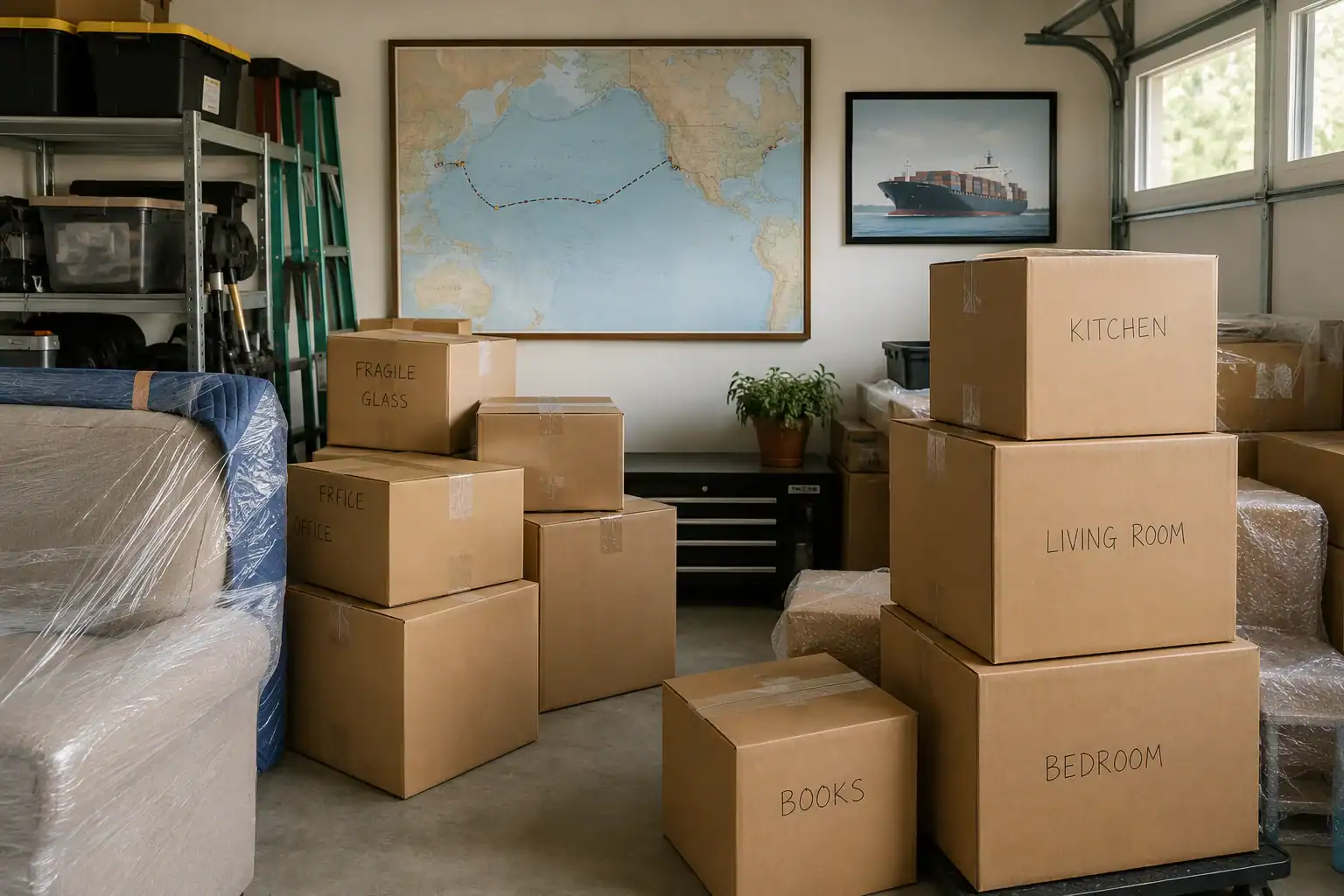
Cost of Moving Household Goods from the USA to Thailand: A Complete Breakdown
Moving household goods from the USA to Thailand uses a different ocean route than most of the articles you will find online, and a different surcharge profile. The trans-Pacific route from Los Angeles or Long Beach to Singapore and then Laem Chabang is not affected by the Red Sea rerouting that added 10–14 days and a War Risk Surcharge to UK and European shipments in 2024. For US movers, the transit time is 20–28 days, the surcharge stack is simpler, and the freight rates on the Pacific trade lane are more competitive than on the Europe-Asia lane.
That does not make the total cost small. A one-bedroom LCL move from Los Angeles to Bangkok still spans six cost layers across two currencies (USD for US origin and ocean freight, THB for Thai destination costs). It also carries US export documentation requirements, Thai customs, and the same personal effects duty relief conditions that apply to every nationality. The total cost is driven by the same five inputs as any international move: volume, departure port, month, Thai visa status at customs clearance, and delivery destination within Thailand.
A 20-foot container of a two-bedroom home moves from Long Beach to Laem Chabang for less than the airfare most families pay to fly there, and almost nobody costing the move that way finds that out until the quote lands. For the full process of how a removal to Thailand works stage by stage, see our guide to international removals to Thailand.
The USA-to-Thailand Route
US household goods shipments to Thailand travel trans-Pacific: across the Pacific Ocean from US West Coast ports to Singapore or another Southeast Asian transshipment hub, then onward to Laem Chabang. This route does not pass through the Red Sea or the Suez Canal, which means:
- No War Risk Surcharge (the Red Sea conflict does not affect this trade lane)
- No Cape of Good Hope rerouting (not applicable to Pacific trade)
- Transit times are unaffected by the 2024 Red Sea disruption
Current transit times from US ports to Laem Chabang:
| US departure port | Transit (port to port) | Primary routing |
|---|---|---|
| Los Angeles / Long Beach | 20–26 days | Trans-Pacific to Singapore, feeder to Laem Chabang |
| Seattle / Tacoma | 22–28 days | Trans-Pacific to Singapore or Port Klang |
| Houston (US Gulf) | 28–38 days | Panama Canal transit, trans-Pacific or via Singapore |
| New York / New Jersey | 35–48 days | Suez Canal or Cape of Good Hope, then to Thailand |
For the great majority of US movers to Thailand, Los Angeles or Long Beach is the most practical departure port: the highest vessel frequency on the Pacific trade lane, the most competitive freight rates, and the shortest transit times from the West Coast. East Coast movers should note that shipping from New York to Thailand requires a much longer routing via Panama Canal or Suez/Cape. That routing adds 10–20 days and higher cost compared to the West Coast option. If you are on the East Coast, it may be worth transporting goods overland to a West Coast port. Compare the land transport cost against the transit time and freight rate difference.
Total door-to-door from US packing day to Bangkok delivery: 35–55 days (West Coast origin) to 55–75 days (East Coast origin).
US Export Requirements
Goods leaving the USA valued at USD 2,500 or more must be filed with the US Census Bureau via the Automated Export System (AES). The same applies to any goods requiring an export licence, regardless of value. This Electronic Export Information (EEI) filing is required for most household goods removal shipments. Your freight forwarder or removals company files this on your behalf.
Household goods shipments are filed under the “HH” export information code rather than a standard Schedule B commodity number. Your forwarder will advise how to classify any high-value or regulated items shipped alongside the household lot.
Household goods leaving the USA incur no export duty. The EEI filing is an administrative requirement. Filing incorrectly delays export clearance. Confirm with your forwarder that AES filing is included in their service.
For goods subject to US export controls (certain electronics, dual-use technology, firearms, etc.), additional licensing may be required. Most standard household goods are exempt, but confirm any regulated items with your forwarder before packing.
The Six Cost Layers: USA to Thailand
Layer 1: US Origin Costs
| Item | LCL (per CBM) | 20ft FCL |
|---|---|---|
| Professional packing service | USD 300–700 flat | USD 900–1,800 |
| Origin THC (LA/LB) | USD 12–22/CBM | USD 225–400 |
| Origin CFS fee (LCL only) | USD 10–20/CBM | N/A |
| Bill of lading / Seaway bill fee | USD 40–80 | USD 40–80 |
| AES / EEI filing | USD 50–120 | USD 50–120 |
| Inland transport to port (if not LA-area) | USD 200–800+ | USD 400–2,000+ |
Inland transport from non-LA-area origins is a significant variable. A shipment from New York or Chicago to Los Angeles for West Coast departure adds USD 600–2,500 for an LCL shipment or USD 1,500–4,000 for an FCL container. You must weigh this cost against the total cost of an East Coast departure port. If you are unsure how many CBM your home occupies, the CBM size guide breaks it down tier by tier.
Layer 2: Ocean Freight and Surcharges
| Item | LCL (per CBM) | 20ft FCL |
|---|---|---|
| Base ocean freight (LA/LB–Laem Chabang) | USD 60–140 | USD 1,400–2,800 |
| Bunker Adjustment Factor (BAF) | USD 15–40 | USD 200–500 |
| Low Sulphur Surcharge (LSS/IMO 2020) | USD 8–20 | USD 100–220 |
| Peak Season Surcharge (Q3 if applicable) | USD 10–30 | USD 120–350 |
| War Risk Surcharge | None (trans-Pacific route) | None |
The absence of a War Risk Surcharge is a meaningful cost advantage for US-origin shipments compared to UK/European equivalents. The Pacific trade lane also benefits from strong carrier competition, which keeps base rates and BAF levels more stable than on the Europe-Asia lane.
Layer 3: Marine Cargo Insurance
All-risks marine cargo insurance for household goods: 2–3.5% of declared replacement value. For goods valued at USD 20,000, the premium is USD 400–700. For USD 40,000 (typical 20ft FCL), the premium is USD 800–1,400. Household goods cover is a different product from commercial marine cargo and is priced far higher. It is written on new-for-old replacement value at destination for used goods, and it extends to mould, mechanical derangement and pairs-and-sets. Commercial containerised cargo runs a fraction of this. Owner-packed cartons are normally restricted to total-loss-only and are not covered at this rate. The Carriage of Goods by Sea Act (COGSA), the US equivalent of the Hague-Visby Rules, limits ocean carrier liability to USD 500 per package, not per kilogram. For container moves, “package” may be interpreted as the entire container if not itemised. That interpretation makes marine insurance even more critical for US-origin container moves than for some other origins.
Layer 4: Thai Destination Port Charges
| Item | LCL | 20ft FCL |
|---|---|---|
| Destination THC (Laem Chabang) | THB 300–700/CBM (~USD 9–20) | THB 3,500–5,500 (~USD 100–157) |
| CFS deconsolidation fee (LCL only) | THB 400–900/CBM (~USD 11–26) | N/A |
| Port entry / customs processing fee | THB 200–400 (~USD 6–11) | THB 200–400 (~USD 6–11) |
Exchange rate used: THB 35/USD (mid-2025 baseline; the Baht has since strengthened to roughly THB 33.7/USD, so treat these USD conversions as directional, not exact). FCL containers bypass the CFS deconsolidation step. That saves THB 400–900 per CBM compared to LCL, a meaningful saving on a 15–25 CBM move.
Layer 5: Thai Customs, Duty Relief and What Applies to Americans
Thai personal effects duty relief applies equally to all nationalities, including Americans. The conditions are unchanged: valid Thai long-term residency permit at the time of customs clearance, used personal effects only, goods arrive within six months of establishing Thai residence, one-time relief per change of residence.
For American movers, the common residency paths are:
- Non-Immigrant B with work permit: This route is employer-sponsored. The work permit must be in hand before customs clearance for duty relief to apply.
- Non-Immigrant OA (retirement): This route is available to Americans 50+ and requires proof of funds (THB 800,000 in Thai bank account or monthly income THB 65,000+).
- Thailand Elite / LTR visa: Available to Americans with qualifying income, investment, or professional credentials. The LTR visa fee is THB 50,000, and it offers 10-year status.
- Non-Immigrant O (marriage/family): This route applies to Americans married to Thai nationals.
Americans on a tourist visa or visa-exempt entry do not qualify for duty relief. That visa-exempt window for US passport holders fell from 60 to 30 days on 15 September 2026. Confirm the current allowance before booking goods to sail. Thai import duty applies at 10–30% of CIF value for household goods categories, plus 7% VAT. See our detailed guide to duty-free import rules in Thailand.
Customs broker fee: THB 3,500–7,000 (~USD 100–200) for a standard personal effects entry.
Layer 6: Last-Mile Delivery Within Thailand
| Destination | LCL van | 20ft FCL truck |
|---|---|---|
| Laem Chabang to Bangkok | THB 2,000–4,000 (~USD 57–114) | THB 5,000–9,000 (~USD 143–257) |
| Bangkok to Chiang Mai | THB 6,000–12,000 (~USD 171–343) | THB 12,000–22,000 (~USD 343–629) |
| Bangkok to Phuket | THB 5,000–10,000 (~USD 143–286) | THB 10,000–18,000 (~USD 286–514) |
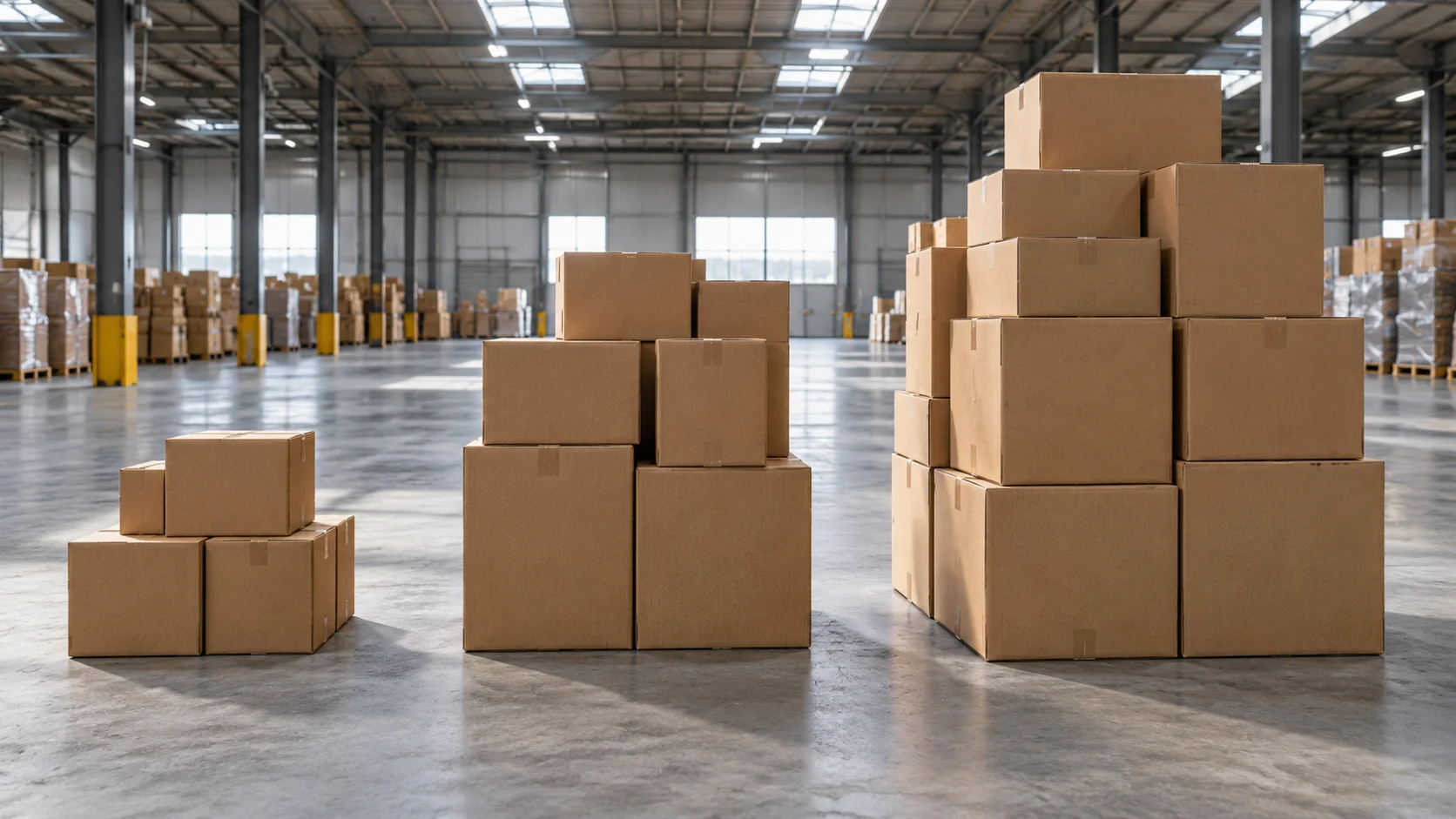
Three Full Cost Scenarios
All costs in USD. Ocean freight at LA/LB–Laem Chabang rates last confirmed mid-2025. Trans-Pacific pricing has moved since, so treat these as a starting reference and confirm current rates with your forwarder. Personal effects duty relief is granted in all three scenarios, and West Coast origin is assumed.
Scenario 1: Studio Move (5 CBM LCL, Bangkok delivery)
From ~USD 3,886, door to door: West Coast departure, Bangkok delivery, duty relief granted. This package price includes origin pickup, loading, packing, short-term storage, ocean transit, Thai customs clearance, destination port charges, last-mile delivery, removal of packaging, and marine insurance.
Scenario 2: One-Bedroom Apartment (12 CBM LCL, Bangkok delivery)
From ~USD 5,890, door to door: West Coast departure, Bangkok delivery, duty relief granted. This package price includes origin pickup, loading, packing, short-term storage, ocean transit, Thai customs clearance, destination port charges, last-mile delivery, removal of packaging, and marine insurance.
Scenario 3: Two-Bedroom House (20ft FCL, Bangkok delivery)
From ~USD 8,140, door to door: West Coast departure, Bangkok delivery, duty relief granted. This package price includes origin pickup, loading, full packing, short-term storage, ocean transit, Thai customs clearance, destination port charges, last-mile delivery to a house, removal of packaging, and marine insurance.
Scenarios assume West Coast departure, personal effects duty relief granted, non-Q3 departure. No inland US transport cost is included (West Coast origin). East Coast movers should add USD 600–4,000 for inland transport to LA/LB, or request quotes for East Coast port departure with longer transit.
Treat every figure here as a budget to plan around, not a fixed quote. Nobody in this industry can responsibly price a move without knowing the details. Real costs move with things a blog post can’t account for: building access (a third-floor walk-up costs more to load than a ground-floor pickup), the time of year, and events like storms or global shipping disruptions that move freight rates with little warning. Fragile, oversized, or high-value items that need custom crating or special handling can add substantially to the total as well. The scenarios above assume a straightforward household load. Declared value also isn’t tied to room size or CBM: some people value ordinary furniture and electronics very low, while a small load of antiques or collectibles can be worth far more than a full container of everyday items. Our team works with you on your specific job and situation to give accurate, current pricing when it’s actually time to move.
East Coast vs West Coast: Which Port to Use
For Americans relocating to Thailand from East Coast cities (New York, Boston, Miami, Atlanta, Dallas), the port choice matters:
- West Coast departure (LA/LB): This option offers lower freight rates and surcharges, shorter Pacific transit (20–26 days port-to-port), and better vessel frequency. But it requires inland transport from the East Coast: typically USD 600–2,500 for LCL, USD 1,500–4,000 for FCL container.
- East Coast departure (New York/NJ): This option has no inland transport cost but involves longer routing (Panama Canal or Suez Canal depending on carrier), higher freight rates, and 35–48 days port-to-port. It is currently not affected by Red Sea rerouting (Panama Canal routing is available), but Suez routing adds a War Risk Surcharge if used.
The break-even calculation: compare (inland US transport cost to LA/LB) + (LA/LB ocean freight + surcharges) against (East Coast ocean freight + surcharges with longer routing). For most LCL moves under 10 CBM, West Coast departure is typically cheaper in total. For large FCL moves from deep East Coast cities, the inland transport cost can tip the comparison toward East Coast departure.
Rough starting point by region (first-pass estimates, not measured rates: treat as a planning guide, not a quote):
| Region | Example states | Typical inland leg to a West Coast port |
|---|---|---|
| West Coast / near-port | California, Oregon, Washington, Nevada | Minimal: often just local pickup |
| Mountain West | Arizona, Utah, Idaho, Colorado, New Mexico | Lower end of the inland range above |
| Central / Plains | Texas, Kansas, Nebraska, Minnesota, Missouri | Middle of the inland range above |
| Midwest / South | Illinois, Ohio, Tennessee, Georgia, Florida | Upper end of the inland range above |
| Northeast / East Coast | New York, Massachusetts, Virginia, North Carolina | Top of the inland range: worth comparing an East Coast departure instead, per the break-even note above |
These groupings are a starting estimate built on the inland-transport ranges above, not a measured rate per state. Actual cost depends on your exact city, the carrier’s routing that week, and current fuel and freight-market conditions. Get a quote for your specific origin before treating any number here as final.
Five Cost Management Actions for US Movers
1. Use a West Coast port if feasible
For movers within 800 km of the West Coast, departing from LA/LB is almost always cheaper in total than any East Coast routing. For movers in the Southeast or Midwest, get quotes for both before deciding. Inland transport costs are quantifiable, and the freight rate difference is significant.
2. Confirm Thai visa timing before goods sail
Since 15 September 2026, US visa-exempt entry runs 30 days and does not qualify for Thai personal effects duty relief. With a 35–55 day total timeline from LA departure to Thai customs clearance, goods booked without a confirmed Thai residency permit will likely arrive before the visa is granted. Apply for the Thai non-immigrant visa at the Royal Thai Consulate in Los Angeles, Chicago, or New York before departure.
3. Understand COGSA carrier liability vs marine insurance
COGSA (US carriage of goods law) limits carrier liability to USD 500 per package, not per kilogram. For a 20ft container declared as one package, the carrier’s total liability could be interpreted as USD 500. Marine insurance fills this gap. Arrange all-risks cover before goods are loaded, not after.
4. Declutter high-volume, low-value items
Every unnecessary CBM adds USD 160–200 to the total across origin THC, ocean freight, and Thai destination charges. Furniture and appliances available cheaply in Thailand (sofa sets, refrigerators, washing machines, mattresses) cost less to replace locally than to ship from the US. Focus the container on high-value, sentimental, or difficult-to-source items.

5. Avoid Q3 departures and Songkran arrivals
Q3 Peak Season Surcharges add USD 120–350 per FCL or USD 10–30 per CBM for LCL. Goods arriving at Laem Chabang in mid-April during Songkran add 7–14 days to clearance and THB 500–1,500 per CBM per week in storage charges. Both are avoidable with booking timing.
Get a quote for your USA-to-Thailand move →
The single most expensive mistake on a US-to-Thailand move is not choosing the wrong port or the wrong carrier. It is shipping before the long-term visa is in the passport. Get that one sequence wrong and a shipment that should have cleared duty-free instead attracts 10–30% duty plus 7% VAT on the declared value of every sofa, mattress and box: a five-figure surprise on a two-bedroom load. The freight quote is the small number. The visa timing is the one that decides whether the freight quote is the whole bill or a fraction of it. And freight is only the first line: budget for the full first-year cost of relocating to Thailand before you decide how much of the house is worth shipping at all.
A note on reading the numbers above. Six layers is an accurate way to account for the cost, and a poor way to predict it. Three of the six barely move: insurance tracks your declared value, Thai destination charges are published, and the customs broker charges roughly what every other broker charges. Two move a little with the season and the port. One moves enormously, and it is the one most people never price: whether your visa is in hand, in the right category, on the day the container arrives. Get that wrong and duty and VAT land on the whole shipment. On a typical household consignment, that is a five-figure difference. Everything else on the list is rounding by comparison. Price the visa timing first. Then worry about the freight.
Related reading: Ship Household Goods to Thailand: Step-by-Step Guide
Frequently Asked Questions
How much does it cost to move household goods from the USA to Thailand?
The all-in cost of moving household goods from the USA to Thailand ranges from approximately USD 3,600–4,200 for a studio LCL move (5 CBM, West Coast departure, Bangkok delivery, duty relief granted) to USD 5,500–6,300 for a one-bedroom apartment (12 CBM LCL) to USD 7,700–8,600 for a two-bedroom house FCL move. East Coast departures add USD 600–4,000 in inland transport or higher ocean freight costs on longer routings. These figures assume personal effects duty relief is granted. Without it, import duty (10–30% of CIF value) plus 7% VAT adds substantially to the total.
How long does shipping from the USA to Thailand take?
From Los Angeles or Long Beach, port-to-port to Laem Chabang is 20–26 days. Total door-to-door from US packing day to Bangkok delivery is typically 35–55 days for West Coast departures, shorter than European-origin moves (80–100 days). East Coast departures add 15–22 days to the ocean transit. Unlike UK and European cargo, US trans-Pacific routes are unaffected by the 2024 Red Sea disruption and current War Risk Surcharges.
Do Americans pay import duty on household goods shipped to Thailand?
Not if personal effects duty relief is granted. The conditions are the same for Americans as for any nationality: valid Thai long-term residency permit (not tourist or visa-exempt entry) at the time goods arrive at Thai customs; goods must be used personal effects; arrival within six months of establishing Thai residence; one-time relief per change of residence. Thailand’s visa-exempt entry for US passport holders has been 30 days since 15 September 2026 (down from 60). Either way, it does not qualify for duty relief. Obtain a Thai non-immigrant visa before goods sail to ensure the permit is in place at customs clearance.
Is there a War Risk Surcharge on US-to-Thailand shipments?
No. The War Risk Surcharge that applies to UK and European shipments to Asia is specific to cargo transiting the Red Sea zone, which affected carriers rerouting via the Cape of Good Hope from late December 2023. US trans-Pacific cargo to Thailand travels across the Pacific Ocean and does not pass through the Red Sea or the Cape of Good Hope. The surcharge does not apply to this trade lane. This is a meaningful cost advantage for US-origin shipments compared to European equivalents.
Can I ship a car from the USA to Thailand?
Technically yes, but Thai import duty on passenger vehicles is approximately 80% of the CIF value, with additional excise tax and 7% VAT. Together, those push the effective tax burden to 150–250% of the vehicle’s value for most imported cars. A USD 25,000 vehicle can incur USD 37,500–62,500 in Thai import duty and taxes. Most Americans relocating to Thailand sell their US vehicle and purchase locally (right-hand drive vehicles, as Thailand drives on the left). Left-hand drive American vehicles also face registration difficulties in Thailand.