
The wrong way to choose an Australian port is to ask which one is “best” in the abstract. The right question is which one is best for the cargo, the timeline, and the final destination you are actually trying to serve.
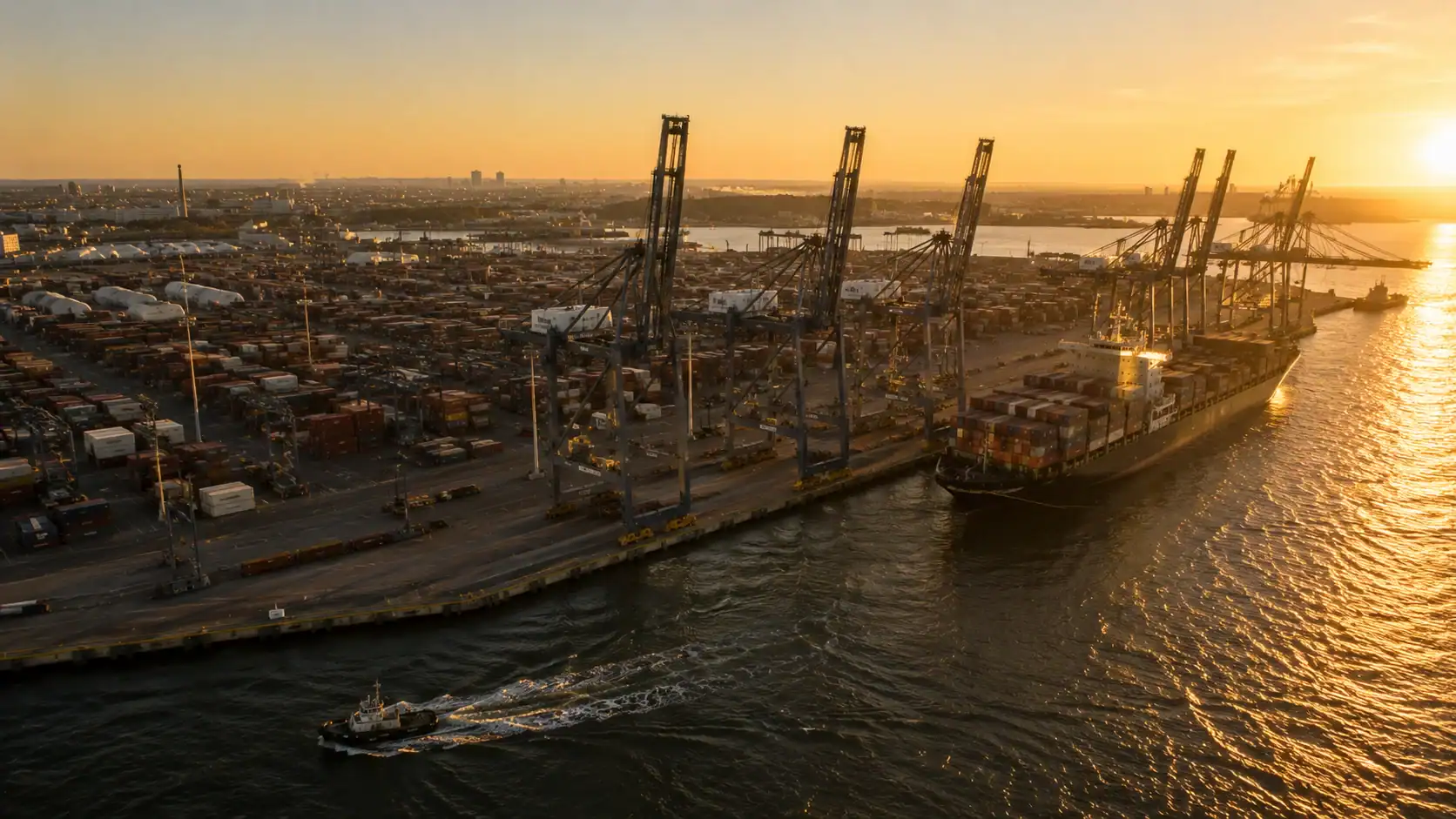
Sydney, Melbourne, and Brisbane are all major gateways, but they do not solve the same inland delivery problem. One may look attractive on the ocean leg while creating more friction once the container has to move inland. Another may seem more expensive up front but reduce domestic transport complexity afterward.
That is why there is no single best Australian port for inbound cargo. There are only better and worse gateway choices for a specific shipment profile.
This matters because port decisions influence far more than discharge. They affect drayage, inland freight timing, destination-state exposure, and how much optionality you retain once the goods are on the ground.
Key Takeaways
- There is no universally best Australian port for inbound cargo.
- The right gateway depends on final delivery geography, inland freight cost, timing pressure, and cargo type.
- Port choice should be evaluated as a door-to-door decision, not only an ocean-freight decision.
- Sydney, Melbourne, and Brisbane each have different advantages depending on where the cargo is actually going.
- Importers make poor routing decisions when they optimize only for the vessel leg and ignore the inland problem.
Jump to a Section
- Why there is no single best port
- When Sydney makes sense
- When Melbourne makes sense
- When Brisbane makes sense
- Why inland delivery changes everything
- How to choose the right gateway
- Frequently Asked Questions
Why There Is No Single Best Port
Australian importers often talk about ports as if one gateway wins on reputation alone. That is too simplistic. A port is only good if it fits the distribution problem behind the shipment.
If the cargo is ending up in New South Wales, Sydney may be operationally obvious. If the consignee footprint is in Victoria, Melbourne can reduce the amount of inland movement you need to buy after discharge. If the shipment needs to serve Queensland efficiently, Brisbane may be the cleaner answer.
That is why serious port selection starts with destination logic, not port mythology.
When Sydney Makes Sense
Sydney works best when the cargo is actually solving a Sydney or broader New South Wales delivery problem. That sounds obvious, but importers still ignore it when they chase a slightly better ocean rate somewhere else and then pay for it domestically.
If the goods need to reach Sydney customers quickly, or the receiving business footprint is concentrated in that corridor, Sydney can be the most rational option simply because it reduces handoffs after the port leg ends.
The practical advantage is not that Sydney is magically easier. It is that the cargo is already closer to where it needs to be.
When Melbourne Makes Sense
Melbourne becomes attractive when the shipment is tied to Victoria or when southern distribution is the real center of gravity. For many businesses, the best port is the one that shortens inland movement to the consignee base, not the one that looks best on a map of ocean routes.
This is especially true when inland cost and timing are a bigger concern than the headline ocean price. A gateway that reduces domestic repositioning often creates a cleaner total result, even if it did not look cheapest at first glance.
When Brisbane Makes Sense
Brisbane matters when Queensland is the commercial destination rather than an afterthought. If the cargo ultimately needs to move north, forcing it through a southern gateway can mean buying unnecessary domestic complexity after arrival.
That does not mean Brisbane is always best. It means Brisbane is often best when the importer is honest about where the freight really needs to land and how much secondary movement they are willing to absorb.
Why Inland Delivery Changes Everything
The biggest port-selection mistake is treating port arrival as the finish line. It is not. For most importers, discharge is only the midpoint between ocean transport and final delivery.
That is why inland routes matter so much. The port choice affects drayage, domestic trucking, warehousing flexibility, and the ability to recover from delays if the vessel leg slips. Once you think door-to-door, the “best port” question becomes more disciplined and much more practical.
In other words, the correct port is usually the one that solves the inland problem with the least friction, not the one that simply looks cheapest on the bill of lading.
How to Choose the Right Gateway
- Start with the final destination, not the port list.
- Compare the full landed movement, not just the vessel leg.
- Ask which gateway leaves the fewest domestic miles, handoffs, and timing dependencies.
- Consider whether state-level biosecurity sensitivity changes the risk picture for the destination.
- Choose the port that makes the whole move simpler, not the quote that only looks simpler.
The port decision becomes much clearer when treated as a network question. Once you know where the cargo really needs to end up, the gateway choice usually becomes more obvious.
Why This Comparison Is Really About Delivery Logic, Not City Prestige
Port comparison articles go bad when they become city-versus-city listicles. That is not what a serious importer needs. The real issue is delivery logic. Sydney, Melbourne, and Brisbane are not competing as brands. They are competing as gateways into different inland realities, customer footprints, and timing outcomes. Once the article is written that way, it becomes sharper and far more useful. The reader stops asking “which city is best?” and starts asking “which gateway creates the least waste for my actual delivery problem?”
That framing is stronger because it resists prestige bias. Big ports attract lazy confidence. But the importer benefits when the comparison is done unsentimentally, with more attention to where the goods need to end up and less attention to which city sounds most central. That is exactly the kind of operator realism Swift Cargo should lean into.
How This Page Fits with the Wider Logistics Pages
This page should naturally send readers into the broader infrastructure and timeline pages once the comparison has clarified their thinking. The best next step is Australia’s Container Ports Explained for the wider national gateway context. Readers should also be pushed into Shipping Timeline to Australia because port choice changes timeline quality as much as it changes geography. And for east-coast distribution questions, How Inland Rail Will Change Freight Timelines gives the inland-corridor perspective that a simple port comparison cannot carry alone.
What Strong Operators Do With This Topic
Sydney vs Melbourne vs Brisbane: Which Port Is Best for Inbound Cargo? becomes more valuable once it is read as an operator page rather than as a reference note. That distinction matters because operators are not only collecting facts. They are trying to make cleaner decisions under constraint. The strongest way to use a page like this is to translate its central mechanism into a sequence of choices: what should change in planning, what should change in documentation, what should change in timing, and what should change in how the shipment is explained internally. That is where the article stops being informative in the shallow sense and becomes commercially useful in the Swift Cargo sense. A page that leaves the reader merely “aware” of the topic is weaker than a page that changes how the reader designs the job.
That is also why the writing standard here should stay calm, precise, and unsentimental. Strong logistics prose is not loud. It is clarifying. William Zinsser-style sentence discipline helps because it strips away performance and leaves the mechanism visible. A light Ben Thompson-style systems framing helps because it reminds the reader that no article in this cluster is really isolated. Each one is describing a layer inside a larger Australia inbound system. Customs interacts with timing. Timing interacts with port choice. Port choice interacts with inland freight. Agreements interact with documentation. Biosecurity interacts with cargo preparation. The more clearly a page reinforces those relationships, the more authority it creates for the site.
In practical terms, readers should use this article together with adjacent pages rather than treating it as the final answer. The most relevant next stops in the cluster are /australias-container-ports-explained, /shipping-timeline-to-australia, and /how-inland-rail-will-change-freight-timelines. Those internal links are not decorative. They are part of the reading path that turns the cluster into a usable knowledge system. If a reader starts on one page and can only answer part of the freight or compliance problem, the article should route them forward. That is one of the cleanest ways to increase both usefulness and trust without bloating the prose with generic filler.
The commercial edge comes from exactly that discipline. Generic relocation and logistics blogs usually explain one layer of the issue and stop. A stronger authority cluster shows the reader how the pieces connect and where the next operational question lives. That is why this article should be read as one spoke in a larger authority spine rather than as an isolated post. Once the reader sees the topic that way, the practical value of the page increases. It becomes easier to budget correctly, plan more honestly, and avoid the kind of small assumptions that create expensive friction later. That is the standard this cluster should keep pushing toward.
The Best Port Is the One That Fits the Whole Move
Sydney, Melbourne, and Brisbane are all major inbound gateways, but none of them is automatically best. The right choice depends on what happens after the ship arrives.
That is why the best port is usually the one that makes the inland and final-mile problem easier, not the one that wins a generic ranking argument. The moment you think door-to-door, the decision gets better.
The strategic point worth naming is that gateway choice is one of those rare logistics decisions where the right answer compounds quietly over years. Importers who treat Sydney vs Melbourne vs Brisbane as a one-time decision tend to inherit whatever the original broker recommended five years ago. Importers who re-test the gateway question every twelve to eighteen months — against the current cargo profile, current inland network, current congestion picture, and current contract pricing — find at least one decision lever each cycle that competitors leave on the table. The port itself is not the moat. The discipline of choosing it well, repeatedly, is. Over a decade of inbound shipments that gap shows up in landed cost, lead-time variance, and the way demurrage events stop being routine.
Spend a week walking around the three ports and they reveal themselves as different organisms. Port Botany in Sydney sits in a tight basin between two airports and a national park, hemmed in on every side by competing land uses; the operational mood is one of constant negotiation with the surrounding city. The Port of Melbourne sprawls along the Yarra mouth with a different relationship to its city — Melbourne grew around its port the way most cities do, and the freight networks feel layered, almost geological. Brisbane’s port is younger, less constrained, more like a new city’s port than an old one’s, with room to expand in ways Sydney and Melbourne never had. None of this shows up in throughput statistics. But it shapes everything downstream. The carrier who chooses a port based purely on tonnage numbers misses the part of the port that determines whether a container will move predictably through inland delivery. The three ports do similar work for very different reasons, and the importer who notices the difference makes better routing decisions over a decade than the one who treats them as interchangeable rectangles on a map.
Frequently Asked Questions
Which Australian port is best for inbound cargo?
There is no universal answer. The best port depends on the cargo’s final destination, inland delivery needs, and the overall door-to-door routing problem.
Is the cheapest ocean rate always the best routing choice?
No. A cheaper ocean leg can create a more expensive inland move if the goods discharge far from where they actually need to end up.
When does Sydney make the most sense?
Usually when the shipment is solving a Sydney or broader New South Wales delivery problem and domestic repositioning can be minimized.
When does Melbourne or Brisbane make more sense?
When the cargo’s commercial destination is concentrated in Victoria or Queensland and using those gateways reduces inland complexity.

