Author: Gabriel Macia

  • Moving Pets from the USA to Thailand: Documentation and Timing

    Moving Pets from the USA to Thailand: Documentation and Timing

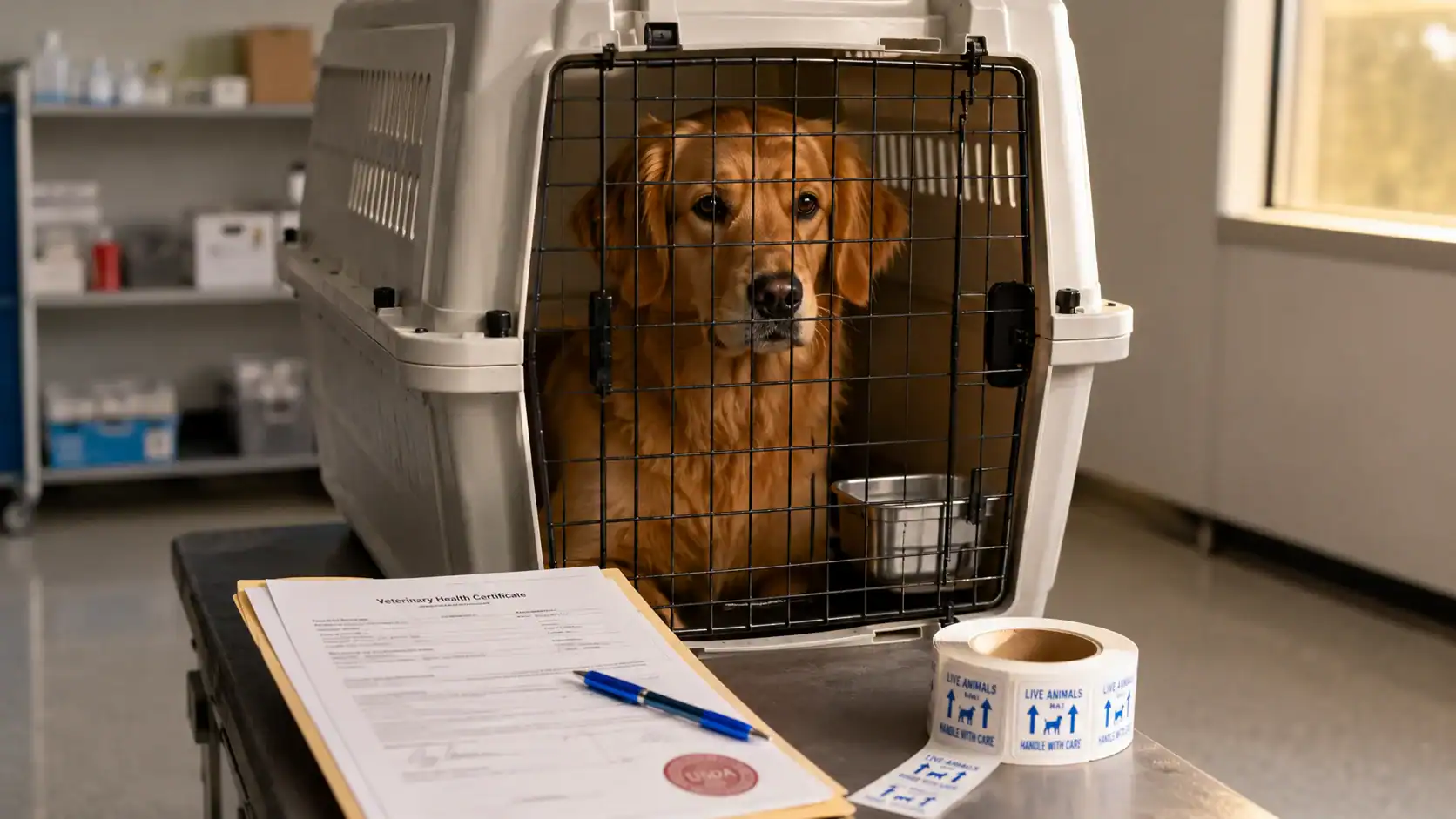
    Moving a dog or cat from the USA to Thailand is achievable — but it requires a specific sequence of US government documentation that most vets and even some pet relocation services do not know well. The bottleneck is not Thailand’s requirements; Thailand’s Department of Livestock Development (DLD) issues import permits straightforwardly. The bottleneck is the US side: USDA-accredited veterinary health certificates endorsed by USDA APHIS (Animal and Plant Health Inspection Service), with timing constraints that leave very little margin for error.

    Get the sequence wrong — wrong microchip standard, health certificate issued too early, rabies vaccination outside the valid window — and your pet will be denied boarding in the USA or refused entry in Thailand. This guide walks through every requirement for dogs and cats specifically, in the order they must be completed, with the timing constraints that trip people up.

    Note: we already published a companion guide covering moving pets from Europe to Thailand — this guide covers the US-specific documentation pathway, which differs in the USDA endorsement requirement and the airline options available from the USA.


    Thailand’s Status on Rabies and Why It Matters

    Thailand is not a rabies-free country. This is the single most important fact in Thailand’s pet import rules. Countries considered “rabies-free” (such as Japan, Singapore, Australia, and some EU countries) are treated differently — Thailand has simplified entry rules for pets arriving from rabies-free countries. The USA is not on this list.

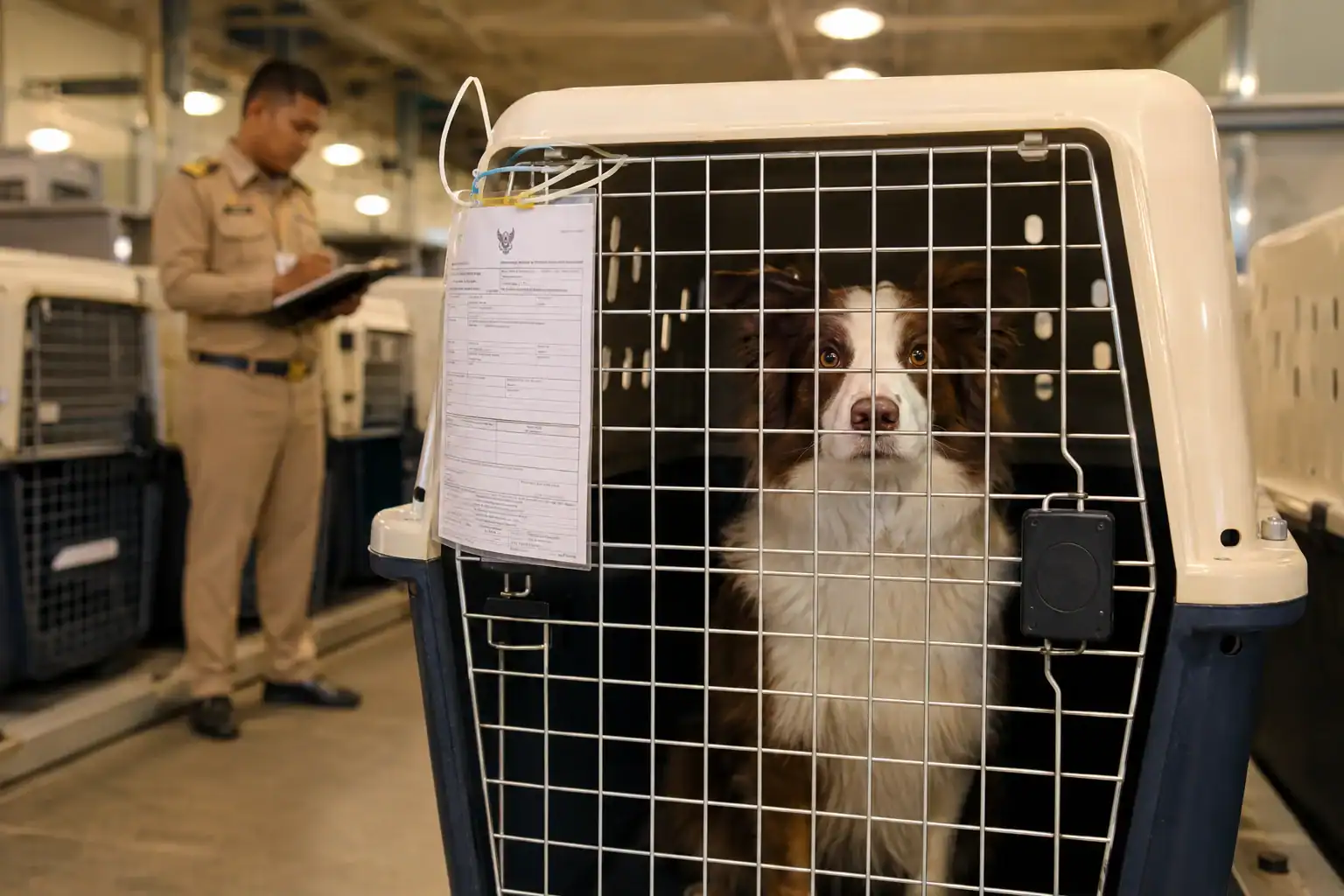
    For pets arriving from non-rabies-free countries like the USA, Thailand’s DLD applies its full import protocol: valid Thai import permit, USDA APHIS-endorsed health certificate, current rabies vaccination within the valid window, and ISO-compatible microchip. The good news: if these requirements are met correctly, there is no mandatory quarantine period — your pet goes through a DLD inspection at the airport and is released to you. The inspection is typically 30–60 minutes at the livestock checkpoint inside customs.


    Step-by-Step: The US-to-Thailand Pet Import Process

    Step 1: Microchip (ISO 11784/11785 Standard)

    Thailand requires a 15-digit ISO 11784/11785-compliant microchip (134.2 kHz) for all imported dogs and cats. This is important for American pet owners because many US vets implant a different chip standard: the 125 kHz (9-digit) chip used by HomeAgain and AVID in the USA. A 125 kHz chip will not be read by Thailand’s ISO scanners.

    If your pet already has a US-standard chip, you have two options:

    • Have a second ISO-compliant chip implanted (your vet can do this; the old chip stays in place). The ISO chip must be implanted before the rabies vaccination that will appear on the health certificate — otherwise the certificate cannot link the rabies vaccination to the ISO chip number.
    • Purchase a universal scanner that reads both chip types and carry it with you — but note that Thai DLD may only scan with their standard equipment, so this is not a reliable workaround.

    Recommendation: If your pet does not have an ISO 11784/11785 chip, implant one first, then complete the rabies vaccination, then obtain the health certificate. This sequence is critical.

    Step 2: Rabies Vaccination

    Thailand requires proof of current rabies vaccination. The timing constraints are:

    • Minimum: The rabies vaccination must have been administered at least 21 days before the date of travel into Thailand.
    • Maximum: The vaccination must be current — within the manufacturer’s stated validity period (typically 1 year or 3 years depending on the vaccine). Thailand checks the vaccination expiry, not just the date administered.

    An annual booster must be given before the previous vaccination expires — a lapsed rabies vaccination means starting the 21-day wait again, which may delay your travel date. Plan backward from your intended travel date to ensure the 21-day minimum is met without cutting it close.

    Step 3: Thai DLD Import Permit

    Before anything else on the Thai side, you need an import permit from Thailand’s Department of Livestock Development (DLD). This is applied for online through the Thai DLD website and should be submitted at least 30 days before your intended arrival date in Thailand.

    The import permit application requires:

    • Species and number of animals (dogs and/or cats, how many)
    • Your name and Thailand address or contact
    • Intended date of arrival
    • Port of entry (typically Suvarnabhumi Airport, Bangkok, for US arrivals)
    • Name of the USDA-accredited veterinarian who will issue the health certificate (if known at application time)

    The DLD issues the permit as a PDF document. Print it and carry it with all other pet travel documents. The permit is granted for a specific arrival window — confirm the validity dates when you receive it.

    Step 4: USDA-Accredited Vet Health Certificate

    The health certificate must be issued by a USDA-accredited veterinarian (not just any licensed vet — specifically USDA-accredited). Search for USDA-accredited vets in your state using the USDA APHIS veterinary accreditation portal.

    Critical timing constraint: the health certificate must be issued no more than 10 days before your travel date. This means the vet appointment must be scheduled in the final 10-day window before departure, not weeks in advance.

    The health certificate must include:

    • Pet’s name, species, breed, sex, age, colour
    • Microchip number (the ISO 11784/11785 chip number)
    • Rabies vaccination details (date, vaccine brand, batch number, expiry date)
    • General health examination confirming the pet is clinically healthy and free of clinical signs of infectious disease
    • Any other vaccinations (DHLPP for dogs, FVRCP for cats — not required by Thailand but strongly recommended)
    • Confirmation that the pet is fit to travel

    The USDA-accredited vet completes the certificate in a format accepted by USDA APHIS for endorsement. Ask your vet to use the USDA Form VS 7001 (official interstate and international certificate of health examination for small animals) or confirm they are familiar with the Thai DLD requirements and the APHIS endorsement process.

    Step 5: USDA APHIS Endorsement

    After the health certificate is signed by the USDA-accredited vet, it must be endorsed (countersigned and stamped) by the USDA APHIS Veterinary Services Center. This is the US government step that certifies the vet is accredited and the health certificate is legitimate.

    USDA APHIS centers that handle endorsements:

    • In person: APHIS VS National Center in Riverdale, MD; regional VS offices (call ahead for appointment availability)
    • By mail: Ship the original signed certificate to the USDA APHIS office serving your state; allow 3–5 business days (standard) or 1–2 business days (expedited). USDA APHIS charges USD 38 per certificate for endorsement.

    Because the health certificate must be issued within 10 days of travel, and endorsement takes 1–5 business days, the practical window is tight. For a travel date of Day 0:

    • Day -10 to -8: vet appointment, health certificate signed
    • Day -8 to -4: ship to APHIS or visit in person; endorsement returned
    • Day -4 or later: endorsed certificate in hand, travel documents complete

    Do not cut this closer than Day -7 for the vet appointment. APHIS can be delayed; holiday periods and high-volume periods add time. Have the Thai DLD import permit, microchip certificate, and rabies certificate ready before the vet appointment so the vet has all information to complete the health certificate in one visit.


    Airline Options from the USA to Thailand

    Getting a pet from the USA to Thailand is the most logistically complex part of the move — not the Thai paperwork, but finding an airline that will carry your pet on the route and understanding the conditions. For a quote on pet transport to Thailand, Swift Cargo handles the cargo shipment coordination for pets not eligible for cabin travel.

    In-Cabin (small pets only)

    In-cabin pet carriage (pet in a carrier under the seat) is available on some routes for small dogs and cats (combined weight of pet + carrier typically under 8–10 kg). However, the route from the USA to Thailand requires at least one connection, and not all airlines allow in-cabin pets on all segments. Airlines that have historically offered in-cabin pet transport on transpacific routes: Thai Airways (on some routes), EVA Air, Japan Airlines (JAL). Confirm directly with the airline at the time of booking — policies change frequently and are enforced at check-in.

    Checked Baggage (medium pets)

    Pets travelling as checked baggage ride in the temperature-controlled cargo hold. This option is available on some routes for pets too large for in-cabin carriage but meeting the airline’s weight/size limits. Temperature and pressure conditions in modern aircraft holds are appropriate for pet travel, but confirm the airline’s specific temperature restrictions (many airlines suspend pet carriage in holds when ambient temperatures exceed 85°F/29°C at origin or destination).

    Cargo Shipment (large dogs, pets not eligible for passenger cabin/baggage)

    Large dogs (especially pure breeds above airline weight limits), snub-nosed (brachycephalic) breeds restricted by most airlines (English Bulldogs, French Bulldogs, Pugs, Shih Tzus, Persian cats, etc.), and pets whose owners are not flying on the same flight must travel as manifest cargo through an IATA-certified pet transport agent. The pet travels in a larger IATA-compliant crate in the cargo hold, shipped as freight rather than passenger baggage.

    IATA Live Animals Regulations (LAR) govern the crate standards, minimum dimensions (the pet must be able to stand, turn, and lie down), ventilation, bedding, and food/water requirements for cargo shipments. An IATA-certified pet relocation agent arranges the cargo booking, coordinates with the airline cargo department, and handles the freight customs documentation on arrival in Thailand.

    Airlines with dedicated air cargo pet handling on US–Thailand routes: Thai Airways Cargo, Singapore Airlines Cargo (via Singapore), Korean Air Cargo (via Seoul), Japan Airlines Cargo (via Tokyo). Confirm current policies and availability — cargo space for live animals must be booked separately from passenger tickets.


    Restricted and Prohibited Breeds

    Thailand restricts the import of certain dog breeds under the Dangerous Animals Act. Breeds that may face import restrictions or require special permits include: American Pit Bull Terrier, American Staffordshire Terrier, Staffordshire Bull Terrier, Rottweiler, Dogo Argentino, Fila Brasileiro, Tosa, and some other large working breeds. The list is subject to change — confirm with the Thai DLD at the time of your import permit application. Attempting to bring a restricted breed without appropriate permits may result in the animal being refused entry.

    Snub-nosed (brachycephalic) dogs and cats face additional airline carriage restrictions — many airlines refuse to carry them in holds or cabins due to respiratory risk. For brachycephalic breeds, cargo shipment through a specialist pet relocation agent is typically the only viable option.


    At Bangkok’s Suvarnabhumi Airport

    US-to-Thailand flights typically arrive at Suvarnabhumi Airport (BKK). On arrival with your pet:

    1. Proceed through immigration (passport control) normally
    2. Collect your baggage and pet carrier (or collect your pet from the cargo hall if travelling as freight)
    3. Before exiting customs, present yourself at the Animal Import Inspection Counter (operated by Thai DLD, located within the customs hall)
    4. Present all documents: Thai DLD import permit, USDA APHIS-endorsed health certificate, microchip certificate, rabies vaccination record
    5. A DLD officer inspects the pet, scans the microchip, and reviews the documents
    6. If all documents are in order, the pet is cleared and you exit customs normally

    The inspection typically takes 30–60 minutes. There is no mandatory quarantine for pets from the USA that arrive with correct documentation — quarantine is only applied if documents are incomplete or if the animal shows clinical signs of disease.


    Costs Summary

    Item Approximate cost
    ISO microchip implantation (if needed) USD 40–100
    Rabies vaccination (if due) USD 30–80
    USDA-accredited vet health certificate USD 80–250
    USDA APHIS endorsement USD 38 per certificate
    Thai DLD import permit THB 0–500 (nominal or free)
    IATA-approved travel crate (if needed) USD 50–200 depending on size
    Airline pet carriage fee (in-cabin) USD 100–250 per flight
    Airline cargo pet fee (large pets) USD 400–1,500+ depending on route, weight, airline
    Pet relocation agent (if using) USD 500–2,500 for full coordination

    The rabies titer test has a four-month clock. The test cannot be done until 30 days after the most recent rabies vaccination. The result must be endorsed by a USDA-accredited vet. The endorsed certificate must then be submitted to USDA APHIS for federal endorsement, which takes 10–14 business days. A pet owner who begins this process six weeks before a move date has already missed one of the non-negotiable steps. The animals who miss their flight are not victims of the airline or Thai immigration. They are the outcome of a timeline that started too late. This is not paperwork. It is a sequence with fixed durations.

    Frequently Asked Questions

  • Moving Pets from Europe to Thailand: DLD Permit, Quarantine, and Costs

    Moving Pets from Europe to Thailand: DLD Permit, Quarantine, and Costs

    Moving Pets from Europe to Thailand: The Complete Guide

    Your pet is coming with you. That decision is made. What follows is the paperwork that makes it possible — and the timeline that, if you get it right, means your dog or cat clears Thai quarantine without a hitch and arrives at your Bangkok apartment or Chiang Mai house within a few weeks of you. If you get it wrong — a missing permit, a vaccine administered too close to the departure date, a health certificate issued one day outside the 10-day window — the consequences range from a delayed quarantine release to your pet being held at Suvarnabhumi Airport while you work out what went wrong from the arrivals hall.

    Thailand’s pet import process is manageable — but it is specific, sequential, and unforgiving of shortcuts. This applies to dogs and cats only, the most common pets brought by European relocators. Other species (birds, reptiles, rabbits, rodents) are subject to entirely different Thai regulations and are not covered here.

    Pet carrier at Thailand airport with customs DLD inspection in background

    Thailand’s Pet Import Authority: The DLD

    All pet imports to Thailand are regulated by the Department of Livestock Development (DLD) under the Ministry of Agriculture and Cooperatives. The DLD’s Animal Quarantine Inspection Office is the authority that issues import permits, specifies the documentation requirements, approves quarantine facilities, and conducts the inspection when your pet arrives at the Thai port of entry.

    The DLD is the starting point for the entire process. Before you book your flight, before your vet issues any certificate, before you contact an airline about pet transport — you need to understand what the DLD requires for the specific origin country and the specific animal you are moving. Requirements can change, and the DLD’s official position on specific countries’ documentation is the only authoritative source. A pet relocation agent or freight forwarder who works regularly with the DLD will have current knowledge of any recent changes to requirements.

    The Five Documents You Need Before Departure

    A pet moving from Europe to Thailand requires five documents, and three of them have sequencing requirements — they must be completed in a specific order, with specific timing. Getting the sequence wrong means starting again.

    1. ISO-standard microchip

    Your pet must be implanted with a microchip conforming to ISO standards 11784 and 11785 — a 15-digit passive transponder readable by a universal scanner. Most European pets already carry an ISO-standard microchip; the EU pet passport system has required them for travel within Europe since 2011, and the UK maintained this requirement post-Brexit.

    The critical sequencing point: the microchip must be implanted before the rabies vaccination, not after. If your pet was vaccinated before being chipped, or if the chip was implanted after vaccination, the vaccination record cannot be linked to the microchip at the point of implantation — and the entire vaccination history must be restarted from a new primary vaccination. Thai authorities and most European official veterinarians will not accept a certificate linking a vaccination to a microchip that was implanted after the vaccination date.

    If your pet is already chipped and vaccinated in the correct order, you are ready to proceed. If not, the timeline resets to the date of the new rabies vaccination.

    2. Rabies vaccination certificate

    Your pet must have a current, valid rabies vaccination. The requirements:

    • Primary vaccination: If this is your pet’s first rabies vaccination, it must be administered at least 21 days before the scheduled arrival date in Thailand. A vaccination given less than 21 days before arrival will not be accepted — the immune response is considered incomplete.
    • Booster vaccination: If your pet has had previous rabies vaccinations and this is a booster within the valid period of the previous vaccination, the 21-day waiting period does not apply to boosters — but the vaccination must still be current (not expired) at the time of arrival in Thailand.
    • Validity: Rabies vaccinations are typically valid for one or three years depending on the vaccine used. The certificate must show the vaccination date, the vaccine product name and batch number, and the administering veterinarian’s details.

    3. Thai DLD import permit

    This is the document most European pet owners discover too late. The Thai DLD import permit is a mandatory authorisation that must be obtained before your pet departs Europe. Without it, your pet cannot be legally imported into Thailand. Airlines will not accept a pet for transport to Thailand without confirmation that the import permit has been arranged or is in process.

    The permit application is submitted to the Thai DLD Animal Quarantine Inspection Office and requires: your pet’s microchip number, the current rabies vaccination certificate, your Thai destination address, your intended port of entry (Suvarnabhumi for most European arrivals), and your intended travel dates. Processing takes approximately 2–4 weeks. Apply as early as possible — 8–10 weeks before your intended departure date is the recommended lead time.

    The permit specifies the approved quarantine facility your pet will enter on arrival. You cannot choose a different facility than the one stated on the permit. If your travel dates change after the permit is issued, you will need to contact the DLD to amend it — which takes additional time.

    4. Official health certificate

    The health certificate must be issued by an Official Veterinarian — a veterinarian registered with the national veterinary authority in your country and authorised to issue export health certificates. In EU member states, this is a veterinarian registered with the national competent authority (equivalent to APHA-registered in the UK). A certificate issued by a regular private vet, even a well-qualified one, is not acceptable — it must be an Official Veterinarian.

    The timing is strict: the certificate must be issued within 10 days of the scheduled arrival date in Thailand. Not 10 days before departure — 10 days before arrival. If your journey from Europe to Bangkok takes 15 hours with a layover, and your certificate was issued 9 days before your Bangkok arrival date, it is valid. If it was issued 11 days before your Bangkok arrival date, it is out of window and will be rejected by Thai customs.

    The health certificate must confirm: the animal’s species, breed, age, sex, and colour; the microchip number; current rabies vaccination details including the date, vaccine name, and batch number; the animal’s freedom from signs of infectious or contagious disease on the date of examination; and fitness for air travel. Use the format specified by the Thai DLD — your Official Veterinarian can obtain this from the DLD or from a pet relocation agent.

    5. Airline transport documentation

    Each airline has its own set of forms, declarations, and booking requirements for pet transport. These are separate from the Thai DLD documentation and must be arranged directly with the airline. The airline documentation typically includes: booking confirmation for the pet (which must be made separately from your passenger booking and is subject to availability), the airline’s own health declaration form (often required at check-in), and the IATA Live Animals Regulations label and container requirements confirmation (see the airline section below).

    Dogs in quarantine facility at Suvarnabhumi Airport, Thailand — crate housing with temperature monitoring
    Pet quarantine facility at Suvarnabhumi Airport animal cargo handling area

    Quarantine in Thailand: What to Expect

    All dogs and cats arriving in Thailand from foreign countries must undergo quarantine at an approved Thai Animal Quarantine Inspection Station. This is not optional and cannot be waived. The quarantine period and facility are specified on your DLD import permit.

    For most European origin countries, the quarantine period is determined by the DLD based on the origin country’s rabies status and the completeness of the documentation. For dogs and cats arriving with complete documentation — valid import permit, ISO microchip, current rabies vaccination, health certificate within the 10-day window — and from European countries with well-documented rabies control programmes, quarantine periods typically run from 10 to 30 days at approved government facilities.

    The primary quarantine facility for pets arriving via Suvarnabhumi Airport is the Suvarnabhumi Animal Quarantine Inspection Station, operated by the Thai DLD. Pets arriving on flights into Suvarnabhumi are transferred to this facility directly from the cargo handling area after customs inspection. You will not be able to collect your pet at the airport — they go into quarantine immediately upon arrival.

    During quarantine, the DLD will conduct health checks, verify the documentation against the animal, and monitor for any signs of disease. The quarantine cost is a Thai government fee charged per day per animal (Thai DLD Animal Quarantine Inspection Office):

    • Dogs: approximately THB 150–300 per day (rates set by DLD; confirm current rates when applying for your permit)
    • Cats: approximately THB 100–200 per day

    On a 14-day quarantine, the cost for one dog runs approximately THB 2,100–4,200 (USD 60–120). On a 30-day quarantine, approximately THB 4,500–9,000 (USD 130–260). These are the official Thai government facility fees; some approved private quarantine facilities charge more.

    You can visit your pet during quarantine at the facility during visiting hours, though conditions vary by facility. Bringing familiar items — a blanket, a toy — is usually permitted and helps with the animal’s wellbeing during the period.

    When the quarantine period ends and the DLD issues the release certificate, you can collect your pet from the facility. Bring your passport, your pet’s DLD import permit, the health certificate, and the quarantine fee payment receipt.

    Airline Requirements for Pet Transport to Thailand

    Airlines are the second regulatory layer in the pet transport process. IATA — the International Air Transport Association — publishes the Live Animals Regulations (LAR), a set of standards that govern how live animals must be transported on commercial flights. Most international airlines adopt the IATA LAR as their baseline, with additional airline-specific policies on top.

    In-cabin vs cargo hold

    Most airlines have a weight limit for in-cabin pet transport — typically 6–8 kg including the carrier — which means most adult dogs must travel in the cargo hold as accompanied excess baggage or unaccompanied freight. Cats and small dogs under the weight limit may qualify for in-cabin travel on airlines that permit it. Check the specific airline’s policy for the route you are booking.

    For cargo hold transport, the animal travels in the temperature-controlled and pressurised cargo compartment — the same physical environment as the passenger cabin, not an unheated freight hold. This is safe for healthy animals on direct or short-connection flights, but very long multi-leg journeys with multiple transfers add stress and should be avoided where possible. Most pet transport specialists recommend a maximum total journey time of 20–24 hours for dogs and cats.

    IATA-approved containers

    Your pet must travel in an IATA-approved container. The container requirements:

    • Hard-sided with ventilation on at least three sides
    • Secure latching that cannot be accidentally opened but can be opened by emergency services
    • Large enough for the animal to stand, turn around, and lie down naturally — not oversized, which can cause the animal to be thrown around during turbulence
    • Absorbent bedding
    • Water and food access provisions for journeys over 8 hours (an attached external water container accessible from outside without opening the crate)
    • Live animal labels affixed to the outside, with your name, contact details in Thailand, and “Live Animals” indicators

    Your airline will specify the exact container size requirements based on your pet’s measurements. Measure your pet (length from nose to base of tail, plus height from floor to top of head when standing, plus width at the widest point) before purchasing a container — container sizing is specific and the airline will check compliance at check-in. A crate that is too small will be refused.

    Booking and availability

    Pet bookings on most airlines are subject to limited availability — typically a maximum number of animals per flight. Book your pet’s transport at the same time as your own ticket, or as soon as possible afterwards. Last-minute pet bookings are frequently unavailable on popular European-to-Thailand routes. Airlines that serve direct and one-stop routes between Europe and Bangkok include Thai Airways, Lufthansa, British Airways, Emirates, Qatar Airways, and Singapore Airlines, among others — but individual airline pet policies vary and should be confirmed directly with the airline before booking.

    European Export Requirements: EU and UK

    The export documentation requirements differ slightly between EU member states and the United Kingdom.

    European Union countries

    For pets being exported from EU member states to Thailand, an official health certificate must be issued by an Official Veterinarian registered with the national competent authority. The EU has a standard format for third-country export health certificates for dogs and cats; your vet or a pet relocation agent can obtain the specific format required for Thailand from the DLD or from the national competent authority. The EU pet passport (the blue booklet used for travel within the EU and between certain non-EU countries) is useful as a vaccination record but is not itself sufficient for Thai import — a separate official export health certificate is required.

    United Kingdom

    Post-Brexit, UK pet owners exporting to Thailand require an Animal Health Certificate (AHC) issued by an APHA-registered Official Veterinarian. The AHC replaced the EU pet passport for export from GB (England, Scotland, Wales) to most non-EU countries. Your Official Veterinarian will need access to the Thai DLD’s required health certificate format — this is distinct from the standard UK AHC for travel to EU countries. APHA-registered Official Veterinarians can be found on the APHA website.

    If you are moving from the UK, the UK to Thailand relocation guide covers the full relocation process alongside the pet-specific requirements.

    Breed Restrictions

    Thailand restricts the import of certain dog breeds. The DLD Animal Quarantine Inspection Office maintains the current restricted breed list; the following have been subject to import restrictions:

    • American Pit Bull Terrier
    • American Staffordshire Terrier
    • Staffordshire Bull Terrier
    • Rottweiler
    • Doberman Pinscher
    • Japanese Tosa
    • Dogo Argentino
    • Fila Brasileiro

    This list can change, and enforcement can vary. If your dog is a breed that appears on or near this list — or is a cross-breed with a restricted breed — confirm the current DLD position directly before making any travel arrangements. A breed restriction discovered after flights are booked and the health certificate is issued creates a situation with no easy resolution.

    There are no breed restrictions for cats.

    Other Species: Birds, Reptiles, and Exotic Pets

    This guide covers dogs and cats only. The import of birds, reptiles, rabbits, rodents, and other animals to Thailand involves completely different regulations — including CITES (the Convention on International Trade in Endangered Species) controls for many exotic species, species-specific disease controls, and in some cases outright import prohibition. If you are moving with a pet that is not a dog or cat, seek specialist advice from a licensed wildlife import agent before making any arrangements.

    The 8–12 Week Timeline

    The sequencing of the pet import process requires careful planning. Everything depends on everything else — you cannot get the health certificate before the vaccination is current, you cannot get the import permit confirmed without the vaccination certificate, and you cannot book the pet on the flight without the import permit in process. Here is the recommended timeline working backwards from your travel date:

    Timeline (before travel) Action Notes
    10–12 weeks before Confirm microchip is implanted and linked to vaccination record If not, implant chip and restart vaccination sequence — adds 3+ weeks
    10–12 weeks before Confirm rabies vaccination is current and correctly sequenced If first vaccination, allow 21 days before travel; if lapsed, restart
    8–10 weeks before Apply for Thai DLD import permit Processing: 2–4 weeks; do not travel before this is confirmed
    8–10 weeks before Book pet transport with airline Subject to availability; book as early as possible
    8–10 weeks before Purchase IATA-approved travel crate; measure pet to confirm size Allow time to acclimatise pet to crate before travel
    4–6 weeks before DLD permit confirmed; quarantine facility specified Note exact facility and confirm visiting hours
    Within 10 days of Thai arrival Official Veterinarian health certificate issued Must be within 10 days of arrival in Thailand — not departure date
    Day of departure Check in with pet; provide all documents to airline at check-in Arrive early — pet check-in takes longer than standard check-in
    Arrival in Thailand Pet enters quarantine; complete customs declaration for live animal You cannot collect your pet at the airport
    10–30 days post-arrival Quarantine ends; collect pet from DLD facility with release certificate Bring passport, permit, health certificate, and fee payment

    Cost Breakdown

    The cost of moving a pet from Europe to Thailand is not trivial. Here is a realistic cost picture for one dog or cat on a European-to-Bangkok route:

    Cost item Indicative range
    Thai DLD import permit application fee THB 200–500 (approx. USD 6–15)
    Official Veterinarian health certificate (EU/UK) EUR/GBP 100–300
    Rabies vaccination (if due or restarting) EUR/GBP 40–100
    IATA-approved travel crate (if not owned) EUR/GBP 80–350 depending on size
    Airline pet transport fee (cargo hold) EUR/GBP 200–600 depending on airline and route
    Thai quarantine (14 days, one dog) THB 2,100–4,200 (USD 60–120)
    Thai quarantine (30 days, one dog) THB 4,500–9,000 (USD 130–260)
    Pet relocation agent fee (if used) EUR/GBP 300–800
    Typical total for one dog (14-day quarantine) Approx. EUR/GBP 800–1,800 equivalent

    Airline pet transport fees vary significantly by airline, route, and animal weight/size. Quarantine fees are set by the Thai DLD and subject to change; confirm current rates when applying for your permit.

    Pet Relocation Agents: When to Use One

    The process of moving a pet from Europe to Thailand can be done independently by an organised and methodical owner who is willing to communicate directly with the Thai DLD Animal Quarantine Inspection Office, their Official Veterinarian, and their airline. It is not impossible — but it is time-consuming and requires attention to sequencing and timing that leaves no room for error.

    A licensed pet relocation agent — a company specialising in international animal transport — manages the permit application, confirms the documentation format with the DLD, coordinates with the Official Veterinarian, books the airline pet transport, and ensures all documents are in the correct format and sequence. The agent fee (typically EUR/GBP 300–800) reduces the risk of the kind of mistake that means your pet misses the flight or enters an extended quarantine because a document was out of window.

    For owners moving with multiple pets, large breeds requiring large cargo crates, or breeds that require additional scrutiny at the DLD permit stage, a relocation agent is worth the cost. For experienced international pet travellers with an established relationship with an Official Veterinarian and a well-chipped, well-vaccinated animal, the independent route is manageable with sufficient lead time.

    Settling In: After Quarantine

    When your pet is released from quarantine, they will likely need time to readjust — quarantine is stressful for animals regardless of how well-managed the facility is. Plan for a quiet introduction to the Thai home environment: a familiar blanket or toy from Europe, a consistent routine, and patience with any behavioural changes in the first week or two. Thailand’s tropical climate is a significant adjustment for European pets; ensure shade, fresh water, and cool rest areas are available at all times, and be alert to signs of heat stress in dogs with thick coats.

    Veterinary care in Bangkok, Chiang Mai, and Phuket is generally of high quality, with several international-standard animal hospitals familiar with European expat pet needs. Registering with a local vet and confirming which vaccinations are required or recommended for Thailand (rabies remains important; kennel cough is common; heartworm prevention is strongly recommended in the Thai climate) should be the first health priority after quarantine release.

    For the full relocation picture — including shipping your household goods alongside your move to Thailand — the household goods shipping guide for Thailand and the Europe to Thailand shipping guide cover the freight side of the move. For a detailed look at what destination charges actually appear on the final invoice, the hidden costs of shipping to Thailand breaks down what typically falls outside the headline rate. For a full walkthrough of the end-to-end process from collection to delivery, international removals to Thailand covers the seven-stage process in detail.

    Swift Cargo’s international pet transport service can help coordinate the documentation, quarantine timing, and freight scheduling for your move. To discuss shipping your household goods to Thailand alongside your pet, request a freight quote — we can coordinate the freight timing with your quarantine release date so your belongings arrive when you and your pet are ready to receive them.

    A family relocating from Berlin to Chiang Mai in 2024 traveled with two cats — one microchipped to ISO 11784/11785, one with a chip registered in the EU database but unreadable by the scanner at Suvarnabhumi’s cargo handling facility. The second cat spent four additional hours in cargo while a compatible reader was located. The Thai DLD veterinarian clearing cargo that afternoon had seen the same situation several times that month. The chip standard is not arbitrary; the equipment at the point of verification is built around it. A chip that does not scan does not clear.

    Frequently Asked Questions

    Can I bring my dog or cat from Europe to Thailand?

    Yes. Dogs and cats can be imported to Thailand from European countries with the correct documentation. The requirements are: a Thai DLD import permit obtained before departure, an ISO-standard microchip implanted before the rabies vaccination, a current rabies vaccination (at least 21 days before travel for a first vaccination), an official health certificate issued within 10 days of arrival in Thailand by a registered Official Veterinarian, and mandatory quarantine at an approved Thai Animal Quarantine Inspection Station on arrival. Allow 8–12 weeks to prepare everything correctly.

    How long is the quarantine period for pets arriving in Thailand from Europe?

    The quarantine period is set by the Thai DLD on a case-by-case basis and is specified on the import permit. For dogs and cats arriving from European countries with complete documentation and well-controlled rabies status, quarantine periods of 10–30 days are typical. Quarantine takes place at official Thai government facilities — primarily at the Suvarnabhumi Animal Quarantine Inspection Station for European arrivals.

    What is the Thai DLD import permit and how do I get one?

    The Thai DLD import permit is a mandatory pre-travel authorisation from Thailand’s Department of Livestock Development. It must be obtained before your pet departs Europe. Apply by submitting your pet’s microchip number, rabies vaccination certificate, and intended travel details to the DLD Animal Quarantine Inspection Office, or through a licensed pet relocation agent. Processing takes 2–4 weeks. Apply 8–10 weeks before your intended travel date.

    What health certificate do I need to take my pet from Europe to Thailand?

    An official health certificate issued by an Official Veterinarian registered with your country’s national veterinary authority — issued within 10 days of the scheduled arrival date in Thailand. In EU countries this is a registered Official Veterinarian under the national competent authority. In the UK this is an APHA-registered Official Veterinarian. The certificate must use the format specified by the Thai DLD and must confirm the microchip number, rabies vaccination status, overall health, and fitness for travel.

    Are there breed restrictions for importing dogs to Thailand?

    Yes. Thailand restricts the import of certain dog breeds considered high-risk or associated with fighting. Restricted or controlled breeds have included American Pit Bull Terrier, American Staffordshire Terrier, Staffordshire Bull Terrier, Rottweiler, Doberman Pinscher, Japanese Tosa, Dogo Argentino, and Fila Brasileiro. The list can change. Confirm the current DLD position directly before booking travel if your dog is a breed that may be affected.

  • Where Crypto Holders Are Settling in 2025

    Where Crypto Holders Are Settling in 2025

    A comparative guide to crypto-friendly countries for long-term residency, safety, and banking stability.

    A practical map for people planning a life, not a weekend

    For a brief moment, crypto felt like gravity had been turned off. Wealth moved faster than the rules around it, and geography looked optional. That phase is over.

    Today, crypto holders planning to live abroad long term are not optimizing for conference density or social noise. They are optimizing for safety, residency durability, dependable banking rails, and a government that does not rewrite the deal mid-cycle. The questions are less ideological now, more administrative, and the answers have become sharply unequal across countries.

    This report is built for that reality. It is a settlement guide, not a travel guide.


    World map showing cryptocurrency-friendly jurisdictions for long-term settlement

    The Crypto Long-Term Settlement Index

    Above the tables sits a quiet legend that veteran readers tend to recognize because it behaves like a long-running instrument rather than a one-off list. The Crypto Long-Term Settlement Index is designed to be boring on purpose, because the risks it measures are boring until the day they are catastrophic.

    It does not rank which country “loves crypto.” It ranks where a foreigner can settle, comply, and function, while keeping the option to on-ramp and off-ramp without improvisation.

    What the columns mean

    We score each jurisdiction across five dimensions, then normalize results on a 0 to 100 scale.

    1) Safety

    We use the Global Peace Index as a core benchmark and treat it as a proxy for daily-life risk rather than geopolitics alone.

    2) Nomad-to-Residency Velocity

    How quickly a visitor can become a resident in a way that survives renewals, compliance checks, and the tightening that tends to arrive after a country becomes popular.

    3) Crypto to Fiat Rails

    Not whether crypto is “allowed,” but whether foreigners can move between crypto and local banking without recurring account closures, frozen transfers, or policy-by-rumor. Licensing clarity matters, and bank behavior matters more.

    4) English Penetration

    Not bar conversation English. Life-admin English. Banking support, leases, utilities, immigration correspondence.

    5) Rule Persistence

    Weighted double. It measures the likelihood that the other four variables survive an election, a cabinet reshuffle, or a regulatory backlash. This is where “good on paper” jurisdictions often fail in real life.

    How to understand the top and lowest scorers

    A country above 80 tends to be a place you can plan around. A country below 30 tends to be a place where friction is structural, not accidental, even if the tax rate looks seductive. The middle band is where most “nice places” live, workable for a season, risky for long-term commitments.

    How the index evolved over the last 10 years

    In the mid-2010s, most governments ignored crypto, which meant many places functioned as accidental havens. Then adoption moved from hobby to capital flow, and capitals formed task forces, regulators published positions, and banks began treating “crypto” as a risk category that demanded a written rationale.

    The world split into two approaches. A smaller set decided to compete for mobile capital, writing clearer statutes and building regulated rails. A larger set chose containment through ambiguity, soft restrictions, or episodic enforcement. The result is a wider spread than early adopters remember, and a sharper cliff between “spendable” and “settleable.”

    MetaMask, Visa rails, and why settlement is still different from spending

    Wallet-to-card products are real progress. They reduce friction for day-to-day purchases and make cross-border life feel more fluid. They do not solve settlement.

    Landlords want local guarantees, not blockchain proof. Notaries want documented source-of-funds evidence before property changes hands. Banks want jurisdictional clarity before issuing mortgages, leases, or even ordinary accounts for residents with complex histories. Until those institutions accept crypto-native proofs as first-class documents, the Index still matters because it separates “you can pay” from “you can live.”


    Editor’s Picks

    Five jurisdictions that survive real life in 2025

    Most countries look good during bull markets. Very few remain workable when banks tighten, elections turn, or residency rules stop being interpreted generously.

    The five jurisdictions below win not because they optimize a single variable, but because they minimize the chance of forced decisions. Each offers at least one credible long-term residency path, functioning crypto-to-fiat rails, and a political environment where rule reversals are slow and telegraphed.

    This is what separates places you can use from places you can build around.

    1) Portugal

    Why it wins: EU durability plus a finite citizenship clock.

    Portugal remains the cleanest long-term gateway into the European Union for crypto holders who value legal continuity over tax arbitrage. The D8 pathway is slow, documented, and bureaucratic, which is precisely why it survives scrutiny. The 2023 introduction of a 28 percent tax on short-term crypto gains clarified, rather than undermined, the regime.

    Portugal wins because the rules are no longer misunderstood. What remains is predictability.

    2) United Arab Emirates

    Why it wins: Policy continuity and operational rails.

    The UAE’s advantage is not ideology, but execution. A dedicated regulatory apparatus, plus maturing bank behavior around licensed activity, turned what was once an offshore workaround into a domestic system. Residency pathways are fast, taxes are explicit, and reversals are rare.

    The UAE wins because once you are inside, the system does not improvise.

    3) Singapore

    Why it wins: Institutional trust and enforcement symmetry.

    Singapore is not permissive. It is consistent. Licensing is strict, compliance expectations are high, and banking access follows approval rather than speculation. English is universal, administration is professional, and policy changes are announced well in advance.

    Singapore wins because it treats crypto as financial infrastructure, not a cultural experiment.

    4) Georgia

    Why it wins: Speed and optionality at low cost.

    Georgia remains one of the fastest places to move from arrival to normal life. Long visa-free stays, zero personal crypto tax, and improving banking access create a low-friction environment for long-term testing. The trade-off is geopolitical exposure, which is why Georgia performs best as a secondary base.

    Georgia wins because it buys time cheaply.

    5) Panama

    Why it wins: Quiet stability in the Americas.

    Panama is not optimized for headlines. It is optimized for continuity. Dollarization, territorial taxation, established residency pathways, and a long history of accommodating foreign capital make it one of the few Americas jurisdictions that remains boring under stress.

    Panama wins because it rarely surprises.


    How to use the bands in practice

    The bands are not rankings. They are operating zones.

    Each band groups jurisdictions that share similar time-zone alignment and regulatory temperament. Used correctly, they allow you to distribute life risk the same way you distribute portfolio risk. One base for residency and paperwork. One base for banking depth. One base for lifestyle or cost control.

    Most experienced holders eventually settle into a two- or three-band configuration. For example, an EU base for passport progression, a Gulf or Asia base for tax clarity, and an Americas base for time-zone coverage. The objective is not constant movement, but the ability to move without panic.

    If a band works, stay long enough to earn residency. If conditions shift, leave before urgency enters the decision.


    The Bands

    A time-zone map for long-term settlement


    🌍 BAND 0 UTC -1 to 0

    Mid-Atlantic and West Africa

    CountrySafetyNomad and settlement door 2025Crypto to fiat railsEnglish proficiencyGovernment stability memo2025 vs 2022 delta
    Cape Verde1.78 GPIRemote-work “Caboverde Digital”, 6 months renewable, income floor around €1,500 per monthEuro-linked escudo, EU-facing rails improving, P2P activeEnglish growing in tourismStable parliamentary democracy, low coup risk historyNewer program, still under-followed
    Azores (Portugal)Very low crimeSame D8 as mainland Portugal, 5 years to citizenship pathwaySEPA rails, no blanket crypto bansHighEU and Schengen stabilityShares Portugal’s post-2023 short-term tax reality
    Madeira (Portugal)Very low crimeRegional nomad program plus D8 pathwaysSEPA railsHighEU and Schengen stabilitySame as above
    Canary Islands (Spain)Very safe regionallySpain residency routes, Non-Lucrative options in practiceSEPA rails, slower KYCHigh in hubsEU stabilityBanking thawing since early 2020s

    🌎 BAND 1 UTC 0 to +1

    Western Europe core

    CountrySafetyNomad and settlement door 2025Crypto to fiat railsEnglish proficiencyGovernment stability memo2025 vs 2022 delta
    Portugal1.31D8 to 5-year citizenship trackSEPA rails with major exchangesVery highEU stabilityShort-term gains taxed since 2023
    Spain1.60Digital nomad visa plus standard residency routesSEPA rails, banks cautiousHighEU stabilityClearer nomad path than earlier cycle
    Germany1.72Freelance routes or Blue Card pathwaysStrong banks, strict complianceVery highEU stabilityRemains predictable for long-term planners
    France1.94Talent and innovation pathwaysStrong banks, cautious postureHighEU stabilityMore mainstream posture than early 2020s
    Ireland1.30Skilled routes, remote reality improvingStrong banking ecosystemNativeEU stabilityOperational clarity improved
    UK1.67HPI and Global Talent style routesStrong fintech railsNativeStable, politically noisy at timesContinues to be operational
    Switzerland1.36High barrier entry, strong residency optionsMature crypto banking ecosystemHighExtremely stableRemains top tier, entry cost is the trade
    Liechtenstein1.43Small, high compliance, business setup routesSwiss-adjacent railsHighExtremely stableTiny but predictable
    Netherlands1.58Startup routes and employment routesStrong banking, cautious complianceVery highStable coalitionsStrong English and rule persistence
    Belgium1.50Self-employed routesStrong banking, cautious complianceVery highStableIncremental improvement
    Luxembourg1.45Investor and business routesInstitutional railsHighVery stableUnder-estimated settlement base

    🕌 BAND 3 UTC +2 to +3

    Balkans, Eastern Med, and the Gulf edge

    CountrySafetyNomad and settlement door 2025Crypto to fiat railsEnglish proficiencyGovernment stability memo2025 vs 2022 delta
    Greece1.89Digital nomad route plus standard residencySEPA railsHighEU stabilityClearer pathways than earlier cycle
    Cyprus1.93Nomad route plus residencySEPA railsHighEU stabilityRemains predictable
    Malta1.65Nomad residence permitsEU rails, licensing cultureNative-level official languageEU stabilityBenefits from EU clarity
    Turkey2.22Property and long-stay optionsActive local exchangesModerateCurrency volatility riskStill usable, macro is the trade
    Georgia1.84Low-friction long staysImproving banking accessModerateGeopolitical watchMore operational than early 2020s
    Armenia2.05Long stays and IT routesImproving railsModerateRegional riskWorkable for some profiles
    UAE1.62Remote work, green, golden pathwaysDedicated regulator, expanding railsVery highHigh policy continuityClearer than 2022
    Israel2.51Innovation pathwaysStrong railsHighHigher security volatilityHighly case-dependent

    🌄 BAND 4 UTC +3 to +5

    Gulf depth, Central Asia, and South Asia hinge

    CountrySafetyNomad and settlement door 2025Crypto to fiat railsEnglish proficiencyGovernment stability memo2025 vs 2022 delta
    Saudi Arabia2.03Premium residency via investmentEmerging frameworkModerateHigh continuityStill evolving
    Qatar1.53Investment and income pathwaysConservative railsHighHigh continuityStable, selective
    Bahrain1.90Investor routesLicensed ecosystem, smaller scaleHighHigh continuityContinues to mature
    Oman1.88Investor pathwaysEarly-stage railsModerateHigh continuityNewer posture
    Iran2.98Settlement difficultSanctions constrain railsLowHigh riskGrey by nature
    Kazakhstan2.15Long stays and business routesMixed railsModerateModerate riskCase-dependent
    Uzbekistan2.25IT and business routesDeveloping railsLowReform trajectoryStill maturing
    India2.31No true nomad visaPolicy and banking cautionHighPolicy swingsHard for settle logic

    🌅 BAND 5 UTC +5 to +8

    Southeast Asia and East Asia

    CountrySafetyNomad and settlement door 2025Crypto to fiat railsEnglish proficiencyGovernment stability memo2025 vs 2022 delta
    Singapore1.33Talent and business pathwaysDeep regulated railsNative-levelExtremely stableRemains a top-tier anchor
    Malaysia1.85Nomad pathways plus standard residencyPractical railsHighStableStrong value profile
    Thailand2.13DTV 5-year multiple-entry structureImproving rails, compliance mattersHighGenerally stableDTV changed long-stay options
    Vietnam1.90No true nomad visaP2P heavyModerateStableSettlement friction remains
    Philippines2.28Long-stay options existImproving railsHighPopulist swingsGaining momentum
    Hong Kong1.83Talent routesLicensed exchange modelHighChina overlayMore open than early 2020s

    🌴 BAND 6 UTC -5 to -3

    Caribbean, Central America, and South America Atlantic edge

    CountrySafetyNomad and settlement door 2025Crypto to fiat railsEnglish proficiencyGovernment stability memo2025 vs 2022 delta
    Canada1.35Skilled and business pathwaysDeep railsNativeVery stableOperational, higher tax reality
    USA2.44No true nomad visaDeepest exchange ecosystemNativeElection noiseRails strong, immigration harder
    Mexico2.13Temporary resident routesStrong regional railsHighCartel pocketsTime-zone favorite
    Belize1.88Long-stay optionsNarrow railsNativeStableQuiet base profile
    Costa Rica1.95Rentista routesStrong railsHighStableStrong long-stay option
    Panama1.92Residency routesDollarized railsHighStableContinues as Americas anchor
    El Salvador2.24BTC-forward posture, residency variesBTC-forward railsModerate to high in expat zonesConcentrated powerUnique spend story, settlement trade-offs

    Where the caravan is heading

    For most of human history, wealth was heavy. It kept people close to land and institutions. Crypto made wealth light, and it made mobility a rational response to policy.

    Crypto expats are not inventing a new behavior. They are repeating an old one, migrating toward safer ground, clearer rules, and better odds that the deal still holds next year. The novelty is not movement. The novelty is that movement can be triggered by a line in a tax code, a regulator memo, or a compliance department changing its risk appetite.

    Pick two or three bands, not one country, and you buy time. You also buy leverage, because leverage often comes from having options you can execute quickly.

    The tables are not prophecy. They are a map of where settlement has become easiest to defend.

    Appendix

    Everyone talks about “tax-friendly jurisdictions” for crypto holders as if the optimisation problem is well-defined. It is not. The framing assumes there is a single dimension — tax exposure — that the holder is trying to minimise across countries. The reality is that the people who relocate well are optimising for at least four dimensions simultaneously: tax regime, regulatory predictability, residency-vs-citizenship pathway, and the underlying quality of life in the place they will actually live. Most articles on this topic flatten those four into one and produce ranked lists that confuse rather than help. The contrarian observation is that the “best country for crypto holders” usually is not the one with the lowest headline tax rate. It is the one where the holder can build a life they would have wanted to live even if crypto did not exist — which means the question is not really about crypto at all. It is about whether the holder has clarity on the kind of life they are trying to build, and which country supports that life best given everything else.


    Scoring methodology and weightings

    The Crypto Long-Term Settlement Index privileges durability over novelty. To achieve that, categories are weighted based on their historical impact on forced relocation and capital friction.

    Category weights

    Rule Persistence: 30 percent

    This is the dominant variable. It captures the probability that laws, banking access, and residency pathways remain intact after elections, cabinet changes, or regulatory backlash. Jurisdictions with written guidance, independent courts, and low retroactive risk score highest.

    Safety: 20 percent

    Derived primarily from the Global Peace Index and cross-checked against crime statistics and governance indicators. This measures everyday personal risk rather than geopolitical posture alone.

    Crypto to Fiat Rails: 20 percent

    Assesses the practical ability of a foreign resident to move between crypto and local banking. Licensing clarity, bank participation, and regulator transparency all contribute.

    Nomad-to-Residency Velocity: 15 percent

    Measures how quickly and realistically a foreigner can obtain a status that survives renewal cycles. Programs that look attractive but collapse under volume are discounted.

    English Penetration: 15 percent

    Evaluates the ability to operate legally and administratively in English. This includes banking, immigration, utilities, and property transactions.

    Normalization and scoring

    Raw inputs are normalized to a 0 to 100 scale within each category. Final country scores reflect weighted aggregation rather than simple averages. This is why some “crypto-friendly” jurisdictions rank lower than expected, and some conservative jurisdictions rank higher.

    The index intentionally penalizes environments where a single failure point, such as banking access or political volatility, can nullify otherwise attractive conditions.

    What the index does not measure

    The index does not attempt to score lifestyle preference, climate, cuisine, or social scene. It assumes those variables are subjective and secondary to settlement viability. It also does not reward short-term tax loopholes that lack legislative backing.

    Crypto Expat FAQs


    Where should I live long-term if most of my net worth is in crypto?

    If most of your net worth is in crypto, you are not choosing a “crypto-friendly country.” You are choosing a place where your life can still run normally during stress: bear markets, banking crackdowns, and political shifts. In our Index, that means prioritizing Rule Persistence and Safety first, then Crypto ↔ Fiat Rails, then residency speed and English.

    A sensible long-term setup is rarely one country. It is usually a two- or three-band configuration that reduces forced decisions. For example:

    * Portugal as an EU base if you want a credible long-term residency story and eventual citizenship pathway.
    * UAE (Dubai) as an operational base where policy continuity is high and your day-to-day rails can be strong once you are properly set up.
    * Panama as an Americas time-zone anchor that tends to be boring, which is often a feature, not a bug.


    The market risk is not only price volatility. In a deep drawdown, people make worse decisions, governments face pressure, and banks become conservative. Your goal is to live somewhere that still functions when your portfolio does not feel like it does.


    Which countries are safest for crypto holders to settle?

    Safety is not just crime rates. For crypto holders it is also:

    * whether you can live without defensive routines,
    * whether the rule of law is strong enough to make you
    * predictable to institutions,
    * whether your residency status can survive scrutiny.

    Within the article’s framework, high-safety settlement candidates tend to include:

    * Portugal and several Western European states for personal safety plus institutional durability.
    * Singapore for high safety, tight compliance, and strong institutional behavior.
    * UAE for extremely low street crime in many areas, plus high policy continuity.

    The caution is that “safe” can become expensive quickly, especially after a place becomes popular, and cost pressure can distort decisions. A safe jurisdiction only stays safe for you if you can afford it without turning every month into a liquidation event.


    What countries won’t suddenly ban crypto or close bank accounts?


    No country can guarantee that. The closest thing to protection is a place where changes happen slowly, in writing, and within a legal and regulatory culture that does not rely on surprise enforcement.

    That is why our Index double-weights Rule Persistence. It is a proxy for the probability that a change of government, a market scandal, or a regulatory mood shift does not instantly become a banking freeze.

    In practice, the jurisdictions most aligned with “no sudden surprises” tend to be those with:

    * mature regulatory institutions,
    * clear licensing regimes,
    * strong legal systems,
    * and predictable political continuity.

    In the article’s positioning, that points you toward places like Singapore, UAE (Dubai), and much of core Western Europe. Even then, “banks won’t close accounts” is never a promise. Banks can react to risk teams, correspondent banking pressure, and reputational events. Your job is to minimize the probability of being treated as an exception by staying compliant, documenting source-of-funds carefully, and avoiding jurisdictions where rules exist mainly as rumor.


    If I want EU residency and hold crypto, where should I go?

    If your goal is EU residency with a credible long-term pathway, you want:

    * a residency route that survives renewals,
    * a legal environment that does not punish you retroactively,
    * and enough administrative capacity to process applications without chaos.

    In our article, Portugal remains the clearest “EU base” because the residency logic is legible and the broader EU framework tends to support rule persistence. The important nuance is that Portugal is not “the zero-tax crypto paradise” many people still imagine. The 2023 shift that introduced taxation on short-term gains is exactly the kind of reality correction serious settlers should expect. It does not make Portugal unusable. It makes it more normal, and normal is often what long-term life requires.

    If you want EU residency, treat crypto as wealth you must document, not magic money that bypasses paperwork. Your success tends to depend less on the country’s slogans and more on your ability to show clean provenance and stable life infrastructure.


    What’s the best place to live with crypto income in 2025?


    Crypto income” is a loaded term. Countries and banks often distinguish between:

    * investment gains,
    * trading activity,
    * business revenue paid in crypto,
    * and salary-like payments converted from crypto.

    The “best” place depends on what your cashflow actually looks like and how you plan to prove it.

    From the article’s perspective:

    * If you want institutional clarity and defensibility, Singapore is often strongest, but it is strict and not cheap.
    * If you want a high-continuity operating base where policy is less likely to swing with elections, UAE is a strong candidate once you set up residency and banking properly.
    * If you want long-term life plus an EU trajectory, Portugal can still work, but you should assume future adjustments are possible and plan accordingly.

    Market instability matters here because crypto income can be volatile, and volatility looks like risk to immigration officers and banks. Settling long-term generally requires you to demonstrate stability even when your portfolio is unstable. That often means maintaining fiat buffers and documentation systems that do not depend on a bull market.


    Which crypto-friendly countries have stable governments?

    Stable government” is not the same as “friendly laws.” You want stability in the sense that rules change slowly and are telegraphed, not reversed overnight.

    In the article’s worldview:

    * Singapore is a high-stability jurisdiction with strong institutions.
    * UAE offers policy continuity through a different model, with fewer electoral swings.
    * Much of core Western Europe offers institutional stability within the EU framework, though policy can still shift, especially around tax.

    Stability is also about how governments respond to stress. In a market scandal or a major enforcement event, some places clarify, others overreact. Our Index tries to measure that tendency indirectly through Rule Persistence.


    Where should I live long-term with crypto?

    The pragmatic answer is: do not design your life around a single jurisdiction if your net worth is concentrated in a volatile asset class. Use the bands. Build a base where:

    * Residency is realistic,
    * Banking is workable,
    * and the rules are hard to reverse.

    Then, add one additional base that provides either:

    * time-zone coverage,
    * tax clarity,
    * or lifestyle affordability.

    In our article, a common rational mix is Portugal + UAE + Panama, but the best answer is the one that fits your citizenship, risk tolerance, and how you intend to document funds.


    Which countries are safest for crypto investors

    If you mean “safest” in the broad sense, include:

    * physical safety,
    * legal predictability,
    * banking behavior,
    * and reputational risk.

    The safest jurisdictions for investors tend to be those with strong institutions and clear compliance expectations. In our framing, Singapore is a prime example: strict, consistent, and defensible. Many parts of Western Europe also fit this “predictable institutions” model.

    A key warning: some countries feel safe because they are lax. That is not safety, that is temporary neglect. When enforcement arrives, it arrives fast, and investors discover they were living in a policy gap, not a stable regime.


    Best crypto countries for residency

    “Best” depends on what you value: speed, permanence, cost, or defensibility.

    Our article’s bias is toward settlement, not tourism. That means:

    * If you want an EU track and a real long-term plan: Portugal stays near the top.
    * If you want operational clarity and high continuity once established: UAE is a strong contender.
    * If you want the most institutionally defensible environment: Singapore.
    * If you want low-friction testing and optionality: Georgia.
    * If you want Americas time-zone stability with practical pathways: Panama.

    The market risk is always present: if you choose a residency path that requires stable income or large capital thresholds, a drawdown can turn a plan into a scramble. Build around that reality.


    Will Portugal change crypto tax again?

    We cannot be certain, and anyone who speaks with certainty here is selling comfort.

    Portugal has already demonstrated that policy can change as adoption and attention increase. The 2023 shift that introduced taxation on short-term gains is a real example of how “crypto reputations” evolve into ordinary tax frameworks once a jurisdiction matures and political incentives shift.

    The correct way to plan is not to assume Portugal will stay the same. It is assumed:
    * Rules will keep evolving,
    * Enforcement will likely become more consistent,
    * And documentation expectations will rise.

    Portugal remains valuable because changes tend to be legislated, not impulsive, and because the broader EU environment generally supports rule predictability. But if your entire plan depends on one favorable interpretation lasting forever, it is not a plan, it is a wager.


    Is Dubai safe for crypto long term?


    Dubai can be very safe in the physical sense, and the UAE’s policy continuity is often strong. That is why it performs well in our Index logic. The long-term risks are not typically street-level risks. They tend to be:

    * compliance and banking expectations tightening,
    * the burden of proof around source-of-funds,
    * and the practical requirement to run your life through systems that expect documentation.

    Dubai is often excellent for long-term crypto holders who are willing to be “boringly compliant.” It is less forgiving for those who treat banking as an afterthought or assume crypto wealth exempts them from scrutiny.

    Market instability matters because in a major downturn, jurisdictions that are courting capital can still tighten controls on flows to protect reputational and systemic risk. The advantage in Dubai is that change is often structured and telegraphed rather than chaotic.


    Can I really bank with crypto in Singapore?


    You can often bank in Singapore if you are prepared for a high-compliance environment. Singapore tends to be consistent: it does not reward improvisation, but it does reward clarity.

    The realistic answer is:

    * If your source-of-funds is clean, documented, and explainable,
    * And your activity profile does not look like unmanaged risk,
    * Then Singapore can be one of the most defensible places to build long-term.

    If your records are poor, if your inflows are irregular, or if your story changes depending on who asks, Singapore becomes difficult quickly. That is not hostility. It is institutional risk control.

    In volatile markets, this matters even more. When the market turns, compliance teams become conservative everywhere. Singapore is one of the jurisdictions where you can predict that behavior in advance, which is part of why it scores well in “Rule Persistence.”


    Sources and data links


    Core safety and governance
    Global Peace Index (Institute for Economics & Peace)
    Institute for Economics & Peace (methodology and datasets)

    English proficiency
    EF English Proficiency Index (EF EPI)

    Global compliance baseline for crypto rails
    Financial Action Task Force (FATF) – Virtual Assets and VASP guidance

    European Union regulatory framework
    Markets in Crypto-Assets Regulation (MiCA), Regulation (EU) 2023/1114

    United Arab Emirates and Dubai virtual asset regulation
    Dubai Virtual Assets Regulatory Authority (VARA)
    Assets

    Thailand long-stay and digital nomad visa references
    Thai Embassy – Destination Thailand Visa (DTV) overview
    BDO Thailand – DTV regulatory and Gazette reference (PDF)

    Payments, wallets, and card infrastructure
    MetaMask – official product and disclosures:
    Visa – digital currency and settlement initiatives

    General crypto risk, governance, and standards context
    VaaSBlock – blockchain credibility, risk assessment, and governance research

    Supplementary public reporting and analysis Major financial press, regulator releases, and licensed exchange disclosures (including central bank publications, immigration authorities, and compliance guidance referenced throughout the article)