
Between Spain and Thailand sit an ocean route, a shipping container, and a Thai customs process that rewards preparation and punishes omission. Moving from Spain to Thailand usually takes 35 to 48 days door to door for an FCL shipment via Suez, so the planning starts well before the flight.

The Spain-to-Thailand Shipping Route
Barcelona, Bilbao and Valencia ship to Thailand on two main sea routes, each with different transit times and risk profiles.
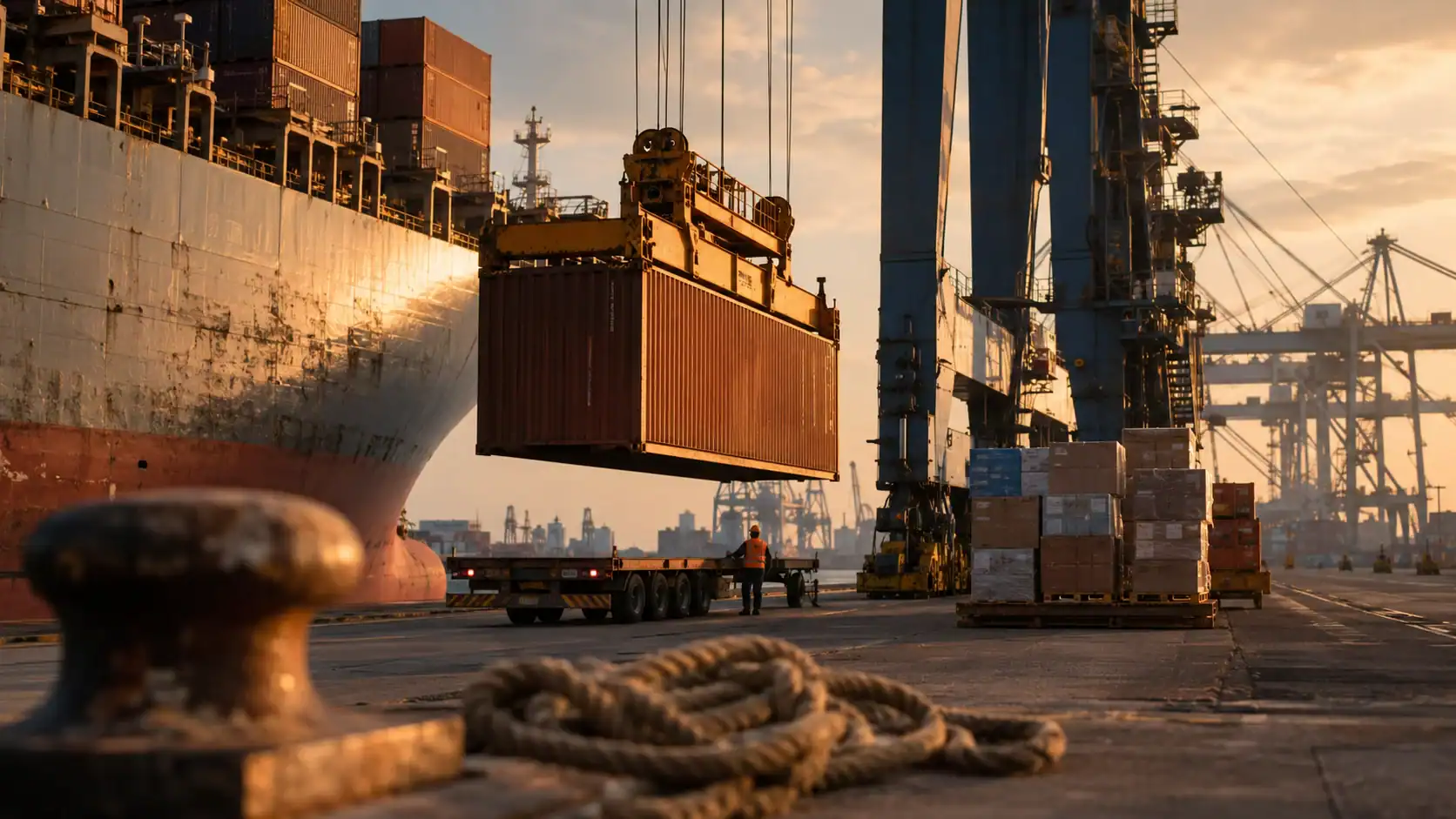
Suez Canal route (standard, when available): Barcelona or Valencia → through the Strait of Gibraltar → Mediterranean → Suez Canal → Red Sea → Indian Ocean → Strait of Malacca → Singapore → Laem Chabang. This is the standard routing for Europe-to-Asia freight when the Suez Canal is operating normally. Ocean transit: approximately 25–33 days from Barcelona to Laem Chabang. Total door-to-door for an FCL move is approximately 35–48 days once Thai customs processing and inland delivery are included.
Cape of Good Hope route (alternative, Suez disruption): When Red Sea security conditions or Canal disruptions redirect services around Africa, the Cape routing adds approximately 10–14 days to the Suez transit time. Barcelona to Laem Chabang via the Cape: approximately 38–47 days ocean transit. During the periods of elevated Red Sea risk in 2024, most European carriers temporarily moved to Cape routing; as of 21 October 2026, Alphaliner reports 63% of Far East to Europe container capacity back on Suez-routed services, so routing still differs by carrier and vessel. Confirm the routing with your freight forwarder when booking, because it affects both the transit time and the insurance pricing.
For LCL (Less than Container Load) shipments, add the consolidation and deconsolidation time at the origin and destination CFS: typically an additional 5–9 days above the FCL ocean transit time.
Spanish Port Options: Barcelona vs. Bilbao vs. Valencia
Spain has three main container ports used for international furniture and household goods export, each with different trade lane strengths and LCL consolidation frequency for Thailand-bound cargo.
Barcelona: A major container port and the primary origin for household goods moves from Catalonia and southern Europe. Good frequency of consolidation services for Thailand-bound LCL cargo. Most freight forwarders with Spain-Thailand experience have agents or offices in Barcelona. FCL services from Barcelona to Laem Chabang are available on regular sailings (approximately weekly depending on the carrier).
Valencia: Spain’s largest container port by volume, with strong trade connections to Asia. For expats relocating from the Valencia region or southeastern Spain, Valencia origin is often more cost-effective than trucking to Barcelona. LCL consolidation frequency for Thailand is slightly lower than Barcelona, so expect an additional 3–5 days waiting time for the next departure.
Bilbao: The primary container port for northern Spain (Basque Country, Navarra, La Rioja, and goods from Portugal that move north). For expats relocating from Madrid, the choice between Bilbao and Barcelona depends on the volume and the trucking distance. Barcelona typically has better direct Laem Chabang service frequency. That makes it the default recommendation for Madrid-origin moves.
FCL vs. LCL: What Volume Threshold Matters
The decision between a full container (FCL) and a shared consolidation (LCL) for a Spain-Thailand household goods move is primarily a volume and cost calculation.
FCL 20ft container: Holds approximately 25–28 CBM of household goods (or up to 33 CBM if the container is loaded to roof height). Suitable for a 1–2 bedroom apartment’s worth of furniture and personal effects. A studio apartment with selected furniture and boxes typically fills 15–20 CBM, too little for a 20ft FCL without paying for empty space. The FCL rate from Barcelona to Laem Chabang (ocean freight only, ex works Barcelona) is approximately EUR 1,800–3,200 for a 20ft container depending on season and carrier selection. Q4 peak (October–December) adds 25–40% to these rates.
FCL 40ft container: Holds approximately 55–65 CBM of household goods. Suitable for a 3–4 bedroom home or when shipping a full household including large furniture. The FCL rate from Barcelona for a 40ft general-purpose container is approximately EUR 2,800–4,800. If you are shipping vehicles (motorcycles, not cars: see below on car import duty) or oversized furniture, the 40ft high-cube provides additional headroom.
LCL: Charged by the cubic metre (CBM) of your shipment. Rate from Barcelona to Laem Chabang: approximately EUR 120–220 per CBM (ocean freight + origin charges). For volumes below 10 CBM, LCL is typically more cost-effective than FCL. For volumes of 10–15 CBM, the comparison depends on how quickly LCL consolidations are available for your departure timing. Above 15 CBM, a 20ft FCL is usually competitive. For LCL, add the destination CFS deconsolidation fee at Laem Chabang: approximately THB 800–2,500 per CBM (approximately EUR 21–67/CBM), which is billed separately from the ocean freight and is the most commonly absent charge in initial freight quotes.
Thai Customs: Personal Effects Duty-Free Exemption
Thailand’s duty-free personal effects exemption lets qualifying incoming residents clear their household goods without paying the standard import duty rates, which run to 30% for furniture, 80% for vehicles, and 0–20% for electronics depending on category.
Current personal-effects rules and required forms are published by the Thai Customs Department.
The exemption applies only when all four conditions below are met. Miss any one of them, or have one disputed by Thai Customs, and the goods will be assessed at standard rates.
Condition 1: The goods must be used, not new. New items are assessed at commercial import rates regardless of whether an individual is importing them. Thai Customs reads an item as new when it is still in manufacturer’s packaging, carries retail price stickers, or shows unfaded colour. Thai Customs officers decide whether goods are “used.” Items that have clearly been owned and used (furniture with wear, appliances with use marks, clothing that has been washed) pass this test easily. A new flat-screen television still in the factory-sealed box does not. Ship it used, or buy it in Thailand.
Condition 2: You must be relocating to Thailand. The exemption applies to goods of a person changing their residence to Thailand, not to goods imported during a tourist visa or short-term visit. Thai Customs asks for a work permit valid for at least one year or an Immigration Department letter confirming an annual stay. A retirement visa (O-A) does not qualify, so budget for duty and 7% VAT. Tourist visa holders cannot claim the personal effects exemption.
Condition 3: The goods must arrive between one month before and six months after your arrival in Thailand. If you arrive in Thailand in February and your container departs Spain in September, it will arrive in October or November, outside the window. The date is measured from your first arrival in Thailand as a new resident, not from your first visa. Keep your passport entry stamp as documentation.
Condition 4: Excluded categories do not qualify regardless of the other conditions. Alcohol, tobacco products, motor vehicles (including motorcycles and motorised watercraft), and commercial quantities of any category are excluded from the personal effects exemption. A reasonable personal supply of wine packed in your container will still be assessed at duty (approximately THB 155–600 per litre depending on type), because the exemption does not cover it.
How many appliances and instruments qualify? Thai Customs allows one unit of each electrical appliance duty-free, or two when the whole family is changing residence, and charges regular duty on any extra unit. It places the items with the lowest duty rate under the exemption. It also says musical instruments and sports equipment pay duty, as do vehicles and their parts and firearms. Count your televisions, fridges and air conditioners before you pack, and ship a second unit only if replacing it in Thailand would cost more than its duty.
What Happens at Thai Customs
When documentation is complete and the goods are eligible for the exemption, personal effects clearance at Laem Chabang runs as follows:
Your customs broker in Thailand files an Application for Tax and Duty Free Allowance and the Import Declaration along with supporting documentation: your passport copy showing entry stamps, your work permit, a packing list in both English and Thai (or translated), and proof of the shipping arrangement (bill of lading or air waybill). Thai Customs says the importer or agent submits the application, the declaration and the supporting documents to the Customs office at the port of entry, and pays any duty on ineligible items before the goods are released.
Thai Customs assigns the declaration to one of three examination channels:
- Green channel: no physical examination, documentary check only. Goods are released within 1–3 business days.
- Yellow channel: documentary examination, in which an officer reviews the packing list against the declaration in detail. Additional documents may be requested. Release typically follows within 3–6 business days.
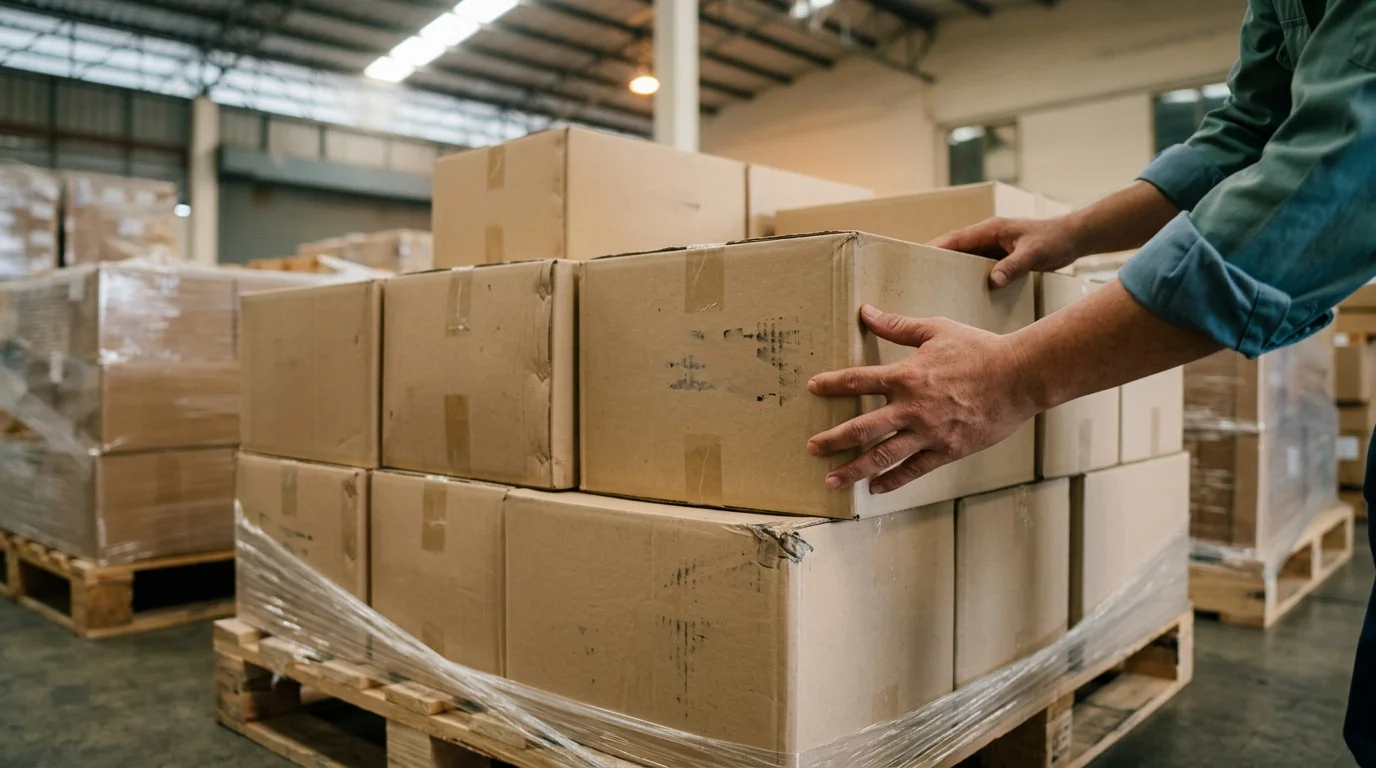
- Red channel: physical examination of the container contents. Officers open cartons, verify goods against the packing list, and assess whether any items fail the exemption conditions. Adds 5–12 business days and incurs an examination fee. Red channel is triggered by incomplete documentation, discrepancies between the packing list and declaration, or a flag in the risk assessment system.
The single most effective way to get green channel is a detailed, accurate packing list that uses clear category descriptions: “oak dining table (used, 8 years old)” and “Samsung 55-inch television (used, 3 years old)”, not “furniture” and “electronics.” Vague descriptions invite yellow or red channel.
What Not to Ship from Spain to Thailand
Several categories of goods create problems at Thai customs. Some are prohibited or restricted, some attract high duty even under the personal effects regime, and some are simply not worth the logistical and cost friction next to buying in Thailand.
Motor vehicles: Thailand’s import duty on passenger vehicles is 80% of the customs value, plus excise taxes. Together they price a European car out of Thailand for all but the highest-value vehicles. A vehicle worth EUR 25,000 in Spain would cost roughly EUR 50,000 to 65,000 to land in Thailand after duty and taxes. The personal effects exemption explicitly excludes motor vehicles. Sell your car in Spain; buy or lease in Thailand.
Motorcycles: Motorcycles carry the same duty structure as passenger vehicles, at 80% import duty. Motorcycle culture in Thailand is strong, and local prices undercut European equivalents for the same specifications. Shipping a motorcycle from Spain to Thailand rarely makes economic sense.
Alcohol: Alcohol is excluded from the personal effects duty-free exemption. A reasonable personal supply of wine, beer, or spirits packed in your container will be assessed at import duty (typically THB 155 per litre for beer; THB 600 per litre for wine; spirits assessed at higher rates) plus excise taxes and VAT. For small quantities (a case of wine you are particularly attached to), the duty may be acceptable. For large quantities, it is not worthwhile. Thailand has an excellent selection of imported wines available locally at reasonable prices.
New electronics still in original packaging: Any electronics item that appears to be commercially new will be assessed at commercial import rates rather than under the personal effects exemption. A sealed box, unopened accessories, or intact factory stickers are enough to trigger that assessment. If you must bring new electronics, unbox them, set them up, use them once, and pack them without factory packaging. Or purchase them in Thailand, where electronics are competitively priced due to the regional supply chain. The same logic applies to most bulky appliances when moving from Spain to Thailand: measure them and compare local prices before you ship.
Prescription medications beyond 30 days: Thailand allows incoming residents to bring a 30-day personal supply of prescription medications. Larger quantities require documentation from a licensed physician and import approval. If you take regular medication, bring a 30-day supply and arrange a Thai physician consultation for continuity of prescription.
Items of cultural or historical significance: Thai law restricts the import of certain religious objects, antiques, and items classified as cultural property. Antique Buddha images and Thai religious artefacts require export permits from Thailand’s Fine Arts Department if being re-imported. Spanish antiques may require documentation of origin and value for customs assessment.

Documentation Checklist for Spanish Expats
The following documents are required for a personal effects clearance at Thai Customs for a shipment from Spain:
Personal identity and visa documents:
- Passport copies: all pages with relevant stamps, including the entry stamp for your first arrival in Thailand as a new resident
- Work permit valid for at least one year, or the Immigration Department letter confirming an annual stay
- Proof of Thai address: rental agreement or property title showing Thai residential address
Shipping documents:
- Original Bill of Lading (for sea freight) or Air Waybill (for air freight)
- Commercial Invoice: for personal effects, this is a valuation list showing estimated current value of goods, not a sale invoice, with total value typically declared at replacement cost
- Packing List: itemised list in English (and ideally Thai), showing carton number, contents, quantity, and condition (used/new) for each item
- Certificate of Origin: not required for personal effects; required if any commercial goods are included
Spanish documentation for tax and administrative purposes (not customs, but needed for your move):
- Spanish tax residency change: notification to Agencia Tributaria of change of fiscal residency if you are establishing Thai tax residency
- Empadronamiento de baja (deregistration from Spanish municipal register)
- DNI or NIE: ensure your Spanish identification documents are valid for the expected period abroad
Transit Times and Full Cost Estimate
20ft FCL move from Barcelona to Bangkok (via Suez):
- Packing and origin loading: 1–2 days
- Barcelona port processing: 2–3 days
- Ocean transit Barcelona to Laem Chabang: 28–33 days
- Thai customs clearance (green channel, complete documentation): 3–5 business days
- Inland delivery Laem Chabang to Bangkok: 1–2 days
- Total door-to-door: approximately 35–45 days
Approximate freight cost breakdown (FCL 20ft, standard season):
- Origin packing service (professional): EUR 600–1,200
- Origin port charges (Barcelona): EUR 250–400
- Ocean freight Barcelona to Laem Chabang: EUR 1,800–2,800
- Destination port charges at Laem Chabang (THC, container handling): THB 4,500–7,500 (approximately EUR 120–200)
- Destination CFS / container return: EUR 100–180
- Thai customs broker fee: THB 3,000–8,000 (approximately EUR 80–215)
- Inland delivery Bangkok: THB 4,500–9,000 (approximately EUR 120–240)
- Total estimated range: EUR 3,070 to 5,235
These figures exclude cargo insurance (recommended: ICC-A All Risk, approximately 0.3–0.5% of declared value) and exclude any customs duty payable on items not qualifying for the personal effects exemption.
Healthcare, Costs and the Spanish Pension in Thailand
Healthcare: Spain’s national health system (Sistema Nacional de Salud) does not cover you once you have established residency abroad. Thai private health insurance is the standard for foreign residents. Comprehensive plans from major Thai or international insurers (Bupa Thailand, AXA, Cigna regional plans) cost a healthy 50-year-old approximately THB 40,000–80,000 per year (roughly EUR 1,000–2,000). Private hospital care in Bangkok is internationally accredited and high quality; costs are substantially lower than equivalent care in Spain for most procedures. Spain and Thailand do not have a bilateral social security agreement, so SEGSS entitlement does not transfer to Thailand-based healthcare coverage.
Spanish pension abroad: Spain’s national pension (pensión de jubilación from the INSS) continues to be paid to beneficiaries living outside Spain, including Thailand. You must renew your proof of life (fe de vida) annually through the Spanish consulate in Bangkok. Spain and Thailand have a double taxation treaty (in force 1998). Under that treaty, Spanish-source pension income is generally taxable in Spain, but confirm your specific pension category with a Spanish fiscal advisor. Agencia Tributaria requires notification of change of tax residence; failure to deregister as a Spanish tax resident while living in Thailand creates dual-taxation exposure.
Cost of living comparison: For Spanish expats accustomed to mid-size city living (Valencia, Seville, Bilbao), Bangkok offers a comparable or lower cost of living in most categories. Rent for a modern 2-bedroom apartment in a Bangkok inner suburb runs THB 20,000–35,000 per month (EUR 500–875); equivalent quality in Madrid or Barcelona would be EUR 1,200–2,000+. Food, utilities, and domestic services are meaningfully cheaper in Bangkok. Imported European products such as wine and certain foods cost more because of Thai import duty.

Practical Tips for Spanish Expats Shipping to Thailand
Start the process 8–10 weeks before your intended departure from Spain. Booking the container, packing, local port processing, ocean transit, Thai clearance, and inland delivery all require lead time. Moving to Thailand in January? Book your freight in early November.
Spanish power plugs and voltage. Spain operates at 220V 50Hz, as does Thailand, so the voltage is compatible. However, Spain primarily uses Type F (Schuko) round-pin plugs, while Thailand uses a mix of Type A (flat-pin, US-style) and Type B sockets. Your Spanish appliances will need plug adapters. High-powered appliances in large European formats, such as washing machines, dryers, and refrigerators, may also fail to fit Thai kitchen or bathroom layouts. Measure before shipping.
Mattress dimensions. European mattress sizes (90×200cm single, 160×200cm Queen equivalent, 180×200cm King equivalent) are close but not identical to Thai mattress sizes available locally. If your Spanish bed frame accommodates standard European mattresses, shipping the mattress is worthwhile. If you plan to buy a Thai bed frame, buy the mattress locally to ensure compatibility.
Timing relative to your Thai visa start. Some people arrive in Thailand and then return to Spain for several weeks before their goods ship, a common pattern for anyone managing a property sale. Your first Thai entry starts the six-month clock, not the date your goods arrive.
Consider a pre-shipment survey. For a full container of household goods with significant antiques, art, or high-value items, a pre-shipment survey by an independent assessor documents the condition of goods before loading. That documentation supports any insurance claim and shows that the damage occurred in transit rather than before loading. The cost is EUR 300–600; for valuable shipments, it is worthwhile.
Swift Cargo handles Spain-to-Thailand household goods shipments including customs brokerage at Laem Chabang, packing coordination, and cargo insurance. Visit swiftcargo.solutions to discuss your move with our team.
Before Moving from Spain to Thailand
Book freight 8 to 10 weeks before departure, choose Barcelona, Valencia or Bilbao by distance and sailing frequency, and confirm whether your carrier is routing via Suez or the Cape. Leave vehicles and alcohol out of the container, ship used goods only, and prepare a detailed English packing list for Thai customs.
Estimated Moving Costs: Spain to Thailand
| Home size | Estimated cost (EUR) |
|---|---|
| 2 bedroom | EUR 3,540–8,090 |
| 3 bedroom | EUR 3,980–8,560 |
| 4 bedroom | EUR 5,000–10,460 |
| 5 bedroom | EUR 9,050–15,000 |
These are door to door estimations, not port to port. They include standard packing and customs clearance on both ends, and assume an origin and destination reasonably near the port on both sides; a move to or from a more remote location may cost more. Treat these as budgets, not final pricing. The final cost depends on the quantity and nature of what you are shipping, service availability, and sea freight rates at the time of your move. These figures are based on average home sizes from past moves and may not reflect your own home. Timing and availability can also materially affect the price, and in some cases whether we are able to complete the job on your preferred timeline. For an accurate quote, contact our team or start our online self service quote, a short survey about your move that takes about four minutes and lets our team provide a real quote based on your specific details.
Frequently Asked Questions
How long does shipping from Spain to Thailand take?
Sea freight from Barcelona or Bilbao to Laem Chabang (Thailand’s main container port) takes approximately 28–38 days via the Suez Canal route, or 38–50 days via the Cape of Good Hope when the Suez routing is disrupted. The total door-to-door timeline is typically 35–55 days for FCL containers and 42–62 days for LCL shipments, counting packing, port loading, ocean transit, Thai customs clearance (3–7 days for personal effects with correct documentation), and inland delivery to your Thai destination. Air freight from Madrid or Barcelona to Suvarnabhumi or Don Mueang airports takes 1–3 days transit, with door-to-door delivery in 5–10 days including Thai customs clearance.
Do I need to pay import duty on my household goods moving to Thailand from Spain?
Used household goods and personal effects may enter Thailand duty-free under the personal effects exemption, provided four conditions are met: the goods are used (not new), you are relocating to Thailand with a work permit valid for at least one year (not a holiday), the goods arrive between one month before and six months after your arrival in Thailand, and the goods do not include alcohol, tobacco products, or motor vehicles. If these conditions are met, you file an Application for Tax and Duty Free Allowance and an Import Declaration with Thai Customs. Items that are new, arrive outside that window, or exceed a reasonable quantity for personal use will be assessed for customs duty at the standard rate for the relevant category.
What should I not ship from Spain to Thailand?
Items that should not be included in a Thailand-bound shipping container from Spain: alcohol (restricted import, high duty if not exempted under personal effects rules), tobacco (same restriction), motor vehicles (Thailand import duty on passenger vehicles is 80%), firearms and ammunition (require Thai import permit; generally not permitted for most non-residents), prescription medications beyond a 30-day personal supply (require documentation from a licensed physician), certain plants and plant products (biosecurity inspection required), and any goods prohibited under Thai law. European electrical appliances operating at 220V 50Hz are compatible with Thailand’s power supply, but the plug format differs. Type A/B and type C sockets are used in Thailand depending on the installation.
Can I ship my car from Spain to Thailand?
Technically yes, but rarely financially worthwhile. Thailand imposes an 80% import duty on passenger vehicles plus excise taxes, making the total landed cost of a European vehicle approximately double or more the vehicle’s original purchase price. A vehicle worth EUR 25,000 in Spain would cost approximately THB 1,900,000–2,500,000 (approximately EUR 50,000–65,000) to land legally in Thailand after all duties and taxes. The personal effects duty-free exemption does not apply to motor vehicles. Most expats relocating from Spain to Thailand sell their vehicle in Spain and purchase a Thai-registered vehicle locally, or use ride-hailing and public transport in Bangkok.