
China accounts for roughly 35–40% of global furniture exports by value. For Australian importers, that figure reflects something real: access to manufacturing scale, material range, and price points that no domestic supplier can match. Land a quality dining table from Guangdong in Sydney with full duty and freight paid, and it often costs less than the equivalent piece at wholesale in Australia.
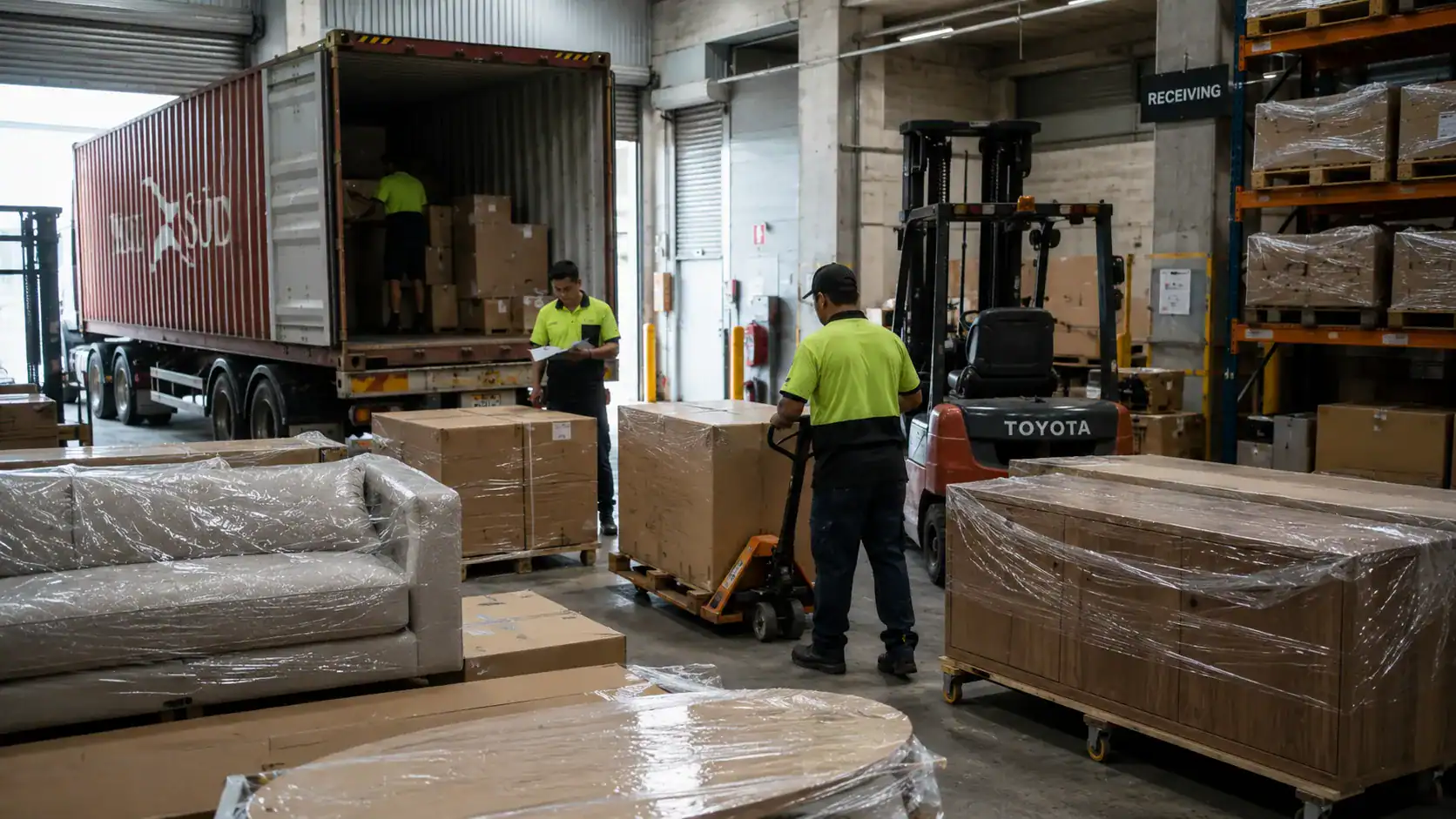
But the gap between a purchase order and goods in your warehouse is wider than most first-time importers expect. Importing furniture from China into Australia spans five distinct regulatory frameworks: customs classification, trade agreement compliance, biosecurity, environmental law, and product safety. Each has its own documentation requirements, its own penalties, and its own lead times. The good news is that none of it is arbitrary. Every requirement has a logic, and once you understand the system, you can work with it efficiently.
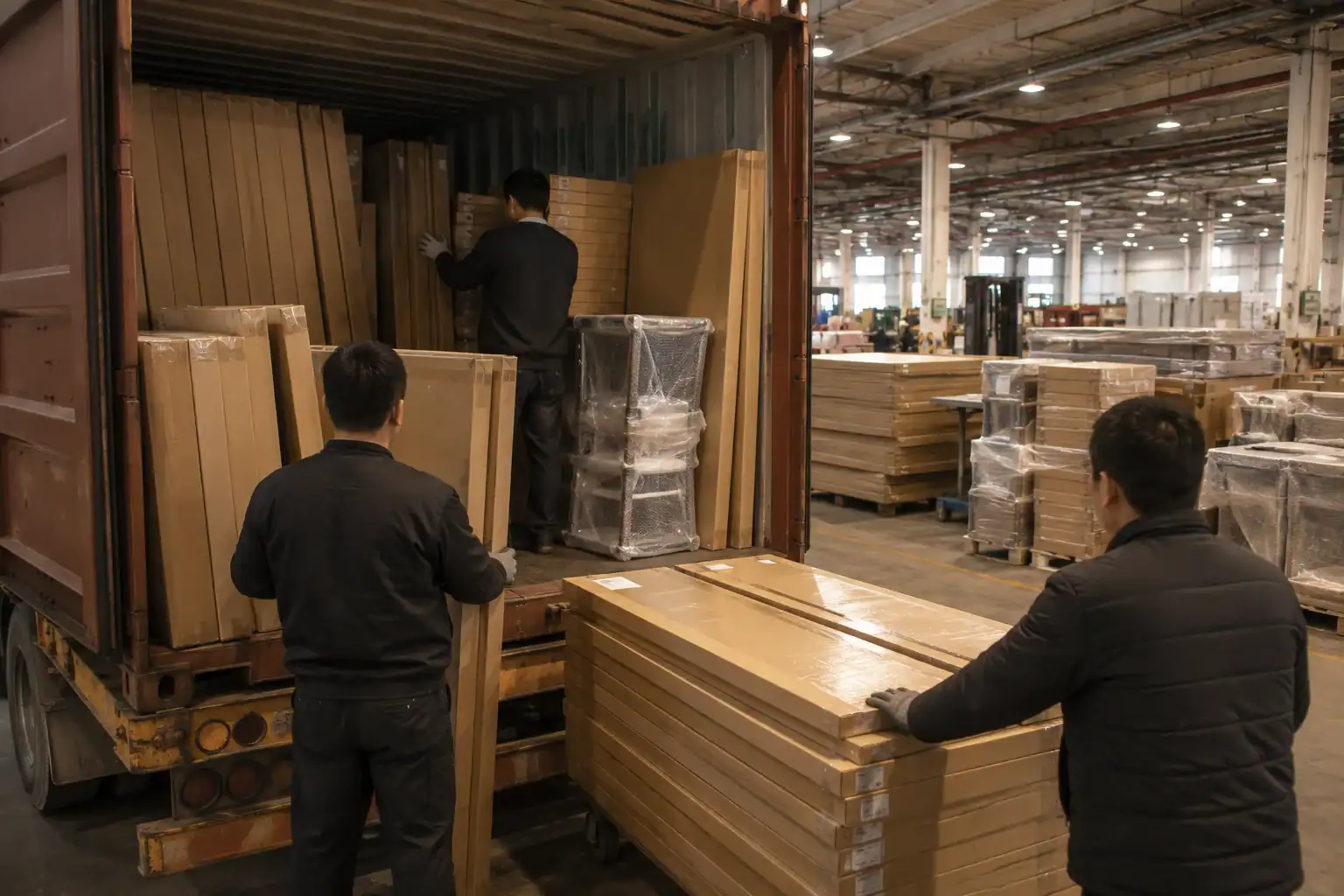
HS Code Classification: Start Here
Before your supplier quotes. Before you book freight. Before your customs broker prepares a declaration. Identify the correct HS code for your goods.
Everything downstream depends on it: duty rate, biosecurity treatment requirements, BMSB inspection risk, applicable safety standards, and the rate your ChAFTA Certificate of Origin unlocks. Getting the code wrong at the start creates problems at every step after.
Furniture is classified under Chapter 94 of the Australian Customs Tariff:
- HS 9401 covers seats of all kinds: chairs, sofas, armchairs, stools, recliners, office chairs, bar stools
- HS 9403 covers other furniture: tables, desks, cabinets, beds, wardrobes, bookshelves, shelving units
- HS 9404 covers mattress supports, mattresses, sleeping bags, cushions and similar stuffed furnishings
The 10-digit Australian tariff item codes within these headings determine the specific duty rate for your product. You can confirm the classification using the ABF Tariff Classification tool or ask your customs broker for a binding tariff ruling before your first shipment.
ChAFTA Duty Rates: 5% Down to Zero
The general MFN (most favoured nation) duty rate on Chapter 94 furniture imported into Australia is 5% of the customs value.
Under the China-Australia Free Trade Agreement (ChAFTA), that rate drops to 0%, provided the goods originate in China and you present a valid Certificate of Origin with each shipment.
On a $50,000 AUD furniture container, not using a ChAFTA Certificate of Origin costs you $2,500 in avoidable duty. Across a $200,000 annual import program, that’s $10,000 a year.
To access the 0% ChAFTA rate:
- Your goods must meet the ChAFTA rules of origin criteria (broadly, goods wholly obtained or substantially transformed in China)
- Your Chinese supplier must obtain a Certificate of Origin from an authorised issuing body in China (typically the China Council for the Promotion of International Trade, CCPIT, or China Inspection and Quarantine, CIQ)
- The Certificate of Origin must accompany the import declaration lodged with Australian Border Force
You can confirm the applicable rate for your specific HS code using the DFAT FTA Portal. The same ChAFTA mechanism applies to electronics imports from China. The certificate process is worth understanding as a routine if you’re sourcing across product categories.
Don’t assume your supplier will automatically provide the certificate. Many Chinese manufacturers are not accustomed to the requirement or don’t know which Australian importers use FTA preference. Build the Certificate of Origin into your purchase order terms and request it before the vessel loads. It cannot be backdated after the fact.
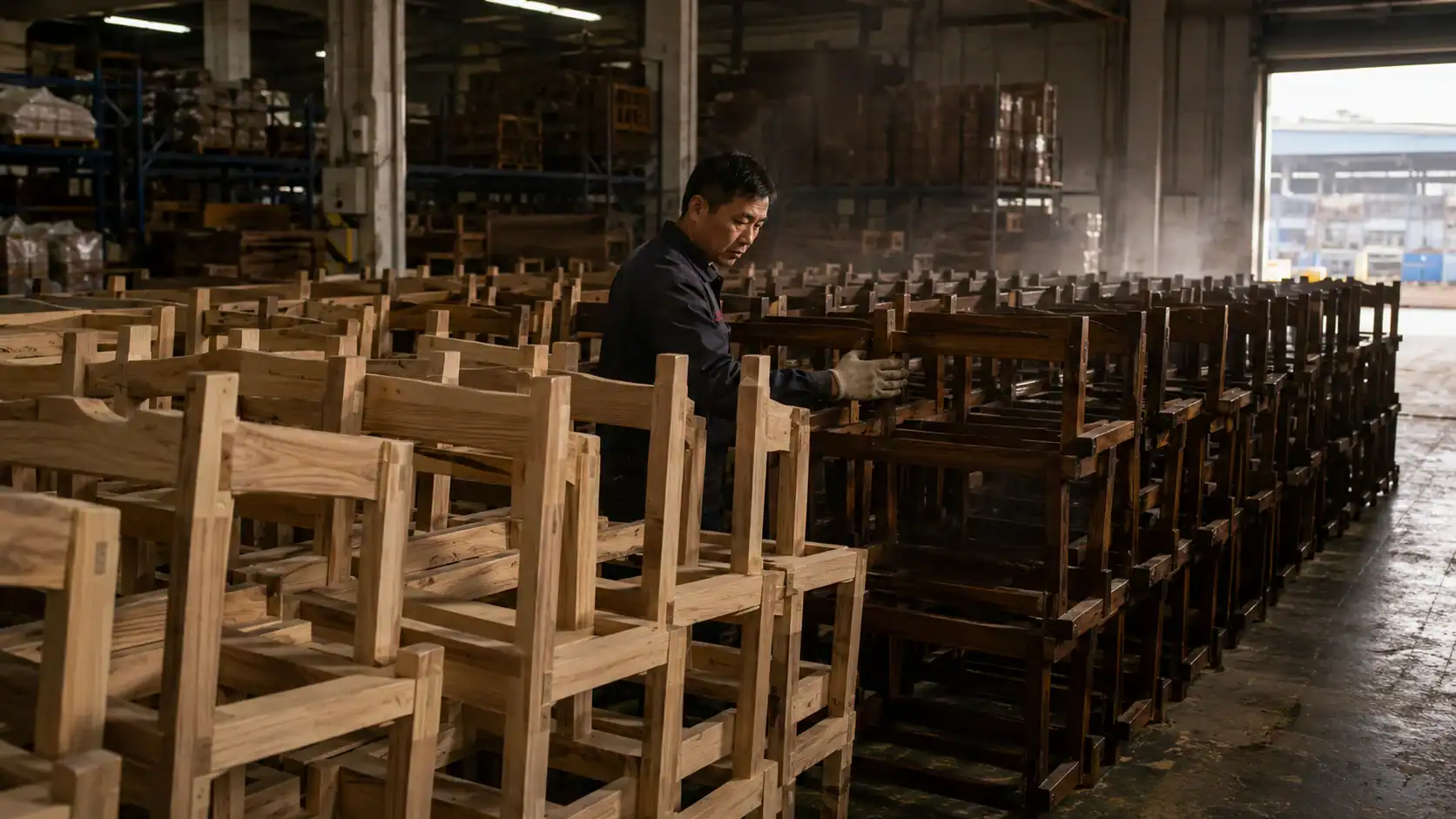
Biosecurity Requirements by Material Type
Biosecurity is the most complex part of importing furniture from China. Unlike duty, the requirements are not uniform: they depend entirely on what your furniture is made from. DAFF’s BICON system is the authoritative source for import conditions by commodity and material. Your broker should check it for your specific goods before the shipment is booked.
Here is how the major furniture material types are treated at the Australian border.
Solid Timber Furniture (Highest Biosecurity Risk)
Solid timber carries the highest biosecurity risk of any furniture material. It may harbour timber borers, bark beetles, Asian longhorn beetles, and other wood-boring pests that would be catastrophic if established in Australian forests.
Required treatment: heat treatment (core temperature ≥56°C held for 30 minutes), kiln drying to ≤10% moisture content, or methyl bromide fumigation. The treatment must be performed offshore, before the goods load, and documented on a Fumigation Certificate or Heat Treatment Certificate that accompanies the shipment.
On arrival, DAFF may conduct a physical inspection regardless of the treatment certificate. If live pests are found, the goods are re-treated at the importer’s cost or re-exported.
Plywood and Engineered Wood (MDF, Particleboard)
MDF and particleboard carry lower biosecurity risk than solid timber. The manufacturing process destroys most pests. A Newly Manufactured Plywood Declaration is required for plywood: a document from the manufacturer confirming the product is newly manufactured and does not contain reclaimed or recycled timber components.
Standard MDF and particleboard require a material declaration only. No fumigation certificate is required in most cases. Your broker can confirm the exact requirement for your product specification against BICON.
Bamboo and Rattan
Both are classified as plant material, not timber, for biosecurity purposes. A Phytosanitary Certificate issued by the Chinese National Plant Protection Organisation (NPPO) is required, certifying the goods are pest-free. This must be obtained before the goods ship. It cannot be issued retrospectively from Australia.
Feathers and Down (Upholstery Fill)
Feathers and down fall into a high pathogen risk category and require a health or treatment certificate. Commercial imports require specific clearance documentation from DAFF. Note that personal imports of feather-filled goods are limited to 10 items. Anything above that threshold requires commercial clearance documentation regardless of the importer’s intent.
Metal, Glass, Synthetic Materials
Metal, glass, and synthetic furniture requires no biosecurity treatment, only a standard customs declaration. That holds as long as the piece contains no timber, bamboo, rattan, or natural fill.
Wooden Packaging: This Applies to Every Shipment
Regardless of what your furniture is made from, if your goods arrive on timber pallets, in wooden crates, or with timber dunnage, that packaging must comply with ISPM 15, the international standard for treating wooden packaging material.
Acceptable treatments: heat treatment, methyl bromide fumigation, dielectric heating, or sulfuryl fluoride fumigation. The ISPM 15 mark must be branded or stamped visibly on the packaging. A fumigation certificate must accompany the shipment. Non-compliant packaging is treated on arrival at the importer’s cost or destroyed.
Australia’s biosecurity import conditions apply to every category of imported goods. BICON is the system to consult for any commodity you haven’t imported before.
BMSB Seasonal Measures: The Current Window
Brown Marmorated Stink Bug (BMSB) is an invasive agricultural and structural pest. DAFF has implemented mandatory seasonal treatment measures since 2018, covering the Northern Hemisphere autumn and winter, the period when BMSB populations congregate in goods heading for export.
The BMSB season runs annually from 1 September to 30 April; the 2026-27 season runs 1 September 2026 to 30 April 2027. DAFF reconfirms the exact window and the approved treatment list each year before the season opens, so check current-season conditions before booking rather than relying on a prior year’s specifics.
Two separate classifications decide what applies, and conflating them is the most common planning error on this lane. DAFF lists roughly 41 target risk countries, concentrated in Europe, North America and parts of the CIS. China is not one of them: China sits with Japan, the Republic of Korea and the United Kingdom on the emerging risk country list. That distinction decides your obligation. Goods from a target risk country that are on the target high risk goods list need mandatory offshore treatment before shipment. Goods from an emerging risk country do not. Chapters 39, 94 and 95 from emerging risk countries are subject to random onshore inspection instead, and that is the regime that actually applies to Chinese furniture. If a live BMSB specimen is found on arrival, the goods are treated at the importer’s cost or re-exported.
Offshore treatment is optional on this lane rather than required, and it is worth costing against the delay risk: a container held for random inspection and then directed to on-arrival treatment loses time and money that pre-treatment would have avoided. If you do treat, do it before the goods load in China. Approved offshore treatments in recent seasons have included methyl bromide, sulfuryl fluoride, heat treatment, and ethyl formate. Confirm the current season’s approved list against the DAFF page below before treatment is arranged.
Goods arriving with a compliant offshore treatment certificate are still subject to random inspection but carry lower risk of being directed to on-arrival treatment. On-arrival treatment delays the shipment and adds cost.
Fumigation methodology matters: DAFF updated the Methyl Bromide Fumigation Methodology to Version 3.0, effective 1 May 2025, and certificates issued under the older v2.0 methodology stopped being accepted from 30 June 2025. If your supplier is fumigating goods now, confirm they are using v3.0. An outdated-methodology certificate will be rejected at the Australian border.
Current season details: DAFF BMSB seasonal measures.
Illegal Logging Prohibition Act: The Declaration You Cannot Skip
Australia’s Illegal Logging Prohibition Act prohibits importing timber that was illegally logged. Any furniture containing timber is classified as a regulated timber product under the Act. That includes solid wood, plywood, particleboard, and bamboo.
For each customs entry, your customs broker must lodge a due diligence declaration confirming that the importer has taken reasonable steps to verify the timber’s legal origin and that all timber components are covered by the declaration.
The due diligence requirements were strengthened in March 2025. Importers who cannot demonstrate a verifiable timber supply chain face penalties of up to 5 years imprisonment and fines of up to 500 penalty units per offence.
In practice: request from your Chinese supplier the documentation trail for their timber sourcing. Forestry Stewardship Council (FSC) or Programme for the Endorsement of Forest Certification (PEFC) certification is the clearest evidence of legal origin. Without it, your broker’s declaration relies on supplier statements alone, which carries legal exposure if DAFF investigates.
Full guidance at: DAFF Illegal Logging Prohibition.
ACCC Mandatory Safety Standards
Some furniture categories are subject to mandatory Australian safety standards enforced by the ACCC under the Australian Consumer Law. If you’re importing these goods and they don’t comply, they cannot legally be sold in Australia, and they may be seized at the border or subject to mandatory recall after sale.
Bunk Beds: AS/NZS 4220 (mandatory)
Guardrails required on all four sides of the upper bunk. Minimum 260mm clearance between the top of the mattress and the top of the guardrail. Bed slats must be retained without displacement under load. Applies to bunk beds in residential use.
Household Cots: AS/NZS 2172 (mandatory)
Specific requirements covering cot dimensions, bar spacing (maximum 85mm), mattress fit, and structural integrity under dynamic load.
Portable Folding Cots: AS/NZS 2195 (mandatory)
A separate standard for travel and portable cots, covering folding mechanism safety and sleeping surface stability.
Bean Bags: Child-Resistant Fastener (mandatory)
Bean bags must have a child-resistant fastener on the fill opening. Small polystyrene beads pose a choking and suffocation hazard. The fastener must prevent a child under five from opening it without assistance.
Beyond mandatory standards, all furniture sold in Australia must meet the general consumer guarantee obligations of the ACL: acceptable quality, fit for purpose, and matching its description. Formaldehyde emissions are not subject to mandatory limits in Australia (unlike the EU’s E0/E1 classification system), but pre-shipment formaldehyde testing is prudent for MDF and particleboard goods destined for enclosed residential spaces.
Current mandatory standards: ACCC Product Safety portal.
Documentation Checklist
Your customs broker needs these documents before lodging the import declaration with ABF:
| Document | Required when | Notes |
|---|---|---|
| Commercial Invoice | Always | CIF value, HS codes, exporter details |
| Packing List | Always | Must match invoice exactly |
| Bill of Lading / Air Waybill | Always | Original or express release |
| Certificate of Origin | ChAFTA claims | From CCPIT or CIQ; reduces duty 5% → 0% |
| Fumigation Certificate | Solid timber goods; wooden packaging | v3.0 methodology required for start date ≥ 1 May 2025 |
| Heat Treatment Certificate | Solid timber goods (alternative to fumigation) | Core temperature ≥56°C for 30 minutes |
| Phytosanitary Certificate | Bamboo, rattan, plant-based materials | From Chinese NPPO before loading |
| Newly Manufactured Plywood Declaration | Plywood components | From manufacturer |
| BMSB Treatment Certificate | September to April shipments | Optional for China (emerging risk country); not mandatory |
| Illegal Logging Due Diligence Declaration | All timber-containing goods | Prepared by your customs broker; importer signs |
| Import Declaration | Always (goods > AUD $1,000) | Lodged by licensed customs broker with ABF |
The table is organised by condition, not by document type. That is a deliberate error-proofing design, not a formatting choice. Most shipment failures on this route don’t come from a document being filled in wrong; they come from a document nobody realised was required in the first place, because “solid timber” or “bamboo component” wasn’t flagged as a trigger condition until the container was already at the port. Read the table by scanning your own bill of materials against the “Required when” column before you book freight, not after your broker asks for a certificate you don’t have.
FCL or LCL: Which Shipping Option for Furniture?
Furniture is bulky. The choice between LCL (Less than Container Load) and FCL (Full Container Load) drives your landed cost per unit.
LCL means your goods share a container with other importers’ shipments. Cost is charged per cubic metre (CBM). China-Australia LCL rates typically run USD $50–$150 per CBM depending on the port pair and current market rates. It suits shipments under 12–15 CBM.
FCL 20ft holds approximately 25–28 CBM. FCL 40ft HC holds approximately 65–68 CBM. FCL rates are flat per container regardless of volume used. Current China-Australia FCL rates: approximately USD $1,300–$1,800 for a 20ft, $2,500–$3,000 for a 40ft HC (rates vary with market conditions; get current quotes from your freight forwarder).
The break-even point where FCL becomes cheaper per CBM than LCL is typically 12–15 CBM. Above that threshold, FCL usually saves freight cost and arrives faster. FCL containers are not consolidated or deconsolidated at origin and destination, which cuts handling delays.
Transit time, Guangdong ports to Sydney or Melbourne: 20–30 days FCL, 25–40 days LCL. The additional LCL time reflects consolidation and deconsolidation handling at each end.
The full breakdown of China-to-Australia shipping timelines covers FCL and LCL transit across port pairs in detail.
It helps to ask why the landed cost breaks down the way it does. A Chinese furniture factory quotes an ex-works price that looks cheap. The expensive parts of the transaction have been pushed downstream onto the importer: biosecurity treatment, ChAFTA documentation, and ACCC compliance testing. That is not an accident of pricing; it is how the supply chain allocates risk. The supplier keeps its quote legible and lets the border absorb the complexity. An importer who reads the quote as the real cost is measuring the wrong number, and the gap tends to surface at exactly the moment the container is already on the water.
Frequently Asked Questions
What is the duty rate on furniture from China?
The general MFN duty rate is 5% on Chapter 94 furniture. With a valid ChAFTA Certificate of Origin, the rate drops to 0%. GST of 10% applies to the combined customs value plus duty plus international freight and insurance. The de minimis threshold is AUD $1,000 FOB value. Goods below this do not attract duty or GST at the border.
Do I need to fumigate furniture from China?
It depends on materials. Solid timber furniture requires a fumigation or heat treatment certificate. MDF and particleboard generally do not. All wooden packaging must comply with ISPM 15 regardless. During the BMSB season (September to April), Chinese-origin furniture faces random onshore inspection rather than mandatory offshore treatment, because China is an emerging risk country.
What is BMSB and when does it apply to furniture?
Brown Marmorated Stink Bug is an invasive pest. DAFF implements seasonal measures from September through April each year. China is an emerging risk country, not a target risk country, so mandatory offshore treatment does not apply. Chapters 39, 94 and 95 from emerging risk countries face random onshore inspection instead. If a live BMSB is found, the goods are treated at the importer’s cost or re-exported.
Do I need a licensed customs broker to import furniture?
For shipments above AUD $1,000 (the formal entry threshold), an import declaration must be lodged by a licensed customs broker. Your freight forwarder can typically arrange customs brokerage as part of the freight service.
What happens if my timber supplier cannot provide FSC certification?
Your customs broker can still lodge the Illegal Logging due diligence declaration based on other evidence: supplier statements, country-of-origin documentation, and supply chain records. The legal obligation sits with you as the importer. If DAFF investigates a suspected illegally logged shipment, you must demonstrate due diligence. Without supply chain documentation, that is a difficult position.
How do I find the right HS code for my furniture?
Use the ABF Tariff Classification Search or ask your customs broker for a binding tariff ruling. The main headings are 9401 (seats), 9403 (other furniture), and 9404 (mattresses, cushions). Getting this right before shipment avoids reclassification disputes and incorrect BMSB treatment triggers at the border.
Ready to Import Furniture from China?
Swift Cargo handles commercial furniture imports from China to Australia: FCL and LCL, with coordination of fumigation documentation, ChAFTA certificate compliance, customs brokerage, and BMSB treatment requirements during the seasonal window.