
Shipments don’t get held at Thai customs because importers are careless. They get held because most people assume the documents for shipping to Thailand are the same ones that worked last time, or that their supplier has it covered. Neither assumption is usually right.
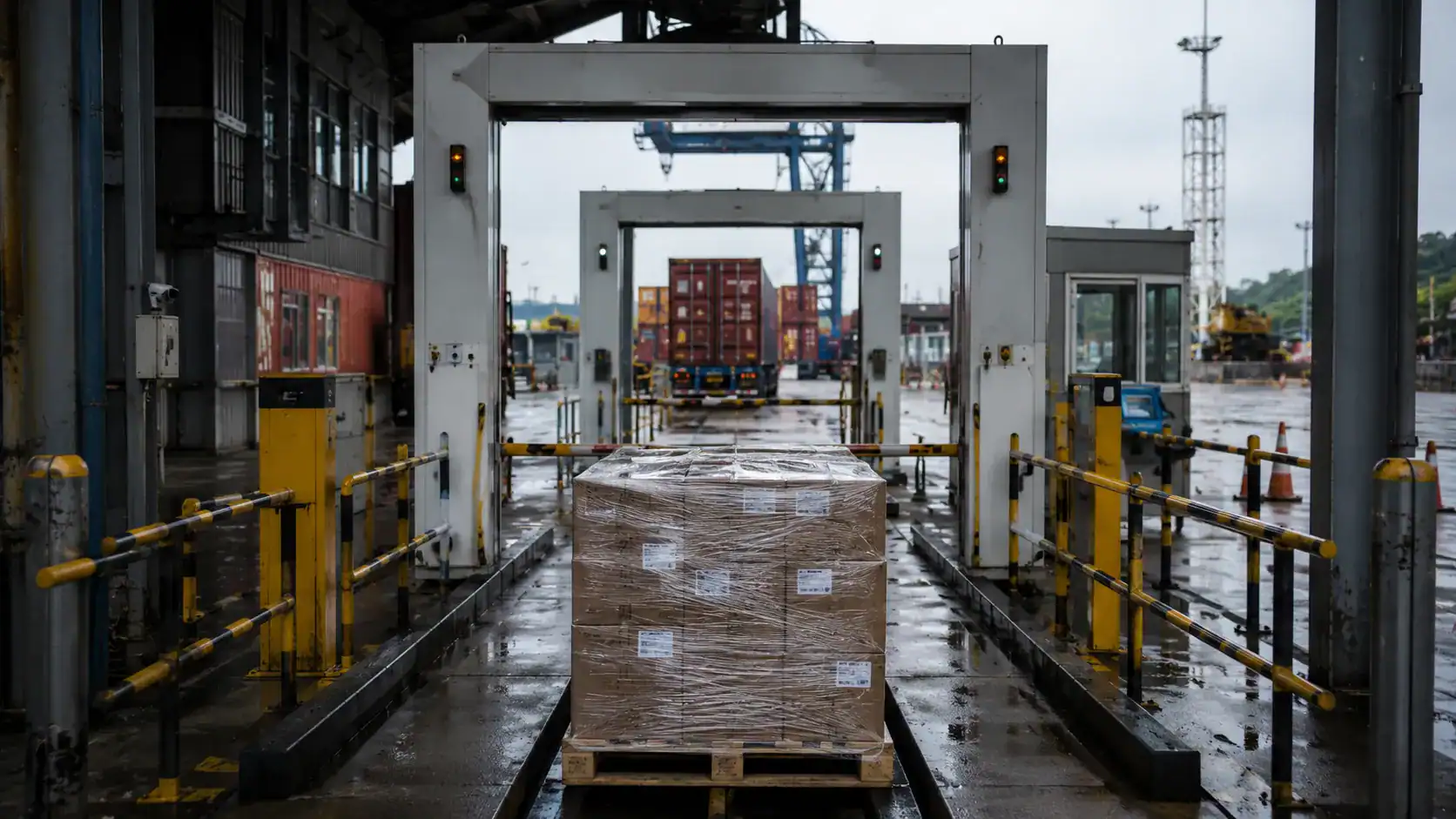
Thai customs clearance operates on a document-first principle. Before goods are physically examined, or released without examination, the customs authority reviews the submitted paperwork. If the documents stack up, the shipment moves. If they don’t, it doesn’t.

The Standard Documents for Shipping to Thailand
Five documents are required for every commercial shipment into Thailand, regardless of goods type.
1. Commercial Invoice
The commercial invoice is the primary valuation document. Thai customs calculates import duty and VAT on a CIF basis: Cost plus Insurance plus Freight. Whatever value appears on the invoice is the starting point for that calculation.
A Thai customs-compliant commercial invoice must include:
- Full name and address of both exporter and importer
- Invoice date and reference number
- Specific goods description (not generic: “electronic goods” will flag the shipment; “lithium-ion rechargeable batteries, 3.7V 2600mAh, model XJ200” will not)
- HS code for each line item (8 digits minimum; 10-digit Thai tariff code preferred)
- Quantity, unit price, and total value in the invoice currency
- Country of origin for each goods line
- Incoterms (e.g., FOB Shanghai, CIF Bangkok)
- Port of loading and destination port
Thai customs maintains a comparative valuation database. If your declared value sits significantly below what comparable goods typically land at, your shipment will be flagged for a valuation dispute, not because you’ve done anything wrong, but because the number doesn’t match the pattern. The goods don’t move while the dispute is resolved.
2. Packing List
The packing list must match the commercial invoice exactly. A quantity discrepancy between documents will trigger a physical inspection, even if the actual goods are precisely as declared. It takes as little as 200 units on the invoice against 198 on the packing list.
The packing list must include:
- Goods description matching the invoice
- Number of packages (cartons, pallets, crates)
- Gross and net weight per package
- Dimensions of each package
- Package marks and numbers
3. Bill of Lading or Air Waybill
The Bill of Lading (for sea freight) or Air Waybill (for air cargo) is the transport contract and the document of title for the goods. Without it, the consignee cannot take possession of the shipment.
The main commercial sea freight ports in Thailand are Laem Chabang (near Bangkok) and Bangkok Port. For air cargo, Suvarnabhumi Airport handles the primary cargo volume.
The B/L must show:
- Shipper (exporter) name and address
- Consignee name and address
- Notify party: usually the customs broker or freight forwarder
- Goods description consistent with the invoice
- Number of packages and gross weight
- Port of loading and discharge
- Vessel name and voyage number
One note on “To Order” Bills of Lading: if the B/L is issued to order rather than directly to the named consignee, the shipper must endorse the original before the consignee can take possession. This is common in letters-of-credit transactions. If the endorsed original doesn’t arrive before the vessel does, your goods will sit at port waiting for the document, not because customs is holding them, but because you don’t have title.
The B/L and AWB requirements differ significantly between sea and air freight, including whether original documents or electronic equivalents are accepted at the cargo terminal.
4. Import Declaration (e-Goods Declaration via NSW)
Since 2025, all commercial imports into Thailand are submitted electronically through the National Single Window (NSW), a digital platform that connects Thai Customs, the Thai FDA, the Department of Foreign Trade, and other regulatory agencies in a single portal.
Your licensed Thai customs broker registers your shipment through the NSW portal (customs.go.th) and lodges the import declaration (the digital equivalent of the legacy Customs Form 99). The system cross-references your declaration against the submitted documents and either auto-releases the shipment (Green Line) or directs it to physical inspection (Red Line).
If you don’t have a licensed Thai customs broker, you cannot lodge this declaration yourself. Engaging a licensed broker is not optional for commercial imports. It is the only practical path to clearance.
The Foreign Transaction Form is required for any shipment with a customs value exceeding ฿500,000 (approximately AUD $22,000). Your customs broker lodges this alongside the import declaration.
5. Insurance Certificate
When goods ship on CIF terms, the insurance premium invoice or certificate must accompany the shipment documents. Thai customs includes the insurance value in the CIF calculation used to assess duty and VAT.
If you’re shipping on FOB terms and your buyer arranges insurance, the insurance documentation still needs to be available to the customs broker for reference in the valuation calculation.
The Certificate of Origin and the AANZFTA Advantage for Australian Shippers
A Certificate of Origin is not required for every shipment. It’s required when you want to access preferential duty rates under a free trade agreement.
For goods shipped from Australia to Thailand, the relevant agreement is AANZFTA, the ASEAN-Australia-New Zealand Free Trade Agreement. Under AANZFTA, qualifying Australian-origin goods may attract reduced or zero duty rates in Thailand compared to the standard MFN (most favoured nation) rate.
To claim AANZFTA preference:
- The goods must originate in Australia (meeting the rules of origin criteria specified in the agreement)
- The exporter must obtain a Certificate of Origin from an authorised Australian issuing body, typically the Australian Chamber of Commerce and Industry or another DFAT-approved authority
- The certificate must accompany the import declaration submitted through NSW
If you’re shipping Australian-origin goods to Thailand without claiming AANZFTA preference, you’re paying duty you don’t have to pay. For regular container shipments, that’s a meaningful recurring cost. The DFAT AANZFTA guide covers current tariff schedules and rules of origin criteria by product category.
Product-Specific Permits
The five standard documents for shipping to Thailand clear most goods. But certain product categories require additional permits from Thai regulatory agencies. Obtain these permits before the goods arrive. Getting them after a shipment is at port is slower, more expensive, and sometimes not possible at all.
Thai FDA Import Permit
Required for: processed foods, pharmaceutical products, medical devices, cosmetics, dietary supplements, vitamins, and veterinary products.
The Thai Food and Drug Administration issues import permits, and for some categories a License Per Invoice (LPI). An LPI is product- and shipment-specific, so each consignment needs a fresh one. Apply through the Thai FDA portal (fda.moph.go.th). Processing time varies by product category; allow four to eight weeks minimum.
Phytosanitary Certificate
Required for: live plants, plant products, fresh fruit and vegetables, timber and wood products, cut flowers, seeds, and some processed agricultural goods.
The phytosanitary certificate is issued by the national plant protection organisation (NPPO) in the exporting country. From Australia, that’s the Department of Agriculture, Fisheries and Forestry (DAFF). The certificate confirms the goods have been inspected and found free of regulated pests. Shipments of plant-based goods without a phytosanitary certificate will not clear Thai customs. The Department of Agriculture Thailand enforces this requirement at the border.
CITES Permit
Required for: wildlife products, items derived from protected species, certain timber species (rosewood, ebony, Siamese rosewood), coral, ivory, and exotic leathers.
Both the exporting country and Thailand must issue a CITES permit. The process involves the relevant wildlife authorities in each country. Lead time for complex applications can be 8–12 weeks.
Import Licence
Required for: controlled goods including arms and ammunition, explosives, certain chemicals, radioactive materials, and other goods under specific Thai ministerial control orders.
Fine Arts Department Approval
Required for: antiques, art objects, and cultural artefacts. The Fine Arts Department evaluates each item to determine whether it constitutes a national heritage object subject to import or export restrictions under Thai law.
Permits are only one layer of what Thai customs checks.
Getting the full document set right before the container ships avoids the slower, costlier path of fixing it once your goods are already at Laem Chabang.
How Thai Customs Processes Your Documents
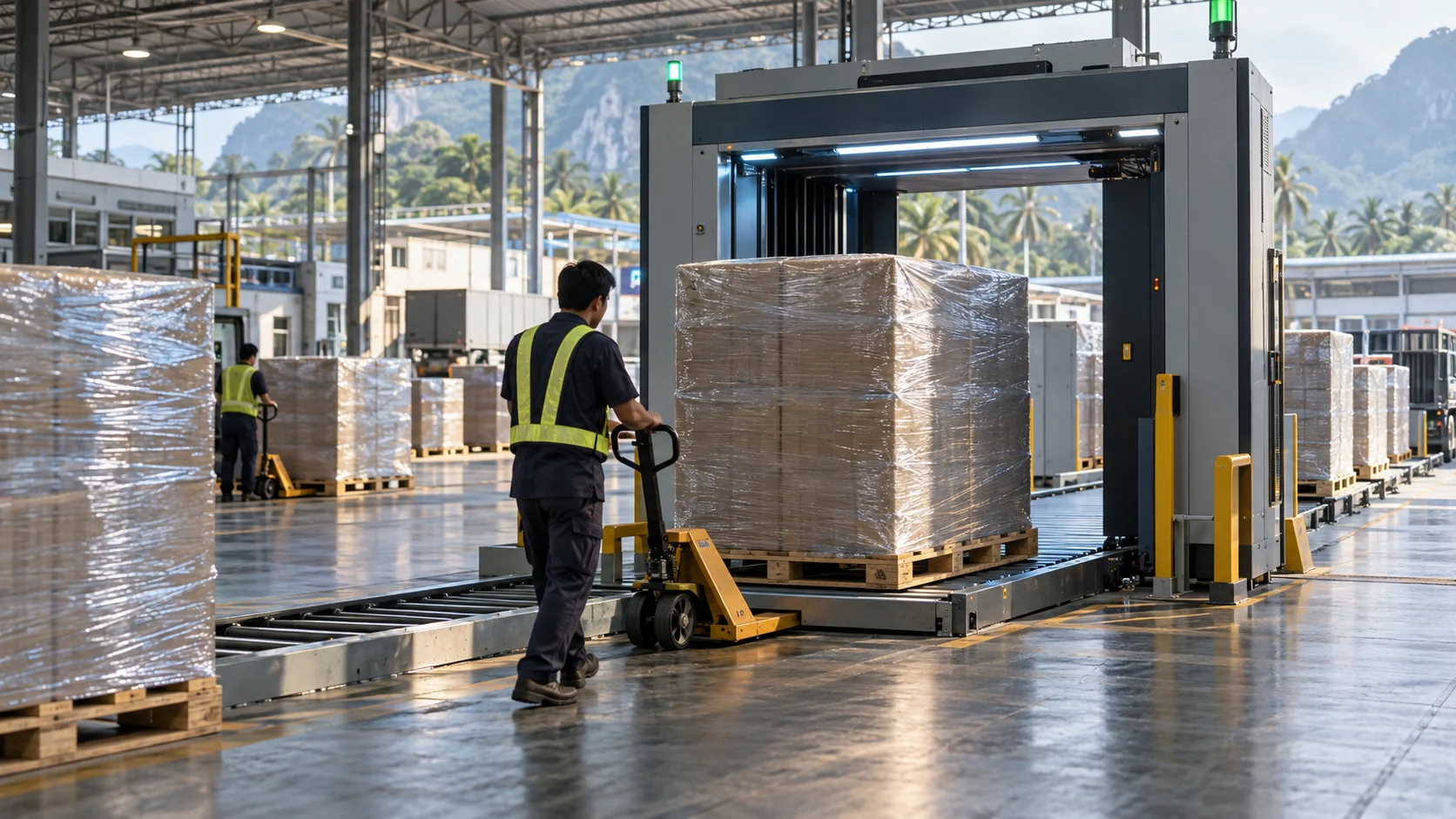
When your broker submits the import declaration through the NSW, the system assigns the shipment to one of two clearance channels:
Green Line: automatic release. Documents are in order, the goods are not flagged for inspection, and duty and VAT can be paid electronically. Clearance can complete within hours of the vessel arriving and documents being lodged.
Red Line: physical inspection required. A Thai customs officer examines the goods against the declared documents. This is a normal part of the process for approximately 15% of commercial shipments. It is not a penalty or a sign that something has gone wrong. However, if the physical goods don’t match the documents, the consequences escalate quickly: formal investigation, goods held in bonded storage at the importer’s cost, and no release until the discrepancy is resolved in writing. The guide to how Thai customs decides what’s used vs new covers how officers evaluate whether goods are as declared, and what specifically triggers a Red Line classification.
You pay duty electronically through BOT BAHTNET or Krung Thai Bank’s import payment system. Once duty is paid and cleared, the goods are released.
The Document Mistakes That Cost Money
Most shipments that stall at Thai customs follow predictable patterns. They recur because importers assume the process is more forgiving than it is.
Undervalued commercial invoices. Thai customs compares declared values against a valuation database of comparable goods. If your declared value is significantly below the reference range, your shipment is held for a valuation dispute. You can resolve it, but your goods wait in bonded storage while you do.
Generic goods descriptions. Descriptions like “electronics,” “clothing,” and “consumer goods” exist precisely because someone is trying to avoid scrutiny. Thai customs knows this too. Specific descriptions (model numbers, material composition, intended use) clear faster and with less inspection friction.
Incorrect HS codes. The HS code determines your duty rate. A wrong code means a wrong rate: either an underpayment (which attracts penalties) or an overpayment. Where the rate difference between adjacent codes is significant, confirm the code with your customs broker before shipment.
Missing product permits. A missing Thai FDA permit or phytosanitary certificate has no workaround once goods are at port. The shipment sits until the permit is obtained or the goods are re-exported.
Document discrepancies. Any mismatch between documents creates a reconciliation problem that the customs broker must resolve in writing: invoice quantities against packing list counts, or the B/L consignee against the import declaration. The shipment waits.
Every mistake above is avoidable before the container ships, and lining up your documents alongside a real quote for your Thailand shipment means nothing surprises you at the port.
Working with a Licensed Thai Customs Broker
NSW submission requires a registered Thai customs agent. For international shippers, the practical approach is to engage a freight forwarder with an established Thai customs brokerage relationship. Your forwarder coordinates document preparation, broker lodgement, and clearance on your behalf.
Confirm before shipment:
- That your goods don’t require a product permit you haven’t yet obtained
- That your commercial invoice value is accurate and defensible against Thai customs reference data
- That your HS codes are correct for the Thai tariff schedule (dtc.customs.go.th is the authoritative tariff database)
- That your Certificate of Origin is in order if you’re claiming AANZFTA preference
The earlier these checks happen, the more options you have. A document issue identified before loading can be corrected at no cost. The same issue identified at Laem Chabang costs time, storage fees, and sometimes goods. For relocators moving household goods, the document set for personal effects differs from the commercial set. The guide to shipping household goods to Thailand covers the personal effects customs pathway in detail.
Related reading: Thai Customs Paperwork Errors Cost More Than Prevention Does
Frequently Asked Questions
What is the Thai customs de minimis threshold?
Shipments with a customs value below ฿1,500 (approximately USD $45) are exempt from duty and VAT. However, a digital declaration is still required under 2025 rules. Informal personal imports are no longer automatically waived from the NSW system.
Do I need a customs broker to import into Thailand?
For commercial shipments, yes in practical terms. The NSW electronic submission requires a registered customs agent. Individual importers are not typically registered for direct NSW access. Your freight forwarder will have an established relationship with a licensed Thai customs broker who handles lodgement on your behalf.
How long does Thai customs clearance take?
Green Line clearances can complete within 24 hours of arrival and payment. Red Line physical inspections typically add 2–5 business days. Shipments involving valuation disputes or missing permits can take weeks. The timeline is driven by the nature of the issue, not a fixed schedule.
What happens if my goods are classified as Red Line?
A customs officer physically inspects the goods against the declared documents. If everything matches, the goods are released after duty payment. If there are discrepancies in quantity, value, or description, a formal investigation process begins. Your goods remain in bonded storage during that process, at your cost.
Can I use AANZFTA if my goods were manufactured in a third country?
No. AANZFTA preferential rates apply to goods that meet the rules of origin criteria, broadly, goods substantially manufactured in Australia. Goods transshipped through Australia without Australian manufacturing content do not qualify. Rules of origin criteria vary by product category; the DFAT guide covers the specifics.
What if my shipment includes both regulated and unrestricted goods?
Each regulated item category requires its own permit. If a shipment includes both general goods and Thai FDA-regulated products, the entire shipment may be held pending confirmation that the regulated items have the required permits. The safest approach is to separate regulated and unrestricted goods into different shipments where commercially practical.
Ready to Ship to Thailand?
Swift Cargo manages document coordination, customs broker engagement, and end-to-end clearance for shipments into Thailand. Whether you’re moving commercial goods or relocating personal effects, the document requirements can be confirmed before loading, not after your container reaches Laem Chabang.