
Importers often talk about weather as if it sits outside the real logistics problem. They book the shipment, choose the route, estimate the transit, and then treat climate risk as an unfortunate backdrop. That is a weak operating model for Australia.
Australia is not one uniform freight environment. It is a large, climate-diverse system. Tropical exposure, flood-prone inland corridors, smoke events, heat stress, and seasonal biosecurity controls can all change how reliable a shipment feels after it lands. The right question is not whether Australia has seasonal risk. It clearly does. The question is where that risk enters the chain and what it can do to the commercial outcome.
A vessel can arrive roughly on schedule and the shipment can still become operationally late. A road leg can fail even when the port leg holds. A time-sensitive airfreight move can run into smoke or capacity pressure that never appears on a simple ocean schedule. A cargo plan that looks clean on a climate map can still hit a seasonal compliance problem if it moves during the wrong biosecurity window.
That is why serious planning for Australia needs a wider frame. Seasonal risk is not just about storms. It is about calendar risk across ports, inland movement, aviation, warehousing, and compliance.
Seasonal Risk at a Glance
- Australia’s seasonal shipping risk is route-specific, region-specific, and cargo-specific rather than uniform across the country.
- Tropical cyclone season broadly runs from November to April and matters most for northern and north-western exposures. BOM: Tropical Cyclone Knowledge Centre
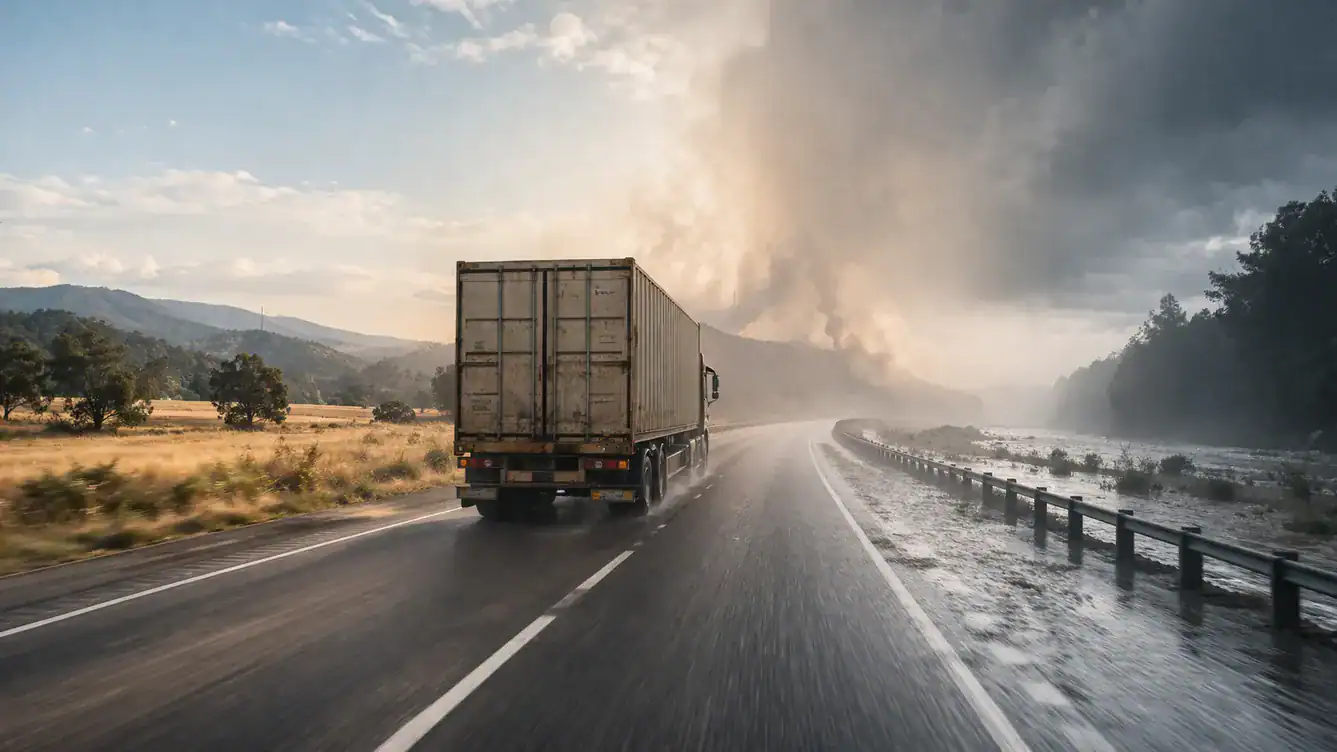
- Flooding, bushfire smoke, and extreme heat can disrupt inland freight, airport operations, labor efficiency, and delivery reliability even when the main vessel schedule remains technically intact. CSIRO: State of the Climate Flight Safety Australia: Haze, Smoke and Dust
- For many Australia-bound shipments, the most commercially important seasonal issue is biosecurity timing, especially the Brown Marmorated Stink Bug control season from 1 September to 30 April. DAFF: BMSB seasonal measures
- The right response is not generic caution. It is route-aware planning, honest buffer design, and better matching of shipment urgency to the real risk calendar.
Jump to a Section
- Why seasonal risk belongs inside logistics planning
- Where climate risk actually enters the shipment
- Cyclones, flooding, and northern exposure
- Bushfire smoke, heat, and aviation or warehouse strain
- Why biosecurity season can matter more than weather
- A practical playbook for importers
- Related timing pages in the Swift Cargo cluster
- Frequently Asked Questions
Why Seasonal Risk Belongs Inside Logistics Planning
Australia punishes lazy averaging. A planner who says “it is summer in Australia” has not said enough to make a good logistics decision. Freight risk is not the same in Melbourne, Brisbane, Darwin, Perth, inland Queensland, and regional New South Wales. Nor does one weather pattern stress sea freight, airfreight, customs processing, and final-mile delivery equally.
This is where many timelines become misleading. They assume the stable part of the chain will tell the truth about the unstable part. It rarely does. A container discharge date does not tell you whether the inland leg remains open. A booked air movement does not tell you whether smoke, visibility, or terminal strain will reduce practical reliability. A customer delivery promise does not become safe just because the vessel ETA still looks respectable on paper.
Strong operators therefore ask a different sequence of questions.
- Which leg of this shipment is most exposed to seasonal stress?
- Which event would hurt us most if it happened: port delay, inland closure, flight disruption, or compliance hold?
- Which buffer is cheap to add now but expensive to add later?
- Is the shipment urgent enough that climate uncertainty changes the route decision itself?
That is a better framework because it turns “weather risk” into an operating variable rather than a vague excuse. Once you identify the weak point, the planning problem becomes much more manageable.
Where Climate Risk Actually Enters the Shipment
Seasonal risk is not one thing. In practical freight terms, it enters through four separate channels.
- Port and terminal disruption. Severe weather can reduce berthing efficiency, slow yard activity, or create a backlog that persists after the weather event itself passes.
- Inland freight disruption. Road closures, washed-out corridors, or constrained rail movement can turn an apparently successful arrival into a commercially late delivery.
- Aviation and handling disruption. Smoke, heat, or regional operating constraints can affect airport efficiency, ground handling, or flight reliability.
- Calendar-based compliance risk. Seasonal biosecurity controls can change how a shipment is treated even if the physical transport leg is uneventful.
That four-part view matters because it prevents a common mistake: over-focusing on the ocean leg. Many shipments into Australia do not fail on the headline leg. They fail in the hidden part of the chain, usually after the importer has already reassured internal stakeholders that the goods are “basically there.”
For consumer moves, this can mean household goods arriving in-country but not reaching the residence when expected. For commercial cargo, it can mean inventory technically entering Australia but missing the window where it has economic value. Those are different customer stories, but the underlying operational error is the same. The plan treated arrival as completion.

Cyclones, Flooding, and Northern Exposure
Australia’s tropical cyclone season broadly runs from November to April, with the most obvious exposure in the northern part of the country, according to the Bureau of Meteorology. BOM: Tropical Cyclone Knowledge Centre That does not mean every route in those months becomes unsafe or unusable. It means the probability distribution changes, especially for chains that rely on exposed northern corridors, regional delivery, or tight timing tolerance.
The direct storm event is only one part of the commercial risk. Importers usually feel the pain through secondary effects. Wet-season disruption can ripple through terminal activity, truck availability, warehouse scheduling, and inland delivery reliability. A short delay at the front of the chain can become a larger delay once congestion and constrained capacity compound behind it.
Flooding is often the more deceptive risk because it can be geographically distant from the port and still break the delivery promise. A container can land in Australia on time while the cargo remains commercially inaccessible because a road corridor or regional destination is under stress. That is why inland geography matters at least as much as the discharge port when planning seasonal buffer.
The question is not “will there be flooding somewhere?” There usually will be. The useful question is “does this shipment need to touch a corridor where flooding can change the outcome, and if it does, what should we change now?”
- Move earlier if the customer deadline is fixed and the destination is exposed.
- Increase arrival-to-delivery buffer if the shipment is not urgent but the route is fragile.
- Consider alternate routing or staging if the inland leg matters more than the headline port ETA.
- Communicate delivery uncertainty honestly instead of hiding it behind a neat but weak calendar promise.
Bushfire Smoke, Heat, and Aviation or Warehouse Strain
Smoke and heat tend to be underrated because they do not always create the visual drama of a cyclone. That makes them easier to dismiss and more dangerous to ignore. Haze, smoke, and dust affect aviation conditions in operationally significant ways, as Flight Safety Australia has written plainly. Flight Safety Australia: Haze, Smoke and Dust If a shipment depends on air cargo, express handling, or a time-sensitive downstream appointment, that matters.
Smoke can affect visibility and airport reliability, but the commercial story is wider than aircraft movement alone. Smoke events can also change labor conditions, slow site activity, and disrupt warehouse or delivery operations. The disruption may look small in isolation and still be expensive when it hits an urgent or tightly coordinated move.
Heat is similar. It is easy to treat as routine in Australia, but that can become a bad assumption for packaging, cargo condition, equipment handling, and labor efficiency. Some goods are sensitive in obvious ways. Others are not delicate in the technical sense but still become harder to move cleanly through a stressed system during the hottest periods. CSIRO’s climate reporting supports the broader point: extreme heat and intense rainfall are structural features of the operating environment, not freak anomalies. CSIRO: State of the Climate
If the shipment is urgent, valuable, or operationally high-consequence, price in seasonal stress on aviation or handling conditions before you treat the booking as reliable.
Why Biosecurity Season Can Matter More Than Weather
Many importers ask about the best time to ship to Australia and expect a weather answer. Often that is only half the answer. For a large class of goods, the more commercially important seasonal risk is biosecurity timing.
The clearest example is Brown Marmorated Stink Bug control season, which runs from 1 September to 30 April for affected pathways and cargo profiles. DAFF: BMSB seasonal measures That window can alter treatment requirements, compliance planning, and how smoothly cargo is released, in ways that matter more than the weather forecast. Two importers can face the identical BMSB control season and come out with completely different outcomes, and the difference is rarely luck. One books to a fixed calendar every year regardless of what the season is doing; the other tracks the actual compliance and inspection data and adjusts its ordering rhythm accordingly. The first importer is not less capable, it is simply repeating the same unexamined habit every September and calling the resulting delays bad luck. The second built a small, boring discipline: checking the published pathway data each cycle rather than assuming this year looks like last year. That discipline rarely shows up as a single decision. It shows up as twelve unremarkable checks a year that compound into a business that is never surprised by a season that, on paper, surprises everyone else. The Australia seasonal shipping calendar on the Swift Cargo main site maps this compliance window alongside transit time benchmarks.
Seasonal risk in Australia is therefore a combined system problem. Climate, route, and compliance all interact. A shipper who optimises for weather alone can still choose a weak timing window if the cargo falls into a seasonal biosecurity regime. A shipper who only studies biosecurity can still under-model a flood-prone inland leg. The right answer sits in the combination.
That is exactly why the adjacent timing pages on this site matter. If your concern is the seasonal compliance window, read Brown Marmorated Stink Bug Shipping Season Explained. If your question is broader booking strategy, read Best Time to Ship to Australia. If the cargo is urgent and timing failure is expensive, read How Airport Cargo Capacity Affects Urgent Shipments.
A Practical Playbook for Importers
Most climate and seasonal risk does not require dramatic contingency. It requires honest assumptions and a small number of well-chosen adjustments.
- Define the real deadline. If the customer, warehouse, project site, or household move depends on a firm outcome date, do not let the booking date masquerade as a delivery plan.
- Identify the fragile leg. Decide whether the real exposure is ocean arrival, airport reliability, inland transport, final-mile delivery, or compliance timing.
- Price buffer where it changes the outcome. A small buffer in the right place is often more useful than a large generic buffer applied everywhere.
- Separate urgent cargo from flexible cargo. A stock replenishment job and a high-consequence urgent move do not belong on the same planning logic.
- Test the calendar against both climate and compliance. Weather season and biosecurity season can each change the answer.
- Communicate uncertainty early. The cheapest time to explain seasonal risk is before someone starts treating a weak ETA as a promise.
Related Timing Pages
- Shipping Timeline to Australia for the wider transit and delivery mechanics behind ETA optimism.
- Best Time to Ship to Australia for booking-window judgment.
- Brown Marmorated Stink Bug Shipping Season Explained for seasonal compliance pressure.
- How Airport Cargo Capacity Affects Urgent Shipments for higher-speed and higher-consequence cargo planning.
- How Inland Rail Will Change Freight Timelines for the inland network layer that climate risk often exposes.
Seasonal Risk in Australia Is a Planning Variable, Not an Excuse
Australia’s climate profile does not make shipping impossible. It makes weak planning more visible. Once you put the route, delivery region, urgency, and compliance calendar on the table together, the right response is usually calm and practical: adjust timing, add buffer where it matters, and stop pretending that arrival alone defines success.
Frequently Asked Questions
What months are riskiest for cyclone-related shipping disruption in Australia?
Broadly November to April, especially for northern and north-western exposures, though the real commercial effect depends on the route, delivery region, and how much inland fragility sits behind the arrival point.
Does bushfire smoke really matter for cargo planning?
Yes. Smoke can affect aviation reliability, visibility, labor conditions, and the general smoothness of transport operations, which matters most on urgent or tightly timed jobs.
Is weather more important than biosecurity timing when shipping to Australia?
Not always. For many cargo types, seasonal biosecurity controls such as the BMSB window can be more commercially important than the weather forecast.
How should importers respond to seasonal shipping risk?
By matching the route and the deadline to the real seasonal exposure, adding buffer where it changes the outcome, and checking both climate risk and compliance timing before the shipment is booked as if it were routine.