
Malaysia’s Department of Veterinary Services updated its Australia-specific import rules in 2024, and the change contradicts almost every pet relocation guide currently online. A dog or cat arriving from Australia now faces a compulsory minimum 14-day quarantine on arrival, even though nearly every source treats Australia as automatically quarantine-exempt. The older “scheduled countries skip quarantine” rule that gets repeated across the pet travel industry no longer holds, at least not for this route. Malaysia’s pet import system rewards owners who check the current regulation for their specific origin country, not the general reputation that country has for being rabies-free.
Two Government Departments, One Process
Most guides to importing a pet into Malaysia mention the Department of Veterinary Services (DVS) and stop there. That’s half the picture. DVS sets the regulatory framework: which breeds are restricted, which are banned, what a veterinary health certificate has to state, and how long an animal sits in quarantine. The Malaysian Quarantine and Inspection Services Department (MAQIS) is the one that actually issues the import permit your pet travels under. It’s a separate body under the same ministry as DVS, the Ministry of Agriculture and Food Security. DVS writes the rules; MAQIS grants the permission.
This isn’t a pedantic distinction. An owner who calls DVS with a permit-application question, or contacts MAQIS with a breed-restriction appeal, is talking to the wrong department, which needlessly delays the process. Malaysia’s own regulation spells this out: import permits are issued “by Malaysian Quarantine and Inspection Services Department (MAQIS),” while breed approvals for restricted dogs go to the Director General of MAQIS acting on DVS’s classification. Two agencies, two separate functions, one animal.
Is Malaysia Rabies-Free? It Depends Which Part
Malaysia held rabies-free certification from the World Organisation for Animal Health (formerly OIE) from 2012 until a mid-2015 outbreak in the northern states of Perlis, Kedah and Penang cost the country that status. Vaccination and containment campaigns resolved that outbreak by November 2015. A separate, more serious outbreak began in Sarawak, on the island of Borneo, in 2017. It has never fully resolved: monitoring bodies have recorded dozens of confirmed human deaths from rabies in Sarawak since the outbreak began. Peninsular Malaysia, Sabah and Labuan are currently free of rabies. Sarawak is not.
This matters beyond trivia. A pet moving to Kuala Lumpur or Penang is entering a rabies-free region. A pet moving to Kuching or another Sarawak city is entering a region with an active, unresolved outbreak, and precautions there are not optional: routine rabies boosters, caution around stray or feral animals, and prompt medical attention after any bite. It also matters on the way back out. Malaysia as a whole is not currently WOAH-certified rabies-free. Some destination countries, including the UK, grant simplified entry only to pets arriving from rabies-free-certified origins, so a pet re-exported from Malaysia will need to meet that destination’s stricter requirements. Australia goes further: direct imports of cats and dogs from Malaysia have been suspended since 2020, so a pet must first stage through an approved country. Plan the return leg with that in mind if there’s any chance of one.
The Real Import Sequence
Malaysia’s process has a fixed order, and getting the sequence wrong is the most common way owners lose weeks. Working backward from a target arrival date:
- Microchip first, always. The animal needs an ISO 11784/11785-compliant, non-encrypted 15-digit microchip implanted before anything else happens, because every later document (vaccination record, health certificate, import permit) has to reference that chip number. A rabies vaccine given before the chip is implanted can be treated as administered to an unidentified animal and may need to be repeated.
- Breed pre-approval, if applicable, starts now too. If your dog is on the restricted or banned list (see below), it needs written approval from MAQIS’s Director General before you can even apply for an import permit, and that approval does not wait on your vaccination or health-certificate timeline. It can take weeks on its own, so start it the moment you know your dog’s breed status rather than leaving it until the steps below are underway.
- Rabies vaccination, with the correct window for your origin country. Malaysia’s general regulation for non-scheduled countries requires the animal be vaccinated against rabies before export using an approved vaccine. DVS’s own portal guidance confirms this and adds a specific window: at least 30 days between vaccination and entry for pets from most countries. The country-specific instrument for Australia sets a slightly different window: at least 28 days before export, per the vaccine manufacturer’s own recommendation. The exact figure depends on which document governs your specific origin country, not a single universal rule.
- Other core vaccines, within 12 months of export. Dogs need coverage against distemper, hepatitis, leptospirosis, parainfluenza and parvovirus; cats need feline viral rhinotracheitis, calicivirus and panleukopenia. The Australia-specific instrument additionally recommends Chlamydia felis coverage for cats.
- Parasite treatment, close to departure. Where a country-specific instrument exists (confirmed for Australia), it requires parasite treatment between 2 and 7 days before export, covering external parasites (fleas and ticks) and internal parasites (nematodes and cestodes). The product used and the treatment date must be recorded.
- Hendra virus test, for pets from Australia. The Australia-specific DVS instrument requires a negative Hendra virus serum neutralisation test within 14 days before export, from premises with no Hendra case in the previous six months.
- Veterinary health certificate, inside a 7-day window. The certifying vet has to examine the animal within 7 days of export. The resulting certificate must confirm the animal shows no clinical signs of rabies or any infectious disease on the day of shipment.
- MAQIS import permit application. You submit this through MAQIS’s own process ahead of travel; once issued, the permit is valid for 30 days from the date of issue, which is the window your actual travel date needs to fall inside.
- Book quarantine space, if your route requires it. Given the minimum stay can run from 7 to 14 days or longer depending on origin country and risk assessment, reserve space at least two weeks ahead, the commonly recommended minimum, and earlier still if your travel dates are firm.
Quarantine: What Actually Happens on Arrival
For pets arriving from countries without a specific “scheduled rabies country” instrument, Malaysia’s general regulation sets a compulsory minimum of 7 days in quarantine, extendable up to 6 months if a case-by-case risk assessment calls for it. The animal is released once found free of any evidence of infection.
Australia is the clearest illustration of why “scheduled” no longer means “quarantine-free.” Malaysia’s current, country-specific regulation for Australia sets a compulsory minimum of 14 days, not zero, extendable further based on risk assessment. That’s double the general 7-day minimum for a country widely marketed by pet relocation sites as one of the easiest, lowest-friction origins. The lesson generalizes: don’t plan around what a country’s reputation implies. Confirm the actual current instrument that applies to your specific origin country before booking travel dates around an assumed quarantine length.
Quarantine facilities operate separately for Peninsular Malaysia and for East Malaysia (Sabah and Sarawak), and a pet moving to a Bornean state should confirm which station its permit routes it through rather than assuming the peninsula’s arrangements apply.
Microchipping: Mandatory, Not Optional
Malaysia’s regulation states plainly that “the animal shall be identified using an ISO (Std 11784 & 11785) compliant microchip.” That language appears in the general non-scheduled-country regulation, and the Australia-specific instrument repeats it with one added detail: the chip must be implanted under the skin and must not use a starting number of 999. Some secondary sources describe microchipping as merely recommended rather than required. The government’s own regulation text does not support that reading. The easy mistake to avoid is a microchip that satisfies your home-country vet without meeting Malaysia’s own ISO 11784/11785 specification. Many markets still implant non-ISO or 125 kHz chips that scan fine locally but don’t qualify for import here.
Dog Breed Restrictions: What’s Banned, What’s Restricted, and What Changed
Malaysia splits dog breeds into two tiers. Restricted breeds can still enter, but only with written approval from MAQIS’s Director General, obtained before applying for an import permit. Approval also requires meeting a specific set of ongoing conditions: the dog must be a personal pet, not for sale; the owner’s premises get inspected for kennel size, safety and containment; and the dog must be leashed and muzzled in public at all times. Banned breeds cannot enter under any circumstances.
| Status | Breeds (general regulation) | Added in the 2024 Australia-specific instrument |
|---|---|---|
| Restricted (written approval required) | Bull Mastiff, Bull Terrier, Doberman, German Shepherd/Alsatian (incl. Belgian Shepherd, East European Shepherd), Perro de Presa Canario, Rottweiler | Cane Corso added |
| Banned outright | Akita, American Bulldog, Dogo Argentino, Fila Braziliero, Japanese Tosa, Neapolitan Mastiff, Pit Bull-type breeds (incl. American Pit Bull, American Staffordshire Terrier, Staffordshire Bull Terrier) | Boerboel added; Perro de Presa Canario moved here from the restricted tier |
That last change is easy to miss and matters a great deal if it applies to your dog: under the general 2013 regulation still cited by most competing guides, the Perro de Presa Canario (Canary Dog) sits in the restricted tier, importable with written approval. Under the 2024 country-specific instrument confirmed for Australia, it has moved to the banned tier outright. DVS also reserves the right to evaluate any breed not on either list for risk and rule on it individually, so an unlisted breed is not automatically guaranteed a straightforward import. If your dog’s breed sits anywhere near either list, or is a cross of a listed breed, confirm its current status directly with MAQIS before committing to a moving date, rather than relying on a list published for a different origin country or an older revision.
Cat Restrictions: The Bengal and Savannah Rule
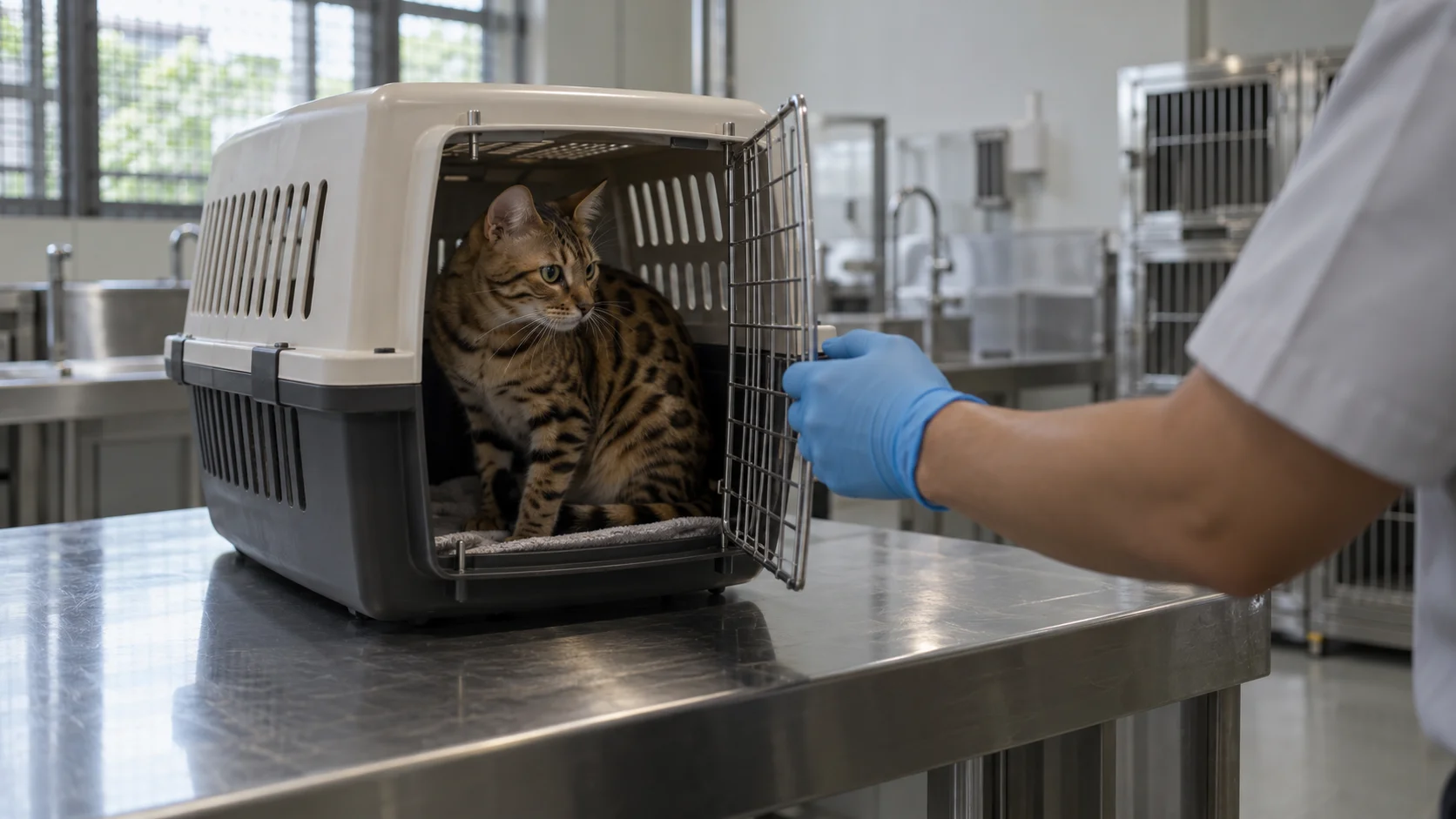
Most competing content mentions this rule only in passing, if at all. Malaysia’s regulation bans first-through-fourth-generation Bengal and Savannah cats, and their crosses, from import. A Bengal or Savannah at least five generations removed from its wild ancestral stock can be imported, but only with documentary pedigree proof establishing that generational distance. Without that paperwork, the cat doesn’t clear regardless of how domesticated it actually is; the rule is about documented lineage, not the individual animal’s temperament.
What It Actually Costs
We found no official government fee schedule publicly listing every charge in this process. The figures below are planning ranges drawn from relocation specialists and quarantine facilities that publish their own pricing, not a confirmed MAQIS tariff. Treat them as a budgeting starting point and confirm current pricing directly with MAQIS and your chosen quarantine facility before finalizing a moving budget.
| Cost item | Reported range |
|---|---|
| MAQIS import permit | Commonly reported around RM50-100 per animal |
| 7-day quarantine stay | Roughly RM400-800 |
| Extended quarantine (up to ~90 days, where risk-assessed) | Roughly RM4,500-10,000 |
| Full-service pet relocation specialist | Roughly RM3,000-10,000 (excluding airfare) |
| DIY total, permit through arrival (excluding flights) | Roughly RM2,000-15,000 depending on origin, breed, and quarantine outcome |
The single biggest lever on total cost is quarantine length. That’s exactly the figure this guide has already shown isn’t safe to assume from a country’s general reputation. A 7-day stay and a 90-day stay sit an order of magnitude apart in facility fees alone, before airfare, vet costs or a relocation specialist’s service fee are added.
Coming from Singapore: The Land Border Option
Owners relocating from Singapore have an option most competing guides skip past: entering Malaysia by land across the Johor Bahru crossings rather than flying into KLIA. The same DVS and MAQIS documentation requirements apply regardless of entry method; land entry changes the crossing point, not the underlying regulation. If you’re planning a land crossing, confirm with MAQIS which specific checkpoint is authorized to process an animal import and what additional lead time, if any, that checkpoint requires, since this detail is genuinely underdocumented compared to the airport process.
Is Singapore a Scheduled Country? Yes, Since December 2025
It is now. A DVS notice dated 11 December 2025, appended to the same regulation cited above, added Singapore to the Scheduled Countries list alongside the UK, Eire, Northern Ireland, New Zealand, Japan, Sweden and Brunei, plus a further group of European and Gulf countries added in the same update. Scheduled status changes which regulation applies, not whether quarantine applies: Australia, covered earlier in this guide, is proof a scheduled country can still carry a compulsory quarantine period. If you’re moving from Singapore, confirm the specific current instrument with MAQIS rather than assuming scheduled status alone answers the quarantine question.
DIY or a Pet Relocation Specialist?
Nothing in this process is impossible to manage alone. A single missed sequencing detail forces a restart, not just a delay: a rabies vaccine given before the microchip, a health certificate dated outside its 7-day window, an import permit that expires before a delayed flight. A specialist who handles Malaysia moves regularly isn’t doing anything an owner couldn’t theoretically do. They’ve simply already made, and fixed, the mistakes that cost other owners weeks. SwiftCargo’s pet relocation team sequences the microchip, vaccination and health certificate dates against MAQIS’s actual permit window rather than a generic checklist, and can confirm current breed status and quarantine expectations for your specific origin country before you commit to travel dates.
If Malaysia is one of several Southeast Asian destinations you’re weighing, Thailand runs a genuinely different import process worth comparing directly: our guide to Thailand’s own pet import permit system shows how a neighbouring country structures the same underlying decision differently. Owners moving from Europe or the US face their own separate Southeast Asia pet-import considerations, covered in our guides to moving a pet from Europe to Thailand and moving a pet from the US to Thailand.
Frequently Asked Questions
Is Malaysia rabies-free?
Not as a single national answer. Peninsular Malaysia, Sabah and Labuan are currently free of rabies. Sarawak has had an active, unresolved outbreak since 2017. Malaysia held WOAH rabies-free certification from 2012 to 2015, when an outbreak in Perlis, Kedah and Penang ended that status; the peninsula has remained rabies-free since vaccination and containment campaigns resolved that outbreak in late 2015.
Do pets from the UK, Australia or other “scheduled” countries skip quarantine in Malaysia?
Not necessarily, and this is one of the most commonly repeated inaccuracies about Malaysia’s pet import process. Malaysia’s current country-specific regulation for Australia sets a compulsory minimum 14-day quarantine on arrival, not an exemption. Confirm the specific, current instrument for your origin country rather than assuming “scheduled” means quarantine-free.
What dog breeds are banned from entering Malaysia?
The banned tier includes Akita, American Bulldog, Dogo Argentino, Fila Braziliero, Japanese Tosa, Neapolitan Mastiff, and Pit Bull-type breeds including the American Staffordshire Terrier and Staffordshire Bull Terrier. Malaysia’s 2024 country-specific instrument for Australia additionally bans the Boerboel and moves the Perro de Presa Canario from the restricted tier (allowed with written approval) to the banned tier outright, a change most published breed lists online have not caught up with.
Is a microchip required to bring a pet into Malaysia?
Yes. Malaysia’s regulation states the animal must be identified with an ISO 11784/11785-compliant microchip, and country-specific instruments add that the chip cannot use a starting number of 999. Some secondary sources describe microchipping as merely recommended; the government’s own regulation text requires it.
Can I bring a Bengal or Savannah cat into Malaysia?
Only if the cat is at least five generations removed from its wild ancestral stock, and only with documentary pedigree proof of that generational distance. Malaysia bans first-through-fourth-generation Bengal and Savannah cats, and their crosses, from import regardless of the individual animal’s temperament or how long it has lived as a domestic pet.
How much does it cost to relocate a pet to Malaysia?
No official government fee schedule was found covering every charge in the process. Commonly reported planning ranges are roughly RM50-100 for the MAQIS import permit, RM400-800 for a standard 7-day quarantine stay, and RM3,000-10,000 for a full-service relocation specialist, excluding airfare. Quarantine length is the single biggest cost variable, since a risk-assessed extension can run the quarantine bill into the thousands.
How far in advance should I start the Malaysia pet import process?
Three to six months is the timeframe most relocation specialists recommend, and it’s realistic given the sequencing this guide describes: microchip and, in parallel, breed pre-approval if your dog is restricted, then rabies vaccine (with a country-specific waiting window before travel), then other core vaccines and parasite treatment, then a health certificate timed to a 7-day window, then the MAQIS import permit itself, which is only valid for 30 days once issued. Starting late compresses all of those windows against each other rather than eliminating any of them.