
Moving from Canada to China is a layered, months-long process, and the choices you make in the early stages will shape every step that follows. A two-bedroom Canadian apartment typically holds between 2,000 and 4,000 pounds of household goods. Shipping that much internationally requires forethought, paperwork, and the right partners from the start.
Understanding why you are moving also shapes how you should move. A temporary two-year assignment calls for a different strategy than a permanent relocation.

Why Canadians Are Moving to China
The flow of people between Canada and China has always been significant, but the reasons behind these moves have shifted. Ten years ago, corporate assignments drove most relocations: multinationals sending senior staff to Shanghai or Beijing for two- or three-year stints. Today, the picture is more varied.
Entrepreneurs are heading to cities like Shenzhen and Guangzhou to be closer to manufacturing supply chains. Canadian university graduates of Chinese heritage are returning to care for aging parents. Remote workers are choosing lower living costs and proximity to family. And a growing number of Canadians are discovering that a modest Canadian pension stretches further in China’s tier-2 and tier-3 cities.
Your Planning Timeline: Start Earlier Than You Think
People planning an international move most often start too late. For a Canada-to-China relocation, a comfortable minimum runway is three to four months from the moment you commit to moving. Six months is better.
Four to Six Months Before Your Move Date
- Collect quotes from moving services with verified international shipping experience
- Research Chinese visa requirements for your specific situation (work visa, family reunion visa, retirement visa)
- Start decluttering aggressively, because every kilogram you don’t ship saves you money
- Research housing options in your destination city and confirm your arrival timeline
- Notify your bank and financial institutions about the move
Two to Three Months Before
- Book your moving company and confirm shipping method (sea freight vs. air freight)
- Gather documents: passport, residency records, proof of ownership for high-value items
- Decide what goes into long-term storage and arrange storage for items staying in Canada
- Research the specific customs rules for your destination province in China; regulations can vary by port of entry
- Arrange for someone to handle your Canadian affairs while you are abroad (mail, taxes, property)
Four to Six Weeks Before
- Confirm your packing schedule with your moving company
- Prepare your household inventory, since customs requires itemized lists with approximate values
- Sort medications and confirm what is permitted to bring into China (some common Canadian prescriptions require special permits)
- Back up all important documents digitally and store copies in at least two cloud locations
Moving Week
- Walk through the home one last time with your movers
- Confirm your Chinese customs agent has all necessary documentation
- Arrange temporary accommodation in China for the weeks before your container arrives
This timeline assumes a smooth process. Real life complicates it: a visa delay, a shifted job start date, a landlord dispute. Build buffer wherever you can.
Choosing the Right Moving Company for This Route
Not every moving company in Canada is equipped to handle international relocations. A local move gone wrong is stressful. An international move gone wrong is a crisis, with your belongings stuck at a Chinese port because of missing paperwork.
What to Look for
When you compare companies for a Canada-to-China move, the checklist goes beyond price and availability. Ask specifically about:
- International freight forwarding partnerships: do they work with established forwarders on the China side?
- Customs expertise: can they prepare or review your customs documentation, or will you be left to navigate that alone?
- Container options: do they offer both full container loads (FCL) and shared/groupage container loads (LCL)?
- Insurance coverage: what is the claims process if something is damaged or lost at sea?
- Destination services: can they arrange customs clearance and final delivery within China, or does their service end at the port?
Red Flags to Watch For
Be cautious of unusually low quotes for international moves. International freight has real costs: fuel surcharges, port handling fees, customs brokerage, destination delivery. Quotes that seem too low often leave services out. Get itemized quotes and ask exactly what is covered.
Also be wary of companies that cannot provide references for international moves specifically. Moving furniture across Canada demands a different skill set than coordinating a 20-foot container through the Port of Vancouver to Shanghai.

What to Ship, What to Store, and What to Leave Behind
Generally Worth Shipping to China
- High-quality furniture: particularly solid wood pieces that would cost much more to replace in China
- Electronics: laptops, cameras, specialized equipment (check voltage compatibility)
- Children’s items: toys, car seats, and strollers, since Canadian-market brands can be expensive in China
- Sentimental and irreplaceable items: family photos, heirlooms, artwork
- Specialty items: musical instruments, sports equipment, hobby gear with real replacement cost
- Books and clothing: if you have a large wardrobe or substantial library, the weight-to-value ratio often works out
Items to Consider Leaving or Selling in Canada
- Flat-pack or budget furniture (cost of shipping often exceeds replacement cost)
- Appliances (Chinese apartments typically come furnished, and voltage differences create compatibility issues)
- Large garden equipment, snow blowers, ice fishing gear
- Oversized sofas that will not fit in Chinese apartment elevators (measure carefully)
- Perishables, soil, and most food products (prohibited by Chinese customs)
Items to Put into Canada Storage
Storage in Canada makes sense if you might return, or if you are not yet sure this move is permanent. Climate-controlled storage protects furniture, electronics, and valuables during extended absences without the cost of shipping them abroad and back.
Canadian Export Rules and Chinese Customs: What Actually Matters
Canadian Export Requirements
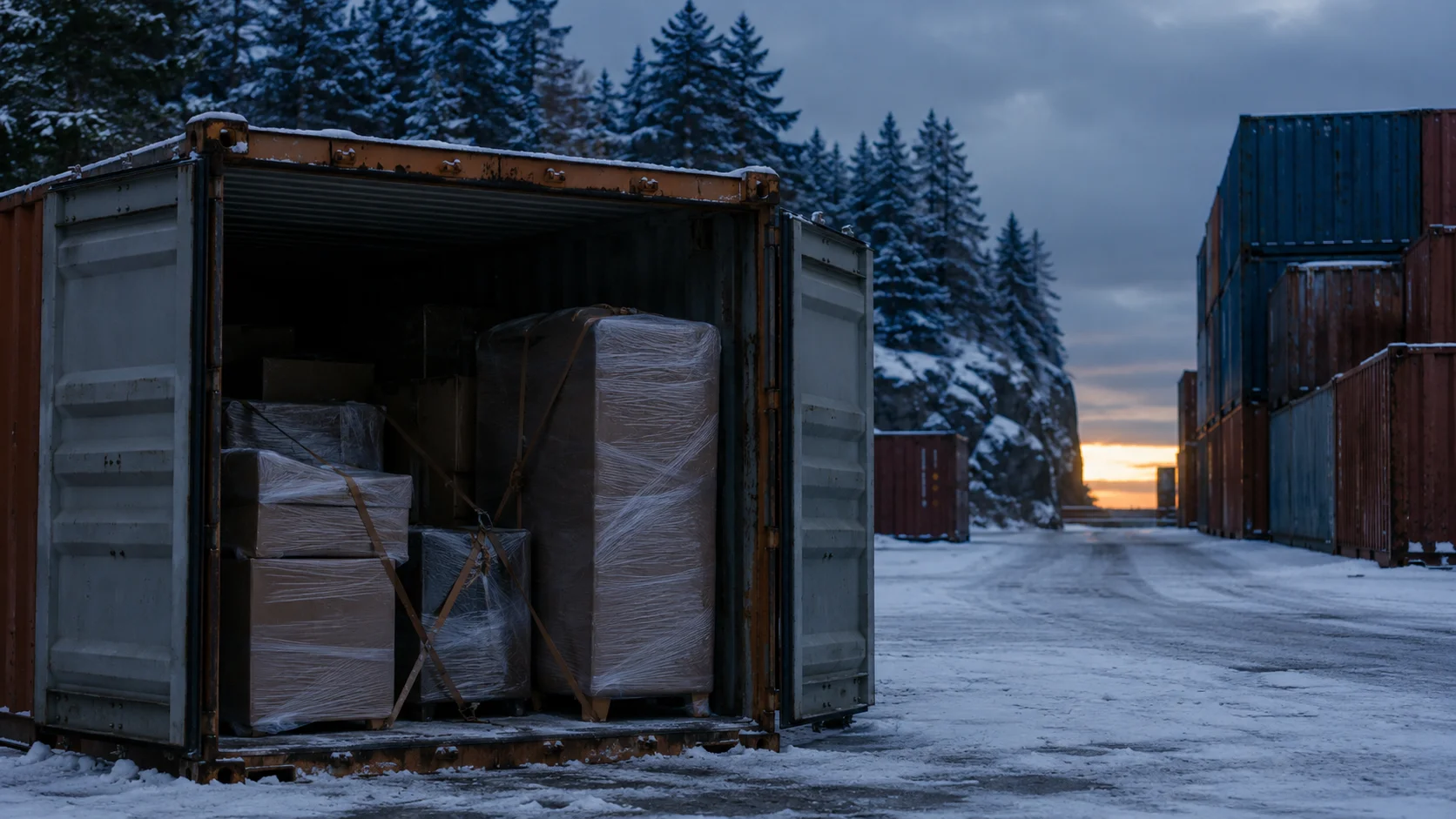
Canada has relatively few restrictions on personal household goods leaving the country, but important steps still apply. Under the Reporting of Exported Goods Regulations, personal and household effects are exempt from export reporting to the Canada Border Services Agency (CBSA), but those of an emigrant are not. For a permanent move, ask your moving company or customs broker who will file the export report before the shipment leaves. The B4 and B4A forms sometimes mentioned for Canadian moves are import-side documents for goods coming into Canada, so they are not part of an export to China. If you later bring goods back, see Swift Cargo’s dedicated breakdown of Forms BSF186 and BSF186A.
Certain items require export permits regardless of destination: firearms, some cultural property, controlled technology. If any of these apply to your household, flag them with your moving company early.
Chinese Customs: The Key Rules
China’s import rules for household goods are more specific than Canada’s export rules. Per the General Administration of Customs of China, the key points are:
- Duty-free status applies to used personal effects being imported by someone establishing Chinese residency, but you will need to prove the items are genuinely used (not new in boxes)
- New goods are subject to import duty, sometimes substantially. Avoid packing new, unopened items
- Restricted items include fresh food, soil, certain seeds, firearms and ammunition, certain medications, satellite equipment, and religious materials in large quantities
- High-value items like jewelry, watches, and electronics above certain thresholds require declaration and may be dutiable
- Vehicles imported from Canada face substantial duties and a complex process; most people sell before leaving
On this route, a specialist freight forwarder or customs broker is not optional. The paperwork requirements are precise, and mistakes cause delays, fines, or goods held at port. See what Chinese customs requires for household goods shipments before you finalize your inventory.
Shipping Methods: Sea Freight vs. Air Freight vs. Courier
You have three realistic options for getting your belongings from Canada to China. The right choice depends on volume, urgency, and budget, particularly when you are deciding between sea freight and air freight.
Sea Freight (Container Shipping)
This is the default method for most household moves. Sea freight from Canada to China runs through either the Port of Vancouver or the Port of Montreal. Vancouver is the faster of the two to Chinese ports.
- Transit time: Approximately 4–6 weeks from the port, plus 1–2 weeks for customs clearance at both ends
- Cost: Lower per kilogram than air freight for large volumes
- Options: Full Container Load (FCL, where you fill a 20-foot or 40-foot container) or Less than Container Load (LCL, where your goods share a container with others). If you are not sure how much of a container your own household will fill, use our CBM size guide to check before you book
- Best for: Anyone moving the majority of their household
Air Freight
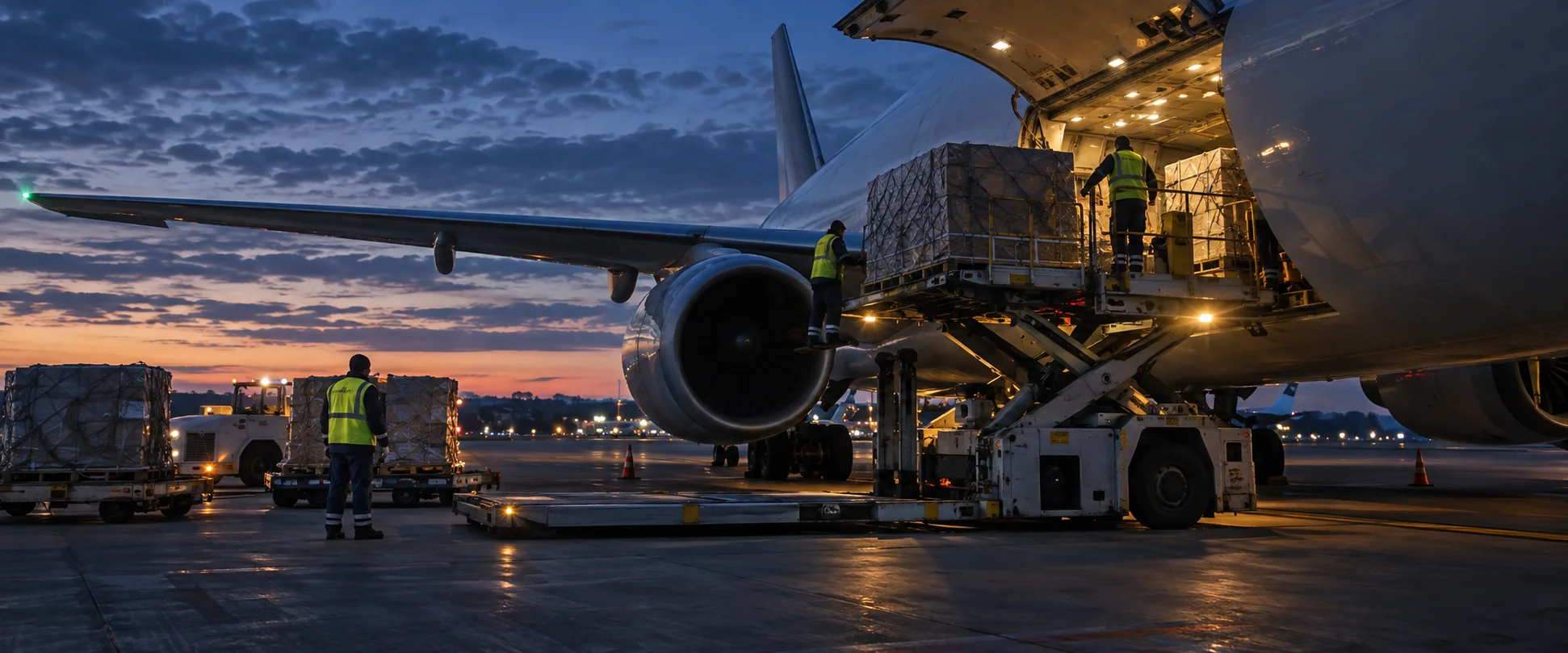
- Transit time: 3–7 business days
- Cost: 4–6× the cost of sea freight per kilogram
- Best for: Essential items you need before your sea container arrives, or small volumes of high-value goods
International Courier (DHL, FedEx, etc.)
- Transit time: 3–5 business days
- Cost: Highest per kilogram, but practical for small packages
- Best for: Documents, a few clothing items, small electronics
Most people combine methods: sea freight for the bulk of household goods, air freight or courier for the handful of items they need immediately upon arrival.
Packing for International: Harder Than It Sounds
Packing for a sea container is a different discipline than packing for a local move. Your belongings will endure vibration, stacking pressure, temperature fluctuations, and humidity changes over weeks at sea. The standards are higher.
International movers typically use double-walled cartons, professional-grade wrapping materials, and wooden crating for fragile or high-value items. Furniture is blanket-wrapped and secured to prevent shifting. Electronics are packed in original boxes where possible. Customs inspectors in China are accustomed to this, and it can streamline inspection.
Your Role in the Packing Process
- Label every box with both English and Chinese content descriptions
- Photograph the contents of each box before sealing, and photograph high-value items with serial numbers visible
- Do not pack liquids in the same box as electronics or documents
- Keep your “first week” essentials in your carry-on luggage rather than the container: important documents, a change of clothes, medications, and a laptop
- Create an itemized master inventory with estimated replacement values for every item in the shipment, since customs requires it and insurance claims depend on it
Settling In: The Life Admin Nobody Warns You About
Residence Registration
Within 24 hours of arriving at a new address in China, you are legally required to register with the local Public Security Bureau (PSB). If you are staying in a hotel or serviced apartment, they handle this for you. If you are renting directly, you and your landlord need to go to the PSB together. Not registering is a fine-able offense.
Bank Account
Opening a Chinese bank account typically requires your passport and your residence registration certificate, and some banks also ask for a local SIM card. Bank of China, ICBC, and China Construction Bank all have English-speaking staff at branches in major cities. A local account is not optional for daily life.

SIM Card and WeChat
China’s digital payment infrastructure runs almost entirely through WeChat Pay and Alipay. Get a local SIM and set up WeChat immediately, because most food delivery, taxi apps, and social connections run through the same ecosystem.
Healthcare
Buy international health insurance that covers China. Canada’s provincial health plans cover only limited emergency care abroad. If you are employed in China, your work unit will likely provide some coverage, but you should supplement it with a private international plan.
Moving a Business or Office from Canada to China
Corporate and office moves to China face requirements that household moves do not. Equipment, inventory, and commercial goods are assessed differently for duty purposes than household items. You will need a licensed customs broker with commercial import experience on the China side.
Technology export controls are also relevant: certain types of software, encryption technology, and specialized equipment may have to comply with the Canadian Export and Import Permits Act before they leave Canada. If your business handles any kind of controlled technology, get legal advice on export controls before packing anything.
Planning a Business Move
- Engage a customs broker in China early, ideally before you finalize what you are shipping
- Determine whether your business assets will be imported as corporate property or personal property (the rules differ)
- Expect your team to arrive in China weeks before your office equipment does, and plan interim setups
- Review your insurance coverage: commercial marine insurance for business equipment differs from personal effects coverage
International business moves turn on one question: does the freight company work directly with commercial customs brokers at Chinese ports, not just general freight forwarders? Ask it directly when you get quotes. Get a quote for corporate freight to China to compare your options.
Spend an afternoon with the packing inventory for a Canada-to-China move and a quiet drama shows up in the columns. A winter parka declared at a few hundred dollars sits two lines above a rice cooker the owner nearly left behind and now cannot picture the new kitchen without. Chinese customs reads that list literally: each item carries a declared value, electronics are checked against serial numbers, and anything wooden can raise a quarantine question. The moves that clear cleanly tend to belong to people who treated the inventory as the working document it becomes the moment the container reaches Shanghai, not as a last-night chore. The list, in the end, is the shipment. The rest is the box it travels in.
The choice between a two-year assignment and a permanent relocation changes almost every downstream decision. Most of the costly mistakes start when you treat that choice as a detail to sort out later instead of the first real bet you’re making. Shipping a full household on a temporary-assignment budget is a different wager than storing the bulk of it in Canada and shipping light. The right call depends on information you have at the planning stage: your contract length, your employer’s repatriation terms, and your attachment to your own furniture. Getting this wrong doesn’t always look wrong at the time. Take a family that ships everything for a two-year posting that turns into six months. They don’t find out the decision was miscalibrated until the shipping bill and the storage bill both land in the same month. Name the real bet before you book, and that outcome will not surprise you.
Related reading: Moving from Canada to Thailand: Freight, Customs and Visa Guide
Frequently Asked Questions
How far in advance should I contact movers for a Canada-to-China move?
Ideally, contact movers four to six months before your planned departure. International moving demands more coordination than a domestic move. Home surveys, customs documentation, container booking, freight forwarding arrangements, and destination-side coordination all take time. Most reputable moving companies handling international routes will want at least 8–10 weeks between booking and the pack date.
Can I ship my car from Canada to China?
Technically yes, but it is rarely practical. Importing a foreign-manufactured vehicle to China brings import duties that can equal or exceed the vehicle’s value, complex modifications to meet regulatory requirements, and long processing times. Most people moving from Canada to China sell their vehicle before leaving. If your car has significant sentimental value or is a specialty vehicle, consult a commercial customs broker who specializes in China imports before making any decisions.
What does a door-to-door international move include?
A door-to-door international move includes home packing in Canada, transportation to the export port, ocean freight to China, customs clearance at the Chinese port, and delivery to your new address in China. Not every moving company offers all of these services in-house. Some hand off to third-party agents after the container leaves Canada. When evaluating your options, ask specifically who is responsible for each stage and what happens if something goes wrong mid-transit.
Are there items I cannot bring into China from Canada?
Yes. Prohibited and restricted items include fresh food and produce, soil and plant material, firearms and ammunition, certain medications (including some common over-the-counter Canadian medications, so check the specific active ingredients), satellite receiving equipment, large quantities of religious materials, and goods that infringe Chinese intellectual property laws. Give your moving company a complete inventory so they can flag any potential customs issues before your shipment leaves Canada.
How long does it take for my belongings to arrive in China after leaving Canada?
Total door-to-door time typically runs 8–12 weeks. This breaks down roughly as 1–2 weeks for packing and ground transportation to the port; 4–5 weeks for ocean transit from Vancouver to major Chinese ports (Shanghai, Tianjin, Guangzhou); and 2–3 weeks for customs clearance and domestic delivery within China. These timelines can extend if your shipment is selected for physical customs inspection in China. An inspection adds 1–2 weeks. Plan your first month in China assuming your belongings will not be there yet. Ship essential items by air or bring them in checked baggage.