
AANZFTA brings the duty to zero, but Indonesian teak still has to clear illegal-logging due diligence, biosecurity treatment, and a moisture-content spec that determines whether it survives Australia’s climate.
Walk through the furniture workshops of Jepara on Java’s north coast and you can smell the trade before you see it: teak sawdust, sweet and faintly leathery, drifting out of open-fronted workshops where carvers have been working the same golden-brown hardwood since the Dutch colonial era. Jepara alone holds several thousand furniture workshops. Add Cirebon’s rattan weavers and Bali’s design-led studios working mango wood, suar and reclaimed teak, and you have one of the great furniture-making regions of the world, two weeks’ sailing from Australia’s east coast.
That proximity, plus a free trade agreement that zeroes out duty, makes Indonesia one of the most attractive furniture sourcing origins for Australian retailers, stylists and importers. But timber furniture is also one of the most heavily regulated things you can put in a container bound for Australia. Between the Illegal Logging Prohibition Act, biosecurity treatment requirements and the physics of tropical hardwood drying out in an air-conditioned Sydney apartment, there is more that can go wrong on this trade lane than almost any other consumer product.
Why Indonesia: The Timber and the Craft
Indonesia’s furniture advantage starts with the trees. Java grows plantation teak (Tectona grandis) under Perhutani, the state forestry company, on rotations of 40 to 80 years. Teak’s natural oils make it dimensionally stable and resistant to rot and insects, which is why it has been the timber of choice for ships’ decks and outdoor furniture for centuries. Grain runs straight and tight in older plantation stock; younger, fast-grown teak is paler, softer and more prone to movement, which matters when you’re specifying quality.
Beyond teak, the palette is broad. Mango wood, a byproduct of orchard replanting that is dense and warmly figured, has become a staple of mid-market casegoods. Suar (rain tree) yields the dramatic live-edge slabs that anchor statement dining tables. Mindi (white cedar) takes stain evenly for painted and limed finishes. And rattan, the climbing palm harvested from Sumatran and Kalimantan forests, supports an entire weaving industry centred on Cirebon in West Java, which has supplied woven furniture to Europe and Australia for over a century.
The craft geography is specific:
- Jepara (Central Java): the heartland of carved and solid teak furniture. Deep benches of skilled labour, competitive pricing, quality ranging from export-grade to rough. Ships via Semarang, about 90 minutes away.
- Cirebon (West Java): rattan and natural-fibre weaving. Ships via Jakarta’s Tanjung Priok or Cirebon’s smaller port.
- Bali: design-forward studios, reclaimed teak, boat-wood pieces, higher price points, strong for boutique retailers. Ships via Surabaya (trucked across on the ferry) or Benoa consolidation services.
- Solo and Semarang: larger factories doing indoor casegoods and contract volumes.
Compared with Chinese or Vietnamese sourcing, Indonesia trades some factory-scale consistency for material authenticity and craft depth. You buy from Indonesia when the timber itself is the product (solid teak, real rattan, a slab of suar) rather than veneered board furniture.
Duty and AANZFTA: Getting the Rate to Zero
Most furniture entering Australia classifies under Chapter 94 of the tariff: heading 9401 for seats, 9403 for other furniture (tables, cabinets, bed frames). The general duty rate is 5% of the customs value.
Under the ASEAN-Australia-New Zealand Free Trade Agreement (AANZFTA), qualifying goods of Indonesian origin enter at 0% duty. On a AUD 40,000 order, that’s AUD 2,000 back in your pocket, but only if the paperwork is right. To claim the preferential rate you need:
- Proof of origin: historically a Certificate of Origin (Form AANZ) issued by the Indonesian authorities; since the AANZFTA upgrade, a Declaration of Origin from an eligible exporter is also accepted. Your supplier or their forwarder arranges this at export.
- Origin qualification: the furniture must meet the agreement’s rules of origin. For furniture made in Indonesia from Indonesian timber this is straightforward; it can get murkier where hardware, foam or fabric is imported, so the regional value content calculation occasionally matters on upholstered pieces.
- Consistency: the goods description, HS codes and shipper details on the certificate must match the commercial invoice and bill of lading. The Australian Border Force (ABF) rejects preference claims over mismatched paperwork more often than over substantive origin problems.
Two things the concession does not remove. GST of 10% applies to the value of taxable importation (customs value + duty + international transport and insurance) regardless of origin. And the import processing charge applies to every consignment over AUD 1,000. Note also that Australia and Indonesia have a separate bilateral agreement (IA-CEPA); your broker will claim under whichever agreement is cleanest for your goods, and in practice AANZFTA documentation is the well-worn path for furniture.
Illegal Logging Laws: Your Due Diligence Obligations
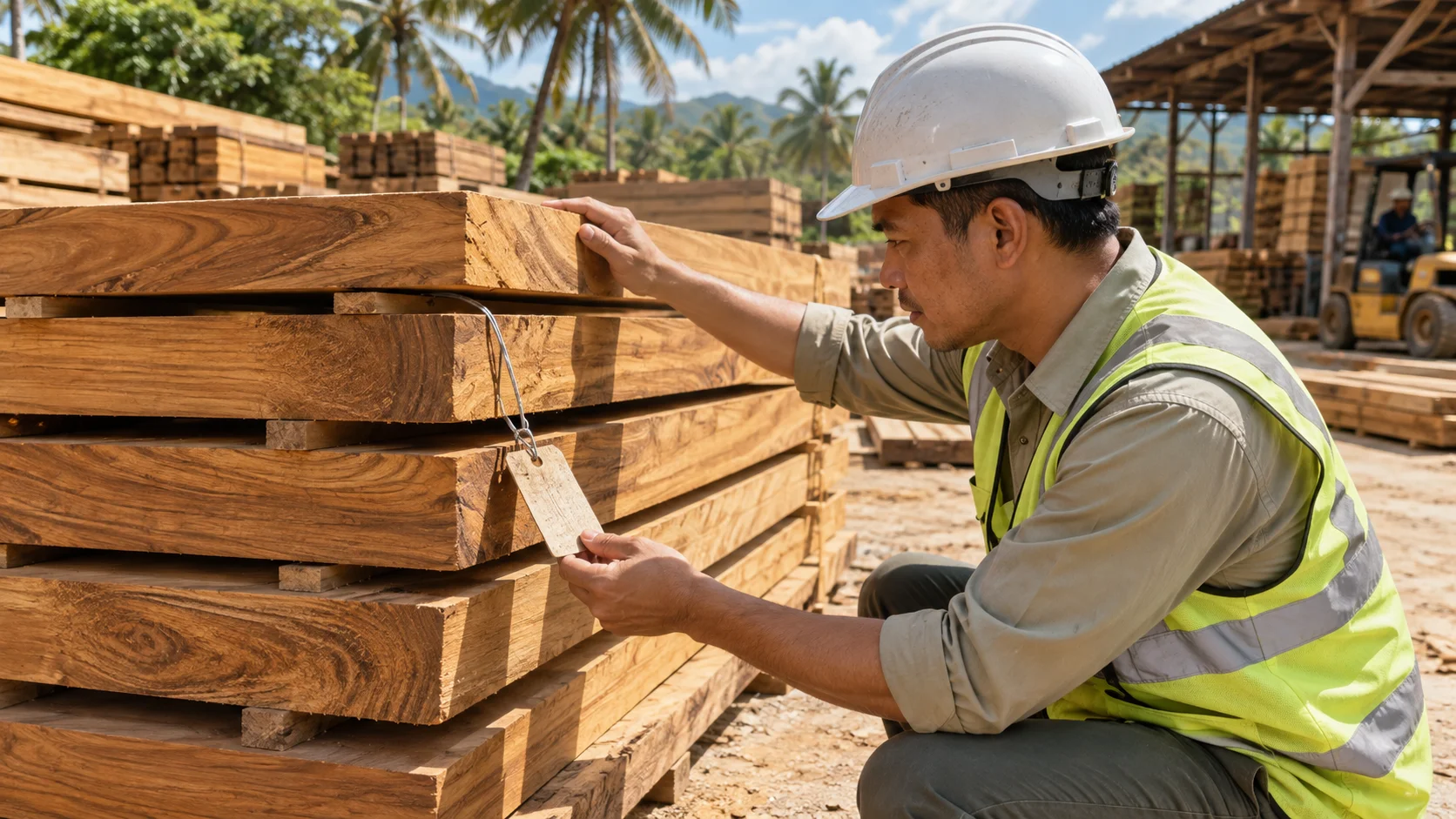
Australia’s Illegal Logging Prohibition Act 2012 makes it a criminal offence to import illegally logged timber, and, critically, places a positive due diligence obligation on importers of “regulated timber products.” Wooden furniture under headings 9401 and 9403 is regulated. If your consignment’s value exceeds AUD 1,000, the obligation is yours, personally, as the importer. Not your supplier’s. Not your freight forwarder’s. Yours.
Due diligence has to happen before the goods are imported, and it has four steps:
- Gather information. Product description, timber species (common and scientific name), country of harvest, supplier details, and documentation evidencing legal harvest. For a Jepara teak order this means asking your supplier for the species declaration and legality documents for the timber inputs.
- Assess risk. Evaluate the likelihood the timber was illegally logged, considering the species, harvest country, complexity of the supply chain and the credibility of the evidence provided.
- Mitigate risk. If the risk is anything other than low, take steps (obtain more documentation, use a different supplier, commission third-party verification) until it is.
- Keep records. Retain your due diligence records for five years. The Department of Agriculture, Fisheries and Forestry (DAFF) audits importers, and at customs entry you declare that due diligence has been conducted (a Community Protection Question on the import declaration).
SVLK: Indonesia’s Shortcut Through the Risk Assessment
Indonesia is actually the easiest tropical origin in the world on this front, because it built a national timber legality system precisely to answer these questions. SVLK (Sistem Verifikasi Legalitas Kayu) is Indonesia’s mandatory timber legality assurance system: every legal timber exporter is audited and certified, and export shipments of timber products carry a V-Legal document (now issued as FLEGT-style legality documentation) confirming the timber’s legal chain of custody from forest to factory.
Australia’s illegal logging framework recognises this through a Country Specific Guideline for Indonesia: if your consignment is covered by valid SVLK/V-Legal documentation and nothing else raises a red flag, you may treat that as satisfying the risk assessment. In practice, your pre-import checklist is:
- Confirm your supplier (or their exporter of record) holds current SVLK certification, and ask for the certificate and check its validity dates.
- Require the V-Legal document for your shipment and reconcile it against the invoice and packing list (species, volume, exporter).
- File it with your species and origin information as your due diligence record.
Importers get burned when they buy from a small workshop that isn’t itself SVLK-certified and exports through an aggregator, with no clear legality trail for reclaimed or “recycled boat wood” timber. Reclaimed teak is a wonderful product, but “reclaimed” is also the classic laundering story for illegally harvested timber. If a supplier can’t document where recycled timber came from, that is precisely the “not low risk” scenario the Act requires you to mitigate, and “everyone sells it as reclaimed” is not mitigation.
Biosecurity: Treating the Packaging and the Furniture
Two separate layers of biosecurity requirements apply.
ISPM 15: the packaging
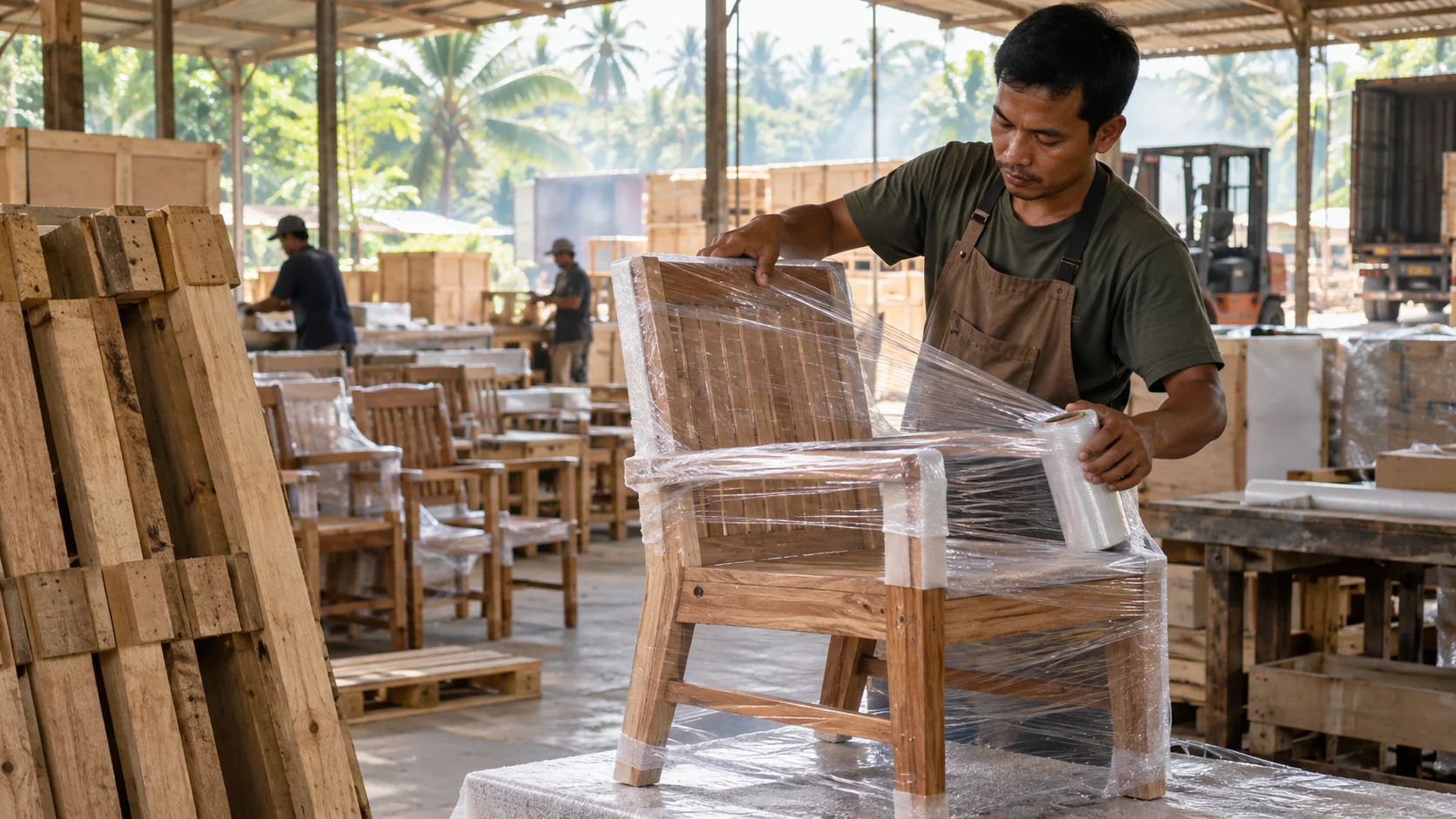
All timber packaging (pallets, crates, dunnage, bracing) must be treated and marked to the ISPM 15 standard (heat treatment to 56°C core temperature for 30 minutes, or methyl bromide fumigation) and stamped with the IPPC mark. Non-compliant packaging is ordered for treatment, export or destruction at the importer’s expense, and it will hold your whole consignment hostage while it’s dealt with. Insist in your purchase order that all packaging timber is ISPM 15 marked, and have your pre-shipment inspector photograph the stamps.
The furniture itself
ISPM 15 says nothing about the goods inside the crate. Wooden furniture is assessed under DAFF’s import conditions (check BICON for the current requirements for your product), and the practical risk profile is this: untreated or air-dried hardwood, bark inclusions, and natural fibres like rattan and seagrass can harbour live borers. Powderpost beetles (Lyctus species) love the starchy sapwood of tropical hardwoods, and auger beetle larvae can sit dormant in a table leg for months before the tell-tale pinholes and frass appear in an Australian warehouse.
Managing this comes down to what you can evidence:
- Kiln drying at the right schedule kills insect life stages in the timber and doubles as your moisture control (next section). Furniture made wholly from kiln-dried, bark-free timber presents a much lower risk profile.
- Fumigation: methyl bromide treatment of the packed container at origin, evidenced by a treatment certificate from an approved provider (DAFF maintains rules on acceptable providers and treatment parameters, including that fumigation must occur within a set window before shipment). Common for mixed loads, rattan and anything with an uncertain drying history.
- Heat treatment of the goods where fumigation is unsuitable.
Onshore, if goods arrive with evidence of live infestation (exit holes, frass), DAFF directs treatment, export or destruction. Fumigating a container in Australia costs multiples of the same treatment in Indonesia, plus storage while you wait. Treat at origin, keep the certificates, and make treatment a supplier obligation in the purchase order.
One seasonal note: the Brown Marmorated Stink Bug (BMSB) measures apply to goods shipped from designated risk countries between 1 September and 30 April. Indonesia is not currently a BMSB target risk country, but if your furniture tranships through or consolidates with cargo from risk origins, or DAFF’s seasonal measures change, your forwarder needs to flag it.
Quality Control at Origin: Moisture Is the Whole Game
Biosecurity failures cost you money once. Moisture failures cost you customers for years.
Timber is hygroscopic: it continuously exchanges moisture with the air around it, swelling as it absorbs and shrinking as it releases. In Jepara’s climate, air-dried teak settles at roughly 15–20% moisture content. Inside an Australian home, air-conditioned in Brisbane or heated through a Melbourne winter, timber’s equilibrium moisture content sits around 8–12%. Ship furniture at 18% moisture into that environment and the timber will spend its first six months in Australia drying out and shrinking. Wide tabletops cup and split along the grain. Mitred joints open. Doors bind, then rattle. The complaints arrive around month four, long after you’ve paid the supplier.
A 900 mm solid teak tabletop that leaves Jepara at 18% moisture and settles at 10% in a Brisbane dining room can lose around 10 to 15 mm of width. Flat-sawn teak shrinks roughly 5 to 6% across the grain between green and oven-dry, about 0.2% for every point of moisture it gives up, and eight points is a lot of points. On a top screwed rigidly to its frame, that movement has nowhere to go except into a split. Nothing is wrong with the teak. The moisture reading was simply taken too late to change the order, which is why the fix below belongs in the purchase order and not the warranty file.
- Specify kiln drying to 8–12% moisture content in the purchase order, as a written specification with rejection rights, not a verbal assurance. Reputable Jepara exporters run kilns; smaller workshops often don’t, and will say yes to anything. Beware over-drying too: teak kilned below about 8% for the European market can absorb moisture and swell in humid Queensland. The 8–12% band is the target.
- Verify with a pre-shipment inspection. A third-party inspection in Indonesia typically costs USD 250–350 per man-day. The inspector checks a sample of pieces with a pin or capacitance moisture meter (readings taken at the core of thick sections, not just the surface), verifies joinery, finish quality, hardware, dimensions against the spec, ISPM 15 stamps on packaging, and packing method, all before the goods are sealed in a container. On a AUD 40,000 order, a USD 300 inspection is 1% of order value insuring the other 99%.
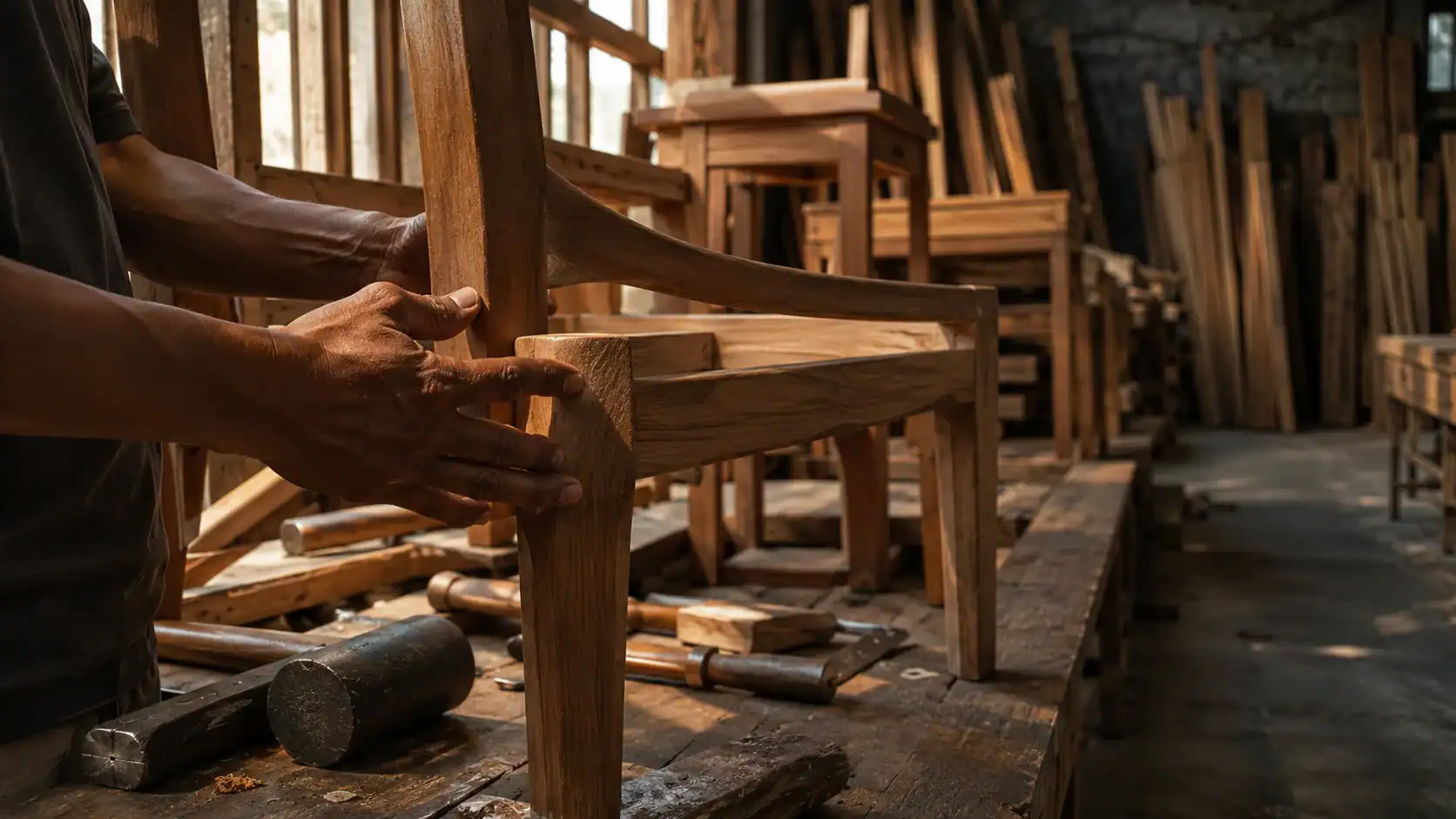
- Design for movement. Good makers allow for it: floating tabletop fixings, frame-and-panel construction, breadboard ends done properly. A pre-production sample tells you whether your maker understands this.
The payment schedule is where a small buyer actually has leverage. To a Jepara exporter, one Brisbane importer ordering five dining settings is a marginal customer, and the workshop has little reason to move on price for you. It does care when the money lands. Make the final payment due on a passed inspection report rather than on the goods being ready, and the moisture specification above gains teeth: a workshop already paid in full has no commercial reason to re-dry a failed batch before the container closes.
Freight Mechanics: Java to Australia
Indonesian furniture exports move through three main gateways, and which one you use is dictated by where your maker sits:
- Tanjung Priok (Jakarta): Indonesia’s largest port, best service frequency, serves Cirebon and West Java suppliers.
- Semarang (Tanjung Emas): the natural port for Jepara and Central Java. Slightly thinner direct schedules than Jakarta; some services relay via Singapore.
- Surabaya (Tanjung Perak): East Java and the usual exit for Bali-made goods trucked across.
Direct services to Australian east coast ports (Brisbane, Sydney, Melbourne) run 12–16 days port to port. Transhipment routings via Singapore or Port Klang add 5–10 days and a handling event, which matters for fragile furniture, since every extra lift is a damage opportunity. Fremantle-bound cargo often routes via Singapore. Door to door, budget 4–6 weeks from ex-works handover: export customs and treatment at origin, ocean transit, Australian clearance (including any DAFF intervention) and delivery.
A broker who already lodges AANZFTA claims correctly on Jepara-origin cargo is worth pricing against your own order volume before you commit to LCL or FCL.
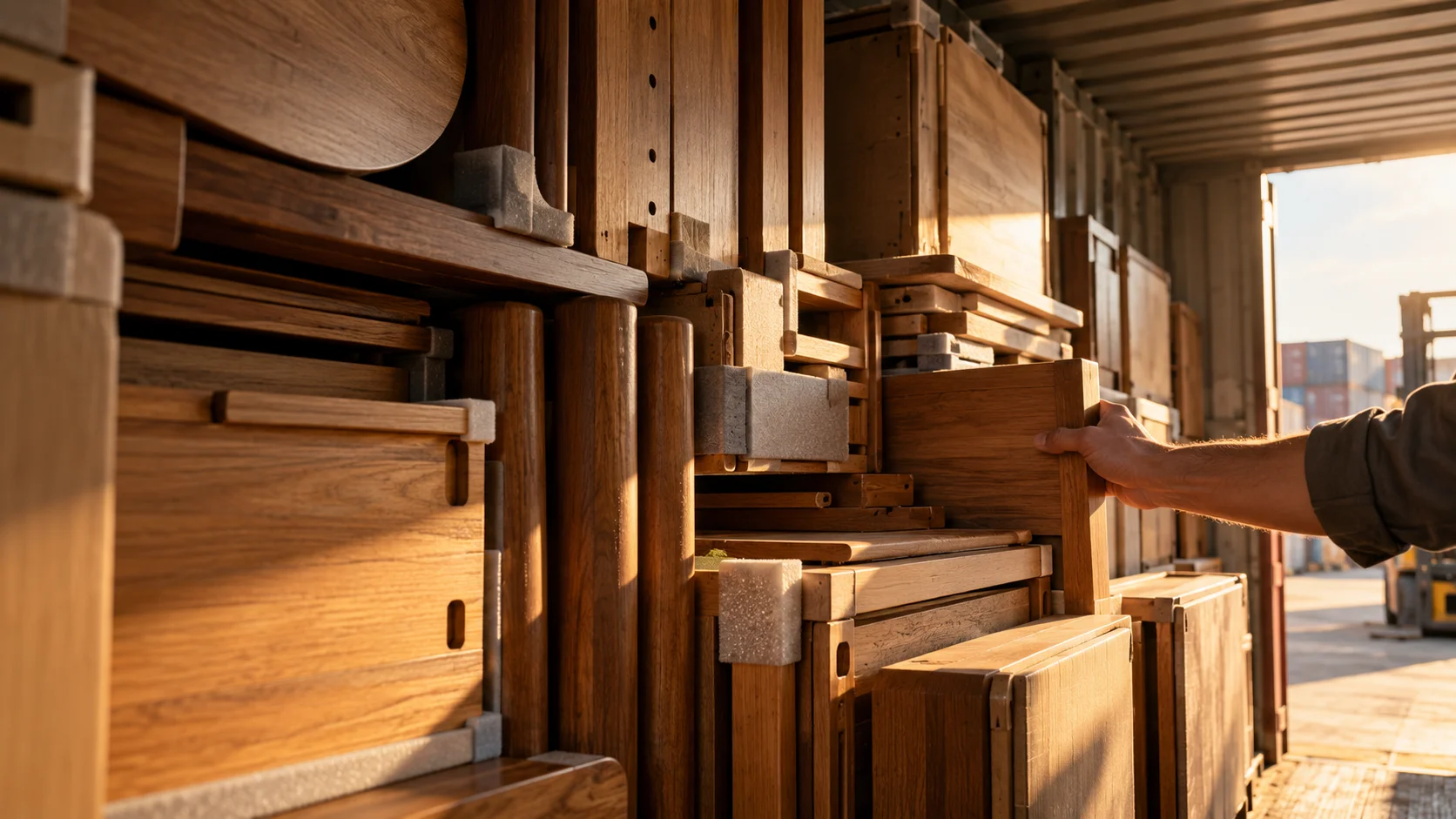
LCL vs FCL: the cube problem
Furniture is the classic volume-heavy, weight-light cargo. A crated teak dining table might occupy 1.5 cubic metres and weigh 120 kg. Sea freight on this lane charges by the cubic metre, and furniture always bills on volume. That shapes the LCL/FCL decision:
- Under ~8 cbm: LCL wins. Expect roughly USD 45–75 per cbm ocean freight plus origin/destination LCL fees (which are substantial, with destination charges of AUD 60–90 per cbm being normal). Furniture in LCL must be export-crated properly, because it will be handled at a CFS at both ends alongside whatever else is in the container.
- ~8–15 cbm: the grey zone. Price both. LCL per-cbm fees stack up fast; a 20ft container on this lane has often been in the USD 900–1,600 range depending on market conditions, and rates move, so treat any figure as a quote-me prompt rather than gospel.
- Over ~15 cbm: FCL wins almost every time. A 20ft box gives you about 28 usable cbm; a 40ft high cube about 68 cbm. Your goods are loaded at the factory, sealed, and untouched until your premises: no co-load handling damage, no risk of sharing a box with leaking cargo, and full control of packing quality.
Packing for the tropics-to-temperate voyage
A container crossing from equatorial Java to southern Australia experiences large temperature swings, and warm humid air trapped at loading condenses on the coldest surfaces as the box cools: “container rain.” On furniture, that means water-marked finishes and, worse, mould blooming on timber and rattan during two weeks in a sealed steel box. The standard defences:
- Desiccants: container-grade calcium chloride desiccant poles or blankets hung inside the container (typically 4–8 units in a 20ft box, sized to the cargo’s moisture load). Cheap insurance, maybe USD 60–120 per container.
- Ship dry. The single biggest mould driver is moisture already in the cargo. Kiln-dried furniture at 8–12% MC carries far less water into the box than air-dried stock; another reason the moisture spec pays for itself twice.
- Breathable wrapping: paper or breathable foam wrap on finished surfaces rather than sealed plastic film, which traps condensation against the finish. Corner protection and crating or cell-packing for legs, carved elements and glass.
- Don’t load wet: no rain-soaked packaging, no freshly lacquered pieces still off-gassing solvent, no green timber dunnage.
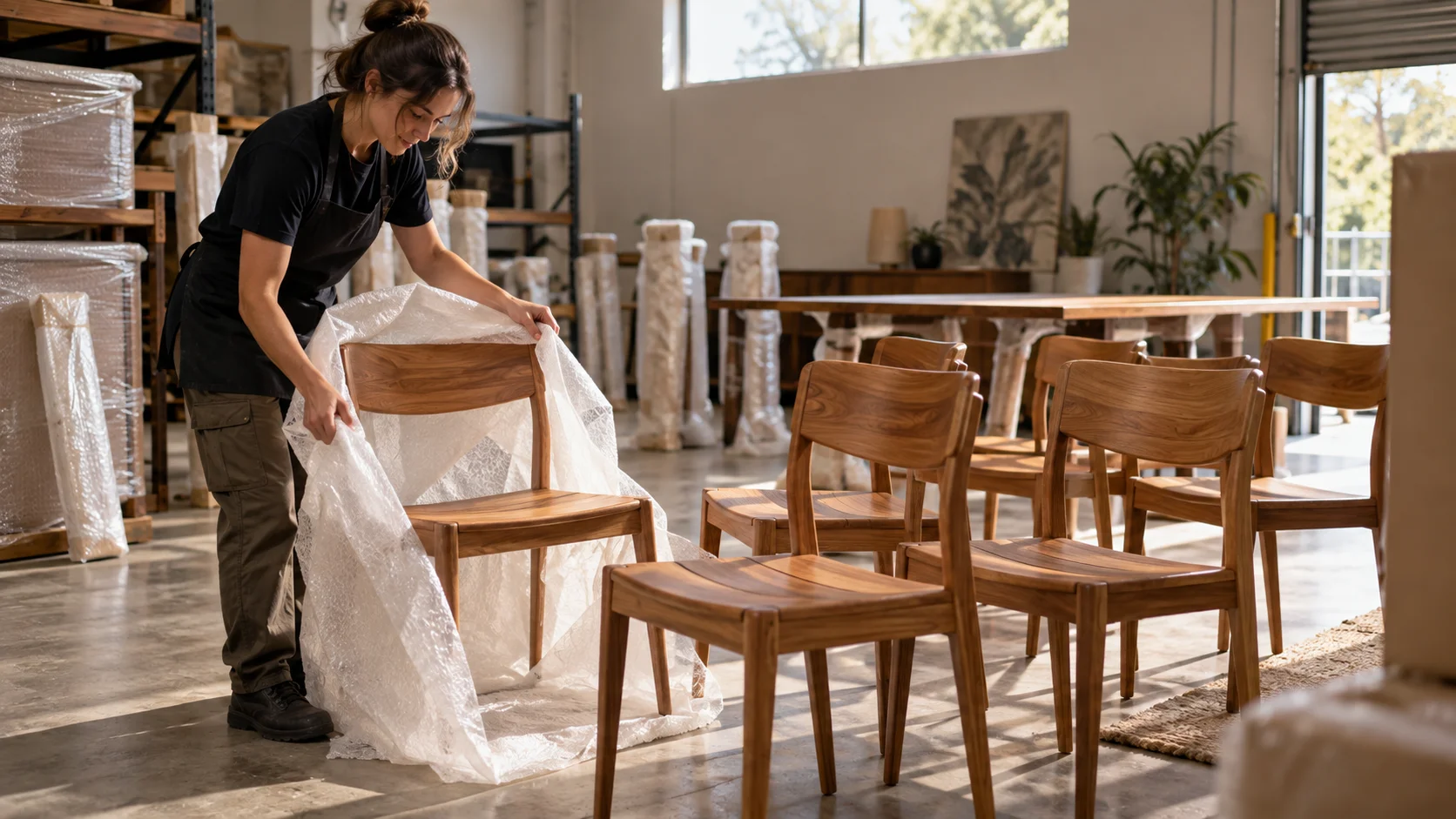
Worked Example: Landed Cost on a 20-Piece Teak Dining Order
Say you’re a furniture retailer ordering from a Jepara exporter: 5 teak dining tables and 15 matching chairs, call it 5 dining settings’ worth of stock, FOB Semarang, destined for your Brisbane warehouse.
- Order value: 5 tables @ USD 850 + 15 chairs @ USD 160 = USD 4,250 + USD 2,400 = USD 6,650 FOB
- Volume: tables crated at 1.4 cbm each (7.0 cbm) + chairs at 0.35 cbm each (5.25 cbm) = 12.25 cbm, roughly 1,450 kg
- At 12.25 cbm we’re in the grey zone. Priced both ways, the 20ft FCL came out marginally ahead of LCL once destination LCL fees were counted, so this moves as a 20ft FCL.
Using an exchange rate of AUD 1 = USD 0.65 (USD 6,650 ≈ AUD 10,230):
- Goods (FOB): AUD 10,230
- Pre-shipment inspection (1 man-day): USD 300 ≈ AUD 460
- Origin fumigation + certificate: USD 320 ≈ AUD 490
- Desiccants and export packing upgrade: USD 90 ≈ AUD 140
- Ocean freight, 20ft Semarang–Brisbane: USD 1,250 ≈ AUD 1,920
- Marine insurance (~0.4% of CIF value): AUD 50
- Australian port and terminal charges, container handling: AUD 750
- Customs brokerage + import declaration processing charge: AUD 350
- Import duty: 5% general rate would be ~AUD 512, but with the AANZFTA Certificate of Origin, AUD 0
- GST: 10% × (customs value AUD 10,230 + duty 0 + freight & insurance ~AUD 1,970) = AUD 1,220 (creditable if you’re GST-registered)
- Transport, port to warehouse (Brisbane metro) incl. container detention buffer: AUD 480
Total landed: approximately AUD 16,090, or about AUD 14,870 net of creditable GST. That’s roughly AUD 2,970 per dining setting net of creditable GST (about AUD 3,220 with GST) against typical Australian retail for solid teak settings of AUD 5,500–8,000. The AANZFTA certificate saved ~AUD 512 on this modest order; on a 40ft container of higher-value stock the same one-page document is worth several thousand dollars. And note what the compliance line items cost in total: inspection, fumigation, desiccants come to about AUD 1,090, under 7% of landed cost. One cracked-table warranty season or one onshore fumigation order would cost more.
For a deeper method on building these calculations yourself, see our total landed cost guide.
Common Mistakes (and How Importers Actually Get Hurt)
- Skipping illegal logging due diligence. The declaration on the import entry asks whether you’ve done it. Answering yes without records is the worst position available: DAFF audits, and penalties under the Act scale up to criminal liability for knowingly importing illegally logged timber. The fix costs an afternoon: SVLK certificate, V-Legal document, species list, filed.
- No moisture specification in the purchase order. “Kiln dried” as a verbal assurance is worthless. Write “kiln dried to 8–12% MC, verified at core by pre-shipment inspection, rejection rights on failure” into the PO.
- Under-declaring value. Some suppliers offer, cheerfully, to invoice low “to save you tax.” Since the duty is already 0% under AANZFTA, you’d be committing customs fraud to dodge GST you could likely claim back anyway. ABF data-matches values against payment records; penalties and the loss of trusted-trader standing are not worth a 10% cash-flow timing benefit. Declare the real price.
- Treating ISPM 15 as covering the furniture. The stamp on the pallet says nothing about the borer in the chair leg. Packaging compliance and product treatment are separate obligations; you need both.
- Buying “reclaimed teak” with no provenance. If the legality story is a shrug, walk away. That’s your risk assessment failing in real time.
- Choosing LCL by default for repeat orders. Once volumes are consistent, consolidating two months of orders into one FCL usually beats monthly LCL on cost and damage rates. Model it both ways annually.
- No allowance for delay. Fumigation windows, DAFF inspections and transhipment slippage happen. Promise customers arrival dates with two weeks of air in them.
We lodge the AANZFTA claim and quote the container in the same breath.
Most SMEs get a detailed, all-inclusive quote within 24 hours, duty, DAFF handling and clearance included.
Related Reading
- How to Import Furniture from Vietnam to Australia
- How to Import Furniture from China to Australia
- Biosecurity Requirements When Importing to Australia
- Shipping Routes to Australia Explained
- Total Landed Cost of Importing to Australia
Illegal logging due diligence obligations are set out by the Department of Agriculture, Fisheries and Forestry under the Illegal Logging Prohibition Act.
Frequently Asked Questions
Is there import duty on Indonesian furniture coming into Australia?
The general rate on most furniture is 5%, but qualifying Indonesian furniture enters at 0% under AANZFTA with a valid Certificate or Declaration of Origin. GST of 10% still applies regardless.
Do I need to do illegal logging due diligence on furniture from Indonesia?
Yes. Wooden furniture is a regulated timber product under the Illegal Logging Prohibition Act, and consignments over AUD 1,000 trigger the importer’s due diligence obligation: gather information, assess risk, mitigate, and keep records for five years. Valid SVLK/V-Legal documentation from Indonesia can satisfy the risk assessment under the Country Specific Guideline.
Does the furniture itself need fumigation, or just the packaging?
Both layers matter. ISPM 15 covers timber packaging only. The furniture is separately assessed for pest risk. Kiln-dried, bark-free timber lowers it, and methyl bromide fumigation or heat treatment at origin (with certificates) covers the rest. DAFF orders treatment, export or destruction of infested goods at your cost.
How long does shipping take from Indonesia to Australia?
Direct sailings from Tanjung Priok, Semarang or Surabaya to east coast ports run 12–16 days; transhipment via Singapore adds 5–10 days. Plan 4–6 weeks door to door.
What moisture content should I specify for Australian conditions?
Kiln dried to 8–12% moisture content, verified at the core with a moisture meter during pre-shipment inspection. Air-dried Indonesian timber at 15–20% MC will shrink and crack in Australian interiors.
LCL or FCL for a furniture order?
Furniture bills on volume. Under ~8 cbm, LCL; over ~15 cbm, a 20ft container is cheaper and safer; in between, price both, since destination LCL fees often tip the balance to FCL earlier than expected.