
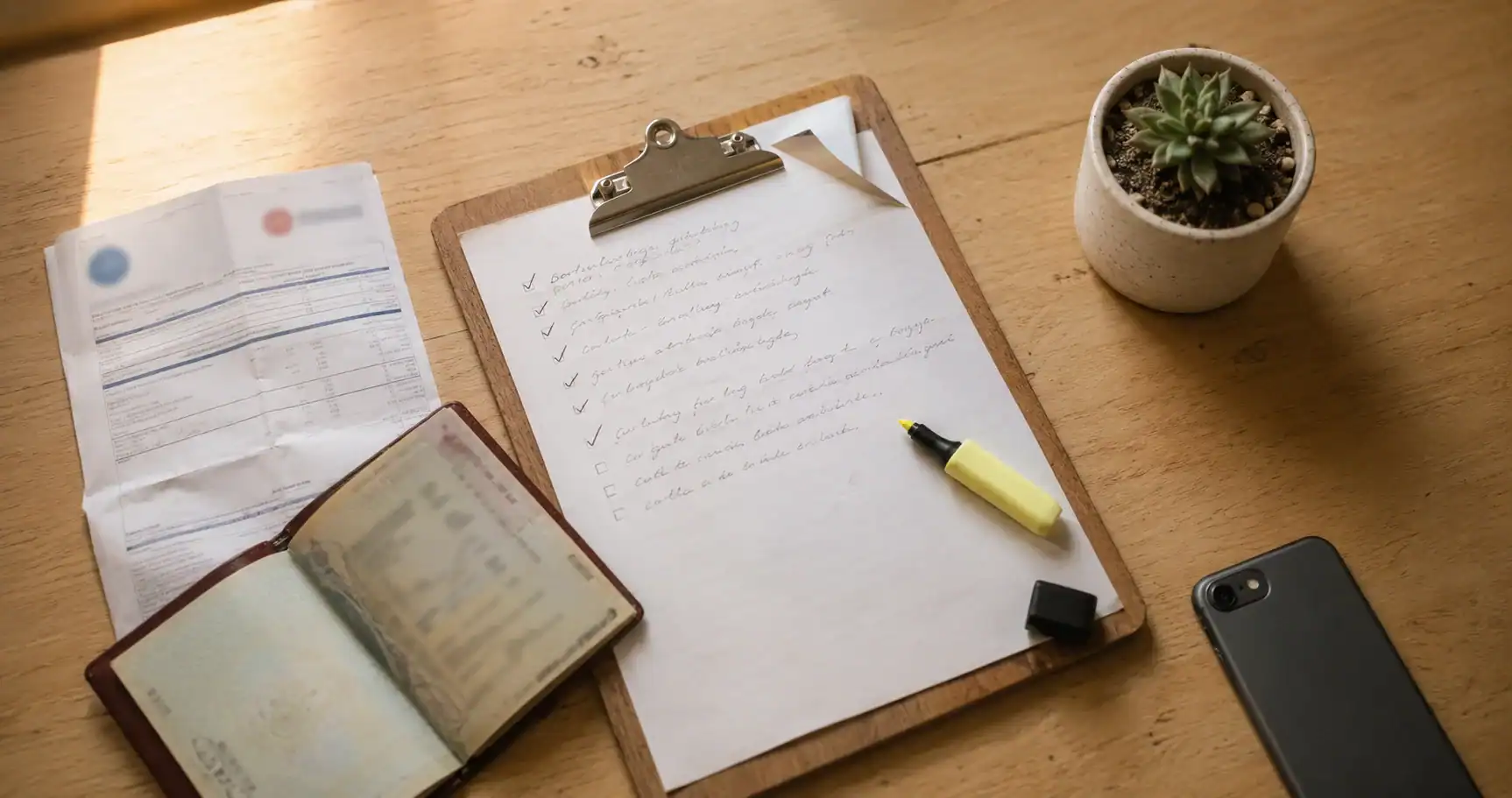
Moving to Thailand Checklist: The Operational Version
Most “moving to Thailand checklists” tell you to learn some Thai, open a bank account, and get travel insurance.
This checklist sequences the decisions and actions that move household goods to Thailand without a customs hold, a duty bill you did not budget for, or a container that arrives before your visa does.
The order matters. A visa application started too late delays customs clearance. A shipping booking made without a pre-move survey produces the wrong container size. A packing list written in vague terms invites a Thai customs examination.
12+ Weeks Before Move Date
✓ Decide your Thai visa category and start the application
This is the first decision, not the last. Your visa category determines whether your household goods qualify for personal effects duty relief at Thai customs (saving 10–30% import duty plus 7% VAT on the value of your goods). The permit must be in place when the goods arrive at Thai customs, not in process, not pending, not applied for.
Two visa categories qualify for personal effects duty relief under Thai Customs’ standard criteria: Non-Immigrant B with work permit and the Thailand LTR (Long-Term Resident) visa. Thailand’s official relocation criteria exclude Non-Immigrant OA (retirement) and Non-Immigrant O (marriage/family) from that standard list, so neither route qualifies for the duty-free concession. Categories that do not qualify at all: tourist visa, visa-exempt entry (a 30-day stamp for UK, US, Australian and most EU passports since 15 September 2026).
Apply at the Royal Thai Embassy or Consulate in your home country. Non-Immigrant visas take 5–15 working days and the LTR visa takes 20–40, the longest lead time in the whole move.
✓ Book a pre-move survey with a removals company or freight forwarder
A professional surveyor measures your goods and produces a CBM (cubic metre) estimate: the number that determines whether you ship LCL (less than container load) or FCL (full container load), and that drives the freight quote. Self-estimated volumes consistently run low. Book the survey at 12 weeks, which leaves time to select a provider and confirm the booking. Estimate the volume before you book the shipping, or you may end up with the wrong container size.
✓ Decide what you are not shipping
The cheapest goods to ship to Thailand are the ones you leave behind. Every unnecessary CBM adds cost at origin (THC, CFS fee), on the ocean (freight rate, surcharges), and at Thai destination (THC, CFS deconsolidation). The Thailand relocation cost breakdown maps the full financial picture, including shipping as a proportion of year-one costs. Sofas, mattresses, refrigerators, and washing machines are widely available in Thailand and cost less to replace locally than to ship internationally. Make this decision at 12 weeks, before the survey, not after it.
✓ Research pet import requirements (if applicable)
Importing a pet to Thailand requires a government-issued health certificate from a licensed veterinarian in your origin country, a rabies vaccination certificate (with sufficient time after vaccination, typically 21 days), and a microchip (ISO 11784/11785 compliant). Thailand’s Department of Livestock Development issues the import permit. Processing and documentation take 4–8 weeks minimum from booking to arrival clearance. Start this process at 12 weeks if you have pets, not at 4 weeks.
✓ Research Thai school options (families with children)
Bangkok international schools have waitlists of 3–12 months for popular year groups. At 12 weeks out, you are likely already too late for an immediate September intake at the most competitive schools. Submit applications immediately and request the waitlist position in writing. Confirm whether the school requires a Thai address at enrollment, because that affects your housing search timing.

8–10 Weeks Before Move Date
✓ Confirm the removals or freight booking
After the survey, confirm the service level, container size, collection date, and destination address in Thailand. Get the all-in quote in writing. It should itemise: UK/origin packing, origin THC, B/L fee, export clearance, ocean freight, named surcharges (BAF, LSS, War Risk if applicable), marine insurance (separate quote), destination THC, CFS deconsolidation if LCL, Thai customs broker fee, and last-mile delivery to your Thailand address. A quote that lumps these layers together will generate unexpected invoices later.
✓ Arrange marine cargo insurance
Arrange marine insurance before the goods are loaded, because you cannot buy it after a damage event. Request an all-risks policy covering the declared replacement value of goods. Ocean carrier liability (Hague-Visby Rules or COGSA for US origin) is capped at a fraction of most goods’ replacement value. For a two-bedroom household goods shipment, the premium is typically USD 120–300 / GBP 90–240 / AUD 150–300.
✓ Begin the Thai bank account preparation
Opening a Thai bank account before arrival is not possible for most nationalities. But you can prepare: research the bank (Bangkok Bank and Kasikorn Bank are most accessible for expats), confirm the document requirements for your visa category (typically passport, non-immigrant visa, and proof of address in Thailand), and budget the initial deposit. Note that tourist visas and visa-exempt entries complicate bank account opening: another reason your long-term visa matters before you arrive.
✓ Notify relevant authorities of your change of address
Start with the tax authority in your origin country (HMRC, ATO, IRS, etc.), because a change of tax residency may require planning before departure, not after. Then notify your pension provider, investment platforms, banks, and electoral roll or voter registration, and confirm online banking access will not be geo-blocked. If you hold a UK National Insurance number, State Pension, or NHS registration that requires action on departure, handle it now.
✓ Research Thai health insurance
Arrange private health insurance in Thailand before arrival rather than after. Some insurers apply exclusions or additional underwriting for conditions disclosed after policy inception. Research providers: Cigna Global, Allianz Care, Aetna International, and Thai-specific providers such as Pacific Cross. Premiums for a healthy adult under 50 range from USD 1,700–4,000 per year (AUD 2,600–6,200 / GBP 1,300–3,200) for comprehensive inpatient and outpatient cover in Thailand. Apply now; coverage starts from a named date.

4–6 Weeks Before Move Date
✓ Packing and collection
Professional removals teams pack in 1–3 days depending on volume. Be present for the entire packing process so you can see and approve the packing list as it is created. Every carton must be inventoried with a description specific enough for Thai customs. “Miscellaneous household goods” is not a sufficient description. “Kitchen utensils, ceramic dishes, glassware” is. Specific descriptions make a Thai customs physical examination less likely.
✓ Review and sign the packing list before the goods leave
The packing list is the primary document that Thai customs uses to assess your shipment. Read it before the goods leave your property. Check: are the descriptions specific? Are high-value items (electronics, jewellery, artwork) separately itemised with values? Are any items listed that should not be in the shipment (prohibited goods)? Once the container is sealed, you cannot amend the packing list without a B/L amendment, which costs USD 50–100 and delays clearance.
✓ Confirm the export customs declaration is filed
Your removals company or forwarder handles this, but confirm it explicitly. For UK movers, this is an HMRC CDS (Customs Declaration Service) submission. For Australian movers, it is an ABF ICS filing. For US movers, it is an AES/EEI filing. Ask for the export declaration reference number. If the goods are queried on the Thai side, the broker may need it.
✓ Obtain the bill of lading and track the vessel
Your forwarder issues the bill of lading (B/L) after the goods are loaded and the vessel departs. The B/L is the title document for your goods. Keep the original (or confirm telex release arrangements) and note the B/L number. Use the container number and B/L number to track the vessel on the carrier’s website. Share the B/L number with your Thai agent or customs broker immediately. They need it before the vessel arrives at Laem Chabang.
Before the Vessel Arrives at Laem Chabang
✓ Send documents to your Thai customs broker
Your Thai customs broker needs these documents before the vessel arrives, ideally 2 weeks before:
- Copy of your passport (photo page and all visa stamps)
- Your Thai non-immigrant visa or residency permit documentation
- The bill of lading (B/L number and copy)
- The detailed packing list
- The commercial invoice or household goods inventory with declared values
- Any additional certificates (phytosanitary, fumigation) if your goods contain wood or plant materials
Missing or late documents at this stage add 3–10 working days to Thai customs clearance and may generate storage charges at the port or CFS.
Thai Customs confirms the document set directly: see Thai Customs Department for current personal-effects clearance requirements.
✓ Confirm your Thailand delivery address and access
Your Thai agent needs the full delivery address before the goods leave port. For Bangkok apartment buildings, they need to know: building name and address, floor, building management contact for elevator/truck access booking, any delivery time restrictions (many Bangkok buildings restrict deliveries to weekday business hours). For houses: road access width for the delivery truck, any access restrictions. A 20ft container truck is 13 metres in length and cannot access all Bangkok streets or building car parks.
✓ Arrange temporary accommodation timed around delivery
Your goods will arrive 5–15 working days after the vessel docks at Laem Chabang (under normal conditions). Time your own arrival in Thailand so that you are present for customs clearance and delivery. If you are out of the country when your goods need customs clearance, your broker can act under a power of attorney, but that requires preparation in advance.
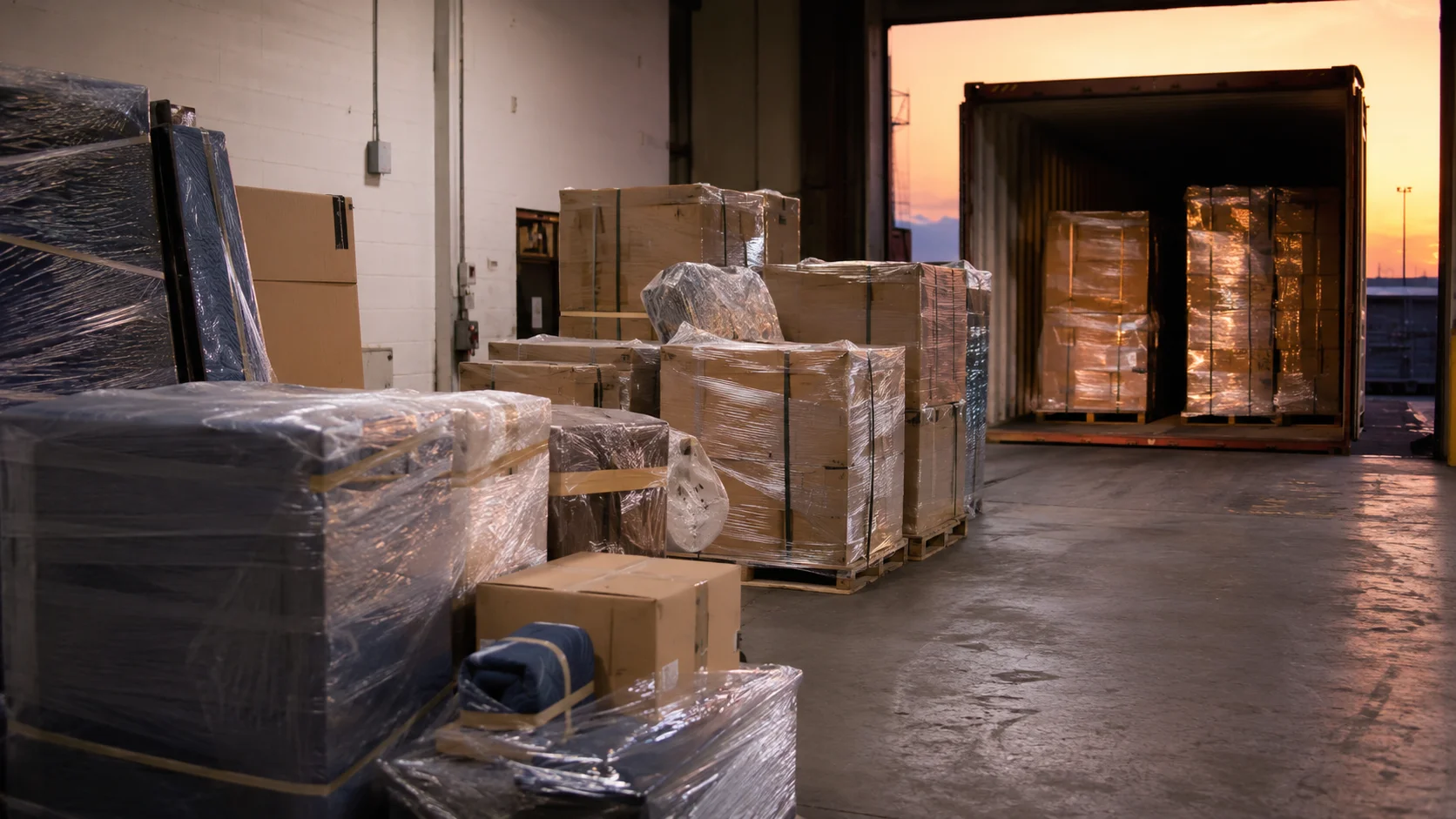
On Arrival in Thailand
✓ Get a Thai SIM card at the airport
AIS, True Move, and DTAC all have counters at Suvarnabhumi and Don Mueang airports. A 30-day tourist SIM costs THB 300–600. A postpaid plan on a non-immigrant visa requires a trip to a service centre. Do this in the first week. Thai mobile numbers are essential for bank account opening, building management, utility connections, and every administrative interaction in Thailand.
✓ Open a Thai bank account
Bangkok Bank, Kasikorn Bank (KBank), and SCB (Siam Commercial Bank) are the most expat-accessible. Bring your passport and original non-immigrant visa. Some branches require a work permit for Non-Immigrant B holders. Kasikorn Bank has been the most consistent for expats without work permits (retirement and marriage visa holders). You need the account for receiving goods on duty-free terms (sometimes the broker requires a Thai account for duty payment in case relief is denied), rental deposits, utility bills, and health insurance direct debit.
✓ Register the Thai address for official correspondence
Once you have a rental contract and a Thailand address, register it with: your embassy (UK, US, Australian, etc. nationals can register with their embassy for emergency contact and voting purposes), the Thai immigration office for your area (foreign nationals must notify immigration of their address within 24 hours of checking into new accommodation using the TM30 form, typically filed by the landlord on your behalf), and your Thai customs broker for all official documentation.
After Goods Delivery
✓ 90-day reporting to Thai Immigration
Foreign nationals on non-immigrant visas must report their current address to Thai Immigration every 90 days. You can file the TM47 form online (at the Thai Immigration Bureau website), in person at any immigration office, or by post. Missing a 90-day report incurs a THB 2,000 fine. Set a calendar reminder on day 1 in Thailand for the first reporting date (90 days from visa start, not from arrival date).
✓ Sort out Thai driving licence (if driving)
A foreign driving licence does not permit permanent driving in Thailand. You must convert to a Thai driving licence within 90 days of taking up residency. Required: your origin country driving licence, an international driving permit (obtained in your home country before departure), your passport and non-immigrant visa, medical certificate (obtainable from any Thai clinic, costs THB 100–200), and proof of Thai address. Convert the licence at the Department of Land Transport office in your province.
✓ Annual visa renewal preparation
For Non-Immigrant OA (retirement) and Non-Immigrant O (marriage) visas: mark the renewal date (typically 90 days before visa expiry for first renewal) and confirm the current Thai Immigration requirements at that time. Requirements can change. Check the official Thai Immigration Bureau website or your local immigration office for the current document list. For LTR visa holders: no annual renewal required for 10 years.
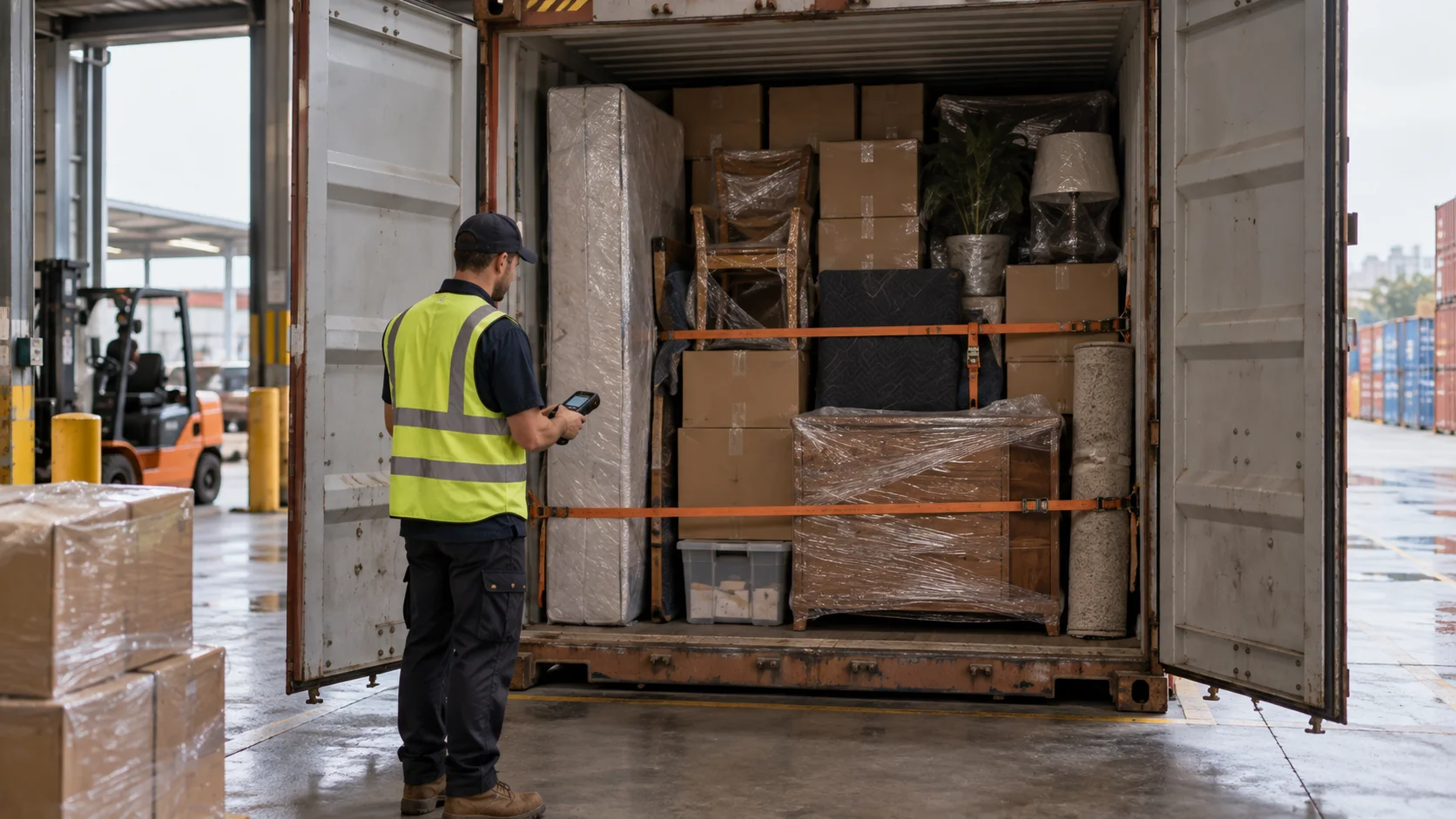
The Sequencing Red Lines
- Visa before goods sail, not after. The Thai long-term visa must be issued before goods arrive at Thai customs. Ocean transit takes 30–100 days depending on origin, so apply for the visa before the goods depart, not after arrival in Thailand.
- Survey before booking, not after. The volume estimate drives the container size, which drives the freight cost. Booking a 20ft container before a survey, then discovering you need 40ft, costs significantly more than booking the right size from the start.
- Packing list review before the container is sealed. Once the container is sealed, the packing list is locked. Amending it at the Thai customs stage requires a B/L amendment, costs USD 50–100, and delays clearance.
- Marine insurance before loading. You cannot arrange it retrospectively. A claim on goods damaged in transit requires a policy that was in force when loading occurred.
- Documents to Thai broker before vessel arrival. Sending customs documents after the vessel arrives adds weeks of storage charges. The broker files the customs entry as soon as the vessel berths. Documents must be in their hands 7–14 days before arrival.
Book a pre-move survey through a licensed freight forwarder early enough to confirm container size, customs document requirements, and visa timing before goods depart. The Swift Cargo Thailand page covers how the shipping process to Thailand works, including port handling at Laem Chabang.

Related reading: Thailand Relocation Guide 2026: Visas, Customs and What to Ship
Frequently Asked Questions
How far in advance should I start planning a move to Thailand?
Start the visa application and shipping survey at least 12 weeks before your intended move date. If you have school-age children, international school applications should begin 6–12 months before. Many Bangkok international schools have long waitlists. If you have pets, the import documentation process takes a minimum of 4–8 weeks. The visa is the longest lead-time critical path item: Non-Immigrant visas take 5–15 working days; the Thailand LTR visa takes 20–40 working days. Starting late on the visa is the most common cause of customs duty bills that should not have been paid.
What documents do I need for Thai customs clearance of household goods?
The core document set for personal effects customs clearance in Thailand: passport copy (all pages with visas), Thai non-immigrant visa or residency permit documentation, original bill of lading or telex release confirmation, detailed packing list (itemised by carton with descriptions), commercial invoice or household goods inventory with declared values, and in some cases a phytosanitary certificate for wood products or plant-based goods. Send these to your Thai customs broker at least 7–14 days before the vessel arrives at Laem Chabang.
How does the 90-day reporting rule work in Thailand?
Foreign nationals on non-immigrant visas must report their current address to Thai Immigration every 90 days using the TM47 form. The 90-day clock starts from your last entry into Thailand or your last 90-day report. You can report online at the Thai Immigration Bureau website, in person at any immigration office, or by post (with a self-addressed stamped envelope for return of the acknowledgement slip). Missing the report date incurs a THB 2,000 fine. You can report from 15 days before to 7 days after the due date. Use the online system to check your specific date.
Can I ship prohibited goods to Thailand if they are for personal use?
No. Thailand’s prohibited import list applies regardless of whether goods are for personal use or commercial sale. Absolutely prohibited items include: firearms and ammunition (without specific government permits), illegal narcotics, counterfeit goods, pornographic material, and goods that contravene intellectual property rights. Restricted items requiring permits or special clearance include: prescription medications in quantity, some electronic devices, certain plant and animal products, and vehicles. The Thai Customs Department’s prohibited and restricted goods list is published on their website. Confirm any questionable items with your removals company or Thai customs broker before packing day. Removing a prohibited item from a sealed container is expensive and time-consuming.
Does my household goods shipment need to arrive at the same time I move to Thailand?
Not exactly, but timing matters. Thai personal effects duty relief requires goods to arrive no earlier than one month before and no later than six months after you arrive in Thailand. Goods that arrive before your long-term visa is issued will not qualify for duty relief. Goods that arrive more than six months after your Thai residency was established also lose the duty relief eligibility. The practical window: goods should arrive after your long-term visa is in place, but within six months of your residency start date. For most movers, aiming for goods to arrive 2–4 weeks after you do (having sorted your visa in-country or before departure) is the safest timing.