
Australia’s biosecurity system asks a consistent question about every imported shipment: what biological risk does this carry, and what treatment or verification eliminates that risk before the goods enter Australian territory? The question applies equally to a container of steel pipes and a box of wooden picture frames. The answer depends entirely on what the goods are made of, whether they have been used, and where they came from. It could be nothing, a phytosanitary certificate, a heat treatment stamp on the pallet, an import permit, or a referral to a DAFF inspection facility on arrival. Federal clearance, however, is only one layer: destination state biosecurity rules apply in Western Australia, Tasmania, and the Northern Territory, and these can impose additional requirements beyond the DAFF federal threshold.
Most importers understand that Australia has biosecurity requirements. Far fewer understand which requirements apply to their own product category and what they need to prepare before the shipment leaves the origin country. Getting this wrong is expensive: biosecurity holds at Australian ports can mean storage costs, treatment costs, and delays that cascade through the rest of the supply chain. Getting it right means the shipment clears cleanly, and the only biosecurity variable in the landed cost calculation is the one you planned for.
This guide is organised by product category. For each category, it identifies the biosecurity risk level, the treatment or documentation typically required, and the points in the supply chain where the requirement must be addressed. It is a companion to the BICON explainer, which covers how to use the DAFF biosecurity import conditions database, and to the Australia biosecurity rules overview, which provides the legislative framework.

The Risk-Based Logic Behind the Requirements
Before mapping requirements by category, understand the principle behind them. DAFF (the Department of Agriculture, Fisheries and Forestry) administers biosecurity at Australia’s border under the Biosecurity Act 2015. The Act is Australia’s primary legislation for managing the risk that imported goods introduce exotic pests, diseases, or invasive species into Australian territory.
The risk assessment is pathway-based, not goods-based. The same product (timber, for example) carries different biosecurity risk depending on whether it is raw or processed, whether it has been kiln-dried or air-dried, whether it was packed in another timber product or in cardboard, and what country it came from. A finished hardwood furniture item is lower risk from a country with no exotic wood-boring beetles of concern than from a country where known invasive beetle species are present in commercial timber stands.
BICON, DAFF’s Biosecurity Import Conditions database, exists to make this pathway-specific risk assessment available to importers before they ship. The database records the current import conditions for specific goods from specific countries, including whether a treatment is mandatory, what that treatment must be, what documentation must accompany the shipment, and whether an import permit is required.
The categories below map the general landscape. BICON provides the specific conditions for your particular goods from your particular origin country. The border-side import requirements sit with the ABF: see ABF import requirements for the current framework.
Timber and Wood Products
Risk level: High to Very High (raw timber); Medium (processed/finished wood products)
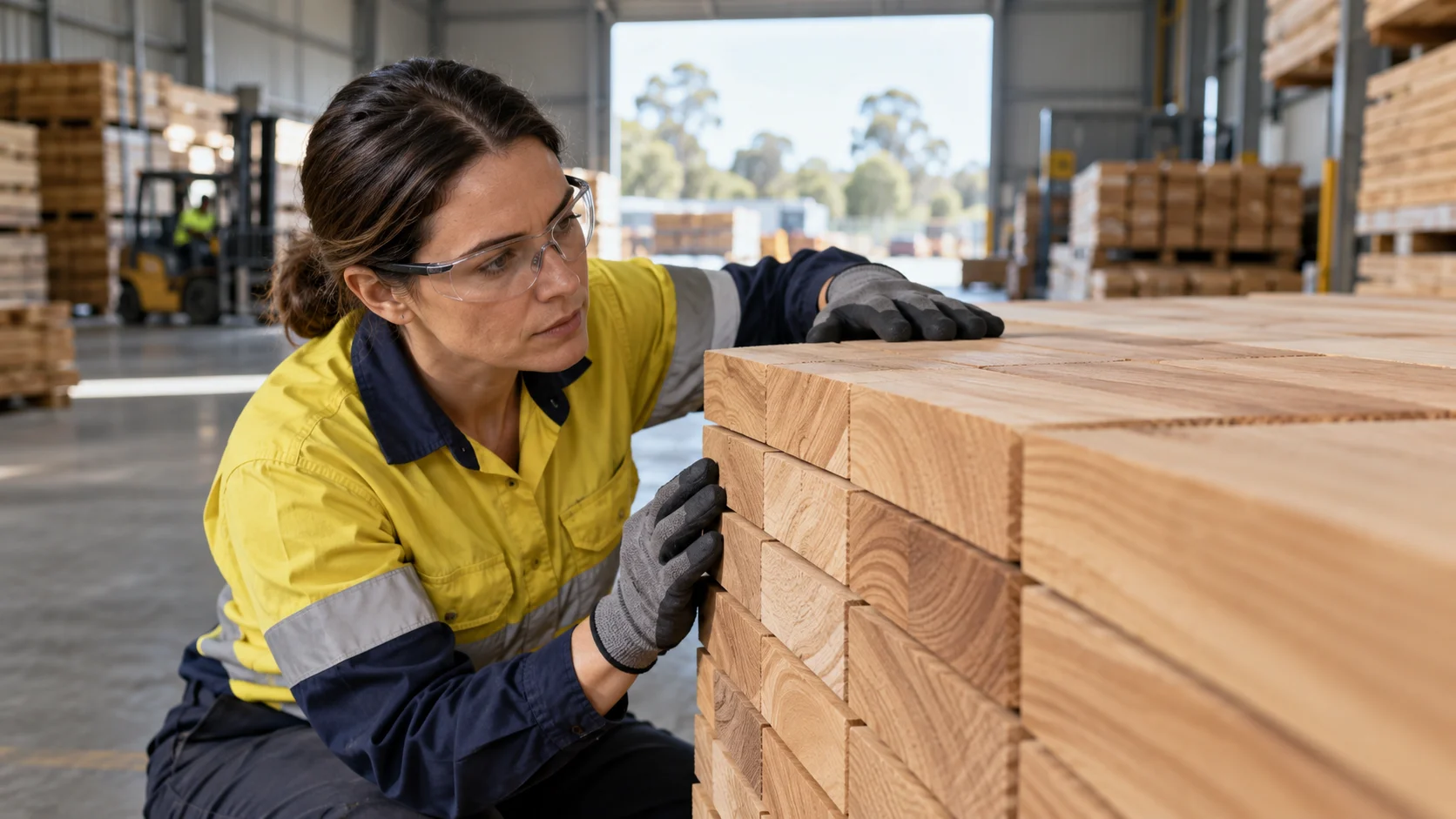
Timber and wood products attract Australia’s most complex biosecurity requirements. Wood is a natural habitat for insects, fungi, and bark pathogens, and many of them can establish in Australian forests and cause ecological and economic damage. The requirements differ substantially between raw and processed timber.
Timber packaging (all shipments)
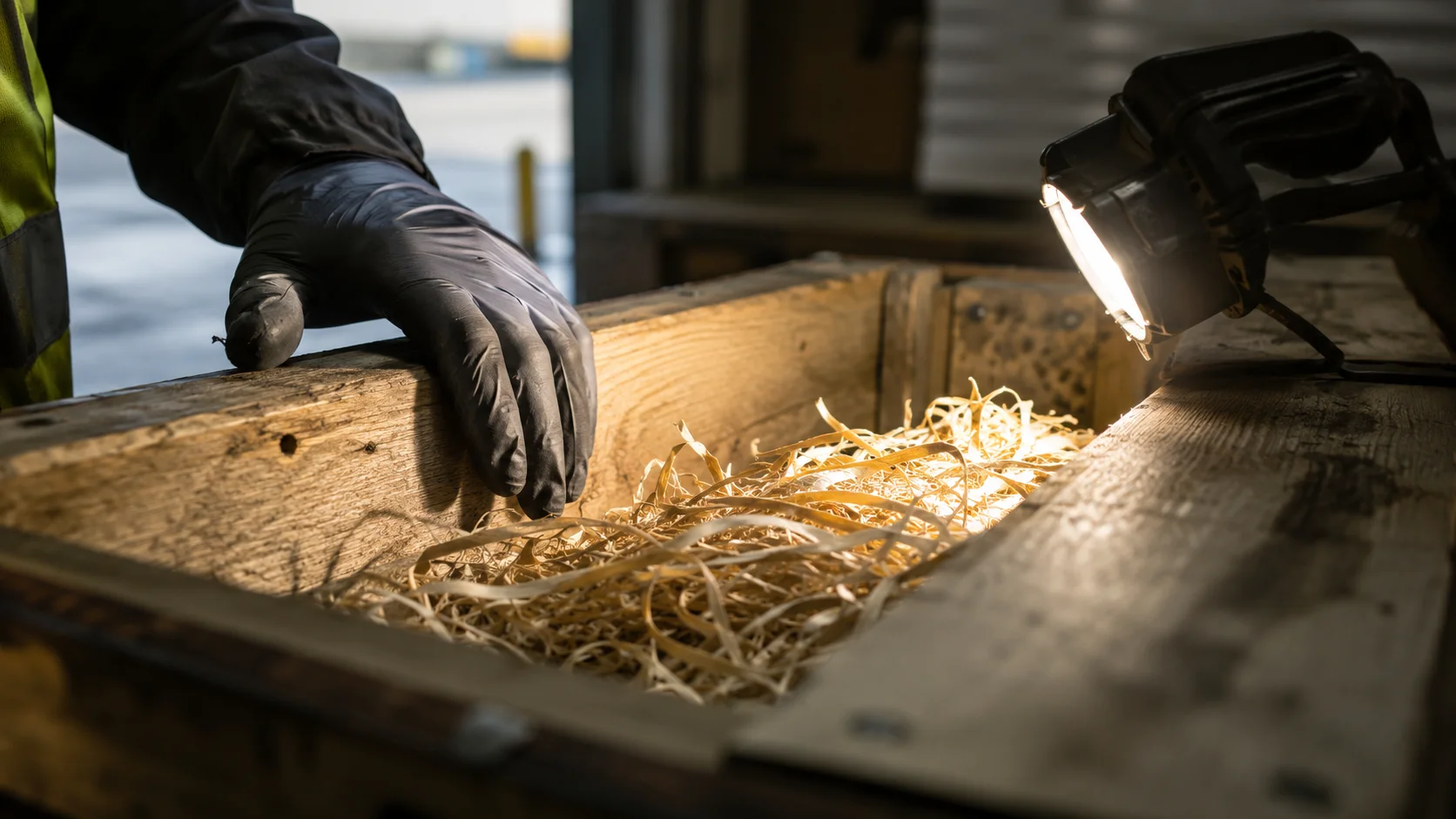
This requirement catches importers of all product categories. Timber packaging covers any timber used to pack, support, or protect goods in international shipment: wooden pallets, crates, dunnage, and wooden spools. All of it must comply with ISPM 15. Compliance means the timber has been heat-treated (HT) to a core temperature of 56°C for 30 minutes, or fumigated with methyl bromide (MB), and marked with the IPPC mark. The mark is a stylised wheat stem symbol with the country code, the producer/treatment provider code, and the treatment code (HT or MB).
Australia enforces ISPM 15 strictly and without exception. Without the correct IPPC mark, timber packaging is treated as non-compliant when it arrives at an Australian port, regardless of what the goods inside are. Non-compliant timber packaging leaves two options: approved treatment at the importer’s cost, or destruction of the packaging. Neither is cheap, and treatment may mean the shipment is held at a port biosecurity facility while it is arranged. Require ISPM 15-compliant pallets and packaging in the purchase order, before the goods are packed. That is the only way to manage this risk.
Sawn and processed timber products
Sawn timber, engineered wood products (plywood, MDF, LVL), bamboo products, rattan, and similar items are assessed against origin-specific import conditions in BICON. Many require:
- A phytosanitary certificate from the exporting country’s National Plant Protection Organisation (NPPO) confirming the goods have been inspected and treated in accordance with Australian import conditions
- Evidence of heat treatment (HT) or kiln-drying (KD) to the specified time/temperature schedule
- A declaration that the goods are free from bark, soil, and live insects
Timber from countries with higher exotic pest risk faces more stringent conditions than timber from countries with lower risk profiles. Those higher-risk origins include certain parts of Asia, Africa, and South America. Check BICON for the specific conditions applicable to your timber product and origin country.
Finished wood products
Furniture, flooring, picture frames, wooden kitchenware, and other fully manufactured, finished wood products present lower risk than raw timber because the manufacturing process (drying, finishing, coating) makes viable pests less likely to be present. However, if the product retains bark, appears to contain soil, or comes from a high-risk origin, it may still be referred for inspection on arrival. The key risk management steps are declaring the goods accurately (as finished furniture, not timber) and ensuring the timber packaging is ISPM 15-compliant.
ISPM 15 catches every shipment with a timber pallet, not just timber.
If you are not sure your supplier’s pallets carry a valid IPPC mark, that is worth confirming in the purchase order, not after the container lands.
Plant Material: Cut Flowers, Seeds, and Dried Plants
Risk level: High (fresh/dried plant material, seeds); Low–Medium (processed plant products without viable reproductive material)
Plant material is anything that was once a living plant and retains biological material. It is subject to DAFF biosecurity assessment because it may carry plant pathogens, seeds of invasive species, or insects. The requirements vary by whether the material is fresh, dried, or processed.
- Fresh cut flowers and foliage: Import conditions vary by species and origin. Some species require phytosanitary certificates, some require treatment (cold treatment, fumigation), and some are prohibited from specific origins. Check BICON by species name and origin country before placing an order.
- Dried flowers, dried plant parts, and potpourri: Generally require declaration and may require inspection. Products may be directed to DAFF inspection if they retain seeds, berries, or bark elements from plants not known in Australia.
- Seeds for planting: Require an import permit from DAFF for most species. Seeds without a valid import permit will be seized and destroyed at the border.
- Processed plant products (essential oils, dried spices, herbal extracts): Lower risk because the processing destroys most biological material. Typically clear without specific biosecurity treatment, though labelling compliance (ingredients, country of origin) is required for food products.
Food Products
Risk level: Variable, from Low (packaged processed foods) to Very High (fresh produce, animal-origin products)
Food imports to Australia span a wide risk spectrum depending on whether the product is of animal or plant origin, how processed it is, and where it came from. Australia’s food biosecurity framework sits within DAFF’s broader biosecurity mandate and is also subject to Food Standards Australia New Zealand (FSANZ) food safety standards.
Packaged and processed food products
Fully processed, commercially packaged food products generally present low biosecurity risk and clear without specific DAFF treatment. This category includes canned goods, dried goods, confectionery, sauces, condiments, noodles, and snack foods. The primary requirements are accurate declaration of the goods (including all ingredients) and compliance with Australian food labelling standards (English-language labels, allergy declarations, country of origin). An import value above AUD 1,000 also triggers a formal customs entry declaration. Certain nuts, seeds, and spices may trigger DAFF inspection even in processed form.
Meat and animal-origin food products
Products of animal origin include meat, poultry, seafood, dairy, eggs, and honey. These are subject to the most complex Australian import conditions of any food category. Most require:
- An import permit issued by DAFF before the goods are shipped
- A health certificate from the competent authority in the exporting country confirming the goods meet Australian import conditions
- Compliance with Australia’s specific conditions for the species and origin (which may require the producing establishment to be DAFF-approved)
Certain cuts of fresh beef, pork, and poultry from specific countries are prohibited or face highly restricted import conditions due to exotic animal disease risk. BICON is the authoritative source for current import conditions by product and origin. Without a valid import permit, animal-origin food products must be destroyed at the importer’s cost.
Fresh fruit and vegetables
Fresh horticultural produce faces some of the most restrictive import conditions in Australia’s biosecurity system, because fresh plant material is a primary pathway for exotic pests and diseases. Many fresh fruit and vegetable lines are prohibited from specific origins, or permitted only after treatment that must occur before or during shipment: vapour heat treatment, cold treatment, or methyl bromide fumigation. The specific conditions for each commodity and origin combination are recorded in BICON and can be highly technical, involving approved treatment facilities, temperature and time schedules, and phytosanitary certification by the exporting NPPO.

Textiles, Leather, and Apparel
Risk level: Low (new finished goods); Medium (second-hand clothing and textiles)
Clothing, footwear, bags, upholstery fabric, and other new, finished textile and leather goods generally present low biosecurity risk and do not require specific DAFF treatment before importation. The manufacturing and finishing process removes or destroys most biological material that was present in the raw fibre or hide. Cardboard packaging (rather than timber) avoids the ISPM 15 requirement entirely.
Second-hand clothing and used textiles are a different matter. Used garments may carry soil, seeds, or other biological material embedded in the fabric, particularly in the seams and pockets. DAFF requires that second-hand clothing be laundered and heat-dried before importation, with documentary evidence of the treatment provided with the shipment. Second-hand clothing arriving without treatment evidence will be directed to on-arrival treatment or to destruction.
Leather goods from crocodile, python, ostrich, and other exotic animals may also require CITES permits, depending on the species and the origin country’s regulatory status. CITES is the Convention on International Trade in Endangered Species, and its permits are administered separately from DAFF biosecurity permits.
Every category above has its own document, its own timeline, and its own cost if you miss it, and pricing your import with prep built in avoids finding out the hard way.
Used Machinery and Equipment
Risk level: High to Very High (outdoor, agricultural, mining, construction use); Medium (indoor/office equipment)
Used machinery is among the highest-risk import categories in Australia’s biosecurity system. Equipment used in outdoor, agricultural, mining, or construction settings has been in contact with soil, plant material, seeds, water, and potentially insects over its working life. Some of that contamination is very difficult to clean completely. Exotic weed seeds, soil-borne pathogens, or insects embedded in machinery can survive transit and establish in Australian environments.
DAFF requires used machinery to be cleaned to a “visually clean” standard before shipment. This means:
- All soil, plant material, seeds, and organic debris removed from all surfaces, including undercarriages, wheel arches, engine compartments, and concealed internal cavities
- High-pressure washing with attention to hard-to-reach areas
- A cleaning declaration accompanying the shipment, confirming the date, location, and method of cleaning
On arrival at an Australian port, used machinery is routinely referred to DAFF for inspection. If the inspector finds residual contamination, the machinery is directed to an approved treatment facility for on-arrival cleaning, fumigation, or heat treatment. This happens at the importer’s cost, with storage costs accumulating while the treatment is arranged. The best evidence of compliance is a pre-export cleaning report from a reputable cleaning contractor in the origin country. That report often avoids on-arrival referral.
Office equipment, IT hardware, and medical equipment used in indoor environments are lower risk but should still be declared accurately. Even indoor equipment can be referred for inspection if it has soil or organic residue from use near plant materials.
The same standard applies to used vehicle parts: engines, gearboxes, and suspension assemblies collect the same soil and organic contamination as machinery undercarriages. See our guide to importing auto parts to Australia for the cleaning and inspection rules that apply specifically to used automotive components.
Stone, Ceramics, and Minerals
Risk level: Very High (soil-contaminated or raw mineral products); Low (manufactured stone and ceramic goods)
Tiles, stone countertops, ceramic tableware, decorative stone items, and other manufactured stone and ceramic products are generally low biosecurity risk because the manufacturing process kills biological material. Standard declaration and accurate goods description are the primary requirements.
Raw minerals, rocks, and geological specimens are different. Soil is a prohibited import into Australia. It is one of the highest-risk pathways for exotic soil-borne pathogens, nematodes, and plant diseases. Minerals and rocks with visible soil contamination will be seized. Even mineral specimens that appear clean may be referred for inspection and treatment. Importers of rocks, minerals, and geological specimens should ensure goods are cleaned of all soil and organic material before export and declare them accurately on the import entry.
Mandatory DAFF intervention on arrival applies to soil attached to roots, bulbs, potted plants, agricultural equipment, and any other soil-contaminated products.
Animal Products (Non-Food)
Risk level: Medium to High (depending on species and processing)
Feathers, bones, shells, untanned hides, horn, antler, natural bristles, and other animal-derived products used in manufacturing or retail carry biosecurity risk because they may harbour exotic diseases or parasites. The biosecurity requirements depend on the species of origin, the country, and the degree of processing:
- Feathers (commercial, cleaned, and sterilised): Require a phytosanitary or veterinary health certificate confirming treatment. Pillow fill and duvet feathers from approved manufacturers in major origin countries (China, Europe) generally clear with appropriate certificates.
- Untanned hides and raw leather: High biosecurity risk; require specific import conditions that may include treatment and veterinary certification.
- Bone and horn products: Require health certificates from the exporting country’s competent authority. Products from countries with foot-and-mouth disease or BSE status concerns face more restrictive conditions.
- Shells (cleaned and treated): Lower risk but must be declared accurately. Shells with organic residue may be directed to inspection.
Chemicals and Industrial Products
Risk level: Low (finished industrial products); the chemical content is an MSDS and customs classification issue rather than a DAFF biosecurity issue for most categories
Most finished industrial chemicals, paints, lubricants, adhesives, and similar products do not present significant biosecurity risk because they are inorganic or fully processed materials without biological content. The primary compliance requirements for chemical imports are customs classification (which determines duty rate), dangerous goods classification for transport (which determines freight mode and documentation), and Australian chemical regulation (AICIS, the Australian Industrial Chemicals Introduction Scheme, for industrial chemicals).
Some fertilisers and agricultural chemicals may contain biological material, such as compost, manure, or biological pesticides. These products are assessed under DAFF biosecurity requirements and may require import permits.
The Summary Reference Table
| Product category | DAFF biosecurity risk | Typical requirement | Key document |
|---|---|---|---|
| Timber packaging (all shipments) | High | ISPM 15 treatment (HT or MB), mandatory | IPPC mark on packaging |
| Raw / sawn timber | Very High | Heat treatment / phytosanitary certificate | Phytosanitary certificate (NPPO) |
| Finished wood products / furniture | Medium | ISPM 15 packaging + accurate declaration | Packing list, IPPC mark |
| Fresh cut flowers and foliage | High | Species and origin-specific: check BICON | Phytosanitary certificate (NPPO) |
| Seeds for planting | Very High | Import permit required | DAFF import permit |
| New finished textiles / clothing | Low | Accurate declaration only | Commercial invoice / packing list |
| Second-hand clothing | Medium | Laundering and heat-dry treatment + declaration | Treatment declaration |
| Meat and animal-origin food | Very High | Import permit + health certificate (mandatory) | DAFF import permit, health certificate |
| Packaged processed food | Low–Medium | Accurate declaration + labelling compliance | Commercial invoice, labels |
| Fresh fruit and vegetables | Very High | Commodity-specific: check BICON; may be prohibited | Phytosanitary certificate, treatment records |
| Used machinery (outdoor use) | Very High | Pre-export cleaning + cleaning declaration | Cleaning declaration |
| Raw minerals / rocks (soil present) | Very High | Cleaning of all soil; may be referred on arrival | Cleaning declaration |
| Finished stone / ceramics | Low | Accurate declaration | Commercial invoice |
| Feathers (cleaned / commercial) | Medium | Veterinary/phytosanitary health certificate | Health certificate |
| Soil (any amount) | Prohibited | Cannot be imported into Australia | N/A |
What Happens When Biosecurity Requirements Are Not Met
When a shipment arrives at an Australian port and DAFF determines that biosecurity requirements have not been met, the options are set by the Biosecurity Act 2015 and directed by biosecurity officers authorised by DAFF, who work with ABF officers to inspect cargo at the border. The four possible outcomes are:
- Re-export. The goods are sent back to the origin country at the importer’s cost. Freight, port storage, and re-export logistics accumulate quickly.
- On-arrival treatment. The goods are directed to an approved treatment facility for fumigation, heat treatment, or wash-down, at the importer’s cost. Storage costs run from the day of arrival to the day treatment is completed and the goods are released. For large shipments requiring specialist treatment, this can take days to weeks.
- Modification or re-packing. For packaging non-compliance (e.g., ISPM 15-non-compliant pallets), the goods can sometimes be re-packed in compliant materials at the port at the importer’s cost.
- Destruction. A biosecurity officer can require destruction when the goods cannot be effectively treated. It is also an option the importer can take: if a required treatment is likely to damage the goods and the importer does not agree to it, DAFF can ask the importer to arrange destruction or export instead.
None of these outcomes is free. All of them are more expensive than correctly preparing the shipment before it leaves the origin country. The cost of a pre-export phytosanitary certificate is typically USD 50–200. The cost of an on-arrival treatment and hold for a 20-container shipment can run AUD 5,000–20,000 or more, plus the cascading cost of delayed delivery to the buyer.
These four outcomes are also a major cause of the customs holds importers report after cargo arrives. For the full breakdown of what a hold costs and how to prevent one, see what causes customs delays when importing to Australia.

Checking BICON Before Every New Product Line
The BICON database, accessible at bicon.agriculture.gov.au, is the operational tool that maps the specific import conditions for specific goods from specific countries. It is searchable by goods description, HS code, and country of origin. Each search returns the current import conditions, including whether a permit is required, what treatment documentation must accompany the goods, and whether the goods are prohibited.
For established import programs, BICON should be checked when adding a new product line, changing a supplier country, or changing the goods category, not just once at program inception. Biosecurity import conditions change when pest or disease risk assessments are updated, and conditions that applied 18 months ago may have been revised.
For a detailed walkthrough of how to use BICON to check import conditions for your specific goods, the BICON explained guide covers the database structure, search methodology, and how to interpret the conditions returned.
The broader legislative framework is set out in full in the Australia biosecurity rules overview. That overview covers the Biosecurity Act 2015, DAFF’s role, and the historical context of Australia’s strict approach.
To discuss biosecurity documentation for a specific import program, get a quote from Swift Cargo. We work with customs brokers experienced in DAFF compliance across timber, food, textiles, and used goods categories.
Most importers fail the biosecurity screen because they asked the wrong question, not because they chose a prohibited product. The question “is this product allowed into Australia?” has a technically correct answer that is almost useless in practice. The right question is: “what does DAFF need to see before this product will be released?” Those questions produce different preparation. The first leads to a yes/no lookup. The second leads to a pre-shipment checklist: the certificate of fumigation, the phytosanitary paperwork, the import permit application lodged four weeks before arrival. The product category tables in this guide are built around the second question.
Product teams run discovery sprints before committing to delivery timelines because some risks take longer to resolve than others. DAFF biosecurity routing works on the same logic. Untreated timber, used machinery, live plant material, and other high-risk product categories require more than additional documentation. They require inspection time that a freight booking cannot compress. Build it in at the discovery phase. A product that needs heat treatment or ISPM 15 certification adds days to the pre-shipment stage. A product that needs an import permit may add weeks.
Importers routinely get one discipline point wrong here: the biosecurity outcome is yours to own, not your broker’s. When a container is held for a treatment order or a failed inspection, the storage bills, the demurrage, and the missed sales window all land on your account, no matter who filled in the paperwork. Owning that means you check the BICON case for a commodity before you place the purchase order, not after the vessel has sailed. It also means you build the treatment cost and the inspection lead time into your landed price from the start.
We build your biosecurity prep into the quote, not a surprise later.
Most SMEs receive a detailed, all-inclusive quote within 24 hours, no hidden fees, with the biosecurity documentation mapped out from day one.
A shipment that clears Australian biosecurity without a hold is not proof the paperwork was right. It is one outcome, and a good outcome does not always mean a good process. Suppose an importer skips the BICON check on a new product line and gets waved through. That importer has learned nothing about whether the next shipment on the same line will clear too. DAFF’s inspection rate is itself a probability, not a guarantee, and treating an unchecked pass as validation is the error to avoid.
Related reading: Packing Declaration Accuracy, Not Cargo, Triggers DAFF Biosecurity Inspections
Frequently Asked Questions
What biosecurity requirements apply to timber and wood products imported into Australia?
All timber packaging (pallets, crates, dunnage) on every shipment must comply with ISPM 15, regardless of what the goods are. That means heat treatment or fumigation, plus the IPPC mark. Sawn and processed timber products require phytosanitary certificates from the origin country’s NPPO and often heat treatment evidence. Finished wood products (furniture, flooring) are lower risk but must be free of soil and bark, and their timber packaging must still be ISPM 15-compliant. Raw logs are very high risk and face the most restrictive conditions.
Do finished textile goods require biosecurity treatment to enter Australia?
New finished textiles (clothing, fabric, footwear) generally do not require biosecurity treatment and clear with standard declaration. Second-hand clothing requires documented laundering and heat-drying treatment before import, as used garments may carry soil, seeds, or other biological material. Cardboard packaging (used by most apparel exporters) avoids ISPM 15 timber packaging requirements entirely.
What is the biosecurity risk for used or second-hand machinery imported into Australia?
Very high. Machinery used outdoors or in agriculture, mining, or construction may carry soil, seeds, and insects in hard-to-reach areas. DAFF requires pre-export cleaning to a visually clean standard, supported by a cleaning declaration. On-arrival inspection is routine for used machinery, and any residual contamination must be treated on arrival at the importer’s cost. Pre-export cleaning by a professional contractor with documentation is the most cost-effective approach.
Is my biosecurity requirement based on what the product is, or on something else?
On the pathway, not just the product category. DAFF’s risk assessment follows the specific pathway your goods took, not a fixed label attached to the product type. The same timber item can sit at opposite ends of the risk scale depending on whether it’s raw or kiln-dried, what it was packed in, and which country, even which region within that country, it shipped from. A finished hardwood item from a country with no reported exotic wood-boring beetle of concern is a different risk than the identical item from a country where one is established in commercial timber stands. That is also why a condition that applied to your supplier eighteen months ago can be wrong today: the pathway’s risk rating gets reassessed on new evidence; the product description on your old paperwork doesn’t update itself. Check BICON by HS code, goods description and country of origin together, every time a product, supplier or origin changes, not just once when you onboard a new line.
What does ISPM 15 mean and does it apply to my shipment?
ISPM 15 is the international standard for timber packaging materials (wooden pallets, crates, dunnage). It requires that all timber packaging used in international shipments be heat treated (HT) or methyl bromide fumigated (MB) and marked with the IPPC stamp showing the treatment code. Australia enforces ISPM 15 strictly: non-compliant timber packaging is directed to treatment or destruction on arrival at the importer’s cost, regardless of whether the goods inside are low risk. ISPM 15 applies to the packaging, not the product. Every shipment using timber packaging must comply.