
Marisol Reyes packed her Manila apartment into two piles the week before she flew to Vancouver as a new permanent resident. What would travel with her: two suitcases, a laptop bag, the blender. What would follow: her couch, a bed frame, four boxes of kitchenware, and her grandmother’s sewing machine, loaded into a crate booked with a freight forwarder for a six-week ocean crossing.
The couch didn’t worry her. A number she’d read on a moving-company blog the night before her flight did. Somewhere in her research she had absorbed the idea that unaccompanied goods arriving in Canada had 40 days to clear customs after her own arrival, or she would lose whatever exemption she was counting on. Her crate wasn’t going to make that window. She spent her first week in Vancouver, jet-lagged and apartment-hunting, convinced she had a customs deadline bearing down on her.
She didn’t have one. The 40-day rule she’d read about belongs to an entirely different CBSA program, the personal exemption for returning Canadian residents bringing home goods bought on a trip, filed on a different form. What actually governed Marisol’s crate was Form BSF186, the Personal Effects Accounting Document she signed at the airport the day she landed, listing the couch and the sewing machine as goods to follow. For that program, there is no deadline at all.
Most of the confusion around BSF186 and BSF186A starts in that gap, between what people assume the rule is and what CBSA actually says.
This guide picks up once permanent residence is already in hand, like Marisol’s was. If you’re still waiting on that step, ExpatsDirect’s breakdown of the Express Entry processing timeline covers the stage most people underestimate, well before anyone gets to a border officer and a goods-to-follow list.
What BSF186 Actually Is
Form BSF186, the Personal Effects Accounting Document, is CBSA’s record of a household move into Canada. It used to be called Form B4, and a lot of moving-company guides still refer to it that way. The form covers four categories of importer: settlers establishing Canadian residence for the first time, former residents returning after living abroad, seasonal residents, and people importing goods left to them under a will.
Most household movers fall into one of the first two categories. A settler, under tariff item 9807.00.00, is someone entering Canada intending to establish a residence for the first time, for a period of not less than 12 months. A former resident, under tariff item 9805.00.00, is someone resuming Canadian residence after living outside the country for at least a year. Both categories file the same form and get the same duty-free treatment for qualifying goods. The distinction affects eligibility, not paperwork.
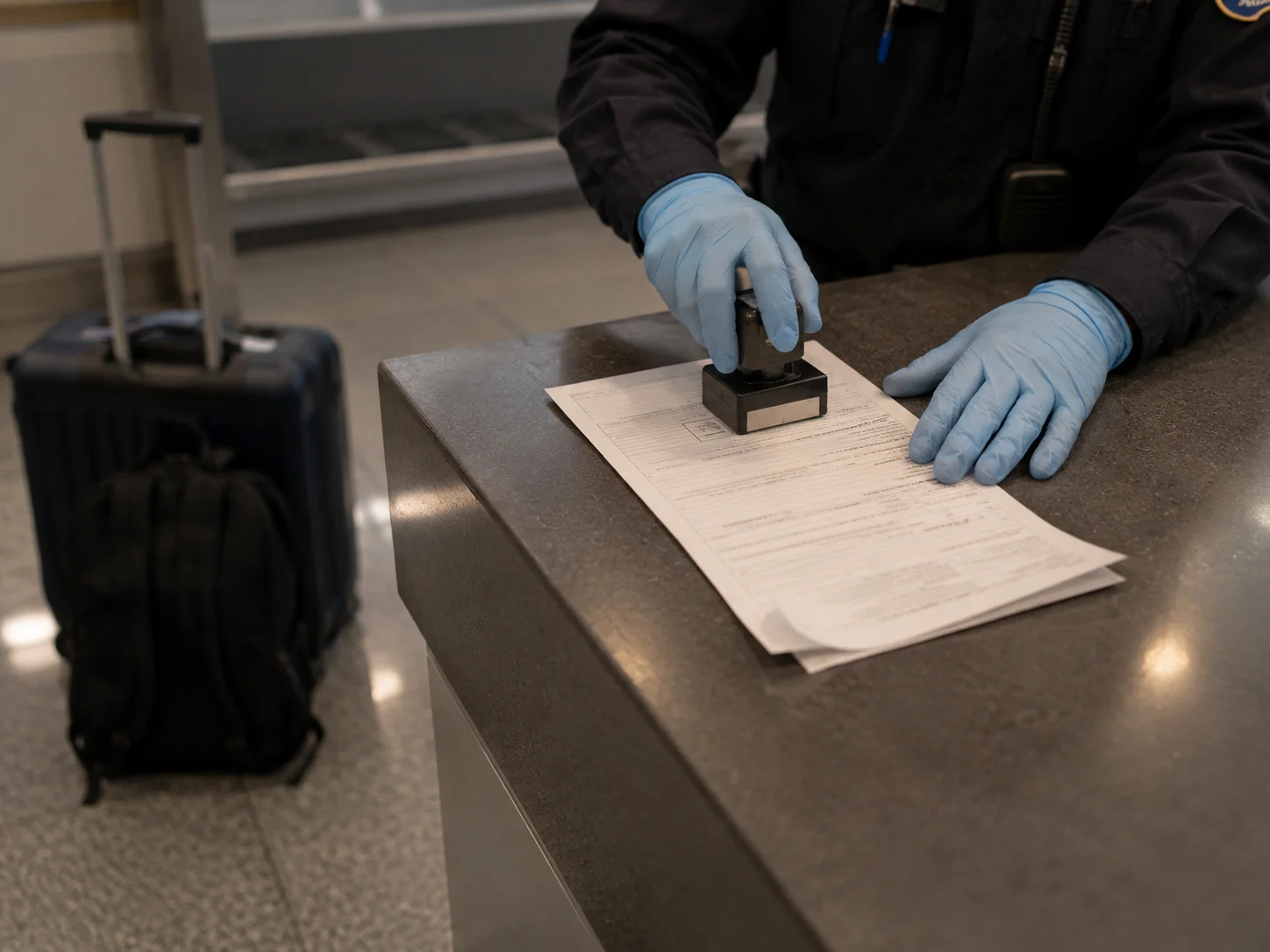
BSF186 is not something you complete in advance and mail in. A CBSA border services officer fills it out with you, in person, at your first point of entry into Canada, even if none of your goods are physically arriving that day. You bring a prepared list. The officer reviews it, explains the terms of the exemption, and you sign it. What you walk away with is a stamped, officer-verified copy. It proves, for every shipment that follows, that the goods on it were declared before you crossed the border as a resident. See Swift Cargo’s Canada customs documentation checklist for the full paperwork picture beyond BSF186 itself.
BSF186A Isn’t a Different Form, It’s an Overflow Sheet
BSF186A, formerly B4A, causes more confusion than it should, partly because CBSA’s own literature is thin on the distinction and most of what circulates online comes from moving companies rather than CBSA itself. Here’s the honest, plain version: BSF186A is not a separate program with its own rules. It’s a continuation sheet, used when your list of goods doesn’t fit on the BSF186 itself.
That means the real question people should be asking isn’t “BSF186 or BSF186A,” as though they’re a choice between two forms. Everyone moving household goods into Canada as a settler or former resident uses BSF186. Some of them also need one or more BSF186A continuation sheets, because there isn’t room on the primary form. That generally means anyone with more than a short list of items, or with individually valuable pieces that need their own line.
The detail CBSA expects on either form scales with the item. For ordinary household goods, a group listing with one combined value is fine: kitchen utensils as a single line with a dollar figure, rather than every fork itemized. For anything of real individual value, particularly jewelry, CBSA expects it identified separately on the list, not folded into a group total. The working standard is that your list has to be detailed enough to avoid confusion when the shipment actually arrives, which is a lower bar than a full inventory but a higher one than “assorted household items, various value.”
What “Goods to Follow” Actually Means
Goods to follow is CBSA’s own term for the second half of your declared list: household items that don’t arrive with you on the day you land, but come later by sea or land freight. Before you get to the border, CBSA’s own guidance for people moving or returning to Canada tells you to prepare your list in exactly two sections: what’s coming with you, and what’s coming later. Both sections go on the same BSF186, filled out at the same appointment with the same officer.
This matters more than it sounds like it should, because the temptation is to treat the border-crossing paperwork as covering only the suitcase in your hand and to sort out the container separately once it’s moving. CBSA’s process runs the other way. You declare the container at your first entry, alongside the suitcase, before the container has necessarily even left the port of origin. If you haven’t estimated your shipment’s contents by the day you land, and you’re not intending to complete BSF186A on the spot with placeholder detail, you’re not ready for that appointment yet. Work out how much volume your goods to follow actually represent before you travel. That makes the conversation considerably easier, both with the border officer and with whoever is arranging your shipment.
Is There a Time Limit on Goods to Follow?
This is the question with the cleanest answer, and also the one most likely to get tangled up with an unrelated rule. For settlers’ effects under tariff item 9807.00.00, CBSA Memorandum D2-2-1, Settlers’ Effects, states plainly that there is no time limit for importing goods to follow that were listed on the settler’s original Form B4, now BSF186. Your crate can take six weeks or six months to arrive, and it doesn’t forfeit its duty-free status for being late, provided it was on the list you signed at first entry.
Don’t confuse this with the 40-day rule Marisol read about. That belongs to a different CBSA program entirely, the personal exemption for returning Canadian residents bringing home goods purchased on a trip, described in CBSA’s “I Declare” guide and filed on Form BSF192, not BSF186. If you’re moving to Canada as a settler or returning as a former resident and shipping household goods separately, the 40-day clock does not apply to you.
Two limits do apply, and they’re the ones people actually miss:
You can’t add items after the fact. Once you sign BSF186 at first entry, that list is locked. Anything not on it when you crossed the border cannot later be imported duty-free as part of your settlers’ or former resident’s effects, even if it would have qualified had you listed it. If you remember something after landing, it has to come in as a separate, ordinarily dutiable import, not an addition to the goods-to-follow list.
Listing an item on the goods-to-follow declaration is a bet made with incomplete information, and it’s worth treating it that way instead of assuming the list is obvious. At the border appointment you’re deciding what you’ll actually want shipped from storage or bought later, months before you’ll know for certain. Leave something off and the list is locked; the exemption on it is forfeited, full stop. The instinct is to judge that decision later by whether you ended up needing the item. That’s the wrong test. A settler who listed everything plausible, given what was knowable at the appointment, made a good decision even if part of the list turns out to be storage-bound baggage they never end up shipping. The list isn’t a prediction you get graded on later. It’s a hedge against a foreclosure rule that doesn’t offer second attempts.
There’s a 12-month retention condition. If you sell or otherwise dispose of goods you imported duty-free under this provision within 12 months of their arrival, you owe the duty you avoided. Those 12 months run from the date the goods physically arrive in Canada, not the date you personally landed. If you’re planning to sell the car or the furniture soon after it clears customs, budget for that possibility rather than assume the exemption is permanent.
Who Actually Fills Out the Form, You or Your Moving Company?
This is the second most common version of the confusion, and CBSA’s own memorandum is specific enough to answer it directly. Only you can present the list and sign BSF186. CBSA requires the settler, or the former resident, to be physically present at the border and to sign the form personally, and nothing in CBSA’s published guidance describes a customs broker or moving company completing it on an importer’s behalf. That holds whether you’re arriving with two suitcases or you’ve hired a full-service international mover: the signature at first entry is yours.
A moving company or licensed customs broker handles everything on either side of that moment, and that is where hiring one earns its fee. Before you travel, a good mover helps you build the itemized list correctly, so nothing gets left off and valuable items get the individual description CBSA expects. After you land, they use your stamped BSF186 to clear the actual shipment when it arrives at a Canadian port weeks or months later. They handle the destination-side paperwork, so you don’t have to present yourself a second time. If you’re moving without professional help, that second step becomes your own responsibility: presenting the stamped copy and coordinating clearance when your goods-to-follow shipment lands.
The Filing Sequence, in Order
Laid out as a sequence rather than a list of rules, the process runs like this. Before you travel, build your list in two sections: goods accompanying you, and goods to follow. Note value, make, model, and serial numbers for anything that needs it. If you’re planning the move yourself rather than through a full-service mover, work through a basic international moving checklist before you get to this stage. That catches most of the gaps.
At your first point of entry, present that list to a CBSA border services officer. They complete BSF186, and BSF186A if your list runs long, and explain the terms of the exemption. Then you sign. Keep the stamped copy somewhere you won’t lose it. It’s your only proof the goods-to-follow items were declared before you became a resident.
After you land, your goods to follow ship separately, on whatever timeline your carrier or moving company works to. There is no CBSA deadline attached to this leg for settlers’ or former residents’ effects, which is the entire point of the “no time limit” rule above.
When the shipment arrives, you or your broker present the stamped BSF186 at the port where it clears customs, referencing the same declared list you signed at first entry. Nothing on that list needs re-justifying. What isn’t on it can’t be added at this stage either.
Settlers vs Former Residents: Does the Category Change What You File?
Both categories use the same BSF186, but the eligibility conditions behind it differ in ways worth knowing before you build your list. A former resident, someone resuming Canadian residence after at least a year abroad, generally needs to have owned, possessed, and used their goods abroad for at least six months before returning, per CBSA Memorandum D2-3-2, Former Residents of Canada. That six-month requirement is waived if you lived abroad for five years or more. Former residents also face a specific dollar threshold: individual items worth more than CAN$10,000 are dutiable on the amount over that threshold, even though the item as a whole otherwise qualifies. A similar ownership-and-use test shows up in other countries’ personal-effects concessions, not just Canada’s.
Settlers, people establishing Canadian residence for the first time, need to have owned, possessed, and used their goods abroad prior to arriving, but CBSA’s settler guidance doesn’t attach the same fixed six-month figure to that requirement the way the former-resident provision does. In practice this means a settler with a recently purchased item should expect more scrutiny of ownership and use than a former resident who clears the six-month bar automatically. If you’re unsure which category applies to your situation, or your circumstances sit somewhere between the two definitions, that’s worth confirming with CBSA or a licensed customs broker before you finalize your goods-to-follow list, not after your shipment is already at sea.
The category distinction is not bureaucratic hair-splitting. It is CBSA drawing a line around who has genuinely proven ownership over time versus who is asking to be taken at their word on a recent purchase. Own that distinction before your appointment, not during it. Know which category you fall into, know exactly which of your goods clear the ownership-and-use bar and which don’t, and bring documentation for the ones that are borderline. You are better off deciding it yourself in advance, with the actual facts in hand, than leaving an officer to decide your case on the spot with incomplete information from you.
Common Mistakes People Make With Goods to Follow
Confusing BSF186 with the returning-resident’s 40-day exemption is the mistake this article opened with, and it’s the most common one by a wide margin, largely because both programs deal with unaccompanied goods and neither CBSA form is exactly a household name.
Some people leave an item off the original list, assuming they can add it once they’ve settled in. That causes real financial damage: the list locks at signature, and there’s no mechanism to append it later.
A vague description like “boxes of household items” creates friction exactly when the shipment arrives and someone at the port is trying to match it against the list you signed months earlier. CBSA expects more detail than that, particularly for higher-value pieces.
Sell or gift an item within 12 months of its physical arrival and the duty exemption reverses. People generally only discover that after the fact, when there’s no longer a clean way to undo it.
A moving company’s staff cannot complete or sign BSF186 on an importer’s behalf. The in-person appointment at first entry is not delegable, and people who arrive without having planned for that step hit genuinely avoidable delays.
Frequently Asked Questions
What is the difference between BSF186 and BSF186A?
They are not two different programs. BSF186, the Personal Effects Accounting Document, is the main form a CBSA officer completes with you at first entry. BSF186A is a continuation sheet, used when your list of goods does not fit on the primary form. Everyone moving household goods into Canada as a settler or former resident uses BSF186. You additionally need BSF186A only if your itemized list runs long, which is common for a full household move.
Is there a time limit for goods to follow into Canada?
No, not for settlers’ effects. CBSA Memorandum D2-2-1 states there is no time limit for importing goods to follow that were listed on your original BSF186 at first entry. Your shipment can take weeks or months to arrive without losing its duty-free status. Do not confuse this with the separate 40-day rule that applies to returning residents claiming a personal exemption on Form BSF192, which is a different program entirely.
Should I fill out BSF186 or BSF186A if I am using a removal company?
You still complete and sign BSF186 yourself. CBSA requires the settler or former resident to be physically present at the first point of entry and sign the form in person, and nothing in CBSA’s guidance allows a moving company or broker to do this step for you. What your removal company handles is everything around that moment: helping you build an accurate itemized list beforehand, and using your stamped BSF186 to clear the actual shipment when it arrives at a Canadian port later.
What happens if I forget to list an item on my BSF186 goods to follow list?
You cannot add it later. Once you sign BSF186 at first entry, that list is locked. Anything not listed at that point cannot be imported afterward as part of your duty-free settlers’ or former resident’s effects, even if it would otherwise have qualified. If you remember something after landing, it has to come in as a separate, ordinarily dutiable import rather than an addition to the original list.
How detailed does my goods to follow list need to be?
It depends on the item. For ordinary household goods, a group listing with an overall value is enough, for example kitchen utensils with one combined dollar figure. Higher-value or easily identifiable items, particularly jewelry, need to be individually described on the list you submit to CBSA. The general standard CBSA applies is that the list has to be detailed enough to avoid confusion when the shipment actually arrives.
What is the difference between BSF186 and BSF192?
BSF186 covers settlers, former residents, seasonal residents, and people importing inherited goods, bringing household effects into Canada under a duty-free provision with no deadline on goods to follow. BSF192 is a completely different form, the Personal Exemption CBSA Declaration used by returning Canadian residents to claim goods purchased on a trip and shipped home separately, which does carry a 40-day claim window. Confusing the two is the single most common mistake people make with this process.
Planning Your Move to Canada With Swift Cargo
Swift Cargo coordinates household goods shipments into Canada, including the goods-to-follow itemization your BSF186 appointment requires and destination clearance once your shipment lands. If you’re moving the other direction, leaving Canada rather than arriving, the CBSA rules that apply are different. See our guides to moving from Canada to Thailand or moving from Canada to China for the outbound side of that process.