
Australia has one of the densest free trade agreement networks in the world. Nineteen agreements are in force, covering countries that supply the overwhelming majority of what arrives at Australian wharves. And yet a surprising share of importers still pay the full 5 per cent general tariff on goods that could enter duty-free, because somewhere between “the agreement exists” and “my customs broker claimed preference on my declaration” the chain broke. Free trade agreements for Australian importers only pay out when origin, documentation and the claim on the declaration all line up.

The Agreement Map: Which FTA Covers Your Origin
Start with where your goods are made, not where they ship from. That distinction matters more than anything else in this article, and we will come back to it. For now, here is the map by major origin:
- China: ChAFTA (China–Australia Free Trade Agreement, in force since December 2015). The workhorse. China is Australia’s largest import source, and ChAFTA has eliminated tariffs on the vast majority of Chinese-origin goods. RCEP also covers China, which occasionally matters for rules of origin.
- ASEAN and New Zealand: AANZFTA (ASEAN–Australia–New Zealand FTA). One agreement covering ten Southeast Asian countries plus New Zealand. For Indonesia, Malaysia, the Philippines and others, this is usually the primary route. It was upgraded via the Second Protocol, which modernised several rules of origin.
- Thailand: TAFTA (Thailand–Australia FTA, 2005), sitting alongside AANZFTA and RCEP. Thailand is the textbook overlapping-agreement case, covered in detail below.
- Japan: JAEPA (Japan–Australia Economic Partnership Agreement, 2015). Also overlapped by CPTPP and RCEP. Machinery, vehicles and components dominate the trade.
- Korea: KAFTA (Korea–Australia FTA, 2014). Most industrial tariff lines went to zero either immediately or on short phase-outs that have now completed.
- United States: AUSFTA (2005). One of the oldest, and the one most often claimed incorrectly, because so many goods sold by US companies are not made in the US.
- India: ECTA (Australia–India Economic Cooperation and Trade Agreement, December 2022). Newer, and importantly an interim agreement: coverage is broad but not universal, and some lines phase down rather than dropping to zero immediately. Check your tariff line rather than assuming.
- United Kingdom: A-UKFTA (in force May 2023). Near-complete tariff elimination on UK-origin goods entering Australia.
- Vietnam: no bilateral agreement, but covered three ways: AANZFTA, CPTPP and RCEP. Another overlapping case worked through below.
- RCEP (Regional Comprehensive Economic Partnership, 2022): the overlay across Asia. Fifteen members including China, Japan, Korea, all of ASEAN and New Zealand. RCEP’s tariff outcomes for Australia are rarely better than the bilateral agreements, but its rules of origin are sometimes easier to meet, and its cumulation zone is the region’s largest. Think of RCEP as the fallback that occasionally becomes the first choice.
The pattern worth noticing: almost every major Asian origin is covered by at least two agreements, and Thailand and Vietnam by three. That redundancy is not clutter. It is optionality, and later in this guide we treat it as exactly that.
How Preference Actually Works
An FTA does not abolish tariffs. It creates a preferential rate (usually zero) available to goods that satisfy the agreement’s conditions, claimed line by line on the import declaration. Three consequences follow.
First: tariff elimination runs on schedules. Some lines went to zero on day one of each agreement. Others phased down over three, five, or in a few cases ten or more years. For the older agreements (TAFTA, AUSFTA, KAFTA, JAEPA, ChAFTA) virtually all phase-outs have completed, so the preferential rate today is almost always “Free”. For ECTA and RCEP, phasing is still live on some lines. That means the preferential rate this year may be 2.5 per cent, not zero, and it matters which staging year applies. Always read the schedule for your specific tariff classification, not the press release.
Second: “an FTA exists” does not mean “your product qualifies”. The agreement’s benefits attach to goods that meet its rules of origin and documentation requirements. A product manufactured in China from mostly imported components may or may not be “Chinese origin” for ChAFTA purposes. The agreement is the doorway; origin is the key.
Third: preference must be claimed, with evidence, at the time of entry. Your broker enters a preference code against each tariff line on the import declaration and must hold, or be able to produce, the origin documentation supporting it. Claim without documentation and you have made a false statement to the Australian Border Force, even if the goods genuinely qualify. Fail to claim when you could have, and you have donated duty to the Commonwealth. (Refunds of overpaid duty are sometimes possible retrospectively, but the cleaner path is getting it right at entry.)

Rules of Origin in Practice
Rules of origin (RoO) are the qualifying rules: the tests a product must pass to count as originating in the FTA partner. There are two families.
Wholly obtained. Goods entirely produced in the partner country from that country’s own materials: minerals mined there, crops grown there, animals raised there, fish caught by its vessels. Simple in concept, and mostly relevant to primary produce. Your Thai rice or Vietnamese seafood typically qualifies this way.
Substantial transformation. The relevant test for manufactured goods, which almost always contain imported inputs. Each agreement defines transformation with one or both of two tests:
- Change in tariff classification (CTC). The finished product must fall under a different tariff heading (or chapter, or subheading; the rule specifies the level) than its non-originating inputs. Imported steel coil (heading 7208) transformed into steel furniture (heading 9403) changes chapter entirely, a clear pass under a “change of chapter” rule. Imported furniture parts assembled into furniture may not pass a stricter rule, because parts and finished goods can share a heading.
- Regional value content (RVC). A minimum percentage of the product’s value must originate in the FTA region, commonly 40 per cent, calculated on either a build-up or build-down basis depending on the agreement. RVC rules reward local labour, overheads and profit as well as local materials, but they demand cost records: bills of materials, supplier declarations, costed build sheets. If your supplier cannot produce these, an RVC claim is unverifiable, and unverifiable is as good as false when ABF comes asking.
Which test applies depends on the agreement and the tariff line: each FTA publishes product-specific rules, and many lines offer a choice (“CTH or RVC 40%”). A choice is a gift: pick whichever test your production process and record-keeping can actually prove.
The Misconception That Costs the Most Money
Here is the error we see more often than any other, so let’s state it in bold terms: Chinese-made goods shipped from a US warehouse do NOT qualify for AUSFTA. Origin follows manufacture, not shipment.
It feels intuitive that “we buy from an American company, the goods come from America, therefore US free trade agreement”. Every link in that chain is wrong. The American company is the seller, not the origin. The goods “come from” a US port, but they were made in Shenzhen. AUSFTA’s rules of origin ask where the product was wholly obtained or substantially transformed, and warehousing, repacking, relabelling and distribution are none of those things. The goods are Chinese origin, full stop.
Can you claim ChAFTA instead? In principle the goods may qualify as Chinese origin, but now you have two practical problems. You need a ChAFTA certificate of origin, which the US distributor almost certainly did not obtain from the Chinese manufacturer. And the goods have been transshipped through the US commercial market, which usually breaks direct consignment (more on that below). In practice, Chinese goods bought through US distribution usually enter Australia at the general rate. If the duty at stake is material, the fix is structural: buy closer to the factory, or have the distributor ship direct from China with proper origin documentation.
The same logic runs everywhere. German machinery bought through a Singapore agent is not Singaporean. Vietnamese garments consolidated in Hong Kong are still Vietnamese, and can keep AANZFTA preference if the transit paperwork is right. Invert the intuition: never ask “where did it ship from?”, always ask “where was it made, and can anyone prove it?”

Documentation: What Each Agreement Actually Requires
Origin claims live or die on paper. The FTA network uses two documentary philosophies, and knowing which applies to your agreement determines what you must chase from your supplier.
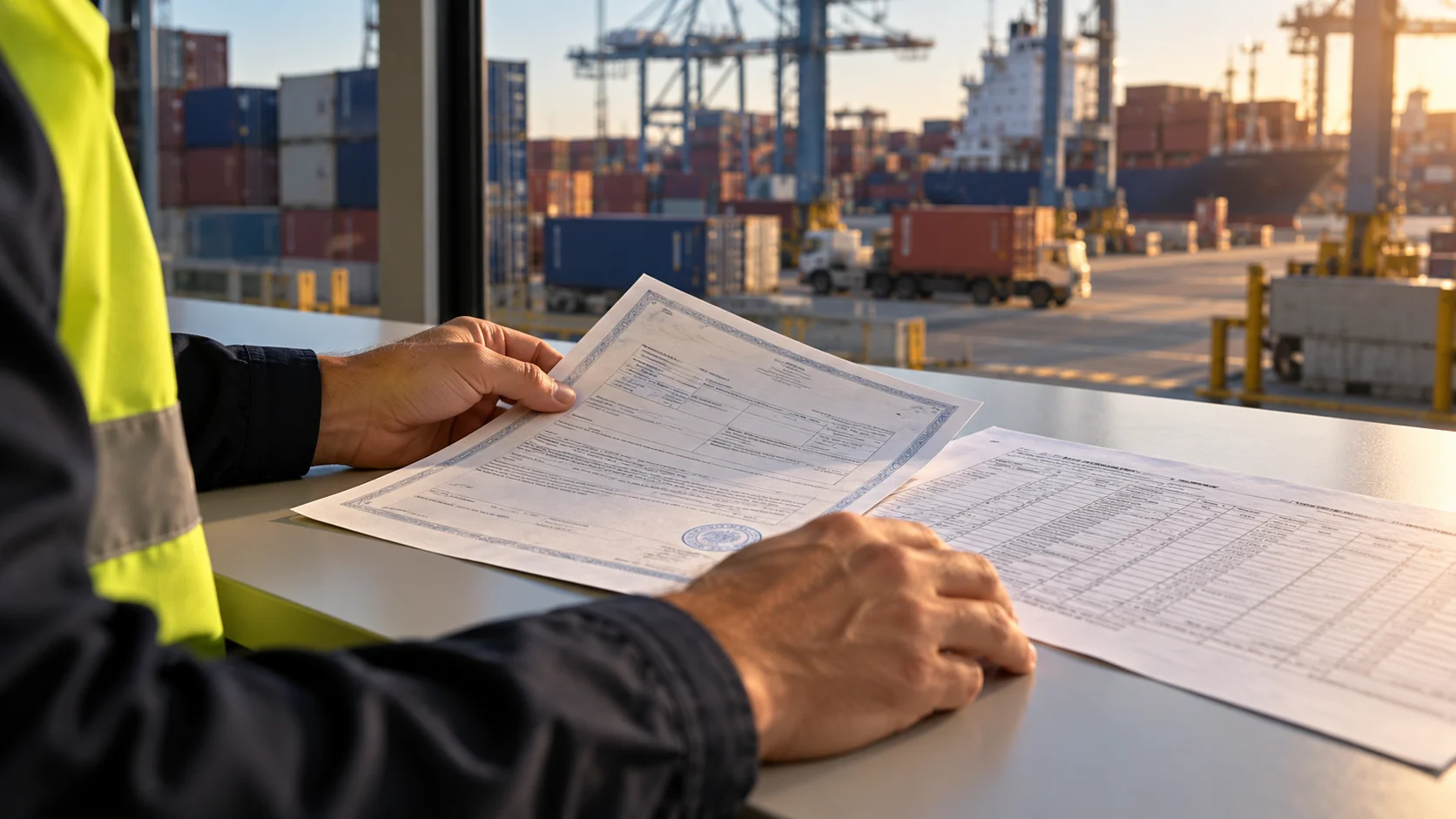
Third-party certified certificates of origin. The older model: an authorised body in the export country examines the exporter’s claim and issues a formal certificate. AANZFTA uses a prescribed Certificate of Origin (the familiar AANZFTA form), issued by authorised bodies in each ASEAN member. It is completed with the exporter, consignee, transport details, HS code, origin criterion (WO, CTC, RVC as applicable) and the issuing body’s stamp. TAFTA likewise relies on certificates from authorised Thai bodies. Under ChAFTA, certificates are issued in China by authorised bodies (principally CCPIT and China Customs) and must show the correct origin criterion code and cover the goods on the specific shipment. ChAFTA also allows Declarations of Origin from approved exporters holding advance rulings, though third-party certificates remain the common path. A certificate can misdescribe the goods, cite the wrong HS code, or arrive after the import declaration has been lodged. Any of those buys you nothing at entry time.
Self-declaration systems. The newer model: no chamber, no stamp. AUSFTA has always worked this way: the importer’s claim is supported by the exporter’s or producer’s knowledge, typically documented in a declaration or supporting statement. CPTPP, A-UKFTA and ECTA (via its declaration provisions) lean the same direction: a certification of origin completed by the exporter, producer or importer containing prescribed data elements. RCEP runs both models in parallel (third-party certificates and approved-exporter declarations) with importer self-certification arriving on a delayed timetable for some members.
Self-declaration is cheaper and faster, but it shifts risk to you. A chamber-certified certificate at least means an authorised body looked at something. A self-declaration means your supplier signed something, and if your supplier misunderstands the RVC maths, the signature is worth little at audit. Whichever system applies, the rule of thumb is identical: hold the document, in valid form, before the goods clear, and satisfy yourself that the supplier could actually defend it.
Overlapping Agreements: Choosing the Best Route
When two or three agreements cover the same origin, you get to choose: shipment by shipment, product by product. The selection framework has three questions, asked in order:
- Which agreement gives the lowest duty rate for this tariff line, this year? Where all candidates are “Free”, rate stops mattering and you move on. Where one agreement is still phasing (RCEP and ECTA lines especially), the mature bilateral usually wins on rate.
- Which agreement’s rule of origin can this product actually satisfy? The strictness of product-specific rules differs between agreements for the same good. A garment might fail one agreement’s yarn-forward-style rule but pass another’s simpler CTC rule. RCEP’s rules are, for many lines, the most accommodating, and RCEP cumulation across fifteen members lets Chinese fabric sewn in Vietnam count as originating in a way AANZFTA may not.
- Which certificate can your supplier obtain reliably and cheaply? A theoretical preference under an agreement whose paperwork your supplier fumbles every third shipment is worth less than a slightly stricter agreement they document flawlessly.
Worked Example: Thailand Three Ways
Say you import polypropylene storage containers (chapter 39) from a Bangkok factory, customs value AUD 300,000 a year. General rate: 5 per cent, or AUD 15,000 of duty exposure. Thailand offers TAFTA, AANZFTA and RCEP.
- Rate: all three deliver zero on this line: TAFTA and AANZFTA phase-outs completed years ago; RCEP is also free here. Rate is a three-way tie.
- RoO: the factory injection-moulds containers from imported PP resin. Resin (heading 3902) to containers (heading 3924) is a change of heading, so it passes typical CTC rules under all three agreements. Still tied.
- Documentation: the supplier’s forwarder obtains AANZFTA certificates routinely for their New Zealand customers, so the AANZFTA form is a known, cheap process for them. TAFTA certification would work too but is a separate process they run less often.
Decision: AANZFTA. Not because it is “better” in the abstract, but because it is the zero-rate route with the most reliable paperwork. The AUD 15,000 saving is identical under all three; the probability of actually banking it is highest under AANZFTA. That is the whole game. If this factory instead used imported semi-finished containers and merely finished them (failing CTC), you would re-run the comparison on RVC rules, and RCEP’s cumulation might suddenly become decisive.
Vietnam: AANZFTA vs CPTPP vs RCEP
Vietnam runs the same drill with different personalities. AANZFTA is the incumbent: mature, zero-rated on most lines, well-understood certificate process. CPTPP delivers zero on nearly everything too, with self-certification convenience but some stricter product rules, notoriously for apparel. RCEP is the fallback with the friendliest cumulation: if your Vietnamese product is stuffed with Chinese, Korean and Japanese inputs, RCEP may be the only agreement under which it counts as originating at all. For some lines, though, RCEP’s rate is still phasing rather than zero. Check before defaulting to it. The pattern for a Vietnamese-sourced catalogue: run AANZFTA first, CPTPP where its rules are kinder or certificates are a bottleneck, RCEP where regional inputs would fail the other two.

Direct Consignment: Keeping Preference Alive in Transit
Origin can be earned in the factory and lost on the water. Every Australian FTA contains a direct consignment (or “transport through non-parties”) rule: preference survives transit through third countries only under conditions. The standard conditions are that during transit the goods remain under customs control, and undergo no operation beyond unloading, reloading, storage, splitting of loads, or operations necessary to preserve them or transport them onward.
This matters constantly, because Australian trade lanes run through hubs. Vietnamese cargo transships in Singapore; Chinese cargo consolidates in Hong Kong (though far less than it used to); European cargo may route through Malaysia. None of that is fatal. Three things are fatal: goods entering the commercial market of the transit country, being processed or repacked into new retail configurations, or sitting in a distributor’s warehouse being sold from stock. That is precisely why the US-warehouse scenario above fails twice over. Every one of the free trade agreements for Australian importers carries a version of this rule, so the transit plan matters as much as the factory.
Documentation preserves preference. Keep the through bill of lading showing carriage from the origin country to Australia via the hub. If cargo is restuffed or held, obtain a non-manipulation certificate from the transit country’s customs authority, or evidence the goods stayed in a bonded facility. Brokers rarely ask for this at entry, but ABF asks for it at verification, and “the forwarder didn’t keep it” is not a defence three years later.
Verification, Audit Risk and the Five-Year Tail
FTA preference is claimed on trust and checked on audit. The Australian Border Force runs origin verification activity ranging from desk requests (“provide the certificate of origin and evidence of direct consignment for these ten entries”) through to formal verification visits. It also cooperates with partner-country authorities under the agreements’ verification chapters.
You carry three obligations as the importer:
- Keep records for five years. Certificates or declarations of origin, commercial invoices, transport documents, and anything supporting the origin criterion claimed. ABF’s import declaration guidance sets the same five years for all documents relevant to a declaration, origin evidence included. Five years is longer than most staff tenure and several times longer than most email retention habits. Treat FTA records as a filed archive, not an inbox.
- Answer for the claim even though the supplier stated the origin. The declaration to ABF is yours. If verification finds the goods did not qualify, the duty short-paid is recoverable from you, with the prospect of administrative penalties for false or misleading statements, and, for reckless or deliberate conduct, worse. “My Chinese supplier’s chamber stamped it” mitigates; it does not immunise.
- Stress-test supplier certificates before you rely on them at scale. A useful habit: for each major supplier, once, ask them to walk you through how the product meets the cited origin criterion. A supplier claiming RVC 40 who cannot produce a bill of materials is a supplier whose certificates are decorative. Better to discover that in a conference call than in an ABF verification letter.
Calibrate the risk honestly. The probability of any single entry being verified is low, but verification is retrospective and batched: a failed claim pattern gets unwound across every affected entry in the five-year window. An importer saving AUD 40,000 a year on shaky certificates is not running a AUD 40,000 risk; they are running a AUD 200,000-plus risk with penalties on top.
When Duty Savings Justify Changing the Supply Chain
Run the arithmetic before restructuring anything, starting with the standard case.
Worked example. You import AUD 800,000 a year (customs value) of hardware components attracting the 5 per cent general rate: AUD 40,000 of duty annually. The goods are Chinese-origin but currently bought through a Singapore trading company that cannot supply ChAFTA certificates. Options:
- Fix the paperwork: get the manufacturer to issue ChAFTA certificates and ship under customs control through Singapore with through bills. Cost: perhaps AUD 100–200 per shipment in certificate and handling fees, or roughly AUD 4,000 a year across 25 shipments. Net saving: ~AUD 36,000 annually, no structural change. This is almost always the first move.
- Restructure sourcing: buy direct from the factory. Larger saving (the trader’s margin plus the duty), larger disruption. The AUD 40,000 duty line alone rarely justifies this; duty plus margin often does.
- Do nothing: defensible only if volumes are small. At AUD 40,000 a year, “do nothing” is a AUD 200,000 five-year decision.
We suggest three thresholds. Below about AUD 10,000 of annual duty at stake, fix paperwork only if it is nearly free. Between AUD 10,000 and AUD 50,000, invest properly in documentation processes and supplier training. Above AUD 50,000, FTA qualification belongs in your sourcing decisions themselves: factory selection, input sourcing to pass RVC, and lane design for direct consignment. And remember duty compounds through the chain: duty is payable before GST is calculated and before your margin is applied, so AUD 40,000 of duty saved is worth more than AUD 40,000 of retail price flexibility.
One structural point is worth holding on to before you treat duty savings as a competitive edge. Every importer in your category faces the same tariff schedule and can claim the same preference; the agreements are public and the certificates are available to anyone who asks their supplier for them. Duty relief is therefore table stakes rather than advantage: a competitor who is not claiming it is paying a self-imposed tax, and the day they notice, your five per cent gap closes. The capability underneath is genuinely hard to copy: a supplier base that can produce compliant origin evidence on demand, and a lane design and document trail that still hold up when the ABF verifies them five years later. A rival can match your duty rate inside a quarter. Matching that operating discipline takes considerably longer.

Common Mistakes (and the Fix for Each)
- No valid certificate at entry time. The certificate exists, in someone’s inbox, in draft, or covering the wrong shipment. Fix: make “CoO received and checked” a document-set gate before the vessel arrives, exactly like the bill of lading.
- Warehouse-origin confusion. Claiming AUSFTA on Chinese goods from US stock, or “Singapore origin” on anything that merely transited Singapore. Fix: origin = manufacture. Ask the where-was-it-made question on every new product line, once, in writing.
- Ignoring phased schedules. Assuming ECTA or RCEP means zero today when the line is still stepping down, or, in reverse, paying full general rate because “India doesn’t have a real FTA yet”. Fix: check the current-year preferential rate for your tariff line, every January.
- Not checking RCEP as a fallback. Product fails AANZFTA’s rule of origin, importer gives up. RCEP’s cumulation or gentler product rule might have qualified it. Fix: when a product fails one agreement, run the overlapping alternatives before defaulting to the general rate. If none of them qualify, check whether your tariff line is already covered by an existing Tariff Concession Order, which delivers a free rate on goods with no substitutable Australian manufacture, regardless of origin.
- Treating supplier certificates as infallible. Fix: the once-per-supplier walkthrough described above, plus a file note. Cheap insurance against a five-year unwind.
- Broken direct consignment with no paper trail. Fix: through bills of lading as standard; non-manipulation certificates whenever cargo is restuffed at a hub.
Putting It to Work
The practical sequence for any importer reading this: list your suppliers by country of manufacture. Map each to its agreements: bilateral first, AANZFTA/CPTPP where relevant, RCEP as overlay. Pull the preferential rate for each of your top tariff lines and compare it to what your broker actually claimed on your last twenty entries. The gap between those two numbers, annualised, is the size of your problem, or your opportunity. For agreement texts, schedules and product-specific rules, DFAT’s FTA Portal publishes the authoritative versions; for a written determination of origin, the ABF’s Origin Advice service is the reference, and the ABF aims to issue advice within 30 days of receiving the full documentation. Record-keeping duties sit in the ABF’s import declaration guidance. And if the gap turns out to be five figures, it will not close itself. A broker or corporate freight partner who already claims preference correctly across overlapping agreements can close that gap faster than building the process in-house from a standing start.
A Checklist on Free Trade Agreements for Australian Importers
Map each supplier by country of manufacture, not shipment, pull the preferential rate for your top tariff lines, and hold valid origin documents before the goods clear. Keep origin records and through bills of lading for five years, because a failed verification unwinds every affected entry in that window.
Related Reading
- AANZFTA Explained for Importers
- Importing from China to Australia
- Importing from Thailand to Australia
- Importing from Vietnam to Australia
- Total Landed Cost of Importing to Australia
Frequently Asked Questions
Do Chinese-made goods shipped from a US warehouse qualify for AUSFTA?
No. Origin follows manufacture, not shipment. Goods made in China remain Chinese origin regardless of the warehouse they ship from, so the relevant agreement is ChAFTA, and the US routing typically breaks direct consignment anyway. Bought through US distribution, such goods usually pay the general rate.
Which FTA should I use for imports from Thailand?
Compare TAFTA, AANZFTA and RCEP at the tariff-line level. Rates are usually zero under all three, so the decision comes down to which rules of origin your product passes and which certificate your supplier obtains most reliably. AANZFTA is often the practical winner simply because Thai exporters process its forms routinely.
What documentation do I need for a ChAFTA claim?
A ChAFTA Certificate of Origin issued by an authorised Chinese body (CCPIT or China Customs), or a Declaration of Origin from an approved exporter. The certificate must be valid at the time of your import declaration, match the goods, and cite the correct origin criterion.
How long must FTA records be kept, and what if a claim is wrong?
Five years. A failed verification requires repaying the duty saved across all affected entries, with penalties possible for false or misleading declarations. The importer answers for the claim even where the supplier supplied the certificate.
Does transshipment through a hub port destroy preference?
No, provided the goods stay under customs control, undergo nothing beyond unloading, reloading, storage or preservation, and you hold through bills of lading or non-manipulation certificates proving it.
Is preference worth claiming for small import volumes?
Usually. At the common 5 per cent general rate, AUD 200,000 of annual imports carries AUD 10,000 of duty. Certificates typically cost a few hundred dollars a year per supplier. Only at very small volumes per supplier does the administrative effort outweigh the saving.