
Importers often treat exchange rates as a treasury issue that sits somewhere off to the side of freight, customs, and procurement. That is too narrow for Australia. The Australian dollar does not float in a vacuum. It is influenced by an economy whose export base is still heavily shaped by commodities, terms of trade, and the external demand that comes with them.
That does not mean every movement in the AUD can be reduced to iron ore, coal, or LNG. Currency markets are messier than that. Interest-rate expectations, global risk appetite, China demand, and broader macro sentiment all matter too. But the commodity link is real enough that serious importers should understand it. When commodity conditions change, the AUD often reacts in ways that feed directly into import budgets and landed-cost planning.
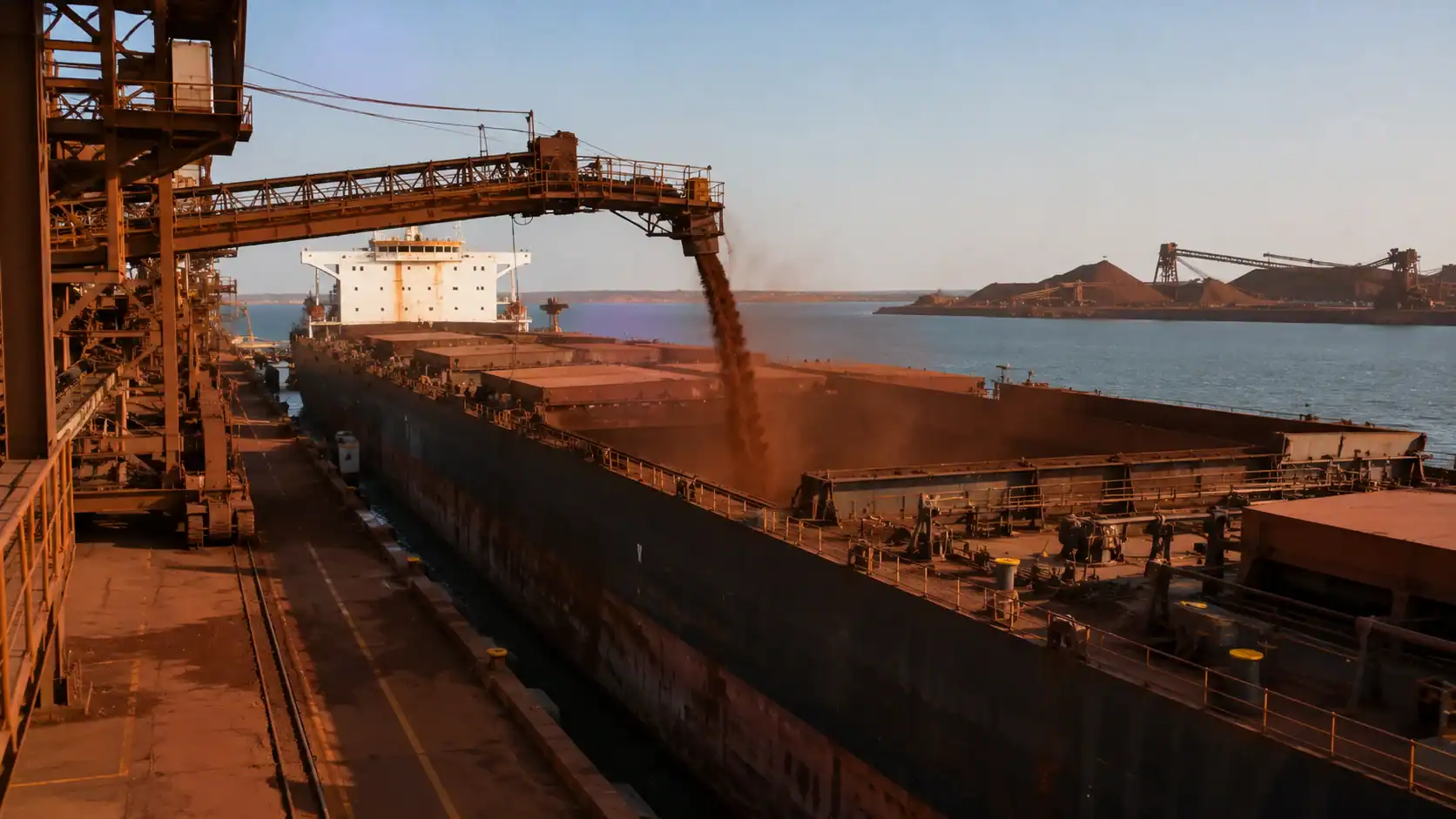
Why the Australian Dollar Behaves Like a Commodity-Linked Currency
The label “commodity currency” can sound glib if it is used lazily, but for Australia it points to a real structural relationship. Exchange rates are shaped by the broader economy, and Australia’s terms of trade have historically mattered because export prices influence national income, demand conditions, and the attractiveness of AUD-denominated assets. The Reserve Bank has made both points repeatedly. RBA: Exchange Rates and the Australian Economy RBA: Terms of Trade and the Australian Economy
That matters because Australia’s export basket is not abstract. When resource prices strengthen, export earnings and terms of trade can strengthen with them. When external demand weakens or commodity conditions deteriorate, the opposite pressure can appear. The AUD is not determined by one variable, but it does live inside that broader national structure.
Currency exposure may be moved by forces that originate in Australia’s export economy rather than in the importer’s own category, supplier base, or customer demand. That is one reason exchange-rate conversations often feel disconnected from the actual goods being imported. The driver can sit outside the product and still hit the budget hard.
Teams often hear “the AUD is a commodity currency” and either overreact or dismiss it as macro jargon. The stronger reading is simpler: commodity conditions help shape the operating environment for the currency, and that should influence how importers think about budgets, buffers, and timing.
Why Importers Should Care About Export Economics
Many importers assume this is someone else’s topic: commodity analysis is for miners, economists, or financial-market people. But if commodity conditions help move the AUD, then importers are already exposed whether they follow the topic closely or not.
The exposure shows up in familiar places. Supplier invoices denominated in foreign currency become more or less expensive in AUD terms. Internal landed-cost models drift away from the assumptions used to approve a shipment. Product margins compress or expand without any operational change in the freight itself. A procurement team may believe the shipment became expensive because logistics worsened. Part of the answer is often that the currency environment changed underneath it.
Importers do not need to become amateur FX traders. They need to understand that their budget sits inside a national macro structure. If Australia’s export economy helps shape the currency regime, then inbound cargo planning already depends partly on conditions that have nothing to do with the shipment and everything to do with the country receiving it.
The link also changes how teams talk to management. Budget stress feels arbitrary when teams cannot explain it. The movement becomes easier to discuss once it is framed as part of a broader export-and-terms-of-trade environment rather than as random bad luck.
How This Changes Landed-Cost Planning
First, landed-cost planning should stop treating exchange rates as background noise. If the AUD is moving inside a commodity-linked environment, the importer should at least ask whether a new rate level reflects a temporary shock, a broader regime change, or a move that may affect multiple shipments rather than just one quote.
Second, customs mechanics make the issue concrete. Australia’s border rules require imported goods to be valued under formal customs methods, and foreign-currency values must be converted into AUD in accordance with those rules. ABF: Customs Value That means the FX environment does not merely influence spreadsheet assumptions. It can become a specific border-cost outcome once the shipment enters the customs process. Importers shipping household goods or personal effects to Australia can see the full customs and cost picture at Swift Cargo: Australia shipping costs and customs overview.
A procurement team may feel comfortable with a supplier price in USD, EUR, or CNY. The problem appears when the AUD side of the equation moves before the shipment is exported or before customs conversion rules lock in the result. At that point, macro context and border timing stop being separate discussions.
Strong landed-cost planning asks a broader set of questions.
- Has the currency moved enough to justify revisiting the budget rather than absorbing the difference as noise?
- Will customs timing convert a broad FX move into a specific import-cost hit?
- Is there enough shipment flexibility to change timing, split orders, or change purchasing cadence?
- Does the margin on the goods justify more active attention to exchange-rate risk?
Those questions separate importers who discover cost pressure late from importers who detect it early enough to make a useful adjustment.
Why Interpretation Matters More Than Prediction
The weak version of this topic invites prediction theater: acting as if one article about commodity prices should tell you exactly where the AUD will trade next month. That is not a serious standard, and it is not the best commercial use of the material.
The stronger use is interpretation. If the AUD strengthens during a commodity upswing or weakens when commodity conditions roll over, the importer gets a clearer explanation for why the landed-cost environment changed. That does not give perfect foresight, but it does improve judgment. Teams can separate structural change from random fluctuation. They can explain cost pressure to management without sounding confused. They are also less tempted to write off every rate move as a one-day anomaly.
Some operators know what regime they are in, what that regime can do to costs, and where a small adjustment in timing or pricing discipline might protect the business. They are working from a firmer foundation than the ones who react emotionally to exchange-rate headlines.
What Disciplined Importers Do Differently
Disciplined importers connect three layers that are often handled separately: macro context, customs timing, and operational freight decisions. They do not assume the exchange rate is a simple finance-side issue that can be ignored until the invoice lands. They treat it as one more planning variable that can interact with shipment timing and import cost.
Consider the asymmetry in how most import businesses spend their worry. They will pay for marine insurance against cargo loss, an event with a probability well under one percent. Meanwhile their entire cost base sits exposed to a currency that has moved ten percent in a quarter more than once this decade, usually on the back of an iron ore price swing they never looked at. That is not risk management; that is insuring the visible risk and ignoring the expensive one. The AUD’s commodity linkage is publicly observable, free to monitor, and it moves landed cost more than almost any operational decision an importer makes. Ignoring it because “we’re not currency traders” is a choice, and it has a price.
In practice, that usually means a more deliberate workflow.
- They monitor the currency environment in context. Not to predict every turn, but to understand whether the AUD is moving within a broader commodity and terms-of-trade shift.
- They translate macro movement into shipment impact. They ask which orders, supplier invoices, or planned imports are now more exposed than they looked a few weeks ago.
- They respect customs timing. They understand that the day a shipment is exported and valued can determine how a currency move shows up at the border.
- They communicate early. If margin or landed cost is changing, they surface that before someone downstream treats the old budget as fixed reality.
- They keep planning proportional. Not every shipment warrants an elaborate FX response. The stronger habit is knowing which ones do.
Be clear about the job an importer is actually hiring currency awareness to do. Nobody genuinely wants a forecast of the Australian dollar; a forecast is unownable and mostly wrong. The job is narrower than that: protect a committed margin from a variable the business has already agreed to carry. Framed that way, the apparent paradox above dissolves. A firm that “isn’t a currency trader” was never being asked to trade. It was asked to notice when a publicly visible number had quietly repriced an order it had already promised to fill.
Three Numbers Worth Checking Before You Assume the AUD Will Hold
Importers do not need a forecasting model to stay ahead of AUD moves. They need three numbers checked on a standing schedule, not just when a quote lands badly. The iron ore spot price is the single most direct proxy for Australia’s terms of trade. The AUD/CNY cross rate matters as much as AUD/USD for anyone sourcing from China, because a China-driven commodity demand shift often shows up there first. The RBA’s own cash rate decision calendar runs to eight scheduled dates a year, and those windows are where a rate surprise, not a commodity move, is the more likely driver of a short-term AUD swing.
None of this produces a prediction, and treating it as one is the mistake worth naming directly. An importer who checks these three numbers and still gets an unfavourable rate on the day of export has not made a bad decision. They have made a reasonable bet that lost, which is a different thing from a bad process. The importer who never checks them and happens to get a favourable rate has not made a good decision either. They got a good outcome from no process at all, and the next shipment will not know the difference. Budgeting a realistic AUD range around the export date, rather than a single point estimate carried over from the last quote, is what turns three numbers into a usable discipline instead of a forecasting hobby.
Related Currency Pages in the Swift Cargo Cluster
This page works best as the macro bridge inside the currency cluster. Readers who want the historical cycle view should move next to The 2013 AUD Peak to 2020 Volatility. Readers who want to understand how a currency move becomes a customs-cost issue should go to Customs Exchange Rates: Why the Day of Export Matters. Readers who need the tax and landed-cost layer should continue to Import Duty and GST Explained for Australia.
The real importer question is rarely just “why is the AUD moving?” It is usually “what does this movement now do to my costs, timing, and decisions?” The cluster is stronger when each page answers one layer clearly and hands the reader to the next operational layer without friction.
The AUD-commodity linkage is a structural condition Australian importers can either understand and price around, or be repeatedly surprised by. Teams who treat the AUD as a number to check weekly tend to absorb the volatility as P&L noise. Teams who build a simple internal model out of the three numbers above gain enough advance signal to hedge meaningfully, accelerate or delay non-urgent landings, and renegotiate supplier terms when the curve is moving in their favour.
Frequently Asked Questions
Why is the Australian dollar often called a commodity currency?
Because Australia’s export structure and terms of trade have a meaningful influence on the currency, especially when commodity conditions materially change national income and external demand.
Why should importers care about commodity prices if their goods are unrelated to mining?
Because the link runs through the AUD itself. Commodity conditions can influence the currency environment that importers use to budget, price, and assess landed cost.
Does this topic help with prediction or planning?
Mainly planning. The strongest use is understanding the kind of FX environment you are in so budgets, timing, and customs expectations can be handled more intelligently.
How does this connect to customs costs in Australia?
Foreign-currency values are converted into AUD under formal customs rules, so exchange-rate moves can become specific border-cost outcomes rather than just abstract budget noise.