
BANGKOK: Most losses in Thailand vehicle imports aren’t dramatic. They’re incremental: a fee you didn’t know existed; a document that’s “fine” until it meets a Thai officer’s filing rules; a U.S. vehicle that clears the ocean crossing and then sits, billing you by the day, because the export side or the import lane was wrong.
Thailand doesn’t treat vehicle entry as one process. It runs three distinct regimes: temporary import under Customs rules, touring permission under the Foreign Vehicle Permit (FVP), and permanent import that ends in Thai registration. The expensive mistake is planning for one lane while paying for another.
For most Americans, the story splits in two. If you’re a civilian expat or retiree chasing Thai plates, Thailand’s compounded taxes and tight eligibility rules can turn a normal U.S. vehicle into a financially irrational project. If you’re arriving under a U.S. military or diplomatic lane, the economics and paperwork can look very different, but the “benefit” is usually temporary, tightly conditional, and built around re-export.
Civilians need to model the downside before they ship. Military/diplomatic movers need to avoid the one mistake that turns a privileged lane into a retroactive tax event: treating a temporary entitlement like permanent ownership.
USA → Thailand vehicle import, in one minute: If you want Thai plates, you’re dealing with the permanent import lane: advance permits, a compounded tax stack, and a registration inspection that can fail on practical safety items like headlights. If you want a short-term stay, you’re usually in temporary import or the Foreign Vehicle Permit (FVP) touring system. Both assume the vehicle exits Thailand again. On the U.S. side, the trip starts with export readiness: have the original title (and a clear lien release if financed) and ensure your forwarder files the required export entry so the vehicle can be presented at port with the right identifiers.
The same sequencing decisions that shape Thailand household relocation requirements also shape vehicle outcomes. The Thailand relocation planning timeline 2026 lays out the order that usually prevents avoidable holds and port-time surprises. U.S. note: there is no broad U.S.–Thailand vehicle tariff deal that makes imports “cheap.” Budget as if standard Thai import duties, excise-style taxes, and VAT apply.
Jump to a section (USA → Thailand car and motorbike import)
- USA → Thailand: choose the right lane (temporary import, FVP touring, or Thai plates)
- U.S. vehicle export requirements: title, lien release, CBP presentation, AES/ITN
- Shipping a car from the USA to Thailand: LA/Long Beach vs East Coast, container vs RoRo
- Temporary import into Thailand: bringing a U.S.-registered vehicle short-term
- Foreign Vehicle Permit (FVP) Thailand: touring on U.S. plates
- Importing a car from the USA to Thailand: permanent import permits + Thai tax stack
- Left-hand drive (LHD) cars in Thailand: inspection, usability, and resale
- Shipping a motorbike from the USA to Thailand: why Thai registration usually fails
- U.S. military and diplomatic vehicle imports: special lane + re-export requirement
- Classic car import Thailand: the 30-year pathway (and why it changes the math)
- FAQs: importing a car or motorbike from the USA to Thailand

Case vignette: the USA → Thailand shipment that failed on paperwork, not ocean freight
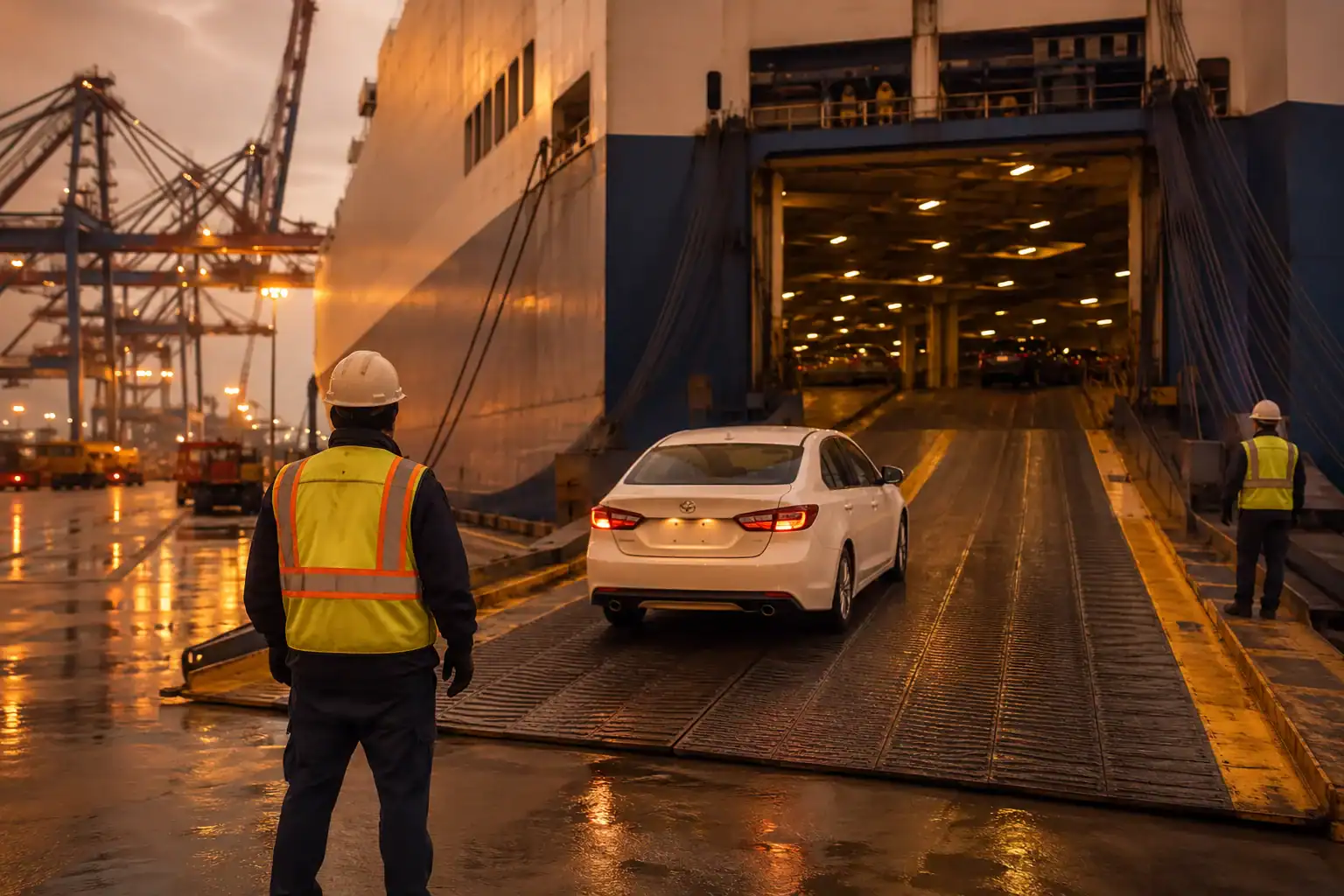
LONG BEACH: Evan did what most movers do: he priced shipping first. His SUV was packed, photographed, and booked weeks before his flight. The problem wasn’t the sea leg. It was the document chain.
At the port, the language changed. His move stopped being “a relocation” and became “an export presentation” on the U.S. side, and an “import file” on the Thai side. One missing detail turned into a hold: the original title wasn’t in hand, and the lien release letter didn’t match what the forwarder needed to submit for export presentation. The sailing didn’t wait.
At the time the hold hit, he’d already committed roughly $2,700 in ocean freight and handling. Export documentation and port handling added another $420. Then storage started running at about $35 per day. After three weeks of back-and-forth (reissuing paperwork, rebooking port cutoffs, and resubmitting the file), his “simple shipment” had reached roughly $3,900 before Thailand had assessed a single baht of duty, excise-style tax, or VAT.

USA → Thailand: choose the right lane (temporary import, FVP touring, or Thai plates)
Do you want Thai plates, a short-term tour, or a vehicle that leaves Thailand again on schedule? Thailand treats those as separate regimes, with separate paperwork and separate failure modes. The broader framework for moving a car or motorbike to Thailand covers the definitions, duty logic, and the post-arrival registration sequence across cars and motorbikes.
Before you pick a shipping method, sanity-check whether your vehicle can legally enter the lane you want. For most U.S. movers aiming for Thai plates, the constraints are structural: one vehicle per importer (personal use), narrow eligibility for permanent import, and advance permits that must exist before the vehicle arrives.
- Tax reality: Thailand’s duty, excise-style tax, and VAT can push landed cost to multiples of the vehicle’s CIF value, especially once storage and re-handling are added (Thai Customs sample assessment, see Sources).
- Eligibility (permanent import): typically tied to a qualifying long-stay status such as a work-permit-backed non-immigrant visa or documented relocation circumstances; assume you will need to prove the right to import, not just the right to drive.
- Used-vehicle permits: most used motor vehicles have been import-prohibited since 10 December 2019 (the Ministry of Commerce notification lists exceptions such as used ambulances and fire trucks), and the FIDI Thailand guide treats cars and motorcycles as prohibited (WTO Import Licensing Portal; FIDI).
- Penalty for arriving “un-permitted”: if the required approvals aren’t in place before arrival, Thai Customs guidance allows for fines in addition to delays and storage (Thai Customs, see Sources).
| Your real goal | Thailand lane | What it means for USA → Thailand |
|---|---|---|
| You will leave Thailand again with the vehicle | Temporary import (Customs) | Plan the exit (re-export), not just the arrival |
| You’re touring with defined dates | Foreign Vehicle Permit (FVP) | Useful for travel; does not become Thai registration |
| You want Thai plates for daily life | Permanent import + DLT registration | Eligibility is narrow; permits come first; costs compound |
| You’re importing a collectible | Classic / vintage pathway (where applicable) | More predictable lane for some cars, but usage limits can apply |
U.S. vehicle export requirements: title, lien release, CBP presentation, AES/ITN
Most import write-ups start in Thailand. That’s backwards for Americans. If the export side isn’t clean, the vehicle never leaves, or it misses sailings until costs compound. Customs procedures for used self-propelled vehicles govern U.S. vehicle exports, and ports apply them strictly.
The U.S. export gauntlet (the three gates that decide whether you sail):
- AES/EEI filing → ITN issued: your forwarder files the export entry and you get an Internal Transaction Number (ITN). No ITN, no load.
- Title perfection: you need the original title in hand. If there’s a lien, you need a lender release / authorization that explicitly allows export.
- CBP port presentation: the vehicle is presented for VIN verification against the title and export filing, timed to the port’s cutoff windows (often discussed as the “72-hour” rule).
AES filing and the ITN number (the step that quietly blocks exports)
For many exports, your forwarder files Electronic Export Information (EEI) through the Automated Export System (AES). The output you care about is the Internal Transaction Number (ITN), because it is the proof that the filing exists when the vehicle is presented for export. If your file is late or inconsistent, the vehicle doesn’t “almost export.” It simply doesn’t.
Title readiness: original document, clean ownership, and lien releases
If you don’t have the original title in hand (or your state is still processing it), treat that as a stop sign. If there is a lien, assume you will need documentation that clearly authorizes export. This is the most common U.S.-side failure mode: the vehicle is physically ready, but the ownership proof is not.
Documentation checklist by title status (what ports actually ask for)
Requirements can vary by port and forwarder, but these are the most common proof-of-ownership patterns that trigger holds or delays. Knowing which applies to your vehicle is often the difference between a smooth export and a missed sailing.
- Standard titled vehicles: original title plus copies; the owner’s name must match the exporter’s ID exactly.
- Financed vehicles (active lien): original title plus lender’s explicit export authorization and/or lien release; some forwarders may require notarization.
- New vehicles (MSO/Manufacturer’s Statement of Origin): original MSO plus dealer invoice establishing the chain of ownership.
- Salvage/rebuilt titles: salvage or rebuilt title plus detailed VIN photos; expect extra scrutiny at the port and during Thai import.
Port presentation timing: why “72 hours” becomes real money
Align your document pack, the export presentation window, and the carrier cutoff before you book inland trucking. Otherwise, every delay becomes storage, re-handling, and re-booking.
Common U.S.-side failure points (the stuff that misses sailings)
These are the issues that most often cause U.S. vehicles to miss their scheduled sailings:
- Title not physically available (“in transit” delays).
- Lien letter doesn’t clearly authorize export (wording matters).
- Exporter/consignee names don’t match across title, booking, and AES filing.
- Late AES/EEI filing, so no ITN when the vehicle is presented.
- Missed port cutoff → re-handling + storage starts immediately.
- Assuming ‘we can fix it after arrival’ on headlights or other inspection items.
Left-hand drive (LHD) cars in Thailand: inspection, usability, and resale
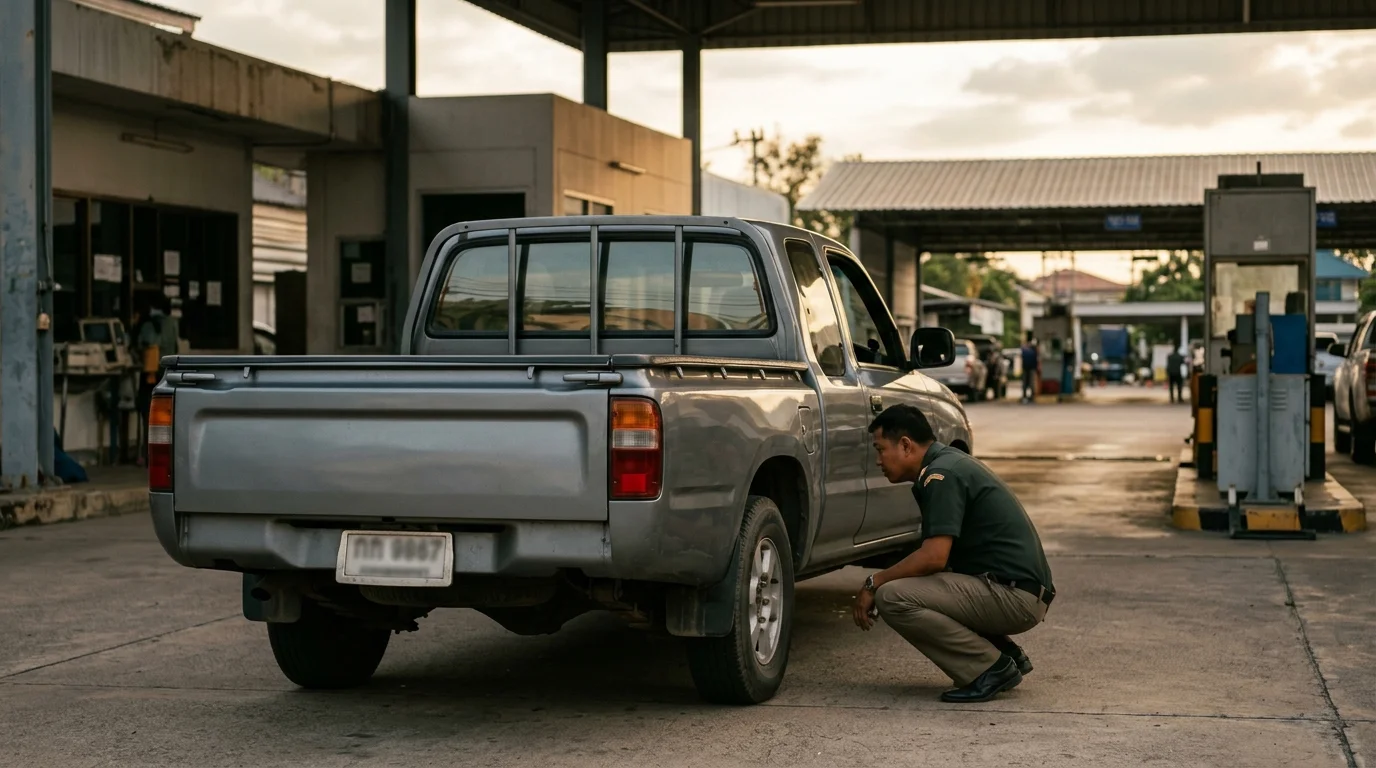
U.S. vehicles are left‑hand drive. Thailand is a left‑side‑traffic, right‑hand drive market. The same constraint applies to a left-hand-drive car shipped from France or anywhere else in continental Europe. That mismatch doesn’t automatically make import impossible, but it does change what “compliance” means. It’s not only emissions class and paperwork. It’s whether the vehicle can clear inspection without creating an obvious safety issue, and whether it’s usable day-to-day once it does.
Drive-side divide: what left-hand drive changes in Thailand
Left-hand drive is not automatically disqualifying. An Australian right-hand-drive import skips this specific problem, though not the tax stack. But it changes the risk profile in three predictable ways: (1) how the vehicle is judged at inspection, (2) how it behaves in ordinary “Thailand life” moments, and (3) who will buy it if you ever need to sell.
On the road, the issue is less about basic steering and more about visibility and ergonomics. Overtakes on two-lane roads are harder when the driver sits away from the center line; toll booths, parking garages, and drive-throughs are designed for right-hand drive.
Resale is the third constraint. Thailand is a right-hand drive market; buyers, insurers, and service networks are oriented around Thai-market configurations. A left-hand drive car can be perfectly usable for an owner who accepts the compromises, but it draws from a narrower resale pool: often only enthusiasts, collectors, or buyers seeking a specific model.
Headlights built for right‑side traffic can throw a beam pattern that dazzles drivers in a left‑side‑traffic country; some vehicles allow adjustment, others require replacement, coding, or both. Wiper sweep patterns can be oriented around the LHD driver’s field of view. None of this looks decisive until it becomes a failed inspection and a broker asking you to approve a fix you never priced.
Left‑hand drive headlights: the inspection problem that blocks Thai registration
Headlights are the third line item, often discovered late, when the vehicle is already in Thailand and everyone’s incentives change. If a beam pattern is judged unsafe for left‑side traffic, the conversation stops being about documents and starts being about whether the vehicle can be made acceptable without turning the project into an open‑ended workshop bill.

Treat headlights as a pre‑flight gate, not a post‑arrival surprise. Before you ship, confirm whether your exact model supports beam adjustment, what replacement options exist in Thailand, and what paperwork will document the change for inspection. If you can’t verify that in advance, don’t ship the vehicle, because you’re not buying transport, you’re buying an open‑ended workshop bill on port time.
A practical U.S. note: assume you’ll need a clean, consistent “identity pack” for the vehicle: title, registration, proof of purchase/ownership, and certified translations where Thai officers need a document they can legally file.
Shipping a car from the USA to Thailand: LA/Long Beach vs East Coast, container vs RoRo
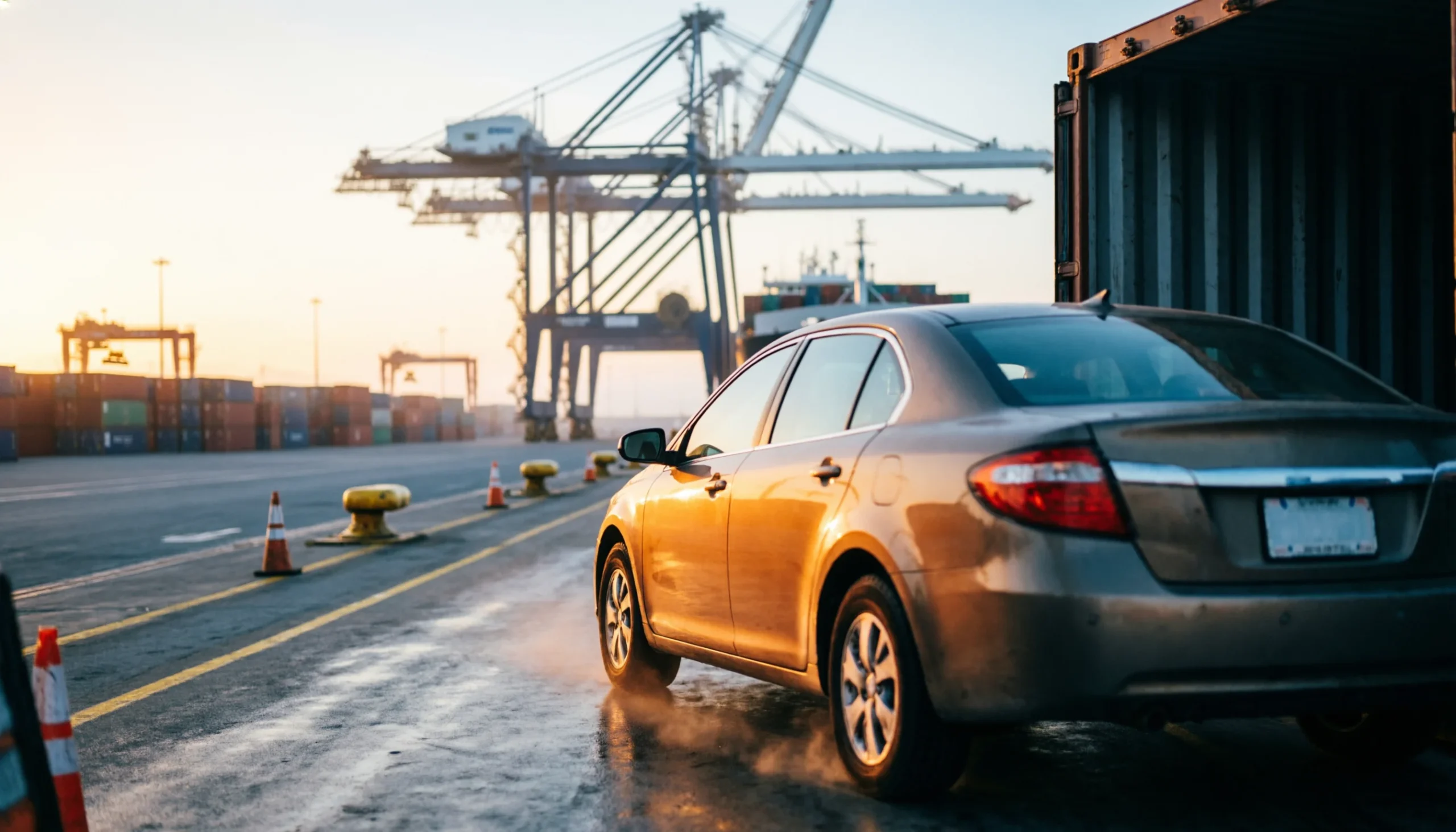
From the United States, your main decision is coast strategy: West Coast ports (Los Angeles/Long Beach) usually offer the simplest Asia routing; East Coast ports often add time and handling. Container shipping is the default for private relocations, especially for motorbikes and higher‑value vehicles. RoRo can be price-competitive for operable vehicles, but it is less forgiving around personal effects and schedules. Miss a consolidation cutoff and you lose a full sailing cycle, not a day. In practice, the schedules that matter most are the ones that coordinate export readiness, carrier cutoffs, and Thai-side clearance, alongside the destination-side handover and delivery constraints supported by the Thailand household relocation requirements and the Thailand relocation planning timeline 2026.
- West Coast (LA/Long Beach): most frequent Asia routings; often the cleanest schedule for private moves.
- East Coast (NY/NJ, Baltimore, Savannah): longer transit and more handling steps; paperwork delays are more likely to snowball into storage + rebooking.
- Gulf (Houston): workable, but transshipment is common, so treat timelines and cutoffs as less forgiving.
If you want predictability, treat LA/Long Beach as the baseline reference point for schedules and documentation flow. East Coast departures can still work, but the more links in the chain, the more often timing errors turn into re-booking fees. Either way, align the permit strategy and document pack before the vessel departs.
Realistic budgeting also means separating ocean freight from the rest of the bill. The headline price you see quoted at origin rarely includes inland trucking, export documentation handling, port fees, cargo insurance, and destination-side charges.
Container options: shared vs dedicated (what changes in cost and risk)
Containers are the default choice for private relocations, especially for higher-value vehicles and motorbikes. RoRo can be cheaper for operable vehicles, but containers offer more flexibility, security, and control over scheduling.
- Shared container (consolidated): lower cost, but schedule depends on consolidation cutoffs.
- Dedicated 20-foot container: best for a single vehicle or motorbike with spares; more control, higher cost.
- Dedicated 40-foot container: best for two vehicles or a vehicle plus parts; highest cost, highest control.
USA → Thailand port strategy: realistic transit times and shipping cost ranges
The fastest, most frequent routing is usually through Los Angeles / Long Beach, with fewer handoffs en route to Laem Chabang. East Coast departures can work, but they typically add transit time and increase the odds that a documentation delay turns into a missed sailing (and therefore storage + re-handling fees).
Use the benchmarks below as planning ranges rather than quotes. Your final cost depends on vehicle size, whether the vehicle runs, shared vs dedicated container, and inland U.S. trucking.
| Common U.S. export port | Typical ocean transit to Laem Chabang | Planning-range ocean freight (vehicle only) |
|---|---|---|
| Los Angeles / Long Beach (West Coast) | ~22–30 days | ~US$1,700–$3,000 (RoRo) or ~US$2,800+ (container) |
| Seattle / Tacoma (Pacific Northwest) | ~28–31 days (often with transshipment) | Usually higher than LA/Long Beach due to extra handling |
| New York / New Jersey (East Coast) | ~38–50 days | Often ~25–40% higher than West Coast routings |
| Houston (Gulf Coast) | ~35–45 days | Varies widely; transshipment is common |
Temporary import into Thailand: bringing a U.S.-registered vehicle short-term
Temporary import is conditional relief built around re‑export. In practice, it’s a time‑bound permission paired with a financial guarantee (cash deposit or bank guarantee) that’s designed to make sure the vehicle leaves Thailand again. Thai Customs publishes temporary import guidance that makes the obligation clear: you are borrowing permission to use a foreign‑registered vehicle in Thailand under conditions that assume it exits on schedule (Thai Customs temporary import guidance, see Sources).
Plan the exit date as seriously as the arrival date. Overstays don’t just create stress. They create a daily fine and a negotiation problem at the point you try to leave.
American owners often carry a thick paper trail out of the U.S., a title stamped by CBP, an AES export filing, a bill of lading, and assume that same trail satisfies Thailand’s side of the deal. It doesn’t. The temporary-import bond isn’t discharged by proving how the vehicle got in; it’s discharged by proving a confirmed departure before the guarantee period closes. If you can’t point to a booked outbound sailing or a firm re-export date, you are not in a temporary lane.
A common misread is to treat Thailand like a “carnet country” by default. At the counter, the system is less romantic and more administrative: the authorities care about the permit lane you are in and the guarantee behind it, not the stamp collection. A carnet can still matter if Thailand is one stop in a multi-country overland route, but it is not a magic key that turns a temporary stay into a frictionless relocation.
Foreign Vehicle Permit (FVP) Thailand: touring on U.S. plates
The Foreign Vehicle Permit is administered by Thailand’s Department of Land Transport. It is a touring system with defined dates and a checkable trail, not a conversion system (DLT FVP manual, see Sources).
The carnet question rarely comes up for Americans, because there is no land route from the U.S. to Thailand to carnet your way across. Your vehicle arrives by container, not under its own power at a checkpoint, and Thailand’s Foreign Vehicle Permit was built for the opposite scenario: an overlander driving in at a land border, with the permit arranged through a Thai travel agency days in advance. Before you plan around FVP touring, confirm with DLT or your broker whether a sea-freighted vehicle even qualifies for that specific permit type, or whether your situation defaults to standard temporary import processing at the port instead.
Importing a car from the USA to Thailand: permanent import permits + Thai tax stack
Permanent import is where “shipping” becomes “importing.” Under the Ministry of Commerce notification effective 10 December 2019, most used motor vehicles are import-prohibited, with exceptions such as used ambulances and fire trucks (WTO Import Licensing Portal).
Permits first: why used vehicles get stuck
Permanent import is not a “ship now, paperwork later” situation. If the permit lane isn’t approved before arrival, the file can stall while storage and handling fees accrue.
USA → Thailand permanent import: the step-by-step sequence that prevents port-time surprises
- Confirm eligibility and lane: verify you qualify for permanent import and that the vehicle is a realistic candidate for Thai registration (don’t assume the port will “figure it out”).
- Build the document pack: title/ownership proof, identity documents, and any supporting manufacturer specs you’ll need for filing and inspection.
- Secure permits before shipment: obtain the required import permits for used/secondhand vehicles and any applicable standards permits for vehicles under 3,500 kg (Thai Customs, see Sources).
- Ship with inspection in mind: clean the vehicle, remove personal items where required, document condition, and pre-check known inspection friction points (especially headlights) before departure.
- Clear Customs at arrival: file the declaration and permit set, accept that Customs may assess value based on its own references, and pay duties/taxes before release.
- Complete DLT registration: pass the inspection, submit the file, obtain plates, and only then treat the vehicle as “done.”
The tax stack: why landed cost rarely matches the purchase price
Thai Customs often calculates duty, excise-style taxes, and VAT on expanding bases as each layer is added. The practical result is that the effective landed burden can rise far above the original purchase price, especially when delays add storage, re-handling, and broker time on top.
Bring originals where required, keep the file consistent across name/address formats, and assume that “U.S. standard” still needs to be legible inside Thai processes. Manufacturer spec sheets and service records can reduce inspection friction, but they do not change eligibility rules.
Thai Customs’ sample duty assessment shows why “duty rate” is not the same thing as landed burden. VAT can apply to a compounded base rather than a single sticker price (Thai Customs sample assessment, see Sources).
Worked example: what a normal U.S. truck can cost once it hits Thailand’s tax stack
To make the math concrete, model a common U.S. import: a 2021 Ford F‑150. Assume a CIF value of ฿1,750,000 (the amount Thai Customs uses as the tax base: vehicle value + ocean freight + insurance).
Thailand’s charges are often calculated on expanding bases. In simplified form:
- Import duty is applied to CIF.
- Excise‑style tax is applied to (CIF + duty) at a rate driven by category, engine size, and emissions.
- Interior tax (often shown as 10%) is applied to the excise amount.
- VAT is applied to the cumulative base.
| Line item | Illustrative calculation | Estimated amount |
|---|---|---|
| Import duty | 80% × ฿1,750,000 | ฿1,400,000 |
| Excise‑style tax (illustrative) | 35% × (฿1,750,000 + ฿1,400,000) | ฿1,102,500 |
| Interior tax | 10% × ฿1,102,500 | ฿110,250 |
| VAT | 7% × (CIF + duty + excise + interior) | ≈ ฿305,000 |
| Total estimated Thai taxes | ≈ ฿2,917,750 |
That’s before storage, broker handling, and any inspection‑driven fixes. For left‑hand drive U.S. vehicles, the add‑ons most commonly discovered late are headlight beam corrections and other safety‑presentation items that can turn a predictable tax bill into an unpredictable workshop bill.
Use this example as a sanity check: if the taxes alone are already close to or above the Thailand‑market replacement price for a comparable RHD truck or SUV, importing for daily life usually fails on economics.
Shipping a motorbike from the USA to Thailand: why Thai registration usually fails
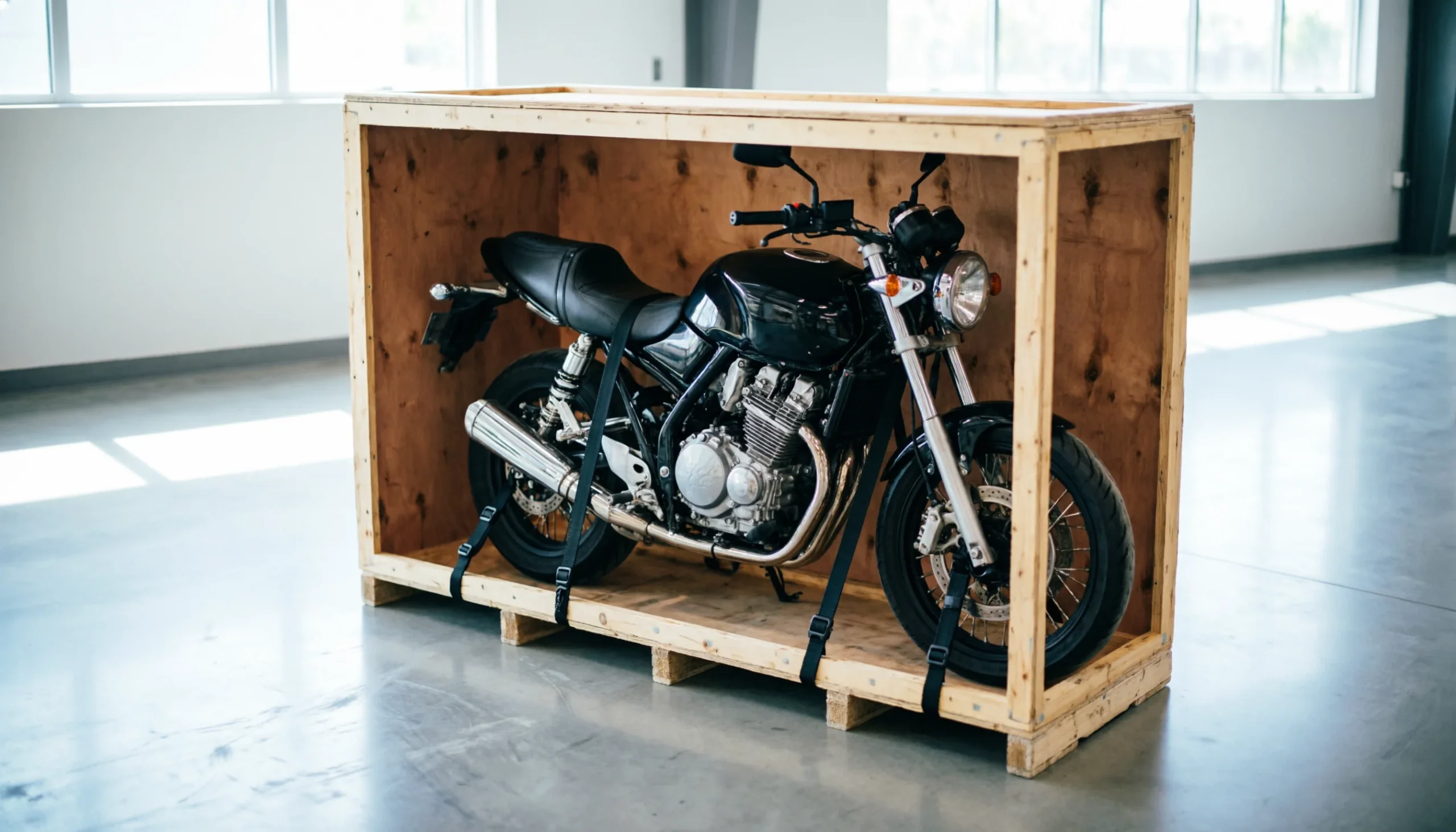
Motorbikes feel like they should be simpler: smaller, cheaper to ship, easier to handle. Thailand often treats motorcycles more sharply than cars, especially used motorcycles, where restrictions and prohibitions appear in official import licensing contexts (WTO notification, see Sources).
This sharp treatment is not discretionary. Thailand’s import licensing notifications classify used motorcycles as prohibited or restricted goods outside narrow government and special-purpose channels (WTO, see Sources). Shipping a second-hand motorbike from the USA may be physically possible, but permanent registration is usually blocked at the licensing stage, not at the dock.
That doesn’t mean every scenario is impossible, but it does mean the U.S. paperwork that got the motorcycle out the door proves nothing about what happens next. A title cleared by CBP and a DOT/EPA compliance label satisfy American export and import standards, not Thailand’s. Thai registration runs through the Department of Land Transport and TISI-certified component standards, a separate approval chain a U.S.-market motorcycle was never built or certified against. “Registerable” is the test, not “shippable.” If your objective is daily use on Thai plates, buying locally is often the cleanest route. If your objective is touring on foreign plates, treat it as time-bound and permit-driven.
U.S. military and diplomatic vehicle imports: special lane + re-export requirement
If you’re moving under a U.S. military or diplomatic assignment, you may be eligible for a different administrative lane than a civilian expat. This is the category that creates most confusion online: people hear “tax-free” and assume it means “permanent.” In reality, these lanes are usually structured as temporary privileges tied to an assignment and anchored around re-export.
Military / SOFA-style lanes: what changes (and what doesn’t)
In a military lane, the benefit is typically that duties and taxes can be waived for an assigned service member importing one personally owned vehicle under the terms of the posting. The obligations are the trade‑off.
- It’s assignment-linked: the permission exists for the duration of your tour, not indefinitely.
- Re-export is the core rule: the vehicle is expected to leave Thailand when your posting ends.
- No local sale (in most cases): you generally can’t sell the vehicle into the Thai market. Any transfer is typically limited to another eligible person under the same lane.
- Compliance still applies: the vehicle may still need to pass inspection for safe operation, and you should budget for practical fixes (especially headlights for left‑hand drive vehicles).
Diplomatic lanes: a similar benefit, the same “exit-first” mindset
Diplomatic postings can also involve duty/tax privileges under a separate administrative route. But the structural logic is the same: the vehicle is treated as temporarily present under conditions that assume it will be re-exported.
The one mistake that triggers a retroactive tax event
The highest-stakes failure in these lanes is simple: treating a temporary entitlement like permanent ownership. If a vehicle that entered under a privileged lane is not re-exported as required, or is sold or transferred outside the permitted rules, you can trigger the full, retroactive application of Thailand’s standard tax stack, plus penalties.
Think of the privilege as a long-term loan of permission. Build your plan around two dates: arrival and mandatory exit.
Practical checklist for military/diplomatic movers
- Before you ship: confirm the lane in writing (what is exempt, what is not, and what documents prove eligibility).
- Build a re-export plan early: bookend your tour with an outbound shipping plan; don’t wait until the last month.
- Budget for non-tax costs: even when taxes are reduced, you still pay for export readiness, port handling, inland delivery, storage risk if paperwork slips, insurance, and inspection-driven fixes.
- Don’t improvise a sale: if you need to dispose of the vehicle, do it through the permitted process for your lane, not through informal local buyers.
Classic car import Thailand: the 30-year pathway (and why it changes the math)
For Americans, the most plausible “ship and import” scenario is often a true classic. Thailand’s structured approach to classic-car importation creates a lane where certain older vehicles can be treated as collectibles rather than daily commuters, and where restrictions on use can apply. That trade-off can make the numbers legible for collector-grade vehicles, even when modern daily drivers remain financially irrational.
Some electric vehicles get a second, narrower opportunity: Thailand’s policy incentives can reduce certain taxes for qualifying models. The details change and eligibility is specific, so treat this as a case-by-case check, not a general discount.
Classic eligibility file: age proof, valuation proof, and authenticity
Thai authorities and insurers respond better when classic imports are documented like collectibles, not commuters.
- Age proof: build year evidence (manufacturer letter/build sheet, VIN decode from reputable source).
- Valuation proof: professional appraisal and recent market comparables (auction results, specialist listings).
- Authenticity proof: restoration records, spec sheet, and clear photos of VIN/engine plates.
If your vehicle is not a collectible, and is replaceable locally, the cleaner strategy is usually to buy in Thailand, not to fight the permanent import lane.
Emissions and standards: EPA paperwork vs Thai filing reality (helpful, not decisive)
U.S. owners often assume emissions compliance is a simple checkbox: show an EPA label, point to “Tier” standards, and move on. In Thailand, emissions and standards tend to function differently. They rarely replace permits or change import eligibility; they mainly reduce questions during inspection and registration if your documents are clean, consistent, and legible inside Thai processes.
Treat emissions documentation as supporting evidence. Bring manufacturer spec sheets, any conformity/emissions documentation you can obtain, and translations where officers need a document they can legally file. The goal is not to “prove” the U.S. system is equivalent. It’s to prevent your file from stalling on avoidable technical ambiguity after you’ve already paid freight and port handling.
US-spec parts and diagnostics in Thailand: the hidden long-term cost
Even if a U.S.-spec vehicle clears Customs, the ownership problem may begin after registration. Thailand’s service ecosystem is built around Thai‑market (RHD) variants. U.S. trims, lighting modules, driver‑assist sensors, and region‑specific electronics can turn routine repairs into international parts hunts.
This matters most for modern vehicles: headlight assemblies and control modules, ADAS calibration after windscreen work, and software‑coded components that local dealers may not stock or support for your exact U.S. configuration. Before you ship, sanity-check parts availability for your model’s VIN range and confirm where Thai shops can perform diagnostics and calibration, because “it’s a Ford” or “it’s a Toyota” does not guarantee Thai-market interchangeability.

When importing from the USA can make sense (three narrow exceptions)
Importing from the United States is still rational in a few scenarios, but they are narrow:
- Classic or vintage collector cars that qualify under Thailand’s structured classic‑car approach and are imported as collectibles rather than commuters (often with usage limits).
- Military or diplomatic assignments where vehicles enter under a special administrative lane and are typically expected to be re‑exported when the assignment ends.
- Ultra‑specialized vehicles where the configuration is unavailable locally and the value is tied to function, not resale (film, medical, industrial, or other purpose‑built vehicles).
For most daily drivers and most motorcycles, the defensible answer remains the unromantic one: sell in the U.S., buy in Thailand.
Ask what job the vehicle is being hired to do. For a two- or three-year posting the job is usually “get around Bangkok reliably,” and that job has a cheaper applicant the import lanes never mention: a long-term lease or rental of a Thai-registered car. Thai leasing firms quote 12- to 36-month contracts that typically bundle insurance and servicing, and the car is already registered and right-hand drive, with Thai-market parts behind it. Divide the ฿2.9 million tax estimate above by your months in-country and compare it with the monthly lease figure. If the job is “keep this specific truck,” only the classic and re-export lanes fit. If the job is daily transport, a leased Thai car does it without touching any of the three regimes.
FAQ: importing a car or motorbike from the USA to Thailand
1) What is the AES/ITN step and why does it matter?
Quick answer: AES is the Automated Export System; ITN is the Internal Transaction Number. U.S. Customs requires an ITN for vehicle exports: no ITN, no export.
2) Do I need the original title and a lien release to export from the USA?
Quick answer: Yes. If there’s a lien, you need a formal release. No title or incomplete release = no export.
3) What’s the difference between temporary import and the FVP in Thailand?
Quick answer: Temporary import is for vehicles leaving Thailand again; FVP is a touring permit for set dates. Neither converts to Thai registration.
4) Can I get Thai plates for my U.S. car or motorbike?
Quick answer: Only on the narrow permanent import lane, with advance permits and full taxes paid. Most used vehicles will not qualify easily.
5) Is left-hand drive a problem in Thailand?
Quick answer: Yes. LHD is allowed but faces inspection friction, especially for headlights and safety. Resale is also harder.
6) Can I ship and register my used U.S. motorbike in Thailand?
Quick answer: Nearly always blocked. Used motorcycles are restricted/prohibited for permanent import. Touring on U.S. plates may be possible, but not registration.
7) What’s different for U.S. military or diplomatic shipments?
Quick answer: Special lanes may reduce duty and paperwork, but vehicles are usually treated as temporary and must be re-exported at the end of assignment.
8) Is there a classic car pathway for U.S. vehicles?
Quick answer: Yes. Thailand has a structured classic-car lane (typically 30+ years old), with different rules and some usage restrictions.
9) Should I use RoRo or a container to ship my car?
Quick answer: Containers are safer for high-value vehicles and personal effects; RoRo can be cheaper for operable cars but is less flexible.
10) How long does the process take end-to-end?
Quick answer: 5–10 weeks is typical, but delays on paperwork, export clearance, or Thai permits can extend this by weeks or more.
11) Why do costs often exceed my vehicle’s value?
Quick answer: Thailand’s taxes compound on top of each other, and storage, re-handling, and broker fees add up fast if paperwork is missing.
12) Is buying locally in Thailand usually smarter?
Quick answer: For most daily drivers and motorbikes, yes. Importing is best reserved for classics, irreplaceables, or special assignments.
Sources
- U.S. CBP export rules – used self-propelled vehicles (19 CFR Part 192)
- Vehicle-export industry reference – Thailand used/secondhand vehicle import permits, fine formula, and 3,500kg ISI permit note (official Thai Customs page no longer live)
- Thai Customs – Duty/excise/VAT calculation formula (illustrates compounding base)
- Thailand DLT – Foreign Vehicle Permit (FVP) Manual
- WTO Import Licensing – Thailand notification (used motorcycles prohibited/restricted import context)
- Library of Congress – Thailand classic car import regulation summary
- Shipping cost benchmarks (USA → Thailand) – planning ranges
- Route timing reference – Los Angeles to Thailand (Laem Chabang/Bangkok routing)
