
BANGKOK: Most French‑to‑Thailand vehicle imports don’t fail all at once. They erode: a translation the Thai desk won’t accept without an apostille, a re‑export deadline nobody diarized, a déclaration d’exportation définitive filed a week too late. The car itself usually clears customs fine. It’s everything wrapped around it that quietly runs up the bill while it sits.
French owners often carry an EU frame of reference into this decision: move a car from France to Germany and no customs regime applies at all, only registration paperwork. Thailand is not Germany. It runs three distinct regimes: temporary import under Customs rules, touring permission under the Foreign Vehicle Permit (FVP), and permanent import that ends in Thai registration. None of them resemble intra-EU free movement, and the expensive mistake is planning for one lane while paying for another.
Zooming out: the same decisions that shape a household relocation into Thailand shape vehicle outcomes, too. The Thailand relocation planning timeline for 2026 is the cleanest way to see them in order. Europe-specific note: the EU and Thailand have restarted trade negotiations, but there is no EU–Thailand FTA in force today (EU Commission overview, see Sources). Budget as if standard Thai import duties and taxes apply.
Jump to a section (France → Thailand car and motorbike import)
- Quick decision: temporary import, FVP touring, or Thai plates?
- Left‑hand drive France → Thailand: what changes at inspection and registration
- Shipping a car from France to Thailand: Marseille vs Le Havre, container vs RoRo
- Temporary import Thailand: bringing a French vehicle short‑term
- Foreign Vehicle Permit (FVP): touring rules for French‑registered vehicles
- Permanent import: importing a car from France to Thailand (permits + tax stack)
- Shipping a motorbike from France to Thailand: why “ship and register” fails
- Emissions: Euro compliance for France → Thailand imports
- French car ownership in Thailand: dealers exist, parts can lag
- When importing from France can make sense (three narrow exceptions)
- FAQs: importing a car or motorbike from France to Thailand

Case vignette: the France → Thailand car shipment that arrived too early
MARSEILLE: Philippe had done what responsible people do: he paid for professional packing, took photos, printed the shipping documents, and booked the handover weeks before his flight. His 2019 Peugeot (unremarkable, maintained, “compliant”) went into the system.
At Laem Chabang, the language changed. His shipment stopped being “a relocation” and became “an import file.” Thai Customs is explicit that used/secondhand vehicles and motorcycles can require an import permit from the Foreign Trade Department prior to importation. It also outlines penalties when that doesn’t happen (Thai Customs guidance, see Sources). Once a file is flagged, time converts directly into cost: storage, handling, re-checks, and a broker’s quiet suggestion that the fastest fix is the one you pay for.
The first number was familiar: €2,900 for ocean freight and handling, paid before his wheels ever touched a Thai port. The second arrived like a metered taxi: €1,120 in storage and “waiting time” charges that began the moment the file stalled. By the time his broker had translated and re‑submitted the ownership bundle, the running total had cleared €4,500, before a single baht of duty, excise, or VAT was even assessed.

Quick decision: temporary import, FVP touring, or Thai plates?
The uncomfortable question comes first: do you want Thai plates, a short-term tour, or a vehicle that leaves Thailand again on schedule? Thailand treats those as separate regimes, with separate paperwork and separate failure modes. For the full baseline (definitions, duty logic, and how post-arrival registration works across cars and motorbikes), see the broader framework for moving a car or motorbike to Thailand.
| Your real goal | Thailand lane | What it means for France → Thailand |
|---|---|---|
| You will leave Thailand again with the vehicle | Temporary import (Customs) | Plan the exit (re-export), not just the arrival |
| You’re touring with defined dates | Foreign Vehicle Permit (FVP) | Useful for travel; does not become Thai registration |
| You want Thai plates for daily life | Permanent import + DLT registration | Eligibility is narrow; permits come first; costs compound |
| You’re importing a collectible | Classic / vintage pathway (where applicable) | More predictable lane for some cars, but usage limits can apply |
Left‑hand drive France → Thailand: what changes at inspection and registration
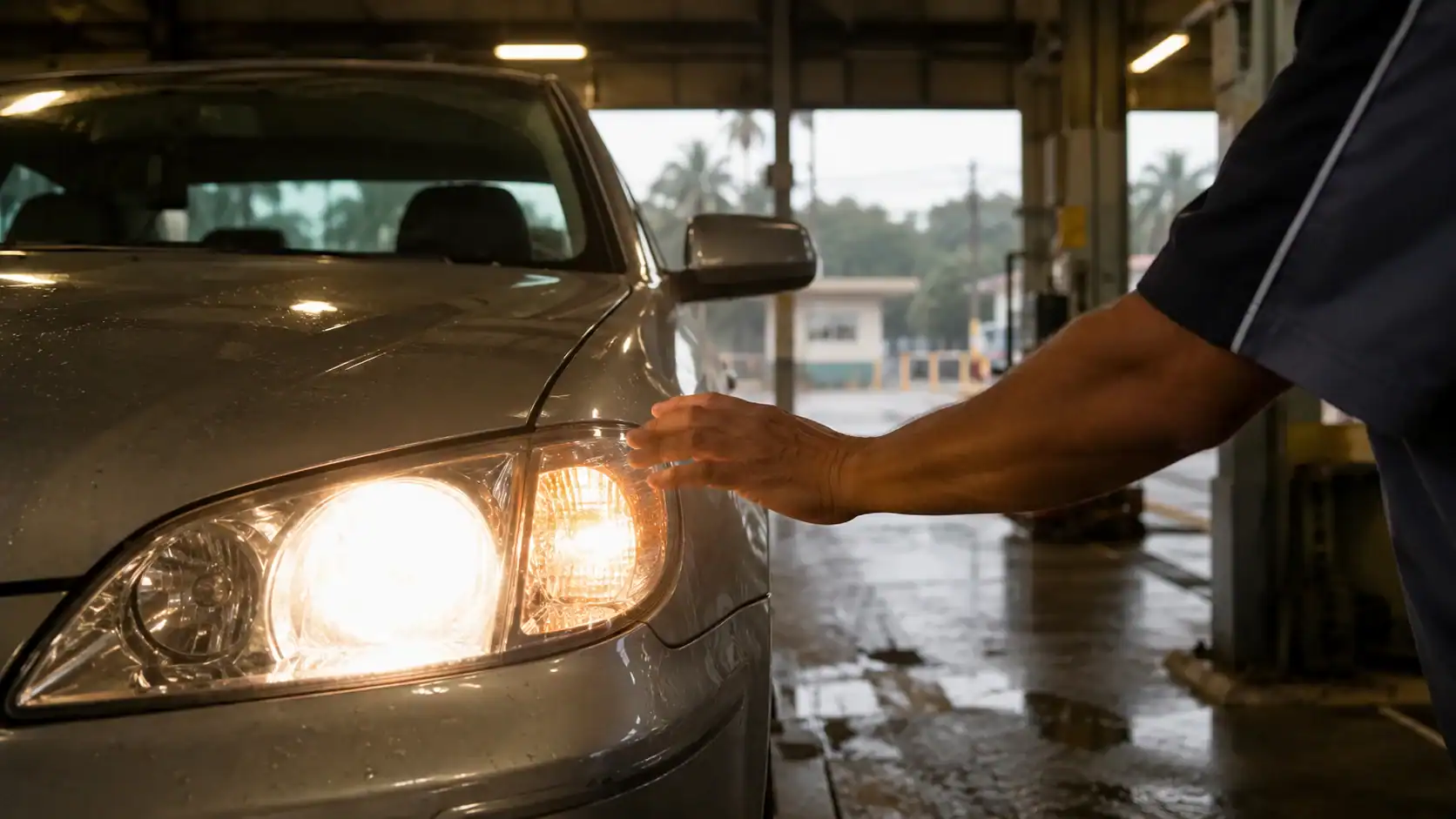
French vehicles are left‑hand drive; Thailand is a left‑side‑traffic, right‑hand drive market. That mismatch doesn’t automatically block import, but it changes what “compliance” means: headlight beam patterns built for the wrong side of the road, wiper sweep orientation, and an inspection sequence that catches both before registration. That’s a physics problem, not a France problem, since it’s identical for any left‑hand‑drive vehicle entering Thailand regardless of origin. We cover the full mechanics, the “compliant at home isn’t registerable in Thailand” distinction, and the pre‑flight checklist to run before you ship, in detail, in our left‑hand‑drive import guide.

It’s the inverse of what many Australians moving to Thailand experience: right‑hand drive alignment removes one variable, but it doesn’t soften the tax stack.
A practical note for France: you’ll need a clean, consistent “identity pack” for the vehicle, including carte grise (registration), proof of purchase/ownership, and certified translations where Thai officers need a document they can legally file. And don’t confuse France’s roadworthiness culture with Thailand’s: a recent contrôle technique is sensible maintenance, but it doesn’t substitute for Thai inspection rules.
France’s “definitive export” step that people skip
One missing piece in most English-language write‑ups is the French exit itself (Douanes, see Sources). If the vehicle is permanently leaving the EU system, you may need a déclaration d’exportation définitive through French Customs (Douanes).
If you’re using a broker in Thailand, expect a Power of Attorney and supporting identity documents. In France, formalities can involve an apostille (rather than embassy legalisation) depending on the document and use‑case. The point isn’t legal theory; it’s sequencing: the export file, the authorisations, and the Thai import lane must agree before the vessel departs.
For newer EU-market vehicles, a European Certificate of Conformity (COC) can be useful as supporting evidence of specifications (weights, emissions class, type approval), even though it doesn’t replace Thai permits or Thai tax assessment. Think of it as a way to reduce back-and-forth during technical checks, not as a shortcut around the import regime.
Shipping a car from France to Thailand: Marseille vs Le Havre, container vs RoRo
From France, container shipping is the default for private relocations, especially for motorbikes and higher‑value vehicles. RoRo exists on some lanes, but it’s less forgiving around personal effects and requires the vehicle to be operable. Miss a consolidation cutoff and you don’t lose a day; you can lose a full sailing cycle. In practice, the schedules that matter most are the ones that coordinate permits, packing dates, and arrivals. See the destination-side handover and delivery constraints in Thailand relocation requirements and the broader Thailand relocation planning timeline for 2026.
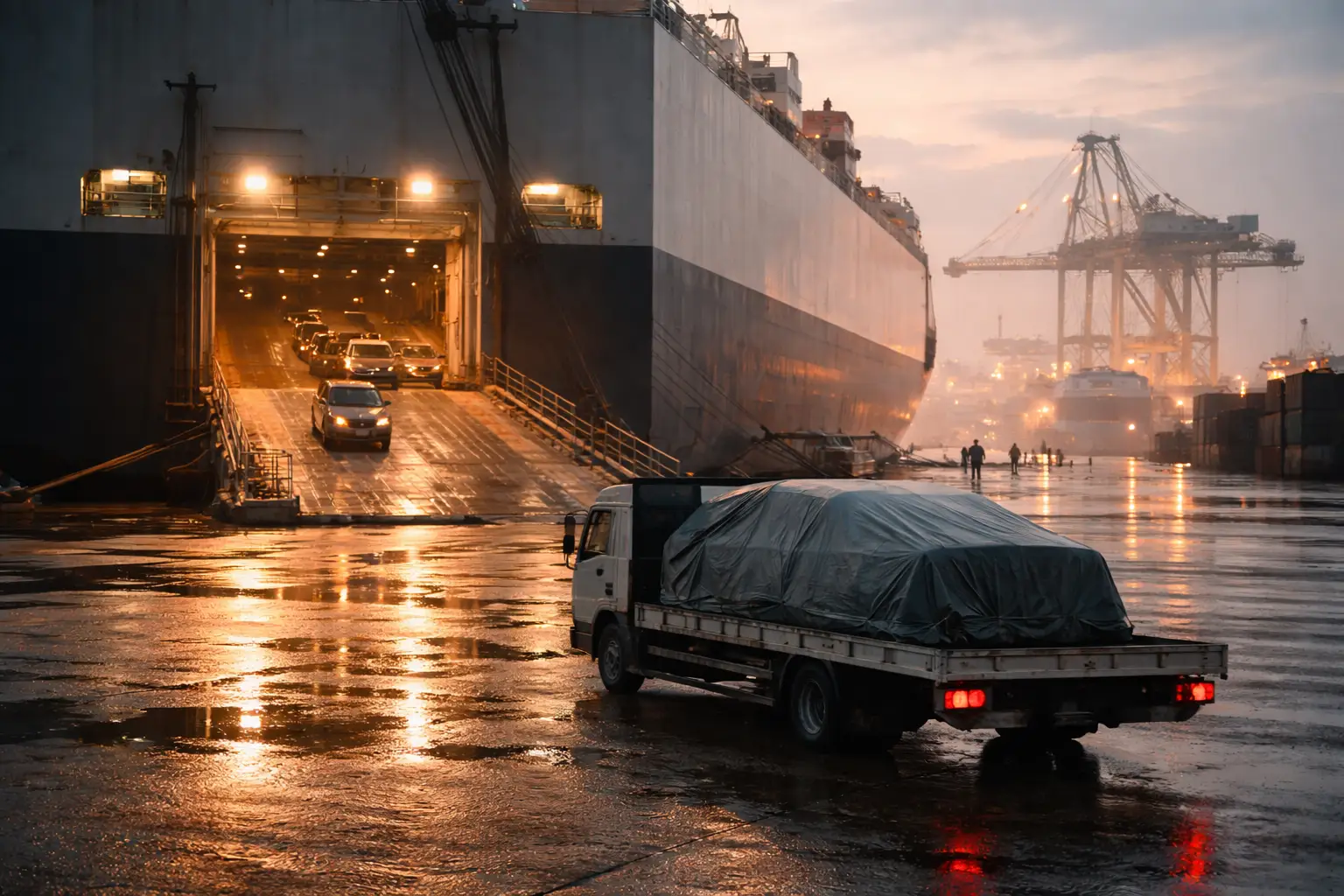
Marseille/Fos can be the clean option for southern France. Le Havre tends to offer denser Asia schedules, sometimes with extra handling depending on the sailing. Either way, align the permit strategy and document pack before the vessel departs. The ocean leg is usually the predictable part; clearance and registration are where plans break.
Temporary import Thailand: bringing a French vehicle short‑term
Temporary import is conditional relief built around re‑export. Thai Customs publishes guidance that makes the obligation clear: you are borrowing permission to use a foreign‑registered vehicle in Thailand under conditions that assume it leaves again (Thai Customs temporary import guidance, see Sources).
If you can’t explain, in practical terms, how the vehicle exits Thailand within the permitted window, you are not in a temporary lane. You are just hoping.
European overlanders hit this misread more than most, and for a real reason: a Carnet de Passage en Douane genuinely does cover long stretches of the classic overland corridor out of Europe, through Turkey, the Caucasus or Iran, and much of Central Asia, so assuming the same document closes the final leg into Thailand is a reasonable guess. It’s still wrong. Thailand was never part of the Carnet de Passage convention; a French‑plated vehicle arriving this way still needs its own Foreign Vehicle Permit application, and that requirement doesn’t soften because a carnet already covers everything upstream. At the counter, the system is less romantic and more administrative: the authorities care about the FVP lane you are in and the guarantee behind it, not the stamp collection built up on the way here.
Foreign Vehicle Permit (FVP): touring rules, not Thai plates
The Foreign Vehicle Permit is administered by Thailand’s Department of Land Transport. It is a touring system with defined dates and a checkable trail, not a conversion system (DLT FVP manual, see Sources). It does not turn a French plate into a Thai plate.
If you’ve travelled overland elsewhere, the instinct is to ask whether a carnet will “cover Thailand.” The more relevant question here is simpler: can you obtain (and comply with) the FVP terms for the exact dates and border you plan to use? In other words, this is permission to pass through and spend time, not a back door into Thai registration.
For French and other EU travelers, the more common trap is treating the FVP window as if it moves in lockstep with a Thai visa-exempt tourist stay. It doesn’t. The FVP’s own dates for the vehicle and Thailand’s separate entry rules for the traveler are two different clocks, set by two different authorities, and either can expire before the other. If your goal is to live in Thailand long-term with Thai plates, treat FVP as a travel tool, not a relocation strategy.
Permanent import: importing a car from France to Thailand (permits + tax stack)
Permanent import is where “shipping” becomes “importing.” Thai Customs states that importing used/secondhand motor vehicles and motorcycles requires an import permit from the Foreign Trade Department prior to importation. It also notes that vehicles under 3,500 kg require an additional permit from the Industrial Standards Institute (Thai Customs, see Sources).
For French (and wider EU) owners, the paperwork quality bar is higher than many expect. Bring originals where required, keep the file consistent across name/address formats, and assume that “European standard” still needs to be legible inside Thai processes. COCs, service records, and manufacturer spec sheets can reduce inspection friction, but they do not change eligibility rules.
Then comes the part people underestimate: Thailand’s duty-and-tax base expands as each layer is added. Thai Customs’ sample duty assessment shows why “duty rate” is not the same thing as landed burden. VAT can apply to a compounded base rather than a single sticker price (Thai Customs sample assessment, see Sources).
Two recurring pitfalls for French files: assuming EU paperwork creates automatic Thai acceptance (it doesn’t), and treating technical issues (especially headlights) as an afterthought. Thai officials work through this in a fixed sequence, eligibility, then permits, then tax assessment, then inspection, and skipping ahead doesn’t save time. Get it backward and the car doesn’t wait at your house; it waits at the port, on your invoice.
If you can’t model the stack on paper, you can’t budget the downside. And if you can’t budget the downside, you risk arriving at port with a vehicle you technically own but can’t afford, or can’t clear.
Own that stack before the vehicle ever leaves Marseille. Don’t hand ownership of the plan to the broker and hope. “The broker will sort it” is not a plan; it’s an abdication with a shipping invoice attached. The owners who clear Laem Chabang without drama are the ones who treated permits, tax base, and inspection order as their problem to solve weeks in advance, not the port’s problem to explain once the file stalls. Extreme discipline on the paperwork before departure buys extreme freedom from storage fees after arrival.
Shipping a motorbike from France to Thailand: why “ship and register” fails
Motorbikes feel like they should be simpler: smaller, cheaper to ship, easier to handle. That instinct is stronger for French and other EU owners, because Thailand’s own motorcycle emissions rules reference EU regulations (Euro IV, under EU Regulations 168/2013 and 134/2014), so it’s tempting to assume a bike that already carries an EU COC is compliant enough for Thailand too. It isn’t. A COC confirms compliance inside the EU’s own type‑approval system, and Thailand’s Department of Land Transport runs a separate approval chain that doesn’t recognize it.
The deeper problem isn’t emissions paperwork at all. Thailand’s own WTO import‑licensing notification puts used motorcycles in a prohibited‑or‑restricted category outside narrow government and special‑purpose channels, a classification that has nothing to do with where the bike is coming from (we walk through the exact notification language in our USA‑to‑Thailand motorbike guide). Shipping a second‑hand motorbike from France may be physically possible, but permanent registration is usually blocked at the licensing stage, not at the dock.
That doesn’t mean every scenario is impossible. It means “registerable” is the test, not “shippable.” If your objective is daily use on Thai plates, buying locally is often the cleanest route. If your objective is touring on foreign plates, treat it as time-bound and permit-driven.

Emissions: Euro compliance for France → Thailand imports (helpful, not decisive)
European owners often assume emissions alignment does the heavy lifting. It helps, but it doesn’t solve the Thailand problem by itself. Documentation still needs to be acceptable to Thai processes, and in some pathways the system wants more than a certificate: it wants verification and local compliance steps.
The smartest way to use emissions compliance is as a supporting document, not a strategy. It can reduce questions; it does not eliminate them.
French car ownership in Thailand: official dealers, slow parts
Even when a French brand has official representation in Thailand, ownership can still collide with parts logistics, especially when European‑spec variants diverge from Thai‑market configurations. That gap matters long after Customs: it affects downtime, repair cost, and the viability of keeping a niche vehicle on the road.
This is the paradox people discover too late: the badge exists in Thailand, but the exact variant you shipped may not be the variant dealers are built to service quickly.
When importing from France can make sense (three narrow exceptions)
There are still scenarios where importing from France is rational, but they are narrow:
- Classic/vintage collector vehicles that qualify under Thailand’s structured classic-car approach and are imported as collectibles rather than commuters.
- Diplomatic assignments where vehicles enter under specific privileges and must later be re-exported.
- Ultra-specialized vehicles where the configuration is unavailable locally and the value is tied to function, not resale.
For everyone else, the most defensible answer is usually the unromantic one: sell in France, buy in Thailand.
The friction in importing a vehicle from France to Thailand is rarely the vehicle itself. The vehicle survives the journey. The friction lives in the gap between two regulatory mental models that were never designed to communicate with each other. French export documentation runs on registration history, emissions class, and EU customs status. Thai import documentation runs on HS classification, excise eligibility, and right-hand-drive conformity. Both systems are correct. Neither was designed with the other in mind. The relocator stands between them. Their job is to translate documents that use different vocabulary for the same vehicle facts. Better design would standardise the handoff: a single international document carrying the data both sides need in a format both sides accept. That document does not exist. Until it does, the relocator’s job is to do the translation work the systems do not. The vehicle imports that go smoothly are the ones where the relocator (or their broker) acted as the translator the underlying systems lack.
Spend enough time reading through the permit files and a pattern emerges that no brochure admits: the vehicle is rarely the problem. What stalls a French car at a Thai port is the paper trail behind it: the certificate of conformity that reads in the wrong language, the export deregistration dated a week too late, the invoice that values a ten-year-old Peugeot at a number Thai Customs will not accept. Each document seems minor on its own. Read together, they are the difference between a car that clears in days and one that accrues storage charges while an owner argues over a valuation they cannot evidence.
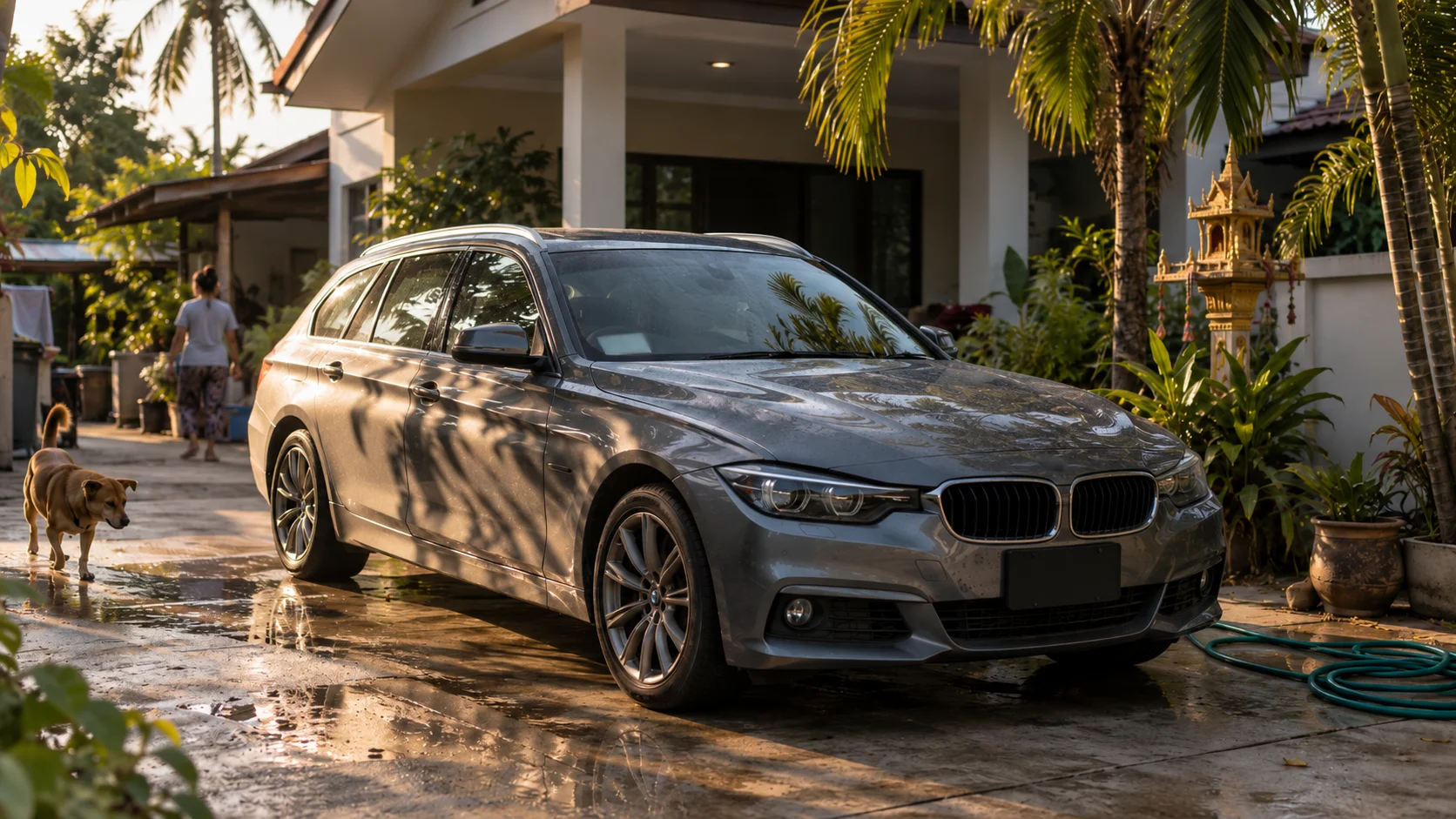
Related reading: Moving from France to Thailand: Customs, Freight and Timing
FAQ: importing a car or motorbike from France to Thailand
Below are the questions French movers ask most often, answered in a way that’s useful for scanning, budgeting, and deciding which lane you’re actually in.
1) Can I bring my French car to Thailand and register it for daily use?
Quick answer: Sometimes, but only in narrow eligibility lanes, with permits and taxes handled correctly.
More detailed: Thai Customs notes permit requirements for used/secondhand vehicles prior to importation. It also notes additional permit requirements for vehicles under 3,500 kg. If permits are not in place before arrival, you risk fines and delays (Thai Customs, see Sources).
2) Is temporary import a safe way to test Thailand with my vehicle?
Quick answer: Only if you can re-export on schedule.
More detailed: Temporary import relief is structured around the obligation to export the vehicle again. Your plan must include the exit path, not just the entry path (Thai Customs, see Sources).
3) What is the Foreign Vehicle Permit (FVP) in Thailand?
Quick answer: A touring permit for foreign-registered vehicles.
More detailed: The FVP is administered by Thailand’s Department of Land Transport and is designed for time-bound touring entry; it does not convert into Thai registration (DLT manual, see Sources).
4) Does the FVP help me get Thai plates?
Quick answer: No.
More detailed: FVP supports temporary operation under touring conditions. Thai plates require the permanent import and registration workflow (DLT manual, see Sources).
5) Why do people say Thai import taxes can exceed the car’s value?
Quick answer: Because the taxable base compounds.
More detailed: Thai Customs sample duty assessment guidance illustrates that duty, excise and VAT can apply on expanding bases. “Rate” is not the same as “landed cost” (Thai Customs sample assessment, see Sources).
6) Do I need an import permit before my used vehicle arrives in Thailand?
Quick answer: Often, yes.
More detailed: Thai Customs states used/secondhand motor vehicles and motorcycles require an import permit from the Foreign Trade Department prior to importation. It warns of penalties when that permit is missing (Thai Customs, see Sources).
7) Are left-hand drive French cars a problem in Thailand?
Quick answer: They can add friction.
More detailed: Thailand is a left-side-traffic market where right-hand drive is standard. Treat LHD as a pricing penalty: if you can’t pre-verify headlight beam compliance or replacement options for your model, don’t ship, because inspection failure is where costs start compounding.
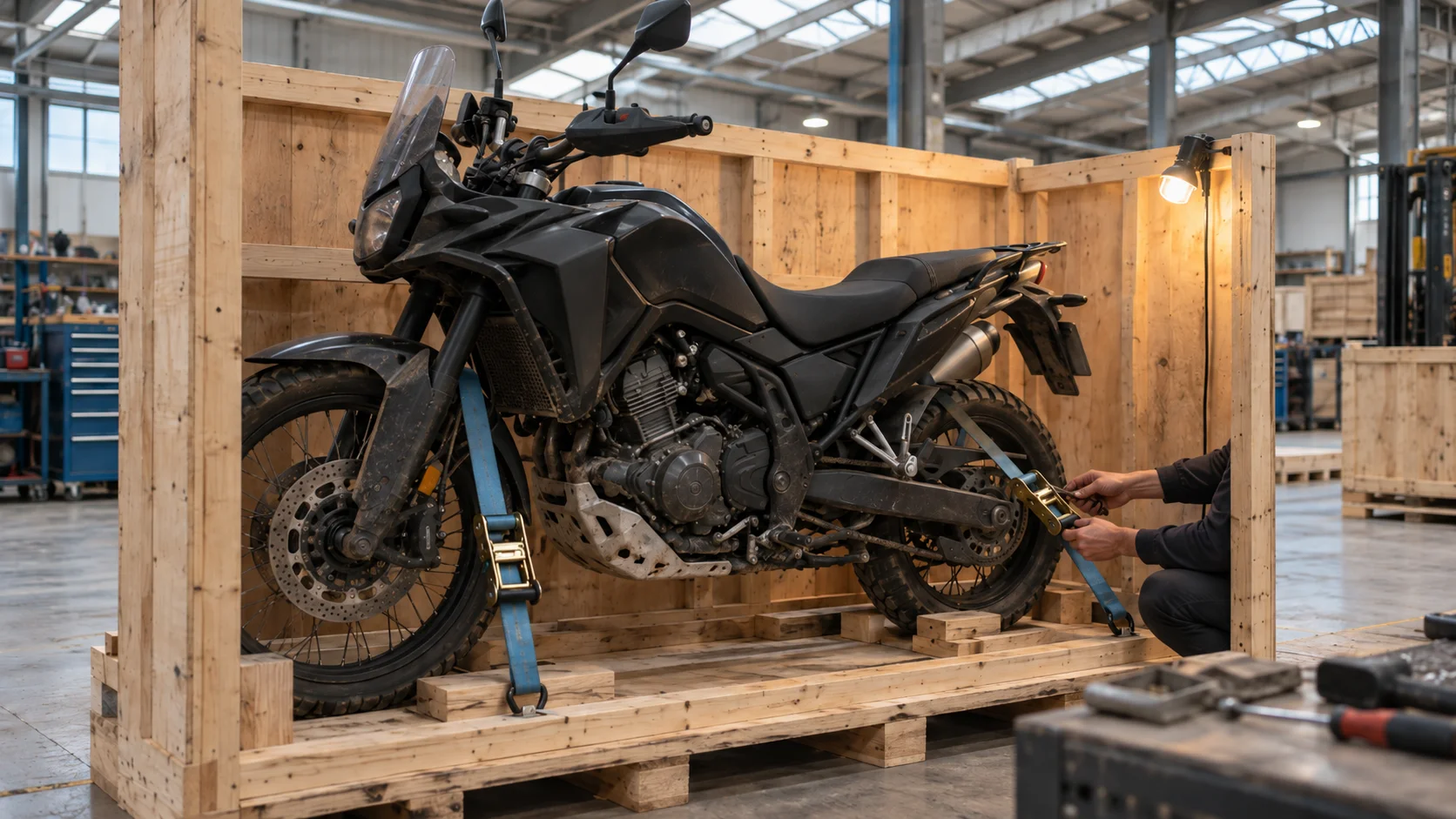
8) Can I import a used motorbike from France and register it in Thailand?
Quick answer: High risk, so assume “no” until proven otherwise on paper.
More detailed: Used motorcycles appear in prohibited/restricted import contexts in official trade references (WTO, see Sources). Touring entry may be possible; permanent registration is the usual failure point.
9) If I ship my motorbike inside household goods, does that bypass restrictions?
Quick answer: No.
More detailed: Classification rules still apply; packaging does not change the policy category.
10) What’s the most common paperwork failure on France → Thailand moves?
Quick answer: Document mismatch.
More detailed: Name formatting differences, address inconsistency, and value documentation that doesn’t match the shipping and ownership narrative are frequent causes of delay.
11) What’s the cleanest way to reduce delays at Thai Customs?
Quick answer: Decide your lane early and complete permits before shipment.
More detailed: Many delays come from shipping first and building the permit file later. Thai Customs is explicit about permit timing; treat that as a hard constraint.
12) Is RoRo cheaper than a container from France?
Quick answer: Sometimes on paper, but not always in total risk and fees.
More detailed: RoRo increases handling exposure and typically restricts contents. Containers often provide better control for private relocations, especially for motorbikes.
13) Do emissions certificates from France automatically satisfy Thailand?
Quick answer: No, use them as supporting evidence, not as permission.
More detailed: Emissions and type-approval paperwork (including an EU COC, where available) can reduce questions about a vehicle’s specifications. But Thai-side processes may still require verification and documentation in accepted formats, and permits/taxes still apply.
14) Does Thailand have French-brand service support?
Quick answer: Some brands do, but parts logistics can still be slow.
More detailed: Even with official dealer presence, European-spec variants may diverge from Thai-market configurations, making parts availability and repair lead times a real ownership cost.
15) When is buying locally in Thailand the smarter move?
Quick answer: For most daily drivers and most motorbikes.
More detailed: If the vehicle is replaceable locally, permit complexity, registration friction and the compounding tax base often make import a luxury decision rather than a rational one.
Sources
- Vehicle-export industry reference – Thailand used/secondhand vehicle import permits, fine formula, and 3,500kg ISI permit note (official Thai Customs page no longer live)
- Thai Customs – Duty/excise/VAT calculation formula (illustrates compounding base)
- Thailand DLT – Foreign Vehicle Permit (FVP) Manual
- WTO Import Licensing – Thailand notification (used motorcycles prohibited/restricted import context)
- Library of Congress – Thailand classic car import regulation summary
- European Commission – EU trade relationship with Thailand (FTA negotiations context)
- French Customs – Export formalities overview (goods to non‑EU destinations)
- Service-Public.fr – European Certificate of Conformity (COC) basics