
Thailand is English-friendly in specific places. In Bangkok, Chiang Mai, and Phuket, you can order coffee, join a gym, and rent a scooter without speaking Thai. That’s not the problem.
The problem is everything that happens when you live here: the condo juristic office calls you about a package; the security guard asks who you’re visiting; the landlord messages about a repair; the clinic receptionist needs your passport copy; the taxi driver asks whether you want the tollway. These aren’t “deep conversations.” They’re routine, high-frequency questions. If you can’t catch them, you lose control of the interaction. You nod, you guess, you pay twice, once in money, once in hassle. Speaking a little Thai shifts the dynamic: vendors know you can hear what they said to the Thai customer before you.
Most Thai phrase guides teach performance: memorise a line, deliver it, and hope it lands. That fails in Thailand because the bottleneck isn’t speaking. It’s listening. Locals speak quickly, shorten words, and assume context. If you only learn output phrases, you still freeze when you hear the input.
This guide is built for expats and long-stay foreigners: Thai phrases for daily life, plus the Thai questions and answers locals actually use on you, including ka/krap explained properly—when it matters, when it doesn’t—so you sound respectful without sounding like a textbook.
Use it in order. Your first win isn’t perfect Thai. It’s recognizing the question and answering cleanly.


Thai pronunciation and basics (fast, practical)
You don’t need perfect Thai. You need comprehension and a few reliable outputs. Most daily mistakes happen when you mishear the question and answer the wrong thing.
The tone system (simplified)
Thai has five tones. You’ll misfire early. Don’t get stuck there. In day-to-day situations, vowel length and consonant clarity usually carry more meaning than a perfect tone, because context narrows the options. If you’re at a pharmacy and you say “pain” plus a body part, they can often recover your meaning even if the tone isn’t clean.
Listening shortcut: ไหม (mai?) often marks a yes/no question at the end of a sentence. If you catch mai?, you know what’s being asked even if you miss a word.
| Tone | What it sounds like | Quick cue |
|---|---|---|
| Mid | flat/neutral | steady voice |
| Rising | goes up | question voice |
| Falling | goes down | firm voice |
Phonetic legend (how to read this article)
Phonetics here are practical, not academic. They’re meant to be read quickly and spoken clearly.
| Symbol | Sound | Example |
|---|---|---|
| ah | “father” | sah-wah-dee |
| ee | “see” | dee |
| oo | “food” | koon |
| ai | “eye” | ah-rai |
| ao | “now” | tao-rai |
| bp | soft “p” (unaspirated) | bpai |
| dt | soft “t” (unaspirated) | dtrong |
| ng | “ng” in “sing” | ngern |
Ka / krap (polite endings) — simple rule
These endings aren’t “grammar.” They’re a social signal.
- Women: often end sentences with ค่ะ (ka)
- Men: often end sentences with ครับ (krap) (often spoken casually as kap)
Use ka/krap with strangers, staff, older people, and officials. Drop it with close friends or when someone clearly shifts casual with you. If you’re unsure, use it. Being slightly over-polite is usually safer than being abrupt.
The “ng” sound (common expat problem)
“Ng” shows up everywhere in Thai. It’s the ending sound in “sing.” Don’t add a hard “g.”
Practice with: ngern (money), hong (room), rong (hospital).
Priority order: catch mai?, speak slow, keep vowels clean, add ka/krap with staff and officials.
The 101 Phrases (Organized by Life Scenario)
These phrases are organized around real situations: being asked questions, solving small problems, and handling daily tasks. Learn them in order and you’ll stop guessing what people are saying—and start responding with confidence.
First Encounters & Building Rapport (Phrases 1-15)
These phrases cover the most common questions locals use to start conversations and size you up. You’ll hear them from staff, neighbours, and anyone you interact with regularly.
| # | Thai | Phonetic | English | Context/Response |
|---|---|---|---|---|
| 1 | สวัสดี | sah-wah-dee | Hello/Goodbye | The universal opener—always with a slight wai |
| 2 | สบายดีไหม | sah-bai dee mai | How are you? | Daily check-in with regulars |
| 3 | สบายดี | sah-bai dee | I’m fine | Standard response |
| 4 | คุณชื่ออะไร | koon cheu ah-rai | What’s your name? | To the barista, security guard, neighbor |
| 5 | ผม/ดิฉันชื่อ… | pom/di-chan cheu… | My name is… | pom (men), di-chan (women) |
| 6 | ยินดีที่ได้รู้จัก | yin dee tee dai roo jak | Nice to meet you | First meeting formality |
| 7 | คุณมาจากที่ไหน | koon mah jahk tee-nai | Where are you from? | You’ll hear this constantly |
| 8 | ผม/ดิฉันมาจาก… | pom/di-chan mah jahk… | I’m from… | Country names in Thai |
| 9 | คุณอายุเท่าไหร่ | koon ah-yoo tao-rai | How old are you? | Not rude in Thailand—hierarchy matters |
| 10 | อายุ…ปี | ah-yoo…pee | I’m…years old | Response with age |
| 11 | ทำงานอะไร | tam ngahn ah-rai | What do you do? | Common curiosity |
| 12 | ผม/ดิฉันทำงาน… | pom/di-chan tam ngahn… | I work as… | Job title responses |
| 13 | อยู่ที่นี่นานยัง | yoo tee nee nahn yang | Have you lived here long? | Neighbor/building staff question |
| 14 | อยู่มา…เดือนแล้ว | yoo mah…duan laew | I’ve lived here for…months | Time response |
| 15 | ไว้เจอกันใหม่ | wai jer gun mai | See you again | To regulars you’ll see tomorrow |
Cultural Note: Thai small talk establishes hierarchy (age, status), which determines how people interact with you. Don’t be surprised by “personal” questions—they’re mapping social structure.
Your Local Café & Regular Spots (Phrases 16-28)
These phrases are how you become a regular instead of “the foreigner who orders in English.” Use them for sweetness, ice, takeaway vs. dine-in, and quick, friendly exchanges with the same staff you’ll see every day.
| # | Thai | Phonetic | English | Context |
|---|---|---|---|---|
| 16 | เหมือนเดิม | meuan doem | The usual | To your regular barista |
| 17 | ร้อนนิดหน่อย | rorn nit noy | A little hot | Temperature preference |
| 18 | ไม่หวาน | mai wan | Not sweet | Thai drinks default to very sweet |
| 19 | ใส่น้ำแข็งน้อย | sai nam kaeng noy | Little ice | The “less ice” request |
| 20 | ไม่ใส่น้ำแข็ง | mai sai nam kaeng | No ice | For when they overdo it |
| 21 | เอากลับบ้าน | ao glap bahn | Takeaway | To-go order |
| 22 | ทานที่นี่ | tahn tee nee | Eat/drink here | For here |
| 23 | มีวายไฟไหม | mee wifi mai | Do you have wifi? | Essential first question |
| 24 | รหัสวายไฟคืออะไร | rahat wifi keu ah-rai | What’s the wifi password? | Follow-up |
| 25 | ห้องน้ำอยู่ที่ไหน | hong nam yoo tee-nai | Where is the bathroom? | Universal need |
| 26 | อร่อยมาก | ah-roy mahk | Very delicious | Genuine appreciation |
| 27 | เหมือนเดิมครับ/ค่ะ | meuan doem krap/ka | The usual, please | With polite ending |
| 28 | พรุ่งนี้เจอกัน | proong nee jer gun | See you tomorrow | Building the relationship |
Pro Tip: Learn the names of staff at your regular spots. Using their name + polite particle = instant local status.
Street Food & Markets (Phrases 29-42)
Street food and markets run on short questions, price checks, and quick preferences. These phrases cover what vendors will ask you—and how to answer clearly without turning the interaction into a negotiation mess.
| # | Thai | Phonetic | English | Context |
|---|---|---|---|---|
| 29 | อันนี้เท่าไหร่ | an nee tao-rai | How much is this? | Pointing at item |
| 30 | แพงไป | paeng bpai | Too expensive | Starting negotiation |
| 31 | ลดหน่อยได้ไหม | lot noy dai mai | Can you reduce a little? | Polite haggling |
| 32 | เอาอันนี้ | ao an nee | I’ll take this one | Decision made |
| 33 | ไม่เผ็ด | mai pet | Not spicy | Critical for survival |
| 34 | เผ็ดน้อย | pet noy | A little spicy | Medium spice |
| 35 | เผ็ดมาก | pet mahk | Very spicy | For the brave |
| 36 | ไม่ใส่… | mai sai… | Don’t add… | Allergy/dietary restriction |
| 37 | แพ้… | pae… | Allergic to… | Peanut allergy: pae too-wah |
| 38 | กินเจ | gin jay | Vegetarian/vegan | Buddhist vegetarian |
| 39 | อร่อยไหม | ah-roy mai | Is it delicious? | Asking recommendation |
| 40 | อันไหนอร่อย | an nai ah-roy | Which one is delicious? | Let them choose |
| 41 | ห่อกลับบ้าน | hor glap bahn | Wrap to go | Street food takeaway |
| 42 | ขอถุงหน่อย | kor tung noy | Bag please, no plastic | Environmental bonus points |
Cultural Note: Thais appreciate when foreigners try street food. Saying “ah-roy” with genuine enthusiasm wins you local cred.
Transportation & Getting Around (Phrases 43-55)
These phrases help you stay in control of routes, prices, and drop-off points when using taxis and local transport. Most problems here come from missed questions, not bad intentions—recognising them early avoids confusion and overpaying.
| # | Thai | Phonetic | English | Context |
|---|---|---|---|---|
| 43 | ไป… | bpai… | Go to… | Basic direction |
| 44 | ใช้มิเตอร์ไหม | chai meter mai | Do you use the meter? | Essential taxi question |
| 45 | เลี้ยวซ้าย | lee-oh sai | Turn left | Navigation |
| 46 | เลี้ยวขวา | lee-oh kwah | Turn right | Navigation |
| 47 | ตรงไป | dtrong bpai | Go straight | Navigation |
| 48 | หยุดตรงนี้ | yoot dtrong nee | Stop here | Arrival |
| 49 | ช้าหน่อย | chah noy | Slow down | Reckless driver |
| 50 | เร็วหน่อย | reu-ah noy | Faster | Running late |
| 51 | ใกล้ถึงยัง | glai teung yang | Are we almost there? | Journey check |
| 52 | จอดตรงไหนก็ได้ | jot dtrong nai gor dai | Stop anywhere is fine | Flexible drop-off |
| 53 | รอตรงนี้ | ror dtrong nee | Wait here | To driver |
| 54 | ไปส่ง… | bpai song… | Drop off at… | Specific destination |
| 55 | เท่าไหร่ | tao-rai | How much? | Fare confirmation |
Warning: Always confirm meter use before getting in. “Chai meter mai” saves you from tourist pricing.
Housing & Accommodation (Phrases 56-68)
These phrases cover the questions landlords and agents actually ask when you’re viewing or renting a place. Knowing them helps you clarify price, terms, and restrictions before misunderstandings turn into expensive surprises.
| # | Thai | Phonetic | English | Context |
|---|---|---|---|---|
| 56 | มีห้องว่างไหม | mee hong wahng mai | Do you have rooms available? | Apartment hunting |
| 57 | ค่าเช่าเท่าไหร่ | kah chao tao-rai | How much is the rent? | Price negotiation |
| 58 | รวมค่าน้ำค่าไฟไหม | ruam kah nam kah fai mai | Includes water/electricity? | Utilities clarification |
| 59 | สัญญาเช่ากี่เดือน | san-yah chao gee duan | Lease for how many months? | Contract terms |
| 60 | อยู่ได้กี่คน | yoo dai gee kon | How many people can stay? | Occupancy limit |
| 61 | สัตว์เลี้ยงได้ไหม | sat liang dai mai | Pets allowed? | Critical question |
| 62 | มีเฟอร์นิเจอร์ไหม | mee fer-ni-ter mai | Is it furnished? | Furniture check |
| 63 | อยู่ชั้นกี่ | yoo chan gee | Which floor? | Floor preference |
| 64 | มีลิฟต์ไหม | mee lift mai | Is there an elevator? | Accessibility |
| 65 | ใกล้รถไฟฟ้าไหม | glai rot fai fai mai | Near BTS/MRT? | Transport access |
| 66 | ซ่อมอะไรได้บ้าง | som ah-rai dai bahng | What repairs are allowed? | Maintenance scope |
| 67 | คืนห้องยังไง | keun hong yang ngai | How to move out? | Exit terms |
| 68 | มัดจำเท่าไหร่ | mat jam tao-rai | How much is the deposit? | Security deposit |
Insider Tip: Asking about “som ah-rai dai bahng” (what repairs you can do) shows you’re a serious tenant, not a short-term tourist.
Banking & Money Matters (Phrases 69-78)
Banking in Thailand is formal and process-driven, even at branches used to foreigners. These phrases help you understand what staff are asking for and respond without slowing the process or missing a requirement.
| # | Thai | Phonetic | English | Context |
|---|---|---|---|---|
| 69 | เปิดบัญชี | bpait ban-chee | Open account | Bank visit |
| 70 | บัญชีออมทรัพย์ | ban-chee om sap | Savings account | Account type |
| 71 | บัตรเอทีเอ็ม | bat ATM | ATM card | Card request |
| 72 | อินเทอร์เน็ตแบงก์กิ้ง | internet banking | Internet banking | Online access |
| 73 | โอนเงิน | ohn ngern | Transfer money | Bank transfer |
| 74 | แลกเงิน | laek ngern | Exchange money | Currency exchange |
| 75 | อัตราแลกเปลี่ยนเท่าไหร่ | at-dtra laek bplian tao-rai | What’s the exchange rate? | Rate check |
| 76 | ค่าธรรมเนียมเท่าไหร่ | kah tam-niam tao-rai | What’s the fee? | Fee inquiry |
| 77 | เงินหมด | ngern mot | Out of money | ATM problem |
| 78 | บัตรถูกกิน | bat took gin | Card swallowed | ATM ate card |
Critical: Banking Thai is formal—always use polite particles and speak slowly.
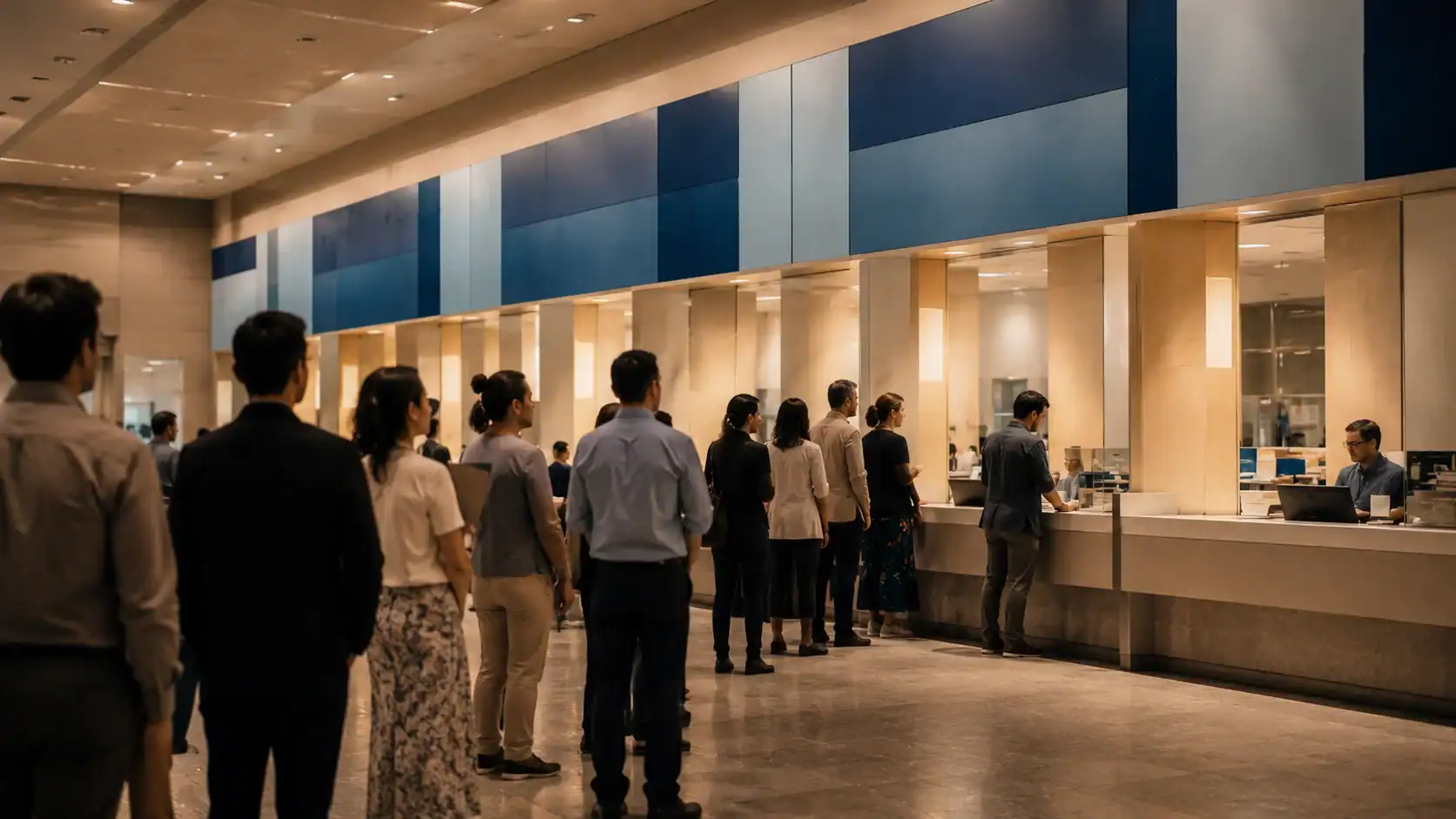
Immigration & Bureaucracy (Phrases 79-88)
Immigration interactions are structured, repetitive, and time-sensitive. These phrases help you recognise document requests, fees, and next steps so you don’t miss something important while standing at the counter.
| # | Thai | Phonetic | English | Context |
|---|---|---|---|---|
| 79 | ต่อวีซ่า | dtor visa | Extend visa | Immigration office |
| 80 | รายงานตัวTM30 | rai-ngahn dtua TM30 | TM30 reporting | Landlord/guest reporting |
| 81 | ใบเสร็จ | bai set | Receipt | Proof of payment |
| 82 | สำเนาพาสปอร์ต | sam-nao passport | Passport copy | Document request |
| 83 | รูปถ่าย | roop tai | Photo | ID photo |
| 84 | กรอกแบบฟอร์ม | grok bair form | Fill out form | Application process |
| 85 | รอคิว | ror kio | Wait in queue | Queue system |
| 86 | เสร็จเมื่อไหร่ | set meu-rai | When will it be done? | Processing time |
| 87 | มารับวันไหน | mah rap wan nai | Which day to pick up? | Collection |
| 88 | ค่าธรรมเนียม | kah tam-niam | Fee | Payment |
Survival Strategy: Immigration offices have English signage, but knowing these phrases shows respect and speeds up interactions.
Healthcare & Emergencies (Phrases 89-97)
These phrases cover how to describe symptoms, answer basic questions, and ask for help when something isn’t right. Even in private hospitals, recognising what staff are asking reduces stress and speeds up treatment.
| # | Thai | Phonetic | English | Context |
|---|---|---|---|---|
| 89 | ไม่สบาย | mai sah-bai | Not feeling well | General illness |
| 90 | ปวด… | poot… | Pain in… | Body part + pain |
| 91 | ปวดหัว | poot hua | Headache | Specific pain |
| 92 | ปวดท้อง | poot tong | Stomachache | Food poisoning concern |
| 93 | มีไข้ | mee kai | Have fever | Temperature |
| 94 | แพ้ยา | pae yah | Allergic to medicine | Critical info |
| 95 | โรงพยาบาลอยู่ที่ไหน | rong pa-yah-bahn yoo tee-nai | Where is the hospital? | Emergency |
| 96 | เรียกรถพยาบาล | riak rot pa-yah-bahn | Call ambulance | Emergency |
| 97 | ช่วยด้วย | chuai duay | Help! | Emergency cry |
Note: Private hospitals (Bangkok Hospital, Bumrungrad) have English-speaking staff, but public hospitals and clinics require basic Thai.
Social & Workplace Integration (Phrases 98-101)
These phrases help you move beyond transactions into everyday social and work interactions. They’re small, practical signals that show you understand the rhythm of Thai workplaces and casual relationships.
| # | Thai | Phonetic | English | Context |
|---|---|---|---|---|
| 98 | ไปทำงาน | bpai tam-ngahn | Go to work | Daily routine |
| 99 | เลิกงานกี่โมง | lerk ngahn gee mong | What time do you finish work? | Social planning |
| 100 | ไปกินข้าวกันไหม | bpai gin kao gun mai | Want to get food together? | Colleague bonding |
| 101 | เป็นกันเอง | bpen gun eng | Be casual/friendly | “Let’s be friends” |
Final Phrase Significance: “Bpen gun eng” is the cultural key—Thais distinguish between formal and informal relationships. This phrase signals you’re ready to move from “customer” to “acquaintance” to “friend.”
Cultural deep dives (what phrasebooks don’t explain)
The hierarchy factor
If you’re new to Thailand, some questions can feel personal: How old are you? Where are you from? What do you do? In Thai culture, those questions are often practical. People are placing you socially so they can choose the right level of politeness and the right way to address you.
Age matters because Thai speech changes with status. You’ll hear phi (older sibling) and nong (younger sibling) used as relationship labels, not biology. A condo guard asking your age isn’t collecting trivia. They’re deciding whether to treat you as a peer, an older “phi,” or a younger “nong,” which changes how formal they are and how they frame requests.
Pronouns follow the same logic. Thai often avoids a direct “you” and uses names, titles, or role words instead. That’s why conversations can sound indirect. If you recognise phi/nong and listen for names or titles, you’ll understand who is being referenced without needing perfect grammar.
The wai (the Thai greeting gesture) is also hierarchical. Decision rule: return a wai if someone offers it, and initiate it for monks, elders, and officials (immigration, government offices, formal reception desks). In everyday service situations (shops, food stalls, taxis), a spoken greeting plus ka/krap is usually enough unless the other person wai’s first.
Once you read these cues correctly, you stop misreading routine questions as rudeness—and you answer faster, with less friction.
Worth noticing what actually surprises newcomers here: not that social hierarchy exists, but that it’s asked about out loud. English does the same status-placement work constantly, just through vocabulary choice, tone, and formality of address instead of a direct question about age. A Thai speaker asking your age is doing overtly what an English speaker does silently by deciding whether to say “hey” or “good afternoon.” The system isn’t foreign. Only the visibility of it is.

“Mai pen rai” — how Thai smooths conflict
Mai pen rai translates to “it’s okay” or “no problem,” but it functions like a social lubricant. It reduces blame, keeps the temperature down, and lets people move on without a public confrontation.
That shows up in everyday communication. People soften refusals. Bad news arrives indirectly. Time estimates drift. If your condo repair is delayed, you may hear reassurance before you hear a firm timeline. If a staff member can’t do something, they may frame it as a limitation (“system,” “policy,” “not possible”) rather than a hard “no.”
Decision rule: don’t push for blame at the counter. Push for the next step. If you escalate emotionally, you often get less clarity, not more. Neutral questions work better: “What do I need?” “Which form?” “When should I come back?” “Who can I talk to?” This is where the listening phrases matter: mai khao jai (I don’t understand), “say again,” “speak slowly,” “write it down.”
“Mai pen rai” doesn’t mean nothing matters. It means problems are handled quietly and procedurally. In high-stakes situations—visas, fees, medical issues—listen for the concrete nouns: document, queue, fee, pickup day. That’s where the real information is.
If you match the tone—calm, polite, specific—you get cooperation instead of resistance.
Regional variations (when you didn’t suddenly “forget Thai”)
Bangkok Thai is the standard you’ll hear in media, offices, and official settings. Most learning resources teach this version. Outside Bangkok, locals still understand standard Thai, but they don’t always use it with each other.
In Chiang Mai and the north, locals may switch into Lanna among themselves. In Isaan, you’ll hear speech influenced by Lao. In the south, pronunciation can sound tighter and faster. You’ll notice it when two locals talk to each other and you suddenly catch almost none of your known words—then they turn back to you and switch into clearer standard Thai.
How to recognise dialect: familiar endings disappear, rhythm changes, and you stop catching the “anchor words” you usually rely on (numbers, locations, yes/no markers). When that happens, don’t chase it. Stick to your standard Thai responses. People will usually adjust automatically when addressing you.
You’re not expected to learn regional dialects. Functional standard Thai works everywhere.
Practice & implementation guide (how to make this usable)
Week 1: Survival mode
Focus: greetings, transport, immigration (Categories 1, 4, 7)
Goal: recognise the phrases when they’re said to you—especially questions. Catch mai? (yes/no), catch destinations, catch document and fee words. Respond short and polite.
Weeks 2–4: Daily integration
Focus: cafés, food, housing (Categories 2, 3, 5)
Goal: respond without hesitation to the routine prompts: sweet/not sweet, ice level, spicy level, price, rent, deposit, lease length. Pick one or two phrases per day and use them in real interactions until they become automatic.
Months 2–3: Relationship building
Focus: banking, health, social (Categories 6, 8, 9)
Goal: move from reacting to initiating. Ask simple questions, confirm details, and use light social phrases with people you see regularly.
Listening practice resources (expat-friendly)
- ThaiPod101: clear pronunciation + repetition for beginners
- YouTube — Thai with Grace: daily conversation you’ll actually hear
- Thai TV news (evening): slower, formal Thai that trains your ear
Daily rule: 10 minutes of listening + one real-life phrase used that day.
If Thailand is your next chapter, you’ll want the logistics handled properly. Our team supports moves to Thailand with local experts who coordinate the details so your shipment arrives without drama. Request a quote, and use this guide to get comfortable with the phrases you’ll hear as soon as you land.
The expats who actually pick up functional Thai rarely start with fluency as the goal. They start with one situation — the coffee order, the taxi address, the market negotiation — and learn the phrases that situation needs, then let the list grow from there. Language is one workstream of a larger project — the moving to Thailand checklist covers the rest.
Thai Language FAQ for Expats
These FAQs address the practical language questions that come up after the first few weeks in Thailand. They’re based on real situations, not language-school explanations.
Do I really need to learn Thai if I’m moving to Thailand?
Quick Answer: No, but your quality of life will be significantly better if you learn at least 50 basic phrases.
Deep Dive: Bangkok, Chiang Mai, and Phuket have enough English for survival. But here’s what the “English is fine” crowd won’t tell you: you’ll routinely pay a foreigner markup, miss out on authentic relationships, and struggle with bureaucracy. The immigration office, your local clinic, and your landlord’s handyman likely speak minimal English. More importantly, Thais deeply appreciate language effort—a simple “sah-wah-dee ka” with a smile transforms you from “walking ATM” to “neighbor worth knowing.” The 101 phrases in this guide cover 90% of daily interactions. Invest three months in learning them, and you’ll unlock a Thailand that tourists never see.
What’s the difference between tourist Thai and expat Thai?
Quick Answer: Tourist Thai gets you through a vacation; expat Thai helps you build a life, handle problems, and form relationships.
Deep Dive: Tourist phrasebooks focus on ordering pad thai, haggling for souvenirs, and finding the beach. Useful for 10 days, irrelevant for 10 months. Expat Thai covers opening a bank account (“bpait ban-chee”), negotiating your lease (“kah chao tao-rai”), and explaining to your landlord that the AC is broken (“air-con mai pen”). It includes the cultural nuance to know when a Thai person asks “gin reu yang” (have you eaten?) they’re not offering food—they’re saying hello. This guide focuses on listening comprehension: recognizing when your taxi driver is asking if you want the highway (faster, more expensive) or when your colleague is politely declining an invitation. Tourists speak; expats understand.
Is Thai a difficult language for English speakers to learn?
Quick Answer: Pronunciation is challenging; grammar is refreshingly simple. Most expats achieve conversational level in 6-12 months.
Deep Dive: Thai has five tones, which means “mai” can mean new, burn, silk, not, or wood depending on your pitch. Context matters more than perfect tone. If you say “sah-wah-dee” with the wrong pitch in a greeting context, Thais will still understand you. The grammar, however, is a dream—no verb conjugations, no tenses, no plural forms. “Pom bpai talaat” means I go to the market (yesterday, today, tomorrow). The real challenge is listening. Thais speak fast, drop final consonants, and blend words. That’s why this guide emphasizes phrases you’ll hear, not just phrases to say. Master recognition first; perfection comes later.
What’s the most important Thai phrase to learn first?
Quick Answer: “Mai kao jai” (I don’t understand) paired with a smile.
Deep Dive: Most guides push “sah-wah-dee” (hello) or “khop khun” (thank you). Wrong priority. “Mai kao jai” is your get-out-of-jail-free card. It signals honesty, invites help, and prevents misunderstandings. Follow it with “poot cha-cha noy” (speak slowly, please) and you’ve just bought yourself time and assistance. Thais respect humility over bluffing. Pretending you understood directions when you didn’t? You’ll end up lost. Admitting confusion? Someone will help. This phrase also buys you cultural grace. When a vendor speaks rapid-fire Thai and you look blank, saying “mai kao jai” with a laugh diffuses tension. It’s the foundation of all other learning—admitting where you are so you can grow.
Why do Thais keep asking my age?
Quick Answer: They’re not being rude; they’re establishing social hierarchy, which determines how they should speak to you.
Deep Dive: In Thai culture, age = status. The older person is “phi” (older sibling/respected), the younger is “nong” (younger sibling). This affects pronoun choice, verb endings, and even physical positioning (lower head when passing). When your neighbor asks “ah-yoo tao-rai” (how old are you?), they’re mapping the relationship. If you’re 45 and they’re 30, they know to use respectful language and defer to your judgment. If you’re 25 and they’re 50, they know they can guide you. This isn’t Western nosiness—it’s social GPS. Answer honestly. Knowing this system helps you too: addressing someone obviously older as “phi” immediately signals respect and cultural awareness.
What’s the deal with “ka” and “krap”?
Quick Answer: They’re gendered polite particles. Women end sentences with “ka”; men use “krap.” Drop them with close friends, always use them with strangers and authority figures.
Deep Dive: These aren’t optional grammar points—they’re social lubricant. “Sah-wah-dee” without a particle sounds abrupt, even rude. “Sah-wah-dee ka/krap” signals respect, friendliness, and cultural awareness. Women use “ka” (soft, high tone); men use “krap” (sharp, clipped). Gender-neutral? Pick one based on your presentation—Thais are generally understanding with foreigners. When to drop them? Among close friends, in casual settings, or when urgency matters (emergencies). When to absolutely use them? At immigration, with your landlord, with anyone older, and in any service interaction. Pro tip: Men often shorten “krap” to “kap” in casual speech. Women rarely shorten “ka.” Mastering these particles instantly elevates you from clueless tourist to respectful resident.
How do I handle Thai tones without getting overwhelmed?
Quick Answer: Focus on three tones (mid, rising, falling) and let context do the rest. Perfection isn’t required for comprehension.
Deep Dive: Thai has five tones: mid, low, falling, high, rising. Sounds impossible? It isn’t. Here’s the 80/20 rule: master mid (flat), rising (like a question), and falling (like a statement of fact), and you’ll be understood 80% of the time. Low and high tones are harder for English speakers and less critical. More important than perfect pitch is vowel length and final consonants. “Mai” (new) vs. “maa” (come) vs. “maa” (horse) differ in vowel sound, not just tone. Our phonetic guide uses English approximations that work. The real secret? Thais are forgiving with foreigners. A slightly wrong tone in context (“sah-wah-dee” with rising instead of mid tone) won’t confuse anyone. Focus on recognition—can you hear the difference when Thais speak?—over production. Listen to Thai radio for 30 minutes daily. Your ear will adjust.
What phrases will I actually hear at Thai immigration?
Quick Answer: “Passport,” “TM30,” “visa extension,” and “wait here” variations—knowing these reduces anxiety and processing time.
Deep Dive: Immigration offices (Chaengwattana in Bangkok, provincial offices elsewhere) have English signage, but officers often revert to Thai. Key phrases: “dtor visa” (extend visa), “TM30” (the landlord reporting form every expat loves to hate), “ror kio” (wait in queue), and “set meu-rai” (when finished). The most stressful moment? When they ask for documents you don’t have. “Mee…mai” (Do you have…?) will precede requests for “sam-nao passport” (passport copy), “roop tai” (photo), or “bai set” (receipt). Knowing these lets you prepare properly and respond confidently. Pro tip: Immigration Thai is formal. Always use “ka/krap,” speak slowly, and smile. Officers deal with frustrated foreigners all day. Being the pleasant one who understands basic Thai? Your application gets processed faster.
Here’s the thing nobody tells you before you go: the night before your first immigration appointment, you won’t lie awake worrying about your Thai. You’ll lie awake wondering whether you packed the right documents, whether the officer will be kind, whether you belong here at all. I have stood in that queue. The language helps, but the paperwork is the part that actually decides your stay—especially the visa, tax and pension rules that apply to UK and EU citizens, or the questions retirees ask about staying long-term. Learn the phrases. But sort the paperwork three months out. That is the fear worth answering first.
How do I negotiate rent and housing in Thai?
Quick Answer: Know “kah chao tao-rai” (how much is rent), “lot noy dai mai” (can you reduce), and “ruam kah nam kah fai mai” (includes utilities?).
Deep Dive: Thai landlords often quote higher prices to foreigners, assuming you won’t negotiate. Speaking Thai changes the dynamic. Start with “mee hong wahng mai” (do you have rooms available), then immediately ask “kah chao tao-rai” (how much is rent). When they answer, counter with “paeng bpai” (too expensive) and “lot noy dai mai” (can you reduce a little). Even basic attempts at negotiation signal you’re not a naive tourist. Critical follow-ups: “ruam kah nam kah fai mai” (includes water/electricity?), “san-yah chao gee duan” (lease length?), and “mat jam tao-rai” (deposit amount). Ask “sat liang dai mai” (pets allowed?) even if you don’t have pets—it shows thoroughness. Write down their answers. Thai landlords respect tenants who understand the terms. Speaking their language gets you the local rate, not the farang (foreigner) markup.
What do taxi drivers actually say to me?
Quick Answer: They’re usually asking about routes (“highway or street?”), confirming destinations, or making small talk about where you’re from.
Deep Dive: The most common question: “Chai taang duan mai” (Use highway?). Highway = faster, tolls added to fare. Street = slower, cheaper. If you don’t understand, you lose control of the route. They’ll also say “bpai nai” (go where?) for destination confirmation—have your address in Thai written down. Small talk includes “koon mah jahk tee-nai” (where are you from?) and “yoo thii nee nahn yang” (how long have you lived here?). These aren’t just polite—they’re assessing if you know local rates. Answer confidently in Thai, and they switch on the meter without being asked. The phrase “chai meter mai” (do you use the meter?) is essential, but recognizing “mai mee meter” (no meter) or “dtah-gair” (fixed price) lets you decline and find another taxi. Understanding driver chatter saves you from tourist scams.
How do I order food like a local, not a tourist?
Quick Answer: Skip “mai pet” (not spicy) and learn “pet nit noy” (a little spicy), “mai sai nam tan” (no sugar), and “ah-roy mai” (is it delicious?).
Deep Dive: Tourists say “mai pet” and get bland food. Locals say “pet nit noy” (a little spicy) and earn respect. Better yet, ask “ah-roy mai” (is it delicious?) or “an nai ah-roy” (which one is delicious?) and let them choose. This signals trust and cultural awareness. For drinks, “mai wan” (not sweet) is crucial—Thai drinks default to sugar-bomb levels. “Mai sai nam kaeng” (no ice) prevents watered-down coffee. At street stalls, “ao an nee” (I’ll take this) with a point is sufficient, but “tahn tee nee” (eat here) vs. “glap bahn” (takeaway) shows you know the routine. The magic phrase? “Meuan doem” (the usual) at your regular spot. Say this to your coffee vendor after three visits, and you’ve just become a local.
What should I say when I don’t understand something?
Quick Answer: “Mai kao jai” (I don’t understand), “poot eek krang” (say again), and “poot cha-cha noy” (speak slowly).
Deep Dive: These three phrases form your comprehension toolkit. “Mai kao jai” is honest and disarming. “Poot eek krang” (say again) asks for repetition. “Poot cha-cha noy” (speak slowly, please) is the lifesaver—Thais often speak fast to foreigners, assuming it helps. It doesn’t. Slow, clear Thai is easier than rapid-fire mumbling. Use these in sequence: “Mai kao jai…poot cha-cha noy…poot eek krang.” Most Thais will simplify their vocabulary and gesture. Don’t pretend understanding—it leads to wrong orders, missed appointments, and confusion. Better to spend 30 seconds clarifying than 30 minutes fixing a mistake. Advanced move: Learn “kaw tode” (excuse me/sorry) and use it before asking for repetition. Politeness buys patience.
How do I build actual relationships with Thais through language?
Quick Answer: Learn names, remember details, and use “jer gun” (see you again) consistently with regulars.
Deep Dive: Transactional Thai gets you service. Relational Thai gets you friends. The shift happens when you learn your barista’s name (“Khun [Name] ka/krap”) and use it. When you remember they have a daughter in university and ask “look sao riahn dee mai” (is your daughter studying well?). When you say “jer gun” (see you again) and actually return tomorrow. Thais are initially reserved with foreigners—too many tourists come and go. Proving you’re staying changes everything. Ask “tam ngahn ah-rai” (what do you do?) and remember the answer. Compliment specifically: “gah-fae ah-roy” (coffee is delicious) rather than generic “good.” Use “bpen gun eng” (let’s be casual/friends) when appropriate—it signals you want to move from formal to friendship. Language is the bridge, but consistency and genuine interest build the connection.
What are the biggest mistakes foreigners make with Thai language?
Quick Answer: Speaking too loudly, using tourist phrases in professional settings, ignoring gendered language, and pretending to understand when they don’t.
Deep Dive: Mistake #1: Volume. Thais speak softly. Loud foreigner Thai sounds aggressive. Lower your volume by 30%. Mistake #2: Context mismatch. “Sah-wah-dee” is fine for a vendor, but “sawatdee krub/ka” with a wai is expected at immigration or with your landlord’s mother. Mistake #3: Gender blindness. Men using “ka” or women dropping polite particles entirely signals disrespect or ignorance. Mistake #4: The nod-and-smile. When you don’t understand but pretend you do, you end up with wrong orders, missed appointments, and confusion. Better to look foolish for 10 seconds than suffer for 10 minutes. Mistake #5: Perfection paralysis. Waiting until you can speak perfectly means you’ll never speak. Thais appreciate effort over accuracy. Start messy, improve gradually.
How long until I can actually function in Thai?
Quick Answer: Survival level: 2-4 weeks. Conversational: 3-6 months. Comfortable: 1-2 years. The 101 phrases in this guide accelerate you to survival level immediately.
Deep Dive: “Functioning” has tiers. Week 1-2: You can order food, get taxis, and say hello/thank you. You’re surviving but stressed. Month 2-3: You handle banking, housing discussions, and basic small talk. Anxiety decreases. Month 6: You understand 60% of daily conversations, can negotiate, and have actual relationships with regulars. Year 1-2: You navigate bureaucracy, understand TV news, and joke in Thai. The 101 phrases in this guide cover 90% of daily interactions. Master these first—recognition before production. Listen to Thai radio daily, even if you understand 10%. Your ear adapts. Speak daily, even if it’s just ordering coffee. Consistency beats intensity. The expats who “never learn Thai” studied for two weeks then gave up. The ones who function practiced 15 minutes daily for six months.